
Processing aids
Wine tannin
Plant polyphenol preparations used in winemaking. The Concord recipe specifies one teaspoon but gives no botanical source, chemical class, manufacturer or mass.
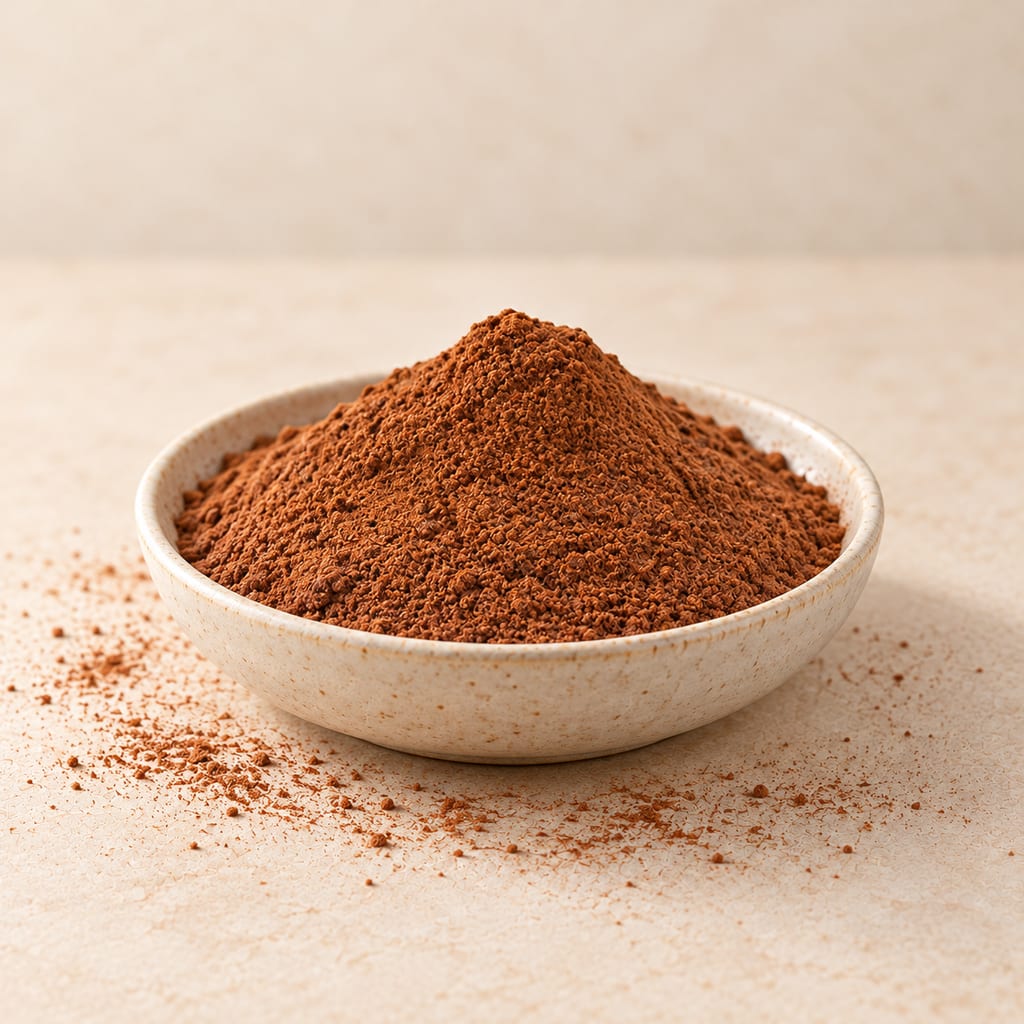
Wine tannin names a category of plant extracts
Wine tannin is a name for plant-derived preparations added during winemaking. It does not identify a single pure chemical or one botanical source. The Concord grape wine recipe linked here specifies one teaspoon of wine tannin without naming its manufacturer, plant source or chemical class. The ingredient therefore remains a category-level entry, with those details unknown for the actual recipe.
The International Organisation of Vine and Wine, or OIV, describes oenological tannins as complex polyphenol preparations. Polyphenols are compounds with multiple phenolic groups; in tannins, their arrangement and the connections between smaller units influence how the material reacts. Two products with the same broad retail name can consequently contain different mixtures and have different technological purposes.
The distinction is useful before opening a packet. A wine-tannin label may identify a grape-derived extract, a preparation from wood or another plant material, or a blend. None of those possibilities can be selected from the Concord recipe's generic wording. Named commercial examples explain the range without supplying an identity the recipe never gives.
Sources for this section
Hydrolysable and condensed tannins
The OIV separates oenological tannins into hydrolysable and condensed classes. Hydrolysable tannins include gallotannins and ellagitannins, whose structures involve sugar-related units esterified with phenolic acids or related groups. Condensed tannins, also called proanthocyanidins, contain linked flavan-3-ol units. These are chemical classifications, rather than grades on a scale from weak to strong.
The condensed class itself includes several sub-classes and many possible structures. The units can differ in their chemical arrangement, and chains can vary in size and linkage. Hydrolysable preparations are also heterogeneous. The classification provides a vocabulary for a label or technical sheet; it does not predict a complete sensory result from the class name alone.
Botanical origin and chemical class are connected but answer different questions. One identifies the plant material used, while the other describes the kinds of tannin present. A useful commercial specification supplies both. An ingredient described only as wine tannin leaves the buyer without either part of that more precise identification.
Sources for this section
The tannins already present in grapes
Grape must can contain tannins before any commercial extract is added. Crushing brings juice into contact with skins and seeds, from which tannins are extracted during winemaking. AWRI describes skin tannins as generally more readily extracted than seed tannins. The resulting wine therefore depends partly on contact with the fruit's own tissues and on the way that contact is managed.
Those extracted compounds also change. AWRI explains that grape tannins rearrange chemically as wine develops, so wine tannins can differ substantially in structure from the material originally present in the berry. The word tannin on a tasting note is consequently broader than an account of how much powder was weighed into a fermenter.
A commercial addition enters that existing mixture. Its effect cannot be assessed as though the wine were plain water, and it does not replace the tannins contributed by the grapes. This is why extraction from fruit and addition of an oenological preparation should remain distinct in a recipe, a cellar record and an explanation of the finished wine.
Sources for this section
Protein binding connects fining and mouthfeel
Tannins can interact with proteins. In winemaking, that property is relevant to fining, where added materials help remove selected components from a liquid. The OIV's must-addition practice includes partial precipitation of excess proteinaceous material among its objectives. It also recognizes the use of tannin alongside protein-based fining agents and the aim of limiting over-fining.
In the mouth, protein interactions have a different setting. McRae and Kennedy's review describes the association of wine tannins with salivary proteins and the aggregation or precipitation of the resulting complexes as a central explanation for astringency. This is the drying or puckering sensation encountered when drinking a tannic wine. It is a physical experience of the liquid in the mouth, not simply another aroma.
The same broad ability to interact with proteins thus appears in both cellar operations and sensory research. The context determines what the interaction means. A material useful for a fining purpose does not automatically give a desired mouthfeel, and the ability to bind protein does not identify the unspecified product in a recipe.
The glass, the mouth and the meal
Erick Dufourc's 2021 review places astringency in a broader physical system involving tannins, saliva, oral membranes and food lipids. Salivary proteins normally help lubricate the mouth. Their strong association with tannins helps explain why a wine can feel drying even while it is being swallowed as a liquid. The review also considers how the physical state of the polyphenols affects the interaction.
Food changes that system. Dufourc describes binding between polyphenols and lipid droplets in fatty foods, with reduced perceived astringency in the contexts discussed. The observation provides a chemical explanation for part of the experience of drinking wine with a meal. It is more specific than treating astringency as a fixed property of a bottle that every person experiences in the same way.
It does not follow that any particular food neutralizes tannin or that adding a fat-containing food creates a predictable result with the Concord wine. These are interactions among several materials. Their relevance is to understanding mouthfeel and food pairing, rather than to prescribing a remedy for an unknown tannin dose.
Sources for this section
A technological aim is different from a measured result
The OIV's must-addition practice names several aims: support for later protein stabilization and fining, antioxidant and antioxidasic protection, and expression of colour in red wine. An admitted practice describes a purpose and conditions of use. It is not a demonstration that every preparation achieves all of those effects in every must.
AWRI's account of research on commercial oenotannins makes that limitation concrete. It reports variable sensory outcomes and notes that colour effects observed after fermentation have often been small or have not persisted through ageing. The composition of commercial products differs, and so do the wines in which they are tested. Product selection and the existing wine matrix both matter.
Li and colleagues tested a commercial oenotannin alongside other supplements in Shiraz wines from grapes of different maturity. In that experiment, oenotannin addition did not meaningfully change wine composition or sensory properties. That result neither disproves every proposed tannin use nor predicts the Concord wine. It documents the outcome of a particular comparison and illustrates why an intended function should stay separate from evidence of an effect.
A blend sold for a particular purpose
EnartisTan FP provides an example of a commercial preparation combining several plant sources. Its technical sheet lists condensed tannin extracted from exotic woods together with chestnut and tara tannins. The producer presents the blend for colour stabilization in red and rosé wines and describes uses involving must proteins and protein fining. These are the stated purposes of this named product.
The blend demonstrates that a tannin preparation can be formulated for several interactions instead of representing one plant extract alone. The sheet's granular form is also a commercial choice: Enartis connects it with easier dispersion and less troublesome dust. Neither the blend nor its appearance establishes the composition or form of the tannin in the Concord recipe.
The useful comparison is between product descriptions. A reader can ask which plants and classes are declared, what function the maker intends and how the preparation is supplied. Substituting this named blend into the generic ingredient's identity would lose the uncertainty that makes those questions necessary.
Sources for this section
An older record of wine analysis and imitation
A March 1858 issue of The Merchants’ Magazine and Commercial Review discusses tannin in a section on commercial commodities and wine analysis. It describes additions intended to imitate properties attributed to tannin and mentions oak bark among the materials used. The passage shows that tannin and its manipulation were already part of nineteenth-century discussion of wine commerce.
Its setting matters. The discussion concerns imitations and adulteration as well as analysis; it is not a modern handbook of approved winemaking ingredients. Its claims about preservation reflect the period's account and do not establish a safe present-day use. The archival text is evidence for what was being written, rather than proof that every reported practice was common or acceptable.
This historical reference also does not identify the first use of tannin in wine or date the manufacture of today's standardized extracts. A generic category can have a long documentary history while an individual packet has a much more specific manufacturing and labelling record. The two histories need different evidence.
One teaspoon in a Concord grape must
The linked Adventures in Homebrewing formula makes five gallons of Concord grape wine and names one teaspoon of wine tannin among its additions. Crushed grapes and pulp go into a fermentation bag, and the tannin enters with the other initial ingredients before the yeast is added. Its placement is therefore in the must, rather than a later correction to a finished bottled wine.
The recipe gives no mass for the teaspoon and no plant source, chemical class, product specification or assay. A teaspoon measures volume, and its mass would depend on the preparation and how it is measured. Converting it to grams from a different product's label would create information absent from this recipe.
The formula also contains grape material that contributes its own phenolic compounds, as well as separate nutrient, enzyme, acid and yeast additions. The tannin's presence is documented, but its individual effect was not isolated in a comparison. The recipe establishes a use of the ingredient category; it does not demonstrate a particular increase in colour, body, clarity or ageing potential.
Sources for this section
Choosing and keeping a defined preparation
The OIV Codex makes botanical origin, class and sub-class part of a tannin preparation's labelling information. It also calls for a batch number and expiry date, minimum total polyphenol content, technological functions, recommended dose and conditions of use. For blends, the classes and their associated functions need to remain identifiable. These details turn a broad ingredient name into a traceable preparation.
Storage conditions and potentially allergenic residues are also label matters in the monograph. An unspecified plant extract has no universal storage life or allergen declaration. A buyer needs documentation for the actual product and its intended use, including applicable local requirements. The geographic origin of the Concord recipe's purchased tannin remains unknown.
Wine tannin is a plant-derived addition, not a fermentation culture. Its effects involve the wine's chemical and physical system. A change in texture, colour or clarity is not a demonstration that the wine is microbiologically stable, and neither the historical record nor a general product name supplies such an assurance.
Sources for this section
Astringency can change within a liquid
A 2010 study by Troszyńska and colleagues examined astringency in model systems containing phenolic compounds and different polysaccharides. It compared guar, xanthan and arabic gums with carboxymethylcellulose, using tannic acid as a reference stimulus. The ability to reduce perceived astringency differed with both the type and concentration of the polysaccharide. This was a controlled sensory comparison, rather than an addition trial in the Concord wine.
The researchers also considered polyphenol extracts from chokeberry, green tea and walnut. Those materials extended the question beyond a single reference compound, while remaining distinct from an unspecified enological tannin preparation. Their results help explain why adding the same nominal quantity of astringent material to different liquids need not produce the same sensation.
The experiment supplies an explanation of matrix effects, not a recommendation to add a gum to this recipe. Tannic acid in a model test, plant extracts and a finished grape wine are different materials; their relationship is useful only while those differences remain visible.
Sources for this section
Allergens
The specific preparation and potentially allergenic residues require the actual product declaration.
Places
Unknown
origin · Place not establishedRecipe names only wine tannin. No plant source, manufacturing place or lot origin is given.
Community
No community contributions have been published for this entry yet.
Share what you made
Sign in to contribute. Published comments and photos are free to read.
Sources
Adventures in Homebrewing / Homebrewing.orgIngredient identity · Ingredient use
Concord Grape Medium Bodied Wine RecipeThe recipe calls the ingredient “Wine Tannin” and measures it as one teaspoon.
The recipe is a five-gallon Concord grape wine preparation.
The recipe text adds all wine ingredients except yeast during the initial must preparation.
Does not specify botanical source, tannin class, product, manufacturer, mass, composition, lot, or product-specific handling.
The recipe’s volumetric measure is not a general dose recommendation.
Cited in: Wine tannin names a category of plant extracts; One teaspoon in a Concord grape must
International Organisation of Vine and Wine (OIV), International Oenological CodexIngredient identity · Ingredient use
Oenological TanninsOenological tannin is a heterogeneous product category, not one species or chemical.
The category includes hydrolysable gallotannins and ellagitannins and condensed flavan-3-ol polymers.
Codex describes multiple physical forms and requires source- and product-specific label information.
This is a category standard, not the absent label for the ingredient in the Concord recipe.
It does not establish that the recipe product is compliant with this Codex or any particular national law.
Cited in: Wine tannin names a category of plant extracts; Hydrolysable and condensed tannins; Choosing and keeping a defined preparation
OIV, International Code of Oenological PracticesIngredient identity · Ingredient use
Tannin AdditionThe official must-addition practice lists protein precipitation, fining support, antioxidant and antioxidasic protection, and red-wine colour expression as objectives. Its incorporation prescription does not guarantee those effects in every must.
Cited in: Protein binding connects fining and mouthfeel; A technological aim is different from a measured result
Australian Wine Research InstituteIngredient identity · Ingredient use
Winemaking Treatment – Oenotannin AdditionInstitutional technical guidance distinguishes extraction of grape tannins from commercial addition, describes structural changes during winemaking, and summarizes variable sensory and colour outcomes. Its suggested rates are not the Concord recipe’s dose.
Cited in: The tannins already present in grapes; A technological aim is different from a measured result
Molecules / Multidisciplinary Digital Publishing Institute; authors affiliated with the Australian Wine Research Institute and California State University, FresnoIngredient identity · Ingredient use
Wine and Grape Tannin Interactions with Salivary Proteins and Their Impact on Astringency: A Review of Current ResearchThe review abstract connects astringency with interactions between wine tannins and salivary proteins, including aggregation and precipitation of protein–tannin complexes.
Cited in: Protein binding connects fining and mouthfeel
Biochimica et Biophysica Acta – Biomembranes; PubMed record from the U.S. National Library of MedicineIngredient identity · Ingredient use
Wine Tannins, Saliva Proteins and Membrane LipidsA review presents a physicochemical model for interactions among tannins, saliva, oral membranes, ethanol, and food lipids.
Review, not a test of this product or of a pairing prescribed for the recipe.
Do not turn lipid interactions into a universal claim that a food neutralizes tannin.
Cited in: The glass, the mouth and the meal
University of Adelaide repository; Journal of Agricultural and Food ChemistryIngredient identity · Ingredient use
Use of Winemaking Supplements To Modify the Composition and Sensory Properties of Shiraz WineThe abstract compares commercial supplements in Shiraz wines from grapes of two maturity levels. Oenotannin did not meaningfully change composition or sensory properties in that experiment; the result is specific to its materials and design.
Cited in: A technological aim is different from a measured result
Original periodical; digitized by FRASER, Federal Reserve Bank of St. LouisIngredient identity · Ingredient use
The Merchants’ Magazine and Commercial Review, March 1858, Volume XXXVIII, Number III; full-text archiveBy the mid-nineteenth century, a published commercial-commodities account discussed tannin in wine and additions of tannin-like materials.
Historical text and OCR, not a reliable modern chemistry or safety authority.
Does not establish exact modern product identity or prove historical practice was uniform.
Cited in: An older record of wine analysis and imitation
EnartisIngredient identity · Ingredient use
ENARTISTAN FP Technical Data SheetThe manufacturer describes EnartisTan FP as a granular blend of wood-derived condensed tannins, chestnut tannin and tara tannin, intended for colour and fining applications. This named product does not identify the unspecified Concord ingredient.
Cited in: A blend sold for a particular purpose
Food Quality and Preference21(5),463–469Ingredient use
The effect of polysaccharides on the astringency induced by phenolic compoundsModel experiments with tannic acid and separate plant polyphenol extracts found that astringency effects depended on polysaccharide type and concentration. They do not establish a gum addition or sensory result for the Concord wine.
Cited in: Astringency can change within a liquid