A regional wine jar
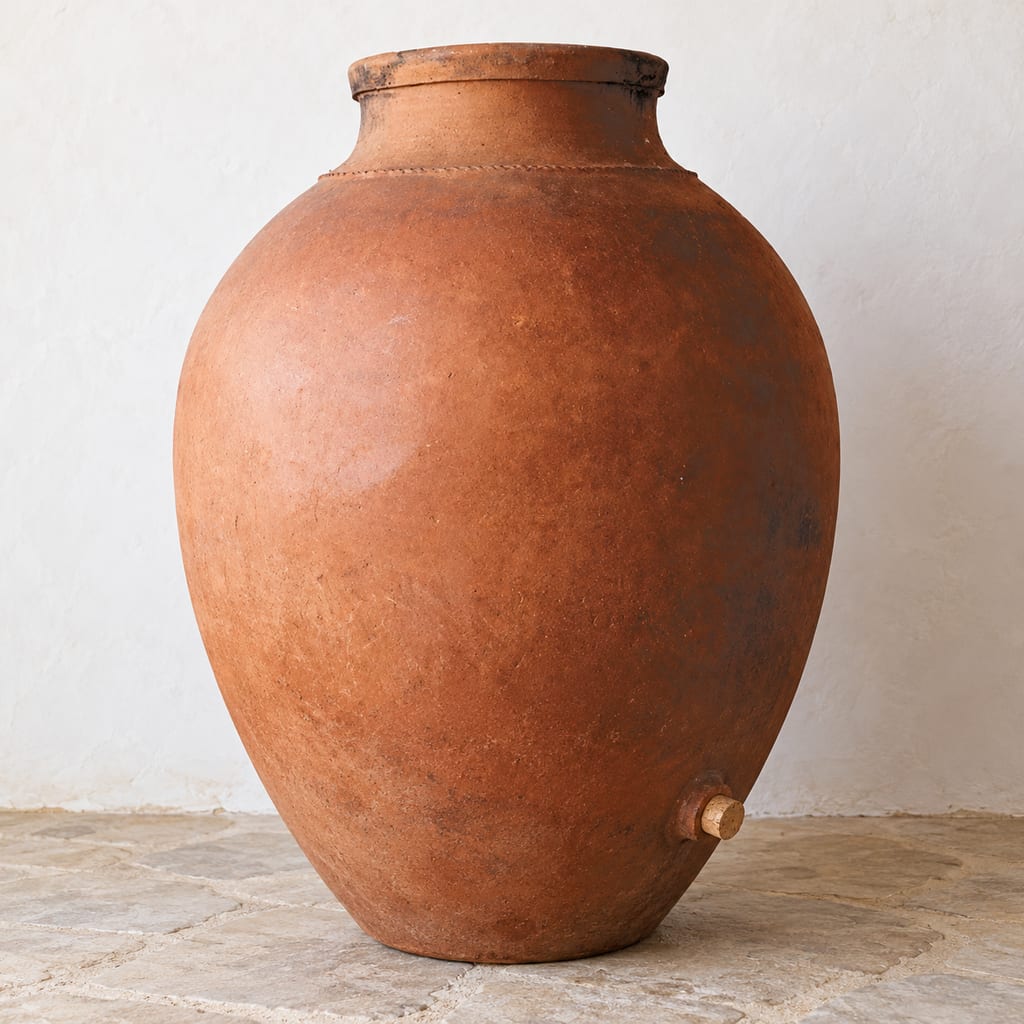
A talha is a large fired-clay vessel used in the Alentejo for making and storing wine. It is an object made by a potter and placed in a winery, not a pit built into the floor. The regional wine authority describes an upright pot with a short neck and a broad, rounded body; the exact contour differs by maker and town. It reports Cuba talhas as fuller and more turnip-shaped, Vila Alva examples as smaller and top-shaped, Serpa forms as narrower, and Vidigueira jars as having a pronounced curve. Those are local descriptions, not rules every jar follows.
Talhas can hold as much as 2,000 litres and rarely stand taller than two metres. These are upper-scale descriptions, not measurements of a standard vessel. Clay porosity and the potter's chosen clay also vary. Historic firing methods for the largest jars are uncertain: the regional account mentions one-piece firing and several possible multi-part constructions, while acknowledging that it no longer knows which method was used.
Sources for this section
A wide mouth and a low outlet
The open mouth gives access to the grape mass during fermentation. Crushed grapes enter the jar and ferment; skins, pulp and often stems rise into a cap. The regional process account describes a long wooden plunger, called a rodo or macaco, used to push the cap back into the must. That operation is part of the documented cellar practice, not a feature of the jar itself. The source warns that a cap blocking the mouth can contribute to pressure build-up and vessel rupture.
Near the lower part of the jar, a small outlet is closed with a cork stopper called a batoque. After fermentation and settling, a spout replaces the stopper and wine can be drawn by gravity. Settled grape solids form a filtering bed through which wine passes on its way out. The outlet, stopper and accessible mouth distinguish a working wine talha from a generic storage pot.
Sources for this section
Clay, lining and care
Clay is porous, so the inner surface is traditionally coated with pine resin known as pez louro; the sealing work is called pesga or pesgagem. The coating reduces permeability and can also contribute aromas to the wine. The mixture and maintenance interval vary, and the specialist craft of applying it has become uncommon. Some wineries use other coatings. These reports describe changing practice; they do not establish one suitable coating for every jar or confirm food-contact safety for a modern product.
A talha is therefore not simply an unlined clay pot, and maintenance is part of its documented use. The available source describes heating and handling during resealing but does not provide an independently validated maintenance procedure. This page records the material and the local practice without turning that description into a repair or food-safety guide.
Sources for this section
Alentejo use and historical limits
The CVRA account places talhas in homes, taverns and commercial wineries across the Alentejo, and describes present-day interest in using them for limited wine production. A 2018 study examined the volatile composition of Alentejo amphora wines, including red, white and palhete examples; its abstract supports contemporary study of the wines, not a single standardized vessel or process.
The regional authority associates the practice with Roman wine-making and cites an 1876 report that called it the “Roman system.” That is an important part of the region's heritage account, but it is not an archaeological sequence proving that today's jars or methods have continued unchanged for two millennia. CVRA also describes older talhas as scarce and large-vessel firing knowledge as lost. The age of a surviving jar must be documented individually.
Sources for this section
Above the floor, not buried
The talha itself stands above the floor during fermentation; its height and low outlet are visible parts of the equipment. CVRA also describes a buried ladrão, a separate receiving cistern or spare talha in some wineries, associated with catching overflow. That buried feature is not the fermentation vessel shown here and belongs to the winery's built infrastructure. No soil cutaway is used because it would misrepresent the documented talha.
Sources for this section
History
CVRA frames Alentejo talhas as a living tradition with Roman antecedents and cites António Augusto de Aguiar's 1876 description of a “Roman system.” That heritage account is not independent proof of continuous production from antiquity, and it does not date any individual jar. The source separately describes surviving vessels and regional pottery traditions.
Equipment details
Capacityup to 2000 L CVRA reports that a talha can hold up to 2,000 litres; this is an upper reported size, not a typical capacity or a measurement for every surviving jar.
SizeCVRA says talhas rarely stand taller than two metres, but gives no standard height or diameter for an individual vessel.
PowerNo power The documented jar uses gravity to draw wine through a low outlet; no powered element is part of the vessel.
How you get oneNot established The regional source describes a scarcity of very large historic talhas and lost firing methods but does not establish today's availability, makers or purchase route for a suitable vessel.
CareThe CVRA account describes periodic interior sealing (pesga), traditionally with pine resin called pez louro. It records differing local coatings and says the craft is now uncommon; it does not provide a current, validated maintenance or food-safety protocol. No heating or coating instructions are offered here.
Made of
- fired clay — vessel body
Large earthenware; the clay, firing method and resulting porosity vary. The CVRA source says exact firing methods for the largest historic vessels are no longer known. - pine resin (pez louro) — traditional interior coating
The regional authority describes pesga or pesgagem, an internal resin coating, while also recording variation and some modern substitutes; no universal coating formula or food-contact approval is inferred. - cork — batoque stopper
A cork stopper closes the low outlet before wine is drawn, according to the regional authority.
Limits
The fired-clay body is porous and the source describes interior sealing for wine use; coating materials and practice vary, and the source does not validate every modern substitute for food contact.
Source →During fermentation, a cap that blocks the mouth may allow pressure to build and break the vessel; CVRA does not give a pressure threshold or engineering rating.
Source →Places
Alentejo
Traditional use · Region evidenceRegional association for the wine-making vessel; this does not claim that all Alentejo talhas share one form or age.
São Pedro do Corval
Manufacture · Locality evidenceCVRA names this pottery center among places associated with talhas. This does not assert that every talha was made there or establish current production of large wine jars.