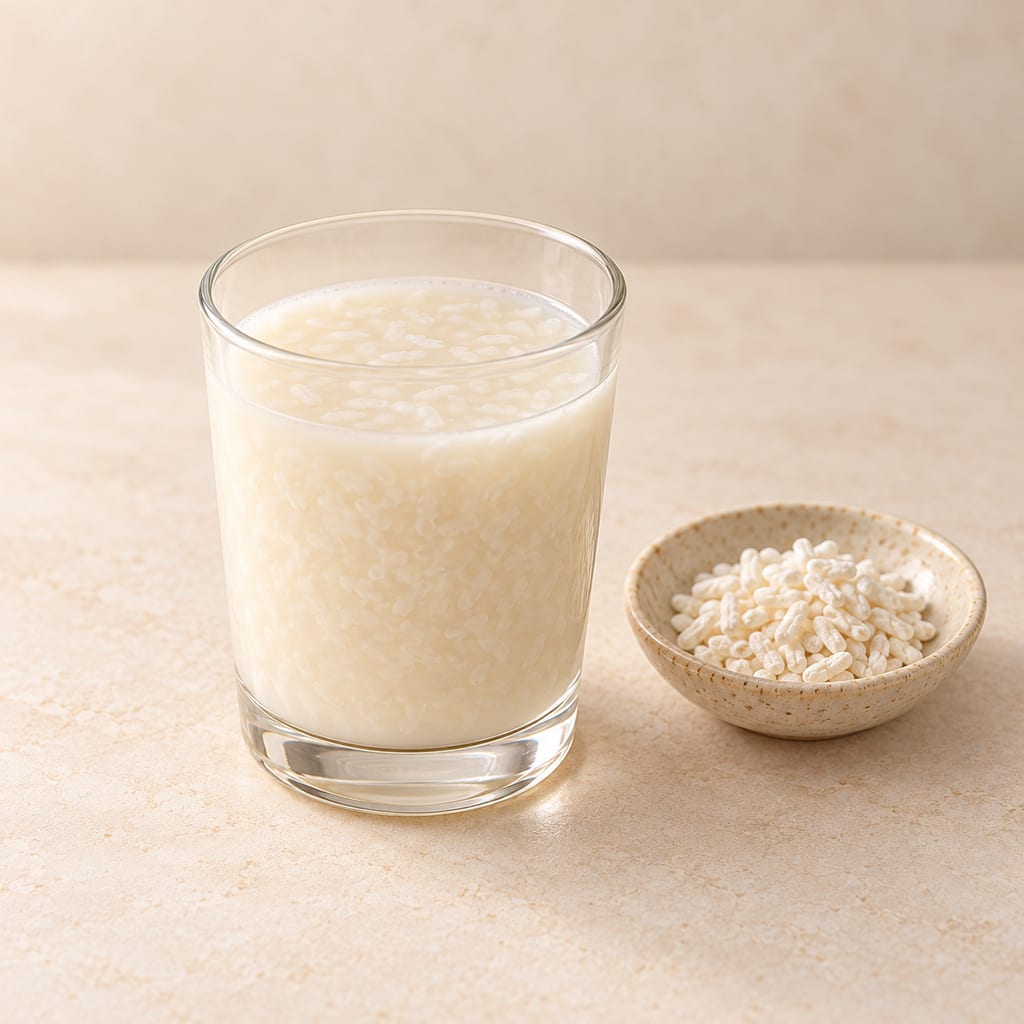
Rice-koji amazake
Cooked rice, rice koji and water are held warm for hours so koji enzymes turn the rice starch to sugars, giving a naturally sweet Japanese drink with no added sugar and no second fermentation.
 FermenteaWhere food goes to change
Equipment · Incubators and warm holds
A purpose-rated warm water bath or heated vessel with a food probe, holding rice or sake-lees amazake at the 50 to 60 C range where koji enzymes turn starch into sugar.
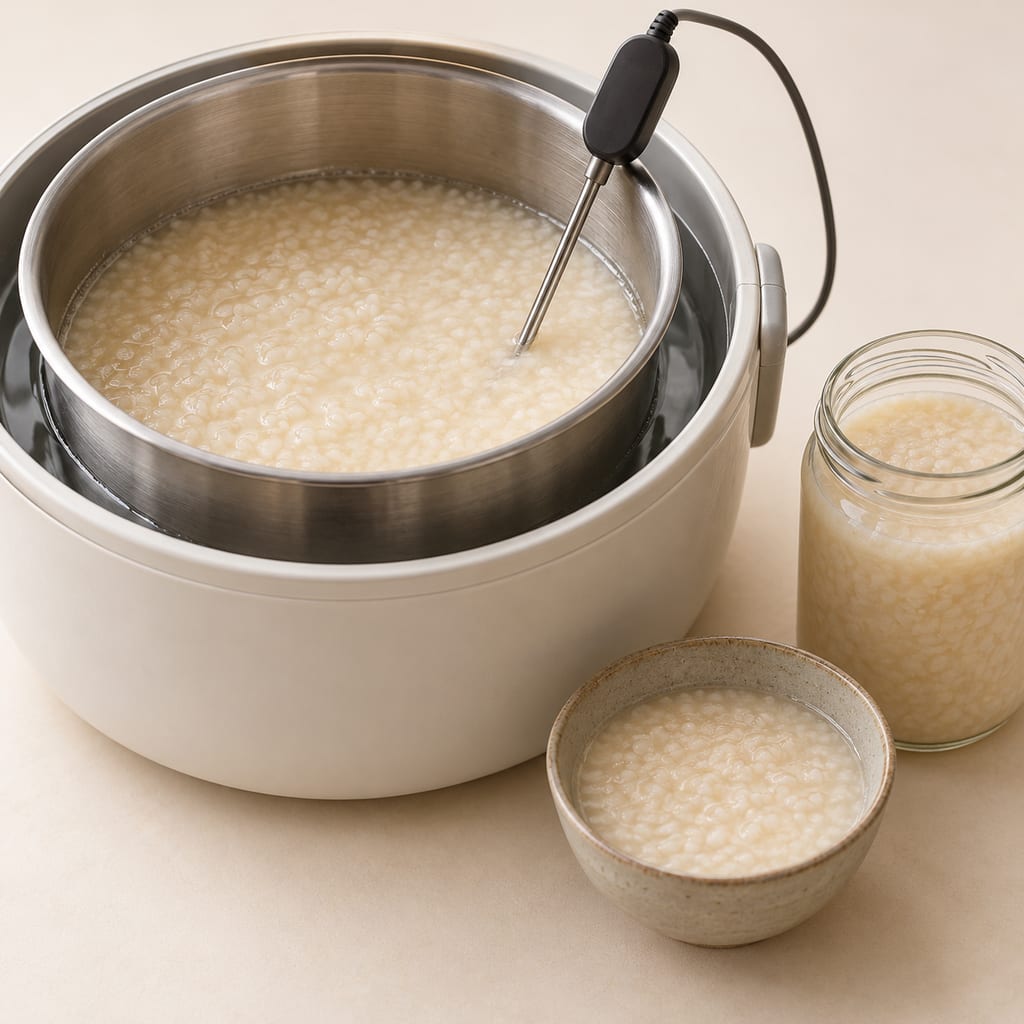
An amazake saccharification warmer holds a vessel of cooked rice or sake lees with koji at a steady warm temperature while enzymes convert the starch to sugar. The brief stresses that this is a different range from live mould incubation.
The suitable hardware is a warm water bath or a rated heated vessel with a food probe. An ordinary cooler or fridge liner is not assumed to be safe at every temperature.
In a 2019 study of koji amazake, glucose content was highest at 50 C, and about two-thirds as high at 40 C. Oligosaccharide levels peaked between 50 and 60 C. The study is the most controlled source the page uses; recipe sources differ more.
Recipe pages give holding times that range from about 6 to 24 hours, and the time depends on the rice-to-koji ratio, the water and the sweetness wanted. Whether the starting material is rice koji or sake lees changes the process and must be confirmed.
The finished sweet product must be stored promptly. The sources do not give a shelf life, and the page does not supply one.
A cooler or fridge liner is not assumed safe at every temperature; the rated hardware must be confirmed.
SourceThe controller does not make the sweet product shelf stable; prompt storage is needed and no shelf life is given in the sources.
Source →Documented for international use, with no single place of origin assigned.
Cooked rice, rice koji and water are held warm for hours so koji enzymes turn the rice starch to sugars, giving a naturally sweet Japanese drink with no added sugar and no second fermentation.
No community contributions have been published for this entry yet.
Sign in to contribute. Published comments and photos are free to read.
FAO AGRIS (Oguro et al., 2019)Science · Method
Effect of temperature on saccharification and oligosaccharide production efficiency in koji amazakeGlucose was highest at 50 C; 40 C gave about 66 percent of that; oligosaccharides peaked at 50 to 60 C.
Cited in: What it is; Temperature and time
Science FridayMethod
How to ferment your own amazakeHome amazake recipes hold the mash warm for several hours; times differ between recipes.
Cited in: Temperature and time; After saccharification