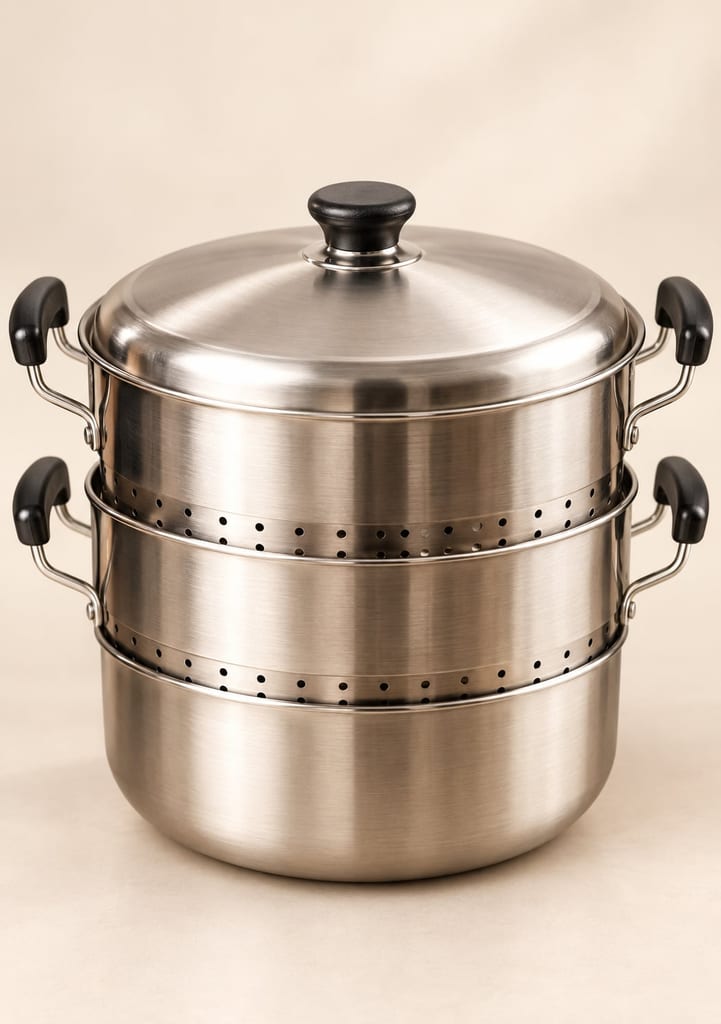
Steamer
A steamer cooks food above heated water under a cover. The broad term includes improvised pot-and-rack setups, metal tiers and basket steamers; individual forms have different designs and uses.
 FermenteaWhere food goes to change
Equipment · Leaf steamer
A temporary leaf-and-stalk support inside a cooking pot keeps leaf-wrapped food above boiling water.
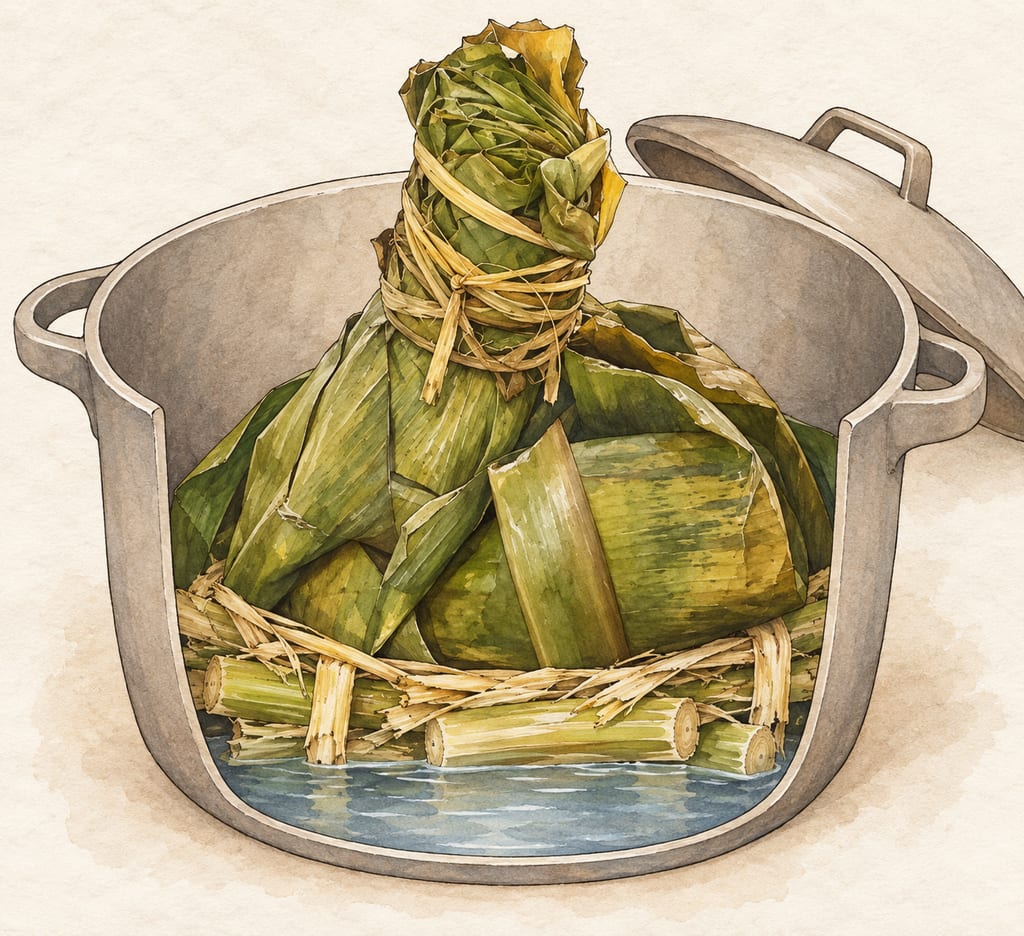
The banana-fibre support is documented in Ugandan matooke preparation, alongside leaf-wrapped steaming traditions such as luwombo. The first use of this arrangement is not dated. This entry describes a locally assembled support inside a cooking pot; it does not claim a single place of origin, a named maker or one design shared by every household.
A leaf steamer is an arrangement inside a cooking pot, not a standardized appliance. Strips of banana fibres and stalks are laid across the bottom as a foundation so the boiling water stays below the wrapped food. A bundle wrapped in banana leaves rests on top, with enough water beneath it to make steam. The temporary base is fitted to the pot, so its height and capacity vary with the vessel and batch rather than following a documented standard.
Before steaming matooke, the leaf midribs are removed so the leaves can fold around peeled and washed bananas. The wrapped bundle is steamed for about an hour, although the cooking time depends on the firewood. Afterward, the bananas are pressed or mashed and allowed to simmer. The steamer supports only the steaming stage; it does not mash the food or define the finished dish.
In central Uganda, luwombo is made by folding ingredients into softened banana leaves and steaming the parcel over matooke or other food wrapped in leaves. That example confirms leaf parcels and steam in a distinct dish, while the matooke process describes the stalk-and-fibre support at the bottom of the pot. The accounts do not establish that every luwombo cook uses the same support or pot.
The Slow Food Uganda guide also documents a beef luwombo preparation that uses leaf ribs or stalks as a raised platform in a pot. This is a source-described use of leaf-wrapped steaming, not a claim that every luwombo cook uses the same support. A gallery photograph shows tied Ugandan luwombo parcels in a basket; it is a comparative reference for parcel form, not a photograph of the equipment. The generated cutaway combines that parcel reference with the written description of the support and water level. It is an interpretive illustration, not documentary evidence of a particular pot.
Keep the water below the wrapped food and replenish it as needed; do not let the pot boil dry. Opening a hot pot can expose the cook to steam and hot water, which can scald. The sources do not give a platform load rating, vessel material, fixed pot dimensions, firebox design or air path. The stalk-and-fibre support is a cooking arrangement, not a construction specification.
The described vessel is called a pan, saucepan or pot, but its material and exact shape are not identified. No standard capacity, manufacturing route or earliest date is established. The supported geography is country-level use in Uganda; no locality or exclusive community origin is claimed.
The sources document leaf-wrapped food steamed in a pot above a base of banana fibres and stalks, but give no date for the arrangement's first use.
The pot holds boiling water and steam; hot liquids and steam can cause scalds.
Hazard sourceKeep water below the food bundle, replenish it as needed, and do not let the pot boil dry.
Control sourceTake care when opening or handling the hot pot because steam and hot water can scald.
Control sourceThis record describes a temporary stalk-and-fibre support inside a cooking pot; it gives no load rating, pot material, firebox design or air path.
The base is fitted to the pot and keeps the food bundle above the water; sources give no universal dimensions or capacity.
Source →Keep water below the food bundle and maintain steam without allowing the pot to boil dry.
Source →Country-level documented use; no specific locality or place of origin is asserted.
A steamer cooks food above heated water under a cover. The broad term includes improvised pot-and-rack setups, metal tiers and basket steamers; individual forms have different designs and uses.
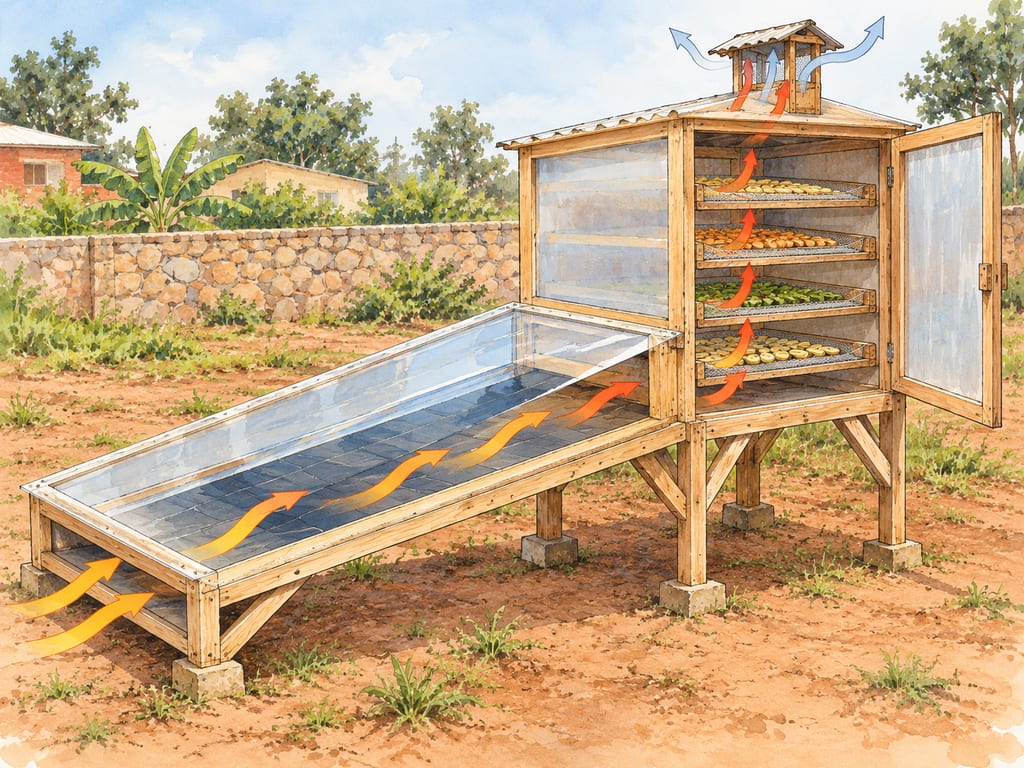
An indirect solar dryer heats air in a separate collector, then moves it through a covered food chamber. Designs vary in size, materials and airflow.
No community contributions have been published for this entry yet.
Sign in to contribute. Published comments and photos are free to read.
International Journal of Food Science & Technology / National Agricultural Research Laboratories, UgandaMethod · Materials · Regional use
The East African highland cooking bananas ‘Matooke’ preferences of farmers and traders: Implications for variety developmentMatooke is peeled, wrapped in banana leaves, steamed or boiled, mashed and served with sauce.
Processors prepare a cooking pan with strips of banana fibres and stalks so boiling water does not touch the wrapped matooke; the bundle sits above enough water to steam it.
The study describes steaming for about an hour, depending on firewood.
Cited in: History and place; A pot with a natural raised base; Safe use and limits
Kampala International UniversityMethod · Regional use
KIU Cuisine: Luwombo Will Drive Your Tastebuds InsaneThe article locates luwombo in central Uganda and describes ingredients wrapped in a softened banana leaf and steamed over matooke or other foods wrapped in banana leaves.
Cited in: History and place; Related leaf-wrapped cooking
Slow Food Foundation for BiodiversityMethod · Safety · Regional use
Traditional Products and Dishes: Uganda, From Earth to TableThe guide describes making a raised platform from leaf ribs or stalks inside a pot, with water below parcels, and replenishing water as needed to avoid boiling the pot dry.
Cited in: Safe use and limits
Wikimedia CommonsImage reference
Traditional Ugandan LuwomboThe inspected photograph shows tied banana-leaf luwombo parcels in a basket; it is used only as a parcel-form reference and does not show the steamer.
Cited in: Related leaf-wrapped cooking