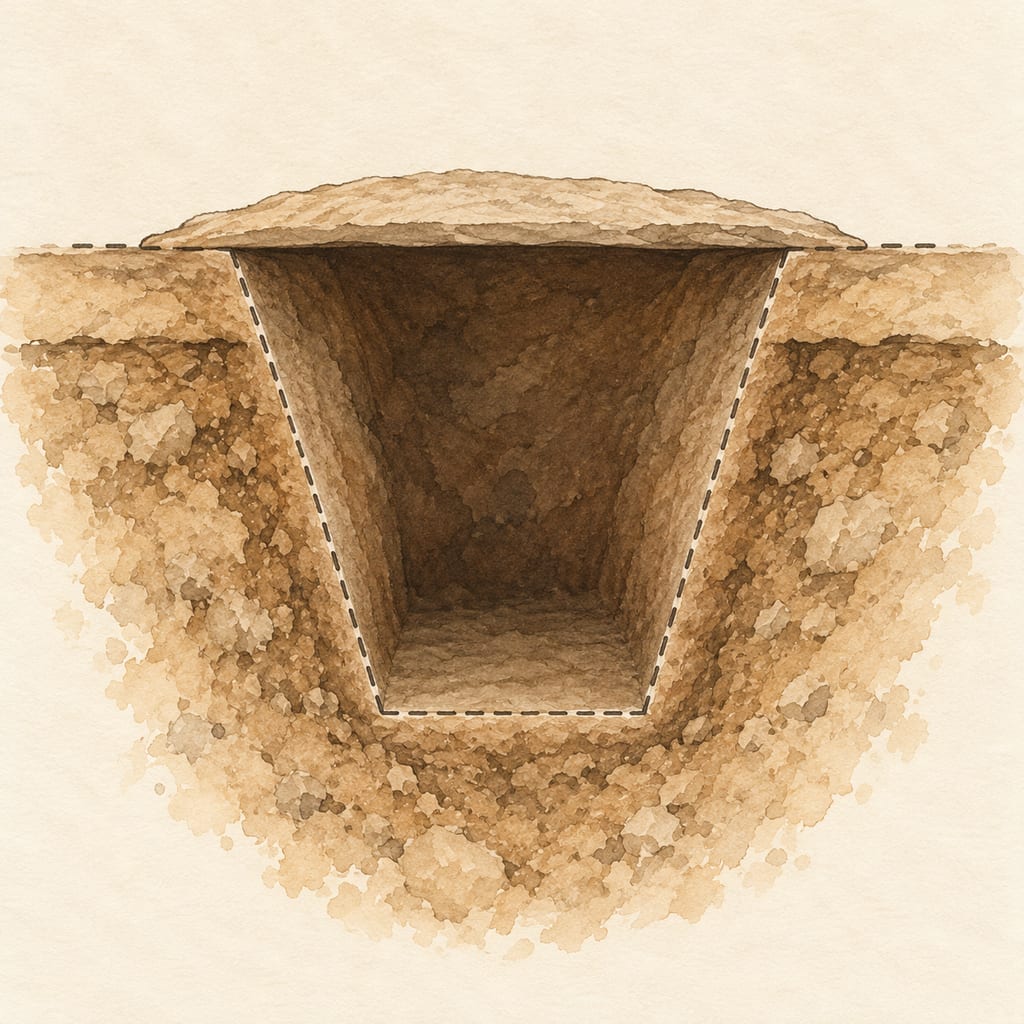
Yemeni Madfan: Underground Grain Store
A madfan is a covered underground grain chamber documented in Yemen, excavated in rock or firm earth. Sources do not establish one universal shape, locality or performance.
 FermenteaWhere food goes to change
Built structures · Pits and cavities
Mandi ovens are ground-built pits for cooking a regional dish. A 2024 Seiyun report describes wood-fired pits dug into the earth; Saudi sources describe separate clay or iron restaurant pits and a tannour form.
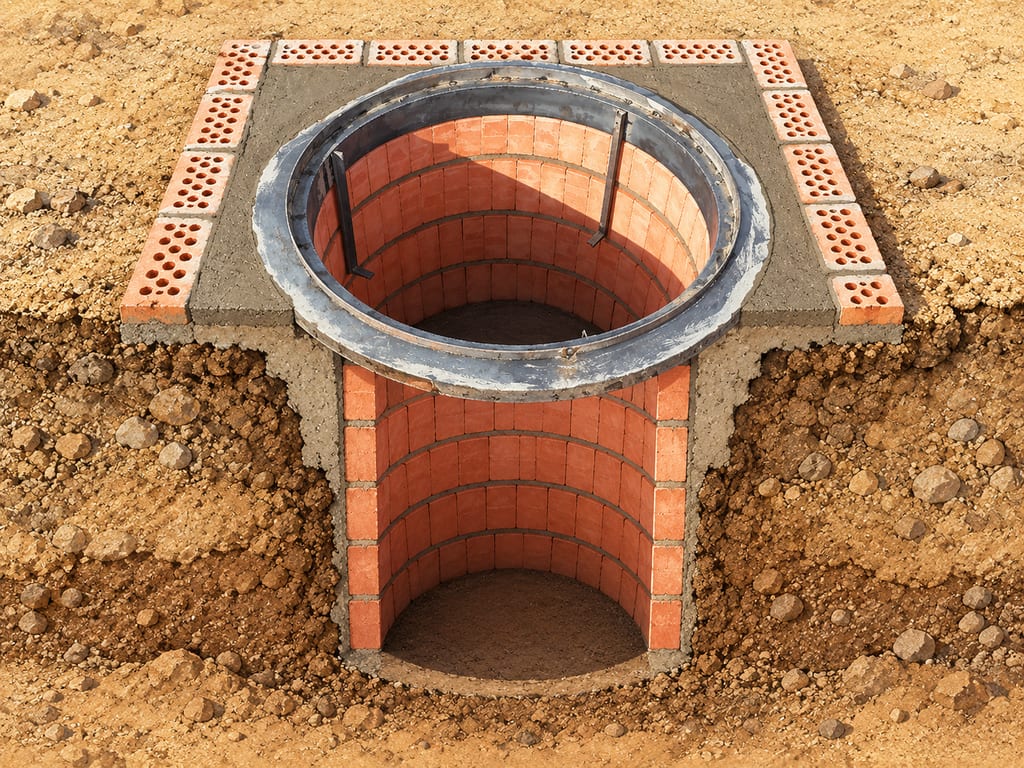
Mandi pit ovens are built into the ground for a dish associated with Yemen and Saudi Arabia. The available accounts describe more than one form, so this page keeps regional evidence separate. A 2024 report from Seiyun in Hadramaut describes a firewood oven dug into the earth, preheated before meat is put on a grill and sealed inside. Saudipedia's Saudi account describes circular restaurant pits made from clay or iron, and a tannour with heat-resistant brick walls, steel lids and hanging rods. Those Saudi specifications are not measurements for the Hadrami oven.
The page's linked photograph adds a view of one empty Mandi pit: a circular brick-lined shaft with a dark metal rim and two hanging rods. The Commons file identifies it as a pit built specifically for Mandi, but does not record where it was photographed. It therefore supports the pictured form, not a claim that the same materials or geometry are standard in Seiyun, Hadramaut, or across Saudi Arabia.
Kurdistan24's correspondent reports from a restaurant in Seiyun where cooks season meat while a team prepares the oven. Firewood heats the underground oven before the meat is placed on a grill. The oven is then sealed tightly, and the observed smoky cooking stage lasts about an hour. The cooked meat is arranged over rice for service. The account does not publish the seasoning proportions, pit depth, wall material, exact sealing method or temperature. It reports one professional preparation, not a universal recipe or a measured construction plan.
The Saudi documentation describes a distinct restaurant setting. Its Mandi page gives a circular clay or iron pit no deeper than 100 cm and 40–50 cm wide, heated with firewood until it becomes embers. It also describes a tannour with heat-resistant brick walls, stainless-steel rods for hanging meat and two steel covers. These details show how one Saudi form is built and equipped; they should not be silently added to the Hadrami report.
The sources establish contemporary use and regional examples, but do not identify the earliest attestation of Mandi ovens. The Saudi dimensions are published for Saudi restaurant pits, not for Yemen; the empty Wikimedia photograph has no locality; and the report from Seiyun does not describe its oven walls or cover. The illustration therefore follows the photographed empty brick-lined pit, while the prose keeps its location unknown and its form distinct from the reported Hadrami installation.
This record documents a structure and its reported use, not instructions to excavate or operate a fire pit. The sources reviewed do not provide ground-stability guidance, fire clearances or food-temperature controls. No such values have been inferred, and the image is editorial art rather than a construction drawing.
The inspected evidence documents current practice: a field report from Seiyun in 2024 and Saudi cultural documentation. Neither source establishes when Mandi ovens began.
A build is made where it stands: moving it means building it again.
This descriptive record is not a construction or food-safety plan; the inspected sources do not establish excavation, fire-clearance, structural or temperature controls.
The report locates its observed Hadrami Mandi restaurant in Seiyun; it does not claim this as the oven's origin.
A separate Saudi form documented by Saudipedia; its dimensions are not transferred to the Hadrami example.
A madfan is a covered underground grain chamber documented in Yemen, excavated in rock or firm earth. Sources do not establish one universal shape, locality or performance.
No community contributions have been published for this entry yet.
Sign in to contribute. Published comments and photos are free to read.
Kurdistan24Documented use · Method · Geography
Hadrami Mandi: A Taste of Yemen's Culinary HeritageReports from a restaurant in Seiyun, eastern Yemen, and identifies its cooking as Hadrami Mandi.
Describes firewood ovens dug into the earth, heated before meat on a grill is loaded and tightly sealed.
The reported cooking stage takes around one hour; the cooked meat is served over rice.
The report does not specify pit dimensions, wall material or a construction method.
Cited in: A regional family of ground-built ovens; Heating and sealing in the Hadrami account; What the sources do not establish
SaudipediaDocumented use · Regional variation · Materials
MandiDescribes Saudi Mandi restaurant pits as circular clay or iron forms, no deeper than 100 cm and 40–50 cm wide, heated with firewood until embers form.
Describes a Mandi tannour with an underground cylindrical pit, heat-resistant brick walls, steel lids and stainless-steel hanging rods.
These measurements and details describe the Saudi examples and are not transferred to the Hadrami oven.
Cited in: A regional family of ground-built ovens; Heating and sealing in the Hadrami account; What the sources do not establish
SaudipediaRegional variation · Materials
What Is the Tannour?Describes Saudi tannour forms as circular, historically made from stone clay and fired with wood; modern variants use iron sheets and gas.
Gives a cavity about half a metre in diameter and one metre high for the tannour family; this is not a specification for the Hadrami Mandi oven.
Cited in: Heating and sealing in the Hadrami account
Wikimedia CommonsImage reference · Documented use
Mandi Pit.jpgThe uploader describes the photographed object as a pit built specifically for Mandi; the pixels show an empty circular brick-lined pit with a metal rim and two hanging rods.
The file page gives no location; the image is not evidence of a Yemeni or Saudi regional origin.
The file is licensed CC BY-SA 4.0.
Cited in: A regional family of ground-built ovens; What the sources do not establish