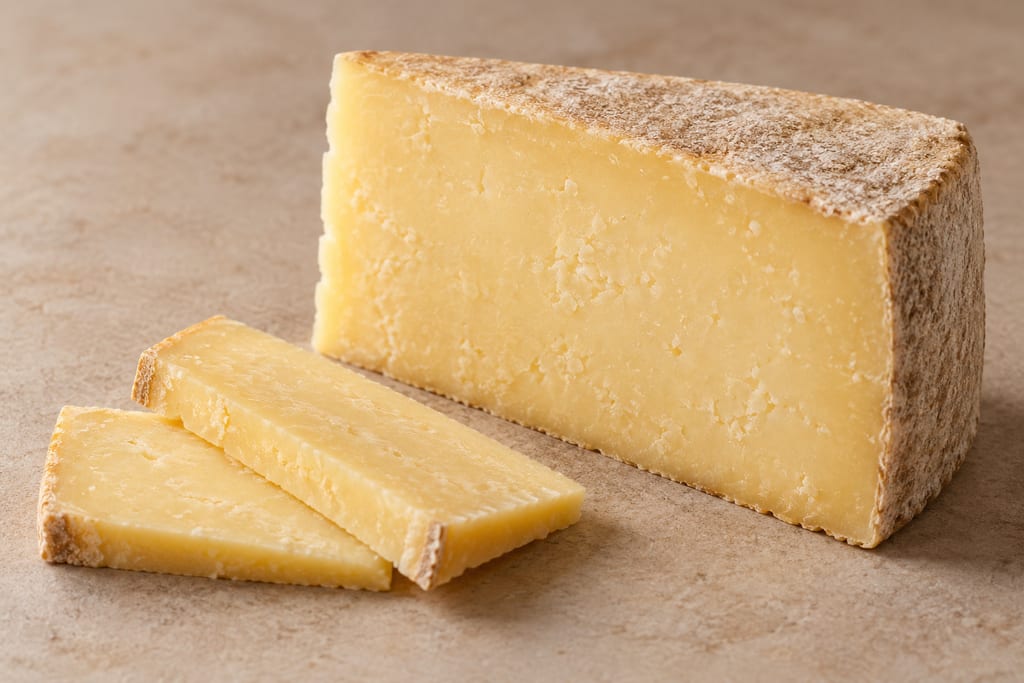
Cheddar-style cheese
A pressed cheese whose curd is cooked slowly, then cheddared: kept warm in slabs that are turned and stacked for hours before milling, salting and pressing.
 FermenteaWhere food goes to change
Equipment · Pot supports and trivets
water-bath pot support · pot-support rack · inner-pot bridge · water-bath trivet · sous-vide pot trivet
A removable support holds a smaller pot above the floor of a water bath. Racks, bridges and trivets are distinct forms serving this function; none should be confused with a brewer’s false bottom or a pot resting on the outer rim.
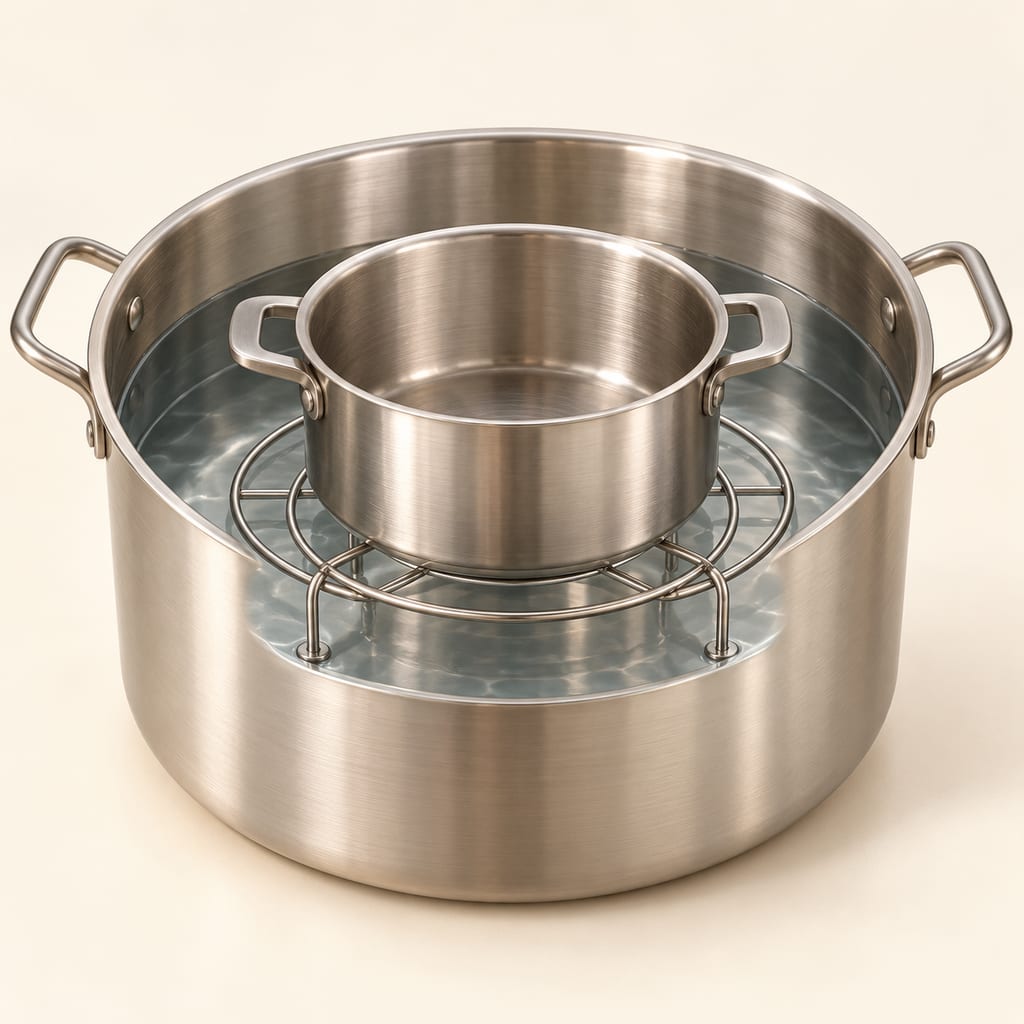
A pot support is a separate, movable piece placed between the bottom of an outer vessel and the base of an inner pot. It carries the inner pot while leaving room for water to circulate below and around it. In a water bath, that gap lets the bath contact more of the pot’s exterior instead of leaving the inner pot flat against the outer vessel’s heated floor. The support does not heat or regulate the bath; that job belongs to the surrounding pot, cooker or circulator.
The category describes a shared job, not one interchangeable design. A rack usually spans or stands above the vessel floor; a bridge crosses the rim; a trivet uses a small number of feet, bars or an open frame. Which form fits depends on the vessel’s inside dimensions, rim and floor, and on the pot being carried. A source documenting one form does not establish that another will fit or bear the same load.
A contemporary stainless-steel trivet listing describes the item as one used by cheesemaker Gavin to allow water to circulate under stainless-steel pots in a precision-cooker or sous-vide bath. The listed trivet measures 18 × 18 × 2 cm and weighs 94 g; those figures belong to that retail example, not to the whole equipment class. The listing does not give a safe load rating.
Tony Hamblyn’s published home-cheesemaking setup demonstrates a related but different solution. He removed the mash tun’s false bottom and rested the handles of a smaller cheese pot on the outer pot’s rim, creating a water jacket between vessels. His interview does not show a rack under the cheese pot. Rim support can therefore be described as an alternative configuration, but not as another name for this trivet or as proof that any rack can carry the same pot.
The canner photograph here shows a wire rack carrying jars in boiling-water canning. It is useful for seeing an open rack and the space beneath its load, but it documents jars, not a larger inner pot. The outdoor photograph shows a cross-braced, four-legged trivet beneath a lidded cast-iron cooking pot. Together, these images show separate examples of support forms; neither establishes a universal design.
Before choosing a support, compare the pot base with the outer vessel’s floor and wall, and check that the support cannot rock or slide. A bridge must sit securely on the vessel rim; a freestanding rack or trivet needs a stable floor contact and enough open area for water flow. The inner pot should sit level. The sources give no general dimensions or rated load for this equipment class, so the mass of a particular filled pot must not be inferred from a photograph or from the support’s appearance.
A brewing false bottom is a separate component with a different documented purpose. KegLand’s BrewZilla instructions say its perforated false bottom is not designed to hold the weight of a grain bill; the dossier therefore does not treat it as a safe stand for a second pot. No inspected source documents a rack or bridge inside a brewer or certifies a support load there. Keep the support clear of the appliance’s element, probe, pump inlet and overflow, and test the intended assembly cold before applying heat; these are precautions for an adaptation, not a manufacturer-approved configuration.
The sources establish contemporary trivet use beneath stainless pots in a sous-vide cheese-making bath, plus separate rack and cooking-trivet examples. They do not establish when pot supports first entered water-bath use.
The inspected manufacturer manual says the BrewZilla perforated false bottom is not designed to hold a grain bill; it is not evidence that the false bottom can safely carry a second pot.
Source →The retailer listing gives dimensions for one trivet but no load rating; the sources establish no general rated load for racks, bridges or trivets in brewer baths.
Source →The retail listing and image examples do not establish the broad support class's place of origin or a specific geographic use. The Australian retailer's location is not treated as manufacture or use.
A pressed cheese whose curd is cooked slowly, then cheddared: kept warm in slabs that are turned and stacked for hours before milling, salting and pressing.
No community contributions have been published for this entry yet.
Sign in to contribute. Published comments and photos are free to read.
New England Cheesemaking Supply CompanyDocumented alternative rim supported pot arrangement · Cheesemaking use
Tony Hamblyn Cheesemaker in New ZealandHamblyn placed a smaller cheese pot into a larger vessel with the handles resting on its rim; the interview does not document a rack under that cheese pot.
Cited in: A documented water-bath use; Fit, load and limits
KegLand Distribution Pty Ltd; copy hosted by The Malt MillerEquipment limit · False bottom distinction
BrewZilla 35L - Gen 4 Instruction Manual (Last Updated 30/08/2022)The manual says the BrewZilla false bottom is not designed to hold the weight of a grain bill; it does not authorize placing a second pot on it.
Cited in: Fit, load and limits
Little Green WorkshopsCurrent product example · Water bath use · Dimensions
Stainless Steel TrivetThe retailer says Gavin uses the trivet beneath stainless pots to let water circulate in a precision-cooker or sous-vide bath.
This example is listed as stainless steel and measures 18 cm by 18 cm by 2 cm; its listed weight is 0.094 kg.
The product listing supplies no load rating.
Cited in: What the support does; A documented water-bath use; Fit, load and limits
Wikimedia CommonsSubject reference image · Separate cooking trivet form
File:Trivet with cast iron pot.jpgThe photograph shows a freestanding four-legged cross-braced trivet beneath a lidded cast-iron pot outdoors; it does not depict a water bath.
Cited in: What the support does; A documented water-bath use
Wikimedia CommonsSubject reference image · Wire rack in water bath
File:Boiling water bath canner with rack.jpgThe photograph shows a wire rack holding glass jars in a water-bath canner; it does not establish a rated support for a larger inner pot.
Cited in: What the support does; A documented water-bath use