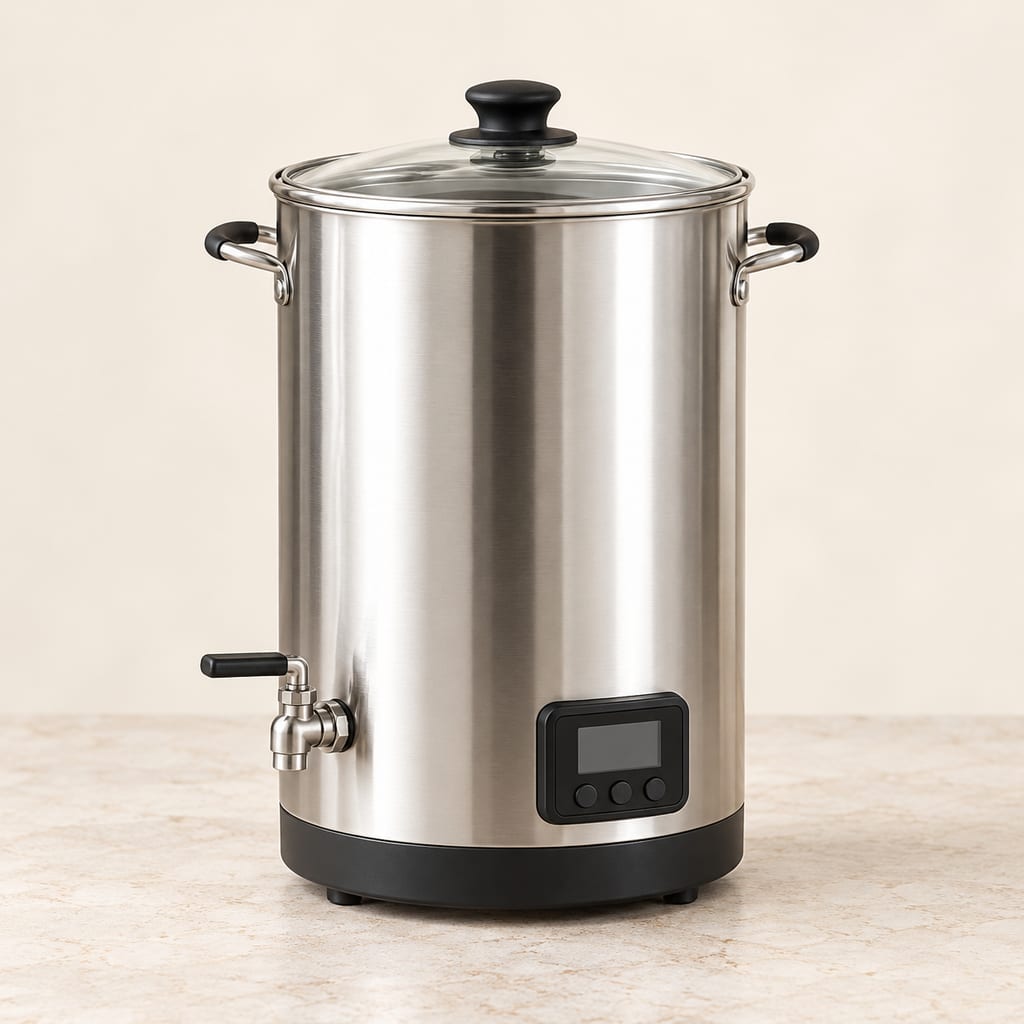
All-in-one brewer or electric mash kettle
An electric brewing vessel that combines controlled heating with a removable grain basket and, on the documented models, a recirculation pump for mashing and boiling wort.
 FermenteaWhere food goes to change
A pressed cheese whose curd is cooked slowly, then cheddared: kept warm in slabs that are turned and stacked for hours before milling, salting and pressing.
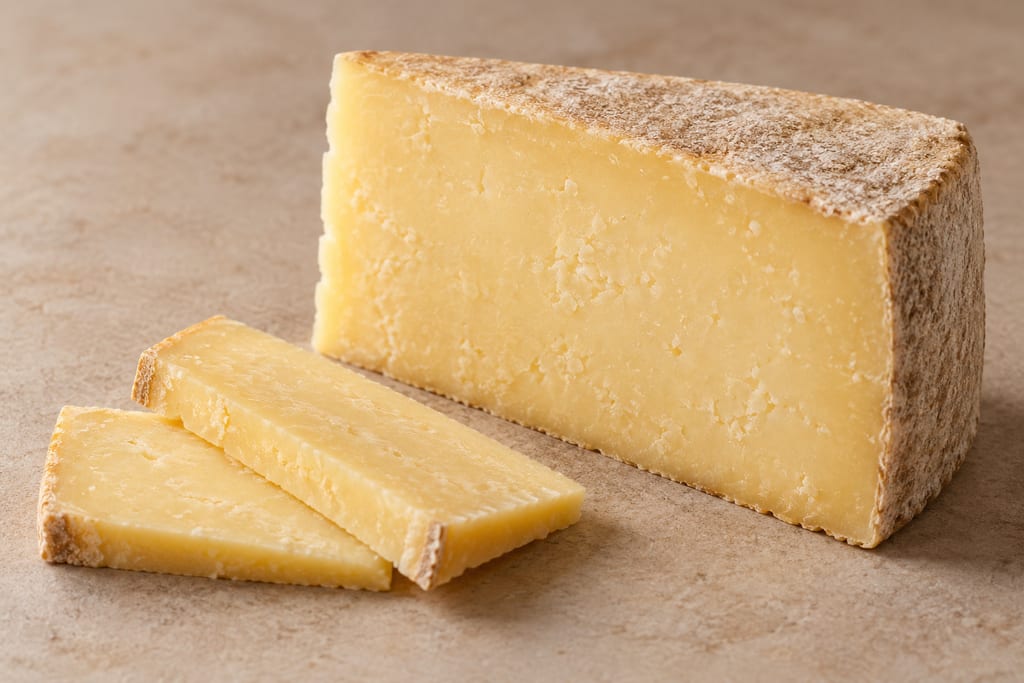
Cheddar-style cheese is a pressed cheese whose curd is cooked slowly and then cheddared: the curd is kept warm in slabs that are turned and stacked for hours before being milled, salted and pressed. The documented method is Jim Wallace's Cheddar recipe for New England Cheesemaking Supply. It is written for 3 gallons of pasteurised milk, although the author usually makes 6 gallons of raw milk.
The culture name and dose, and the calcium chloride amount, were in an ingredient list that did not render in the text the dossier read. This page does not record them, and the culture line is left without a quantity.
The milk is heated to 86 °F (30 °C). The source prefers a water bath, a pot set in a sink, and on a stove says to heat slowly and stir well. The culture is sprinkled on the surface, rehydrated for about two minutes, stirred in and held at 86 °F for 90 minutes. About 3/4 teaspoon of single-strength liquid rennet is added and the milk is left quiet for 45 minutes; it begins to thicken at about 15 to 20 minutes, and a clean break is checked before cutting.
The curd is cut to 1/2 to 3/4 inch pieces, rested about five minutes and stirred slowly for 10 to 15 minutes, with the temperature brought back to 86 °F if it has cooled. It is then raised slowly to 102 °F (39 °C), about 3 to 5 °F every five minutes at the start, over about 30 minutes, and stirred for another 30 to 60 minutes until a grip test shows it is firm enough.
The whey is removed to 1 to 2 inches above the curd mass, and the curds are drained into a holed pan set inside a solid pan, stirred for 10 to 15 minutes, then folded in cloth. The mass is kept at 85 to 90 °F (29 to 32 °C) and turned every 15 to 30 minutes for two to three hours. After about an hour the slab is cut in half and the halves are stacked under a board with about 8 lb of weight.
The slabs are milled into thumb- to walnut-sized pieces and salted at 2% of the fresh curd weight in three stages over 15 to 20 minutes. About 0.5% washes out, leaving about 1.5% in the cheese. The source gives no pH or acidity endpoints for the cheddaring or milling.
The cheese is pressed for an hour at 20 lb, another hour at 20 lb, four hours at 40 lb, then 24 hours at 50 to 75 lb, turned and rewrapped at each change. It is dried for a few days, then waxed or bandaged in cloth with lard. The source ages it at 52 to 56 °F (11 to 13 °C) and 80 to 85% moisture, turned weekly, for three to nine months or longer. These are the source's ageing figures and not a shelf-life statement.
The source warns that wax needs constant attention because it can easily reach its flash point, and that a too-wet curd can keep enough lactose to trigger late fermentation and leaking cheese. Penn State Extension states that ultra-pasteurised and UHT milk interfere with curd formation and does not recommend raw milk for home cheesemaking, so the control this page carries is pasteurised milk.
Untested adaptation: the 86 to 102 °F stages in a rim-supported inner pot in a brewer bath, with the bath keeping the curd at 85 to 90 °F during cheddaring. The other proposed route, direct low-power kettle heating with stirring before the set, is also untested. Neither is the documented method above.
Culture name and dose: In an ingredient list that did not render; a search snippet naming C101 was not verified..
Calcium chloride amount: Not in the rendered text..
PH or acidity endpoints: The page gives none for cheddaring or milling..
not researched yet
Yield 3 lb · Scaling: source batch only
The page warns that wax needs constant attention because it can easily reach its flash point.
Hazard sourceThe page says a too-wet curd can keep enough lactose to trigger late fermentation and leaking cheese.
Hazard sourceUse pasteurised milk; Penn State says ultra-pasteurised and UHT milk interfere with curd formation and should not be used, and does not recommend raw milk for home cheesemaking.
Control sourceNever leave melting wax unattended
Control sourceThe brewer setting is the bath temperature, not the milk temperature. Every temperature in the steps is a temperature of the milk, curd or whey, measured with a calibrated probe in the food.
The brewer configuration is a proposed adaptation that nobody has published a trial of; the source method was written for a pot in a sink of warm water or on a stove.
No source in this record establishes a place.
An electric brewing vessel that combines controlled heating with a removable grain basket and, on the documented models, a recirculation pump for mashing and boiling wort.
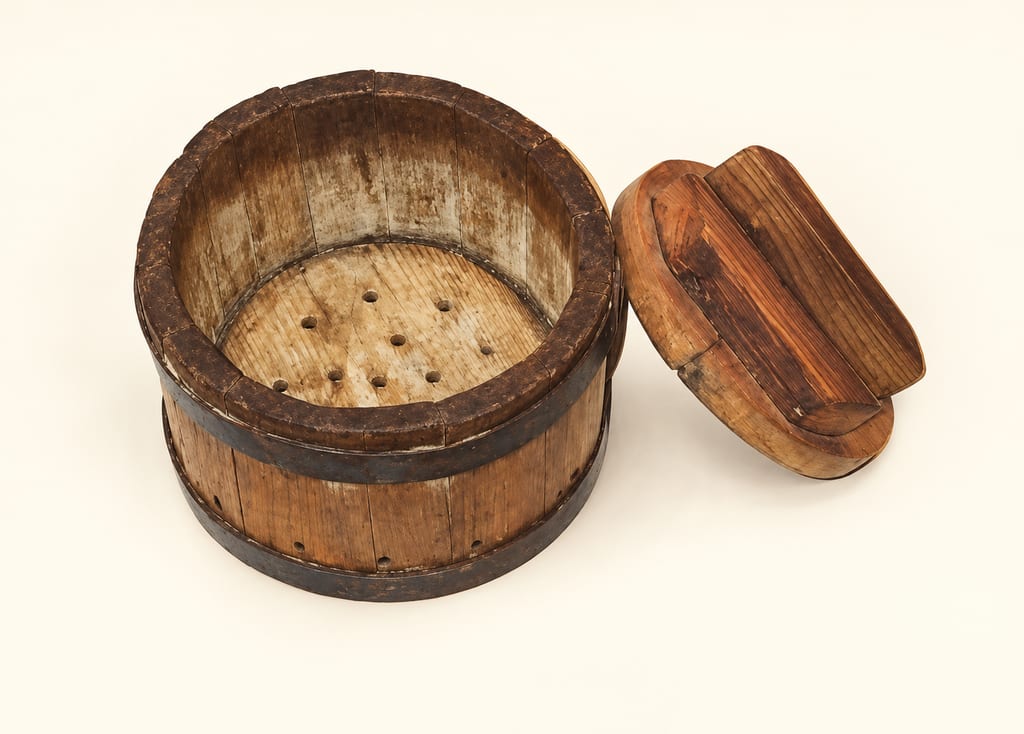
A cheese press applies weight or mechanical force to curds in a draining vat or mould. Tiree’s wooden fiodhan, stone weights, screw presses and a documented New Zealand lever press show distinct forms, not one standard design.
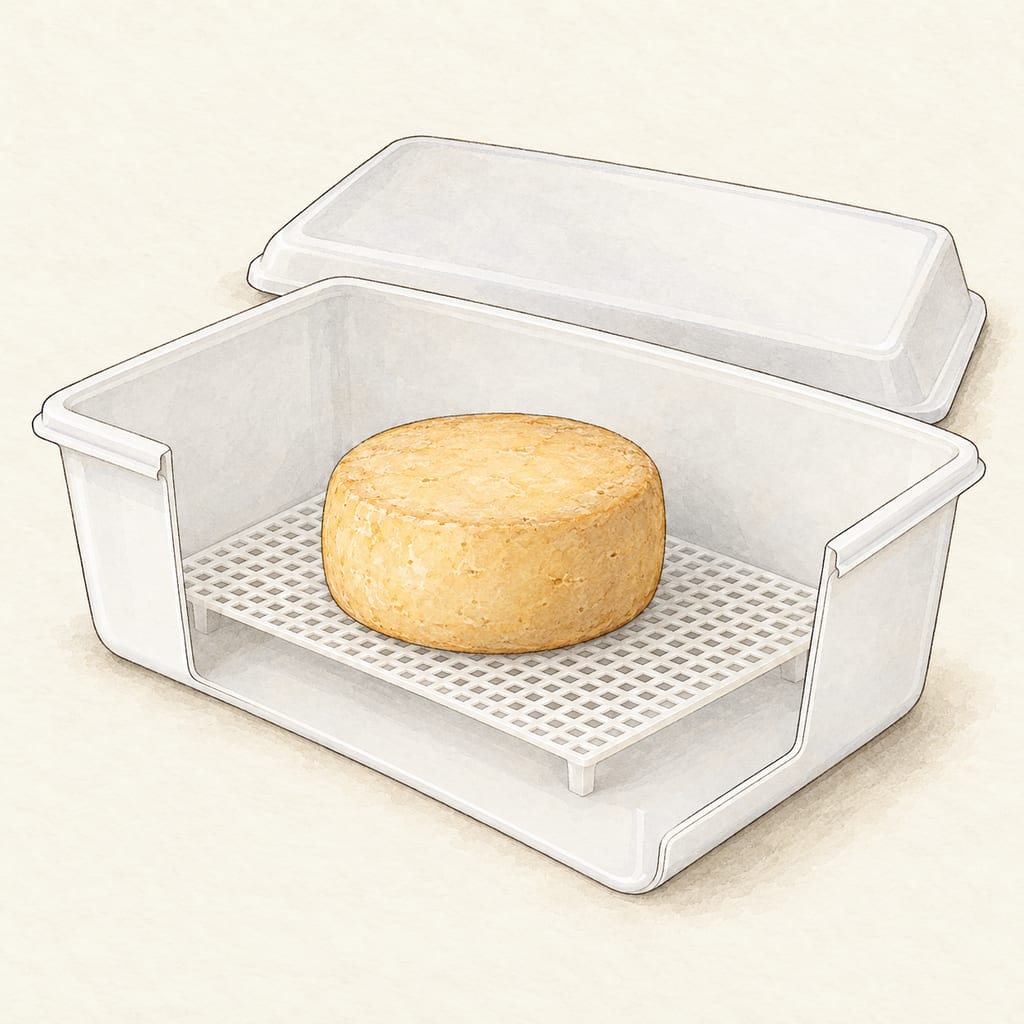
A lidded box used inside a cheese cave or cool cellar to create a small humid ripening space. A raised mat keeps cheese off the base so its underside can breathe and drain.
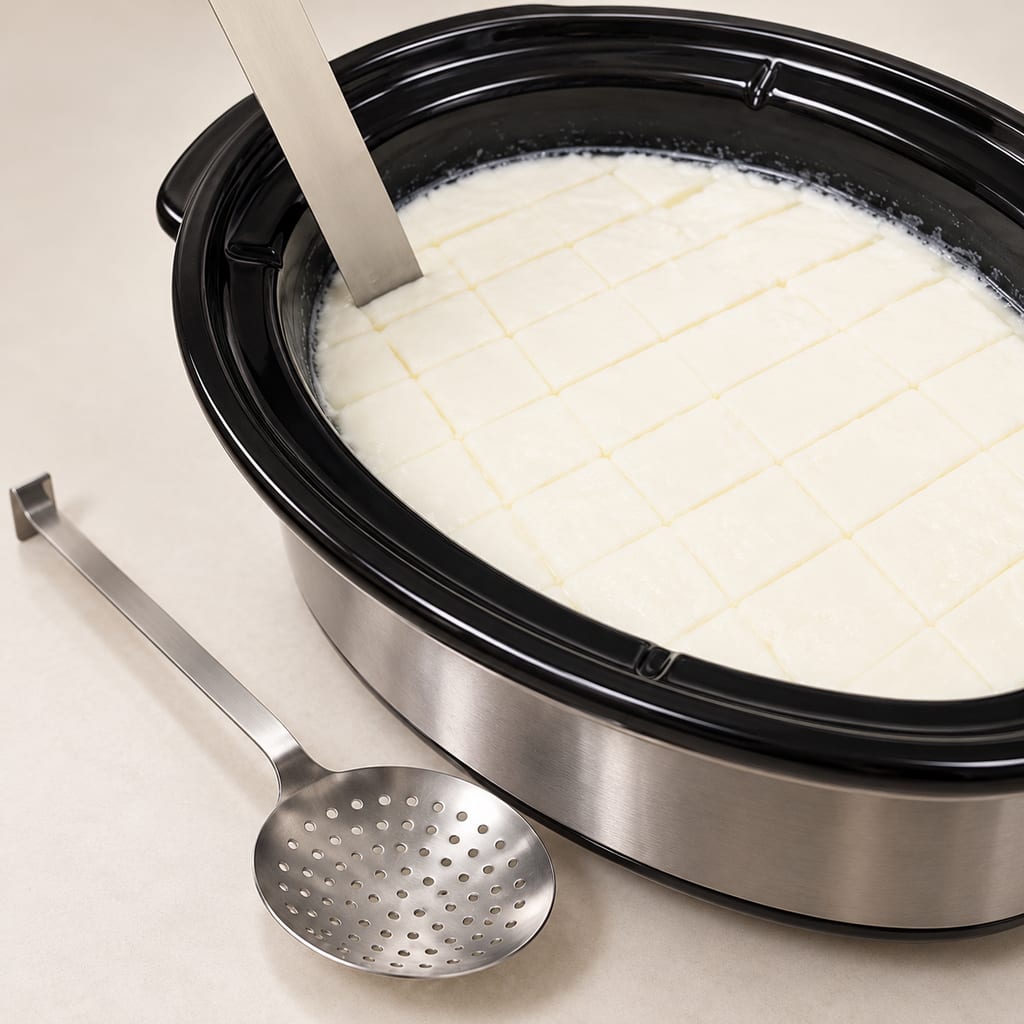
A curd knife cuts set milk into recipe-sized pieces; a perforated ladle lifts and moves curd while whey drains. The hand tools work at different moments in an open cheesemaking vessel.
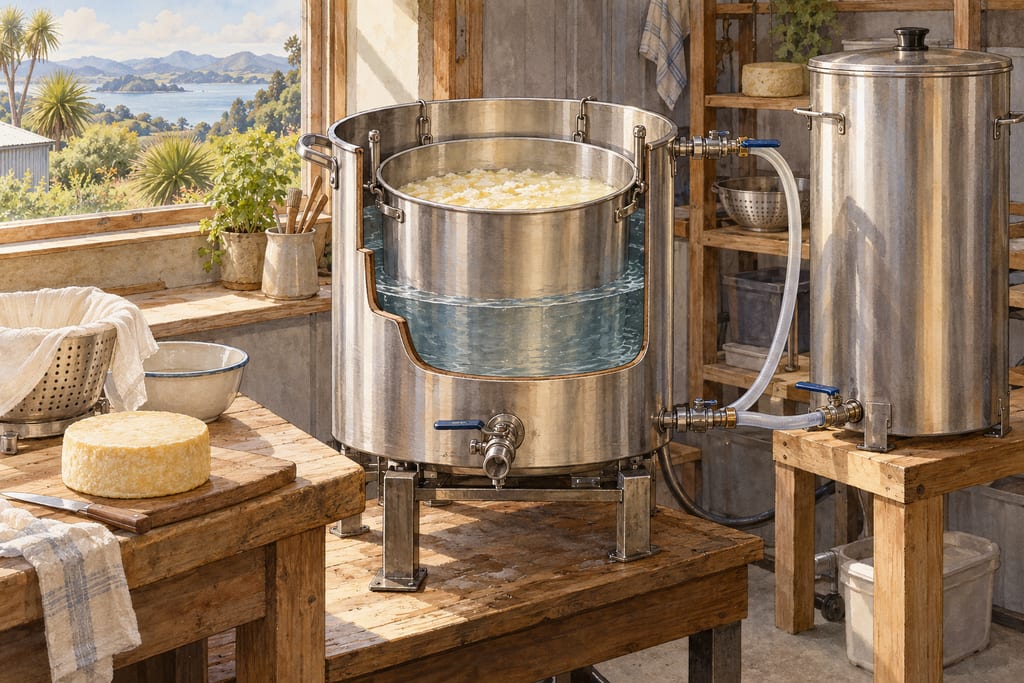
New Zealand home cheesemaker Tony Hamblyn's custom brewery, in which a 50-litre cheese pot hangs in a 70-litre mash tun of circulated hot water; later one tank served purely as hot water.
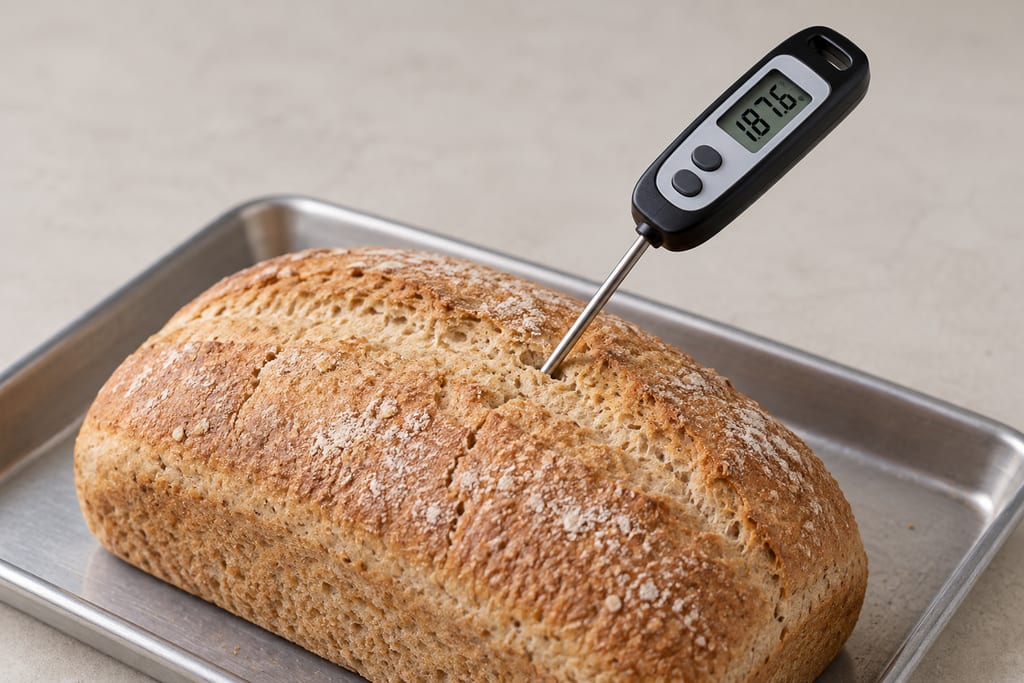
A probe thermometer measures the temperature of food at its sensing tip. It answers a different question from a kettle, oven or water-bath display, and from a pH meter.
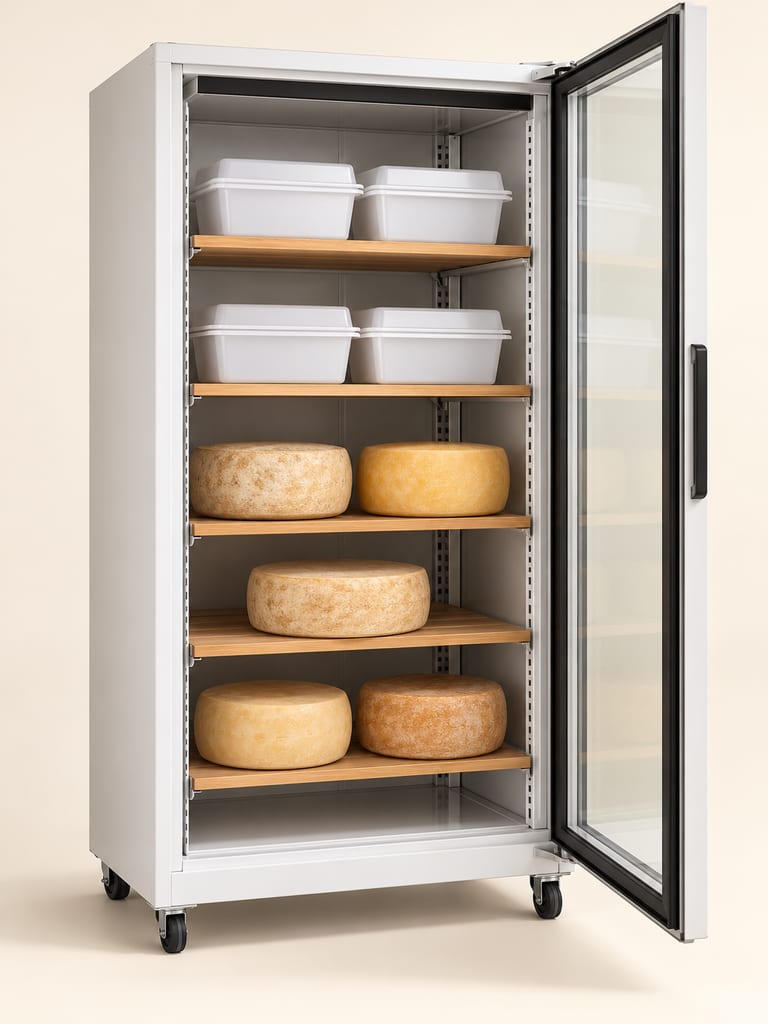
A modern cheese-ripening space made by controlling the temperature of a refrigerator or display cabinet and managing each cheese in its own covered container. It is an appliance conversion, not a natural cave or a traditional structure.
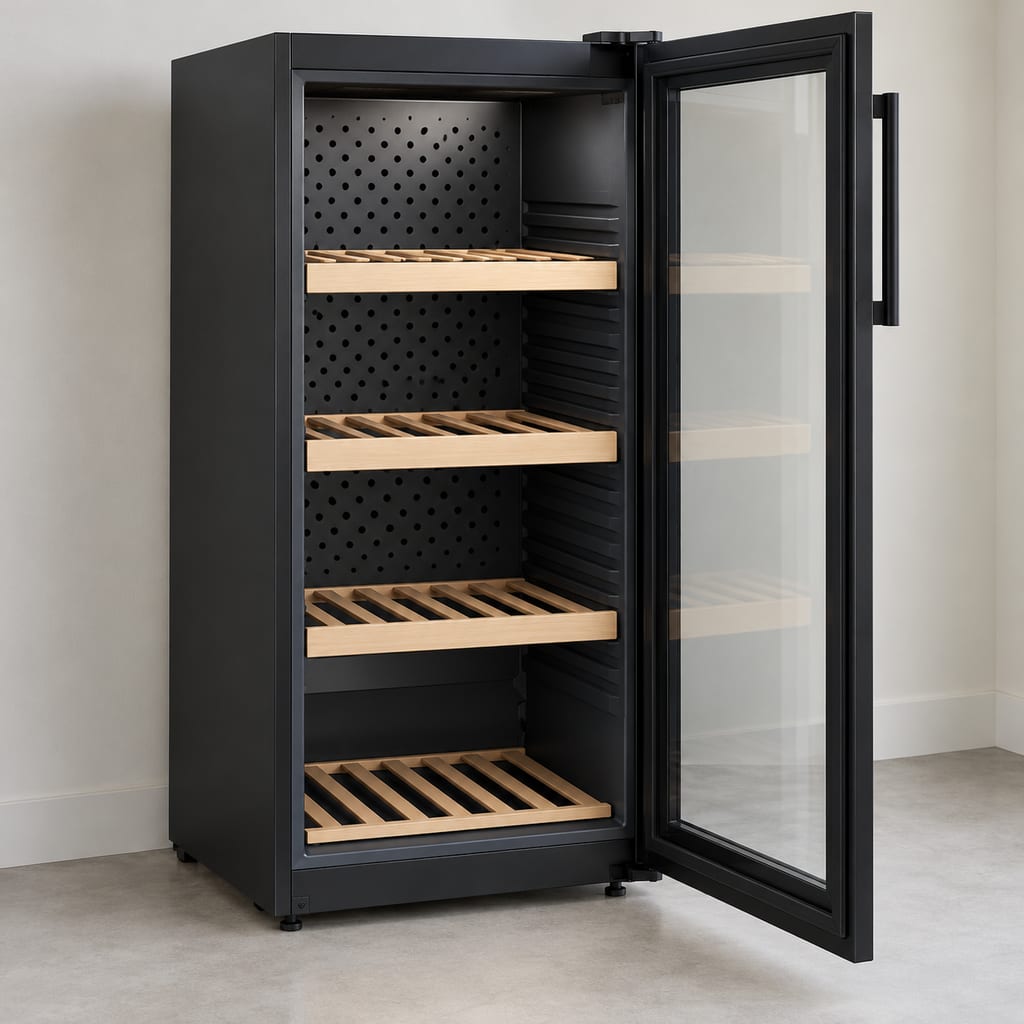
A refrigerator or wine cabinet can provide a cool enclosure for holding or ripening food, but it does not control every condition a ferment or cheese needs. Check temperature, humidity, airflow and cleanable food containers separately.
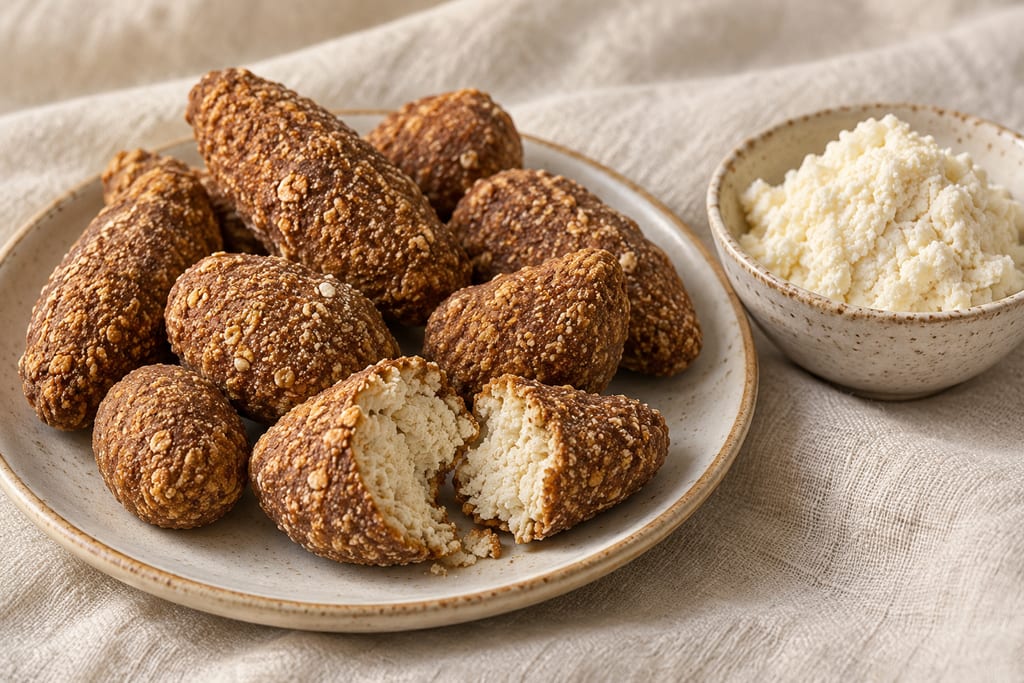
A two-stage Altai dairy preparation: sour chegen is heated into soft aarchi, then portions are drained, pressed and traditionally smoked into firm kurut.
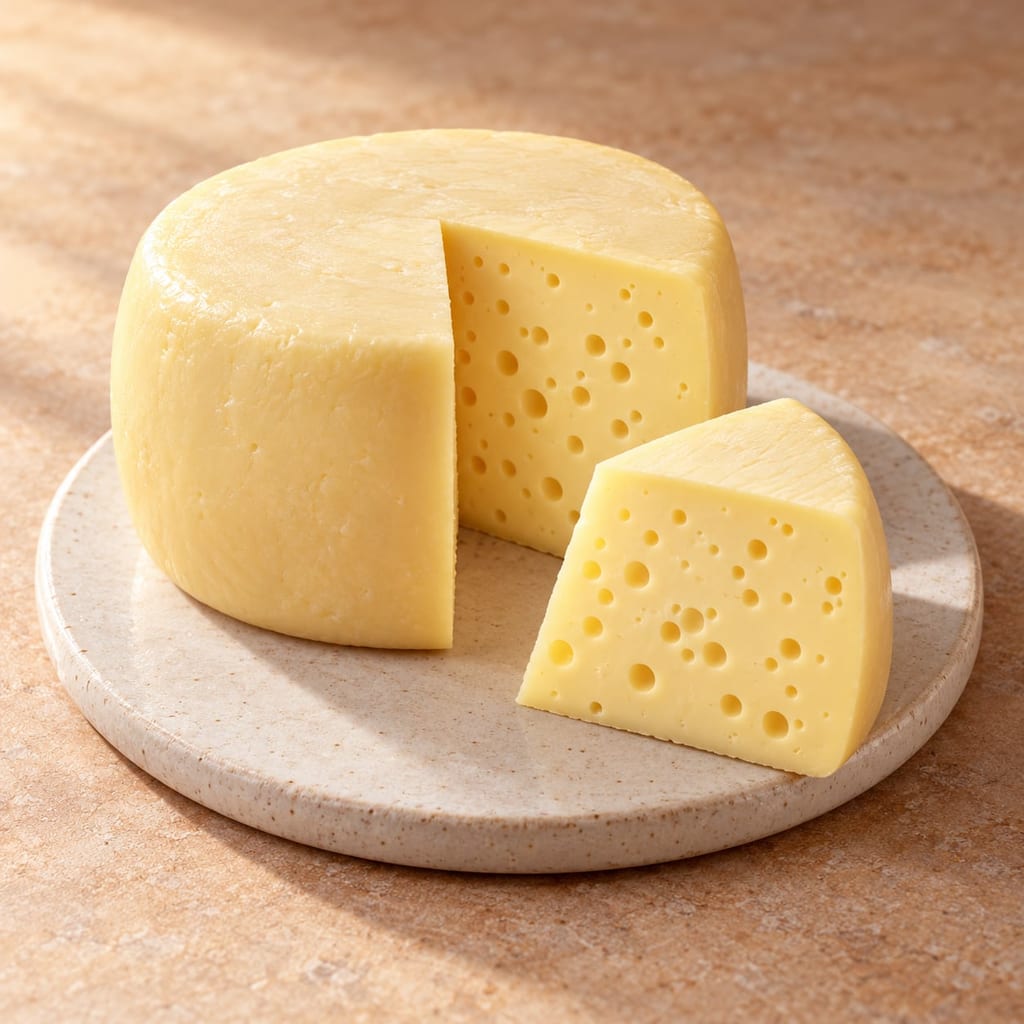
A washed-curd cheese with propionic bacteria, warmed by hot water in two steps and then held in a warm room for weeks so the bacteria can form its holes.
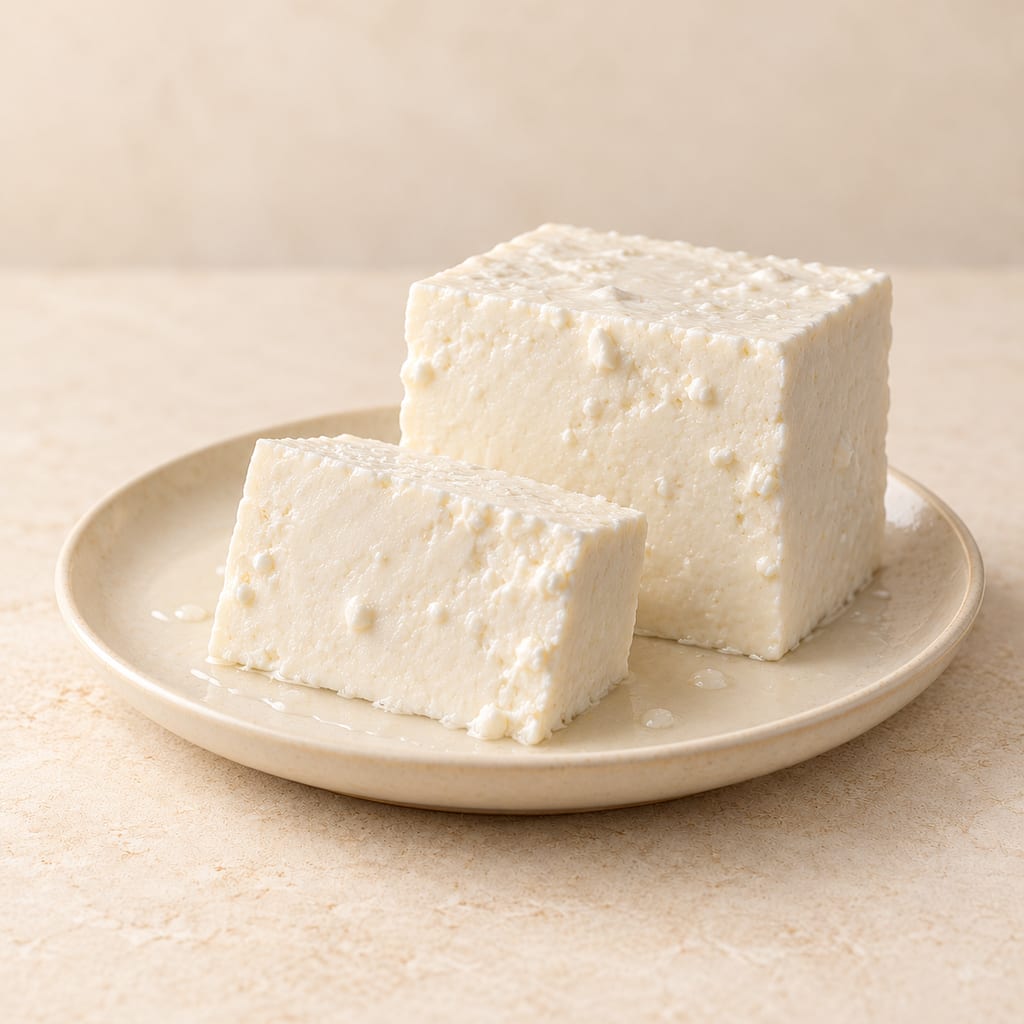
Beyaz peynir is a Turkish white cheese matured in brine. Sheep milk, alone or mixed with other milks, gives a close-textured cheese cut into blocks and packed in cans.
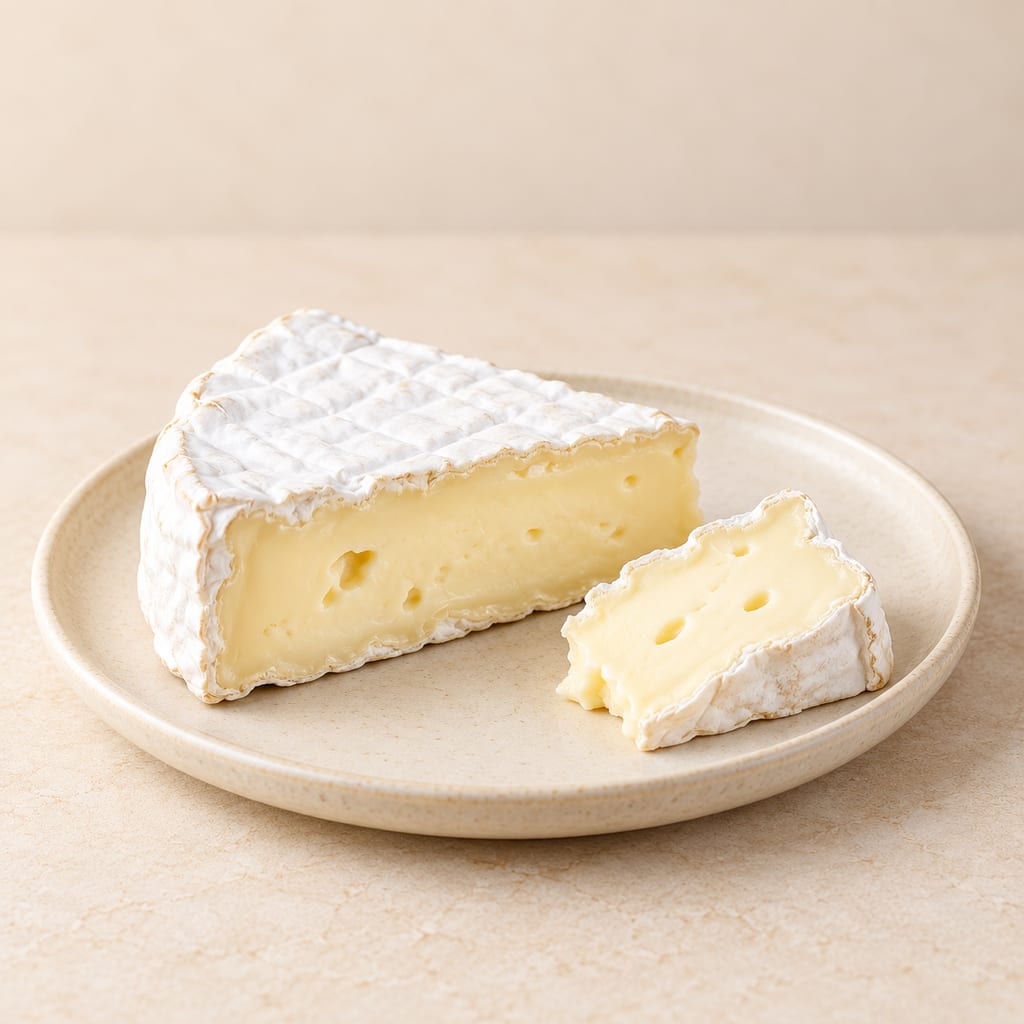
A cream-enriched Brie with a white bloomy rind and a softening center, made from pasteurized milk with lactic and surface cultures.
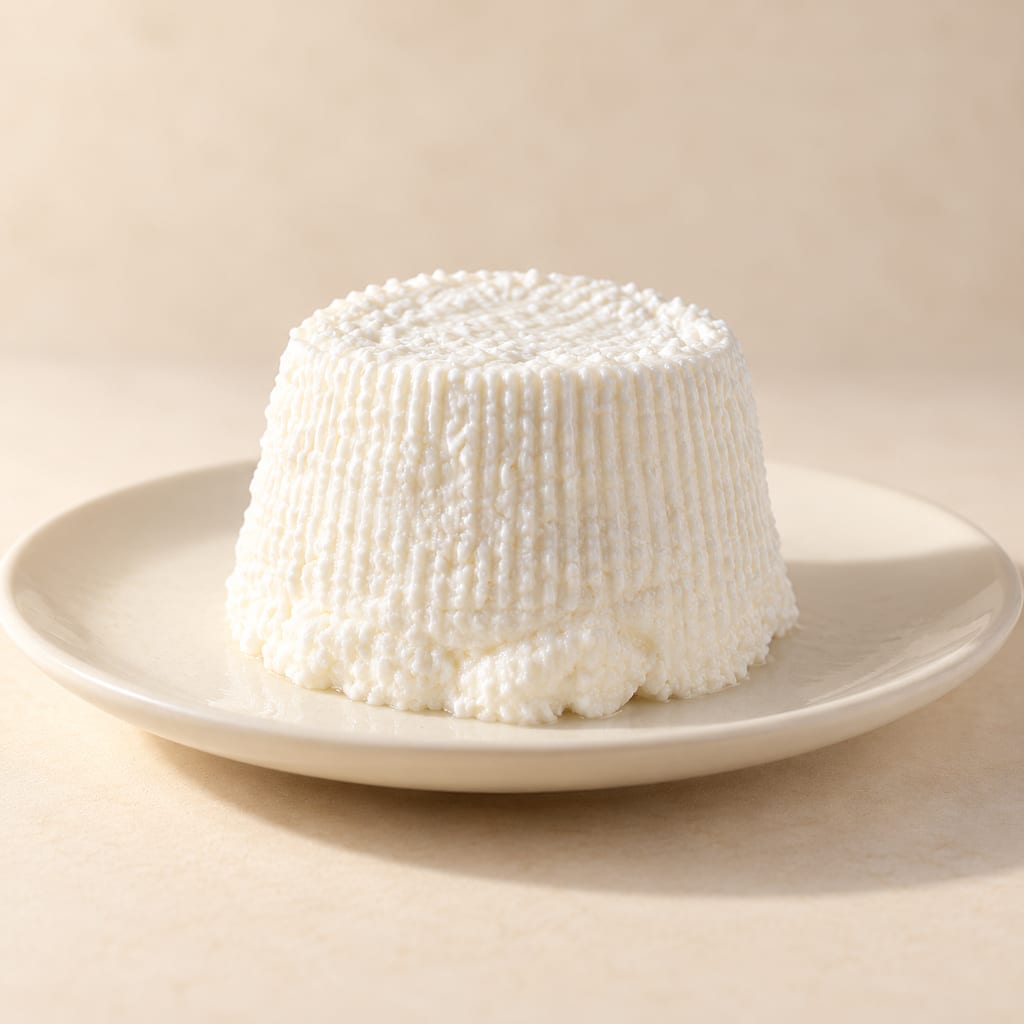
Corsican Brocciu is a whey cheese made by heating sheep's or goat's whey with whole milk and salt, then gently draining the flocculated curds. It is eaten fresh or salted and ripened as Brocciu passu.
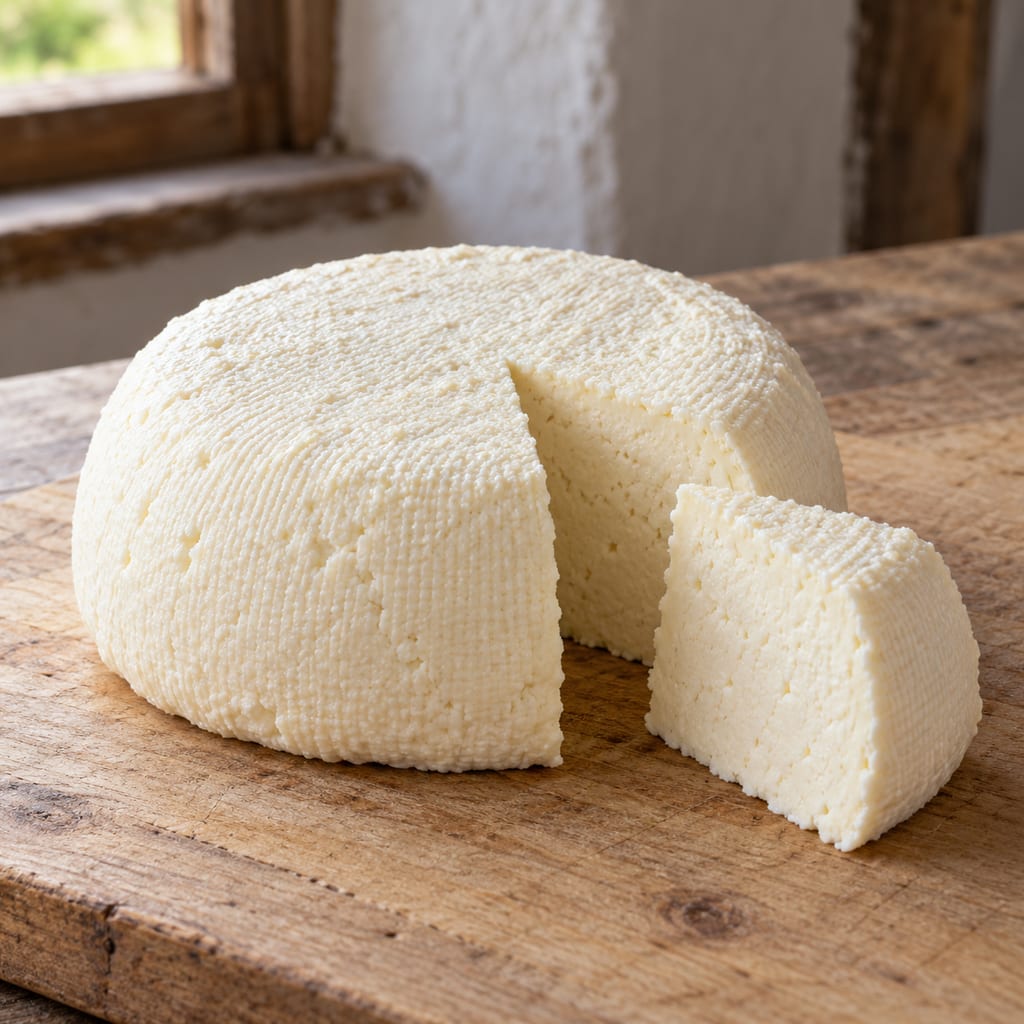
Budz is a traditional Hutsul rennet-set cheese made from sheep, cow or goat milk in the Ukrainian Carpathians, forming a fresh curd that can be eaten, smoked or processed into salted bryndza.
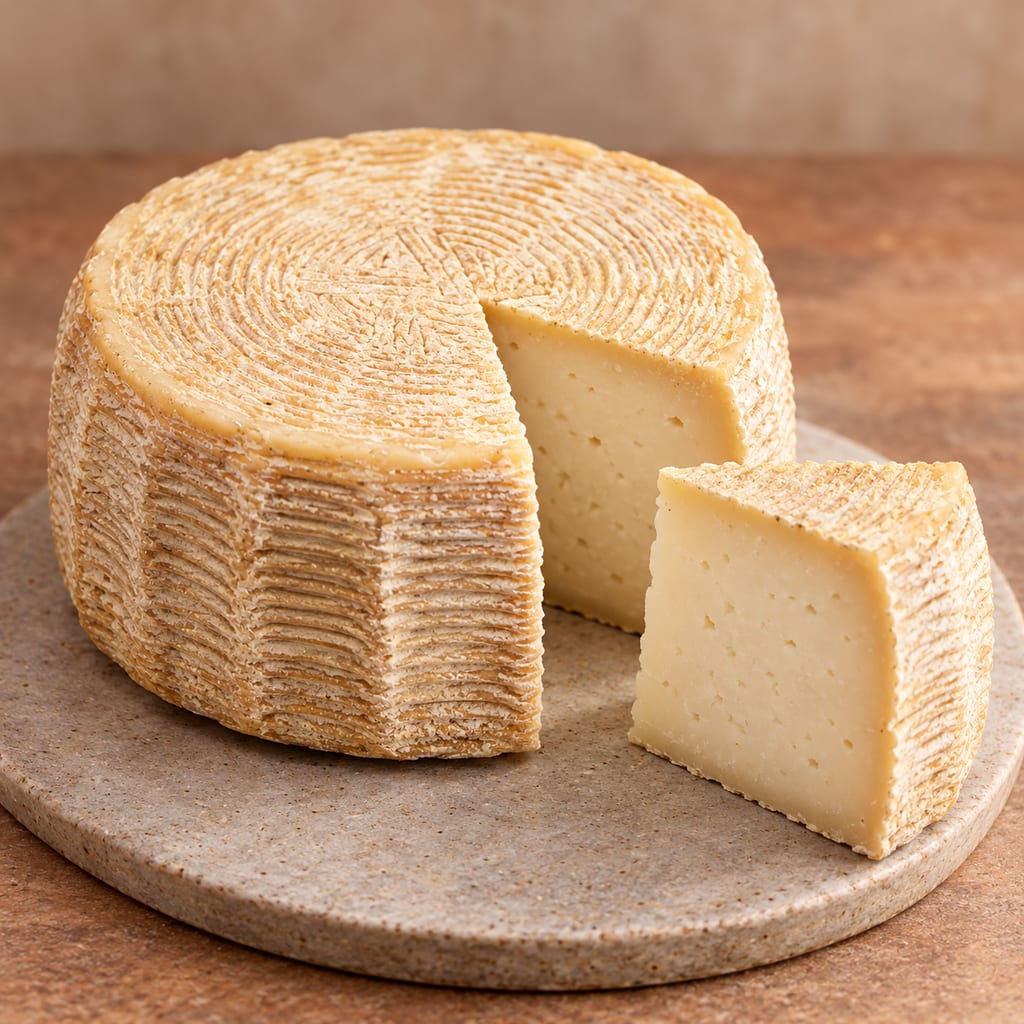
A scalded cheese moulded in baskets and re-cooked in its forms in hot whey, made alongside a ricotta from the same milk, then acidified, brined and aged for months.
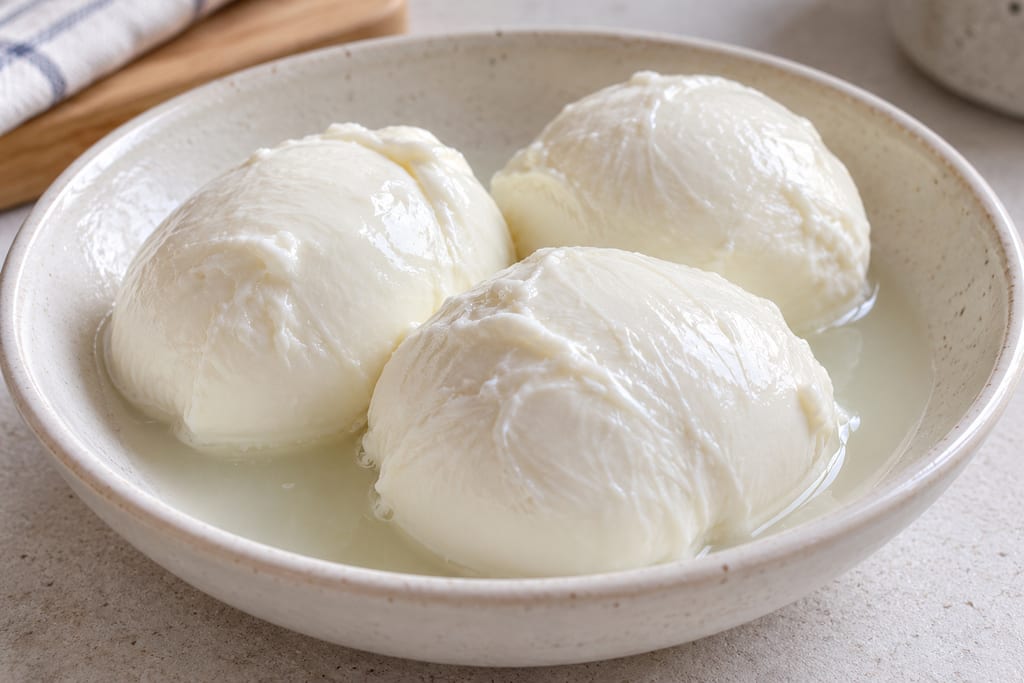
A quick fresh batch uses low-temperature-pasteurized whole milk, citric acid and rennet; the curd is warmed, drained and stretched in hot whey.
No community contributions have been published for this entry yet.
Sign in to contribute. Published comments and photos are free to read.
New England Cheesemaking Supply Company (author Jim Wallace)Method
Cheddar Cheese Making Recipetemperatures, rennet dose, times, cheddaring, salt rate, pressing schedule, ageing; water bath preferred and stove heating slow with stirring; wax warning
Cited in: A pressed cheese, cooked slowly and cheddared; Setting and cooking the curd; Cheddaring, milling and salting; Pressing, drying and ageing; Wax, late fermentation and the untested bath routes; What the sources leave open
Penn State ExtensionSafety
Home Cheesemaking (Penn State Extension, ART-4803, Kerry E. Kaylegian, 2019; copy hosted by UC ANR)pasteurised milk suitable; UP/UHT unsuitable; raw milk not recommended
Cited in: Wax, late fermentation and the untested bath routes; What the sources leave open