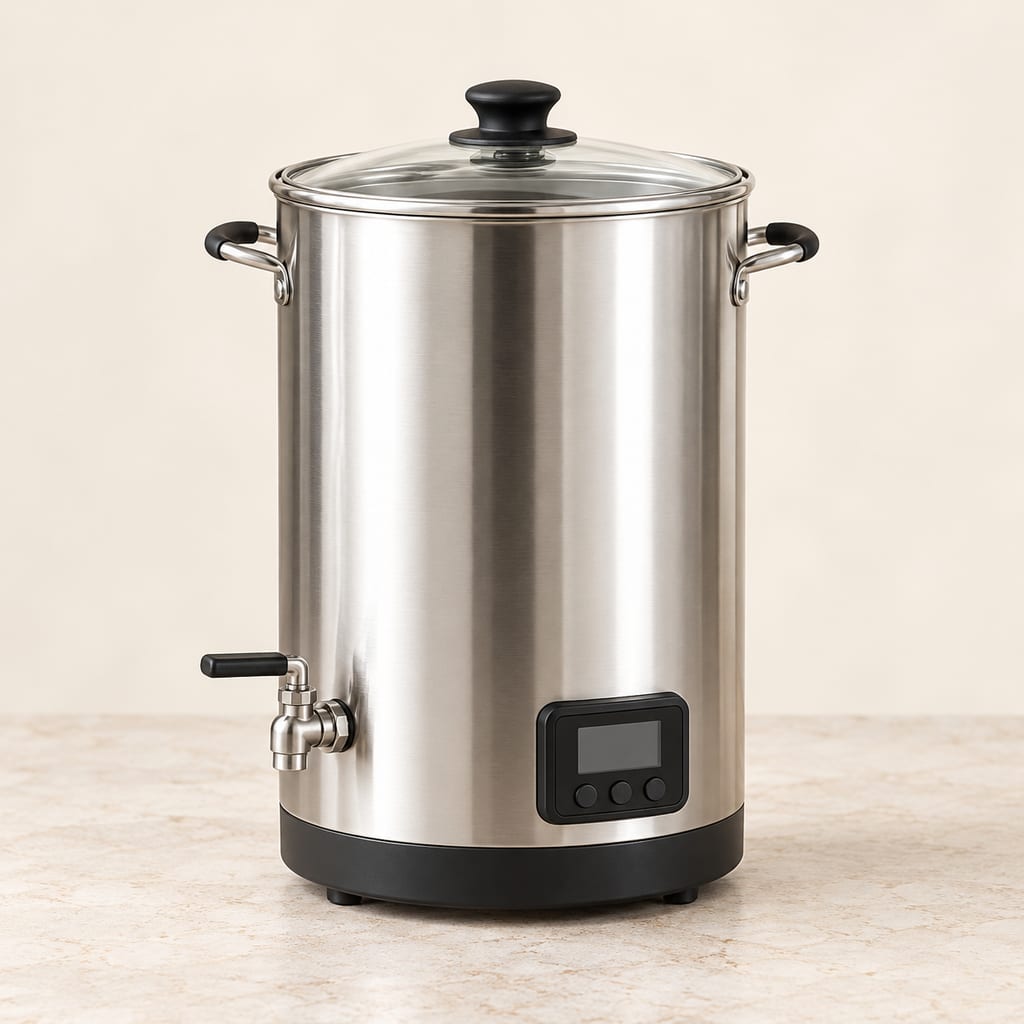
All-in-one brewer or electric mash kettle
An electric brewing vessel that combines controlled heating with a removable grain basket and, on the documented models, a recirculation pump for mashing and boiling wort.
 FermenteaWhere food goes to change
A washed-curd cheese with propionic bacteria, warmed by hot water in two steps and then held in a warm room for weeks so the bacteria can form its holes.

Baby Swiss-style cheese is a washed-curd cheese whose eyes, or holes, form during warm ripening. Jim Wallace's Swiss Cheese recipe for New England Cheesemaking Supply (HE-B13) gives the documented four-gallon method with a two-gallon note, and the source rates it advanced.
The culture is a lactic mesophilic culture, MM100, together with Propionic Shermanii. The source calls the propionic culture essential for the holes, which is why the fermentation type is recorded as mixed. The rennet dose for the four-gallon batch is not in the text read; the two-gallon note gives 1.5 ml.
After the curd is cut to 3/8 inch, it rests, is stirred gently and settles, and then a third of the whey is removed. The source says this step gives baby Swiss its elastic texture. Hot water at 130 °F (54 °C) is added slowly so the curds reach 95 °F (35 °C) within five minutes, and then more is added to bring them to 102 °F (39 °C) within five to ten minutes. The total water added equals the whey removed, and the curds are stirred slowly for 30 to 40 minutes.
The curd is allowed to settle and consolidate, the whey is drained to about an inch above the cheese, and a plate with a weight of about half the expected curd weight is set on it. The consolidated mass is rolled in cloth and moulded. It is pressed at about twice the cheese weight, 8 to 10 lb for four gallons, turned at one-hour intervals, then increased to 20 to 25 lb, and kept at 75 to 80 °F (24 to 27 °C) for a total pressing time of five hours.
The cheese rests at 52 to 56 °F (11 to 13 °C) until the next morning. The source says it should not develop acid beyond a final pH of 5.2 to 5.3, because excess acid spoils the texture and the eye formation.
The cheese is brined in a gallon of water with 2.25 lb of salt, a tablespoon of 30% calcium chloride solution and a teaspoon of white vinegar, for 2.5 to 3 hours per pound, with the surface re-salted halfway through. The source warns against over-salting.
Ageing takes three rooms. The cheese is kept cool at 50 to 55 °F and about 80 to 85% moisture for two to four weeks without wax, then moved to 65 to 70 °F (18 to 21 °C) and 80% moisture for three to four weeks of hole development, turned daily, with two to three weeks for smaller holes. It is finished in a cold room at 45 to 50 °F and 85% moisture for a month or more, and waxed only after the holes have fully developed.
Untested adaptation: the brewer used as a hot-water tank supplying 130 °F non-chlorinated water to a separate cheese pot or a nested one. The brewer plays no part in the development of the holes or in the ageing, which the source describes entirely in its rooms and times. This route is not the documented method above.
4-gallon rennet dose: Not in the text read; only the 2-gallon note gives 1.5 ml..
Curd water volume for the 2-gallon version: Not recorded..
The page's history section refers to Wisconsin Swiss makers in the late 19th and early 20th centuries; not verified here.
Yield 4 lb · Scaling: source batch only
The page sets a final pH limit of 5.2-5.3 after the overnight rest.
Hazard sourceUse pasteurised milk; Penn State says ultra-pasteurised and UHT milk interfere with curd formation and should not be used, and does not recommend raw milk for home cheesemaking.
Control sourceFinal pH after the overnight rest not below 5.2-5.3 (source quality limit)
Control sourceThe brewer setting is the bath temperature, not the milk temperature. Every temperature in the steps is a temperature of the milk, curd or whey, measured with a calibrated probe in the food.
The brewer configuration is a proposed adaptation that nobody has published a trial of; the source method was written for a pot in a sink of warm water or on a stove.
Use non-chlorinated water for the curd, as the page specifies.
No source in this record establishes a place.
An electric brewing vessel that combines controlled heating with a removable grain basket and, on the documented models, a recirculation pump for mashing and boiling wort.
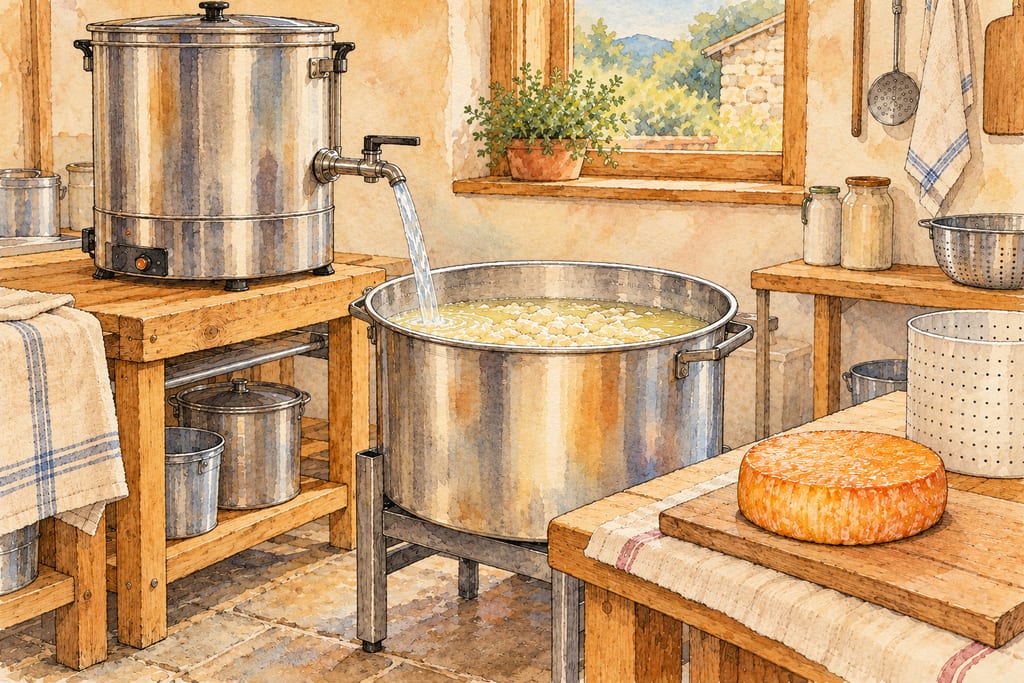
The brewer holds clean water at a set temperature for washed-curd cheeses and other hot-water jobs, beside a separate cheese pot, instead of heating milk directly.
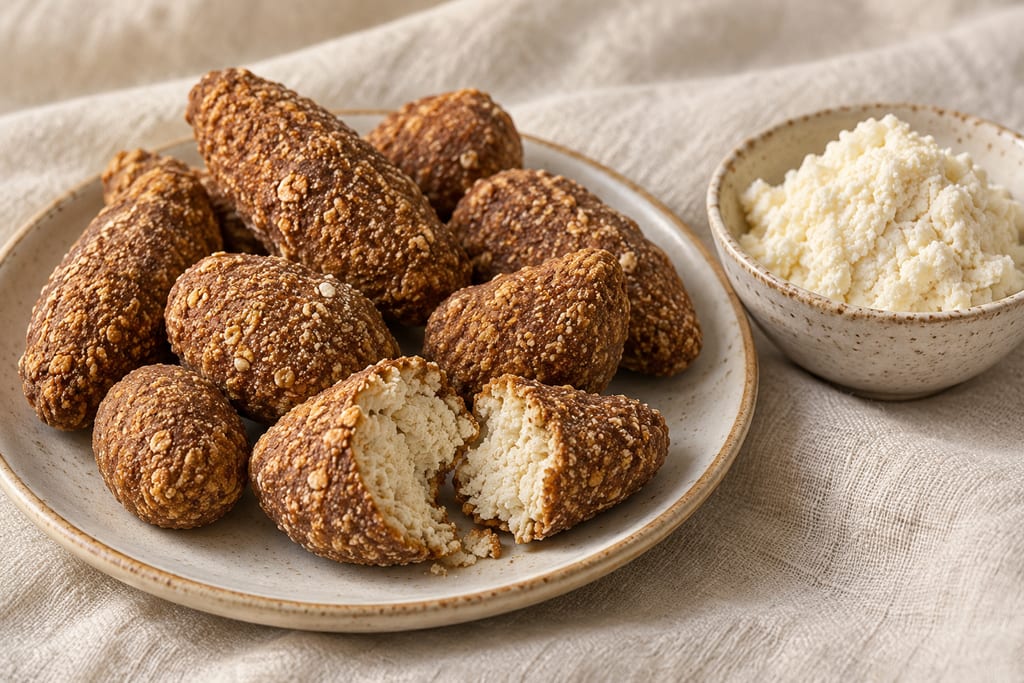
A two-stage Altai dairy preparation: sour chegen is heated into soft aarchi, then portions are drained, pressed and traditionally smoked into firm kurut.
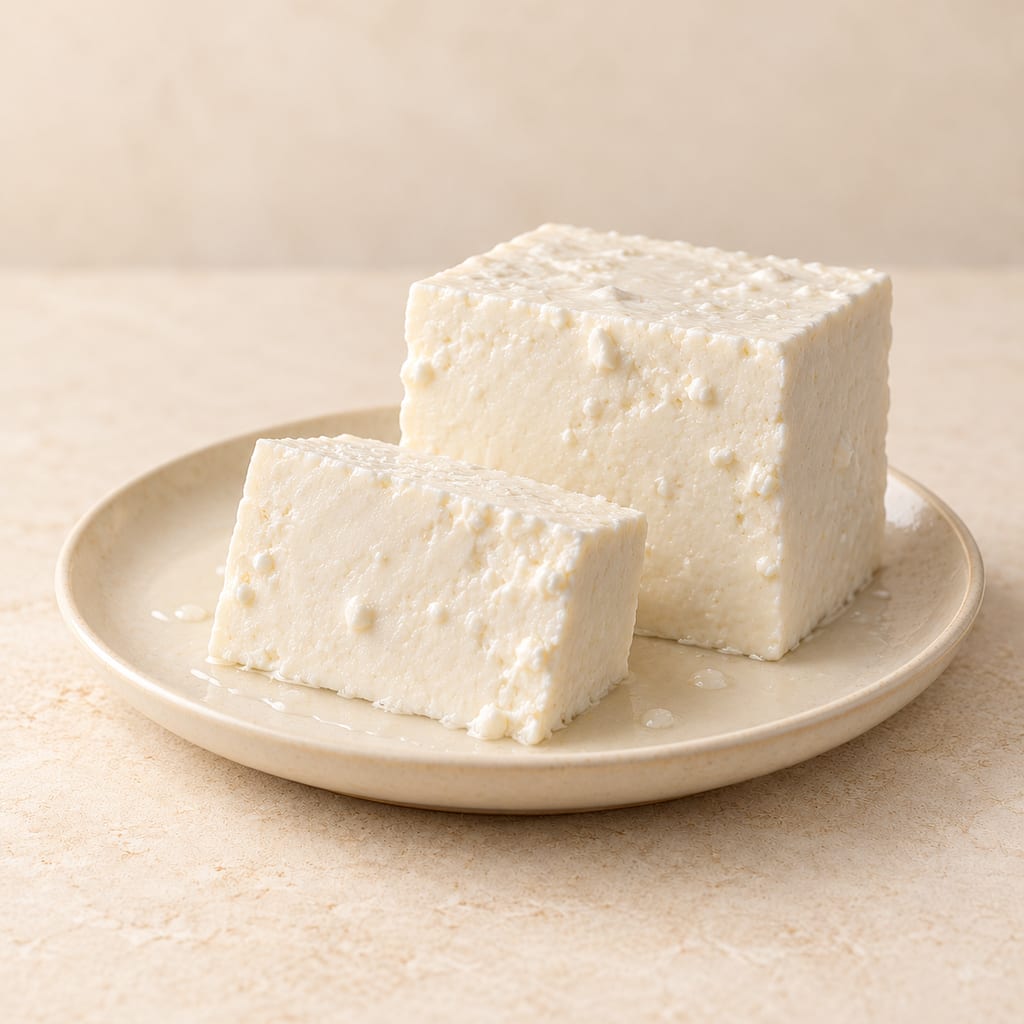
Beyaz peynir is a Turkish white cheese matured in brine. Sheep milk, alone or mixed with other milks, gives a close-textured cheese cut into blocks and packed in cans.
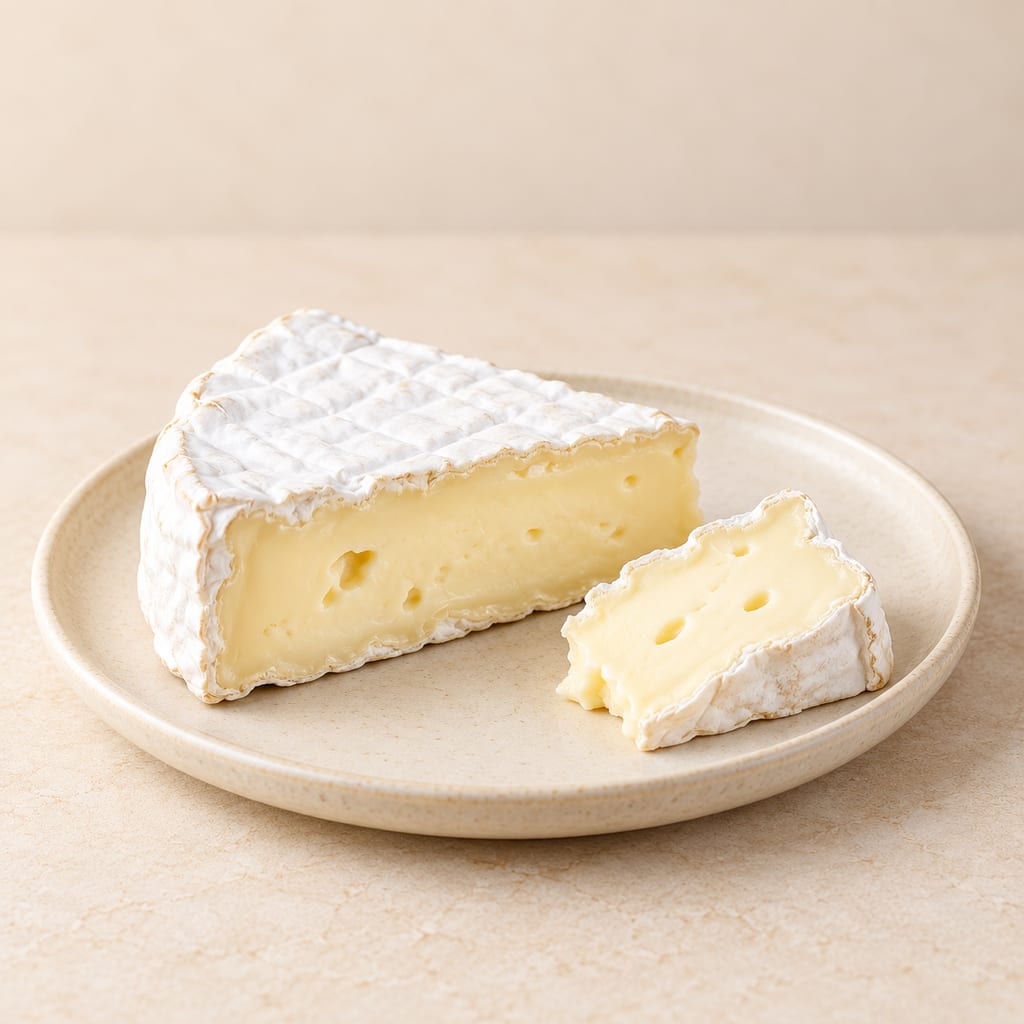
A cream-enriched Brie with a white bloomy rind and a softening center, made from pasteurized milk with lactic and surface cultures.
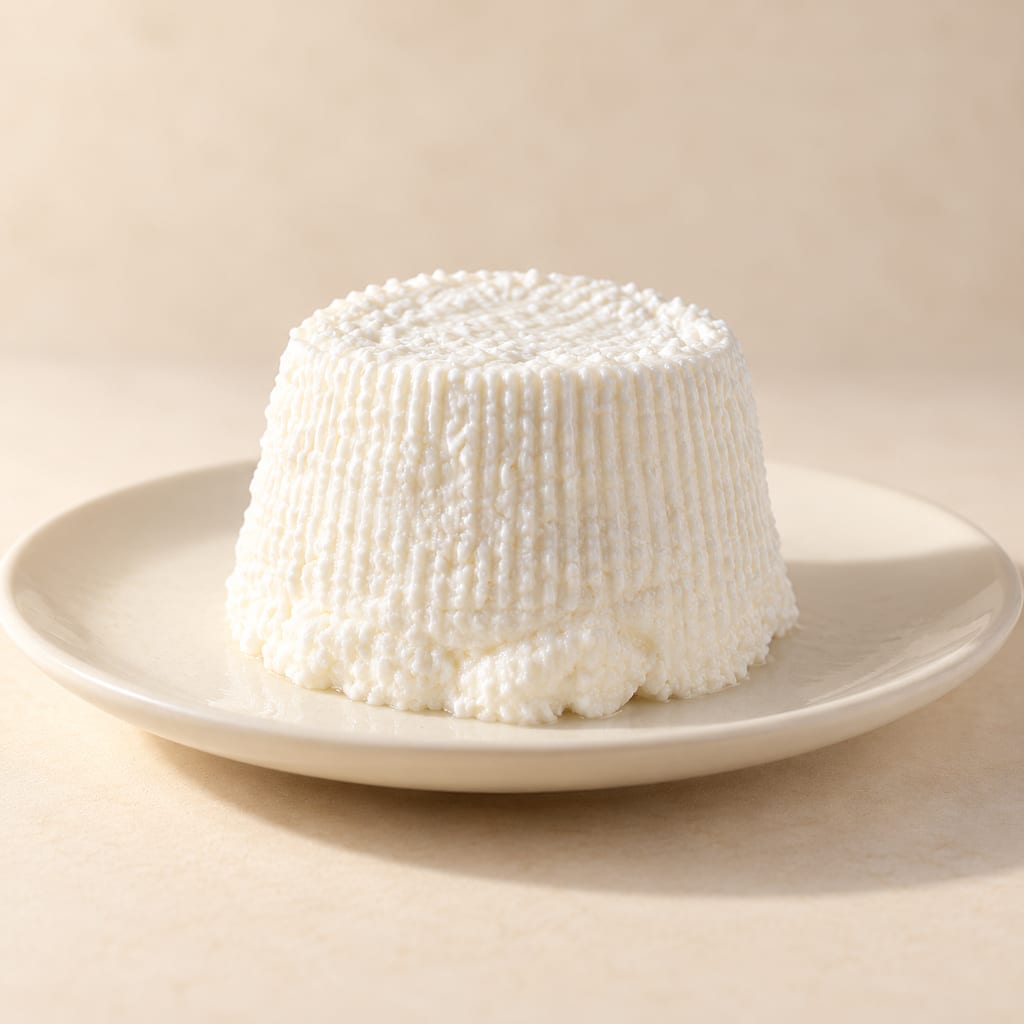
Corsican Brocciu is a whey cheese made by heating sheep's or goat's whey with whole milk and salt, then gently draining the flocculated curds. It is eaten fresh or salted and ripened as Brocciu passu.
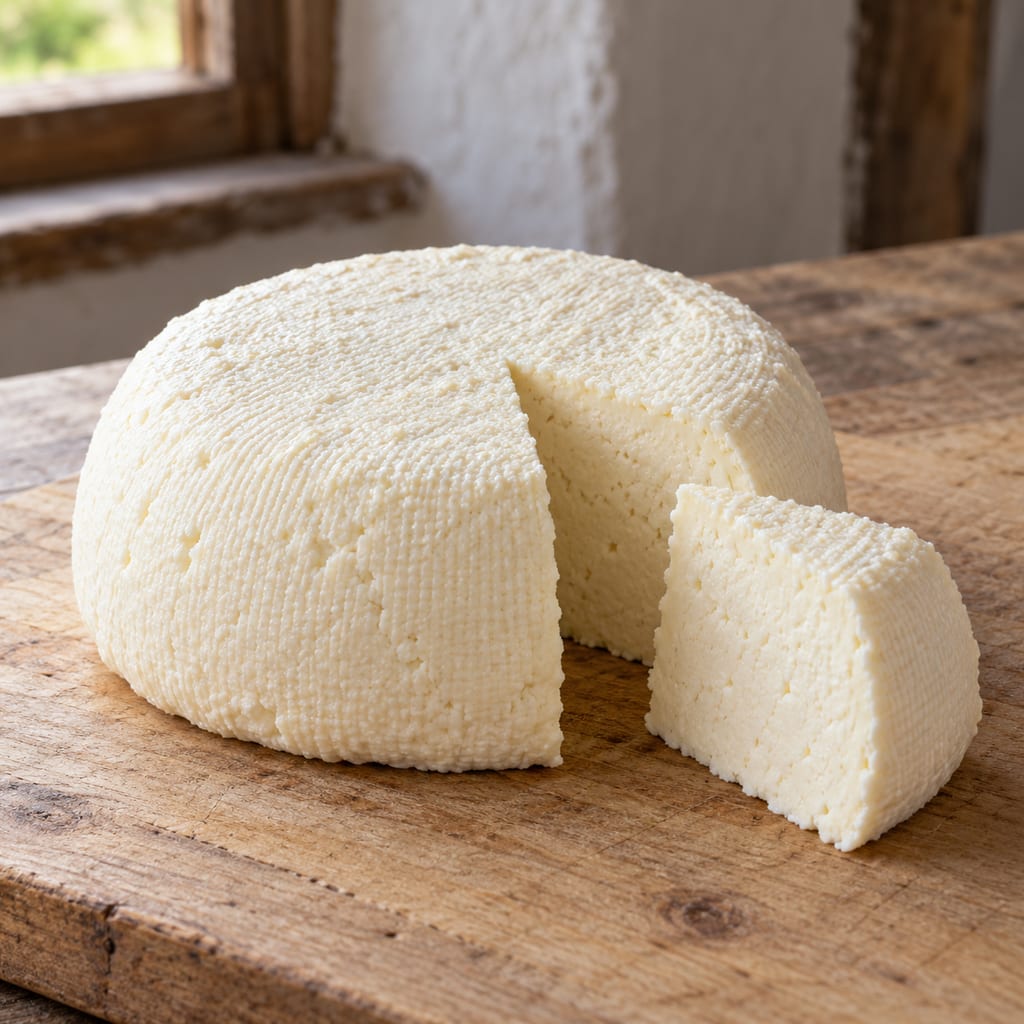
Budz is a traditional Hutsul rennet-set cheese made from sheep, cow or goat milk in the Ukrainian Carpathians, forming a fresh curd that can be eaten, smoked or processed into salted bryndza.
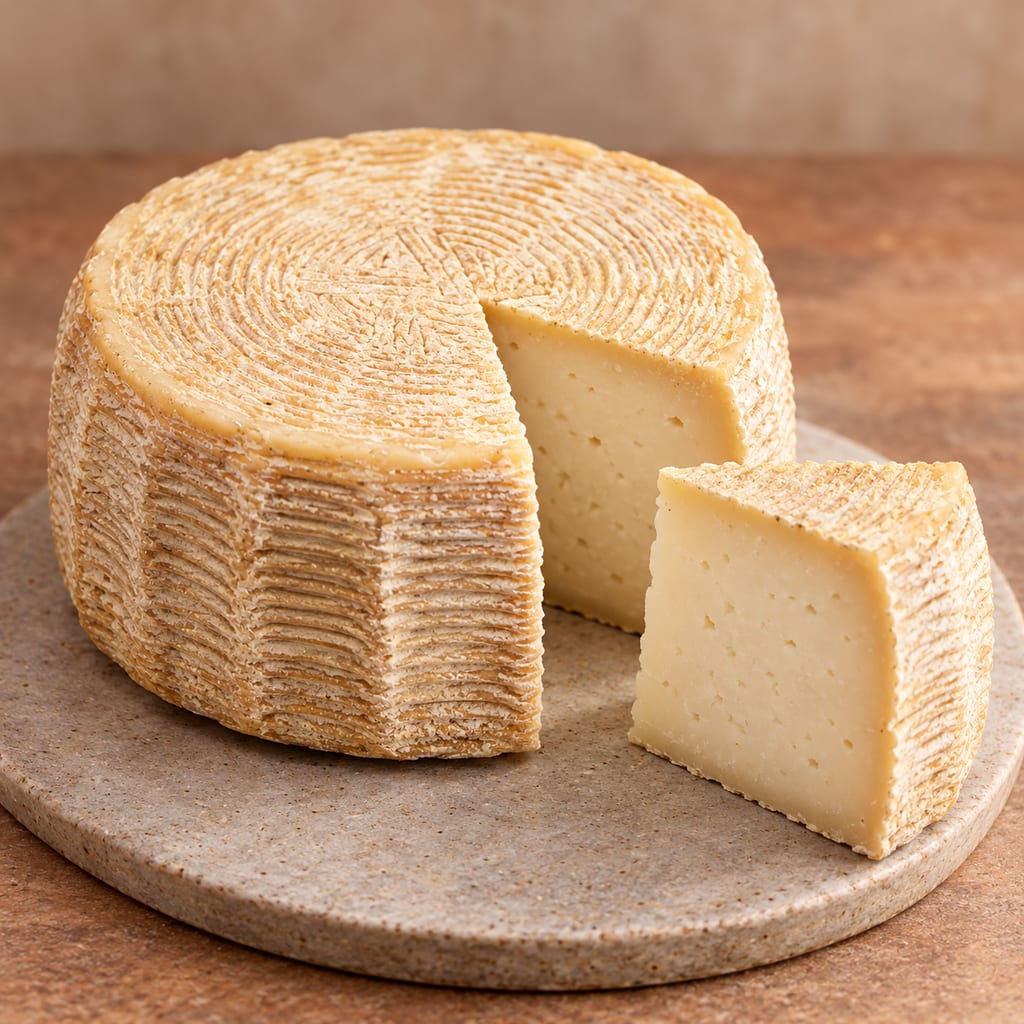
A scalded cheese moulded in baskets and re-cooked in its forms in hot whey, made alongside a ricotta from the same milk, then acidified, brined and aged for months.
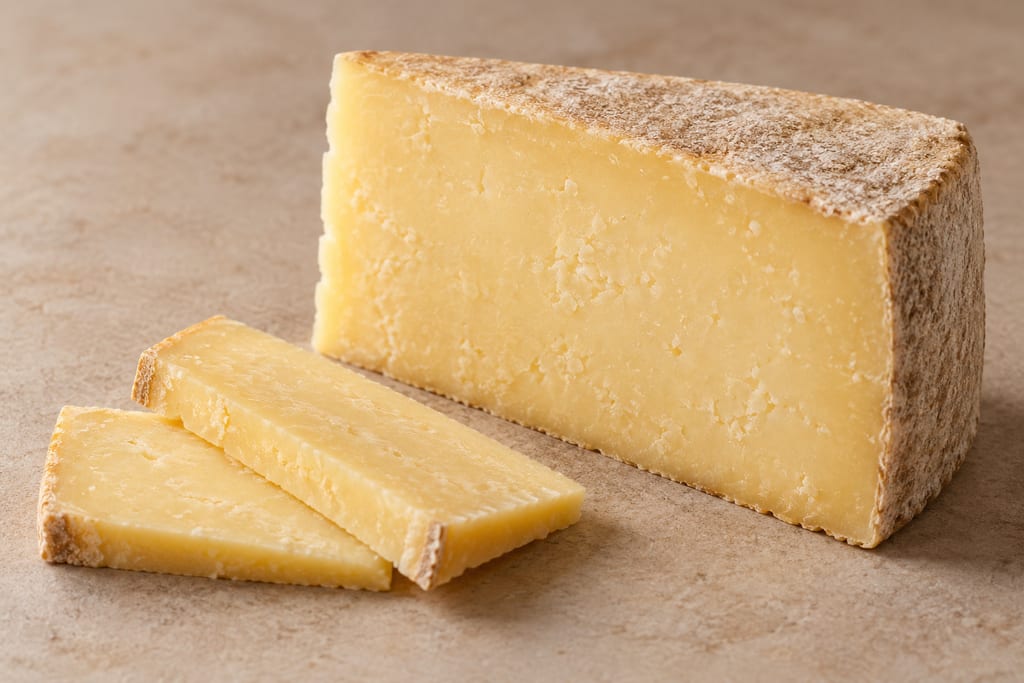
A pressed cheese whose curd is cooked slowly, then cheddared: kept warm in slabs that are turned and stacked for hours before milling, salting and pressing.
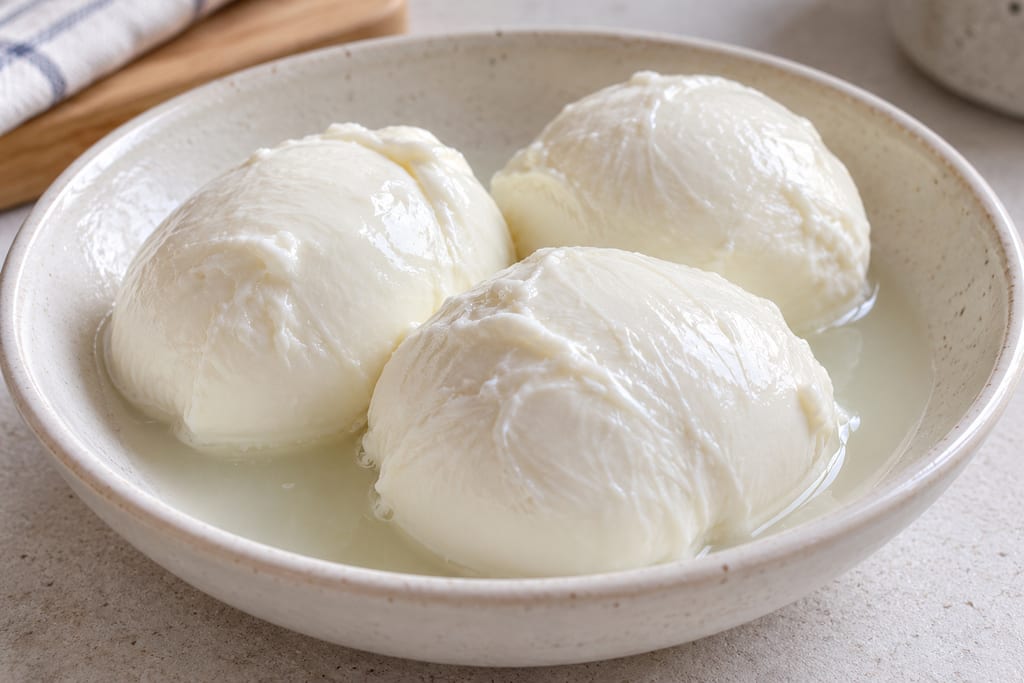
A quick fresh batch uses low-temperature-pasteurized whole milk, citric acid and rennet; the curd is warmed, drained and stretched in hot whey.
No community contributions have been published for this entry yet.
Sign in to contribute. Published comments and photos are free to read.
New England Cheesemaking Supply Company (author Jim Wallace)Method
Swiss Cheese Recipe (Baby Swiss)4-gallon method, culture and propionic doses, water steps, pressing, pH limit, brine, three ageing stages
Cited in: A washed-curd cheese whose holes come from propionic bacteria; Why the whey is replaced in two steps; Pressing, rest and the acid limit; Brine, hole development and the rooms; The brewer as hot-water tank (untested adaptation); What the sources leave open
Penn State ExtensionSafety
Home Cheesemaking (Penn State Extension, ART-4803, Kerry E. Kaylegian, 2019; copy hosted by UC ANR)pasteurised milk suitable; UP/UHT unsuitable; raw milk not recommended
Cited in: The brewer as hot-water tank (untested adaptation); What the sources leave open