
Adygean salt
Adygean salt is a seasoned table salt associated with Adygea and the wider North Caucasian culinary tradition. Salt is blended with garlic and a variable selection of herbs and spices; the exact mix depends on the named style and maker.
 FermenteaWhere food goes to change
аарчы и курут · aarchi · kurut · kyryt
A two-stage Altai dairy preparation: sour chegen is heated into soft aarchi, then portions are drained, pressed and traditionally smoked into firm kurut.
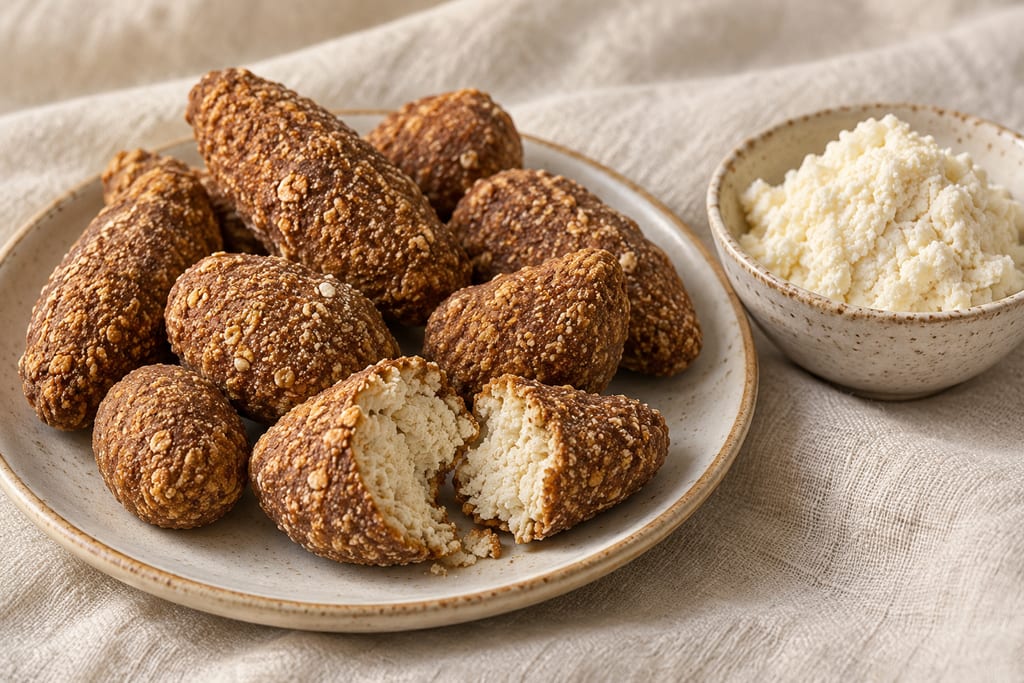
Aarchi and kurut are two stages in an Altai sour-milk preparation. Chegen, a cultured milk, is heated until curds form; draining and pressing produce soft aarchi. The curd can be eaten at that stage or shaped and smoked into firmer kurut. The names describe related but distinct foods, and the details vary across households and localities. This account follows a documented Altai method, not a universal formula for dried curd across Eurasia.
The Slow Food Ark of Taste entry describes chegen as an intermediate for aarchi, kurut and other dairy foods. The Gorno-Altai State University account describes aarchi as a soft cheese and notes its relationship to curd fragments from kurut shaping. Together, these sources frame the process as a chain: fermentation gives sour chegen; heating creates a curd; draining and pressing change its moisture and texture; smoking and further drying create a firmer product.
The Ark of Taste kurut account gives a specific back-slopping example: 100 grams of previous chegen for one litre of milk. It says to add the starter only after boiled milk has cooled to no warmer than 40°C, then hold it warm for about eight to ten hours. Cooling afterward allows the curd to thicken and limits continued souring. These are reported traditional conditions, not a validated fermentation schedule: the source does not establish an incubation temperature, acidity endpoint or safe time-temperature curve.
Chegen is a mixed fermented milk, not a single standardized culture. A study of two Altai chegen samples found communities dominated by Firmicutes and lactic-acid bacteria, including Lactobacillus-related groups. The small sample illustrates microbial complexity but cannot identify the organisms in every starter, define a universal chegen culture, or predict the microbiology of smoked kurut. A separate study compares chegen starter characteristics with kefir starter; it does not validate the home method here.
The reported recipe's quantities are unusually useful because many heritage descriptions name a process without specifying a starter proportion. Even so, a ratio is not a guarantee of repeatability: the acidity and vigor of a previous chegen batch, the milk's composition, and the warmth of the room all affect how quickly souring proceeds. The recipe therefore preserves the cited 100-to-1 ratio as a documented example and keeps the fermentation time explicitly approximate.
The source's warning about the milk temperature at inoculation has a practical role: hot milk can damage the living starter. Once the chegen is active, acid-producing bacteria change the milk over time, and the souring contributes to curd formation during later heating. The literature indicates diverse communities in sampled chegen, but neither the heritage account nor the small microbial survey gives an exact starter recipe or a reliable way to identify a safe culture by smell or appearance alone.
After fermentation, heating chegen separates curds from whey. The Ark of Taste account describes boiling the firm curd for roughly one and a half to two hours. Gorno-Altai State University also describes extended heating in its account of aarchi. The historical sources do not give a measured temperature profile or a microbiological endpoint, so this stage should be understood as a traditional cooking and curd-forming step, not as a tested preservation control.
Clean cloth lets whey drain while retaining the curd. Pressing consolidates the mass and makes it easier to portion for smoking. Aarchi is the softer, moisture-rich result; the hard, golden-brown kurut described by the Ark of Taste has undergone additional shaping and hearth smoking. The sources do not report final moisture or water activity, so texture and color alone cannot establish shelf stability.
The transition from soft aarchi to kurut is also a change in how the food is handled. Whey removal makes the curd more concentrated; pressing gives it a coherent body; dividing it increases exposed surface for the subsequent hearth treatment. The account's use of a thick thread for cutting is a specific practical detail, not a requirement that every household shape its curd the same way.
Smoking gives the surface a darker color and a hearth-associated flavor while further changing the curd. In the cited account the pieces sit on a wooden rack above the hearth for several hours, but the phrase 'above the hearth' does not define a measurable smoke density, temperature or humidity. Modern ovens, dehydrators and indoor stovetops should not be assumed equivalent. The recipe reports the traditional stage without inventing conversion times for equipment the source does not describe.
Aarchi remains a meaningful endpoint in its own right. Someone who wants the soft curd stage can stop after draining and pressing, serve it fresh, and keep it refrigerated as a perishable dairy food. The dried or smoked endpoint is a further preparation choice, not a necessary finishing step for every batch of chegen.
The Ark of Taste records connect chegen and kurut with Altai and Kumandin food traditions. The chegen entry places Kumandin communities near the Biya River and associates dairy-making with seasonal livestock movement. These are regional descriptions, not a claim that one river valley or community owns every form of the food. Livestock and dairy remain important in the Altai Republic, but household practice, available milk and seasonal routines can differ.
Related sour-curd foods appear elsewhere in Central and North Asia. The Tuvan and Kyrgyz material in the gallery is comparative: it illustrates neighboring approaches to curd drying, not aarchi or the exact Altai kurut method. Keeping the regional names distinct matters because shapes, ingredients and drying or smoking choices do not automatically transfer from one tradition to another.
The broader animal-husbandry setting helps explain why dairy preparations can appear in several linked forms. Fresh milk is seasonal and perishable; souring, cooking, draining and drying are ways of transforming it into foods with different textures and uses. This is a general interpretation of the documented dairy chain rather than a claim that every stage originated as a deliberate preservation strategy or that all products were stored for the same length of time.
A regional name should be handled with the same care as a place name. 'Kurut' is used across a wide area for dried or otherwise concentrated curds, but a shared word does not erase local distinctions. The Tuvan and Kyrgyz images in the gallery are specifically labeled as comparisons; they help readers see that related curds can look different without being treated as evidence for the Altai recipe's own ingredients, shaping practice or history.
The Slow Food account describes hard kurut as food eaten directly, added to dishes, or dissolved in water as a drink. Aarchi can instead be served as a soft curd. Gorno-Altai State University's examples include warming aarchi in boiling water, tea or milk, serving it with cream, and combining dried aarchi with melted butter and talqan. These are serving descriptions rather than mandatory accompaniments.
Photographs and contemporary product descriptions show different forms, from pale rounded pieces to darker smoked curds. The recipe here follows the source-described smoked route, while acknowledging that a household may stop at soft aarchi or shape and dry curd differently. A modern photograph can help readers recognize a product, but it does not establish a historical date or prove that a pictured item used the same process.
The dish uses also show why kurut should not be reduced to a survival-food image. The heritage record mentions direct eating and use in other dishes, while the university account preserves preparations for soft aarchi. Dissolving a hard piece in water turns a concentrated dairy food into a drink; adding it to a dish uses its sour dairy character in a different texture. The available sources do not provide a single canonical serving recipe or quantities for these uses.
Contemporary tourism and producer-facing material can make the foods more visible to visitors and urban consumers. Such presentations are useful evidence for present-day naming and appearance, particularly when they show a product sold as aarchi or kyryt. They should be read as modern documentation, not as proof that the same shape or recipe was universal in the past. That distinction is especially important when a gallery contains both university documentation and commercial photographs.
The Ark of Taste heritage record associates curd pieces from the Ukok burial mounds, dated to the fifth through third centuries BCE, with the long history of preserved dairy in the region. This is a reported archaeological association. It does not demonstrate that the exact modern sequence of chegen, aarchi and smoked kurut has continued unchanged from antiquity, and it does not supply an origin date for this recipe.
Modern scholarship on Altai livestock and dairy documents the economic and cultural importance of animal husbandry and preserved foods. The evidence is stronger for the broad place of dairy in regional life than for a single inventor, village or fixed historical recipe. For that reason, this page leaves the preparation's first attestation undated.
Archaeology can place preserved dairy in a long regional timeline, but food names and techniques rarely survive in a form that lets us map an ancient find neatly onto a modern household recipe. The Ukok association is therefore valuable context for the antiquity of dairy preservation while leaving unresolved exactly what the curd was, how it was made, and whether its makers used the same terminology.
The available written accounts likewise differ in purpose. A heritage catalogue describes identity and transmission; a university overview introduces a regional food; a scientific paper samples microbes; an economic study discusses animal husbandry. None alone is a complete ethnography of a single family's practice. Read together, they support a careful narrative about regional relationships and present documentation, while leaving room for local variation and additional community research.
This home adaptation uses pasteurized milk and clean equipment. The CDC advises choosing pasteurized milk because raw milk can carry harmful germs; that general guidance does not validate this specific fermentation. The traditional record gives hours and a starter ratio, but no acidity, water-activity, smoke-temperature or storage endpoint. If preparation is interrupted, keep the perishable dairy refrigerated.
Do not infer that a hard surface, a long boil or several hours of smoke makes kurut safe to keep at room temperature. The cited tradition describes a hearth process whose temperature and airflow are not controlled like a tested modern smoker. This recipe preserves the reported sequence while treating the finished curd as perishable and requiring a separately validated process before any shelf-stable storage claim.
Pasteurization and refrigeration here are contemporary home-kitchen safeguards, not claims about how the traditional food was made. The CDC's raw-milk guidance is general: pasteurized milk reduces exposure to pathogens associated with raw milk, but it does not make a fermented dairy process automatically safe. Clean containers and cloth, prompt chilling during pauses, and proper refrigeration after preparation are sensible handling controls, yet no source cited here validates a specific final storage duration.
A food intended for longer storage would need a tested process with measured critical controls and appropriate local guidance. This page intentionally does not turn a heritage time estimate into a shelf-stable recipe. In particular, the 3–4 hour hearth description cannot be translated into a guaranteed smoke dose or dehydration threshold, because neither the source nor the consumer-facing photographs provide those measurements.
A Slow Food heritage record reports curd pieces associated with Ukok burial mounds dated to the fifth through third centuries BCE. This does not prove continuity with the exact modern chegen–aarchi–kurut sequence.
Use pasteurized milk and clean equipment.
This traditional account does not validate pathogen control or room-temperature storage. Do not assume smoking or a hard texture makes the curd shelf-stable.
The sources give traditional times but no measured acidity, water activity, smoke temperature or validated safety endpoint.
Regional attribution in the Ark of Taste record; not a claim that every Altai household uses one recipe.
Adygean salt is a seasoned table salt associated with Adygea and the wider North Caucasian culinary tradition. Salt is blended with garlic and a variable selection of herbs and spices; the exact mix depends on the named style and maker.
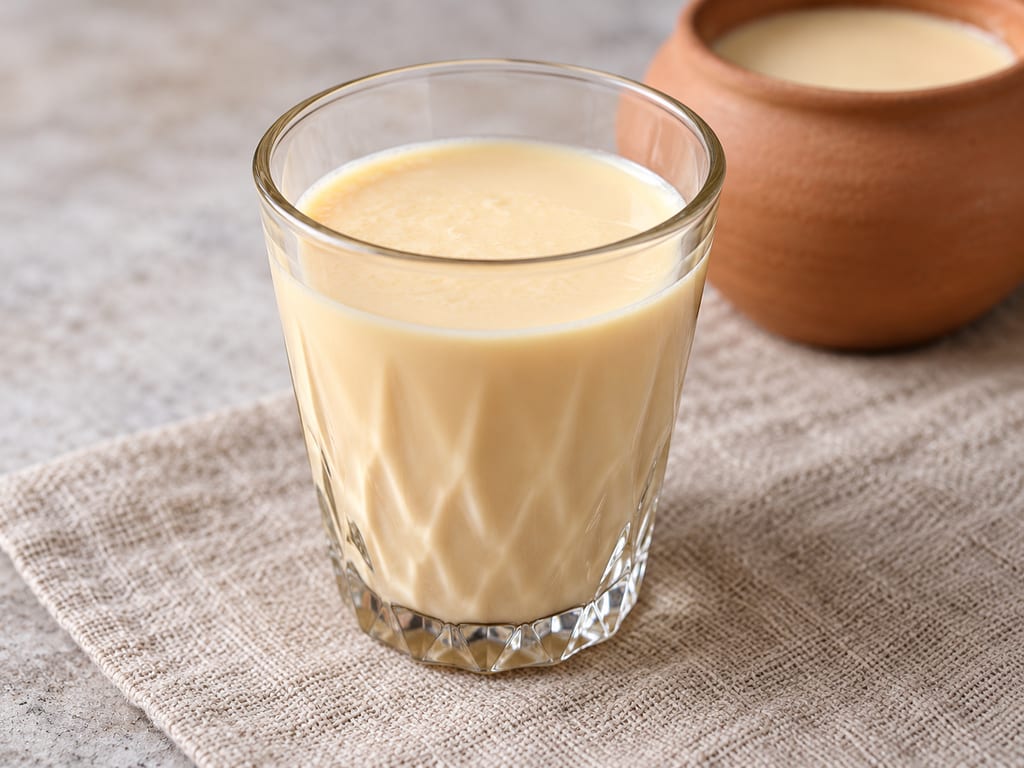
Baked milk is an Eastern European preparation of milk held at high heat for hours until it turns cream-coloured with a cooked, mildly sweet flavour, without any fermentation.
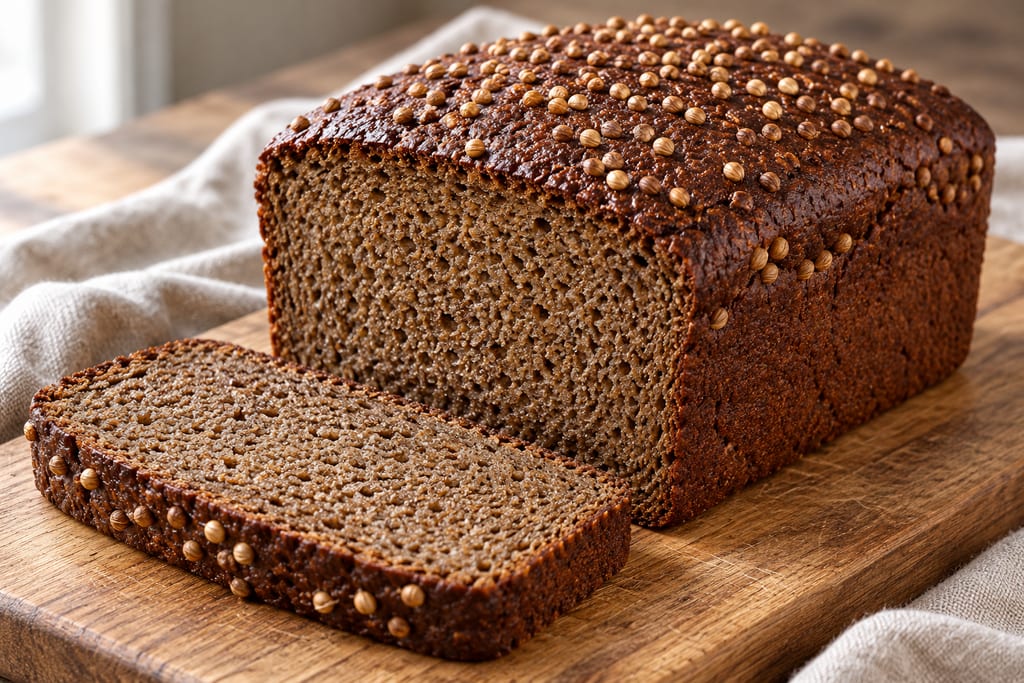
A dark rye sourdough with coriander and roasted barley-malt scald, based on Lily McCann's measured Borodinsk-ish home formula.

A Buryat milk spirit distilled from khurenge, the backslopped sour dairy ferment, in a cauldron still: a distillate that keeps milky and cheese-like aromas from the dairy it came from.
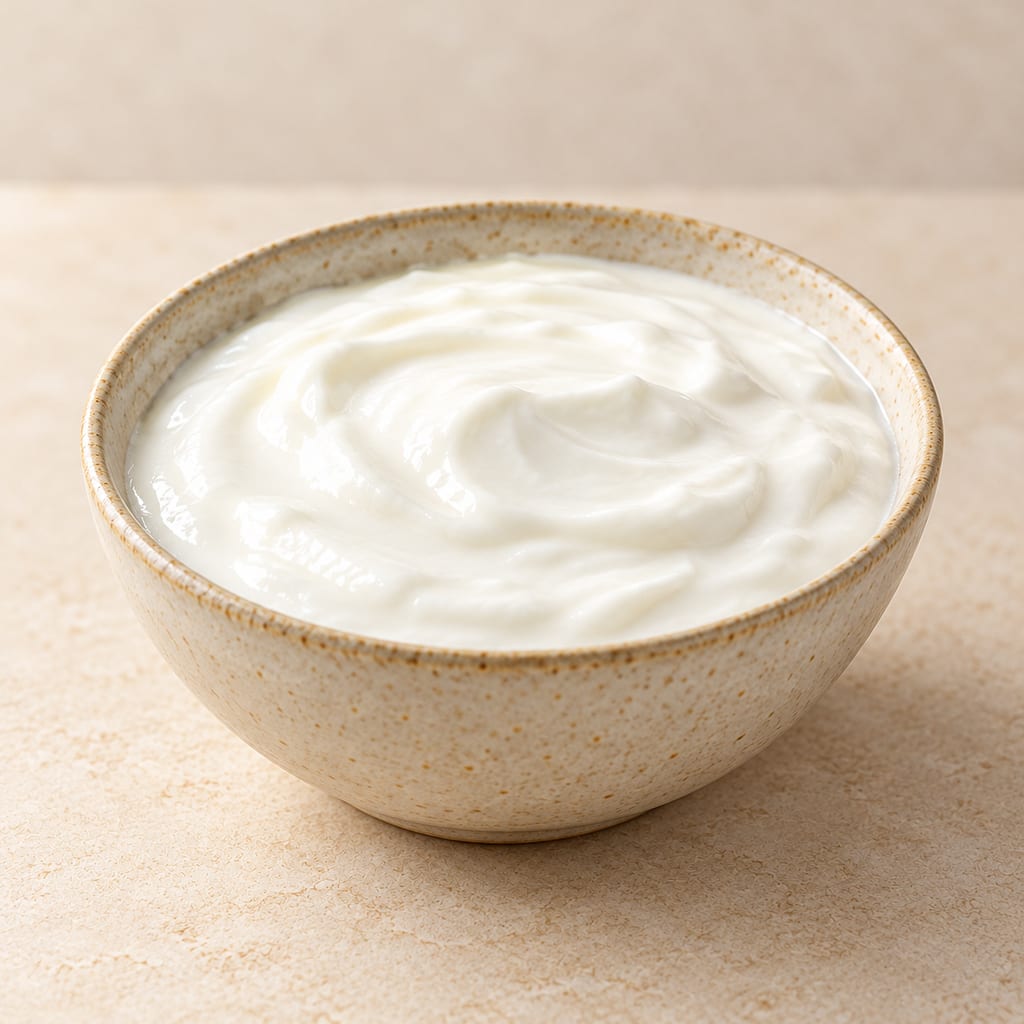
Katyk is a traditional fermented milk of Turkic-speaking peoples, made by souring heated milk with lactic bacteria, often with a spoonful of the last batch, into a thick, sour curd.
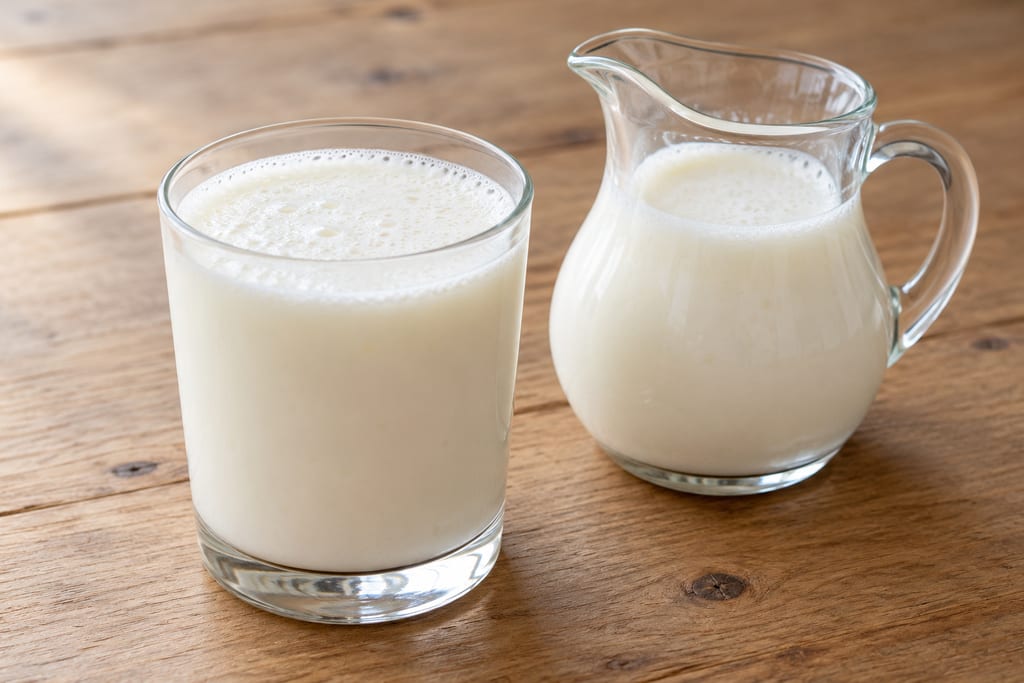
Khurunga is a traditional Buryat fermented milk made with a kept mixed bacteria-and-yeast starter, giving a sour, lightly alcoholic and often fizzy drink that is also the base for milk spirit and curds.

Mochenye yabloki are whole apples held under prepared liquid for several weeks. Russian sources from 1892 and 1959 describe the method. It is not the same as vinegar pickling.
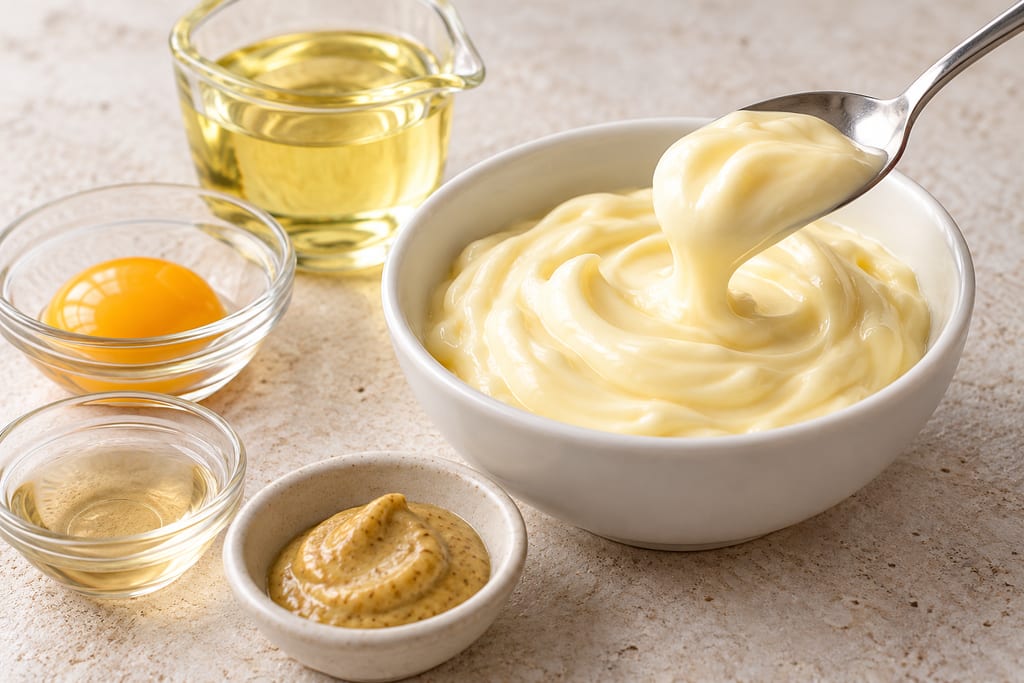
A plain mayonnaise of 200 g refined neutral oil emulsified into pasteurised yolk, vinegar, water and a little Dijon mustard: a clean base for tasting, comparing and flavouring.
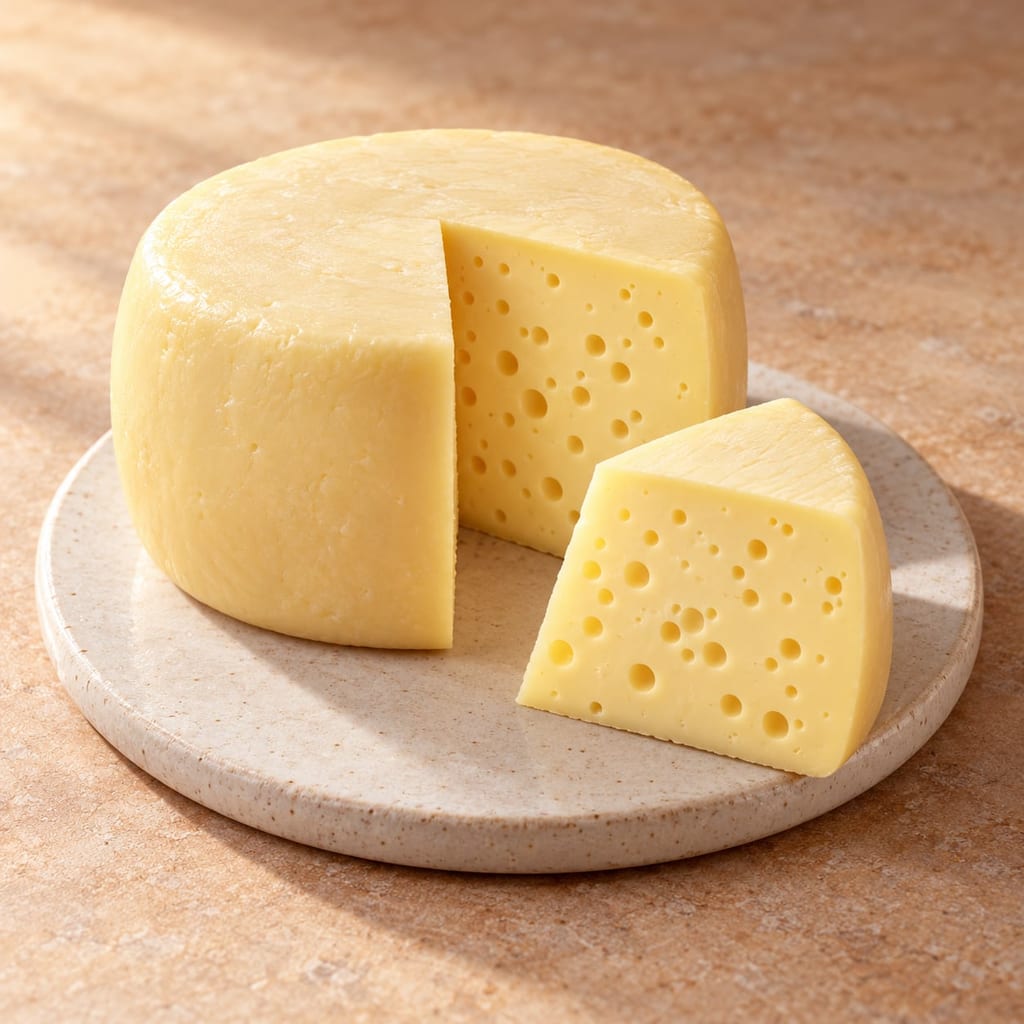
A washed-curd cheese with propionic bacteria, warmed by hot water in two steps and then held in a warm room for weeks so the bacteria can form its holes.
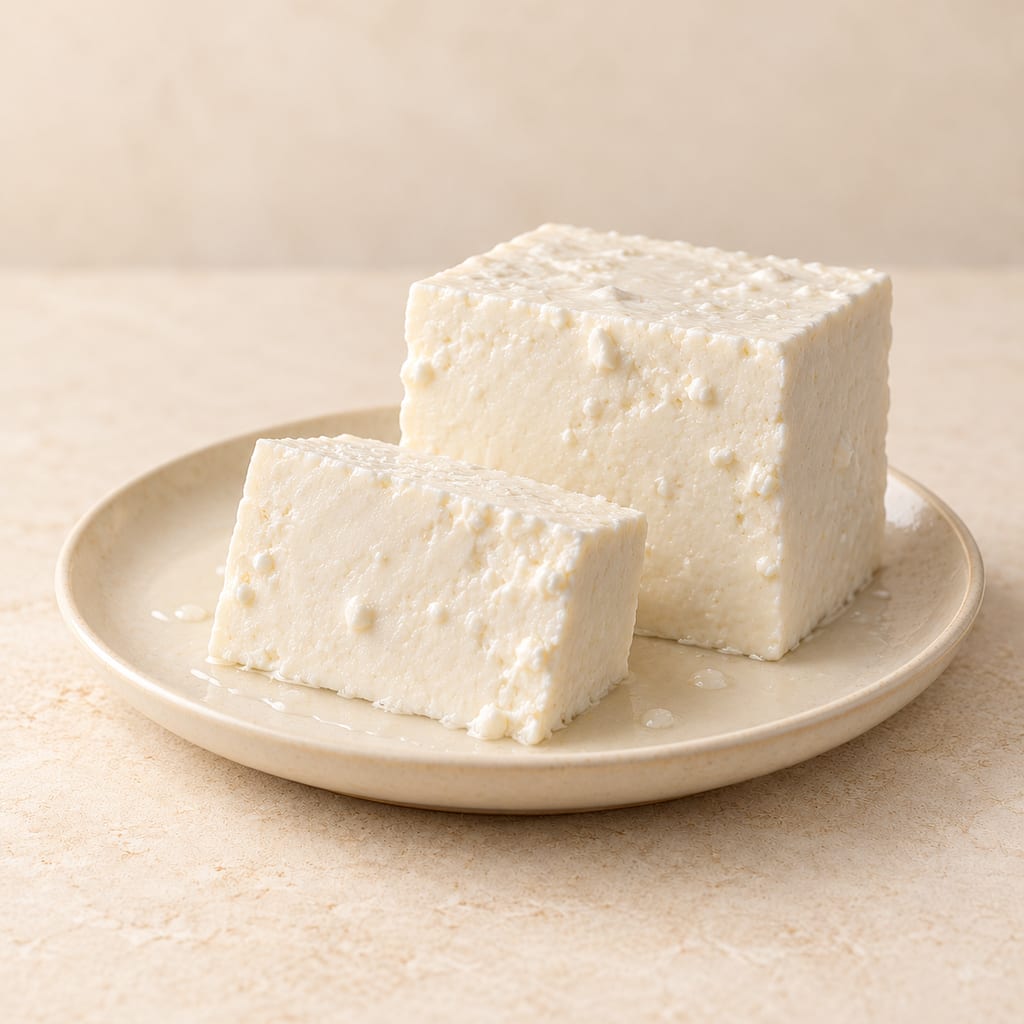
Beyaz peynir is a Turkish white cheese matured in brine. Sheep milk, alone or mixed with other milks, gives a close-textured cheese cut into blocks and packed in cans.
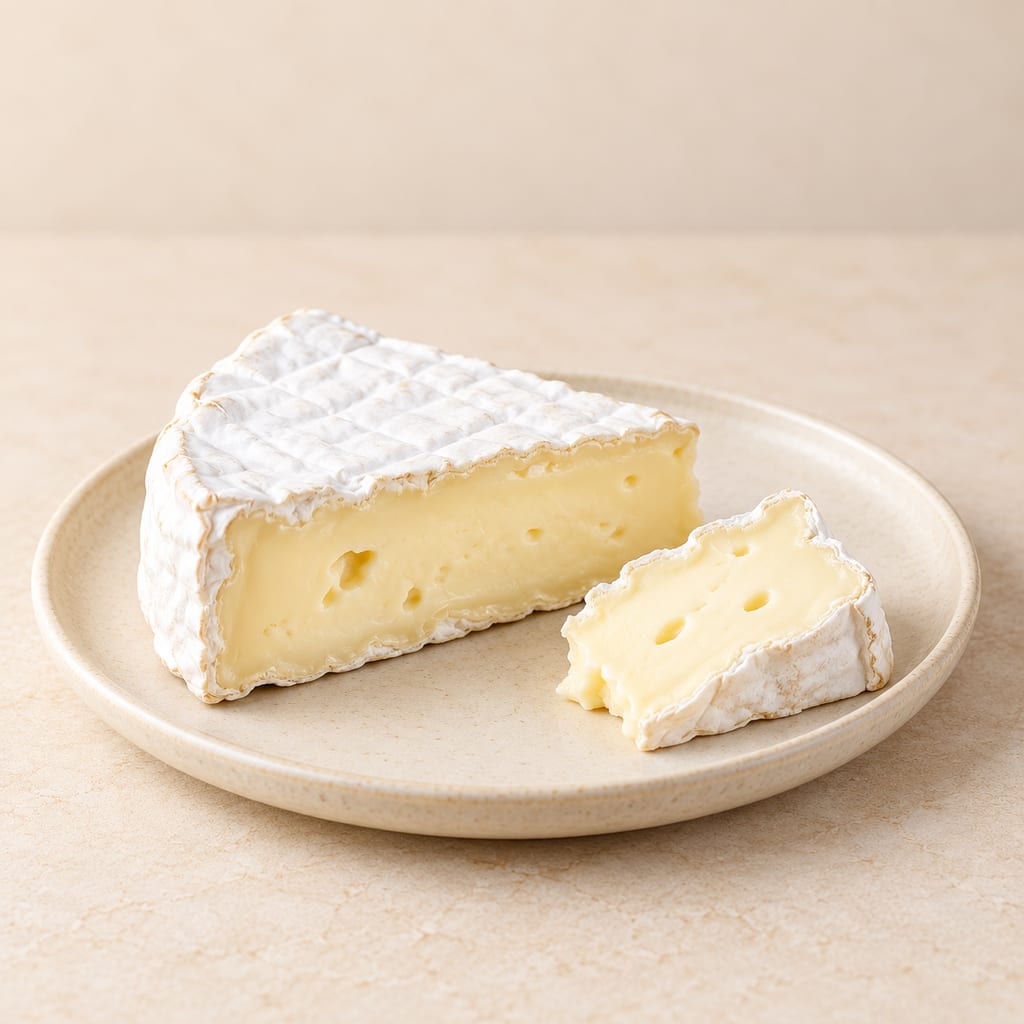
A cream-enriched Brie with a white bloomy rind and a softening center, made from pasteurized milk with lactic and surface cultures.
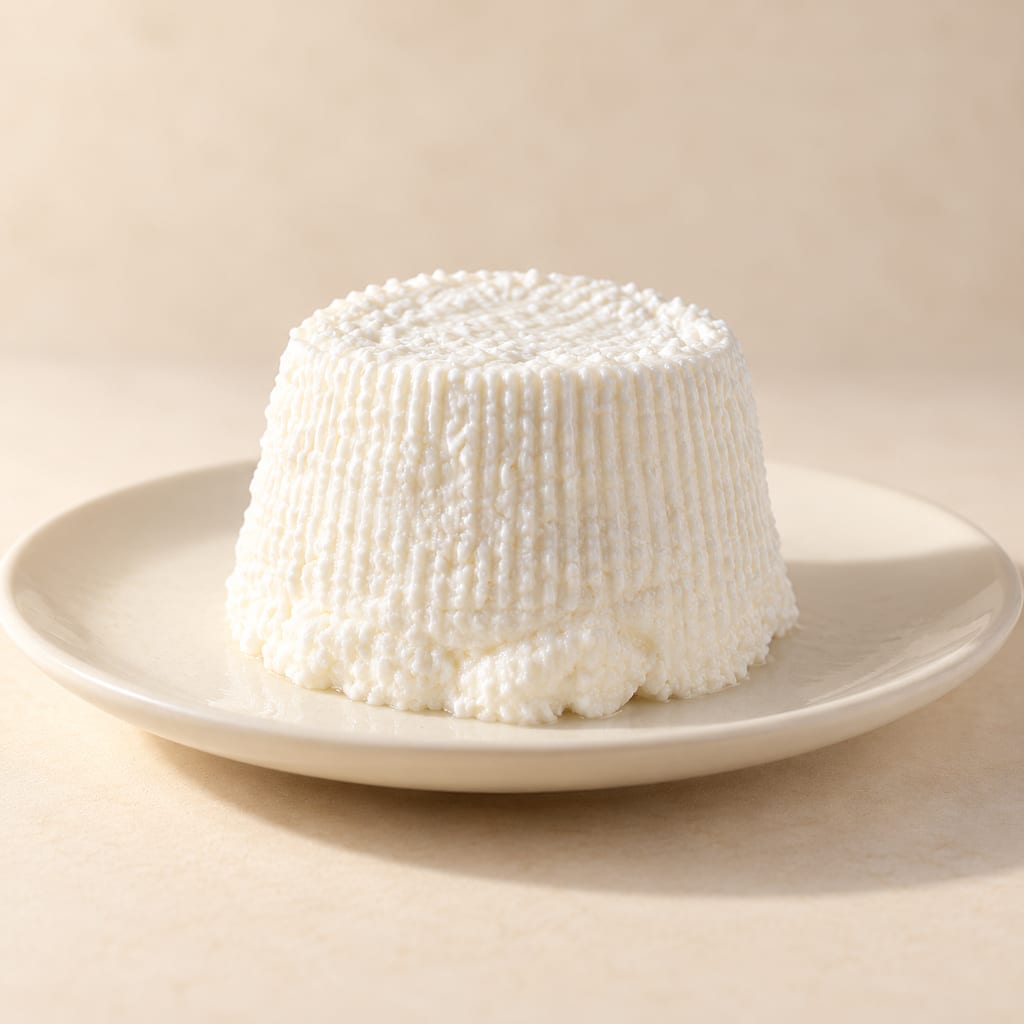
Corsican Brocciu is a whey cheese made by heating sheep's or goat's whey with whole milk and salt, then gently draining the flocculated curds. It is eaten fresh or salted and ripened as Brocciu passu.
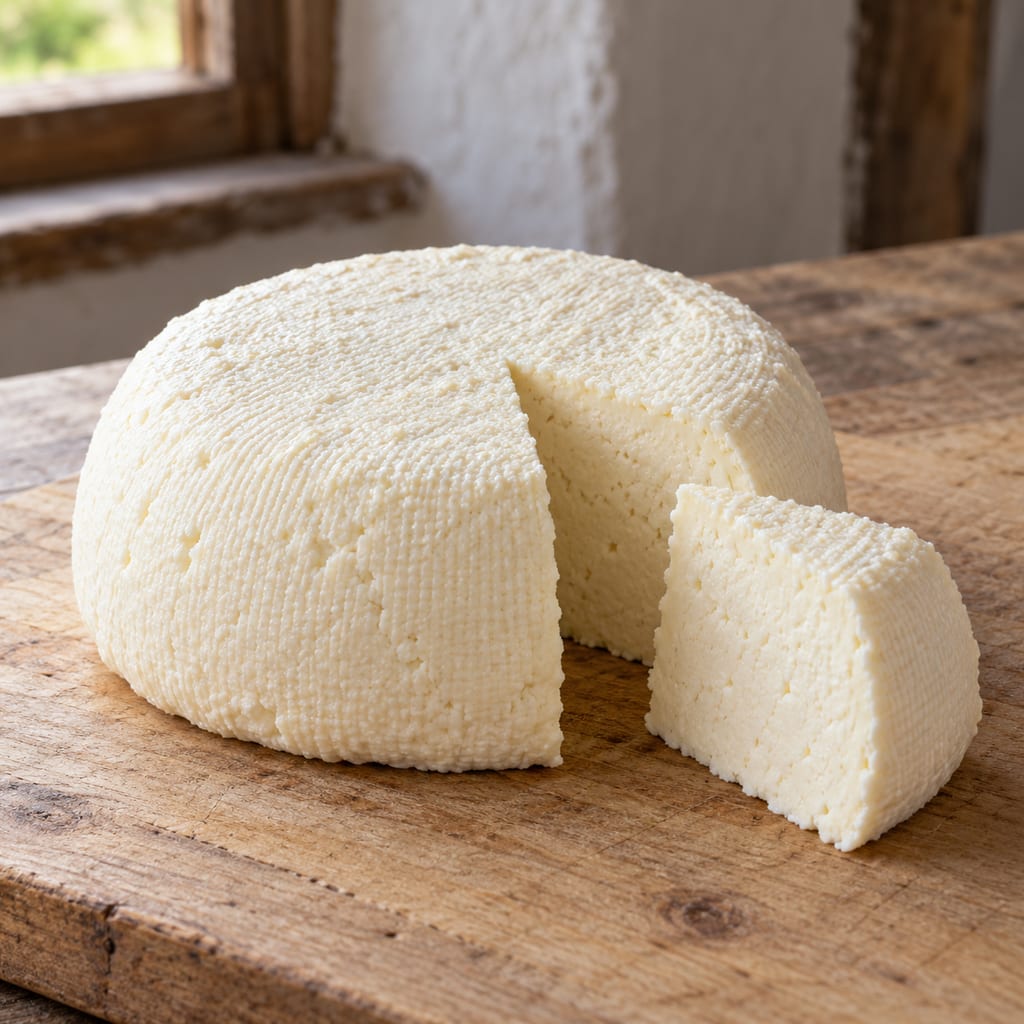
Budz is a traditional Hutsul rennet-set cheese made from sheep, cow or goat milk in the Ukrainian Carpathians, forming a fresh curd that can be eaten, smoked or processed into salted bryndza.
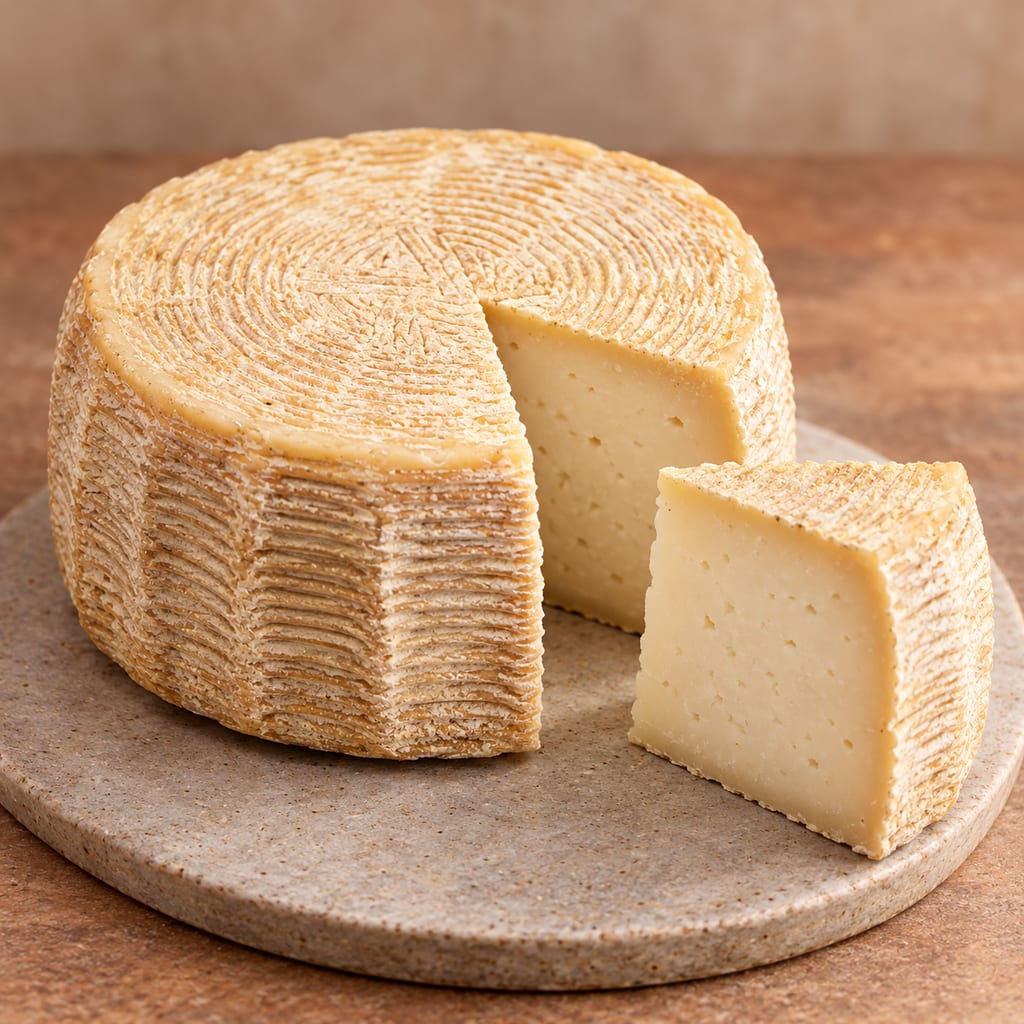
A scalded cheese moulded in baskets and re-cooked in its forms in hot whey, made alongside a ricotta from the same milk, then acidified, brined and aged for months.
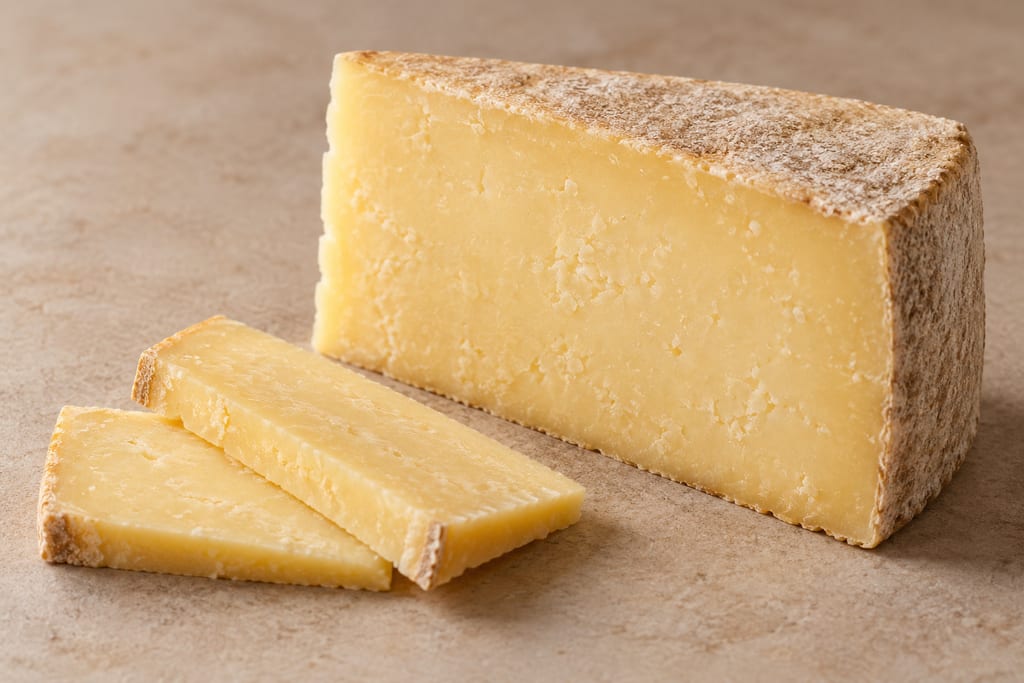
A pressed cheese whose curd is cooked slowly, then cheddared: kept warm in slabs that are turned and stacked for hours before milling, salting and pressing.
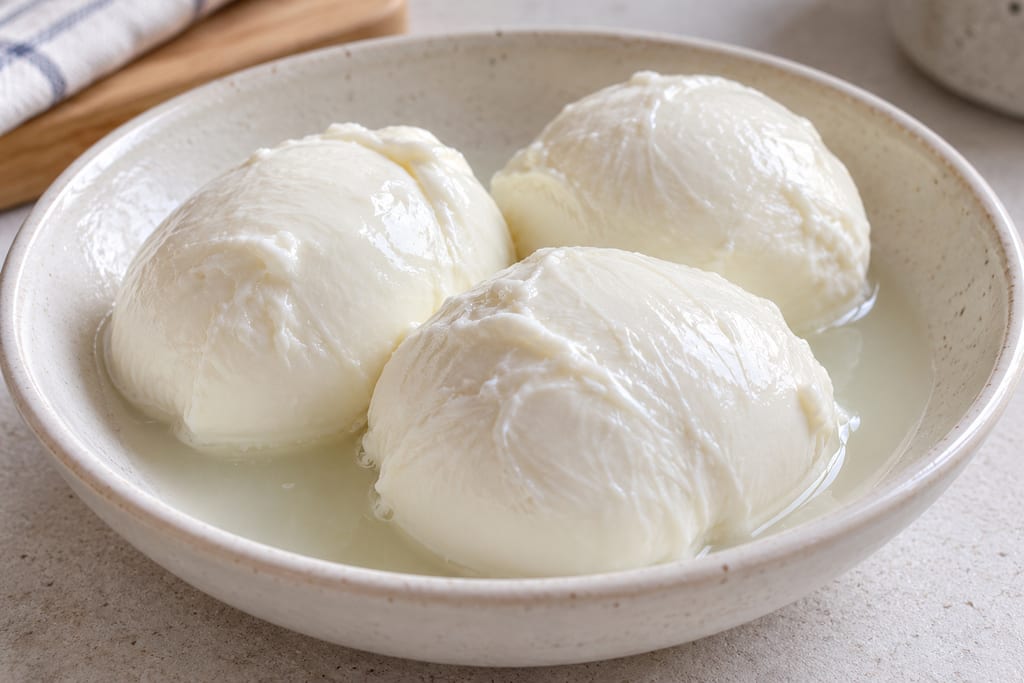
A quick fresh batch uses low-temperature-pasteurized whole milk, citric acid and rennet; the curd is warmed, drained and stretched in hot whey.
No community contributions have been published for this entry yet.
Sign in to contribute. Published comments and photos are free to read.
Slow Food Foundation for BiodiversityMethod · History · Uses · Geography
Altai kurutSupports the page's cited statements on Altai dairy terminology, methods, regional context, science, use or general safety, as applicable.
Cited in: Aarchi and kurut as a linked preparation; Chegen fermentation and its limits; Why the curd is heated, drained and pressed; Uses and documented variation; History and what the evidence supports; Practical interpretation and food safety
Slow Food Foundation for BiodiversityGeography · Method
ChegenSupports the page's cited statements on Altai dairy terminology, methods, regional context, science, use or general safety, as applicable.
Cited in: Chegen fermentation and its limits; Altai geography and community
Gorno-Altai State UniversityMethod · Uses · Terminology
Знакомство с традиционной алтайской кухней: сыр «аарчы»Supports the page's cited statements on Altai dairy terminology, methods, regional context, science, use or general safety, as applicable.
Cited in: Aarchi and kurut as a linked preparation; Why the curd is heated, drained and pressed; Uses and documented variation
Inegene ResortTerminology · Variation
Altai national cuisine tastingSupports the page's cited statements on Altai dairy terminology, methods, regional context, science, use or general safety, as applicable.
Научный аспектGeography · History
Роль животноводства в жизнеобеспечении населения Республики АлтайSupports the page's cited statements on Altai dairy terminology, methods, regional context, science, use or general safety, as applicable.
Cited in: Altai geography and community; History and what the evidence supports
MicroorganismsScience
Microbial Communities of Artisanal Fermented Milk Products from RussiaSupports the page's cited statements on Altai dairy terminology, methods, regional context, science, use or general safety, as applicable.
Cited in: Chegen fermentation and its limits
ITMO UniversityScience
Исследование физико-химических и микробиологических показателей закваски алтайского кисломолочного напитка «чеген»Supports the page's cited statements on Altai dairy terminology, methods, regional context, science, use or general safety, as applicable.
Cited in: Chegen fermentation and its limits
Centers for Disease Control and PreventionSafety
Raw MilkSupports the page's cited statements on Altai dairy terminology, methods, regional context, science, use or general safety, as applicable.
Cited in: Practical interpretation and food safety
Living HeritageRegional comparison
Traditional Tuvan KurutNeighboring Tuvan kurut image and regional product comparison, not evidence for Altai recipe details.
Cited in: Uses and documented variation