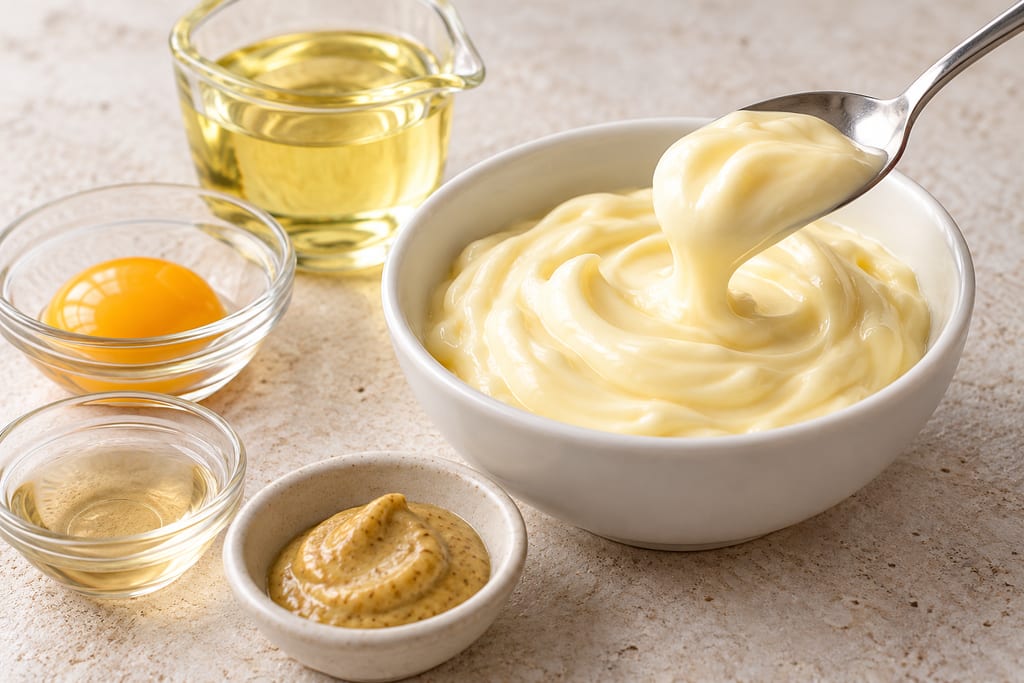
Neutral classic mayonnaise
A plain mayonnaise of 200 g refined neutral oil emulsified into pasteurised yolk, vinegar, water and a little Dijon mustard: a clean base for tasting, comparing and flavouring.
 FermenteaWhere food goes to change
Traditional method
Адыгейская соль · Adyghe salt · seasoned Adyghe salt
Adygean salt is a seasoned table salt associated with Adygea and the wider North Caucasian culinary tradition. Salt is blended with garlic and a variable selection of herbs and spices; the exact mix depends on the named style and maker.

Adygean salt is a prepared seasoning built around salt and garlic. Makers add dried or ground herbs and spices, so a pinch seasons and salts at once. It belongs to the seasoning cupboard, rather than to the family of fermented foods: its preparation is blending and grinding, with no documented culture or fermentation stage. In Russian it is Адыгейская соль; English usage also appears as Adyghe salt.
The name covers a family rather than a single immutable formula. A present-day Ulyapskaya product from a producer in Adygea lists edible salt, coriander, garlic, marjoram, sweet red pepper, black pepper and savory. A patent describing a related formulation gives broad proportions for salt, garlic and a combined seasoning portion, but does not establish that every household or regional version uses this same spice list. Its 100-gram worked example is one documented formula, not a universal standard.
The blend is recognizable by its garlic aroma and visible herbs or colored spice particles, though color and texture depend on the ingredients and grind. The salt remains the dominant bulk ingredient in the patented proportions. Garlic supplies pungency and a rounded allium aroma, while herbs and peppers add their own fragrance and heat. There is no single sensory profile that can be assigned to every jar: the named variation and maker matter.
Salt, garlic and pepper have long been part of food practice in the North Caucasus, but that wider fact does not prove that the modern named blend existed in the same form. A nineteenth-century description of Circassian food mentions seasoning with pepper, onion and garlic and also describes the importance of traded salt. A study of material from the 1829 Emanuel expedition reports meat seasoned with milk, salt, pepper and honey. These accounts illuminate ingredients and culinary context; neither documents a jar or recipe called Adygean salt.
A securely dated modern record for the named formulation is the Russian patent RU2251346C2. The application was filed in 2003 and the patent published in 2005. It documents a formulation and process, not an invention date for a broader household tradition. Contemporary reporting attributes a 1996 start for industrial production to the Ulyap producer, which is a company's account of its own commercial history and should not be mistaken for a first historical attestation of the seasoning.
In 2022 Rospatent registered the geographical indication СОЛЬ АДЫГЕЙСКАЯ, number 287, for salt with seasonings and spices associated with the Republic of Adygea. That registration establishes a modern protected regional association. It does not prove that every product sold under a similar description has the same ingredients, or that the recipe originated at a precisely known date or village.
The patent gives the useful structure of the mixture: food salt is combined with garlic, then with powdered or dried-cut plant seasonings. Its claimed ranges are 81.5–93 percent salt, 4.5–9.5 percent garlic, and 2.5–9 percent herbs or spices. Those ranges describe the patent's formulation; they are not a reason to move all ingredients to their extremes or to claim a tested household preservation process.
One 100-gram example uses 81.5 grams salt, 9.5 grams garlic and 9 grams seasonings. The patent explains the sequence—make a garlic-salt mass, add the ground or dried-cut seasonings, and mix until even and free-flowing. It names some possible ingredients elsewhere, but does not give a complete recipe of individual spice weights for the Ulyapskaya profile. The producer's ingredient list likewise names components without publishing their proportions. That uncertainty belongs on the page rather than being filled with invented amounts.
The patent says one example is held for 12 to 24 hours. It gives no temperature or household storage procedure for that hold, and its patent status is not food-process validation. The blend is not a fermentation: no microbes are intentionally added, no acidification is described and no fermentation endpoint is specified. Salt dissolving into garlic moisture and the spices dispersing are mixing and moisture-transfer phenomena, not evidence that the product has been preserved safely.
Salt provides the seasoning's salty taste and most of its mass. The sources name edible table salt; they do not show that every crystal size or salt type behaves identically in the paste. A finer salt will distribute differently from a coarse one, so this page keeps to the patent's measured mass rather than converting it to spoonfuls.
Garlic is the defining aromatic ingredient. Crushing it into a paste spreads its moisture and pungent flavor through the crystals, unlike simply shaking in dried garlic powder. The plant additions are more variable. Coriander brings a warm, seed-like aromatic note, while marjoram and savory contribute leafy herb notes; sweet pepper and black pepper make a different balance of fruitiness and heat. The producer identifies those ingredients for Ulyapskaya but provides no weights for them.
Named variants in contemporary producer and regional reporting include Abadzekhskaya, Bzhedugskaya, Shapsugskaya and Ulyapskaya. Reported distinguishing spices vary: one version emphasizes sweet pepper, another black pepper, and Ulyapskaya includes marjoram. Names and descriptions are useful clues, not interchangeable recipes. A product bearing one regional name may reflect its maker's commercial formula; follow its label rather than assuming all makers use identical proportions.
Names such as Abadzekhskaya, Bzhedugskaya, Shapsugskaya and Ulyapskaya refer to styles in contemporary accounts and commercial production. They do not guarantee one standardized household formula across all makers. The Ulyapskaya producer lists coriander, garlic, marjoram, sweet pepper, black pepper and savory. Rospatent's regional feature says Abadzekhskaya emphasizes coriander and savory and Bzhedugskaya onion and red pepper. These are descriptions of named products in modern sources, not recipes for every Adyghe household across time.
The geographical indication has a narrower role than a culinary history. The open register identifies the protected name, the product class—salt with seasonings and spices—and its production area in the Republic of Adygea. That helps readers distinguish a regionally identified commercial product. It does not make every garlic salt from the Caucasus identical, and it does not establish that a home mixture automatically qualifies for the protected name. A careful account therefore separates the broad family of salt-and-garlic blends, the maker-specific variants, and the legal regional designation.
Contemporary product descriptions often present the seasoning as broadly useful, while individual makers tune the herb cut and pepper balance for particular dishes. Ulyapskaya is recommended for sausages, vegetable preserving and pizza. Patent examples refer to bread, soup, salads, meat, fish and dairy-based sauces. These are uses reported by particular sources, not interchangeable process instructions. The seasoning can contribute flavor to a tested curing or preserving formula, but its name cannot replace that formula's validated salt, acid, time or temperature controls.
The patent positions the seasoning as a substitute for plain table salt across cooked foods and reports examples in bread, soups, salads, meat, fish and a sauce based on fermented milk. Those are reported applications from the patent, not a guarantee that one blend will suit every dish. The Ulyapskaya producer recommends its version for sausages, vegetable preserving and pizza. Its other named variants are marketed for differing uses, including first courses, salads or meat dishes.
For a cook, the practical role is a combined salt-and-aroma seasoning: it can be added during cooking or used at the table, according to the particular blend and dish. When using it in a recipe already measured for salt, account for the salt within the mixture rather than adding it as if it were a salt-free herb blend. A preserved-food formula is different: an aromatic salt is not by itself a validated curing or pickling process, and a seasoning's name does not replace a tested recipe's salt, acid, temperature or time requirements.
The seasoning is also not a health product. The patent and some promotional accounts make claims about health effects or reduced salt intake, but the cited sources do not establish those claims. The straightforward culinary reason to use it is flavor and convenience: salt is already combined with aromatic plants. Its actual salt contribution still matters.
The method is short because the product is a blend, not a multi-stage ferment. Weighing by mass keeps the documented formula intact; the patent does not supply reliable volume measures. Making the garlic paste first allows the salt and garlic to combine before the dry additions are incorporated. Mixing to an even color and a free-flowing texture is the patent's stated endpoint for that example, not a microbial safety test.
The cited patent does not state the room conditions, packaging, moisture target or storage life for a home batch. The fact that the example is described as free-flowing, or that a commercial jar is sold, does not establish a safe shelf life for a homemade paste-based mixture. Use the recipe as a seasoning preparation, not as a preservation method. The blend should not be used to cure meat or preserve vegetables unless the specific food process independently supplies a validated method and controls.
Commercial labels are the best guide to the precise ingredients of a particular product. The same broad name can describe different herbs, peppers, salt textures and manufacturing methods. For a home version, keep the documented total weights and acknowledge the unreported distribution of the herb-and-spice portion. If a named style's exact formula matters, choose a producer's labeled product rather than guessing at its proportions.
The name is associated with Adygea and the North Caucasus. The dated patent documents a modern formulation, while Rospatent records the geographical indication in 2022. Neither sets the invention date of the older culinary practice.
Yield 100 g · Scaling: source batch only
The patent gives a 12–24 hour hold for one example but does not state temperature, packaging, or a validated shelf life for the garlic-paste blend.
Hazard sourceUse edible salt and food-grade seasonings, as named by the producer and patent.
Control sourceThe cited sources do not establish safe storage duration or shelf-stable handling for the garlic-paste mixture. Do not treat the recipe as a validated preservation method.
The registration and producer establish a modern regional association, not a precise place or date of origin.
A plain mayonnaise of 200 g refined neutral oil emulsified into pasteurised yolk, vinegar, water and a little Dijon mustard: a clean base for tasting, comparing and flavouring.
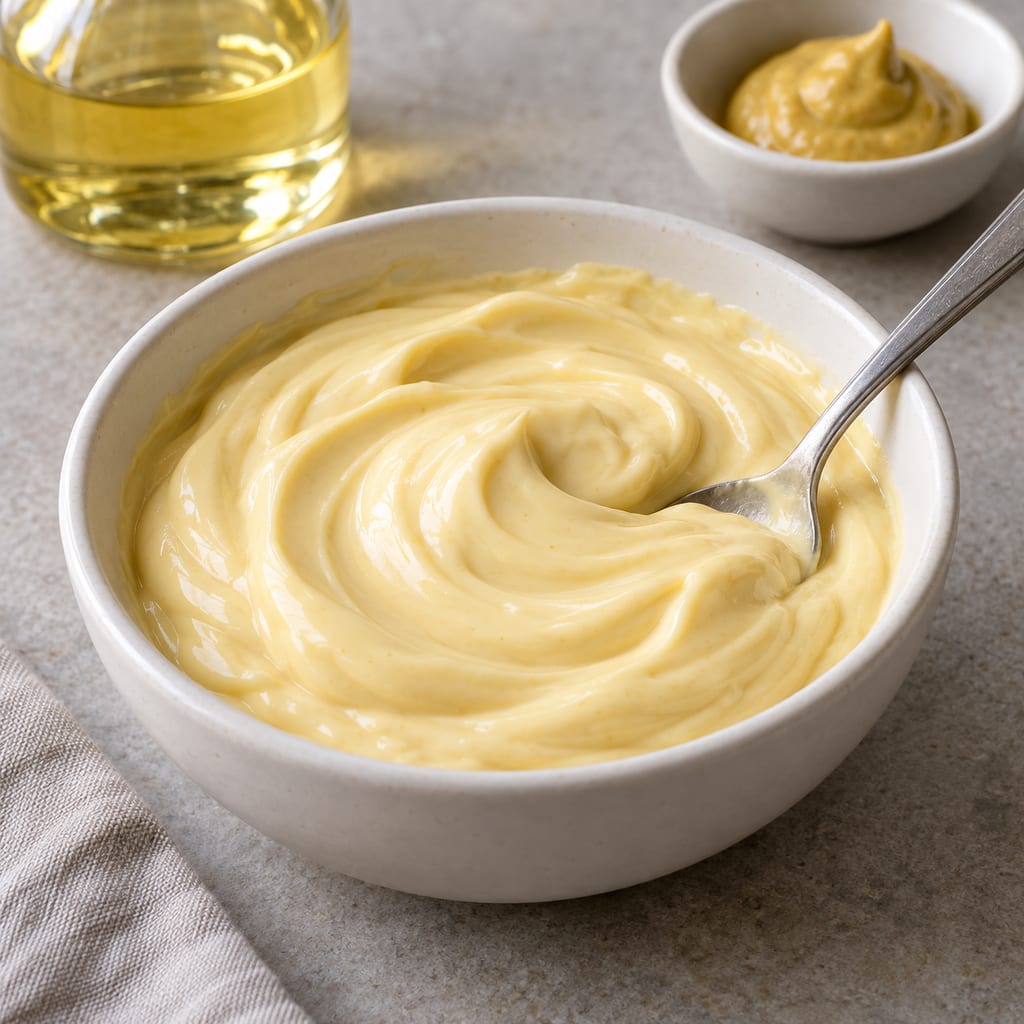
An untested mayonnaise variation made with refined sunflower oil and more Dijon mustard than a neutral base.
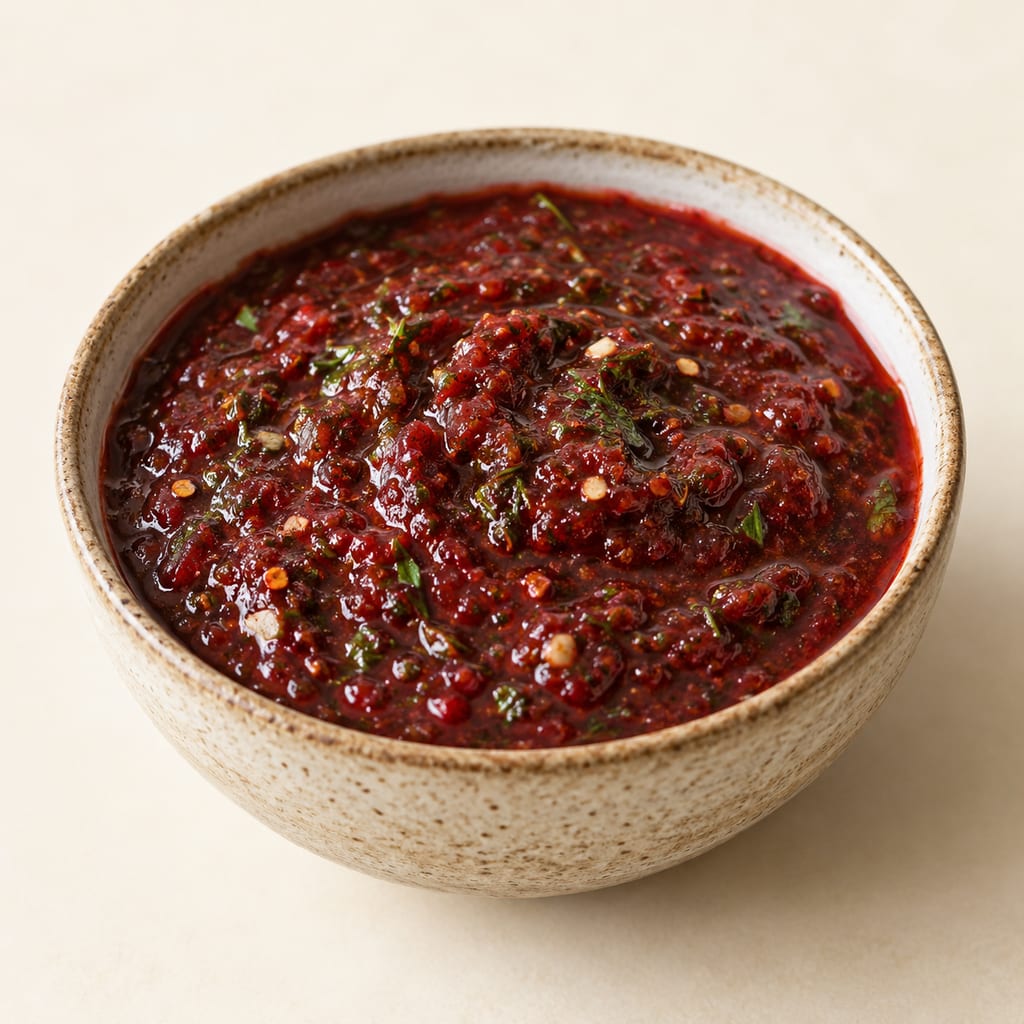
A Georgian sour plum sauce of cherry plums cooked with garlic, coriander, dill-family herbs and chilli. Its sourness comes from the fruit, and it is served as a condiment with grilled meat, poultry and potatoes.
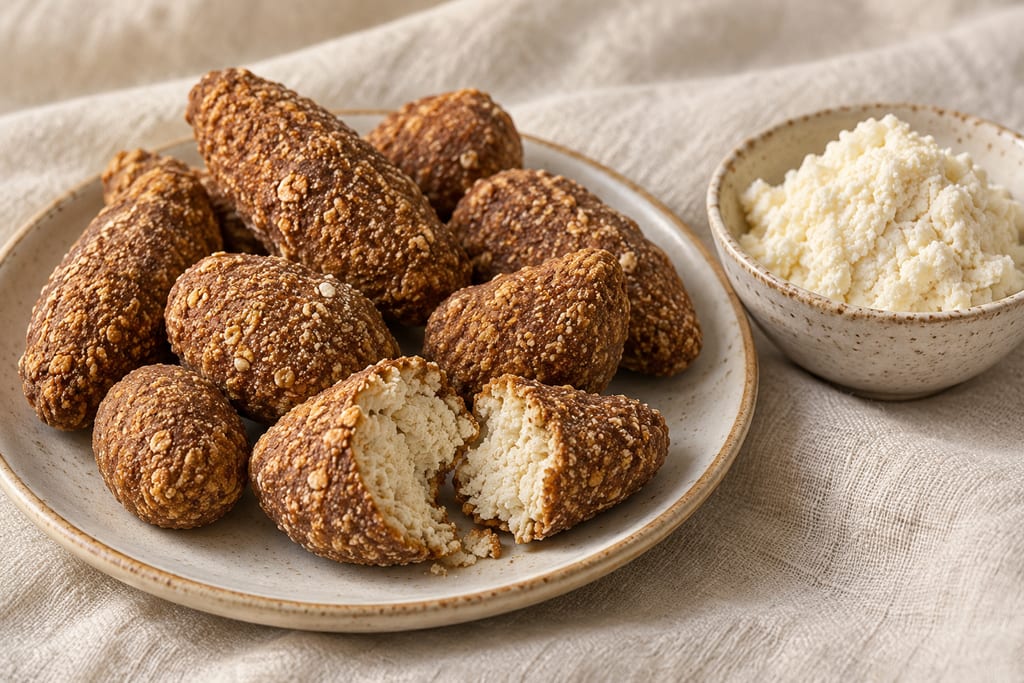
A two-stage Altai dairy preparation: sour chegen is heated into soft aarchi, then portions are drained, pressed and traditionally smoked into firm kurut.
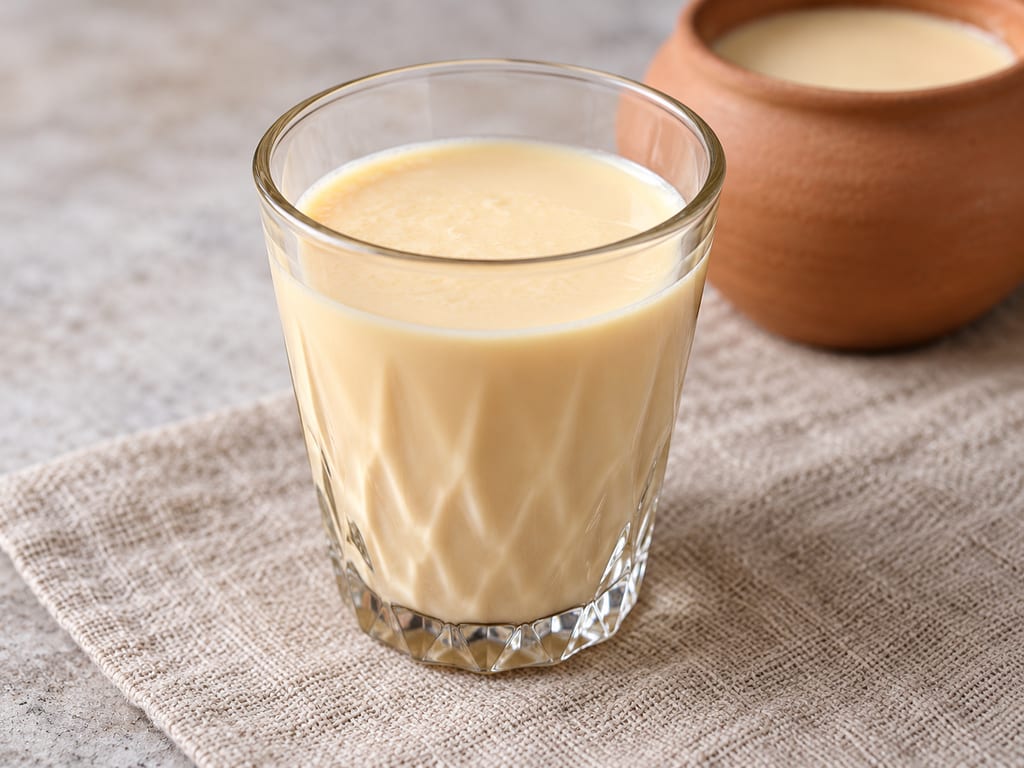
Baked milk is an Eastern European preparation of milk held at high heat for hours until it turns cream-coloured with a cooked, mildly sweet flavour, without any fermentation.
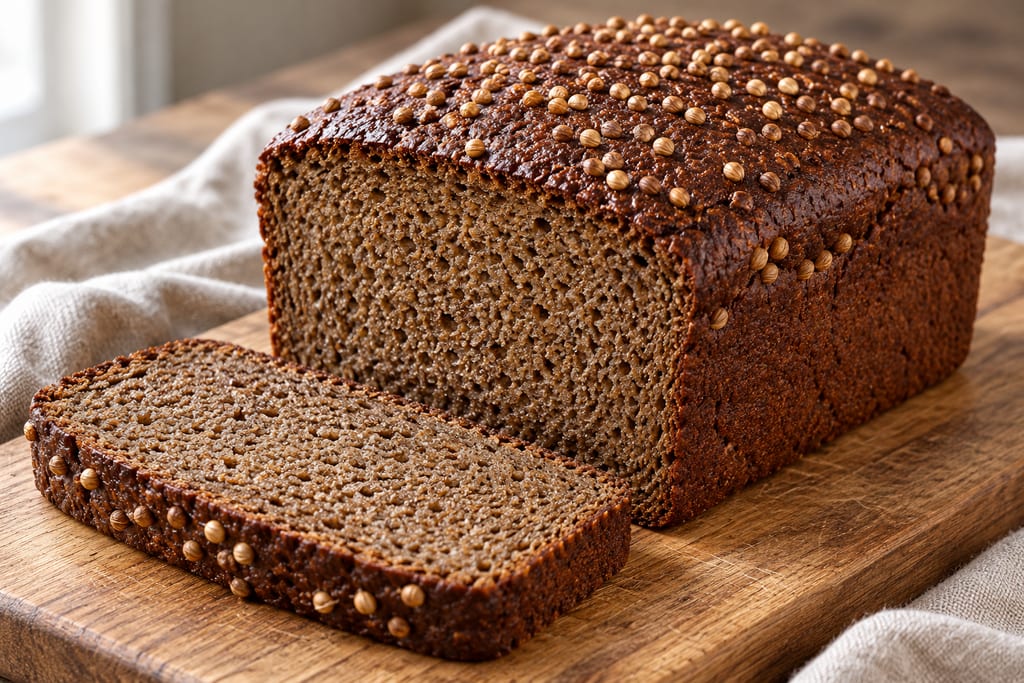
A dark rye sourdough with coriander and roasted barley-malt scald, based on Lily McCann's measured Borodinsk-ish home formula.
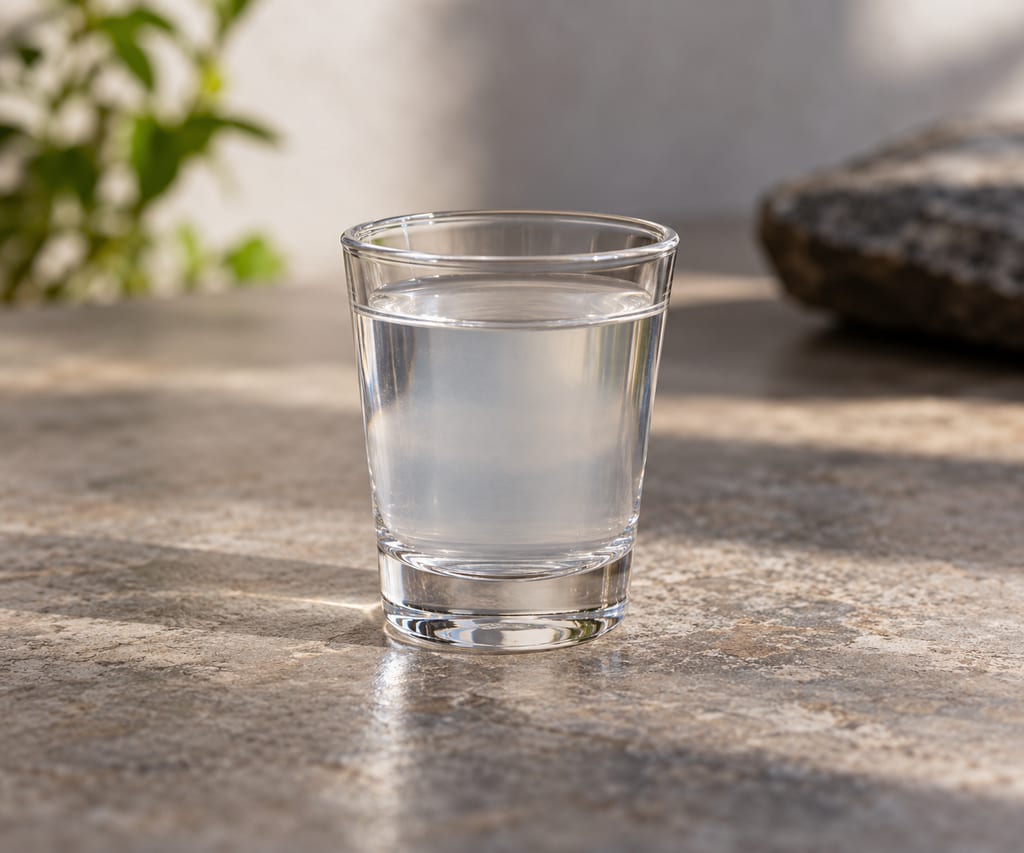
A Buryat milk spirit distilled from khurenge, the backslopped sour dairy ferment, in a cauldron still: a distillate that keeps milky and cheese-like aromas from the dairy it came from.
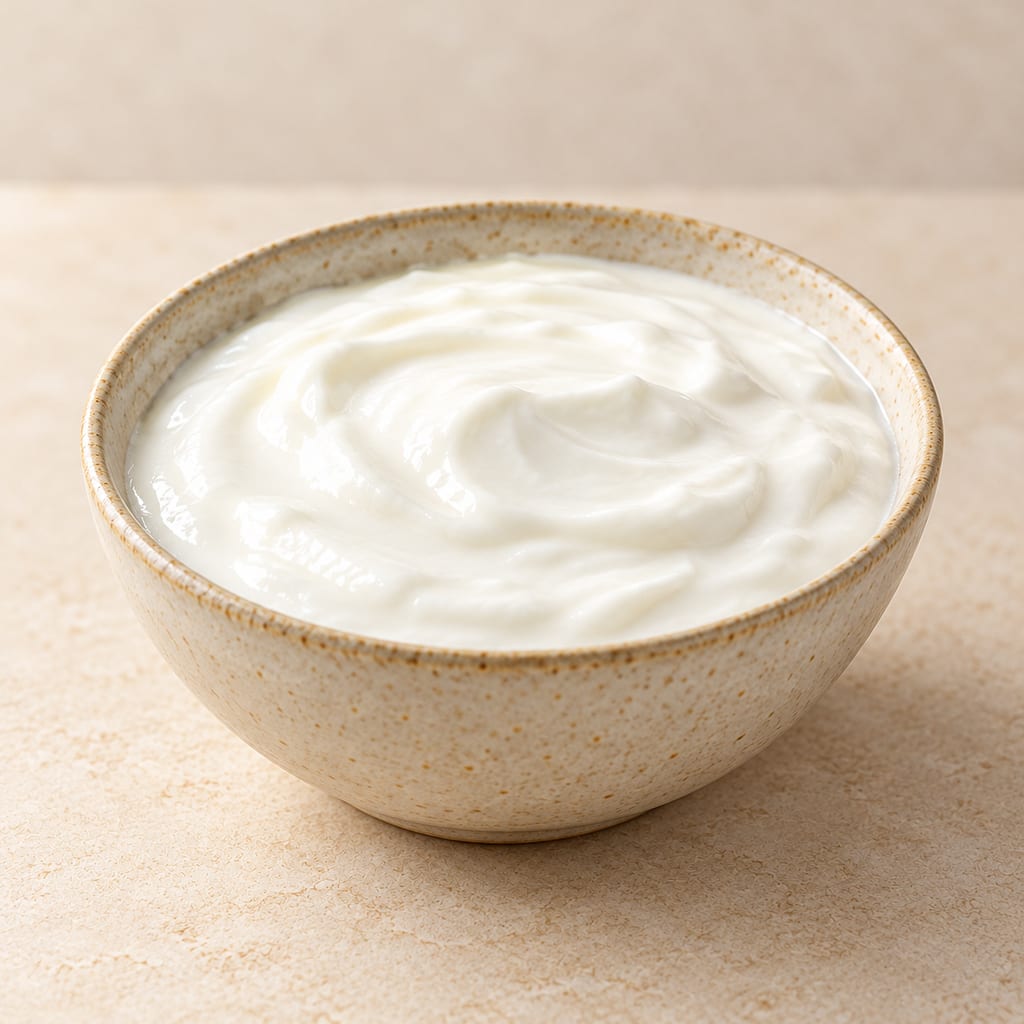
Katyk is a traditional fermented milk of Turkic-speaking peoples, made by souring heated milk with lactic bacteria, often with a spoonful of the last batch, into a thick, sour curd.
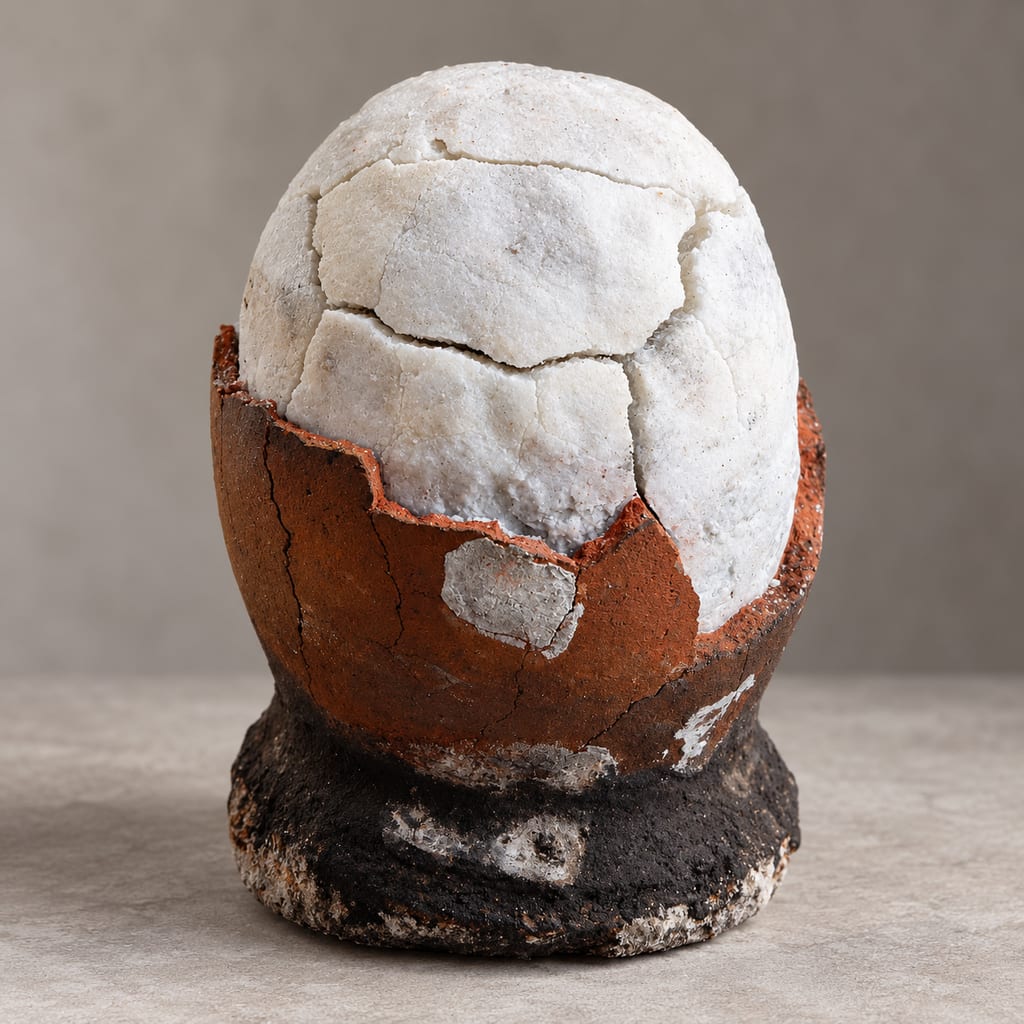
Asin tibuok is a Boholano salt-making craft that turns seawater-soaked coconut husks into a salt-rich ash, brine and formed sea salt in specialized clay pots. This record follows one published account of the community process; it is not a validated household formula.
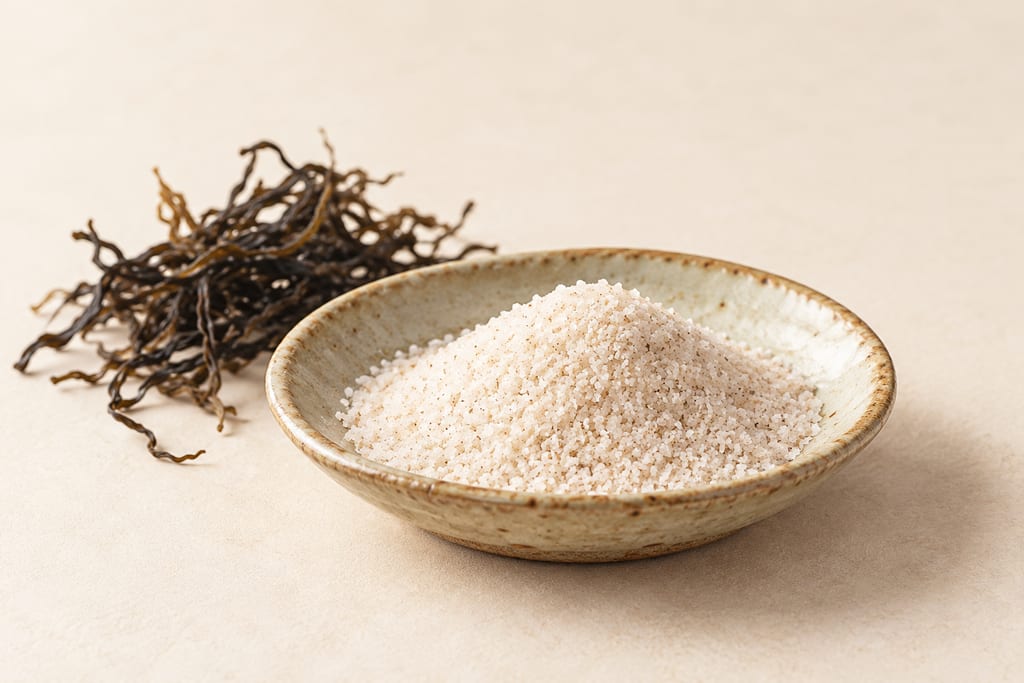
Amabito no Moshio is a modern, pale beige Japanese seaweed salt made from Seto Inland Sea water and hondawara seaweed. Its documented factory method concentrates filtered brine in kettles, then separates and dries the salt.
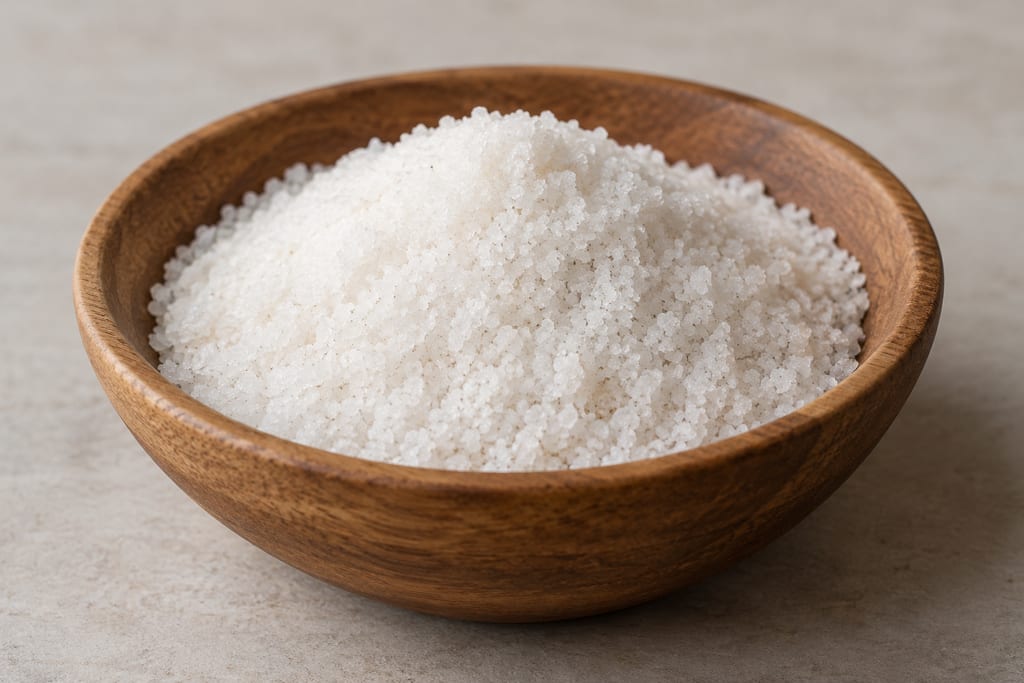
Asin sa buy-o is a fine sea salt made in Panayunan, Botolan, and packed in a woven nipa pouch called a buy-o. Salt-bearing coastal earth is leached with seawater, and the brine is boiled to crystals.
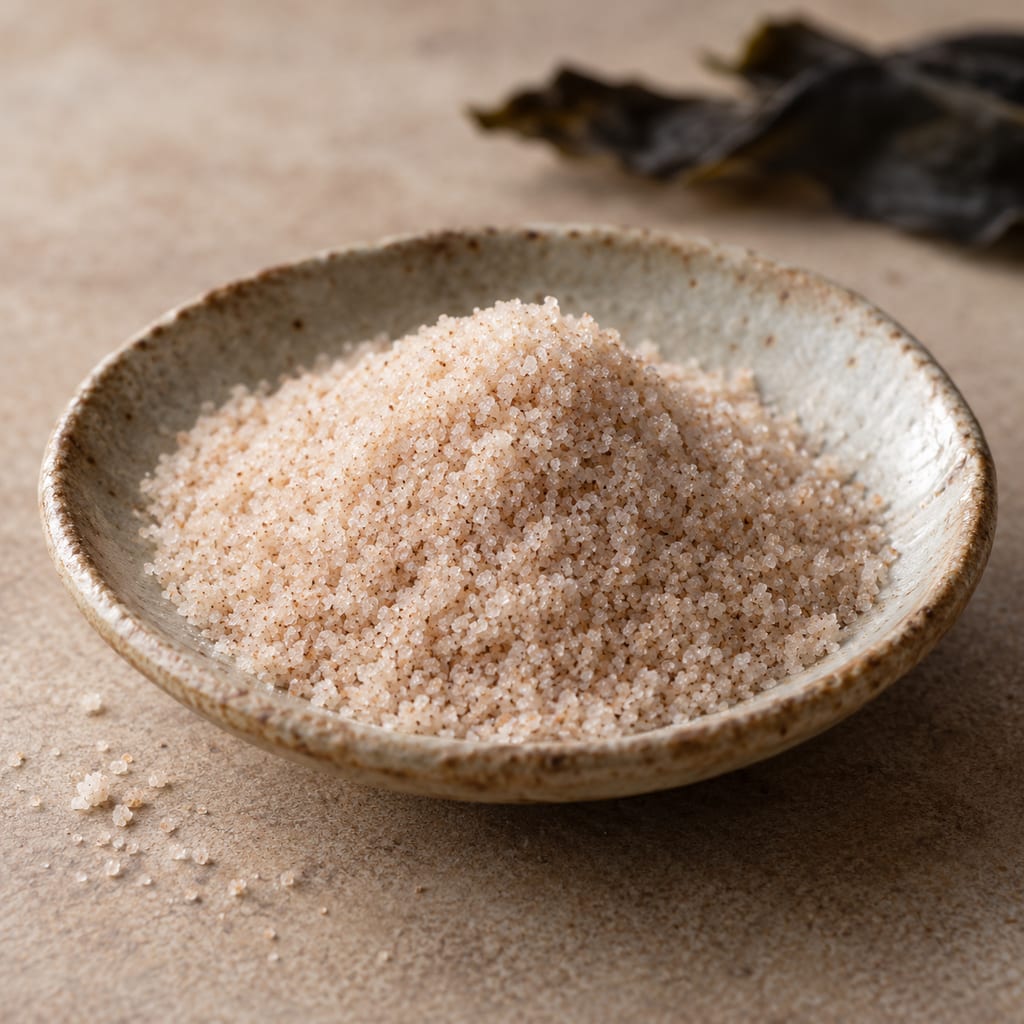
Awaji moshio is a modern Japanese seaweed salt made by TaDa PHILOSOPHY from Awaji Island seawater and seaweed. Its premium process concentrates brine, extracts seaweed flavor, then crystallizes, separates, dries and grades the salt.
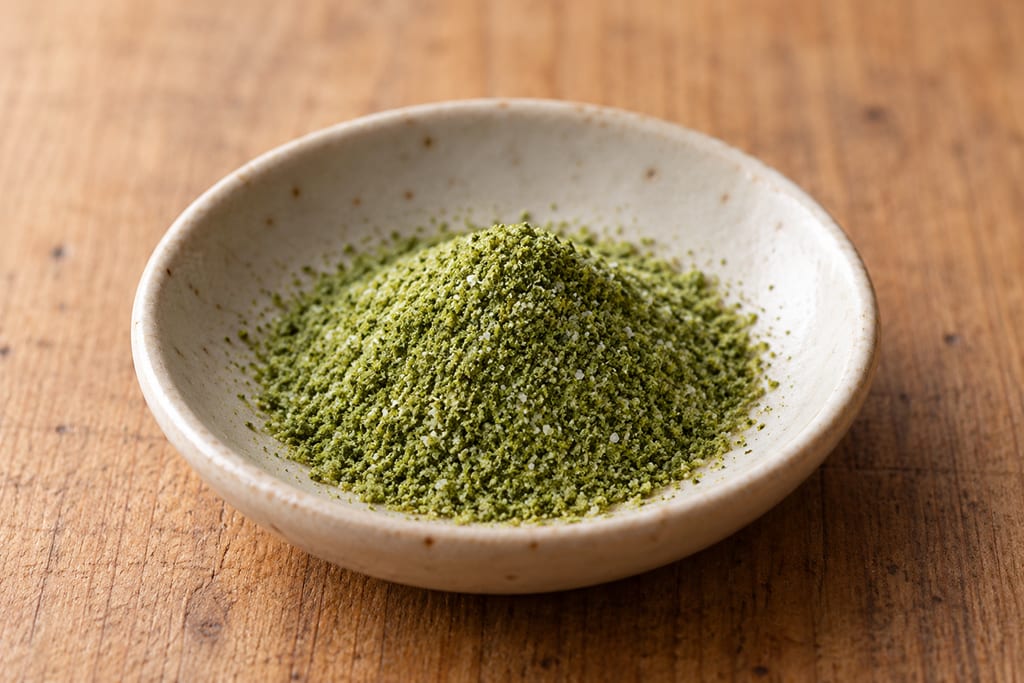
Green tea leaf salt is a dry seasoning made by grinding tea leaves, sieving them and mixing the powder with fine salt. This Japanese-style version follows a documented equal-parts method.
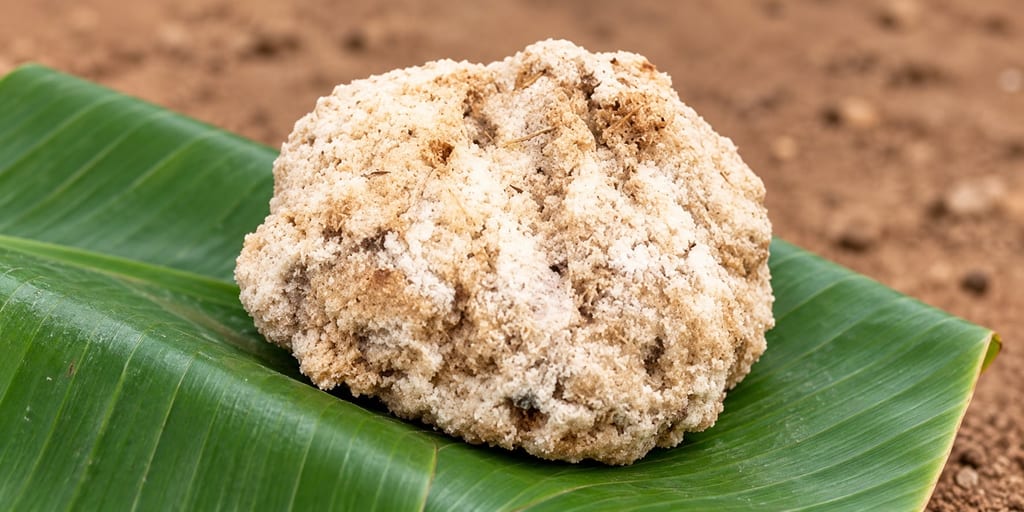
Nzoia River reed salt is a Bukusu seasoning made by leaching and evaporating the ash of mature muchua reeds. Its sources document a local method, but provide neither a measured formula nor verified mineral composition.
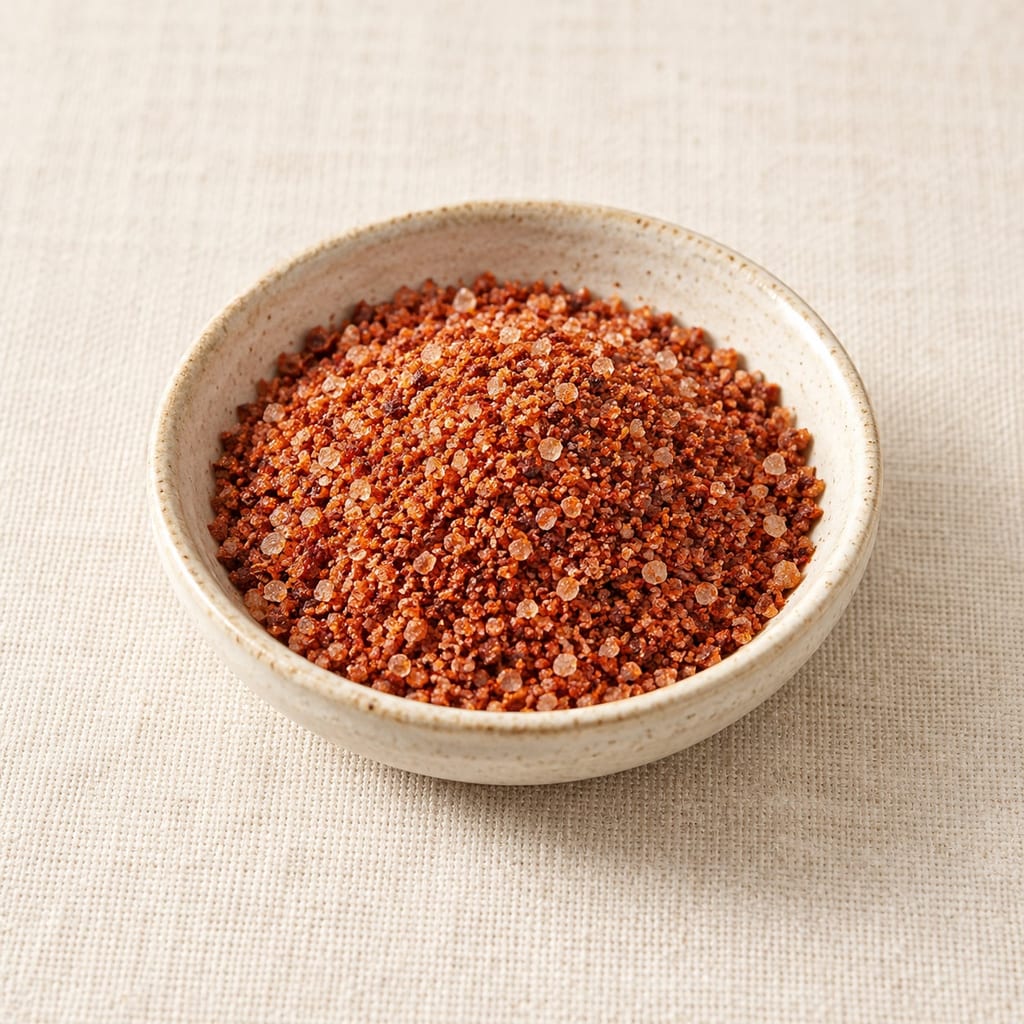
A dry Mexican seasoning of maguey worm, salt and chile, most closely associated in published accounts with Oaxaca and commonly served with mezcal, citrus and fruit.
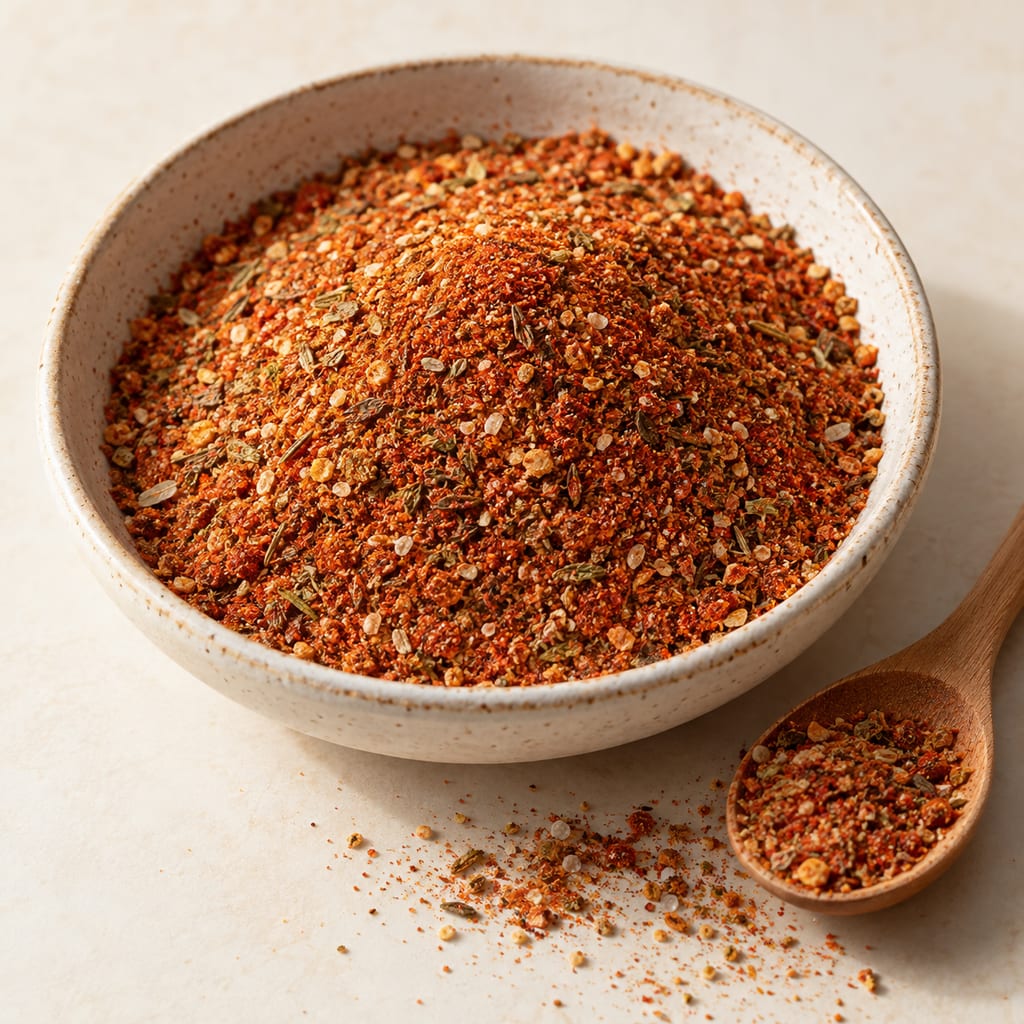
Bulgarian dry seasoning of salt, paprika, dried herbs and spices, with household and regional variations.

Soft, spreadable Calabrian pork sausage made with a great deal of red chilli and fatty pork, stuffed into natural casings, sometimes smoked and matured while staying soft.

A way to add independent temperature logging to an existing food dehydrator without changing its built-in controls or protections. It is a monitoring method, not a rewiring plan.

Pleurotus cystidiosus is the abalone mushroom, a cultivated oyster-type fungus with dark brown caps that grows more slowly and is more demanding than other Pleurotus species.

A dark, balanced vinegar from Emilia-Romagna made by combining cooked or concentrated grape must with wine vinegar, then acetifying and refining it in wood under a protected specification.

A living dairy inoculum that starts controlled cream fermentation, developing acidity and aroma before sour cream or cultured butter is finished.

A small electric incubator holds jars at a selected temperature for yogurt and other documented warm food preparations. Controls, capacity and vessel arrangement vary by model.

The African Caesar-group mushroom, Amanita masasiensis, is a wild ectomycorrhizal species of central and southern African woodlands, eaten locally. The genus contains deadly poisonous species, so identification needs care.

Ghanaian sour cassava dough fermented with traditional inoculum and drained during fermentation. It is used as a base for cooked foods such as banku and akple; process variants and safety outcomes differ.
No community contributions have been published for this entry yet.
Sign in to contribute. Published comments and photos are free to read.
IP A. Z. KhuazhevIdentity · Ingredients · Uses
Adyghe salt “Ulyapskaya”The producer lists edible salt, coriander, garlic, marjoram, sweet red pepper, black pepper and savory in its Ulyapskaya blend.
The producer says this version is used for sausages, vegetable preserving and pizza; this is a producer use description, not a safety validation.
Cited in: A regional seasoned salt; A formula and its limits; Why the ingredients matter; Regional names, makers and modern identity; How it is used; Reading the method and the result
Federal Institute of Industrial Property (patent record)Method · History · Formulation
RU2251346C2: Adygean saltThe patent was filed 27 May 2003 and published 10 May 2005; it documents a modern formulation and does not date the household tradition.
The claims specify food salt 81.5–93%, garlic 4.5–9.5%, and ground spices or herbs 2.5–9%.
A described process mixes edible salt with garlic paste, then adds dried or ground seasonings and mixes until homogeneous and free-flowing; one example holds the blend 12–24 hours but gives no temperature or storage validation.
The patent's claims about health effects and reduced intake are not relied on.
Cited in: A regional seasoned salt; What the historical record can and cannot date; A formula and its limits; Why the ingredients matter; How it is used; Reading the method and the result
RospatentGeography · History
Open register of Russian geographical indications and appellations of originThe open register lists GU no. 287, СОЛЬ АДЫГЕЙСКАЯ, registered 10 June 2022; the product is salt with seasonings and spices, with the production area given as the Republic of Adygea.
Cited in: What the historical record can and cannot date; Regional names, makers and modern identity
J. von Blaramberg, reproduced by VostlitHistorical context
Circassian tribesThe nineteenth-century account describes Circassian food seasoning with long pepper, onion and garlic, and notes salt as a traded commodity. It does not mention the modern named seasoned-salt blend.
Cited in: What the historical record can and cannot date
KavkazologyHistorical context
Historical and ethnographic information on the peoples of the Central Caucasus in G. A. Emanuel’s 1829 expedition materialsThe article describes a 1829 account of Circassian diet and says meat was seasoned with milk, salt, pepper and honey; this is context for regional seasoning, not evidence for the later Adygean salt formula.
Cited in: What the historical record can and cannot date
Arguments and Facts, AdygeaModern practice · Uses
How the famous Adygean seasoning is madeThe report describes a contemporary household technique of grinding garlic with table or sea salt on a stone; sometimes coriander and paprika are included. It is a modern reported practice, not a dated historical attestation or a safety validation.
Cited in: What the historical record can and cannot date
RospatentRegional variants · Uses
Southern Federal District: a welcoming land between sea and steppeRospatent's 2026 regional-products feature describes contemporary named blends and their differing seasoning profiles; it does not establish ancient origin or exhaustive recipes.
The article gives examples of contemporary cooking uses and is not food-safety guidance.
Cited in: Why the ingredients matter; Regional names, makers and modern identity