Salt: the mineral, the work and the foods it makes
Salt seasons a meal, shapes fermentation and preserves food. Its history follows the people who mine, harvest, trade and transform it, and the choices hidden inside an ordinary packet.
 FermenteaWhere food goes to change
海人の藻塩
Amabito no Moshio is a modern, pale beige Japanese seaweed salt made from Seto Inland Sea water and hondawara seaweed. Its documented factory method concentrates filtered brine in kettles, then separates and dries the salt.
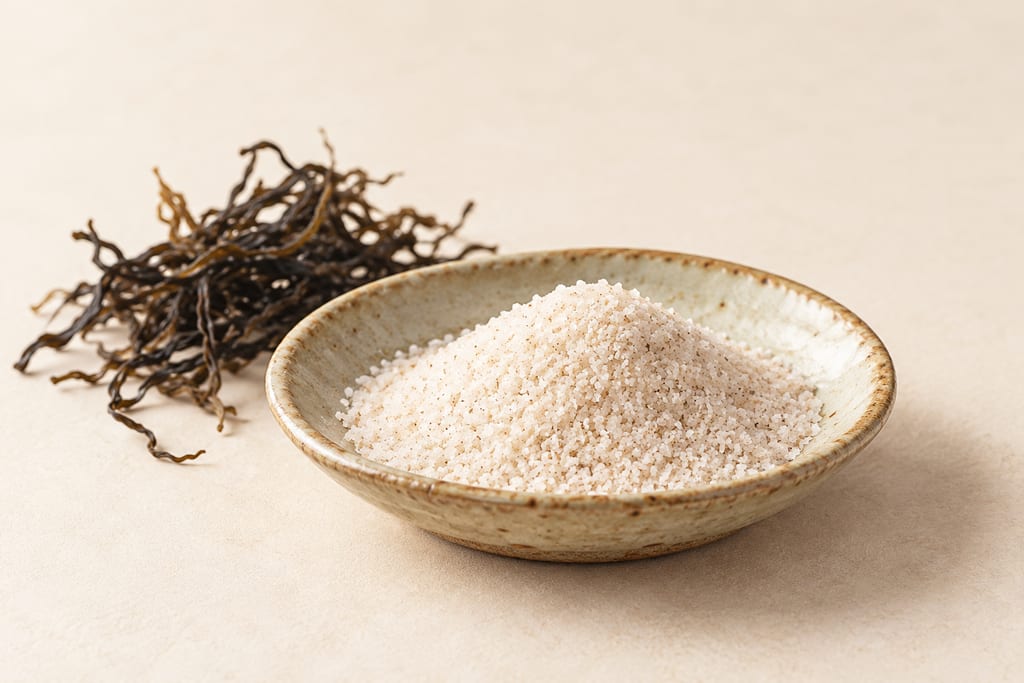
Amabito no Moshio (海人の藻塩, “sea people’s seaweed salt”) is a branded seasoning salt made by Kamagari Bussan on Kamikamagari Island in Kure, Hiroshima Prefecture. The producer describes a fine, free-flowing salt with a pale beige to light brown cast, mild salinity and a savory impression. The color is not a sign of smoke or age: the maker attributes it to pigments from hondawara, a brown seaweed. The two stated raw materials are Seto Inland Sea seawater and domestic hondawara. The company presents the result as a modern local specialty, and Hiroshima City lists it as a Hiroshima product. This entry records the named product and its maker’s process; it does not claim that all salts called moshio share one formula.
The product sits between a household seasoning and a manufactured food. It is sold ready to use, but the database classifies it as a preparation because making the salt is a multi-stage process. A reader can season rice, fish, vegetables or meat with the finished salt; making the named product, however, depends on the manufacturer’s filtration, concentration, extraction and finishing operations. The distinction matters because a pale salt in a bowl is not evidence of its origin, ingredient composition or food-grade status. The process described here belongs specifically to the Kamagari product, and the maker’s commercial equipment and unstated ratios should not be improvised as a home recipe.
The producer dates the modern project to research that followed the discovery of salt-making pottery at Okinoura on Kamikamagari. During shoreline construction in 1984, a pottery fragment associated with ancient salt making was found; local researchers organized to investigate the site and the historical word moshio. The company says its factory was established in 1998, on the same shore, and that the resulting product was named Amabito no Moshio. These dates describe the history of the modern product as told by its maker. They do not date the first use of salt in Japan or prove that a particular ancient recipe survived intact into modern times.
The word moshio is associated with seaweed and salt in Japanese literary and historical sources, including poems in the Man’yōshū. But a poem is not a technical manual. The archaeological record includes salt-making pottery; museum and research accounts discuss several possible ways people could have concentrated seawater using seaweed, seaweed ash, brine, sand and boiling. Even the meaning of “burning seaweed salt” is not a single settled process. Studies of ancient pottery and residues add evidence, but they do not make every step certain. The manufacturer’s own factory page is especially clear that its modern food-safe process does not reproduce ancient moshio-yaki. The continuity is a contemporary interpretation and place-based revival, not a verified unchanged formula.
Kamikamagari lies in the Seto Inland Sea, a sheltered inland sea whose islands and shorelines supported maritime communities and salt-making. The named modern product connects that local landscape to a contemporary factory and regional food identity. It should not be generalized into a claim that all Japanese salt came from seaweed or that all moshio was made in this one way. Salt production changed across regions and centuries; later methods concentrated salt from beach sand and seawater before boiling, and commercial producers eventually adopted other technologies. Keeping those periods distinct makes the local story more meaningful, because the modern salt is a response to archaeological discovery, not a transparent window into antiquity.
The island’s story is part of a broader Seto Inland Sea history of coastal salt making. The producer connects Kamikamagari’s pottery and local landscape to the word moshio, while the Salt Industry Center describes changing regional methods, including the later use of salt-bearing sand and concentrated brine. These accounts make place important without making one island the origin of every Japanese salt tradition. The factory’s location at Okinoura gives the modern product a visible relationship to the archaeological site, but the current manufacture uses modern kettles and machines. That combination—local memory, a named commercial product and contemporary production—explains how a culinary tradition can be revived without pretending that its present-day recipe has remained unchanged since the ancient period.
The factory account starts with seawater drawn near the plant and filtered to remove impurities. It is concentrated before dried hondawara is steeped in it. In practical terms, concentration raises the proportion of dissolved salts in the liquid; steeping then extracts soluble material from the seaweed into the brine. The maker describes the resulting liquid as dark brown and savory. The public page does not report salinity, the amount of seaweed, steeping temperature or contact time. Those omissions matter: water composition and extraction conditions can change both salt yield and flavor, so a reader cannot calculate a household batch from the finished product’s appearance.
The brine is boiled in more than ten flat kettles for six to eight hours. As water evaporates, dissolved salts become more concentrated until sodium chloride crystals can form; continuing heat also reduces the liquid volume. The producer says workers skim foam throughout the boil. The brown liquid that remains above the crystals is described as seaweed-containing bittern, the concentrated mother liquor left after crystallization. The page does not give a crystal endpoint, a salt yield or a measurement of how much mother liquor should remain, so this explanation stays with what the producer documents rather than turning an industrial operation into a recipe ratio.
Workers lift the kettle salt and use a centrifuge to remove excess bittern while retaining some. A centrifuge separates liquid from wet crystals through spinning; the manufacturer associates this step with a less bitter and more rounded result. The salt is then gently heated in a finishing kiln. The maker says the temperature is raised gradually to avoid scorching seaweed-derived components and to make the salt less prone to dampness and easier to handle. Finally, the product is sifted, visually and sensorially checked, weighed and packed quickly. Each stage has a different purpose: extraction adds seaweed-derived material, evaporation crystallizes the salt, centrifugal separation adjusts residual liquor, and finishing improves flow and packability.
Seawater supplies sodium chloride along with other dissolved ions. In this product, it is also the aqueous medium used to extract hondawara components. The manufacturer does not publish a full mineral analysis in its process description, and its nutritional figures on other pages are product-label data rather than a complete chemical characterization. It is therefore more accurate to describe the salt as seaweed-associated and savory than to make broad claims about health effects or unusual mineral benefits. All edible salts remain sources of sodium; the subtle flavor does not make this product nutritionally interchangeable with a low-sodium seasoning.
Hondawara contributes the tan color and some soluble seaweed material, according to the producer. The name refers to brown seaweeds in the genus Sargassum; the maker’s cited pages use the Japanese common name but do not identify a species in this product description. We therefore do not assign a scientific species or transfer composition data from another Sargassum. The seaweed is dried before steeping, and the maker says its extraction time and heat affect the finished taste. More seaweed or a longer steep cannot be assumed to produce a better salt: the producer publishes no tested substitutions or ratio.
This process is not fermentation. No starter culture or microbial acidification is described. The key changes are extraction, evaporation, crystallization, mechanical separation and finishing heat. That distinction helps readers understand why the recipe belongs with preparations but not with fermented salts. The seaweed flavors the concentrated brine; water loss brings the dissolved salt toward crystallization; centrifuging and drying alter the final moisture and residual bittern. None of these stages is evidence of a living culture or a biologically controlled fermentation.
The manufacturer recommends using Amabito no Moshio as a finishing or dipping salt when its own taste should be noticeable. Its examples include rice balls, grilled fish, salads, vegetables and meat; it also describes use in everyday cooking and in bread or noodles. These are current producer suggestions. They do not establish ancient eating customs, and the proportions depend on the dish and diner rather than a universal recipe. A small pinch on a warm rice ball or cooked fish lets the salt meet the food directly; mixed into a larger preparation, its character will be less distinct.
The product’s mild, savory description should be read as a sensory account, not a promise that it will suit every dish or replace the recipe’s normal salt amount one-for-one. Its fine, free-flowing form is convenient for seasoning, while a pinch can be used at the table. The maker recommends avoiding hot, humid storage and keeping the salt away from strongly scented foods because it can take on moisture and odors. Store it in its closed package or another dry, odor-resistant container. The cited source does not provide a specific household shelf-life after opening, so no duration is assigned here.
The factory’s process includes industrial filtration, large kettle boiling, centrifugation and finishing equipment. Those are not optional decorative details; they are how the maker controls a commercial salt product. The public account omits quantities, salinity targets, impurity criteria and equipment specifications. It therefore supports an informative production record but not a safe, reproducible home-scale formula. A reader who wants the named salt should buy it from an established food retailer; this page does not turn a commercial method into an unvalidated home manufacturing project.
Salt was essential for seasoning and preserving food, but the local pottery and literary record do not supply a complete production notebook. Pottery fragments show that vessels were used in salt-making contexts; residue and microscopic analyses can help identify contact with marine materials. Yet several mechanisms have been proposed for ancient brine concentration, including leaching salts from seaweed or ash and using seawater with salt-bearing sand. The Tobacco and Salt Museum summarizes competing interpretations and notes how fragmentary historical evidence is. A study of pottery from the Wakimoto site likewise discusses candidate procedures, not one universally demonstrated moshio recipe.
The producer’s account says its reconstruction involved repeated wetting and drying of hondawara to build concentrated brine before boiling in pottery. That is relevant to the modern product’s origin story, but it is not the current factory process described in the manufacturer’s technical page. Modern production filters seawater, steeps dried seaweed in concentrated brine, boils it in flat kettles and then centrifuges and finishes the crystals. The two narratives should sit side by side: an interpretive reconstruction of ancient salt making and a contemporary commercial workflow inspired by local history. Neither supports a claim of an unchanged thousand-year production chain.
This distinction also clarifies what a reader can learn from the salt itself. Its light brown color, seaweed association and savory use identify a modern style, but they cannot independently verify an archaeological method or the precise species of seaweed. The available product information is strongest on place, ingredients and factory stages; it is much thinner on measured quantities and analytical composition. Treating that uneven evidence honestly preserves both the value of the producer’s knowledge and the uncertainty that historians and archaeologists still face.
The named product is a modern adaptation made at Kamikamagari Island. The manufacturer says a salt-making pottery find during 1984 shoreline works prompted local study and that the factory began production in 1998. Ancient moshio-yaki procedures remain debated; the maker explicitly says the hygienic factory process is not a reproduction of that ancient method.
Scaling: source batch only
The documented factory method boils concentrated brine for hours and transfers hot crystals; splashes, steam and equipment present burn and scald hazards.
Hazard sourceThis page documents a commercial process, not instructions for a household stove. Do not attempt to reproduce the factory process without appropriate engineering, food-safety controls and validated procedures.
The product maker does not publish home-scale proportions, process endpoints or contaminant testing data on the cited page; do not infer them from appearance or taste.
The named contemporary product is manufactured at Kamagari, Kure; this is not a claim that the ancient method originated here.
Salt seasons a meal, shapes fermentation and preserves food. Its history follows the people who mine, harvest, trade and transform it, and the choices hidden inside an ordinary packet.

Japanese reddish-brown vinegar from sake lees matured about three years, turned to vinegar by acetic bacteria; the vinegar of Handa and Edomae sushi rice.
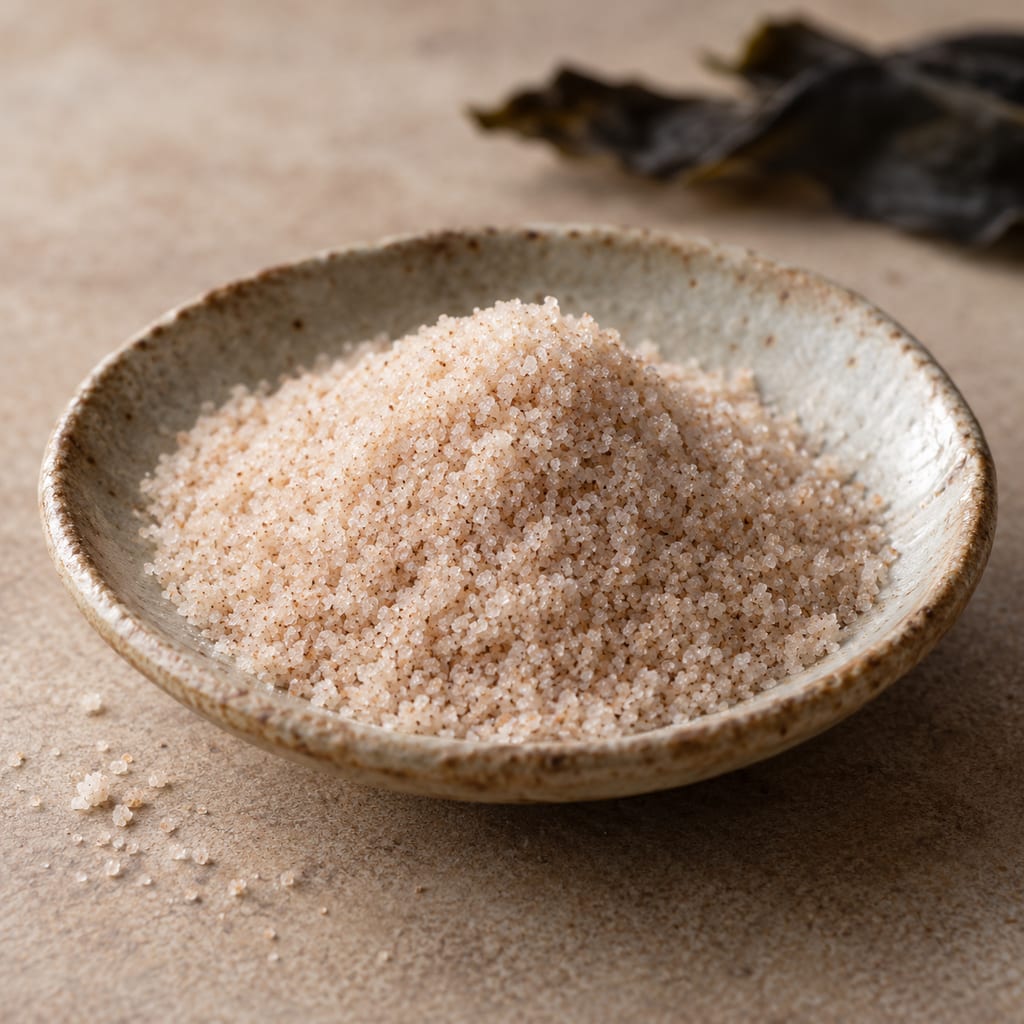
Awaji moshio is a modern Japanese seaweed salt made by TaDa PHILOSOPHY from Awaji Island seawater and seaweed. Its premium process concentrates brine, extracts seaweed flavor, then crystallizes, separates, dries and grades the salt.
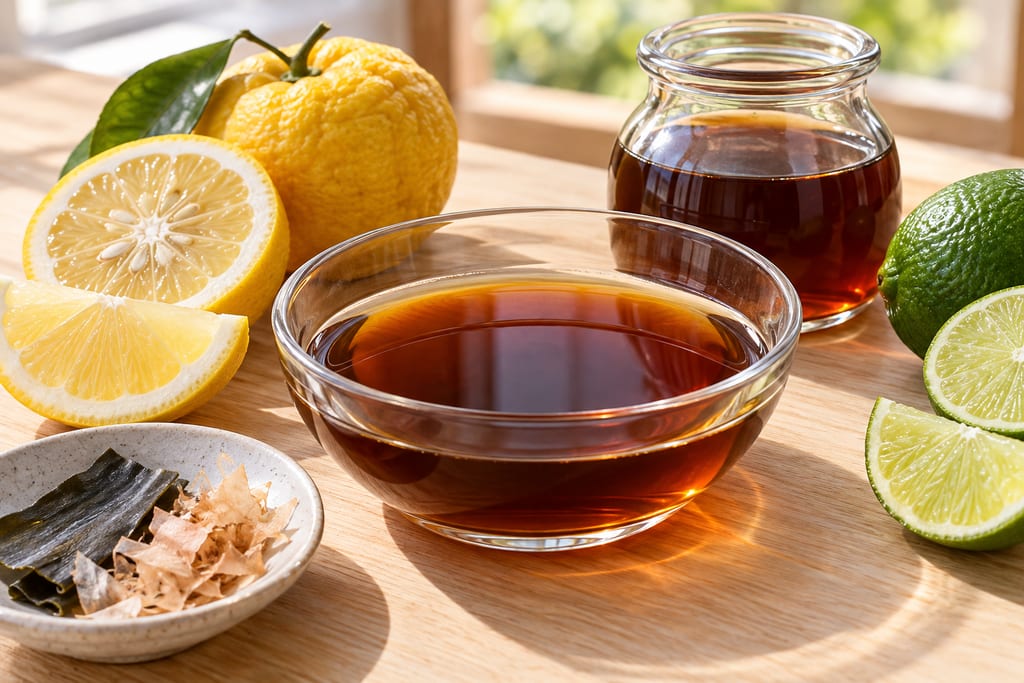
This fresh ponzu-shoyu mixes Japanese koikuchi soy sauce with yuzu or a lemon-lime blend, rice vinegar, water and sugar; optional kombu and bonito give a short chilled infusion.
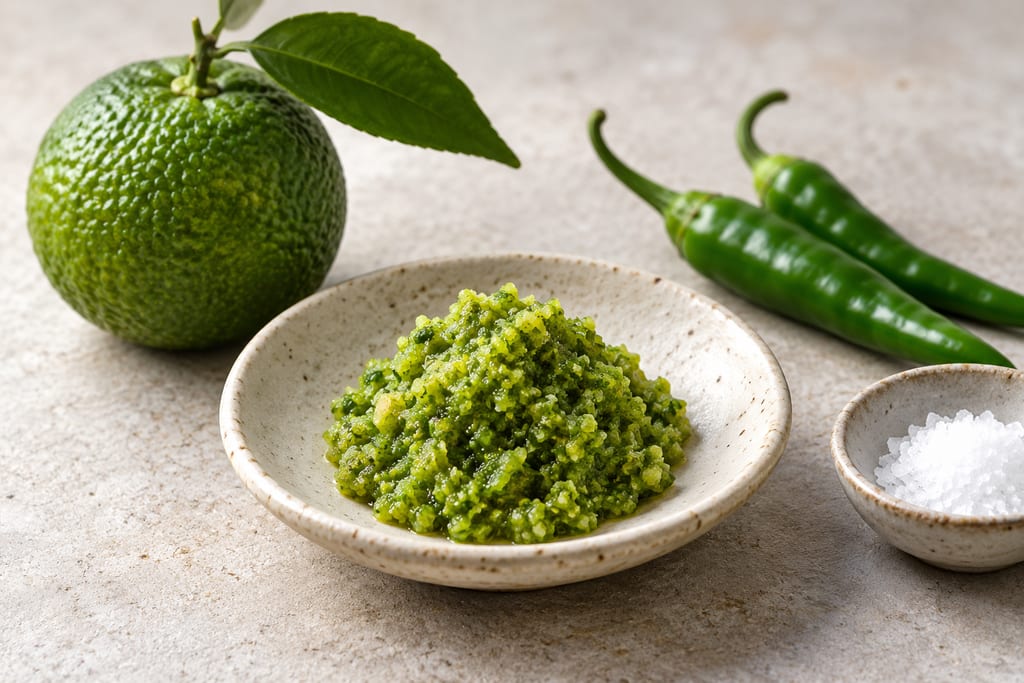
A fresh, uncooked yuzu and green chilli paste inspired by Kyushu’s yuzu kosho, made here as an untested small-batch seasoning rather than a preservation formula.
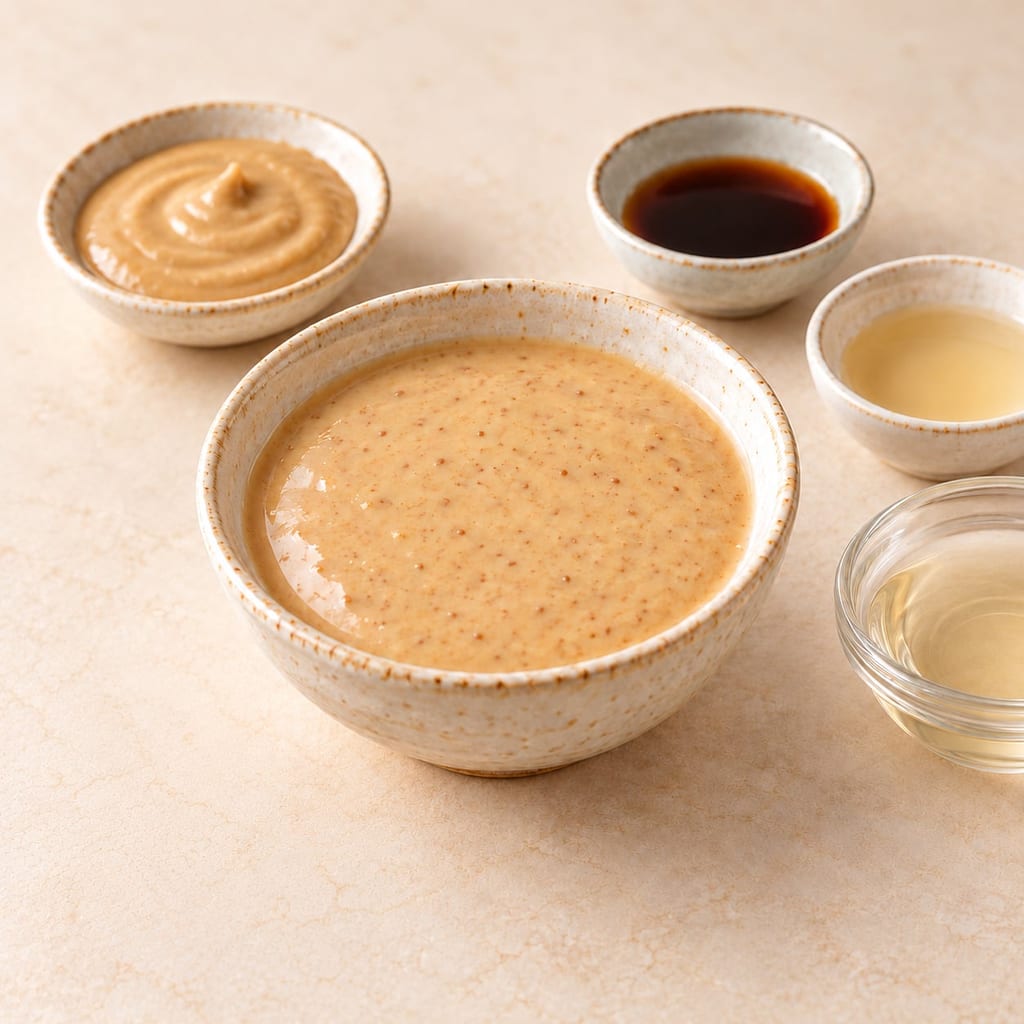
A creamy Japanese sesame dipping sauce with soy, rice vinegar and dashi. Gradual mixing turns the thick sesame paste into a smooth sauce.
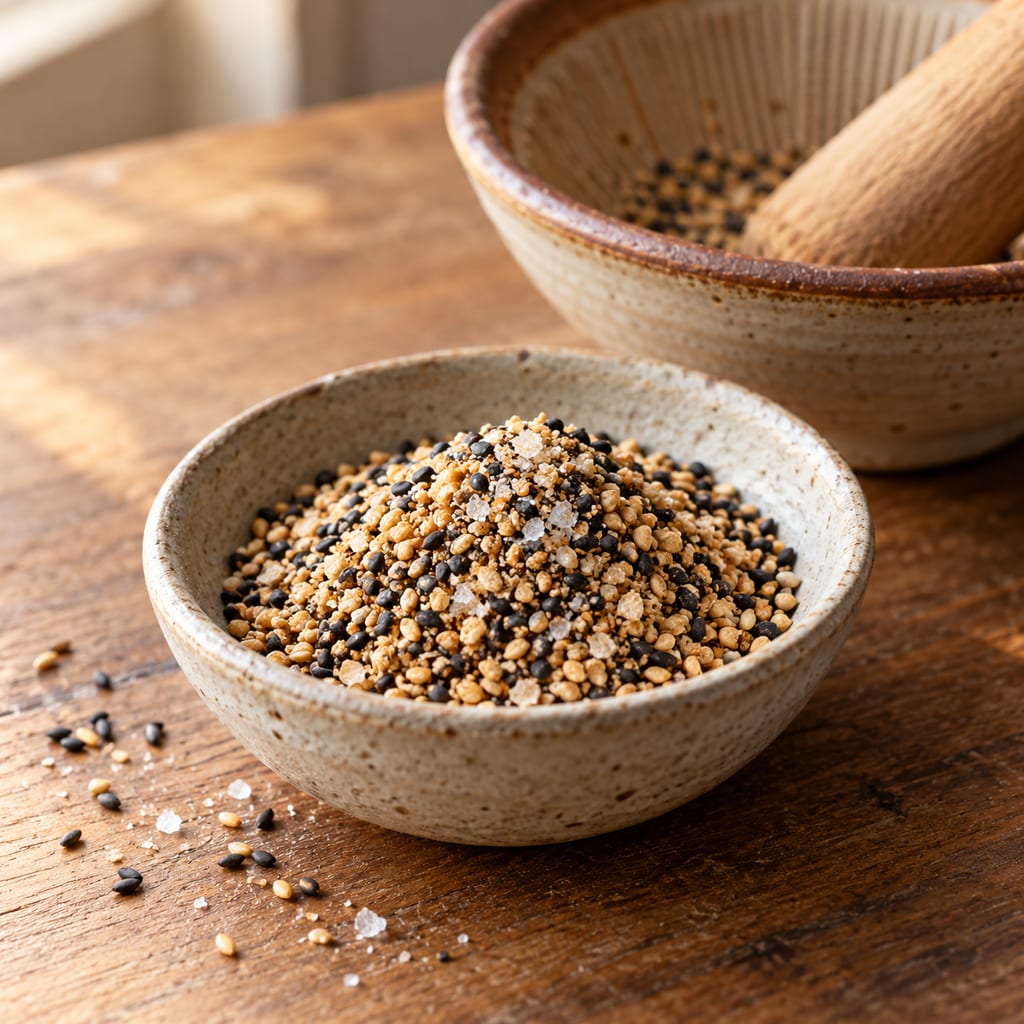
Toasted sesame seeds and sea salt are ground together into a coarse seasoning for rice. This small pan-roasted batch keeps most of the seed texture.
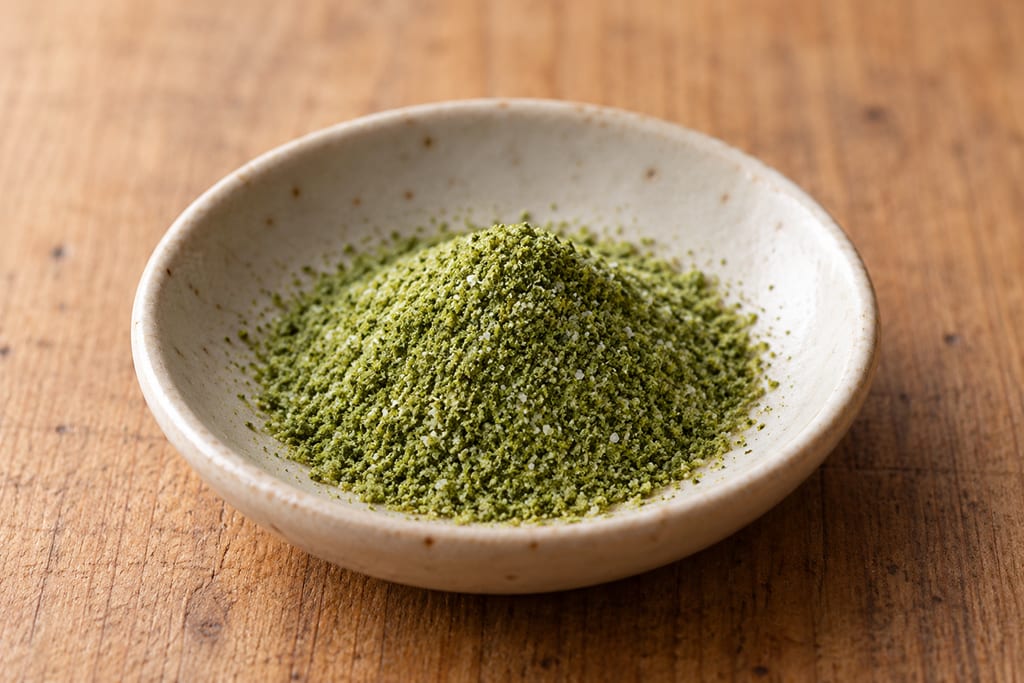
Green tea leaf salt is a dry seasoning made by grinding tea leaves, sieving them and mixing the powder with fine salt. This Japanese-style version follows a documented equal-parts method.
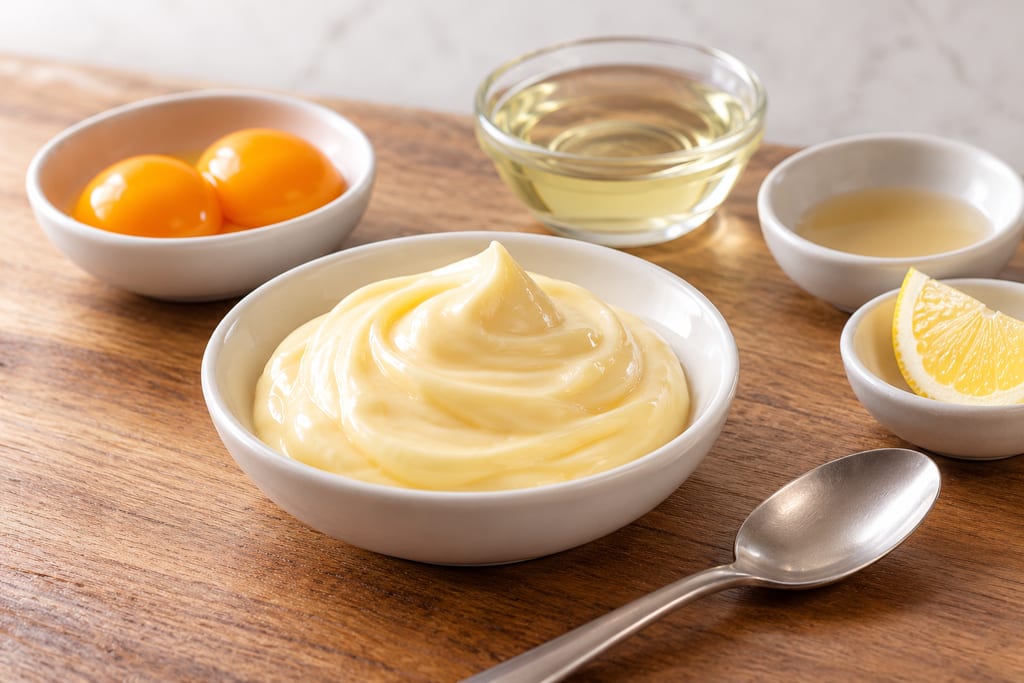
A one-cup Japanese mayonnaise batch made in a small food processor with pasteurized room-temperature egg yolks and oil added in three stages around the seasonings and acids.

Adygean salt is a seasoned table salt associated with Adygea and the wider North Caucasian culinary tradition. Salt is blended with garlic and a variable selection of herbs and spices; the exact mix depends on the named style and maker.
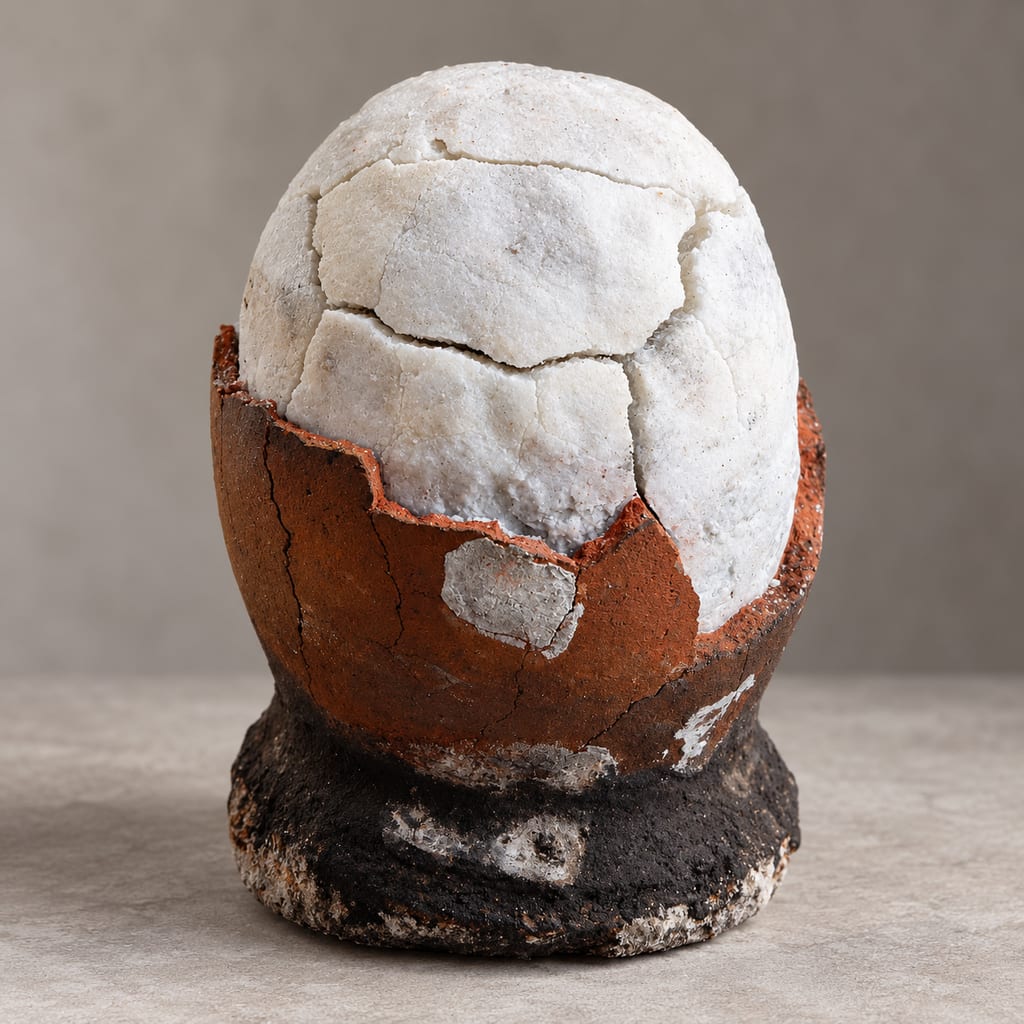
Asin tibuok is a Boholano salt-making craft that turns seawater-soaked coconut husks into a salt-rich ash, brine and formed sea salt in specialized clay pots. This record follows one published account of the community process; it is not a validated household formula.
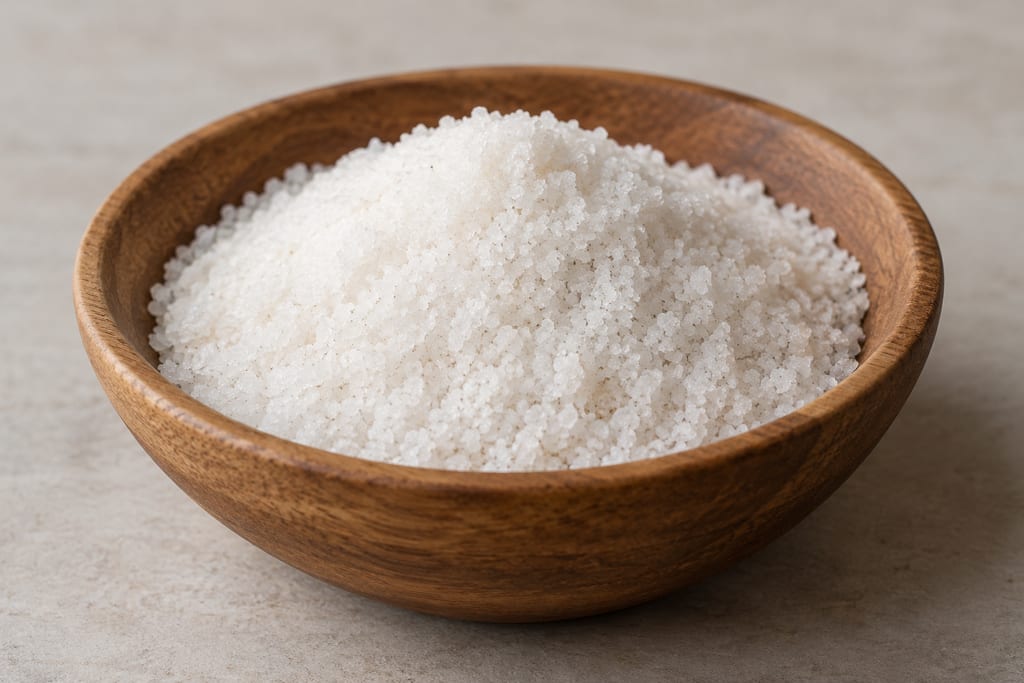
Asin sa buy-o is a fine sea salt made in Panayunan, Botolan, and packed in a woven nipa pouch called a buy-o. Salt-bearing coastal earth is leached with seawater, and the brine is boiled to crystals.
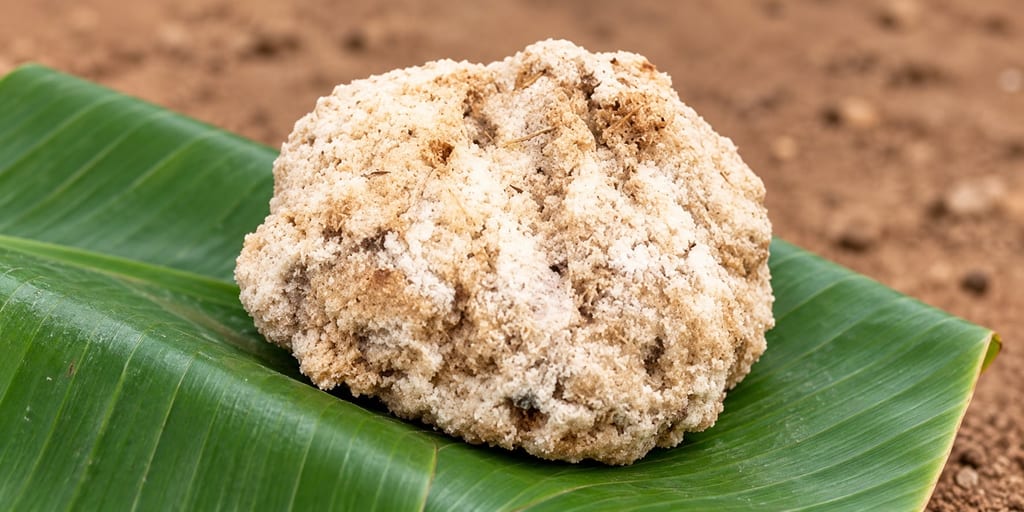
Nzoia River reed salt is a Bukusu seasoning made by leaching and evaporating the ash of mature muchua reeds. Its sources document a local method, but provide neither a measured formula nor verified mineral composition.
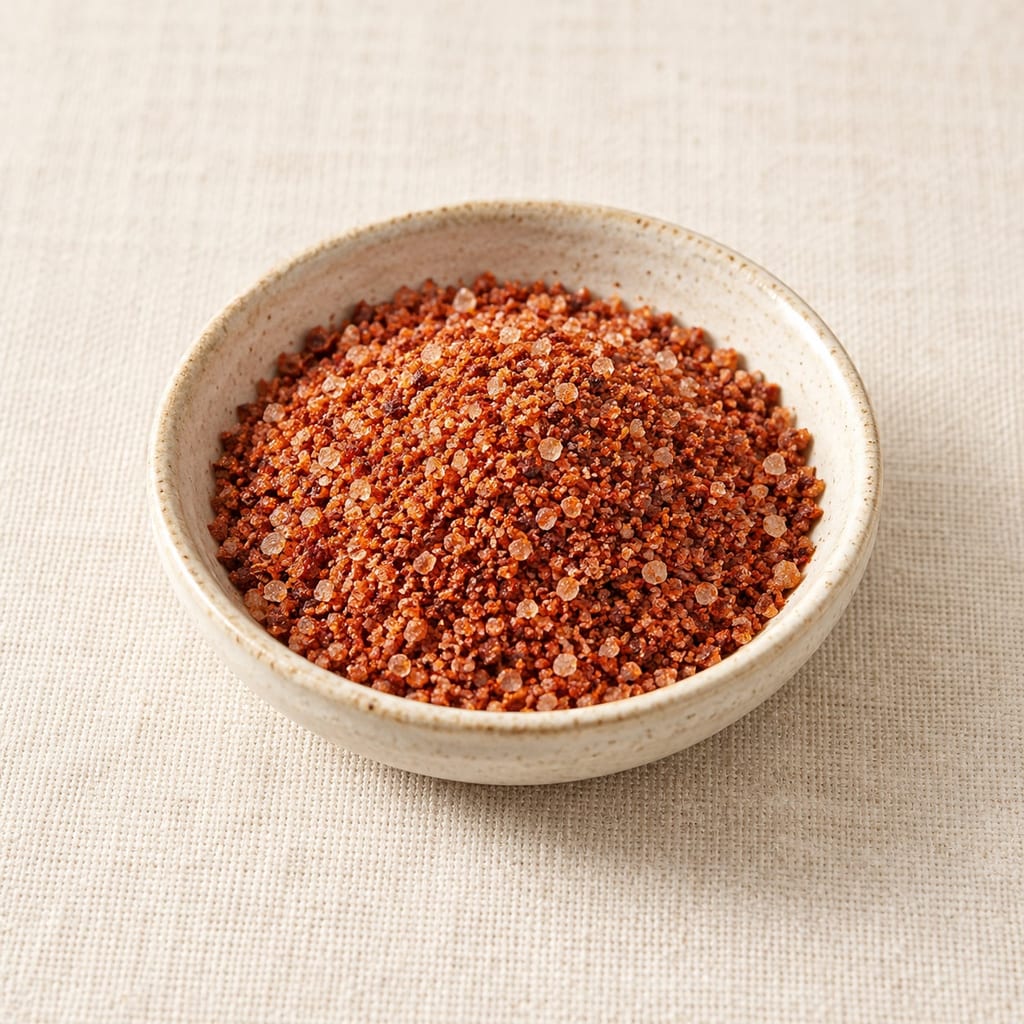
A dry Mexican seasoning of maguey worm, salt and chile, most closely associated in published accounts with Oaxaca and commonly served with mezcal, citrus and fruit.
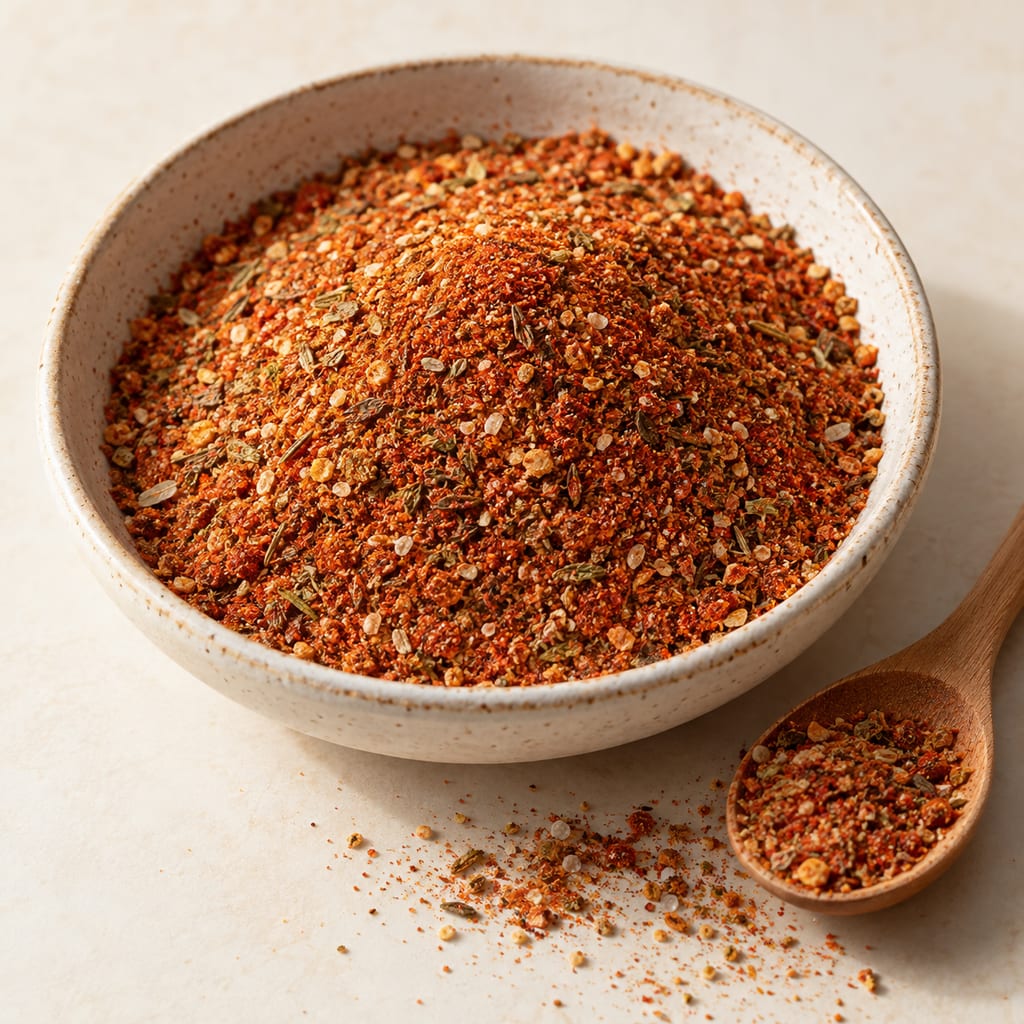
Bulgarian dry seasoning of salt, paprika, dried herbs and spices, with household and regional variations.
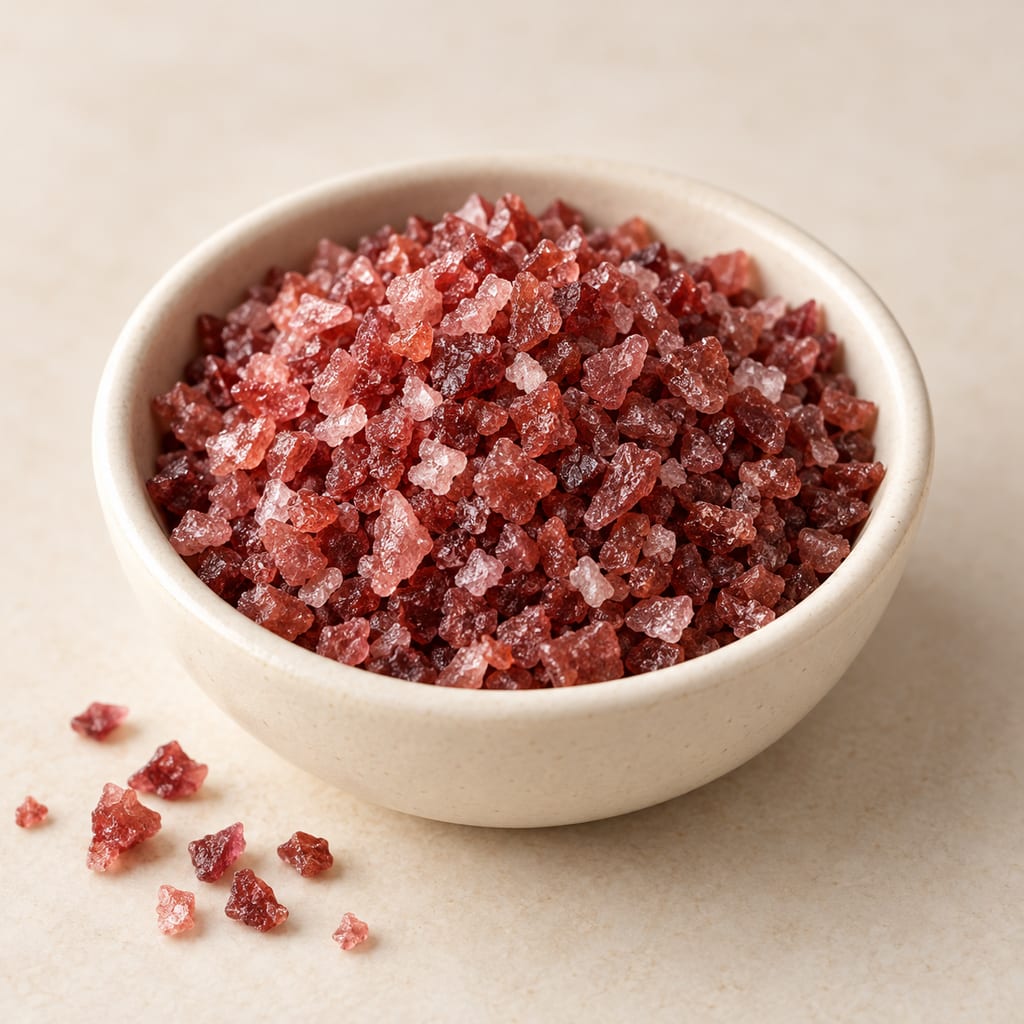
Wine-infused salt is coarse food salt carrying wine colour and aroma after a wine-and-salt mixture is reduced and dried. This version follows a Missouri Wines method at a one-to-three salt-to-wine ratio.

Soft, spreadable Calabrian pork sausage made with a great deal of red chilli and fatty pork, stuffed into natural casings, sometimes smoked and matured while staying soft.

A way to add independent temperature logging to an existing food dehydrator without changing its built-in controls or protections. It is a monitoring method, not a rewiring plan.

Pleurotus cystidiosus is the abalone mushroom, a cultivated oyster-type fungus with dark brown caps that grows more slowly and is more demanding than other Pleurotus species.

A dark, balanced vinegar from Emilia-Romagna made by combining cooked or concentrated grape must with wine vinegar, then acetifying and refining it in wood under a protected specification.

A living dairy inoculum that starts controlled cream fermentation, developing acidity and aroma before sour cream or cultured butter is finished.

A small electric incubator holds jars at a selected temperature for yogurt and other documented warm food preparations. Controls, capacity and vessel arrangement vary by model.

The African Caesar-group mushroom, Amanita masasiensis, is a wild ectomycorrhizal species of central and southern African woodlands, eaten locally. The genus contains deadly poisonous species, so identification needs care.
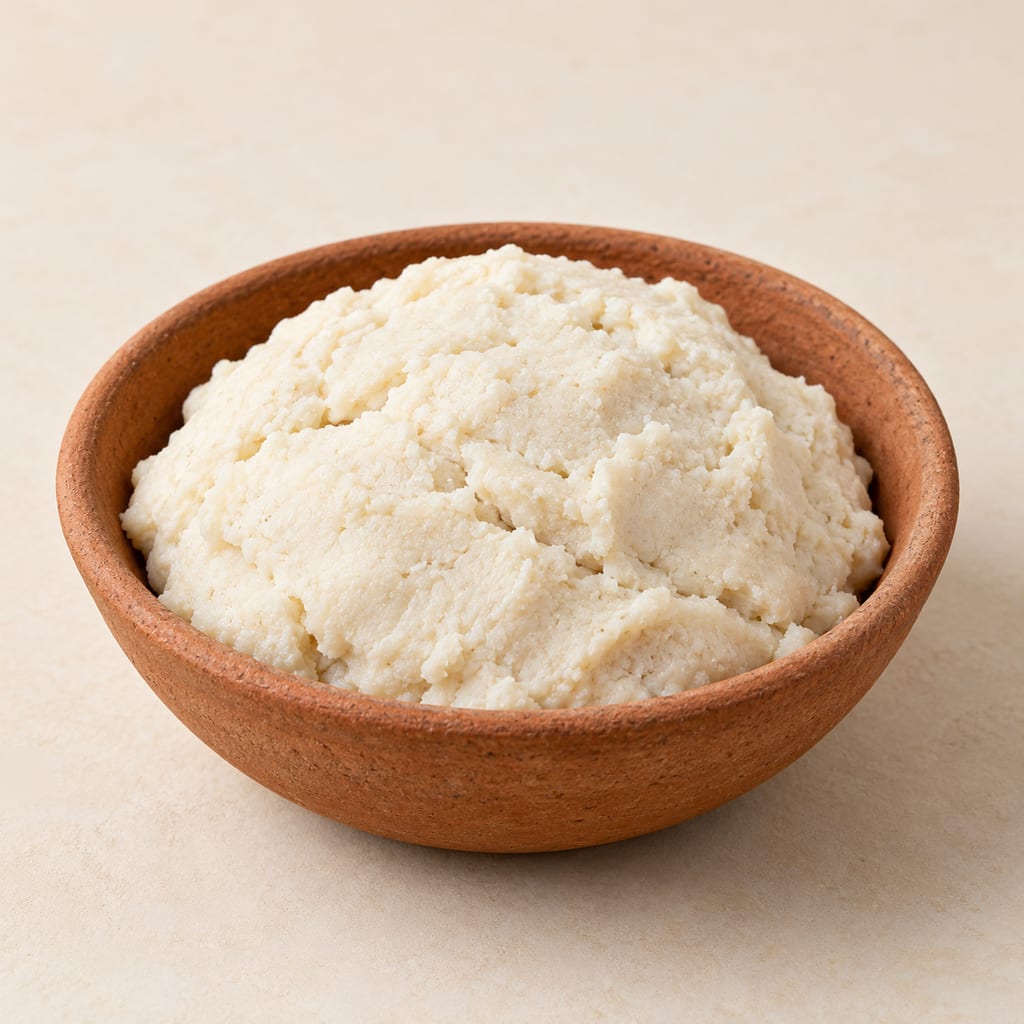
Ghanaian sour cassava dough fermented with traditional inoculum and drained during fermentation. It is used as a base for cooked foods such as banku and akple; process variants and safety outcomes differ.
No community contributions have been published for this entry yet.
Sign in to contribute. Published comments and photos are free to read.
Kamagari Bussan Co., Ltd.Method · Ingredients · Geography · Safety
こだわりの製法と製塩工場『海人の館』Filtered Seto Inland Sea seawater and dried domestic hondawara are used.
Hondawara is steeped in concentrated brine; resulting brine is boiled in flat kettles for 6–8 hours while being skimmed.
Crystals are separated by centrifuge, gently heated, sifted and quickly packed.
The maker says this modern hygienic factory method does not reproduce ancient moshio-yaki.
No ingredient quantities or home-scale formula are published.
Cited in: A named salt from Kamikamagari; A modern revival, and an older record that remains incomplete; How the maker turns seawater and seaweed into salt; Salt, seaweed and flavor; Serving and keeping the finished salt; What the archaeological evidence can and cannot show
City of HiroshimaIdentity · Ingredients · Geography · History · Use
Amabito no Moshio: Japanese Seaweed SaltThe modern product is made in Kamagari, Kure, Hiroshima, from Seto Inland Sea seawater and domestic hondawara.
The page describes a modern revival based on ancient salt-making pottery discovered on the island and kettle simmering.
The product is described as mild and savory.
Cited in: A named salt from Kamikamagari; How the maker turns seawater and seaweed into salt
Kamagari Bussan Co., Ltd.History · Geography
藻塩物語 — 万葉集をもとに蘇った伝承の塩The producer says pottery was found during shoreline construction in 1984, prompting a local research group to investigate old references and reconstruct a method.
The producer dates the modern company and factory start to 1998 and describes its contemporary equipment as hygienic.
These are maker-history claims, not proof of an unchanged ancient formula.
Cited in: A modern revival, and an older record that remains incomplete; What the archaeological evidence can and cannot show
Kamagari Bussan Co., Ltd.Character · Storage · Use
海人の藻塩とは?藻塩の楽しみ方 / 藻塩のQ&AThe maker attributes the brownish color to hondawara pigments and recommends avoiding humidity, heat and strong odors in storage.
The maker lists the product for everyday seasoning and as a dipping salt.
Cited in: A named salt from Kamikamagari; Salt, seaweed and flavor; Serving and keeping the finished salt
Kamagari Bussan Co., Ltd.Use
藻塩のある食卓 / 藻塩とよく合う食材・料理The maker suggests rice balls, fish, vegetables, salads, oils and meat as uses; these are modern serving suggestions, not asserted ancient customs.
Cited in: Serving and keeping the finished salt
Tobacco and Salt MuseumHistory · Technology
採かんの発達/藻塩焼き(古代)The museum describes several possible ancient seaweed-related salt processes and warns that the record is fragmentary.
Archaeological salt-making pottery is found at coastal sites in many parts of Japan.
Cited in: A modern revival, and an older record that remains incomplete; Salt, seaweed and flavor; What the archaeological evidence can and cannot show
Salt Industry Center of JapanHistory · Technology
日本の塩づくりの歴史Japanese sea-salt production involves brine concentration and boiling; the center describes multiple interpretations of ancient moshio-yaki and later salt-sand methods.
Regional production histories differed.
Cited in: A modern revival, and an older record that remains incomplete
Sakurai City; Masaharu Kanehara, Masako Kanehara, Teruhiko Hashimoto and Rieko MoritaArchaeology · History
脇本遺跡の製塩土器の珪藻分析からみた古墳時代の製塩法The study analyzes diatoms associated with fifth-century pottery and summarizes multiple proposed methods, showing that ancient procedures are not reducible to one certain recipe.
Cited in: A modern revival, and an older record that remains incomplete; What the archaeological evidence can and cannot show
CiNii Research; Archaeological ResearchArchaeology · History
「藻塩焼く」の考古学:縄文時代における土器製塩技術の実験考古学的検討This bibliographic record identifies Yoshiro Abe's 2016 experimental-archaeology paper on Jomon pottery salt-making; it contextualizes ancient interpretations rather than the named modern product.