Yuzu (fruit and zest)
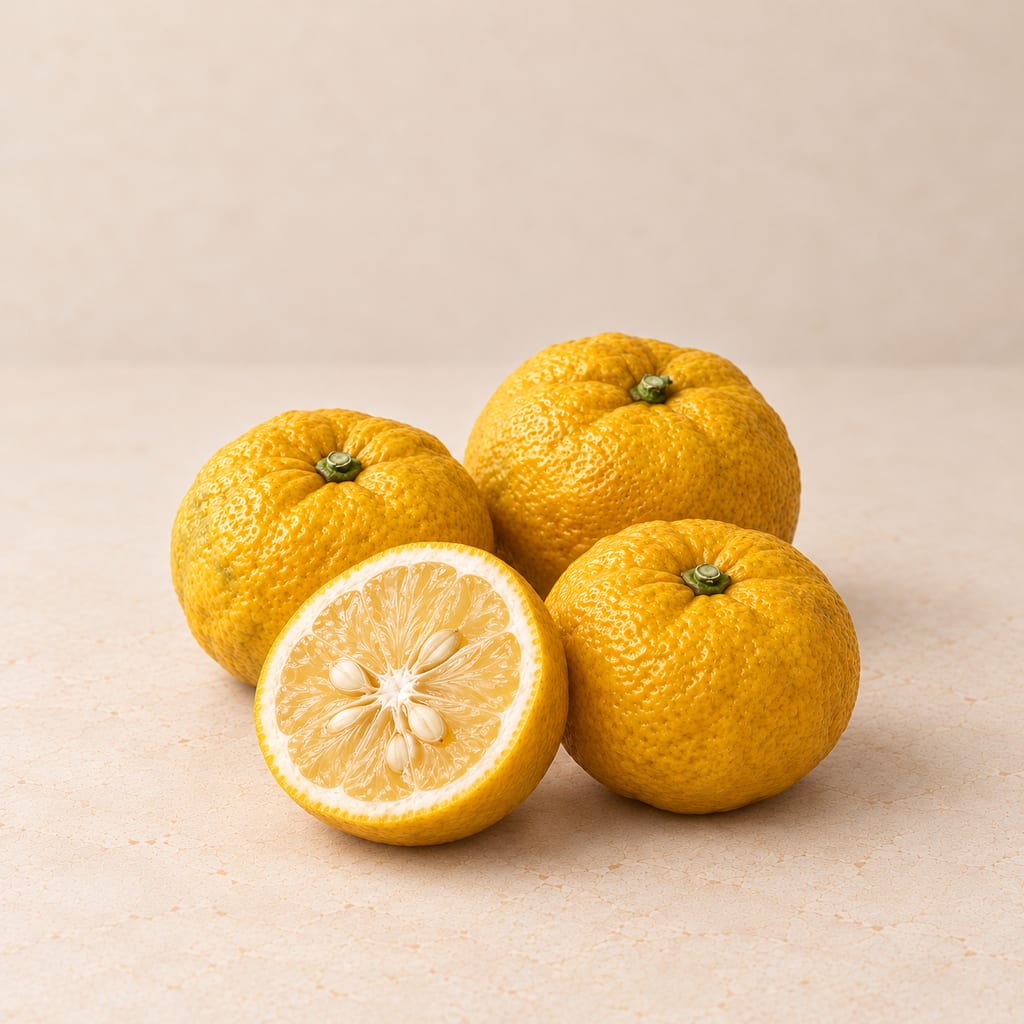
Yuzu (Citrus junos) is a hardy, thorny East Asian citrus whose sour juice and intensely scented peel flavour ponzu, yuzu kosho and preserves.
 FermenteaWhere food goes to change
柚子胡椒 (yuzu kosho) · Yuzu kosho-inspired paste
A fresh, uncooked yuzu and green chilli paste inspired by Kyushu’s yuzu kosho, made here as an untested small-batch seasoning rather than a preservation formula.
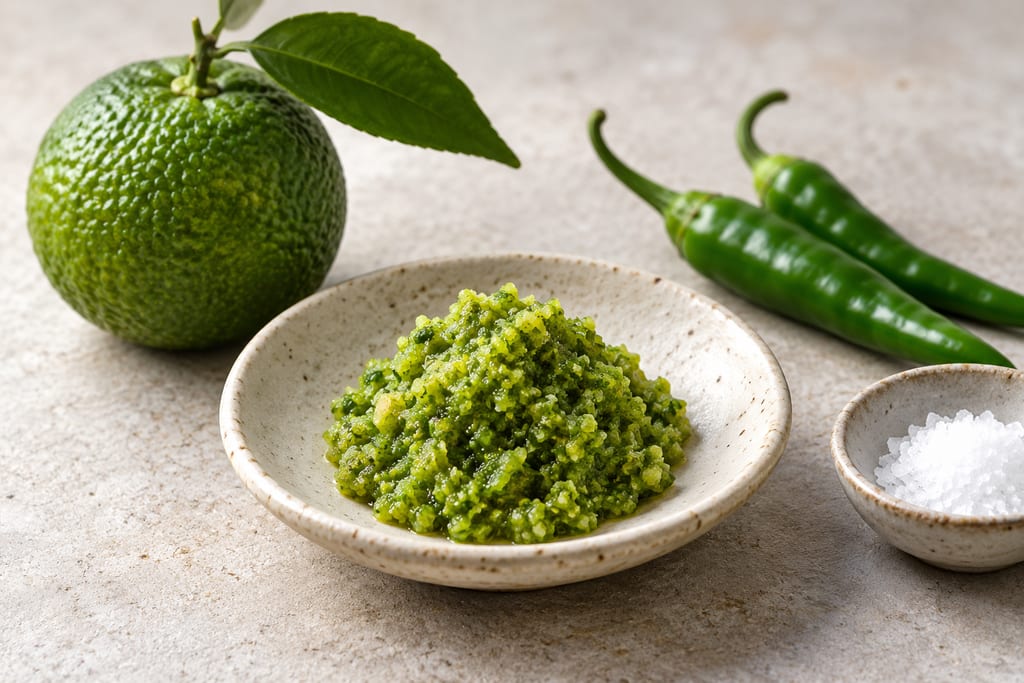
Yuzu kosho, also called yuzugosho, is a Japanese seasoning associated with Kyushu. The name can mislead a reader who knows kosho only as black pepper: in Kyushu usage the word can refer to chilli. Regional accounts describe yuzu peel, chilli and salt, and the condiment is used in small amounts with hot pots, noodles and sashimi. This page calls its formula a fresh yuzu-chilli-salt paste because the quantities are an original development recipe, not a transcription of a local household formula.
Japan’s agriculture ministry identifies Fukuoka as a region where the seasoning is known and notes that origin accounts differ. Mount Hikosan appears in one proposed story, linked to yuzu and mountain ascetics. That is a reported theory, not a proven place of invention. The evidence supports a regional association, not a precise birthplace.
Green yuzu zest supplies citrus aroma; green chillies contribute heat and vegetal flavour; salt seasons the mixture. The ministry notes a tradeoff in traditional preparations: more salt can support longer preservation and colour stability while muting yuzu aroma, while too little may lead to quicker discolouration. Those observations do not set a safe salt percentage for this formula.
The supplied development recipe uses 50 g prepared chillies, 40 g zest and 10 g salt for an approximate 100 g yield. These amounts have not been kitchen-tested or assessed for storage life. This version is mixed fresh and has no fermentation stage, measured acidification or preservation claim. It should not be described as fermented simply because some commercial products may use different processes.
Dry the washed produce well before chopping. Remove thick white pith and mince or pound the ingredients with salt until evenly combined. This is a mixing step, not a sterilising treatment or a fermentation schedule. The formula adds neither water nor juice. Any such change creates another mixture without storage evidence from this recipe.
Fresh chilli can irritate skin and eyes. Gloves help limit contact; avoid touching the face, wash hands, and clean tools after preparation. Use a clean covered container and refrigerate promptly. Freeze portions not needed soon. The supplied report offers a 48-hour working convention for fresh condiments but expressly says it is not a measured shelf life. Treat it as a planning convention, not a tested guarantee. Do not can this paste or store it at room temperature.
Use a small dab to season broth, noodles, fish or vegetables. Yuzu kosho is documented in these kinds of serving contexts, but this new formula’s precise flavour and intensity have not been validated. Taste a tiny amount with the food it will season rather than sampling a spoonful of concentrated chilli and salt.
If yuzu is unavailable, lemon or lime zest can provide a different citrus-chilli seasoning. That substitution changes the aroma and should be named honestly; it is not yuzu kosho. Note the citrus and chilli used when repeating the trial. Discolouration or an unusual smell cannot establish whether a batch is safe, and tasting is not a safety test.
The ministry's Fukuoka recipe is a different formula from the one on this page. For ten yuzu it uses 150 g of green chillies, the peel of the ten fruit (about 100 g) and 1.5 g of salt as printed. The chillies are stemmed, rinsed and dried, and young ones can go in with their seeds. The peel is cut away, chopped coarsely and blended with the chillies, and the salt is mixed in. Kept in the refrigerator, the paste stays bright green until the next season, and in season it can be frozen in small portions for use through the year. Yuzu picked around September is recommended.
The printed 1.5 g of salt sits oddly beside the ministry's own remark that the amount of salt decides how long the paste keeps and how green it stays, and the two have not been reconciled. Neither the printed figure nor the narrative keeping claim is a household safety limit. The ministry also notes that green chillies are hotter, red ones more fragrant, and that the paste goes with hot pot, udon, somen and sashimi.
A 2026 interview describes how Oita Chitose Village Agricultural Processing, a producer in Oita, makes green yuzu kosho. Yuzu are harvested from late September for about a month and peeled soon after picking, and the peel is stored in salt for a year. The green chillies are also stored in salt, then milled and blended with the peel. The producer says it uses a higher salt level for microbial control but gives no ratio and no instructions for home use. It is one company's account, not a general rule for yuzu kosho.
The same producer's catalogues sell green and red yuzu kosho and a separate seasoning made from kabosu peel, which is not interchangeable with yuzu kosho. Retail packs of 60 g, 80 g and 100 g carry 300-day best-before terms at room temperature, food-service packs from 500 g to 20 kg carry 300 days refrigerated, and a 100 g rock-salt product carries 240 days at room temperature. Those are terms for named products and pack formats, not opened-pack periods, and they say nothing about how long a fresh home paste with 10 g of salt in 100 g keeps.
A 2021 article in the Journal of Cookery Science of Japan, written by a practitioner, discusses regional and household variation in yuzugosho; it is not a controlled validation study. Salt values from the ministry batch, the producer's process and this development formula are not averaged or treated as one standard. Older regional cookbooks and the producer's process documentation would help show how the seasoning spread and how its formulations vary.
Yield 100 g
Original untested fresh preparation; not kitchen-tested, sensory-validated or shelf-life tested.
The 10 g salt amount is not a validated preservation threshold. Do not store at room temperature or can.
Wear gloves while handling chillies; avoid contact with eyes and wash hands and utensils after preparation.
Documented regional association for yuzu kosho; this fresh formula is only inspired by it.
MAFF documents this prefectural association and competing origin accounts; no exact birthplace is asserted.
A producer in Bungo-ono, Oita, makes green and red yuzu kosho commercially; this records a producer, not an origin.
Yuzu (Citrus junos) is a hardy, thorny East Asian citrus whose sour juice and intensely scented peel flavour ponzu, yuzu kosho and preserves.
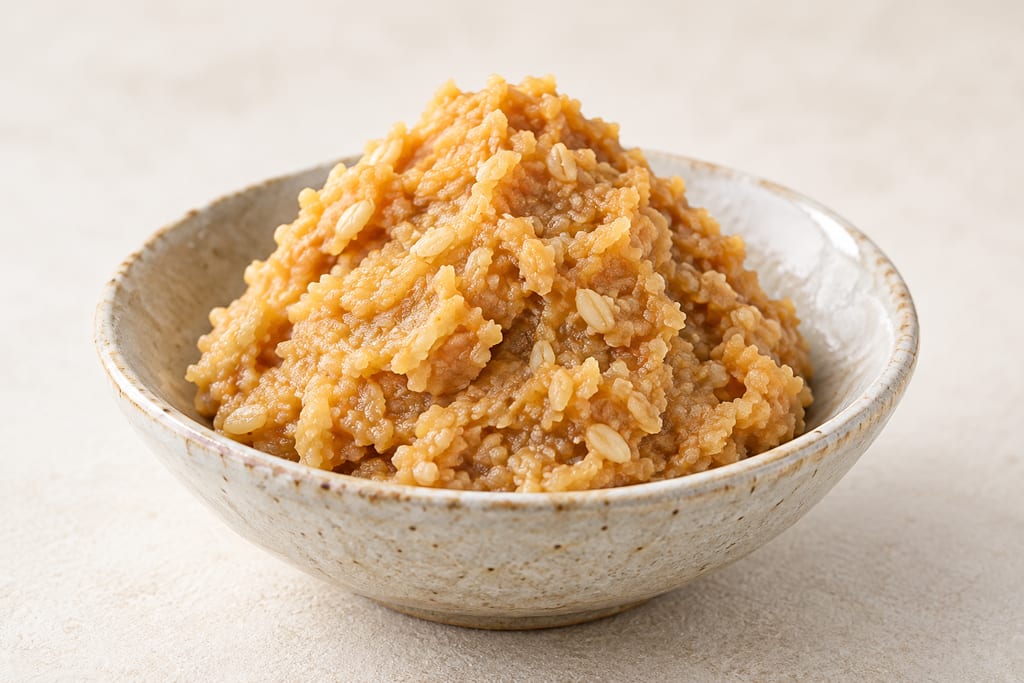
A Japanese soybean paste fermented with barley koji and salt, made mostly in Kyushu, Shikoku and western Japan. It is sweet, savoury and grainy.
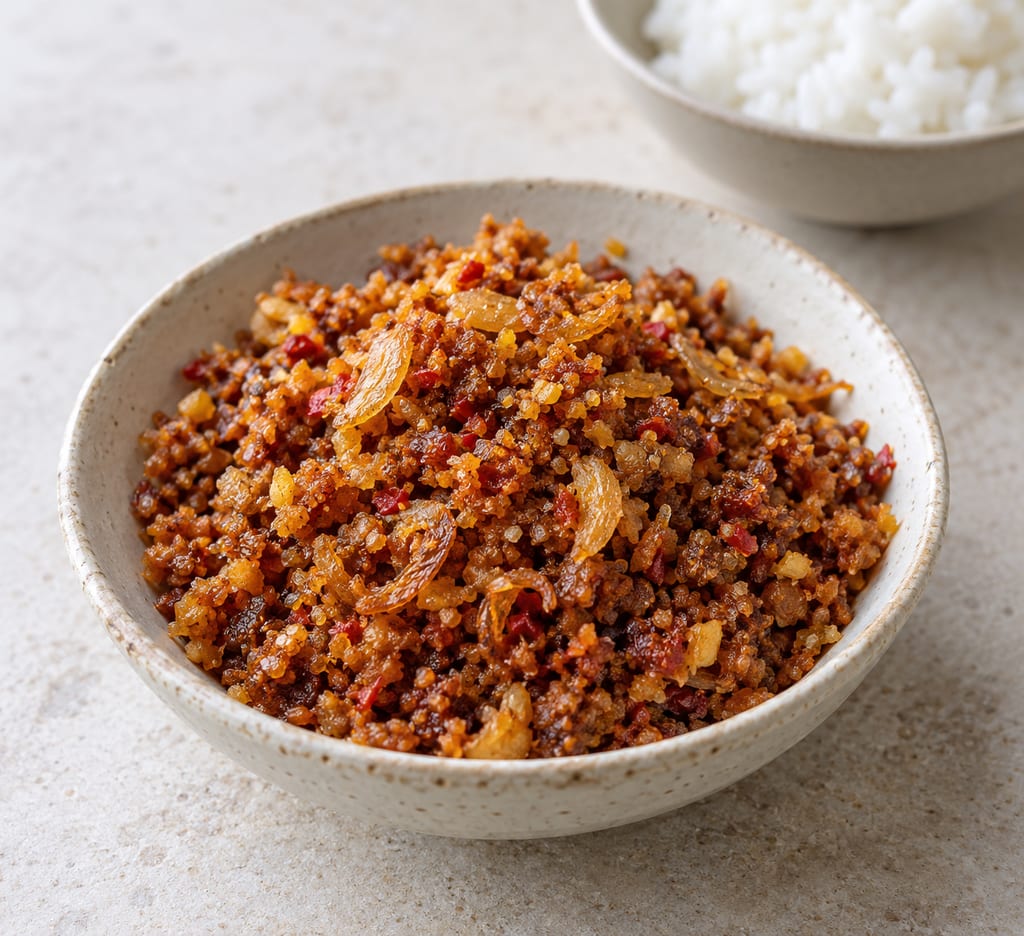
A Myanmar relish of dried shrimp, fried eschalot and garlic, chilli, turmeric, tamarind and ngapi. Naomi Duguid’s published recipe makes about 1 cup; it contains crustacean shellfish.
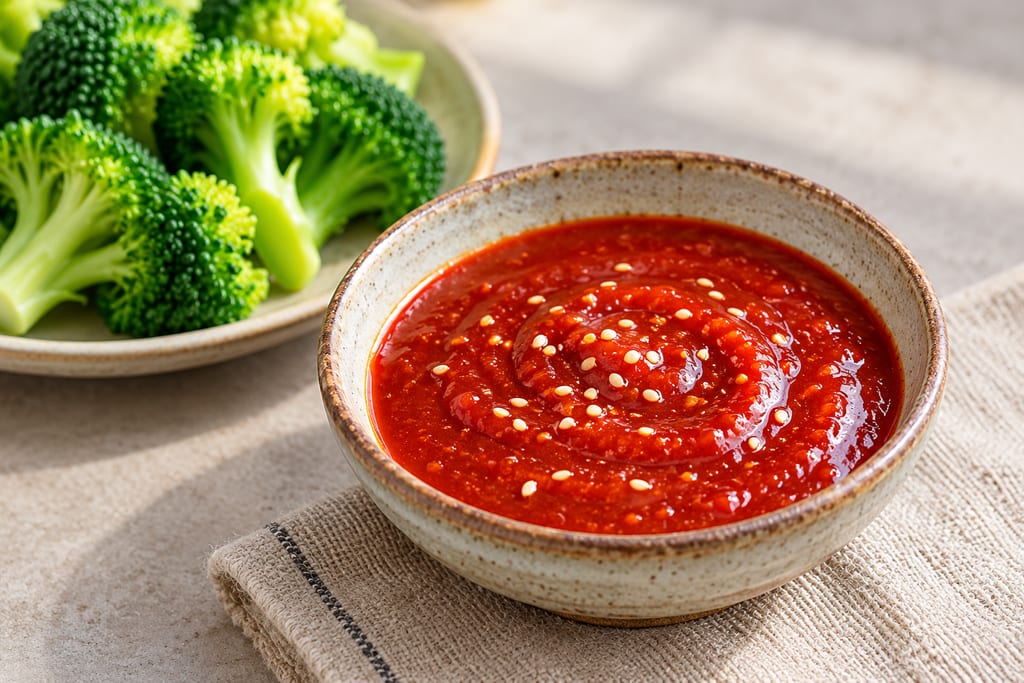
Chogochujang is a Korean sweet-sour sauce made by seasoning gochujang with vinegar and sugar. This development batch adds water and toasted sesame seeds, with optional garlic for the portion being served.
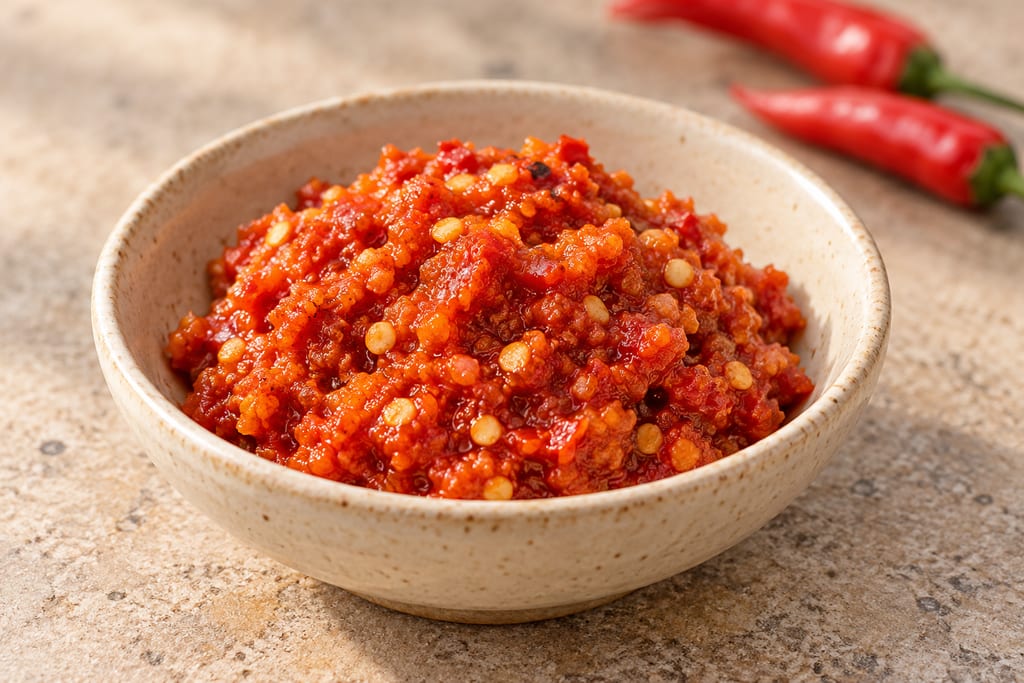
Dinanche, or donne' dinanche, is a Chamorro hot pepper paste of crushed chillies that Guam cooks use on its own or stir into fina'denne'. Its versions range from pepper alone to ones with eggplant, miso or coconut milk.
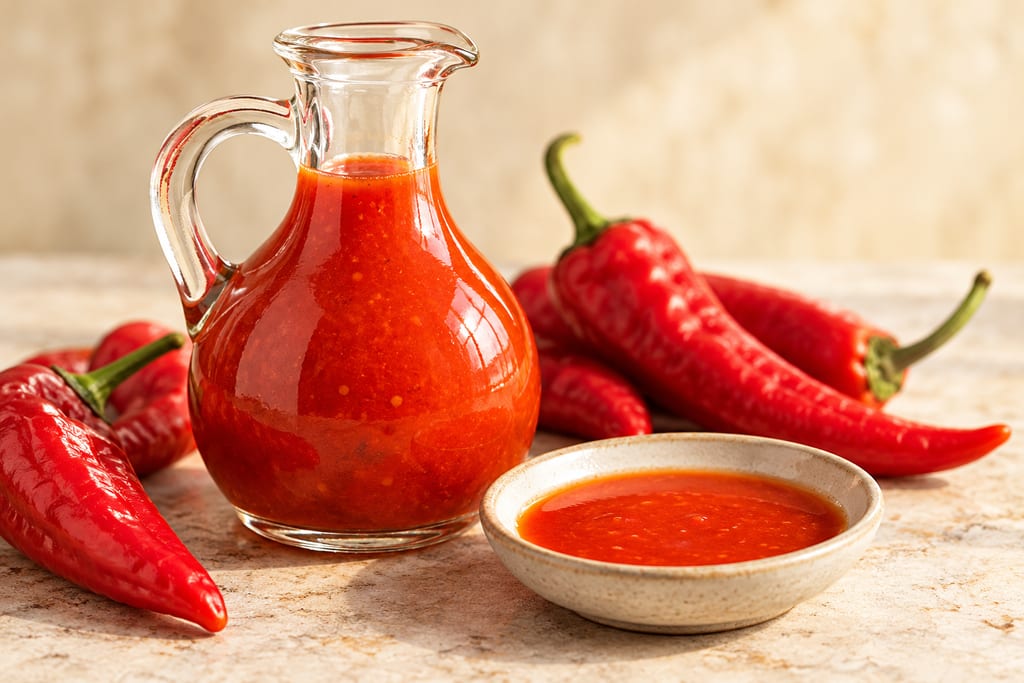
Fresh hot peppers ferment beneath a measured salt brine, then become a bright, tangy sauce blended from the peppers and their liquor.
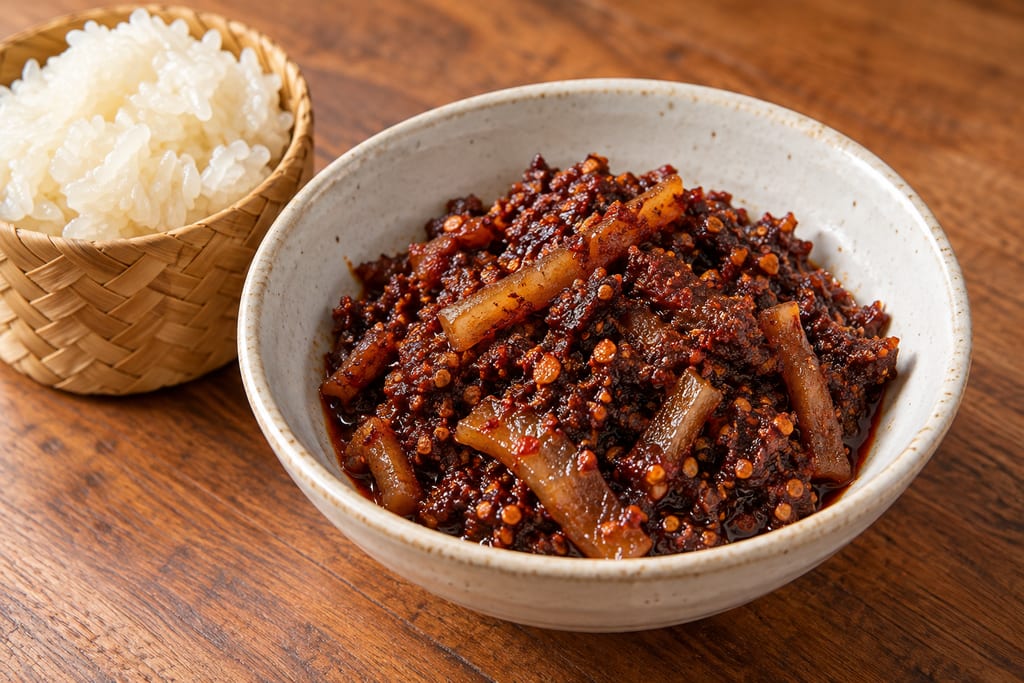
Jeow bong is a Lao paste of dried chilli, shallot, garlic and galangal cooked with buffalo or cow skin, a Luang Prabang specialty eaten with sticky rice and grilled meat.
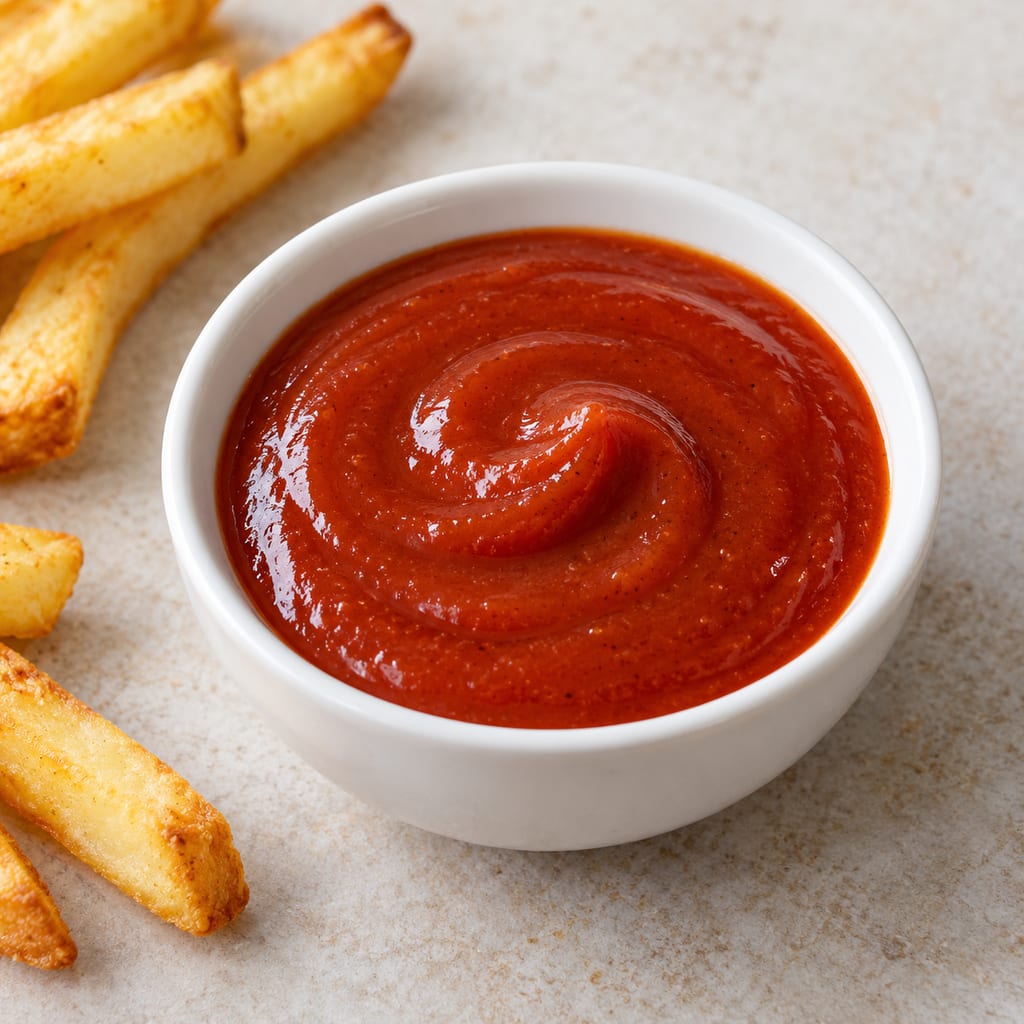
A modern tomato condiment sharpened with the spicy, savoury tang associated with kimchi; this measured version whisk-mixes prepared ketchup and commercial kimchi seasoning.
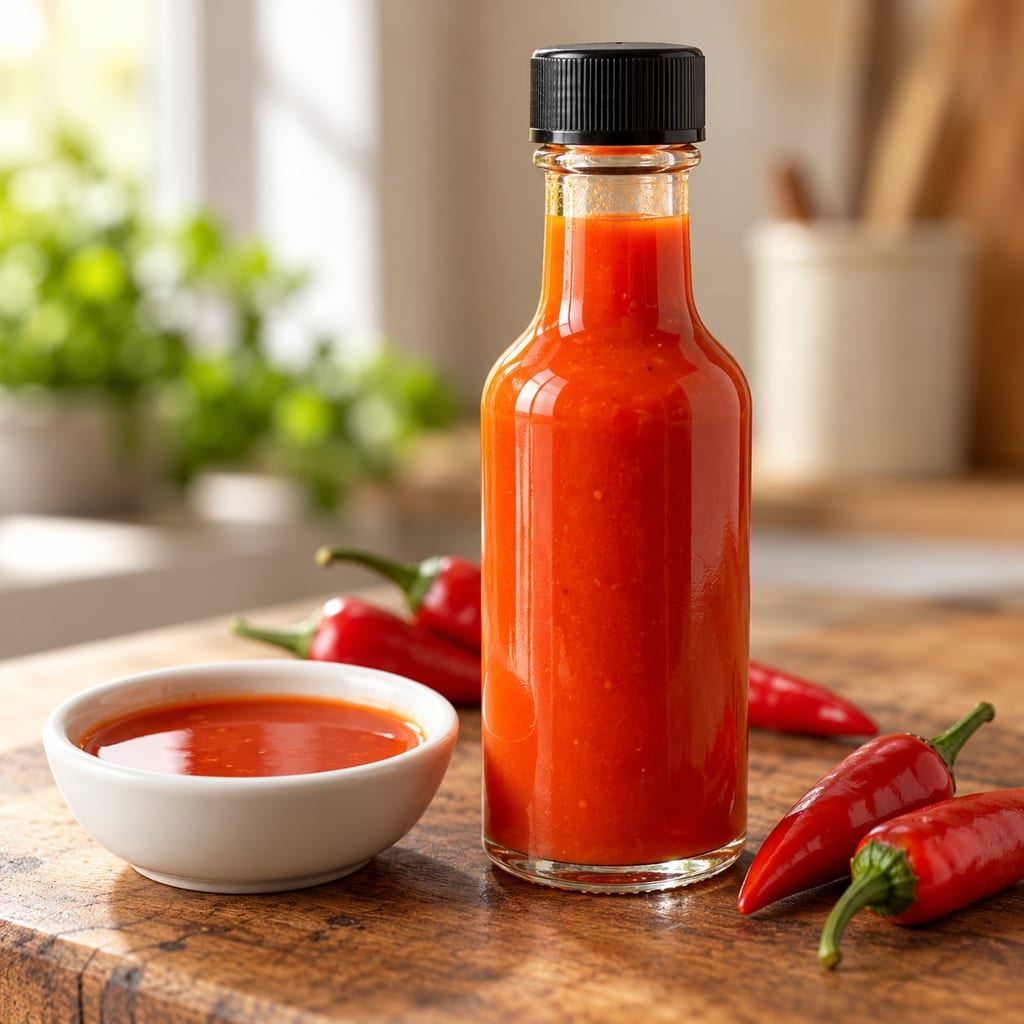
Documentary account of Louisiana pepper sauces, using TABASCO's published barrel-aged commercial process as one specific example; the source does not provide a validated home recipe.
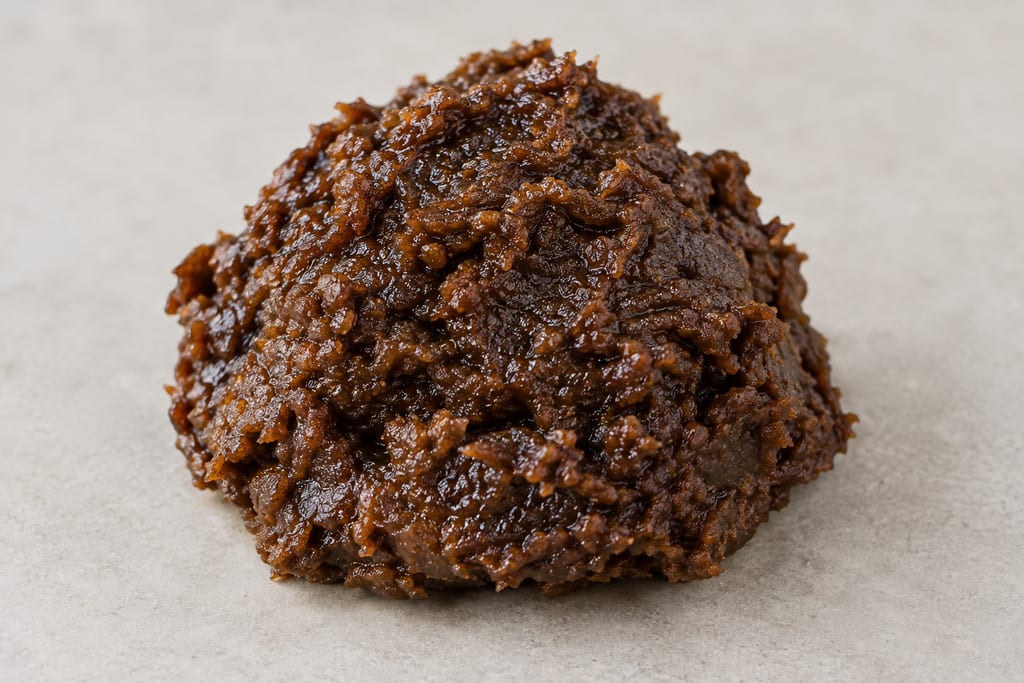
Maari is a Burkinabè baobab-seed condiment documented in producer studies. This is a non-instructional account, not a home recipe: sources vary, omit key process details and establish no validated safety control.
No community contributions have been published for this entry yet.
Sign in to contribute. Published comments and photos are free to read.
Ministry of Agriculture, Forestry and Fisheries of JapanMethod · Geography · History
Yuzu Gosho (Yuzu Citrus Pepper)Fukuoka is a documented regional association; origin theories differ.
Green yuzu, green chilli and salt are combined; seasonal freezing is described.
Salt affects preservation and colour, but this does not validate the supplied fresh formula.
Cited in: A Kyushu condiment and a fresh variation; What each ingredient contributes; Preparation and careful handling
Ministry of Agriculture, Forestry and Fisheries of JapanMethod · Geography · Variation
ゆずごしょう 福岡県A regional recipe for ten yuzu: 150 g green chilli, the peel of the ten yuzu (about 100 g) and 1.5 g of salt as printed; stems removed, peel cut and chopped, blended with the chilli, salt mixed in; kept refrigerated it stays green until the next season, with more salt keeping it longer and holding the colour but weakening the yuzu aroma; freezing in small portions in season.
The origin is disputed; one theory points to the Mt. Hiko area where mountain ascetics used yuzu; in Kyushu kosho means chilli; green chillies are hotter and red ones more fragrant; used with hot pot, udon, somen and sashimi.
Cited in: A Kyushu condiment and a fresh variation; What each ingredient contributes; Serving and reading the result; The Fukuoka batch from the ministry; Measurements stay with their sources
Ministry of Education, Culture, Sports, Science and Technology of JapanIdentity
Yuzu kosho: Standard Tables of Food Composition in JapanIdentifies yuzu kosho as a spicy paste of chilli, yuzu zest and salt.
Cited in: What each ingredient contributes
S&B FoodsIdentity · Use
Yuzu koshoDescribes ground yuzu and fresh chilli with salt; explains Kyushu use of kosho for chilli and lists condiment uses.
Cited in: Serving and reading the result
Embassy of Japan in GermanyHistory · Use
Tasty Japan: Time to Eat!Describes unripe yuzu, chilli and salt in a Kyushu seasoning and notes condiment uses; not preservation validation.
Cited in: Preparation and careful handling; Serving and reading the result
NIHONMONOVariation · Method
ゆずこしょうを調味料の主役に。「大分千歳村農産加工」A 2026 interview: Oita Chitose Village Agricultural Processing uses green yuzu peel, green chillies and salt; yuzu harvested from late September for about a month, peeled soon after and salt-stored for a year; chillies also salt-stored, then milled and blended; a higher salt level for microbial control, with no ratio given.
Cited in: A producer's seasonal process
Oita Chitose Village Agricultural ProcessingVariation · Storage
青ゆずこしょう 商品一覧Retail packs of 60 g, 80 g and 100 g with 300-day room-temperature best-before terms; food-service packs of 500 g to 20 kg with 300-day refrigerated terms; a 100 g rock-salt product with 240 days at room temperature. Catalogue terms for named products.
Cited in: A producer's seasonal process
Oita Chitose Village Agricultural ProcessingVariation
商品一覧 / Product rangeThe range includes green and red yuzu kosho and a distinct kabosu-peel seasoning, kabosu kosho.
Cited in: A producer's seasonal process
Yoshie Kamiya, Journal of Cookery Science of Japan 54(4), 201-205 (2021); J-STAGEVariation
ゆずごしょう / YUZUGOSHO, Yuzu Peel and Chili Pepper PasteA practitioner account of regional and household variation in yuzugosho; not a controlled validation study.
Cited in: Measurements stay with their sources