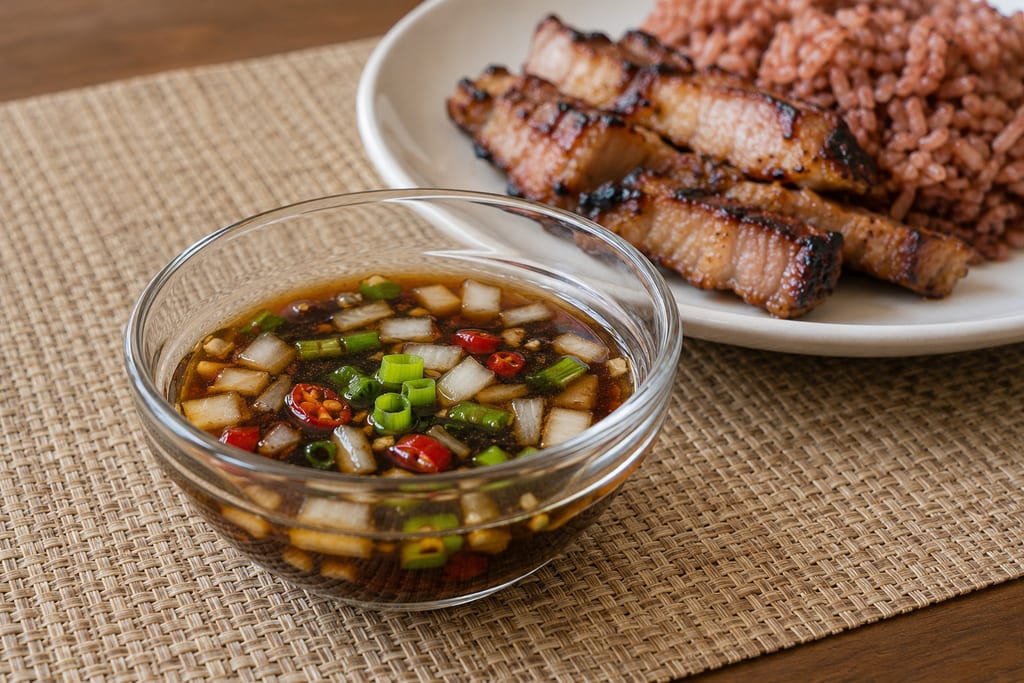
Fina'denne'
Fina'denne' is the all-purpose Chamorro dipping sauce of Guam, made in soy, citrus, vinegar or fish-brine versions with hot peppers. It is spooned over meat and rice or served in a small dish.
 FermenteaWhere food goes to change
Donne' dinanche · Denanche · Donne' dinanche · Chamorro hot pepper paste
Dinanche, or donne' dinanche, is a Chamorro hot pepper paste of crushed chillies that Guam cooks use on its own or stir into fina'denne'. Its versions range from pepper alone to ones with eggplant, miso or coconut milk.
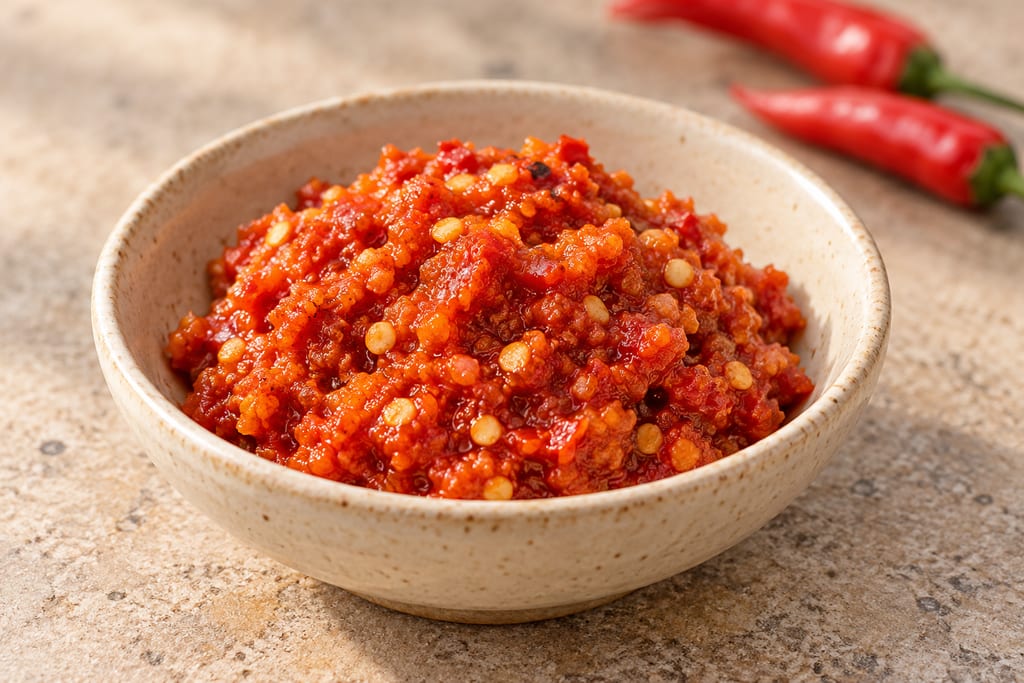
Dinanche is a Chamorro hot pepper paste. Its base is crushed chillies, and it can be eaten on its own or stirred into other dishes. Guam sources describe it as a condiment used directly or in fina'denne', the soy and vinegar dipping sauce. Its heat is the point of it: a spoonful adds sharpness and fire to a plate, and it is kept ready as a seasoning.
The name is spelled several ways. Dinanche, donne' dinanche and denanche all appear in the sources, and the first word, donne', is the Chamorro word for the chilli pepper itself. The paste is a relative of the fina'denne' family, but it is a separate preparation, and the sources treat it as its own item.
The simplest version is peppers only. A no-cook version blends about four ounces of red hot peppers or bird's eye chillies with two cloves of garlic, a quarter cup of mild miso, a third of a cup of apple cider vinegar, salt and lemon powder, then refrigerates the paste for at least an hour. Its yield is a little over eight ounces.
The Guam Stripes article describes the wider family: a paste can be made with only peppers, or with added onion, garlic, coconut milk, vegetables, crab paste or lemon juice. Paula Q's version is creamy, with coconut milk, and its vegetables are barbecued or smoked for the best flavour. The Annie's Chamorro Kitchen miso version is cooked, using a large Japanese purple eggplant, onion, garlic, coconut oil, green beans, miso and the pepper paste.
The cooked version starts by sautéing one large eggplant, or two medium, diced, with a small finely diced onion and four tablespoons of chopped garlic in four tablespoons of coconut oil over medium-high heat, for five to seven minutes, until the onion is clear and the eggplant soft. Thin green beans follow for about five minutes, with another spoon of oil if the pan is dry. A cup and a half of Japanese miso goes in, and the mixture is mashed lightly.
The pepper paste, three tablespoons of donne' dinanche, goes in last, with the heat turned off. The source advises good ventilation at that point, because chilli fumes rise from a hot pan. A teaspoon of lemon powder can be added to taste. The cooked version is a dish in its own right, and it shows that dinanche is an ingredient in the cooking as well as a condiment.
Guampedia notes that salted, preserved crushed red peppers can replace fresh peppers in fina'denne', and that they are sold in many local grocery stores. That is the one place in the sources where the commercial version appears, and the sources do not describe how it is salted, preserved or stored. A reader who uses it should follow the product's own label rather than a home method.
Lemon and calamansi appear as acid in several versions. The Paula Q page notes that calamansi juice can replace lemon juice, and that because it is less tart the cook should start with half the amount. The acid is a flavour choice in these versions, and no source presents it as a preservative control.
The sources give no storage time for dinanche. The no-cook paste is refrigerated in an airtight container, and the cooked version with coconut milk, eggplant and garlic should also be kept cold. Smell and taste are not reliable checks for a stored paste, and garlic kept in oil at room temperature needs a cold chain for the reasons set out in the safety section.
The processes for the commercial salted pepper and for the Tinian ready-made version are not in these sources. Their dates and their makers are not given. A reader interested in dinanche's history should look for dated Chamorro food writing before treating any date as settled.
Dinanche is a Chamorro hot pepper paste recorded in Guam sources and recipe pages. The fresh red peppers in it were introduced to the islands by the Spanish, according to Guampedia's account of the wider sauce family. The sources do not date the paste itself.
Yield 8 ounces · Scaling: source batch only
One source advises good ventilation when the pepper paste is added to the hot pan.
Hazard sourceA paste of fresh peppers, garlic or coconut milk is moist and can spoil if held warm. The sources give no tested storage time.
Hazard sourceKeep the paste refrigerated in a clean, airtight container
Control sourceNo source gives a storage life for dinanche.
Garlic kept in oil at room temperature carries a recognised botulism risk. This is general food-safety guidance and is not stated in the sources.
Smell and taste are not reliable checks of stored paste.
A Chamorro condiment of Guam; a ready-made Tinian version is also mentioned, and the sources do not give a single place of making.
Fina'denne' is the all-purpose Chamorro dipping sauce of Guam, made in soy, citrus, vinegar or fish-brine versions with hot peppers. It is spooned over meat and rice or served in a small dish.
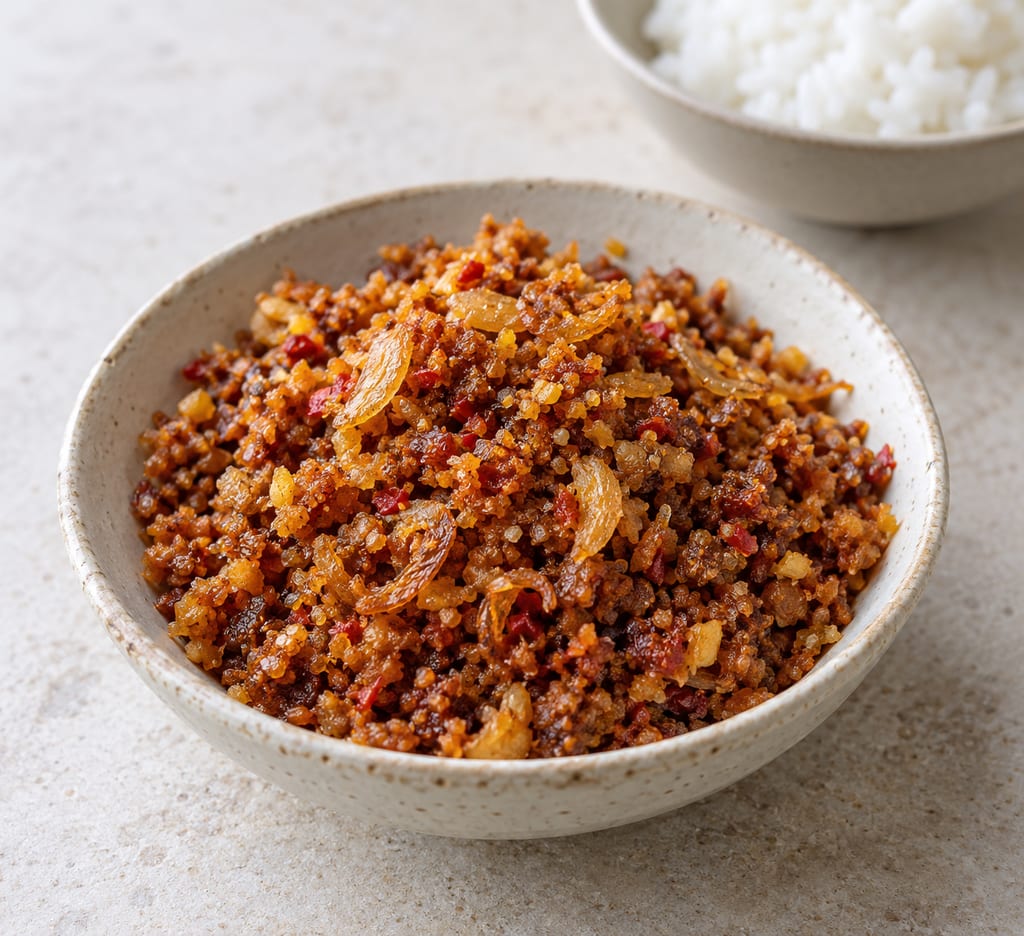
A Myanmar relish of dried shrimp, fried eschalot and garlic, chilli, turmeric, tamarind and ngapi. Naomi Duguid’s published recipe makes about 1 cup; it contains crustacean shellfish.
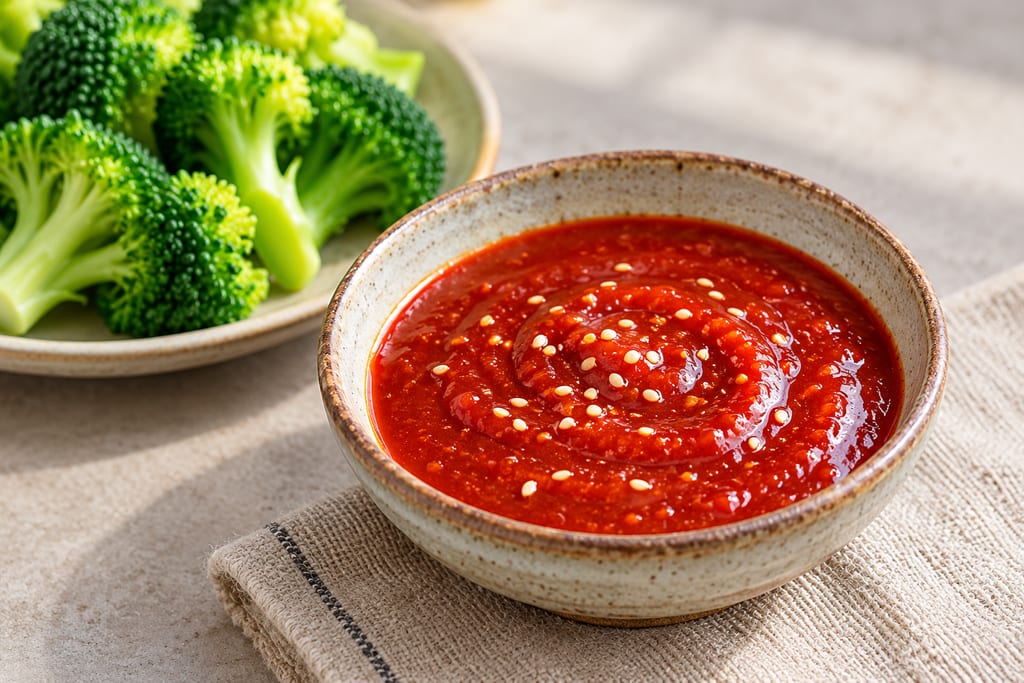
Chogochujang is a Korean sweet-sour sauce made by seasoning gochujang with vinegar and sugar. This development batch adds water and toasted sesame seeds, with optional garlic for the portion being served.
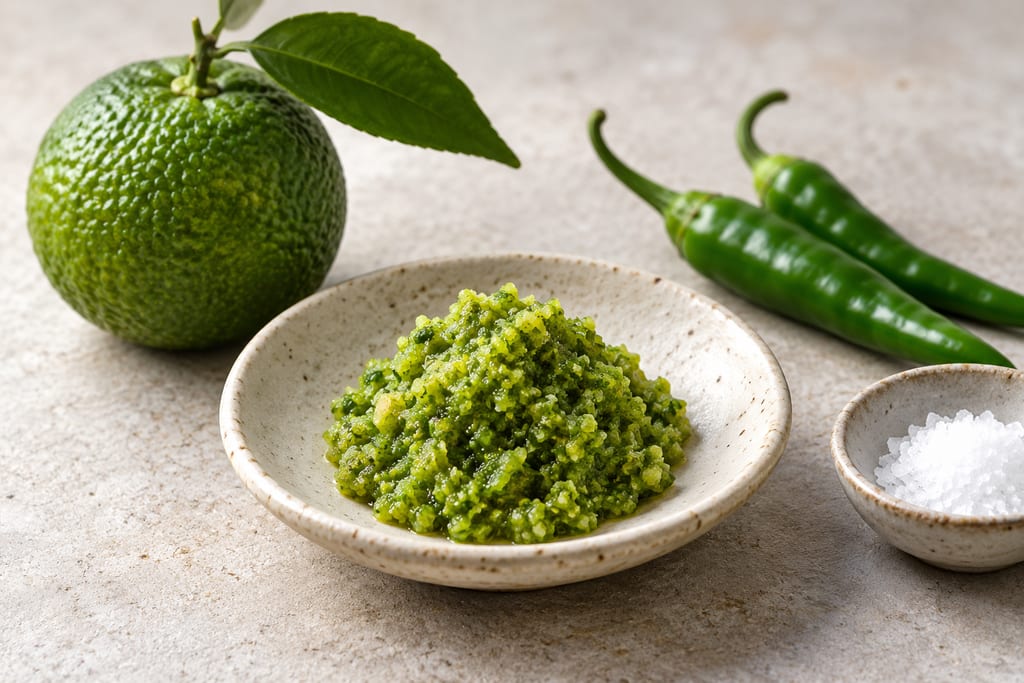
A fresh, uncooked yuzu and green chilli paste inspired by Kyushu’s yuzu kosho, made here as an untested small-batch seasoning rather than a preservation formula.
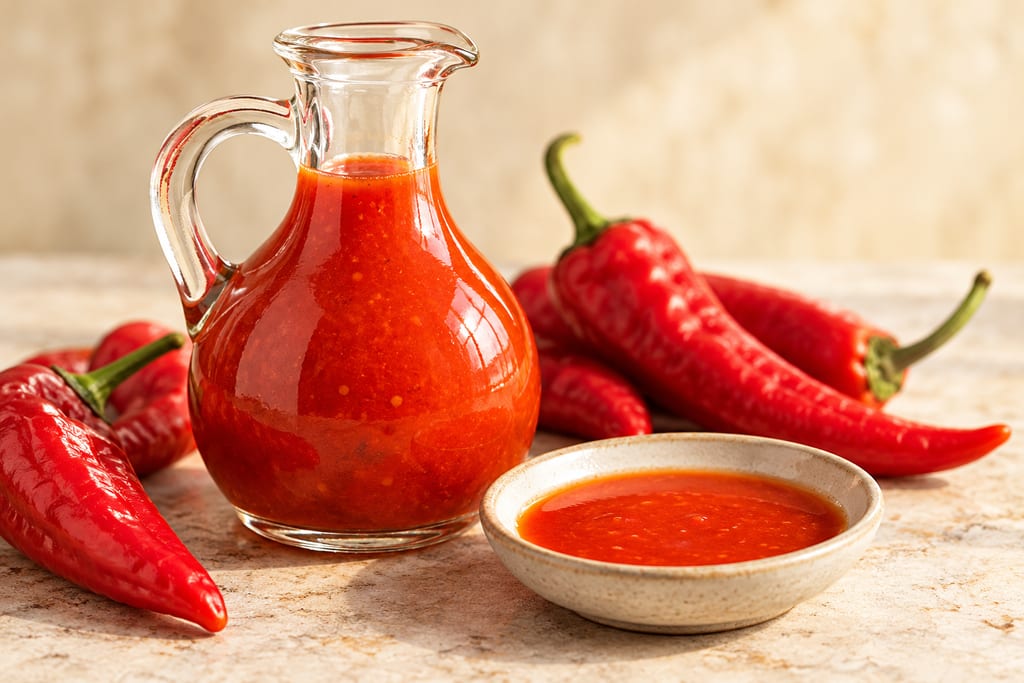
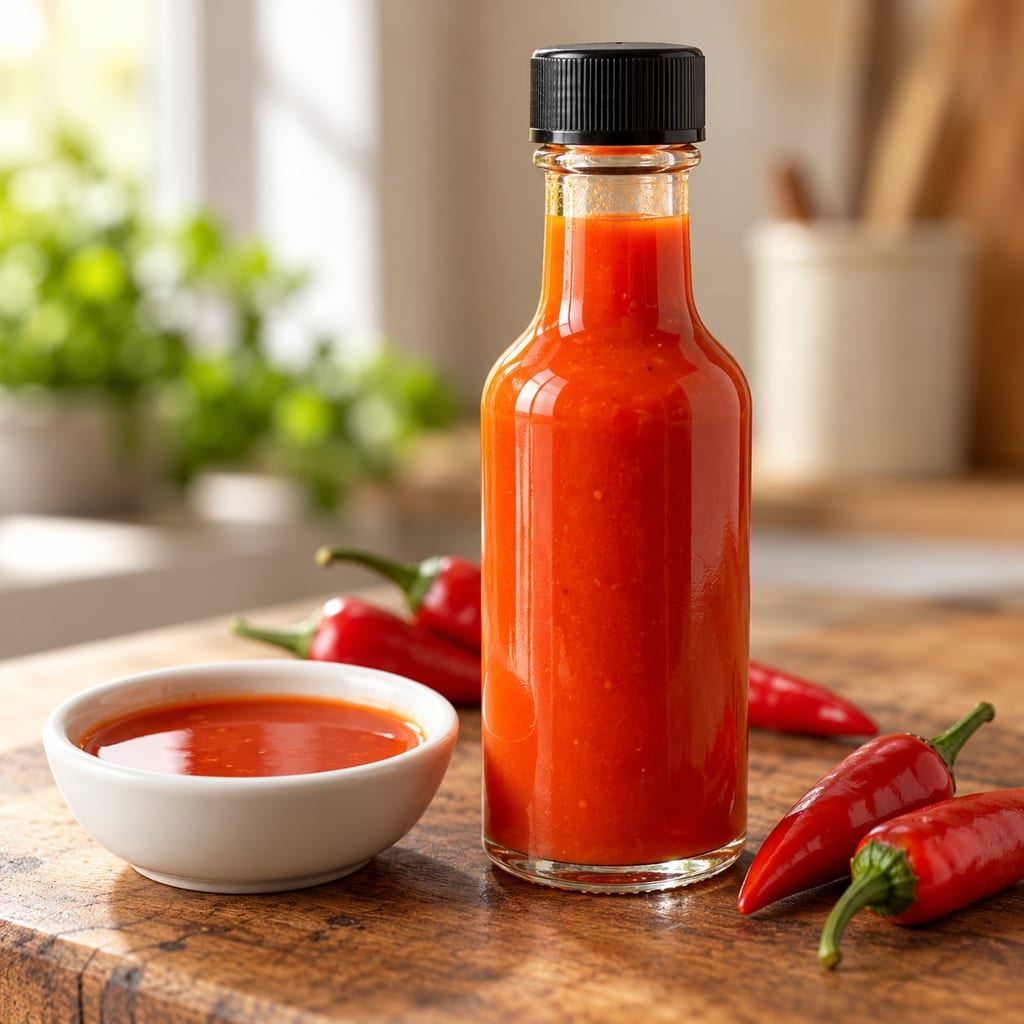
Fresh hot peppers ferment beneath a measured salt brine, then become a bright, tangy sauce blended from the peppers and their liquor.
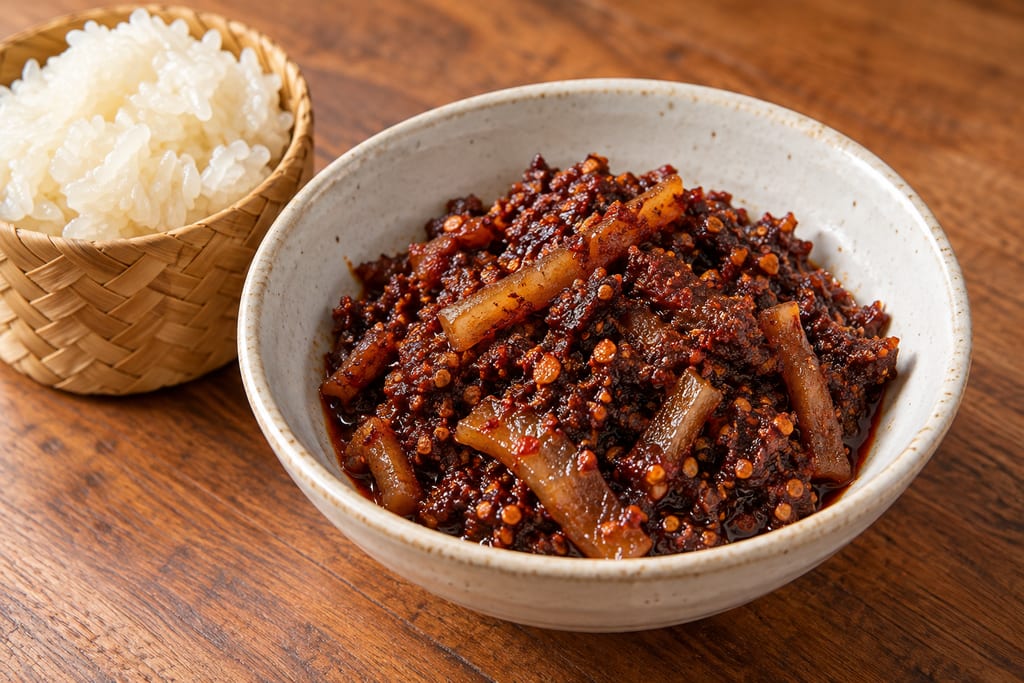
Jeow bong is a Lao paste of dried chilli, shallot, garlic and galangal cooked with buffalo or cow skin, a Luang Prabang specialty eaten with sticky rice and grilled meat.
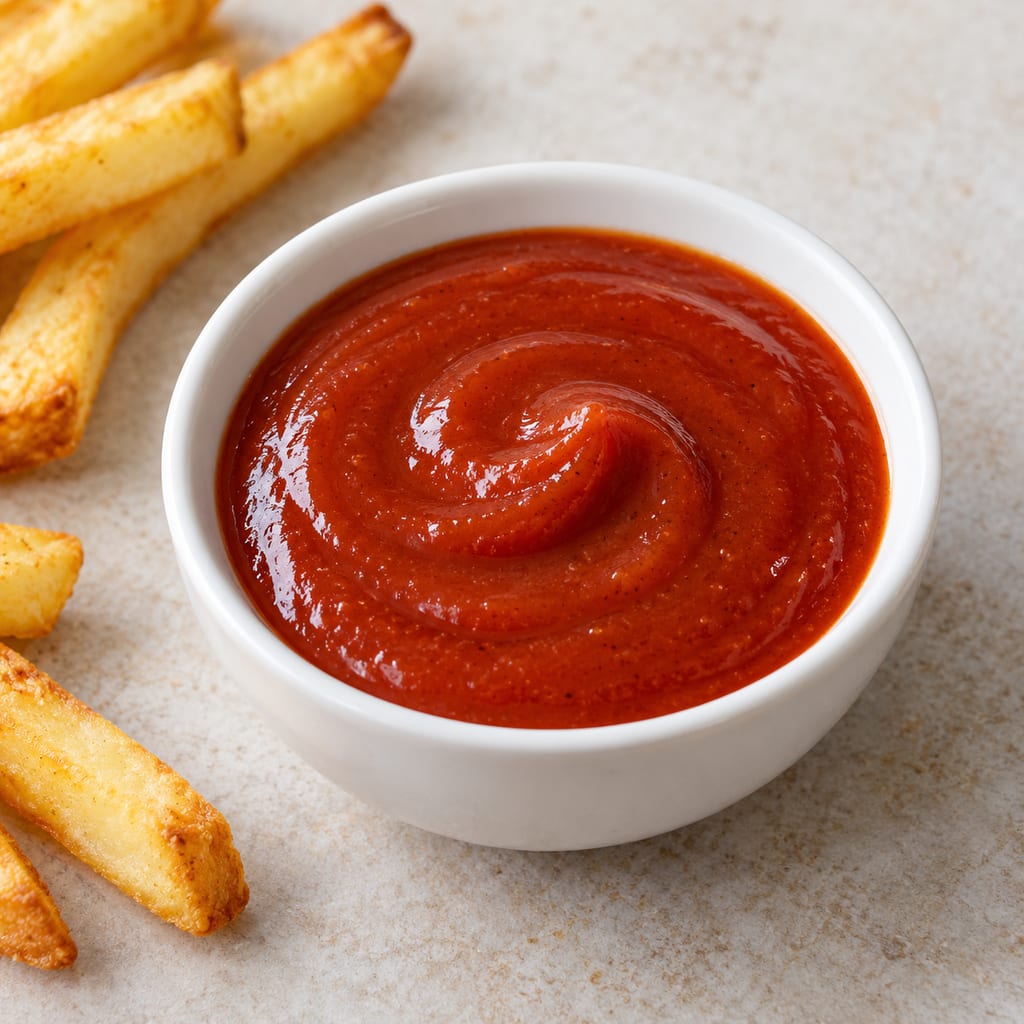
A modern tomato condiment sharpened with the spicy, savoury tang associated with kimchi; this measured version whisk-mixes prepared ketchup and commercial kimchi seasoning.
Documentary account of Louisiana pepper sauces, using TABASCO's published barrel-aged commercial process as one specific example; the source does not provide a validated home recipe.
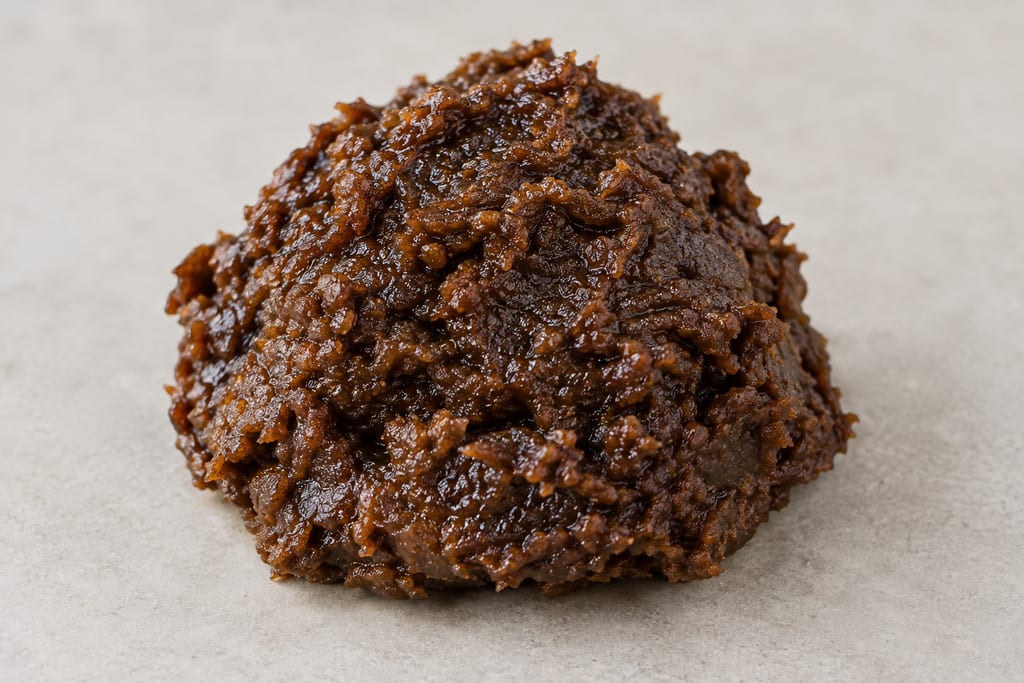
Maari is a Burkinabè baobab-seed condiment documented in producer studies. This is a non-instructional account, not a home recipe: sources vary, omit key process details and establish no validated safety control.
No community contributions have been published for this entry yet.
Sign in to contribute. Published comments and photos are free to read.
GuampediaBackground · History
Fina'denne': Dipping SauceDinanche: salted, preserved crushed red peppers can replace fresh peppers in fina'denne' and are sold in local stores
Fresh red peppers introduced by the Spanish
Cited in: A paste of crushed chillies; Fresh peppers, salted peppers and calamansi; Storage and what the sources leave open
Guam StripesMethod · Background
Taste of Guam: 4 spicy Chamorro recipes that are fireHot pepper paste with many variations: peppers only, or with onion, garlic, coconut milk, vegetables, crab paste or lemon
Miso donne' dinanche ingredients and method; ventilation advice; a ready-made Tinian version used
Cited in: A paste of crushed chillies; A family of recipes; The cooked miso version; Storage and what the sources leave open
Paula QMethod
Chamoru dinanche: hot pepper pasteCreamy version with coconut milk, eggplant, green beans, onion, hot pepper and lemon; barbecued or smoked vegetables
No storage advice given
Cited in: A family of recipes; Fresh peppers, salted peppers and calamansi