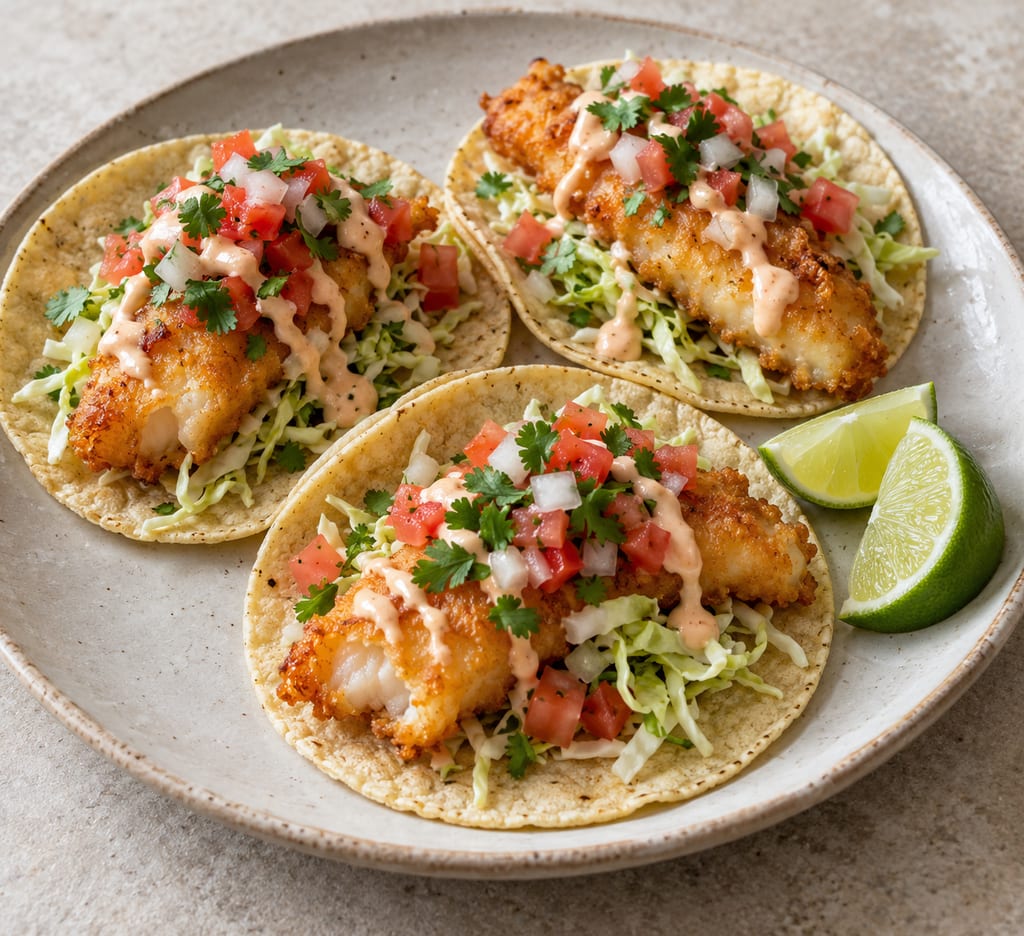
Baja-style fish tacos
Crisp battered white fish in warm corn tortillas with shredded cabbage, lime and fresh salsa. This home version draws on the Ensenada style without claiming to be a definitive historic formula.
 FermenteaWhere food goes to change
fermented hot sauce
Fresh hot peppers ferment beneath a measured salt brine, then become a bright, tangy sauce blended from the peppers and their liquor.
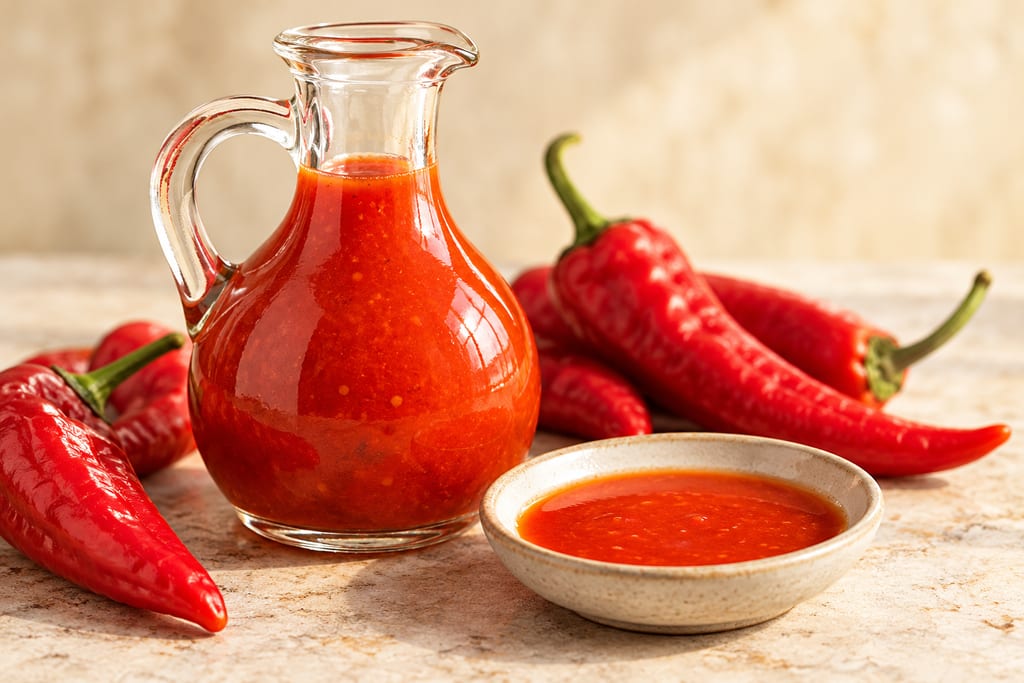
Fermented pepper sauce is not one recipe with a single origin. Salted pepper mash, brined whole peppers, vinegar sauces and long-aged commercial mash are related ways to preserve and season Capsicum fruits, but their ingredients, fermentation times and finished textures differ. This page describes a home-scale brine ferment of jalapeños and poblanos, blended with its liquor into a pourable sauce. It is neither a reproduction of TABASCO® Original Red Pepper Sauce nor a shelf-stable canning formula.
Louisiana's pepper-sauce trade predates the best-known brand. A 1922 United States Court of Appeals opinion recounts Maunsell White growing peppers and selling a sauce under the Tabasco name in the 1850s, then records Edmund McIlhenny's manufacture and sale beginning in 1868. The company account dates McIlhenny's first commercial pepper crop to that year, 658 wholesale bottles to 1869 and a patent to 1870. Its own history is useful evidence of the company's story, while the court record establishes that pepper sauce had another Louisiana maker before McIlhenny's product.
McIlhenny's process is a different, deliberately long-aged style. Ripe peppers are mashed with salt, packed into oak barrels under a salt cap that allows gas to escape, and aged for up to three years. Vinegar is then blended with the mash for 28 days before straining and bottling. The company says stoneware jars were used earlier and oak barrels became the sole aging vessel by 1900. Those details describe the commercial product; they do not supply the salt ratio, fermentation controls or validated bottling parameters for a home batch.
The legal dispute over the word also shows why a familiar brand name should not be mistaken for the beginning of pepper sauce itself. The court record describes the earlier Louisiana sauce and the later McIlhenny product as distinct commercial uses, preserving a chronology more nuanced than a single-founder origin story. It is evidence for a documented trade history, not proof that no household or local sauces existed before those named makers.
The home method starts with cut peppers and a salt solution. The American Homebrewers Association gives a 3–5 percent brine range calculated from the water's weight and uses 3.5 percent as its example. That is a brine concentration, not 3.5 percent of the pepper mass. Weighting the peppers below the solution limits their contact with air, while a jar fitted with an airlock or safely vented lid gives fermentation gas an exit. These operations are practical controls, not a guarantee that a batch will acidify correctly.
The AHA's Mexican-style formula pairs jalapeños with poblanos, garlic, oregano and cumin. Its recipe says to use about 70°F (21°C), keep the jar out of direct sun, and allow roughly a month before blending; it reports an approximate yield of 700 mL for the two formulas it presents. These are the author's home recipe parameters, not an extension-tested process. In particular, a time estimate cannot substitute for measuring an acidification trajectory or for a validated storage process.
The Canadian fermented-vegetable guidance discusses how salt, temperature, oxygen and time affect vegetables and microbial growth. It warns that too much salt can slow lactic acid bacteria, too little can impair fermentation, warmer conditions can produce rapid acidification and poor flavour, and delayed acidification or oxygen exposure can permit unwanted growth. It also explains that gas can continue after repacking. These general warnings help interpret a pepper ferment but should not be mistaken for a pepper-specific validated recipe.
Natural fermentation brings microorganisms already associated with the peppers and their environment into a salty, moist food. Lactic acid bacteria use available sugars and produce organic acids; acid accumulation lowers pH and changes the sharp, fresh character of the peppers. Yeasts can also remain active, and their relationship with bacteria can influence aroma. The exact community and pace depend on the starting vegetables and conditions, so a generic explanation of lactic fermentation cannot predict every batch.
Watts and colleagues followed red hot chilli pepper mash for 18 months. They observed lactic acid bacteria and yeast together, a substantial pH decline corresponding with higher acid content, and changes in volatile aroma compounds: measured compounds rose during the first 60 days and were lower after 300 days. This research describes the studied mash under its particular conditions; it does not establish the exact timing, flavour or safe endpoint of this shorter home brine recipe.
After fermentation, blending and straining are physical operations. Blending breaks up softened pepper tissue and disperses solids through the liquid; straining removes larger skins and seeds and yields a smoother sauce. Adding more brine thins the sauce but also adds salt and fermented liquid. Adding vinegar would make a different finishing formula. Neither a sour taste nor an added acid alone establishes that an improvised bottle is safe at room temperature.
Jalapeños provide the principal pepper flesh and heat, while poblanos contribute additional green pepper flesh with a milder character. Both are Capsicum fruits with their own natural sugars and water. The recipe keeps their proportions as written by the homebrew source; swapping in hotter or sweeter cultivars changes flavour and heat, and the cited source does not establish identical fermentation behaviour for every variety.
Salt is dissolved in water to make the brine. Its measured concentration shapes which organisms can grow and how quickly fermentation proceeds; salt is not an optional seasoning to estimate by taste. The calculation here follows the source's water-weight basis. Water covers the cut pepper pieces and forms the surrounding liquid phase. The recipe does not prescribe a fixed volume because jar size and the quantity packed determine how much is needed.
Garlic, dried oregano and cumin add their own pungent and aromatic compounds. They season the sauce rather than standing in for salt or acting as a starter culture. The American Homebrewers Association presents them as the Mexican-style seasoning combination; other combinations in its article use different aromatics. Keep the ingredient set coherent rather than combining several regional styles into a supposedly universal formula.
Cutting the peppers lengthwise exposes more flesh to the brine and helps pack the jar. Gloves reduce the chance of capsaicin irritating skin or reaching the eyes. The weight keeps the pieces submerged; solids above the liquid encounter more oxygen, where surface yeasts or moulds may grow. An airlock or safely vented closure manages carbon dioxide. A sealed ordinary jar can build pressure, while repeated opening with unclean utensils can introduce contamination.
Fermentation at the source's approximate room temperature is followed by blending. Do not treat bubbles as proof that the culture is healthy, or their absence as proof of failure: gas production varies, and the public-health guidance describes the importance of the acidification process itself. Use a calibrated pH meter when following a process that calls for pH monitoring, and do not claim a batch is shelf stable because it tastes sour. The cited home recipe recommends refrigeration and does not supply a validated ambient-storage process.
If the peppers were not kept below the brine, the jar was sealed without gas relief, the process history is uncertain, or acidification did not follow a suitable process, this recipe does not offer a salvage step. Surface appearance and smell cannot establish safety. The safest editorial limit is to keep finished sauce refrigerated and decline to assign a shelf life unsupported by a tested process.
A useful process note records the salt calculation basis, the time and temperature observed, whether the pieces stayed submerged, and the instrument used for any pH measurement. Such observations help explain why two jars differ, but a kitchen notebook does not turn an untested method into a validated commercial process.
A bright fermented pepper sauce can be used sparingly at the table, whisked into dressings or added to soups, beans, eggs and cooked vegetables near the end of cooking. The blended sauce carries suspended pepper solids unless it is strained; the smoother version pours more freely but loses some body. Begin with a small amount when using a highly pungent sauce because pepper cultivars vary considerably in heat.
Louisiana's commercial example is thin and vinegar-forward after aging and blending; the home brine method keeps the fermented pepper liquor as part of the sauce. Other sauces around the world use different peppers, aromatics, acids and production methods. The sources cited here do not support collapsing these into a single origin story or saying that every hot sauce is fermented. Vinegar-pickled sauces and fresh uncooked sauces are adjacent products, not the same preparation.
Commercial packaging helped turn concentrated pepper sauce into a portable table condiment. The company history describes McIlhenny's early small perfume-style bottles with sprinkler fitments, suited to a pungent sauce used by drops. That history offers a glimpse of how serving habits shaped the package, while today's recipe is intended for a small refrigerated kitchen batch.
The early bottle history also speaks to how the sauce was used. A sprinkler fitment dispensed a concentrated condiment by drops, which suited a small amount of pungent sauce over a serving. A home brine sauce may have more suspended solids and a different salt-acid balance, so use it according to its own flavour and storage instructions rather than assuming brand-style concentration.
A ferment that starts slowly can reflect its starting microbial community, temperature, salt concentration or handling; no single observation identifies the cause. The guidance warns that high salt can slow lactic acid bacteria, low salt can impair their growth, high temperatures can speed acid production at the cost of flavour, and low temperatures can delay the start. These are general vegetable-fermentation observations and should guide caution, not encourage improvised adjustments to a batch.
A gas-filled or leaking vessel signals pressure management needs attention. Keep the vessel in a stable place and use equipment designed to vent or relieve fermentation gas. The final sauce can also keep producing gas if active fermentation continues after bottling. Refrigeration slows activity but is not a substitute for a sound process or clean handling; use bottles appropriate for refrigerated condiments and do not store them warm.
Aroma and colour can evolve during fermentation, as the pepper-mash study found, but neither is a safety measure. If acidification, salt calculation or the process history is unknown, do not taste-test to decide whether the food is safe. The cited sources provide no home-process guarantee for room-temperature storage and no precise shelf life for this formula.
A normal change in aroma during maturation is not, by itself, spoilage or proof of success. The research study measured selected volatile compounds and microbial counts over a defined mash fermentation; those findings explain why aged batches can smell and taste different, not how to judge a particular untested jar. Follow the process, not a sensory guess, and keep the finished sauce under refrigeration.
Pepper sauce can begin with a brine ferment, a salted mash, a vinegar pickle, or fresh peppers blended directly into an acidified condiment. These forms overlap in taste and use, but the preservation barriers differ. A water brine surrounds cut pieces and retains liquid for blending; a mash concentrates pepper and salt with little or no added water; vinegar may be added before or after fermentation; and a fresh sauce may never ferment at all. A reader should identify which of these products a recipe actually describes before borrowing its method.
The Louisiana commercial mash illustrates how a product can be made through a long succession of stages. Salted mash ages first, then vinegar is introduced for blending, after which the mixture is strained. By contrast, the home recipe here ferments pieces in brine for a much shorter period and carries some of that liquid into the blender. The commercial aging time, barrel practice and formula cannot be copied as safety instructions for the home version because the sources do not publish all of its control parameters.
The AHA article presents two formulas rather than claiming one definitive national sauce. One combines Fresno and habanero peppers with hibiscus, garlic, cardamom, coriander and black pepper; the other uses jalapeño and poblano peppers with oregano, cumin and garlic. These ingredient sets show how pepper type and seasoning can shape a sauce's character, but changing the blend changes the recipe. This page follows the second formula's ingredients and does not merge the first into it.
Vinegar-forward bottled sauces, fresh table sauces and brine-fermented condiments are often sold or served in similar small bottles. Packaging alone does not reveal whether a food was fermented or how it should be stored. The source descriptions of McIlhenny's small sprinkler bottles show one response to a pungent, concentrated condiment; the home recipe's refrigerated bottle has a different production history and storage basis.
Pepper sauce in Louisiana predates Edmund McIlhenny's product. A 1922 federal appeals case records that Maunsell White grew peppers and sold a sauce under the Tabasco name around 1850; it then describes McIlhenny beginning manufacture and sale in 1868. McIlhenny Company dates its first commercial crop to 1868, its first wholesale bottles to 1869, and a patent to 1870. The present home brine recipe is a separate, short-fermented style, not a reconstruction of either historical sauce.
Yield about 700 mL · Scaling: scale ingredients proportionally; calculate brine salt from water mass, not pepper mass.
Hot pepper oils can irritate skin and eyes during cutting and blending.
Hazard sourceAn improvised process may acidify slowly or support unwanted microbes.
Hazard sourceFermentation can produce gas; sealed vessels may leak or break.
Hazard sourceUse a source-based salt brine and keep solids submerged.
Control sourceMonitor acidification with a calibrated pH meter and use a validated process appropriate to the product.
Control sourceRefrigerate the finished sauce.
Control sourceThis home-scale recipe is not an extension-tested process. Do not infer safety from bubbles, a pleasant smell, sour taste or pepper heat.
Keep finished sauce refrigerated; fermentation and later vinegar additions do not by themselves establish shelf stability.
Use gloves and keep hands away from eyes and face when handling hot peppers.
This records documented Louisiana commercial pepper-sauce history; it does not claim that fermented pepper sauce originated there or that this home brine formula is the historical commercial recipe.
Crisp battered white fish in warm corn tortillas with shredded cabbage, lime and fresh salsa. This home version draws on the Ensenada style without claiming to be a definitive historic formula.
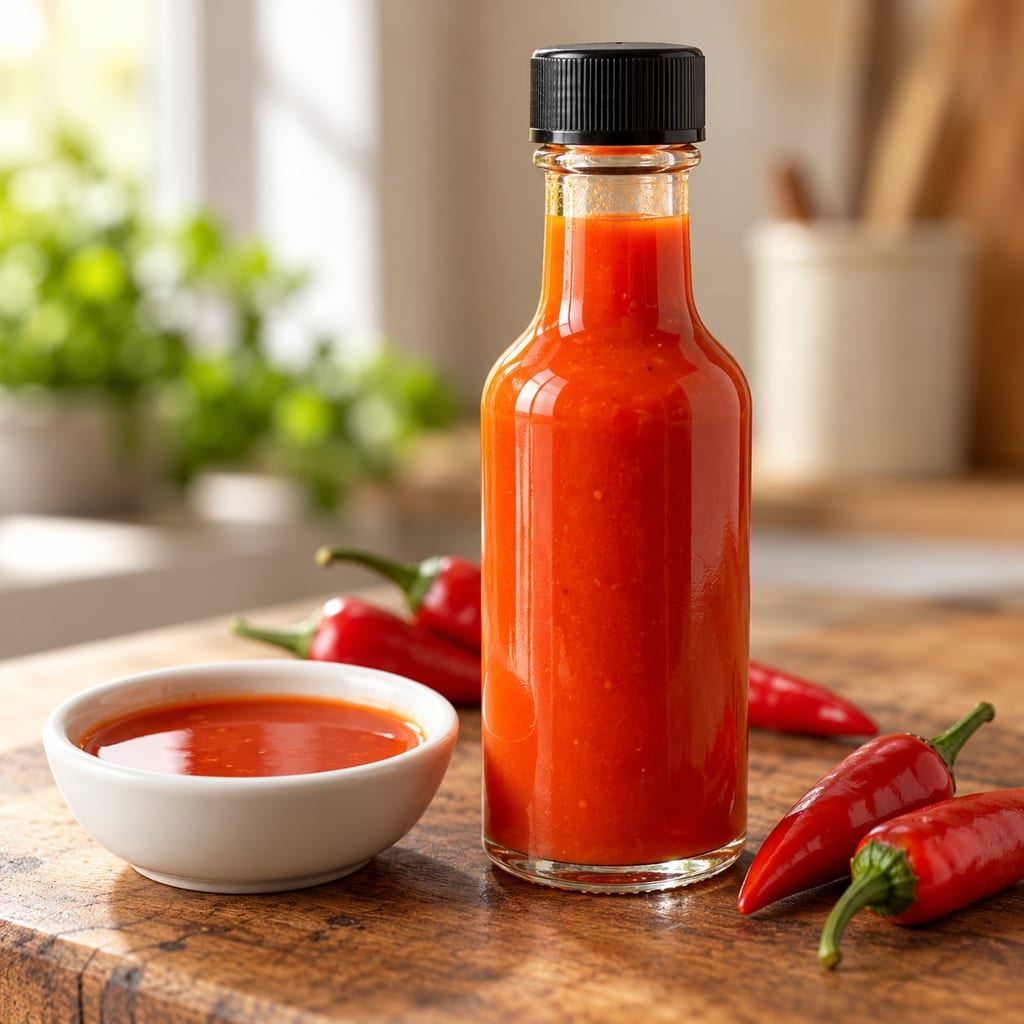
Documentary account of Louisiana pepper sauces, using TABASCO's published barrel-aged commercial process as one specific example; the source does not provide a validated home recipe.
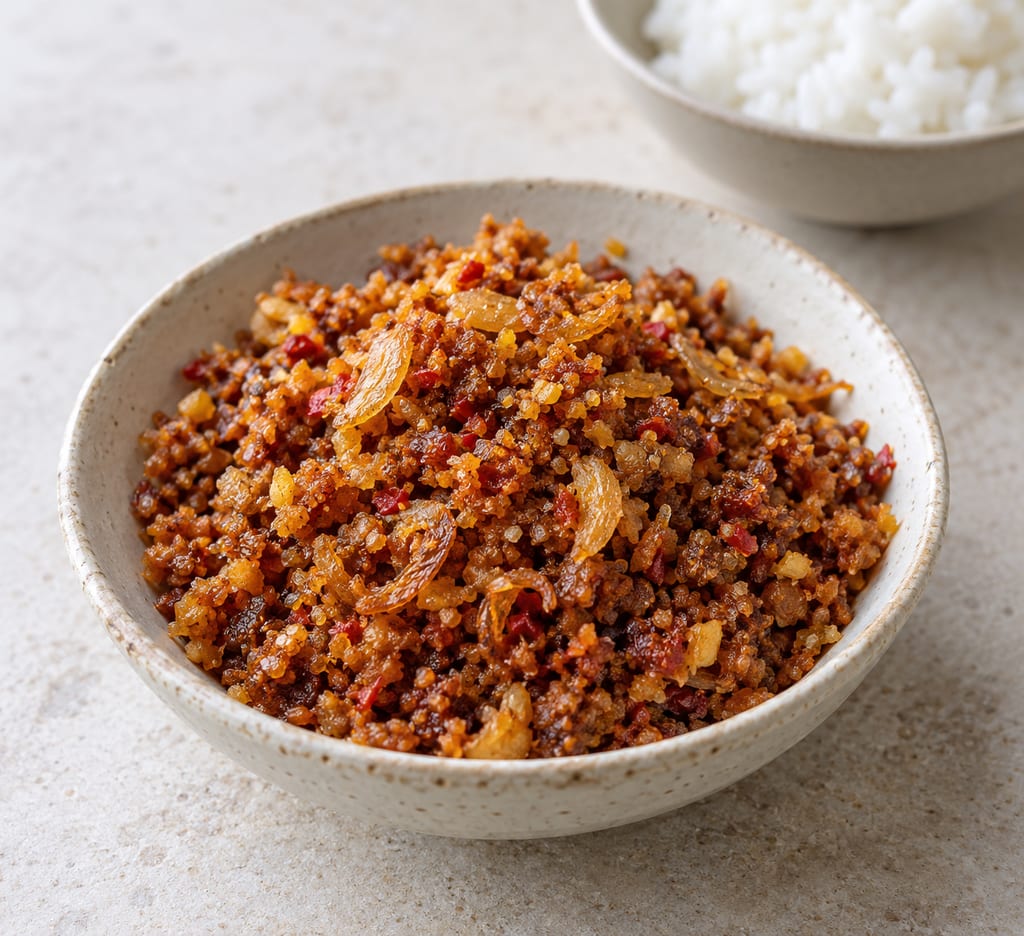
A Myanmar relish of dried shrimp, fried eschalot and garlic, chilli, turmeric, tamarind and ngapi. Naomi Duguid’s published recipe makes about 1 cup; it contains crustacean shellfish.
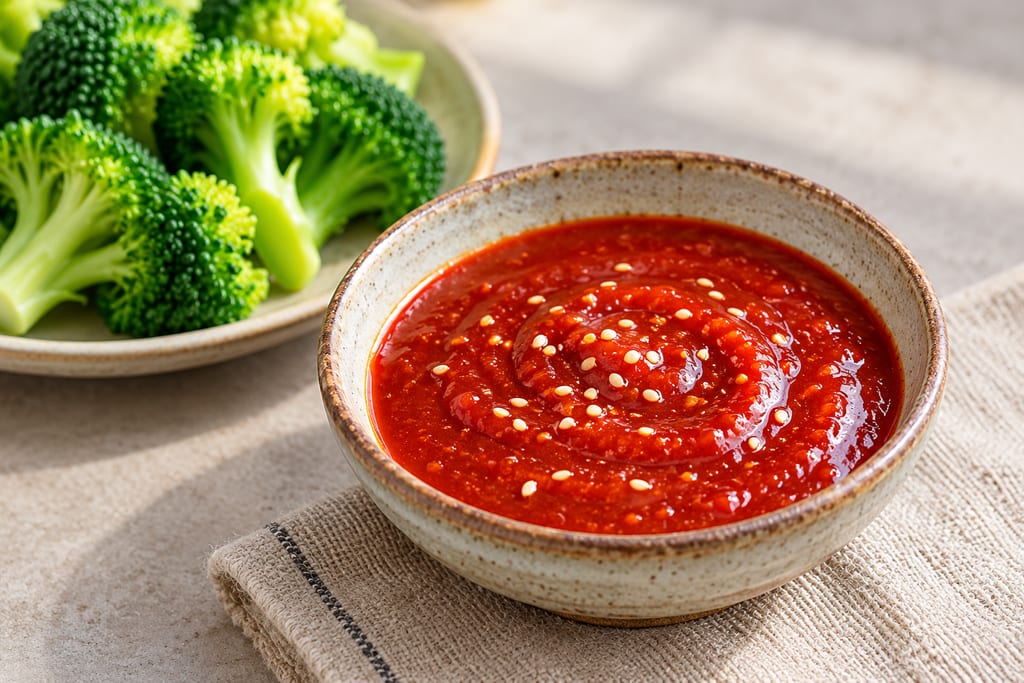
Chogochujang is a Korean sweet-sour sauce made by seasoning gochujang with vinegar and sugar. This development batch adds water and toasted sesame seeds, with optional garlic for the portion being served.
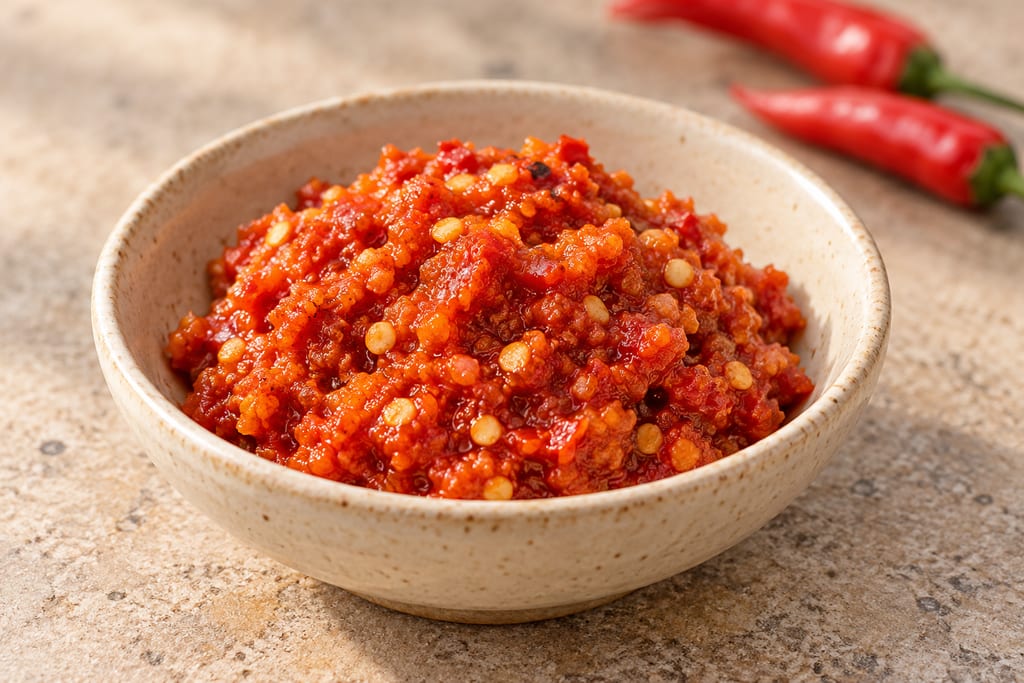
Dinanche, or donne' dinanche, is a Chamorro hot pepper paste of crushed chillies that Guam cooks use on its own or stir into fina'denne'. Its versions range from pepper alone to ones with eggplant, miso or coconut milk.
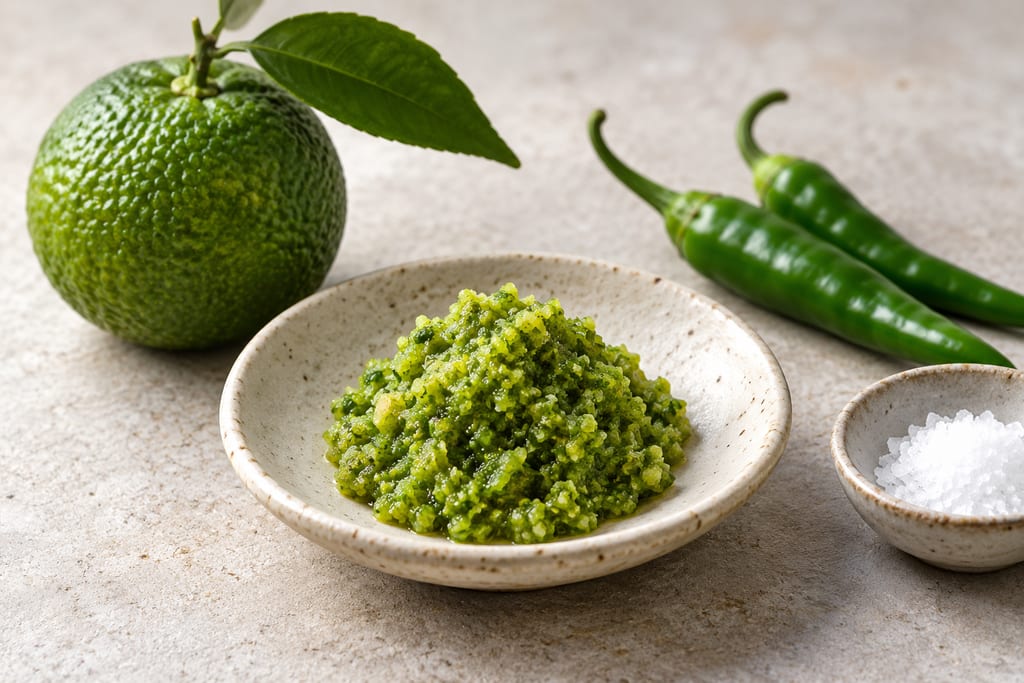
A fresh, uncooked yuzu and green chilli paste inspired by Kyushu’s yuzu kosho, made here as an untested small-batch seasoning rather than a preservation formula.
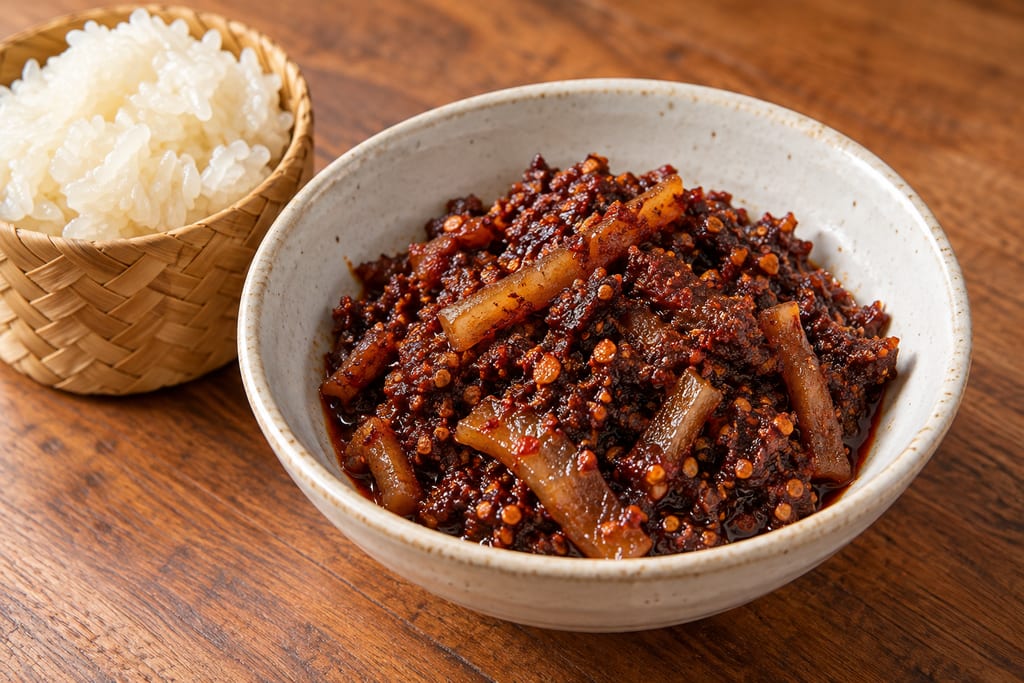
Jeow bong is a Lao paste of dried chilli, shallot, garlic and galangal cooked with buffalo or cow skin, a Luang Prabang specialty eaten with sticky rice and grilled meat.
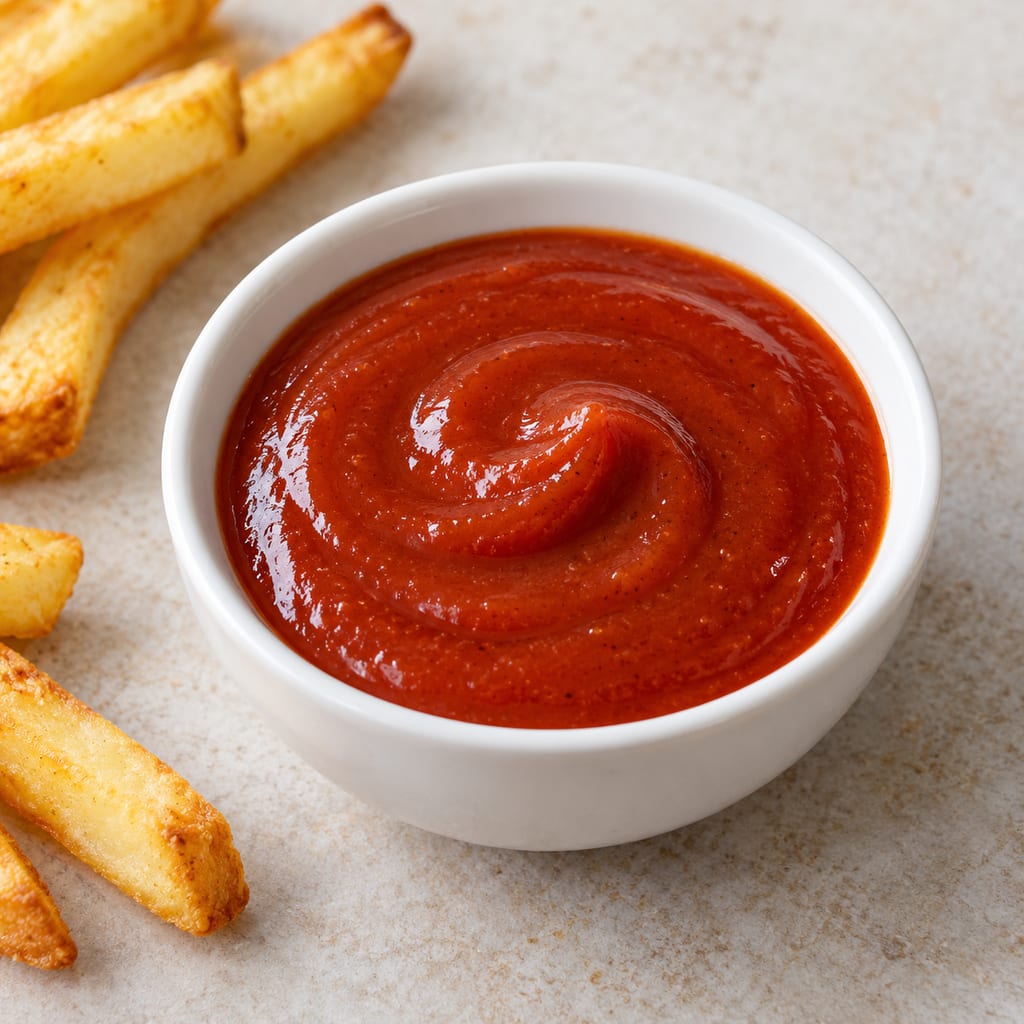
A modern tomato condiment sharpened with the spicy, savoury tang associated with kimchi; this measured version whisk-mixes prepared ketchup and commercial kimchi seasoning.
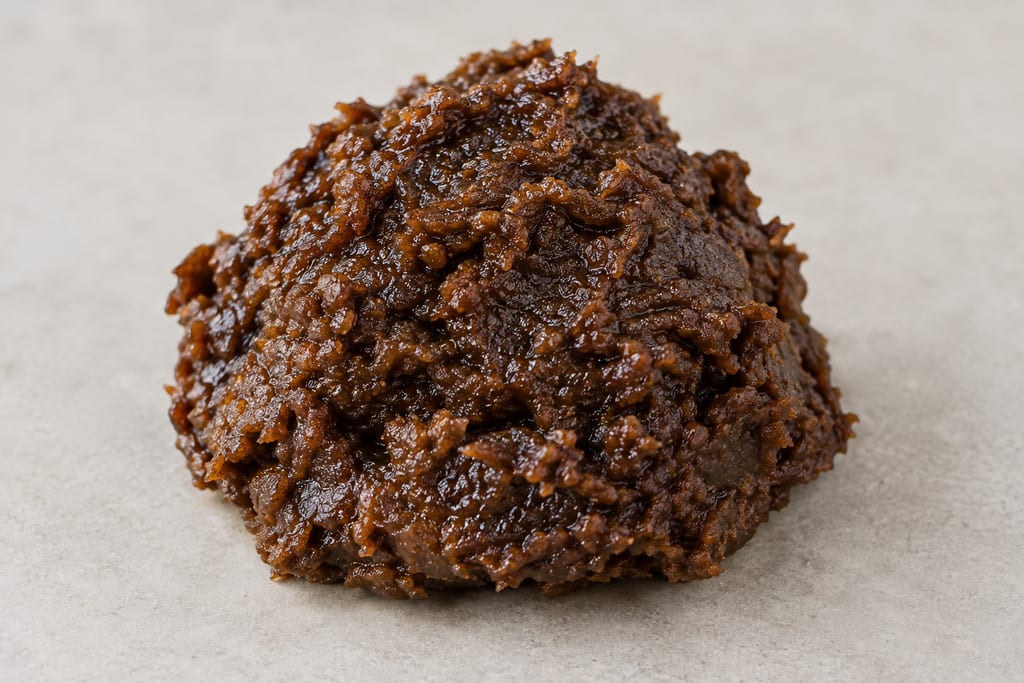
Maari is a Burkinabè baobab-seed condiment documented in producer studies. This is a non-instructional account, not a home recipe: sources vary, omit key process details and establish no validated safety control.
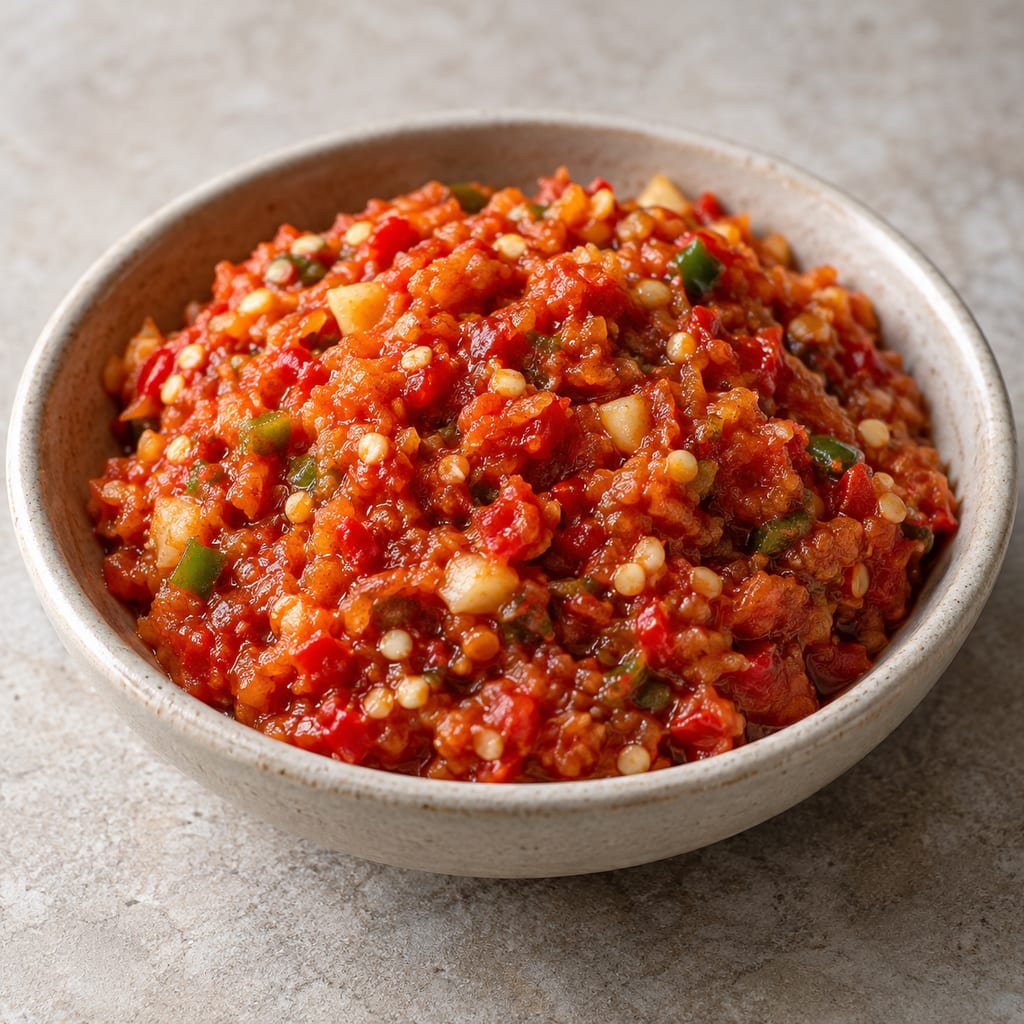
Mazavaroo is a Mauritian hot chilli paste of fresh chillies, garlic, salt and oil with lemon or lime. It is kept refrigerated, and the reviewed recipes say it should rest for days before use.

A Cap-Pelé boucanière is an Acadian herring-smoking building. The documented Willie Niles example is a one-storey wood-frame structure with a ridge smoke vent and interior bays for hanging fish-bearing cannes.

Achcharu is a family of Sri Lankan vinegar pickles made with mixed vegetables or seasonal fruit and a piquant spice dressing. This version is a quick, refrigerated, non-fermented mixed-vegetable pickle.

The acocote is a long, hollowed and dried gourd used to draw aguamiel from a mature maguey. It is a harvesting tool: the sap is transferred to a separate vessel before it ferments into pulque.

Adrak murabba preserves young ginger in sugar syrup, a sweet South Asian preparation recorded in Indian cookery and food-processing sources.

Parkia biglobosa seeds are fermented into regional West African seasonings, including nététou, iru, dawadawa and soumbala. The yellow fruit pulp is a separate food, and names and methods vary by place.

Japanese reddish-brown vinegar from sake lees matured about three years, turned to vinegar by acetic bacteria; the vinegar of Handa and Edomae sushi rice.

A refined common-wheat flour blended for a broad range of baking; its protein and behavior vary with wheat, milling and market.

The almond mushroom, Agaricus subrufescens, was cultivated in eastern North America in the 1800s, lost its market, and returned as a cultivated mushroom from Brazil, where it is grown under several names.
No community contributions have been published for this entry yet.
Sign in to contribute. Published comments and photos are free to read.
TABASCO BrandHistory
Our HistoryThe company dates its first commercial pepper crop to 1868, first wholesale bottles to 1869 and patent to 1870.
Cited in: Pepper sauce before and after 1868; Serving, regional styles and modern use
TABASCO BrandMethod · History
About Our BarrelsThe company describes ripe peppers crushed with salt, mash aged under a salt cap in oak barrels with gas release, up to three years of aging, then vinegar blending, straining and bottling; early mash was aged in stoneware jars.
Cited in: Pepper sauce before and after 1868; Why these ingredients belong together; Serving, regional styles and modern use; Different pepper sauces, different preservation systems
International Journal of Food Science & TechnologyScience
Microbiological changes and their impact on quality characteristics of red hot chilli pepper mash during natural fermentationAn 18-month mash study observed LAB and yeast association, pH decline as acid content rose, and volatile compounds increasing early and declining after extended aging.
Cited in: What changes inside the jar; Troubleshooting without guessing
Manitoba AgricultureSafety · Method
Potential issues with fermented vegetables food preparationPublic-health guidance describes hazards from salt imbalance, temperature, delayed acidification, oxygen exposure and gas; sensory cues do not replace process controls.
Cited in: The short brine method and its boundaries; What changes inside the jar; Following the process and reading the result; Troubleshooting without guessing
American Homebrewers AssociationMethod · Serving
How to Make Fermented Hot SauceA home-scale recipe gives two pepper formulations, 3–5% brine by water weight, an example 3.5% mixture, about 70°F (21°C), around one month, blending with retained brine and refrigerated storage.
Cited in: The short brine method and its boundaries; Why these ingredients belong together; Following the process and reading the result; Serving, regional styles and modern use; Troubleshooting without guessing; Different pepper sauces, different preservation systems
United States Court of Appeals for the Fifth CircuitHistory
Trappey v. McIlhenny Co.The 1922 opinion recounts Maunsell White's Louisiana pepper sauce in the 1850s and Edmund McIlhenny's manufacture and sale beginning in 1868.
Cited in: Pepper sauce before and after 1868; Different pepper sauces, different preservation systems