
Spices and aromatics
Oregano leaves
A source-scoped guide to culinary oregano leaves, UK garden growing and the limits of household drying evidence.
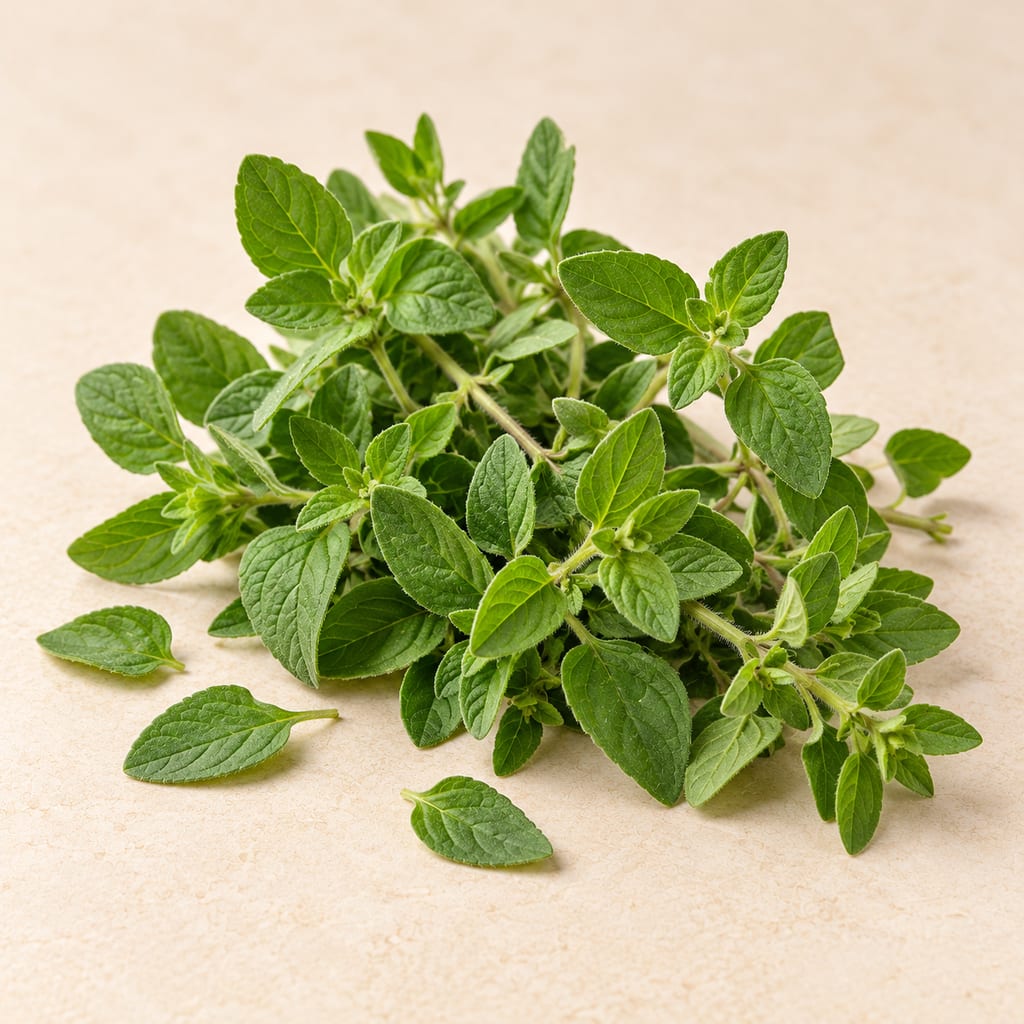
Names and culinary selection
RHS explains that oregano and marjoram names overlap: Origanum vulgare is called wild marjoram in Britain and oregano in cultivation, while other species also bear the oregano name. Varieties differ in size, leaf and flower colour, and flavour; RHS notes that some ornamental cultivars are chosen for appearance rather than culinary flavour. A common-name recipe mention alone does not establish the botanical ingredient or cultivar.
Sources for this section
Growing and harvesting
RHS UK garden advice places oregano in full sun and free-draining soil, including pots and herb gardens. It describes sowing seed indoors in spring on the compost surface, without covering the tiny seed; seedlings may appear in one to three weeks around 20°C. For one young plant it gives a pot at least 15 cm wide and deep, with drainage holes. RHS says leaves can be harvested regularly from spring to autumn and that established plants generally survive UK winters in free-draining soil. These are regional home-garden directions, not universal cultivar or greenhouse production limits.
Sources for this section
Drying and problems
The RHS guide describes hanging leafy sprigs in a dark, ventilated place for a few weeks, then stripping and storing the dried leaves airtight. It also names mint rust and occasional insect feeding. The advice gives no moisture target or storage life, so it is not a validated preservation process.
Sources for this section
Leaf use and essential-oil scope
RHS describes fresh or dried oregano leaves as culinary seasoning. Its examples refer to oregano in culinary/common-name use and do not prove that every regional dish uses O. vulgare. The separate EFSA opinion evaluates an essential oil from O. vulgare subsp. hirtum as a sensory additive in animal feed. That is a different plant preparation and use context; it does not establish human concentrated-oil use or safety.
Research gaps
Regional-language food history, local collection status and cultivar-specific production limits need further research.
No greenhouse production protocol, worldwide calendar, measured leaf yield or food-crop containment method was established.
No validated drying endpoint or storage duration is established.
The EFSA animal-feed opinion does not establish human use or safety of oregano essential oil.
Research status
The underlying plant account received a partial source review. Its review scope is described in the original plant article.
Sources for this section
Places
Unknown
Relationship not established · Place not establishedThe available research does not establish a single origin for this ingredient.
Community
No community contributions have been published for this entry yet.
Share what you made
Sign in to contribute. Published comments and photos are free to read.
Sources
Royal Horticultural SocietyIngredient research
How to Grow OreganoCited in: Names and culinary selection; Growing and harvesting; Drying and problems; Leaf use and essential-oil scope; Research gaps
EFSA Journal / FEEDAP PanelIngredient research
Safety and efficacy of an essential oil from Origanum vulgare ssp. hirtum (Link) Ietsw. for all animal speciesCited in: Leaf use and essential-oil scope; Research gaps