Oenogarum
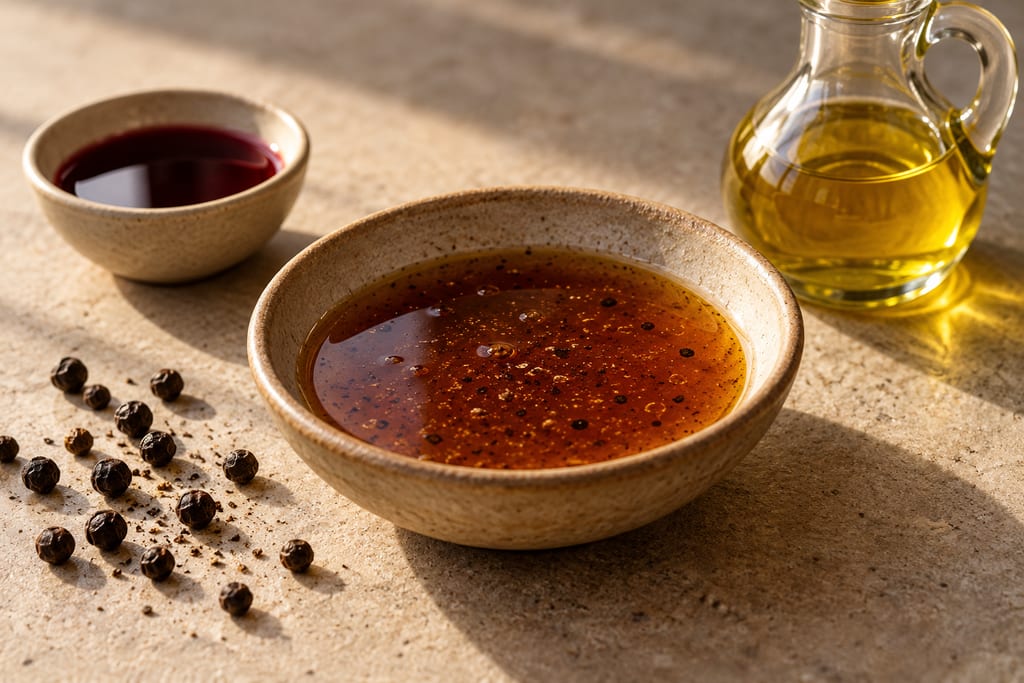
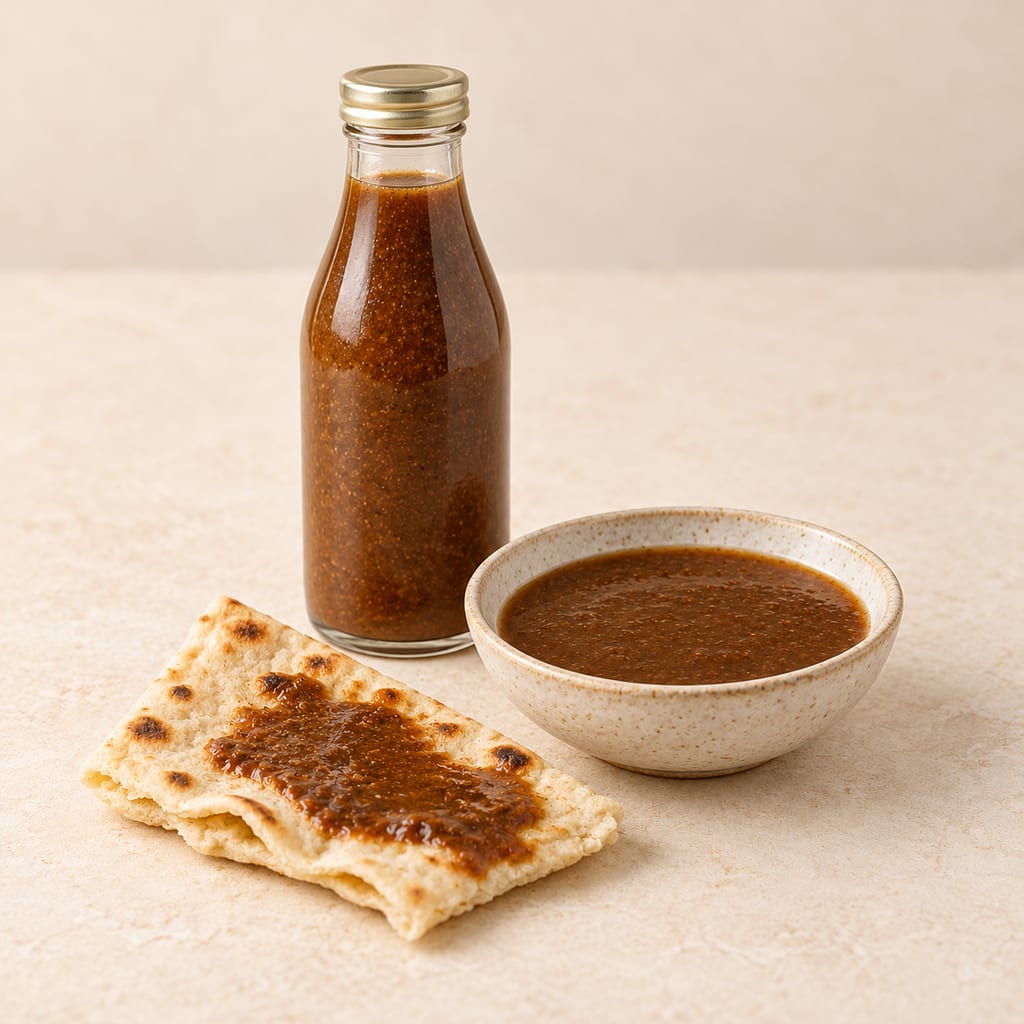
Oenogarum is fish sauce mixed with wine, pepper and often olive oil: a Roman table sauce in the Apicius cookbook, and a reduced, strained sauce in a later medical text.
 FermenteaWhere food goes to change
Historical attestation
γάρος (garos) · garum · garos · garon · liquamen · Roman fish sauce
Garum, Greek garos and Latin liquamen, was the fish sauce of the ancient Mediterranean: fish and viscera salted and left in the sun, then drained off as a savoury liquid.
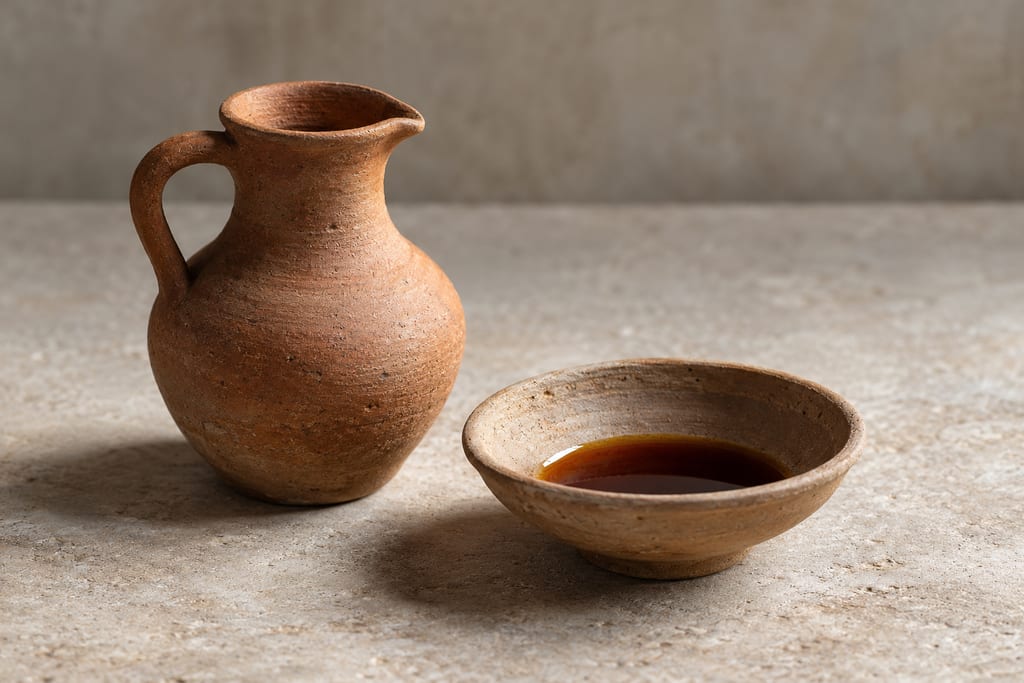
Garum was a salted, fermented fish sauce, central to cooking in the Greek, Roman and Byzantine worlds. Fish, usually with their viscera, were packed with salt and left in the sun. The fish's own enzymes broke the flesh down over weeks or months, and the liquid that formed was drawn off and used as a savoury seasoning. It gave salt and depth to a dish without anyone having to put pieces of fish into it.
The names are loose. Garos (also garon) is the Greek word and garum the Latin form of it; liquamen is the native Latin term. Some writers use them for the same sauce, and the surviving texts do not always agree on which word names which product. Sally Grainger argues that producers and traders did keep them apart: garum for a dark sauce made from blood and viscera, liquamen for a sauce of whole small fish, and muria for a brine. The Penelope entry on garum, by contrast, stresses that the ancient authors' usage overlaps.
Garos survives in fragments of fifth-century BCE Greek authors: Aeschylus (fragment 211, from the satyr play Proteus), Sophocles (fragment 799a, with 606 related), Cratinus (fragment 312), Pherecrates (fragment 188) and Plato Comicus (fragment 215). These are the authors' dates, not the dates of the quotations, which come down through later lexicographers. The fragments name the product but say nothing of how it was made. The Digital Encyclopedia of Atticism translates the word as fish sauce, and records a long dispute over its gender: masculine ho garos in the prescribed form, neuter to garon in other writers.
Pliny said garos had been the name of a fish the Greeks used, which no one can now identify. Grainger assumes small herring-like and bream-like fish, and notes that fifth-century comedy mentions garos from the Black Sea and that by the fourth century Cádiz was shipping it to Athens. The early sources treat it as cheap, strong-smelling fare, a dressing taken with oil and vinegar or wine. The cuisine built around garos reached Rome in the second century BCE, where the word became garum. Archestratus, writing in the late fourth century BCE, uses halme, a fish brine, rather than garos.
Pliny describes garum as made from guts and other refuse soaked in salt. The liquid that rose to the top was liquamen, and what remained was allex, which he calls the dregs, neither whole nor strained. He calls garum, in his own words, a liquor from putrefaction; the Penelope entry points out that the process was fermentation, and that the smell, which Martial used as an insult, is no guide to the process. Isidore derived liquamen from the way small fish liquefy in brine.
Allec or hallex is the bony residue left after the liquid is drawn off, eaten as a fish paste. Grainger adds that the Geoponica shows that the residue of the sauce makes allec, not that every residue is allec, and that bone-free residue re-brined for a few months gave a second-quality sauce, which Diocletian's Price Edict of 301 CE lists. Muria is the thin brine drawn from fish by the salt; Isidore called it the taste of the sea. Garum sociorum, the garum of the allies, was a premium mackerel sauce from Spain.
The earliest description of production is Manilius's Astronomica (about AD 20 to 30). Fishermen salt tuna blood for garum or haemation, blend viscera and decaying pieces into allex, and ferment small fish in terracotta vats as liquamen. Grainger's experiments suggest that the viscera supply digestive enzymes and the blood an iron-like taste. She notes that the ancient texts she surveys give no salt ratios or durations for garum.
The fullest surviving Greek recipes are in the Geoponica, a Byzantine agricultural compilation put together in Constantinople for Constantine VII and dated to the tenth century in the sources read (the translation page that quotes it heads the passage with the ninth century, so the date is worth checking against a critical edition). Its garum chapter, Book XX chapter 46, gives four preparations. They are separate methods, not versions of one recipe, and the steps above keep them apart.
The first makes liquamen from fish entrails and small fish, salted and left in brine in the sun and stirred often. After one summer a large, thick basket is set into the vessel and the liquid seeps through it; the solids left behind are hallec. The fish named in translation vary: the translation page lists small red mullet, chub mackerel and anchovies, or any very small fish, and the Penelope entry lists mullet, sprats, smelts and anchovies. The liquid is drawn off by filtering through the basket, not by pressing.
The second, the Bithynian method, mixes picarel (the smaller ones preferred) or, failing picarel, anchovies, horse mackerel, mackerel, hallec or a mixture with salt on a baker's kneading table. After an overnight rest it goes into an uncovered clay vessel in the sun for two to three months, stirred from time to time with a stick, then covered and stored. The salt is given as two sextarii. The translation page reads that as two sextarii for each kind of fish; the Penelope entry reads it as two sextarii per modius of fish, about one part in eight by volume. The passage does not settle which is meant. Some cooks add two sextarii of wine for each sextarius of fish. A sextarius is about 0.55 litre.
The third is a shortcut. A brine strong enough to float an egg is made, with more salt added if the egg sinks. The fish go into it with oregano, and sometimes grape syrup, and the pot is heated until it boils and starts to reduce slightly. After cooling, the liquid is strained through a sieve two or three times until it runs clear. No boiling time or quantities are given. This sauce is made with heat rather than months of enzyme action, and should not be read as the same product as the sun-matured sauces.
The fourth is haimation, the finest garum. Tuna viscera, gills, juice and blood are put in a container with salt sprinkled over them and left for two months at most. The container is then pierced and the liquid drains out. This is the one preparation tied to a single fish. Grainger identifies the passage (20.46.6) as the key evidence for the blood-and-viscera sauce, calling it garon haimation, bloody garon, and notes that liquamen appears in the Geoponica only here, apparently translating garon.
The timings in other writing do not agree with the Geoponica. A modern article cited by the Penelope entry proposes nine months and a liver-based garos, which that entry finds unsupported by ancient sources.
In Byzantine Cyprus of the 11th and 12th centuries, garos was a fermented fish sauce made from fish entrails, gills and blood combined with ground vegetables and salt. It could be diluted with water, wine, vinegar or oil, and the mixtures had names: hydrogaros, enogaros, oxygaros and garéleon. It was eaten hot and served in special vessels called saltsária and garária; self-heating ceramic vessels of this type have been excavated in Cyprus.
Grainger's 2024 study reads the late Roman and Byzantine history as a change in form. Some sauces fermented with the fish's own visceral enzymes gave way to eviscerated, aged saltfish brines, possibly in part because of attitudes to fish blood, though the changes are hard to discern. Enzyme-fermented sauce continued in the Byzantine east, less widely than before. The Cyprus record shows continuity of a strongly flavoured fish seasoning, not one unchanged recipe from classical Greece to Byzantium.
Production was a coastal industry. The Penelope entry places the Roman centres on the Spanish south coast, near the migratory routes of the fish, at New Carthage (Cartagena) and the island Scombraria, at Baelo Claudia, at Lixus in Atlantic Mauretania, around the Black Sea, and at Pompeii, where Aulus Umbricius Scaurus advertised fine sauces on mosaic pitchers and amphora labels. Sites were generally on the coast near the Pillars of Hercules, at river mouths for fresh water, and near salt supplies.
The best sauce was dear. Pliny puts two congii of garum sociorum at 1,000 sesterces. Diocletian's edict of AD 301 caps liquamen primum at 16 denarii a sextarius and liquamen secundum at 12. Pliny also notes that mackerel garum from New Carthage had by his time displaced garos in popularity.
In the Apicius cookbook, garum appears in nearly 350 recipes, almost always as liquamen, seasoning meat, fowl and vegetables. If a dish came out too salty, the cook is told to add honey. Apicius also uses it in compound sauces, the best attested being oenogarum, a mix of wine, liquamen, pepper and sometimes herbs and olive oil. Related mixtures with water, vinegar, honey and oil carry matching names.
Medical writers prescribed garum and its by-products: Galen for loosening the bowels and treating diarrhoea, and the Roman authors for burns, ulcers and sheep scab; Columella and others gave it to horses and mules. Critics were unkind. Martial used putrid garum as an insult, and Seneca said even garum sociorum burns the stomach.
A reconstruction described by PBS NOVA layers dried, strongly flavoured herbs such as dill, coriander, fennel, celery, mint or oregano in a pitched vessel, then fish, then a layer of salt two fingers deep, and repeats the layers until the vessel is full. It stands seven days in the sun and is stirred daily for twenty days, after which it is liquid. It gives no weights of fish, salt or herbs, and the same page steers cooks to a modern anchovy recipe. A finger's depth of salt is not a salt percentage.
None of the ancient methods comes with histamine, salt or temperature limits, and none can be checked for safety by smell or by clarity. A modern cook has to use fish-processing guidance for the species and the process; the historical record is not a safe modern recipe.
Greek fragments of the fifth century BCE name garos. Roman writers from Pliny onward describe garum, liquamen, allec and muria, and the Byzantine Geoponica gives the fullest surviving production methods. The terms do not map cleanly onto one fixed product, and a recipe from one century cannot be read back into another.
Scaling: not applicable
The methods use fish such as mackerel and tuna, the kind of fish for which scombrotoxin (histamine) formation is a recognised hazard, and keep them warm for weeks or months.
Hazard sourceSalted fish held in a covered vessel is a reduced-oxygen product, and the texts give no salt level or other barrier.
Hazard sourceNone is given in the ancient texts. Take species- and process-specific controls from current fish-processing guidance for any modern fish sauce.
Control sourceNo salt percentage is given for the sun methods, so a safe modern batch cannot be derived from these texts.
The egg-float test only shows that a brine is strong. It says nothing about whether the sauce is safe, and neither does its smell or clarity.
Garos is named in fragments of fifth-century Greek authors; the product itself is not described.
A major production area in the Roman period, and the source named for garos in fifth-century comedy. A region, not a locality.
Said to have shipped garos to Athens; says nothing about where garum began.
Source of the mackerel garum sociorum that Pliny names as the most popular of his time.
Had a fish-salting installation inside the town.
The largest installation of its kind in the western Mediterranean.
Known for garum; the freedman Aulus Umbricius Scaurus sold fine sauces there.
Where the Geoponica was compiled; it records the Greek production methods used here.
Byzantine garos and its serving vessels, attested by museum records; not an origin claim.
Oenogarum is fish sauce mixed with wine, pepper and often olive oil: a Roman table sauce in the Apicius cookbook, and a reduced, strained sauce in a later medical text.
Dry salami, sour pork with rice, matured sheep and aged blubber follow different paths from animal to food. Their stories connect microbes with climate, slaughter, migration and the meals people share.
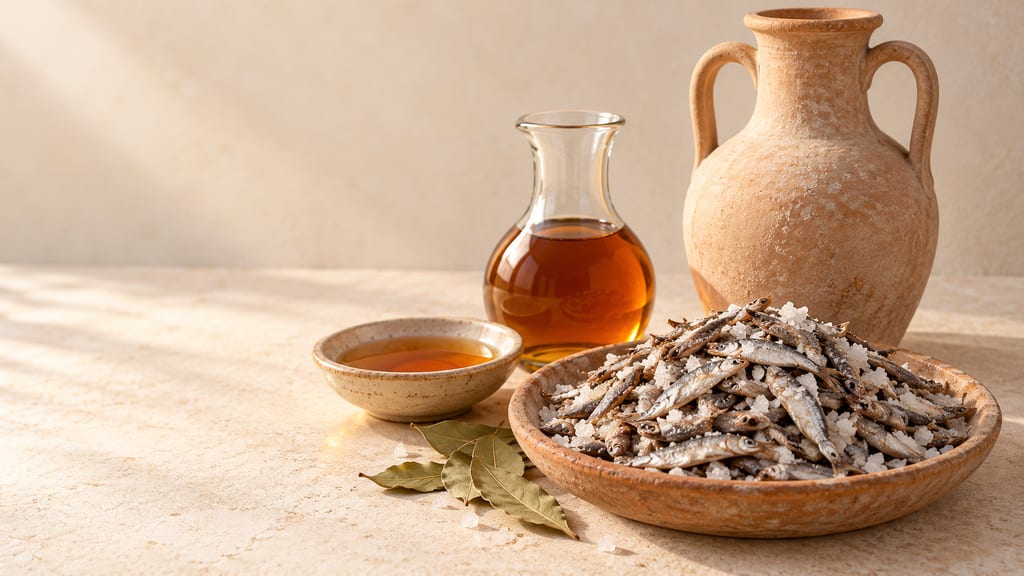
Garum, nước mắm, nam pla and patis share ways of turning fish into a savoury liquid, yet each belongs to its own food culture. This account follows ancient sauces, Asian and Japanese fish sauces, colatura and koji garums.
Salt seasons a meal, shapes fermentation and preserves food. Its history follows the people who mine, harvest, trade and transform it, and the choices hidden inside an ordinary packet.
Jars, barrels, skins, leaves, pits and whole rooms decide much of what happens to fermented and cured food. This is how a container works on its contents, and how people in different places chose theirs.
A machine can supply heat, cold, airflow, pressure or a vacuum. Many traditional foods also depend on sunlight, frost and running water, months of microbial work, or a tested kill step, and these are the places where an appliance stops.
Vinagre de Jerez is made by acetifying eligible Jerez wines and ageing the vinegar in wood. Its protected name belongs to a defined Andalusian zone and a cellar tradition joining wine, oxygen, acetic bacteria and long ageing.
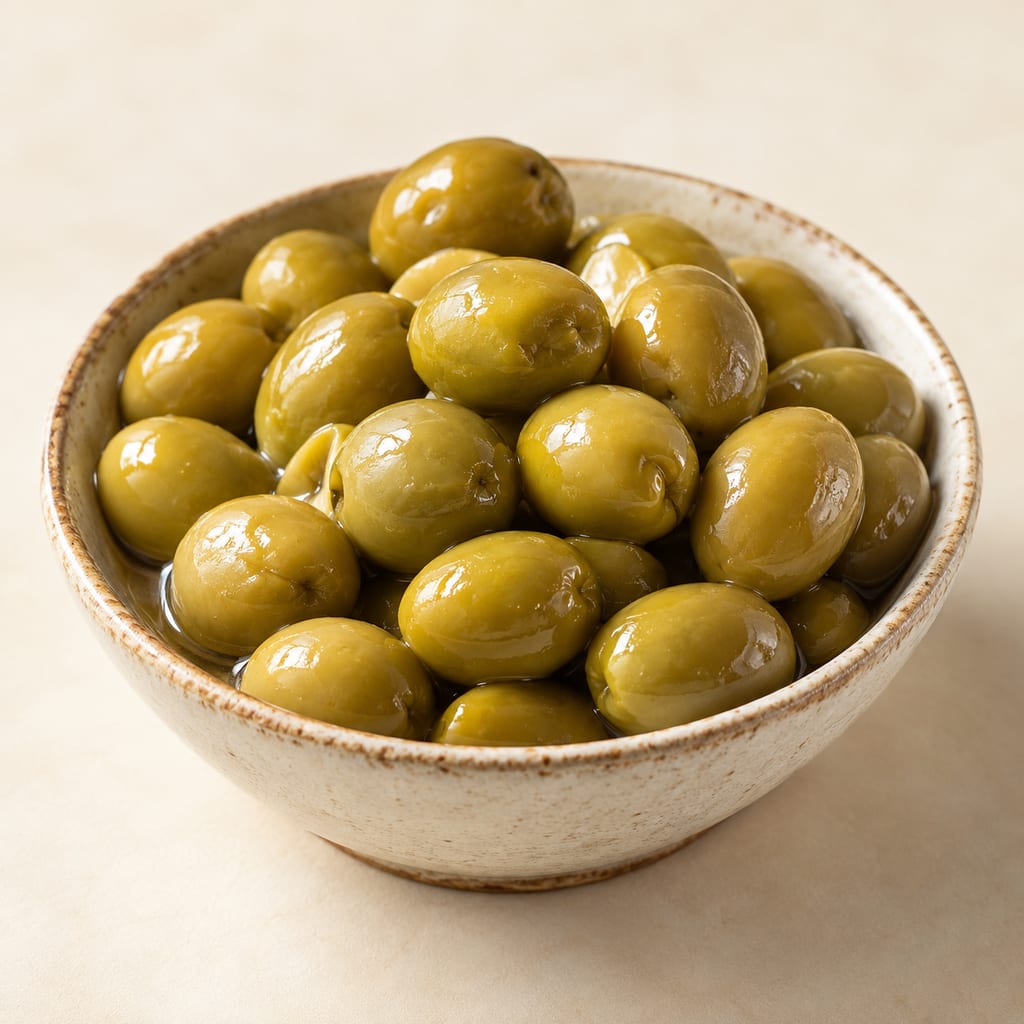
Spanish-style green olives, or Sevillian green olives, are green fruit treated with lye, rinsed, then fermented in brine for two to six months. The household batch here is a UC ANR method.
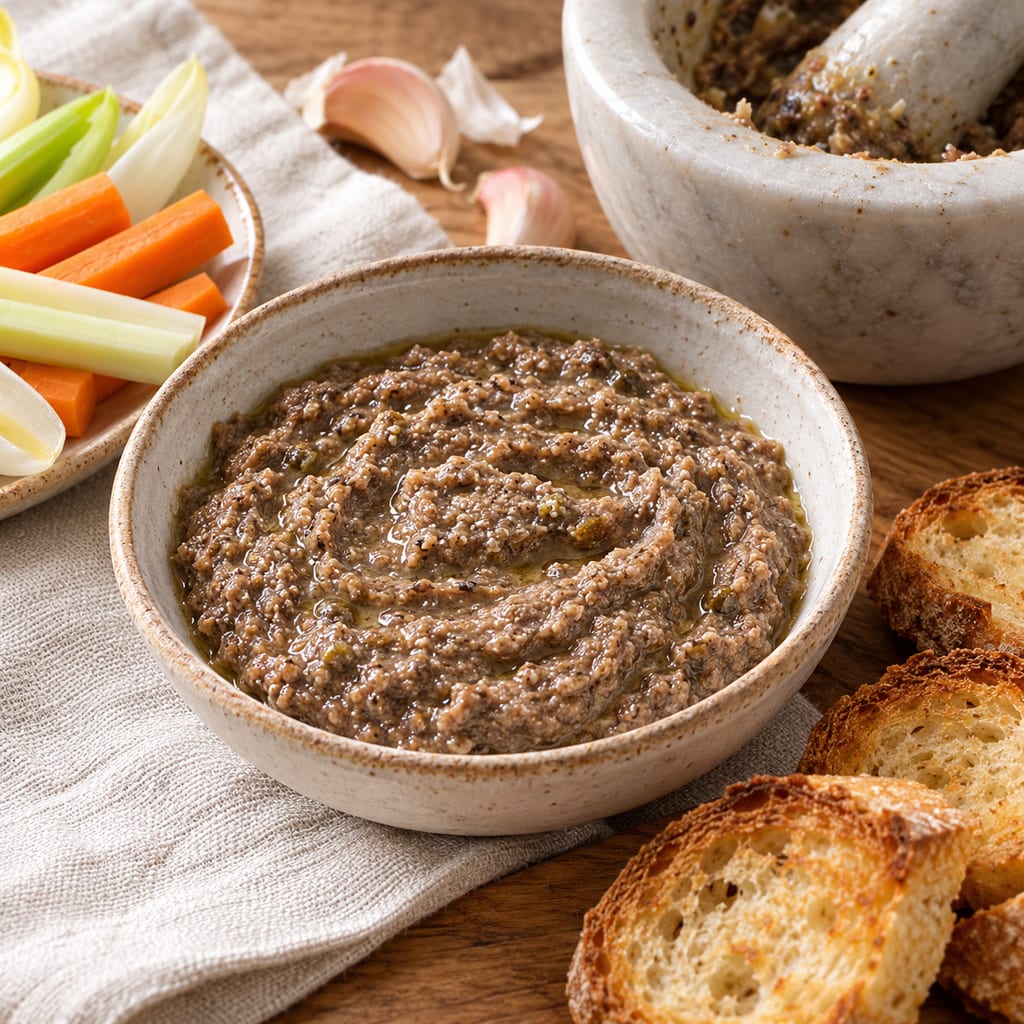
A Provencal dip of anchovies, garlic, capers and olive oil, pounded or blended to a creamy paste and served with raw vegetables, bread and eggs.
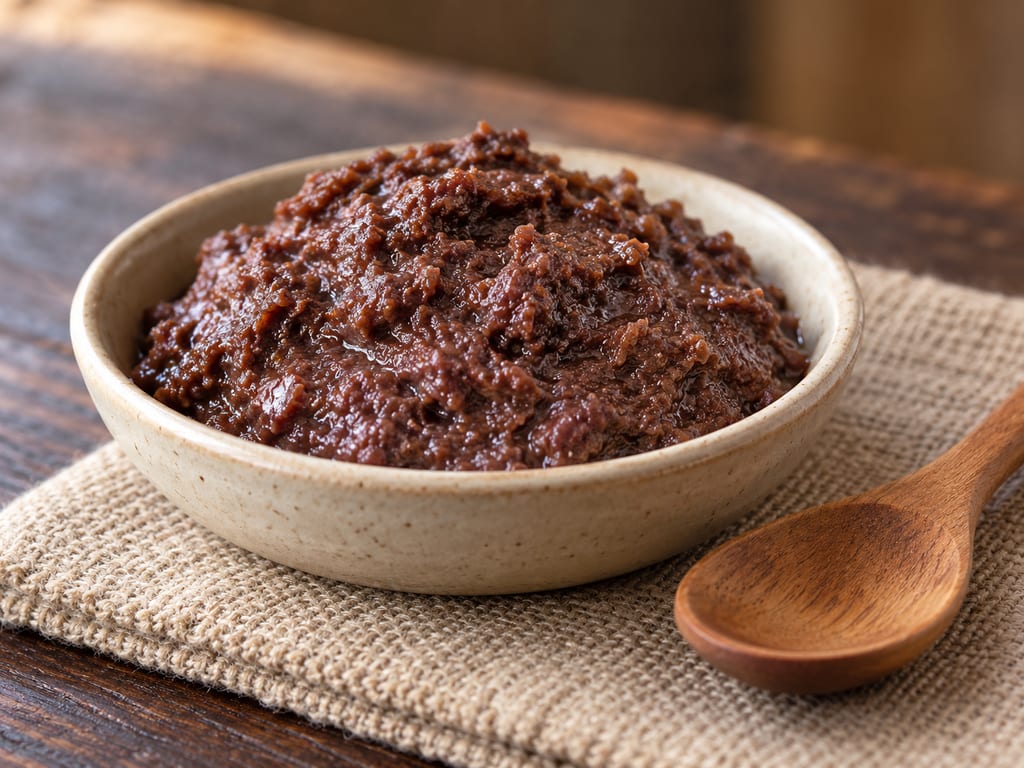
Bagoong isda is a Philippine fish paste: whole small fish salted and left to ferment for a month or more in earthen jars. It is the fish counterpart of bagoong alamang.
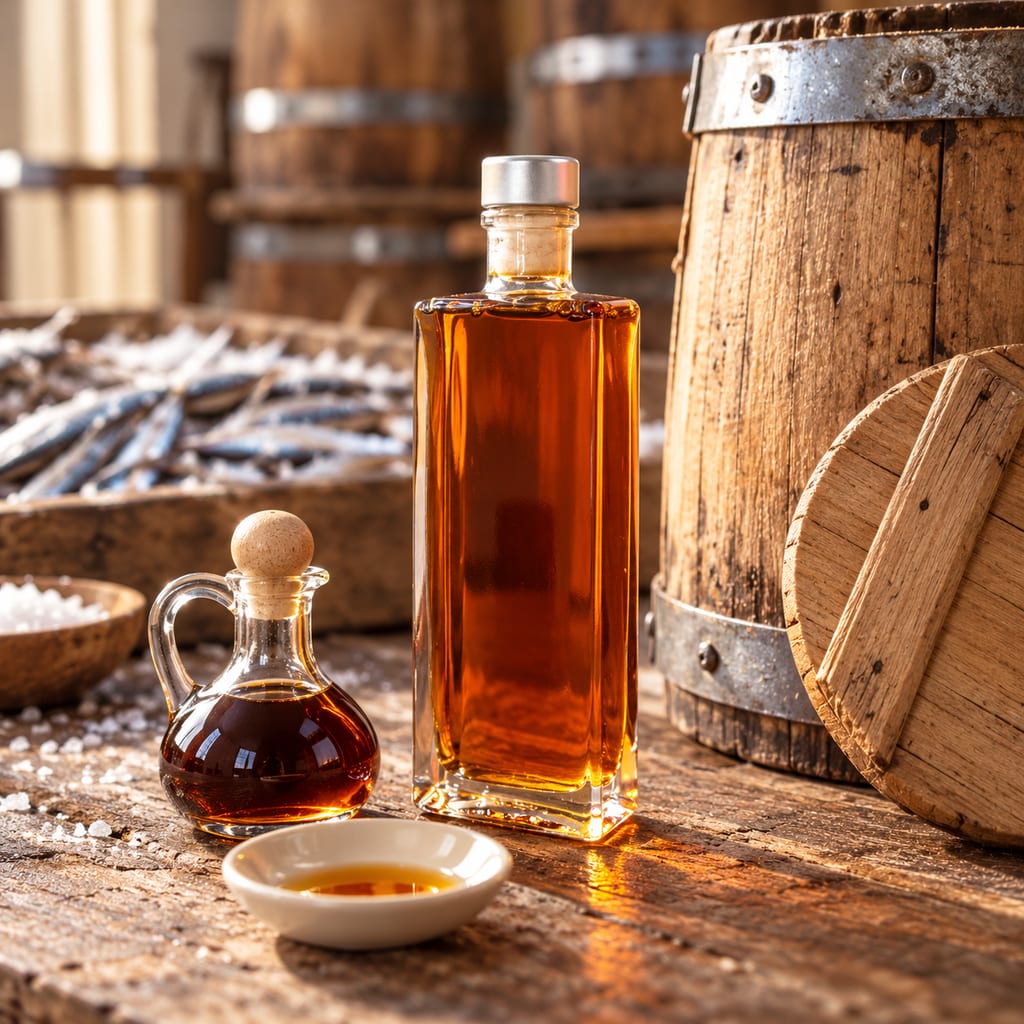
Colatura di alici is the amber liquid drained from salted anchovies matured in wooden containers in Cetara, on the Amalfi coast of Campania, and sold under a protected designation of origin.
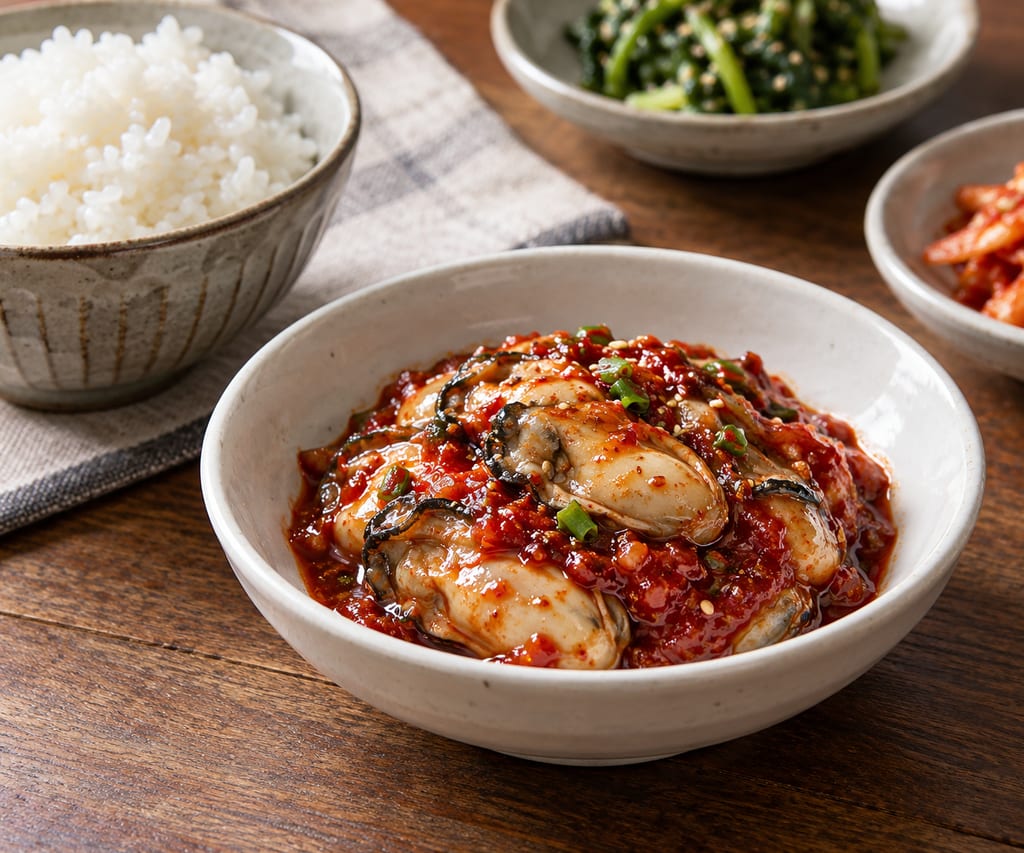
A Korean salted-oyster jeotgal seasoned with chili, associated especially with Seosan and Ganwoldo. This page records its food culture, not a household preparation method.
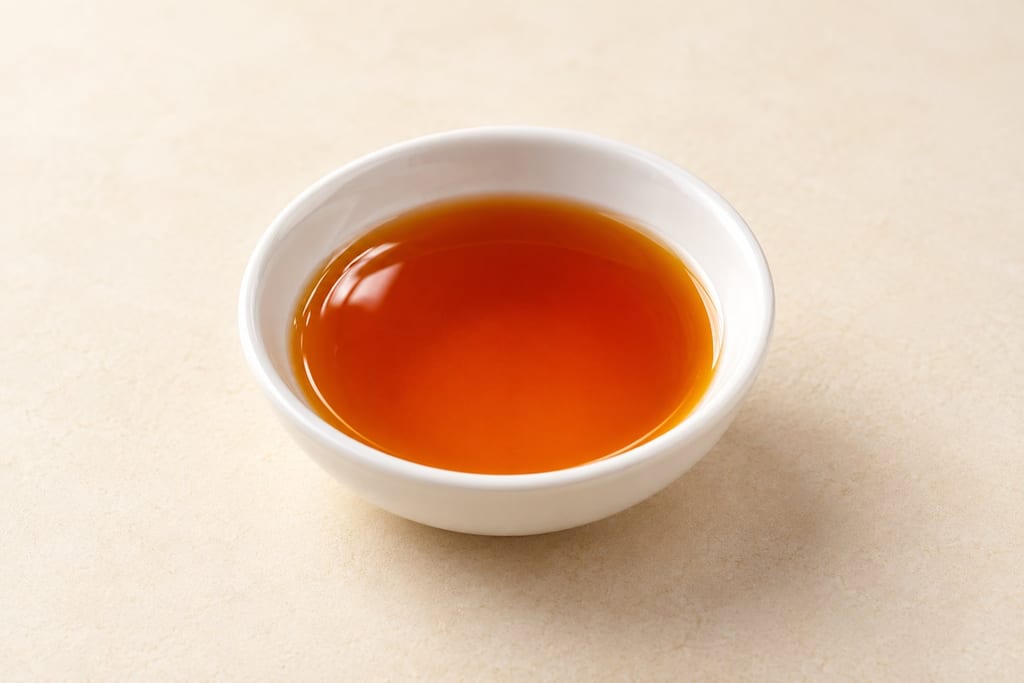
Fish sauce is a clear, salty seasoning made by maturing fish with salt and drawing off the liquid. The broad family includes distinct regional sauces rather than one interchangeable method.
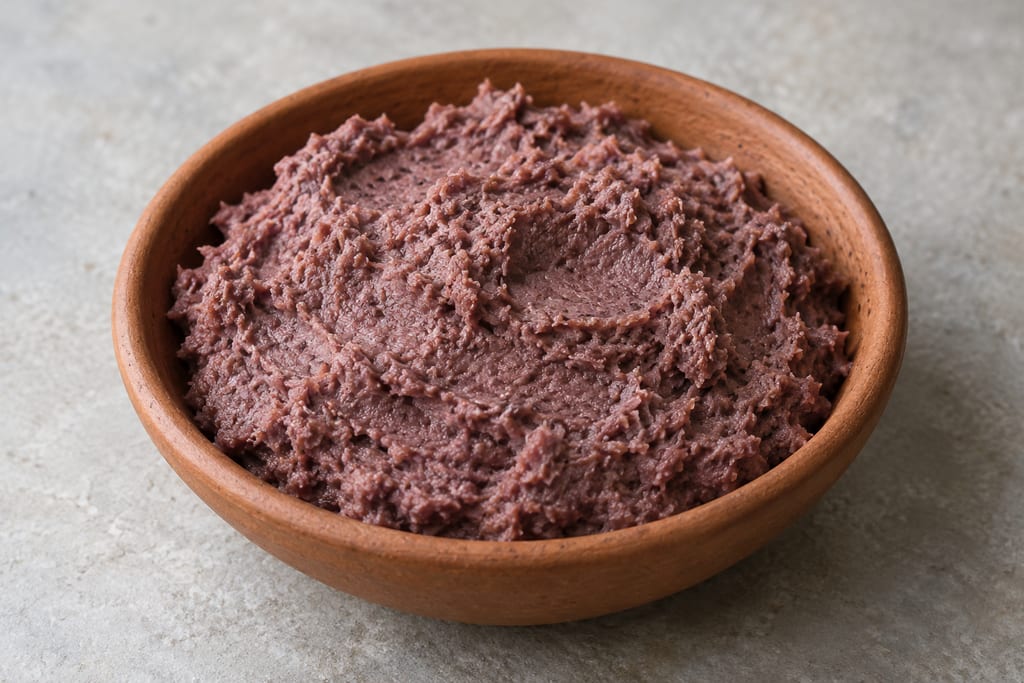
Guinamos is a shrimp paste made on Guimaras in the Philippines: small shrimp salted by hand, sun-dried and trodden by foot until it turns smooth.
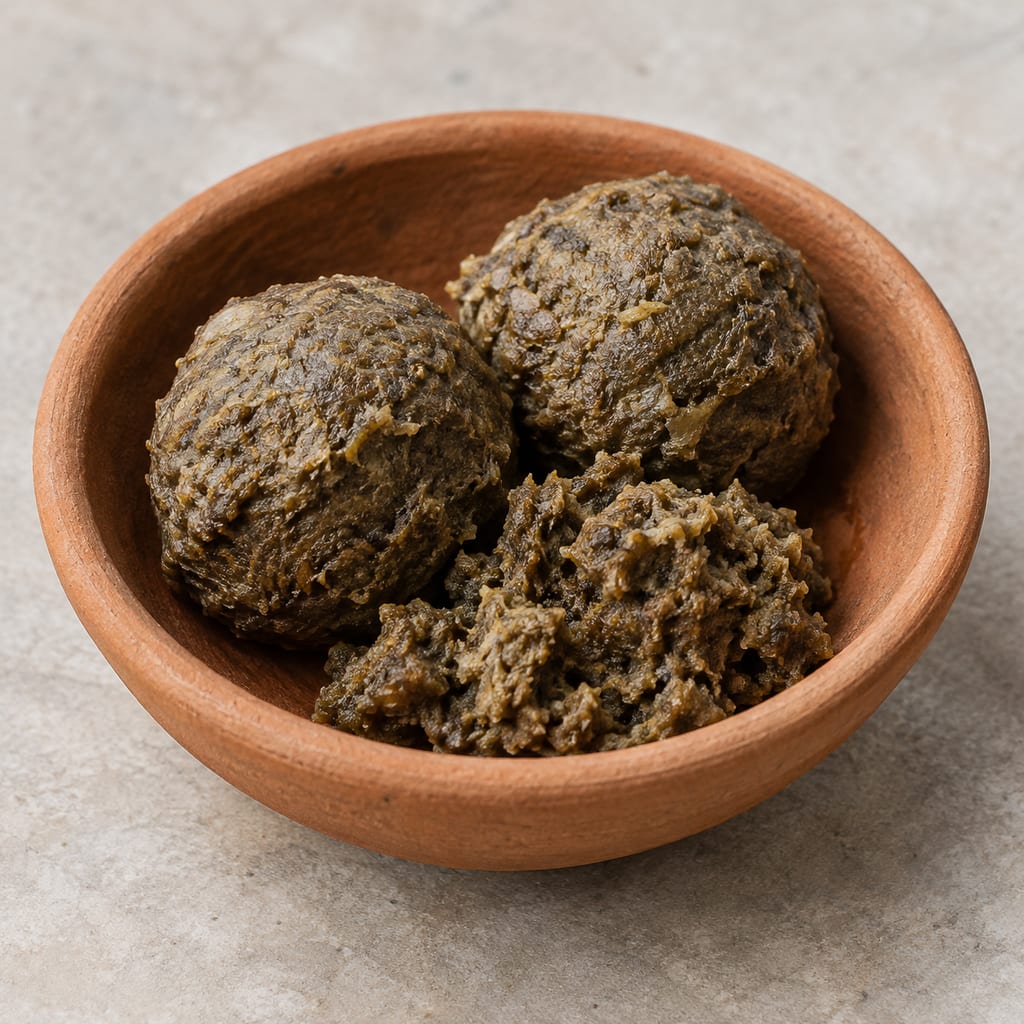
Manipuri fermented fish-and-aroid paste, formed into balls or kept in an earthen pot, used to season Manipuri dishes. Its method is documented in outline only.
Mahyawa, also written mahyaveh, is a traditional fish sauce from southern Iran, made by salting small sardines or anchovies in water, maturing them in jars and seasoning the filtered liquid with mustard and spices.

At North Abydos in Egypt, a fixed early Dynastic brewery comprised parallel semi-subterranean installations with rows of ceramic mash vats; excavation reports revise their number, scale and estimated batch capacity.

Ají amarillo is the orange-yellow Peruvian chilli cultivar group of Capsicum baccatum, used to colour and season huancaína sauce and ají de gallina. Published heat estimates do not establish one range for the named cultivar.

Toasted almonds are whole sweet almond kernels dry-roasted until golden to brown. Heat replaces their marzipan note with a roasted, nutty one; they thicken and flavour romesco.

Kodiak salmon, halibut and cod cut as seg'aq and hung on an initaq rack to become tamuuq, with kac'amaasaq and kupcuunaq named as different results.

Aniseed is the dried ripe fruit of Pimpinella anisum, an aromatic Apiaceae spice commonly called a seed. It adds a sweet, warm aroma to breads such as Moroccan krachel and South African mosbolletjies, and is distinct from star anise.

A fixed Late Chalcolithic installation in Areni-1 cave combined a shallow clay pressing basin with a large jar set into the cave floor and storage vessels nearby.

Ripe avocado flesh is the soft, buttery, fat-rich pulp of Persea americana, eaten raw. It is low in acid, so it is a fresh ingredient that needs care in chilled dishes.

A portable dome and pan used over a hearth, with embers on the lid and heat from below. Regional peka and saç forms share this principle while differing in materials, pan shape and how the food is cooked.
No community contributions have been published for this entry yet.
Sign in to contribute. Published comments and photos are free to read.
PURA projectHistory
Digital Encyclopedia of Atticism: γάρος, γάρονFifth-century fragments naming garos (Aeschylus 211, Sophocles 799a, Cratinus 312, Pherecrates 188, Plato Comicus 215)
Translation as fish sauce; gender dispute
Cited in: The Greek word and its first appearances
University of Chicago, PenelopeHistory · Method
Garum (Encyclopaedia Romana, wine section)Definitions of garum, liquamen, allec and muria
Pliny's and Manilius's accounts
Geoponica recipes as summarised
Production centres, prices and uses
Cited in: What garum is; The Greek word and its first appearances; Garum, liquamen, allec and muria; The Geoponica methods; Where it was made and sold; How it was used
SelodemarMethod
Geoponika, Book XX, chapter 46: garum recipes (translation page)The four Geoponica methods with their ingredients, times and steps
Compilation in Constantinople and the dating discrepancy
Cited in: The Geoponica methods
Sally Grainger, OpenEdition BooksHistory · Method
Garum, Liquamen and Muria: A new approach to the problem of definitionDistinction between garum, liquamen and muria
Garon haimation in the Geoponica
Greek origin of the word and early trade
Cited in: What garum is; The Greek word and its first appearances; Garum, liquamen, allec and muria; The Geoponica methods
Studia Ceranea 14History
Garum, Fish Blood Taboos in the Judaeo-Christian World and the Evolving Nature of Ancient Fish SauceLate Roman and Byzantine change in sauce form (abstract only)
Cited in: Byzantine garos
Cyprus Food MuseumHistory
Garos (Trofima)Byzantine garos of the 11th and 12th centuries, its ingredients, diluted forms and vessels
Cited in: Byzantine garos
PBS NOVAMethod
Roman Fish SauceA modern layered reconstruction with seven days in the sun and daily stirring for twenty days
Cited in: A modern reconstruction and a caution
U.S. Food and Drug AdministrationSafety
Fish and Fishery Products Hazards and ControlsScombrotoxin (histamine) formation and Clostridium botulinum in seafood as hazards needing species- and process-specific controls
Cited in: A modern reconstruction and a caution