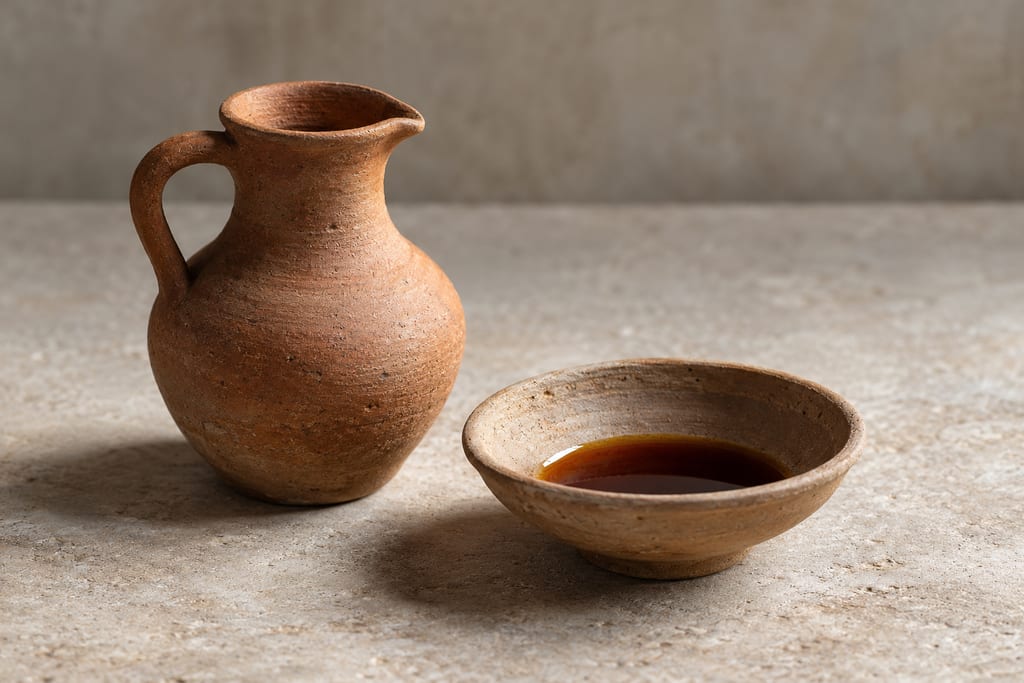
Garum (garos, liquamen)
Garum, Greek garos and Latin liquamen, was the fish sauce of the ancient Mediterranean: fish and viscera salted and left in the sun, then drained off as a savoury liquid.
 FermenteaWhere food goes to change
Aceitunas verdes estilo sevillano · Sevillian green olives · Aceitunas verdes estilo sevillano · Aceitunas verdes estilo espanol
Spanish-style green olives, or Sevillian green olives, are green fruit treated with lye, rinsed, then fermented in brine for two to six months. The household batch here is a UC ANR method.
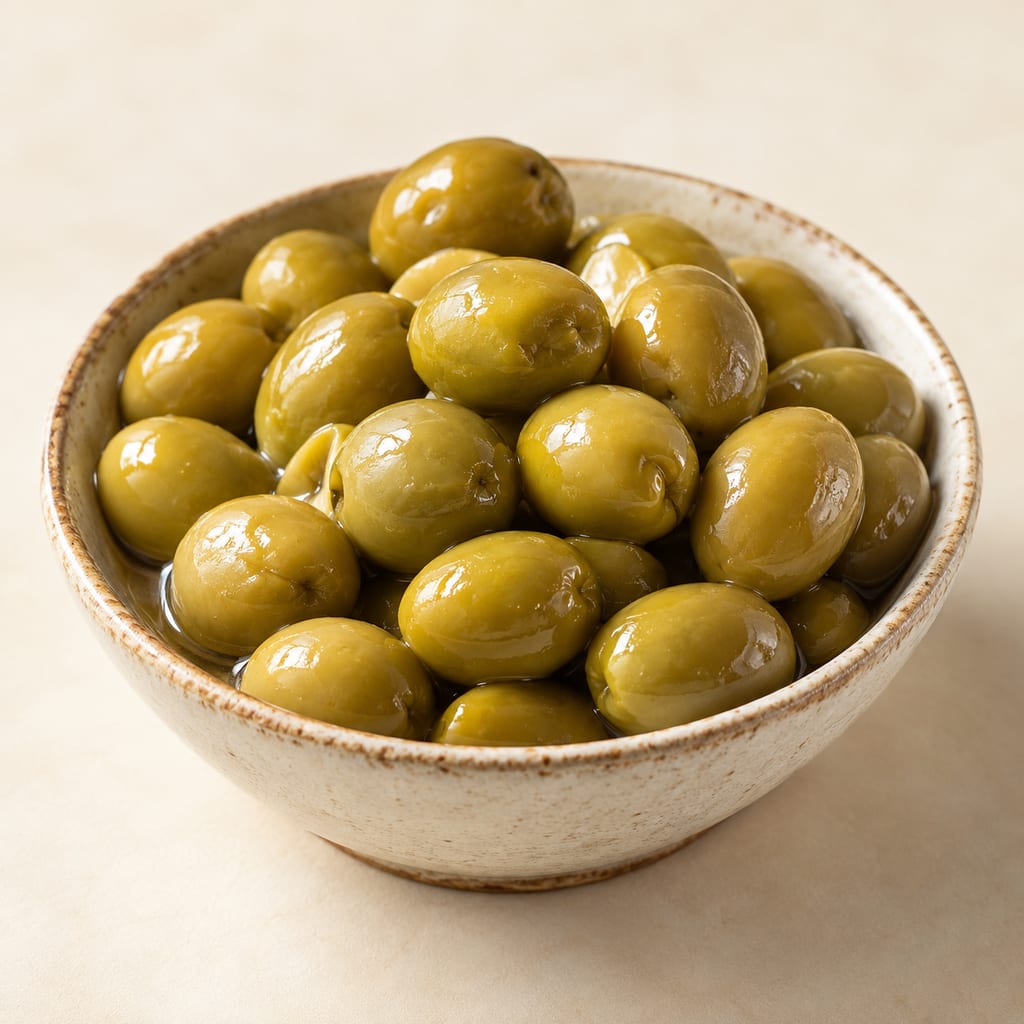
Spanish-style green olives are green table olives that are treated with lye and then fermented in brine. The International Olive Council describes this as lye treatment followed by lactic fermentation. Sevillian green olives are the same family, named for Seville and Andalusia. The name does not describe every Spanish olive.
Codex separates alkali-treated olives from natural olives that go straight into brine, so this process is on the treated side of that line. The Council lists whole, pitted and stuffed finished olives, including anchovy and pimento fillings.
The fruit is sorted, and the bruised, defective and black olives are removed. The sound green fruit is covered with a cooled lye solution, and the lye is allowed to penetrate. The UC ANR batch uses 2 oz of pure lye per US gallon of cold water, cooled to 65 to 70 F, with the fruit held under a mesh and a weight. Penetration is checked every 1 to 2 hours, and UC ANR gives about three-quarters penetration takes at least 5 hours.
The olives are drained and covered with cold water, which is changed three or four times over 24 to 30 hours. They are then packed in containers and covered with a brine of 10 oz of pickling salt per gallon of cool water. The active lactic-acid starter brine is added at 6 fl oz per gallon of olives and brine, and the containers are closed loosely.
The source keeps the brine below 100 F and says fermentation is fastest at 70 to 90 F. In the first four or five days the gas and foam are watched, and lost brine is replaced with the same salt strength. After that the lids are tightened.
Fermentation runs for about two to six months. The UC ANR batch sets completion by the desired acidity and the characteristic Spanish-style taste. The source gives storage in brine of up to one year in a cool, dark, dry place. That endpoint is a sensory judgement and not an objective safety limit.
The International Olive Council also gives a home lye-soak and seasoned-storage account, with a 10 kg illustration. That account describes lye curing and seasoned storage, not controlled fermentation, and it is a different method from the UC ANR batch above.
The Council's quality guide separates process monitoring from validation. Its industrial values, such as fermentation defects, are not transferred to a household batch here.
The sources do not give an exact fruit mass, the free-liquid brine volume or a finished yield, so a scaling rating cannot be set. The UC ANR figure of about 5 and a half pounds of fruit per gallon of packed olives and brine is approximate and does not fix a batch.
Equipment is described as lye-resistant measuring and holding tools, a cloth and weight, a mixing vessel and food-contact fermentation containers. The 2007 UC ANR guidance needs a currentness check before a procedural page is published.
The process is associated with Andalusia and international use. The supplied atlas and the inspected institutional sources do not establish an invention date.
Lye is corrosive.
Hazard sourceThe sensory acidity and taste endpoint is not an objective safety criterion.
Hazard sourceWear intact gloves and eye protection. Use no aluminum, tin or galvanized metal for lye.
Control sourceDo not eat or taste olives that are moldy, soft or bad-smelling.
Control sourceThe UC ANR publication is dated 2007 and says its recommendations may change. Check currentness before procedural publication.
The IOC home lye account gives tin-plated and galvanized lids, which conflicts with the UC ANR lye warning. The UC ANR advice is followed here.
Smell, taste or appearance do not establish safety.
The process is associated with Andalusia and international use. No precise birthplace or invention date is established.
Garum, Greek garos and Latin liquamen, was the fish sauce of the ancient Mediterranean: fish and viscera salted and left in the sun, then drained off as a savoury liquid.
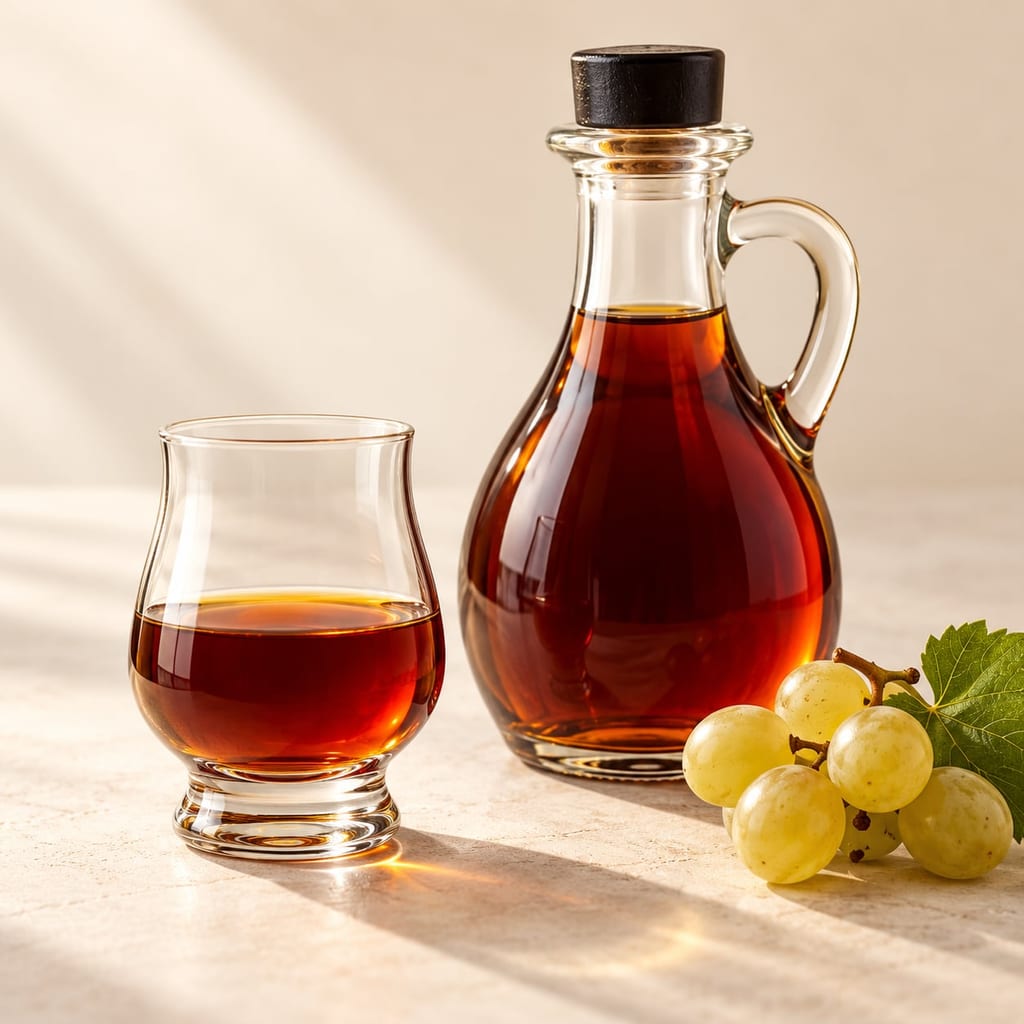
Vinagre de Jerez is made by acetifying eligible Jerez wines and ageing the vinegar in wood. Its protected name belongs to a defined Andalusian zone and a cellar tradition joining wine, oxygen, acetic bacteria and long ageing.
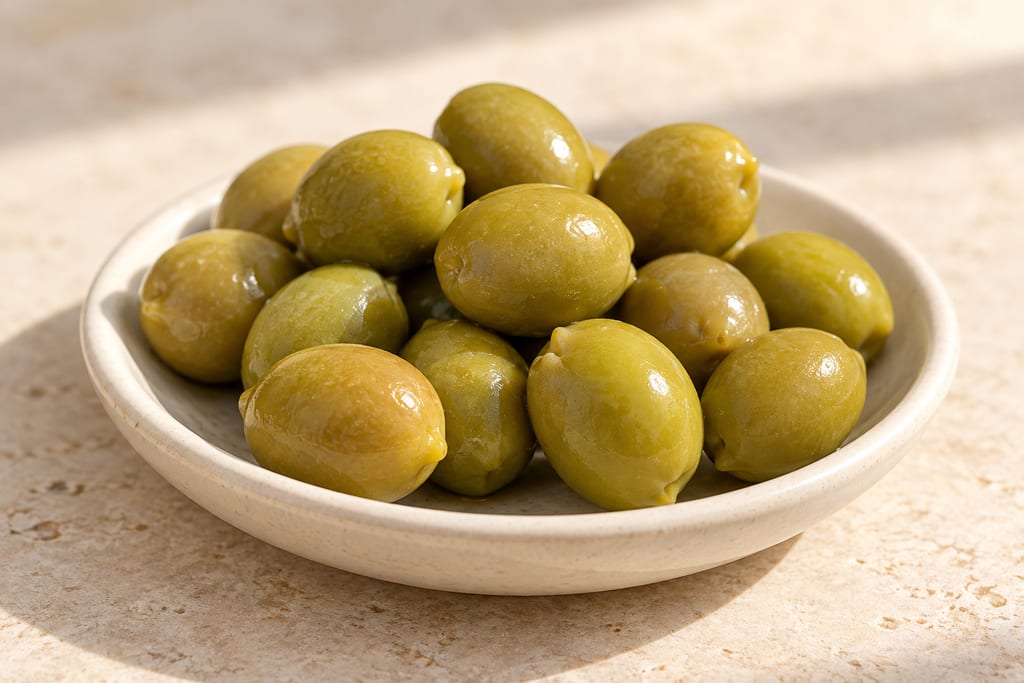
A Portuguese table-olive product from the Negrinha cultivar in northeastern Portugal, sold in three commercial styles, two of them brined fermentations and one oxidised to black.
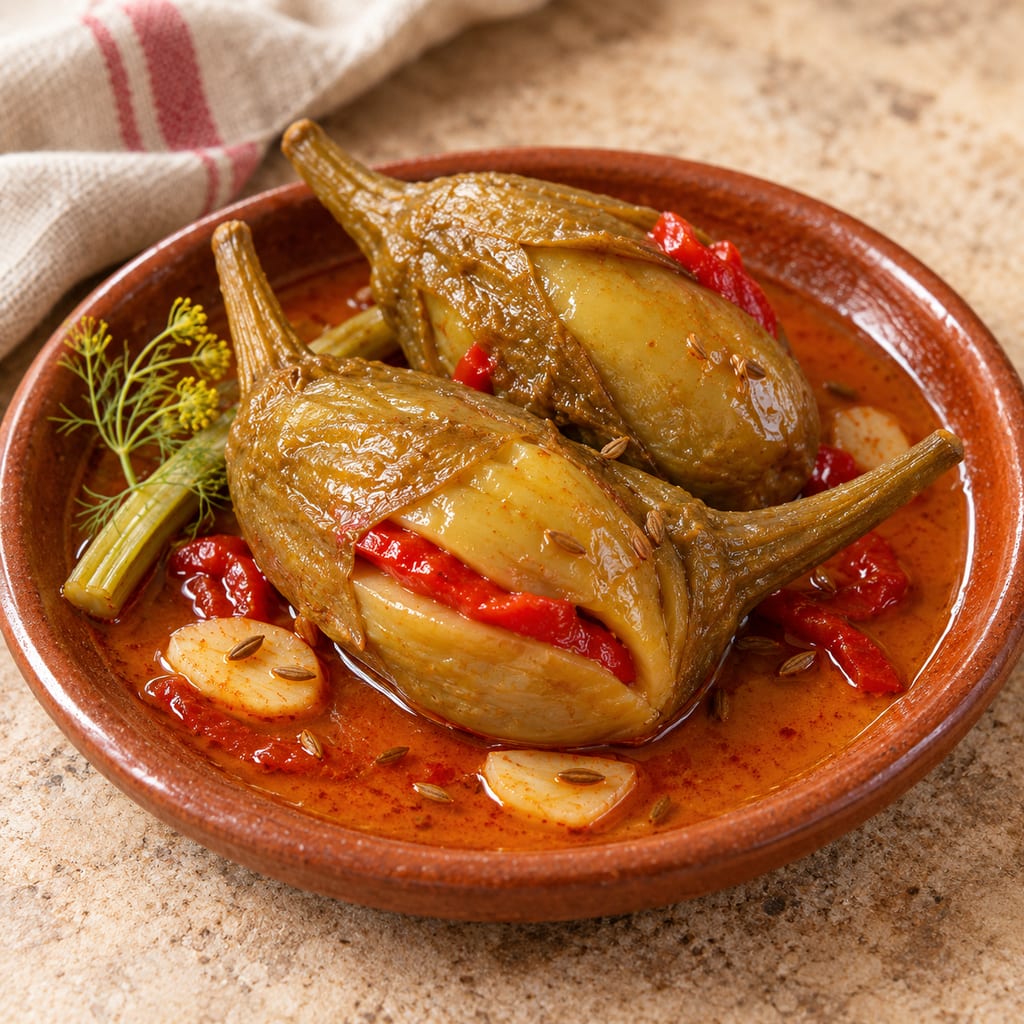
A protected aubergine preserve from Ciudad Real in Spain: tender fruit of the local Dealmagro variety, cooked briefly and then fermented in a vinegared, paprika-seasoned dressing.
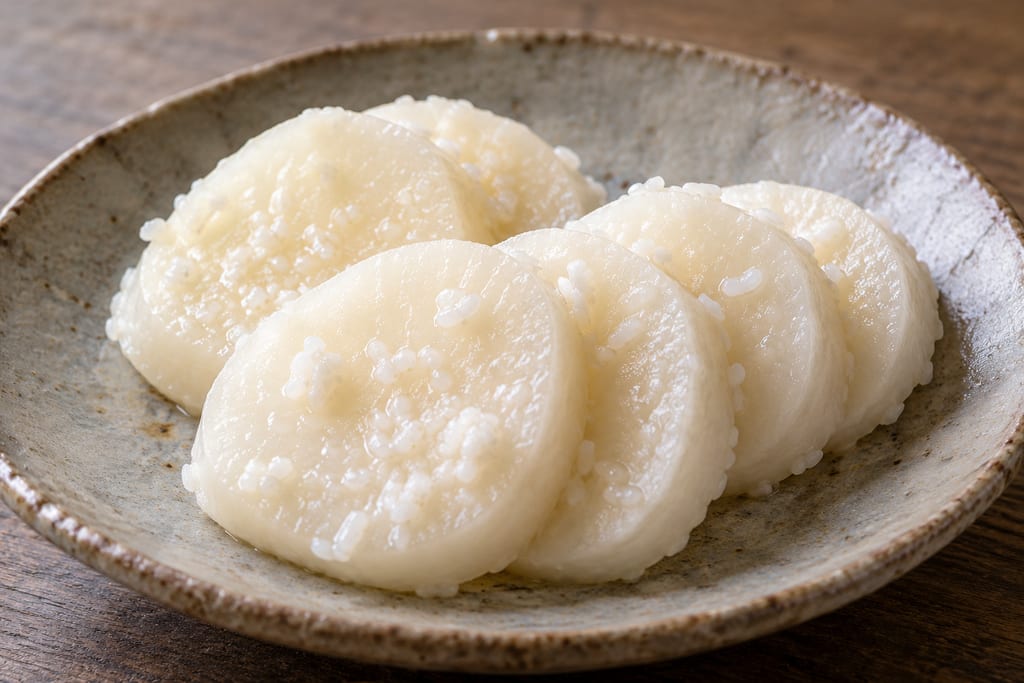
A sweet, crisp Japanese daikon pickle from Tokyo's Nihonbashi district, made by salting fresh radish and dressing it in rice koji, sugar or koji amazake without the heavy drying used for takuan.
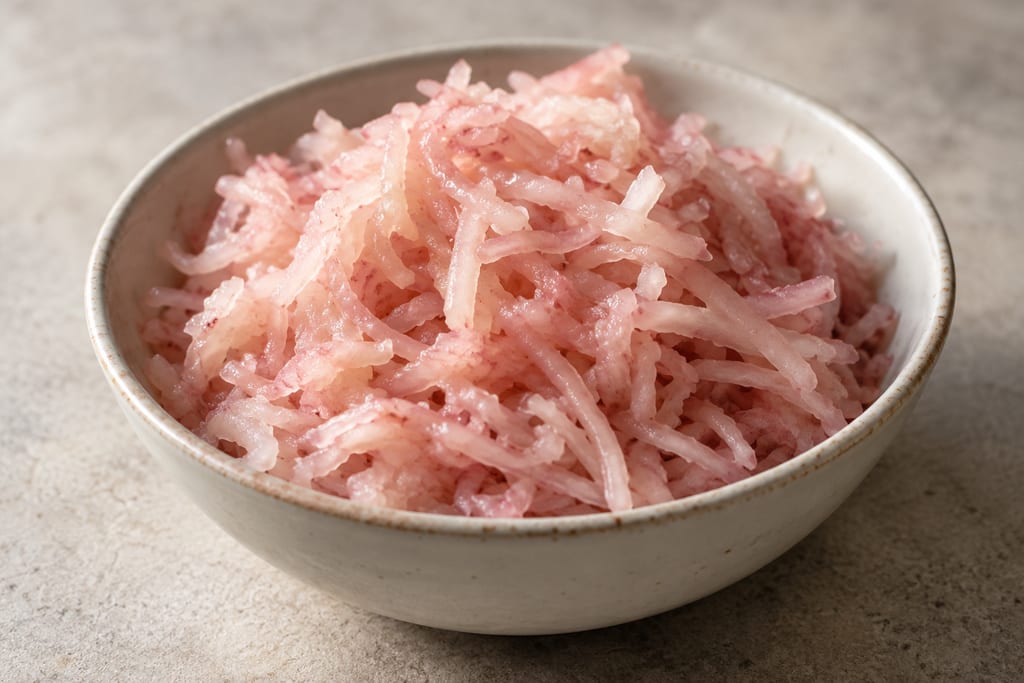
Source-specific Brovada DOP producer method for Friuli Venezia Giulia turnips and red-grape marc. This records a regulated producer process; it is not a validated home-scale recipe.
An industrial fermentation patio places factory-made fiberglass-reinforced polyester olive tanks below floor level, with drainage and transfer infrastructure arranged around the buried vessels.
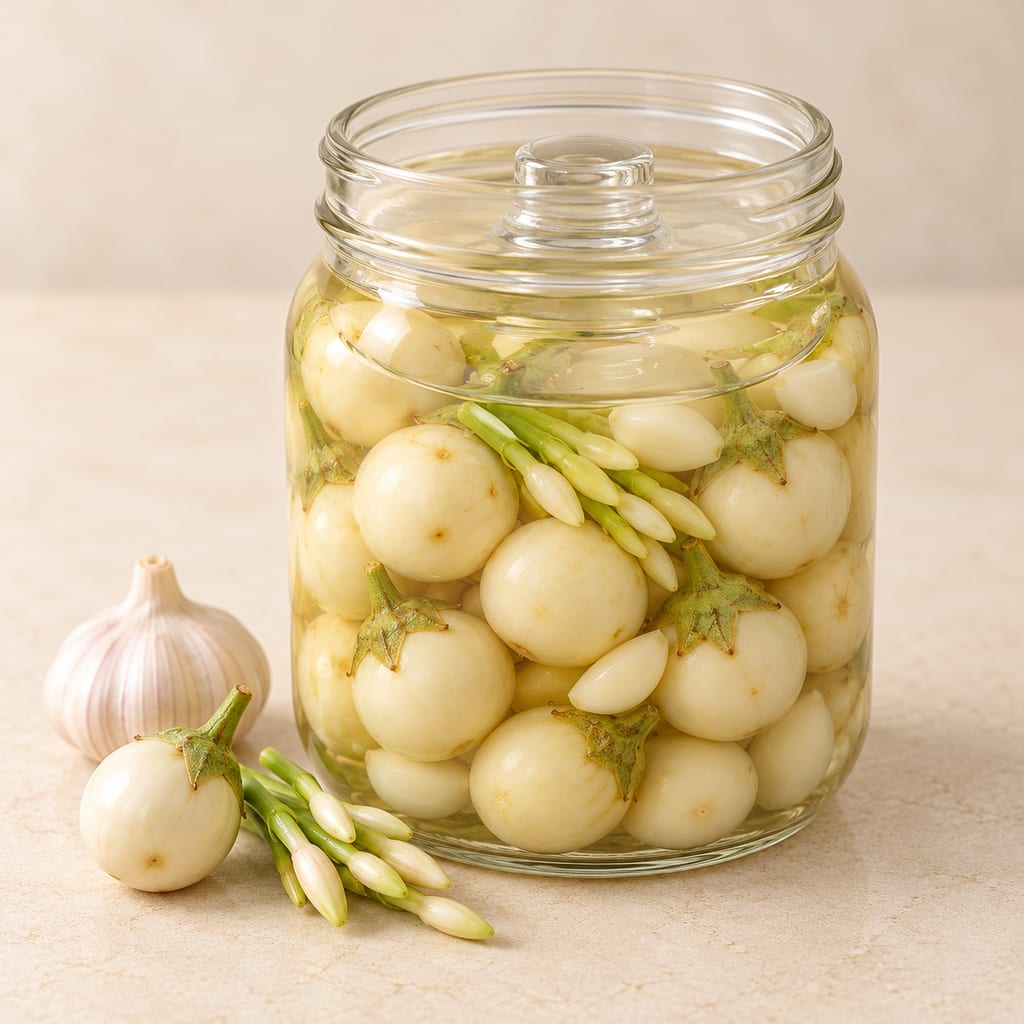
Vietnamese salted and fermented small eggplant, dried on the day of purchase, then held submerged in warm salty water with garlic and galingale flower for a week or longer.
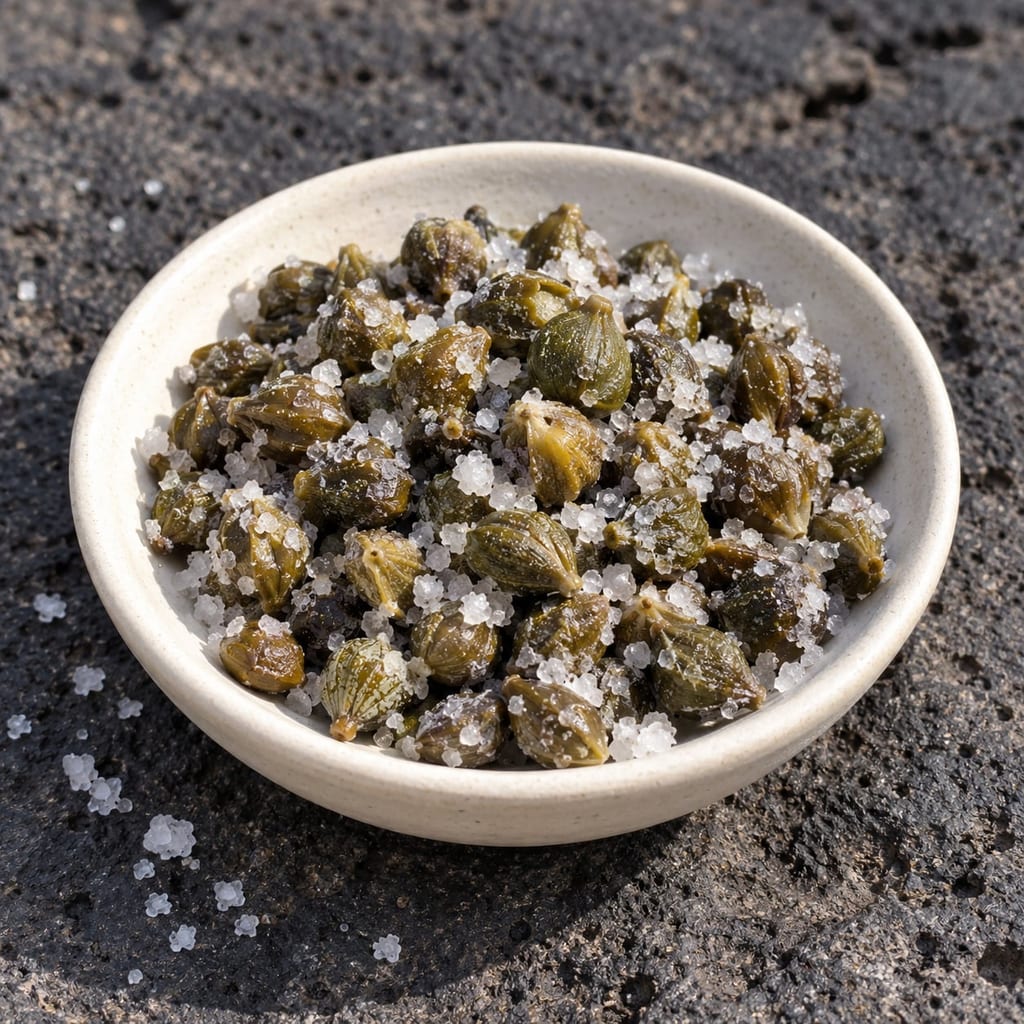
A protected Sicilian product: unopened caper buds from the island of Pantelleria, dry-salted with sea salt in a two-stage process that encourages lactic fermentation.
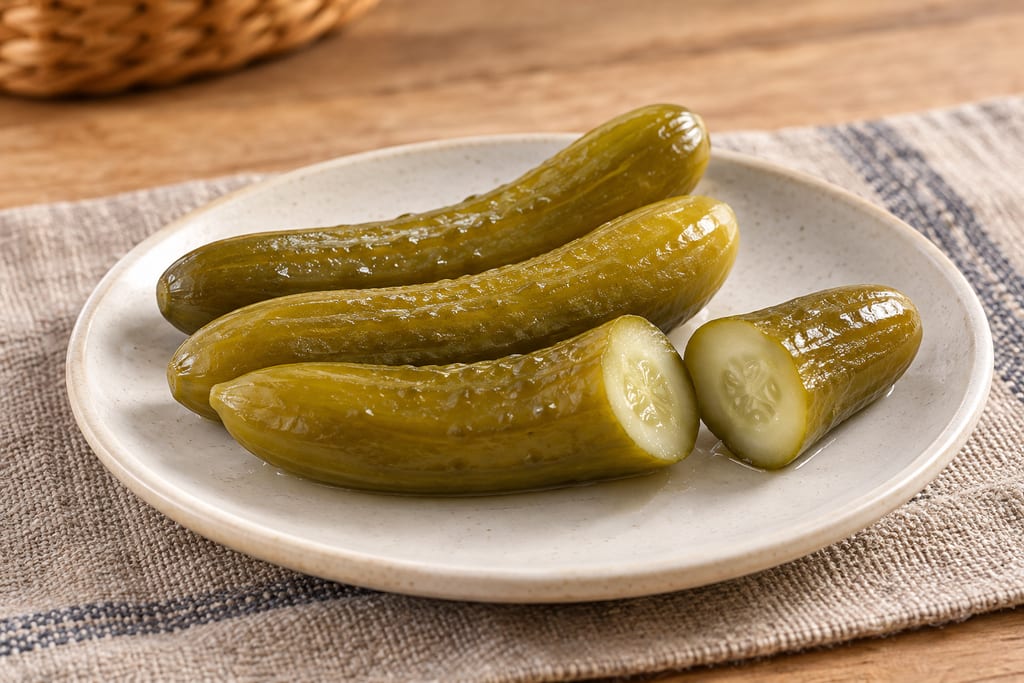
Çubuk turşusu is a registered pickle from Çubuk district in Ankara. Its cucumber variant is sold as Salatalık Turşusu, and a commercial specification sets its brine and room-temperature period.
No community contributions have been published for this entry yet.
Sign in to contribute. Published comments and photos are free to read.
UC ANR Publication 8267; UC Davis Department of Food Science and TechnologyMethod · Safety
Olives: Safe Methods for Home Pickling, Spanish-style green olivesSevillano batch: 2 oz pure lye per US gallon cold water, cooled to 65 to 70 F; lye penetration checked every 1 to 2 hours and takes at least 5 hours for about three-quarters penetration.
Wash 3 to 4 times in 24 to 30 hours; 10 oz pickling salt per gallon cool water; active lactic-acid starter brine at 6 fl oz per gallon of olives and brine.
Keep below 100 F; fastest at 70 to 90 F. Ferment about 2 to 6 months; storage up to one year in brine in a cool, dark, dry place.
Cited in: How the process runs; Fermentation and the finish; Open questions
International Olive CouncilIdentity · History · Uses
Table olivesSpanish-style olives are lye-treated and then fermented. Green harvest runs from late August to early October, varying with cultivar, area and season.
Whole, pitted and stuffed finished olives are described, including anchovy and pimento fillings.
Common cultivars include Manzanillo, Gordal and Moroccan Picholine. The list is not an identity requirement.
Cited in: What the name covers; Home-cured and industrial methods
Codex Alimentarius Commission, FAO/WHOIdentity
Standard for Table Olives CXS 66-1981Distinguishes alkali-treated olives from natural olives placed directly in brine.
Cited in: What the name covers
International Olive CouncilSafety
Quality Management Guide for the Table Olive IndustryDistinguishes process monitoring from validation. Industry values are not transferred as household critical limits.
Cited in: Home-cured and industrial methods