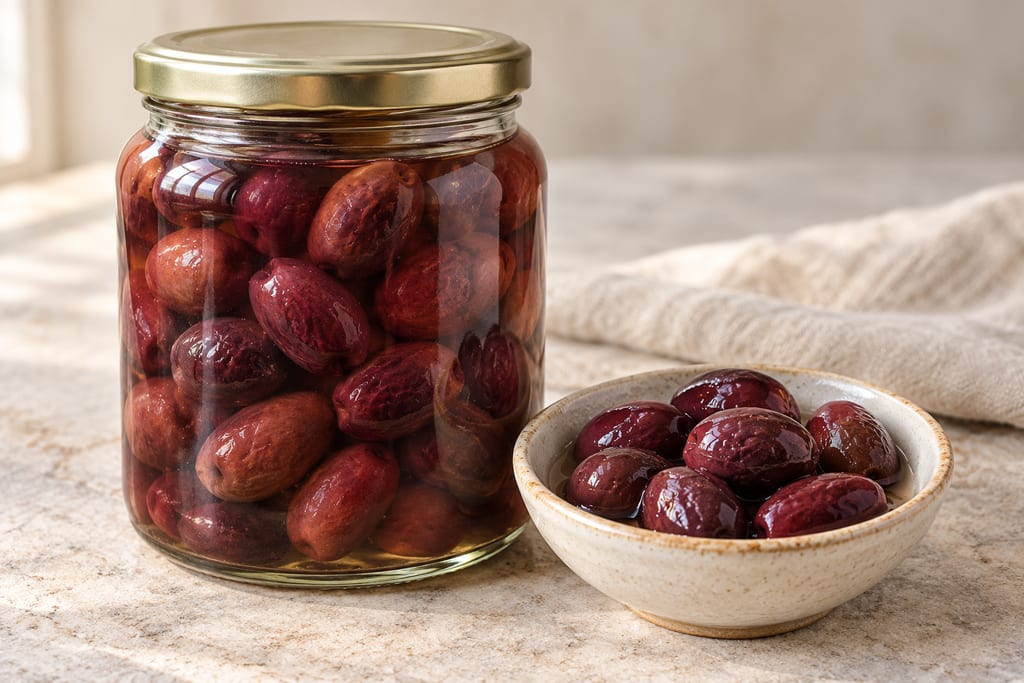
Greek-style black olives in brine
Ripe olives go straight into brine with no lye and cure for months, mostly by yeasts. The home method here is the University of California two-stage brine.
 FermenteaWhere food goes to change
Substrates
Olives are the bitter fruit of Olea europaea, made edible by lye, brine or salt, and the raw material of the table olives that are cured and fermented around the Mediterranean.
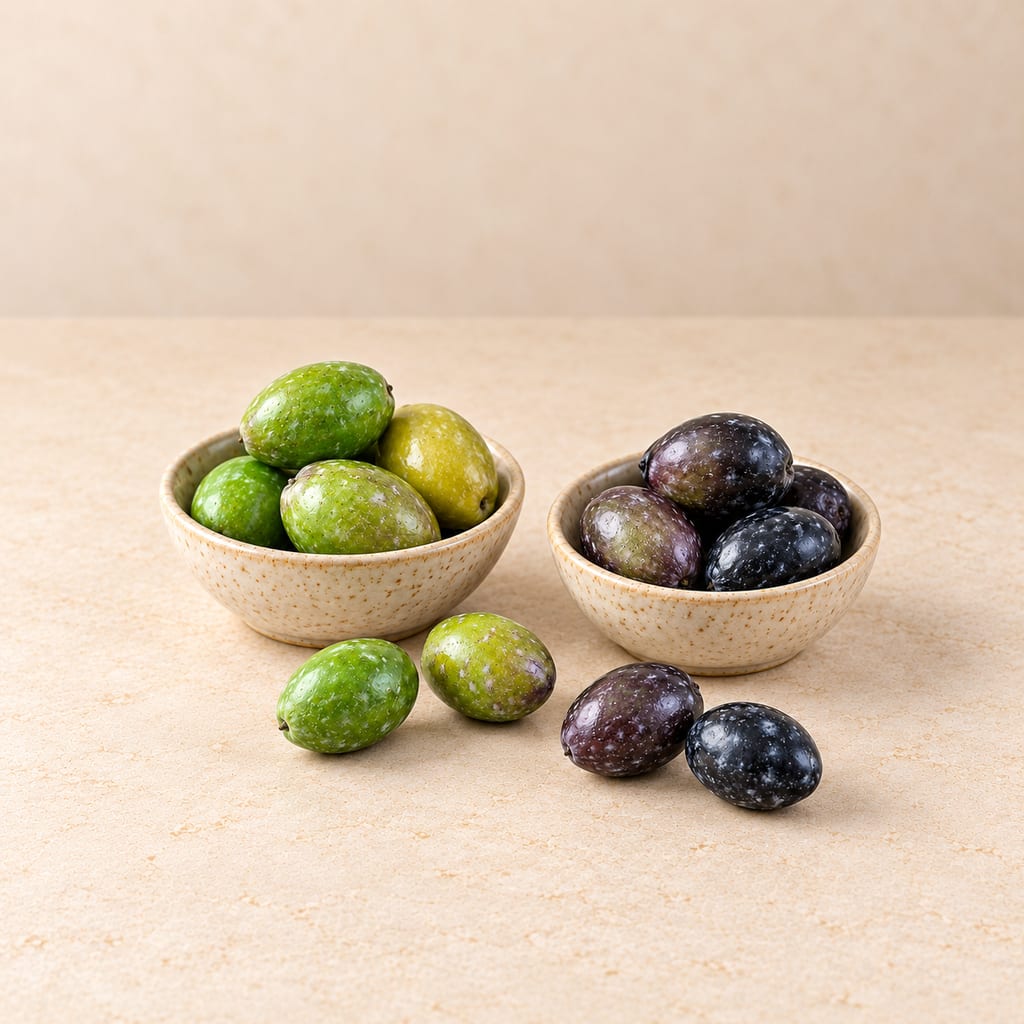
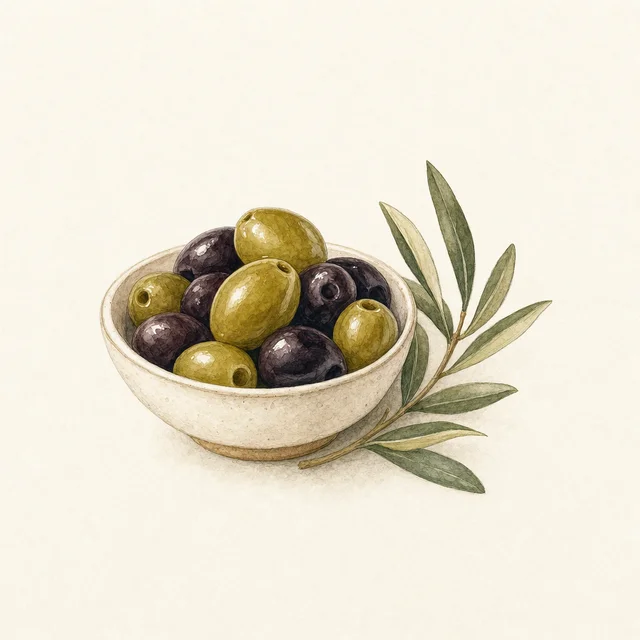
The olive is the fruit of Olea europaea, a subtropical evergreen of the family Oleaceae, and straight from the tree it is inedible. Raw olives are very bitter and astringent, chiefly because of a compound called oleuropein, and the whole craft of the table olive is the removal or breakdown of that bitterness. Curing takes a few days with lye or a few months with brine or salt packing, and many curing methods rely on fermentation by lactic acid bacteria, whose acid lowers the pH and preserves the olives without refrigeration. About 80 percent of the olives harvested become oil; the rest are eaten as table olives.
Olives are sold by ripeness. The International Olive Council recognises green olives, picked at full size but unripe, usually green to yellow and still carrying the bitter oleuropein; semi-ripe or turning-colour olives, picked as the skin changes from green to red or brown with only the skin coloured; and black or ripe olives, picked at full maturity and showing purple, brown or black colours. Which stage is picked and how it is cured together decide whether the fruit becomes a crisp green Spanish olive, a wrinkled salt-cured black one or a plump Greek natural olive.
Fossil evidence places the origin of the olive tree 20 to 40 million years ago in the Oligocene, in what is now Italy and the eastern Mediterranean, and humans used olives in Africa around 100,000 years ago on Morocco's Atlantic coast, probably for fuel and possibly for food. The tree was first cultivated in the Mediterranean 8,000 to 6,000 years ago, with another summary giving 6000 to 4000 BC in the eastern Mediterranean. Modern cultivars trace mainly to the Near East, the Aegean Sea and the Strait of Gibraltar. Spanish colonists brought the olive to the New World in the eighteenth century, and olives reached Japan in 1908 on Shodoshima, which produces over 95 percent of Japan's olives. The olive is a defining feature of Mediterranean culture and cuisine, one of the trinity of basic Mediterranean ingredients with wheat and grapes.
Hundreds of cultivars differ in colour, size, shape, growth and oil quality, and a cultivar may be used for oil, for the table or for both. Most are self-incompatible and are planted in pairs, with a second cultivar chosen for its ability to fertilise the first. The tree likes calcareous soils and hot sunny sites, tolerates drought, and can be injured below minus 10 degrees Celsius. The choice of cultivar matters for the table, because the fruit's size, flesh and bitterness set what cure it suits: the Manzanilla of Seville and the Kalamata of Messinia are two of the best known.
In the Mediterranean the harvest begins in October. Fruit for the table needs gentler handling than fruit for oil, because damaged olives turn bitter. About 80 percent of the olives harvested are pressed for oil and the rest become table olives, so the fruit that is cured is a minority of the crop. Olives are grown in 58 countries on five continents, and Spain, with about a quarter of global oil, leads production, followed by Italy, Morocco and Tunisia.
Oleuropein is a glycosylated seco-iridoid, a bitter phenolic compound found in the skin, flesh, seeds and leaves of the olive, where it can reach 14 percent of dry matter in young fruit. Its molecule is a derivative of elenolic acid, linked by an ester bond to hydroxytyrosol and by a glycosidic bond to glucose. Raw polyphenol content measured by the Folin method is 161 milligrams per 100 grams in green olives and 117 in black ones, and oleuropein and its aglycone total 56 and 59 milligrams in green olives and 72 and 82 in black.
Oleuropein is the problem to be solved. It is highly toxic to bacteria, which is why it has to be removed or broken down before a fermentation can start. Lye, a solution of sodium hydroxide, hydrolyses the ester bond, and the alkaline conditions raise the solubility of the compound so that it moves out of the fruit into the lye; the lye is replaced or diluted until the bitterness fades. Enzymatic breakdown by the fruit's own enzymes during maturation is another route, and during oil extraction oleuropein and ligstroside are hydrolysed by endogenous beta-glucosidases. Without lye the compounds are leached out slowly into water or brine that is changed regularly over days to months. Oxygenated alkaline solutions accelerate the oxidation of phenolics and produce a dark colour, which is the basis of the Californian process, and green olives may also be treated with ferrous gluconate, whose iron forms a black complex with polyphenols and which also depletes hydroxytyrosol.
The Spanish or Sevillian style treats green olives with 2 to 4 percent sodium hydroxide for 8 to 10 hours, until the lye has penetrated about two-thirds of the way into the fruit; the olives are then washed with cold water until the lye is gone and fermented spontaneously in brine, which is given as 8 to 12 percent sodium chloride in one account and 1 to 10 percent in another, for two to three months at about 24 degrees Celsius. This method accounts for about 60 percent of the world's table olives. The Picholine style uses a lye treatment of 10 to 72 hours, until the solution is three-quarters of the way into the fruit, then brines the olives with progressively stronger salt and corrects the acid with citric acid.
Ripe olives need a different handling because the bitter glucoside lies deeper in the fruit: they are soaked in 5 to 7 percent brine to soften the outer tissue so that the lye penetrates more easily, then treated with a 0.7 to 2.0 percent lye solution and washed clean. Wash water below 60 degrees Celsius lets undesirable bacteria survive and lowers the quality. The olives are packed in 2 to 5 percent brine and fermented for two to six weeks, exposed to air so that the polyphenols oxidise to black, and the finished product is packed in 3 to 5 percent brine. Bacillus subtilis may produce pectolytic enzymes that soften the fruit.
Sicilian and Greek styles use no lye. The olives go straight into 8 to 12 percent brine that is changed regularly to remove phenolics, and acid, lactic, acetic or citric, is often added to stabilise the process. Water-cured olives are soaked in water or weak brine, changed daily for 10 to 14 days, to leach out oleuropein; they may be lightly cracked to speed fermentation and are then brined to 8 to 12 percent. Dry-salt curing is used only for ripe olives, mainly in Morocco, Turkey and the eastern Mediterranean: the olives are packed in alternating layers of salt, which dehydrates them, and oil-cured olives are salt-cured and then soaked in oil. In the Californian process the olives are soaked in lye and washed in air-injected water, which oxidises them to black without fermentation, followed by brining and acid correction.
Seen side by side, the methods trade time for tradition. Lye cures take days: the alkali removes the bitterness in hours and the fruit is then washed and brined, so the fermentation that follows works on olives that bacteria can tolerate. Brine and salt cures take months, because the bitterness has to leach out and the fermentation proceeds through it; some polyphenols remain in the cured fruit, which is why a naturally cured olive can taste slightly bitter. Plain olives contain more polyphenols than stoned or stuffed ones. Whichever route is used, the finished olive is stable because of acid, salt or dryness, not because it was ever sterile.
Sodium hydroxide is a strong alkali, and lye strength, penetration and rinsing have to be controlled, so these methods belong to industrial and experienced traditional practice and are not casual home projects.
Lactic acid is the key metabolite of olive fermentation: it lowers the pH and preserves the fruit. The lactic acid bacteria involved include Leuconostoc mesenteroides, Lactiplantibacillus plantarum, Levilactobacillus brevis and Pediococcus damnosus, and the yeasts include Pichia anomala, Pichia membranifaciens, Debaryomyces hansenii and Kluyveromyces marxianus. In dry-salt curing only halophilic yeasts such as Debaryomyces hansenii start the fermentation.
Cured olives are high in sodium. Cured green olives provide 146 kilocalories per 100 grams, 15.32 grams of fat of which 11.31 grams is monounsaturated, 3.3 grams of fibre, 3.81 milligrams of vitamin E and 1,556 milligrams of sodium. Pickled olives retain beneficial nutrients, but their sodium content can be high because of the brining.
The Kalamata olive is a large, dark purple, almond-shaped olive with a smooth, meaty texture, named after the city of Kalamata in southern Greece. Its original growing region included Messenia and nearby Laconia, and in the European Union the name has protected designation of origin status for olives and oil from the area around Kalamata; identical olives grown elsewhere are often sold in the EU as Kalamon. It is mainly a table olive, usually preserved in wine vinegar or olive oil. It cannot be picked green and must be hand-picked to avoid bruising. In the short method the olives are soaked in water or weak brine changed daily for about a week to remove bitterness, then packed in brine and wine vinegar with a layer of olive oil and lemon slices; in the long method they are slit and kept in strong brine for up to three months. Some polyphenols remain, so the olives taste slightly bitter. The tree does not tolerate cold, and a Kalamata olive provides about 68 kilocalories per 100 grams, with about 3 grams of carbohydrate and 6.8 grams of fat. The same olives grown outside the protected area are now cultivated in countries including the United States and Australia.
The Manzanilla, also called Manzanillo or Manzanilla de Sevilla, is originally from the area of Seville in Spain. It is a medium to large, ovoid, asymmetrical drupe used for both table olives and oil, sold whole with the pit, pitted and stuffed, or sliced, with pimento, garlic, peppers and almonds as the stuffings. California's black-ripe method, developed around 1905 to 1910, uses lye curing in an oxygenated solution that takes about 24 hours instead of six to eight weeks, with ferrous gluconate to fix the black colour, and the olives are then canned in mild brine and heat-processed. Spain grows more than 200 olive varieties. The Manzanilla is also grown in California and Australia, where the Mediterranean climate and winter chilling suit it.
Olives sold ready to eat are already cured, and the decisions for a buyer are the style and the salt: a brined green olive and an oil-cured black one differ in flavour, texture and sodium. The lactic acid of a fermented olive preserves it without refrigeration. Raw olives from the tree are too bitter to eat, and damaged fruit turns bitter, which is why table olives are harvested gently.
Olive-tree pollen is extremely allergenic, rated 10 out of 10 on the OPALS allergy scale, so the tree is an allergen concern for people with pollen allergy even though the cured fruit is eaten without trouble by most people.
olive-tree pollen
Region of first cultivation; the row does not name a birthplace.
Largest producer and home of the Spanish-style lye and brine process; the row does not claim a place of origin for the method.
Major producer; Greek-style natural black olives are cured without lye.
Ripe olives go straight into brine with no lye and cure for months, mostly by yeasts. The home method here is the University of California two-stage brine.
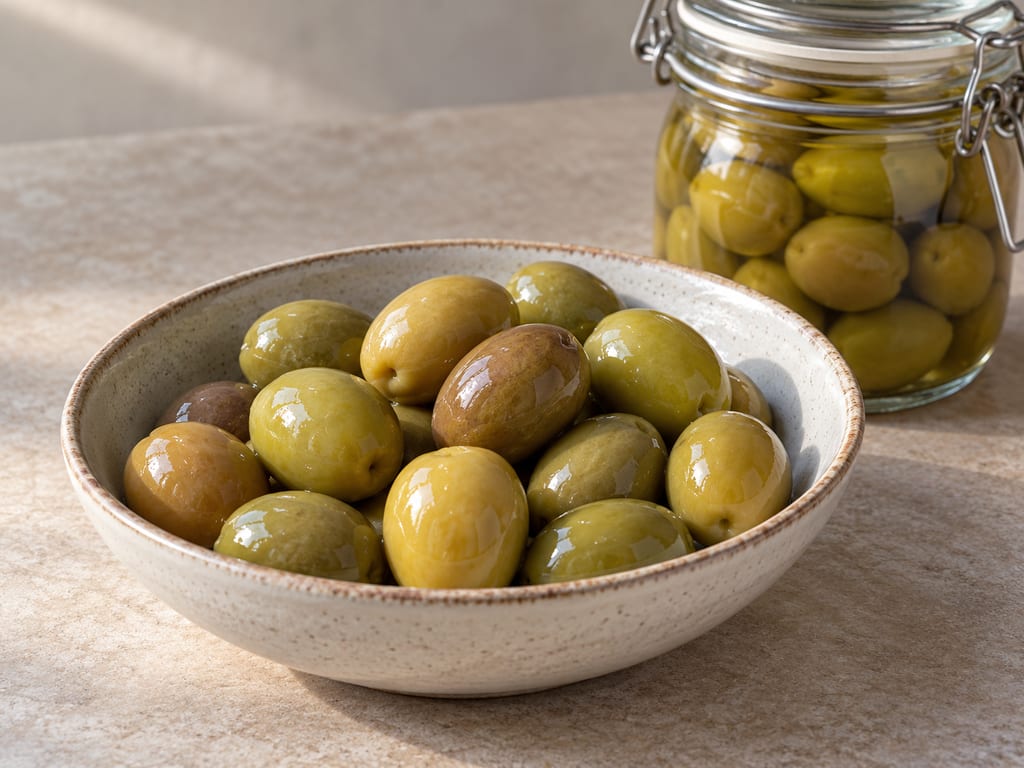
Green olives debittered in a sodium hydroxide solution, then rinsed repeatedly and held in brine, by the University of California's published home-pickling method.
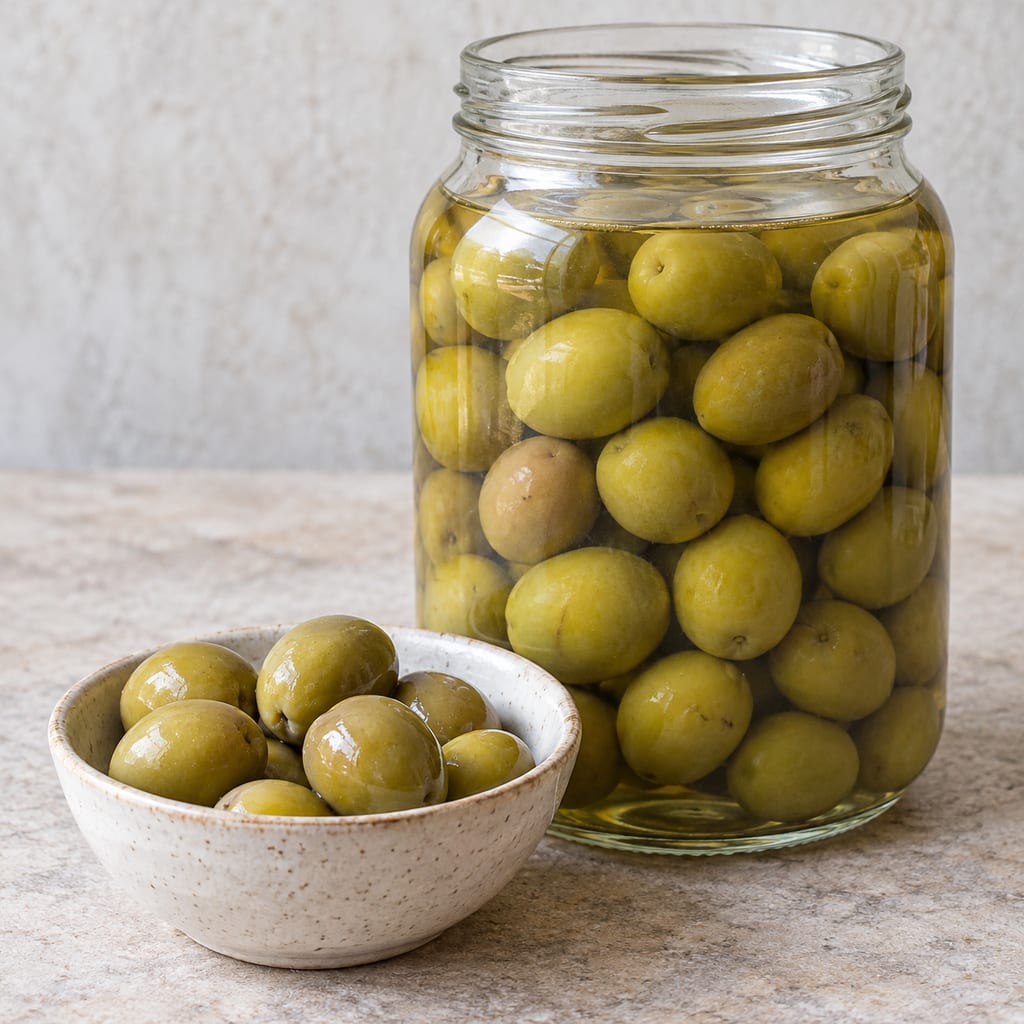
Green-ripe olives are fermented in seasoned, vinegar-adjusted brine; UC ANR gives size-dependent salt concentrations and multi-month handling.

A gelling polysaccharide extracted from red seaweeds, sold as kanten strips or powder; it sets firm at a low concentration and stays solid until about 85 °C.

Toasted almonds are whole sweet almond kernels dry-roasted until golden to brown. Heat replaces their marzipan note with a roasted, nutty one; they thicken and flavour romesco.
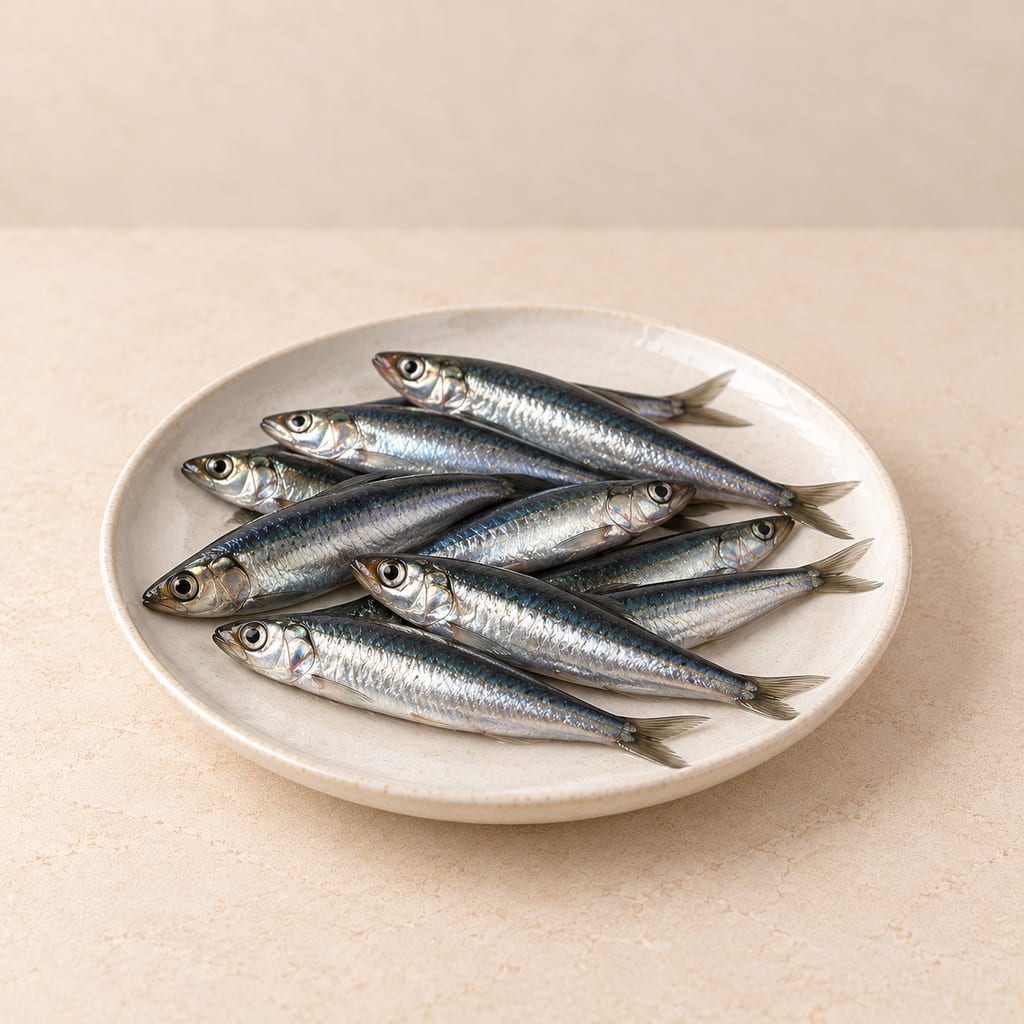
Anchovies are small schooling sea fish of the family Engraulidae, eaten fresh or dried and above all salted: as fillets in oil, whole salted fish or fish sauce.
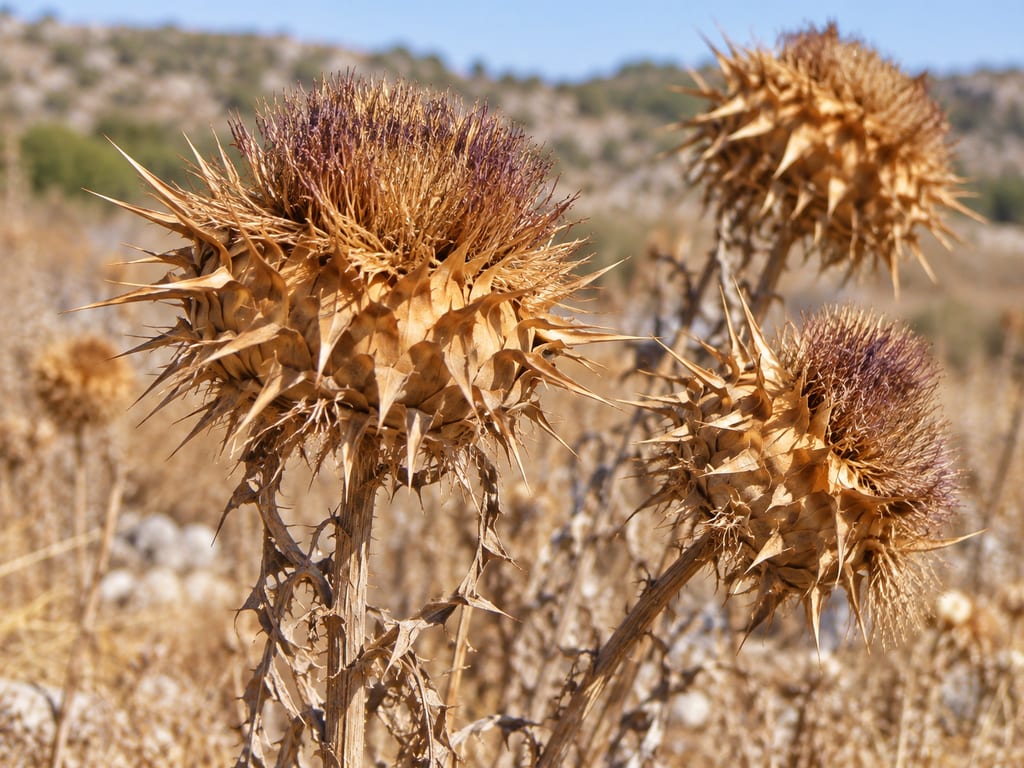
Dried flower heads of cardoon (Cynara cardunculus) supply plant proteases used to coagulate milk in several documented regional cheeses. Plant, extraction, milk and dose matter; evidence does not establish a universal home method.
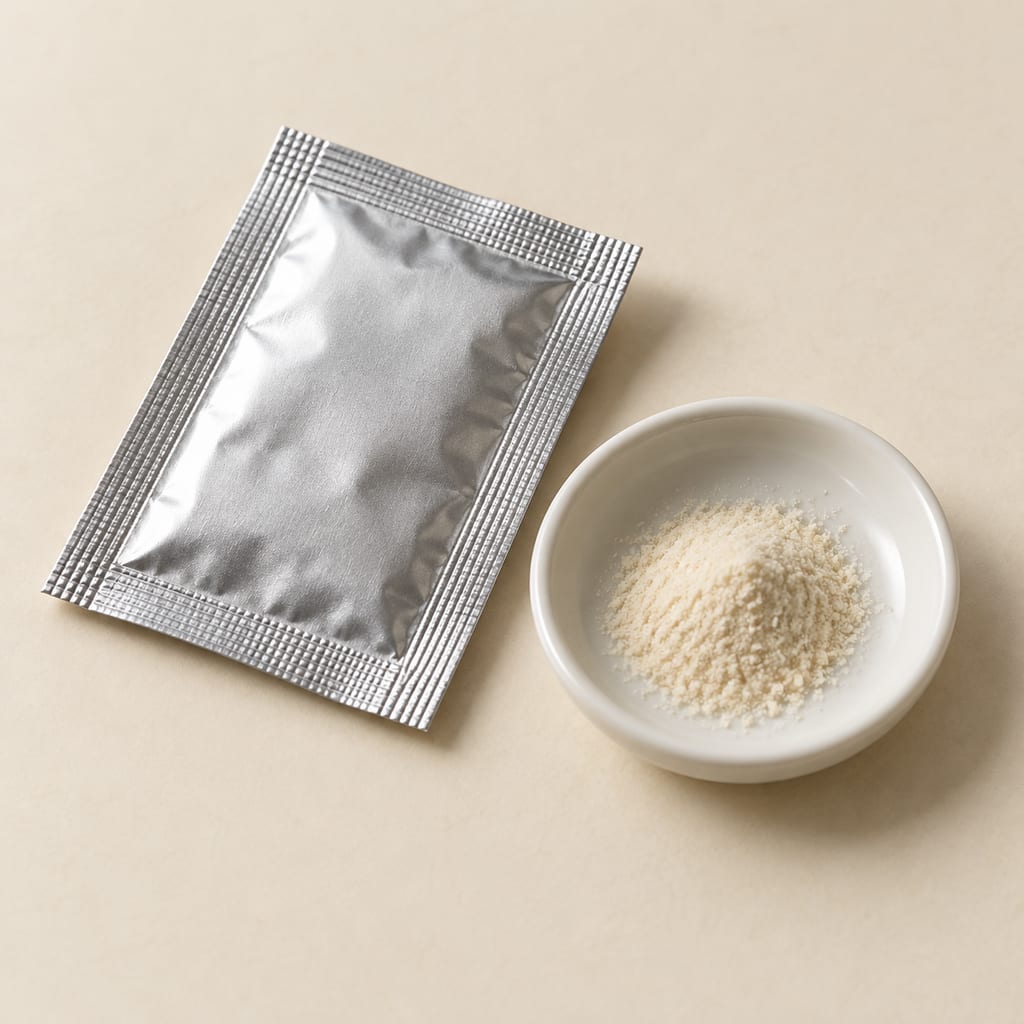
A defined vegetable lactic acid bacteria culture is a chosen strain or blend added to a vegetable ferment. Its effect depends on the strain, the vegetable, the salt level and the process.
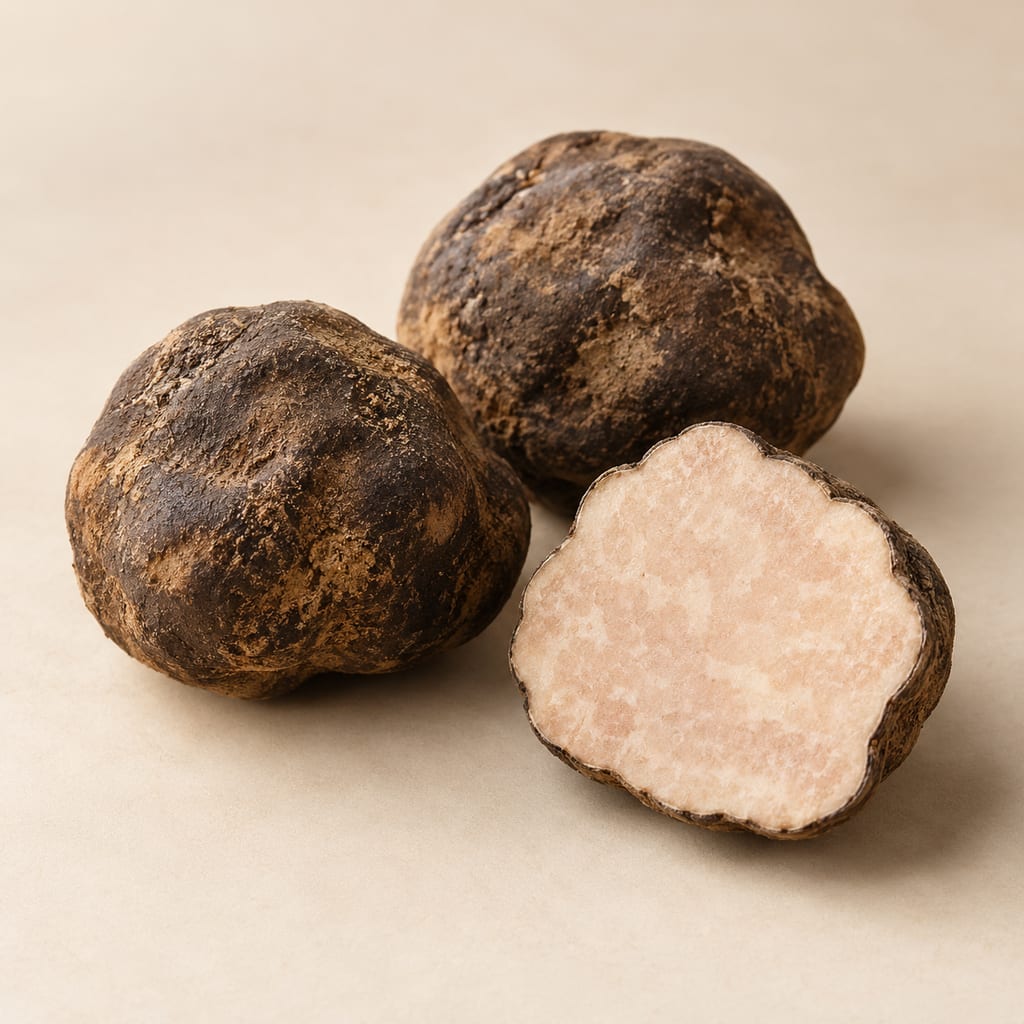
Desert truffle, Terfezia claveryi, is an underground fungus of dry Spanish and Moroccan ground that is gathered and sold seasonally, under names such as terfass, in local markets.
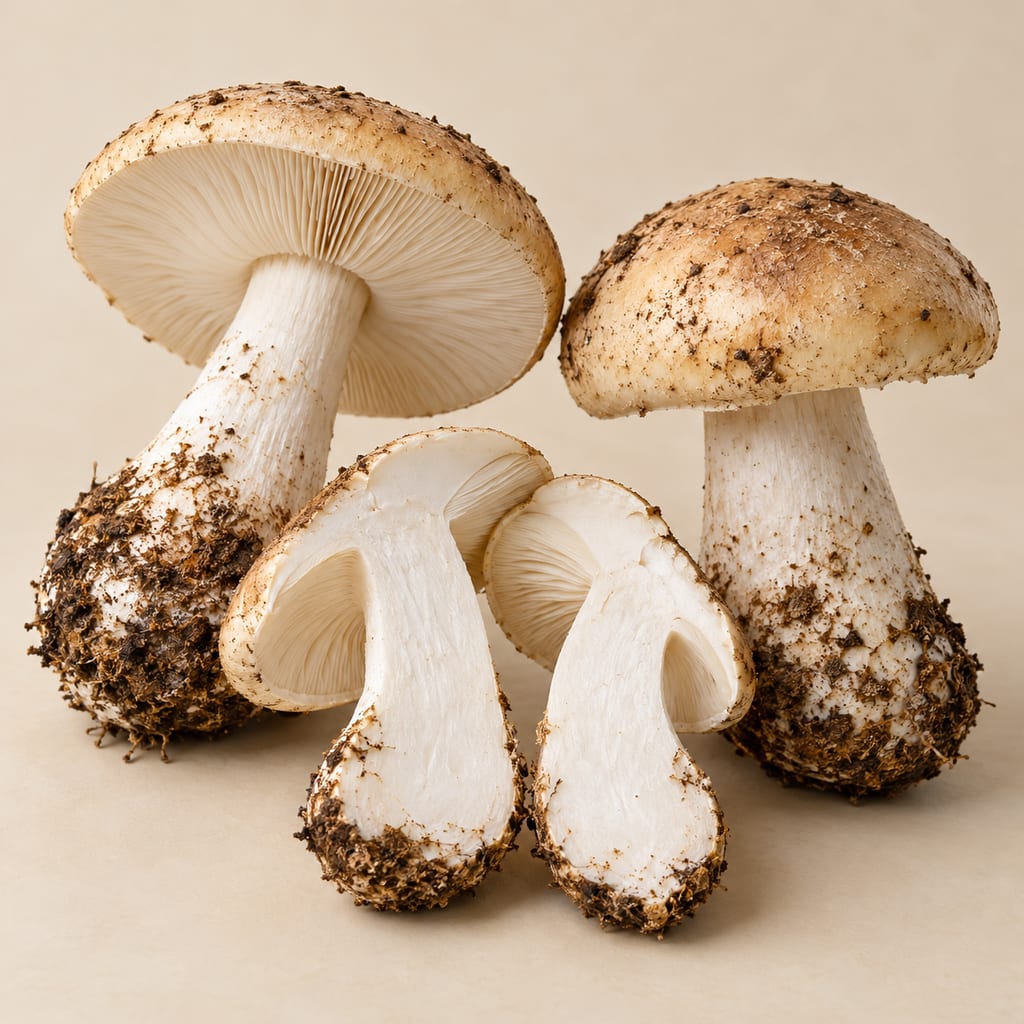
The Spanish name for a wild Amanita of the Iberian Peninsula. Spain’s 2009 mushroom decree lists it among wild species that may be sold fresh; it is a high-consequence identification.
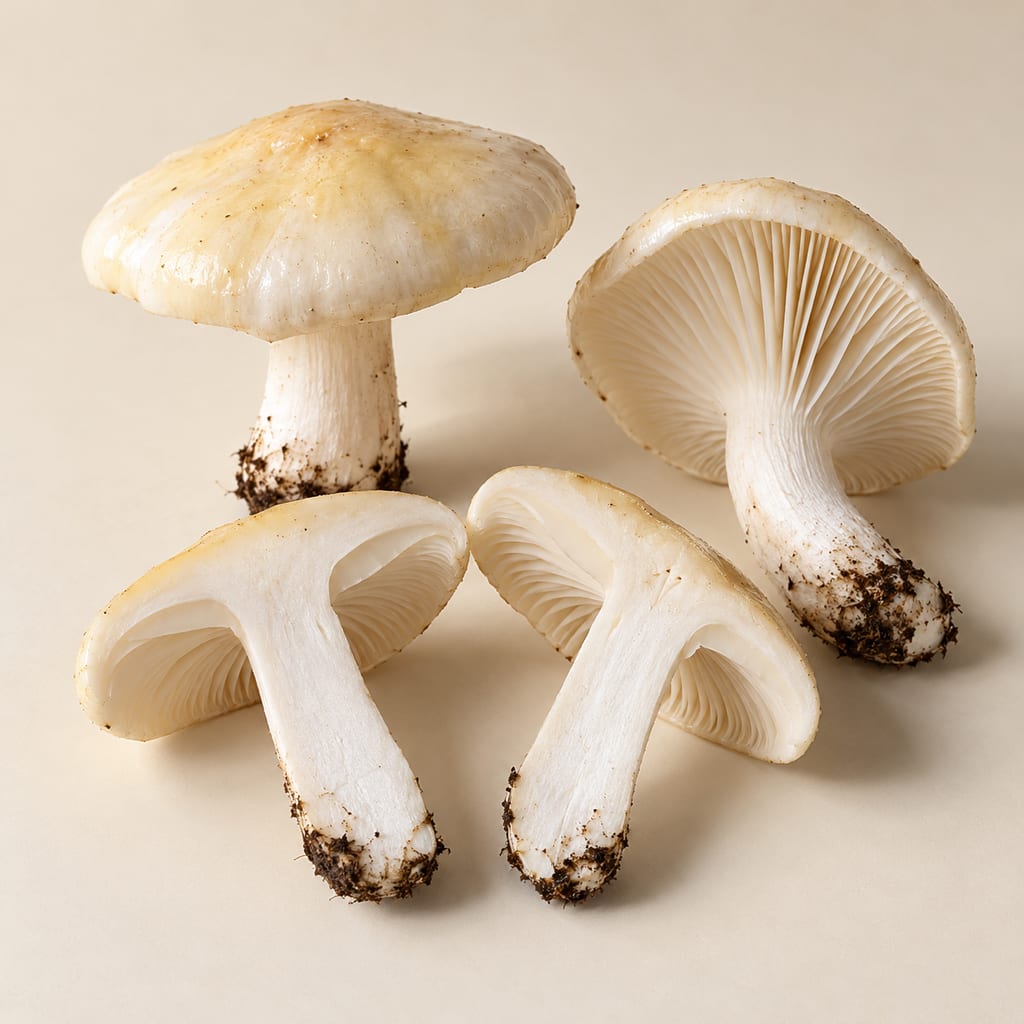
Hygrophorus gliocyclus is a slimy, cream-yellow wild woodwax of conifer woods. Spain lists it among wild mushrooms that may be sold fresh, and the sources read record little else about its food use.

At North Abydos in Egypt, a fixed early Dynastic brewery comprised parallel semi-subterranean installations with rows of ceramic mash vats; excavation reports revise their number, scale and estimated batch capacity.

Ají amarillo is the orange-yellow Peruvian chilli cultivar group of Capsicum baccatum, used to colour and season huancaína sauce and ají de gallina. Published heat estimates do not establish one range for the named cultivar.

Kodiak salmon, halibut and cod cut as seg'aq and hung on an initaq rack to become tamuuq, with kac'amaasaq and kupcuunaq named as different results.

Aniseed is the dried ripe fruit of Pimpinella anisum, an aromatic Apiaceae spice commonly called a seed. It adds a sweet, warm aroma to breads such as Moroccan krachel and South African mosbolletjies, and is distinct from star anise.

A fixed Late Chalcolithic installation in Areni-1 cave combined a shallow clay pressing basin with a large jar set into the cave floor and storage vessels nearby.

Ripe avocado flesh is the soft, buttery, fat-rich pulp of Persea americana, eaten raw. It is low in acid, so it is a fresh ingredient that needs care in chilled dishes.

A portable dome and pan used over a hearth, with embers on the lid and heat from below. Regional peka and saç forms share this principle while differing in materials, pan shape and how the food is cooked.
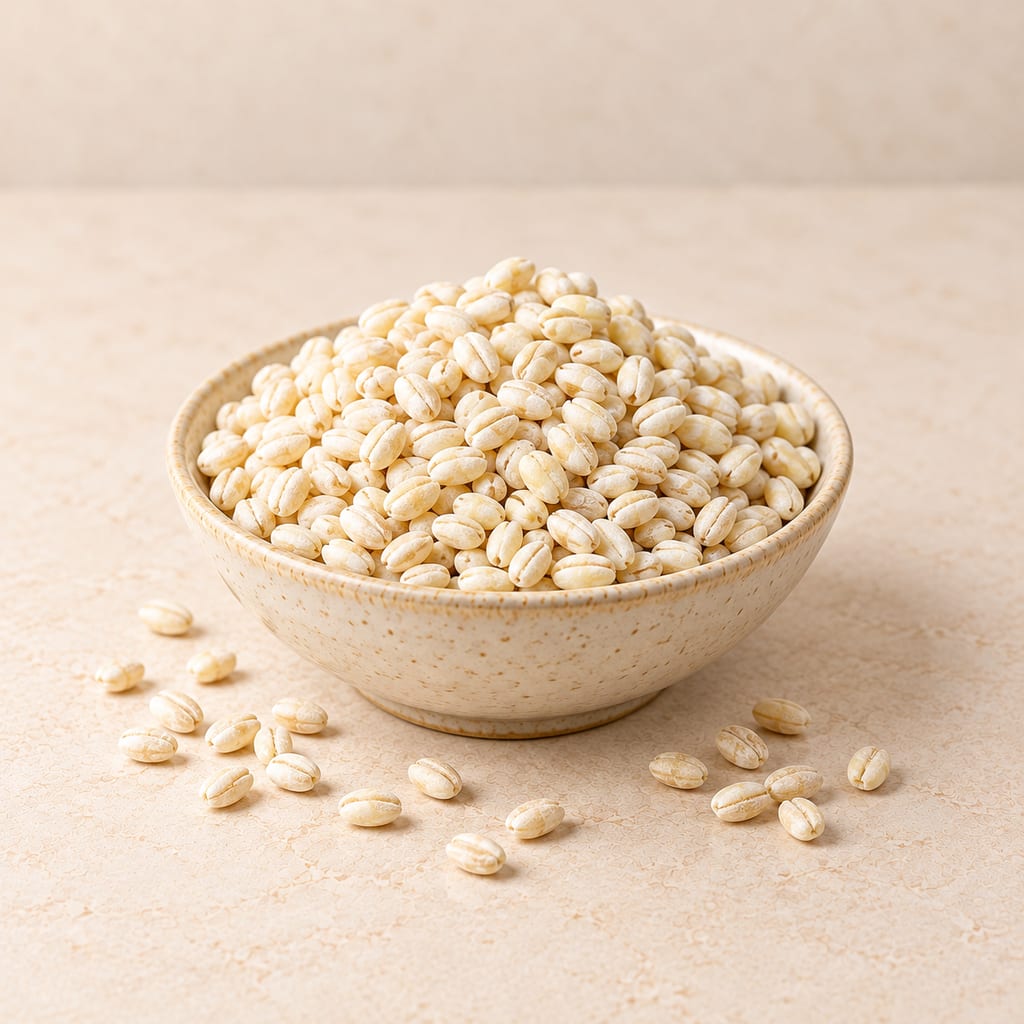
Barley is a hardy cereal, domesticated in the Middle East over 10,000 years ago, eaten whole, pearled or milled, malted for brewing, and grown with koji mold for barley miso.
No community contributions have been published for this entry yet.
Sign in to contribute. Published comments and photos are free to read.
WikipediaIdentity · History · Production · Nutrition
OliveOrigins, cultivation, trees and cultivars
Ripeness classes, harvest, oil share and production
Nutrition of cured green olives and olive oil composition
Cited in: A fruit that cannot be eaten from the tree; Where the olive came from; The harvest and the share that is cured; Oleuropein and how bitterness is removed; The microbes at work; Two named olives: Kalamata and Manzanilla; Choosing and handling olives
WikipediaMethod · Science
Table oliveCuring and fermentation overview, ripeness classes
Polyphenol and oleuropein figures
Cited in: A fruit that cannot be eaten from the tree; Oleuropein and how bitterness is removed; Curing methods; Choosing and handling olives
WikipediaMethod · Fermentation
Fermentation and curing of olivesSpanish, Sicilian or Greek, Picholine, water-cured, dry-salt and Californian methods with lye and brine strengths
Lactic acid bacteria and yeasts involved
Cited in: Oleuropein and how bitterness is removed; Curing methods; The microbes at work; Choosing and handling olives
WikipediaScience
OleuropeinStructure of oleuropein, hydrolysis by lye, enzymes, blackening and ferrous gluconate
Cited in: Oleuropein and how bitterness is removed
Food and Agriculture Organization of the United NationsMethod · Fermentation
Fermented fruits and vegetables: a global perspective, Chapter 6: Typical products of bacterial fermentationsGreen olives treated with 2 percent lye then fermented in 1 to 10 percent brine for 2 to 3 months at about 24 degrees Celsius
Black olives fermented in 2 to 5 percent brine for 2 to 6 weeks and exposed to air
Cited in: Oleuropein and how bitterness is removed; Curing methods
WikipediaSafety
PicklingPickled olives retain nutrients but can be high in sodium
Cited in: The microbes at work
WikipediaUse · Identity
Kalamata oliveKalamata description, protected name and curing methods
Cited in: Two named olives: Kalamata and Manzanilla
WikipediaUse · Identity
Manzanilla oliveManzanilla origin, uses and the Californian black-ripe method
Cited in: Two named olives: Kalamata and Manzanilla