
Agar / kanten
A gelling polysaccharide extracted from red seaweeds, sold as kanten strips or powder; it sets firm at a low concentration and stays solid until about 85 °C.
 FermenteaWhere food goes to change
Mushrooms
The Spanish name for a wild Amanita of the Iberian Peninsula. Spain’s 2009 mushroom decree lists it among wild species that may be sold fresh; it is a high-consequence identification.
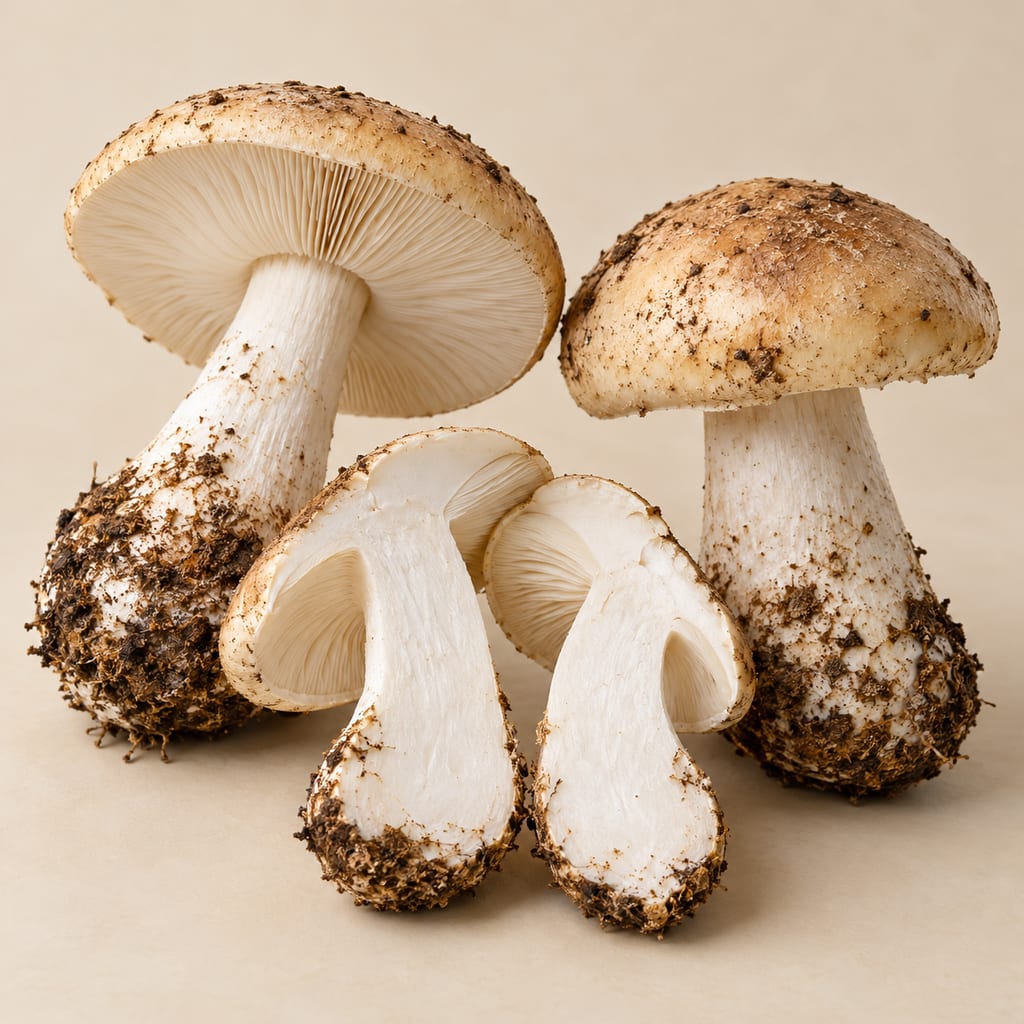
Gurumelo is the Spanish name for Amanita ponderosa, a wild agaric of the family Amanitaceae. It sits in the subgenus Amanitina and the section Amidella. The species was described by Malençon and R. Heim in 1944, and its English common name is heavy amidella.
The supplied record calls it a prized spring mushroom of Mediterranean tree-associated woodland on the Iberian Peninsula. Spain’s Real Decreto 30/2009 lists the species in Part A, the wild species that may be sold fresh, under the decree’s rules for mushrooms sold for food.
The decree does not describe a preparation for the species, and the sources read here do not record one.
The same decree bans sale for human consumption of any mushroom considered poisonous or suspected of being so. It lists Amanita caesarea only with the volva open, and it bans Amanita muscaria, A. phalloides and A. virosa in any form. Its preamble says that mistaking similar species is the main cause of mushroom poisoning in Spain.
Amanita ponderosa belongs to a genus with fatal species, and the decree’s own preamble points to mistaken identity as the cause of most poisonings. This page gives no identification features and no verdict on any specimen.
Gather or eat no wild fungus on the strength of a catalogue listing, a description or a photograph. Identification needs a qualified expert, and the sources read here do not establish a safe preparation. Eat a wild Amanita only after a qualified local expert has confirmed the species.
The sources read here do not establish its preparation, the stage at which it is eaten, its tree partners, or the reach of its trade. Spanish and Portuguese regional mycological and culinary sources would be needed to answer those.
Listed in Part A of Real Decreto 30/2009 as a wild species that may be sold fresh.
Regional food-use record from the supplied research; the region is not a national legal unit.
A gelling polysaccharide extracted from red seaweeds, sold as kanten strips or powder; it sets firm at a low concentration and stays solid until about 85 °C.

Toasted almonds are whole sweet almond kernels dry-roasted until golden to brown. Heat replaces their marzipan note with a roasted, nutty one; they thicken and flavour romesco.
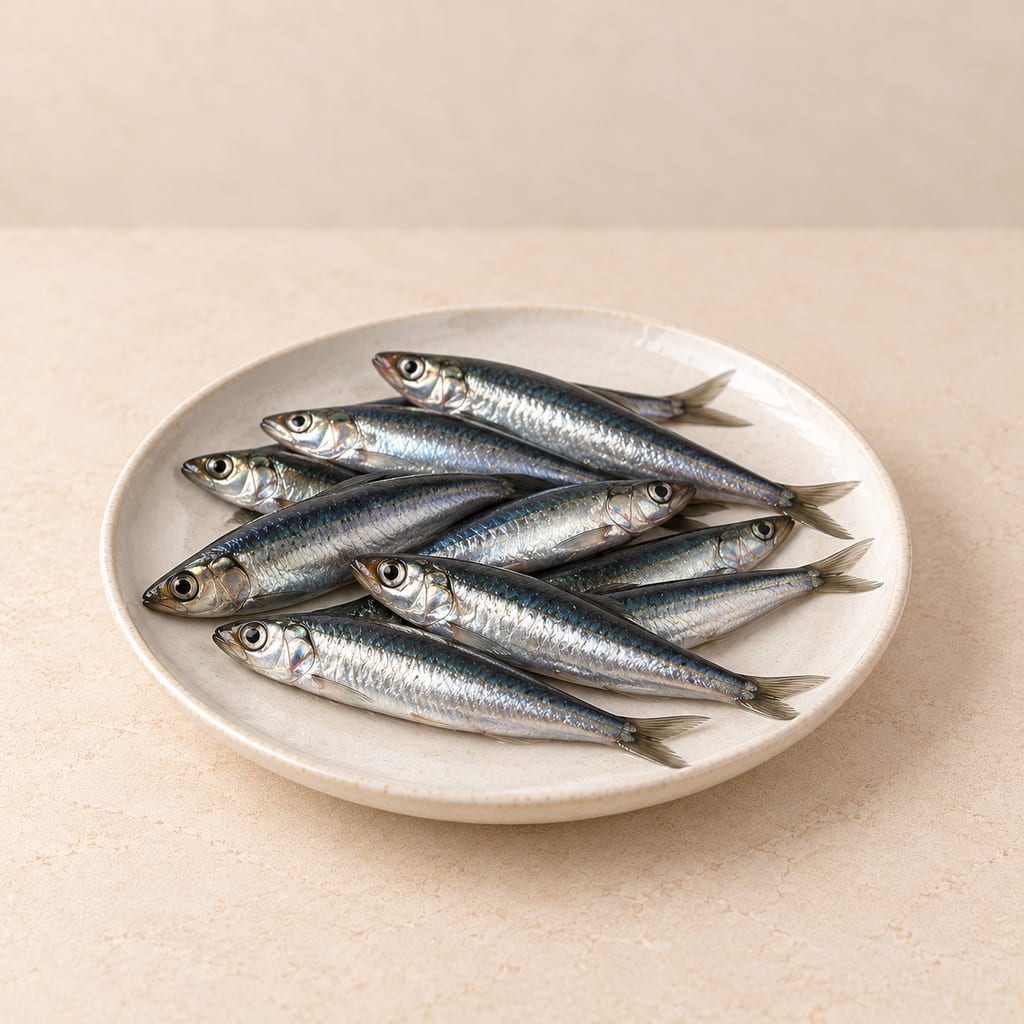
Anchovies are small schooling sea fish of the family Engraulidae, eaten fresh or dried and above all salted: as fillets in oil, whole salted fish or fish sauce.
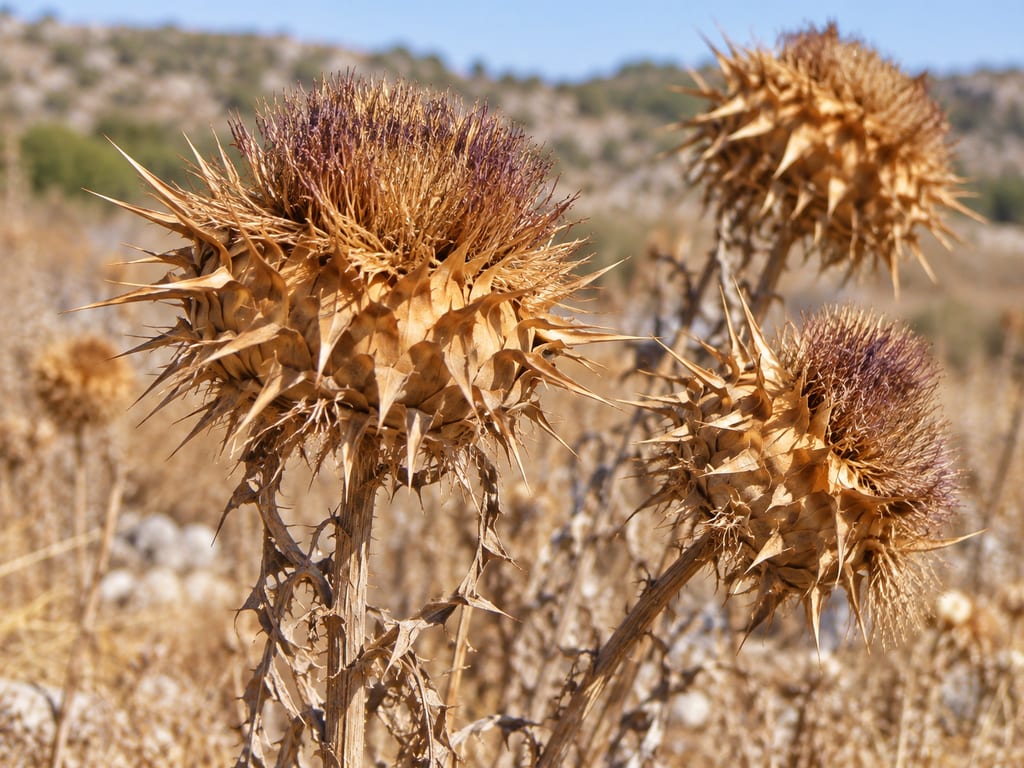
Dried flower heads of cardoon (Cynara cardunculus) supply plant proteases used to coagulate milk in several documented regional cheeses. Plant, extraction, milk and dose matter; evidence does not establish a universal home method.
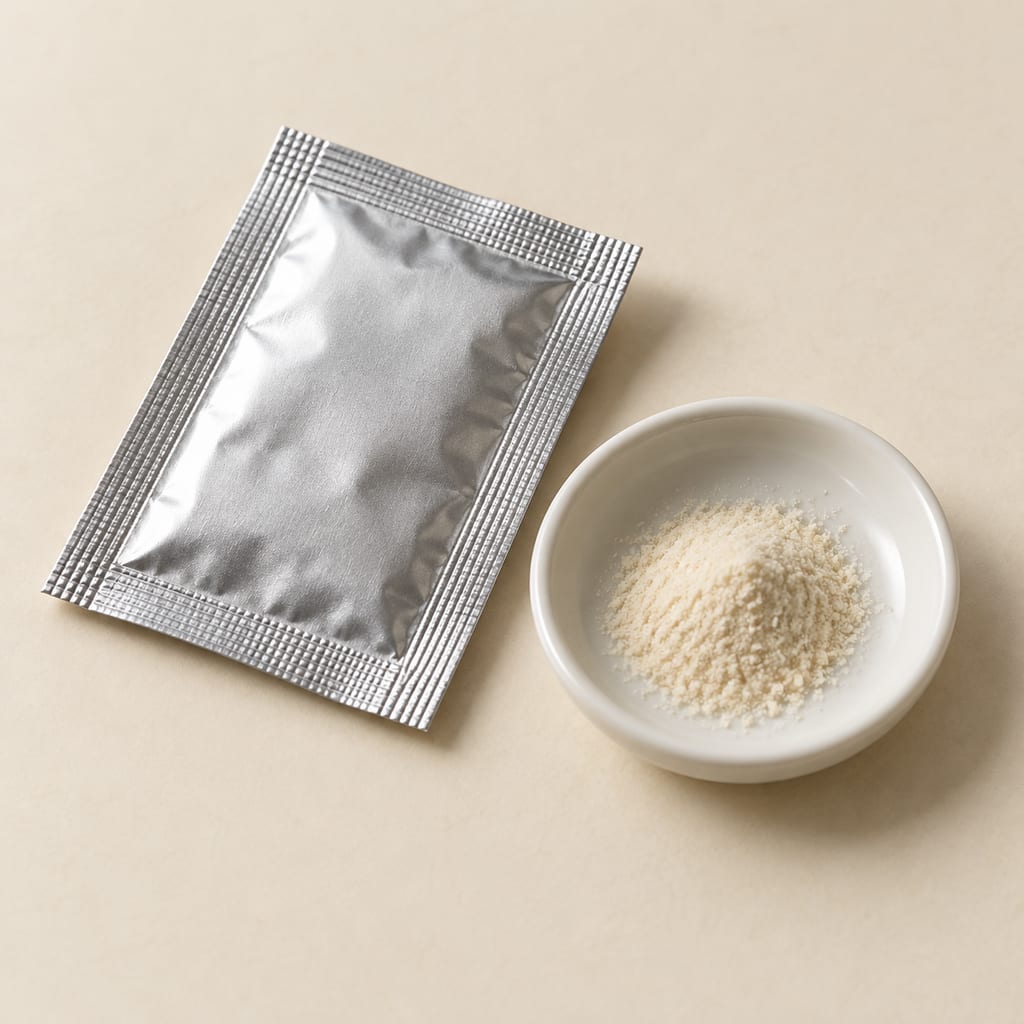
A defined vegetable lactic acid bacteria culture is a chosen strain or blend added to a vegetable ferment. Its effect depends on the strain, the vegetable, the salt level and the process.
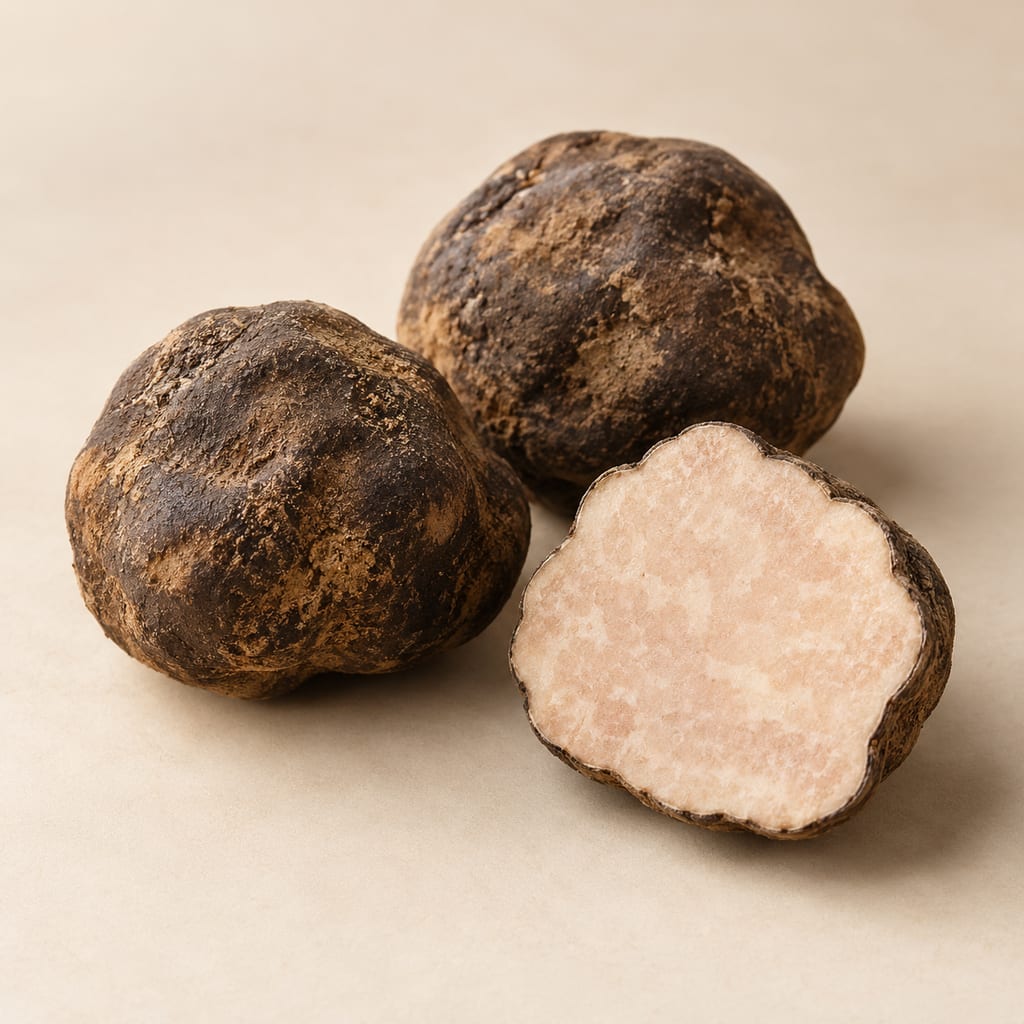
Desert truffle, Terfezia claveryi, is an underground fungus of dry Spanish and Moroccan ground that is gathered and sold seasonally, under names such as terfass, in local markets.
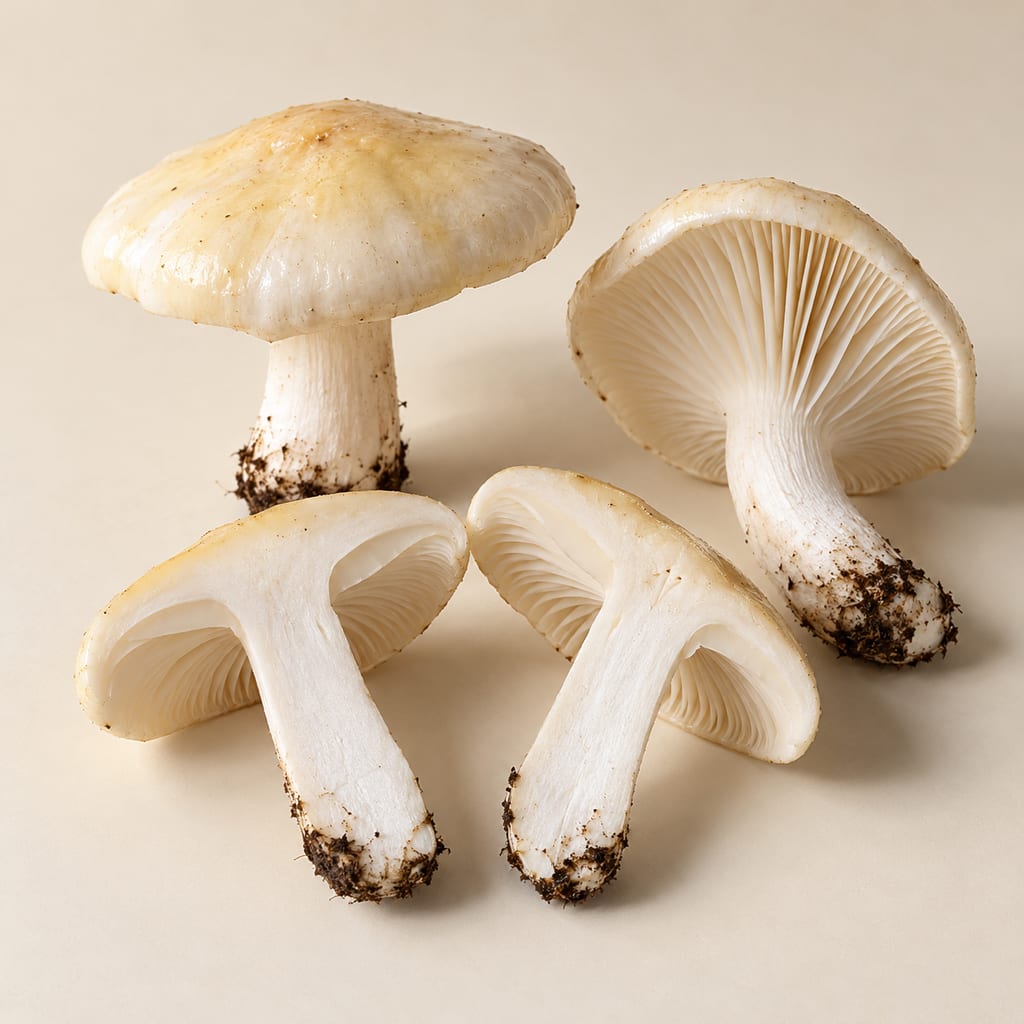
Hygrophorus gliocyclus is a slimy, cream-yellow wild woodwax of conifer woods. Spain lists it among wild mushrooms that may be sold fresh, and the sources read record little else about its food use.
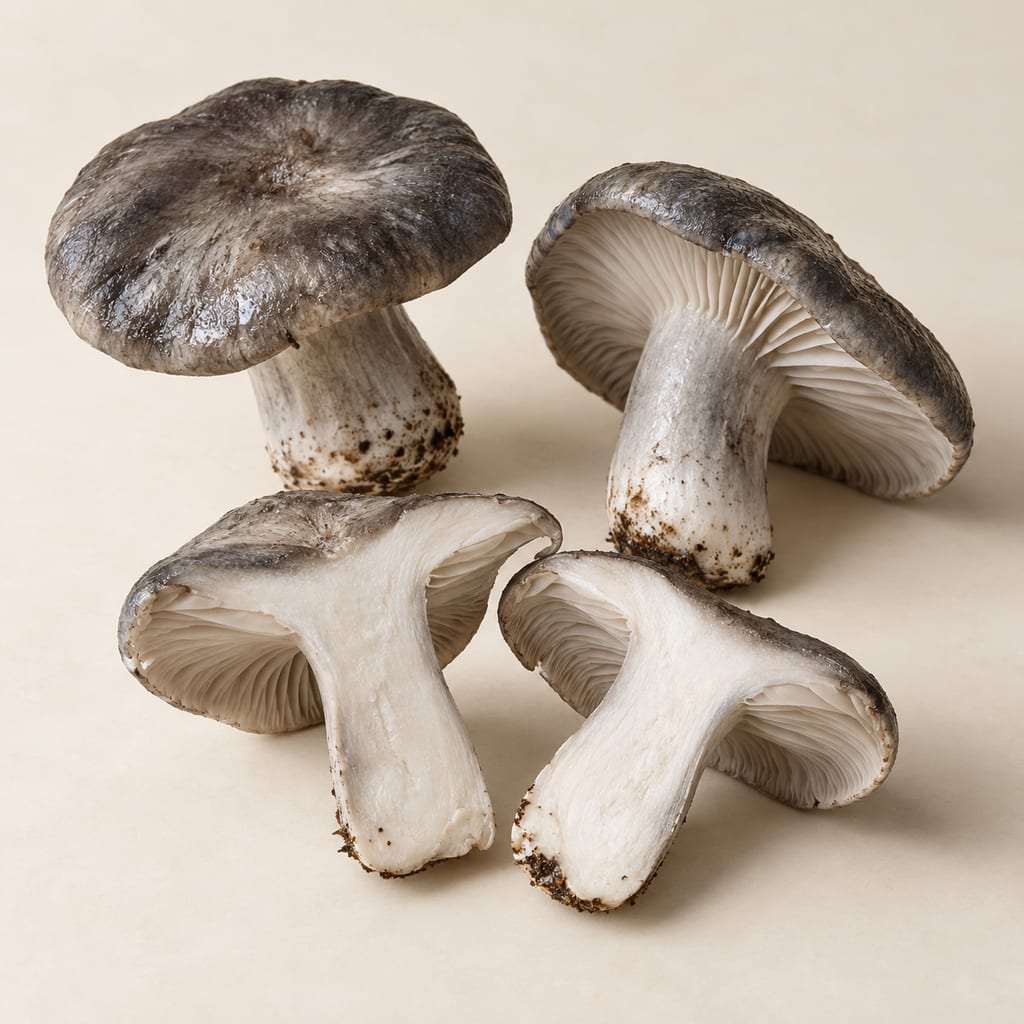
A European mountain mushroom associated with old conifer and mixed forests. It is valued as an early spring edible, but its vulnerable status and local collection rules matter.
No community contributions have been published for this entry yet.
Sign in to contribute. Published comments and photos are free to read.
Boletín Oficial del EstadoSafety · Method
Real Decreto 30/2009, de 16 de enero, por el que se establecen las condiciones sanitarias para la comercialización de setas para uso alimentarioPart A lists wild species that may be sold fresh; Part D bans Amanita muscaria, A. phalloides and A. virosa; Amanita caesarea only with the volva open; the preamble says mistaken identity is the main cause of mushroom poisoning in Spain
Cited in: Regional food use; Legal frame for Amanita; Identification risk; Open questions
WikipediaHistory
Amanita ponderosaAuthority Malençon and R. Heim (1944); subgenus Amanitina, section Amidella; common names heavy amidella and gurumelo
Cited in: Overview