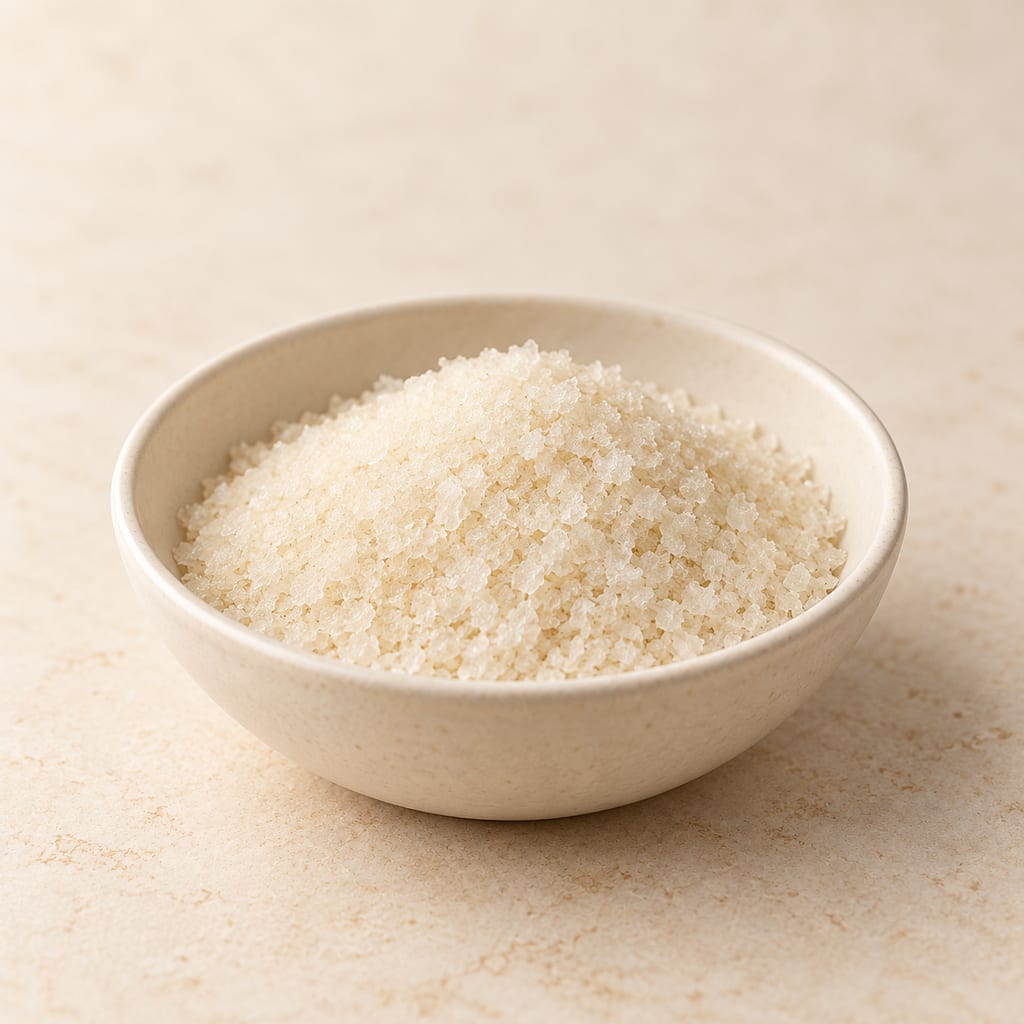
Gelatin
Gelatin is animal collagen partly broken down to dissolve in hot water and set as a gel on cooling, used for jellies and sweets and to fine beer and wine.
 FermenteaWhere food goes to change
Coagulants
A gelling polysaccharide extracted from red seaweeds, sold as kanten strips or powder; it sets firm at a low concentration and stays solid until about 85 °C.

Agar is a jelly-making substance extracted from the cell walls of red seaweeds. It is a mixture of two polysaccharides, agarose, a linear polymer that makes up about 70 per cent and does the gelling, and agaropectin, a more varied group of smaller molecules with acidic side groups such as sulfate, which makes up about 30 per cent. The backbone of agarose is a repeating unit of 1,3-linked beta-D-galactopyranose and 1,4-linked 3,6-anhydro-alpha-L-galactopyranose. Agarose can be separated from the agaropectin and purified, and that fraction, a small corner of the market at about 0.2 per cent of sales, goes to laboratories.
It reaches the kitchen in two forms. Natural agar, the product of the Japanese tradition, is sold as white, semi-translucent strips or squares made by freezing, thawing, draining and drying the extract. Industrial agar is a fine powder, generally 60 to 100 mesh. The Japanese name for the strips, kanten (寒天), comes from kanzarashi tokoroten, meaning cold-exposed tokoroten, the seaweed jelly the agar was first made from; agar itself is a Malay word that Europeans adopted.
Agar is the seaweed counterpart of gelatin, which is an animal protein. It differs from carrageenan, another red-seaweed gel, in the shape of its helices: agar’s double helix is left-handed, carrageenan’s right-handed. And it differs from konnyaku, the konjac gel, in that agar melts again when reheated and sets again on cooling, while konnyaku does not.
Agar is attributed to an innkeeper, Minoya Tarozaemon, in Japan in 1658. The story is that he put out leftover tokoroten, a seaweed jelly, in the winter cold, and found that, frozen and dried, it gave a whiter and lighter product. Whatever the truth of the legend, the technique it describes is the real method of making kanten. Industrial dry production began in the early eighteenth century, and the product became known as kanten.
Agar then moved into science. The French chemist Anselme Payen made the first chemical analysis in 1859. Robert Koch began to use agar for solid culture media in 1881 or 1882, depending on the account, following the suggestion of Fanny Hesse, wife of his assistant Walther Hesse. Agar replaced gelatin as the medium because of its higher melting temperature, which let cultures be incubated near body temperature. In the twentieth century Matsuoka registered freezing-process patents in the United States in 1921 and 1922, and H. H. Selby and C. K. Tseng developed the classic American method in California before the Second World War.
Japan made most of the world’s agar until the war. Production was about 2,500 tonnes a year around the war and reached about 10,000 tonnes by the mid-1970s, since when it has fluctuated because wild seaweed stocks are unstable and sometimes over-harvested. A 1984 table counts 6,683 tonnes in total, 3,158 of them from Gelidium, with Japan at 2,440 tonnes, Spain at 890 and Chile at 820.
Gelidium is regarded as the genuine source of agar, and the other agarophytes, the seaweeds that carry agar, are Gracilaria, Pterocladia and Gelidiella. The two main kinds of seaweed divide the market: Gelidium agar is used mainly for bacteriological plates, and Gracilaria agar mainly for food. A cultivated genus, Hydropuntia (formerly placed in Gracilaria), supplies most of the world’s agar: its agar content is 19 to 30 per cent of dry weight, about 3.6 million tonnes of the fresh seaweed were harvested in 2019, which put it third among seaweed genera, and Hydropuntia alone accounts for 66 to 80 per cent of global agar production. It is grown on rafts and nets, with nets harvested after about three months at 15 to 20 kilograms a net, and it can grow in abandoned shrimp ponds, where it takes up dissolved nutrients from the feed. Red seaweed production reached 18.3 million tonnes a year after 2019.
Making agar means freeing the polysaccharide from the cell wall, clarifying it and removing the water. The seaweed is first treated with alkali. Gelidium is typically diffused in sodium carbonate at about 80 to 95 degrees Celsius, while Gracilaria is given a sodium hydroxide treatment, commonly 0.1 molar, to raise the gel strength. In experiments on other Gelidium species, gel strength rose as the alkali concentration rose, and a strong alkali treatment also lowered the sulfate content of the agar, to 0.175 per cent at 10 per cent sodium hydroxide, and raised its melting temperature to 96.5 degrees.
The extract is then kept near boiling, with its pH adjusted, at a concentration of about 0.8 to 1.5 per cent agar. It is filtered at 85 to 100 degrees, usually in pressure filters, and set into a gel. Concentration by freezing and thawing follows: the frozen gel is thawed, the water drains off and the gel reaches about 11 to 12 per cent agar, at most about 15 per cent; syneresis under pressure can reach about 25 per cent. Drying completes the product. Freezing needs about 11,477 kilocalories per kilogram of agar against 53,361 for evaporating the same water, which explains why freezing is used for concentration.
Quality is measured as gel strength: the load in grams per square centimetre that breaks a standard 1.5 per cent gel in 20 seconds. Industrial agar ranges from 600 to 1,100 grams per square centimetre, with normal quality at 700 to 800. Oriental natural agar, in strip or square form, typically ranges from 150 to 400. Food-grade agar should have moisture below 18 per cent, ash below 5 per cent, gel strength above 750 and fewer than 10,000 bacteria per gram.
Agar gels because of a coil-to-helix transition. Heated above its melting range of 85 to 95 degrees Celsius, the agarose chains lie as loose coils in solution. As the solution cools, the chains twist into ordered double helices stabilised by hydrogen bonds, and as cooling continues the helices aggregate into a three-dimensional network that traps a large amount of water. A 1.5 per cent solution gels at about 32 to 43 degrees and does not melt below 85. That gap, called hysteresis, between setting and melting is the property that matters: the gel stays solid at room temperature and well above it, and a gel that has set can be incubated near body temperature, where gelatin would melt.
Several conditions shift the result. A higher concentration gives a stronger, denser gel, sugars strengthen it, and strongly acid conditions can hydrolyse agarose chains and weaken it. Agar gels are stable across pH 5 to 8 and need no added cations to set. The gel is clear, rigid, loses little water by syneresis and holds water well, and it resists enzymatic degradation. Because most organisms cannot digest agar, the gel stays intact where microbes grow on it. That is the other reason bacteriology adopted it.
Agar has a double life in fermentation. In the laboratory it is the solid medium on which microbes are isolated and counted, sold as bacteriological agar, which makes up 4 to 5 per cent of agar sales; the agarose fraction is about 0.2 per cent of the market. In the kitchen it is a texture ingredient: as a food it is an additive, not a nutrient, used at up to 1 per cent for gelling and at a hundredth of that or less for controlling viscosity.
Food uses include confectionery, jellies, marmalade, mitsumame, bakery icings, yoghurt, meat products and aspics. In dairy it is a texture enhancer, and it reduces syneresis in drinks of grass jelly, where replacing 20 per cent of the original gel with agar markedly cut the water that separated. It also forms edible films that have been tested as wrappers. It is about 80 per cent dietary fibre and swells in the stomach, which fuelled the Asian kanten fad diets. Cooks have also blended it with gelatin to make mixed gels with a medium texture, and agar is used alone in formulations that need a gel that holds up at low pH and binds moisture.
On the plate, the choice of medium matters as much as the gel. Agar plates can be selective or indicator media, such as MacConkey agar and TCBS agar, in which the agar carries the nutrients and reagents that decide what grows and how it looks.
In Japan, agar is a pantry ingredient with a clear division of labour. Tokoroten, the noodle-like strands of seaweed jelly, is made by boiling agarophyte seaweed, traditionally tengusa (Gelidium amansii), letting it set and pressing it through an extruding device. It has been eaten in Japan for over a thousand years, is thought to have come from China in the Nara period, and in the Edo period was sold around factories as a summer snack. Today it is dressed with vinegar and soy sauce, sometimes with nori, hot pepper or sesame, and in the Kansai region it is eaten as a dessert with kuromitsu syrup. Commercial kanten is now mostly made from ogonori (Gracilaria) rather than tengusa.
Kanten also sets sweet jellies. Mizu yokan, the water yokan, has more water than usual and is usually chilled and eaten in summer, although Fukui Prefecture traditionally eats it in winter. Red bean paste is the typical base, white kidney bean paste gives a milder, translucent version that can be flavoured with green tea powder, and other versions use chestnut, persimmon or sweet potato. Agar is one of its main ingredients, with sugar and bean paste, and its invention in the 1600s was essential to the modern sweet. Anmitsu is a dessert of agar cubes served with fruit, and Japanese kanten later reached Manchuria, Korea and Taiwan.
In the Philippines the same job is done by gulaman, sold as foot-long bars, plain or coloured, or as powder, and made from agar or from carrageenan. Unlike gelatin, it needs boiling water to dissolve, and it sets at room temperature. It sets sago at gulaman, the roadside refreshment, and goes into buko pandan, agar flan, halo-halo and fruit salads. Vietnam has thach, or rau cau, and agar jellies are used in Taiwanese bubble tea.
Agar is dissolved in boiling water. It does not dissolve in cold water, and that is the main practical difference from gelatin. The gelling level is up to 1 per cent of the mixture: a 1.5 per cent solution gels at about 32 to 43 degrees Celsius, and bacteriological agar at 10 to 11 grams per litre gels at 32 to 36 degrees and does not melt below 85 to 86. Sweeteners and flavourings are stirred into the hot solution, which is then poured into moulds and set by cooling into a clear, firm gel. Because the gap between setting and melting is so wide, a jelly sets at room temperature without a refrigerator and keeps its form on a warm table, and a set gel can be reheated to a liquid and set again.
Agar needs no added calcium or other cations to set, and the gel is stable across pH 5 to 8. Sugar strengthens it, while strongly acid conditions can hydrolyse the agarose chains and weaken it, so a very sour mixture boiled for a long time gives a softer gel than a neutral one. Its texture is firmer than that of gelatin desserts, and cooks have blended the two to get a medium texture. The form matters: oriental natural agar in strips or squares rates 150 to 400 grams per square centimetre in the standard gel-strength test against 600 to 1,100 for industrial powder, with 700 to 800 normal, and the powder is ground to 60 to 100 mesh. A recipe written for strips therefore cannot be assumed to work gram for gram with powder. Agar is not an animal product, so it serves as the vegetarian counterpart of gelatin. No allergen is documented for agar, and no household shelf life is established.
The date of Koch’s first use of agar is given as 1881, or as 1882 with Walther Hesse introducing it. Gelling temperatures are quoted as 32 to 42, 32 to 43 and 32 to 45 degrees Celsius, and the spelling of the legendary innkeeper’s name varies.
Agar is attributed to an innkeeper in Japan in 1658; kanten is the traditional product. No locality is claimed.
Second-largest producer in the FAO 1984 table, 890 tonnes.
Third-largest producer in the FAO 1984 table, 820 tonnes.
Hydropuntia agarophytes are cultivated in Southeast Asian waters; the Philippines and Vietnam have agar jellies (gulaman, rau cau).
India relies on wild harvest of Gelidiella acerosa, 500 to 600 tonnes of dry wild agarophytes a year, and imports agar.
Gelatin is animal collagen partly broken down to dissolve in hot water and set as a gel on cooling, used for jellies and sweets and to fine beer and wine.
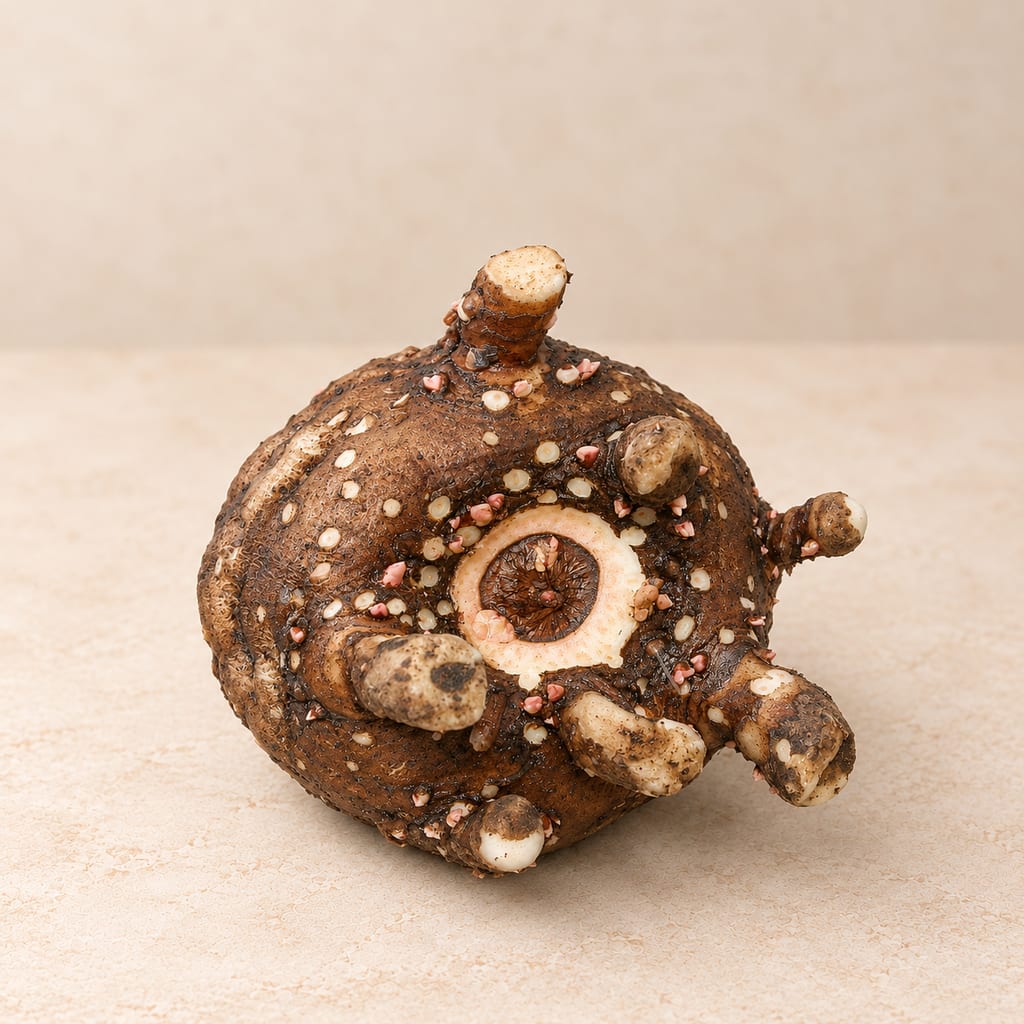
The toxic corm of Amorphophallus konjac and the glucomannan flour milled from it, which sets into a firm, heat-stable konnyaku gel when cooked with limewater.
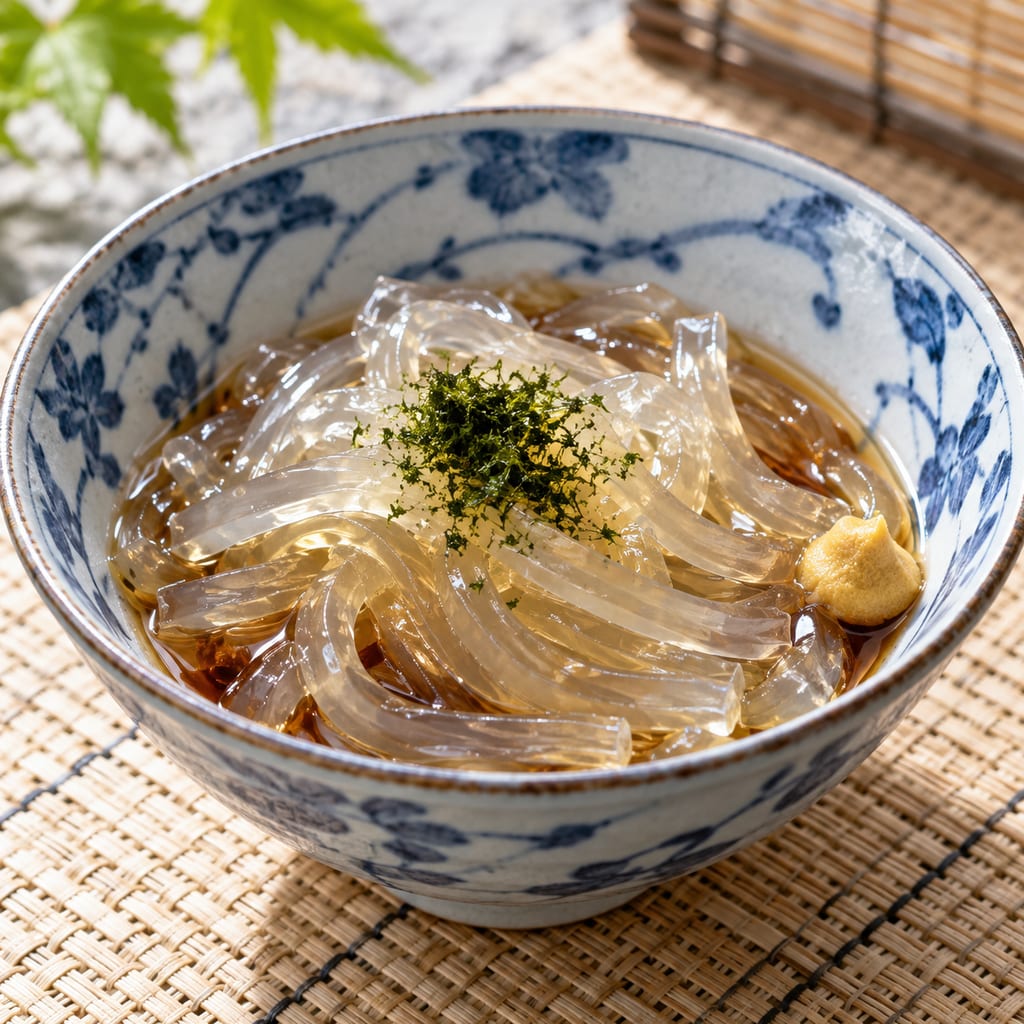
A Japanese jelly made by boiling agar-rich red seaweed, straining the extract and letting it set, then pressing it into strands served with vinegar-soy sauce or sweet syrup.
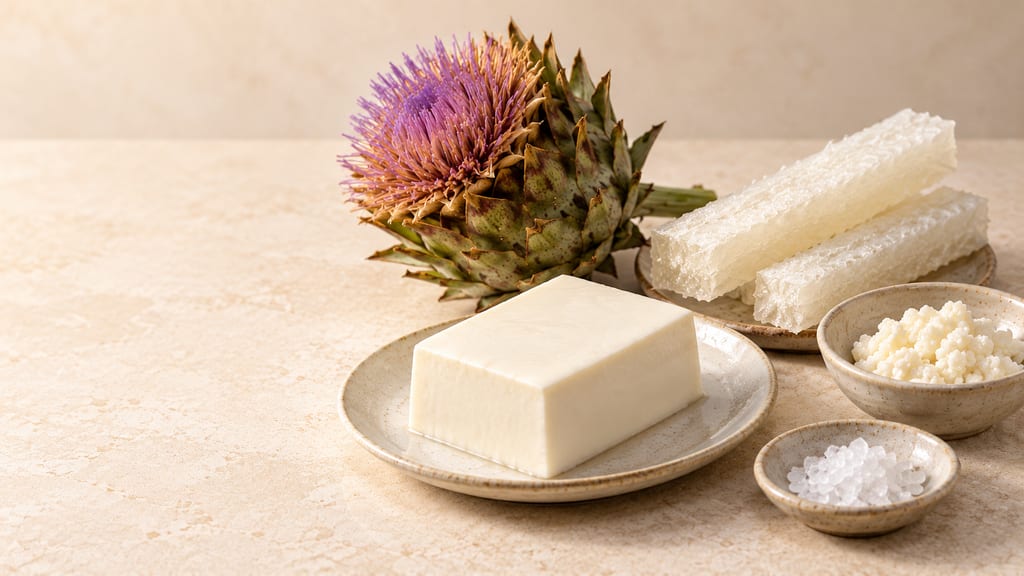
Cheese, tofu, agar, nixtamal and cured ham all begin with a liquid or soft food made to set, sour or keep. Rennet is one branch of that history, beside plant enzymes, acids, minerals, alkalis, gels, finings and curing salts.

Akahatsu, Lactarius akahatsu, is a wild milkcap of East Asian pine and mixed forests that is sold in Yunnan markets, with its edibility and identity still needing species-level review.

The almond mushroom, Agaricus subrufescens, was cultivated in eastern North America in the 1800s, lost its market, and returned as a cultivated mushroom from Brazil, where it is grown under several names.
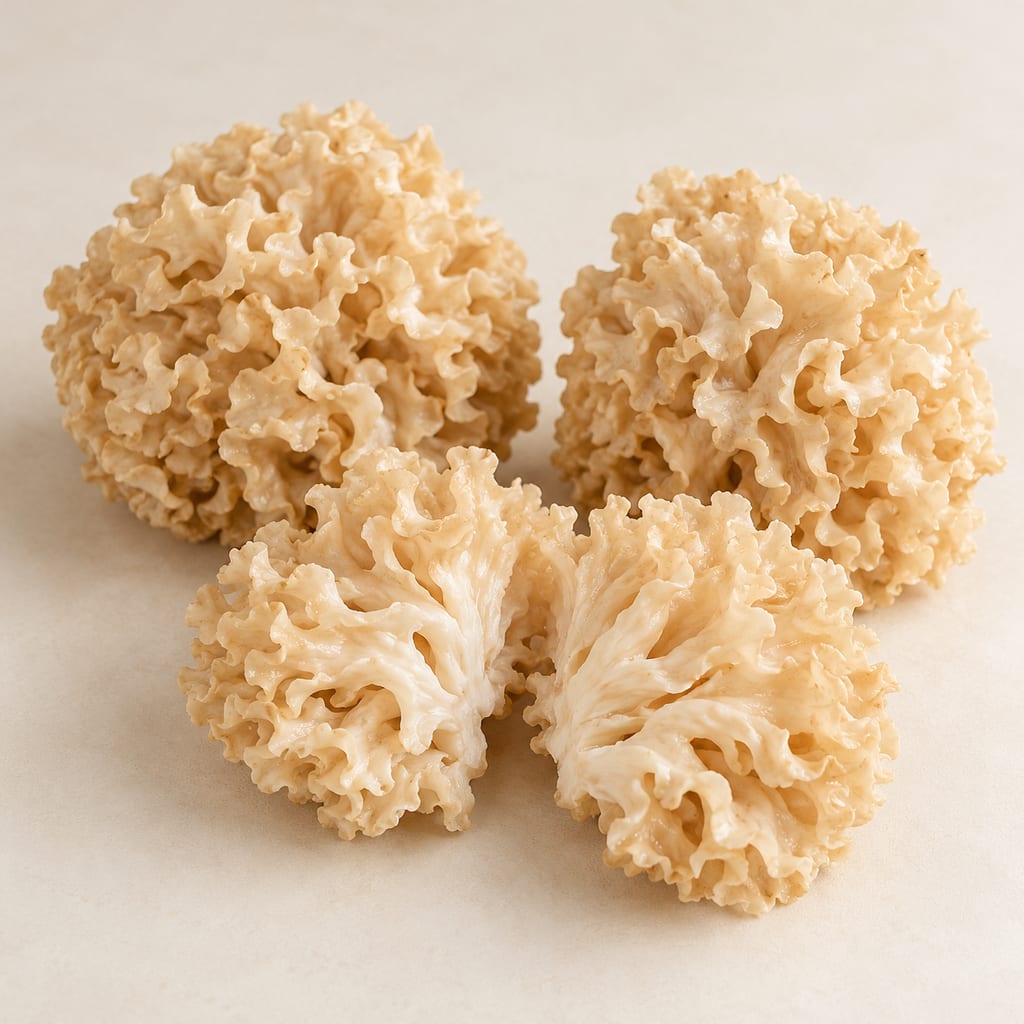
The Asian cauliflower mushroom, Sparassis latifolia, is a cultivated fungus with a frilled, fronded form that is eaten in China, Japan and Korea. Many Asian records under the name Sparassis crispa refer to this species.
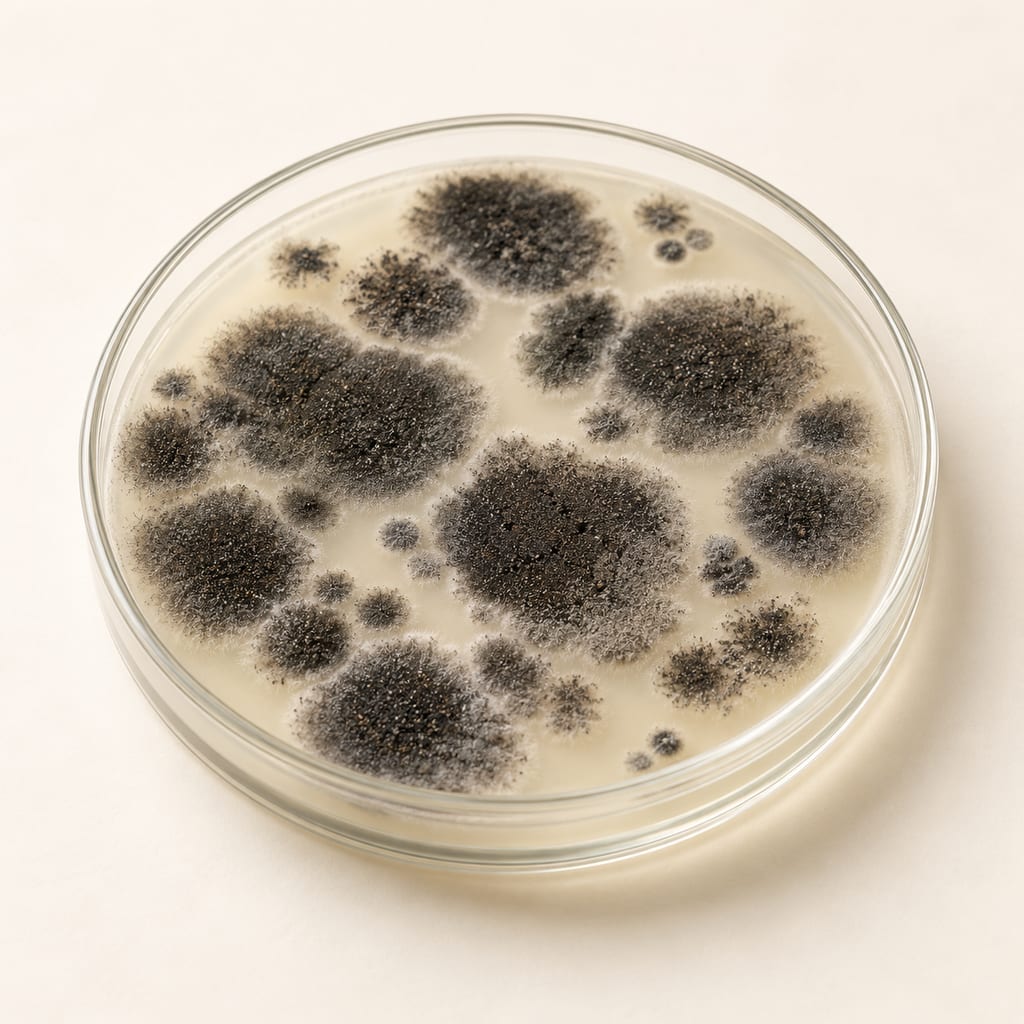
Aspergillus luchuensis is the black koji mould used in Japanese shochu and awamori, valued for the citric acid it makes alongside the starch-converting enzymes of koji.
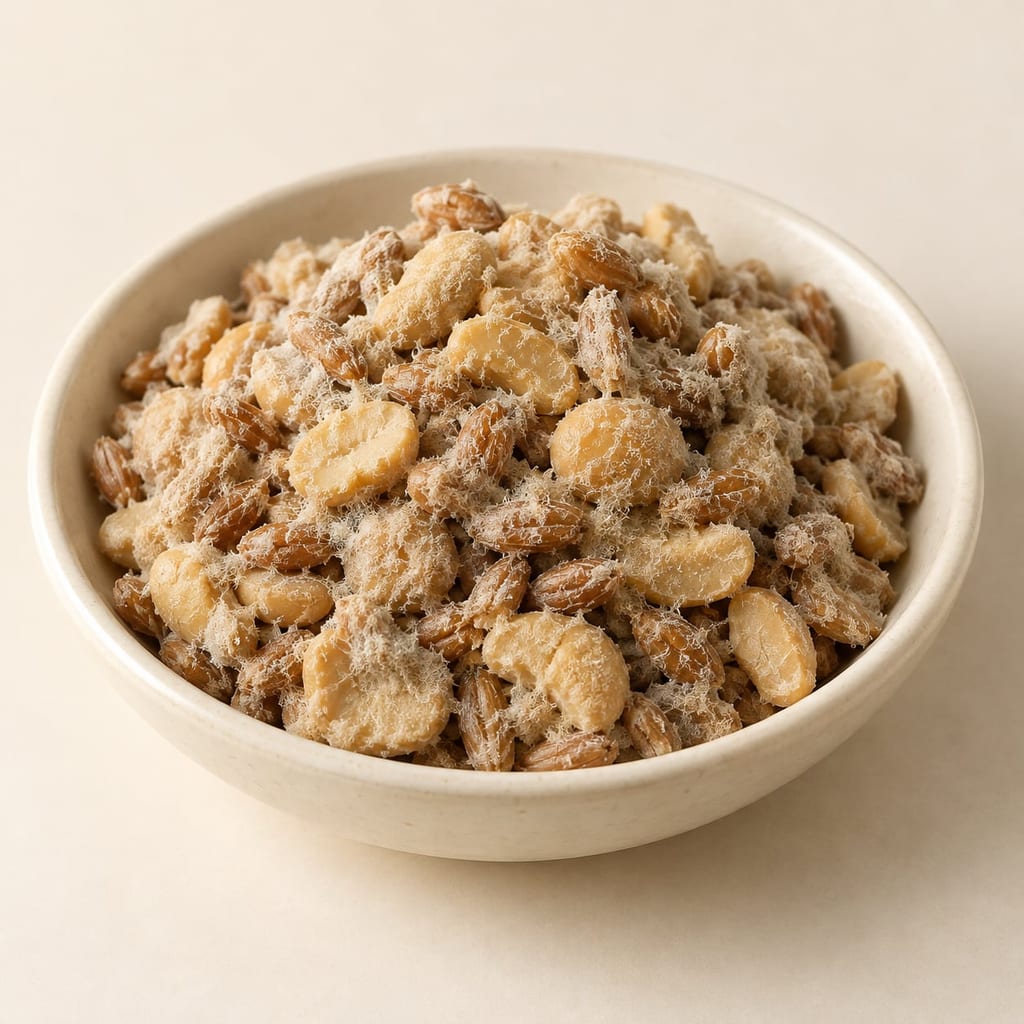
Aspergillus sojae is a koji mould of the Aspergillus flavus group, closely related to A. oryzae, used as a starter in soybean fermentations such as Korean meju, doenjang and ganjang.
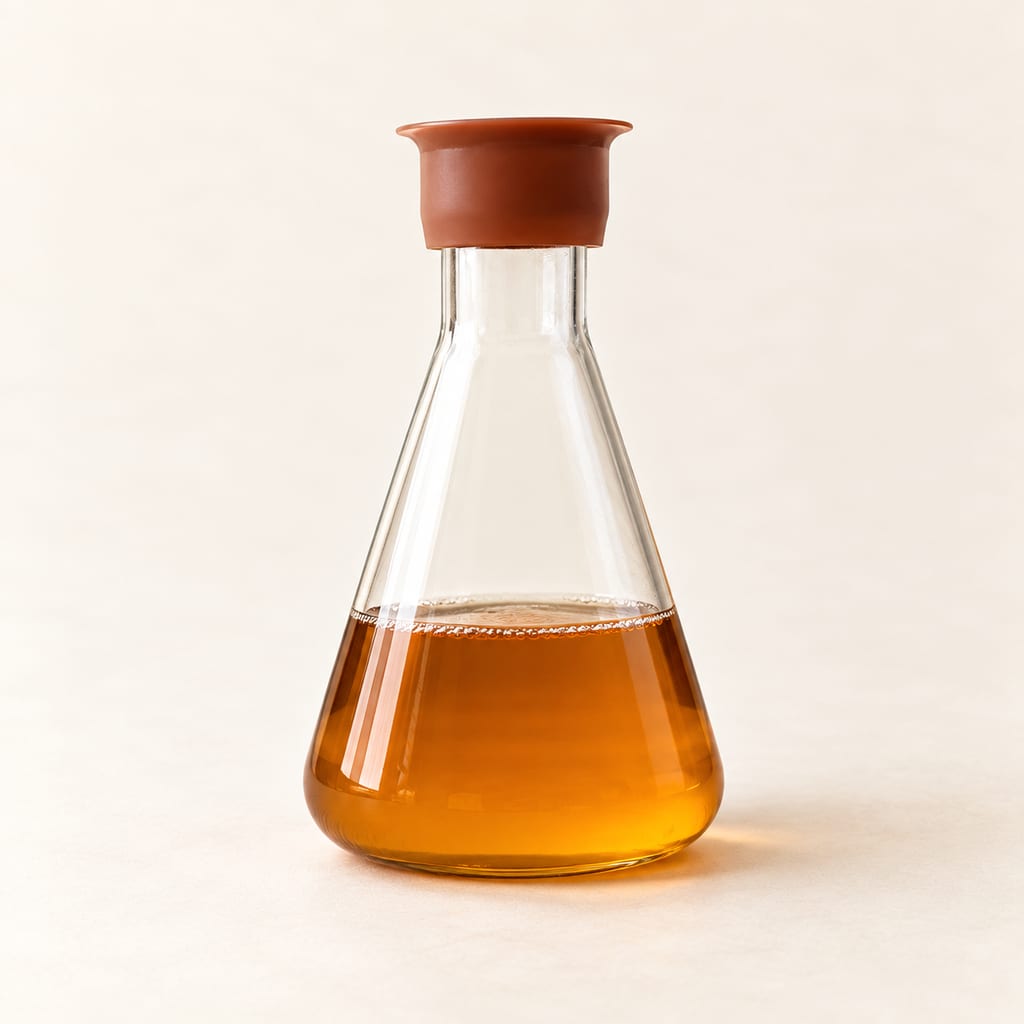
Awamori yeast ferments sugar released from rice koji in the Okinawan spirit’s mash. Sakimoto names the ingredient but gives no strain, form, supplier or dose.

Bamboo shoots are the young culms of many bamboo species, eaten after boiling or leaching in Asia, and fermented into sour and preserved foods in the Himalayas, northeast India and Burma.
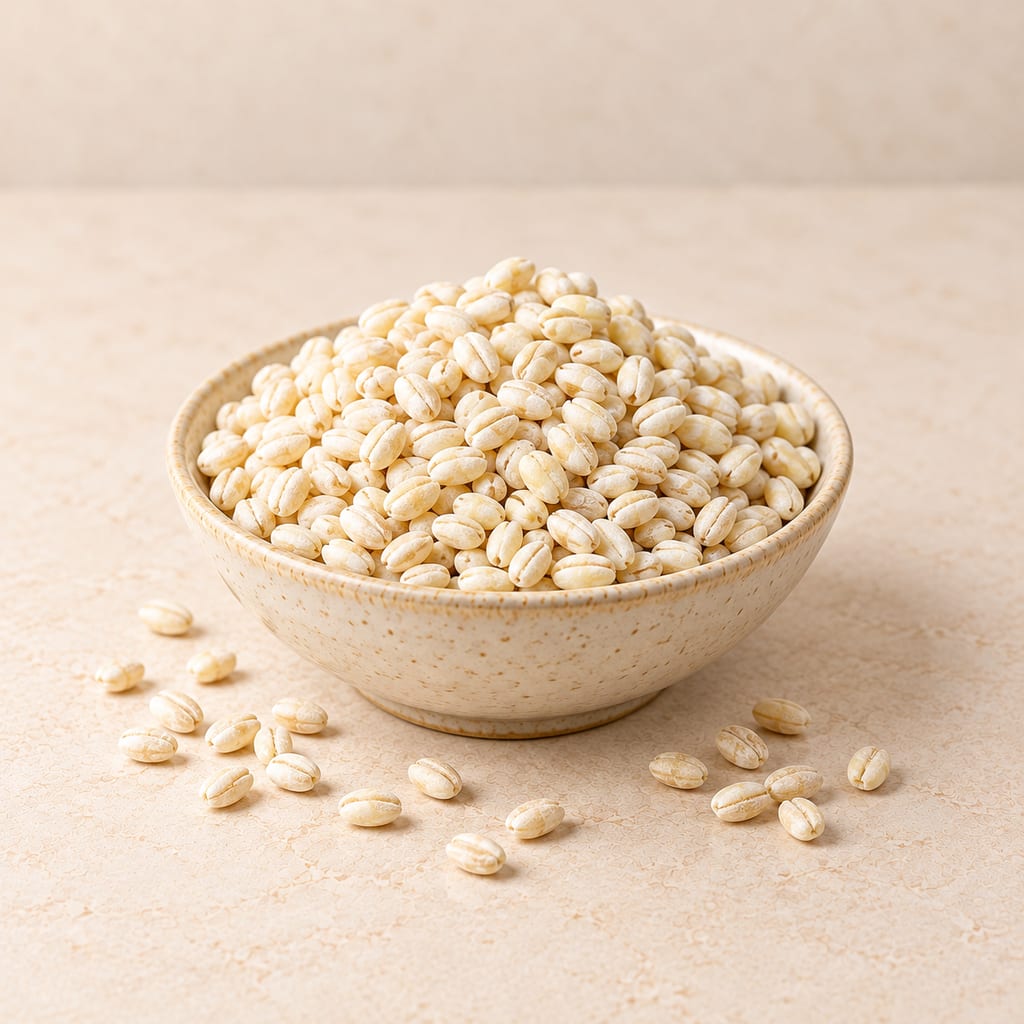
Barley is a hardy cereal, domesticated in the Middle East over 10,000 years ago, eaten whole, pearled or milled, malted for brewing, and grown with koji mold for barley miso.

A Dominican table and seasoning condiment of sour orange juice, mixed with lime and salt and bottled raw; garlic, oregano or a hot pepper may be added for meat or a spicier bottle.

Cicerbita alpina is an alpine perennial whose tender shoots and leaves have been eaten raw or cooked. Sámi milk preparations and modern Carnian dishes are distinct uses, with serious identification and preservation limits.

Japanese skipjack tuna cooked, then repeatedly smoked and dried over a wood fire by the hand-fired tebiyama method into a hard block for shaving into dashi: the first stage of katsuobushi.

A Swedish-style spirit vinegar made by fermenting neutral alcohol with live vinegar bacteria, with a separate guide to commercial ättika strengths.

A yeast-raised wheat ring shaped from a firm dough, briefly boiled and baked. This source-batch formula gives a gently malted crust and a chewy crumb.

A warm dip of garlic, anchovy and olive oil, often enriched with butter, that Piedmont serves over a flame with raw and cooked vegetables and bread.

Bechamel is a white sauce of milk thickened with a butter and flour roux, one of the French mother sauces, and the base from which Mornay and other cheese and cream sauces are made.
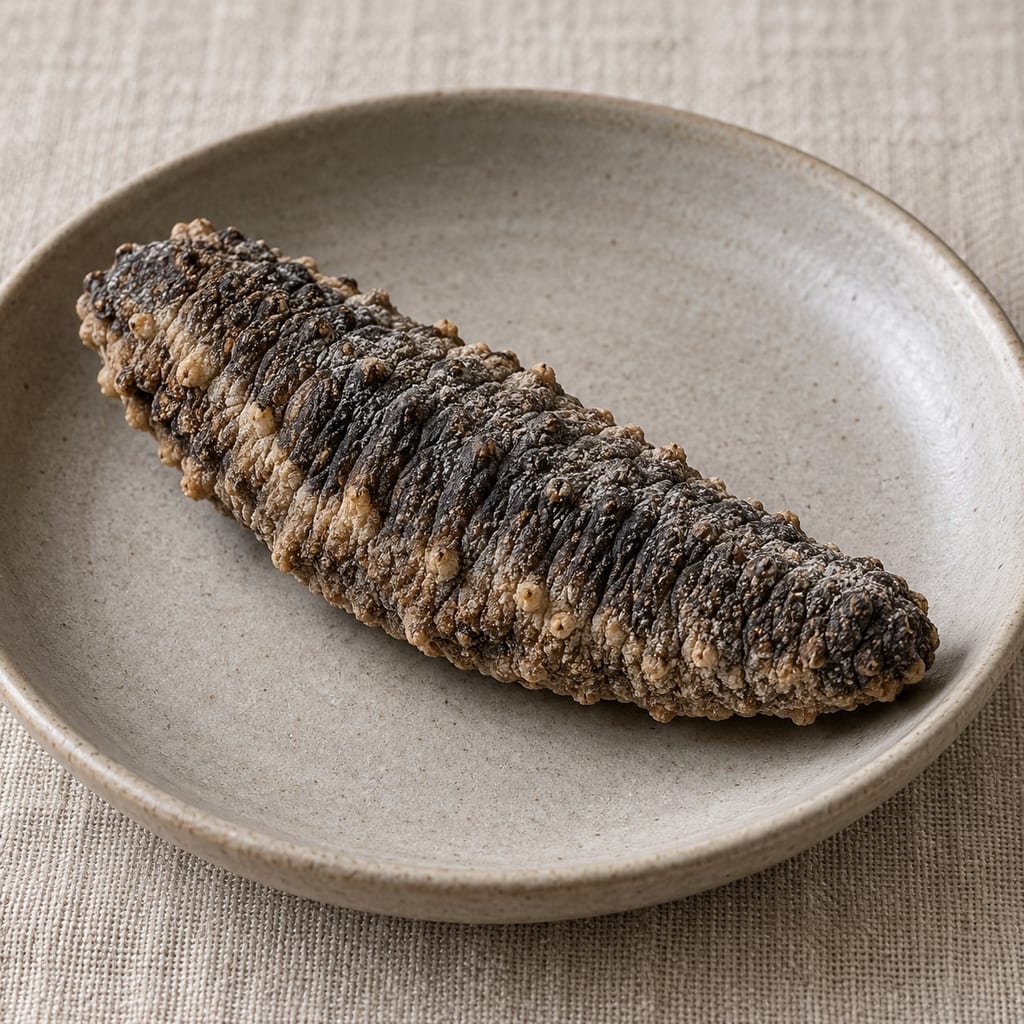
Sea cucumber cleaned, boiled and dried, sometimes with smoke, into a long-keeping trade product; Makassan processing in Arnhem Land is documented from at least the eighteenth century.
No community contributions have been published for this entry yet.
Sign in to contribute. Published comments and photos are free to read.
Food and Agriculture Organization of the United Nations (Armisen and Galatas)History · Method · Properties
Production, properties and uses of agar (Chapter 1 of FAO Fisheries Technical Paper 288)agar attributed to Minoya Tarozaemon, Japan, 1658; industrial dry production early 18th century as kanten; Matsuoka patents 1921 and 1922; Selby and Tseng in California; Koch 1881
raw materials and 1984 production: 6,683 tonnes; Japan 2,440; Spain 890; Chile 820
extraction: alkali pretreatment, sodium carbonate at 80 to 95 C for Gelidium, 0.1 M NaOH for Gracilaria; filtration at 85 to 100 C; freeze-thaw to 11 to 12 per cent agar; drying; energy 11,477 against 53,361 kcal per kg
gel strength 600 to 1,100 industrial, 150 to 400 natural strips; 1.5 per cent gels at 32 to 43 C and melts above 85 C; stable pH 5 to 8; left-handed helix
uses: confectionery, jellies, marmalade, mitsumame, icings, yoghurt, meat, aspic; bacteriological agar 4 to 5 per cent of sales; agarose 0.2 per cent; food-grade specifications
Cited in: What agar is; A Japanese winter invention; The seaweeds; How agar is made; How the gel works; Agar in fermentation and food; Choosing and using it; Notes
WikipediaHistory · Uses
Agaragarose about 70 per cent and agaropectin about 30 per cent
Gelidium for bacteriological plates and Gracilaria for food; kanten from kanzarashi tokoroten; Europeans adopted the Malay agar; Payen 1859; Hesse 1882
Japan led production until the Second World War; about 2,500 tonnes then and about 10,000 tonnes in the mid-1970s
mizu yokan, anmitsu, gulaman, thach, bubble tea; about 80 per cent dietary fibre; kanten fad diets
Cited in: What agar is; A Japanese winter invention; The seaweeds; How agar is made; How the gel works; Agar in fermentation and food; Regional uses and varieties; Choosing and using it; Notes
Food Science and NutritionProperties
Review on Gelling and Foaming Agents in Food: Mechanism and Applicationscoil-to-helix gelation; melting 85 to 95 C; gelation 32 to 45 C; hysteresis
sugars strengthen the gel; strong acid hydrolyses agarose; resistant to enzymatic degradation
reduces syneresis in grass jelly drinks; edible films
Cited in: How the gel works; Agar in fermentation and food; Choosing and using it; Notes
PeerJProduction
Mini-review: red seaweed Hydropuntia edulis and agar derivatives for food, medicinal and agriculture applicationsHydropuntia agar content 19 to 30 per cent of dry weight; about 3.6 million tonnes fresh in 2019; 66 to 80 per cent of global agar production
cultivation on rafts and nets, 15 to 20 kg per net after three months; grown in abandoned shrimp ponds
red seaweed production 18.3 million tonnes a year after 2019
Cited in: The seaweeds
Polymers (MDPI)Chemistry · Production
High-Quality Agar Polysaccharide from Unexplored Gelidium micropterum Kutzing Biomassagarose repeating unit of 1,3-linked beta-D-galactopyranose and 1,4-linked 3,6-anhydro-alpha-L-galactopyranose
commercial agar made by alkaline treatment, high-temperature extraction, filtration and freeze-thaw
10 per cent NaOH gave sulfate 0.175 per cent and melting temperature 96.5 C
agar market US$409 million in 2023, forecast US$629 million by 2030; India harvest 500 to 600 tonnes of wild agarophytes
Cited in: What agar is; The seaweeds; How agar is made
WikipediaUses · History
Tokorotentokoroten from tengusa, boiled, set and extruded into strips; eaten for over a thousand years; served with vinegar and soy sauce or with kuromitsu in Kansai
freezing in the 17th century gave kanten; commercial kanten now mostly from ogonori
Cited in: Regional uses and varieties; Choosing and using it
WikipediaUses
Yokanmizu yokan has more water, chilled, eaten in summer, in winter in Fukui; agar one of the main ingredients; invention of agar in the 1600s essential to modern yokan; kanten reached Manchuria, Korea and Taiwan
Cited in: Regional uses and varieties
WikipediaUses · Method
Gulamandried bars or powder of agar or carrageenan; boiling water necessary to dissolve; sets at room temperature; sago at gulaman, buko pandan, halo-halo
Cited in: Regional uses and varieties; Choosing and using it