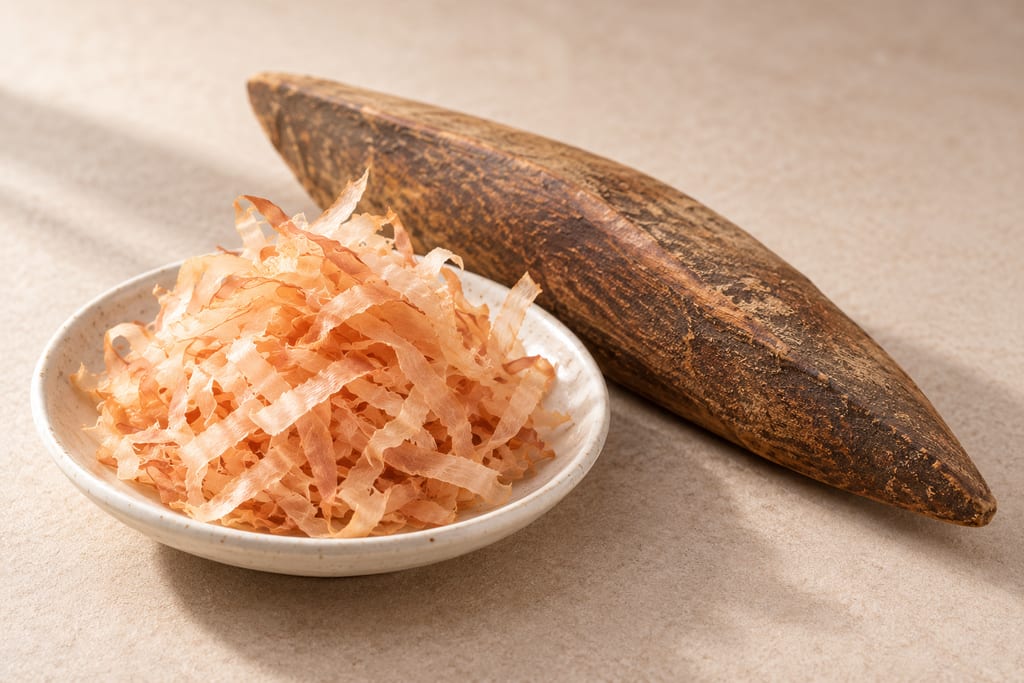
Bonito flakes (katsuobushi)
Katsuobushi is skipjack tuna cooked, smoked and dried into a hard block that is shaved into flakes for dashi and toppings. Some styles stop at the smoke-dried stage; others receive carefully managed mold maturation.
 FermenteaWhere food goes to change
Traditional method
荒節 · Ara-bushi · Katsuo arabushi · Katsuobushi arabushi · 荒節 · 鰹荒節 · 手火山式荒節 · 波切節 · Nakiri-bushi · Smoked-dried bonito
Japanese skipjack tuna cooked, then repeatedly smoked and dried over a wood fire by the hand-fired tebiyama method into a hard block for shaving into dashi: the first stage of katsuobushi.

Arabushi (荒節) is skipjack tuna that has been cooked, deboned and repeatedly smoked and dried until it is a hard, dark block. It is the first stage of katsuobushi, one of Japan's main ingredients for dashi. The fish is Katsuwonus pelamis, called katsuo in Japanese, which is skipjack tuna and not every fish sold abroad as bonito.
Arabushi sits at the start of a series of products. Shave off the dark outer layer and it becomes hadakabushi (裸節). Cultivate chosen moulds on it and it becomes karebushi (枯節), and repeat the mould treatments for honkarebushi (本枯節). Arabushi itself is smoked and dried and is not a mould-fermented food.
Fresh fish are cooked in hot water, cooled and deboned. In larger fish the dorsal and belly parts are separated into the familiar blocks: the dorsal pieces are obushi (雄節) and the belly pieces mebushi (雌節). After many rounds of smoking and drying, the blocks are dark brown to black, extremely hard and coated with smoke deposits, and their insides are fibrous and dense.
The method described here is the tebiyama method (手火山式焙乾製法) of Nakiri in Shima City, Mie Prefecture. The local product is Nakiri-bushi (波切節), a regional name for locally made katsuobushi and not an exact synonym for every arabushi. The apparatus is a wood-fired hearth under stacked wooden trays, the seiro, holding the cooked fish. The maker manages the fire directly, checks the heat reaching the fish and rearranges the trays for even exposure, with rests in between that let moisture move from the centre to the surface. Mechanised chambers that circulate heated smoke work differently.
Salt, koji, rice, sugar and starter cultures are not part of it. The block is normally shaved into flakes, since it is too hard to eat whole, and the flakes make a smoky, savoury dashi and are sold as hanakatsuo. Arabushi is also the starting material for mould-matured katsuobushi.
Japanese dried bonito is older than the smoking technology. Skipjack bones turn up in Jōmon deposits, which show eating and not the making of katsuobushi. The Taihō Code of 701 and the Engishiki of the early tenth century, cited by the Ministry of Agriculture (MAFF), mention hard-preserved fish and boiled-dried bonito. They do not describe smoked arabushi.
Nakiri has early local evidence. MAFF reports a wooden tablet from the Nara-period capital of Heijō-kyō recording hard-preserved bonito sent from the Nakiri area as an offering to the court, probably sun-dried or boiled and dried. The link between Shima and preserved bonito is old, and smoke drying came later.
The name katsuobushi appears in the Tanegashima Kafu under 1513, according to MAFF. Smoking and drying like the later products are associated with the Muromachi period onward, and deliberate mould maturation arose in Tosa in the seventeenth century.
The tebiyama method is placed in the middle Edo period: a small fire chamber beneath stacked trays with workers tuning the heat by hand. No date or inventor is known. Nakiri's closeness to the fishing grounds and to wood fuel supported a local industry.
A firm date is the Shokoku Katsuobushi Banzuke, a national bonito ranking of 1822 laid out like a sumo list, in which Nakiri-bushi holds the place of the gyōji, the referee. It is read as recognition of the district's quality, though that reading is an interpretation.
Ise-Shima was part of the miketsukuni, which supplied food to the imperial court, and dried bonito was offered at Ise Grand Shrine. MAFF notes that Nakiri bonito is still presented at the Kannamesai festival on 17 October. Production was once widespread: nearly two hundred bonito huts stood at Nakiri in the early Shōwa period, and only a few survive. Kanesa Katsuobushi in Tago, western Izu, which traces its business to 1882, keeps a related hand-fire tradition.
Arabushi forms through heat, gradual drying, wood smoke and changes in the fish's proteins and aromatic compounds, and not through bacterial or mould fermentation. Cooking sets the muscle proteins, firms the fillets and reduces vegetative microbes when it is well controlled. Smoking and drying then remove water and lay down the smoky aroma.
Water leaves gradually. The surface heats and dries faster than the centre, and rests between firings let water move out from the middle so drying can go on. The Nakiri method deliberately alternates smoking and resting, and the result depends on fish size, fillet thickness, heat, humidity and air movement.
The useful microbiological measure is water activity. A 2020 study comparing arabushi with mould-matured karebushi reported about 18 percent moisture and a water activity near 0.76 for its arabushi, and under 13 percent moisture and about 0.62 for the karebushi. They are sample measurements and not release limits.
Wood smoke carries many volatile compounds. Research in 2001 found pyrazines with roasted aromas and phenols with smoke aromas, especially guaiacol and 4-methylguaiacol, together with sulfur compounds from the cooked fish. Smoke varies with the wood, burning conditions, airflow and the number of firings.
The savoury taste comes partly from 5'-inosinic acid (IMP), a nucleotide linked with umami in fish muscle. In dashi with kombu, inosinate and the seaweed's glutamate together taste far stronger than either alone.
Heat reduces muscle enzyme activity, though chemical reactions still change proteins and lipids, and lipid oxidation adds some volatile aldehydes and ketones. None of this is microbial fermentation. Aspergillus chevalieri and other Aspergillus species belong to the separate karebushi process, and unidentified surface mould is never an acceptable stand-in.
Smoke also brings chemical hazards. Research has measured polycyclic aromatic hydrocarbons (PAHs) and heterocyclic amines in smoked-dried bonito, and a 2022 study found that wetter firewood gave more PAHs. Managing the fire matters for safety as well as flavour.
It starts with fresh skipjack chosen for freshness, size and condition, and Nakiri makers note differences by fishing ground and season. The process concentrates what the fish already holds. Skipjack that was handled badly may already contain histamine, which cooking and drying will not remove, so selection and the cold chain are basic.
The fish is headed, gutted and filleted. Larger fish are commonly divided into four pieces by separating the dorsal and belly parts, and the pieces are laid in cooking baskets and heated in water. The general katsuobushi description gives about 80 degrees C for 60 to 90 minutes, and the Nakiri record says about one hour, without a water temperature.
The cooked pieces are cooled and the remaining bones, skin and unwanted tissue removed, with the fragile flesh handled so the fillets stay whole. Some makers mend damaged areas with a paste of processed bonito flesh to keep the block shape, a documented technique and not a curing ingredient.
The fillets go on wooden seiro above the wood-fired hearth, so that heat and smoke come straight from below. The trays are stacked and moved during the process to balance exposure, and the maker adjusts the fire with fuel and judgement. The name tebiyama goes with this hands-on control.
MAFF describes Nakiri production as about two days of smoking followed by one day of rest, with the sequence repeated more than ten times. The rests let water redistribute. The exact number and length of firings depend on the fish and the workshop.
Wood is both fuel and flavour. A Nakiri workshop names ubamegashi oak as the traditional fuel, and Izu tebiyama makers use local oak, sawtooth oak and cherry wood. These are individual choices and not all required. Fuel moisture, combustion and the distance from the fire change heat and smoke deposition.
Repeated smoking and drying make the fillets smaller, darker and harder, with a black, tarry outer layer. That is arabushi. A maker may then remove the deposits and shave the block, or go on to the mould-cultivation stage of karebushi. No salt cure, vinegar, sugar, koji or starter is needed, only fish, water and wood.
The descriptions give the sequence and some times, and not a complete temperature and humidity programme, cooking lethality, final water activity, smoke contaminant limits or storage specification.
Arabushi is a stage and not a place. Katsuobushi is made along several Japanese coasts, each with its own history and equipment, and tebiyama is one way of getting arabushi. The same regional name may also be used for products that go on to mould maturation, so the stage and the origin should be recorded separately.
Nakiri-bushi comes from Nakiri in Shima City, and its reputation goes back to the 1822 ranking. It uses direct wood firing beneath stacked trays and repeated smoking and resting, and MAFF stresses hand adjustment of the heat to the fish's size, season and condition. Local makers describe an aromatic stock that is clear in appearance.
Western Izu in Shizuoka has another tebiyama tradition. The Tago style begins with a very strong fire to dry the surface fast. Kanesa Katsuobushi describes surface temperatures above 130 degrees C in the first fire, about ten to fifteen smoking treatments and a period of around one month, which are that producer's figures.
Yaizu, also in Shizuoka, developed other systems: the takinaya or kyūzokko multi-level drying chamber and the Yaizu-style system that circulates heated smoke by machine. Studies of 1974 and 1997 looked at temperature distribution and smoke uptake in them, with operating conditions and labour very different from small direct-fired tebiyama.
Kagoshima is a major commercial centre, with Makurazaki and the Yamagawa area of Ibusuki as producing districts, and MAFF reports it as Japan's leading producing prefecture in the 2022 fish-processing statistics. Its arabushi, karebushi and honkarebushi are largely made in larger smoking facilities.
Historical regional names include Tosabushi (Kochi), Satsumabushi (Kagoshima), Izubushi (Shizuoka) and Yaizubushi (Yaizu). The dorsal obushi and belly mebushi differ in shape, fat and drying. Namaribushi is a softer, less dried bonito, hadakabushi has its black exterior removed, and karebushi and honkarebushi are mould-matured, which makes them separate preparations. Maldive fish is a smoked-dried tuna from elsewhere and not an alias for arabushi.
Arabushi is mainly made into dashi. The hard block is shaved into thin flakes so hot water reaches a large surface, giving a savoury stock with a marked smoky character that forms the base of many Japanese soups, sauces and simmered dishes. Whole blocks are stored and shaved when needed.
The flakes are sold as hanakatsuo. They give off aroma readily but lose it in storage, so freshly shaved flakes are prized by traditional restaurants and specialist makers.
Dashi can be made from bonito alone or with kombu. Skipjack supplies inosinate and kombu glutamate, and together they taste stronger than either at the same strength. The stock goes into miso soup, clear soups, noodle broths, dipping sauces and simmered vegetables, and the proportions and extraction temperatures belong to each dashi recipe.
Nakiri-bushi is linked with clear, fragrant dashi. A local workshop gives visitors the first extraction, ichiban dashi, and serves okaka gohan, hot rice under freshly shaved bonito. MAFF also describes the flakes on hot rice and in dressed vegetables, and common uses include chilled tofu and boiled greens.
Okaka is the Japanese word for bonito flakes seasoned with soy sauce or used in a savoury rice dish. Spent flakes from dashi can be seasoned into furikake, which MAFF records. In Kagoshima chabushi is a drink or soup of katsuobushi, barley miso and green tea.
Whole dried blocks keep for a long time when properly dried and packed, while shaved flakes are exposed to oxygen and moisture. Follow the maker's storage directions, avoid condensation, and treat made dashi as a separate perishable food.
A finished arabushi block is hard and dense with a black or dark-brown outside, visible muscle fibre in a compact inside, and a savoury, smoky, roasted smell. It should not be soft, wet or visibly rotten, and hardness, dark colour and a strong smoke smell do not show it is safe.
Uneven drying is the main technical concern in tebiyama. Heat reaches the surface before the centre, and a surface that hardens too fast slows the escape of inner water. Resting periods and moving the trays are the answer to a direct-fired hearth. A 1974 Japanese study measured temperature differences of about 20 degrees C at one level inside a multi-level chamber and concluded that repositioning the fish was necessary, for conventional industrial equipment as well as hand-fire methods.
Finished moisture figures differ. MAFF describes the dried-bonito category as holding no more than 26 percent moisture, and the 2020 comparison found about 18 percent and a water activity around 0.76 in its arabushi. They are different kinds of evidence, and water activity has to be measured with a validated process and storage.
The main raw-material hazard is histamine. Skipjack contains much histidine, and if the fish is not chilled quickly after capture bacteria convert it to histamine. The US FDA states that this toxin is not destroyed by freezing, cooking, smoking, curing or canning, so later cooking cannot repair mishandled fish. FDA seafood guidance also lists drying to a water activity of 0.85 or lower as one control for certain unrefrigerated dried fish, with other measures, which is general guidance and not validation of the Nakiri method.
Smoke makes polycyclic aromatic hydrocarbons. A 2022 study linked wetter firewood with more PAHs, and a 1986 study identified mutagenic compounds formed in smoking and drying, including heterocyclic amines, and measured much more benzo[a]pyrene in the tarry surface than in the meat. Removing the exterior did not remove all the mutagenic activity. For katsuobushi on the EU market Regulation 2023/915 sets maxima of 5.0 µg/kg benzo[a]pyrene and 30.0 µg/kg for the sum of benzo[a]pyrene, benz[a]anthracene, benzo[b]fluoranthene and chrysene.
Burning wood also produces carbon monoxide. The 1974 study measured about 500 to 1,000 ppm inside smoking equipment, historical measurements and not exposure limits, and a smokehouse needs ventilation and fire precautions.
Arabushi has no mould-inoculation stage. The Aspergillus strains used for karebushi cannot be replaced by environmental mould, and appearance cannot show whether surface growth is harmless.
A production record needs the fish species and source, harvest and chilling history, fish size, cooking temperature and time, tray arrangement, firewood species and moisture, the heating and resting schedule, smokehouse conditions, final water activity, smoke-contaminant control, packaging and storage. A traditional account of repeated firings over several weeks does not validate safety. If mould maturation follows, the record moves to karebushi with its own organisms, conditions and safety rules.
A wooden tablet from the Nara-period capital records hard-preserved bonito sent as an offering from the Nakiri area, probably sun-dried or boiled and dried. The name katsuobushi appears in the Tanegashima Kafu under 1513, and mould maturation arose in Tosa in the seventeenth century.
The tebiyama hand-fire method is traditionally dated to the middle Edo period. The Shokoku Katsuobushi Banzuke of 1822 names Nakiri-bushi, and Nakiri bonito is still presented at the Kannamesai festival on 17 October. In the early Shōwa period nearly two hundred bonito huts stood at Nakiri.
Skipjack forms histamine if not chilled promptly after capture, and the FDA states that freezing, cooking, smoking, curing and canning do not destroy it.
Hazard sourceCooking and drying must be validated, and FDA guidance gives drying to water activity 0.85 or lower as one control for certain unrefrigerated dried fish alongside other measures.
Hazard sourceSmoke deposits PAHs, more with wetter firewood, and the tarry surface carries far more benzo[a]pyrene than the meat.
Hazard sourceSmoking and drying form mutagenic compounds; removing the exterior does not remove all of the activity.
Hazard sourceBurning wood produces carbon monoxide, and 1974 measurements inside smoking equipment ran about 500 to 1,000 ppm.
Hazard sourceArabushi has no mould stage, and environmental mould must not stand in for the Aspergillus strains used for karebushi.
Hazard sourceChill the fish promptly after capture and keep the cold chain.
Control sourceCook the fish thoroughly.
Control sourceMeasure final water activity.
Control sourceUse dry firewood and manage the fire.
Control sourceKeep PAHs within EU limits for katsuobushi.
Control sourceVentilate the smokehouse and take fire precautions.
Control sourceFish that was not chilled promptly can already contain histamine, and cooking, smoking and drying do not destroy it. Use only fish that was kept cold from capture.
Hardness, a dark colour and a strong smoke smell do not show that the block is dry enough or free of contaminants; measure water activity and PAHs.
Burn dry, untreated hardwood. Wet firewood produces more PAHs, and burning wood makes carbon monoxide, so ventilate the smokehouse.
Do not use unidentified mould to mature the blocks; the Aspergillus strains used for karebushi are specific.
Treat made dashi as a perishable food and keep it cold.
The tebiyama tradition documented here.
A related hand-fire tradition.
Mechanised smoke-circulation systems.
Katsuobushi is skipjack tuna cooked, smoked and dried into a hard block that is shaved into flakes for dashi and toppings. Some styles stop at the smoke-dried stage; others receive carefully managed mold maturation.
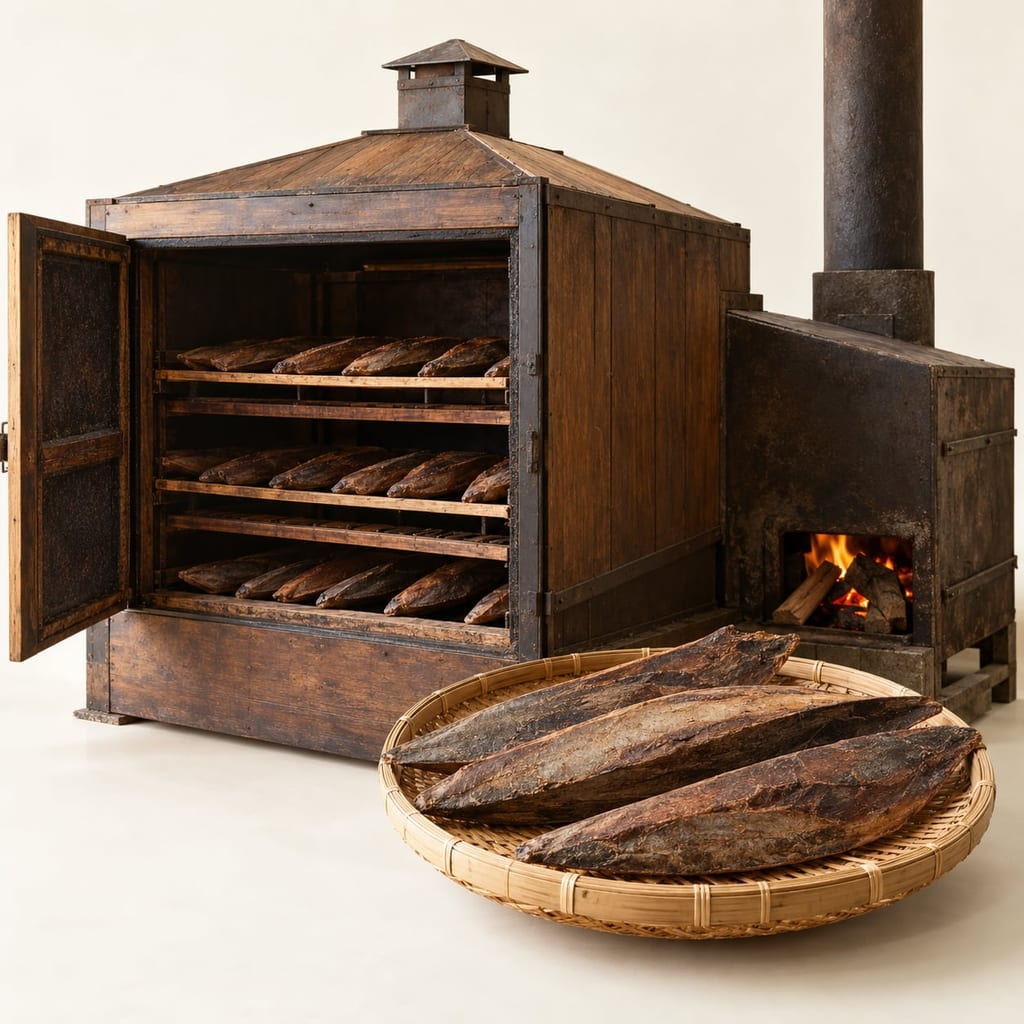
Enclosed cooking, smoking and drying equipment used in the multi-stage process that makes katsuobushi, the dried, smoked and mould-treated bonito of Japan, in repeated stages.
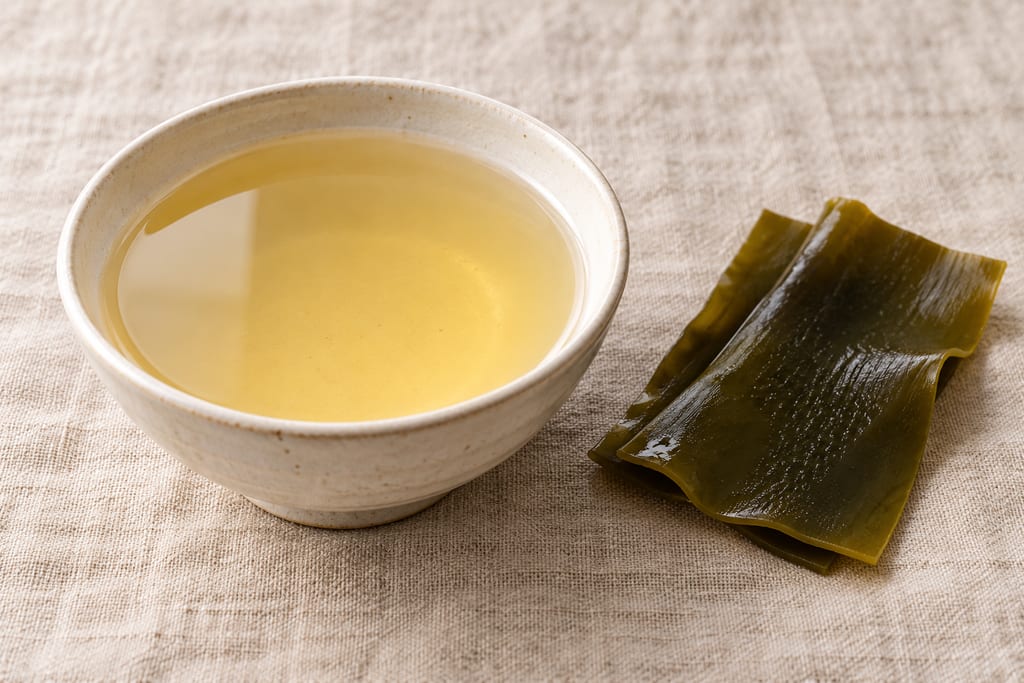
A clear Japanese broth made by gently extracting kombu’s savoury taste into water. Use it on its own for delicate dishes or as the kelp base for a separate bonito or dried-fish dashi.
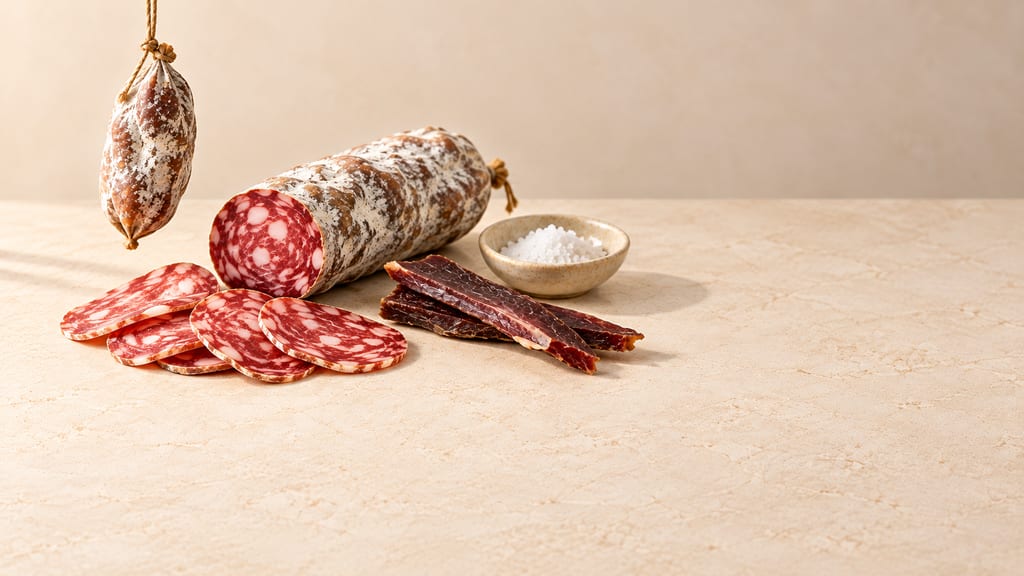
Dry salami, sour pork with rice, matured sheep and aged blubber follow different paths from animal to food. Their stories connect microbes with climate, slaughter, migration and the meals people share.
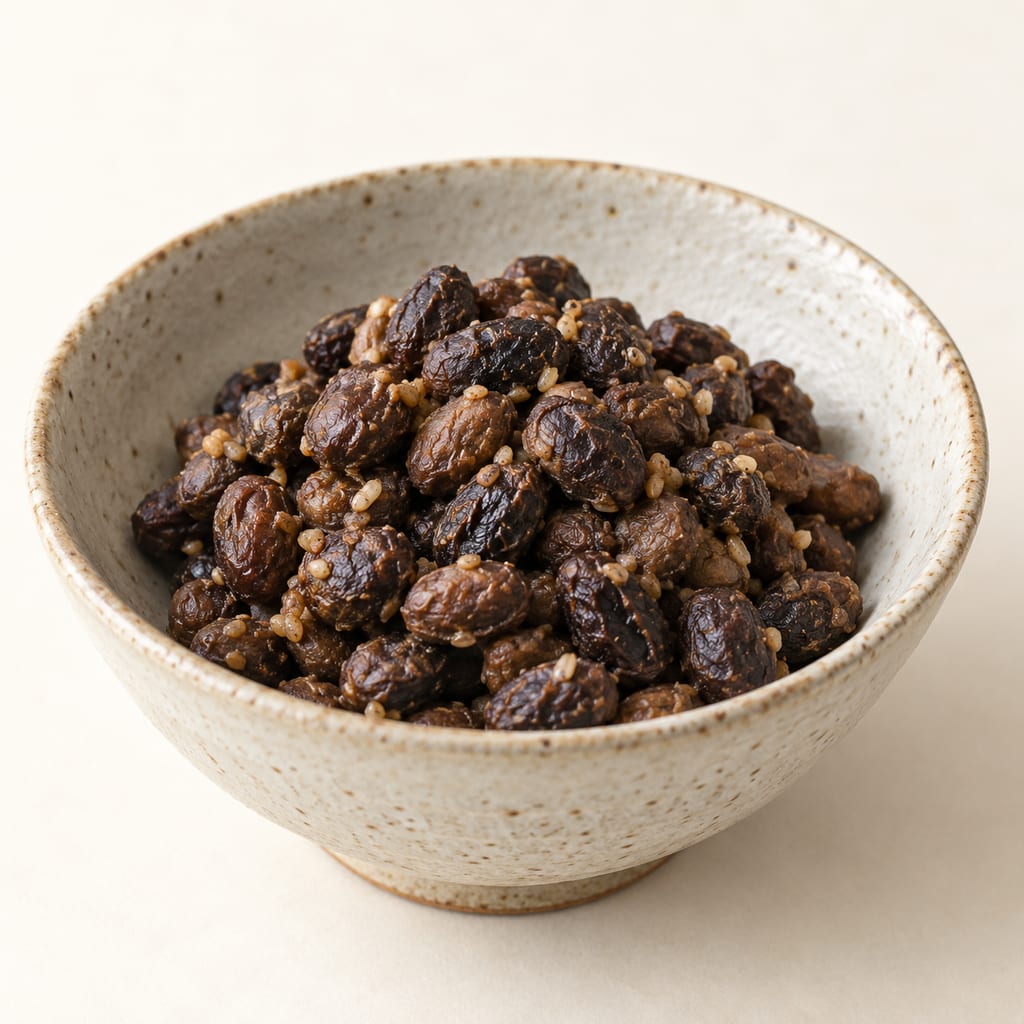
A Japanese family of salted, dark, non-stringy natto made from whole soybeans, roasted grain and salt water, with names such as hama-natto, Daitokuji-natto and tera-natto. Not the sticky Bacillus natto.
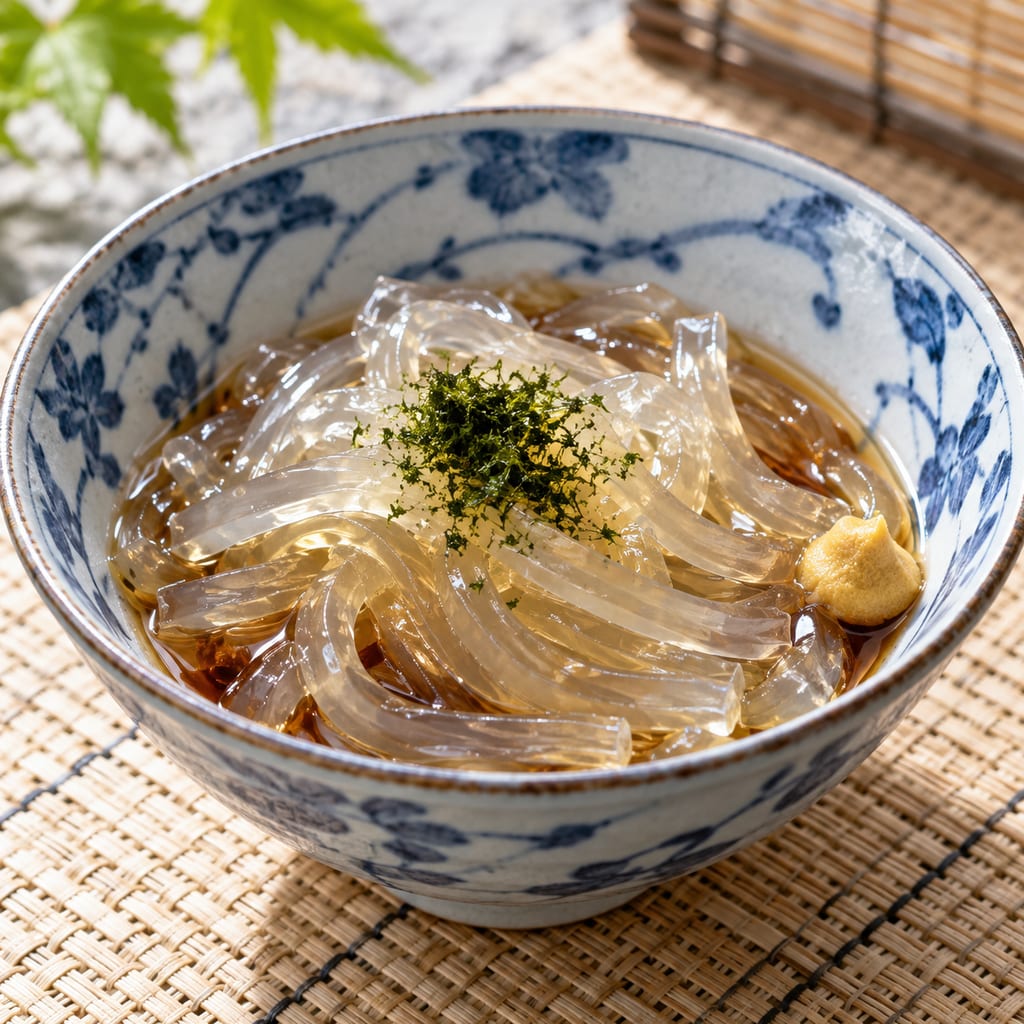
A Japanese jelly made by boiling agar-rich red seaweed, straining the extract and letting it set, then pressing it into strands served with vinegar-soy sauce or sweet syrup.
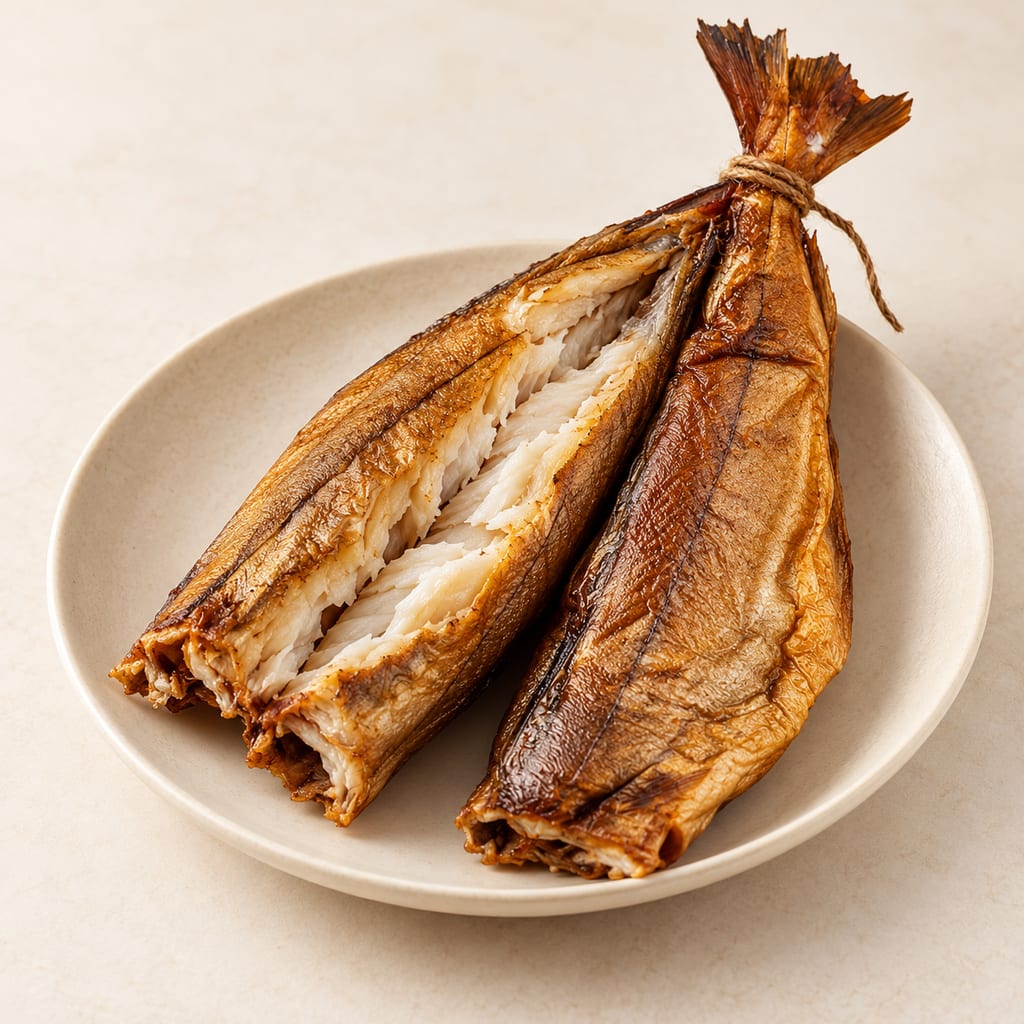
Arbroath smokies are whole haddock dry-salted, paired by the tail and hot-smoked in a protected coastal area. Their recorded history links Auchmithie and Arbroath, though the exact origin is unsettled.
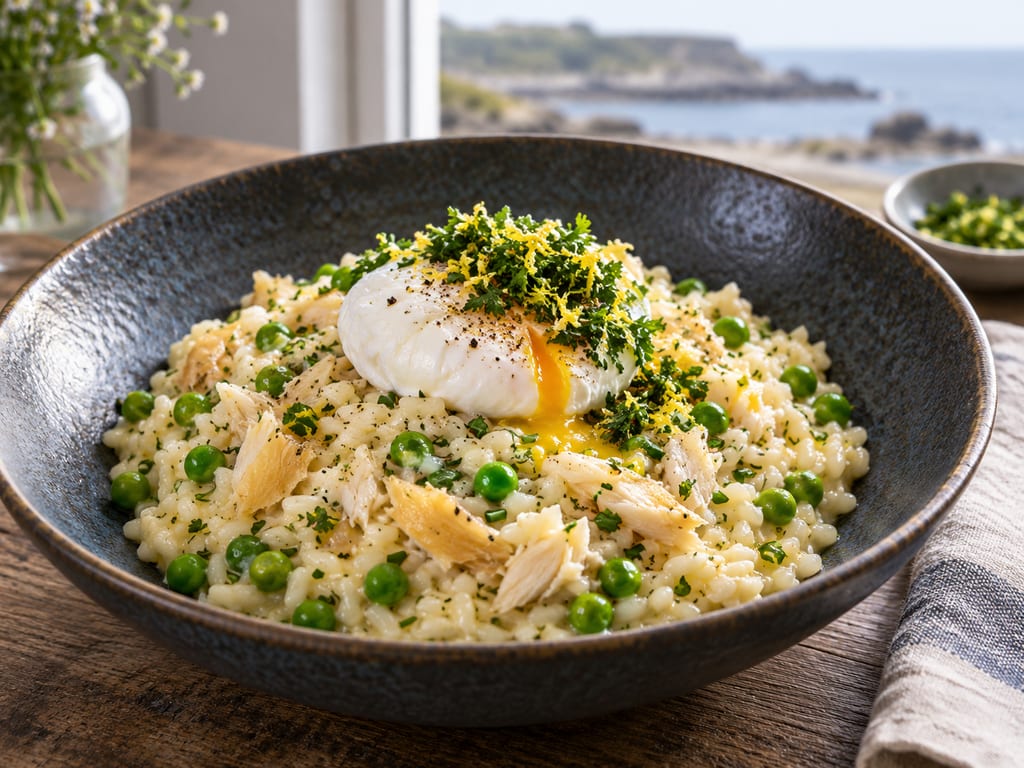
A four-serving risotto published in the 2014 Arbroath Smokie Trail booklet and credited to Hayley Wilkes. It cooks with finished Arbroath smokies; it does not describe smoking fish.
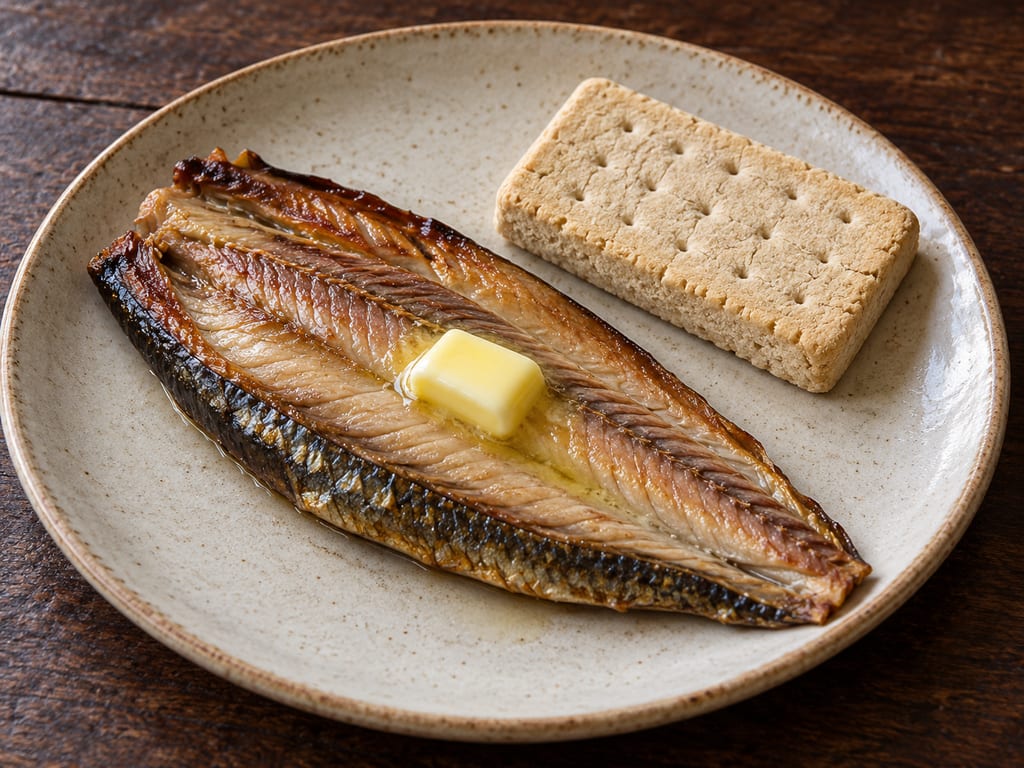
A Victorian way with Great Yarmouth bloaters: the lightly salted, cold-smoked whole herring is broiled and served with fresh butter and a warmed captain's biscuit.
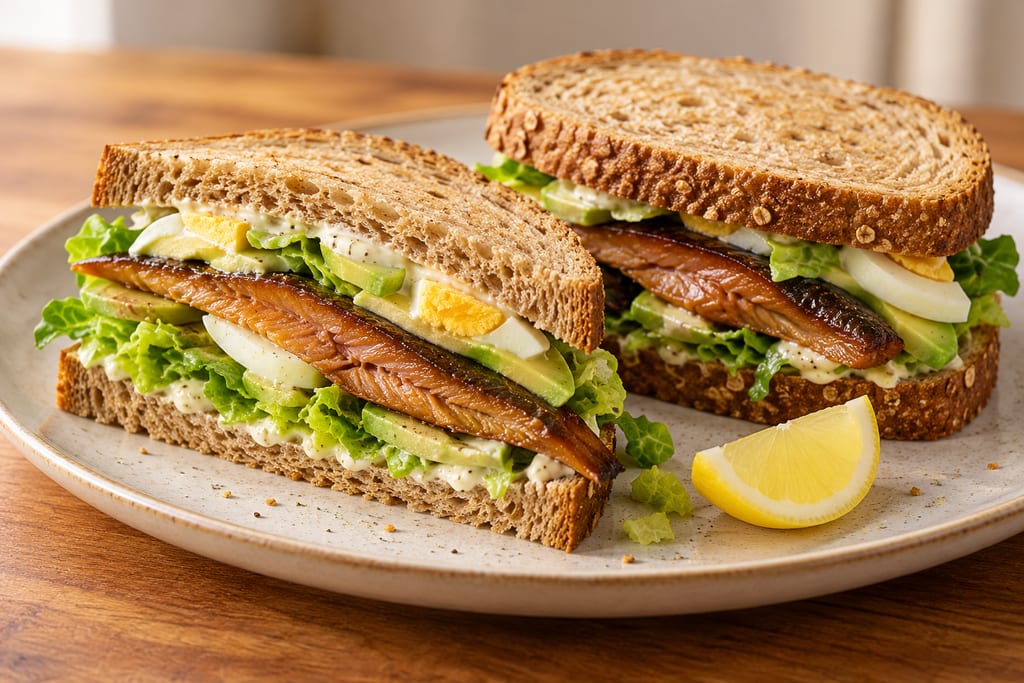
A warm club sandwich of oak-smoked Craster kipper fillets layered with soft-boiled egg, romaine, avocado and lemon mayonnaise on brown bread.
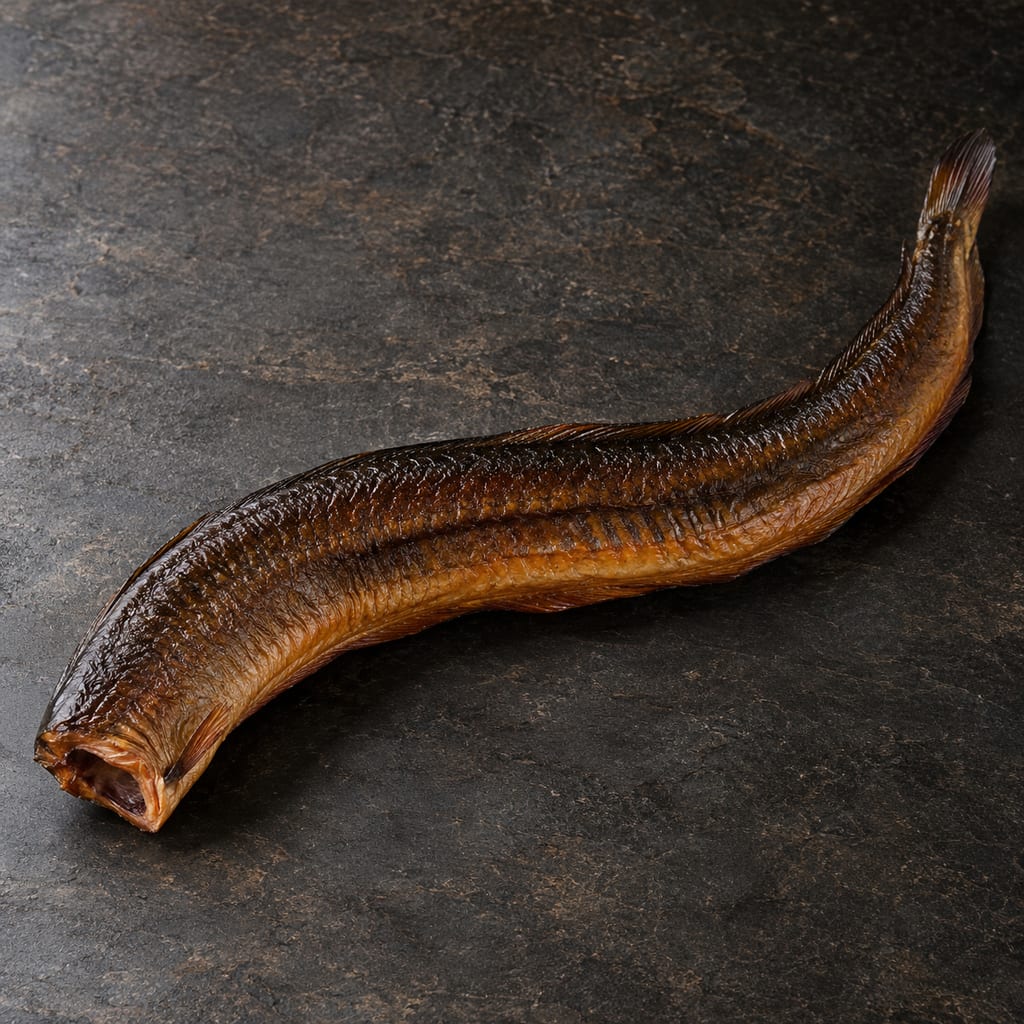
Short-finned eels, kooyang, smoked for a sustained period in the hollows of large trees at Budj Bim in south-western Victoria, a combined heat, smoke and drying method of the Gunditjmara people.
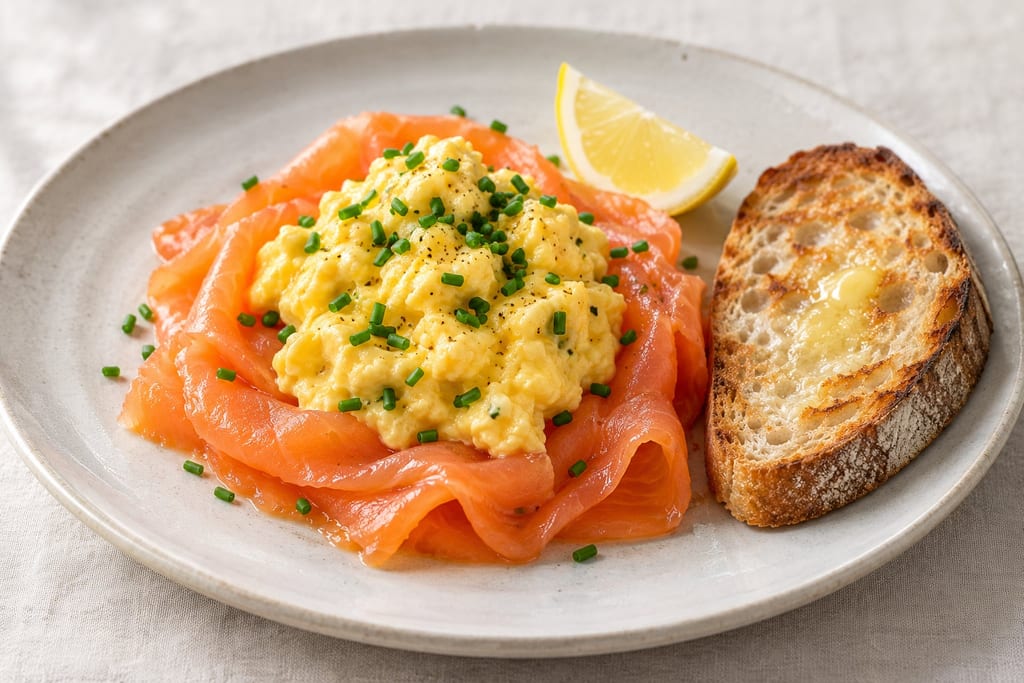
Softly scrambled eggs enriched with cream and butter, served with cold-smoked salmon, chives, lemon and sourdough toast as a British breakfast dish.
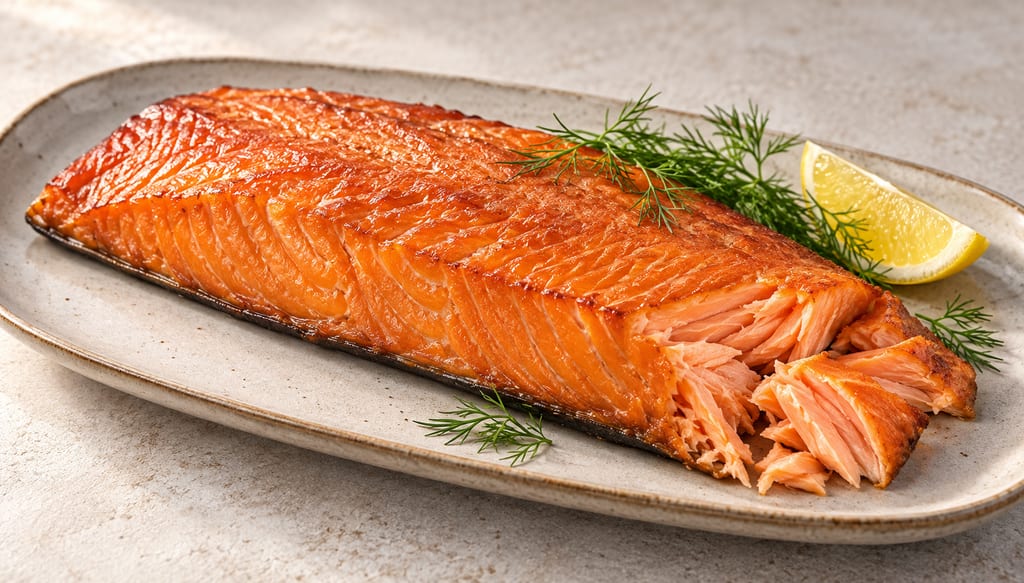
Salmon fillets salted or dry-brined, rested, then cooked and flavoured in a smoker. The method is a cooking process, and the endpoint decides its safety.
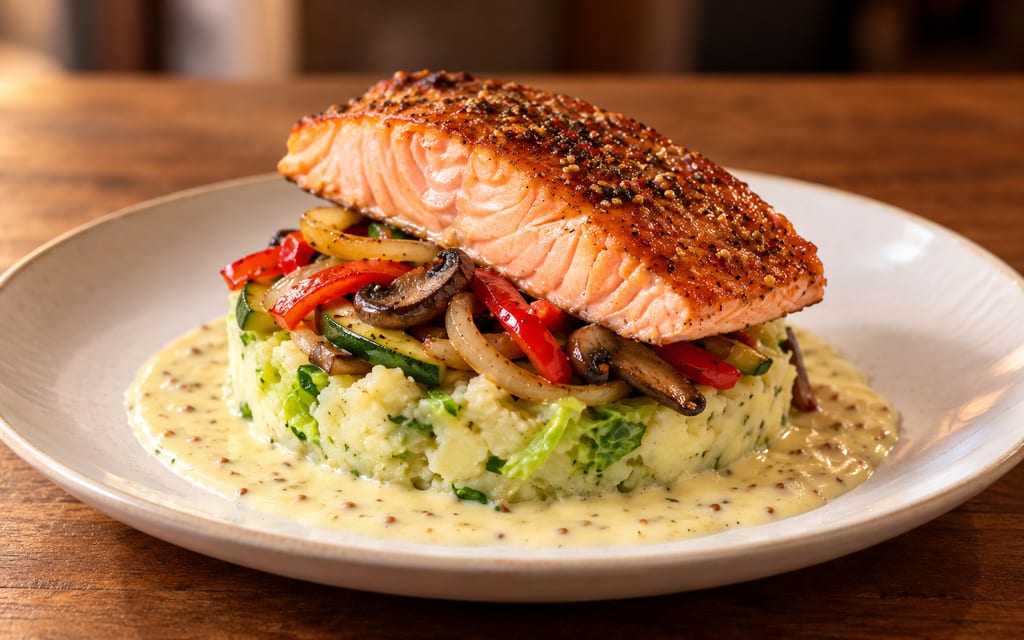
Burren Smokehouse’s colcannon dish serves hot-smoked salmon with mashed potatoes, cabbage, stir-fried vegetables and mustard cream.

A gelling polysaccharide extracted from red seaweeds, sold as kanten strips or powder; it sets firm at a low concentration and stays solid until about 85 °C.

A Dominican table and seasoning condiment of sour orange juice, mixed with lime and salt and bottled raw; garlic, oregano or a hot pepper may be added for meat or a spicier bottle.

Cicerbita alpina is an alpine perennial whose tender shoots and leaves have been eaten raw or cooked. Sámi milk preparations and modern Carnian dishes are distinct uses, with serious identification and preservation limits.

A Swedish-style spirit vinegar made by fermenting neutral alcohol with live vinegar bacteria, with a separate guide to commercial ättika strengths.

A yeast-raised wheat ring shaped from a firm dough, briefly boiled and baked. This source-batch formula gives a gently malted crust and a chewy crumb.

A warm dip of garlic, anchovy and olive oil, often enriched with butter, that Piedmont serves over a flame with raw and cooked vegetables and bread.

Bechamel is a white sauce of milk thickened with a butter and flour roux, one of the French mother sauces, and the base from which Mornay and other cheese and cream sauces are made.
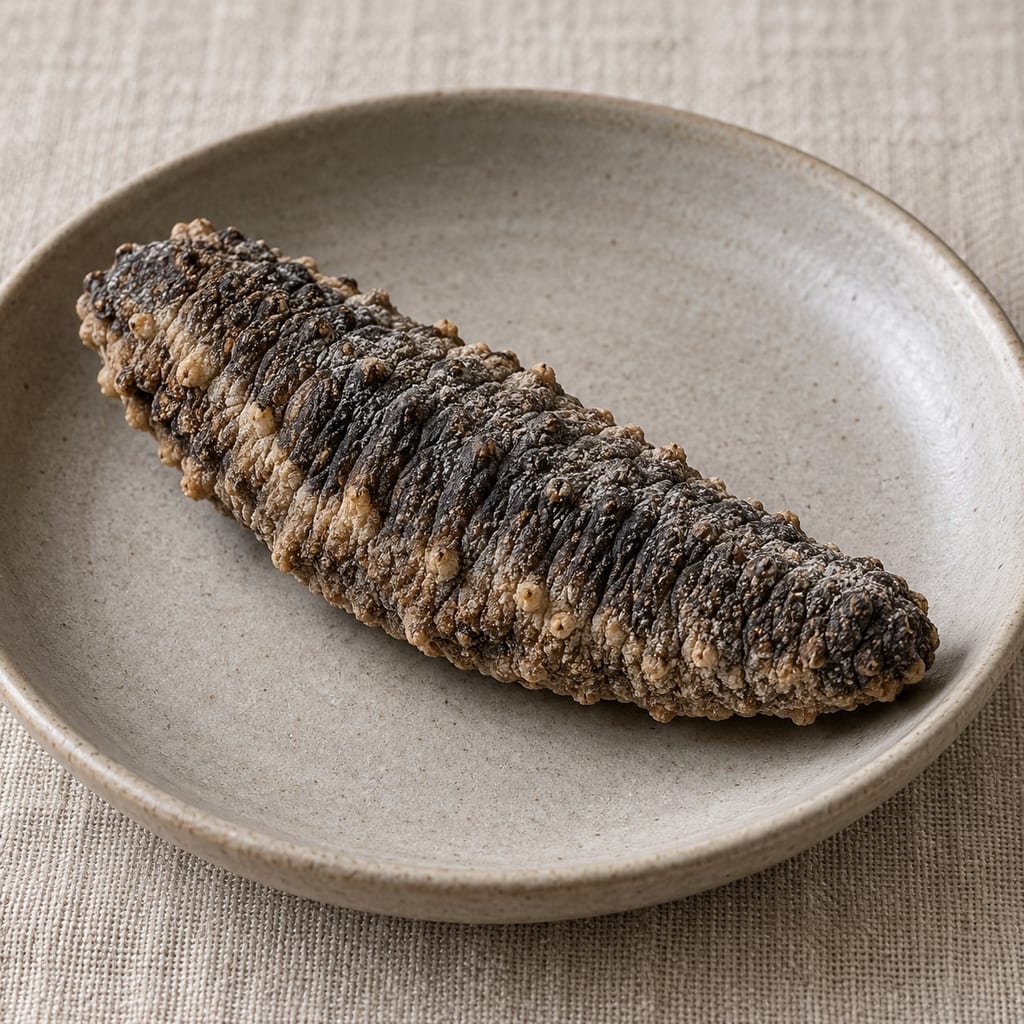
Sea cucumber cleaned, boiled and dried, sometimes with smoke, into a long-keeping trade product; Makassan processing in Arnhem Land is documented from at least the eighteenth century.
No community contributions have been published for this entry yet.
Sign in to contribute. Published comments and photos are free to read.
Ministry of Agriculture, Forestry and Fisheries, JapanMethod · History
Nakiri-bushi (波切節), Nippon Dento Shoku ZukanTwo days of smoking and a day of rest repeated more than ten times; Nara tablet; 1822 ranking
Cited in: What it is; History; How it is made; Variations
Ministry of Agriculture, Forestry and Fisheries, JapanMethod · History
Katsuobushi and similar products, Traditional Foods in JapanKatsuobushi stages and products; Tanegashima Kafu 1513
Cited in: What it is; History; How it is made; Variations; How it is eaten and used
Ministry of Agriculture, Forestry and Fisheries, JapanHistory · Use · Safety
Dried bonito, Traditional Foods in Japan80 C for 60 to 90 minutes; moisture at most 26%
Cited in: What it is; History; How it works: cooking, smoke and drying; How it is eaten and used; Reading results and problems
Kyumasa, Ise-ShimaMethod
Kyumasa: the tebiyama production methodHand-fire tebiyama production
Cited in: What it is; How it is made; Variations
Kanko MieMethod
Smoke hut tour at Katsuo no Tenpaku, ShimaSmoke hut, tray rearranging
Cited in: How it is made
Kanko MieUse
Katsuo no Tenpaku and the food culture of Ise-ShimaIchiban dashi and okaka gohan
Cited in: How it is eaten and used
Ministry of Agriculture, Forestry and Fisheries, JapanUse · History
Sample the world-renowned bonito flakes of MieKannamesai festival; flakes on rice
Cited in: History; How it is eaten and used
International Journal of Food Microbiology, 2020Chemistry · Microbiology
Characterization of surface Aspergillus community involved in katsuobushi productionAbout 18% moisture and water activity 0.76 for arabushi
Cited in: How it works: cooking, smoke and drying
Journal of Food Composition and Analysis, 2022Safety
Effects of moisture content of firewood used in the manufacture of katsuobushiWetter firewood gives more PAHs
Cited in: How it works: cooking, smoke and drying; Reading results and problems
Eisei Kagaku, 1986Safety
Formation of mutagenic substances during smoking-and-drying of bonitoHeterocyclic amines and benzo[a]pyrene in the surface
Cited in: How it works: cooking, smoke and drying; Reading results and problems
Nippon Shokuhin Kagaku Kogaku Kaishi, 1995Method · Safety
Analysis of an ordinary process and development of a new continuous process for katsuobushiTemperature distribution and carbon monoxide in smoking equipment
Cited in: How it works: cooking, smoke and drying; Variations; Reading results and problems
US Food and Drug AdministrationSafety
Fish and Fishery Products Hazards and Controls GuidanceDrying to water activity 0.85 as one control
Cited in: Reading results and problems
US Food and Drug AdministrationSafety
Scombrotoxin poisoning and decompositionHistamine not destroyed by cooking or smoking
Cited in: Reading results and problems
Food Standards ScotlandSafety
Chemical hazards in fishPAHs in smoked fish
Cited in: Reading results and problems
Official Journal of the European UnionSafety
Commission Regulation (EU) 2023/915 on maximum levels for certain contaminants in foodBenzo[a]pyrene and PAH maxima for katsuobushi
Cited in: Reading results and problems
124ginMethod
How katsuobushi is made: arabushiCooking, deboning and smoking sequence
Cited in: How it is made; Variations