
Arabushi (smoke-dried bonito)
Japanese skipjack tuna cooked, then repeatedly smoked and dried over a wood fire by the hand-fired tebiyama method into a hard block for shaving into dashi: the first stage of katsuobushi.
 FermenteaWhere food goes to change
Hot smoked salmon · Smoked salmon, hot-smoked
Salmon fillets salted or dry-brined, rested, then cooked and flavoured in a smoker. The method is a cooking process, and the endpoint decides its safety.
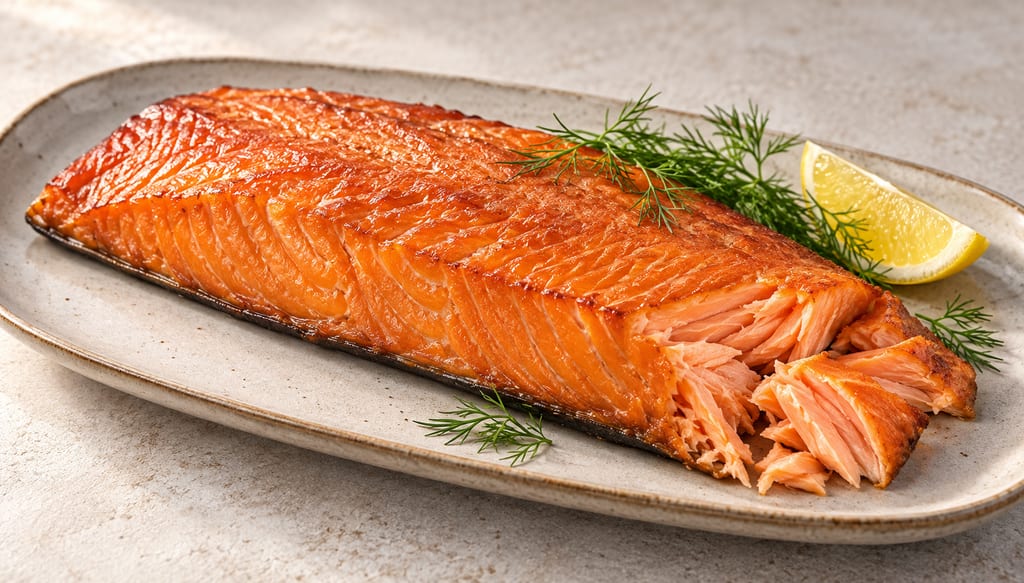
Hot-smoked salmon is salmon cooked in smoke. Unlike cold-smoked fish, which is cured and smoked at temperatures too low to cook it, hot-smoked fish reaches a cooked texture in the smoker. The creator demonstrations in this comparison describe it as cooking fish as well as flavouring it, which is the key point for safety.
The fish is usually salted or dry-brined first, then given a rest for the salt to equalise, and then smoked. Some creators skip the cure entirely and treat the smoker as a cooker alone.
Five demonstrations give different batches. One sockeye video uses an refrigerator cure of about 24 hours, then three hours at a 150°F smoker setting, without an internal endpoint. A dry-brine demonstration uses alder smoke but leaves the fish weight and some temperature units unclear. A no-brine lunch version reads a 63.3 thermometer figure with no unit.
The Vindulge pair is the most detailed. Its video uses a 3 lb king salmon fillet, a 225 smoker setting and an internal endpoint of 130°F. Its written recipe is a separate, smaller batch of 1½ lb salmon with measured seasoning, smoked at 225°F over fruit wood to a 135°F target. The two batches should not be combined.
The University of Alaska Fairbanks guide treats home smoking as separate stages: preparation, salting, refrigerated equilibration, pellicle drying, hot smoking and storage. Its hot-smoking recommendation is 160°F internal for at least 30 minutes. Its piece-size wording conflicts within the guide, and it does not state how long a cooling period may last before the fish is wrapped.
Its medium-brine and 160°F figures belong to that guide. They are not the creator targets above, and the page does not blend them.
The creator figures are lower than the others in this comparison. The Vindulge video says 130°F is safe for good-quality salmon. The written recipe gives 135°F while quoting the USDA at 145°F. FDA consumer guidance says most seafood should reach 145°F, and the UAF guide recommends 160°F for at least 30 minutes during hot smoking.
This page keeps the creator endpoints as source claims and does not adopt them as safe. A home cook who follows a lower creator target without a validated control takes the risk the guides warn about.
The written Vindulge recipe says refrigerated leftovers keep up to three days, with no cooling schedule. The UAF guide warns that lightly salted smoked fish is not preserved and needs controlled refrigeration or freezing. No shared creator storage protocol is established in the comparison.
The sources do not establish a common historical origin or an earliest attestation for hot-smoked salmon as a home dish.
These sources describe modern home cooking and an Extension method. They do not establish an earliest attestation or a regional tradition.
Scaling: source batch only
A hot-smoked fillet taken below a validated internal temperature can carry pathogens. The creator targets are lower than the figures the reviewed guides give.
Hazard sourceThe UAF guide says lightly salted smoked fish is not preserved and needs controlled refrigeration or freezing.
Hazard sourceInternal temperature of 160°F (71°C) held for at least 30 minutes during hot smoking, as the UAF home-smoking guide recommends
Control sourceRefrigeration or freezing of the finished fish
Control sourceThe 130°F and 135°F targets are creator advice. They are not adopted as safe here.
Smoke colour, flavour and a moist centre do not establish safety.
Seafood is safest when cooked thoroughly, according to FDA consumer guidance.
The creator demonstrations do not give a shared origin. The Extension guide is a North American home-smoking guide and does not establish a regional tradition.
Japanese skipjack tuna cooked, then repeatedly smoked and dried over a wood fire by the hand-fired tebiyama method into a hard block for shaving into dashi: the first stage of katsuobushi.
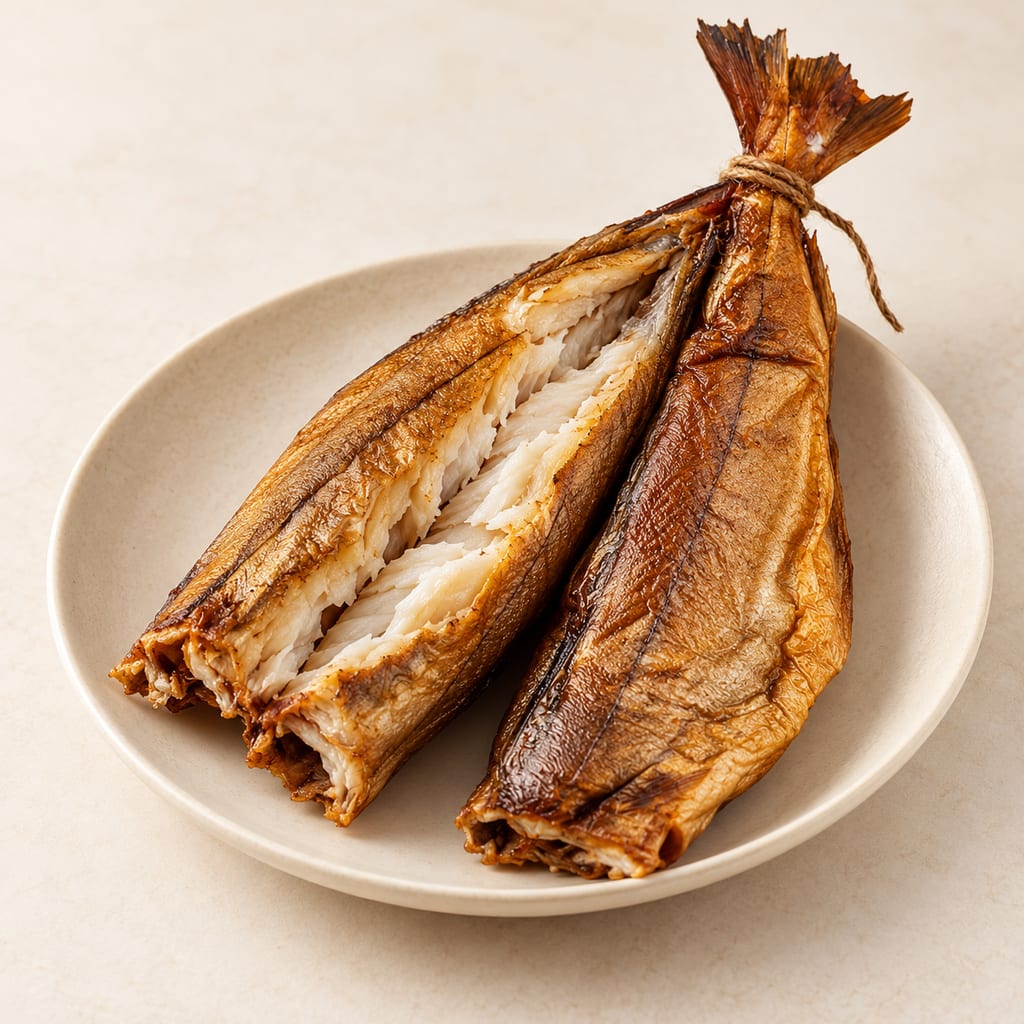
Arbroath smokies are whole haddock dry-salted, paired by the tail and hot-smoked in a protected coastal area. Their recorded history links Auchmithie and Arbroath, though the exact origin is unsettled.
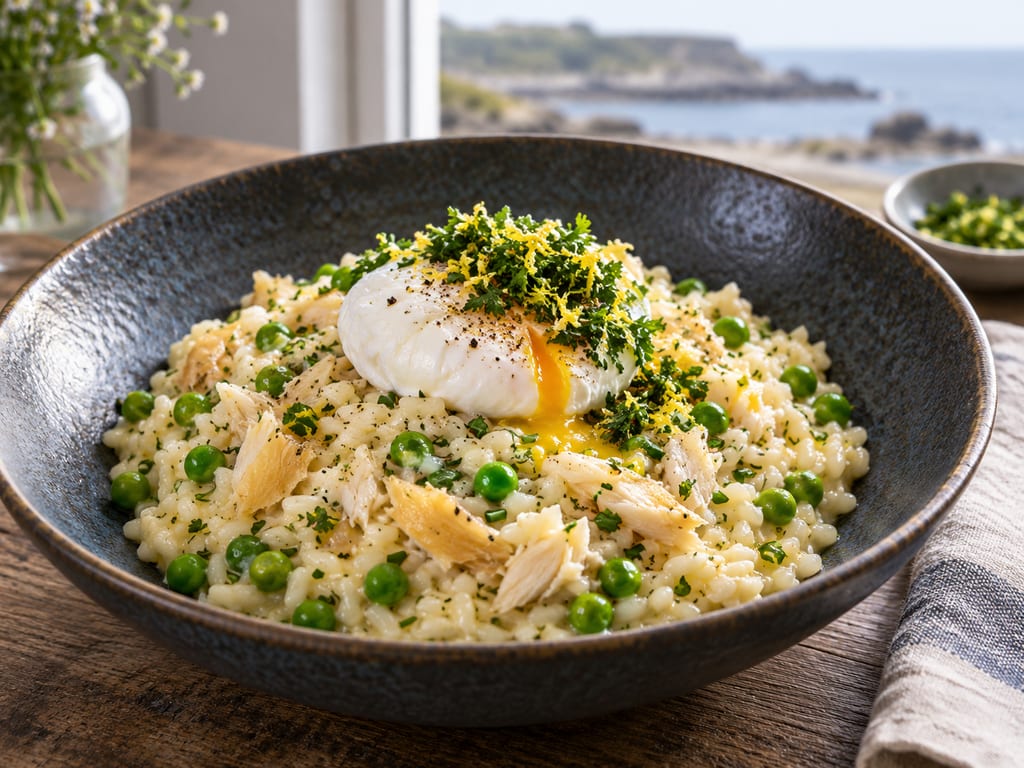
A four-serving risotto published in the 2014 Arbroath Smokie Trail booklet and credited to Hayley Wilkes. It cooks with finished Arbroath smokies; it does not describe smoking fish.
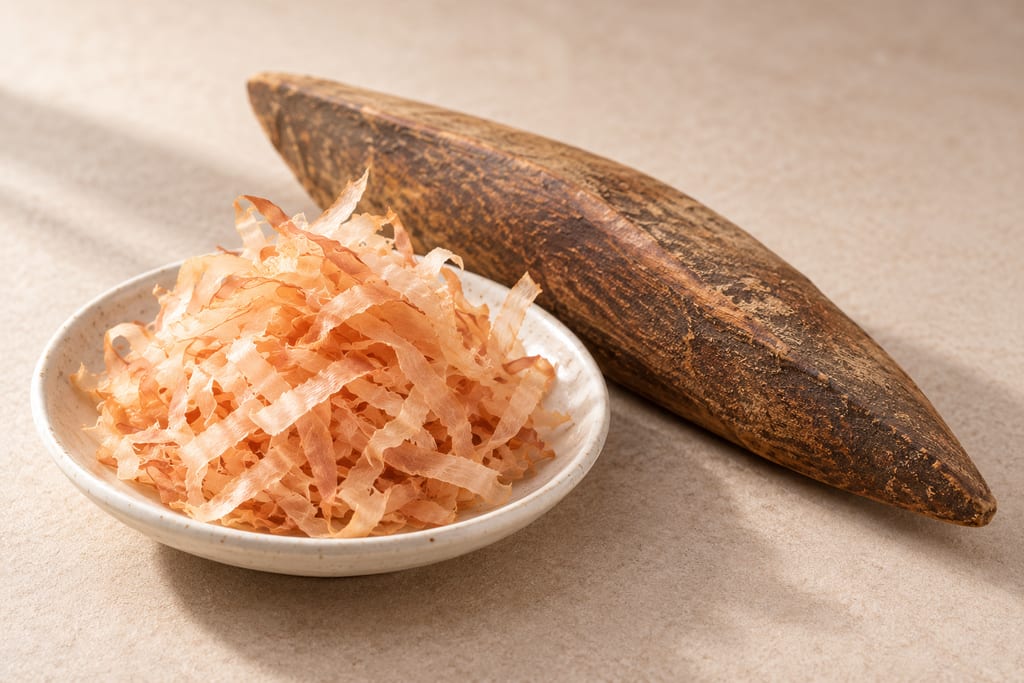
Katsuobushi is skipjack tuna cooked, smoked and dried into a hard block that is shaved into flakes for dashi and toppings. Some styles stop at the smoke-dried stage; others receive carefully managed mold maturation.
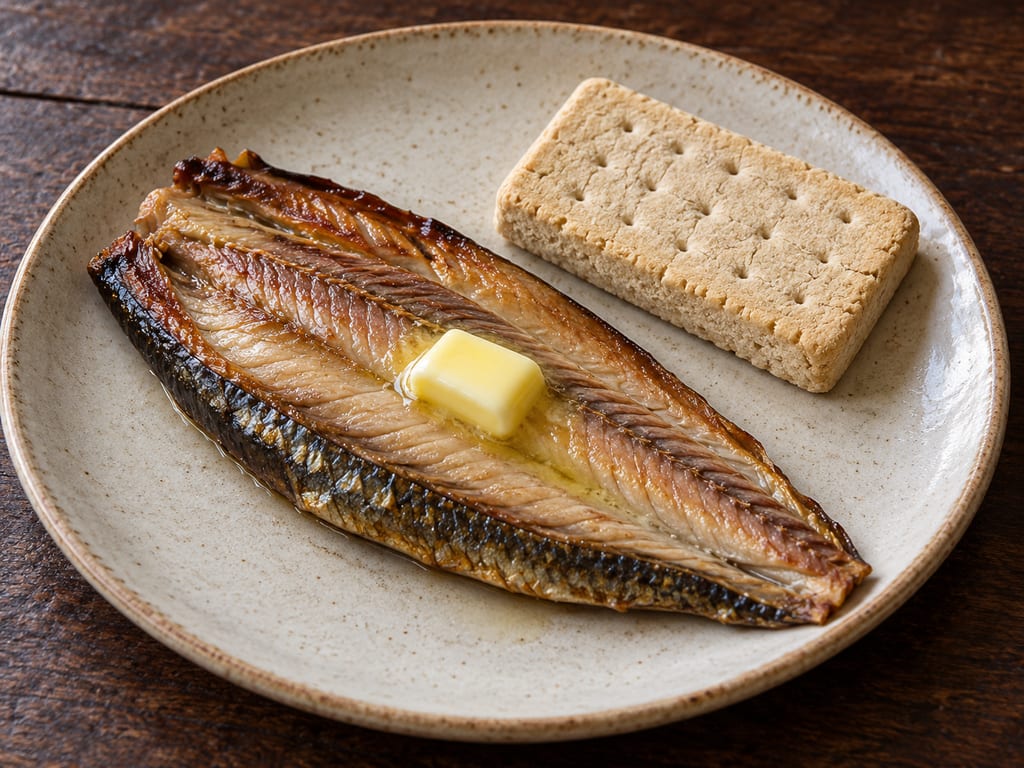
A Victorian way with Great Yarmouth bloaters: the lightly salted, cold-smoked whole herring is broiled and served with fresh butter and a warmed captain's biscuit.
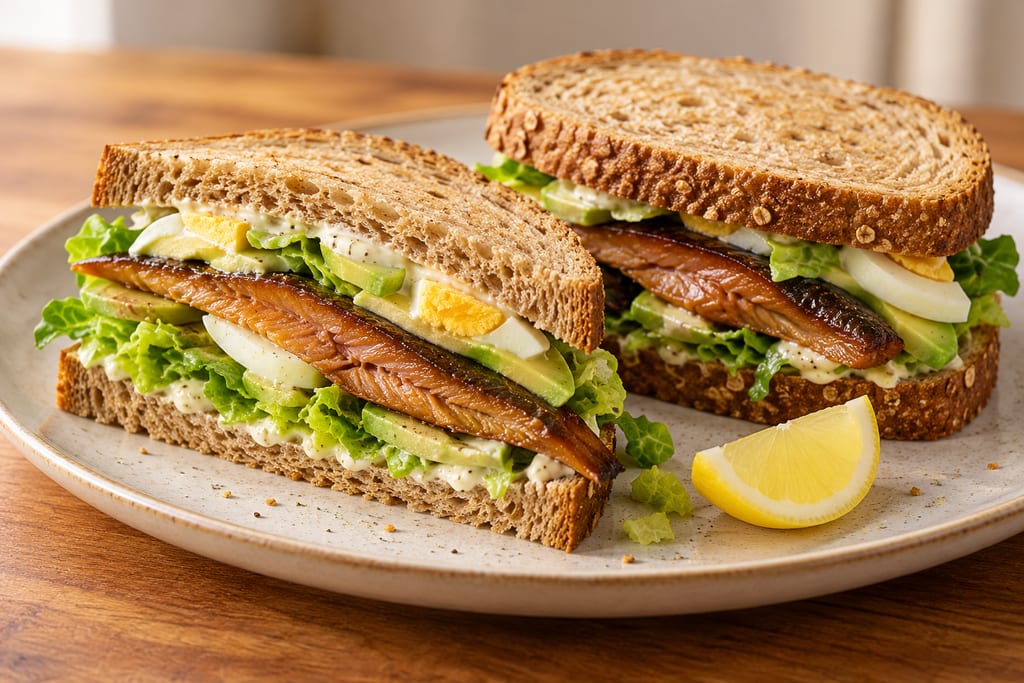
A warm club sandwich of oak-smoked Craster kipper fillets layered with soft-boiled egg, romaine, avocado and lemon mayonnaise on brown bread.
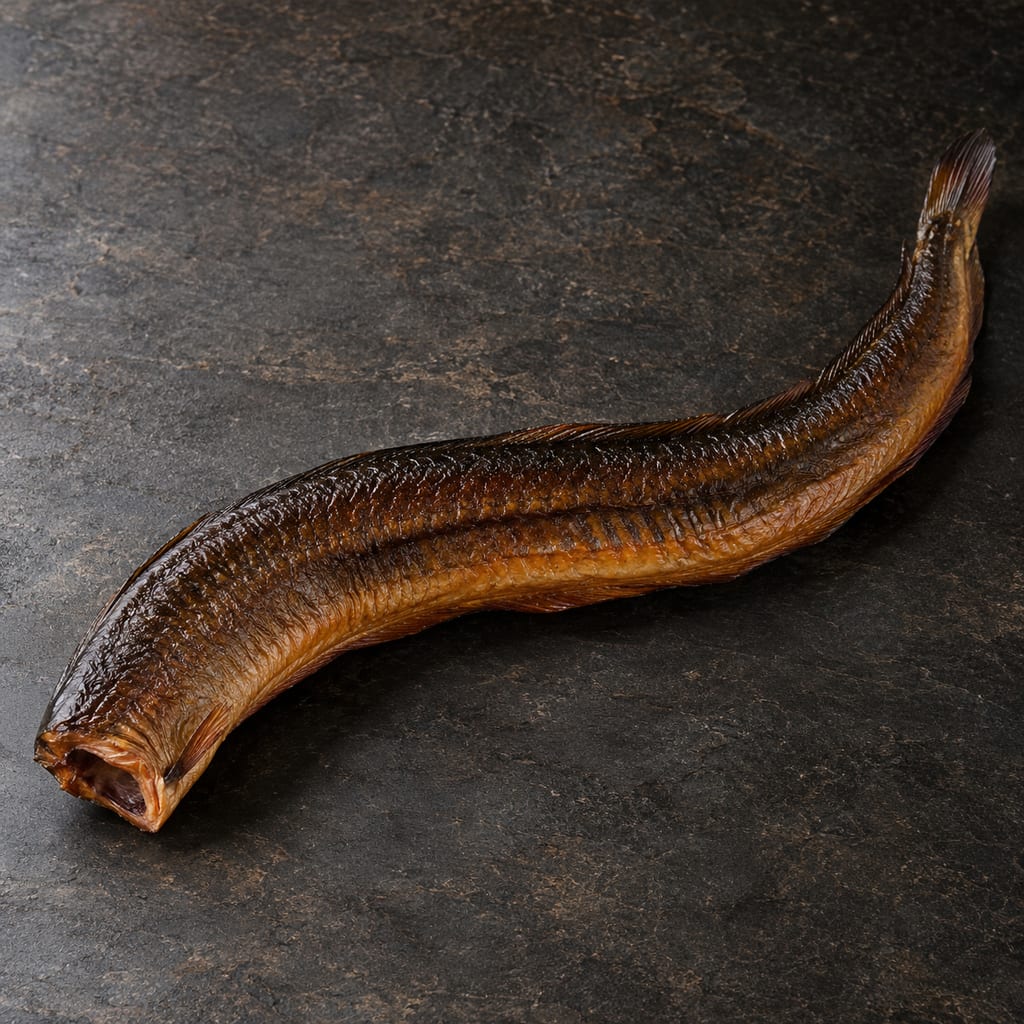
Short-finned eels, kooyang, smoked for a sustained period in the hollows of large trees at Budj Bim in south-western Victoria, a combined heat, smoke and drying method of the Gunditjmara people.
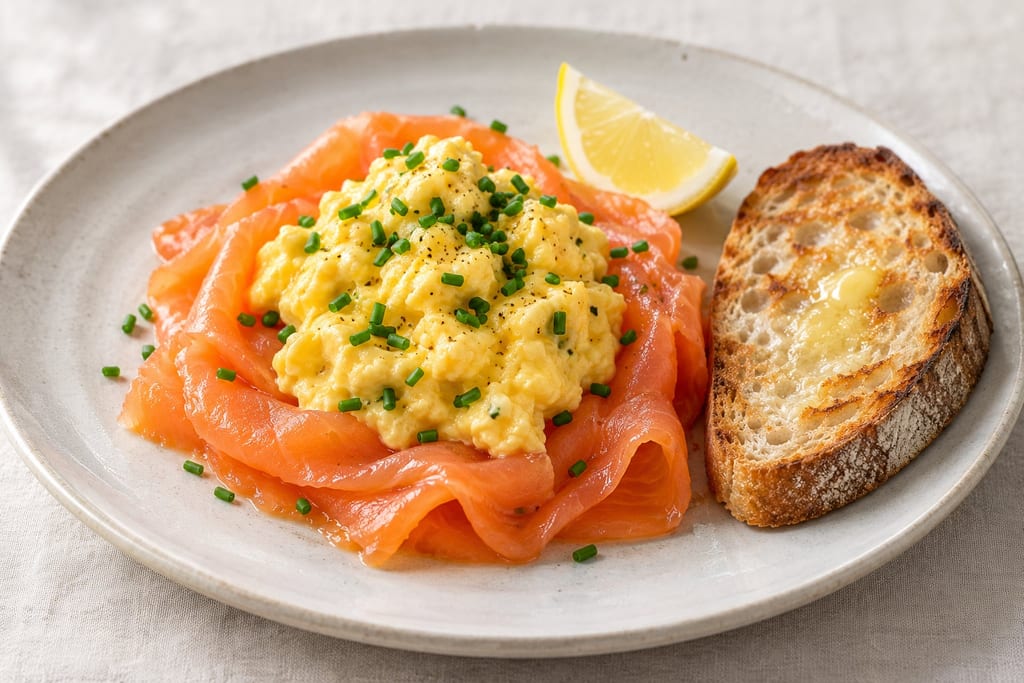
Softly scrambled eggs enriched with cream and butter, served with cold-smoked salmon, chives, lemon and sourdough toast as a British breakfast dish.
No community contributions have been published for this entry yet.
Sign in to contribute. Published comments and photos are free to read.
Mary Cressler / VindulgeMethod
How To Smoke Salmon – Easy & Tender Recipe1½ lb salmon fillet, 1 tbsp Dijon mustard, 1 tsp kosher salt, 1 tsp pepper
225°F fruit-wood smoke, check the thickest part, rest 10 minutes
Refrigerated leftovers up to three days
Creator's 135°F target
Cited in: How the batches differ; Endpoints and their dispute; Storage and limits
Mary Cressler VindulgeMethod
Perfect Smoke Salmon With No Brine3 lb king salmon fillet, mustard, salt and pepper, 225 smoker setting, 130°F internal endpoint
Cited in: How the batches differ; Endpoints and their dispute
Bradley SmokerMethod
How To Make Smoked Sockeye SalmonAbout 24-hour refrigerator cure, then 150°F smoker setting for three hours
Cited in: How the batches differ
Cowboy Kent RollinsMethod
Smoked Salmon | Dry Brine Recipe for Flaky Flavorful SalmonDry cure and alder smoke
HedgecomberMethod
Hot Smoked Salmon Recipe - How to Smoke Fish (no brine version)Quick no-brine hot-smoked salmon, a lunch rather than a preservation method
Cited in: Cooking that tastes of smoke
University of Alaska Fairbanks Cooperative Extension ServiceSafety · Method
Smoking Fish at Home (FNH-00325)Stages of salting, refrigerated equilibration, pellicle drying, hot smoking and storage
Hot smoking at 160°F for at least 30 minutes
Lightly salted smoked fish is not preserved
Cited in: Cooking that tastes of smoke; The Extension stages; Endpoints and their dispute; Storage and limits
U.S. Food and Drug AdministrationSafety
Selecting and Serving Fresh and Frozen Seafood SafelyMost seafood should reach 145°F internally
Cook seafood thoroughly
Cited in: Endpoints and their dispute