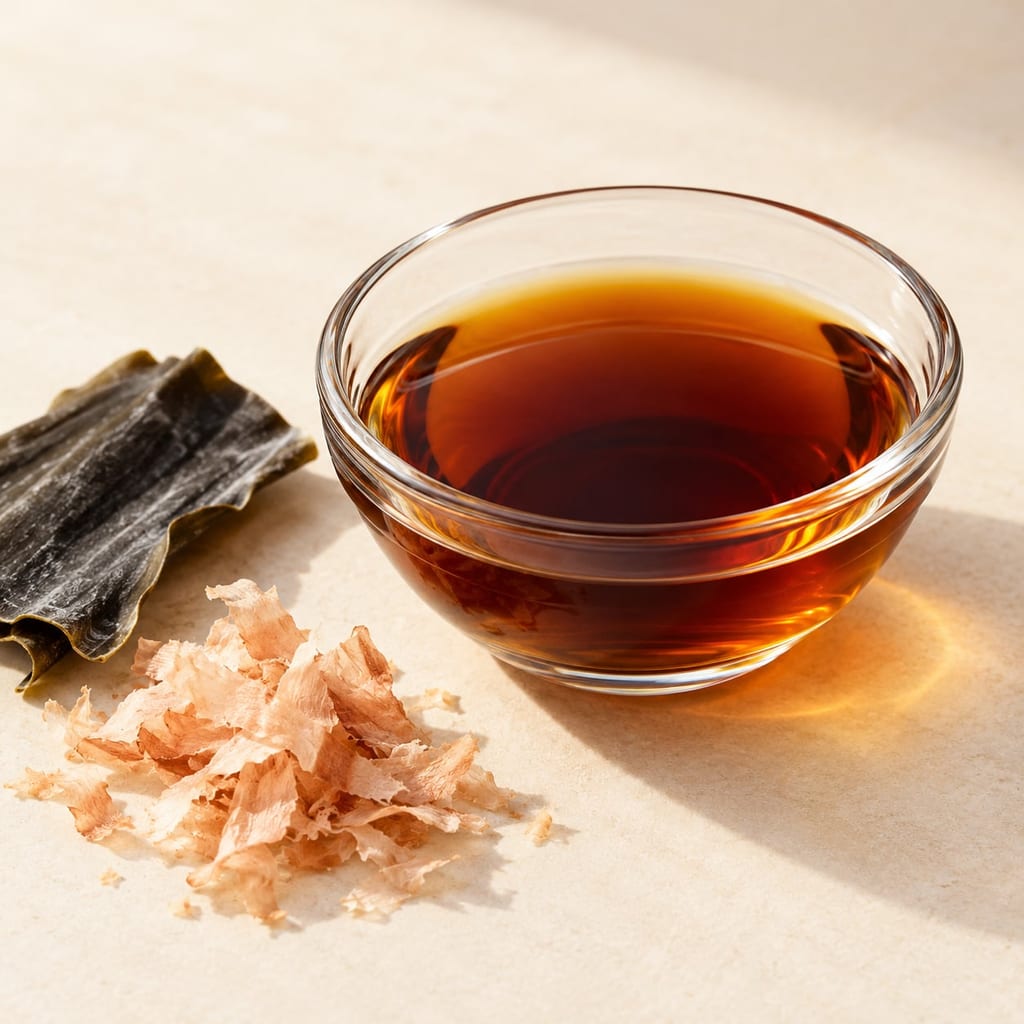
Mentsuyu (noodle dipping sauce)
Mentsuyu seasons Japanese noodles with dashi, soy sauce and mirin. Two home formulas are recorded here: a 2012 light-soy and bonito sauce, and a concentrate diluted 1:2 for dipping or 1:4 for hot soup.
 FermenteaWhere food goes to change
Traditional method
鰹節(かつおぶし) · katsuobushi · dried bonito · bonito flakes · 鰹節
Katsuobushi is skipjack tuna cooked, smoked and dried into a hard block that is shaved into flakes for dashi and toppings. Some styles stop at the smoke-dried stage; others receive carefully managed mold maturation.
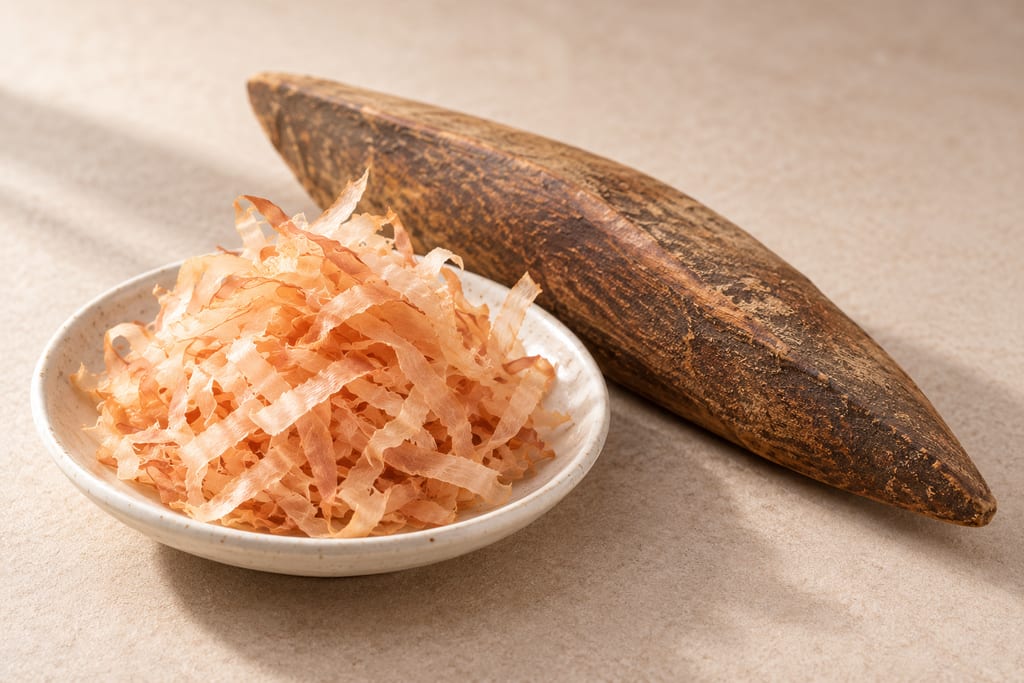
Katsuobushi (鰹節, かつおぶし) is bonito prepared until the fish becomes a dense, hard block, then shaved into thin flakes. In most contemporary Japanese production the fish is skipjack tuna (Katsuwonus pelamis). A finished block is dark, dry and firm enough to resist a kitchen knife; a kezuriki, a small plane with a fixed blade, turns it into feather-light shavings with a pale amber surface and a darker edge. Freshly shaved flakes curl, rustle and release a smoky, savory aroma.
The name covers related products rather than one unvarying recipe. Arabushi is cooked, smoked and dried but has no added mold stage. Scraping its exterior gives hadakabushi. Karebushi is taken through controlled mold maturation, while honkarebushi receives repeated mold and drying cycles and is prized for its very hard block and clear stock. A bag sold as katsuobushi flakes may come from one of these different blocks; its texture, smoke and intensity depend on the stage and cut. Japan's agriculture ministry describes the stages as arabushi, hadakabushi, karebushi and honkarebushi, while the Ibusuki regional record uses arabushi, karebushi and hongarebushi; the labels reflect their source descriptions and do not form one exact stage chart for every producer.
Bonito has been eaten in Japan for centuries, but early preserved fish should not be mistaken for the modern smoked and mold-matured block. Japanese court records from the eighth and tenth centuries mention hard-preserved bonito and preparations made by boiling or drying it. The name katsuobushi appears in a 1513 account. These attestations show a long interest in preserving the fish, not that the present-day production sequence already existed.
The later history has more than one strand. One account places the establishment of a smoke-drying method in Kishu in 1674; another describes a mold-spraying technique in Tosa during the mid-seventeenth century and later refinements that produced harder honkarebushi. The dates do not necessarily describe the same operation: smoking and mold maturation are separate steps. It is safer to describe a sequence of regional innovations than to assign the whole tradition a single uncontested birthplace.
During the Edo period, dashi became a defining base for soups, simmered dishes and noodle cooking. Katsuobushi blocks travelled well and could be shaved as needed, making their concentrated flavor useful in kitchens far from coastal production. The block was also valued as a durable provision. Its rise belonged to a wider seasoning culture that joined bonito with kombu and, as prices and trade changed, other dried fish.
The spread of katsuobushi also followed the movement of goods. During the Edo period, kombu harvested in Hokkaido travelled by coastal trade routes to Osaka, while bonito products moved inland from fishing and processing towns. Dashi brought these preserved ingredients together in urban kitchens, where soy sauce, miso and other seasonings were becoming more widely available. That history helps explain why katsuobushi is valued as a concentrated seasoning rather than served only as a portion of fish. A small shaving can season a pot of soup or a plate of vegetables.
Cooking firms the fillets and makes later bone removal possible. Smoking and drying then remove water while leaving smoke compounds and a compact fish structure. This is preservation by heat, smoke and dehydration; the arabushi stage does not become a mold ferment simply because later katsuobushi can be mold-matured. The distinction matters both to flavor and to how a block is described.
Mold-matured karebushi is a different process. Research on maker samples found several xerophilic Aspergillus species on block surfaces, with the mix varying between producers. Their enzymes include proteases and peptidases that act on proteins and lipases that act on fats. Those changes help explain why a mature block can taste less oily and yield a different aroma from a smoke-dried one. The study also found mold-related flavor transformations, but its results describe the sampled production conditions; they do not establish a do-it-yourself culture recipe.
The mold stage is not always seeded from a single culture. A 2025 study of commercial karebushi made with or without a starter identified Aspergillus pseudoglaucus as the commercial starter it examined, yet naturally occurring Aspergillus chevalieri remained prominent in some products, including some made with the starter. The finished block, its naturally occurring surface community and a selected production starter are therefore three separate things, and these results describe sampled commercial processes, not a household inoculation method.
The stock's savoriness comes from fish nucleotides, including inosinate, together with glutamate in ingredients such as kombu. Dashi is not just salty water: it carries volatile smoke aroma, soluble taste compounds and a light fish character into the dish. When bonito and kombu are combined, their different savory compounds complement one another. The same flakes can also be eaten directly, where their smoke, saltiness and texture are more evident than in broth.
Commercial production begins with fresh, chilled fish. Producers remove the head, viscera and belly skin, separate the flesh into back and belly portions, and arrange the pieces in cooking baskets. A general Japanese overview gives about 80°C for 60 to 90 minutes of simmering; producer methods and fish dimensions vary, so that figure is a description of one published method, not a universal process control.
After cooking, workers cool the pieces in a ventilated area and remove bones and skin by hand. Careful trimming prevents defects in the block and keeps bones out of the finished shavings. The fish is then smoke-dried in repeated rounds. A maker's account describes baskets moving between rooms and levels, with the pieces repositioned as they heat, cool and rest. This gradual alternation removes moisture through the centre instead of scorching the surface while the inside remains wet.
The number and timing of smoke rounds depend on the equipment and the maker. Some descriptions give around ten to twenty smoke-drying passes. The product at the end is arabushi, the first complete smoke-dried stage. Removing the tar-dark outer layer produces hadakabushi; producers who make karebushi or honkarebushi continue by culturing selected molds, drying, brushing away growth and repeating the treatment. A general account gives one time range for its described cycles, while Kagoshima's traditional-food record gives four to six months for its mature product. The periods should remain attached to their respective methods.
This account does not give a household yield, fish-to-water ratio or complete process limits. Industrial smokehouses, trained workers and measured controls are part of the product. A hard surface, pale center or smoky aroma cannot tell a reader whether an improvised batch is safe.
Makurazaki in Kagoshima is one of Japan's principal katsuobushi production centres. Its position near bonito fishing routes, water supply and local hardwoods helped support a long-running industry. The town's geographic-indication account describes more than three centuries of production and links local working conditions to the product's development. Kagoshima leads Japan's production of katsuobushi, while other regions maintain their own names and methods.
Tosa in Kochi and Kishu in present-day Wakayama appear in separate accounts of early smoke and mold techniques. Yaizu in Shizuoka also became an important production centre as the industry expanded and methods changed. Regional names such as satsumabushi, tosabushi and yaizubushi point to production histories; they do not mean every block from a prefecture has one fixed flavor or process.
Wood is not a decorative detail. Producers choose hardwood that gives a manageable smoke, and the fire's heat and the movement of baskets shape how quickly water leaves the fillet. Modern facilities may circulate smoke mechanically, while smaller smokehouses can depend on close manual attention. Regional traditions therefore reflect more than climate: fishing, access to fuel and water, equipment, labour and trade all matter.
The block is divided into back and belly sections, often called obushi and mebushi, and the fat balance can differ between pieces. Producers may select fish with enough fat for flavor but not so much that oil clouds the dashi. These differences are one reason a cook may choose a block for a clear stock or a stronger, richer broth rather than assuming every piece will behave alike. Smoke woods and firing arrangements also shape the character of the finished block, which is why a generic label cannot describe every craft method.
The stage changes the stock. Arabushi tends to leave a more pronounced smoke impression. Mold-matured blocks such as honkarebushi are dried harder and often produce a lighter, clear-looking dashi with concentrated savory taste. These are tendencies tied to the method and the block, not a guarantee printed by every brand. A producer may also use fish other than skipjack for related bushi products, and those blocks should not be silently relabelled as katsuobushi.
Flake thickness is another choice. Thin, feathery kezuribushi release aroma and taste quickly and can be scattered over hot vegetables, rice, tofu or noodles. Thicker flakes and larger shavings suit longer extraction when the aim is a more substantial stock. Commercial packets often label the intended cut or use; the shape is a practical clue, not a quality ranking.
A whole block keeps its shape until shaved, while packaged flakes are ready to use and save the work of planing. The block needs a dedicated shaver and a steady hand. It should be stored according to the maker's directions; opened flakes should be sealed and kept as their label directs. Moisture pickup can soften shavings and dull their aroma, while a newly opened pack gives a quick way to add fish flavor without making a full stock.
Katsuobushi is best known as a dashi ingredient, often paired with kombu. The stock begins many Japanese soups, including miso soup, and flavors simmered vegetables, noodle broths and sauces. It can also be used to make a quick, delicate broth when a dish needs savory depth without a heavy meat stock. The flakes are strained out after extraction when the cook wants a clear liquid.
Outside the stockpot, flakes soften on hot food and cling to its surface. They top tofu, okonomiyaki, rice, vegetables and noodles; the thin pieces may move in rising steam, an effect that gives the topping its familiar lively appearance. Kagoshima also has tea-bushi, a simple preparation of bonito flakes and barley miso loosened with green tea. These uses show why the product is sold both as an ingredient for extraction and as a ready-to-eat seasoning.
Kombu contributes glutamate while bonito contributes fish-derived nucleotides, so the pair can taste fuller than either alone. Dashi can also combine bonito with dried sardines or shiitake, depending on the cook and dish. Those alternatives are their own ingredients and do not make the resulting broth katsuobushi dashi unless bonito is part of it.
In a home kitchen, katsuobushi can be used in several ways without making a stockpot of dashi. A pinch of thin flakes turns rice, greens or tofu into a small savory dish; a more generous handful can be steeped and strained for a broth. Barley miso and green tea make tea-bushi in Kagoshima, while thicker cuts suit preparations that simmer longer. These uses differ in how much smoke, texture and extracted flavor reaches the plate, but all begin with the same dry, shaved fish.
Katsuobushi is made from fish that can form histamine if it is not chilled promptly after capture. Once histamine has formed, cooking, smoking and drying do not remove it. That is why this page treats the source fish and its cold chain as safety controls rather than relying on the finished block's hardness or aroma.
Smoke adds a second process concern. Polycyclic aromatic hydrocarbons can deposit on smoked foods, and regulations set limits for katsuobushi. Industrial producers manage the fire and test product against the controls that apply in their market. A household smokehouse would need its own validated design, process controls and contaminant testing; a recipe description cannot supply those.
The mold stage also requires care. Research identifies selected Aspergillus species in karebushi, but natural mold growth is not a safe substitute for a producer's defined culture and managed maturation. For these reasons, the method here explains a commercial tradition and its stages. It is not an instruction to preserve fresh fish at home, and smell, color, dryness or visible mold cannot establish safety.
Japanese records describe preserved bonito long before the modern hard block. A 1513 text contains the name katsuobushi. Accounts of the later smoke-dried method differ: one places its establishment in Kishu in 1674, while another describes a mold-spraying method in Tosa in the mid-seventeenth century and later refinement in other production areas. Those records concern different stages and should not be collapsed into one uncontested birthplace.
Scaling: source batch only
Skipjack can form histamine when mishandled before processing; cooking, smoking and drying do not remove it.
Hazard sourceWood smoke can deposit polycyclic aromatic hydrocarbons on smoked fish; finished products must meet applicable controls.
Hazard sourceMold-matured katsuobushi uses selected cultures and managed production. Unidentified growth is not a substitute.
Hazard sourceMaintain a documented cold chain from capture through processing and reject fish with uncertain temperature history.
Control sourceUse a validated commercial cooking, drying and smokehouse process with measured controls; appearance and hardness do not establish safety.
Control sourceManage smoke production and test finished products against applicable contaminant limits.
Control sourceUse only controlled cultures and a defined mold-maturation program for karebushi or honkarebushi.
Control sourceDo not use this commercial process description as a home method for preserving fresh fish at room temperature. The sources do not supply a validated household process.
Histamine already formed in skipjack is not destroyed by cooking, smoking or drying; use fish with a documented cold chain.
Do not use unidentified mold to mature bonito blocks.
A country-level association, not a claim that one town invented every katsuobushi method.
A major documented production place; not the sole origin of katsuobushi.
A documented historical association with mold-treated bonito, not an uncontested birthplace for all katsuobushi.
A separate historical account of the smoke-dried method; the sources describe distinct process developments.
Mentsuyu seasons Japanese noodles with dashi, soy sauce and mirin. Two home formulas are recorded here: a 2012 light-soy and bonito sauce, and a concentrate diluted 1:2 for dipping or 1:4 for hot soup.
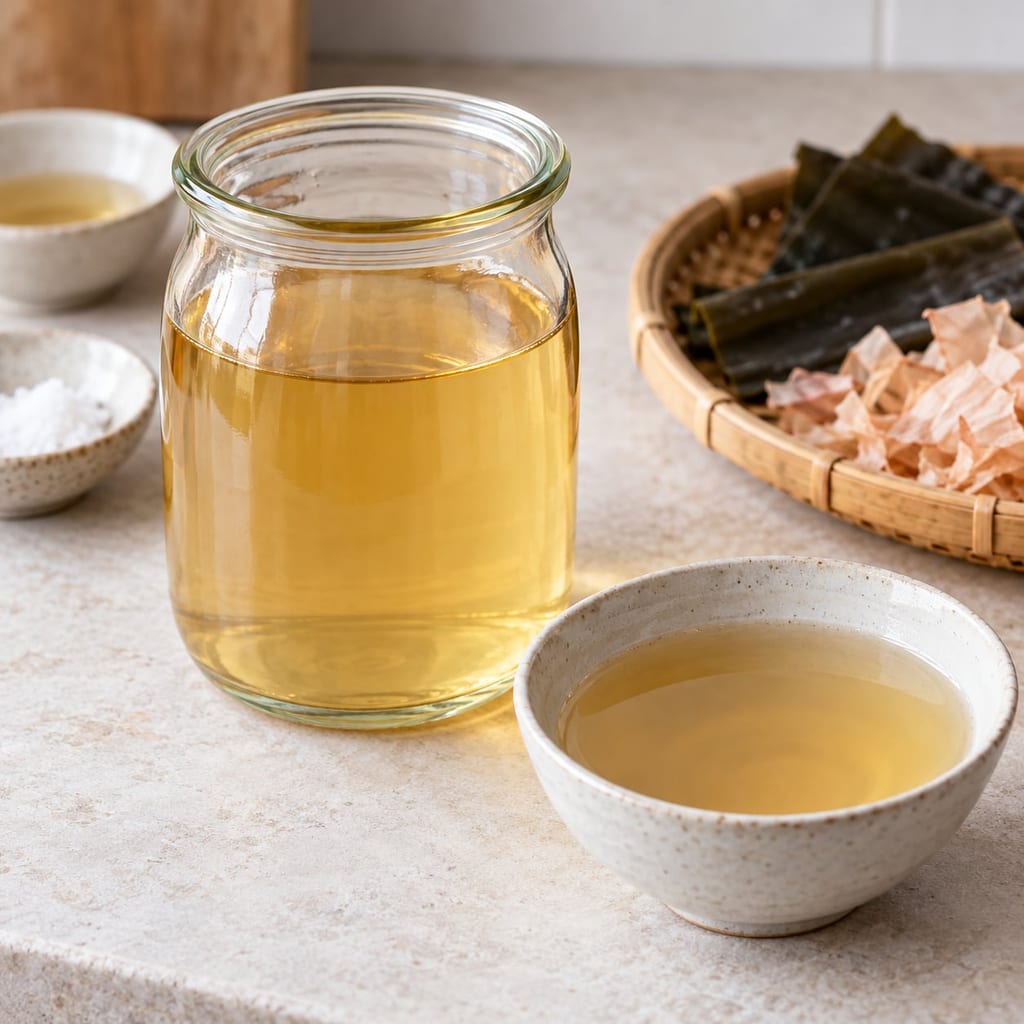
Shiro dashi is a pale Japanese seasoning stock of kombu and bonito dashi, light soy sauce, mirin and salt, used to flavour dishes without darkening them.

Japanese skipjack tuna cooked, then repeatedly smoked and dried over a wood fire by the hand-fired tebiyama method into a hard block for shaving into dashi: the first stage of katsuobushi.
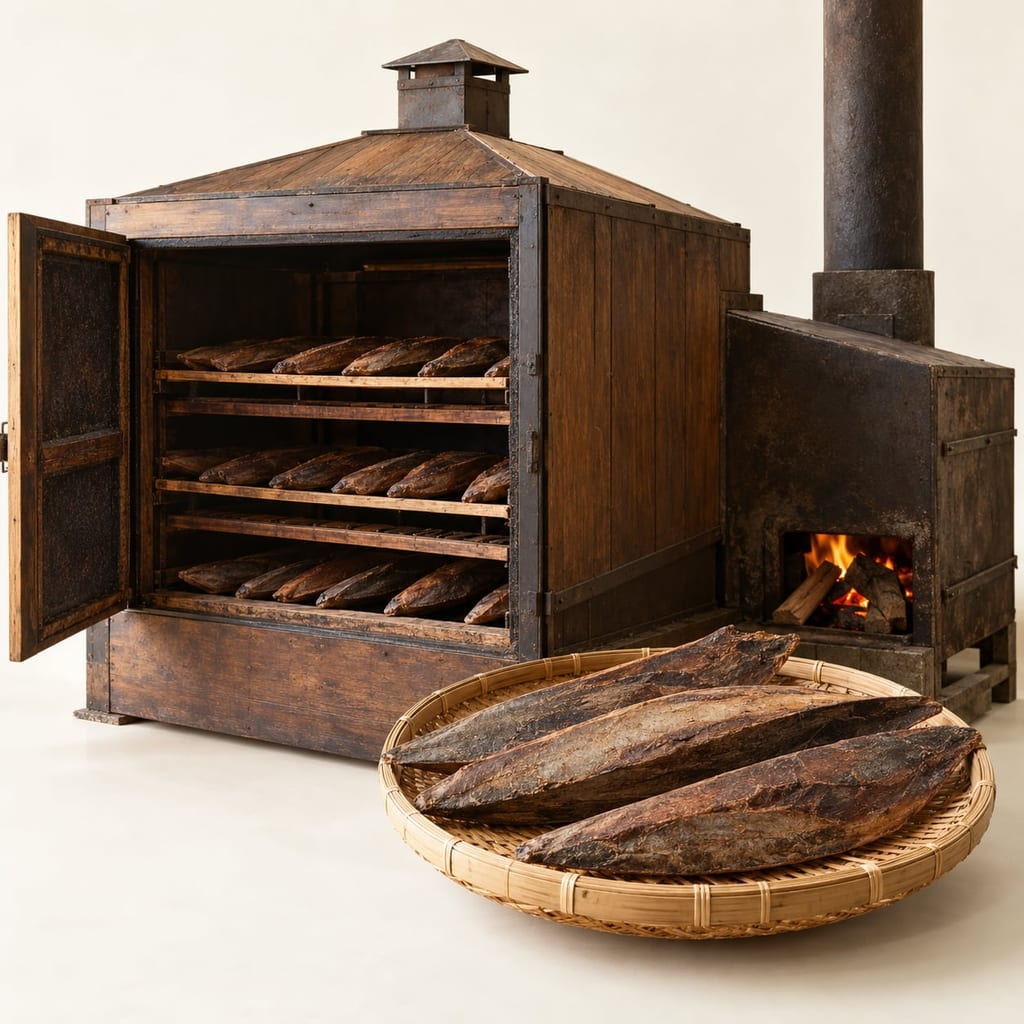
Enclosed cooking, smoking and drying equipment used in the multi-stage process that makes katsuobushi, the dried, smoked and mould-treated bonito of Japan, in repeated stages.
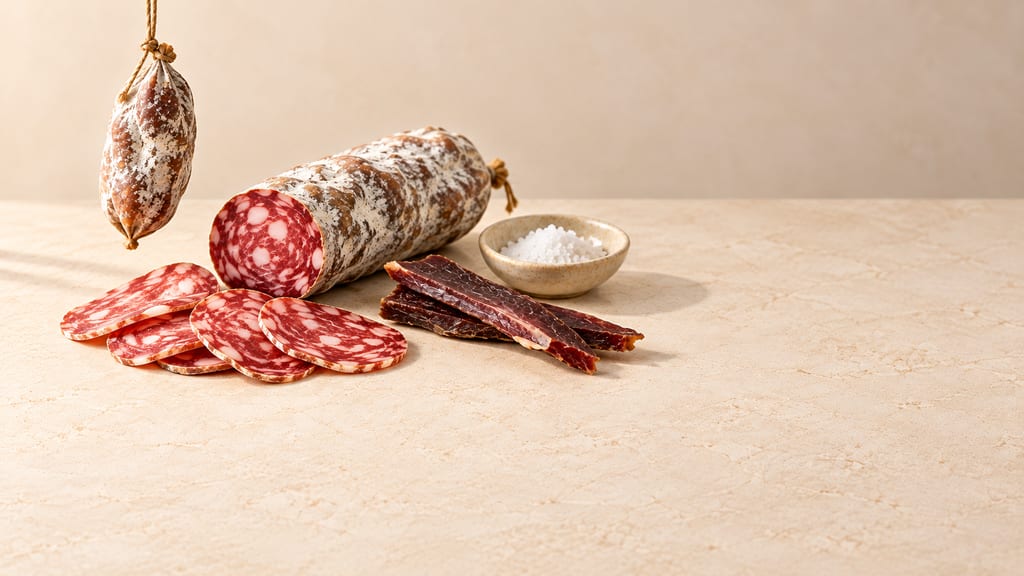
Dry salami, sour pork with rice, matured sheep and aged blubber follow different paths from animal to food. Their stories connect microbes with climate, slaughter, migration and the meals people share.
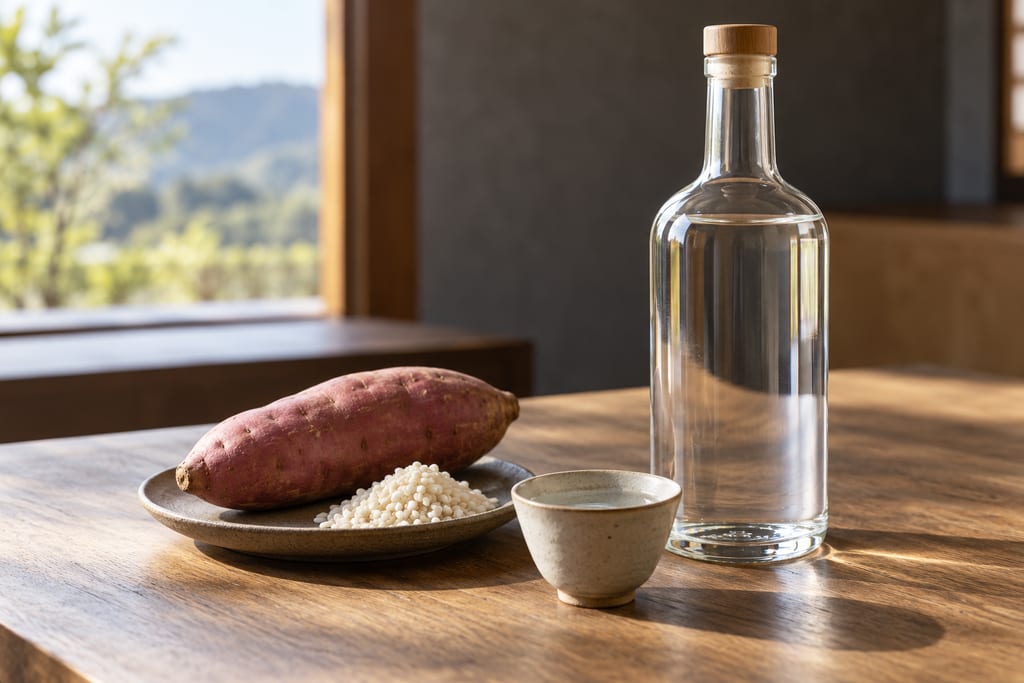
Japanese pot-distilled spirit made by fermenting sweet potatoes, rice or barley with koji and yeast in two stages, then distilling the mash once so the ingredients' aroma survives.
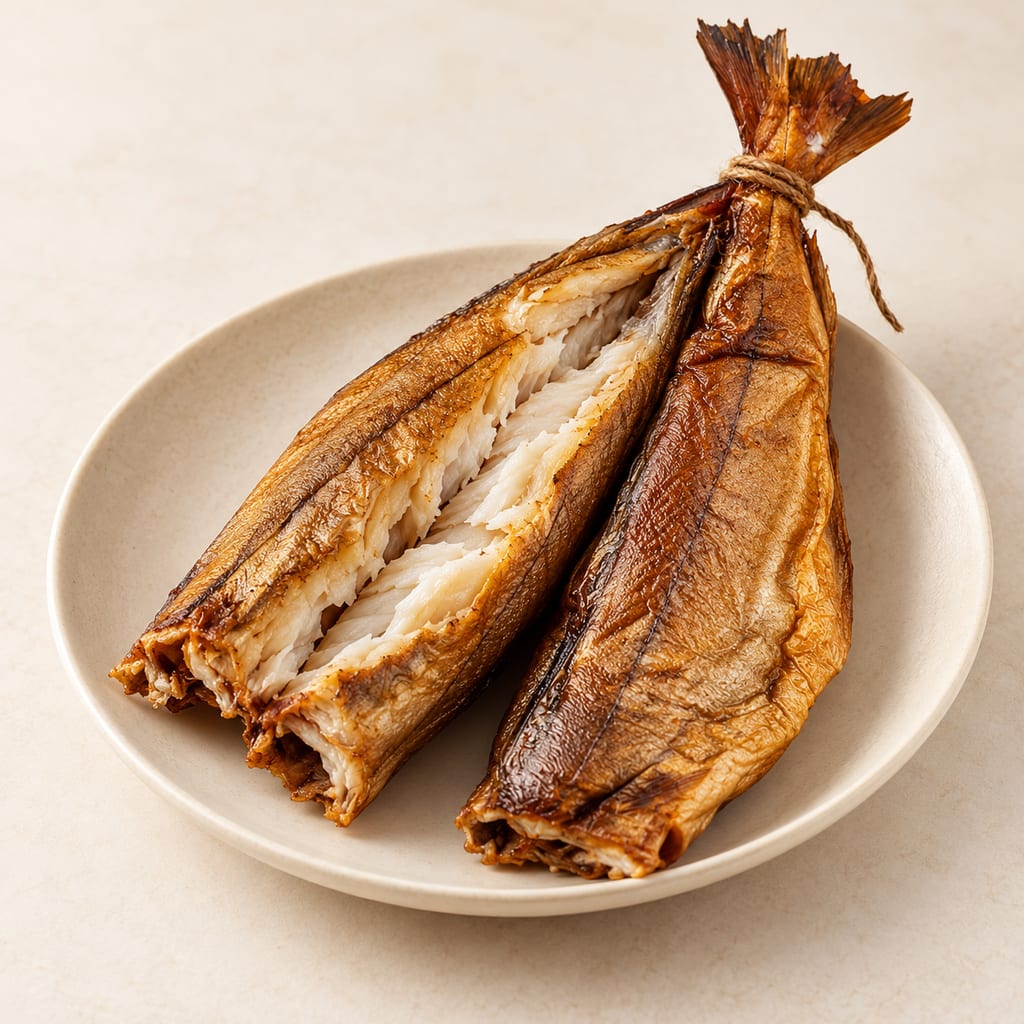
Arbroath smokies are whole haddock dry-salted, paired by the tail and hot-smoked in a protected coastal area. Their recorded history links Auchmithie and Arbroath, though the exact origin is unsettled.

A four-serving risotto published in the 2014 Arbroath Smokie Trail booklet and credited to Hayley Wilkes. It cooks with finished Arbroath smokies; it does not describe smoking fish.
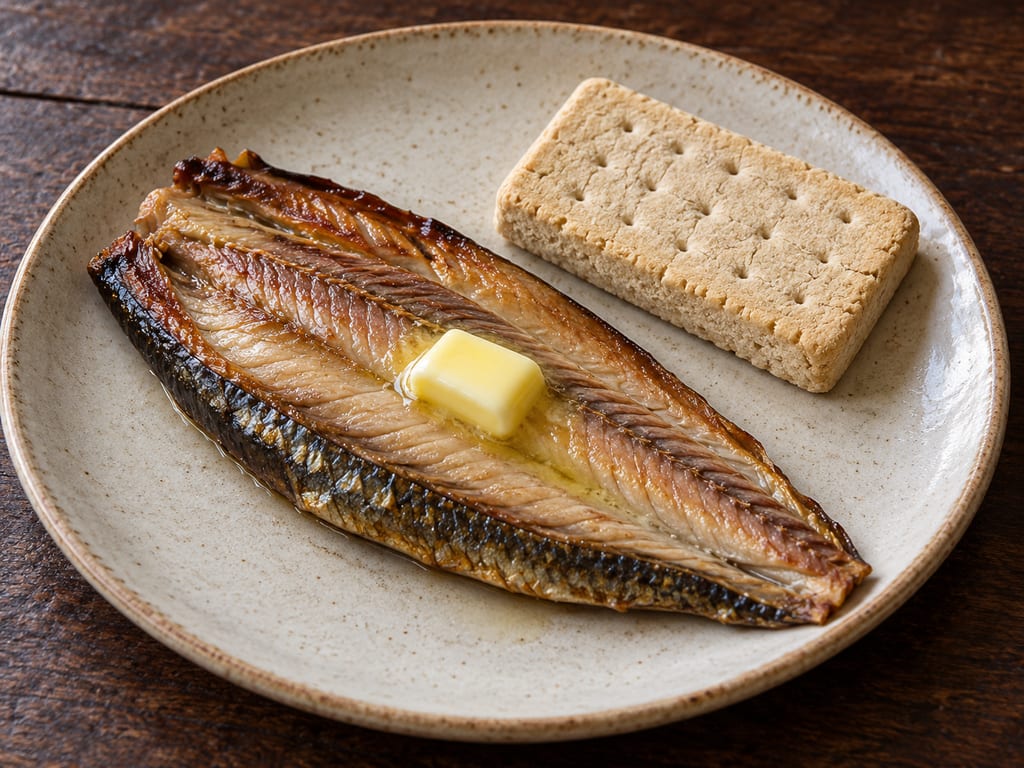
A Victorian way with Great Yarmouth bloaters: the lightly salted, cold-smoked whole herring is broiled and served with fresh butter and a warmed captain's biscuit.
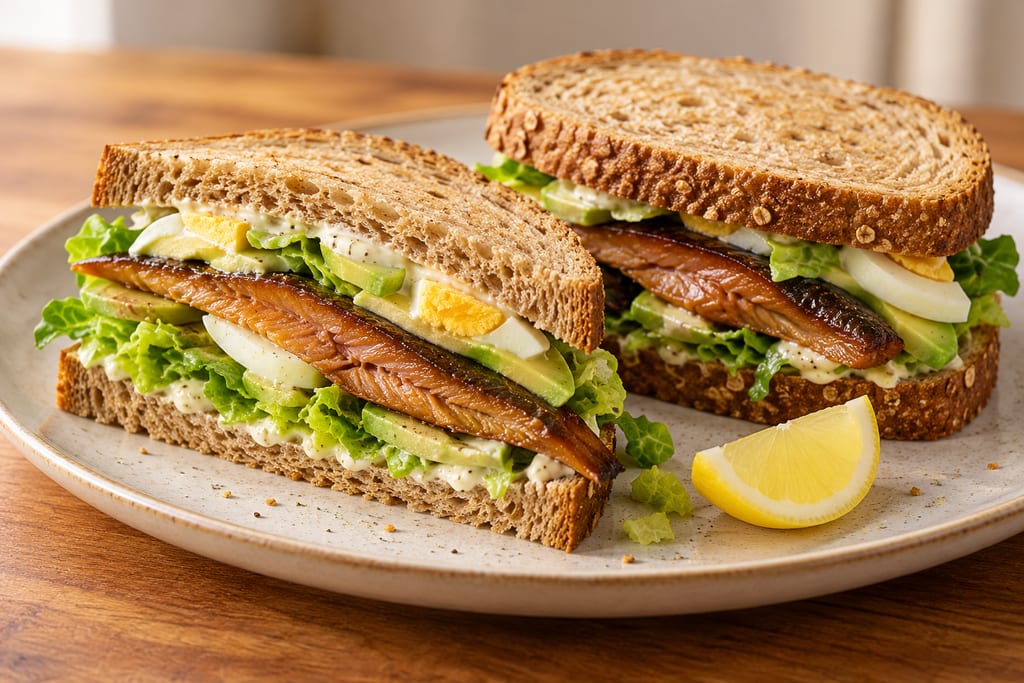
A warm club sandwich of oak-smoked Craster kipper fillets layered with soft-boiled egg, romaine, avocado and lemon mayonnaise on brown bread.

Short-finned eels, kooyang, smoked for a sustained period in the hollows of large trees at Budj Bim in south-western Victoria, a combined heat, smoke and drying method of the Gunditjmara people.

Softly scrambled eggs enriched with cream and butter, served with cold-smoked salmon, chives, lemon and sourdough toast as a British breakfast dish.
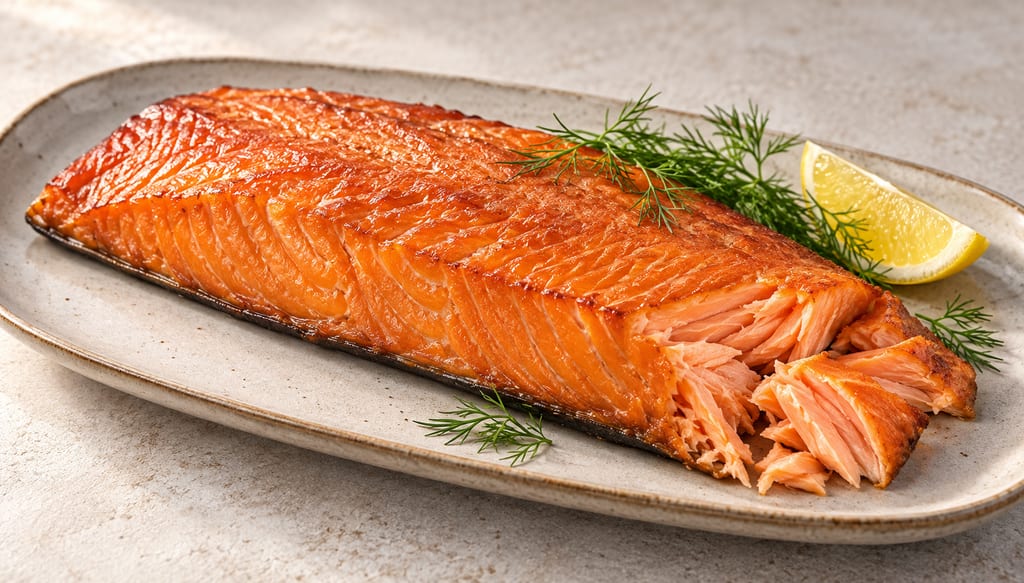
Salmon fillets salted or dry-brined, rested, then cooked and flavoured in a smoker. The method is a cooking process, and the endpoint decides its safety.
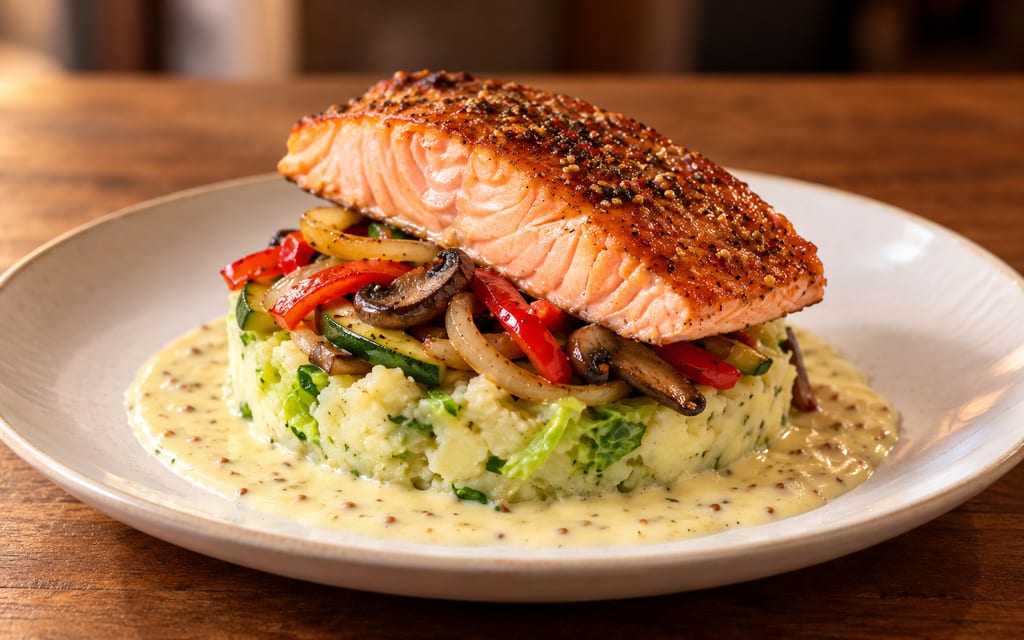
Burren Smokehouse’s colcannon dish serves hot-smoked salmon with mashed potatoes, cabbage, stir-fried vegetables and mustard cream.

Protected Italian vinegar made only from cooked grape must, fermented and aged in a battery of wooden barrels for at least 12 years: sweet, sharp and syrupy.
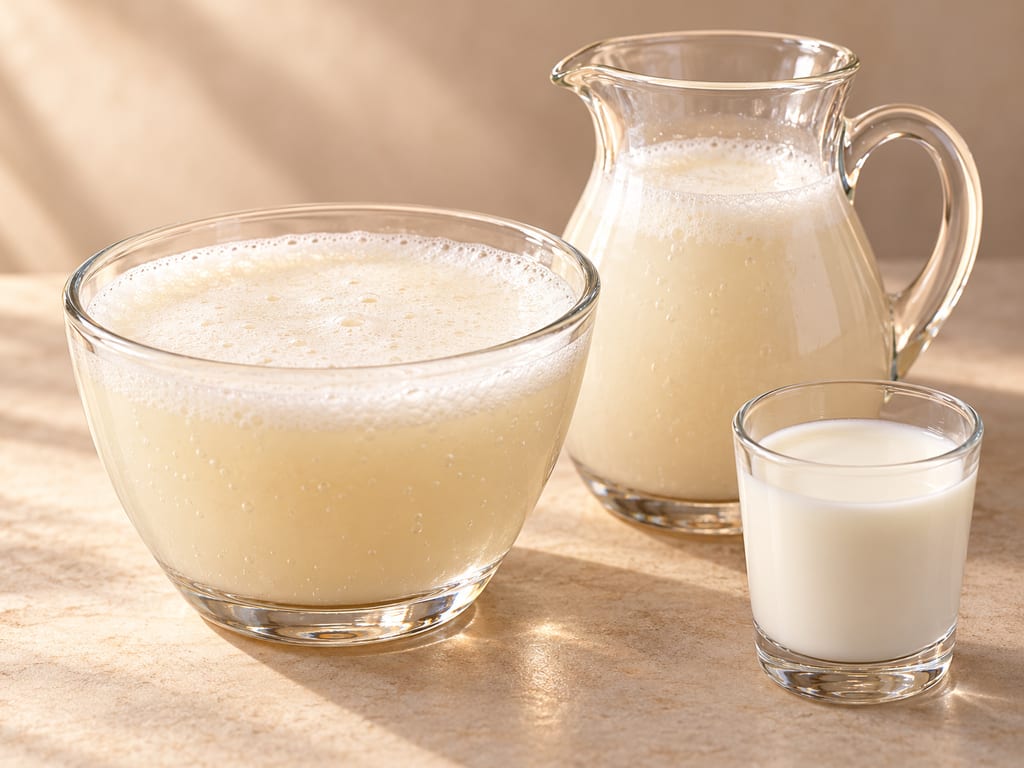
Airag is Mongolia’s fermented mare’s-milk drink, traditionally churned with saved starter in a reusable cowhide khokhuur.

Appam, or hoppers, are South Indian and Sri Lankan rice pancakes made from a fermented coconut-and-rice batter and cooked in a curved pan to a crisp lacy rim and a soft, spongy centre.
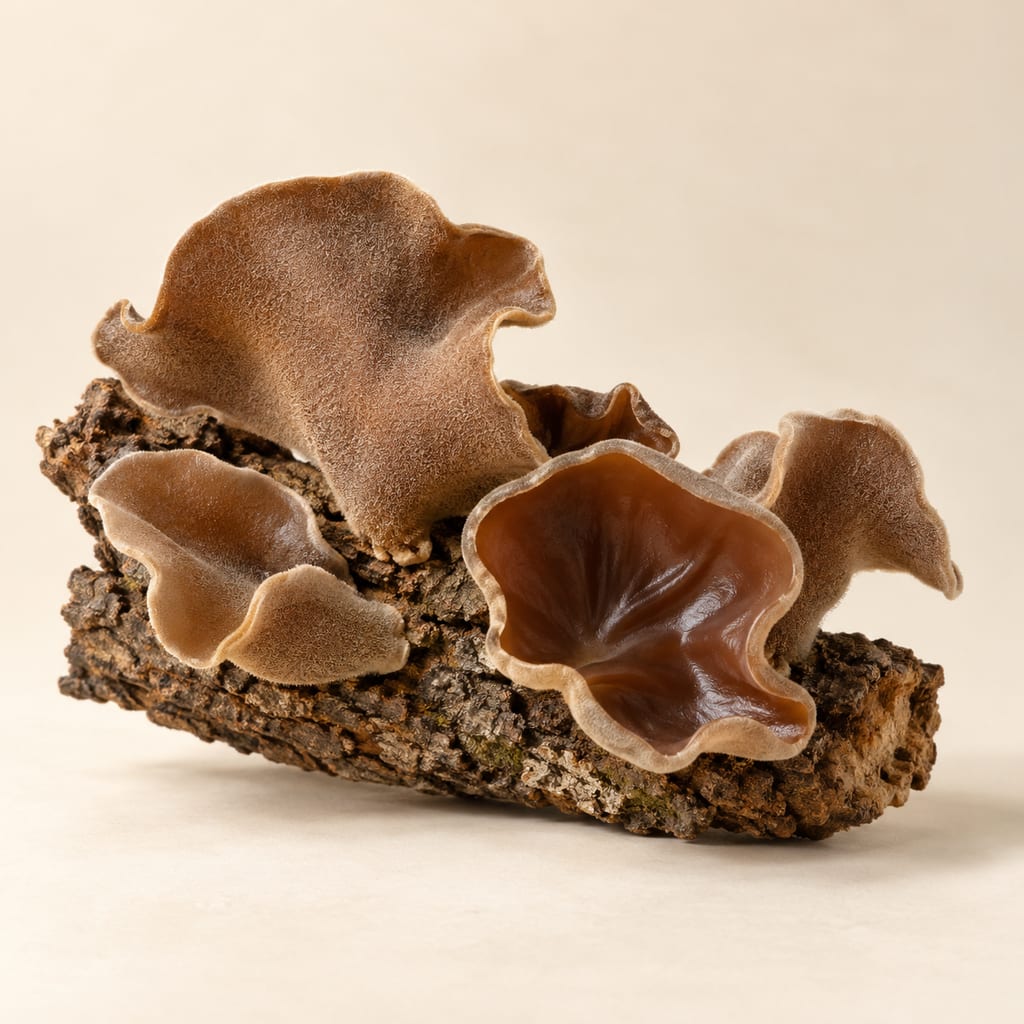
Auricularia tremellosa is a wood ear fungus of the genus that supplies most dried wood ear sold in China; its own food record is thin, and the culinary practice described here comes from the closely related wood ear species.

Ayran is Turkey’s cold, savoury yogurt drink: plain yogurt is loosened with water and lightly salted, then whisked smooth or aerated into a soft cap of foam.
A thin stone griddle used over an open hearth. Norwegian archaeology documents the established tradition from the early Middle Ages; a Viking-period origin is only a cautious suggestion linked to Shetland.

Crushed or milled barley cooked in water until the starch softens and the mixture thickens, the plainest way a northern household turned stored grain into a meal, here with apple and hazelnut.
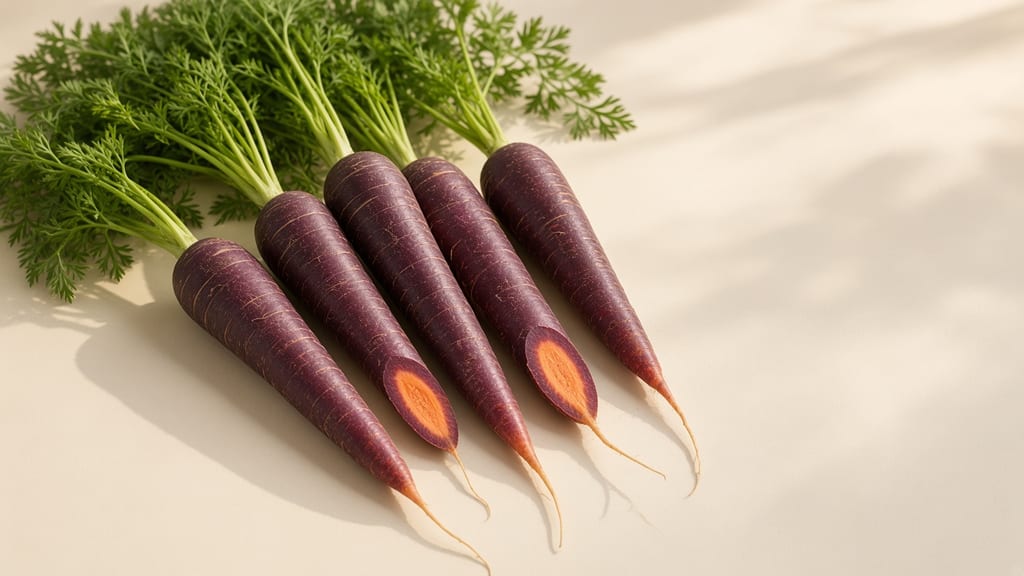
Black carrot is the anthocyanin-pigmented Eastern carrot (Daucus carota var. atrorubens), the purple root that preceded orange types and still colours kanji and şalgam.
No community contributions have been published for this entry yet.
Sign in to contribute. Published comments and photos are free to read.
Ministry of Agriculture, Forestry and Fisheries, JapanHistory · Method · Geography · Uses
Dried BonitoKagoshima production and inherited regions; product stages; 1674 Kishu account; traditional process; honkarebushi maturation described as four to six months; tea-bushi use.
Cited in: A block made to be shaved; Preserved bonito before the familiar block; From fillet to block; Places, wood and production; A flavor that travels through the meal
Ministry of Agriculture, Forestry and Fisheries, JapanHistory · Method · Science · Uses
Katsuobushi and similar productsEighth-century and 1513 historical references; distinctions among arabushi, karebushi and honkarebushi; general cooking and smoke-drying process; mold treatment; reported 80°C simmering and 60–90 minute range; dashi roles and regional fish products.
Cited in: A block made to be shaved; Preserved bonito before the familiar block; What cooking, smoke and mold change; From fillet to block; Places, wood and production; Choosing a stage and a cut
Ministry of Agriculture, Forestry and Fisheries, JapanGeography · History
Product Summary (Registration No. 168): Makurazaki KatsuobushiMakurazaki is the registered production area; the account describes a tradition exceeding 300 years and explains local fishing, water, wood and industrial history.
Cited in: Places, wood and production
The Tokyo FoundationHistory
Dried BonitoAncient preserved bonito roots; smoke-drying associated with 1674; mold treatment described as a later development around 1770.
Cited in: Preserved bonito before the familiar block
International Journal of Food MicrobiologyMicrobiology · Chemistry
Characterization of surface Aspergillus community involved in traditional fermentation and ripening of katsuobushiFive Aspergillus species isolated from karebushi surfaces; communities varied by producer; enzyme activities associated with protein and lipid breakdown; study describes moisture and water-activity changes and a roughly six-month process.
Cited in: What cooking, smoke and mold change; Safety and limits of the record
Journal of General and Applied Microbiology / J-STAGEMicrobiology
Diverse fungal communities in commercial karebushi produced with or without a starter cultureIdentified Aspergillus pseudoglaucus as the commercial starter it examined; naturally occurring Aspergillus chevalieri remained prominent in some products, including some made with the starter; results describe sampled commercial processes, not a household inoculation method.
Cited in: What cooking, smoke and mold change
Japan Geographical Indication Products Information Website / MAFFMethod · Geography
Ibusuki Katsuobushi geographical indication registrationThe Ibusuki regional record uses the stage names arabushi, karebushi and hongarebushi.
Cited in: A block made to be shaved
Government of Japan, Highlighting JapanHistory · Uses
Feature: Japan’s Food CultureKatsuobushi's Edo-period spread as a dashi ingredient; shaving blocks into flakes; thickness varies with the dish.
Cited in: A block made to be shaved; Preserved bonito before the familiar block; Choosing a stage and a cut; A flavor that travels through the meal
Ministry of Agriculture, Forestry and Fisheries, JapanScience · Uses
Dashi stockDashi as a base for soups, simmered dishes, noodles and dressed vegetables; savory contribution from amino acids and nucleotides in dried ingredients.
Cited in: What cooking, smoke and mold change; A flavor that travels through the meal
KEIHOKU SupermarketMethod · Geography · Uses
Katsuobushi (honkarebushi), Marumo Co., MakurazakiProducer account of fish selection, cutting, simmering, bone removal, hardwood smoke-drying and mold maturation; examples of different flake cuts and dashi use.
Cited in: From fillet to block; Places, wood and production; Choosing a stage and a cut
U.S. Food and Drug AdministrationSafety
Scombrotoxin poisoning and decompositionHistamine in susceptible fish is not eliminated by cooking, smoking, drying or other processing after it forms.
Cited in: Safety and limits of the record
U.S. Food and Drug AdministrationSafety
Fish and Fishery Products Hazards and Controls GuidanceFish-processing hazards require validated controls; drying criteria depend on the process and cannot be inferred from appearance.
Cited in: Safety and limits of the record
European UnionSafety
Commission Regulation (EU) 2023/915 on maximum levels for certain contaminants in foodMaximum levels for benzo[a]pyrene and the sum of four PAHs apply to katsuobushi.
Cited in: Safety and limits of the record