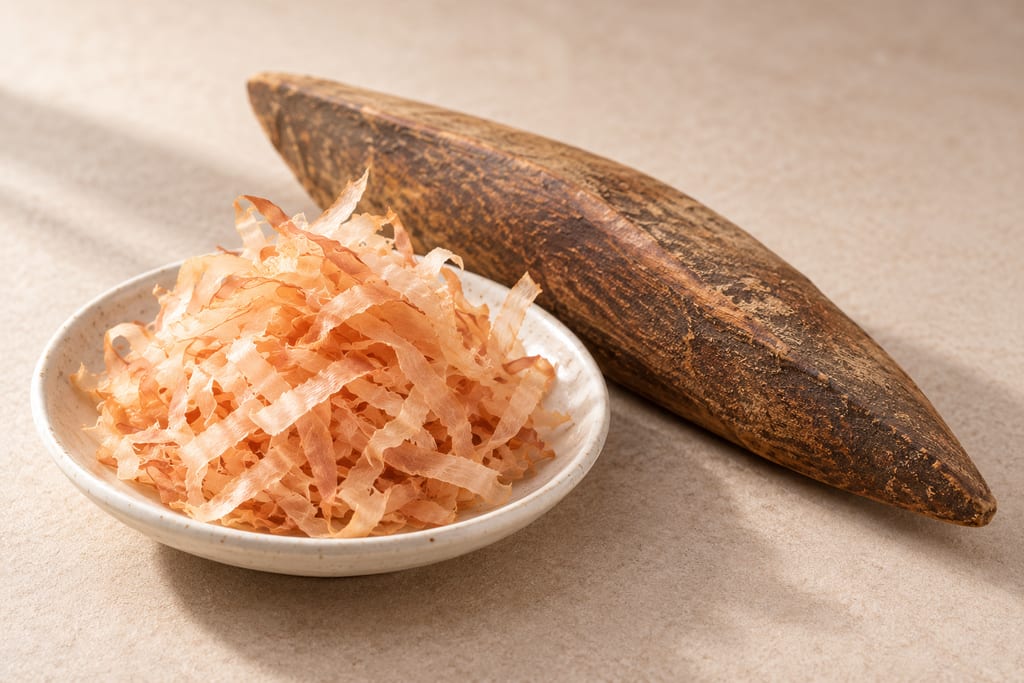
Bonito flakes (katsuobushi)
Katsuobushi is skipjack tuna cooked, smoked and dried into a hard block that is shaved into flakes for dashi and toppings. Some styles stop at the smoke-dried stage; others receive carefully managed mold maturation.
 FermenteaWhere food goes to change
めんつゆ · tsuyu · mentsuyu · noodle soup base · つゆ · 麺つゆ
Mentsuyu seasons Japanese noodles with dashi, soy sauce and mirin. Two home formulas are recorded here: a 2012 light-soy and bonito sauce, and a concentrate diluted 1:2 for dipping or 1:4 for hot soup.
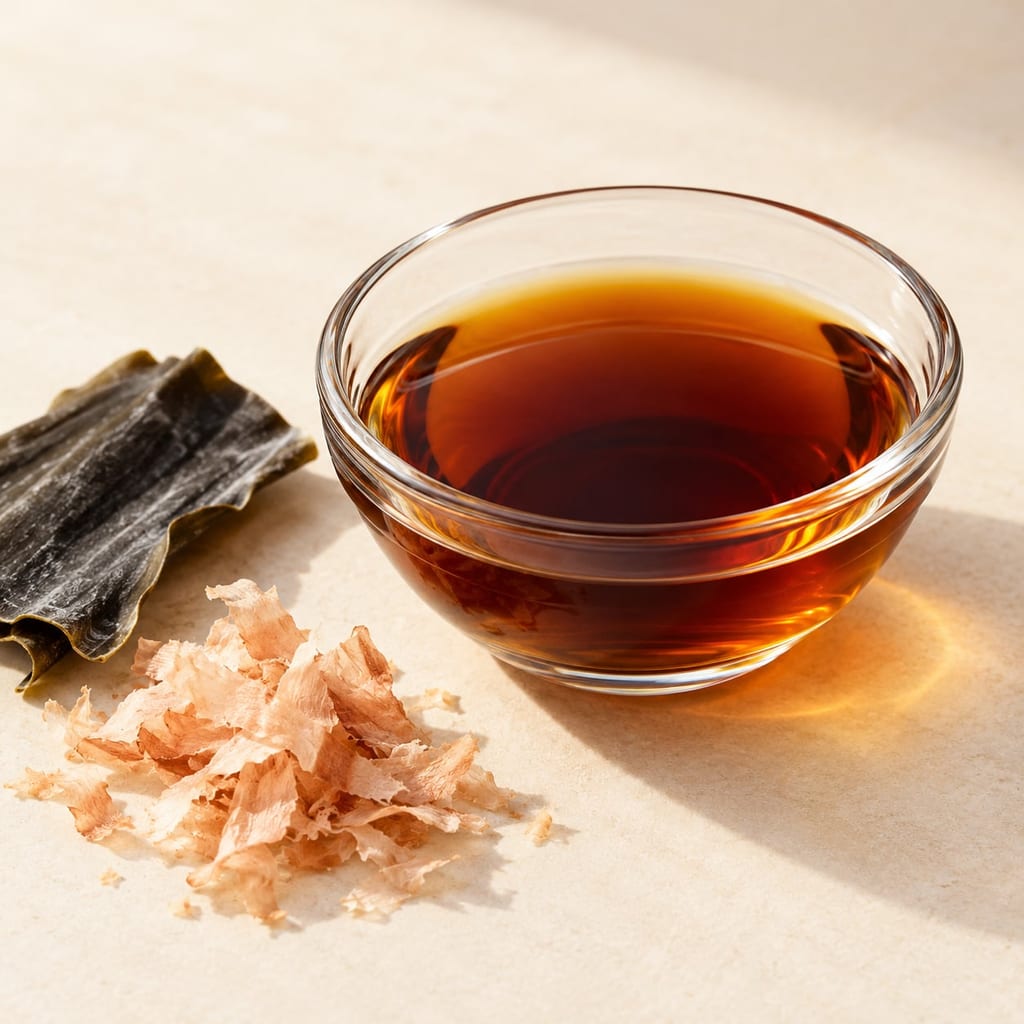
Mentsuyu is a seasoned dashi liquid used with Japanese noodles. The first recipe recorded here is a household version published in 2012 by Minna no Kyo no Ryori, taught by the late Japanese cooking teacher Nobuko Shimizu. It uses light soy sauce, mirin, kombu-and-bonito-flavoured dashi and an extra short steep of bonito flakes, then finishes with umezu or ordinary vinegar. It is presented as a versatile seasoning as well as a noodle dip.
The recipe yields approximately 550 mL and gives ten minutes as the cooking time. Its measuring cup is the site's 200 mL cup, so the two half-cup measures are recorded as 100 mL each and the two cups of dashi as 400 mL. These conversions follow the same publisher's measurement guidance. They document this formula; they are not general mentsuyu ratios.
Just One Cookbook's mentsuyu is a different shape of the same idea: a concentrate rather than a ready sauce. Sake, mirin and soy sauce are heated with a piece of kombu and a cup of katsuobushi, simmered for five minutes, cooled and strained, giving about two cups. The site uses it for noodle dishes, rice bowls, hot pots and as a tempura dipping sauce.
It is diluted at the table. One part concentrate to two parts water makes a cold dipping sauce (tsuketsuyu) for zaru soba or tanuki udon; one to four makes a hot noodle soup (kaketsuyu) for udon or soba. The author says to adjust both to taste. The same page offers a vegetarian version without bonito, or with two dried shiitake. These ratios belong to this recipe; they are not a standard that applies to a bottle from the shop.
A 1997 Brewing Society of Japan article describes tsuyu as a liquid seasoning made from soy sauce and dashi and used for soba, udon and other dishes. It says soba-tsuyu is thought to have appeared when soba was being made into long noodles in the late sixteenth century, but presents that dating as tentative. The paper does not date every kind of tsuyu or the specific 2012 home formula.
A separate 1985 brewing-industry article says commercial mentsuyu started to be sold in Japan in the 1950s. It summarizes the 1984 Japanese Agricultural Standard definition as soy sauce with sugar and dashi extracted from flavour ingredients, with mirin, salt and other seasonings sometimes added. The commercial category therefore includes variation in ingredients and use; it is not a single historic recipe.
In Shimizu's formula, dashi and the extra bonito steep supply a savoury, fish-led base; mirin rounds it with sweetness, while light soy sauce seasons it without the recipe being identified as one regional style. The cook's introduction says the small addition of umezu or vinegar adds richness. The sauce is strained after the short steep, and the source gives no numeric temperature or concentration target.
The 1997 article characterizes Kanto soba tsuyu as darker and more strongly reliant on bonito, while describing Kansai versions as combining kombu with the stock. These are broad regional descriptions from a secondary industry article, not rules for every home or maker. Shimizu's recipe calls for usukuchi soy sauce and kombu-bonito dashi but gives no specific region; it should not be assigned to Kanto or Kansai on that basis.
The Ministry of Agriculture, Forestry and Fisheries describes tsuyu with Fukui's Echizen soba, both as a dipping sauce and poured over noodles in the regional oroshi-soba style. That documents one use in Japan; it does not make Echizen soba the origin of mentsuyu. Commercial products may be concentrates or ready to use, and the 1985 industry article records different product strengths. Follow the bottle's own dilution label; these recipes do not establish a ratio that applies to every product.
Mentsuyu has a lighter sibling, shiro dashi, which uses light soy sauce and no sake to keep soups and custards pale.
These versions include bonito and a kombu-and-bonito dashi, so they contain fish. They also use soy sauce: check the actual product label for soy and wheat, since recipes and commercial sauces can differ and Japanese labelling guidance distinguishes between allergens requiring declaration and those recommended for declaration.
The NHK recipe page suggests keeping its batch refrigerated for about two weeks, and Just One Cookbook gives up to one month for its concentrate, in a mason jar. Those are the authors' recipe-page guidance, not validated shelf-life studies. General Food Standards Agency advice for leftovers is to cool and refrigerate cooked food within two hours, then eat within 48 hours or freeze. This conservative general advice is recorded here without claiming that it validates a specific mentsuyu shelf life.
A 1997 Brewing Society of Japan article says soba-tsuyu is thought to have appeared when soba began to be made into long noodles in the late sixteenth century, explicitly presenting this as a tentative account. A separate 1985 article reports that commercial mentsuyu began appearing in the 1950s and describes the 1984 Japanese Agricultural Standard definition. These records do not establish a single origin or date for every tsuyu style.
Yield 550 mL · Scaling: source batch only
The recipes include bonito flakes and kombu-and-bonito dashi.
Hazard sourceThe recipes use soy sauce. Check its product label for soybean and wheat content.
Hazard sourceCool the cooked sauce and refrigerate within two hours; use within 48 hours or freeze, following general leftover guidance. This does not establish a mentsuyu-specific shelf life.
Control sourceContains bonito fish and soy; check the soy sauce and dashi labels for wheat and other declared allergens.
The NHK recipe page suggests about two weeks refrigerated and Just One Cookbook says up to one month for its concentrate. Both are the authors' own statements, not independently validated; this record uses general Food Standards Agency leftover guidance as the conservative reference.
Japanese recipe and regional noodle-use sources document preparation and use in Japan; they do not establish a birthplace for the wider family of tsuyu sauces.
Katsuobushi is skipjack tuna cooked, smoked and dried into a hard block that is shaved into flakes for dashi and toppings. Some styles stop at the smoke-dried stage; others receive carefully managed mold maturation.
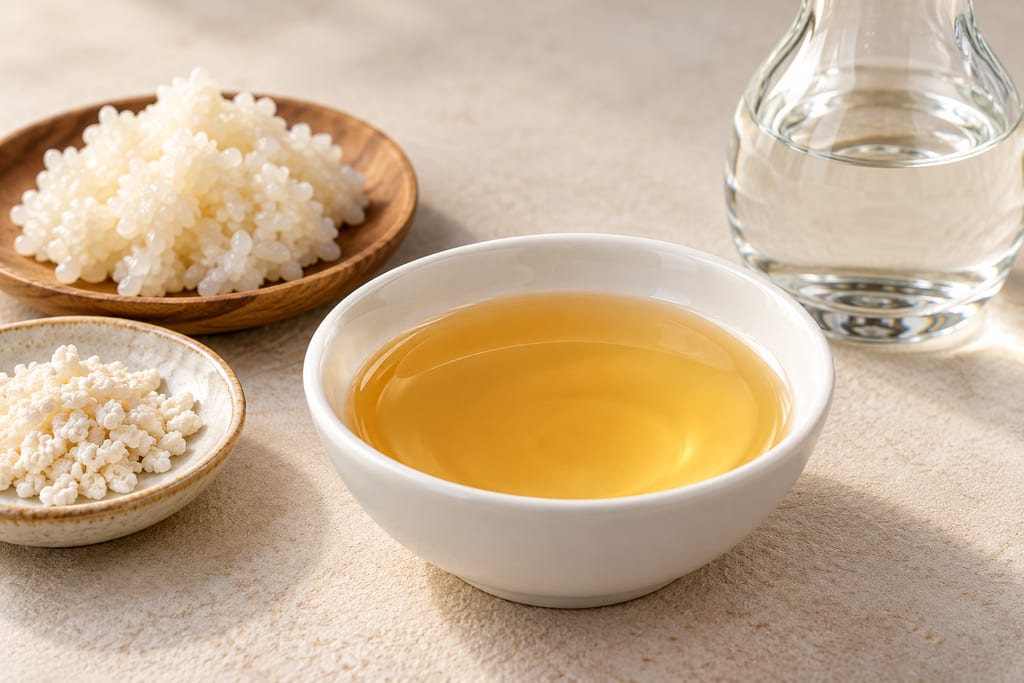
Hon-mirin is a Japanese rice seasoning made by saccharifying glutinous rice with rice koji in shochu, then pressing and usually heating the mash.
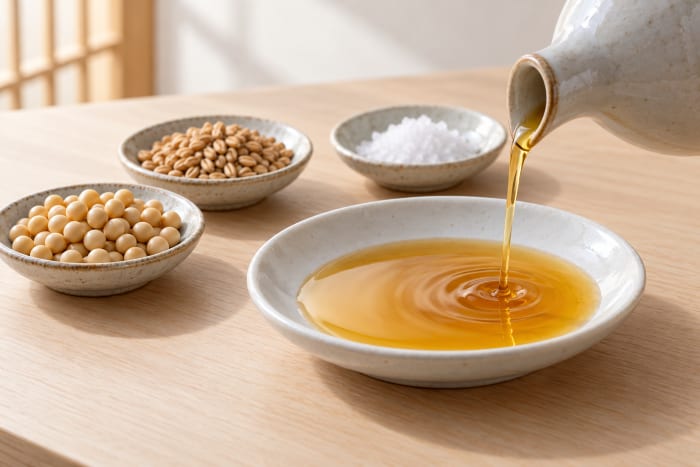
Usukuchi is Japan's light-coloured soy sauce, a Kansai style identified by its pale colour rather than by lower salt, with the colour set by production choices made during brewing.
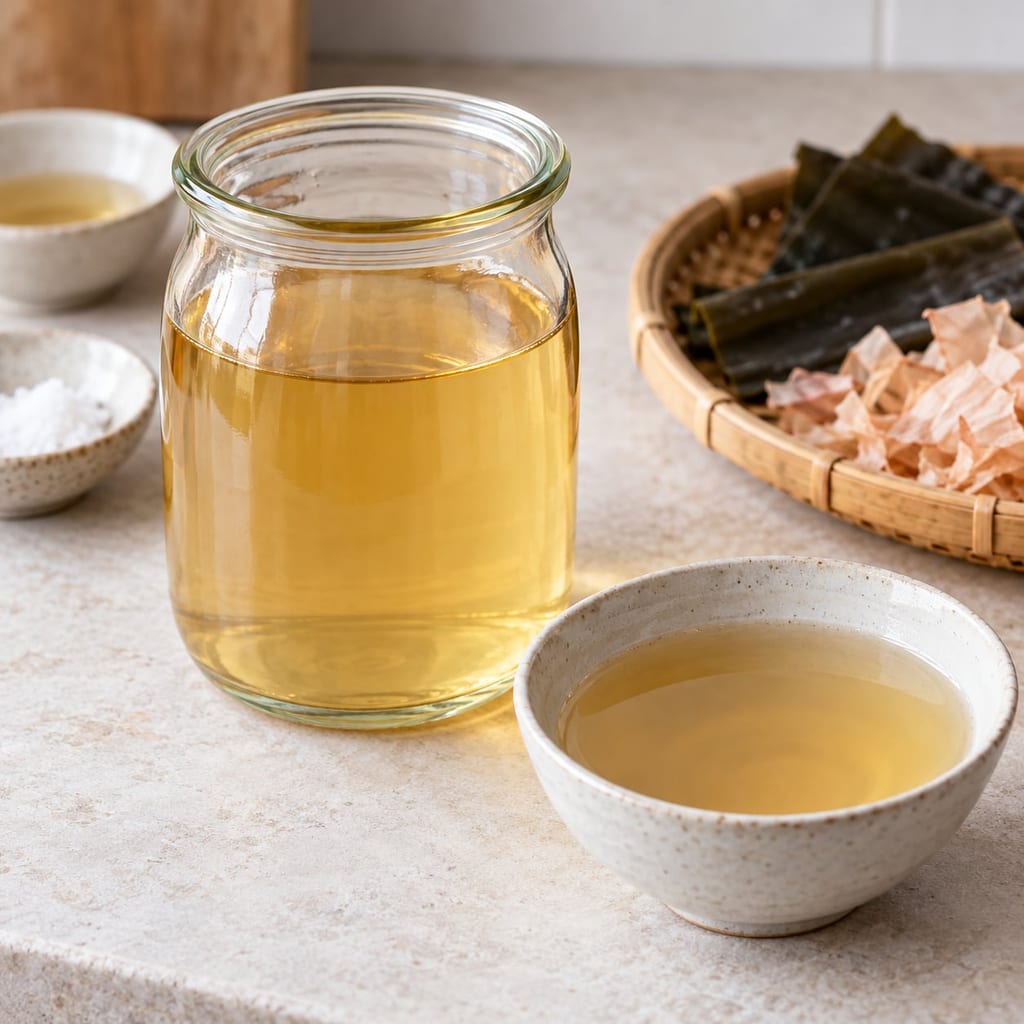
Shiro dashi is a pale Japanese seasoning stock of kombu and bonito dashi, light soy sauce, mirin and salt, used to flavour dishes without darkening them.

Japanese reddish-brown vinegar from sake lees matured about three years, turned to vinegar by acetic bacteria; the vinegar of Handa and Edomae sushi rice.
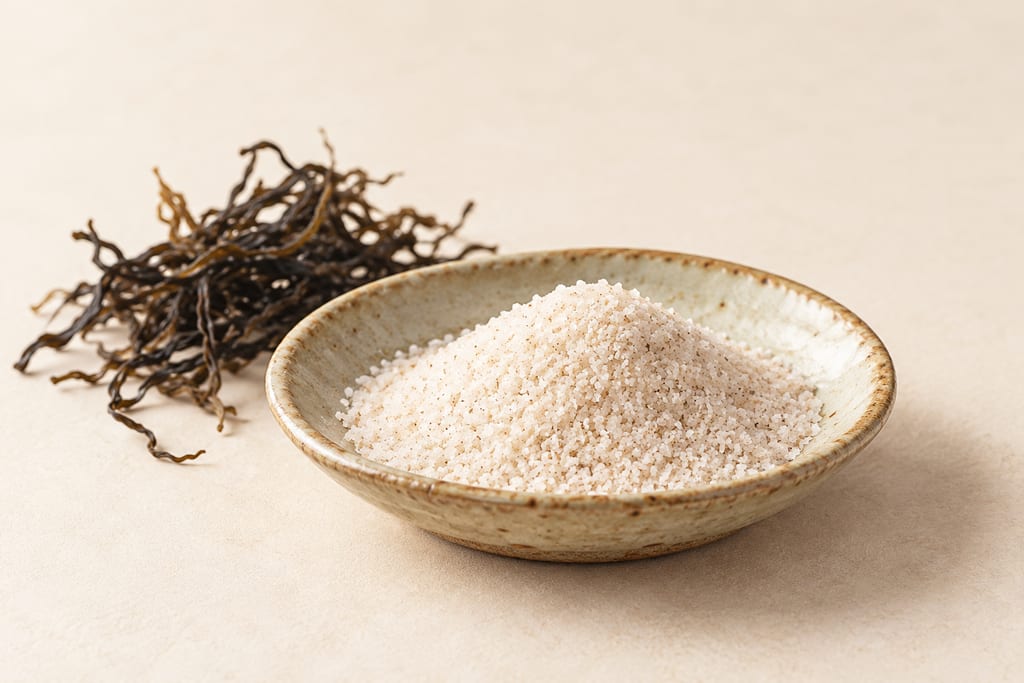
Amabito no Moshio is a modern, pale beige Japanese seaweed salt made from Seto Inland Sea water and hondawara seaweed. Its documented factory method concentrates filtered brine in kettles, then separates and dries the salt.
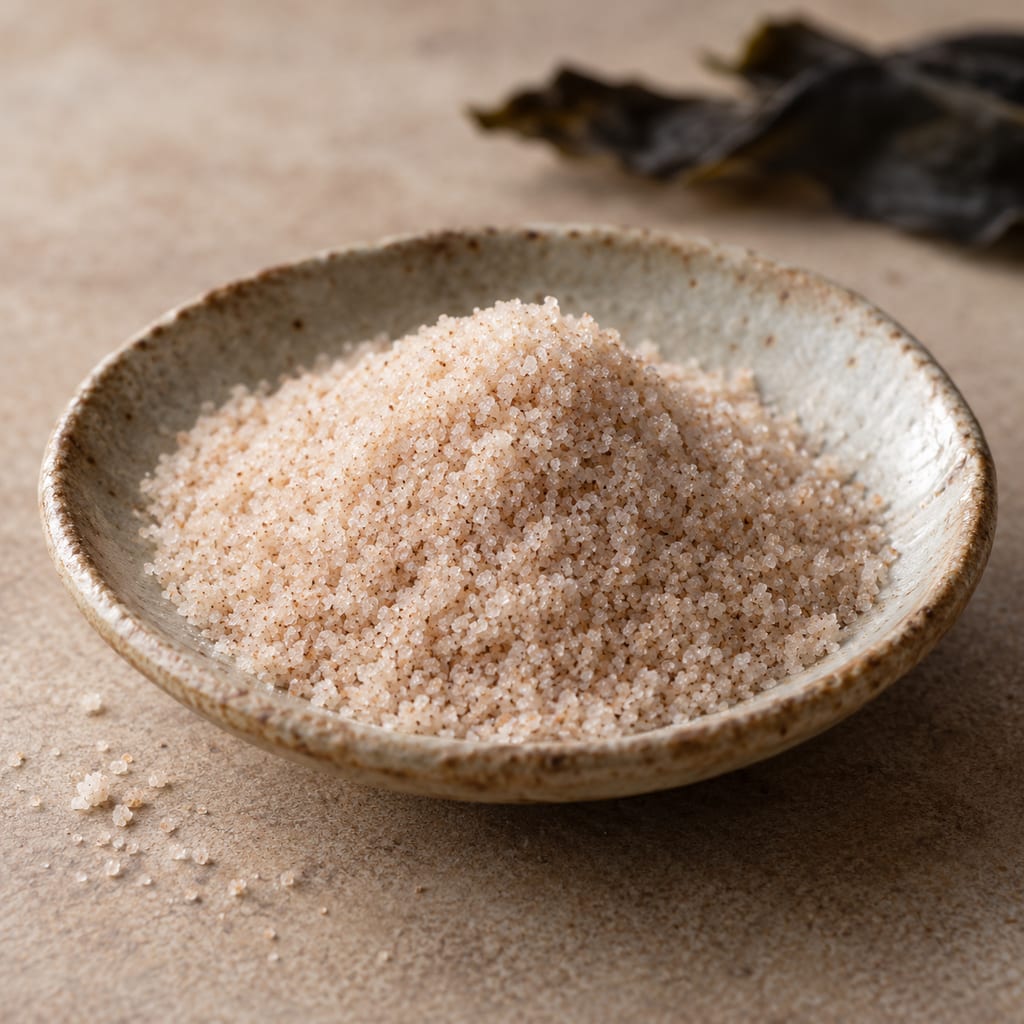
Awaji moshio is a modern Japanese seaweed salt made by TaDa PHILOSOPHY from Awaji Island seawater and seaweed. Its premium process concentrates brine, extracts seaweed flavor, then crystallizes, separates, dries and grades the salt.
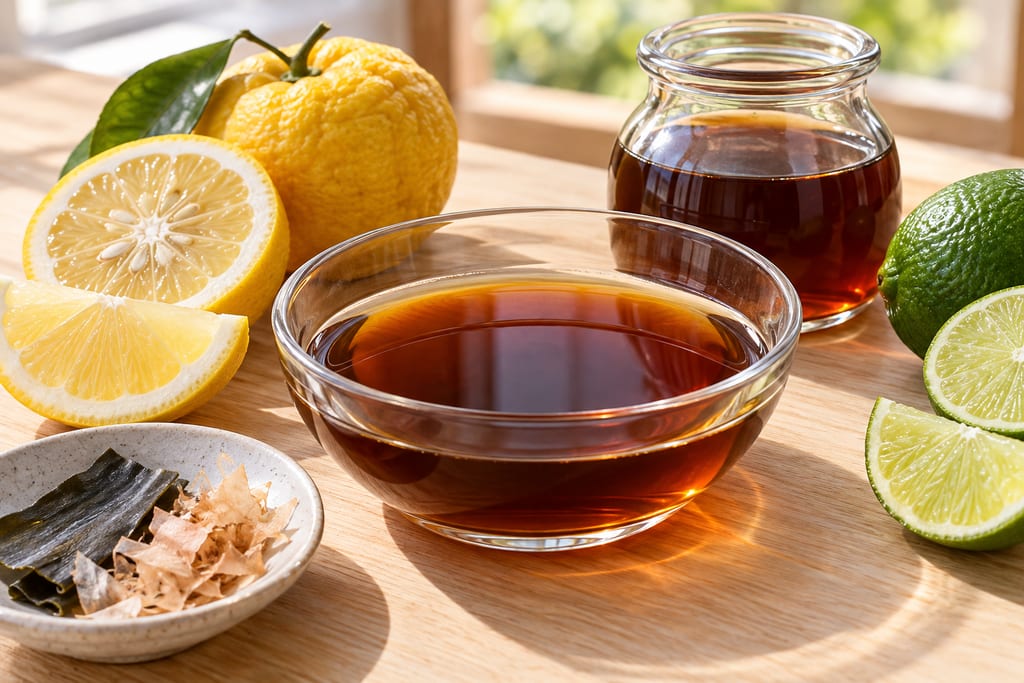
This fresh ponzu-shoyu mixes Japanese koikuchi soy sauce with yuzu or a lemon-lime blend, rice vinegar, water and sugar; optional kombu and bonito give a short chilled infusion.
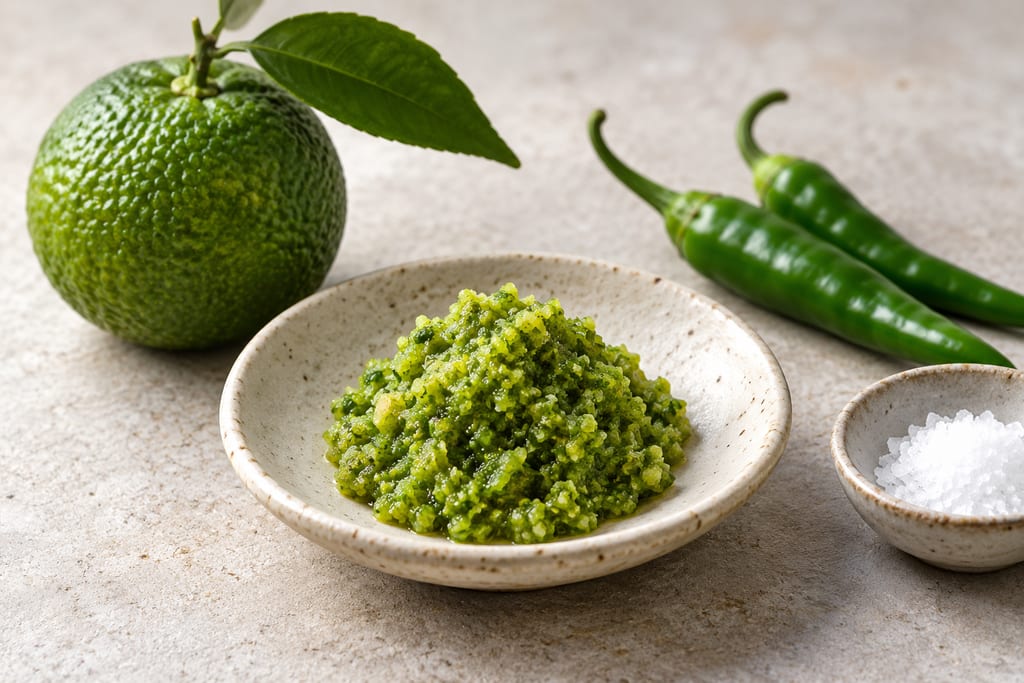
A fresh, uncooked yuzu and green chilli paste inspired by Kyushu’s yuzu kosho, made here as an untested small-batch seasoning rather than a preservation formula.
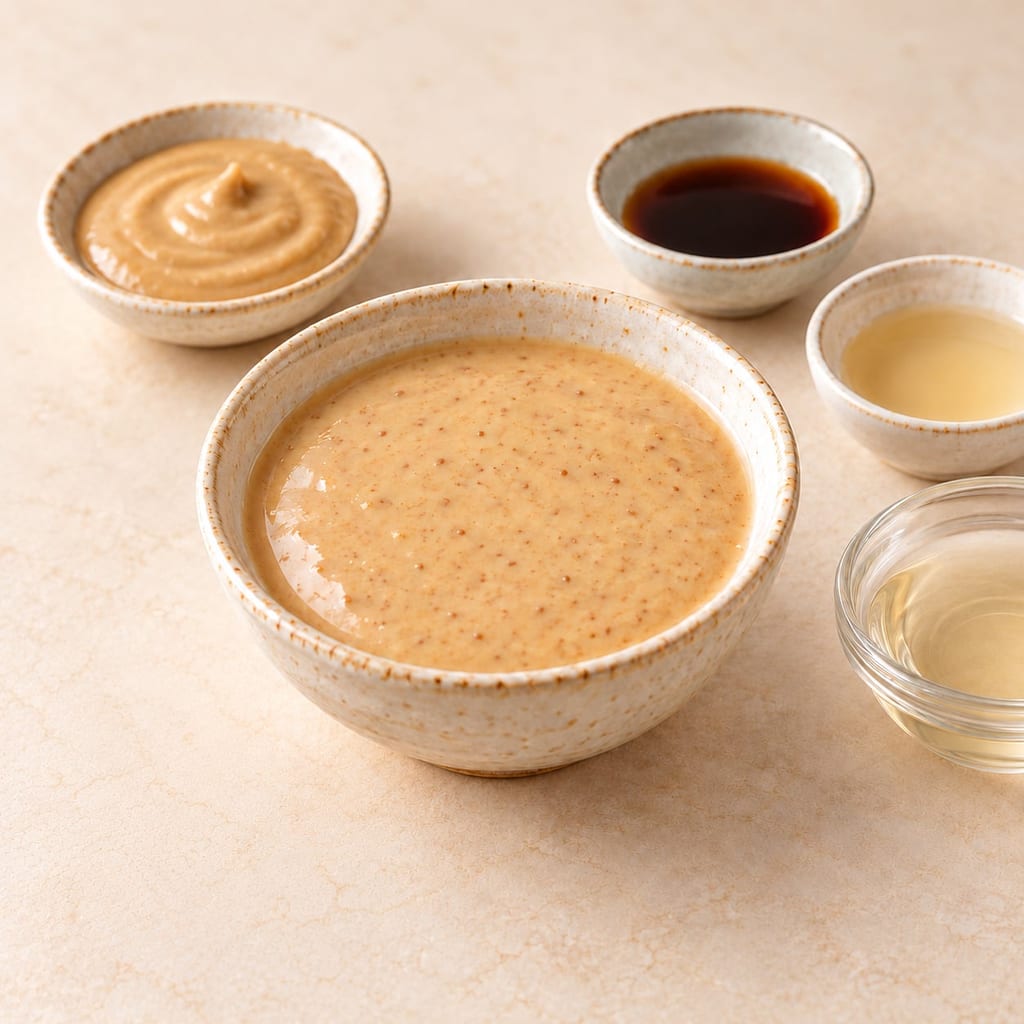
A creamy Japanese sesame dipping sauce with soy, rice vinegar and dashi. Gradual mixing turns the thick sesame paste into a smooth sauce.
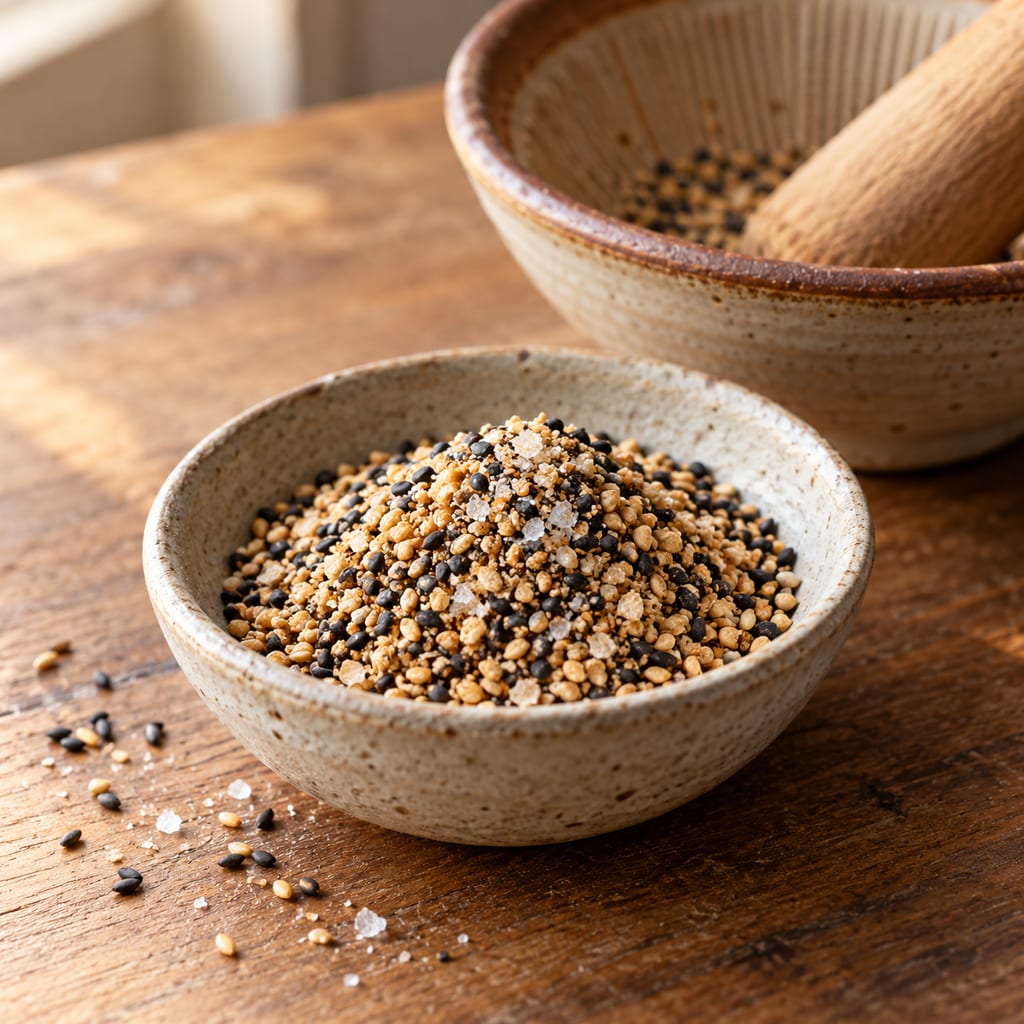
Toasted sesame seeds and sea salt are ground together into a coarse seasoning for rice. This small pan-roasted batch keeps most of the seed texture.
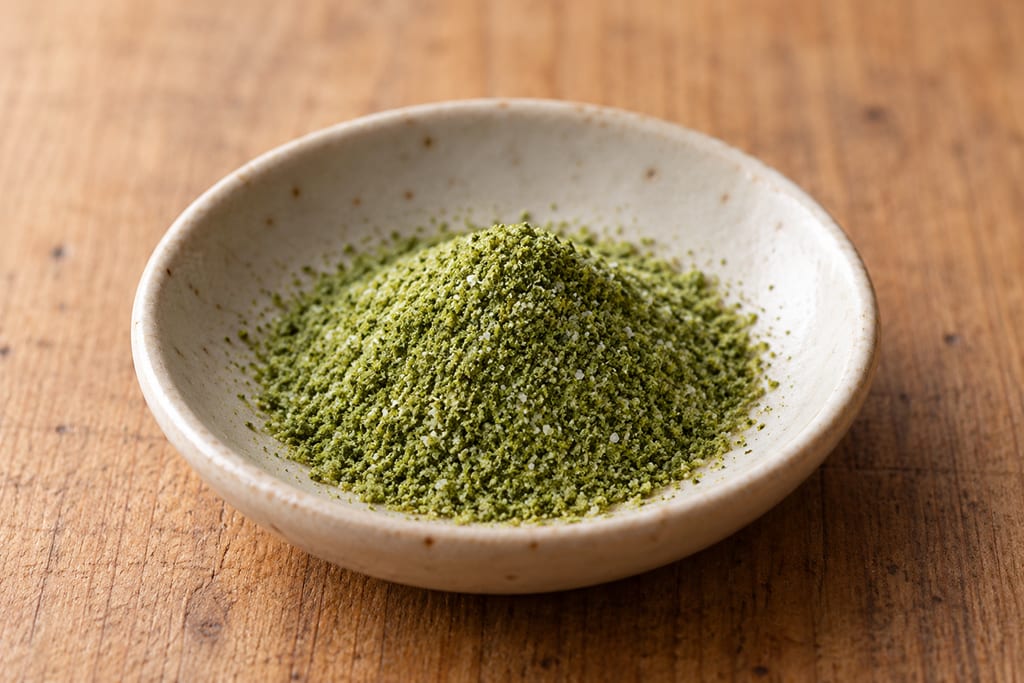
Green tea leaf salt is a dry seasoning made by grinding tea leaves, sieving them and mixing the powder with fine salt. This Japanese-style version follows a documented equal-parts method.
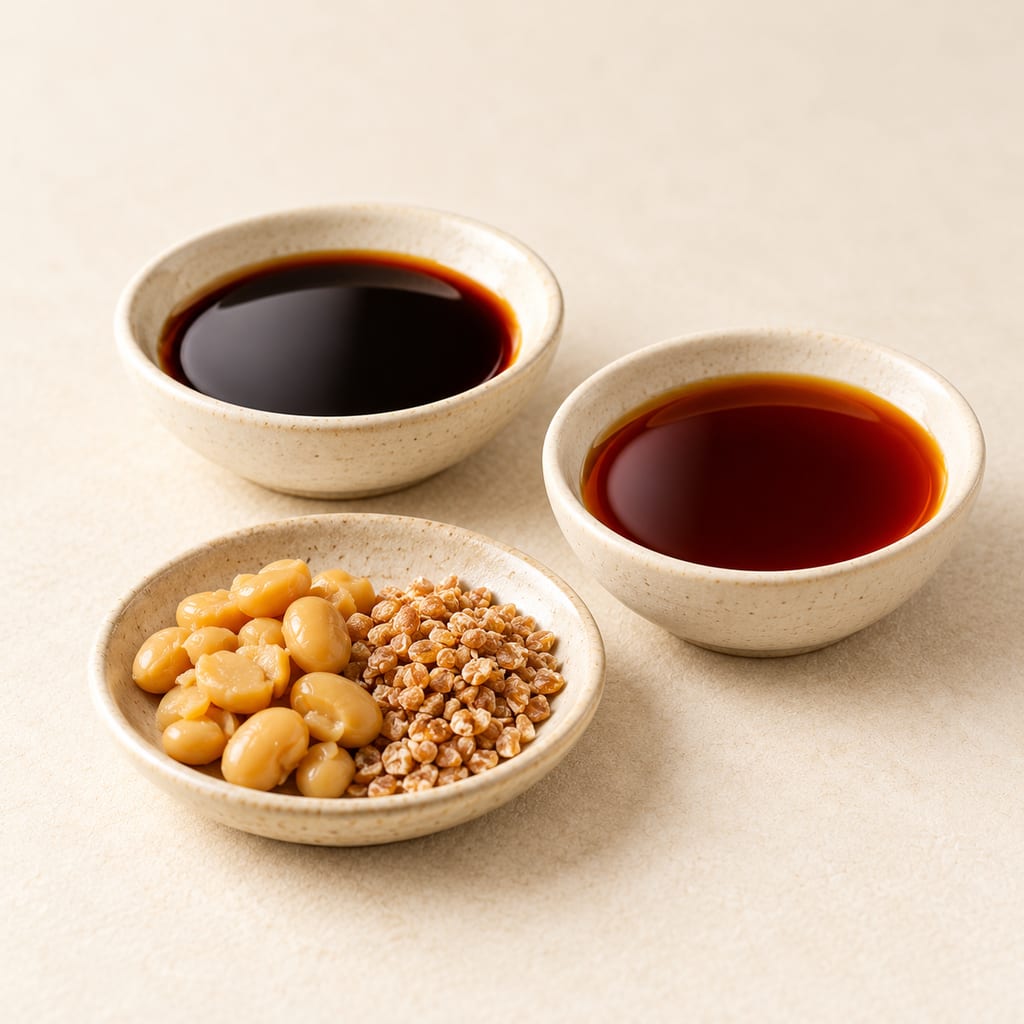
Jiangyou is the Chinese soy sauce family, an umbrella term for light, dark and seasoned sauces made by two main process families: high-salt liquid-state and low-salt solid-state brewing.
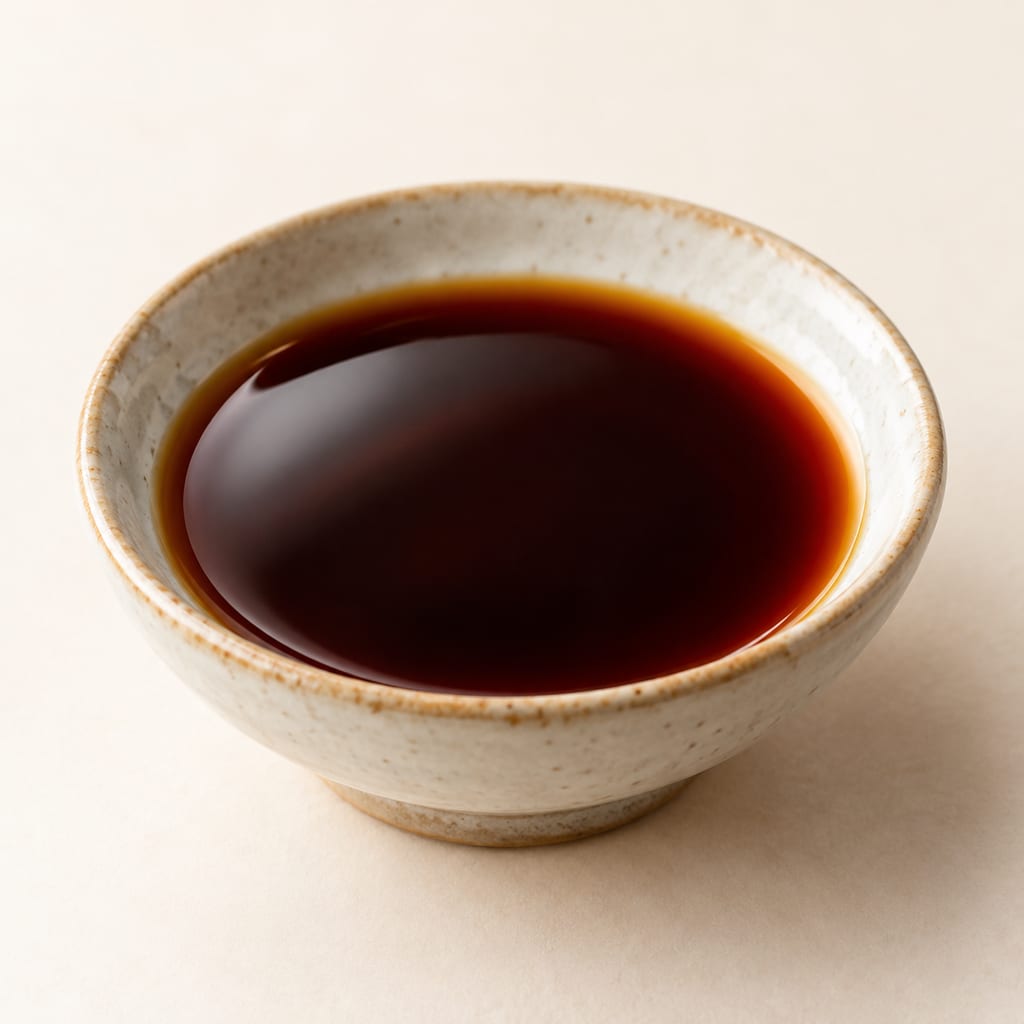
Japan's standard all-purpose soy sauce: soybeans and wheat grown over with koji mould, brined, fermented for months, pressed and usually heated into a reddish-brown, savoury liquid.
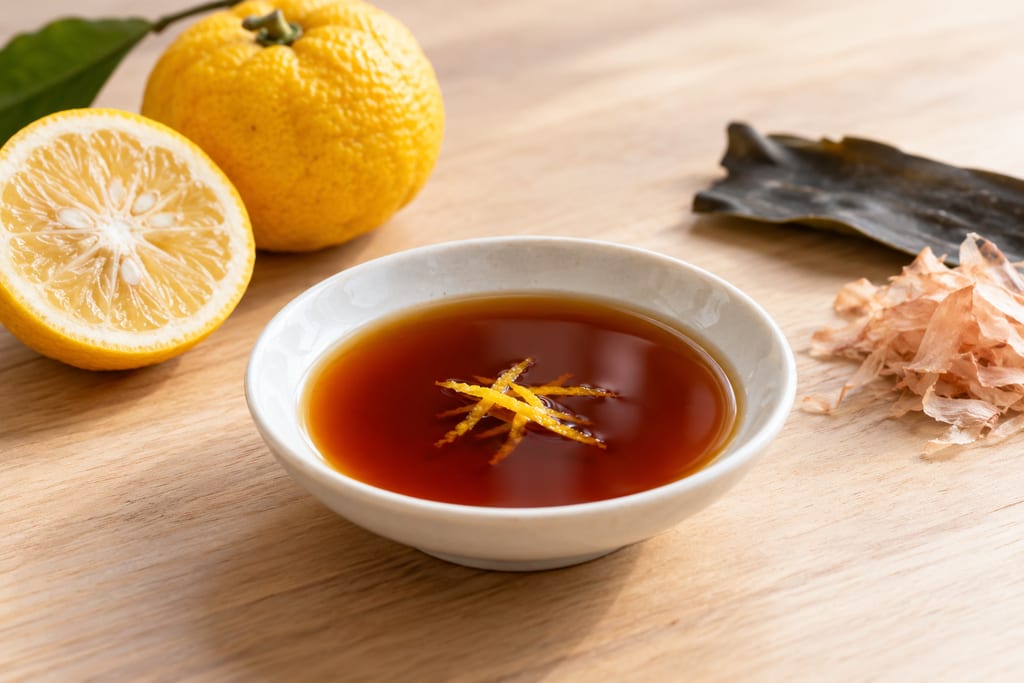
This quick ponzu combines soy sauce, vinegar, hon mirin, kombu, dried bonito and yuzu juice after a brief boil and a warm extraction; the recipe serves five.
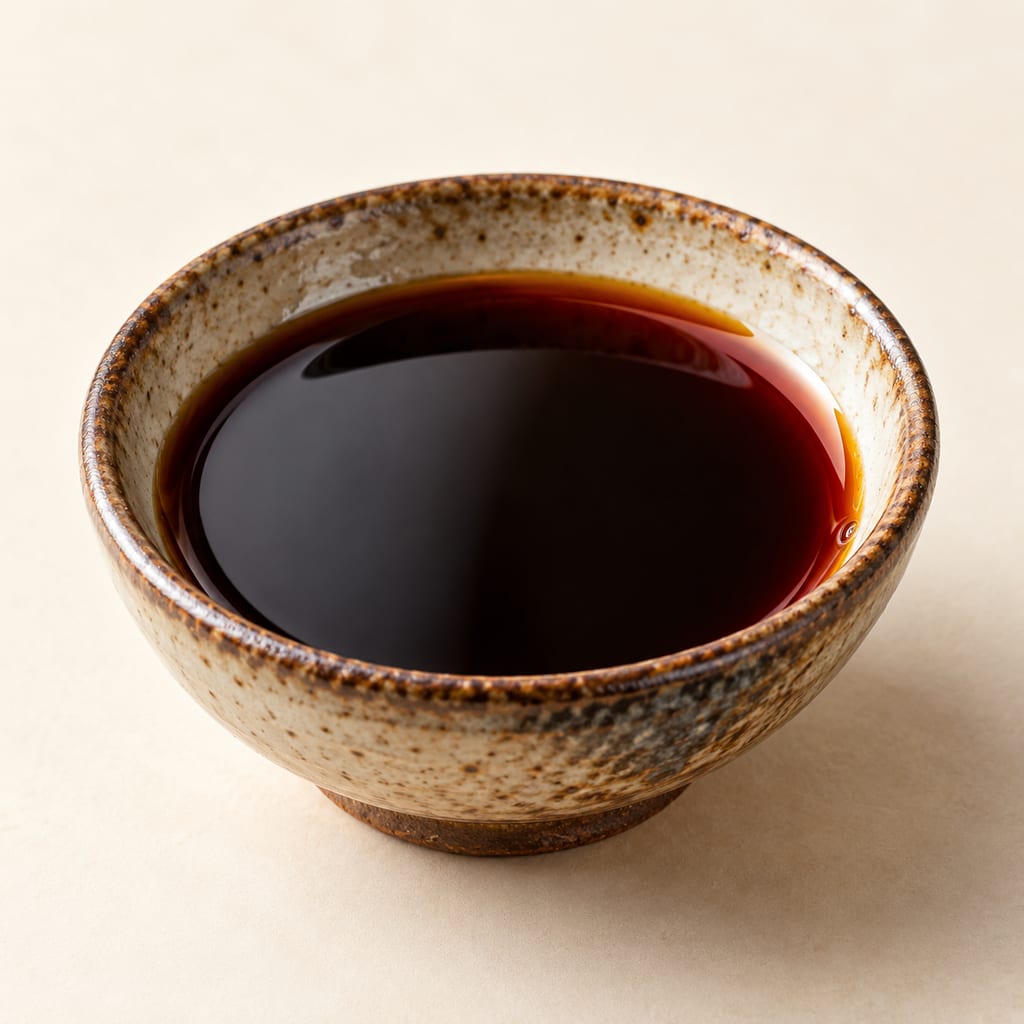
Saishikomi shoyu is a double-brewed soy sauce: a second moromi is made with a finished soy sauce in place of salt water, which makes a dark, concentrated sauce with softer salt.
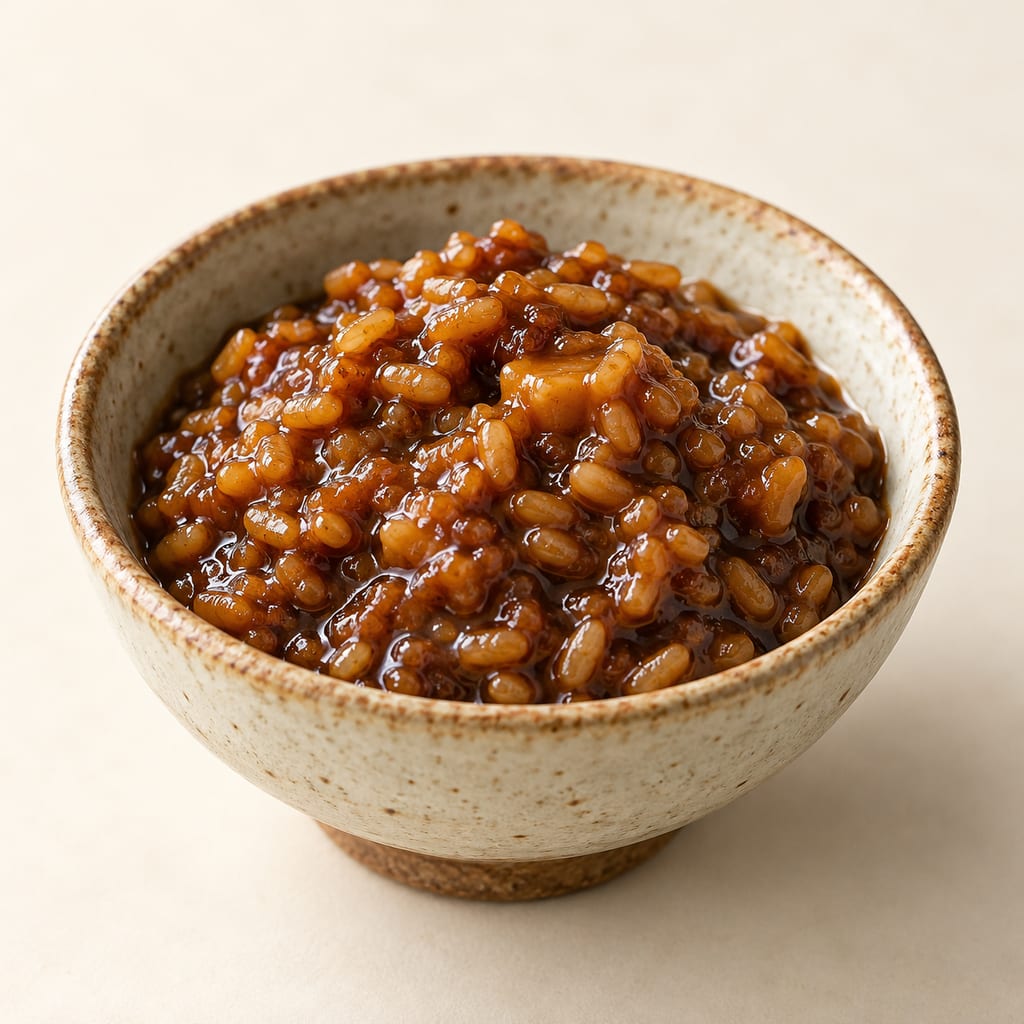
A Japanese kitchen condiment of rice koji matured in soy sauce until the grains turn soft and sweet. The same name also means the mould-grown soybean and wheat used to brew soy sauce.
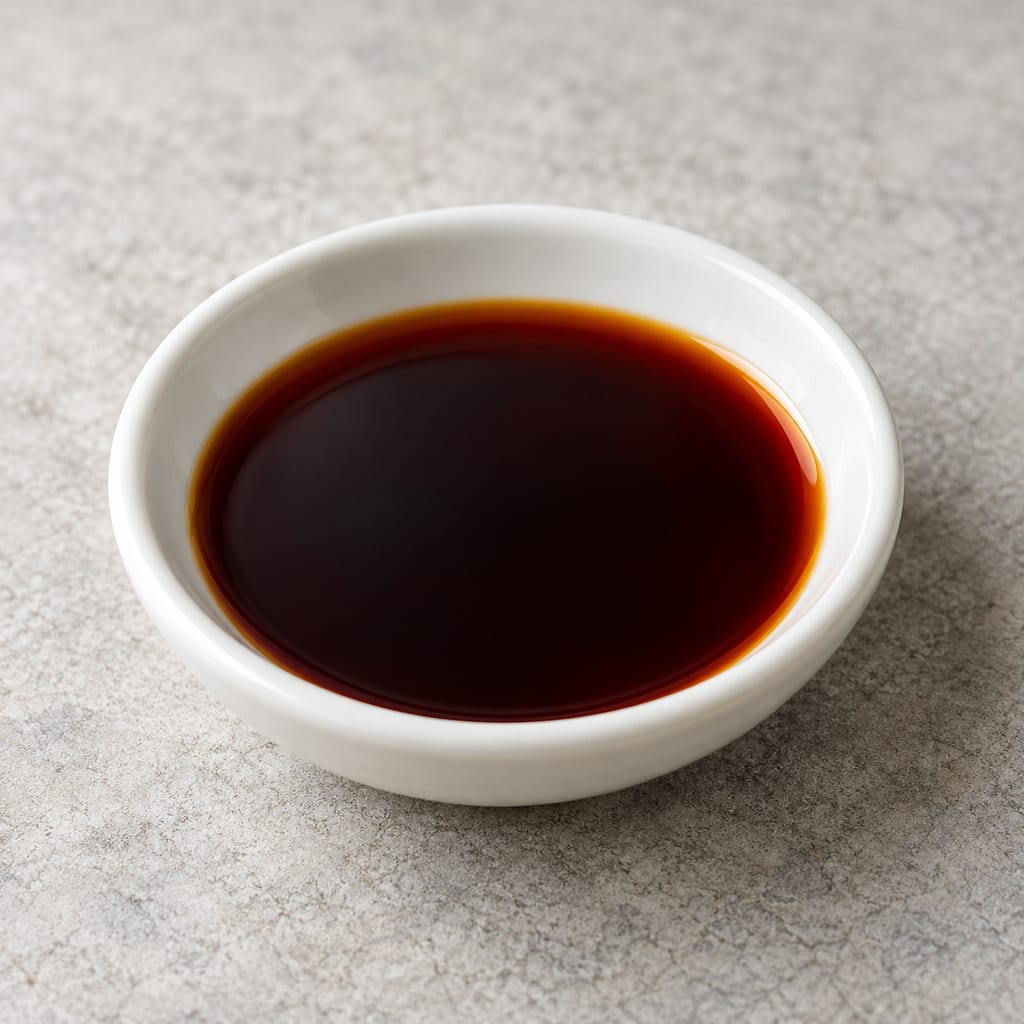
Soy sauce is a salted liquid seasoning made by growing koji mould on soybeans and grain, maturing the mash in brine and pressing out the liquid. Japan's shoyu is the best-documented form.
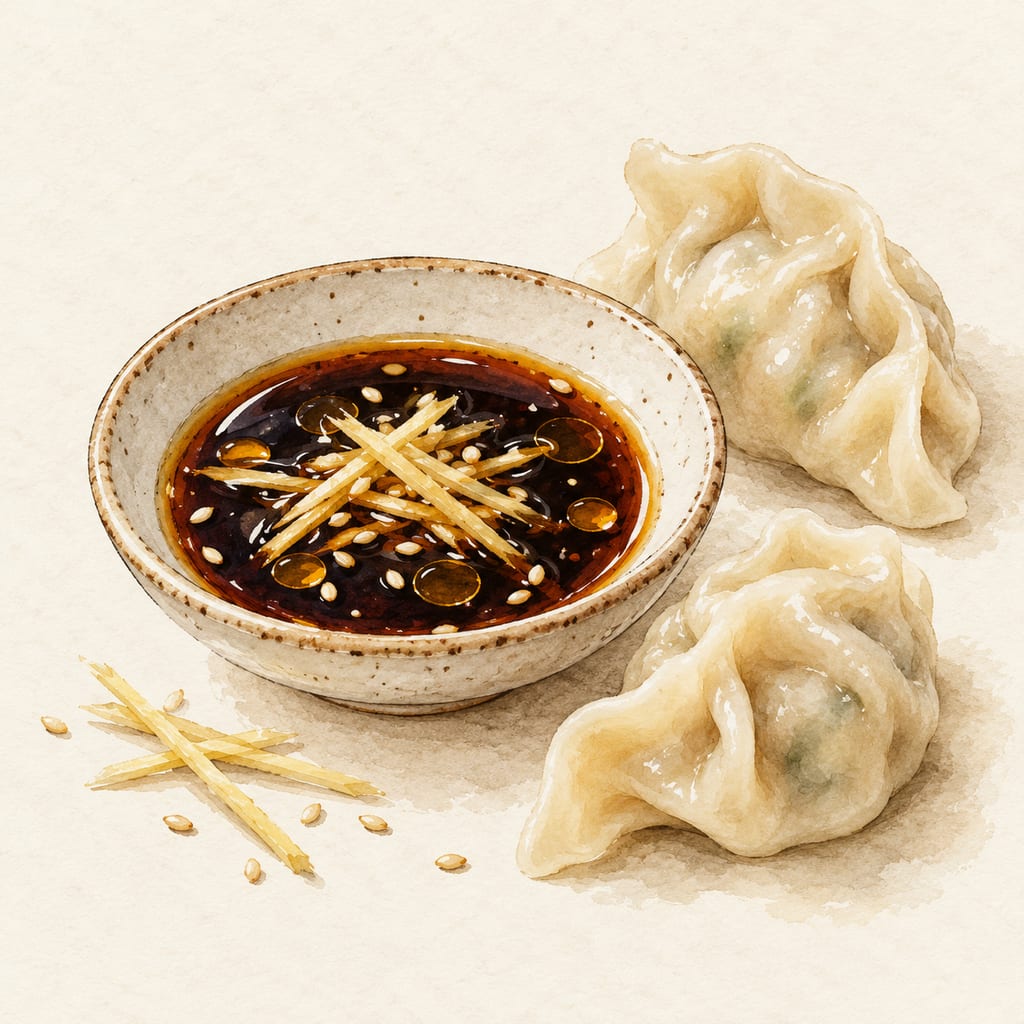
An untested small-batch soy and Zhenjiang black-vinegar dip with ginger and sesame oil, adapted as a modern accompaniment for dumplings or cooked vegetables.
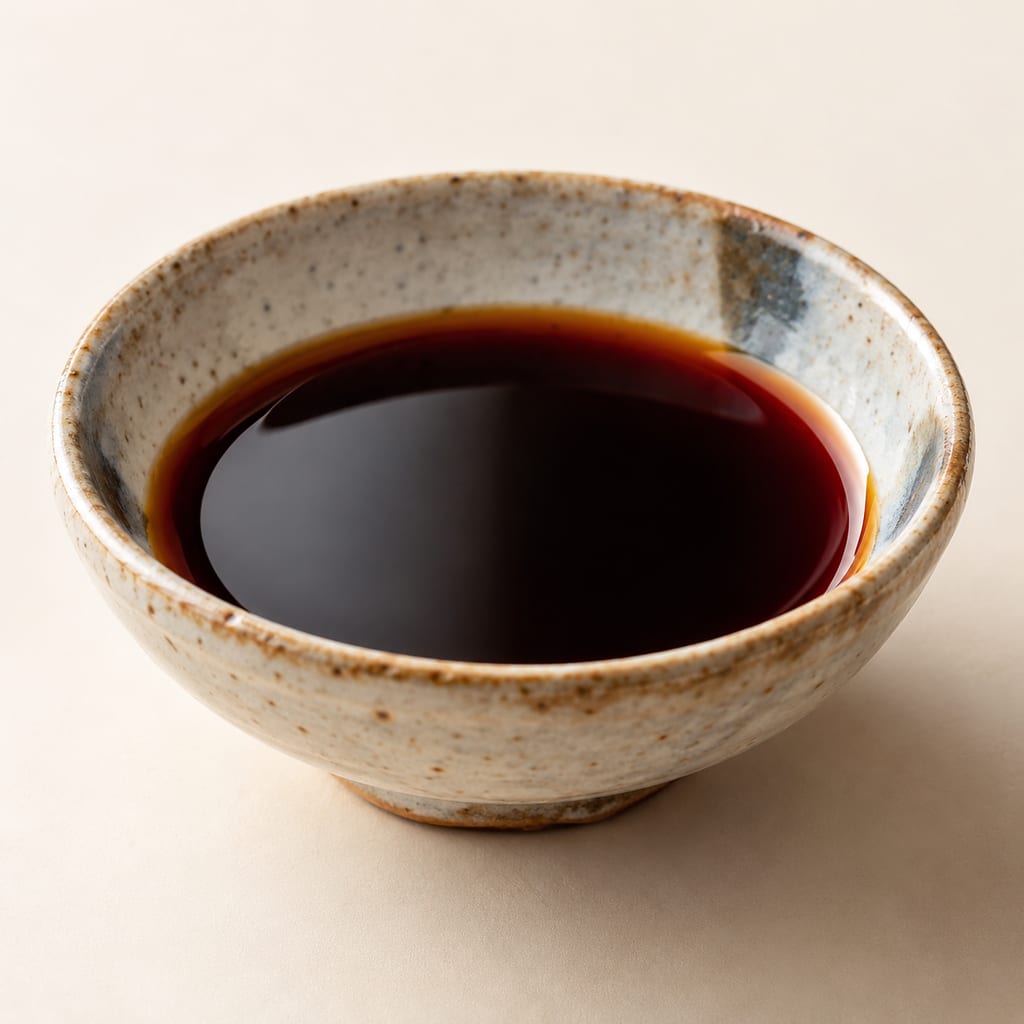
Tamari is the soybean-dominant Japanese soy sauce of the Tokai region, made with little wheat and little brine, and aged longer than koikuchi.

Soft, spreadable Calabrian pork sausage made with a great deal of red chilli and fatty pork, stuffed into natural casings, sometimes smoked and matured while staying soft.

A way to add independent temperature logging to an existing food dehydrator without changing its built-in controls or protections. It is a monitoring method, not a rewiring plan.

Pleurotus cystidiosus is the abalone mushroom, a cultivated oyster-type fungus with dark brown caps that grows more slowly and is more demanding than other Pleurotus species.

A dark, balanced vinegar from Emilia-Romagna made by combining cooked or concentrated grape must with wine vinegar, then acetifying and refining it in wood under a protected specification.

A living dairy inoculum that starts controlled cream fermentation, developing acidity and aroma before sour cream or cultured butter is finished.

A small electric incubator holds jars at a selected temperature for yogurt and other documented warm food preparations. Controls, capacity and vessel arrangement vary by model.

Adygean salt is a seasoned table salt associated with Adygea and the wider North Caucasian culinary tradition. Salt is blended with garlic and a variable selection of herbs and spices; the exact mix depends on the named style and maker.

The African Caesar-group mushroom, Amanita masasiensis, is a wild ectomycorrhizal species of central and southern African woodlands, eaten locally. The genus contains deadly poisonous species, so identification needs care.
No community contributions have been published for this entry yet.
Sign in to contribute. Published comments and photos are free to read.
NHK Educational, Minna no Kyō no RyōriRecipe · Method · Ingredients · Flavour · Storage
めんつゆThe 10-minute home recipe yields about 550 mL and combines mirin, usukuchi soy sauce, dashi, 5 g bonito flakes and umezu or vinegar.
The directions boil mirin, add the seasonings and dashi, steep bonito for 1-2 minutes, finish with vinegar off heat and strain.
The recipe page states a refrigerator interval of about two weeks; this record does not treat that as independently validated storage guidance.
Cited in: One documented household formula; Taste and regional variation; Allergens and storage
Just One CookbookRecipe · Method · Use · Storage
Homemade Mentsuyu (Noodle Soup Base)Concentrate of sake, mirin, soy sauce, kombu and katsuobushi; simmered 5 minutes, cooled and strained; yield 2 cups.
Used for noodle dishes, rice bowls, hot pots and as a tempura dipping sauce.
Dilution 1:2 with water for cold dipping sauce and 1:4 for hot noodle soup; vegetarian option omits katsuobushi or uses 2 dried shiitake.
Refrigerated in a jar for up to one month (the author's statement).
Cited in: A concentrate to dilute; Allergens and storage
NHK Educational, Minna no Kyō no RyōriIngredients · Measurements
Recipe help: measures and dashiThe site defines its measuring cup as 200 mL, tablespoon as 15 mL and teaspoon as 5 mL.
Unless a recipe says otherwise, the site's dashi is kombu and bonito flavored.
Cited in: One documented household formula
Ministry of Agriculture, Forestry and Fisheries of JapanGeography · Use
Echizen Soba NoodlesThe page describes Fukui Echizen soba served with tsuyu, including a style in which dipping sauce is poured over noodles, and documents one Japanese regional noodle context without claiming that this mentsuyu formula originated there.
Cited in: Noodles, dipping and dilution
Brewing Society of JapanHistory · Definition · Regional variation · Flavour
Movement in Market and Date of Durability of “Tsuyu”The author describes tsuyu as a soy-and-dashi liquid for noodles and other dishes and distinguishes it generally from thicker, stronger tare.
The article tentatively says soba-tsuyu may date to the late sixteenth century; it does not claim a settled origin.
It describes Kanto soba tsuyu as darker and katsuo-forward and Kansai examples as using kombu with dashi.
Cited in: A brief history with gaps; Taste and regional variation
Brewing Society of JapanHistory · Definition
めん類等用つゆの日本農林規格についてThe 1985 article says commercial mentsuyu began to be sold in the 1950s and discusses the 1984 JAS definition: soy sauce with sugar and dashi extracted from flavour ingredients, sometimes with mirin, salt or other seasonings.
Cited in: A brief history with gaps; Noodles, dipping and dilution
Kyoto PrefectureSafety
Labelling of food with allergensThe page explains that processed-food labels in Japan list regulated allergens; wheat is listed among ingredients requiring declaration, while soybeans are among those recommended for declaration.
Cited in: Allergens and storage
Food Standards AgencySafety
Cooking your food: using your leftoversFor general leftovers, the FSA advises cooling and refrigerating within two hours, then eating within 48 hours or freezing. This guidance does not establish a tested shelf life for this recipe.
Cited in: Allergens and storage