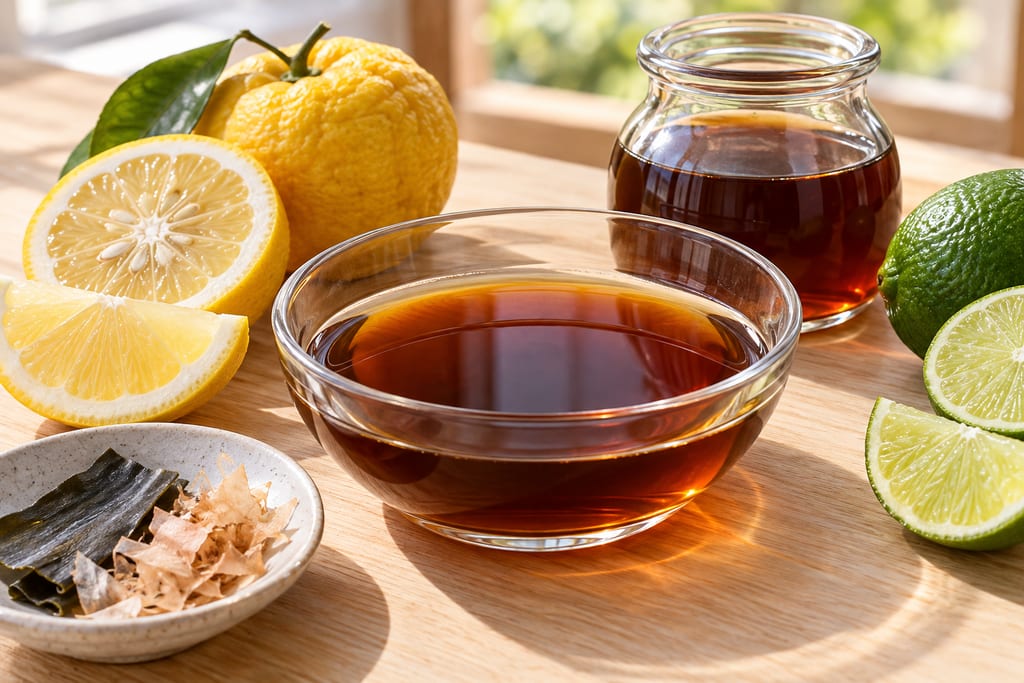
Fresh ponzu-shoyu
This fresh ponzu-shoyu mixes Japanese koikuchi soy sauce with yuzu or a lemon-lime blend, rice vinegar, water and sugar; optional kombu and bonito give a short chilled infusion.
 FermenteaWhere food goes to change
Traditional method
濃口醤油(こいくちしょうゆ) · Koikuchi shoyu · Koikuchi shōyu · Koikuchi-shoyu · Koikuchi · Koi-kuchi shoyu · 濃口しょうゆ · こいくちしょうゆ · こいくち醤油 · Japanese common soy sauce · Japanese dark soy sauce · Common shoyu
Japan's standard all-purpose soy sauce: soybeans and wheat grown over with koji mould, brined, fermented for months, pressed and usually heated into a reddish-brown, savoury liquid.
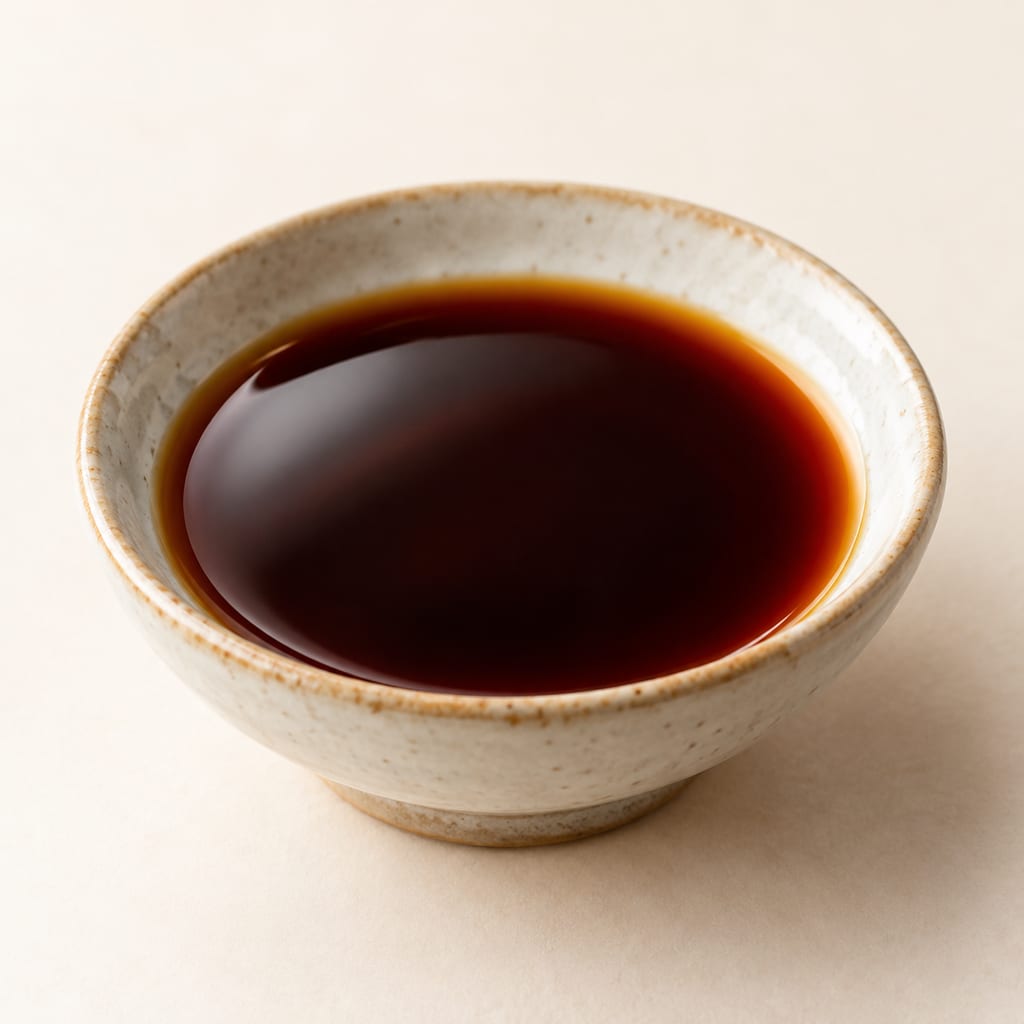
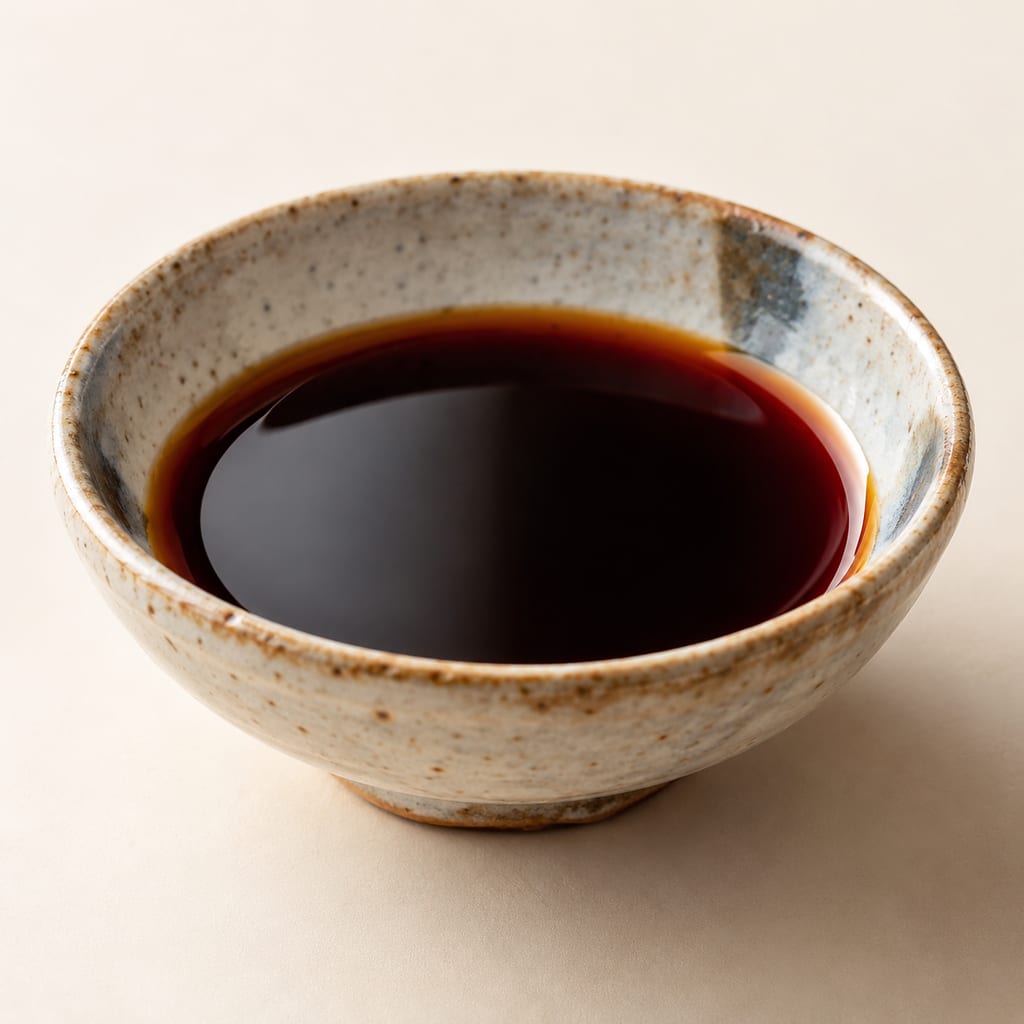
Koikuchi shoyu, 濃口醤油, is the ordinary soy sauce of Japan. It is a thin, pourable, reddish-brown liquid made by growing a koji mould on soybeans and roasted wheat, mixing the result with strong brine, letting bacteria and yeasts work in the resulting mash for months, and pressing out the liquid. In conventional brewed koikuchi the soybeans and wheat go in at about equal weights. The finished sauce is salty, rich in free amino acids, mildly sweet and acidic, with a layered fermented aroma. When a Japanese recipe says shoyu and names no type, this is the one it means.
The name means deep-coloured, and that invites a wrong comparison. Chinese dark soy sauce is often thicker, sweeter and darker, and may contain caramel colour or added sugar. Koikuchi stays transparent and fluid. The two come from different brewing traditions and are not culinary stand-ins for each other.
Japan's agricultural standards recognise five soy sauce types: koikuchi, usukuchi, tamari, saishikomi and shiro. Usukuchi is paler and usually saltier. Tamari uses far more soybeans relative to wheat. Saishikomi is brewed a second time with soy sauce in place of plain brine. Shiro is mostly wheat and kept deliberately pale. Koikuchi sits in the middle of these, and by the ministry's and the industry association's account it makes up about four-fifths of Japan's soy sauce.
Four materials make it: soybeans, wheat, salt and water. Traditional whole-bean brewing uses intact soybeans, while many industrial brewers use defatted soybean meal, an efficient protein source. The wheat is roasted and cracked, which supplies carbohydrate, nutrients and grain aroma. The microbes come in stages, not all together: first a koji mould, then salt-tolerant bacteria and yeasts.
One term needs care. In a brewery, 醤油麹 (shoyu-koji) means the soybean and wheat mass overgrown with Aspergillus, the stage before brine. It is not the kitchen condiment of rice koji soaked in finished soy sauce that shares the Japanese name. Mixed with brine, the brewery's koji becomes moromi (諸味), the mash that ferments. Only after pressing, clarifying and, usually, heating does it become the sauce. Some products are instead filtered to remove microbes without conventional pasteurisation.
The koji moulds are Aspergillus oryzae and Aspergillus sojae. In the mash, Tetragenococcus halophilus (a salt-tolerant lactic acid bacterium), Zygosaccharomyces rouxii and Wickerhamiella versatilis (yeasts) matter most. Their place in the tradition does not mean every bottle holds living cells or that every brewer adds the same strains.
Koikuchi grew out of older East Asian salted soybean and grain seasonings. Japan had fermented pastes called hishio long before a soy sauce industry. The Taiho Code of 701 points to administrative organisation around hishio, but that product was not necessarily a clear pressed liquid like shoyu. Later accounts link tamari-like liquids to Buddhist temples and the transmission of Chinese fermented soybean methods. These stories give cultural background. They do not prove the formula of any modern sauce.
A liquid seasoning shows up clearly in the sixteenth century. The Rokuon Nichiroku records a word for it in 1536, the Tamon-in Nikki writes 醤油 on 25 October 1568, and the Ekirinbon Setsuyoshu of 1597 gives the characters with the reading shoyu. Those sauces were not necessarily made with the bean-to-wheat ratio, pressing or ageing later associated with koikuchi. The records show the word and the food developing, not the modern category.
In the seventeenth century commercial brewing grew around the expanding cities. Choshi in Chiba became a centre, with the Yamasa house tracing itself to 1645. The Chiba Prefectural Museum gives 1661 as the earliest historically substantiated commercial brewing at Noda, tied to the Takanashi family, and treats earlier Noda claims as tradition. A brewery's founding date is not evidence for the koikuchi specification. The Wakan Sansai Zue of 1715 describes a process of cooked soybeans, roasted grain, koji and brine. Over the following decades the proportions of beans, wheat, salt and water became steadily more standard.
Kanto brewing drew on nearby farmland, river transport and the vast Edo market. Soy sauce from western Japan first reached Edo as expensive freight, and brewers around Noda and Choshi gradually supplied more from close by. The National Diet Library describes the shift in the Bunka and Bunsei years of the early nineteenth century, when darker Kanto soy sauce came to dominate Edo. It rose with the city's own foods: Edo-style sushi, soba dipping sauce, grilled eel. A seasoning that was plentiful and aromatic suited foods that were increasingly cooked and sold ready to eat, and demand from those foods in turn supported the brewers. This was a change in markets and cooking, not a single moment of invention.
The pale and dark distinction matters in this period. Usu-shoyu appears in a cookbook of 1689, according to Kikkoman's survey, but the paired names koikuchi and usukuchi turn up together only in the Kappo Kyokasho of 1918. Kikkoman concludes that the manufacturing technology was settled by the early nineteenth century. The brewing style therefore predates the name by about a century. In 1917 eight Noda brewing families formed Noda Shoyu Co., the predecessor of Kikkoman. From the late nineteenth century specialist starter cultures, fermentation science and controlled processing improved consistency and scale, though the core sequence of koji, brine fermentation, maturation, pressing and finishing remained.
Koikuchi develops through a chain: enzyme production, hydrolysis, microbial fermentation and browning chemistry. The first stage is koji. Aspergillus oryzae or A. sojae grows on prepared soybeans and roasted wheat with plenty of air, and secretes proteases, peptidases, glutaminases, amylases and other enzymes. Spores are not the goal. The goal is a well-colonised, enzyme-rich mass ready for brine.
Soybeans supply mostly protein. Endoproteases cut internal peptide bonds to make shorter peptides, and amino- and carboxypeptidases remove amino acids from the ends. Soluble nitrogen compounds that were locked in whole proteins become available. Free glutamate gives umami, but the story is not simply protein turning into glutamate: many amino acids and peptides appear, and the mix depends on materials, strain and maturation. Glutaminase has a special job. When proteolysis releases glutamine, glutaminase converts it to glutamate and ammonia, raising free glutamate. A strain with high general protease activity is not automatically the best balance of glutaminase, amylase and the rest, which is why starter makers select for several traits.
Wheat provides much of the carbohydrate. Roasting changes the grain's structure and flavour, and the mould's alpha-amylase cuts internal bonds in the starch while glucoamylase frees glucose. Those sugars matter for sweetness and as food for the bacteria and yeasts that follow. Wheat protein adds peptides and amino acids too, so wheat is more than a sugar source.
Mixing koji with concentrated brine changes everything. High salt halts further mould growth and suppresses many competitors, and it selects salt-tolerant bacteria. Tetragenococcus halophilus turns available sugars into lactic acid, which changes taste and pH and sets the conditions for the yeasts. The shift is gradual and depends on the starting microflora, salt level, temperature, oxygen and whether starter cultures are added.
Zygosaccharomyces rouxii is the main salt-tolerant fermenting yeast. It produces ethanol, carbon dioxide and aroma intermediates, including alcohols, aldehydes and esters. A characteristic soy sauce aroma compound is HEMF, a furanone with sweet, caramel-like notes; experimental work shows yeast-dependent reactions on carbonyl precursors from the Maillard reaction. Wickerhamiella versatilis, once filed as Candida versatilis, can make 4-ethylguaiacol, a smoky, spicy phenol. A 2025 study found that adding it early supported 4-ethylguaiacol formation even before the yeast became dominant, so aroma cannot be read off a cell count.
A 2024 study of industrial Japanese moromi saw many bacterial genera early, then Tetragenococcus dominating; the fungal community changed once Z. rouxii was added, and later stages contained Wickerhamiella, Millerozyma, Yamadazyma and other yeasts linked to volatiles. That describes one production system with added starters. It is not a required sequence for a traditional wooden-vat brewery.
Colour comes from amino-carbonyl chemistry, chiefly Maillard reactions between reducing sugars and amino compounds, which make brown polymers called melanoidins and further aroma precursors. Heating at the finish adds colour and aroma, and oxidation after bottling darkens the sauce further, especially once opened. The flavour of the finished sauce comes from enzymes, bacteria, yeasts, time, temperature, salt and chemistry working together, not from any one organism.
Production starts with preparing the beans and wheat separately. Whole soybeans are soaked and steamed until their protein is open to koji enzymes; some brewers use pressure-steamed defatted beans. Wheat is roasted and cracked, not added as raw flour. Roasting develops aroma, alters the grain and makes starch easier to hydrolyse. For conventional koikuchi the two go in at roughly equal weights.
The cooled mass is inoculated with soy sauce tane-koji, a cultivated Aspergillus strain or mixture. It is not rice koji. Higuchi Matsunosuke Shoten lists Aspergillus oryzae and A. sojae starters for soy sauce; its Takara-kin culture suits both koikuchi and tamari, and others are chosen for protease or glutaminase activity, ease of pressing or paler colour. These are differently selected cultures, not varieties of sauce.
The inoculated material is held with warmth, moisture and air, either in trays or in a controlled machine. MAFF's account gives about two days, Kikkoman about three days for industrial koji, and the Hirate Shoyu home-brewing guide three to four days. Those are durations for specific systems. Koji gives off heat as it grows, so temperature management protects both mould activity and against contamination.
Brine then turns aerobic solid culture into salty liquid fermentation. Salt limits contaminants, stops most further mould growth and selects salt-tolerant microbes. It has to be calculated from the actual materials and whole formulation; adding water freely or using reduced-sodium salt without recalculation gives a different fermentation. Hirate Shoyu's small-scale three-sho formula uses 1,350 g soybeans, 1,400 g wheat, 994 g sodium chloride equivalent, 0.6 g tane-koji and 4,000 ml water, and states salt as NaCl equivalent because sea salts carry moisture and minerals. It is a complete worked example, not a universal standard.
Moromi matures for a long time. MAFF and the Japan Soy Sauce Association describe about six to eight months for conventional naturally brewed sauce. Hirate Shoyu presses after about ten months to a year, and traditional wooden-vat brewers may mature for longer. Meanwhile remaining enzymes keep hydrolysing, lactic bacteria add acidity, yeasts make alcohol and aroma compounds, and chemistry changes flavour and colour. Stirring, oxygen and temperature management depend on the system.
The mash is then pressed through cloth or a filter to separate liquid from solids. Freshly pressed unheated sauce is kiage shoyu (生揚げ醤油). That differs from bottled nama shoyu, which may be filtered to control microbes without conventional heating. Most koikuchi is heat-treated after pressing, which stabilises it, inactivates enzymes and microbes, changes the aroma and throws a sediment that is later removed. Hirate Shoyu uses 80 to 85 °C for 10 to 30 minutes, then a few days of settling and filtering. That is one producer's process, not a validated pasteurisation instruction for every home batch. Commercial brewers combine controlled heating, filtration, testing and packaging.
Noda and Choshi in Chiba are the historic centres of koikuchi. Their growth tracks Edo's growth and the river and coastal transport that fed it. Large brewers developed standardised methods while smaller ones kept their own starters, raw-material choices and ageing. The Kanto style spread nationwide, but regional koikuchi still differs in aroma, colour, sweetness, total nitrogen and salt.
Yuasa in Wakayama stands for an older western Japanese tradition tied to the development of liquid seasonings from fermented soybean pastes. The producer Yuasa Shoyu describes koji-making of three to four days and fermentation in cedar vessels for about one year and three months to two years.
Shodoshima in Kagawa is another wooden-vat region. Its municipal government documents large cedar vats, called koga, and reports that certified Shodoshima vat-brewed koikuchi ferments for about a year, against the shorter periods common in industrial tanks. These figures are for the certified method, not every bottle from the island.
Japan also classes soy sauce by how it is made. Honjozo is naturally brewed. Mixed-fermentation methods put amino-acid or other hydrolysed liquids into the fermentation, and mixing methods add them to already brewed sauce. These are regulated categories, not counterfeits, but a label saying koikuchi names the type and does not prove honjozo manufacture.
Whole-soybean and defatted-soybean sauces differ, since whole beans carry their original oil until processing. Both can be genuine brewed sauce; they are quality and ingredient distinctions within koikuchi, not separate types. Starter makers also split their cultures: Higuchi's strains are chosen for different enzyme activities, and Akita Konno Shoten likewise separates its soy sauce starters by protease and amylase activity, mycelial growth and colour. Such catalogues show how strain choice works today; historical breweries relied on whatever culture they kept.
Sweet soy sauces add another distinction. In parts of Kyushu and Hokuriku, amakuchi-style sauce is sweeter than standard Kanto koikuchi, and some carry added sweeteners under the koikuchi classification. Amakuchi is not one of the five types. Labels such as raw, unheated, reduced-salt, organic or wooden-vat describe processing, ingredients or certification, not a different category. Tamari, usukuchi, saishikomi and shiro differ from koikuchi in production and in the kitchen.
Koikuchi is Japan's standard table and cooking soy sauce. Its balance of salt, amino acids, acidity and aroma suits many dishes without adjustment. It is a dip for sashimi, sushi and tofu and a seasoning in soups, simmered dishes, grills and sauces. Small amounts change flavour and colour, and how much to use depends on the product's salt and the rest of the dish.
Dashi and koikuchi are a classic pair. Dashi brings glutamate from kombu or inosinate from dried bonito, while the sauce adds its own glutamate, peptides, salt and fermented aroma. Glutamate and nucleotides reinforce each other, which is useful in noodle broths, dipping sauces and simmered food. A soba or udon base may combine koikuchi with dashi, mirin, sugar or sake.
In nimono, food simmered in seasoned stock, and in tsukudani, simmered in concentrated seasoning, it flavours the food while colouring the liquid and surfaces. It forms part of the tare for grilled eel and chicken. Reduced with sugar or mirin it thickens and clings. Added late in cooking, more of its aroma survives; long heating drives off volatiles and browning creates new flavours.
Opened bottles lose quality. The Japan Soy Sauce Association advises cool, dark storage, protection from oxygen and refrigeration after opening, because air causes oxidation, darkening and loss of aroma. Rice koji can be mixed with finished koikuchi to make shoyu-koji, a different preparation from the sauce itself.
It is not only for fish. It seasons mushrooms, leafy vegetables, beans, rice, noodles, grilled vegetables and meat, and is used abroad in dressings and marinades. It is thin enough to pour, so recipes that depend on the syrupy sweetness of some Chinese dark soy sauces need different ingredients.
Salt content is high. The Umami Information Center gives about 16 to 17 percent for conventional koikuchi, though products vary, and that matters even in small quantities. Soybeans and wheat are on the label, and fermentation changing their proteins does not make an ordinary wheat-based sauce a certified gluten-free food.
Salt is the control that makes the whole ferment safe to leave for months. A conventional recipe cannot be turned into a reduced-salt one by simply leaving some out, because salt shapes which microbes grow, how the enzymes behave, the flavour and the safety. Home brewing therefore needs food-grade starter, correct brine arithmetic, clean equipment, suitable vessels and a proper finishing step. In Hirate Shoyu's recipe the printed conversion for commercial salt is wrong: the 994 g NaCl target divided by a salt that is 91.1 percent NaCl gives about 1,092 g, but the page shows multiplication. Always divide the target by the salt's NaCl fraction.
A thin white film on the mash may be film-forming yeast, as Hirate Shoyu describes, but colour alone cannot identify it. Coloured, fuzzy or unusual growth must not be assumed harmless and stirred back in. Undissolved salt in the first days, a strong sour or putrid smell, or a mash that stays dry and crusted are all reasons to stop and reassess. Biogenic amines such as histamine and tyramine can form in fermented seasonings, vary a great deal between products, and are not reliably removed by cooking. A pleasant smell and a long ferment cannot replace testing where safety must be assured.
Evaporation concentrates the mash over a year in a warm room. That is why the producer weighs the vessel at the start and replaces only the measured loss: topping up too little leaves the salt higher than intended and slows the yeast, and topping up too much dilutes it.
Heat treatment decides how the sauce keeps. Unheated pressed sauce still holds living microbes and active enzymes, and Hirate Shoyu advises refrigerating it and using it within about a month. Insufficiently heated sauce may later grow surface yeasts. No shelf life can be assigned to homemade, freshly pressed or under-heated sauce, and the producer's heating schedule of 80 to 85 °C for 10 to 30 minutes is not a universal pasteurisation programme.
Japan's JAS standards classify soy sauce by type, grade, colour and total nitrogen; special-grade brewed koikuchi has a minimum total nitrogen of 1.50 g per 100 ml. Total nitrogen measures dissolved nitrogen compounds. It is not free glutamate or taste, so two products meeting the threshold can differ widely.
Soybeans and wheat are both allergens. Japanese allergy guidance notes that wheat proteins are heavily hydrolysed during brewing and some people with wheat allergy tolerate certain products under medical guidance. That is not a general safety statement for wheat allergy or coeliac disease. Anyone avoiding gluten needs a verified gluten-free product.
Once opened, the sauce darkens and its aroma fades as oxygen reaches it, faster when warm, even without visible spoilage. Keep the bottle closed, away from light, and in the refrigerator after opening.
The word 醤油 is recorded in the Tamon-in Nikki on 25 October 1568, and the Ekirinbon Setsuyoshu of 1597 gives it with the reading shoyu. The Wakan Sansai Zue of 1715 describes a brewing method with cooked soybeans, roasted grain, koji and brine. Kikkoman's historical survey concludes that modern koikuchi technology was established by the early nineteenth century and finds the paired terms koikuchi and usukuchi together in a 1918 cooking textbook.
Earlier references to soy sauce do not by themselves identify the modern koikuchi category.
Scaling: source batch only
A wrong sodium chloride calculation changes the microbial environment of the moromi. Too little salt may permit unwanted growth; too much can restrict the intended yeasts and enzymes. Hirate Shoyu specifies salt as NaCl equivalent, not gross salt mass.
Hazard sourceHirate Shoyu gives 994 g NaCl equivalent and about 1,092 g of a 91.1% NaCl sea salt, but prints multiplication where division (994 / 0.911) is meant.
Hazard sourceThe warm, moist soybean and wheat substrate can support organisms other than the intended Aspergillus. Commercial brewing manages moisture, temperature, oxygen and microbial quality; the home recipe gives no complete contamination-control programme.
Hazard sourceA white film may be film-forming yeast, as the producer describes, but visible growth cannot be assigned to a harmless species without identification.
Hazard sourceThe recipe gives weights and a stirring schedule but no required pH, water activity, microbial counts, endpoints or validated temperature programme.
Hazard sourceUnheated pressed sauce may keep viable microbes and active enzymes, and insufficiently heated sauce may later grow surface yeasts. The heating schedule is not validated for all batch sizes, vessels or heating methods.
Hazard sourceSalted fermentation can yield histamine or tyramine under some conditions. Levels for this recipe are unmeasured, and appearance, taste and ordinary cooking cannot show their absence.
Hazard sourceThe recipe uses large quantities of both, which are regulated allergens. Fermenting the wheat does not make the sauce gluten-free.
Hazard sourceKoikuchi is a concentrated salt seasoning; the high salt input is part of the brewing process and passes to the product.
Hazard sourceAir and light darken the sauce and dull the aroma; the association advises cool storage and refrigeration after opening.
Hazard sourceUse only food-grade soy sauce koji starter and follow its supplier's cultivation instructions; do not rely on environmental mould.
Control sourceKeep the published proportions of soybeans, wheat, starter, salt and water, and record any change.
Control sourceCalculate the salt mass from the actual NaCl fraction of the salt used, dividing the target by that fraction.
Control sourceProtect the vessel from insects, rain, debris and contaminated equipment while letting gas escape.
Control sourceCheck for undissolved salt during the first mixing days and keep the recorded stirring schedule.
Control sourceRecord the starting vessel weight or level and replace only measured evaporation loss.
Control sourceUse the documented finishing heat treatment, understanding it is one producer's parameter and not validated household pasteurisation.
Control sourceRefrigerate freshly pressed unheated sauce and do not treat it as shelf-stable.
Control sourceKeep finished sauce closed, away from light and oxygen, and refrigerate after opening.
Control sourceKeep hands, utensils and food-contact equipment clean throughout preparation, fermentation, pressing and bottling.
Control sourceThis is a documented small-scale brewer's method, not an independently validated procedure for unrestricted home production.
The starter quantity applies to one food-grade soy sauce starter and cannot be carried to other strains or formulations.
Do not substitute rice koji for the soybean and wheat koji.
Do not add the listed salt a second time if using commercially prepared, already salt-mixed koji.
The source's printed salt arithmetic is wrong; the 994 g NaCl target and division take precedence.
No measured final salt concentration or water activity is given for the moromi.
Seasonal temperature advice is not a validated safe range for every vessel or climate.
A white surface film cannot be identified safely by colour; do not stir unidentified growth back in.
The producer's room-temperature storage statement for heated sauce is not a guaranteed shelf life for an untested homemade batch.
Colour, aroma and sweetness are culinary characteristics, not substitutes for salt, pH, microbiological or chemical testing.
The sauce contains soybeans and wheat and is unsuitable for people who must avoid either.
This produces a high-sodium condiment; reducing salt needs a separately developed and validated formulation.
Country-level: koikuchi is brewed throughout Japan.
A major Edo-period production centre, not claimed as the place of origin.
Major Edo-period centre alongside Noda.
The market that Kanto koikuchi came to dominate; not a brewing site.
A producer describes cedar-vessel ageing of one year and three months to two years.
The municipality documents cedar-vat koikuchi of about a year of fermentation; the figure applies to the certified regional method.
This fresh ponzu-shoyu mixes Japanese koikuchi soy sauce with yuzu or a lemon-lime blend, rice vinegar, water and sugar; optional kombu and bonito give a short chilled infusion.
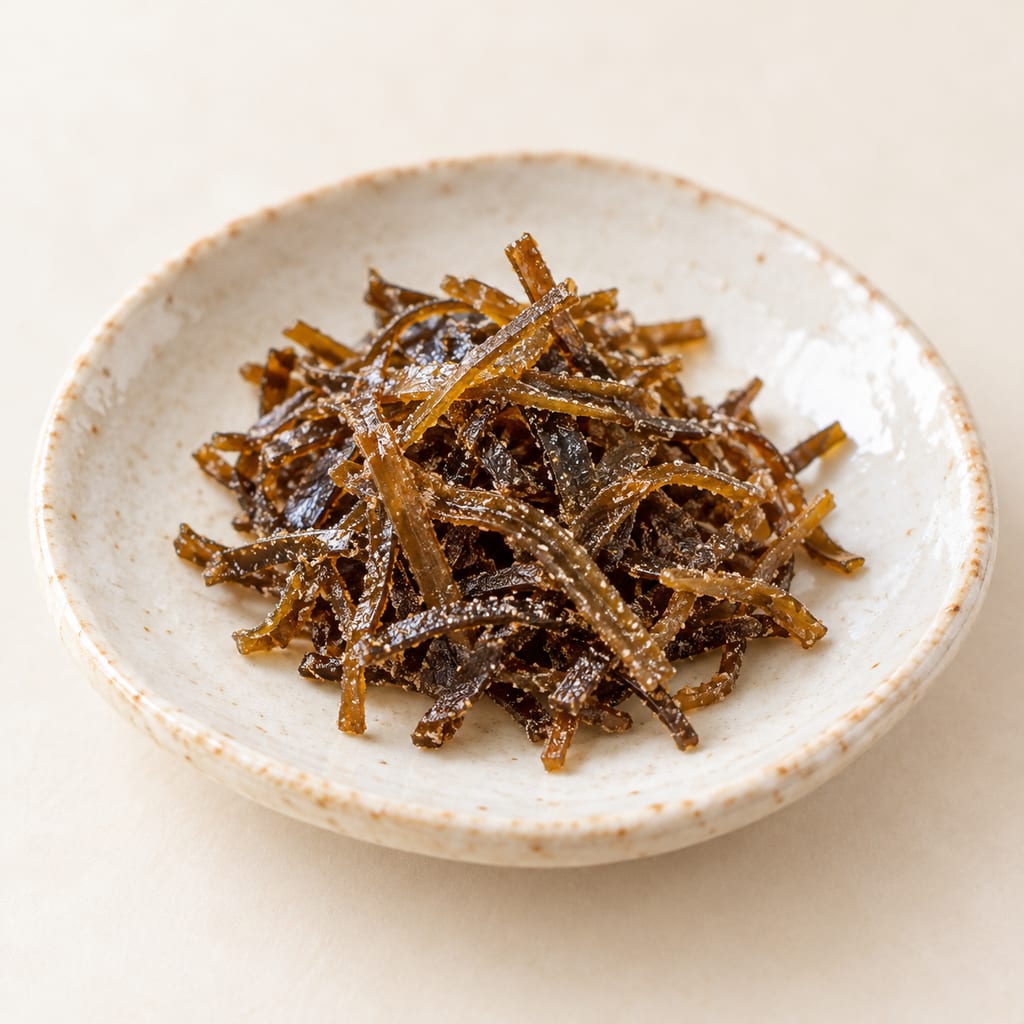
Japanese kelp simmered in soy sauce and seasonings, sometimes dried and salted, eaten with rice or used as an umami seasoning.
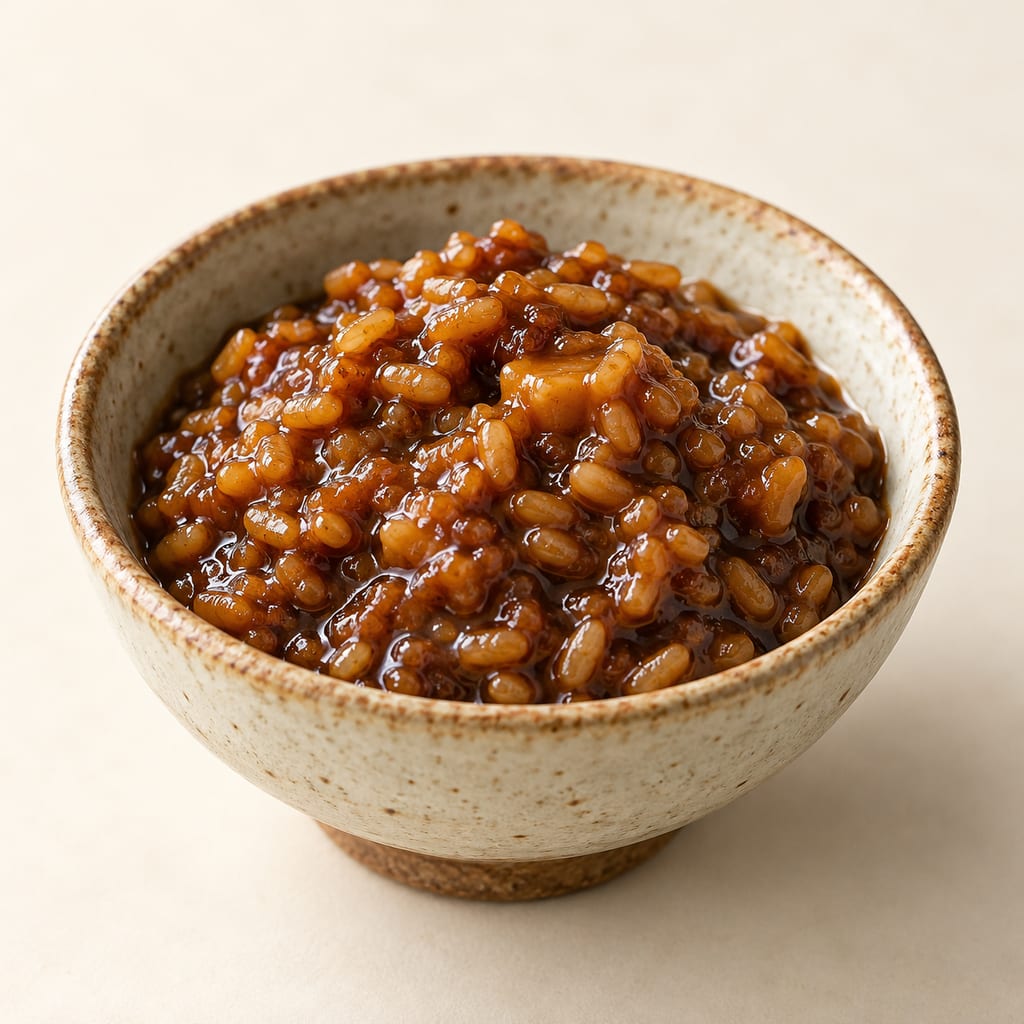
A Japanese kitchen condiment of rice koji matured in soy sauce until the grains turn soft and sweet. The same name also means the mould-grown soybean and wheat used to brew soy sauce.
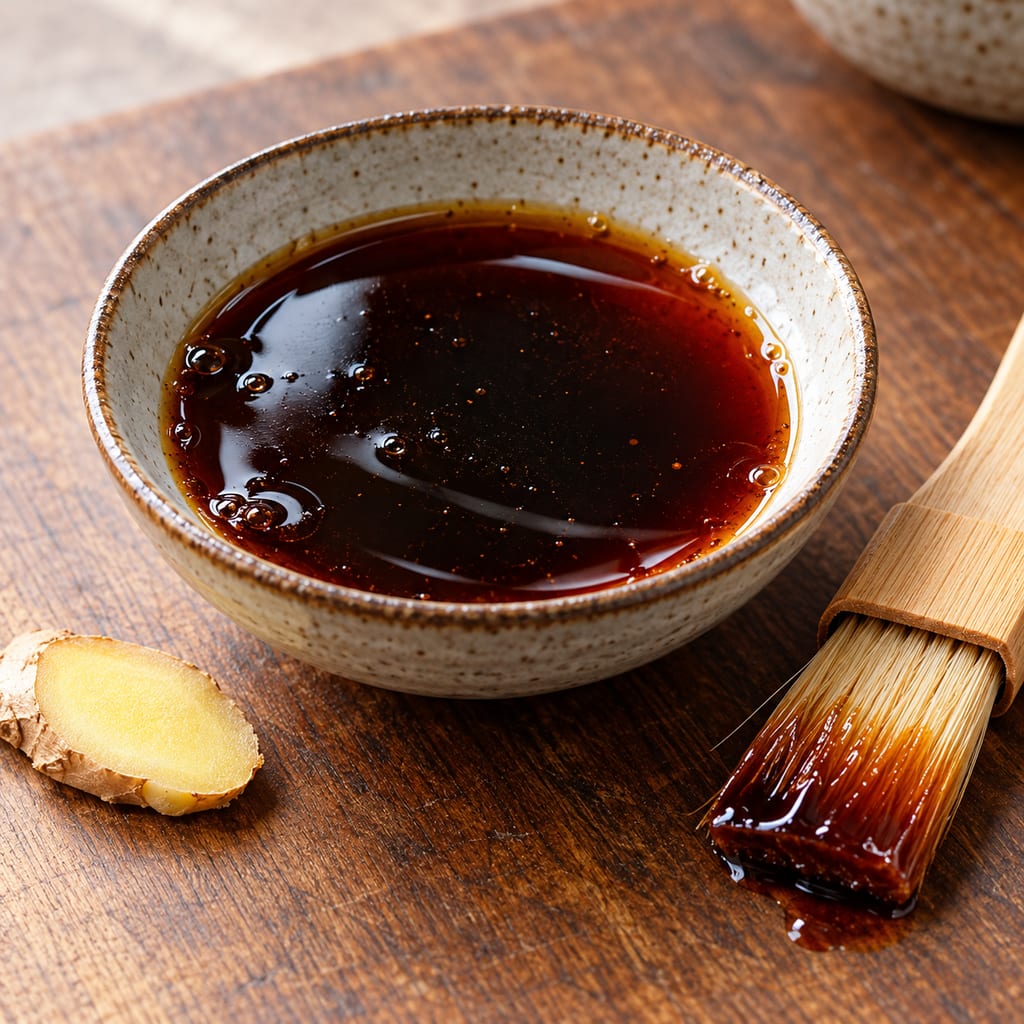
A modern tare-style glaze of koikuchi soy sauce, mirin, water, sugar and optional ginger, gently reduced and brushed onto food near the end of cooking.
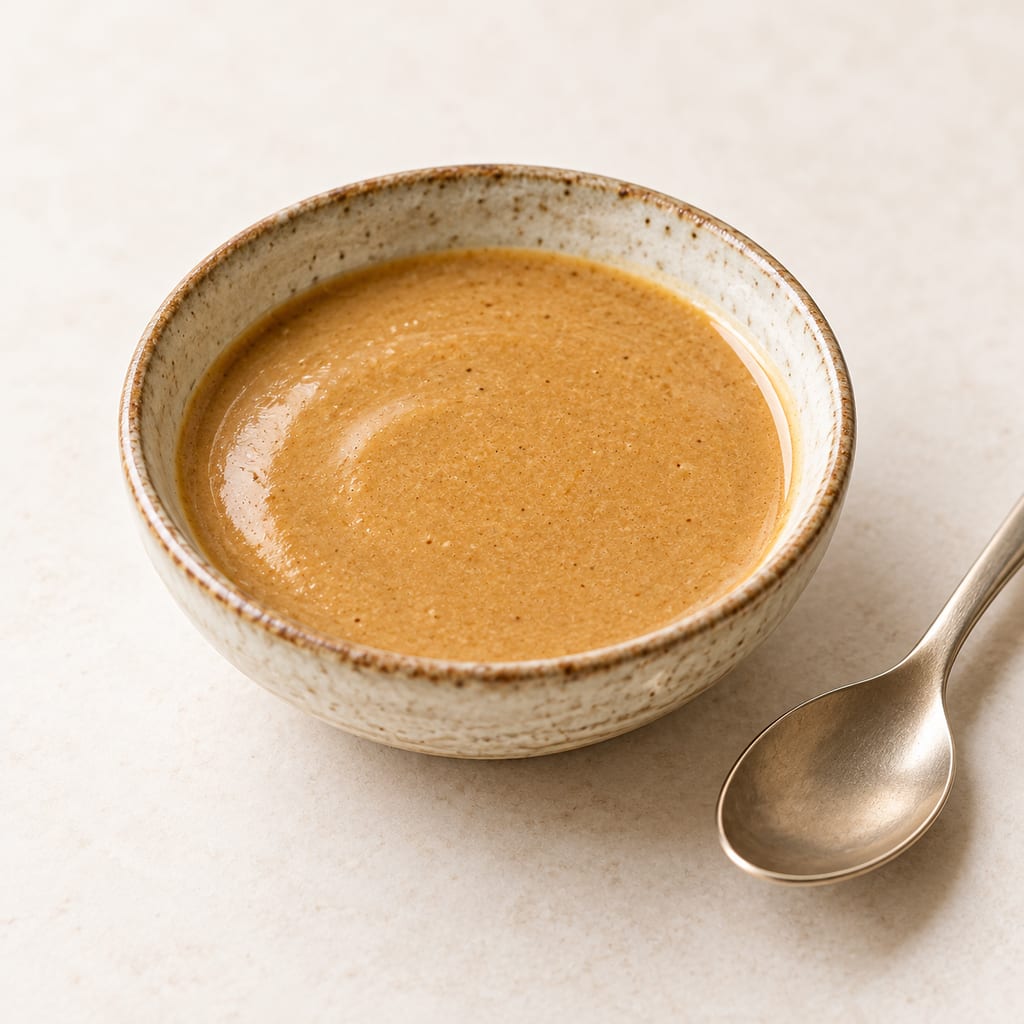
A sesame-rich goma-dare-style dipping sauce made by loosening toasted sesame paste with water, soy sauce, rice vinegar and sugar; this original development formula remains untested.
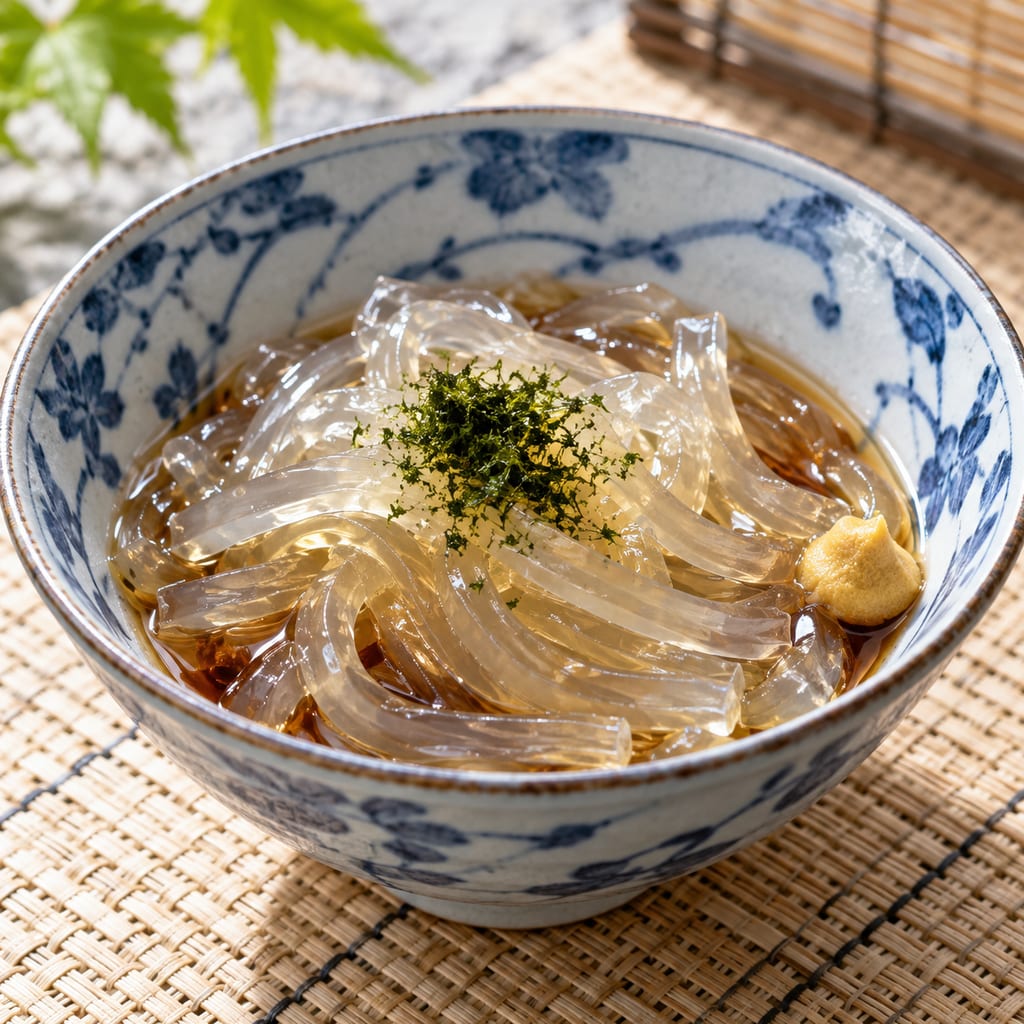
A Japanese jelly made by boiling agar-rich red seaweed, straining the extract and letting it set, then pressing it into strands served with vinegar-soy sauce or sweet syrup.
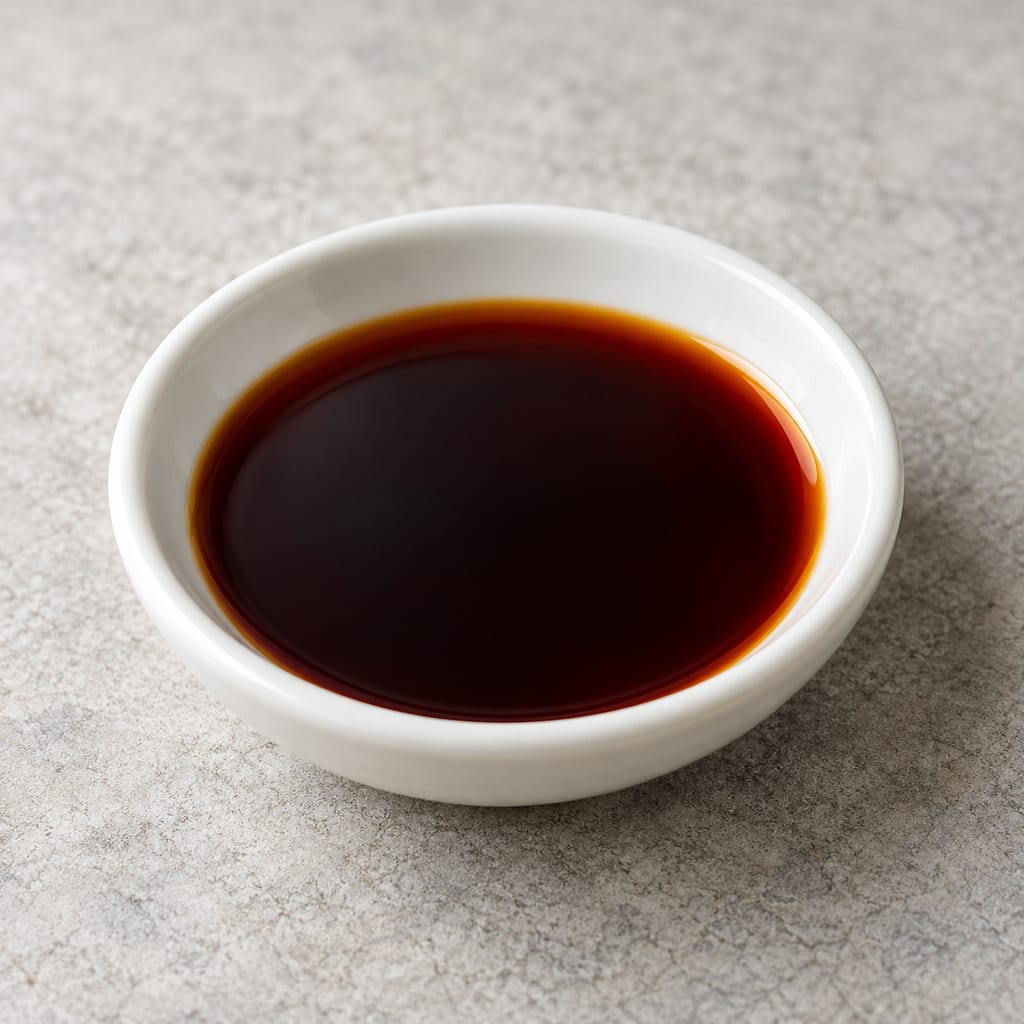
Soy sauce is a salted liquid seasoning made by growing koji mould on soybeans and grain, maturing the mash in brine and pressing out the liquid. Japan's shoyu is the best-documented form.
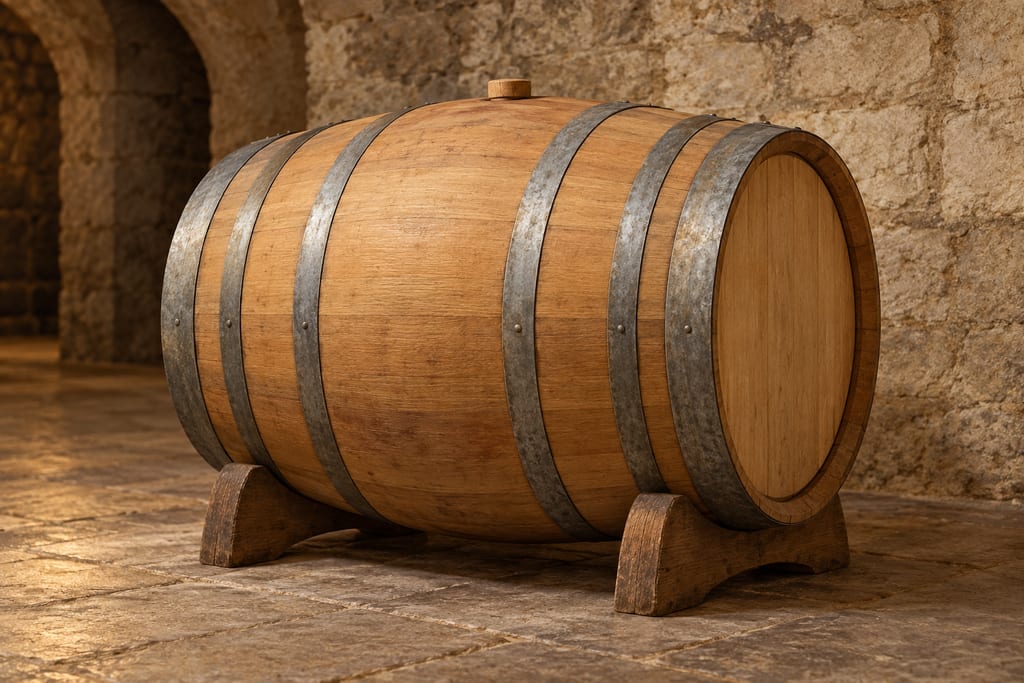
Coopered vessels use shaped staves and hoops, but portable barrels, large foeders and upright wooden vats serve different roles. Materials and uses vary by place and process.
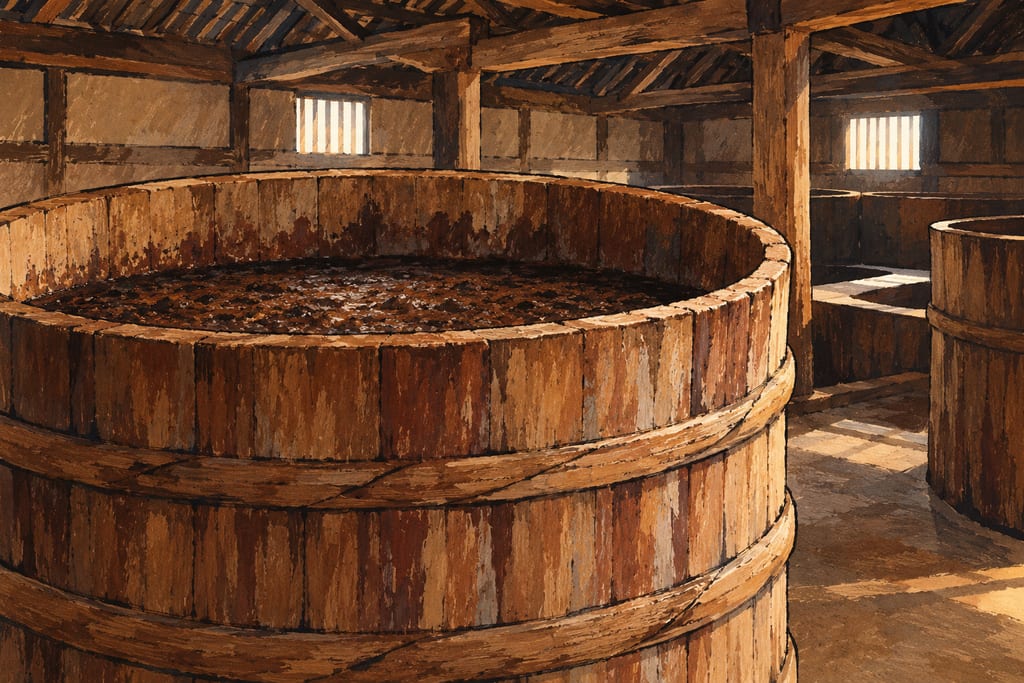
A shoyu kioke is a very large upright wooden vat for fermenting and ageing soy-sauce mash; Japanese sources document cedar-stave examples held together by hoops.
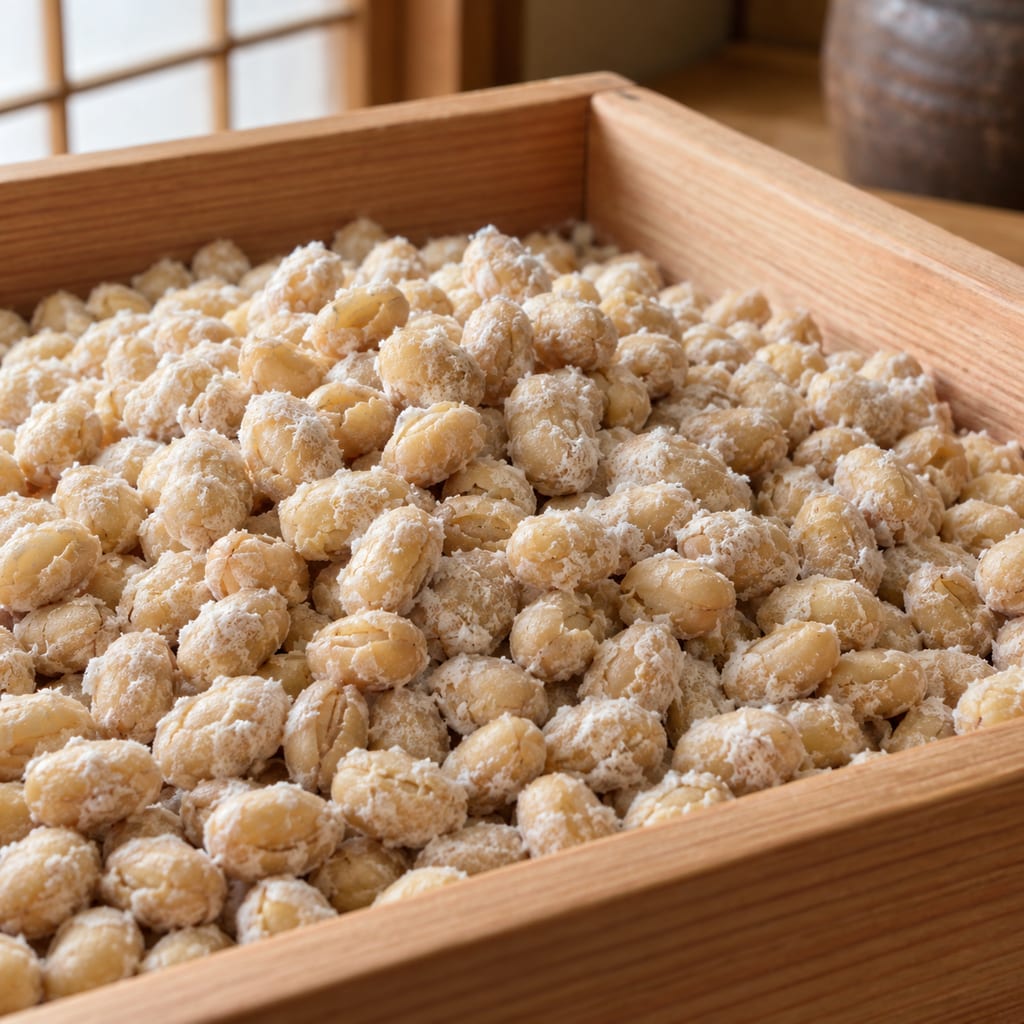
Japanese soybean koji: steamed soybeans, loose or formed into balls, grown over with Aspergillus mould to make the enzymes for mame-miso, tamari and regional soybean condiments.

Japanese reddish-brown vinegar from sake lees matured about three years, turned to vinegar by acetic bacteria; the vinegar of Handa and Edomae sushi rice.
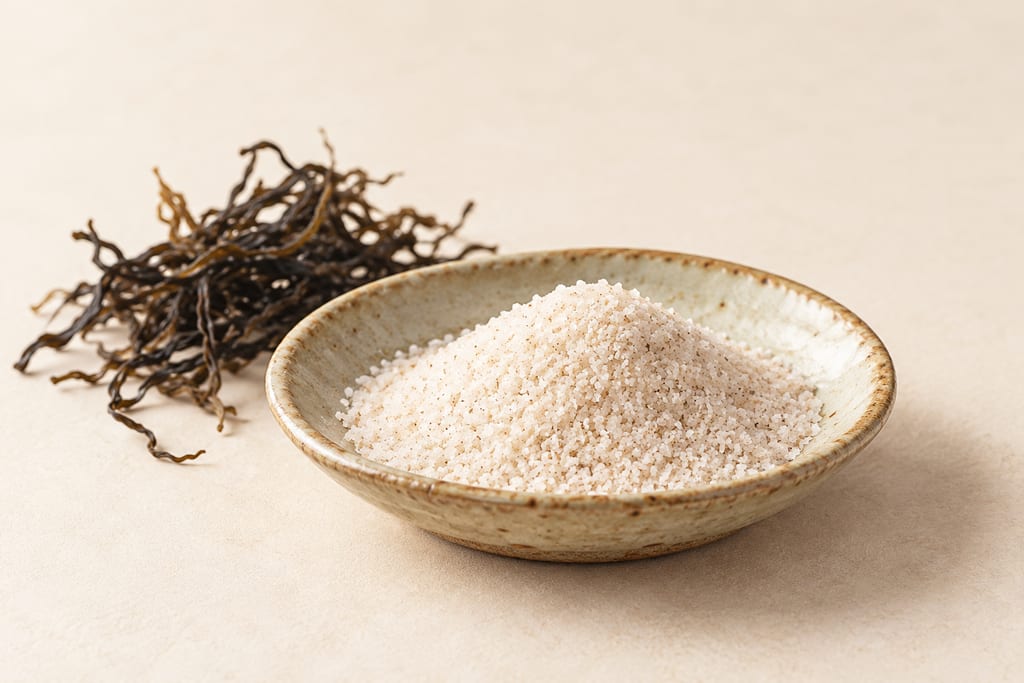
Amabito no Moshio is a modern, pale beige Japanese seaweed salt made from Seto Inland Sea water and hondawara seaweed. Its documented factory method concentrates filtered brine in kettles, then separates and dries the salt.
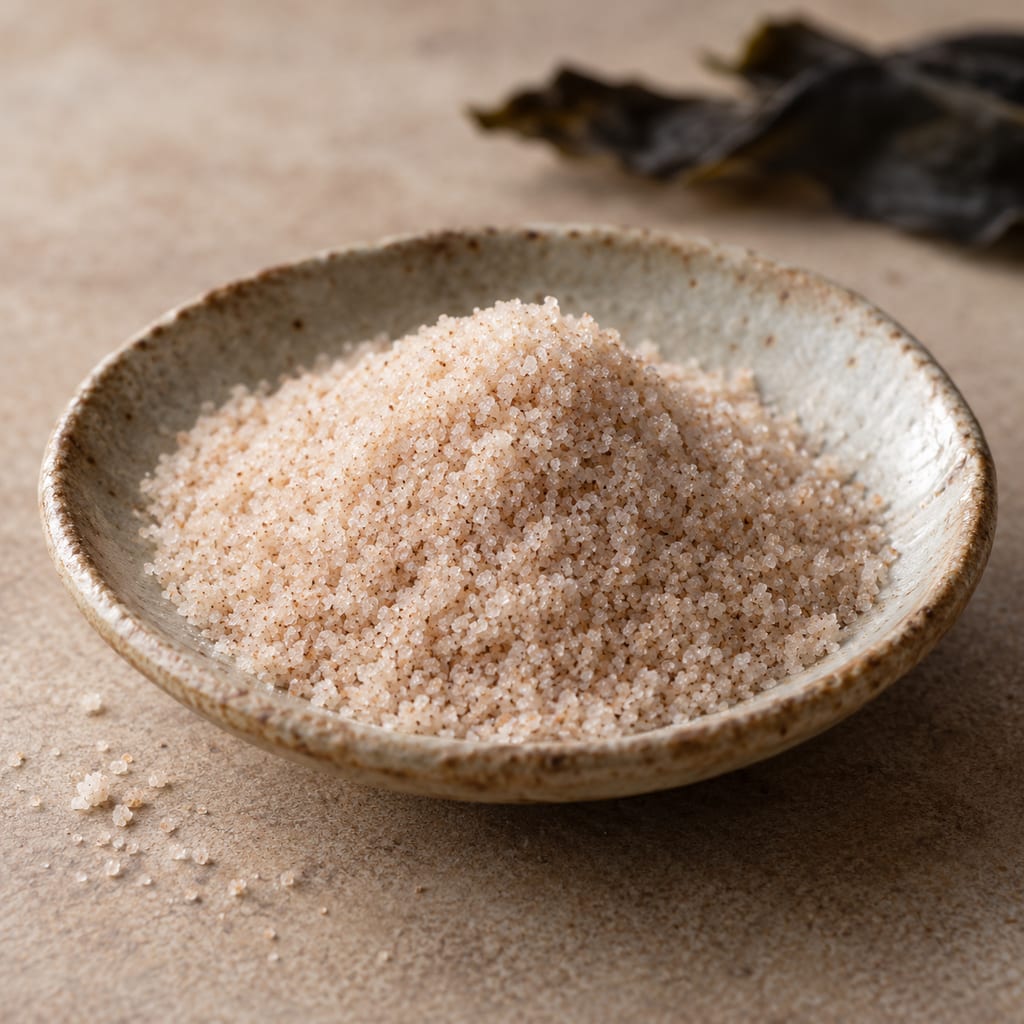
Awaji moshio is a modern Japanese seaweed salt made by TaDa PHILOSOPHY from Awaji Island seawater and seaweed. Its premium process concentrates brine, extracts seaweed flavor, then crystallizes, separates, dries and grades the salt.
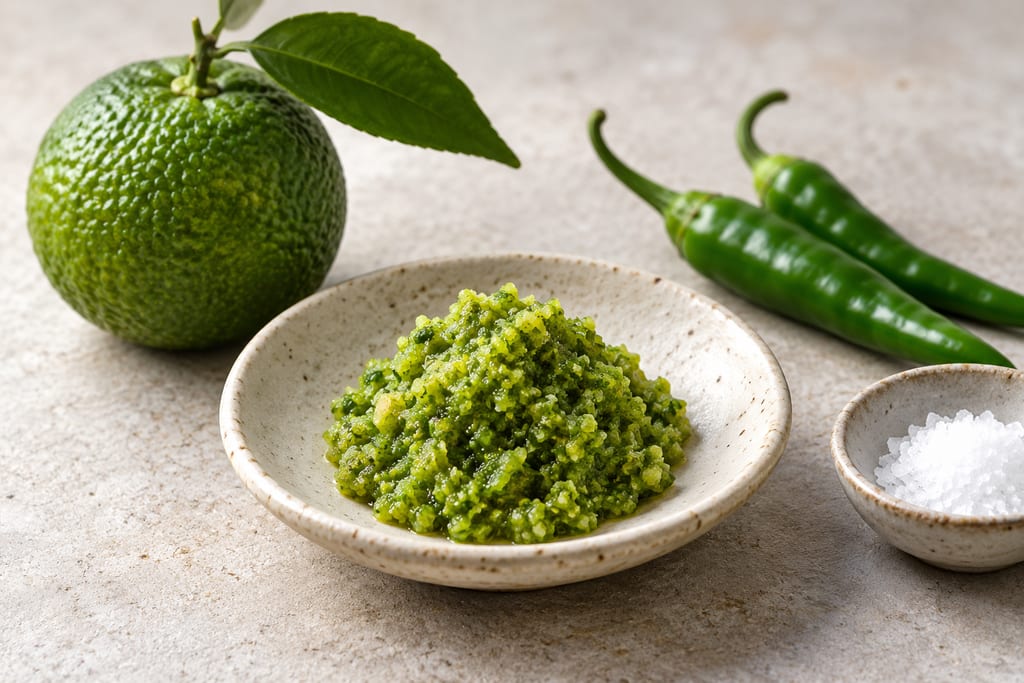
A fresh, uncooked yuzu and green chilli paste inspired by Kyushu’s yuzu kosho, made here as an untested small-batch seasoning rather than a preservation formula.
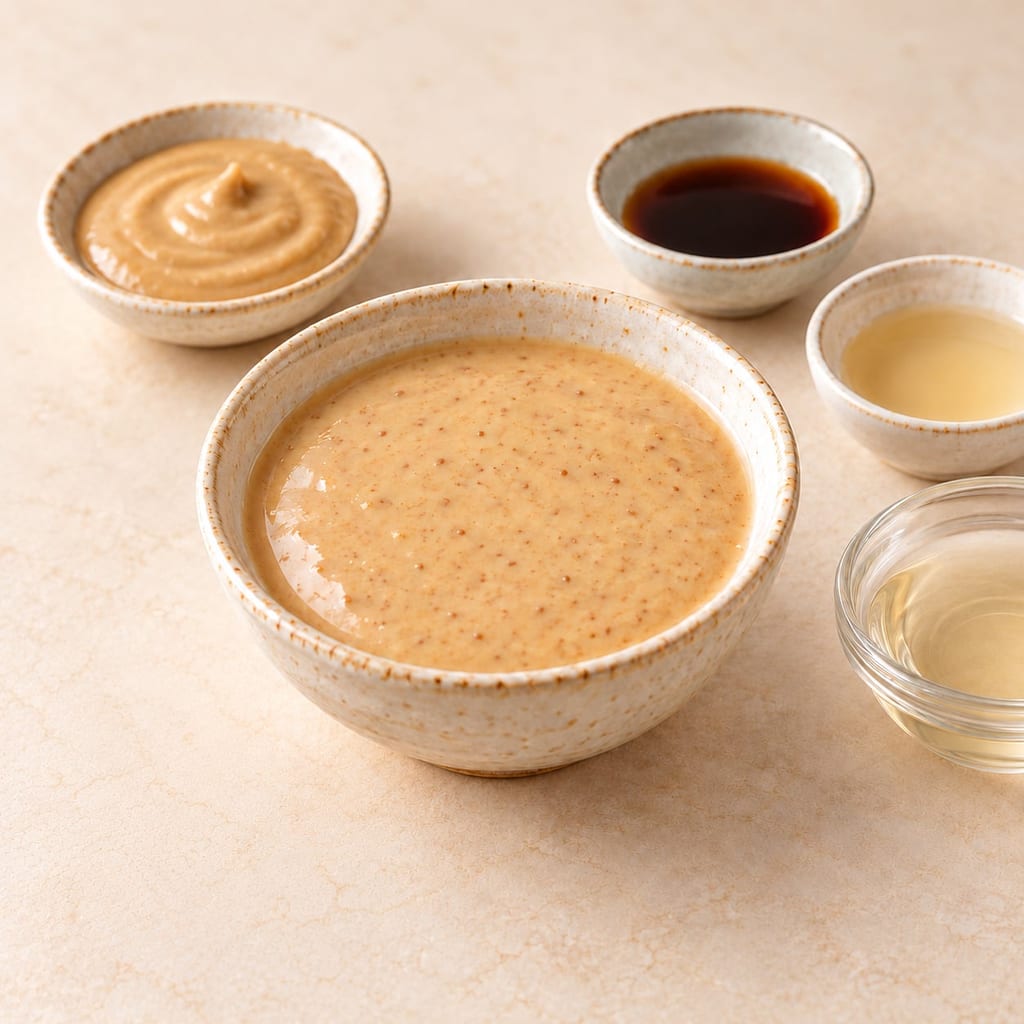
A creamy Japanese sesame dipping sauce with soy, rice vinegar and dashi. Gradual mixing turns the thick sesame paste into a smooth sauce.
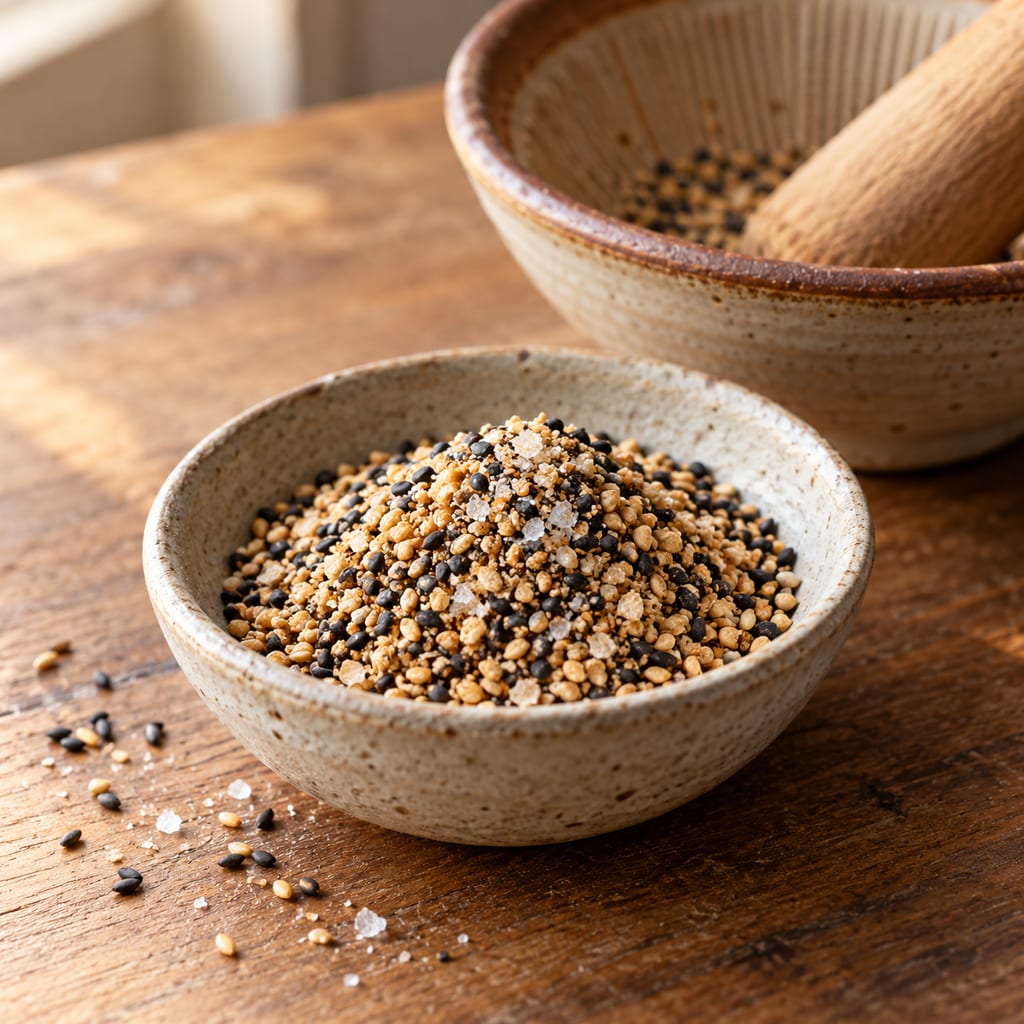
Toasted sesame seeds and sea salt are ground together into a coarse seasoning for rice. This small pan-roasted batch keeps most of the seed texture.
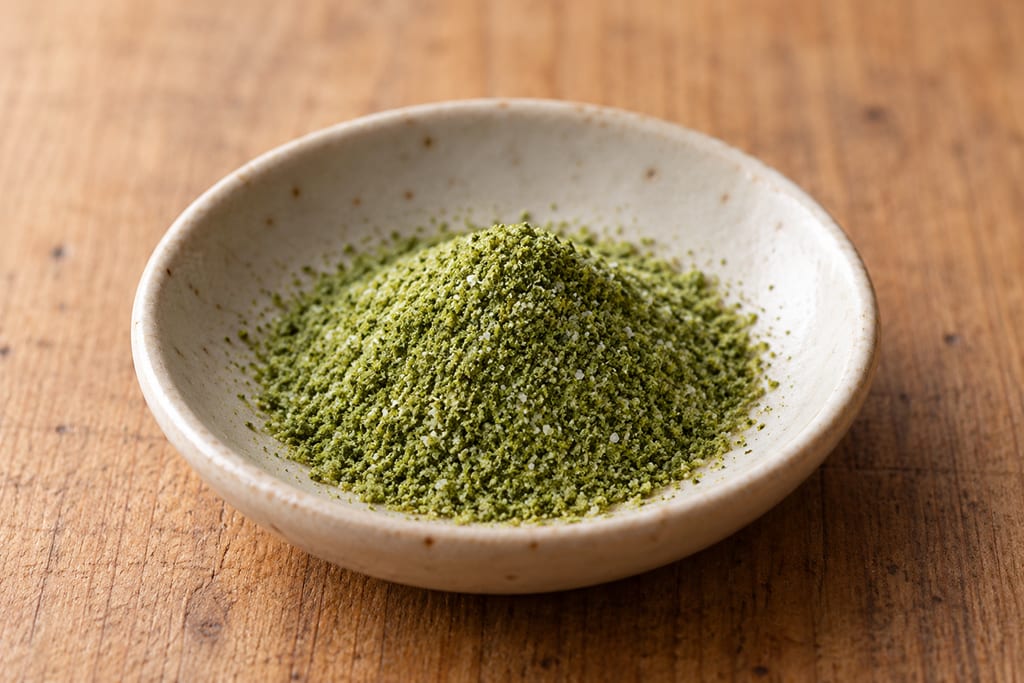
Green tea leaf salt is a dry seasoning made by grinding tea leaves, sieving them and mixing the powder with fine salt. This Japanese-style version follows a documented equal-parts method.
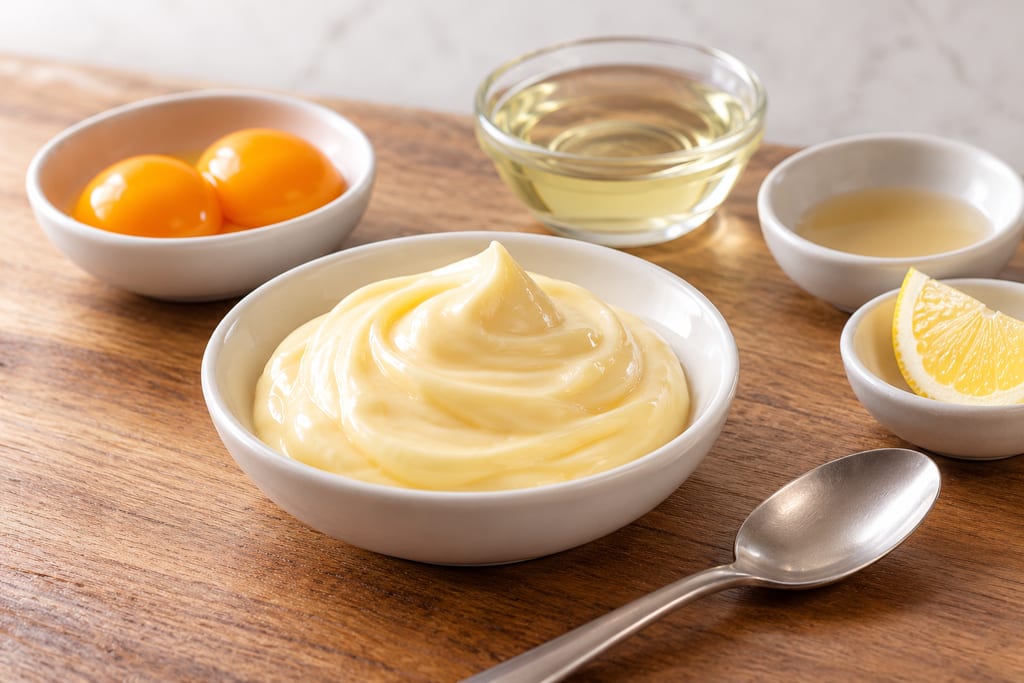
A one-cup Japanese mayonnaise batch made in a small food processor with pasteurized room-temperature egg yolks and oil added in three stages around the seasonings and acids.
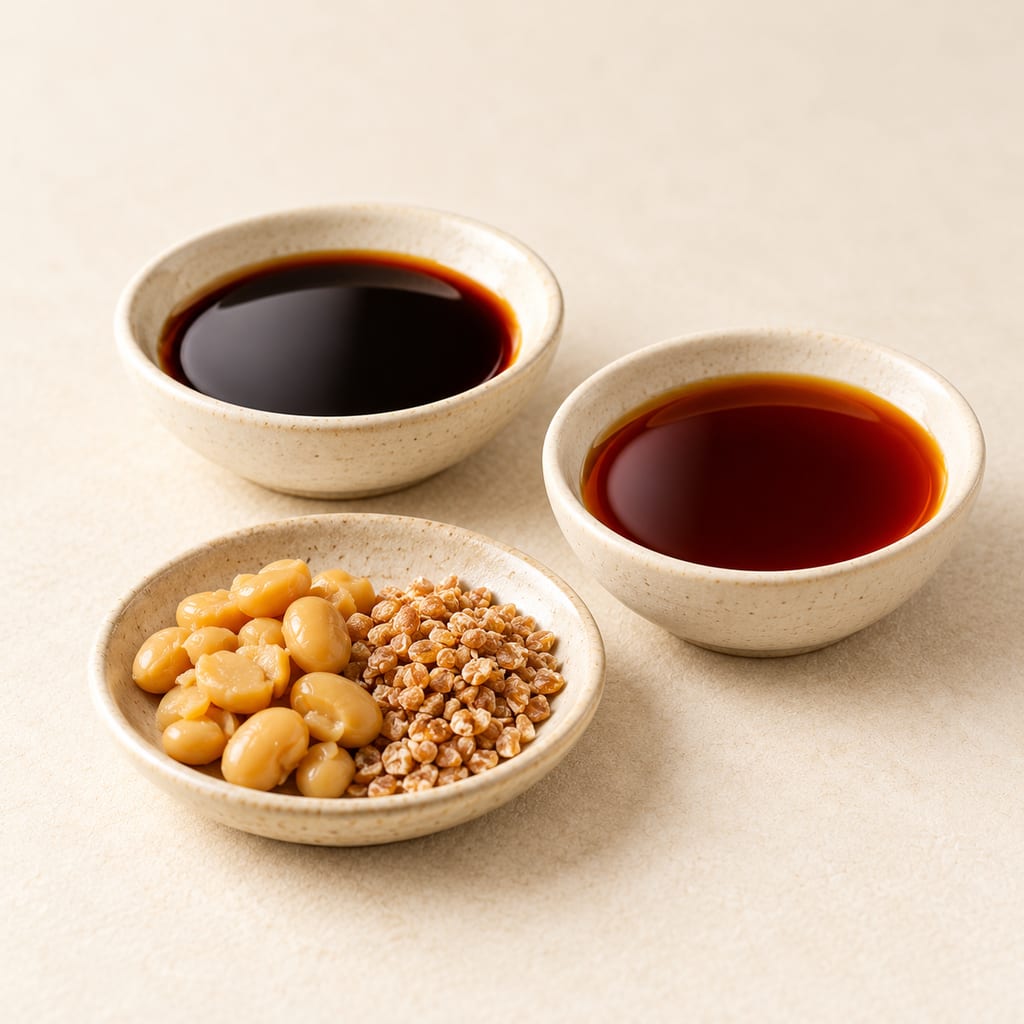
Jiangyou is the Chinese soy sauce family, an umbrella term for light, dark and seasoned sauces made by two main process families: high-salt liquid-state and low-salt solid-state brewing.
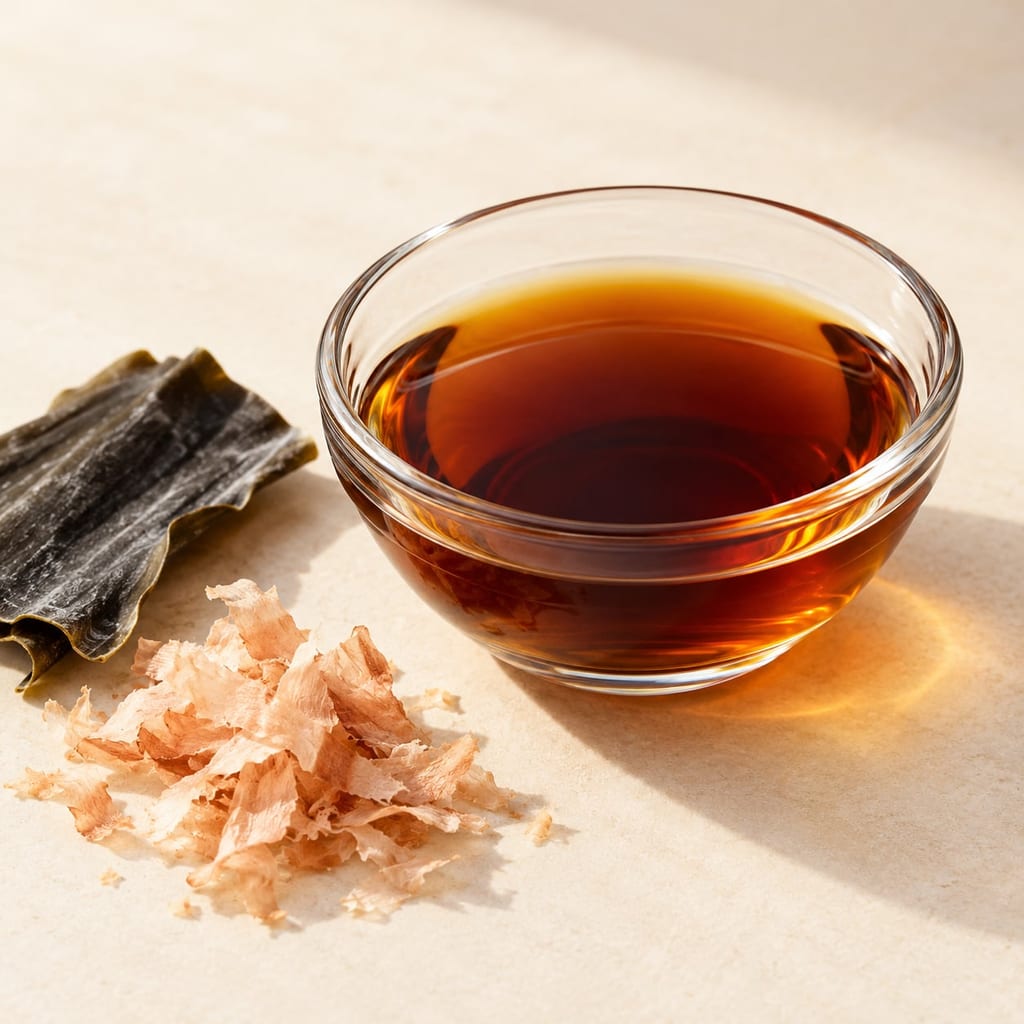
Mentsuyu seasons Japanese noodles with dashi, soy sauce and mirin. Two home formulas are recorded here: a 2012 light-soy and bonito sauce, and a concentrate diluted 1:2 for dipping or 1:4 for hot soup.
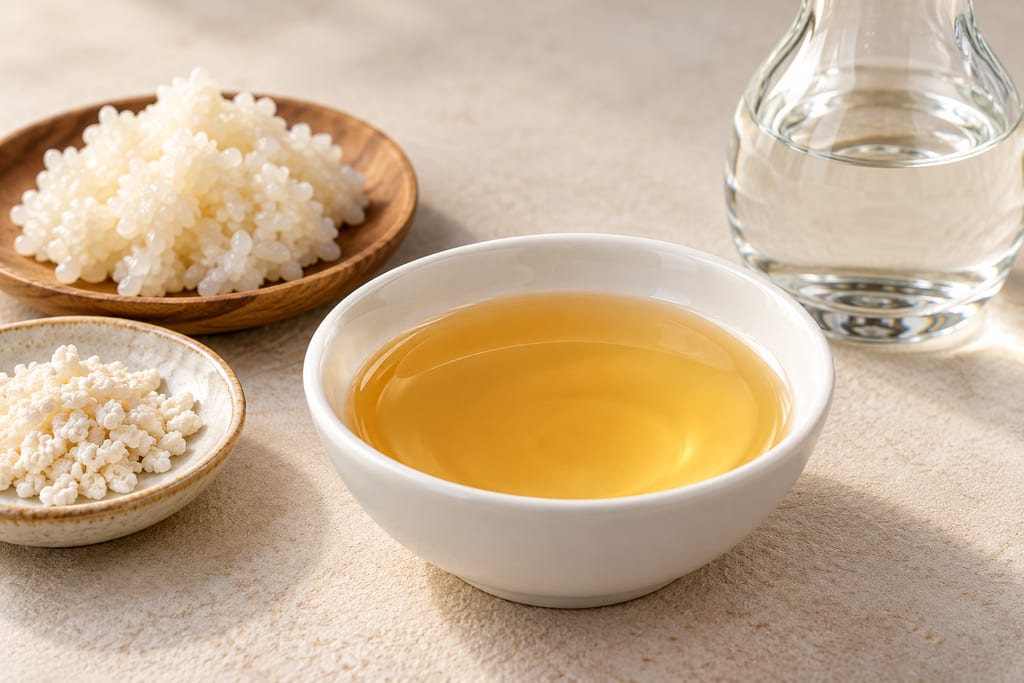
Hon-mirin is a Japanese rice seasoning made by saccharifying glutinous rice with rice koji in shochu, then pressing and usually heating the mash.
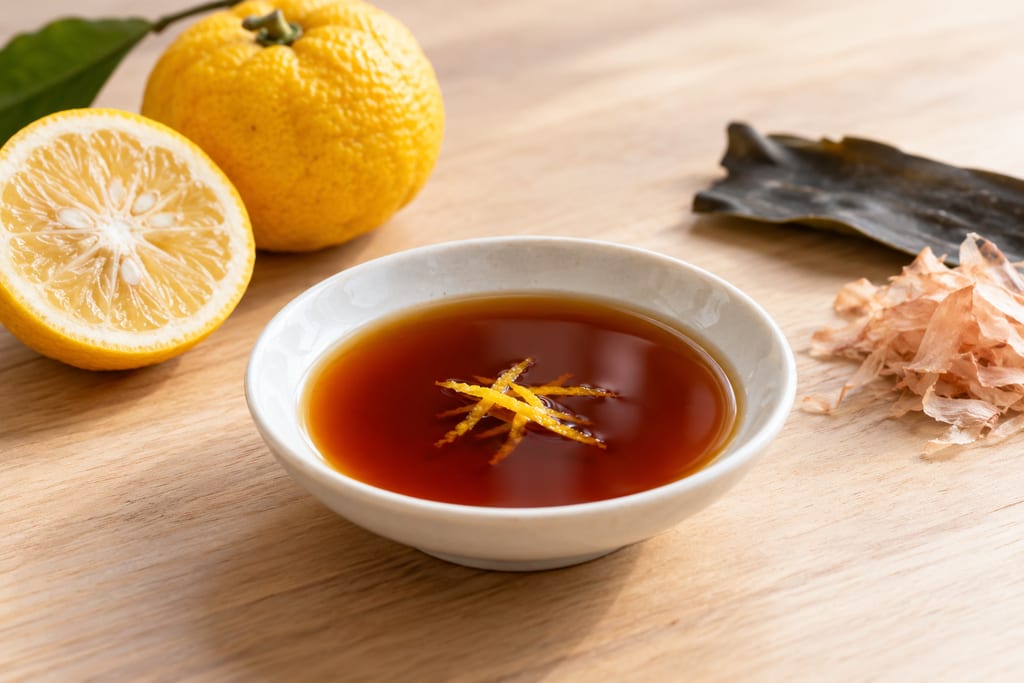
This quick ponzu combines soy sauce, vinegar, hon mirin, kombu, dried bonito and yuzu juice after a brief boil and a warm extraction; the recipe serves five.
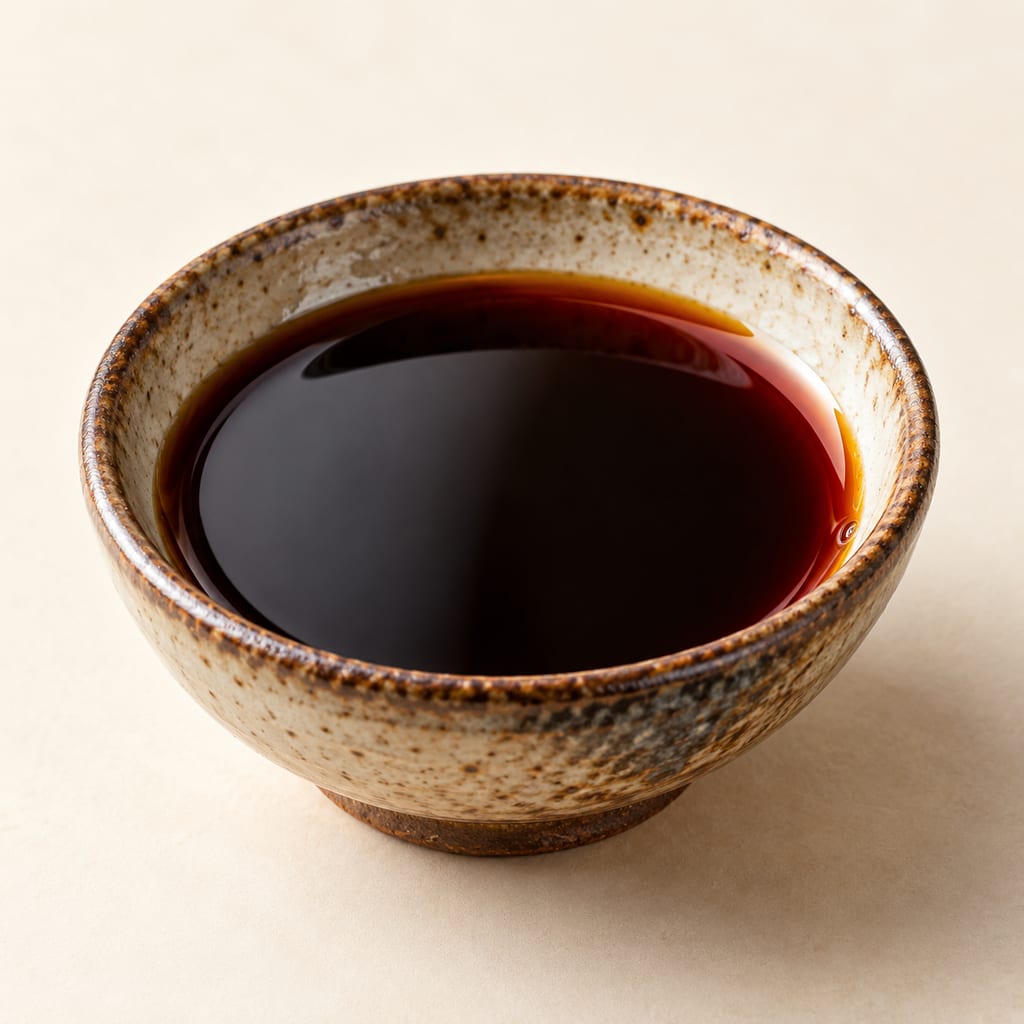
Saishikomi shoyu is a double-brewed soy sauce: a second moromi is made with a finished soy sauce in place of salt water, which makes a dark, concentrated sauce with softer salt.
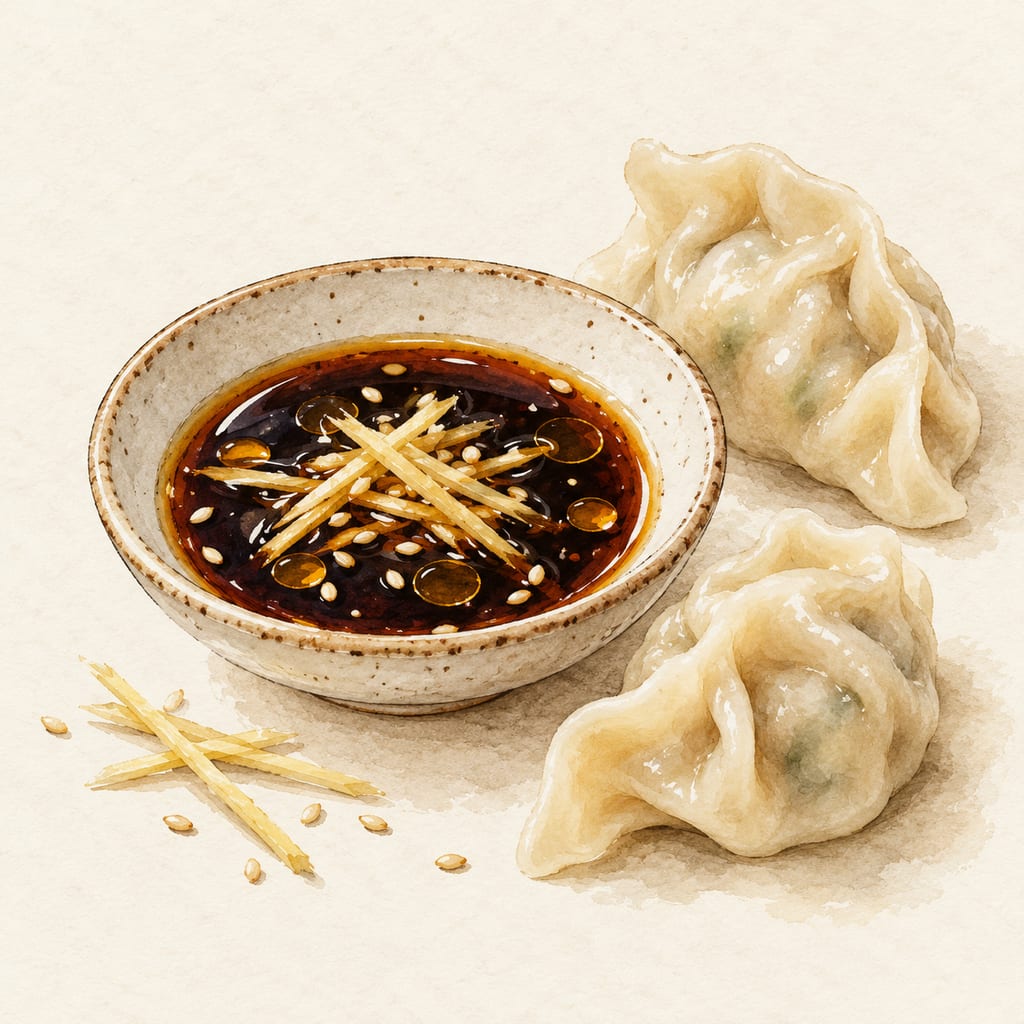
An untested small-batch soy and Zhenjiang black-vinegar dip with ginger and sesame oil, adapted as a modern accompaniment for dumplings or cooked vegetables.
Tamari is the soybean-dominant Japanese soy sauce of the Tokai region, made with little wheat and little brine, and aged longer than koikuchi.
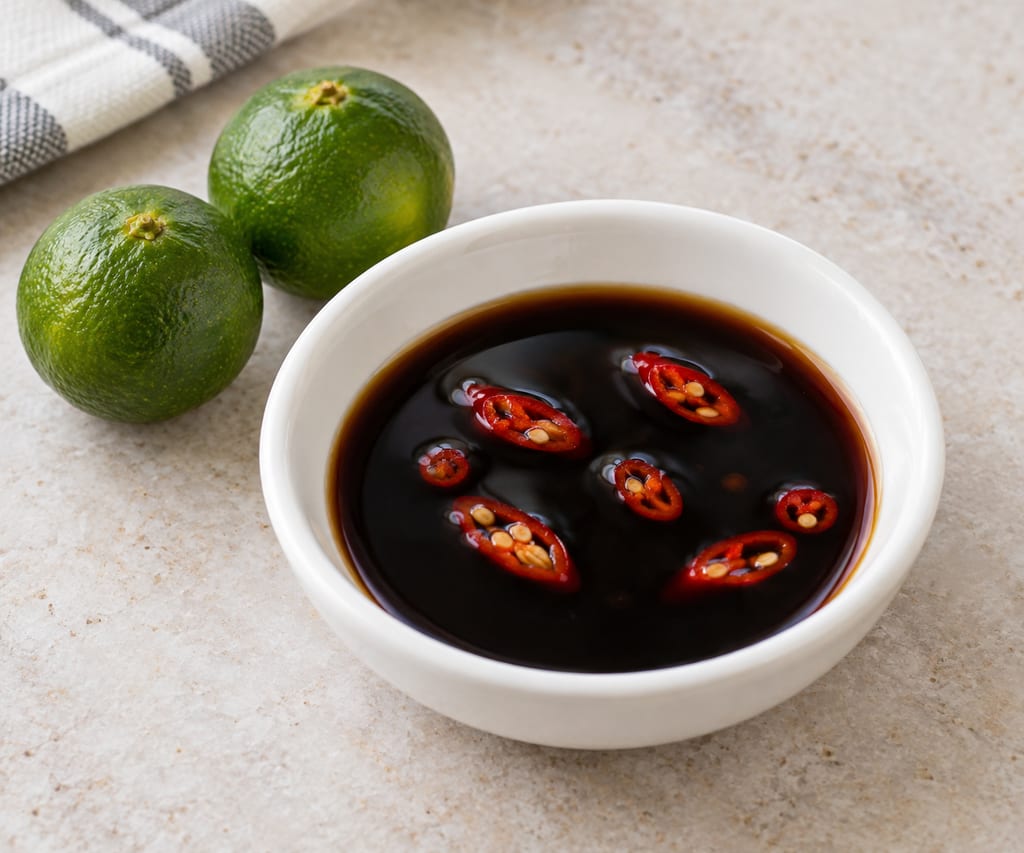
Toyomansi is a Filipino table dip of soy sauce and calamansi juice, served with grilled or fried foods; this version adds sliced chilli and optional sugar.

A Cap-Pelé boucanière is an Acadian herring-smoking building. The documented Willie Niles example is a one-storey wood-frame structure with a ridge smoke vent and interior bays for hanging fish-bearing cannes.

Achcharu is a family of Sri Lankan vinegar pickles made with mixed vegetables or seasonal fruit and a piquant spice dressing. This version is a quick, refrigerated, non-fermented mixed-vegetable pickle.

The acocote is a long, hollowed and dried gourd used to draw aguamiel from a mature maguey. It is a harvesting tool: the sap is transferred to a separate vessel before it ferments into pulque.

Adrak murabba preserves young ginger in sugar syrup, a sweet South Asian preparation recorded in Indian cookery and food-processing sources.

Parkia biglobosa seeds are fermented into regional West African seasonings, including nététou, iru, dawadawa and soumbala. The yellow fruit pulp is a separate food, and names and methods vary by place.

A refined common-wheat flour blended for a broad range of baking; its protein and behavior vary with wheat, milling and market.

The almond mushroom, Agaricus subrufescens, was cultivated in eastern North America in the 1800s, lost its market, and returned as a cultivated mushroom from Brazil, where it is grown under several names.
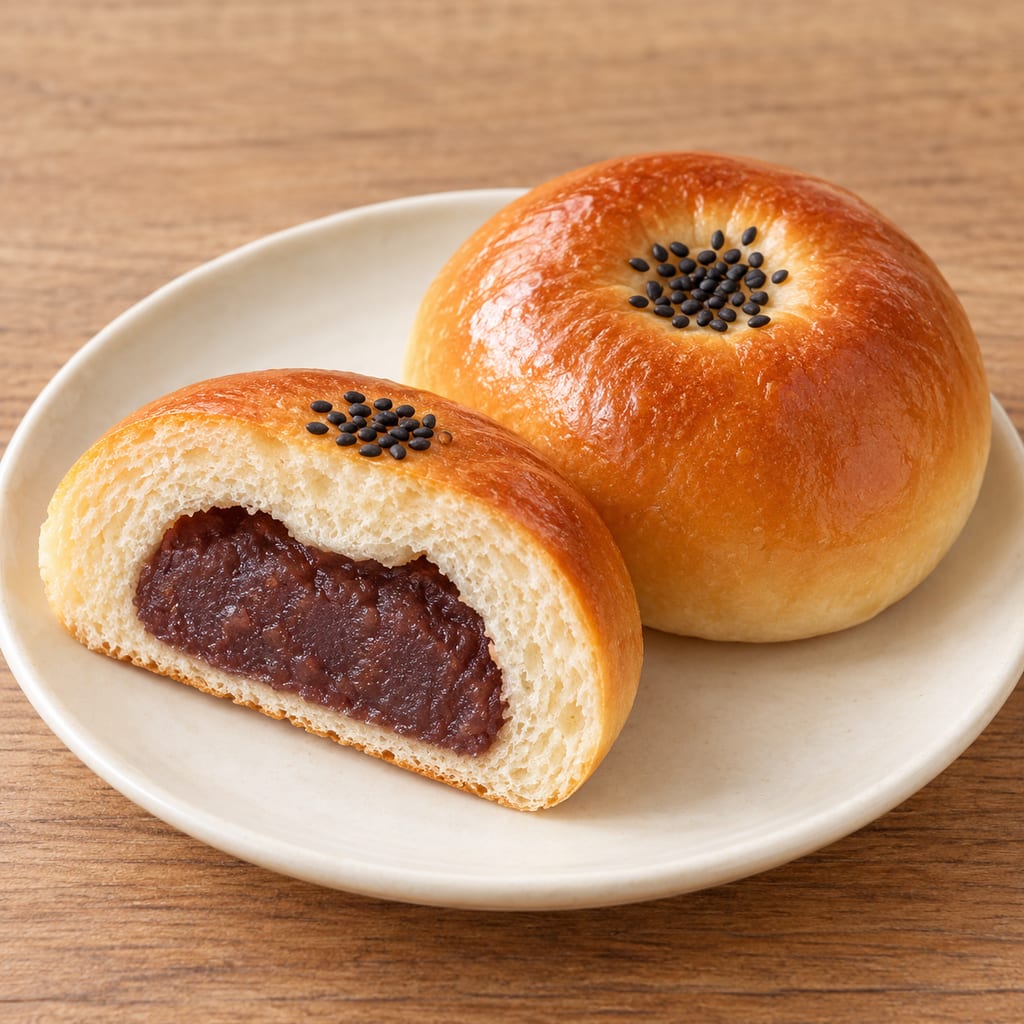
Anpan is a soft wheat bun filled with sweet red-bean paste and finished with egg wash and black sesame. This dough rises with commercial instant yeast.
No community contributions have been published for this entry yet.
Sign in to contribute. Published comments and photos are free to read.
Hirate ShoyuMethod · Safety
醤油のつくりかた(詳細)1,350 g soybeans, 1,400 g wheat, 994 g NaCl equivalent, 0.6 g starter and 4,000 ml water (three-sho batch)
Koji stage of 3 to 4 days; salt-cutting; seasonal moromi management and stirring schedule
Evaporation monitoring, film-forming yeast, pressing at about 10 months to a year
Unheated kiage shoyu refrigerated; heating at 80 to 85 °C for 10 to 30 minutes; settling 3 days to a week
Printed salt conversion uses the wrong operator
Cited in: Why each ingredient and step matters; Reading results and problems
Hirate ShoyuMethod
醤油のつくりかたOverview of small-scale brewing
Kiage shoyu versus heat-treated sauce
Cited in: Why each ingredient and step matters
Japan Soy Sauce Association, Soy Sauce Information CenterMethod · Science
Manufacturing processSoybeans, wheat and salt; roughly equal soybean and wheat
Koji proteases and amylases; lactic acid and yeast contributions
About 6 to 8 months of honjozo moromi
Honjozo, mixed-fermentation and mixing methods
Cited in: What it is; How it works; Why each ingredient and step matters
Japan Soy Sauce Association, Soy Sauce Information CenterContext · Use
Types and how to use themFive principal types
Koikuchi about 80% of domestic production
General culinary use
Cited in: What it is; Where it comes from; Regional and historical variations; How it is eaten and used
Ministry of Agriculture, Forestry and Fisheries of JapanMethod · Context
しょうゆの製造法Honjozo production
Steamed or defatted soybeans with roasted wheat; tane-koji; brine; 6 to 8 months
Naturally brewed, mixed-fermentation and mixing methods
Cited in: What it is; Why each ingredient and step matters; Regional and historical variations; How it is eaten and used
Ministry of Agriculture, Forestry and Fisheries of JapanContext
Soy sauce and misoSoy sauce categories and koikuchi's share of production
Cited in: Regional and historical variations
Kikkoman Corporation, Kikkoman Soy Sauce MuseumMethod
Making Soy SauceFour ingredients; steaming and roasting; koji over about three days
Pressing, clarification and heat treatment
Cited in: Why each ingredient and step matters
Kikkoman UKMethod
How soy sauce is brewedThree-day koji stage; moromi with lactic and yeast fermentation; pressing and finishing
Cited in: What it is; Why each ingredient and step matters
Higuchi Matsunosuke Shoten Co., Ltd.Method · Variation
Koji Starter for Soy SauceAspergillus oryzae and A. sojae soy sauce starters
Takara-kin starter for koikuchi and tamari
Strains selected for protease, glutaminase, growth and colour
Cited in: Why each ingredient and step matters; Regional and historical variations; Reading results and problems
Food Research InternationalScience
Starter molds and multi-enzyme catalysis in koji fermentation of soy sauce brewing: A reviewRole of starter moulds
Proteases, peptidases, glutaminases and amylases
Effect of salt on enzymes
Cited in: What it is; How it works
Journal of Bioscience and BioengineeringScience
Dynamics of the microbiome and volatile organic compounds during fermentation and aging of soy sauceMicrobial succession in industrial moromi
Tetragenococcus dominance; changes after Z. rouxii addition
Yeast genera linked to volatiles
Cited in: How it works
Journal of Bioscience and BioengineeringScience
Crucial role of early addition of Wickerhamiella versatilis in enhancing aroma formation during soy sauce fermentationEarly W. versatilis addition and 4-ethylguaiacol
Abundance versus metabolic contribution
Cited in: How it works
Journal of Agricultural and Food ChemistryScience
Chemical and Sensory Characteristics of Soy Sauce: A ReviewAmino acids, peptides, nucleotides, organic acids and aroma compounds
High-salt fermentation and salt-tolerant microbes
Cited in: How it works
Japan Soy Sauce Association, Soy Sauce Information CenterSafety · Use
Smart storageOxidation and darkening; aroma loss after opening
Keep closed, away from light, refrigerate after opening
Cited in: How it works; How it is eaten and used; Reading results and problems
Ministry of Agriculture, Forestry and Fisheries of JapanSafety
これで解決!食中毒予防のポイントHand and utensil hygiene; cross-contamination
Limits of judging safety by appearance or smell
Cited in: Reading results and problems
PubMed CentralSafety
PubMed Central article PMC7581291 (biogenic amines in fermented foods)Biogenic amines such as histamine and tyramine vary widely between fermented seasonings
Cited in: Reading results and problems
Food Standards Agency, UK GovernmentSafety
Allergen guidance for food businessesSoybeans and wheat as regulated allergens
Cited in: How it is eaten and used; Reading results and problems
Kikkoman Institute for International Food CultureHistory
Kikkoman International Food Culture exhibition: history of soy sauceModern koikuchi technology established by the early nineteenth century
Koikuchi and usukuchi paired in the Kappo Kyokasho of 1918; usu-shoyu in 1689
Cited in: Where it comes from
National Diet Library, JapanHistory
Soy sauce and Edo (Kaleidoscope of Books)Darker Kanto soy sauce dominating Edo in the Bunka and Bunsei years
Link with Edo-style sushi, soba and grilled eel
Cited in: Where it comes from
Chiba Prefectural MuseumHistory
Noda soy sauce brewing history1661 as the earliest substantiated commercial brewing at Noda
Earlier claims treated as tradition
Cited in: Where it comes from
Yamasa CorporationHistory
Choshi and soy sauce historyChoshi as a brewing centre; Yamasa founded 1645
Cited in: Where it comes from
Kikkoman CorporationHistory
Kikkoman historyNoda Shoyu Co. formed in 1917 by eight brewing families
Cited in: Where it comes from
Yuasa ShoyuVariation
Yuasa ShoyuKoji-making of three to four days; cedar vessels for about 1 year 3 months to 2 years
Cited in: Regional and historical variations
Shodoshima TownVariation
Shodoshima soy sauceCedar koga vats; certified vat-brewed koikuchi ferments about a year
Cited in: Regional and historical variations
Japan Soy Sauce Technology CenterStandard
JAS standards for soy sauceType, grade and total nitrogen criteria; special-grade brewed koikuchi minimum total nitrogen 1.50 g per 100 ml
Cited in: Regional and historical variations; Reading results and problems
Environmental Restoration and Conservation Agency, JapanSafety
Allergenic foods: wheatWheat proteins are extensively hydrolysed in soy sauce brewing; some wheat-allergic people tolerate certain products under medical guidance
Cited in: How it is eaten and used; Reading results and problems
Umami Information CenterUse · Variation
Soy sauceSalt content of conventional koikuchi about 16 to 17%
Sweeter regional soy sauces
Cited in: Regional and historical variations; How it is eaten and used
Akita Konno ShotenVariation
Soy sauce koji startersSoy sauce starters differentiated by protease, amylase, mycelial growth and colour
Cited in: Regional and historical variations
Kikkoman Institute for International Food CultureHistory
Kikkoman history of soy sauce, part 3Early records of the word for soy sauce: 1536, 1568 and 1597
Cited in: Where it comes from
National Institute for Japanese Language and LinguisticsHistory
Ekirinbon Setsuyoshu1597 dictionary giving the characters 醤油 with the reading shoyu
Cited in: Where it comes from
Japan Soy Sauce AssociationHistory
History of soy sauceHishio, the Taiho Code of 701 and the development of soy sauce brewing; the Wakan Sansai Zue of 1715
Cited in: Where it comes from
Kikkoman Institute for International Food CultureHistory
Kikkoman history of soy sauce, part 6Wakan Sansai Zue of 1715 describing the brewing method
Cited in: Where it comes from