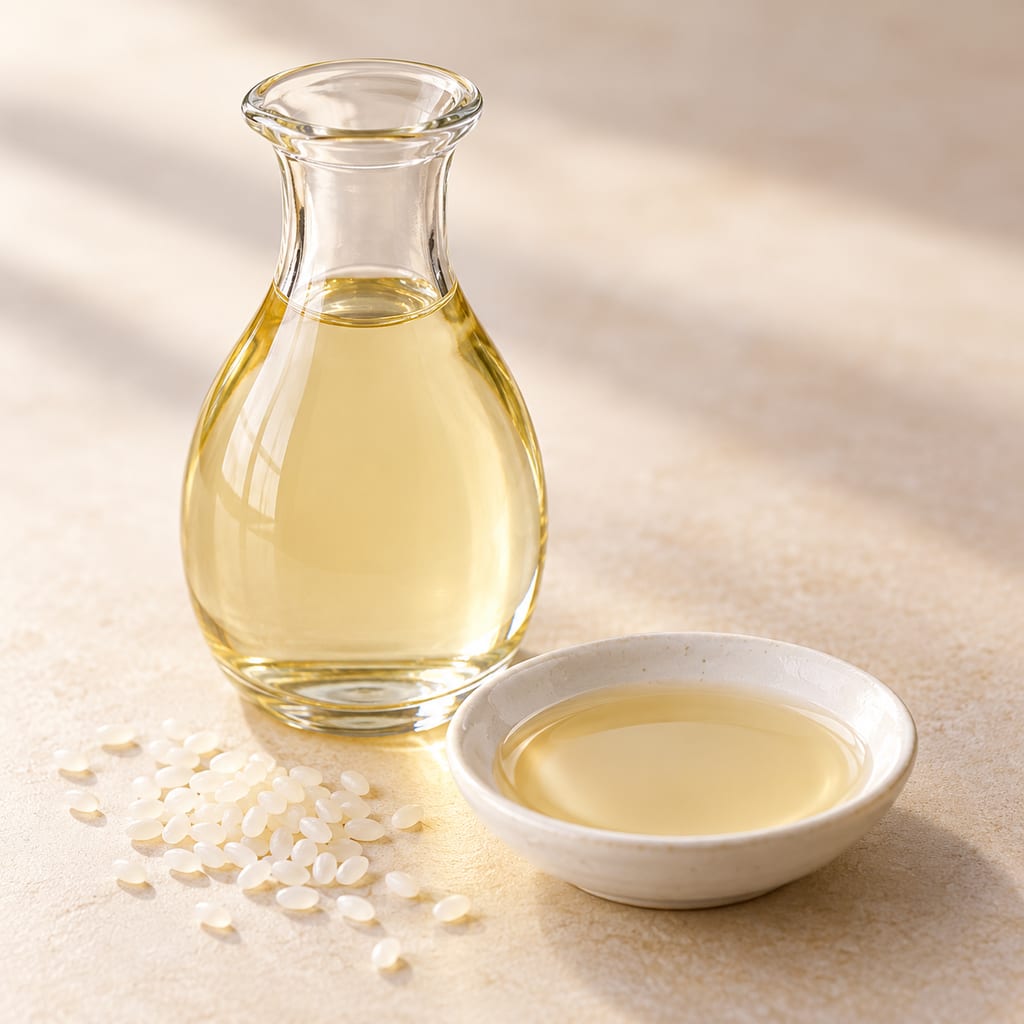
Unseasoned rice vinegar
Japanese komezu is a pale, unseasoned rice vinegar made through alcoholic and acetic fermentation; rice, water, koji and yeast shape its character.
 FermenteaWhere food goes to change
Modern adaptation
マヨネーズ (mayonnaise) · Kewpie-style mayonnaise
A one-cup Japanese mayonnaise batch made in a small food processor with pasteurized room-temperature egg yolks and oil added in three stages around the seasonings and acids.
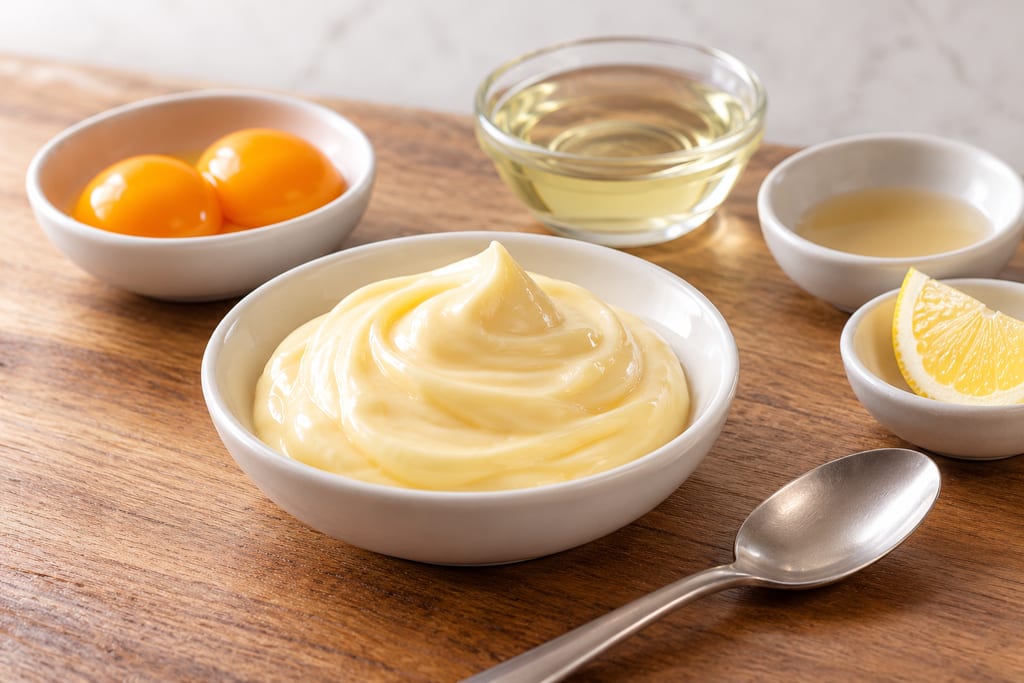
Japanese mayonnaise is a rich, smooth condiment made by dispersing neutral vegetable oil into egg yolks and an acidic liquid. Its creamy texture comes from an emulsion, not from fermentation. The Japanese style is closely associated with a generous egg-yolk content, mild acidity, subtle sweetness and a savoury depth that has made it an everyday ingredient in Japan.
The name is マヨネーズ (mayonēzu), borrowed into Japanese from the European word mayonnaise. Commercial Japanese mayonnaise is often associated with Kewpie, although Kewpie is a brand rather than a generic name for every Japanese mayonnaise. The familiar homemade style uses egg yolks, oil, rice vinegar, lemon juice, seasoning and sometimes a little dashi powder.
The recipe preserved in this record is a contemporary small-food-processor adaptation. It uses pasteurised egg yolks, incorporates oil in three portions and produces approximately one cup of mayonnaise.
Mayonnaise entered Japanese food culture during a period of growing interest in Western food. The most securely documented turning point was the launch of Kewpie Mayonnaise in March 1925, making it the first commercially manufactured Japanese mayonnaise.
Its creator, Toichiro Nakashima, had encountered mayonnaise during time spent studying food production in the United States in the 1910s. He was particularly interested in its use in potato salad and its nutritional value.
Nakashima's ambition was to popularise a nutritious, appealing condiment made with egg yolks. At the time, mayonnaise was not a familiar staple in Japanese households. Early customers were so unfamiliar with the product that it was sometimes confused with hair pomade.
The first year's sales were approximately 120 cases, equivalent to 600 kg. These figures illustrate how modestly the industry began.
During the following decades, mayonnaise became increasingly familiar. Kewpie introduced vacuum mixing in 1926, suspended production during wartime shortages in 1943, and resumed in 1948.
Packaging also changed. The familiar soft plastic bottles were introduced in the post-war period, and the star-shaped dispensing opening appeared in 1972.
The bottle became part of the product's culinary identity because mayonnaise could be squeezed directly onto food in decorative lines.
Kewpie established a company dedicated to vinegar manufacture in 1962, recognising that vinegar flavour was central to the finished product.
These details establish a documented history of Japanese commercial mayonnaise. They do not establish when the exact homemade formula in this record was first used.
Japanese mayonnaise belongs to the same broad family as European and American mayonnaise. The principal difference is usually one of formulation and sensory character rather than a fundamentally new technology.
Many conventional Western mayonnaise formulations use whole eggs or a mixture of whole eggs and yolks. Japanese egg-yolk-style mayonnaise obtains much of its richness from yolks alone.
Egg yolk contains water, proteins, lipids and natural emulsifying substances.
The higher proportion of yolk can contribute a thicker, more custard-like texture and fuller flavour.
Japanese versions often use a comparatively mild vinegar, and some commercial products incorporate ingredients that enhance savouriness.
However, Japanese mayonnaise is not defined by mandatory addition of MSG, dashi or a particular vinegar in every product.
A supermarket Kewpie bottle and a homemade imitation may have different ingredients. The recipe here uses optional dashi powder to approximate the savoury character of the commercial style.
Yield: approximately 1 cup (240 mL). Published preparation time: 5 minutes. No fermentation or cooking stage.
The salt measurement is brand-specific. When using Morton kosher salt or table salt, the source instructs using half the volumetric amount, or the equivalent weight.
This distinction matters because crystal size determines how much salt fits into a spoon.
The vinegar should be unseasoned. Seasoned sushi vinegar already contains additional salt and sugar, which would change the intended flavour balance.
Mayonnaise is an oil-in-water emulsion.
Oil and water normally separate because they are immiscible liquids. When oil is mixed vigorously into a water-containing phase, it can be dispersed as tiny droplets.
The challenge is preventing the droplets from joining together again.
Egg yolk contains surface-active compounds, including phospholipids such as lecithin, and proteins that can help stabilise droplet interfaces.
These compounds have regions that interact with oil and regions that interact with water.
During mixing, they help form a protective interfacial layer around the oil droplets.
The result is not oil dissolving in water. The oil remains present as microscopic droplets.
The texture becomes thick because a large number of droplets occupy the available space and influence one another's movement.
In a well-made mayonnaise, the continuous phase is predominantly water-based, while the oil forms the dispersed phase.
When the emulsion is stable, the sauce appears uniform, thick and glossy.
The source's three-stage oil addition is not arbitrary.
At the beginning, the egg yolks and mustard provide a relatively small volume of aqueous material and emulsifiers.
If a large quantity of oil is added immediately, the mixing system may not disperse it efficiently.
Large oil droplets can coalesce, and the sauce may separate.
Slow addition allows the blades to create small droplets while sufficient emulsifying material is available to stabilise them.
Once the first emulsion forms, further oil can be incorporated.
As the dispersed oil fraction increases, the mixture thickens.
The third addition completes the texture.
This is also why the source specifies a relatively small food processor.
A standard large processor may not bring the blades into proper contact with the small quantity of egg yolk at the beginning.
The problem is mechanical, not a defect in the ingredients.
1. Prepare the ingredients. Use commercially pasteurised egg yolks and bring them to room temperature. Gather the oil, mustard, salt, sugar, vinegar, lemon and optional dashi.
2. Use the correct processor. The recipe specifies a machine with a capacity of approximately 3 cups. Standard 7–14-cup processors may be too large for the initial yolk volume.
3. Blend the base. Place the two yolks and Dijon mustard in the processor and mix.
4. Begin the emulsion. With the processor running at high speed, drizzle in the first third of the oil slowly. The mixture should begin to thicken.
5. Add the seasonings. Incorporate the salt, sugar and optional dashi powder after the first emulsion has formed.
6. Add the second portion of oil. Continue mixing while slowly introducing another third of the oil.
7. Incorporate the acids. Add the rice vinegar followed by the lemon juice. Stop and scrape down the sides of the processor bowl.
8. Finish the emulsion. With the motor running, gradually add the final third of the oil.
9. Inspect the result. Stop once the mayonnaise is thick, smooth and glossy. Taste and adjust seasoning if necessary.
10. Refrigerate. Transfer to a clean container and keep chilled. This fresh sauce is not a shelf-stable canned product.
The original preparation uses no measured heating temperature. Room-temperature yolks are intended to improve emulsion formation, not to preserve the finished sauce.
Mustard helps in two ways.
Its flavour adds subtle pungency that balances the oil and egg.
Mustard also contains surface-active compounds and mucilage that can influence the texture and stability of an emulsion.
The exact contribution depends on mustard formulation.
Dijon mustard is specified in this recipe, although the source allows yellow mustard as a practical substitution.
Mustard is not the principal emulsifier. Egg yolk remains the foundation of the sauce.
Without mustard, mayonnaise can still be made, but the flavour and ease of emulsification may differ.
An oil-rich sauce can become heavy and monotonous without acidity.
Rice vinegar contributes a relatively gentle, rounded acid flavour.
Lemon juice adds a different aromatic character alongside acidity.
Using both creates a brighter, more complex profile than either alone.
The published formula uses one tablespoon of each.
The vinegar and lemon are introduced after much of the oil has already been incorporated.
That sequencing maintains the recipe's intended emulsion-building method.
Acid also affects food safety, but acidity must not be confused with a validated preservation treatment.
The source does not provide a measured final pH or shelf-life validation.
The recipe calls for a light, neutral refined oil.
Suitable examples include refined canola or safflower oil and certain refined grapeseed or avocado oils.
The physical properties of the oil influence mixing.
A thick or strongly flavoured oil may give an undesirable mouthfeel.
High-speed processing of some unrefined oils can also produce a bitter or harsh flavour.
Extra-virgin olive oil can be excellent in other emulsions, but it is not the preferred oil for reproducing this particular Japanese-style mayonnaise.
The recipe is formulated around a relatively neutral fat that allows the yolk, acidity and seasoning to remain prominent.
A split mayonnaise has lost its desired emulsion structure.
The oil may appear as a separate liquid or as greasy droplets.
Several factors can contribute.
Oil may have been added too quickly.
The processor blades may not have reached the small starting mixture.
Ingredients may have been at different temperatures.
The emulsion may also have been overworked after it was fully formed.
If the processor is too large, the initial mixture may remain below the effective mixing zone.
For that reason, the source advises against halving the recipe in a standard processor.
A broken emulsion can sometimes be rescued by starting with a new yolk or a small amount of warm water and slowly incorporating the separated mixture.
This creates a new continuous phase in which the oil can be dispersed.
The remedy addresses texture, not microbial safety.
Japanese mayonnaise has become a versatile part of everyday cooking.
One of its best-known uses is tamago sando (たまごサンド), the Japanese egg-salad sandwich. Chopped or mashed hard-boiled eggs are mixed with mayonnaise and enclosed in soft bread.
Japanese potato salad is another characteristic preparation. It commonly combines cooked potatoes with vegetables and mayonnaise, sometimes using cucumber, carrot or ham.
The creamy, acidic mayonnaise binds the ingredients while contributing flavour.
It is also associated with okonomiyaki, the savoury Japanese pancake. Mayonnaise is often drizzled over the cooked pancake in decorative lines.
A similar finishing technique appears on takoyaki, the familiar octopus-containing snack balls.
Other uses include fried foods, rice bowls, salads, sandwiches and some Japanese-style sushi fillings.
These uses demonstrate that mayonnaise in Japan is not restricted to cold salad dressing.
It can be a garnish, binder, dipping sauce or component of a hot dish.
A contemporary spicy mayonnaise may combine Japanese mayonnaise with chilli sauce and additional citrus.
Mentaiko mayonnaise uses spicy salted pollock roe and has a distinctive seafood flavour.
Miso mayonnaise introduces fermented soybean paste.
Wasabi mayonnaise adds pungency.
These are variations based on the same emulsion, rather than new mayonnaise-production technologies.
The source also describes a shortcut in which prepared Western mayonnaise is seasoned with rice vinegar and sugar.
That changes flavour but does not reproduce the original egg-yolk-based emulsion from scratch.
This is an uncooked egg preparation.
Pasteurised egg yolks are therefore important.
The FDA recommends using treated shell eggs or pasteurised egg products when preparing recipes served raw or undercooked.
The recipe's author recommends 4–5 days of refrigerated storage, but this is kitchen guidance rather than an independently validated microbiological shelf-life study.
A homemade mayonnaise should not be equated with commercially manufactured mayonnaise.
Commercial products use controlled formulations, processing, hygienic filling and validated product specifications.
The salt and vinegar in a homemade recipe do not by themselves establish the same safety and shelf life.
Just One Cookbook documents a contemporary Japanese mayonnaise home formula. Its separate note that the Kewpie brand began in 1925 is brand history, not an earliest attestation for Japanese mayonnaise as a food.
Yield 1 cup · Scaling: source batch only
This is an uncooked egg-yolk preparation; FDA guidance says to use treated eggs or pasteurized egg products in recipes served raw or undercooked.
Hazard sourceUse commercially pasteurized egg yolks as specified in the selected batch and follow FDA safe-handling guidance for eggs.
Control sourceUse pasteurized yolks for this uncooked preparation. The author's four-to-five-day refrigerated recommendation is not a validated shelf-life study.
The source identifies this as Japanese mayonnaise; it is a contemporary home formula, not an origin account.
Japanese komezu is a pale, unseasoned rice vinegar made through alcoholic and acetic fermentation; rice, water, koji and yeast shape its character.

Japanese reddish-brown vinegar from sake lees matured about three years, turned to vinegar by acetic bacteria; the vinegar of Handa and Edomae sushi rice.
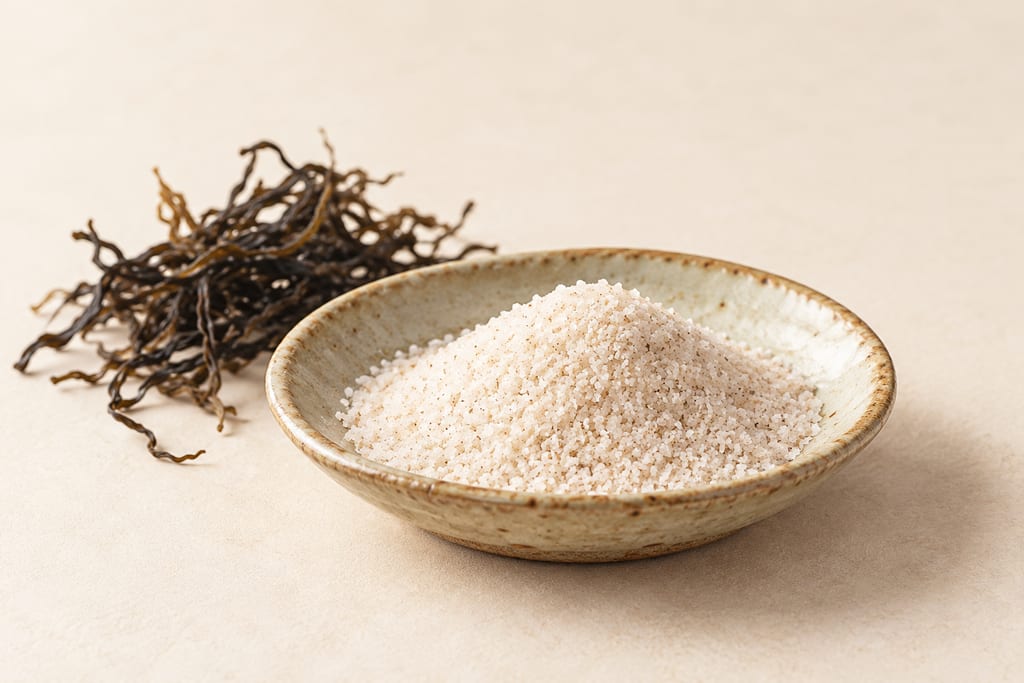
Amabito no Moshio is a modern, pale beige Japanese seaweed salt made from Seto Inland Sea water and hondawara seaweed. Its documented factory method concentrates filtered brine in kettles, then separates and dries the salt.
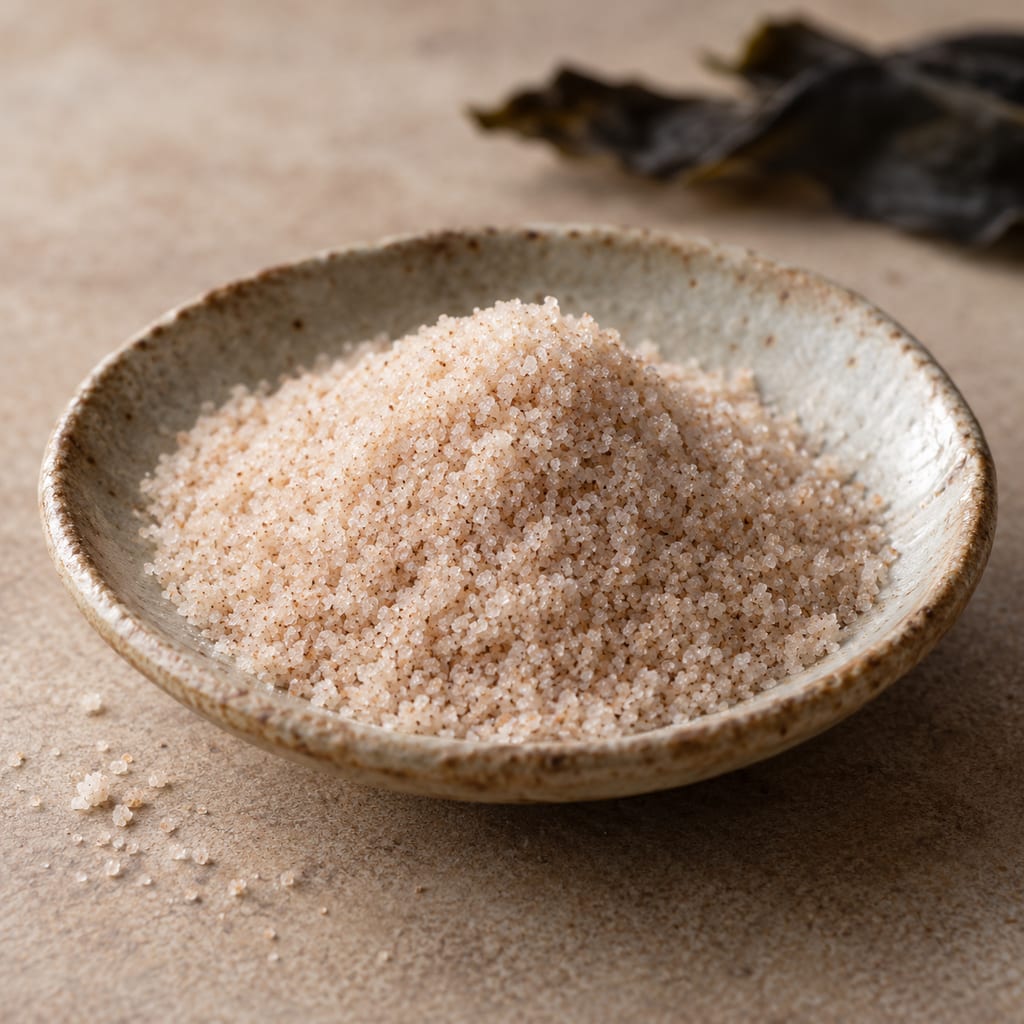
Awaji moshio is a modern Japanese seaweed salt made by TaDa PHILOSOPHY from Awaji Island seawater and seaweed. Its premium process concentrates brine, extracts seaweed flavor, then crystallizes, separates, dries and grades the salt.
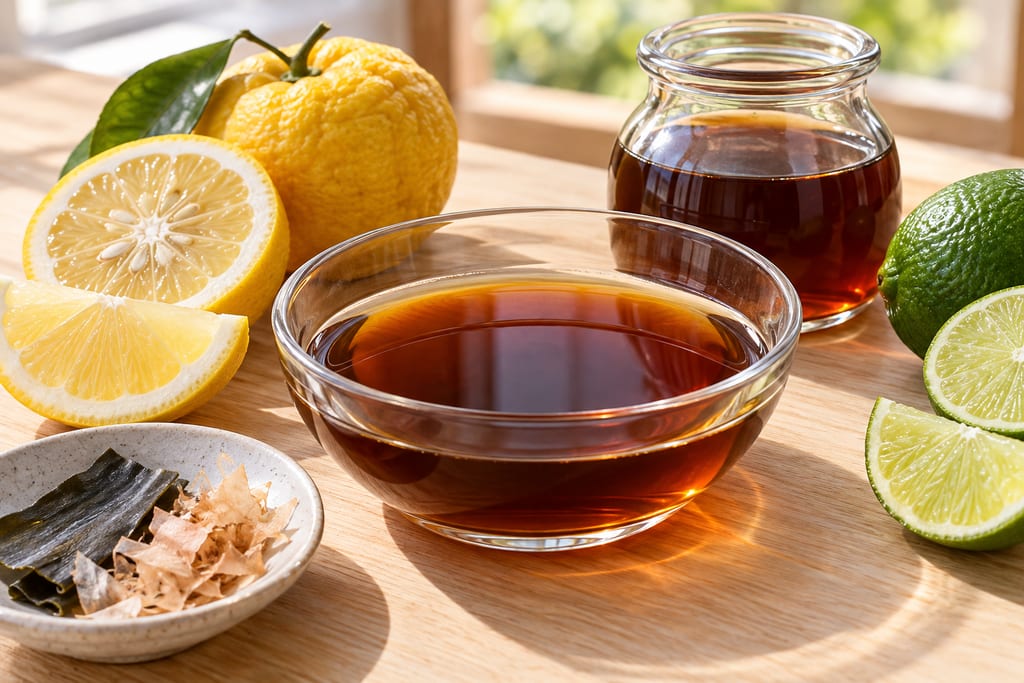
This fresh ponzu-shoyu mixes Japanese koikuchi soy sauce with yuzu or a lemon-lime blend, rice vinegar, water and sugar; optional kombu and bonito give a short chilled infusion.
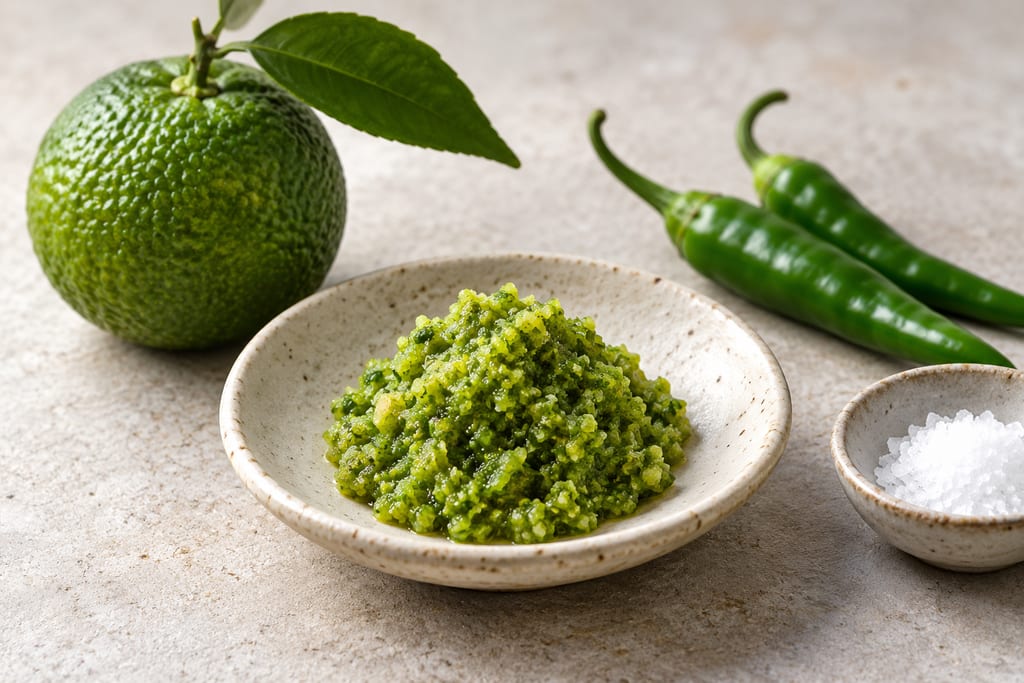
A fresh, uncooked yuzu and green chilli paste inspired by Kyushu’s yuzu kosho, made here as an untested small-batch seasoning rather than a preservation formula.
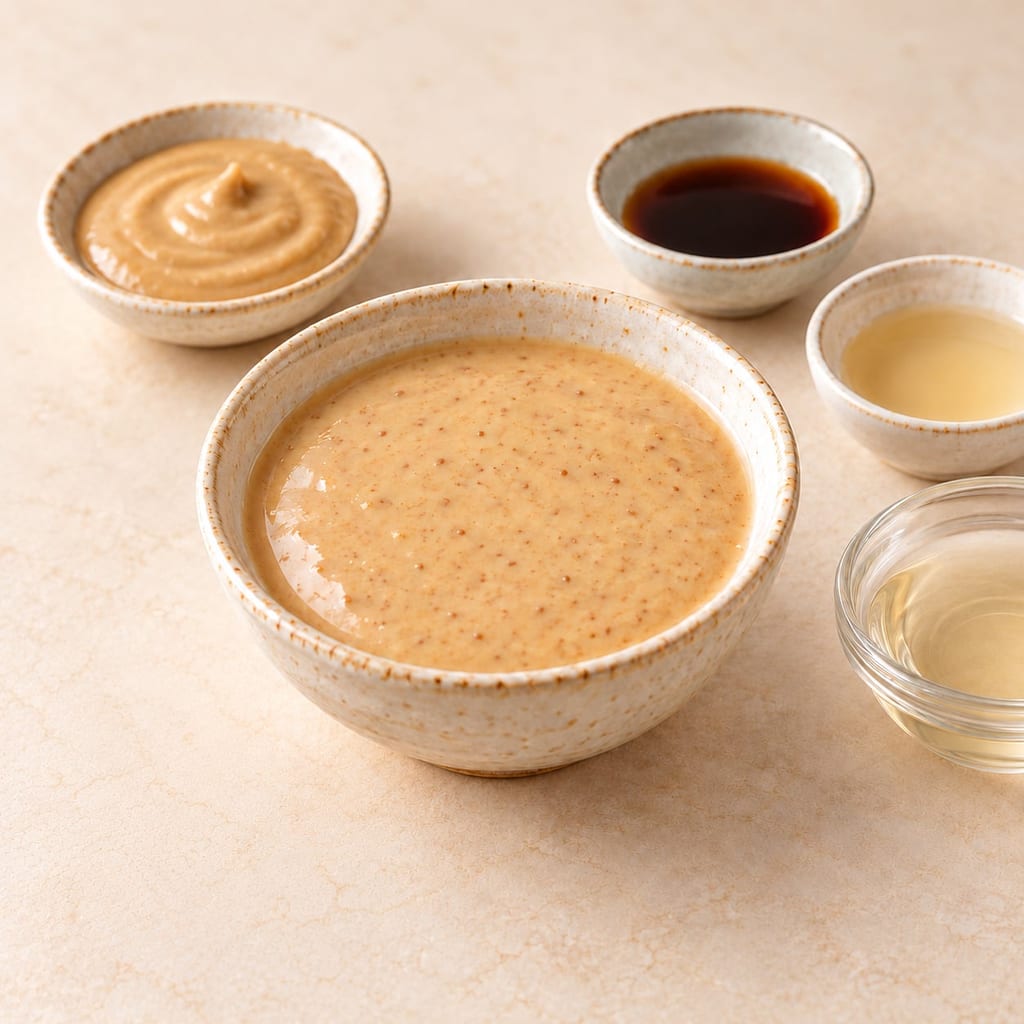
A creamy Japanese sesame dipping sauce with soy, rice vinegar and dashi. Gradual mixing turns the thick sesame paste into a smooth sauce.
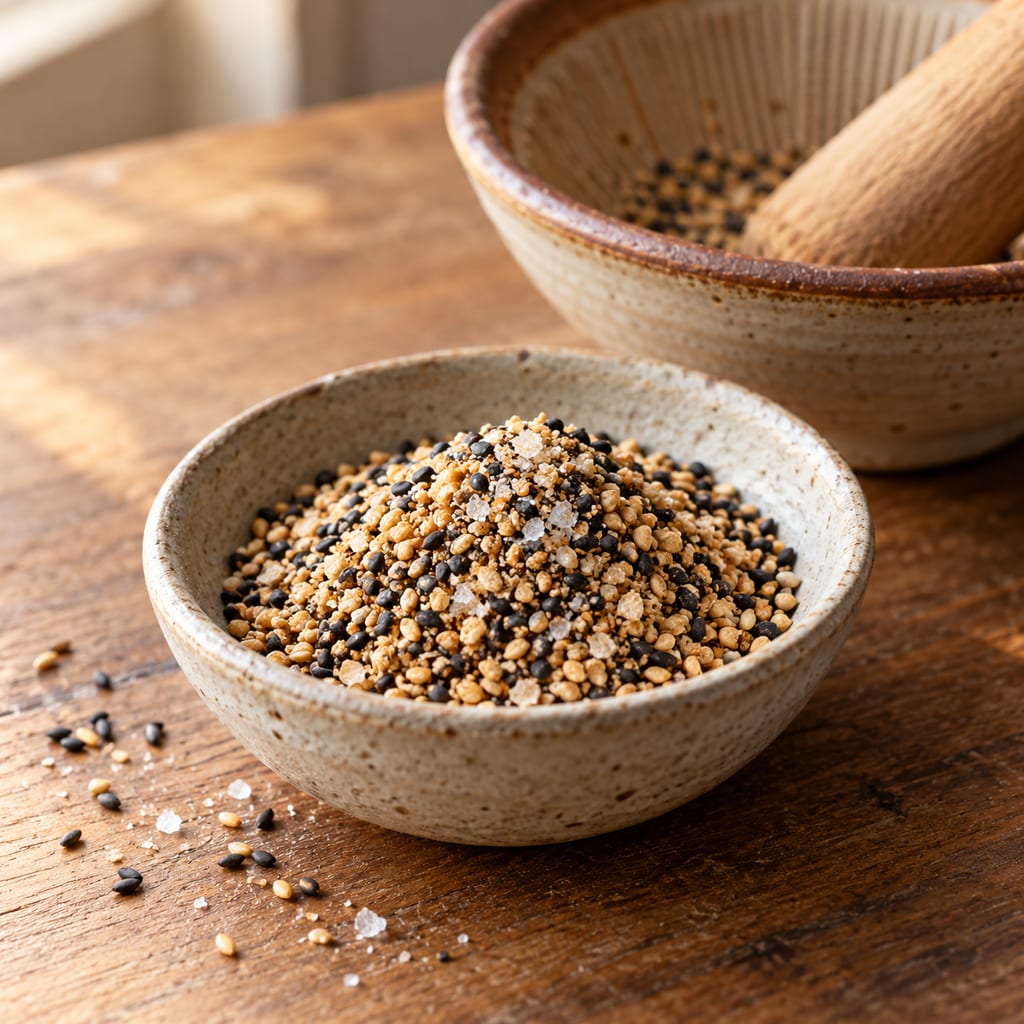
Toasted sesame seeds and sea salt are ground together into a coarse seasoning for rice. This small pan-roasted batch keeps most of the seed texture.
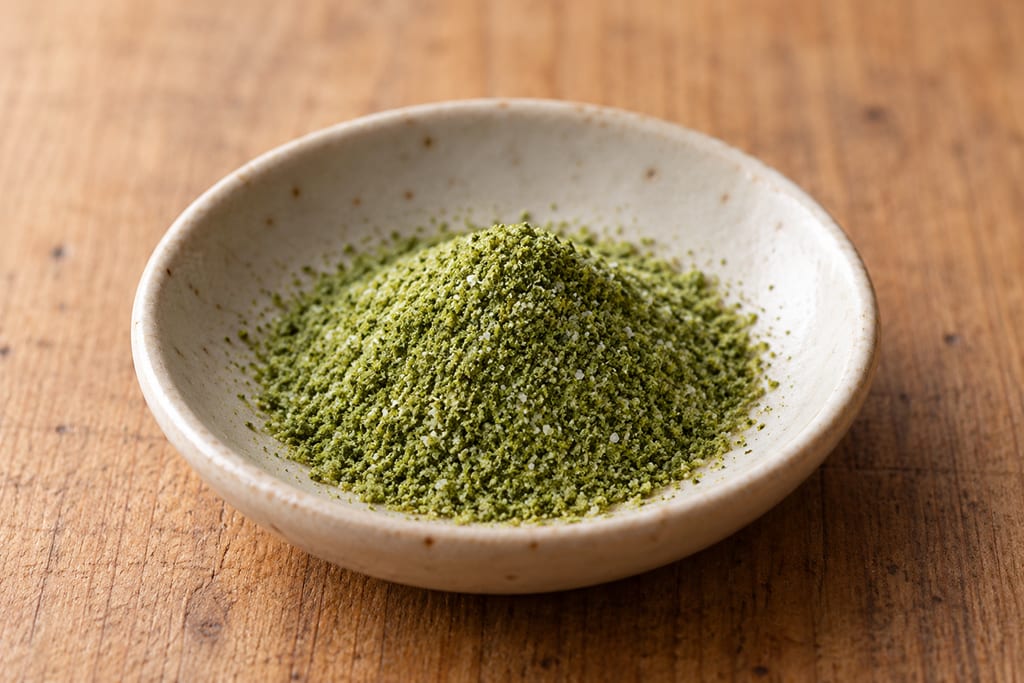
Green tea leaf salt is a dry seasoning made by grinding tea leaves, sieving them and mixing the powder with fine salt. This Japanese-style version follows a documented equal-parts method.
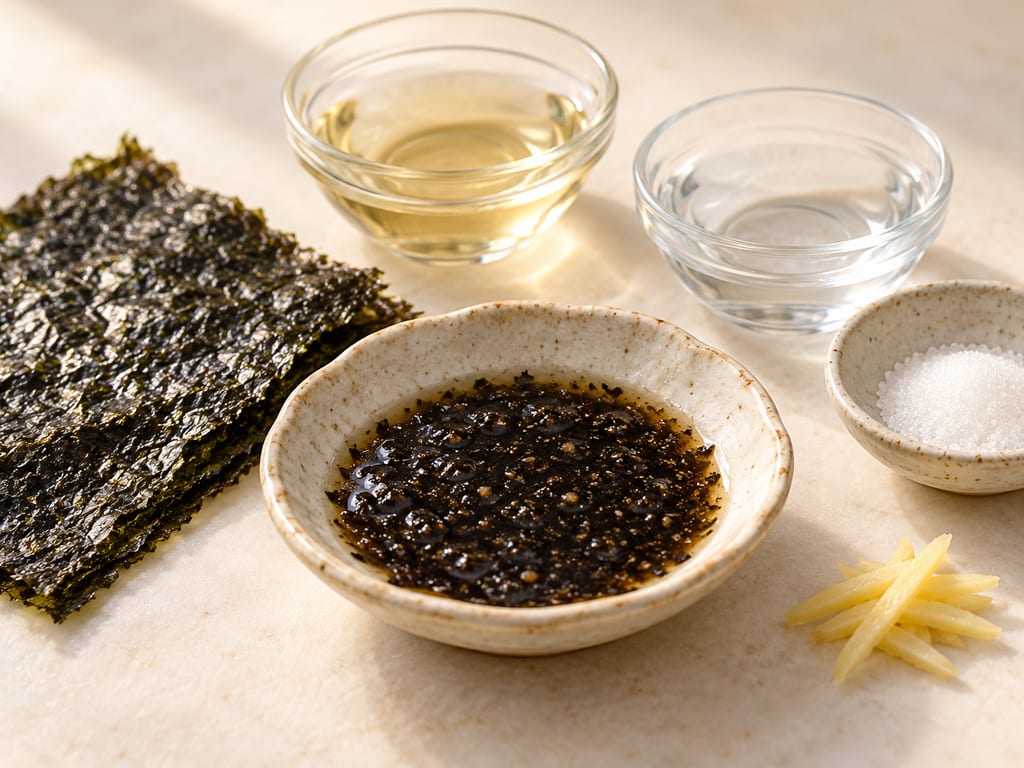
A fresh condiment in which crumbled nori softens in lightly sweetened vinegar and water. It is not vinegar fermented from seaweed.
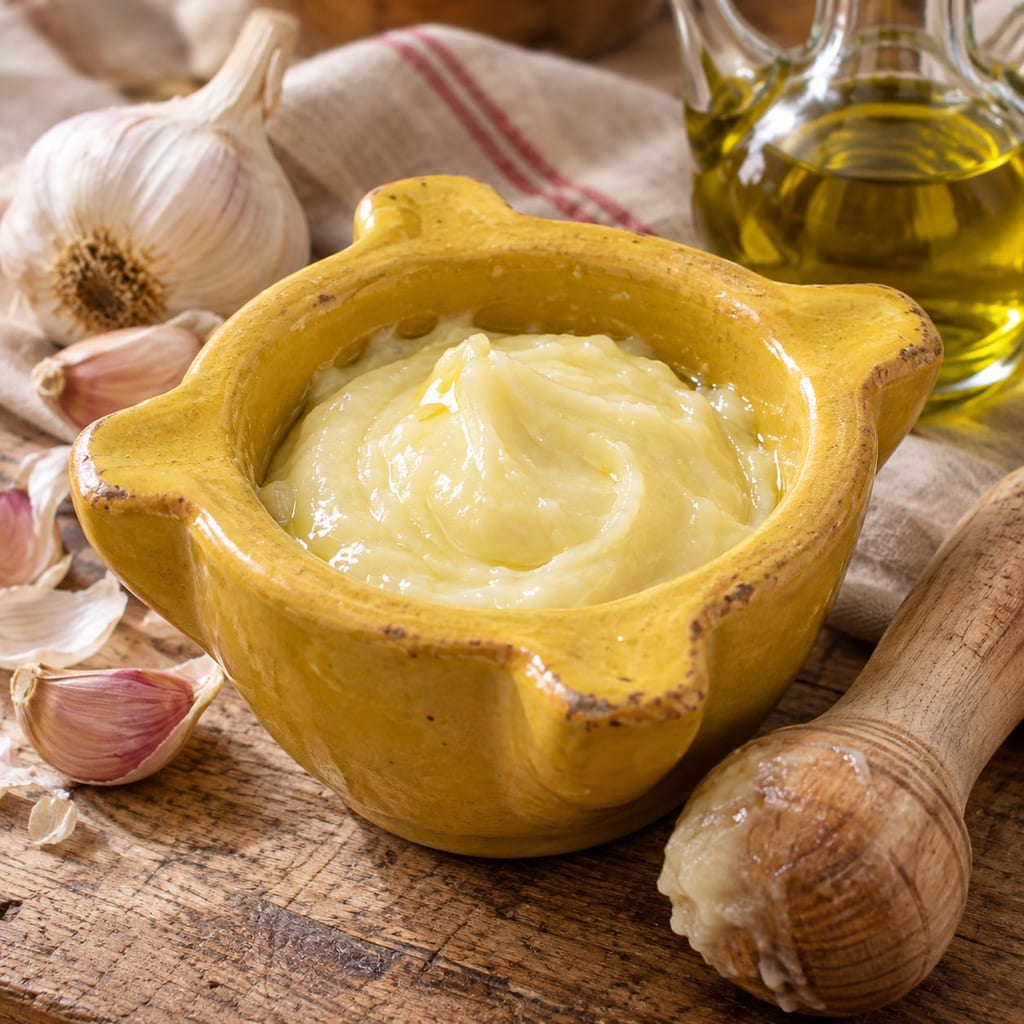
Traditional Catalan allioli is a dense emulsion of garlic, olive oil and salt made slowly in a mortar. This measured Barcelona-style version keeps egg-based garlic mayonnaise distinct.
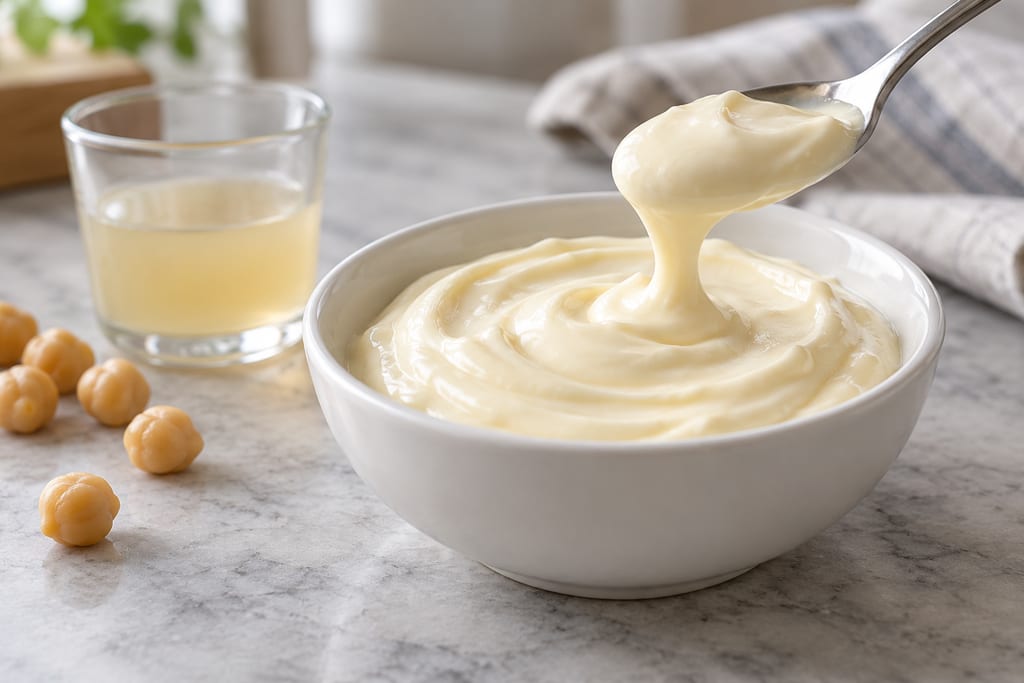
An eggless, untested emulsion made with canned chickpea liquid. Nominal yield 255 g.
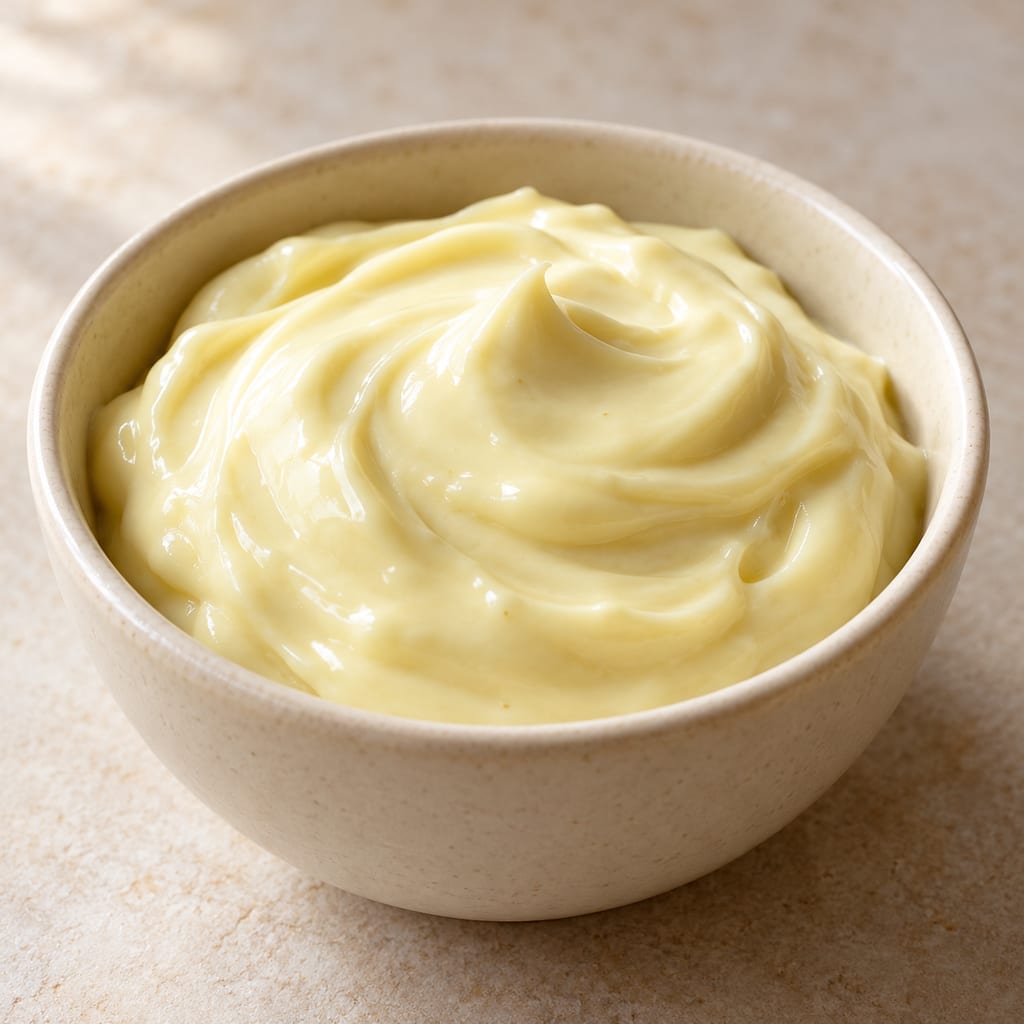
Avocado-oil mayonnaise is an ordinary egg-and-oil emulsion in which avocado oil supplies the oil phase. The oil changes flavour and colour, and it does not preserve the sauce.

Bechamel is a white sauce of milk thickened with a butter and flour roux, one of the French mother sauces, and the base from which Mornay and other cheese and cream sauces are made.
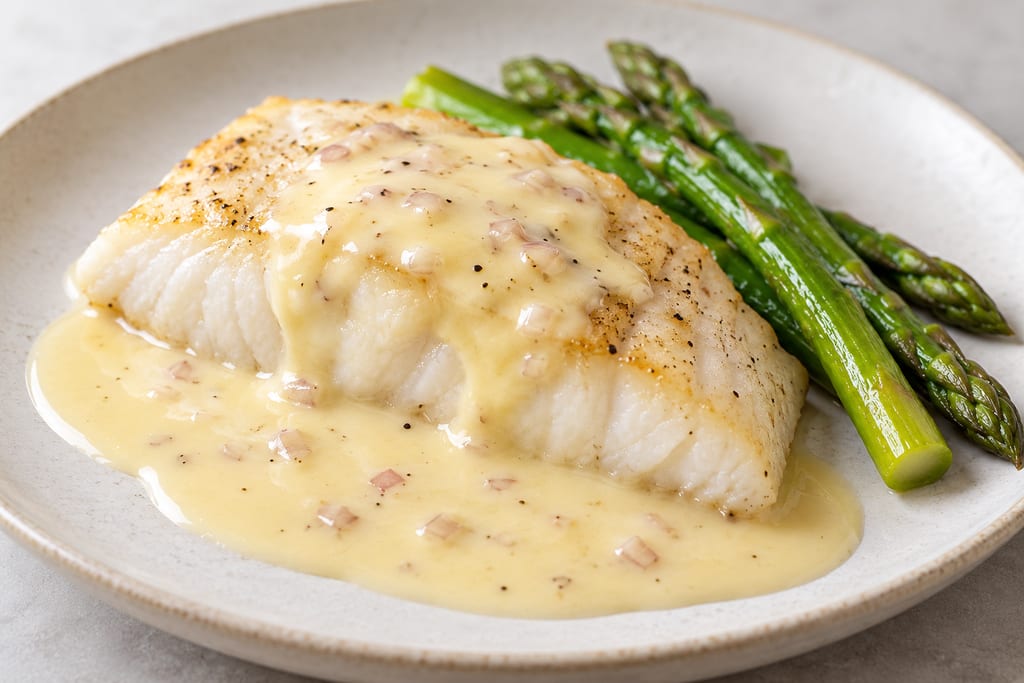
Beurre blanc is a warm emulsion of cold butter whisked into a reduction of white wine, vinegar or lemon juice and shallot, a sauce from the Loire Valley and its red-wine version, beurre rouge.
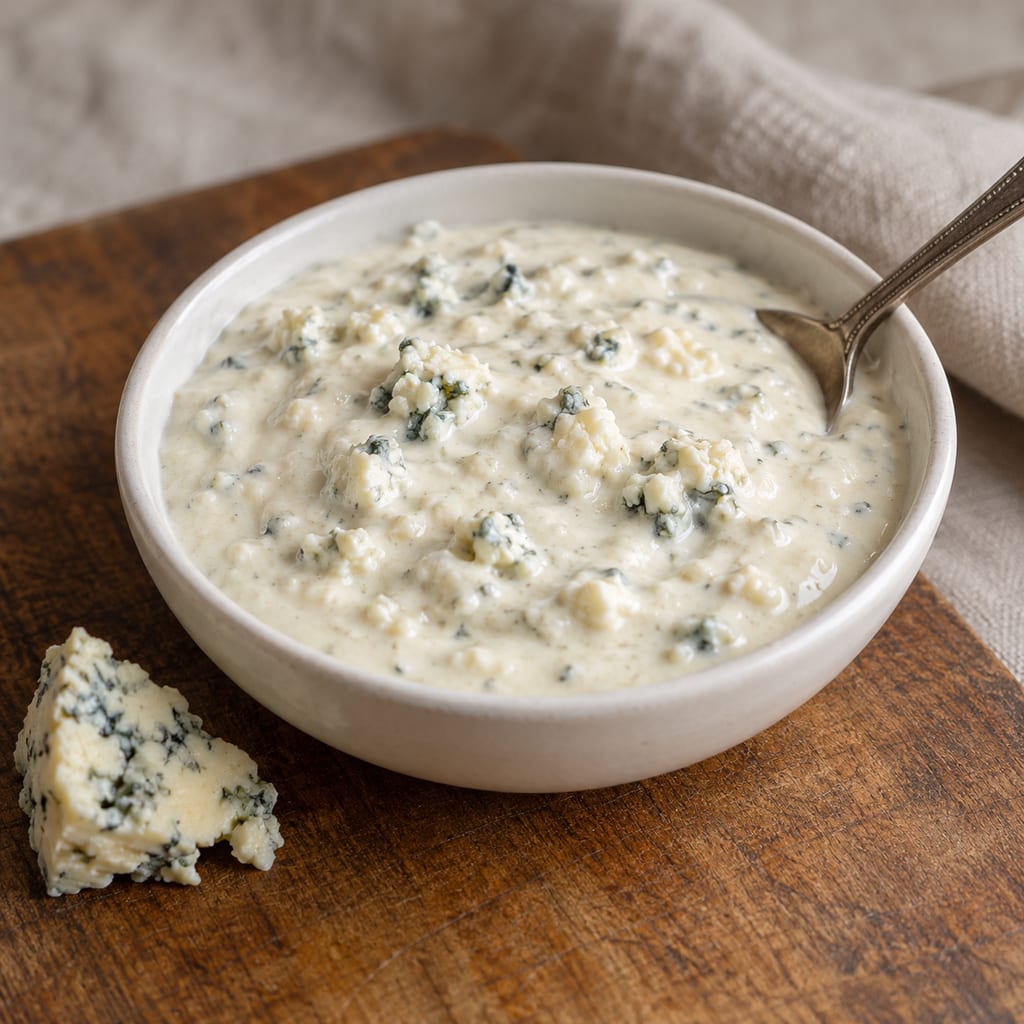
Blue cheese dressing is a creamy dressing built on crumbled blue cheese mashed into buttermilk, with sour cream, mayonnaise, vinegar and seasoning, and kept cold for up to two weeks.
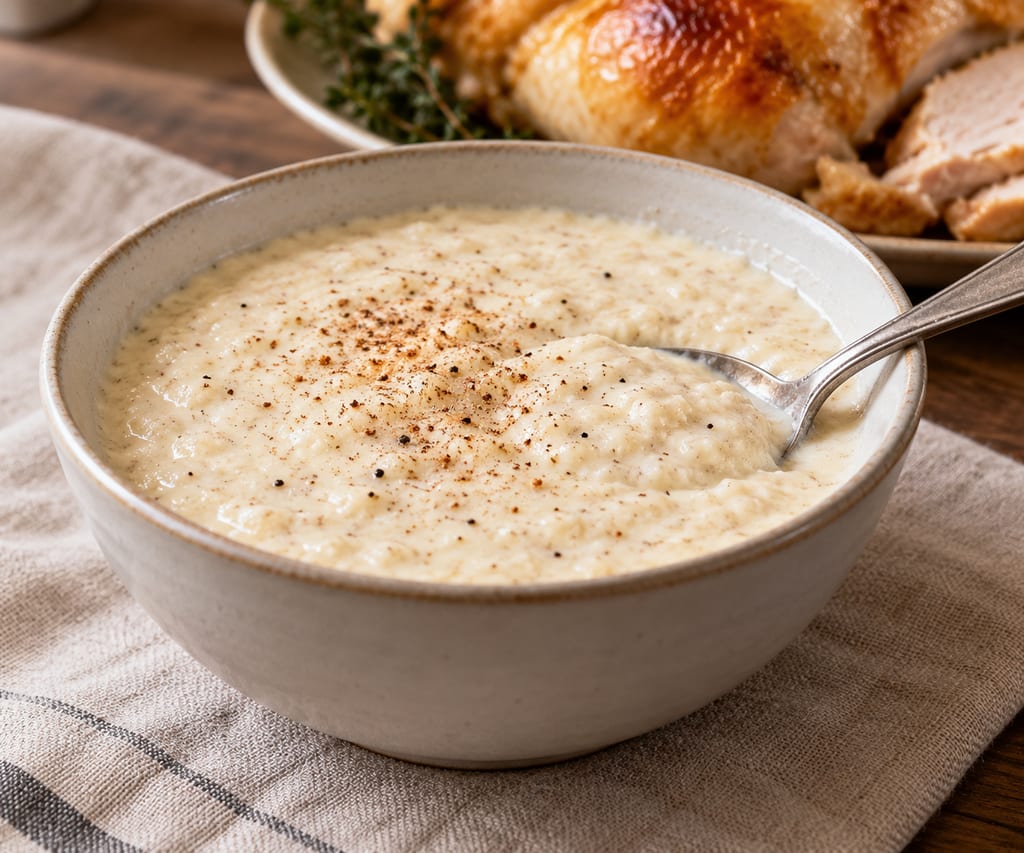
Bread sauce is a British sauce of milk infused with onion, clove and bay, thickened with stale breadcrumbs and finished with butter, served with roast chicken or turkey.
No community contributions have been published for this entry yet.
Sign in to contribute. Published comments and photos are free to read.
Just One CookbookRecipe · Method · History · Equipment · Storage guidance
Japanese Mayonnaise (Kewpie Mayo)Processor recipe-card ingredients and one-cup yield
ordered processor method and five-minute preparation time
processor size and batch-size cautions
author's refrigerated storage recommendation and separate Kewpie brand-history note
Cited in: Overview; How mayonnaise arrived in Japan; Japanese mayonnaise and Western mayonnaise; Ingredients — the documented one-cup batch; Why egg yolk stabilises mayonnaise; Why oil is added gradually; The documented food-processor method; What mustard contributes; Rice vinegar, lemon and perceived richness; Oil choice and texture; Why homemade mayonnaise sometimes splits; Where Japanese mayonnaise is eaten; Variations; Safety and storage
U.S. Food and Drug AdministrationSafety guidance
What You Need to Know About Egg SafetyFDA guidance recommends treated shell eggs or pasteurized egg products for raw or undercooked preparations
Cited in: Safety and storage
KewpieHistory
Kewpie — Company HistoryCited by the written account for this record.
Cited in: How mayonnaise arrived in Japan
KewpieContext
Kewpie — Japanese Mayonnaise Product and Manufacturing InformationCited by the written account for this record.
Cited in: How mayonnaise arrived in Japan; Japanese mayonnaise and Western mayonnaise
Just One CookbookMethod
Just One Cookbook — Japanese Kewpie Mayonnaise, Culinary UsesCited by the written account for this record.
Cited in: Where Japanese mayonnaise is eaten; Variations