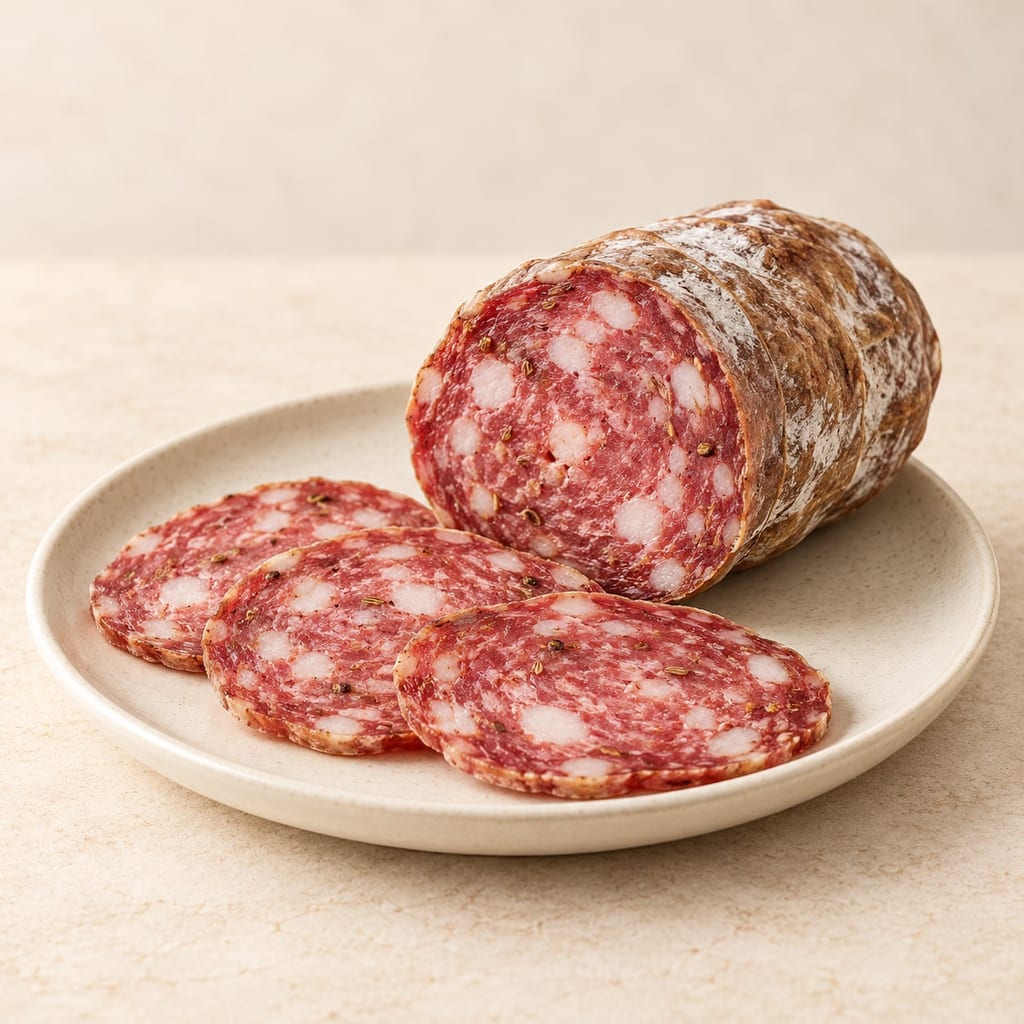
Finocchiona, starter-cultured
A Tuscan-style fennel salami made with pork and back fat. Toasted fennel, fennel pollen and Sambuca flavor this starter-cultured preparation.
 FermenteaWhere food goes to change
Salt
Coarse cooking salt named for its use in koshering meat. Its flakes vary by maker, so crystal shape, additives and the recipe’s unit all matter.
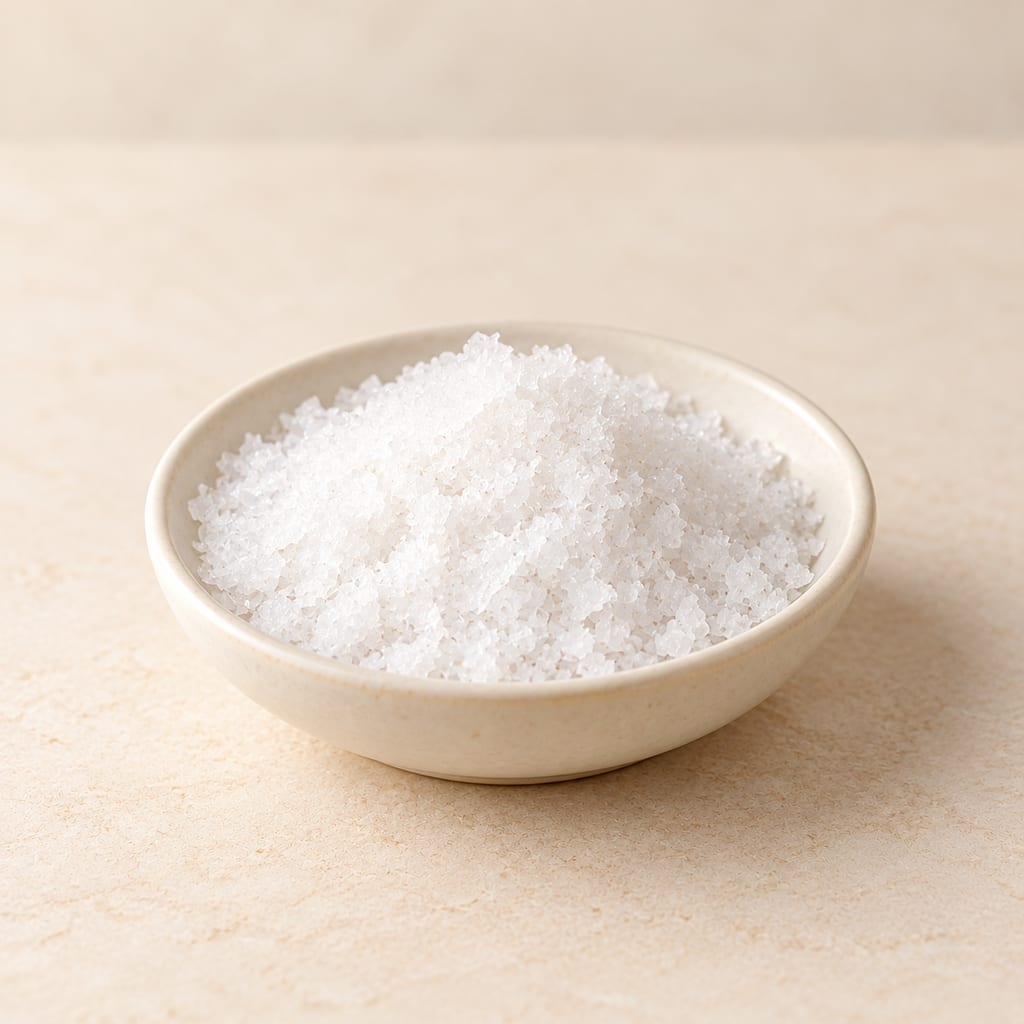
Kosher salt is a coarse cooking salt whose name preserves a particular use in Jewish food preparation. Before it became a familiar box beside a restaurant stove, coarse salt had a place in kashering meat: the sequence of preparation intended to remove blood after appropriate slaughter, inspection and removal of forbidden parts. Salting belongs within that larger practice. The adjective on the salt packet is consequently easy to misunderstand. It names an association with koshering; it does not mean the crystals have been blessed, or that sprinkling them over any piece of meat completes the requirements of kosher preparation.
The more literal names, koshering salt and kashering salt, make that connection clearer. Coarse salt is spread over the meat and later rinsed away. The grain is a practical material handled during a sequence of washing, salting and rinsing, rather than a special chemical capable of changing the identity of the meat. A product may also carry its own kosher certification. That is a separate package-level statement: Morton, for example, identifies its current kosher flakes as certified for preparing kosher meals.
The ingredient now has a much wider culinary life. It seasons vegetables, meat, sauces and soups, goes into brines, and supplies the measured salt in fermented foods. In these settings its grain is often what the cook first notices: a coarse pinch is easy to feel between the fingers and distribute across a surface. The chemistry underneath that handling remains principally sodium chloride. Its usefulness comes from bringing a familiar salt into a form suited to particular ways of measuring and applying it.
A bowl of kosher salt can contain irregular, light flakes rather than the compact grains associated with fine table salt. Yet kosher salt is a family of products, not one standardized crystal. Diamond Crystal describes its own salt as a delicate flake that crumbles between the fingers. Morton describes compact, flat flakes. Both fit the retail category, while feeling and packing differently.
This is the reason a recipe's word choice can matter even when the ingredient seems elementary. A spoon holds a volume of crystals and air together. Irregular particles leave gaps between neighboring grains; more compact particles can occupy that space differently. An equal spoonful of two salts can therefore contain different masses of sodium chloride. The white appearance of the contents does not make their measuring behavior identical.
The difference is readily visible under magnification. In a UC Master Food Preserver comparison, some salts appeared as relatively regular rounded cubes, while the flakes were more jagged and irregular. Their packing behavior differed accordingly. The useful lesson is the relationship between shape and bulk density, rather than a conversion to memorize for every future packet. Crushing flakes, changing the product or filling a measure differently can change what occupies the spoon.
The shape of a salt crystal reflects how it has been produced. Diamond Crystal makes its kosher salt using the Alberger process in St. Clair, Michigan. The resulting crystals are described as pyramid-shaped with jagged edges. Their light, multifaceted structure helps explain both the feel of a pinch and the large volume occupied by a modest mass of salt. Crushing those flakes between the fingers changes their size while leaving them as sodium chloride.
A salt maker is therefore doing more than selecting a large sieve. Crystal form is part of the manufactured ingredient. It influences how the salt settles in a box, spreads across food and dissolves after it encounters moisture. In a kitchen, those features are encountered as handling characteristics: a pinch can be broken up, a surface can be covered, and the cook can see where the grains have landed.
The place of manufacture is one association within this broader category. St. Clair documents the production of a named product; it is not the birthplace of all coarse salt or the geographical origin of every kosher salt sold elsewhere. Another manufacturer can produce its own crystal shape and formulation under the same familiar category name. The product label and the actual material are more informative than an assumption based solely on the word kosher.
Even a simple-looking salt can have an ingredient statement worth reading. Diamond Crystal's cited kosher product is additive-free. Morton's current kosher flakes list salt and yellow prussiate of soda, described on the label as an anticaking agent. Those are two specific formulations. Neither establishes a rule that every kosher salt has additives or that none does.
An anticaking ingredient addresses the behavior of a dry powder or grain in storage. Exposure to moisture can make salt clump and pour less freely. This is a packaging and handling concern, distinct from the salt's role once dissolved in food. The additional ingredient is still relevant to a shopper selecting by formulation, dietary requirements or a recipe's named grade.
Iodine is another label question. The word kosher does not itself answer it. Diamond Crystal states that its salts contain iodine when the package identifies them as iodized, and advises checking the packaging or technical information for additives. A cook choosing a salt for a particular preparation should look at the product in hand, rather than extending a statement about one box to an entire brand. Certification, iodine, anticaking ingredients and grain form are separate pieces of information.
For a formula expressed in grams, weighing preserves the amount the author specified while avoiding the uncertainty of crystal packing. A weighed mass of salt does not acquire a different identity merely because one box occupies more shelf space than another. This is especially valuable when salt participates in fermentation or preservation, where its proportion belongs to the process rather than to a final adjustment of flavor.
For a volume-based recipe, the named salt matters. A quarter cup of a light flake is a different measuring problem from a specified mass, and a manufacturer's serving-size declaration is not a universal conversion for competing products. A chart comparing products within one manufacturer's range also has that limited scope. It should not be stretched into a conversion between every coarse salt, fine salt and curing blend.
The distinction between weighing and pinching reflects two legitimate kitchen tasks. A cook finishing a plate can distribute crystals by hand for their immediate taste and texture. A maker mixing a batch of fermented sausage needs the ingredient distributed in a measured formulation. Both may use the same salt, but the reason for choosing its quantity is different. Keeping the recipe's original unit and exact ingredient qualification preserves that difference.
As crystals encounter the water in food, they dissolve. The original flake shape then ceases to be a structure in the mixture: the salt is distributed through the water phase instead of remaining only as separate grains. This explains why a crystal's convenience for surface seasoning is not the same question as the final concentration of a brine.
Water activity describes the availability of water for chemical and microbial processes. It is related to moisture content, but the two are not interchangeable. Dissolved salt reduces the vapor pressure of water compared with pure water. Food can therefore retain considerable moisture while presenting a different water environment to microorganisms. The balance depends on the full composition of the food, not simply whether it feels wet or dry.
Drying and salting change that environment by different routes. Drying removes water into the surrounding air; adding salt changes the solution in the water that remains. In a dry sausage, both occur alongside fermentation and other processing choices. The chamber's relative humidity describes the air around the casing, while water activity concerns the food itself. A chamber reading and a weighed salt addition provide different information about the developing product.
In minced meat, salt affects texture through the proteins of muscle. Some myofibrillar proteins become more soluble in the salted mixture and contribute to binding. Mixing helps distribute those proteins between meat particles, producing the cohesive, tacky raw batter sought in many sausage methods. The salt is therefore part of forming a body that can hold together around pieces of fat.
This role helps explain why plain cooking salt is listed alongside meat, fat, sugar and a starter culture. Each participates differently. The meat supplies the main protein framework; fat contributes its own texture and lipid fraction; the starter uses available carbohydrate during fermentation; salt seasons, influences protein behavior and changes the water phase. The resulting slice reflects their interaction across mixing, fermentation and maturation.
Fermentation itself is microbial metabolism. Lactic acid bacteria consume suitable sugars and form acids, lowering pH and contributing tang. Salt influences the conditions in which those organisms and other microbes operate, but salt is not the organism carrying out that conversion. Calling every preservation change fermentation would obscure the difference between dissolving a mineral, removing water and the biological production of acid.
The shared word salt can hide an important distinction. Ordinary kosher salt is principally sodium chloride. A numbered curing blend contains specified nitrite or nitrate ingredients alongside its carrier salt and any declared colorant or other components. Those compounds contribute to cured-meat chemistry in ways ordinary sodium chloride does not.
This is why a sausage formula can contain both kosher salt and Insta Cure #2. The plain salt supplies its measured part of the seasoning and meat matrix. The curing blend is another measured ingredient, with its own identity and role. Replacing one with the other would change the formulation rather than make a simple brand substitution.
The same care applies when reading the word pink. Pink mineral salt, a colored curing blend and coarse white kosher salt can share a place on a shop shelf while being materially different ingredients. Selection begins with the full name and ingredient statement. In a preservation method, the formulation and the associated handling stages belong together; a familiar color, taste or crystal shape cannot stand in for that identification.
Salt is stable, but a salt product still needs suitable storage. Moisture can make it clump, and added ingredients can change over time. Morton recommends a cool, dry place and an airtight container where needed. Its guidance distinguishes the salt itself from iodine, seasonings and anticaking ingredients that may lose their intended qualities during storage.
A container beside a steaming pan exposes the crystals to a different environment from a closed box in a dry cupboard. Keeping the package closed and using dry handling helps retain the free-flowing form for which the product was chosen. A clump is a change in handling behavior; it is not evidence that a curing process has taken place within the box.
Dietary information should also be read at the product level. A statement that one salt is additive-free or certified does not establish the status of every coarse salt. People selecting for a specific allergy or other dietary requirement need the actual ingredient and supplier information, including any relevant cross-contact advice. Sodium chloride remains a sodium-containing ingredient, irrespective of whether a light flake gives a lower amount per spoonful than a denser product.
Kosher salt's grain remains useful well beyond sausage. It can be scattered over vegetables or meat before cooking, incorporated into soups and sauces, or applied to a glass rim. These uses emphasize different properties: adhesion on a surface, dissolution in liquid, or a noticeable crystal at the edge of a bite. Once fully dissolved in a brine, the starting grain is less important than the amount of salt and water present.
Fermented foods add another reason to read the ingredient carefully. A weighed salt addition can help establish a reproducible mixture, while the recipe determines the rest of the process. The related preparations on this page show its use alongside distinct meats, seasonings, cultures and curing ingredients. Their individual formulas retain the quantities; the ingredient page explains why the same modest-looking salt has work to do in each.
The enduring connection is between a material and the task it performs. Coarse grains suited to a salting practice became familiar tools for hand seasoning, and manufactured flakes brought another degree of control over their feel. In the mixing bowl those crystals dissolve into a wider food system, where their effects on flavor, proteins and water become part of the finished texture.
Check the exact package for ingredients, dietary certification and supplier cross-contact information; the generic name does not establish every product’s formulation.
Documented manufacture of Diamond Crystal kosher salt, not an origin claim for the category or every linked recipe’s salt.
A Tuscan-style fennel salami made with pork and back fat. Toasted fennel, fennel pollen and Sambuca flavor this starter-cultured preparation.
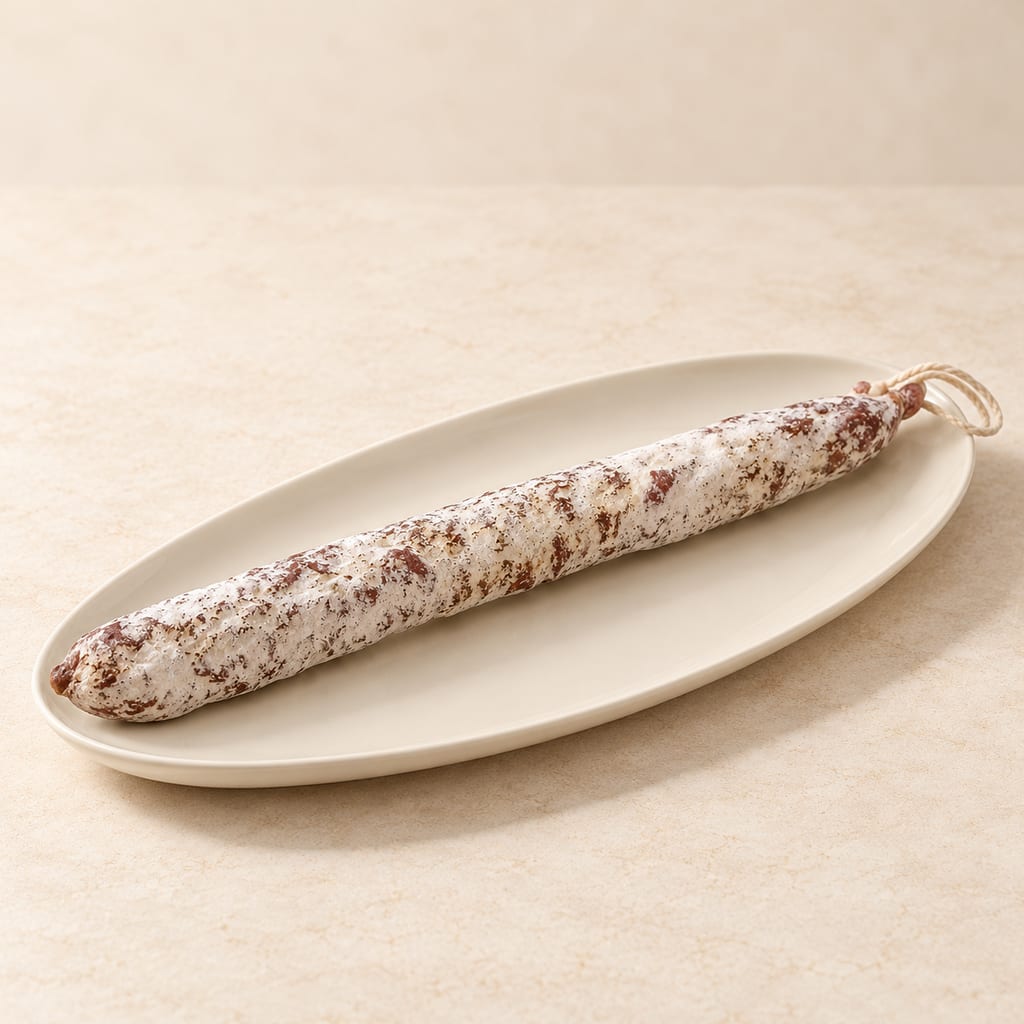
A documentary account of a modern starter-cultured Fuet formula and its place in Catalan sausage culture. The cited raw-pork process lacks matched safety validation, so this page does not present it as a household recipe.
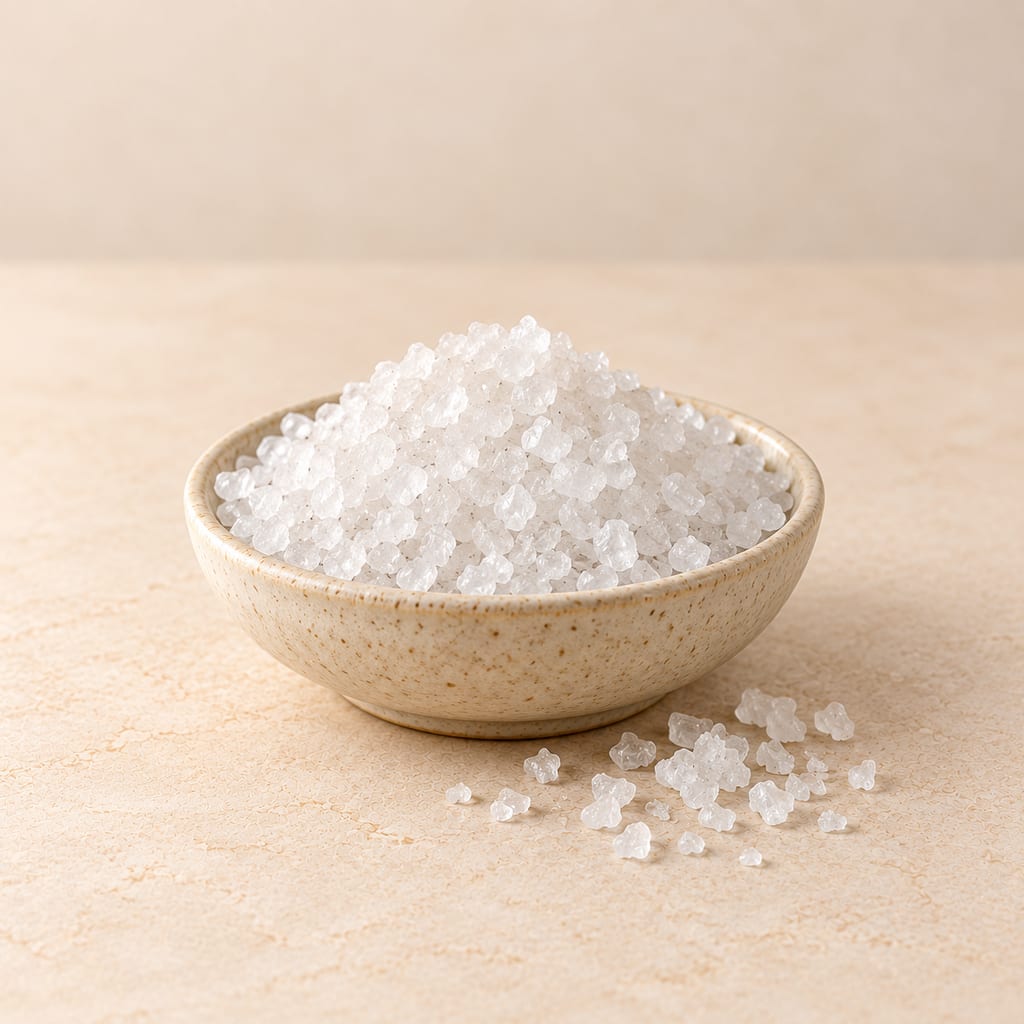
Coarse salt is food-grade salt in large grains, from sea, rock deposits or brine, used for curing, brining, pickling and packing fish.
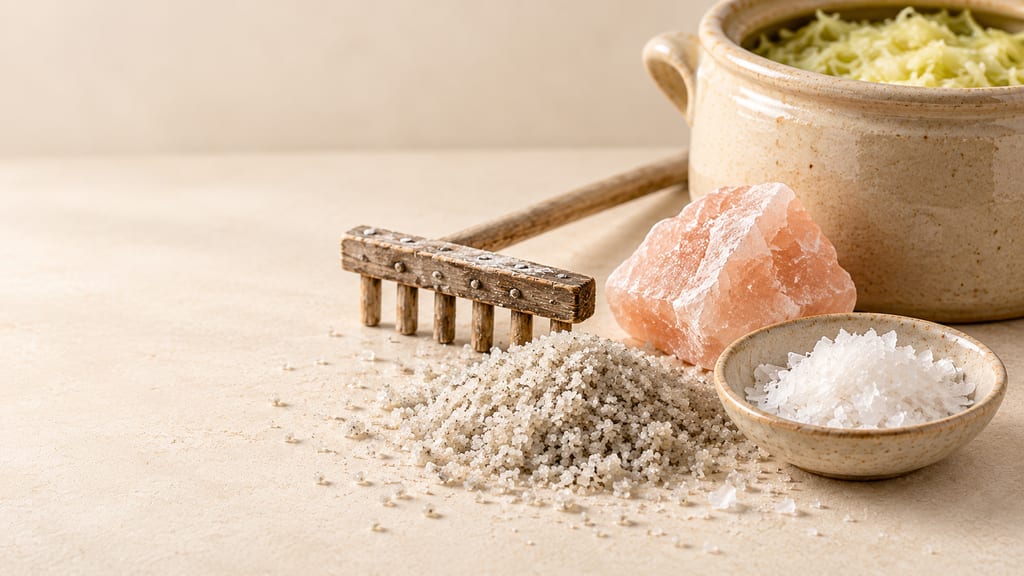
Salt seasons a meal, shapes fermentation and preserves food. Its history follows the people who mine, harvest, trade and transform it, and the choices hidden inside an ordinary packet.
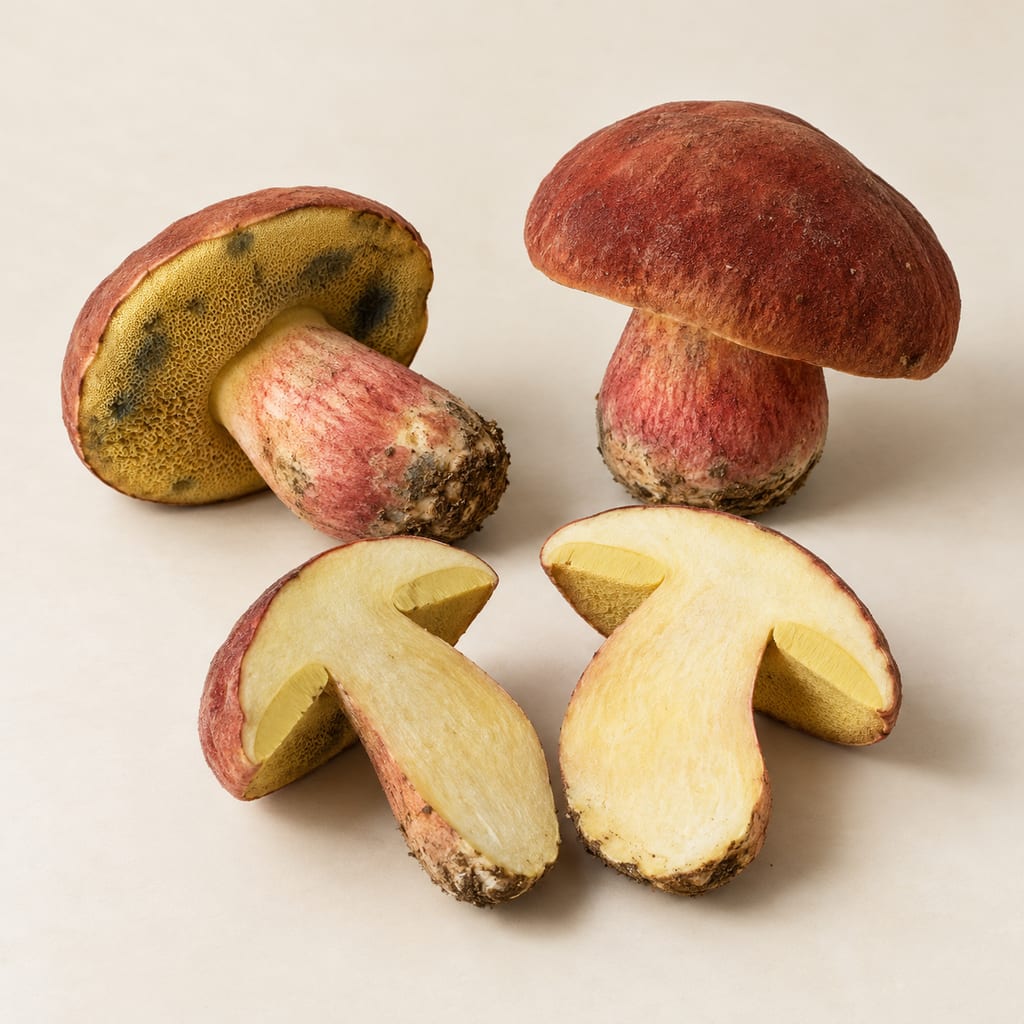
A red-and-yellow bolete described from Michigan and also listed in Mexican fungal records. Historical sources classify it as food, but its species limits, Mexican range and safe food use need careful qualification.
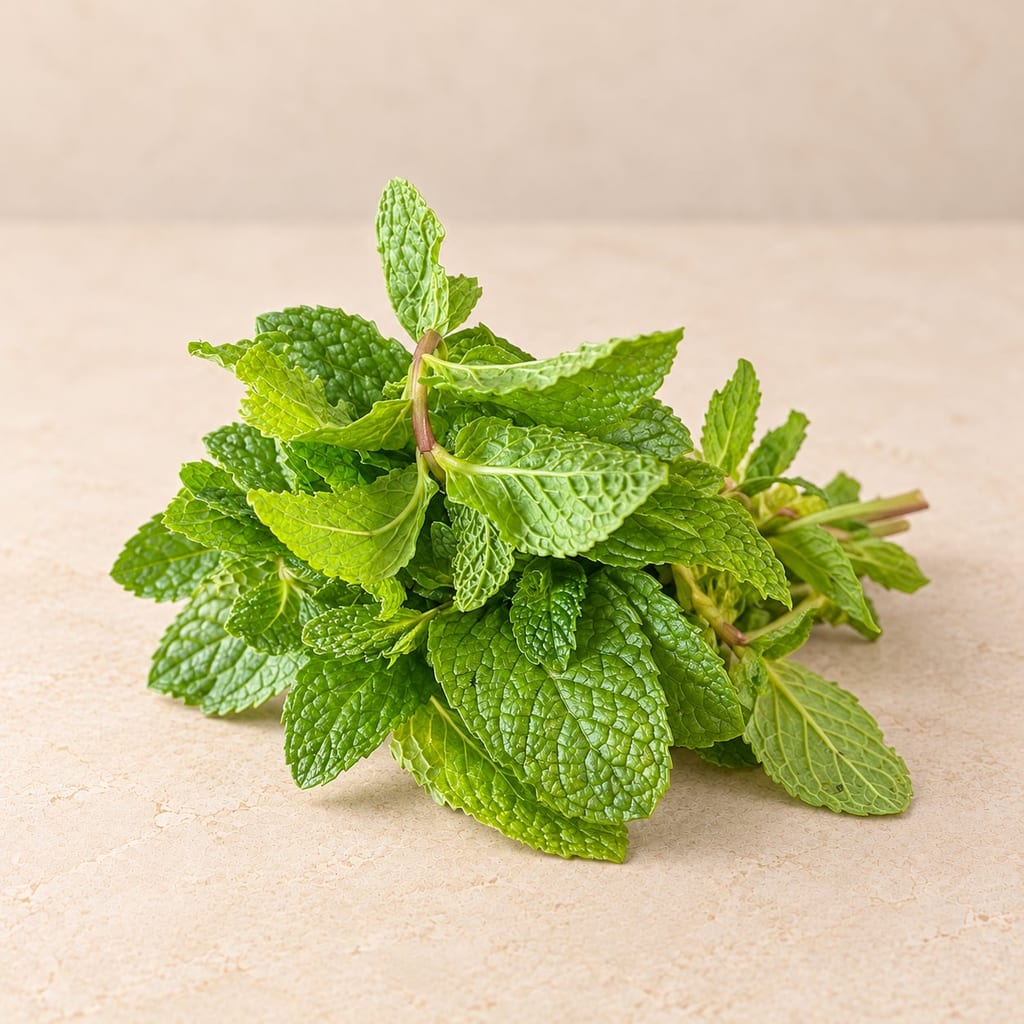
Mint is the fresh leaf of aromatic Mentha plants, chiefly spearmint and peppermint. It gives chutneys, yoghurt sauces and fermented drinks a cool, sweet, green note.
No community contributions have been published for this entry yet.
Sign in to contribute. Published comments and photos are free to read.
Exploring Judaism / Rabbinical AssemblyIdentity · History
Soaking and Salting Kosher MeatKashering meat involves appropriate slaughter and inspection followed by washing, coarse salting and rinsing. The salt’s name relates to that practice.
Cited in: A salt named for a task
Diamond Crystal / CargillIdentity · Production · Geography
Diamond Crystal Kosher SaltDiamond Crystal kosher salt is made by the Alberger process in St. Clair, Michigan, and sold as additive-free flakes for cooking.
Cited in: Coarse does not mean uniform; Crystals made for a particular feel; Reading the ingredients on the salt box; From the salt bowl to the table
CargillProduction · Identity
Diamond Crystal Kosher Salt for FoodserviceDiamond Crystal’s jagged pyramid-shaped flakes can be crushed between the fingers and adhere to food surfaces.
Cited in: Crystals made for a particular feel
Diamond Crystal / CargillIdentity · Selection
Food Salt Frequently Asked QuestionsKoshering describes a use of salt; ingredient and iodine declarations describe particular salt products.
Cited in: Reading the ingredients on the salt box; Keeping a useful dry ingredient
Morton SaltIdentity · Selection · Uses
Morton Kosher Salt FlakesMorton coarse kosher salt has compact flat flakes and lists salt and yellow prussiate of soda as ingredients.
Cited in: A salt named for a task; Coarse does not mean uniform; Reading the ingredients on the salt box; Mass and volume in a working recipe; Keeping a useful dry ingredient; From the salt bowl to the table
University of California Agriculture and Natural ResourcesSelection · Physical science
Salt, the Only Rock We Eat! (May 2025)Crystal shapes and packing density differ between salt products, so equal volumes can contain different masses.
Cited in: Coarse does not mean uniform; Mass and volume in a working recipe
U.S. Food and Drug AdministrationScience
Water Activity (aw) in FoodsWater activity concerns water availability rather than total moisture. Dissolved salt reduces water vapour pressure, while equilibrium depends on the surrounding environment.
Cited in: What happens when the salt dissolves; From the salt bowl to the table
Journal of Food QualityScience · Fermentation role
Health and Safety Considerations of Fermented SausagesSalt solubilizes muscle proteins and contributes to binding. Salt, sugar-driven acidification, drying and curing compounds have distinct roles in fermented sausage.
Cited in: What happens when the salt dissolves; Binding the meat as well as seasoning it; Cooking salt and curing salt are separate ingredients; From the salt bowl to the table
Morton SaltStorage
Morton Salt Expiration GuideSalt products differ in their additives and packaging. Cool, dry storage and an airtight container help protect their condition.
Cited in: Keeping a useful dry ingredient
The Sausage MakerIngredient distinction
Insta Cure #2, Naturally Colored (No Red Dye)The named curing blend contains nitrite, nitrate, salt and colourant, distinguishing it from plain cooking salt.
Cited in: Cooking salt and curing salt are separate ingredients