Stand mixer
A stand mixer is a powered mixing machine built around a stationary base, a supported bowl and a driven beater or other tool. It can stir, beat, whip and knead; particular models may also accept separate accessories for other jobs.
 FermenteaWhere food goes to change
Traditional method
نون بربری · Barbari · Nan barbari
A yeast-raised Iranian flatbread with a crisp roomal-glazed crust, long grooves and a soft interior.
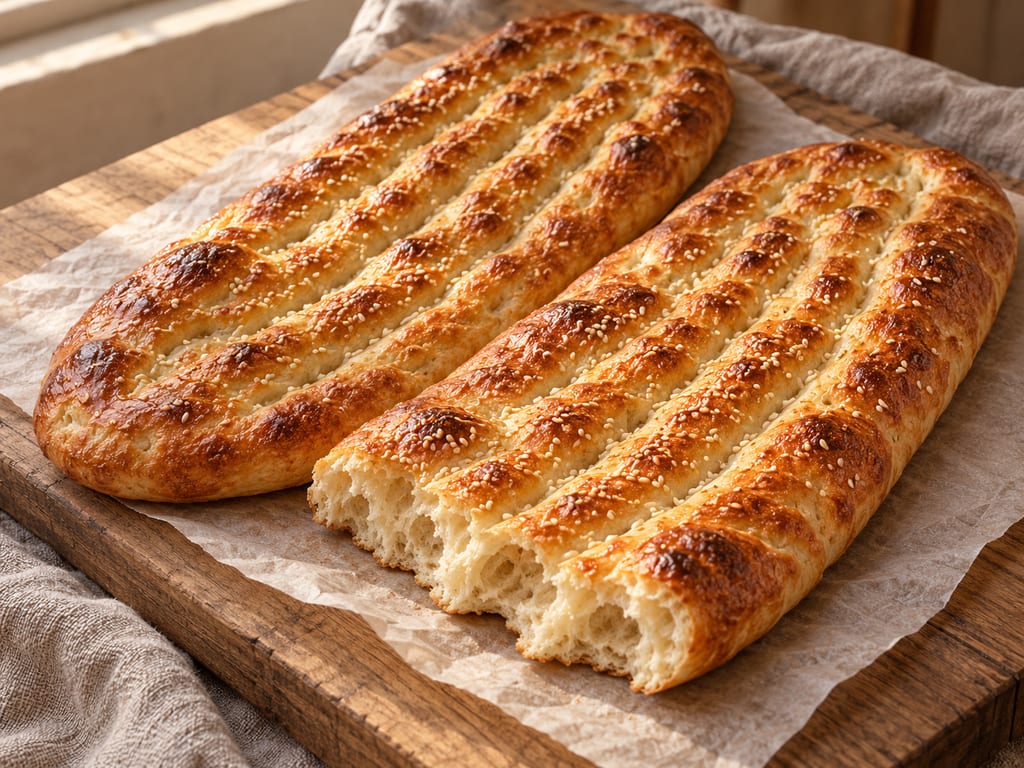
Homa describes Barbari as a Persian flatbread baked throughout Iran. It is commonly eaten hot at breakfast with foods such as feta, walnuts, clotted cream, honey, butter, jam, grapes or cucumbers. The loaf has a crisp crust and airy interior, with deep lengthwise grooves and a roomal glaze.
This measured home formula uses active dry yeast. Homa separately describes bakery workers starting sourdough khamir before dawn for production. This recipe does not reproduce that bakery starter or claim that the two raising methods are interchangeable.
The dough is intentionally soft and sticky. Homa recommends bread flour and warns that adding flour into the dough or kneading beyond the stated three minutes can make the bread dense. The measured flour for the work surface dusts hands and the dough during dividing; it is not mixed into the risen dough.
Roomal is a cooked flour, water and baking-soda glaze. The source heats it until uniformly cloudy and slightly thickened; it then thickens further as it cools. It coats the shaped loaf and contributes to the browned crust.
Divide the dough into three portions, shape each into an oval, and use fingertips to press connected lengthwise grooves without tearing through the dough. The recipe uses a preheated pizza stone and parchment slid from a board. Each loaf bakes for 10 minutes at 500°F, with a turn halfway through. The source allows shortening the second half to four minutes if the bread darkens too quickly.
The formula yields three loaves. The source gives no domestic oven alternative without a stone, so this record keeps the specified equipment and method.
The author says the bread is best warm and advises cooling extra pieces completely before closing them in a plastic bag at room temperature for up to one day. No longer storage duration is established here.
Serve with the breakfast foods Homa lists, or cut the warm bread into pieces after brushing excess flour from the underside.
Encyclopaedia Iranica places barbari among four principal urban bakery breads, alongside taftun, lavash and sangak. It describes a relatively thick oval loaf and breakfast service, often with cheese. That comparison locates barbari within a varied bread culture rather than making every Iranian flatbread interchangeable.
The bakery account and Homa's household method serve different purposes. This page keeps her three smaller loaves, active dry yeast, cooked roomal and pizza-stone bake. It does not import the dimensions, dough weights or oven practices of the encyclopaedia's bakery description into the recipe.
Homa describes Barbari as a traditional Persian bread baked throughout Iran and presents this formula as the closest home version to the bread she grew up eating. Her account says Iranian bakeries prepare sourdough khamir for production, while this household recipe uses active dry yeast; the two raising methods should not be conflated.
Yield 3 loaves · Scaling: source batch only
The oven and pizza stone are at 500°F; use oven mitts and a board suited to transferring bread. The source gives a one-day room-temperature storage instruction for fully cooled leftovers.
Homa describes Barbari as baked across Iran and gives this Iranian home formula; no narrower birthplace is claimed.
A stand mixer is a powered mixing machine built around a stationary base, a supported bowl and a driven beater or other tool. It can stir, beat, whip and knead; particular models may also accept separate accessories for other jobs.
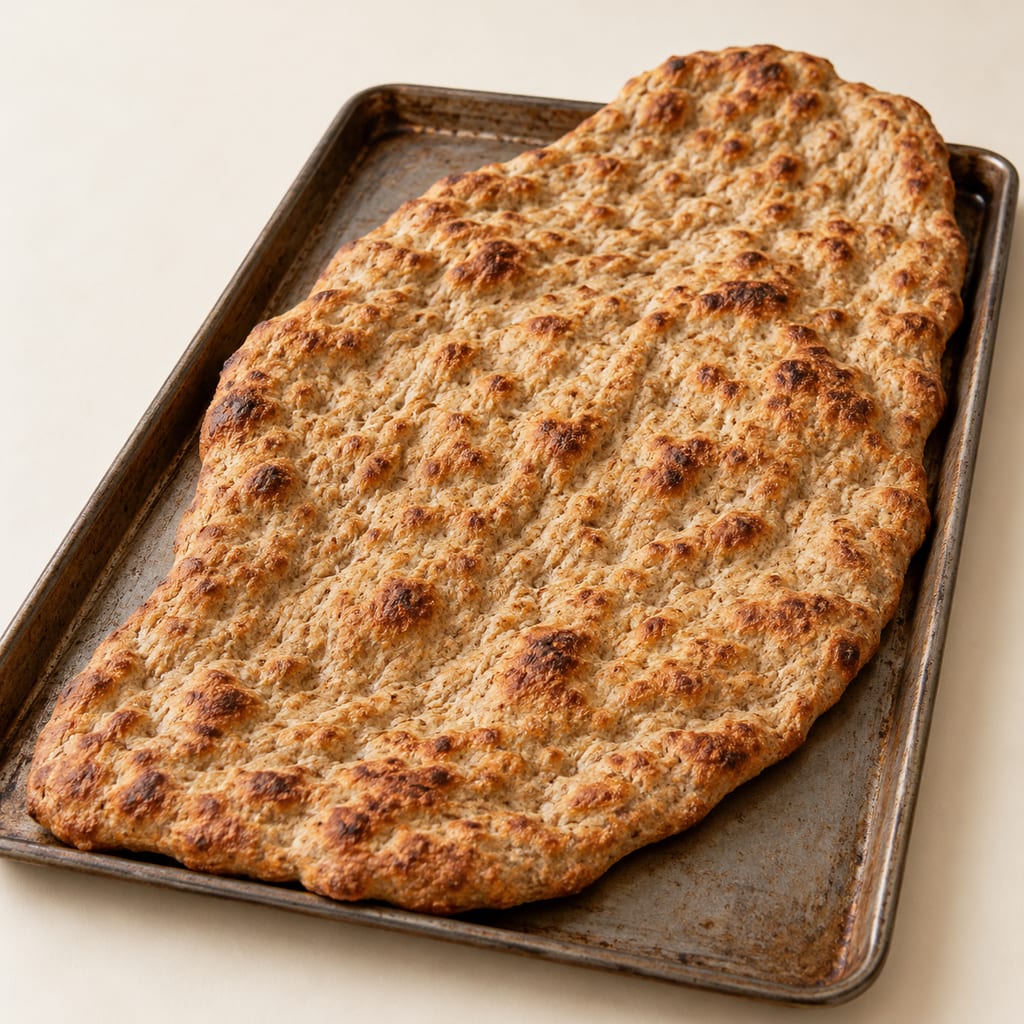
An Iranian whole-wheat sourdough flatbread adapted for a home oven and ordinary baking sheet. This method keeps the broad, dimpled hand-stretched shape but omits the traditional hot-pebble hearth and its imprint.
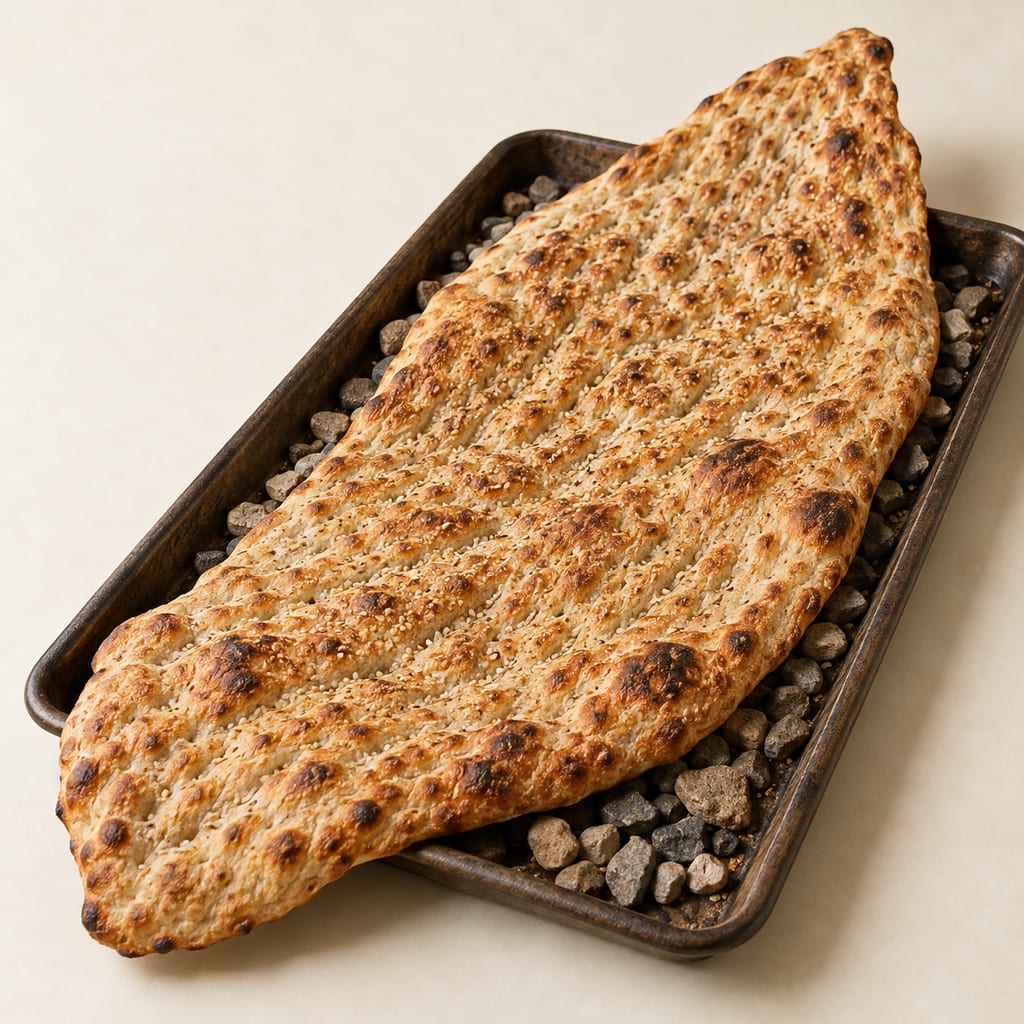
A long, irregular Persian bread baked on a tray of gravel-like stones in a hot oven. This home method uses dried yeast and a mix of wholemeal and bread flour, with an overnight rest.
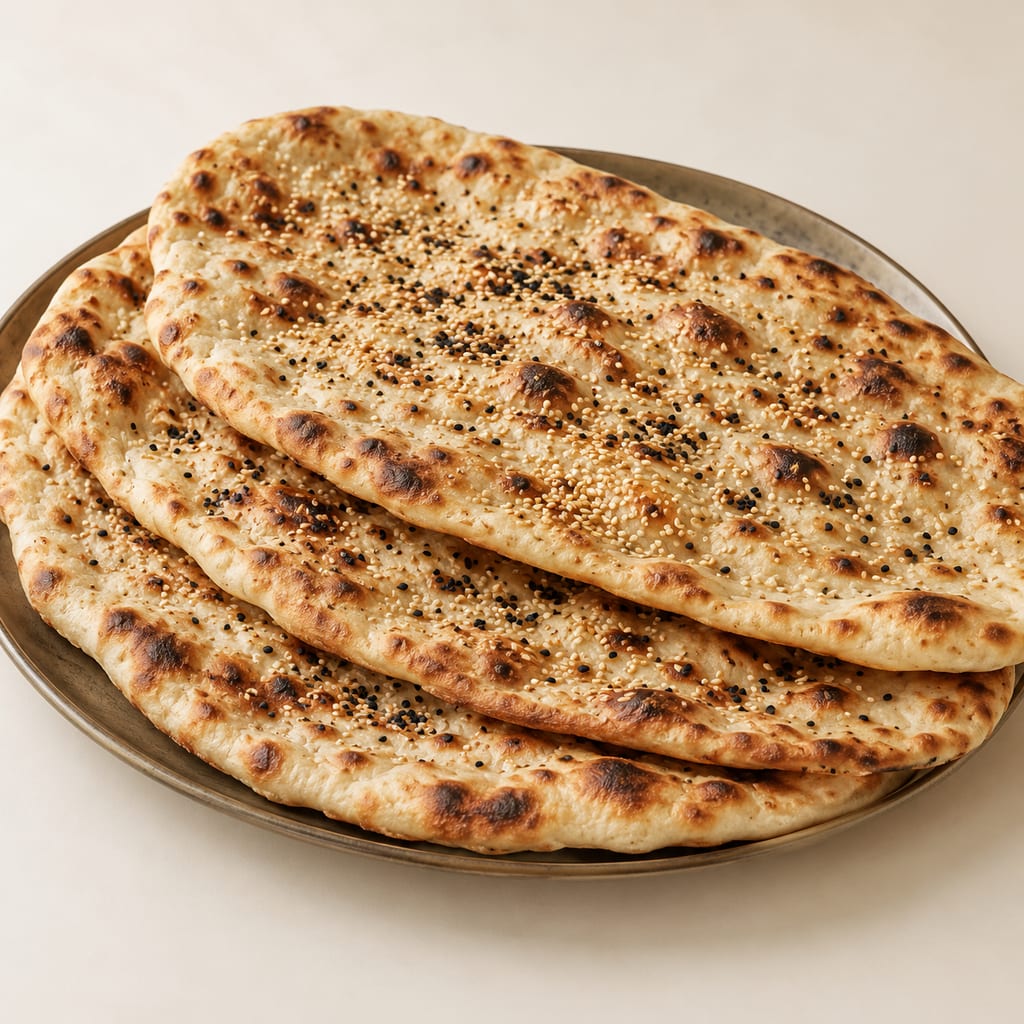
Persian yeast-raised flatbreads, rolled thin, seeded and cooked in a dry skillet.

Khiyār shūr is an Iranian cucumber pickle made in several ways; one household account in salt water is set out here, while vinegar recipes and acidified laboratory brines are kept separate.
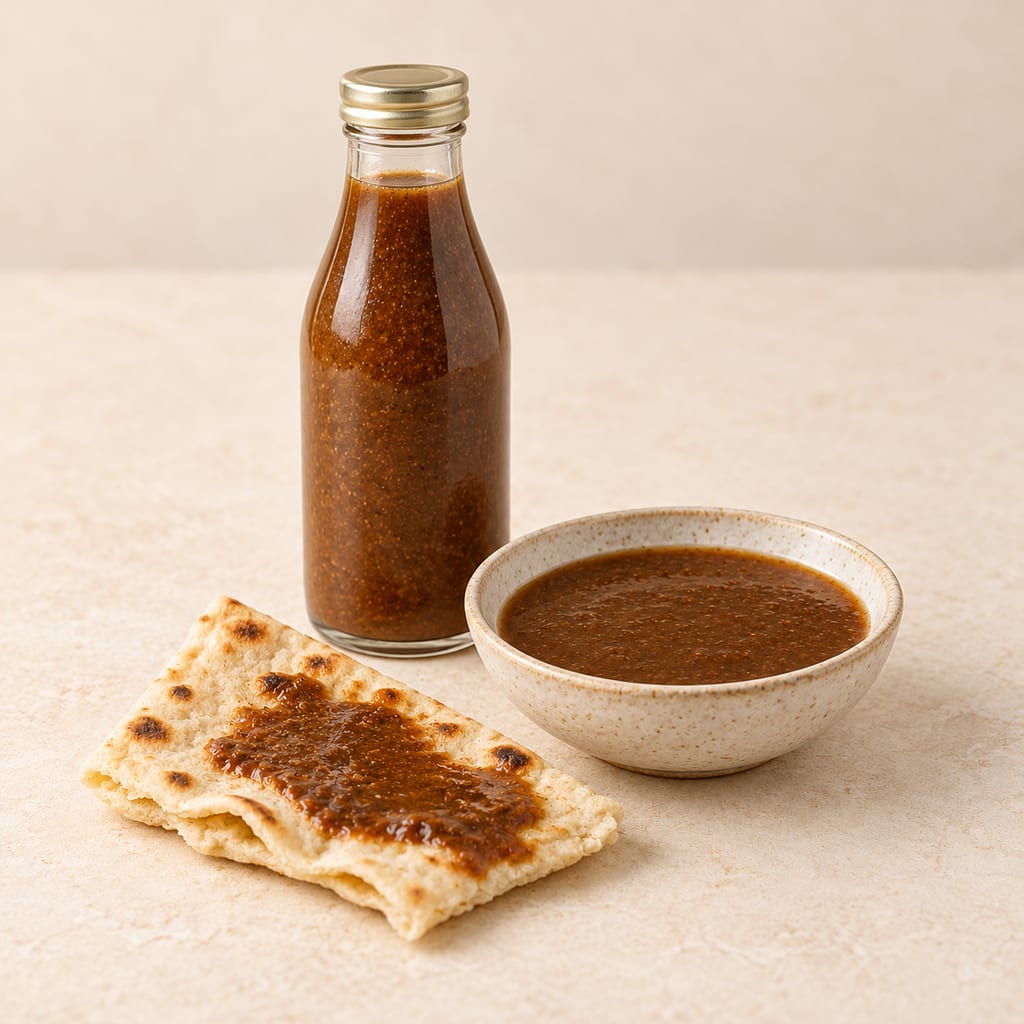
Mahyawa, also written mahyaveh, is a traditional fish sauce from southern Iran, made by salting small sardines or anchovies in water, maturing them in jars and seasoning the filtered liquid with mustard and spices.
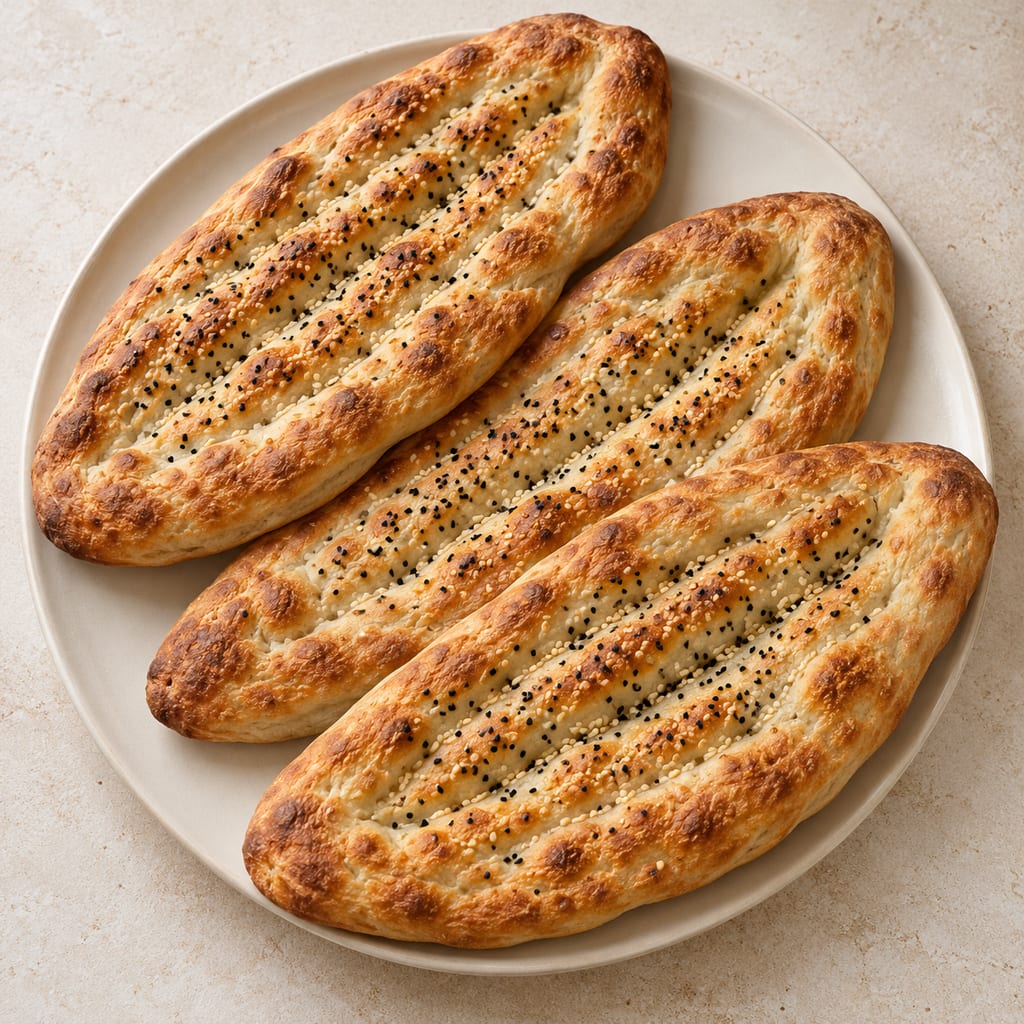
A long oval Afghan wheat bread, leavened with yeast, grooved along its length and baked until crisp outside and chewy within.
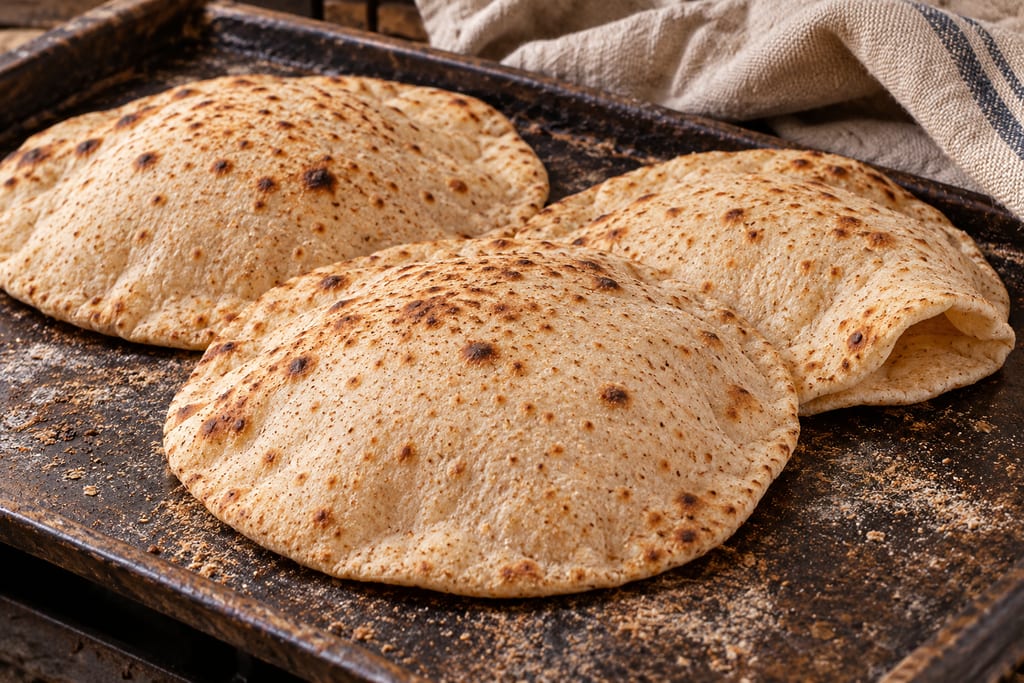
This home adaptation of Egyptian aish baladi uses a refrigerated yeast biga, whole-wheat dough, bran dusting and a very hot baking surface to make 16 pocketed rounds.
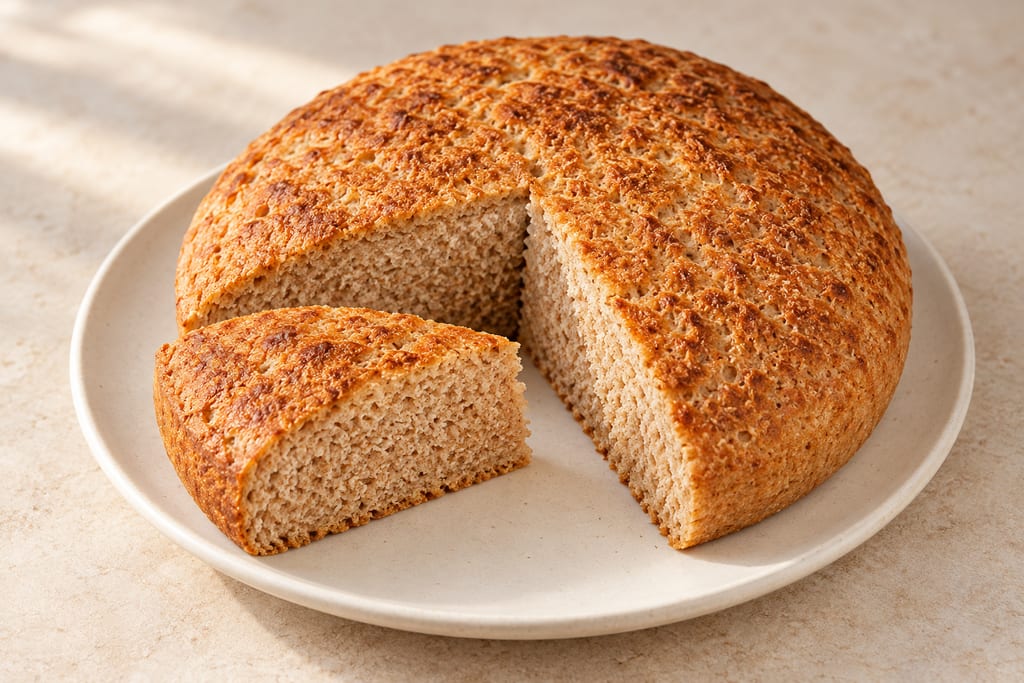
This oven-baked Amdo balep uses yeast, whole-wheat and white flour, a long covered rise and a two-sided bake in a heavy oven-safe pot.
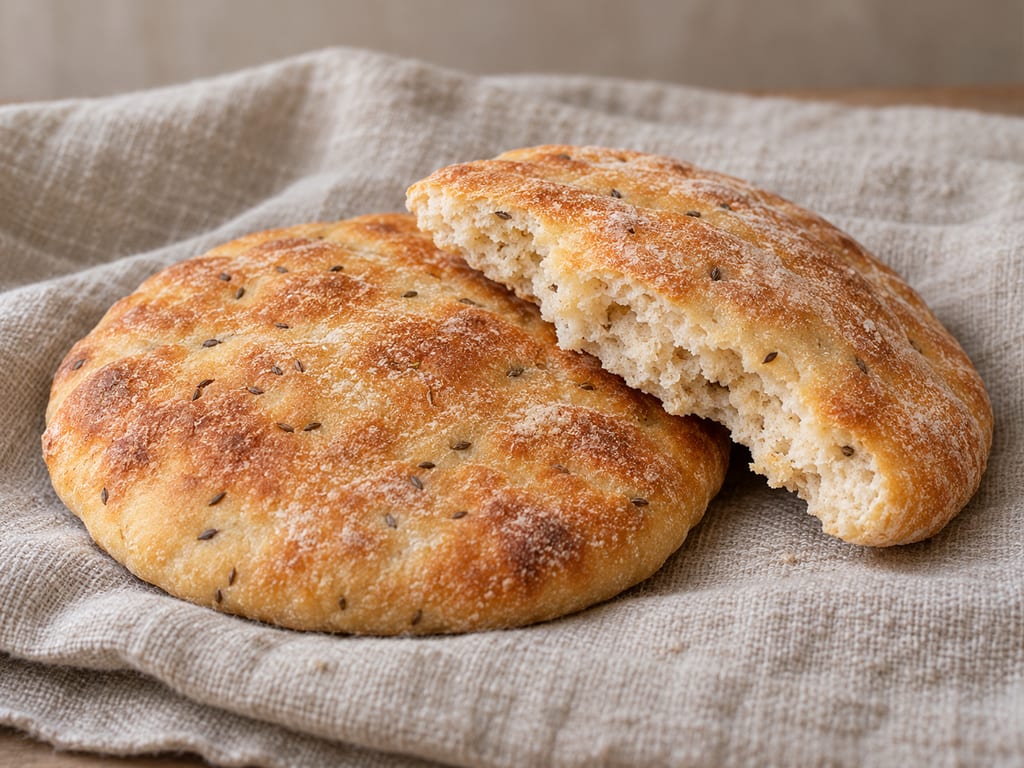
A measured, yeast-raised Ayacucho chapla home method shared by Thermomix Peru presenter Roxanna Salaverry. It makes thin, anise-scented rounds baked at 240°C; the historic qunchu-leavened form is documented separately.
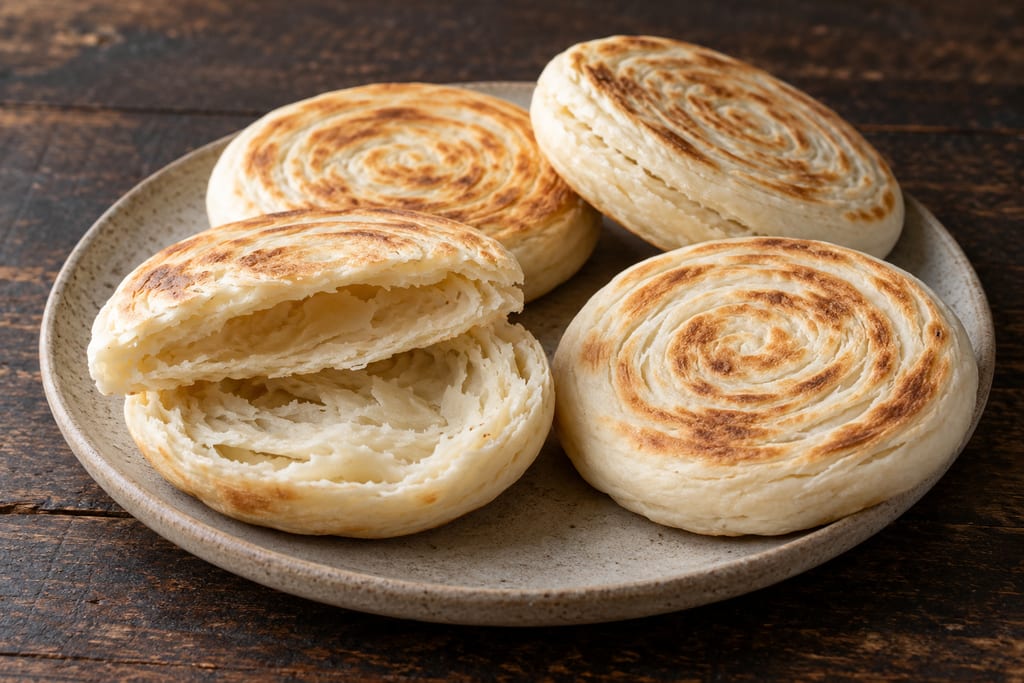
This Shaanxi-associated yeast flatbread uses a simple water dough, coiled shaping and a skillet bake. It is the bread used in roujiamo, not the filled meat dish.
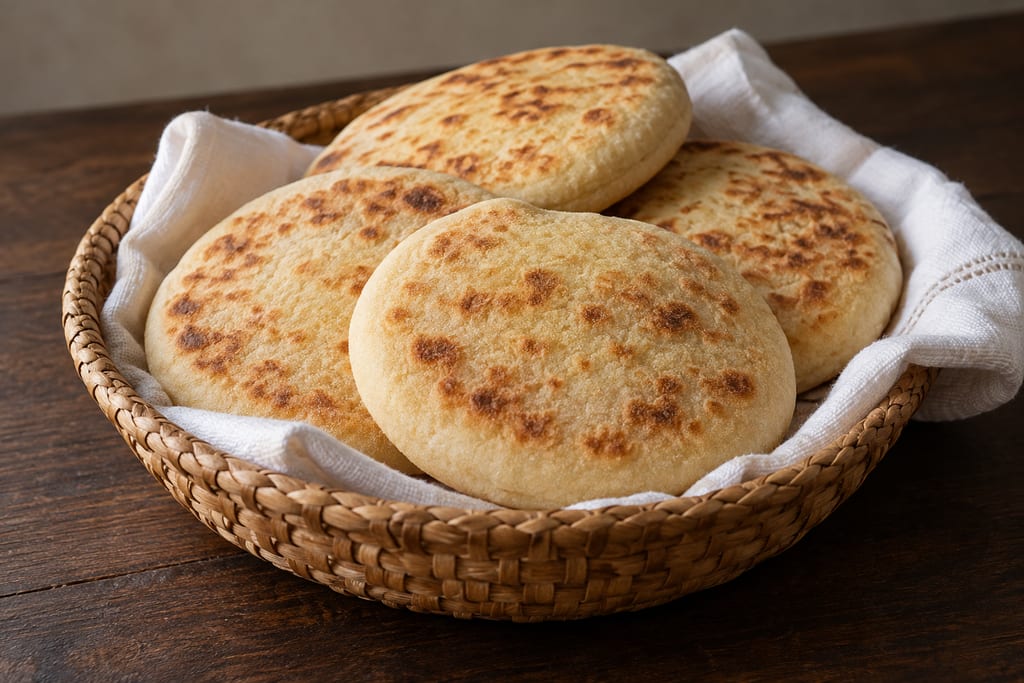
A Moroccan yeast-raised semolina pocket bread cooked on a dry pan or griddle; this measured batch makes about twenty 4-inch rounds.
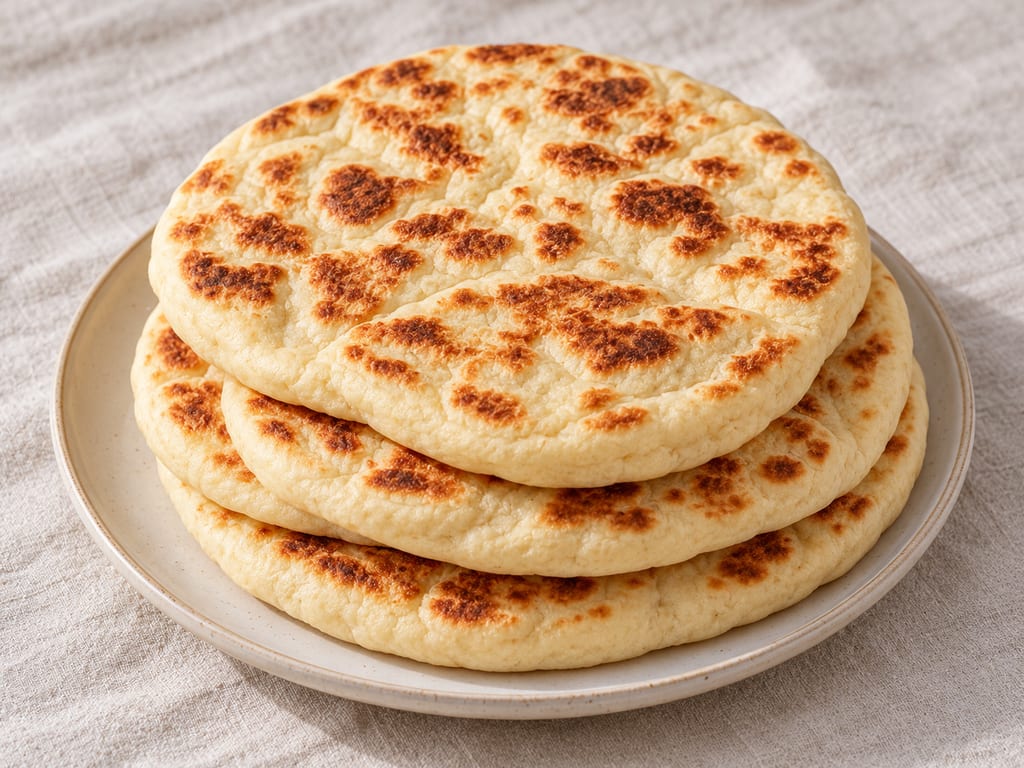
This Turkish bazlama uses yeast, plain yogurt and olive oil for a soft dough cooked in a skillet. Shape it into twelve small or six larger rounds, flip as bubbles appear, and wrap the breads to keep them soft.
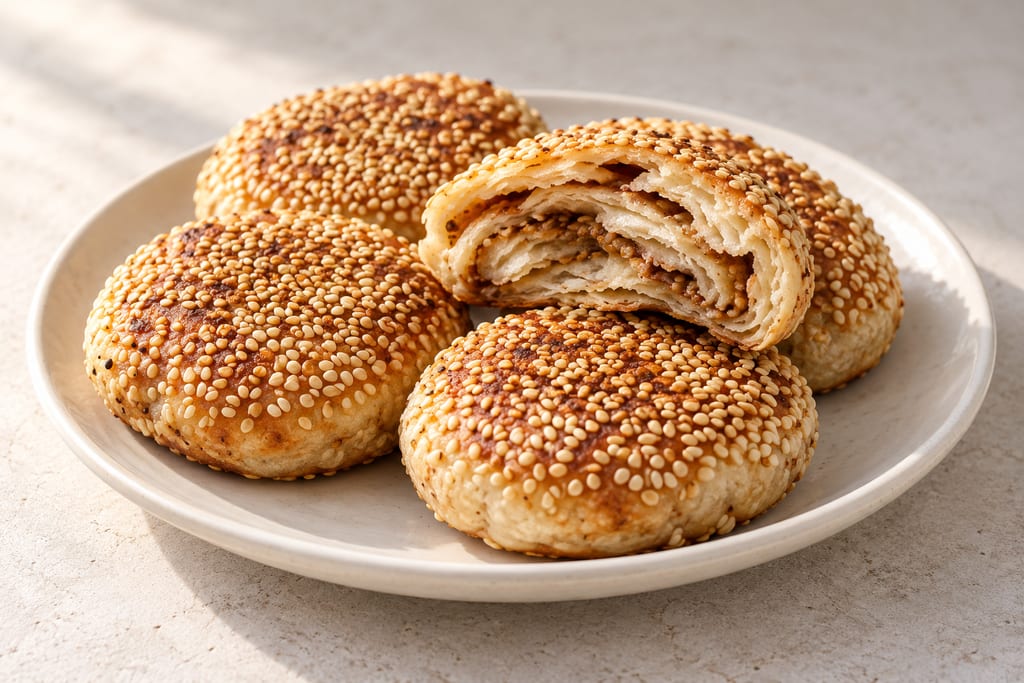
A Beijing-style yeast dough is layered with seasoned sesame paste, sealed into small buns, briefly pan-fried, seeded, and baked.
No community contributions have been published for this entry yet.
Sign in to contribute. Published comments and photos are free to read.
Persian Mama; HomaInspiration · Geography · History
PERSIAN BARBARI BREAD | نون بربریIran-wide association, breakfast use and common accompaniments; author's distinction between bakery sourdough khamir and this active-dry-yeast home recipe; full measured three-loaf formula; yeast activation, bulk rise, glaze, shaping, 500°F stone bake, timing and storage directions.
Cited in: An Iranian home recipe; Dough and roomal; Grooves and high-heat baking; Storage and serving; Within Iranian bakery culture
Encyclopaedia IranicaContext
BREADIncludes barbari among four main urban Iranian bakery breads and describes it as a relatively thick oval leavened bread commonly eaten at breakfast with cheese. This comparative cultural description does not specify the household formula.
Cited in: Within Iranian bakery culture
Wikimedia CommonsImage reference
File:Barbary Baker.jpgIndividually checked CC BY-SA 2.0 photograph, not PD/CC0; excluded from qualifying reference count.
Wikimedia CommonsImage reference
File:Barbari_bread_01.jpgAbolfazl Arabjavadi / Mehr News Agency, CC BY 4.0; individually checked and excluded, not PD/CC0.
Wikimedia CommonsImage reference
File:Barbari_bread_Iran.jpgMilad Mosapoor's attribution-only permission; commercial and derivative use allowed with attribution, but not PD/CC0; excluded.
Wikimedia CommonsImage reference
File:Barbari_bread.jpgWayiran, CC BY-SA 3.0; individually checked and excluded, not PD/CC0.
Wikimedia CommonsImage reference
File:Iranian_Bread_1.JPGIDangerMouse own 2008 photograph, explicit worldwide public-domain release. Visually confirmed finished elongated Barbari loaves with lengthwise grooves; approved linked-6267aa79ba494d93, durable original reference 4a850980-2707-4373-90e6-f0a97e6a78c7. Bakery-scale form, not proof of exact household dimensions.