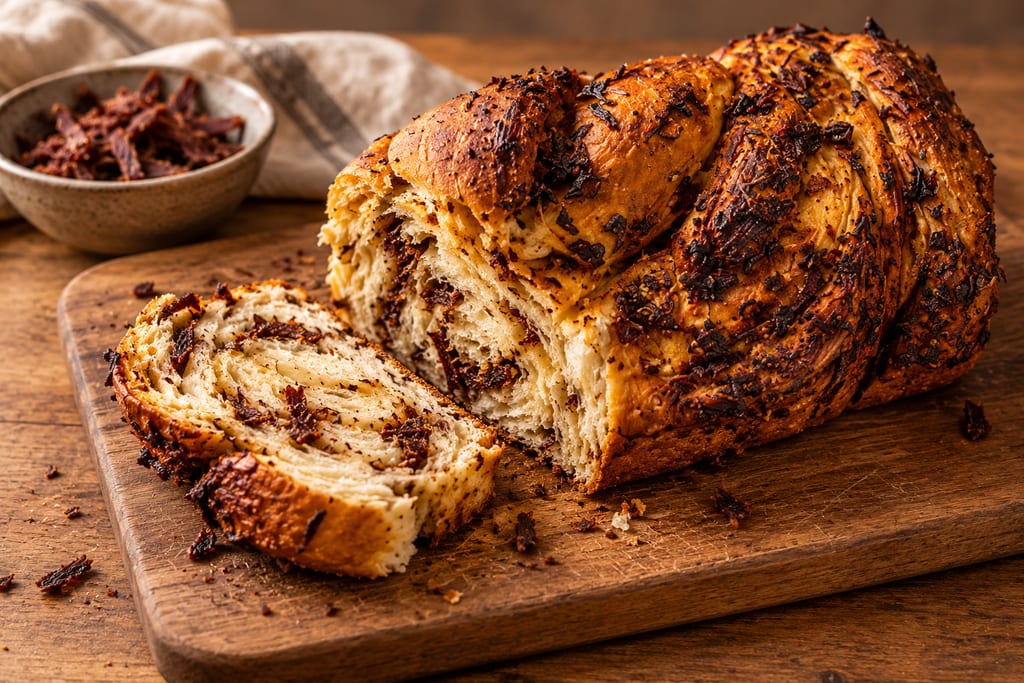
Braided biltong loaf
Yeasted bread wrapped around biltong, tomato pesto, Cheddar and feta, split lengthwise into a braid and baked; served with chilli-biltong butter.
 FermenteaWhere food goes to change
Cultures
Baker's yeast is a cultivated living leavener, commonly sold fresh or dried. In dough, selected Saccharomyces cerevisiae cells make gas that can raise bread.
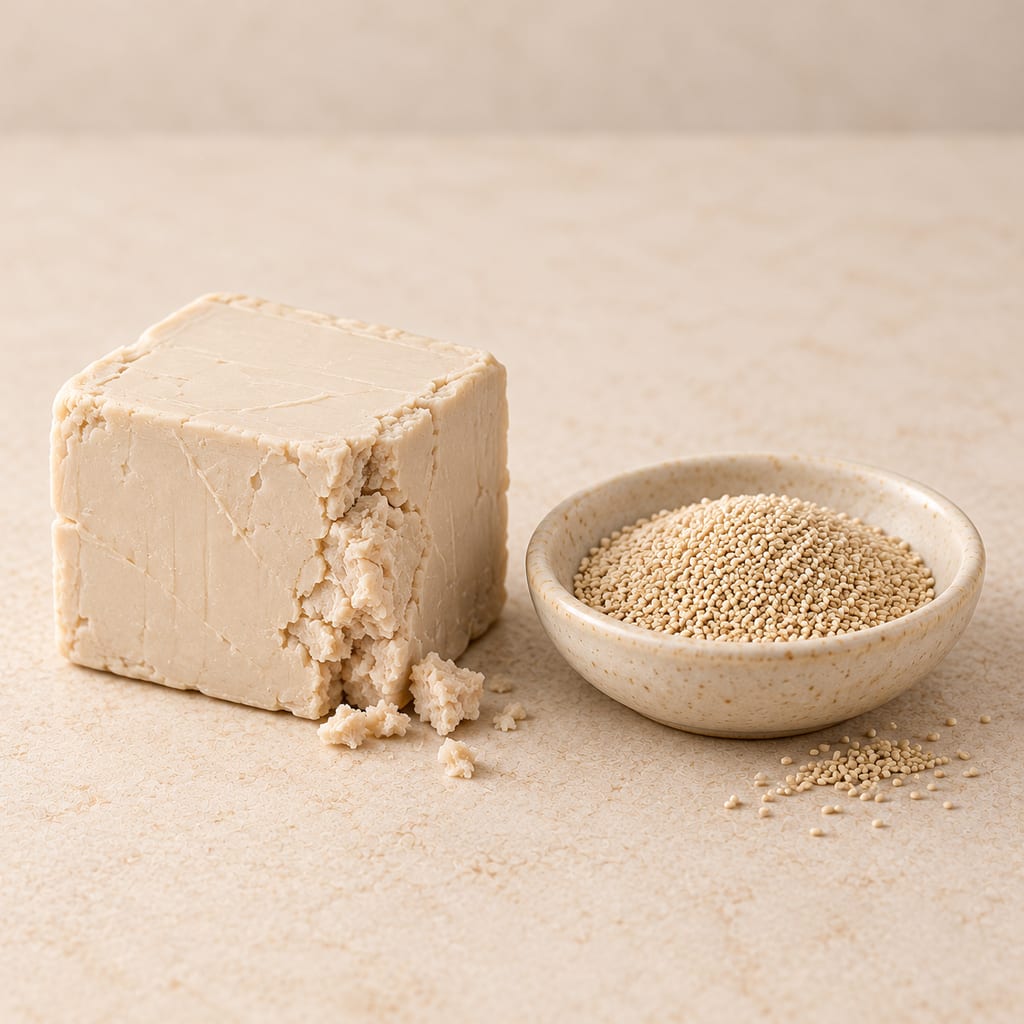
Baker’s yeast is a cultivated, living leavener sold as a moist, soft cake or in dried granules. Most packaged yeast for bread baking belongs to Saccharomyces cerevisiae, a single-celled fungus selected and propagated for predictable dough performance. Its work is easy to see as bubbles and lift, but the ingredient is more than a source of gas: as it consumes available sugars, it also makes ethanol and smaller aroma-active compounds, and its activity changes with the flour, salt, sugar, water, temperature, time and yeast strain around it.
Commercial yeast is often called “baker’s yeast” to distinguish it from brewing, wine or other specialized yeasts, though the species may be the same. The label does not promise that every product contains the same strain or behaves identically. Nor is baker’s yeast interchangeable with baking powder: yeast is alive and ferments; baking powder releases gas through chemical reactions when moistened and heated. A sourdough starter is different again. It is a maintained community in which yeasts share a changing environment with lactic-acid bacteria; a packet of baker’s yeast is a prepared commercial culture, not a miniature sourdough starter.
For centuries, bakers could obtain yeast from fermenting drinks. Brewing foam or sediment could raise dough, though its composition and strength varied with the brewery and the batch. This made the connection between brewing and baking practical as well as microbial: a brewer’s active fermentation furnished a leavening material that a baker could reuse. The broader history is not a single invention. People made risen bread long before they could identify yeast, and archaeological evidence for leavened foods does not by itself tell us which organism raised a particular loaf.
Commercial yeast production for sale emerged in the 1700s, initially as a managed fermenting colony rather than a modern pure culture. Compressed yeast began appearing in England, Germany and the Netherlands in the 1780s and 1790s, and by the early 1800s it was displacing brewery surplus in some markets. A historical review also records commercial dried yeast in Vienna in 1822, though “dried yeast” across periods does not necessarily mean today’s active-dry product. The Fleischmann account gives 1868 as the year Charles Fleischmann began marketing compressed yeast in the United States. His later public promotion helped make packaged yeast familiar to American households. This is one documented commercial path, not a claim that he invented commercial yeast worldwide.
The ability to isolate pure yeast cultures transformed industrial baking and brewing in the late nineteenth century. Emil Christian Hansen’s work at the Carlsberg laboratory established pure-culture methods for brewing yeast in the late 1870s; modern baker’s strains grew out of that pure-culture and industrial-propagation tradition rather than from a single discovery in one year. As microbiology and industrial propagation matured, manufacturers could select strains for traits such as fermentation rate, tolerance of drying or freezing, and performance in doughs with different sugar levels. During the twentieth century, active-dry and instant products made yeast easier to store and ship without treating every bakery as a local extension of a brewery. Company histories date particular product launches differently, so those dates describe a maker’s own line, not necessarily the first product of its type.
Fresh compressed yeast is pale beige, soft enough to crumble, and moist. It may be sold as a small cake for household use or supplied in larger blocks to bakeries. Cream yeast is a pumpable suspension used in commercial bakeries. Dry yeast is made by removing much of the water so the cells can be distributed in granules and stored in sealed packages. These are processing and handling forms, not separate species. A baker chooses among them for shelf life, dosing equipment, recipe convention and the schedule of the bakery.
Active dry yeast is usually sold as relatively coarse granules, and traditional instructions dissolve it in warm liquid before mixing so the granules disperse and hydrate. Directions differ between forms, products and recipes, and manufacturers’ instructions take precedence: follow the directions for the product in hand rather than an old instruction attached to a different form.
Recipes also vary in how they express a substitution between fresh and dry yeast. Fresh yeast carries much more water, and the dry forms differ in processing and activity; manufacturers publish their own conversions. There is no single multiplier that should be applied without checking the recipe or product guidance. When comparing two dough formulas, compare the yeast form, flour weight, temperature and fermentation schedule as well as the number printed beside the ingredient. A number copied from a different recipe can produce a slower or faster dough than intended.
Yeast cells take up fermentable sugars and convert them through metabolism. In dough, a major product is carbon dioxide; ethanol and other compounds are produced alongside it. Carbon dioxide collects in gas cells already present in mixed dough. The dough’s hydrated gluten proteins form an extensible network that can stretch around expanding bubbles, so the gas increases volume rather than escaping immediately. A strong, well-developed dough can retain more gas, but gas production and gas retention are separate: active yeast cannot compensate for a dough whose structure is too weak, and a strong dough will remain dense if fermentation is too limited.
The yeast does not need a spoonful of table sugar to begin working. Wheat flour contains small amounts of sugars, and flour enzymes release additional fermentable sugars from damaged starch during mixing and fermentation. The balance changes with flour, milling, dough formula and time. Yeast strains differ in how readily they use particular sugars, especially maltose, and in how they cope with salt, concentrated sugar, cold or freezing. A sweet enriched dough can therefore behave differently from a lean dough even when both contain the same species. High sugar can make water less available to cells; some products are selected for better performance in such doughs. That does not make every packet suited to every brioche or sweet bun.
As fermentation proceeds, ethanol and small amounts of other metabolites contribute to dough aroma and the baked bread’s flavor. Their effects are not a single “yeast flavor”: strain, flour, fermentation time, temperature and formula all matter. In the oven, gas already in the dough expands and yeast activity ends as the dough heats. The crumb then sets as starch gelatinizes and proteins firm. In a typical loaf, much of the ethanol formed during fermentation is driven off during baking, though a baked bread’s aroma also reflects many reactions in the crust and crumb. Fermentation is one stage in that result, not the sole source of bread flavor.
A baker can use commercial yeast alone, a sourdough starter alone, or both. In a starter, yeasts produce gas while lactic-acid bacteria produce organic acids and a wider set of fermentation metabolites. The starter’s community and behavior depend on how it is maintained and fed. A packet of commercial yeast mainly provides a deliberately propagated yeast culture; it does not supply the same bacterial ecology or the same acid development. It should not be described as a sourdough culture merely because a recipe also contains starter.
Hybrid formulas use the two for different, overlapping reasons. A sourdough English-muffin formula, for example, can combine ripe starter or discard with active dry or instant yeast. Sourdough contributes its fermented flour and characteristic acidity, while the added commercial yeast supplies additional, more predictable leavening. A sourdough pretzel can similarly include instant yeast and unfed starter. In either case, it is inaccurate to attribute all the lift to the starter or to the packet alone without knowing the timing and condition of both. A recipe that uses only commercial yeast has no starter-based sourdough fermentation, even if the dough is slow-fermented or tastes complex.
In everyday loaves, buns, rolls and pizza dough, commercial yeast gives a baker a controllable way to build gas over a chosen schedule. The same organism can leaven an English muffin, but the finished food is shaped and cooked differently from a pan-baked loaf. English muffins are small, round, yeast-raised breads cooked on a griddle or hotplate; their interior is intended to split into irregular pockets and toast well. Modern formulas may mix sourdough starter with a measured addition of active dry or instant yeast. The name “English muffin” should not be confused with a sweet, oven-baked American muffin, which is usually chemically leavened quick bread.
Pretzels show how fermentation fits with other transformations. Both soft and hard pretzels can begin as yeast-leavened wheat dough, though some hard pretzel formulas also use chemical leavening. The dough is shaped into the familiar loop or other forms; an alkaline surface treatment in many styles promotes the distinctive brown, glossy crust and characteristic flavor during baking. That surface treatment is not what makes the dough rise. Yeast fermentation builds internal gas; the alkaline bath acts at the surface and affects browning. Regional and commercial formulas differ, so no single pretzel method represents every soft, hard, twisted or bite-size pretzel.
Choose the form a recipe specifies when possible. Fresh yeast should arrive in good condition and be kept as its package directs; it is a moist, perishable product. Dried yeast is more shelf-stable while its package remains sealed, but it is still a living culture whose viability can decline. Heat, moisture and oxygen exposure shorten its useful life. Close an opened dry-yeast package tightly and store it under the maker’s stated conditions; use the printed date and instructions rather than assuming all brands keep for a fixed number of months. A warm cupboard beside an oven is a poor place for either dried or fresh yeast.
A dough that rises slowly does not prove that yeast is dead. Cold dough, a low yeast dose, salty or highly sweetened formulas, weak flour structure, an inaccurate fermentation expectation or a cool room can all delay visible expansion. Conversely, a vigorous rise does not prove that a dough has fermented long enough for the intended flavor or structure. Look at the dough and follow the recipe’s cues, but interpret them in light of temperature and dough composition. If testing a questionable packet in water, use the product’s own instructions; bubbling in a cup is a rough activity check, not a universal prediction of how a particular dough will perform.
Salt is not simply an enemy of yeast. In bread dough it seasons the loaf and changes dough behavior, while concentration and contact conditions can affect yeast activity. Sugar also has two roles that should not be confused: small additions can supply a readily available substrate, but a large share of sugar changes the dough’s water availability and can slow ordinary yeast. Flour enzymes and fermentation conditions continue to shape the available sugars. This is why a sweet enriched dough can call for a different yeast strain or formula, and why simply adding more yeast is not a universal fix.
Baker’s yeast is a wheat-bread ingredient for most of its familiar uses, but it is not itself wheat and does not contain wheat flour by definition. The dough made with it usually contains wheat, whose gluten is a major gas-retaining structure; yeast is not a gluten substitute. Product labels and the complete recipe still matter for allergens and dietary requirements, especially when yeast is sold in a formulated mixture or used with other ingredients. Choosing a yeast form, flour and fermentation schedule is ultimately a coordinated decision: the packet supplies living cells, the dough supplies food and structure, and time and temperature determine how those parts meet.
Fleischmann marketed compressed yeast in the US from 1868; this is not the origin of baker’s yeast globally.
Yeasted bread wrapped around biltong, tomato pesto, Cheddar and feta, split lengthwise into a braid and baked; served with chilli-biltong butter.
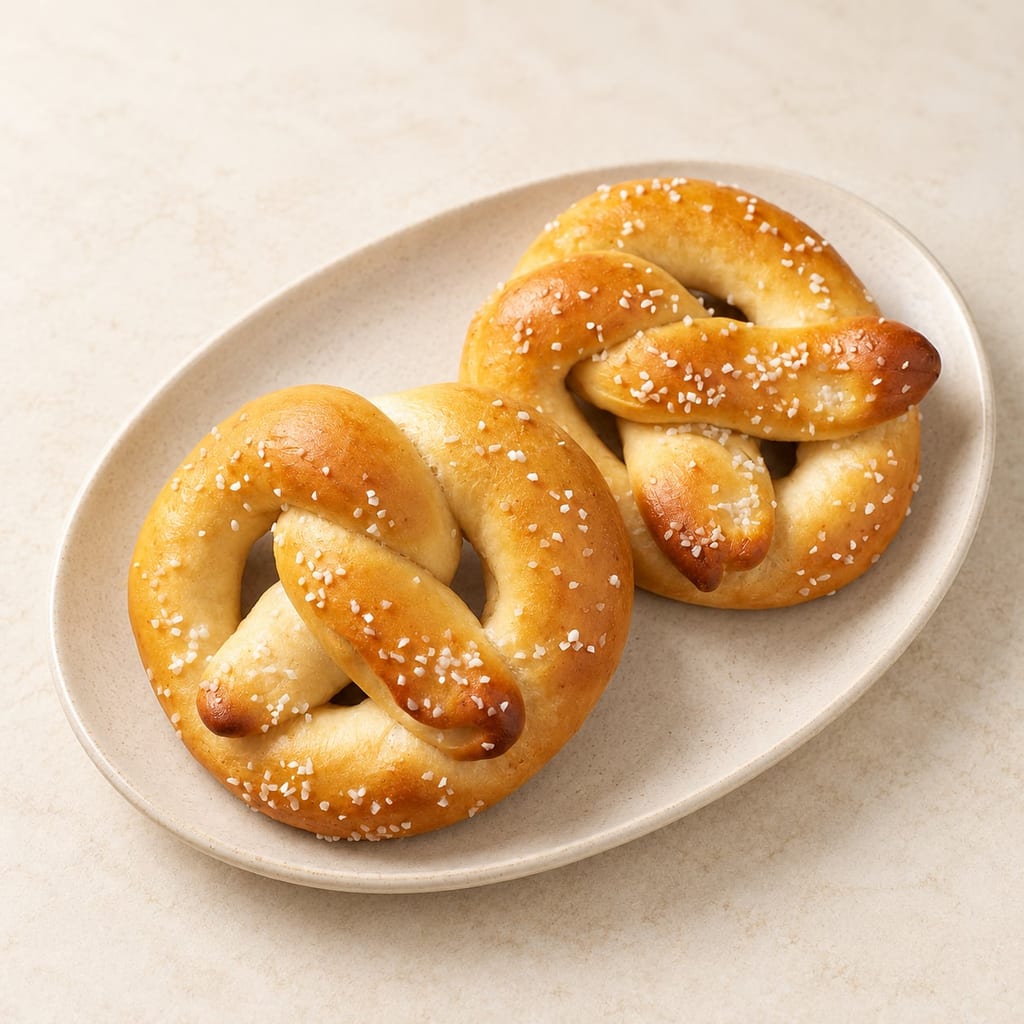
Unfed sourdough starter flavours a soft pretzel dough raised with instant yeast. After a short rest, the dough is shaped, brushed with a sweet wash, salted and baked without a final proof.
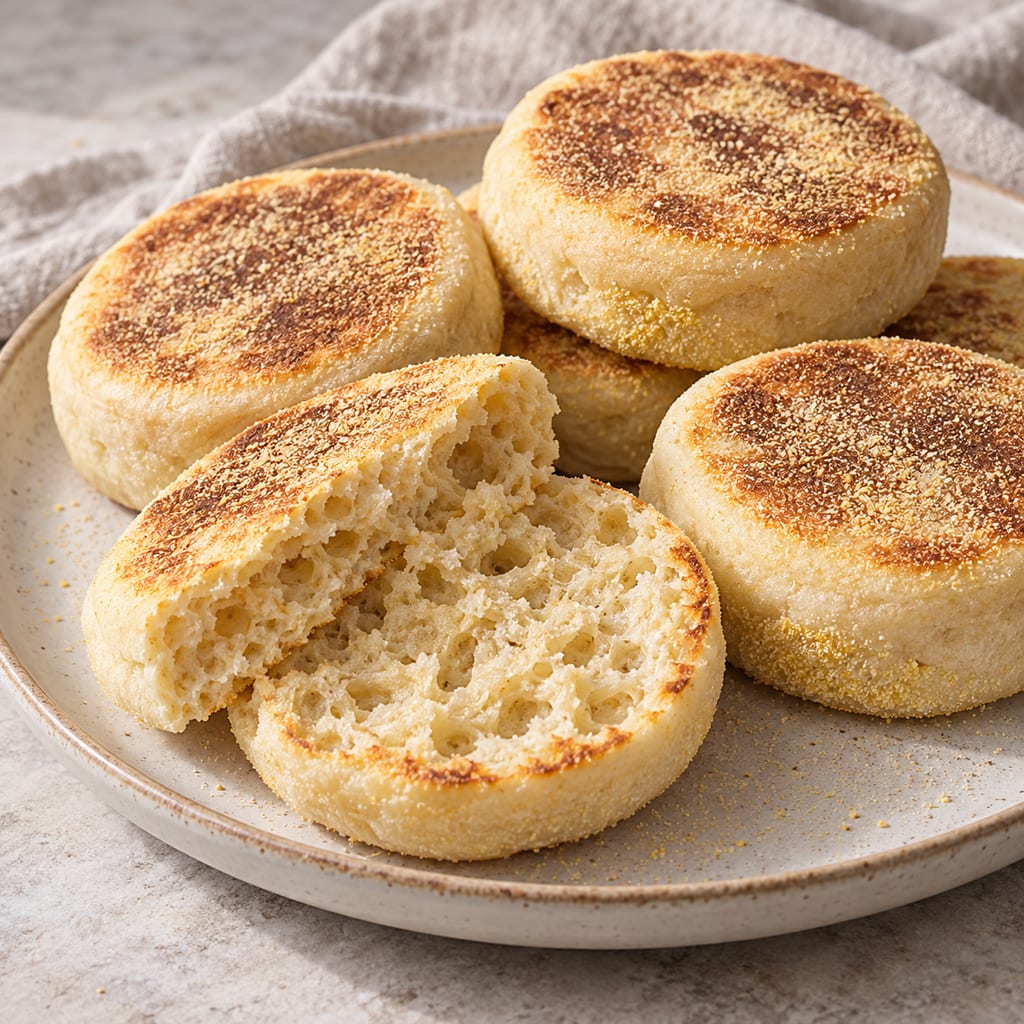
A soft English muffin dough combines sourdough starter with baker’s yeast, then rises, is cut into rounds and cooks on a griddle. The starter adds tang; the added yeast helps it rise.
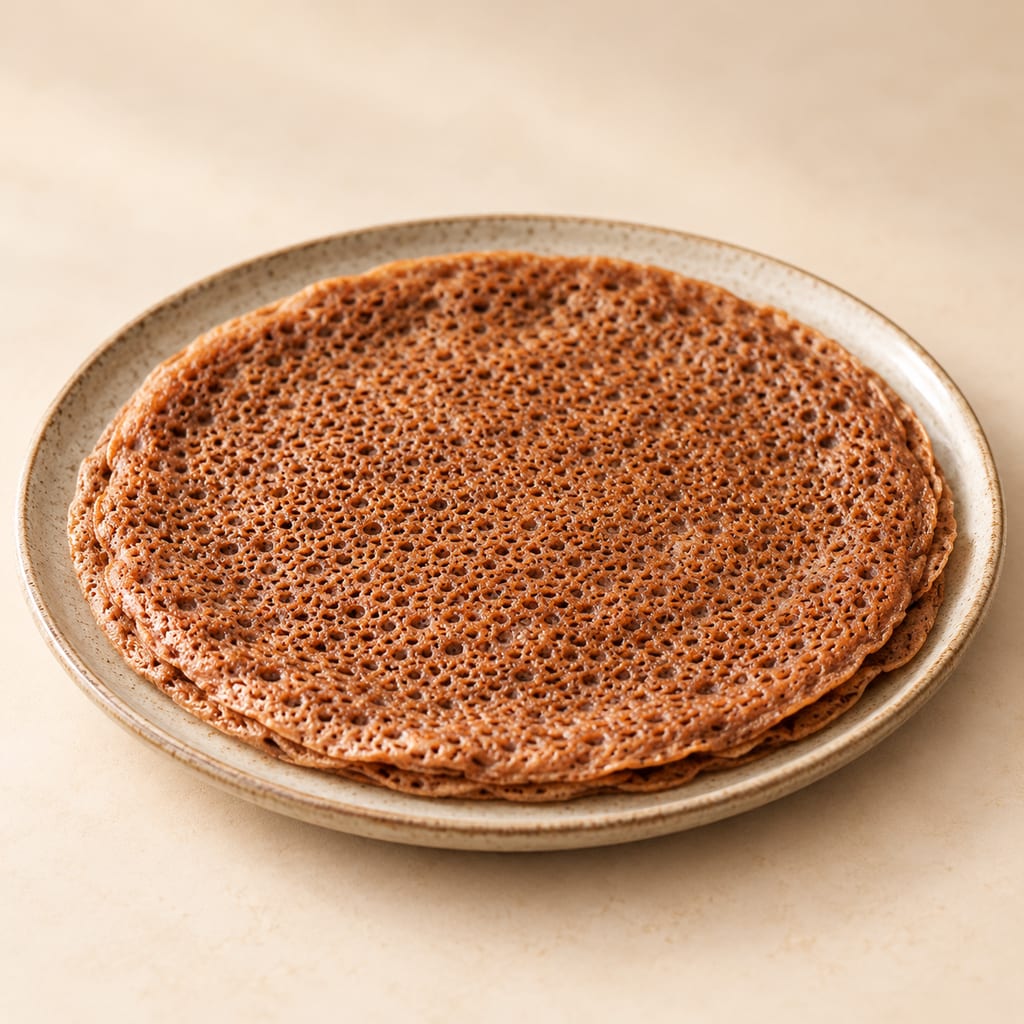
A modern home adaptation of Ethiopian injera using a 24-hour fermentation window. This method balances traditional souring with accessible ingredients like baking powder or starter cultures to achieve the characteristic porous texture.
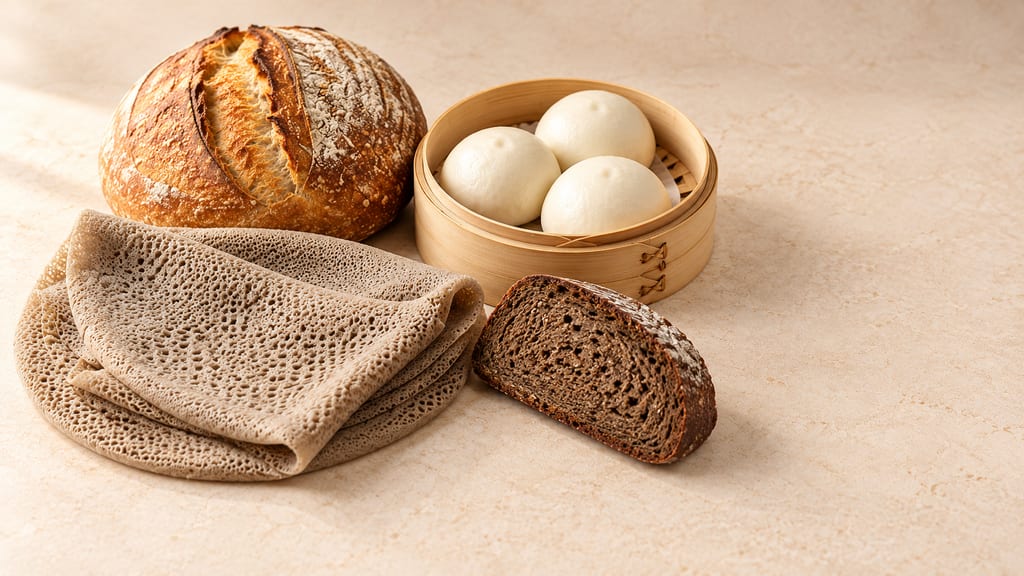
From the baguette and the steamed bun to injera, titiyas, Finnish rye and cassava bread: how grain, microbes and heat answer the question of what bread is for.

A refined common-wheat flour blended for a broad range of baking; its protein and behavior vary with wheat, milling and market.

Toasted almonds are whole sweet almond kernels dry-roasted until golden to brown. Heat replaces their marzipan note with a roasted, nutty one; they thicken and flavour romesco.
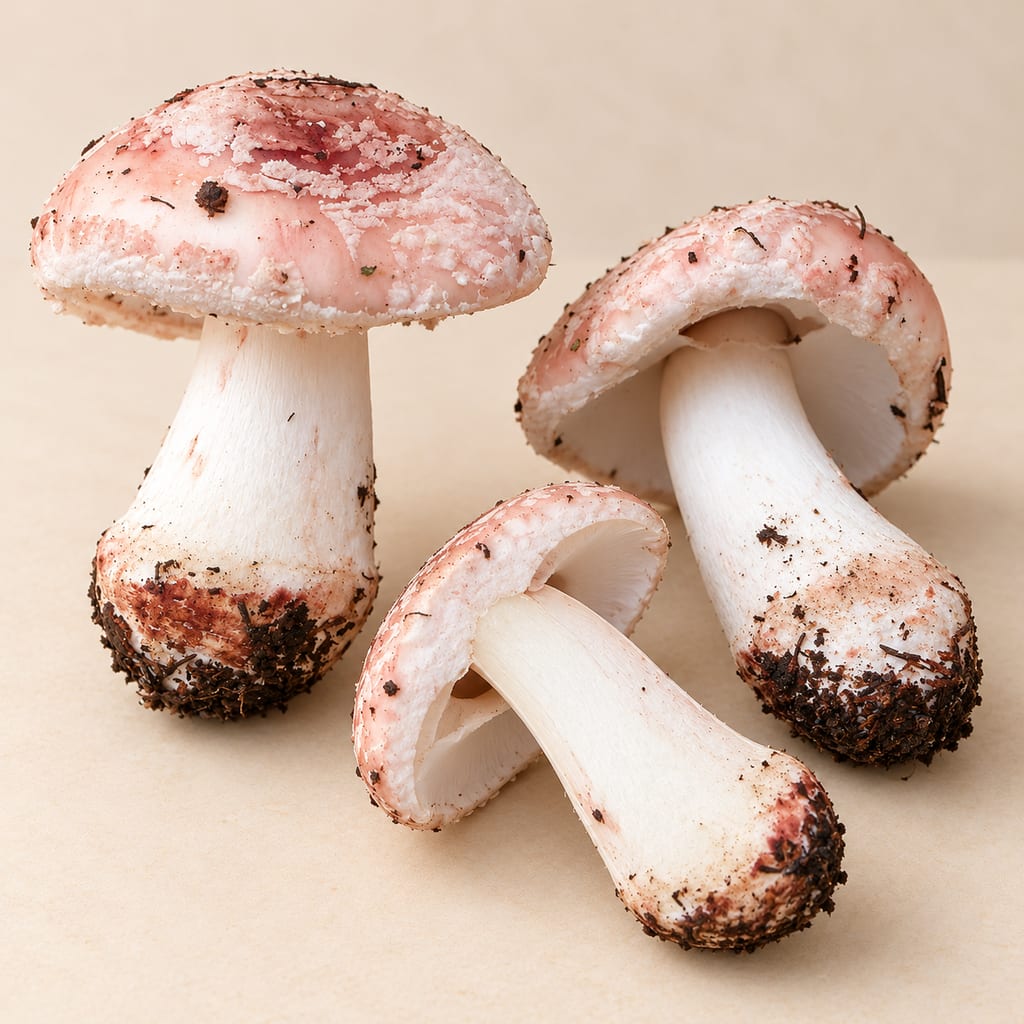
Amanita novinupta is a western North American blusher, a forest mushroom recorded as food in Mexico, and one that must be cooked because its raw flesh is toxic.
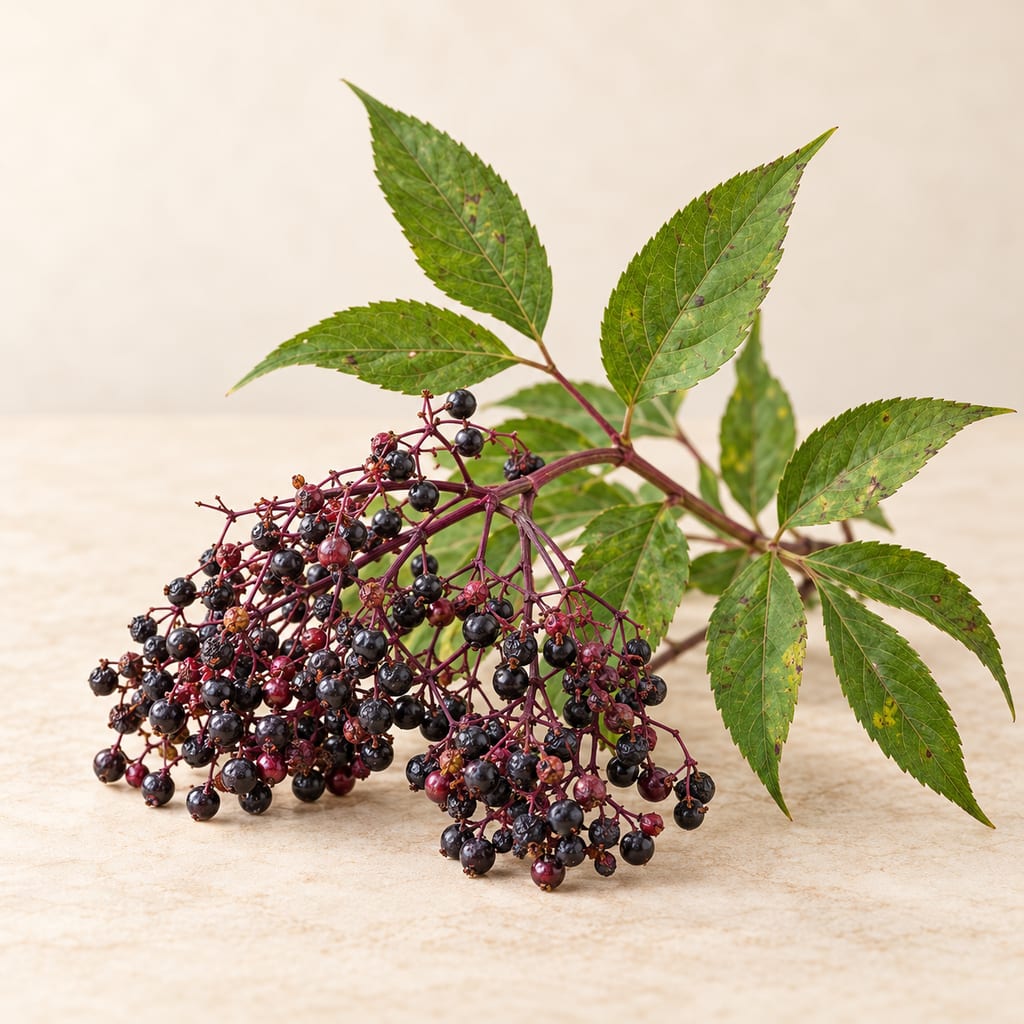
Sambucus canadensis is the accepted name used here for American elderberry. Missouri production guidance and named-cultivar studies give useful regional growing information, while food and analytical sources leave process questions open.
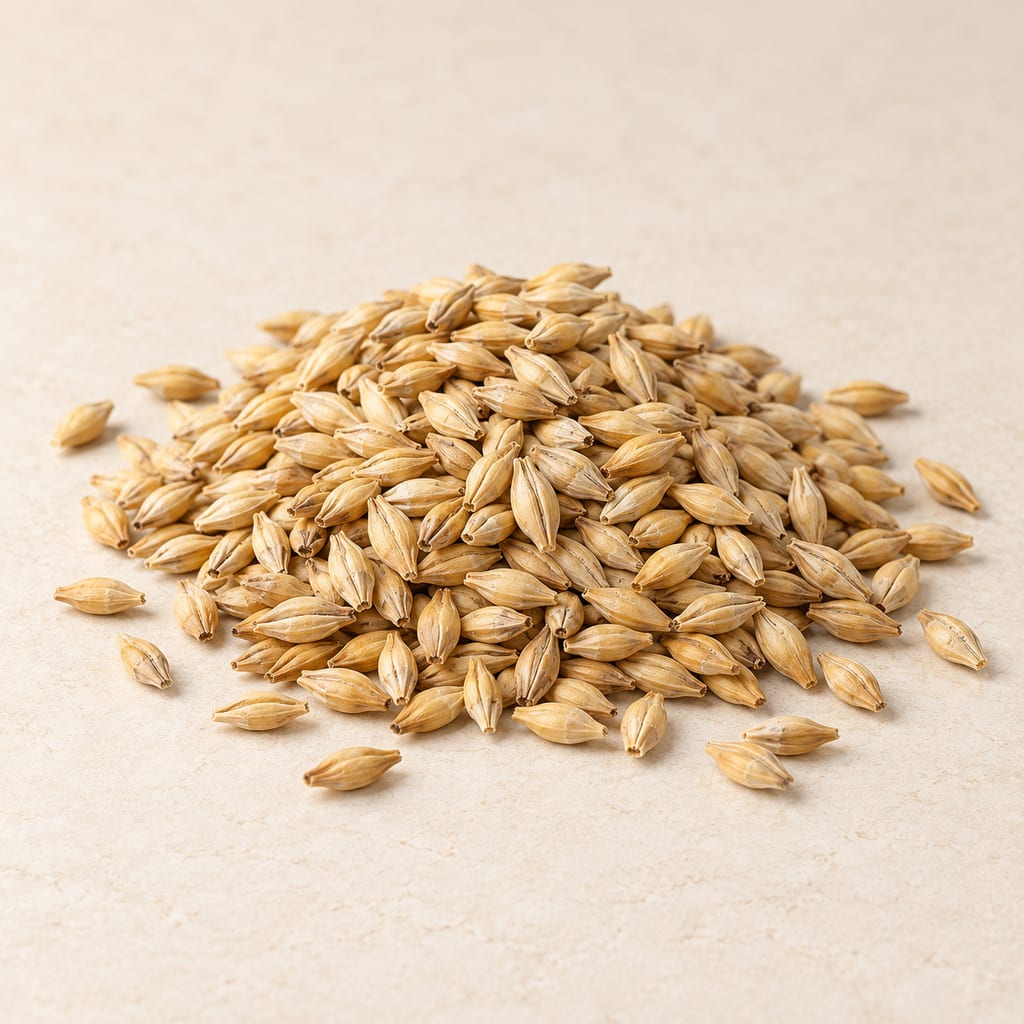
A lightly kilned brewing base made from two-row barley. It supplies starch and enzymes for the mash, with the maltster’s product and lot analysis defining its brewing properties.

Ripe avocado flesh is the soft, buttery, fat-rich pulp of Persea americana, eaten raw. It is low in acid, so it is a fresh ingredient that needs care in chilled dishes.
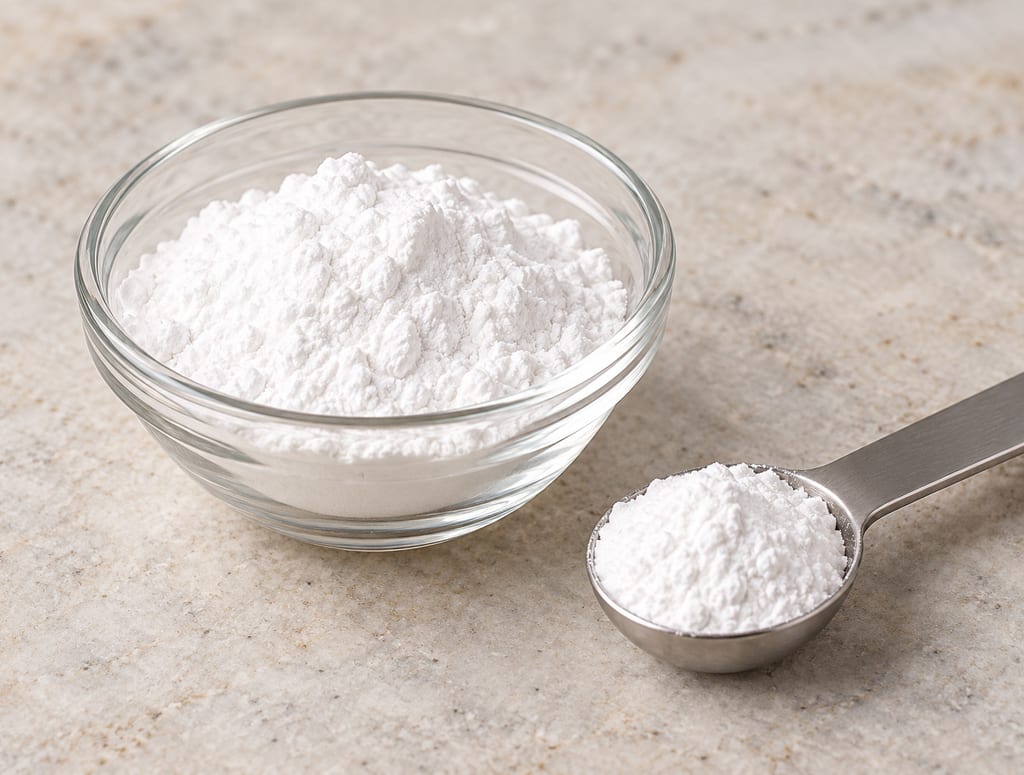
Baking powder is a dry chemical leavener that combines bicarbonate with acid-reacting ingredients and a carrier. Moisture and heat release carbon dioxide for quick breads, batters and griddle cakes.
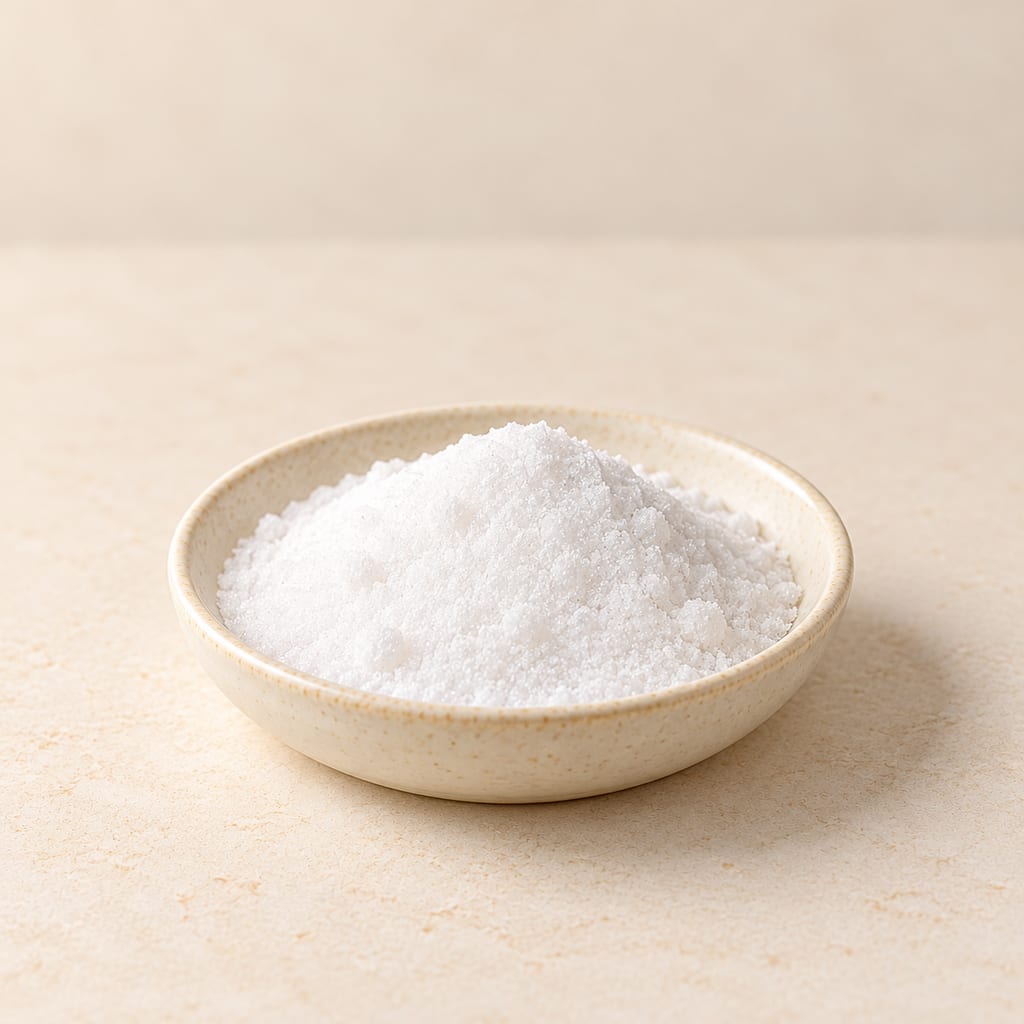
Baking soda is food-grade sodium bicarbonate, a single alkaline powder that releases carbon dioxide when it meets acid in a wet batter. It lifts quick breads without a living culture.
No community contributions have been published for this entry yet.
Sign in to contribute. Published comments and photos are free to read.
Frontiers in GeneticsEditorial
History and Domestication of Saccharomyces cerevisiae in Bread BakingPeer-reviewed review: commercial baker’s yeast versus spontaneous mixed starter, brewing-derived inoculum, the compressed-yeast industry, pure-culture methods, strain selection and yeast adaptation.
Cited in: Baker’s yeast; From brewery by-product to a controlled culture; One species, several commercial forms; How yeast raises dough; Yeast alongside sourdough; Choosing, handling and judging activity
Comprehensive Reviews in Food Science and Food SafetyEditorial
Bread Dough and Baker’s Yeast: An Uplifting SynergyReview of gas and metabolite production, dough rheology and volume, and effects of ingredients, conditions, strain and yeast pregrowth.
Cited in: Baker’s yeast; How yeast raises dough
Annual Review of Food Science and TechnologyEditorial
Genetic and Phenotypic Characteristics of Baker’s Yeast: Relevance to BakingReview of strain phenotypes, carbohydrate use, stress tolerance and industrial propagation; supports distinction between species and product-specific performance.
Cited in: How yeast raises dough; Choosing, handling and judging activity
King Arthur BakingEditorial
YeastBaker-focused reference identifies commercial baker yeast as Saccharomyces cerevisiae, discusses cream, compressed, active dry and instant forms, and explains carbon dioxide/alcohol production. A producer/technical reference, not a neutral standard.
Cited in: Baker’s yeast; One species, several commercial forms; How yeast raises dough; Choosing, handling and judging activity
King Arthur BakingEditorial
Sourdough English MuffinsCurrent recipe explicitly combines sourdough starter with active dry or instant yeast; supports the hybrid example only.
Cited in: Yeast alongside sourdough; Loaves, griddled muffins and pretzels
King Arthur BakingEditorial
Sourdough PretzelsCurrent recipe explicitly combines unfed starter with instant yeast; supports the hybrid example only.
Cited in: Yeast alongside sourdough; Loaves, griddled muffins and pretzels
BakeInfo New ZealandEditorial
English Muffins: BIRT English Muffins Information Sheet, v1.0Defines English muffins as yeast-raised, griddle-style muffin splits and explains their use; the origin is described as uncertain.
Cited in: Loaves, griddled muffins and pretzels
USDA Agricultural Marketing Service, National Organic ProgramEditorial
Sodium Hydroxide: Technical Evaluation Report, Handling/ProcessingReports alkaline pretzel surface treatment and its contribution to surface chemistry, texture and browning; supports the distinction from yeast leavening, not a complete pretzel history or recipe.
Cited in: Loaves, griddled muffins and pretzels
American Society of BakingEditorial
Baking Hall of Fame 2008: Charles FleischmannIndustry profile supports the Fleischmann compressed-yeast business in the United States beginning in 1868; contextual commercial history, not a claim of global invention.
Cited in: From brewery by-product to a controlled culture
Fleischmann’s YeastEditorial
Our HistoryManufacturer’s timeline for its own products and American commercial history; used only to contextualize its own line, not to establish first-to-market claims.
Cited in: From brewery by-product to a controlled culture
Wikimedia CommonsEditorial
Fresh yeast.jpgPhotograph depicts a block of fresh yeast itself. Self-published work; author attribution is assumed from the Commons copyright claim.