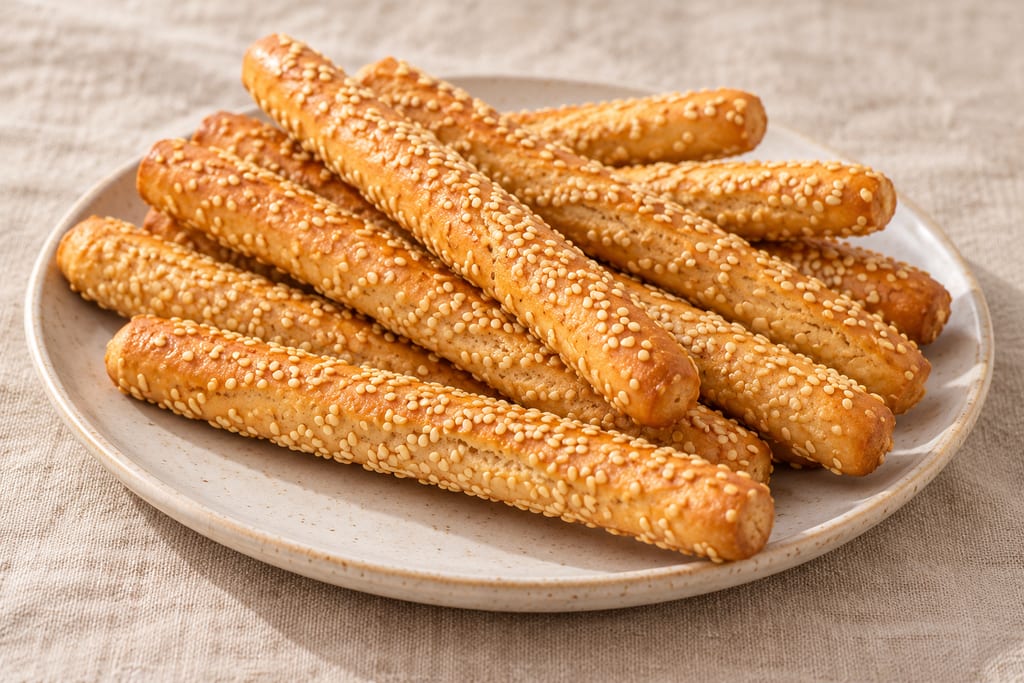
Bosomat (Egyptian crunchy sesame breadsticks)
Amira Ibrahim’s Egyptian bosomat are yeast-raised wheat sticks scented with optional fennel and anise, topped with sesame and baked until dry and crisp.
 FermenteaWhere food goes to change
Modern adaptation
العيش البلدي · eish baladi · baladi bread
This home adaptation of Egyptian aish baladi uses a refrigerated yeast biga, whole-wheat dough, bran dusting and a very hot baking surface to make 16 pocketed rounds.
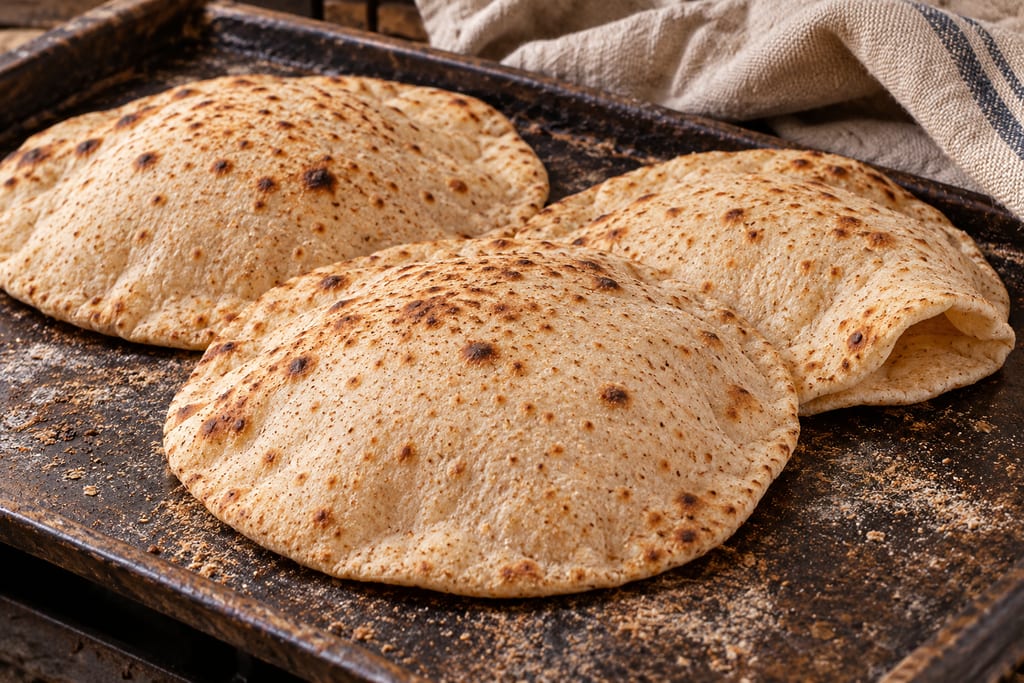
Aish baladi is part of everyday Egyptian meals. The source recipe comes from Egyptian writer Nermine Mansour, who recalls the local forn baladi and explains that this home method uses a refrigerated yeast biga in place of sourdough. The source-specific formula makes 16 small rounds; it should not stand for every Egyptian baladi bread or bakery method.
The recipe page contains small inconsistencies between its introductory instructions and recipe card. The ingredient list specifies 1½ cups finely ground bran for proofing, marked optional, while the prose says to mix 1 cup bran with 1 cup whole-wheat flour for the work surface. The page also gives a ⅙–¼-inch thickness range in the prose but a 5-inch circle in the card. The instructions below retain these cues and disclose the difference instead of silently combining them. For the short rest after rounding the balls, the narrative says 15 minutes while the recipe card says 10; this version follows the card and uses 10 minutes.
The biga rests for 24 hours in the refrigerator. The dough then chills for at least six hours or overnight. The recipe card reports 30 hours of cold proofing in total, matching 24 hours plus six hours; a longer overnight dough rest has no exact duration. Warm water helps activate the yeast, while the source's kneading cue is a soft, elastic dough. Roll evenly so the rounds can puff on the very hot baking surface.
Bake in batches for two to four minutes, until puffed and lightly charred in spots. This visual cue belongs to the cited home recipe and does not establish a different oven's exact temperature or safe internal temperature. Covering the baked loaves keeps them tender, according to the author.
Flour is a raw food and can carry harmful bacteria. Do not taste the dough before it is baked. Keep raw flour and dough away from ready-to-eat foods, then wash hands and clean bowls, utensils and work surfaces after handling them. The FDA guidance supports these flour-handling precautions; it does not validate the bread's cold-proof schedule.
The archive locates the named bread in Egypt. The cited page is a contemporary home adaptation by Egyptian author Nermine Mansour, who describes cold-fermented yeast biga as a substitute for sourdough. It does not date the bread's first attestation or establish a single origin.
Yield 16 bread disks · Scaling: source batch only
Flour can carry harmful bacteria and the dough is not safe to taste before baking.
Hazard sourceDo not taste raw flour or dough; keep it separate from ready-to-eat foods, wash hands and clean utensils and surfaces after handling, and bake the rounds before eating.
Control sourceThe source's refrigerator proofing instruction does not state a measured refrigerator temperature. Keep the dough refrigerated during the long cold proof; do not use the dough's smell or appearance to assess safety.
The recipe author identifies this as Egyptian aish baladi and describes her own home adaptation; this does not claim a single origin for pita breads.
Amira Ibrahim’s Egyptian bosomat are yeast-raised wheat sticks scented with optional fennel and anise, topped with sesame and baked until dry and crisp.
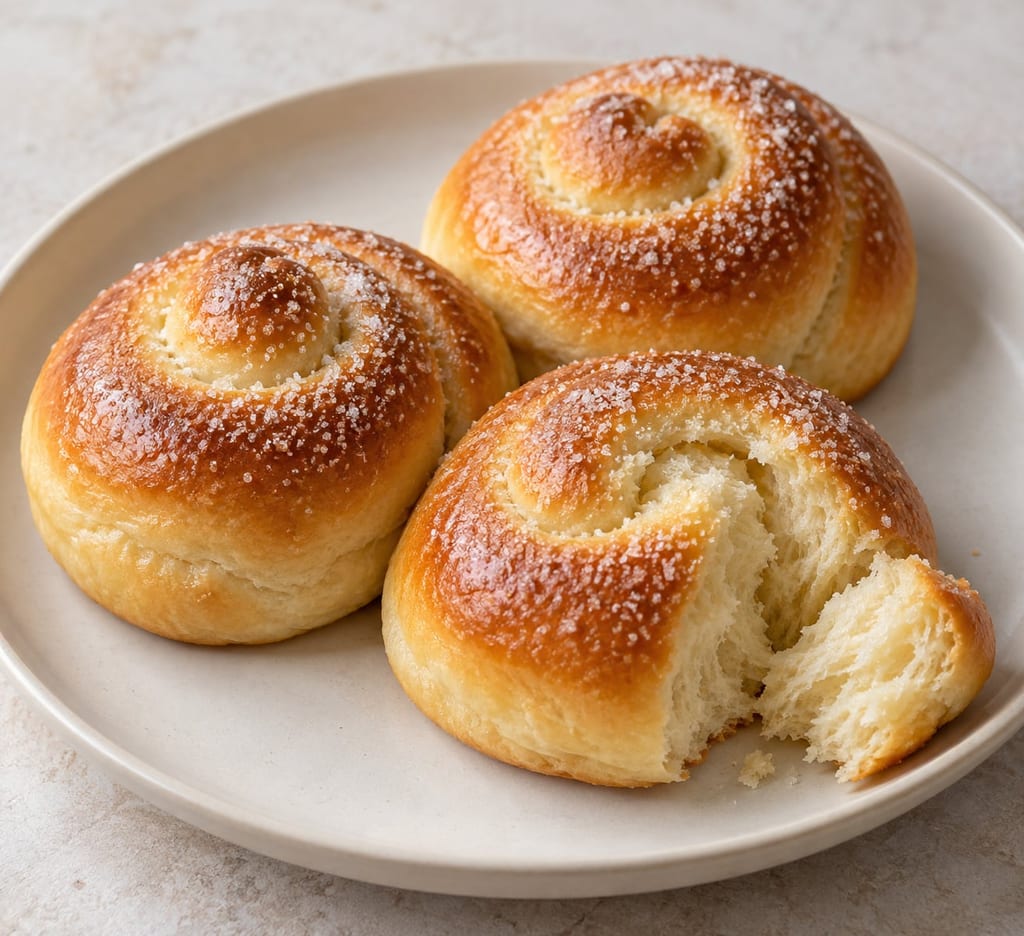
Egyptian sweet wheat rolls shaped into coils or braids, enriched with milk, egg and fat and eaten at breakfast, with tea or milk, and at family celebrations.
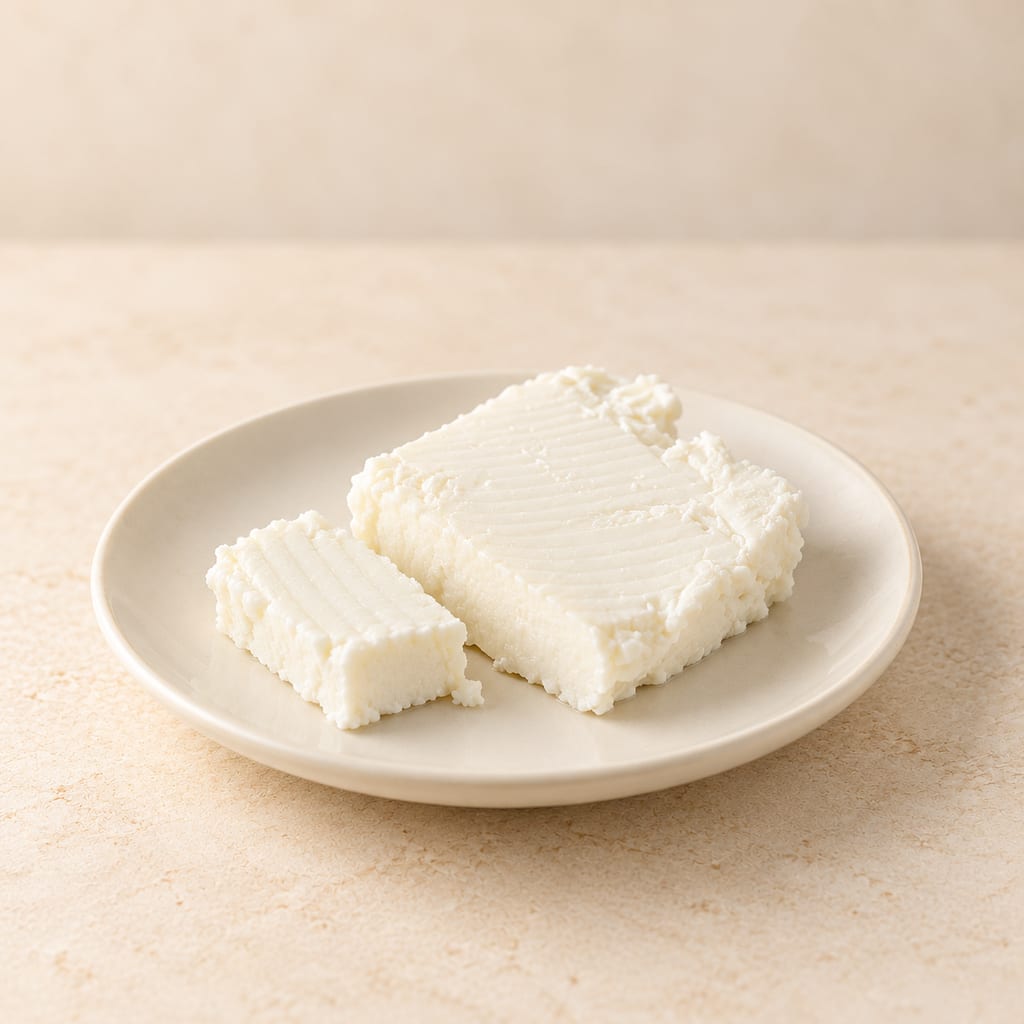
Domiati is a soft Egyptian white cheese made by salting milk before renneting. It is eaten fresh or ripened in brine, with cow and buffalo milk used in varying proportions.
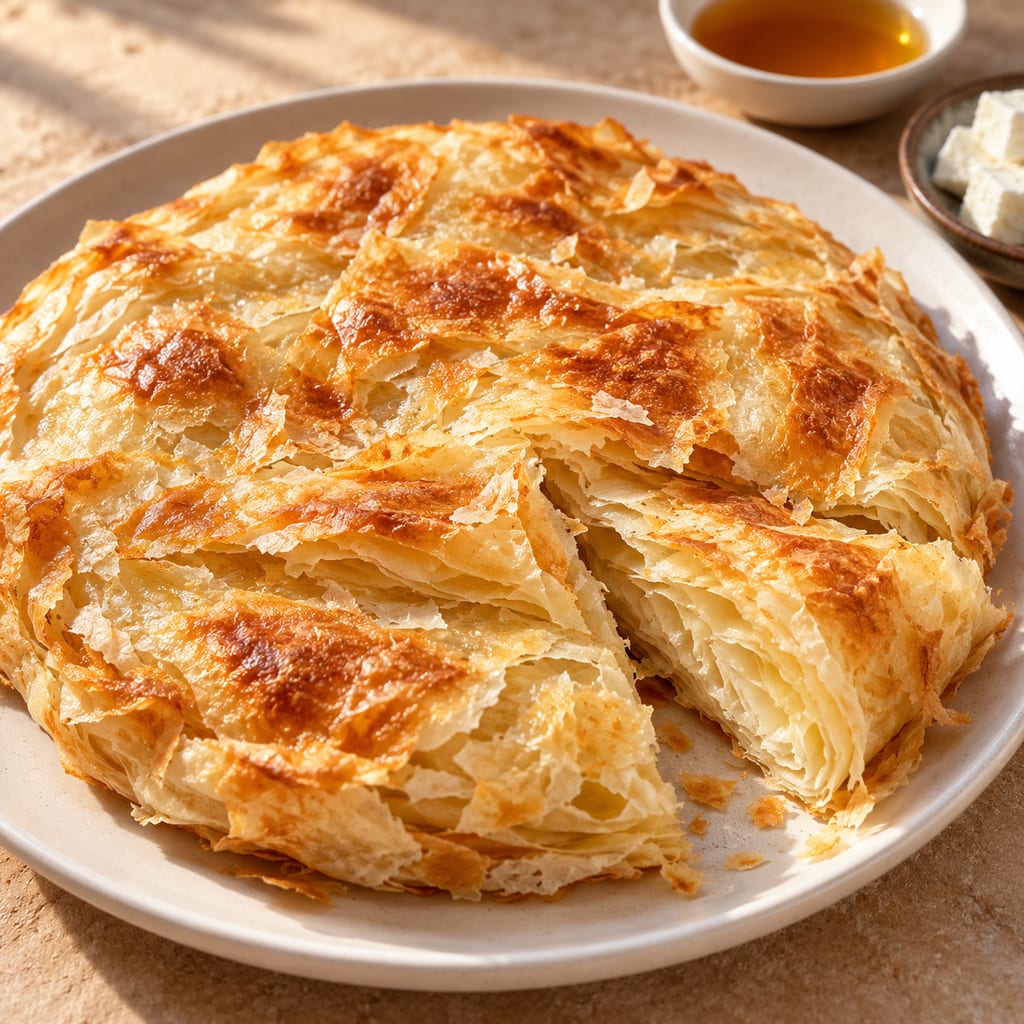
Egyptian layered pastry made from a soft wheat dough stretched thin, folded with ghee, and baked until crisp and golden. Serve plain with sweet or salty accompaniments.
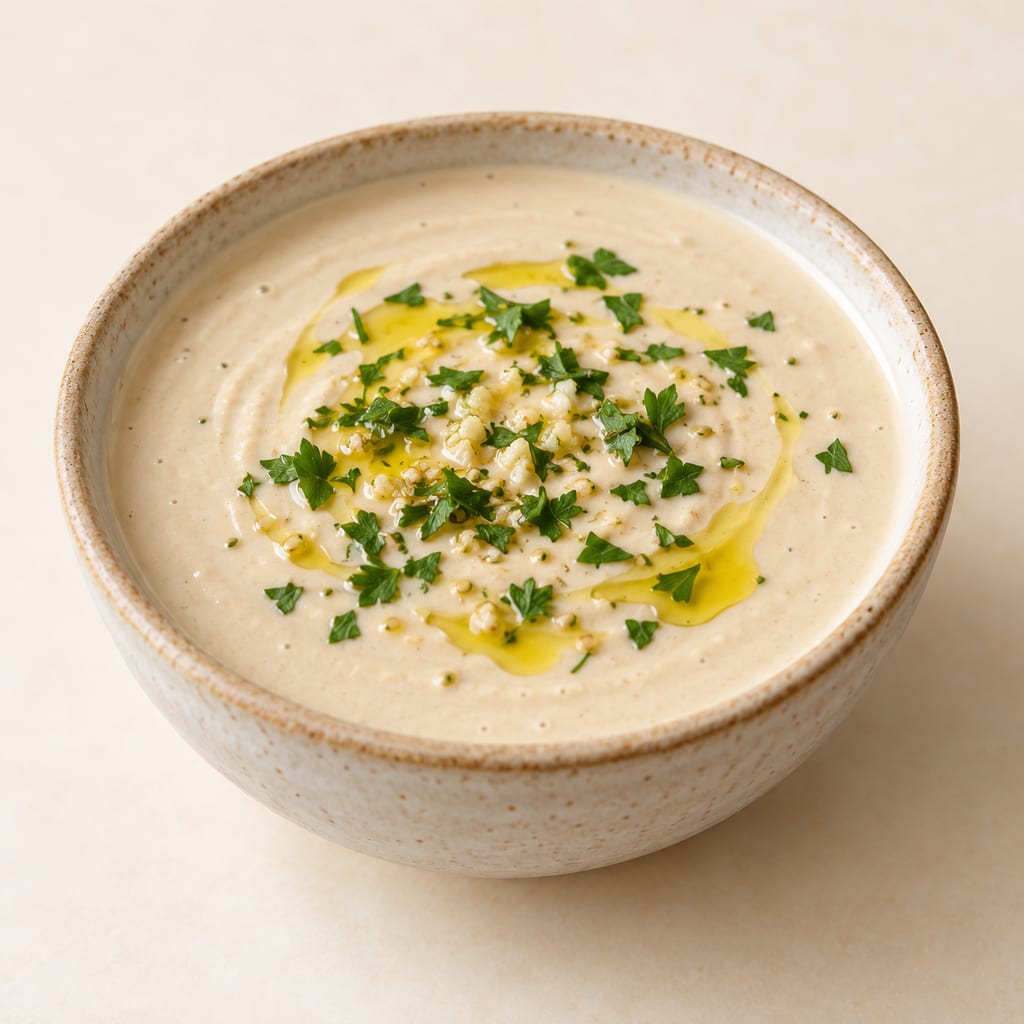
A Levantine sesame sauce of tahini thinned with water and brightened with lemon and garlic, the base of tarator served with falafel and shawarma, with Egyptian and Iraqi variants.
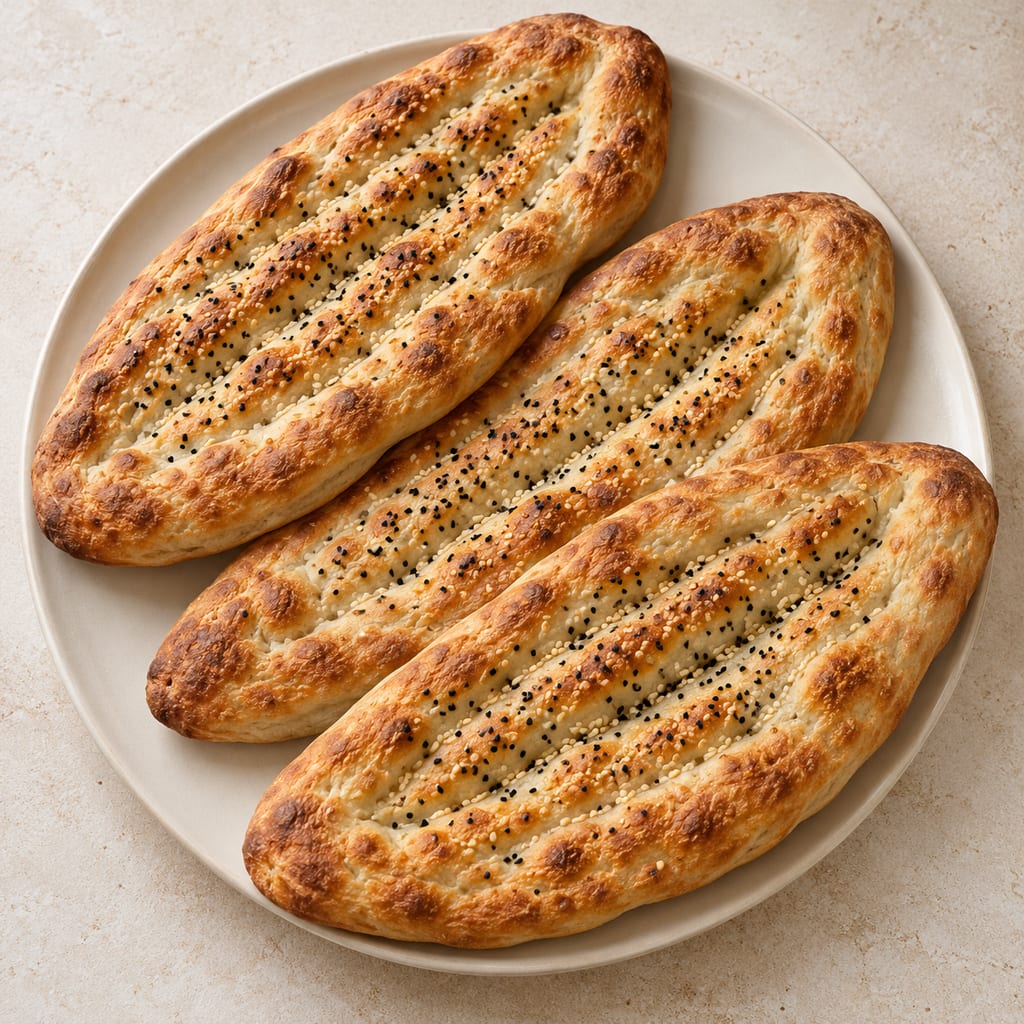
A long oval Afghan wheat bread, leavened with yeast, grooved along its length and baked until crisp outside and chewy within.
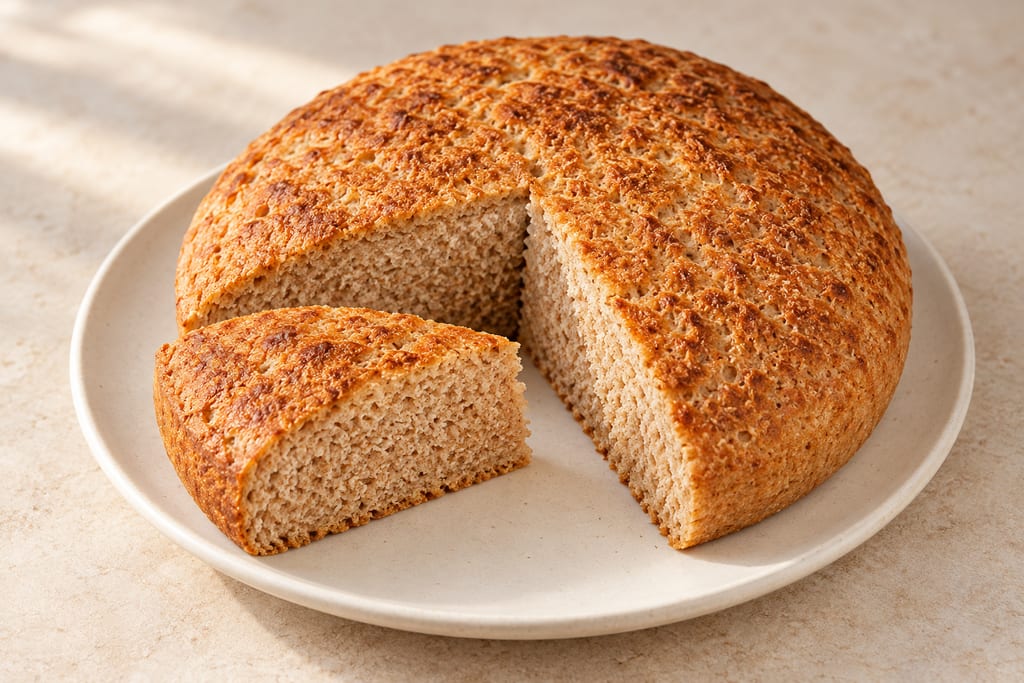
This oven-baked Amdo balep uses yeast, whole-wheat and white flour, a long covered rise and a two-sided bake in a heavy oven-safe pot.
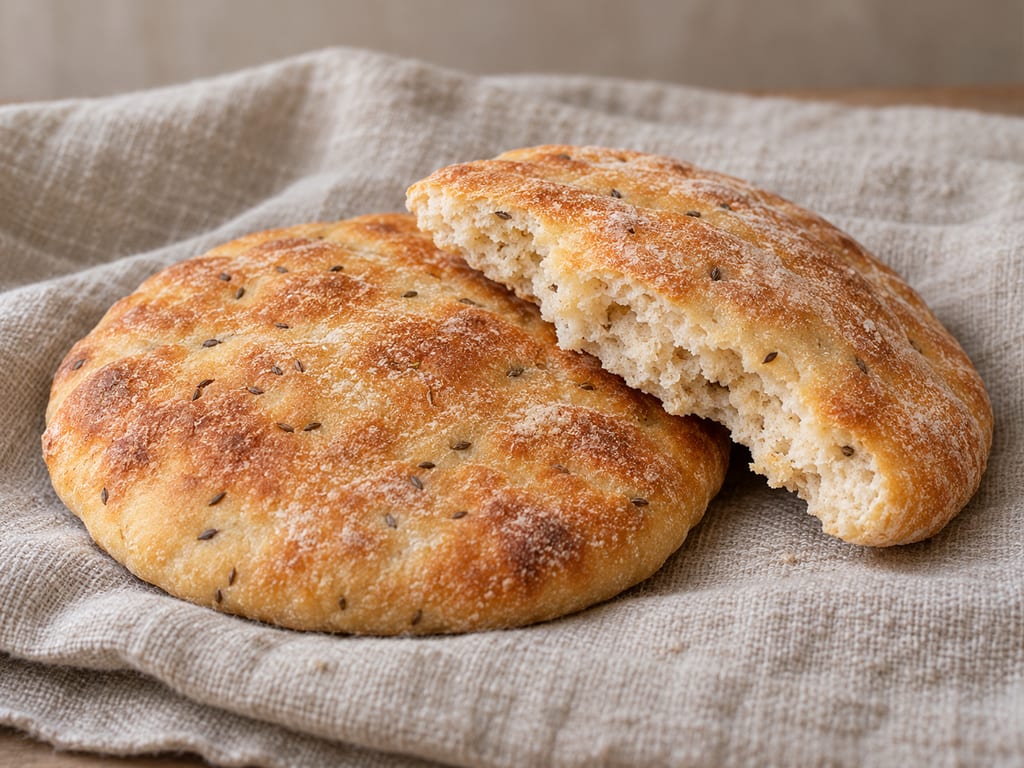
A measured, yeast-raised Ayacucho chapla home method shared by Thermomix Peru presenter Roxanna Salaverry. It makes thin, anise-scented rounds baked at 240°C; the historic qunchu-leavened form is documented separately.
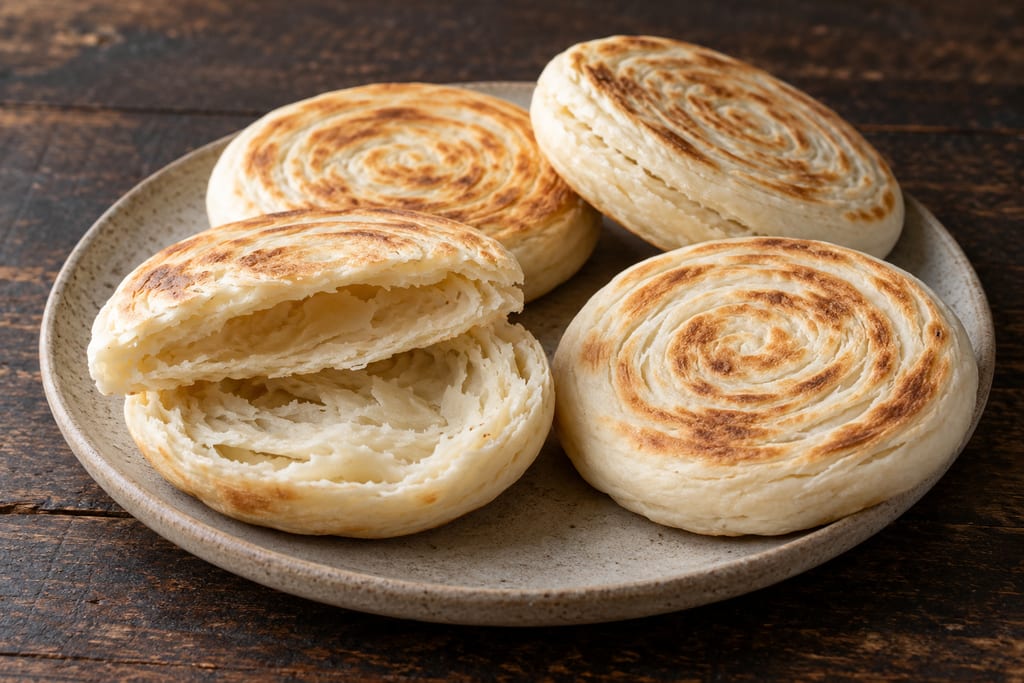
This Shaanxi-associated yeast flatbread uses a simple water dough, coiled shaping and a skillet bake. It is the bread used in roujiamo, not the filled meat dish.
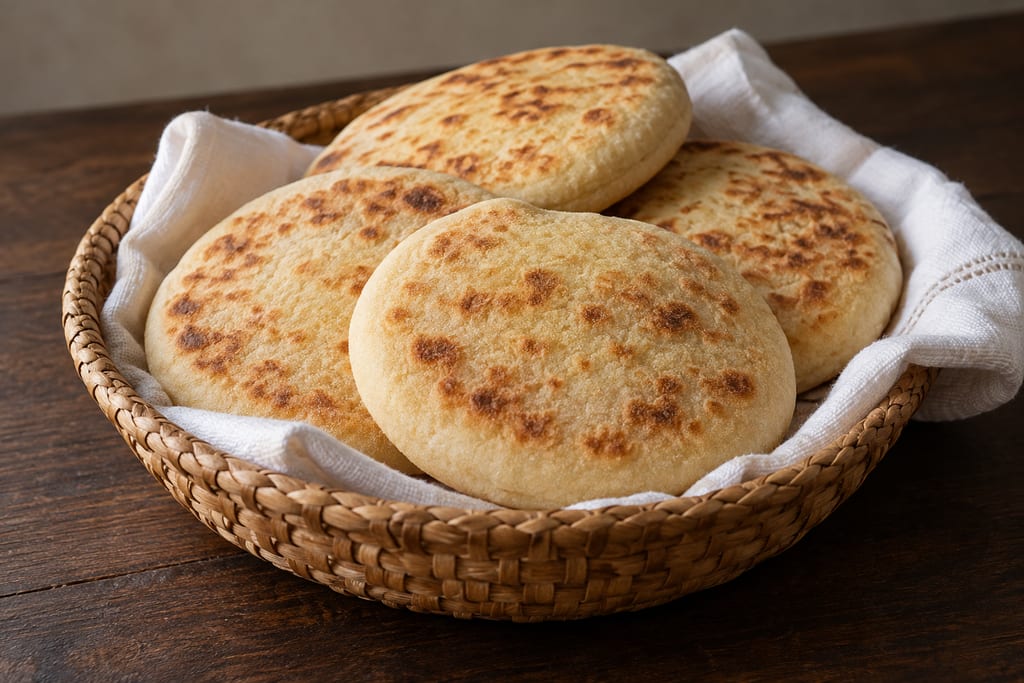
A Moroccan yeast-raised semolina pocket bread cooked on a dry pan or griddle; this measured batch makes about twenty 4-inch rounds.
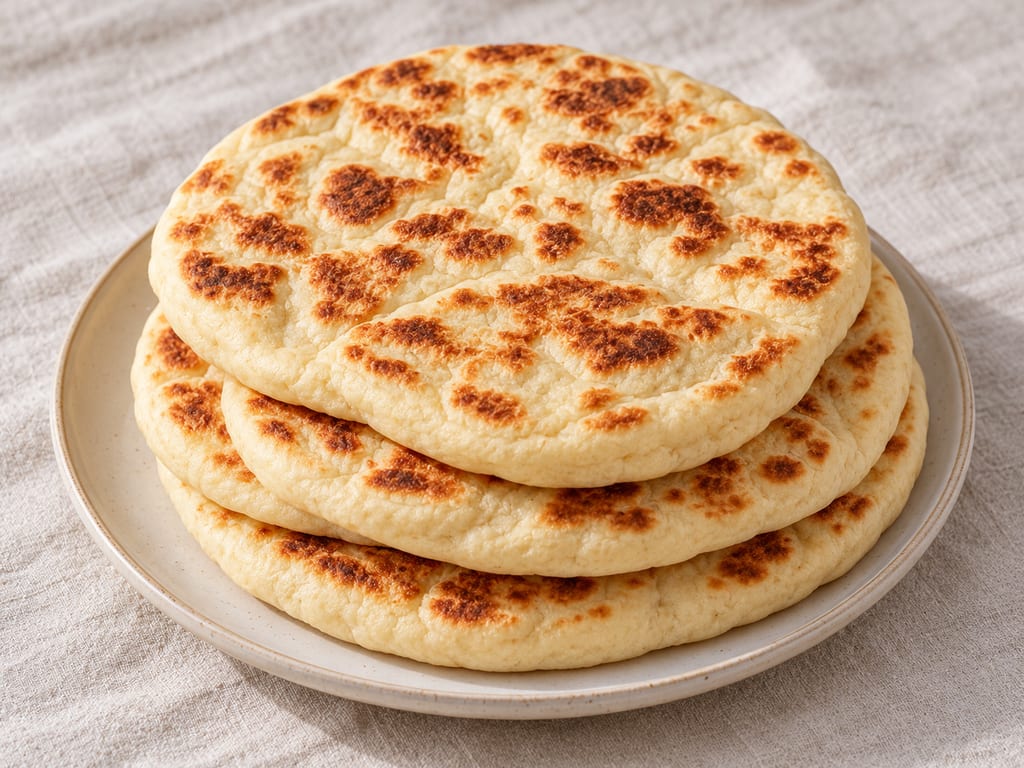
This Turkish bazlama uses yeast, plain yogurt and olive oil for a soft dough cooked in a skillet. Shape it into twelve small or six larger rounds, flip as bubbles appear, and wrap the breads to keep them soft.
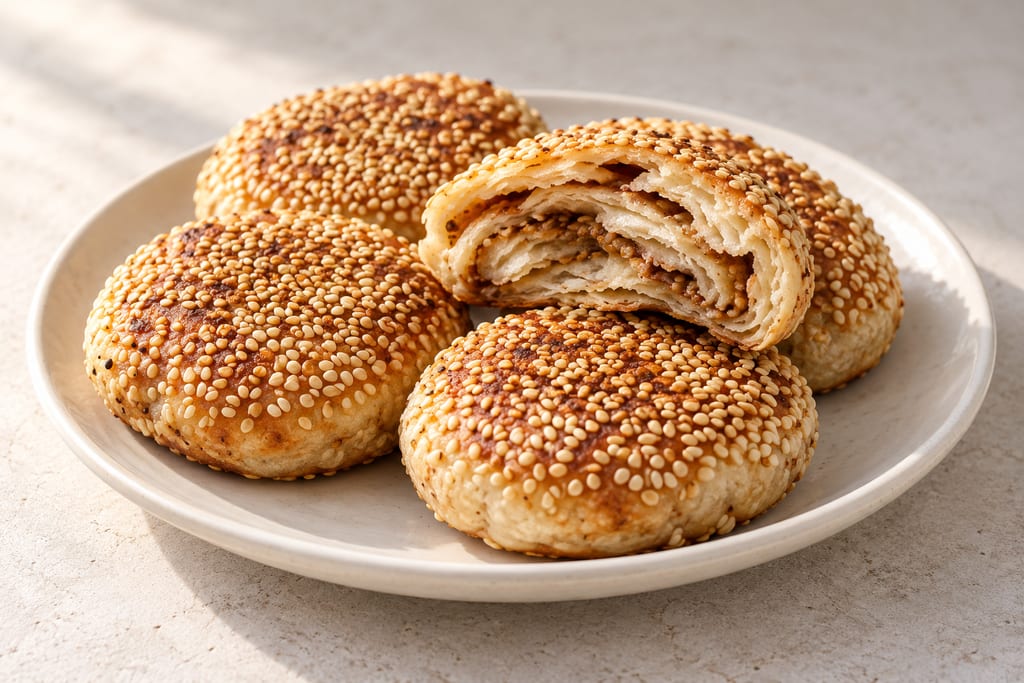
A Beijing-style yeast dough is layered with seasoned sesame paste, sealed into small buns, briefly pan-fried, seeded, and baked.
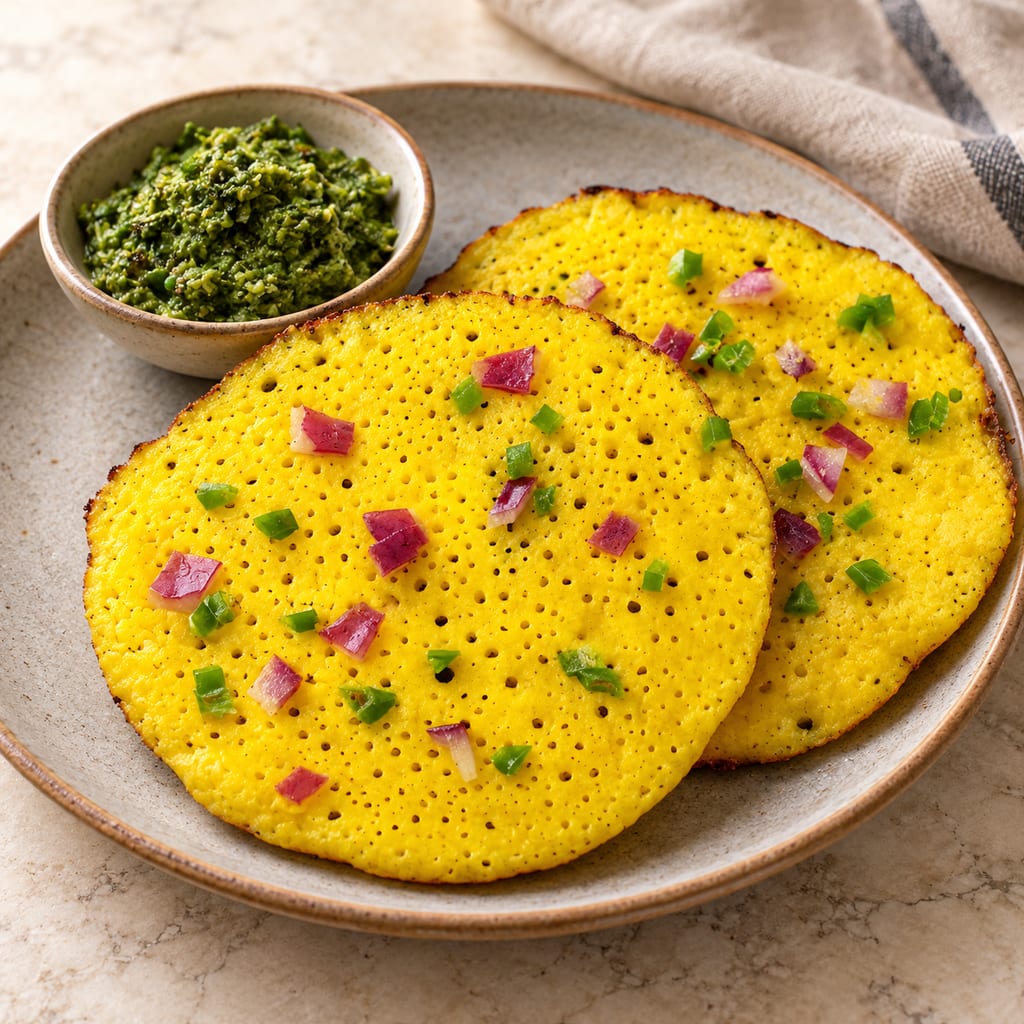
Spongy rice-and-coconut pancakes associated with Goa, cooked on one side from a batter that a multicooker's yogurt programme lets rise overnight.
No community contributions have been published for this entry yet.
Sign in to contribute. Published comments and photos are free to read.
Chez NermineInspiration · Method · History
Aish Baladi (Egyptian Whole Wheat Pita) | العيش البلديExact ingredient quantities and alternatives, 16-piece yield, cold biga and dough rests, shaping cues, oven setup and bake time.
Author identifies the home method as an adaptation using a yeast biga instead of sourdough; it is not presented as one universal formula.
The page identifies the bread as Egyptian and the author describes personal Egyptian bakery memories; it does not date an origin.
U.S. Food and Drug AdministrationSafety
Handling Flour Safely: What You Need to KnowRaw flour can contain harmful bacteria; do not eat or taste raw flour or dough; separate raw flour from ready-to-eat foods and clean hands, tools and surfaces after handling.