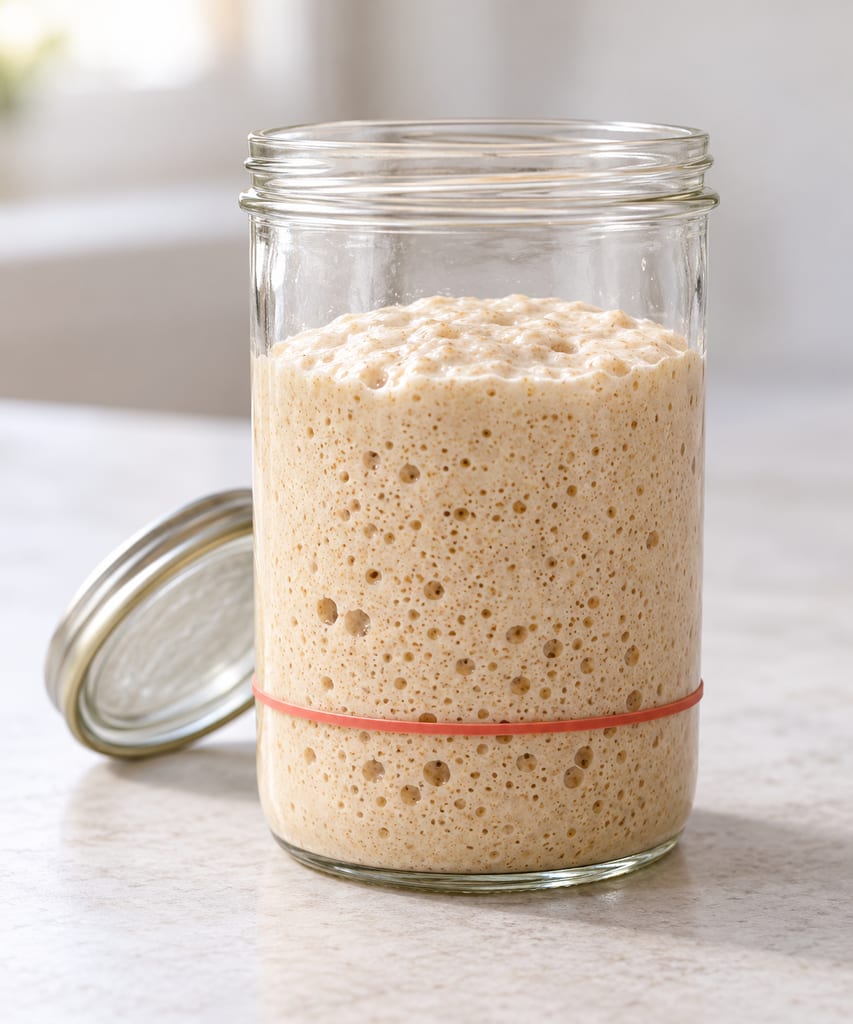
Sourdough starter with a whole-wheat first feed
A flour-and-water starter begins with whole-wheat flour, then receives regular all-purpose flour feeds. Once established, this living culture can raise bread dough.
 FermenteaWhere food goes to change
Substrates
Whole-wheat flour contains the bran, germ and endosperm of wheat in their original proportions. Its fuller grain flavour and dough behaviour depend on the wheat and milling.
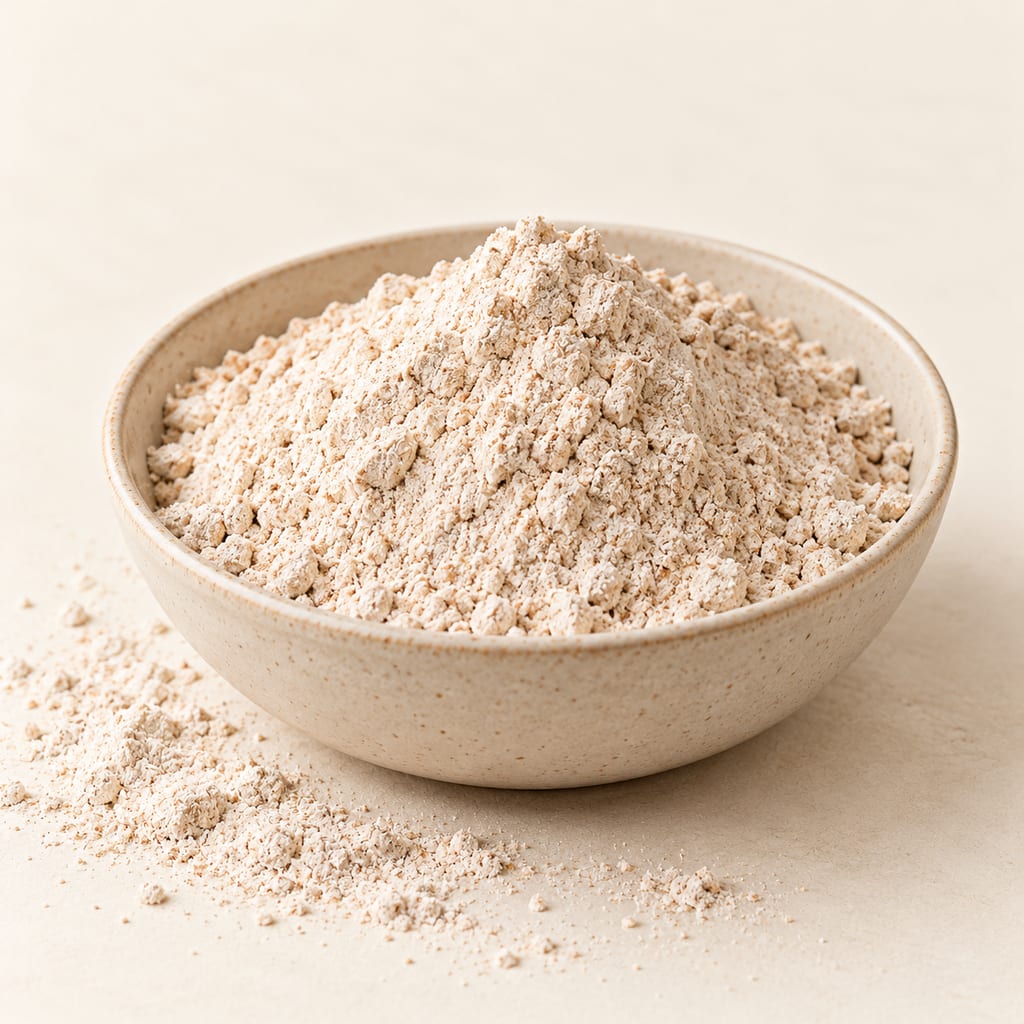
The wheat kernel is a seed built to protect and feed a young plant. Its bran is the layered outer covering; inside it, the germ is the embryo that can sprout; the large endosperm stores most of the seed’s starch and supplies proteins that form gluten in dough. Whole-wheat flour keeps these three edible parts in the grain’s original proportions. White flour is made principally from the starchy endosperm after the bran and germ have been separated. Some mills make whole-wheat flour in one stream, grinding the entire kernel; others mill the components separately and recombine them. The word “whole” therefore describes what is present, not a particular machine, texture or baking strength.
That distinction helps make sense of the many names on flour sacks. “Wholemeal” is the usual British term for whole-grain wheat flour; “whole wheat” is common in North America. In the Indian subcontinent, atta commonly means finely milled whole-wheat flour used for everyday flatbreads. A particular sack may be stone-ground or roller-milled, finely or coarsely ground, made from red or white wheat, or milled from a blend. Those are useful details, but none alone establishes whether the flour contains the kernel in full. A high-extraction flour is a different category: it contains a larger share of the wheat kernel than ordinary refined flour, often with more outer-layer material, but it need not retain every part in the original proportions. “Bread flour,” meanwhile, usually names a refined flour selected for its stronger gluten-forming performance. It is not a synonym for whole-wheat flour, though a whole-wheat flour can also be made from hard, high-protein wheat.
The flour’s colour and flavour reflect the wheat as well as the milling. Red wheat has pigmented bran and a more pronounced taste; white wheat has pale bran and is often milder. The terms “hard” and “soft” describe the grain’s kernel hardness and are associated with differences in protein and milling behaviour, not whether the grain is whole. Hard wheats are commonly chosen for doughs that need more strength, while soft wheats suit tender cakes and pastries. These are tendencies, not guarantees: wheat variety, growing conditions, blending, extraction and mill settings all affect a flour’s performance. Whole-wheat flour can smell gently sweet, grassy or nutty when fresh; age and storage can mute those notes or turn them unpleasant.
Wheat flour’s long story begins before flour as a product. Wild grasses were gathered and ground before people domesticated wheat or settled into farming. Einkorn (*Triticum monococcum*) is among the earliest domesticated wheats, associated with the beginnings of agriculture in the Fertile Crescent around 10,000 years ago. Separately, archaeological analysis of charred remains at Shubayqa 1 in present-day Jordan found bread-like foods made with wild cereals and tubers several millennia before agriculture.
Wheat is not one unchanging plant. Einkorn and emmer were among early cultivated wheats; durum wheat and modern bread wheat have their own histories and uses. Bread wheat (*Triticum aestivum*) is a hybrid with a complex ancestry, and today’s cultivars have been selected for traits useful to farmers and millers as well as bakers. The diversity of these wheats shows a long partnership between human food-making and a grain that can be harvested, stored, cracked and ground.
For most of that history, milling meant pounding or rubbing grain between stones, first with hand-powered tools and later with larger mills driven by animals, water or wind. The aim was to open the grain and make meal or flour. Modern roller milling, developed and refined during the industrial era, gradually breaks kernels between corrugated and smooth rollers, sieves the resulting fractions, and directs endosperm toward refined flour while separating bran and germ. This efficient separation made consistent white flour practical at industrial scale. Whole-wheat flour remains possible in the same system: millers can return bran and germ to the endosperm flour, ideally in their original proportions. Stone milling also can keep the kernel parts together, but “stone-ground” does not by itself guarantee a particular fineness, temperature, flavour or nutritional advantage. Mills and settings yield different results, so the two methods cannot be ranked universally for every flour or bread.
The history of whole-wheat flour is not only a story of “old” and “new.” A local stone mill may grind wheat from nearby farms as a contemporary choice; a commercial roller mill can make whole-wheat flour by recombining its streams. Both may produce flour containing the full kernel, and both can differ in texture and function. In North America, “white whole wheat” means flour made from white wheat varieties with the bran and germ retained. It is still whole-wheat flour; its paler colour and milder flavour come from the wheat type, not from removing the bran.
In roller milling, wheat is often conditioned with water before grinding. Moisture toughens bran so it breaks into larger pieces, while the endosperm becomes easier to separate and reduce into fine flour. For whole-wheat flour, the objective changes: the mill must keep the bran and germ rather than sift them away. Some mills grind all the grain in one pass; others separate fractions and recombine them. A mill can also grind bran more finely or coarsely before it returns to the flour. Stone mills grind between stones, while roller mills use a sequence of rollers and sifting. In either system, the machine, settings, grain and particle size shape the flour. “Stone-ground” and “roller-milled” are descriptions of process, not reliable short-cuts for predicting a loaf.
Particle size has practical effects. Bran absorbs water, and the flour’s outer-layer fibres, including arabinoxylans, contribute to its water-binding behaviour. A dough made with whole-wheat flour often takes up more water than one made with a refined flour, but the amount varies by flour and recipe. Coarse bran may leave a more textured, visibly speckled crumb; very fine bran has more surface area in contact with the dough. Bran can disrupt or weaken the continuous gluten network and interfere with gas retention. Bran particles and their components compete for water and interact with gluten proteins, so the dough may feel less elastic or hold less gas than an otherwise similar refined-wheat dough. These outcomes depend on particle size and formulation; bran is not simply a collection of sharp fragments that mechanically “cuts” every gluten strand.
Gluten is formed when wheat’s glutenin and gliadin proteins hydrate and interact during mixing. Glutenin contributes elasticity and strength; gliadin contributes extensibility. Together they form a viscoelastic network that stretches around carbon dioxide produced by yeast or sourdough microbes. The endosperm provides most of the gluten-forming protein, but a higher protein number on a whole-wheat flour label does not necessarily mean a stronger dough: some protein in the bran and germ does not form gluten. Flour strength is therefore not read from protein percentage alone. The bran, wheat class, extraction, grind and mixing all influence how a dough behaves and how large a loaf it can support.
When flour meets water, the grain’s enzymes become active. Amylases break some starch into smaller sugars, including maltose, which yeast and lactic-acid bacteria can use. Fermentation produces gas and flavour: yeast makes carbon dioxide and ethanol, while sourdough bacteria produce lactic acid and, depending on the organisms and conditions, acetic acid and other metabolites. The acids sharpen aroma and taste, and fermentation also changes dough components. Flour type can influence sourdough’s microbial community and the sugars, acids and amino acids that accumulate, but there is no single “whole-wheat flora.” Different flours and starter systems produce different microbial patterns; none supplies a universal list of organisms for every home culture. Flour supplies nutrients and enzymes, while a mature starter’s established community, feeding, temperature and hydration all shape fermentation.
Whole-wheat flour is often chosen for refreshing a sourdough starter because it brings bran- and germ-associated nutrients as well as endosperm starch, and bakers commonly observe a lively culture with it. That practical observation should not be mistaken for proof that flour alone inoculates a starter with its final yeasts and bacteria. The organisms in an established starter can arrive through a complex route, and sourdough-adapted organisms may be rare or undetected in flour itself. If a starter is fed whole-wheat flour, expect its colour, aroma, consistency and fermentation rate to reflect both the flour and the existing culture; a white-flour starter can also be maintained with whole wheat, but a change in feed changes the available substrate and may change the culture’s behaviour. Time and rise should be interpreted in the context of the particular starter and recipe, not assumed from the flour name.
The broadest practical distinctions are the wheat’s colour and hardness, the flour’s fineness and the way the mill handled its components. Hard red whole-wheat flour has a robust, wheat-forward flavour and is widely used in hearty yeast breads. Hard white whole-wheat flour can give a paler, gentler-tasting loaf while retaining bran and germ. Soft wheat whole-wheat flour is useful in biscuits, cookies, quick breads and other tender bakes, where a strong, chewy gluten network is not the goal. Durum wheat, known for its yellow endosperm and firm, high-protein character, is more often milled as semolina for pasta and related foods than as a generic whole-wheat bread flour. These types are not interchangeable in every recipe.
Atta is a particularly important everyday form. In much of South Asia, finely milled whole-wheat atta is mixed with water into a pliable dough, portioned, rolled into thin rounds and cooked on a hot griddle or, for some breads, finished over a flame. The flour’s fine grind and water absorption help make a dough that can be rolled thin without falling apart. Chapati and roti are familiar examples, though names and methods vary by place and household. Paratha may be layered or enriched with fat; other flatbreads use different flours or ingredients. Atta is not simply a generic whole-wheat flour renamed: its milling characteristics and the dough techniques developed around it matter to the finished bread.
Whole-wheat flour can also make pancakes, muffins, scones, crackers, pasta, dumplings and batters. In a yeasted loaf, it brings a deeper grain flavour and a darker, more substantial crumb. In a cake or cookie, bran and germ add visible flecks and a more pronounced cereal taste; a fine, soft-wheat flour may be preferable when tenderness matters. A baker may blend whole-wheat flour with refined flour to make a lighter loaf, but that produces a blend rather than an all-whole-wheat dough. A recipe designed for one flour may need a different hydration or mixing approach when another is substituted. Adding water to compensate for bran’s binding capacity is common baking practice, yet there is no fixed universal adjustment: follow a tested formula and judge its dough rather than applying an unsupported ratio.
Whole-wheat flour is an ingredient in fermentation as well as baking. It can feed a sourdough starter, form the bulk of a sourdough loaf, or provide a portion of the grain in a mixed-flour dough. Fermentation is not a safety guarantee, nor does a sour aroma establish that a flour or dough is sound. A starter’s acidity, gas and flavour develop through the living community; mixing and kneading are physical steps that distribute water and develop dough structure. During baking, heat expands gases, sets the starch and proteins, and turns the dough into a crumb and crust. Keeping those mechanisms distinct helps explain why a dough can ferment vigorously yet bake into a dense loaf if its structure has not held the gas.
Look for a flour that smells clean and pleasantly grain-like, and check the package for a milling date or best-before date where available. The label can identify whole wheat, wholemeal or whole-grain flour; it may also name the wheat type, colour, mill or grind. “High protein” refers to a composition measure, not a promise of strong gluten in every formulation. “Stone-ground” describes a milling method, not a guarantee of freshness or superior bread. If you need a mild flavour, white whole-wheat flour is a documented option; if you need a tender pastry, a soft-wheat flour is often a better starting point than hard bread wheat.
Whole-wheat flour keeps less predictably than refined flour because it retains the germ and bran, where more of the kernel’s lipids and active enzymes remain. Once the grain is milled, lipases can split fats into free fatty acids; oxidation can then create stale or rancid flavours. Warmth and time speed quality loss. A single reliable shelf life cannot be assigned to every bag: storage temperature, humidity, packaging and the point at which quality becomes unacceptable all matter. Store flour airtight, cool and dry, away from strong odours; refrigeration or freezing can slow quality deterioration, though the flour should be protected from moisture and allowed to return to room temperature before use. Buy a quantity you can use while it remains fresh, or mill whole wheat berries as needed. If the flour smells paint-like, bitter, musty or rancid, do not try to mask the defect in a recipe.
Whole-wheat flour remains wheat and contains gluten. It is not a gluten-free substitute, and whole-grain status alone does not make a food appropriate for every diet. Retaining bran and germ means the flour contains more of the kernel’s naturally occurring fibre, oils, minerals and other compounds than refined flour, but the overall nutrition of a food also depends on its recipe, serving and the rest of the diet.
Like refined wheat flour, whole-wheat flour is a raw agricultural ingredient, not ready-to-eat food. Harmful bacteria can be present even when the flour looks and smells normal. Do not taste raw dough or batter made with it; cooking or baking the flour-containing food is the control. A sourdough's sour aroma or visible activity is no substitute for that cooking step.
wheat
Whole-wheat flour describes kernel composition, not a single growing or milling location; the cited draft guidance does not assign an origin.
A flour-and-water starter begins with whole-wheat flour, then receives regular all-purpose flour feeds. Once established, this living culture can raise bread dough.
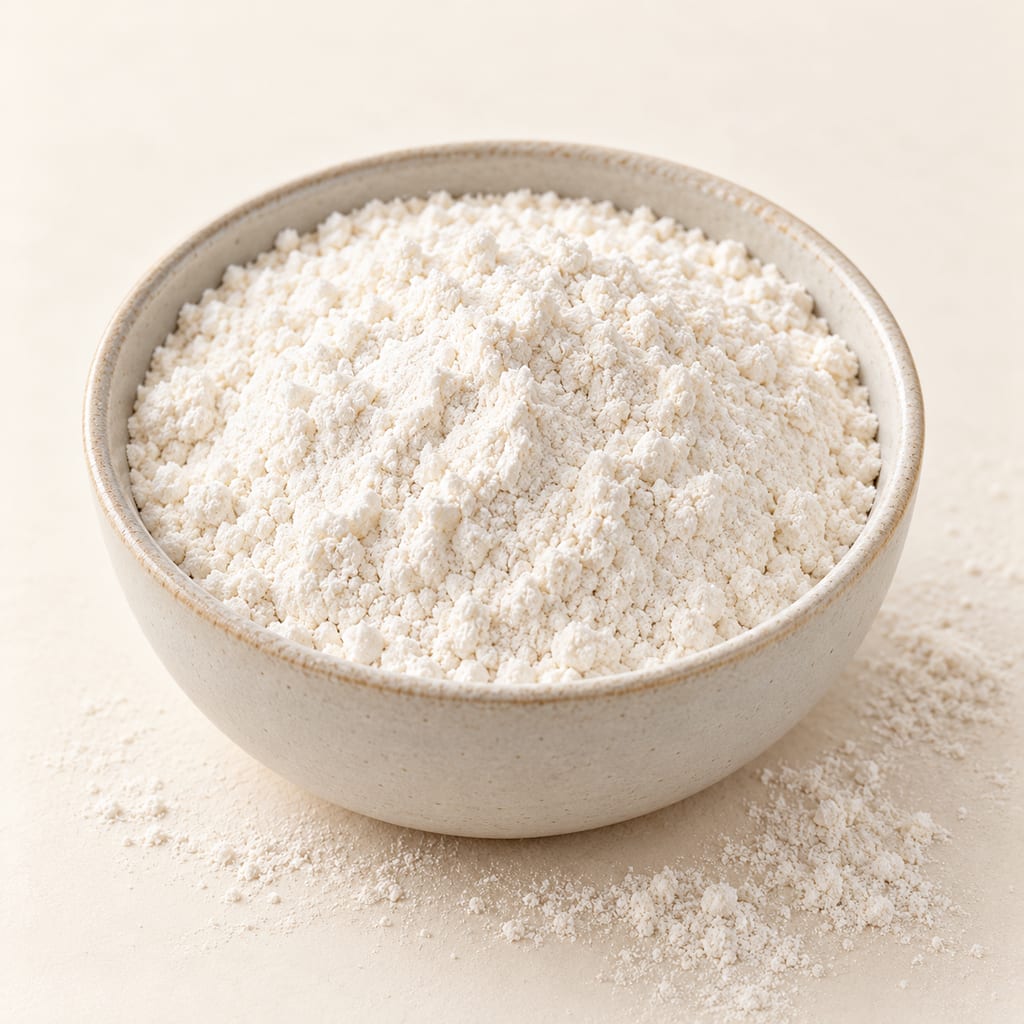
Bread flour is wheat flour chosen for dough strength and gas retention. Its protein level and baking performance vary by wheat, mill and product.
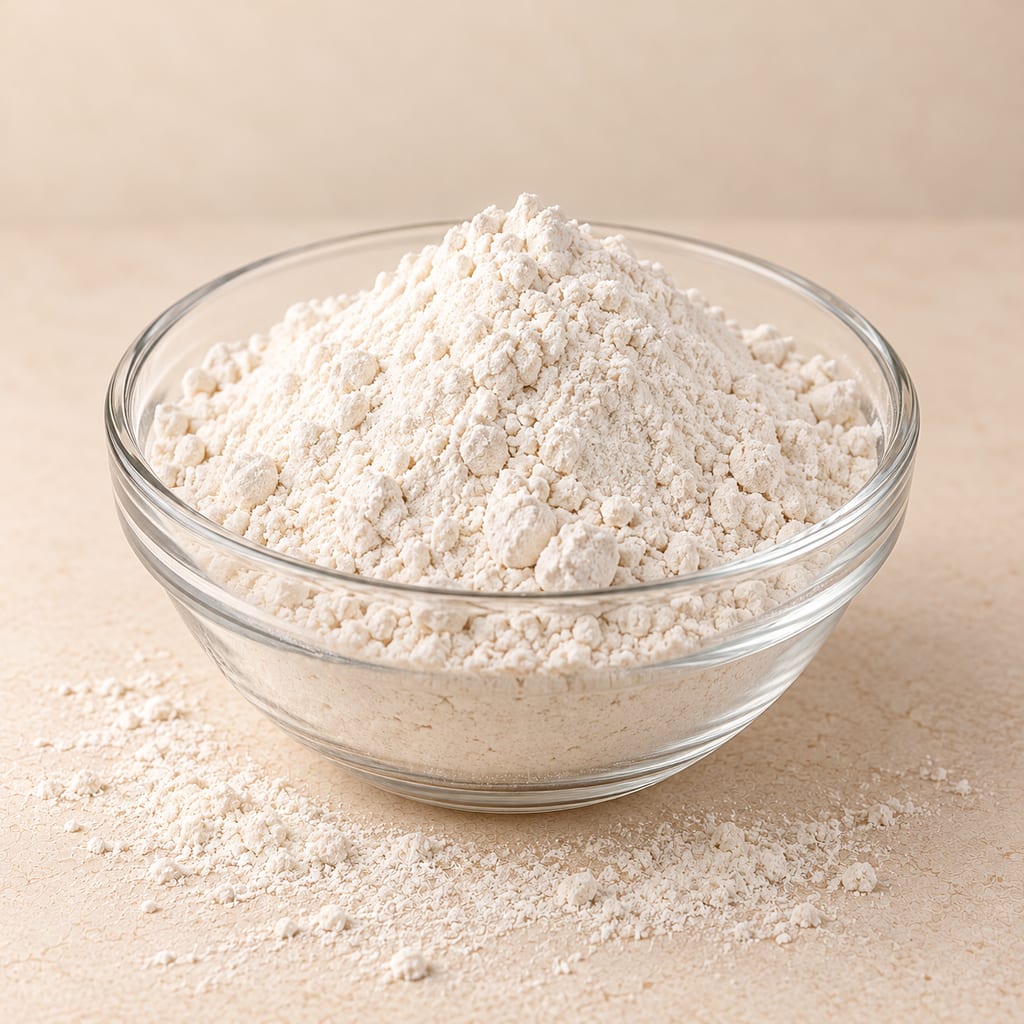
Wheat flour is milled wheat grain, from whole meal to fine white flour, used to make bread, thicken liquids and appear as an optional ingredient in fruit pastes such as Georgian mulberry tklapi.

A refined common-wheat flour blended for a broad range of baking; its protein and behavior vary with wheat, milling and market.
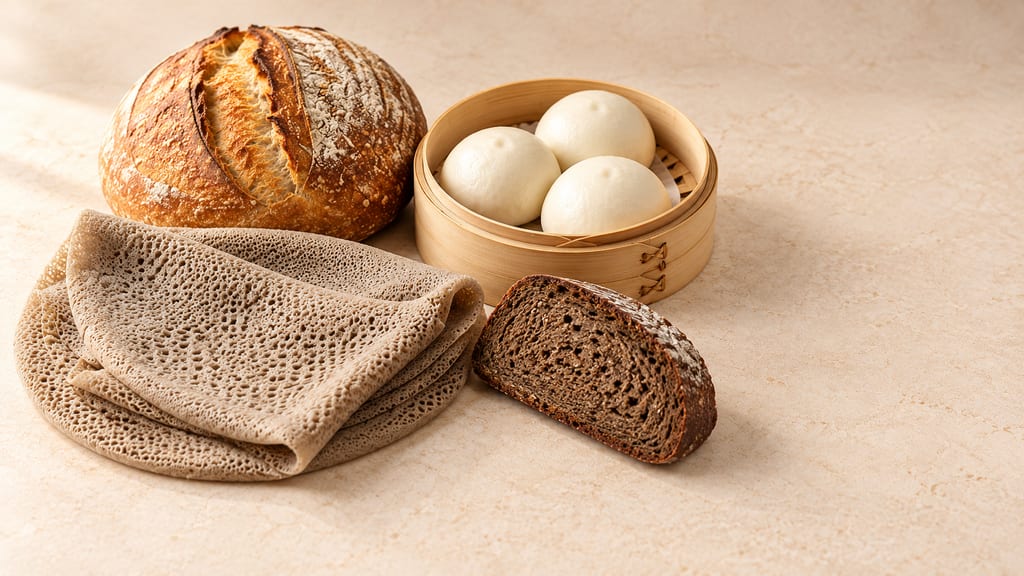
From the baguette and the steamed bun to injera, titiyas, Finnish rye and cassava bread: how grain, microbes and heat answer the question of what bread is for.
No community contributions have been published for this entry yet.
Sign in to contribute. Published comments and photos are free to read.
Oldways Whole Grains CouncilIngredient · Editorial
What Is a Whole Grain?Definitions and functions of bran, germ and endosperm.
Cited in: A grain made into flour; Buying, storing and using it well
U.S. Food and Drug AdministrationIngredient · Editorial
Draft Guidance for Industry and FDA Staff: Whole Grain Label Statementsthe whole-grain concept that the bran, germ and endosperm remain in original relative proportions. This is draft guidance, not a final binding labeling rule.
Cited in: A grain made into flour
Iowa State University Extension and OutreachIngredient · Editorial
Meet the Flours – Wheat FloursU.S. wheat classes, hard/soft and red/white distinctions, white whole wheat, and cooking applications.
Cited in: A grain made into flour; Forms, types and the foods they suit
American Society of BakingIngredient · Editorial
Extraction Rateextraction-rate terminology and technical contrasts among refined, high-extraction and whole-wheat flour; a professional baking reference.
Cited in: A grain made into flour; What the mill changes
NatureIngredient · Editorial
Einkorn genomics sheds light on history of the oldest domesticated wheateinkorn’s domestication and the Fertile Crescent context.
Cited in: From early wheat to modern flour
Proceedings of the National Academy of SciencesIngredient · Editorial
Archaeobotanical evidence reveals the origins of bread 14,400 years ago in northeastern Jordanthe Shubayqa 1 bread-like remains from wild cereals and tubers before farming; it does not establish what flour modern bakers call whole wheat.
Cited in: From early wheat to modern flour
Cereals & Grains AssociationIngredient · Editorial
Chapter 2: MillingThe broad historical progression from hand stones and querns to water and wind mills and gradual reduction milling in nineteenth-century Hungary.
Cited in: From early wheat to modern flour
Indiana UniversityIngredient · Editorial
The Flour-Milling Revolution in America, 1820–1920: The Indiana Experiencethe historically specific account of industrial-era milling and the regional variation that persisted.
Cited in: From early wheat to modern flour
FoodsIngredient · Editorial
Stone Milling versus Roller Milling in Soft Wheat (Part 2): Influence on Nutritional and Technological Quality of Productswholemeal production via both milling methods; comparative phytic acid and starch-damage results under specified study conditions; cautions about broad assumptions from milling labels.
Cited in: From early wheat to modern flour; What the mill changes
WileyIngredient · Editorial
Characterizing whole-wheat flours produced using a commercial stone mill, laboratory mills, and household single-stream flour millsdefinition of single-stream whole-wheat milling and effects of mill settings and particle size.
Cited in: From early wheat to modern flour
Journal of Cereal Science (hosted copy)Ingredient · Editorial
Key issues and challenges in whole wheat flour milling and storageroller and stone milling descriptions; particle-size, bran, dough and storage discussion; explicitly notes uncertainty over a definitive shelf life.
Cited in: What the mill changes; Forms, types and the foods they suit; Buying, storing and using it well
Trends in Food Science & TechnologyIngredient · Editorial
Stone milling versus roller milling: A systematic review of the effects on wheat flour quality, dough rheology, and bread characteristicsthe qualification that milling systems vary in their outcomes and that neither method is a universal proxy for flour quality.
Cited in: What the mill changes
Food ChemistryIngredient · Editorial
Sourdough improves the quality of whole-wheat flour products: Mechanisms and challenges—A reviewSourdough research on whole-wheat flour covers bran, starch, gluten, dough rheology, antinutritional factors and flavour.
Cited in: What the mill changes
International Journal of Food MicrobiologyIngredient · Editorial
Wholemeal wheat flours drive the microbiome and functional features of wheat sourdoughsflour-type effects in the studied type I sourdoughs, including measured microbial and metabolite differences; does not establish a universal starter community.
Cited in: What the mill changes
Food MicrobiologyIngredient · Editorial
Enzymatic and bacterial conversions during sourdough fermentationinterplay between cereal enzymes and sourdough microbial metabolism; maltose, acids, peptides and aroma-related conversions.
Cited in: What the mill changes; Forms, types and the foods they suit
Microbiology SpectrumIngredient · Editorial
The role of flour type and feeding schedule on the sourdough microbiomethe bounded finding that flour type influenced bacterial community composition in this lab study, while fungal community composition was little affected; it does not establish a universal starter community.
Cited in: What the mill changes
Molecular EcologyIngredient · Editorial
Microbial community dispersal from wheat grains to sourdoughs: A contribution of participatory researchcaution against claiming that wheat flour alone supplies the sourdough’s established yeasts and lactic-acid bacteria; authors note a sequencing-depth limitation for flour bacteria.
Cited in: What the mill changes
Clemson Cooperative ExtensionIngredient · Editorial
Selecting & Storing Cereals & Grainsflour type and practical storage guidance; storage figures are source-specific and are not presented here as a guaranteed shelf life.
Cited in: Forms, types and the foods they suit; Buying, storing and using it well
CSIR-CFTRIIngredient · Editorial
Studies on the functional characteristics of differently milled whole wheat flour (atta)researched differences among stone, disc/chakki, hammer, pin and roller milled atta in dough and chapatti quality.
Cited in: Forms, types and the foods they suit
U.S. Food and Drug AdministrationIngredient · Editorial
Flour Is a Raw Food and Other Safety Factsthe raw-flour bacterial hazard, advice not to taste uncooked flour/dough/batter, and cooking or baking as the control.
Cited in: Buying, storing and using it well