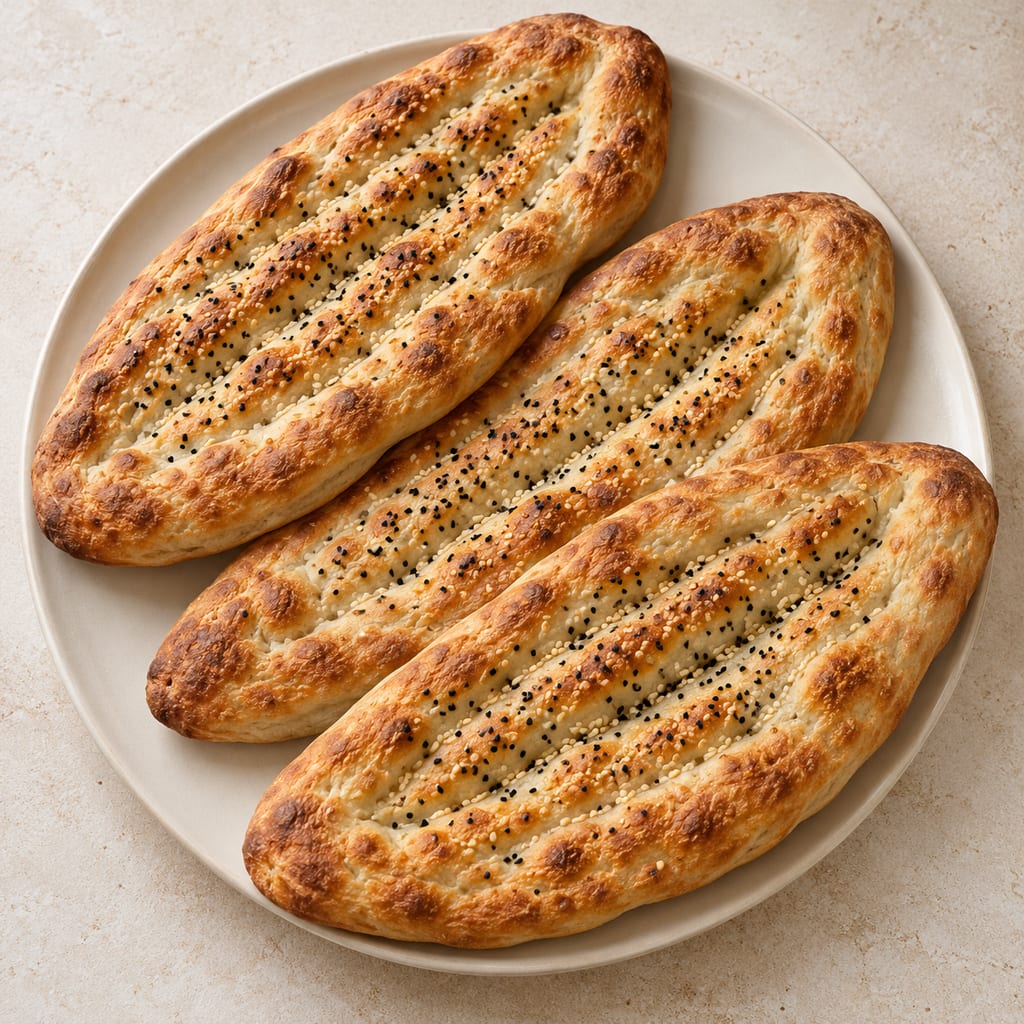
Afghan naan
A long oval Afghan wheat bread, leavened with yeast, grooved along its length and baked until crisp outside and chewy within.
 FermenteaWhere food goes to change
Modern adaptation
Amdo balep · Amdo bread
This oven-baked Amdo balep uses yeast, whole-wheat and white flour, a long covered rise and a two-sided bake in a heavy oven-safe pot.
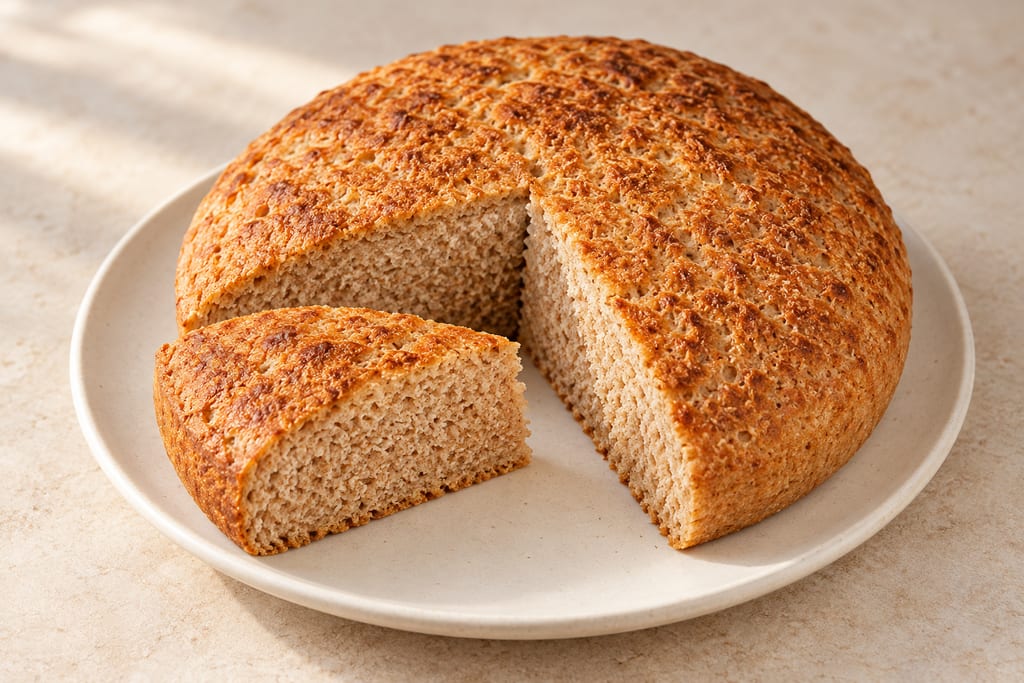
Amdo balep takes its name from the Amdo region in northeastern Tibet and is also popular in central Tibet. Variants use yeast, baking powder or starter. This entry follows a specific yeast-leavened oven method and does not treat those variants as one interchangeable recipe.
The recipe uses a heavy covered pot that is safe for the oven and warns that steel may stick. Load the risen dough into a cold oven, then set it to 425°F (218°C). Bake the loaf for 25 minutes on one side, turn it, and bake for 20 minutes more. Ovens vary, so watch for burning.
Turning the loaf is the most demanding step: the heavy pot becomes extremely hot and awkward to handle. Prepare a heat-resistant surface before lifting it. Use heat-resistant oven mitts rather than potholders for a better grip and protection from splatters and steam; keep hands clear while opening and turning the pot.
Turning the loaf is the most demanding step: the heavy pot becomes extremely hot and is awkward to handle. Prepare a stable heat-safe surface and use dry oven mitts before removing it.
Do not taste raw flour or dough. Keep it away from ready-to-eat foods and clean hands, utensils and surfaces after handling. The FDA's flour guidance supports these precautions; it does not validate the loaf's rise time or bake. The source also mentions optional yoghurt, but this entry leaves it out because no separate proofing schedule is supplied for that version.
The Tibetan Nuns Project describes Amdo balep as daily breakfast bread at Dolma Ling Nunnery and Institute. In its kitchen account, nuns prepare dough the previous evening, then cook 350 six-inch flatbreads on a large gas griddle. Breakfast follows morning prayers at seven o'clock.
This gives the bread a documented role in a community's working day, alongside the labour of mixing and cooking for hundreds of people. It also shows why the name should not imply one fixed size or heat source. The nunnery's griddle breads are a separate preparation from this single oven-baked loaf; the report supplies neither a matching ingredient formula nor a basis for scaling the home batch.
YoWangdu describes Amdo balep as named for Amdo in northeastern Tibet and popular also in central Tibet. The author distinguishes this oven-baked home recipe from a more traditional stove-top version and notes that yeast, baking powder and starter variants exist. The source does not date the bread's first attestation.
Yield 1 round loaf for 4–6 people · Scaling: source batch only
Raw flour may carry harmful bacteria; the dough must not be tasted before baking.
Hazard sourceThe method requires turning a loaf while its oven-safe pot is extremely hot.
Hazard sourceDo not taste raw flour or dough; keep it separate from ready-to-eat foods and clean hands, utensils and work surfaces after handling.
Control sourceUse heat-resistant oven mitts rather than potholders when lifting and turning the hot pot; this gives a better grip and protection from splatters and steam.
Control sourceSet the hot pot on a heat-resistant surface while turning the loaf.
Control sourceThe optional yoghurt variation shown by the source is not included here; its long warm rise does not have a separate safety schedule in the source.
The author says the pot is extremely hot and awkward to handle. Use secure heat protection when turning the loaf.
The source says the loaf takes its name from Amdo and describes preparation there; it does not specify a more precise locality.
The source reports the bread is also popular in central Tibet.
A long oval Afghan wheat bread, leavened with yeast, grooved along its length and baked until crisp outside and chewy within.
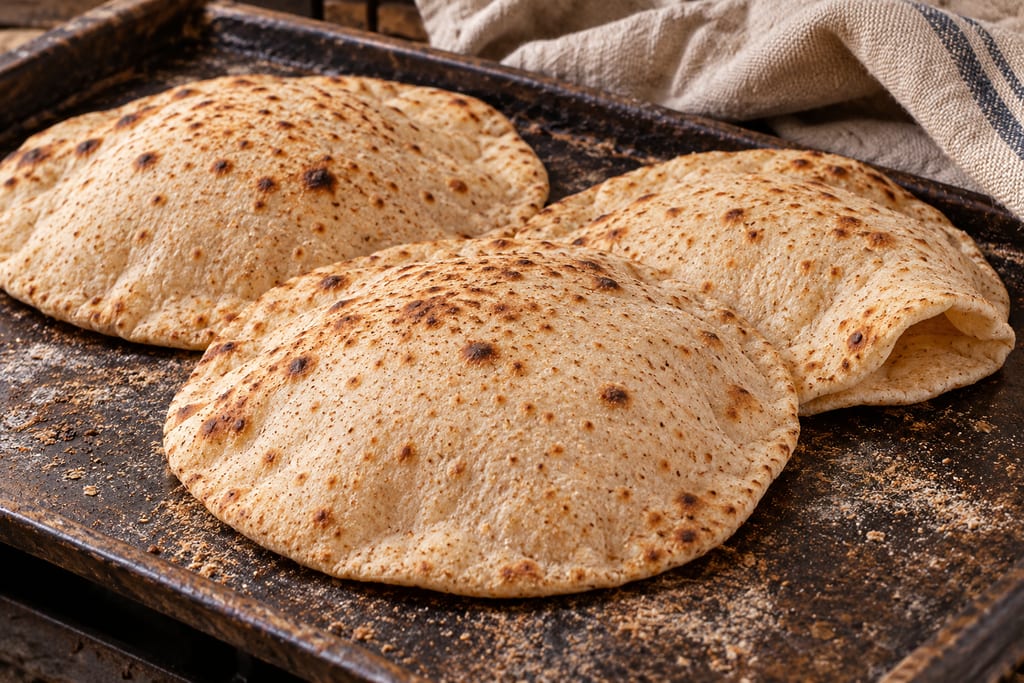
This home adaptation of Egyptian aish baladi uses a refrigerated yeast biga, whole-wheat dough, bran dusting and a very hot baking surface to make 16 pocketed rounds.
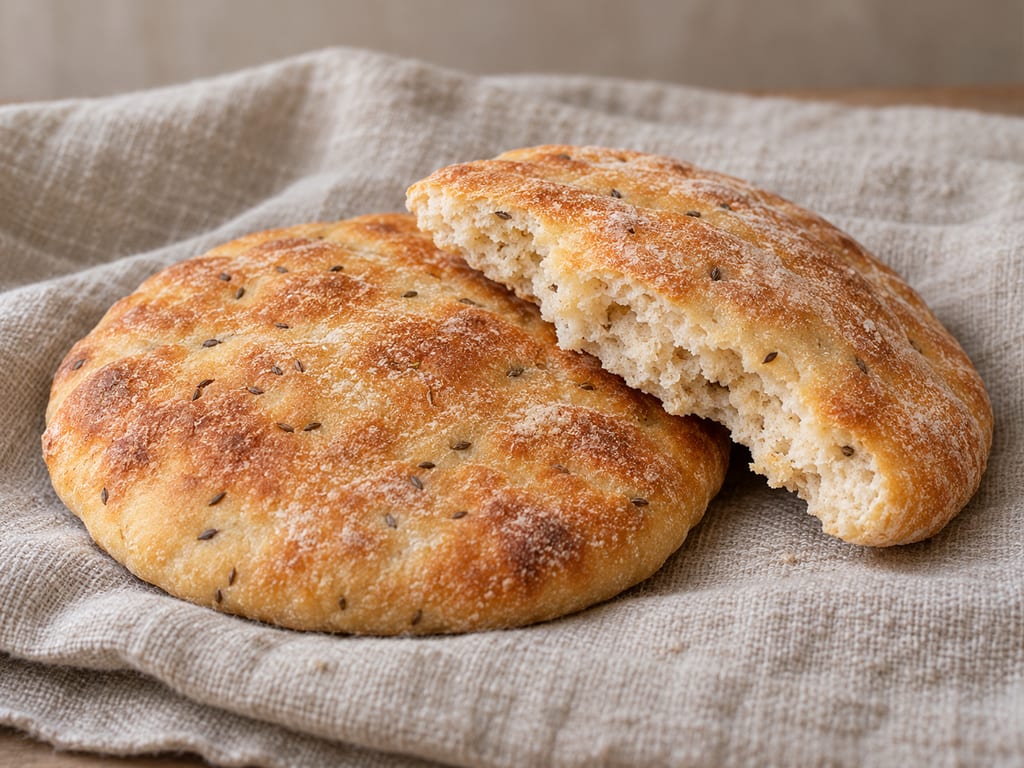
A measured, yeast-raised Ayacucho chapla home method shared by Thermomix Peru presenter Roxanna Salaverry. It makes thin, anise-scented rounds baked at 240°C; the historic qunchu-leavened form is documented separately.
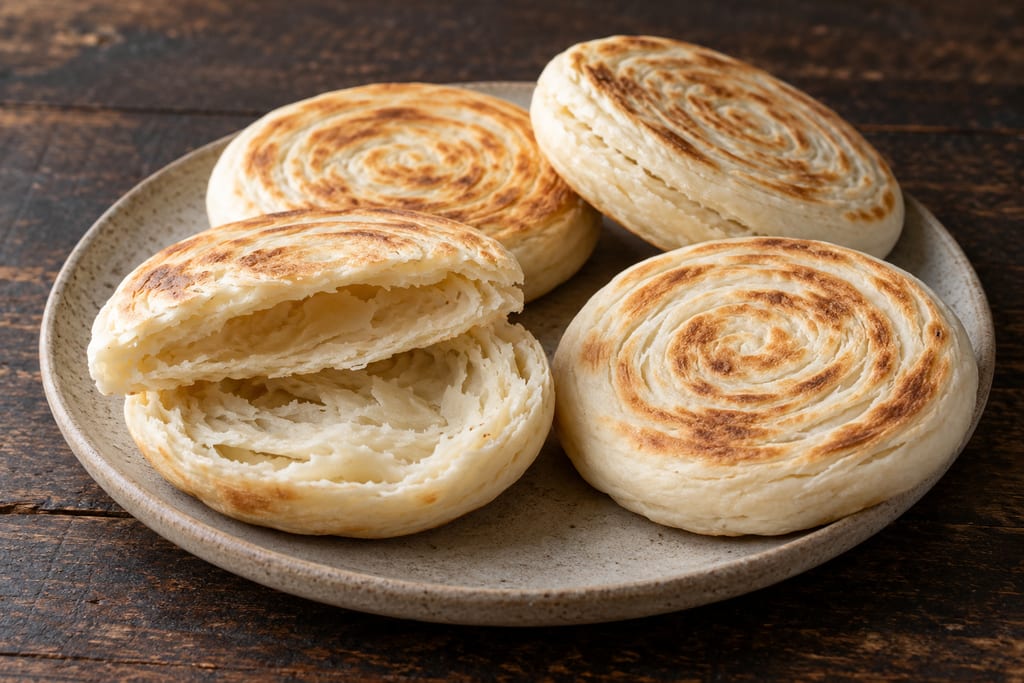
This Shaanxi-associated yeast flatbread uses a simple water dough, coiled shaping and a skillet bake. It is the bread used in roujiamo, not the filled meat dish.
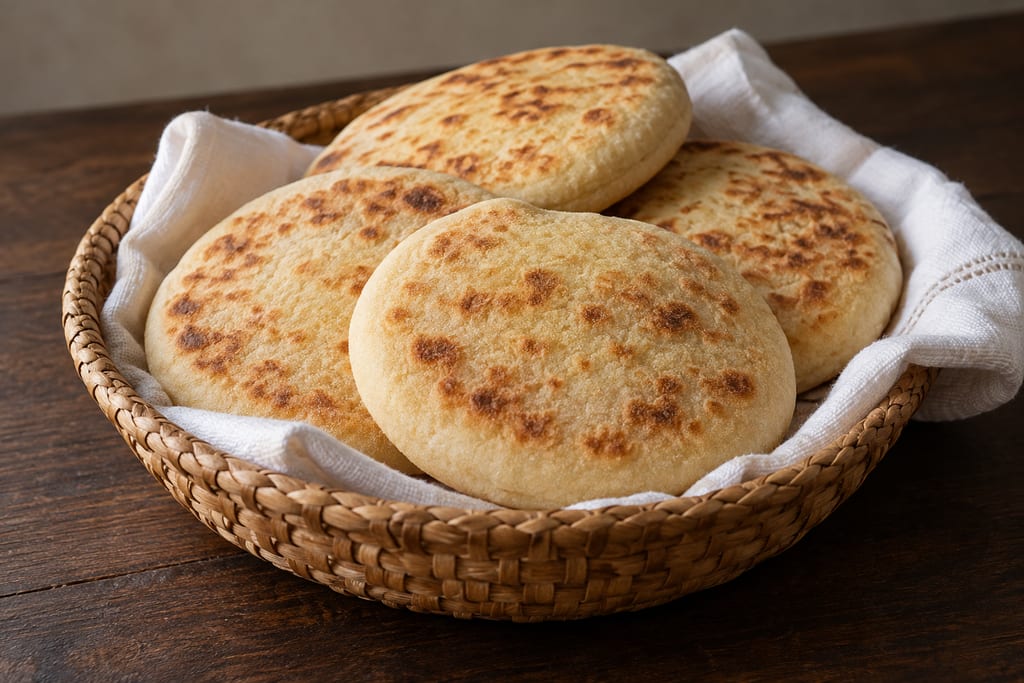
A Moroccan yeast-raised semolina pocket bread cooked on a dry pan or griddle; this measured batch makes about twenty 4-inch rounds.
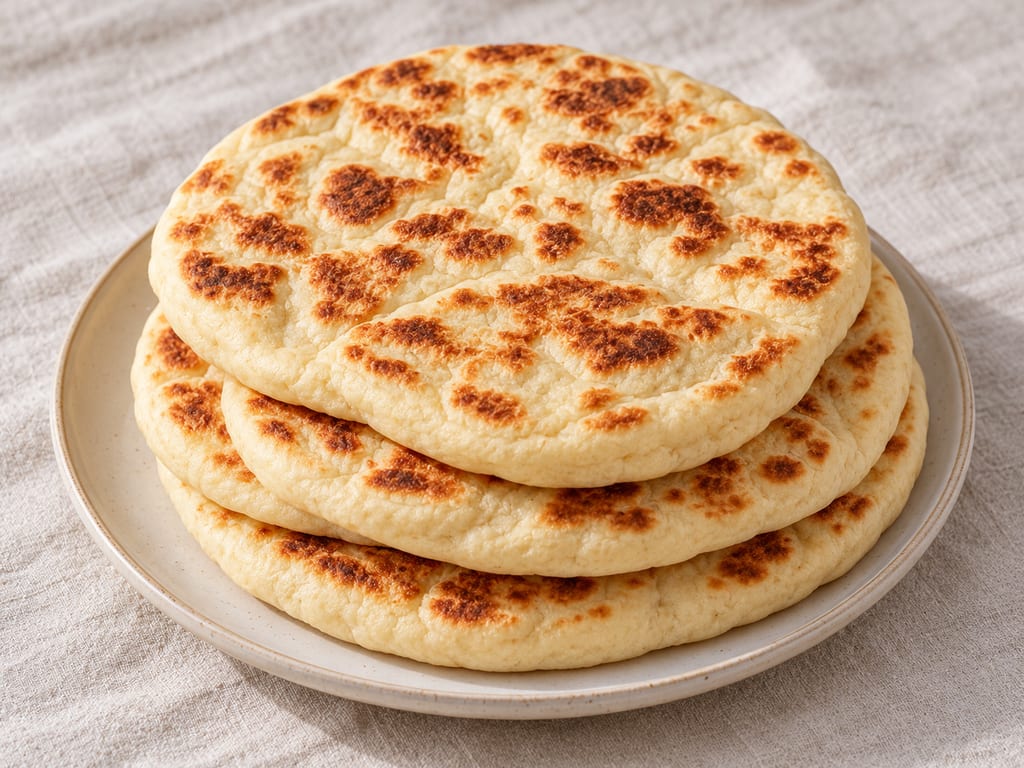
This Turkish bazlama uses yeast, plain yogurt and olive oil for a soft dough cooked in a skillet. Shape it into twelve small or six larger rounds, flip as bubbles appear, and wrap the breads to keep them soft.
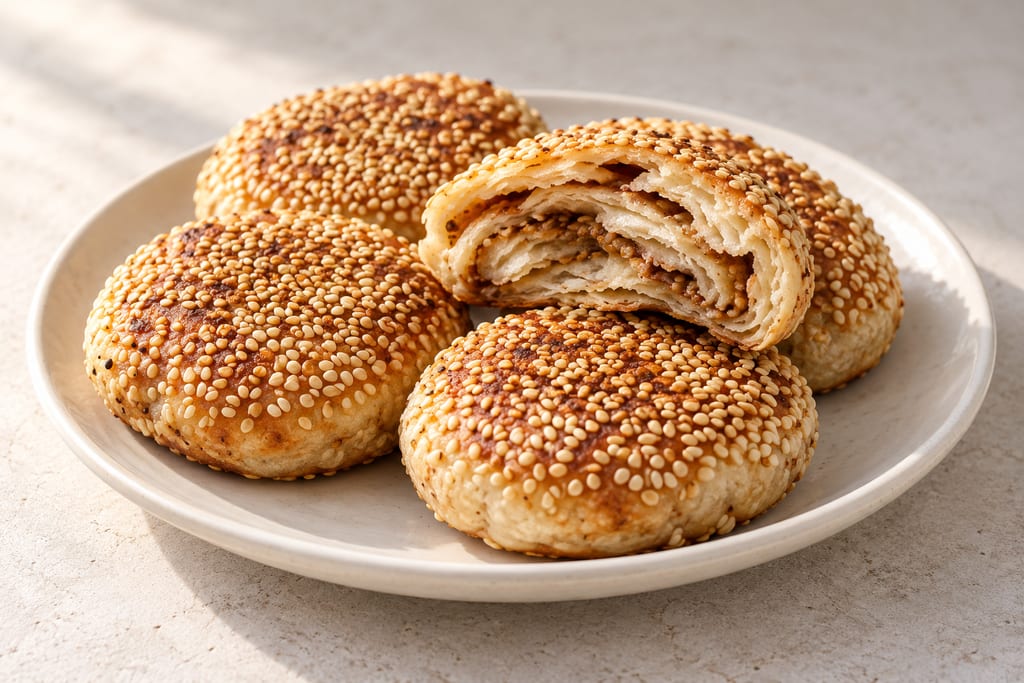
A Beijing-style yeast dough is layered with seasoned sesame paste, sealed into small buns, briefly pan-fried, seeded, and baked.
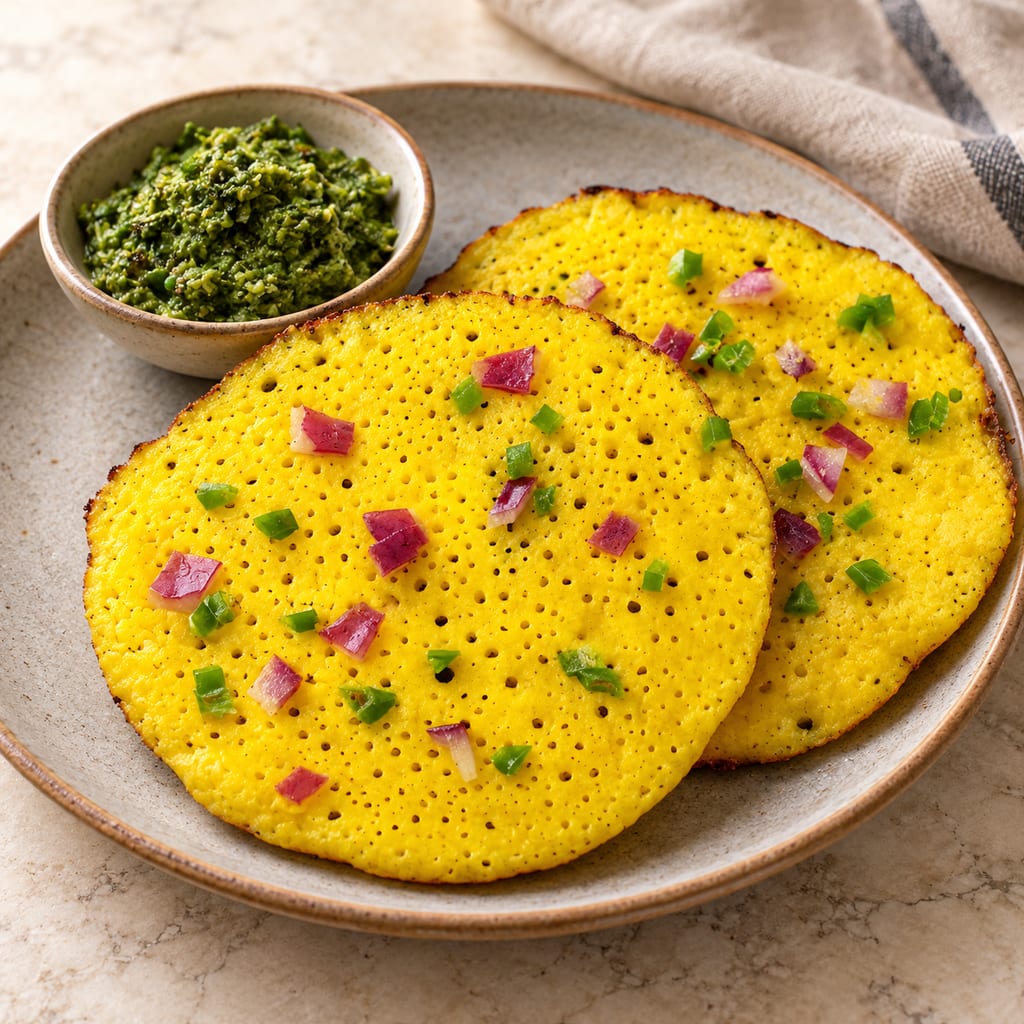
Spongy rice-and-coconut pancakes associated with Goa, cooked on one side from a batter that a multicooker's yogurt programme lets rise overnight.
No community contributions have been published for this entry yet.
Sign in to contribute. Published comments and photos are free to read.
YoWangdu Experience TibetInspiration · Method · History
How to Bake Tibetan Bread: Amdo Balep RecipeOne round loaf for 4–6 people; measured ingredients, yeast activation, kneading, covered rise, heavy covered pot and two-sided oven method.
The page describes Amdo and central Tibetan associations and distinguishes the oven version from the more traditional stove-top method; it records yeast, baking-powder and starter variants without claiming one universal process.
The author says to use a pot safe for the oven, not to preheat, to set 425°F, to bake 25 minutes before turning and 20 minutes after; warns the pot is extremely hot.
Cited in: The oven-baked version; Rise and handling
U.S. Food and Drug AdministrationSafety
Handling Flour Safely: What You Need to KnowRaw flour can contain harmful bacteria; do not taste raw flour or dough, keep it separate from ready-to-eat food, and clean hands, tools and surfaces.
Cited in: Food handling
Tibetan Nuns ProjectCultural context · Documented use
Inside the Kitchen at Dolma Ling NunneryFirst-party institutional account describes Amdo Balep as daily breakfast bread at Dolma Ling: dough prepared the evening before, 350 six-inch flatbreads cooked on a large gas griddle, served at 7am after morning prayers.
This documents a named community's practice, not a universal Tibetan schedule, historical origin or tested scaling of the YoWangdu oven loaf. Photographs are credited to Brian Harris and Dolma Ling Media Nuns; no individual PD/CC0 grant is supplied.
Cited in: Breakfast in a named Tibetan community
Public Health Agency of CanadaSafety
The Safe Living Guide—A Guide to Home Safety for SeniorsThe guide recommends heat-resistant oven mitts rather than potholders for a better grip on hot containers and protection from splatters and steam.
Cited in: Rise and handling
Health CanadaSafety
Cooking safetyUse a heat-resistant surface to cool down cookware.
Cited in: Rise and handling