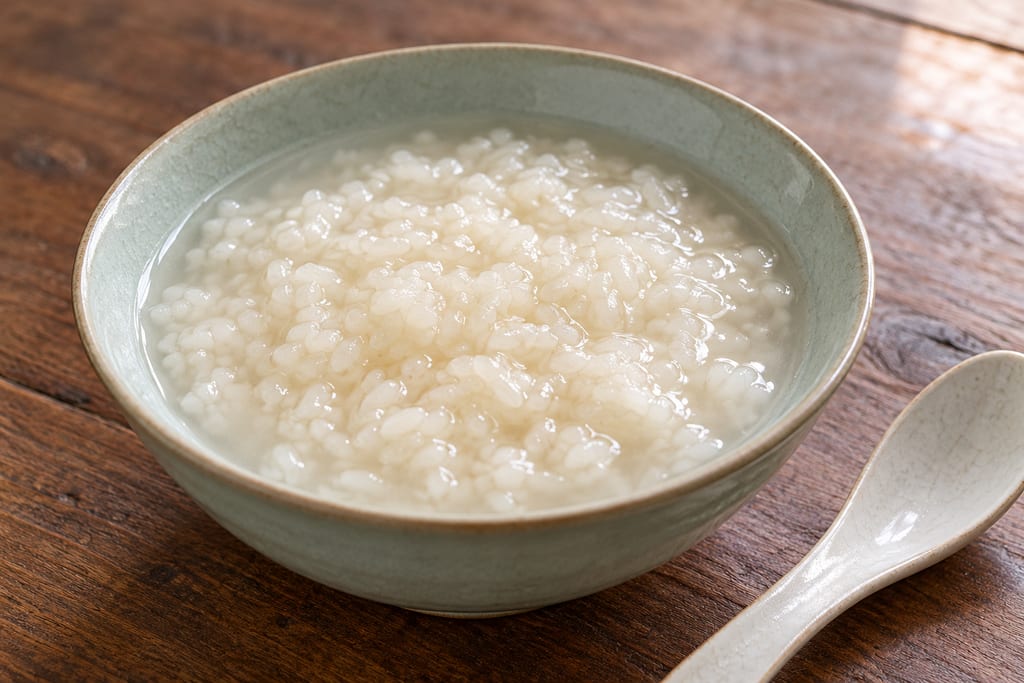
Jiuniang (sweet fermented glutinous rice)
Chinese sweet fermented glutinous rice: steamed rice and a mixed jiuqu starter, where mould enzymes release sugar and yeast makes a little alcohol, eaten with its sweet liquid.
 FermenteaWhere food goes to change
Modern method
Bai ji mo (白吉饃) · Baiji mo · Bai ji mo · 白吉饃
This Shaanxi-associated yeast flatbread uses a simple water dough, coiled shaping and a skillet bake. It is the bread used in roujiamo, not the filled meat dish.
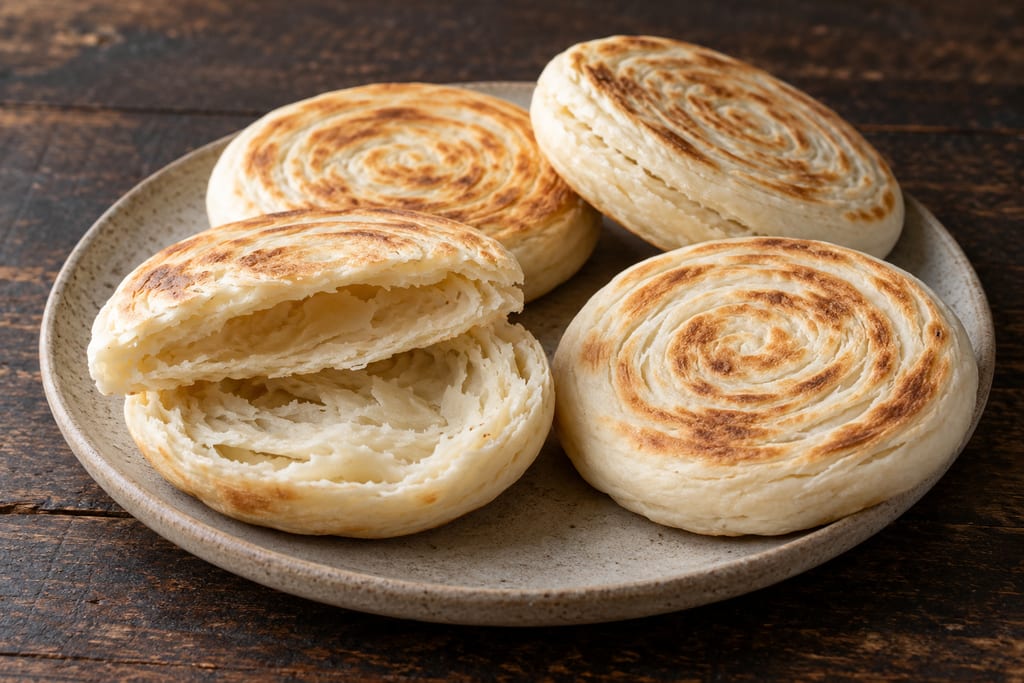
Baiji mo, also written bai ji mo (白吉饃), is a wheat flatbread that Shrine Kitchen identifies with Shaanxi cuisine. That source describes it as leavened and usually only partly risen. It also notes that the bread is split and filled with stewed meat to make roujiamo. This recipe covers the bread alone; the meat filling and sandwich assembly belong to a separate dish.
The Shrine Kitchen batch makes four to six pieces from two cups all-purpose wheat flour, one teaspoon yeast, half a teaspoon salt and three-quarters to one cup water. The water amount is a range, so begin with the lower quantity and add only enough for the flour to form a dough. The source gives cups and teaspoons and no weights; those measurements are kept in its original units rather than converted by assumption.
Mix the flour, yeast and salt first, then work in the water until the ingredients come together. Cover the dough and let it rise for 30 to 60 minutes. Shrine Kitchen says baiji mo is generally only half-risen and that about half an hour is often enough, while its recipe card gives the full 30-to-60-minute range. It does not define how to measure a half-rise, so this recipe retains the timed range without adding a volume test.
After the rise, knead the dough and divide it into four to six portions. Flatten each portion into a strip, roll it into a coil, turn the coil on its side and flatten it into a round with slightly raised edges. The shape is distinct from a plain uncoiled pita round, but the source does not specify a target diameter or thickness.
Cook the rounds in a skillet until lightly browned, about five minutes per side. Shrine Kitchen does not state pan temperature, whether the pan should be covered, or a measured internal endpoint. The steps therefore retain the source's time and browning cue without adding a temperature or a covered-pan instruction from a different method. The bread can be served on its own or split to hold the stewed meat used in roujiamo.
Use ordinary care with raw flour and hot cookware. Do not taste uncooked dough; keep it apart from ready-to-eat food and clean hands and surfaces after handling. Stay by the stove while cooking and use suitable tools to handle the skillet. The source gives no storage duration, so this page makes none.
Shrine Kitchen describes bai ji mo as a leavened flatbread popular in Shaanxi cuisine and notes that it is commonly split and filled with stewed meat for roujiamo. This recipe covers the bread only. The source gives no dated first attestation or precise place of origin.
Scaling: source batch only
Flour may carry harmful bacteria; do not taste uncooked dough and keep it away from ready-to-eat food.
Hazard sourceThe skillet and bread can cause burns during cooking and handling.
Hazard sourceKeep raw flour and dough away from ready-to-eat foods, wash hands and surfaces after handling, and do not taste uncooked dough.
Control sourceKeep the pan attended and use suitable tools and a heat-resistant surface when handling hot cookware.
Control sourceContains wheat (gluten).
The source gives no storage duration; none is claimed.
Shrine Kitchen identifies bai ji mo as a leavened flatbread popular in Shaanxi cuisine. The recipe does not establish a narrower birthplace.
Chinese sweet fermented glutinous rice: steamed rice and a mixed jiuqu starter, where mould enzymes release sugar and yeast makes a little alcohol, eaten with its sweet liquid.
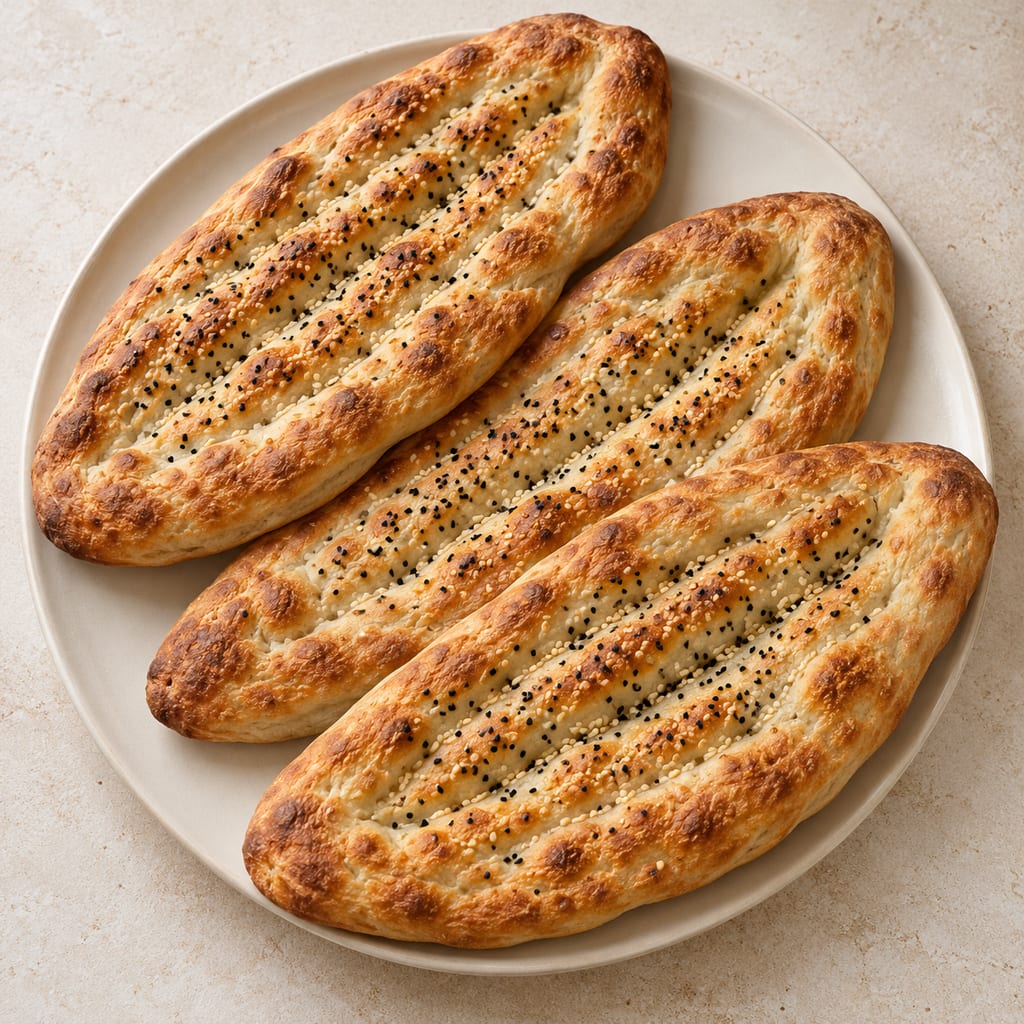
A long oval Afghan wheat bread, leavened with yeast, grooved along its length and baked until crisp outside and chewy within.
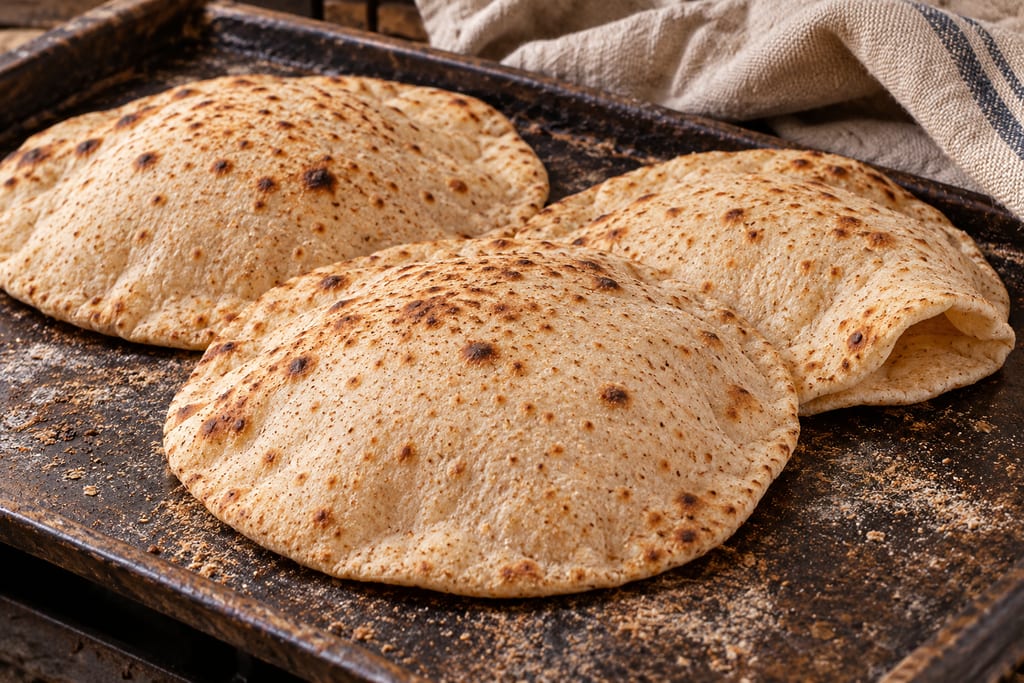
This home adaptation of Egyptian aish baladi uses a refrigerated yeast biga, whole-wheat dough, bran dusting and a very hot baking surface to make 16 pocketed rounds.
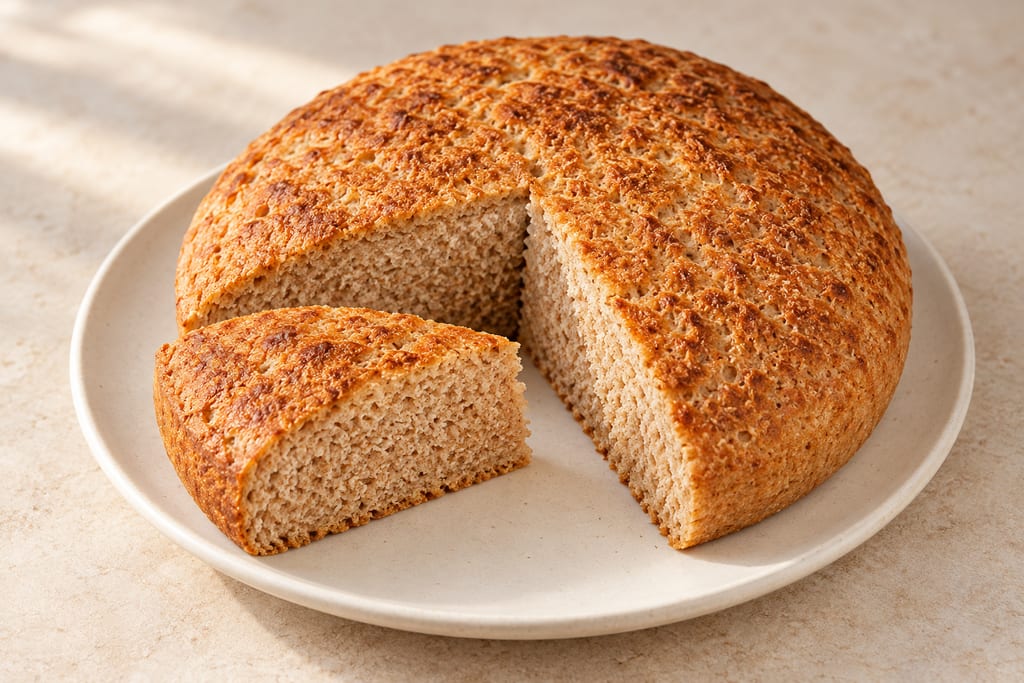
This oven-baked Amdo balep uses yeast, whole-wheat and white flour, a long covered rise and a two-sided bake in a heavy oven-safe pot.
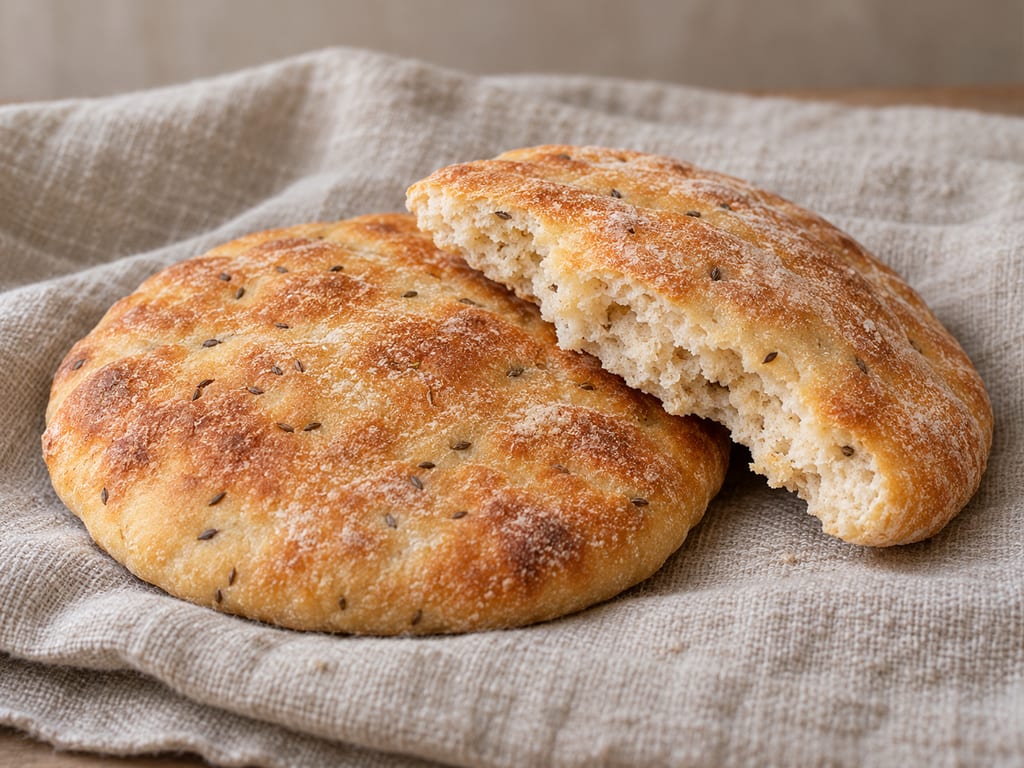
A measured, yeast-raised Ayacucho chapla home method shared by Thermomix Peru presenter Roxanna Salaverry. It makes thin, anise-scented rounds baked at 240°C; the historic qunchu-leavened form is documented separately.
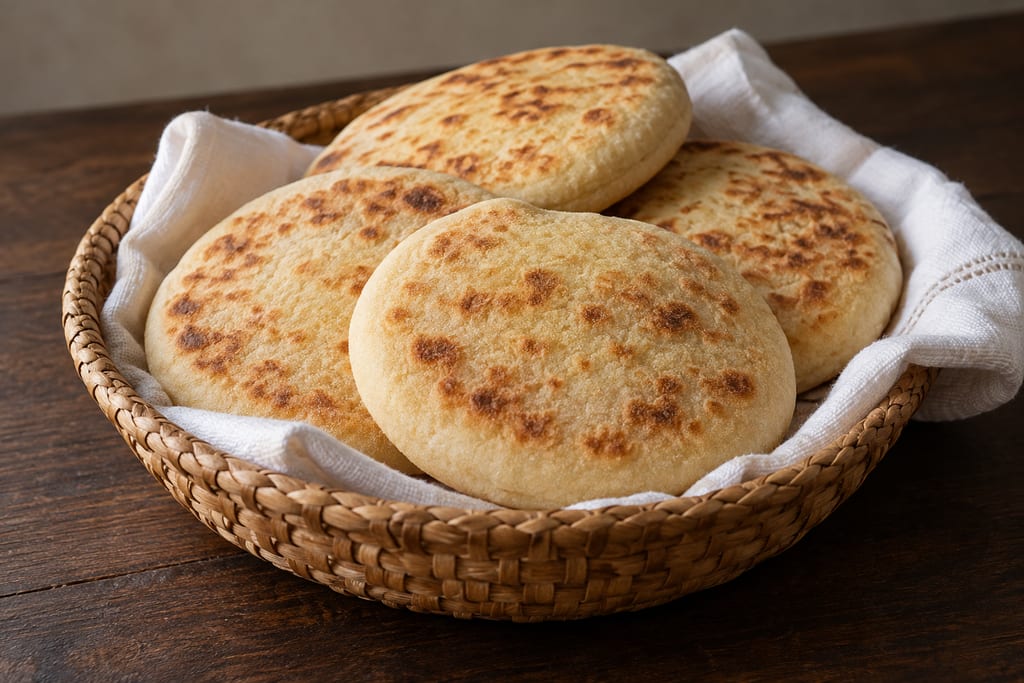
A Moroccan yeast-raised semolina pocket bread cooked on a dry pan or griddle; this measured batch makes about twenty 4-inch rounds.
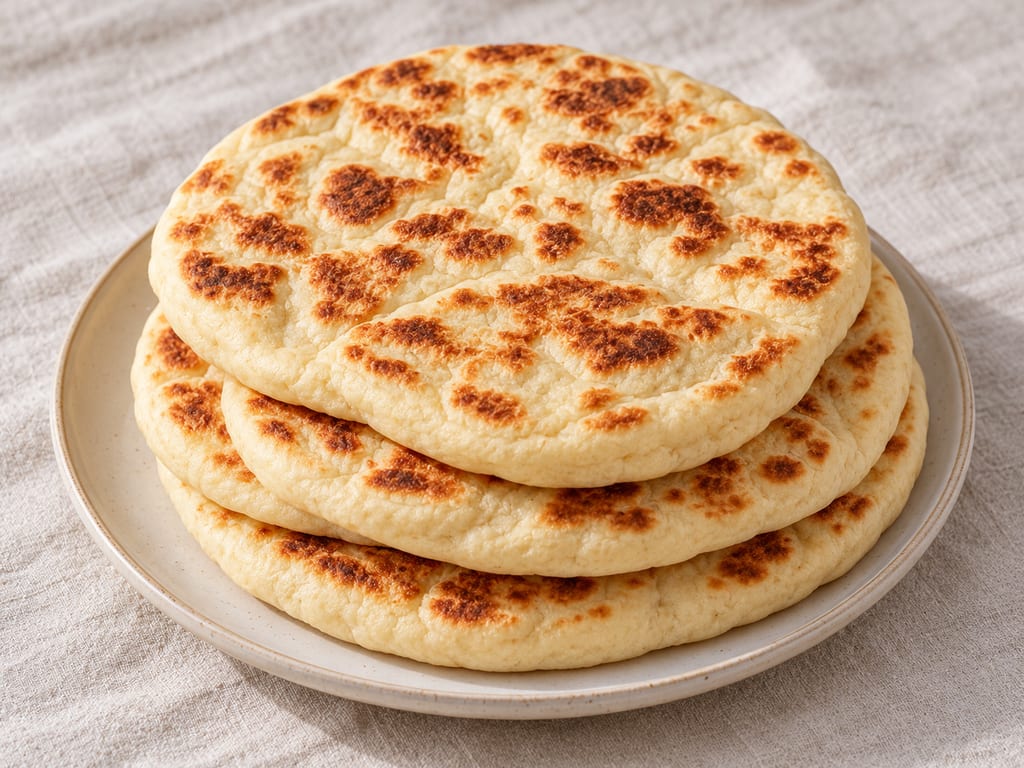
This Turkish bazlama uses yeast, plain yogurt and olive oil for a soft dough cooked in a skillet. Shape it into twelve small or six larger rounds, flip as bubbles appear, and wrap the breads to keep them soft.
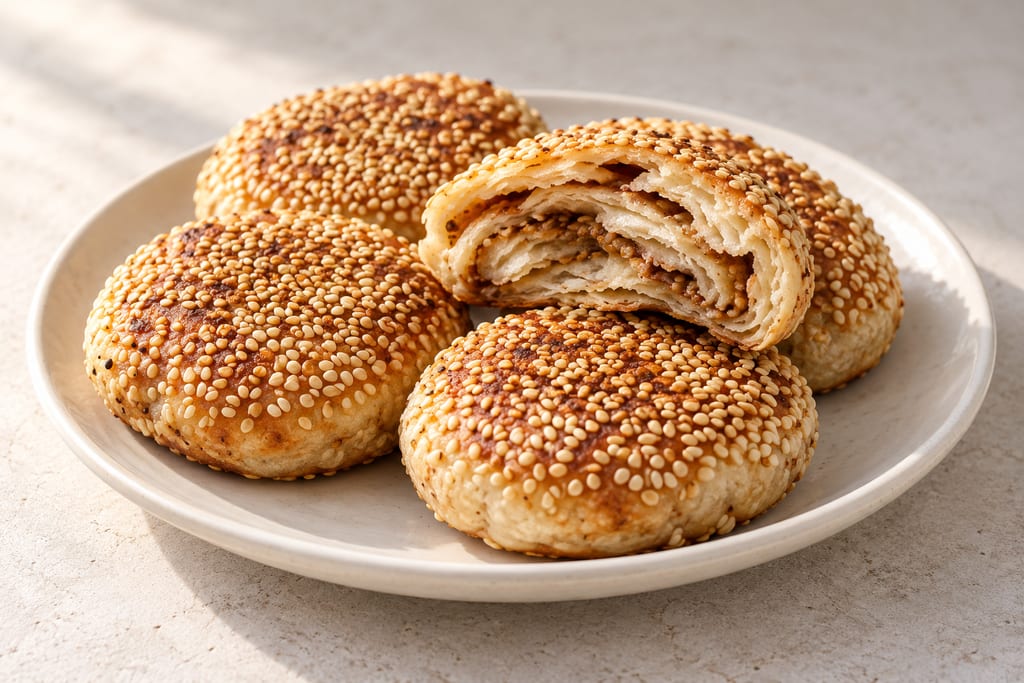
A Beijing-style yeast dough is layered with seasoned sesame paste, sealed into small buns, briefly pan-fried, seeded, and baked.
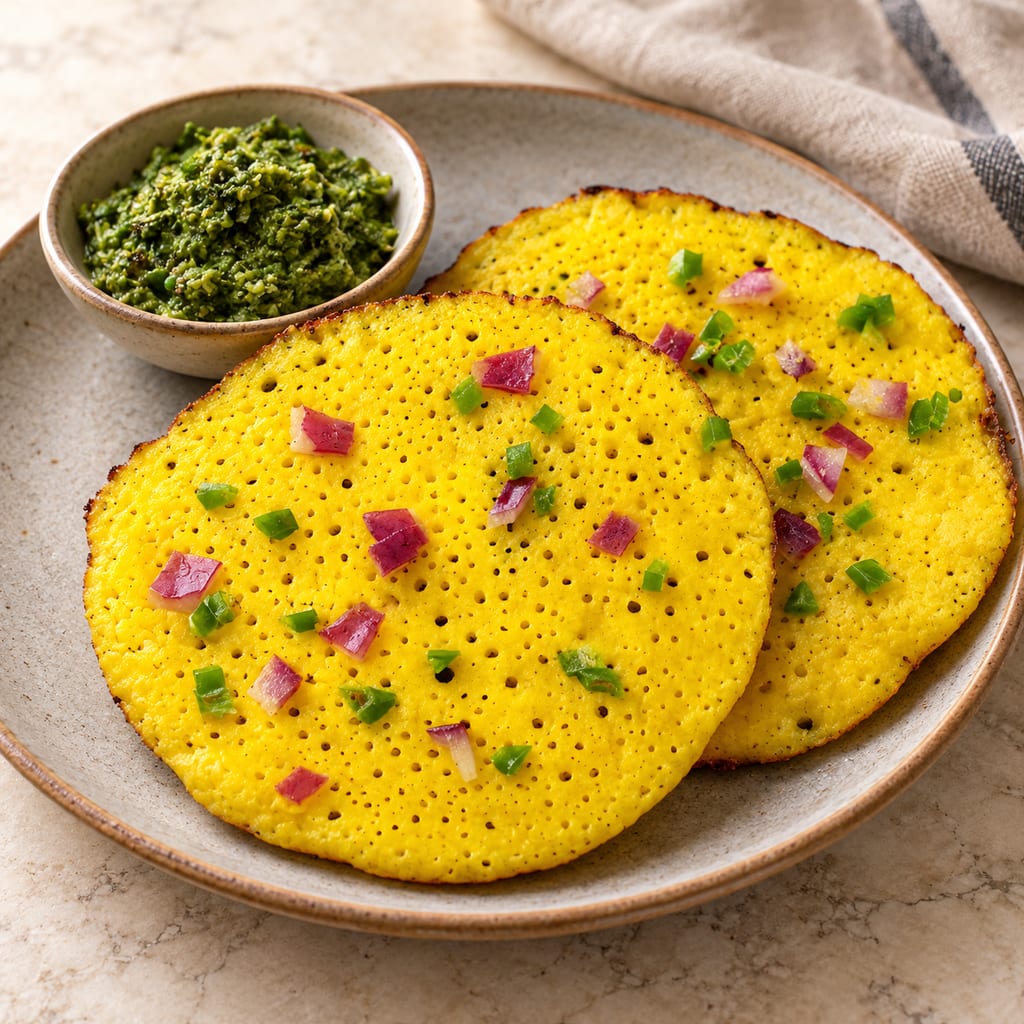
Spongy rice-and-coconut pancakes associated with Goa, cooked on one side from a batter that a multicooker's yogurt programme lets rise overnight.
No community contributions have been published for this entry yet.
Sign in to contribute. Published comments and photos are free to read.
Shrine KitchenInspiration · Method · Identity · Geographic context
Bai Ji MoShrine Kitchen identifies bai ji mo (白吉饃) as a leavened flatbread popular in Shaanxi cuisine and says it is used as the bread for roujiamo, which is split and filled with stewed meat.
Its four-to-six-piece recipe uses 2 cups all-purpose wheat flour, 1 tsp yeast, 1/2 tsp salt and 3/4–1 cup water.
The method mixes the dough, covers it for a 30–60-minute rise, kneads and divides it into 4–6 portions, rolls and flattens each as a coil, then cooks each side about 5 minutes until lightly browned. It does not specify pan heat, pan covering or an internal endpoint.
Cited in: Shaanxi leavened flatbread
U.S. Food and Drug AdministrationSafety
Handling Flour Safely: What You Need to KnowRaw flour may contain harmful bacteria; do not taste uncooked dough and keep flour/dough separate from ready-to-eat foods. Wash hands, utensils and surfaces after handling.
Cited in: Shaanxi leavened flatbread
Health CanadaSafety
Cooking safetyStay in the kitchen while cooking and keep children away from hot stovetops and cookware.
Cited in: Shaanxi leavened flatbread