
Beyaz peynir
Beyaz peynir is a Turkish white cheese matured in brine. Sheep milk, alone or mixed with other milks, gives a close-textured cheese cut into blocks and packed in cans.
 FermenteaWhere food goes to change
Salt
Food-grade sodium chloride seasons food and changes water movement in brines and cures; crystal size and the recipe's measurement method matter.
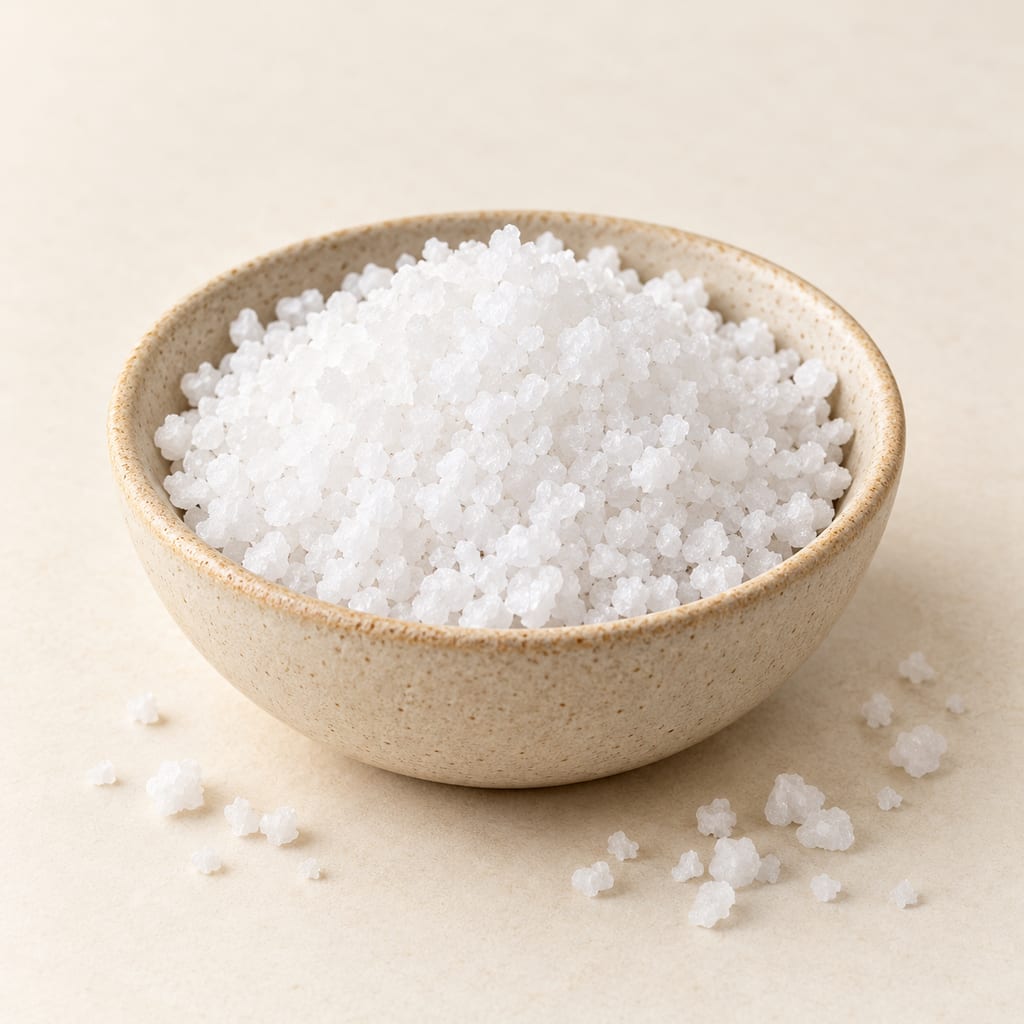
Salt is the crystalline mineral most cooks mean by the word: chiefly sodium chloride, or NaCl. The same compound reaches a kitchen through different landscapes and production systems. Food-grade salt is obtained from seawater, underground rock-salt deposits or natural brine. Salt also has industrial uses, and coarse rock salt is spread on icy roads. In a pantry, the label matters: only salt sold and handled as food is an ingredient.
Rock salt is halite, a mineral that forms in evaporite deposits as water evaporates and dissolved salts crystallize. Some deposits are old seabeds; other salt comes from brines brought to the surface and evaporated in pans. Seawater can likewise be channelled through a sequence of shallow ponds until water loss leaves crystals to gather. A crystal’s source may influence its moisture, shape and trace constituents, but appearance alone is no guide to how much fits in a spoon or how it will behave in a recipe. Fine salt packs differently from a large flake. For a measured cure, crystal form is part of the ingredient’s practical identity.
Salt production has many histories. At Zhongba in central China, chemical analyses identify salt as the primary product of a site in the first millennium BCE. This places organized salt-making in a particular landscape while leaving the wider beginnings of the craft unresolved. Salt itself dissolves readily, so an old brine or a traded crystal can vanish where more durable traces of work survive. The finding tells us about production at Zhongba, not the first time anyone tasted or gathered salt.
At Salins-les-Bains in eastern France, people worked a different geological gift: underground salt water. The Great Saltworks operated for at least 1,200 years, closing in 1962. Its brine was boiled in open pans, a process demanding large quantities of fuel. From 1780 to 1895, wooden pipes carried brine 21 kilometres to the Royal Saltworks at Arc-et-Senans. The latter complex, built from 1775 under Louis XVI near the Chaux Forest, was designed around production and the availability of wood. Its architecture makes the practical chain visible: brine had to be brought in, heated, crystallized, gathered and moved, and each stage depended on workers and fuel.
Salt also became a matter of state. In France, the gabelle taxed salt unevenly across regions and underpinned a royal monopoly. Salt granaries and controlled sales reached into ordinary provisioning; different provincial rates encouraged smuggling and resistance. The tax was abolished in 1790, restored in 1806 and finally abolished in 1945. Those dates belong to France's tax system. They show how a mineral needed in food and preservation could become both household necessity and political burden.
Salt’s role as an ingredient becomes especially clear in the making of dried cod. The North Atlantic catch could be processed on shore: fish were cleaned, salted and dried on racks before shipping. Salt imports from southern Europe were indispensable to cod merchants in New England, Nova Scotia and Newfoundland. The trade had distinct grades: cod judged fit for European markets went to southern Europe, where fish was eaten on Fridays and other Christian fast days; fish considered too small, damaged, over-salted or under-salted was sold as “West Indies” grade.
That second market was bound to the Caribbean plantation economy. Lower-grade fish and grain were shipped south to feed enslaved people working in sugar production, while merchants returned with sugar, rum and molasses. Peter Faneuil’s trading network joined those commodities through connected ports. Salt did not merely make a distant fish last longer; access to salt helped sustain a trade whose profits and food supply were intertwined with slavery.
The same network runs through Bermuda’s codfish cakes: European and North American fishing grounds, Turks Islands salt, Bermudian vessels and Caribbean markets. In the Turks Islands, enslaved people did much of the salt harvesting by the eighteenth century. Mary Prince’s 1831 account describes injuries from long hours in brine. Dried cod could be shipped and later reconstituted, and its descendants reached many Atlantic kitchens: Jamaican ackee and saltfish, Bermudian codfish cakes and breakfast, and cod dishes in Portugal, Brazil and the Azores. In Bermuda, codfish cakes eaten around Easter, sometimes with a hot-cross bun, carry that older trade food into a particular holiday meal. Elsewhere, soaking and cooking the fish lead to different dishes, with local staples and seasonings changing what salt cod becomes at the table. These are related culinary histories, not one standardized recipe.
In one New England coastal-cuisine preparation, dried cod is soaked in cold water in the refrigerator, with several water changes, then simmered with aromatics. The soaking rehydrates the hard, dry fish and removes some of its saltiness; the cooking then builds a new dish around its flakes. That preparation describes one practical route back from preserved ingredient to meal, rather than a definitive method shared by every Atlantic tradition. The preserved cod and the fresh fish are not interchangeable in flavour or preparation: salt and drying have already altered the ingredient before it reaches the cook.
In a brine, salt crystals dissolve into sodium and chloride ions. The salty liquid touches the food's surface and, with time, salt moves into it. Cucumber slices soaked in measured salt solutions took up more salt as the surrounding concentration rose; their moisture content fell as dissolved substances entered. The experiment used cut cucumber at a controlled cool temperature, so it cannot supply a timetable for a whole lime or a thick piece of fish. When dry salt is mixed into shredded cabbage, the leaves release juice that dissolves the crystals and forms a brine around them. The cut and the contact between food and salt matter as much as the word “salt” on the ingredient list.
Available moisture is described by water activity: a food's equilibrium water-vapour pressure compared with pure water under the same conditions. It is not simply how wet the food looks. Dissolved salt can lower that activity and make growth harder for organisms that need more available water. A salty surface is not automatically a preserved centre, however, and an ingredient amount cannot establish a finished jar's measured water activity or safety. The food's shape, salt uptake, other ingredients and process all matter.
Dry salt and prepared brine can also affect the same food differently. In a sardine experiment, both methods brought salt into the fish and drew water out, but dry salting gave faster uptake and a higher salt content over the tested salting period. That result belongs to those sardines and conditions; it explains why the route of contact matters without making dry salting universally stronger. Neither route is fermentation by itself. In fermented cabbage, another change occurs: lactic acid bacteria consume vegetable sugars and produce acids. A controlled Chinese sauerkraut study measured sugar consumption and lactic-acid accumulation while finding that salt concentration changed the early microbial course. Salt helps shape that environment; its effect still depends on the food and method, and it does not replace the other controls in a particular recipe.
In a vinegar pickle, vinegar supplies the acidifying liquid, and salt contributes seasoning and can draw water from the produce. Sugar may temper acidity and create a sweeter style. In a fermented pickle, microorganisms develop the acidity, with salt shaping the conditions in which they grow. A preparation may combine vinegar, salt and fermentation, but the ingredients do not become interchangeable simply because the finished pickle tastes sour. The distinctive tang of a fermented cabbage comes from acid formed during its microbial life; the tang of a vinegar pickle enters with the vinegar. Follow each recipe's order and proportions.
Peter Kuruvita's printed lime pickle gives salt a particular place. He mixes 250 grams of rock salt with whole peppercorns and packs them into cuts in twenty limes; the joined fruit is then simmered in a vinegar-and-sugar liquid. The salt first meets the cut fruit directly, while vinegar arrives with the cooking liquid. After the limes are jarred, the book says the liquid will cover them in time during a rest of at least two weeks. This sequence differs from making brine around shredded cabbage, and its quantities do not provide a general salt ratio for other pickles.
For the tested home-pickling recipes in the National Center for Home Food Preservation's guide, canning or pickling salt is a straightforward choice. Its fermented and non-fermented pickle recipes may also use iodized or non-iodized table salt. Anti-caking materials can cloud brine without changing its saltiness. Broad flakes vary in density, so the same spoonful may hold a different mass. Reduced-sodium salt is permitted only where that guide's quick-pickle recipes say so; it is not recommended there for fermented pickles. The choice is tied to a specified process, not to a rule that every salt can be swapped one-for-one.
Fine table salt dissolves readily and is convenient for seasoning. Pickling or canning salt is a fine-grained form often chosen when a clear brine is wanted because it lacks the anti-caking agents that can cloud the liquid. It remains food-grade salt made predominantly of sodium chloride. Iodized table salt adds iodine as a public-health fortification; that difference matters nutritionally, even when the crystals season food in much the same way.
Sea salt describes salt recovered from seawater; rock salt is mined halite. Kosher-style salts and flake salts describe crystal form or product style, and different brands may vary in how much salt a spoonful contains. Large crystals give a crisp burst when scattered at the end of cooking, while fine crystals dissolve quickly through a sauce or dough. Their sensory uses can differ even when the principal seasoning is the same compound. For preservation, follow the recipe’s named salt or weigh the quantity when the recipe gives a weight. A volume measure of a fine salt is not automatically equivalent to the same volume of a broad, light flake.
Lower-sodium products may replace some sodium chloride with potassium salts. That changes composition and sometimes taste, rather than simply changing crystal size. Dietary guidance considers these products as one way to reduce sodium where appropriate, but a preservation method still calls for the salt it specifies. Salt intended for road de-icing or industrial processing likewise belongs outside the kitchen: the pantry requires a product made and handled for food.
When seasoning at the table, crystal shape is part of the experience: a large flake may crunch briefly before dissolving, while fine grains disappear into a liquid. In a measured preparation, weighing salt removes much of the ambiguity introduced by grain size. Add it at the stage the method specifies: dry-rubbing food, dissolving it in brine, stirring it into vinegar and finishing a dish create different contact and timing. Keep the pantry supply dry and covered so the crystals remain easy to handle.
Salt’s reach across modern diets extends beyond a shaker. The World Health Organization’s current adult recommendation is less than 2,000 milligrams of sodium per day, equivalent to less than 5 grams of salt from all sources. WHO also recommends that consumed salt be iodized. Bread, preserved foods, sauces and prepared meals all contribute alongside salt added at the table, so taste alone gives an incomplete account of daily intake. Dietary guidance concerns the whole pattern of eating; a tested preservation recipe has its own specified proportions and process.
Site-specific archaeological production evidence, not the worldwide origin of salt.
Beyaz peynir is a Turkish white cheese matured in brine. Sheep milk, alone or mixed with other milks, gives a close-textured cheese cut into blocks and packed in cans.
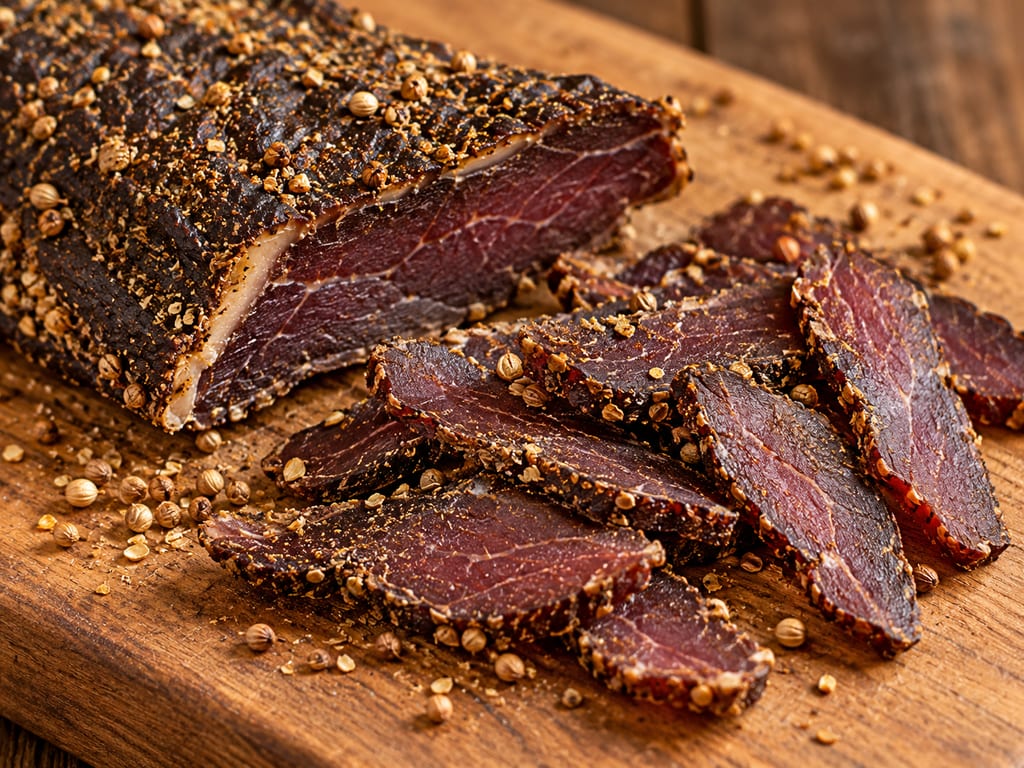
Strips of whole-muscle beef or game seasoned with salt, vinegar, roasted coriander and pepper and air-dried without cooking, sold anywhere from soft and moist to hard and very salty.
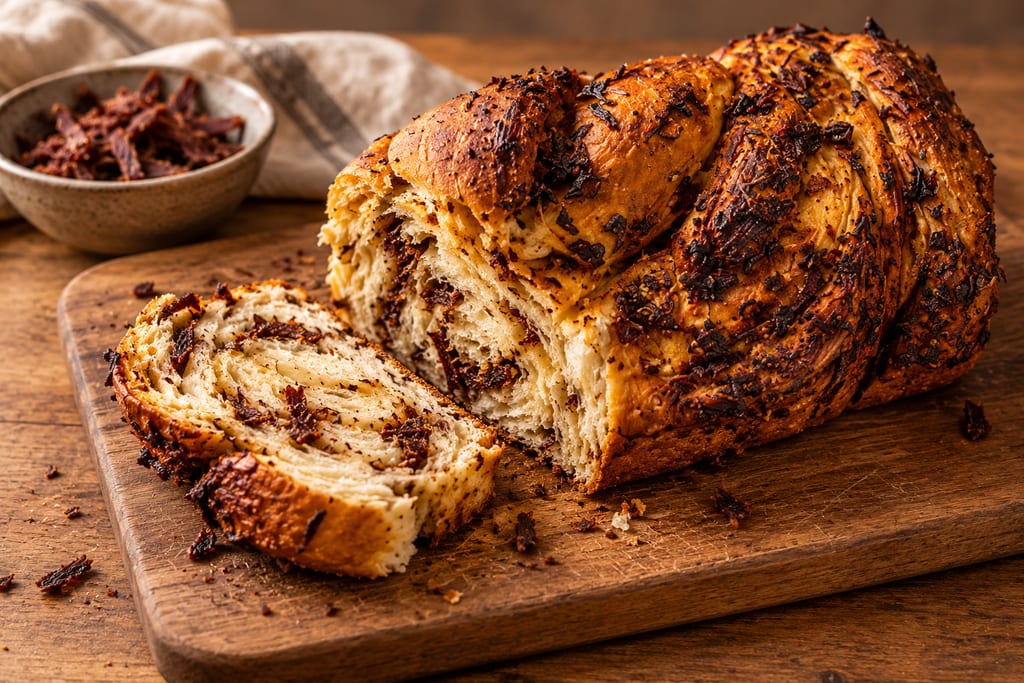
Yeasted bread wrapped around biltong, tomato pesto, Cheddar and feta, split lengthwise into a braid and baked; served with chilli-biltong butter.
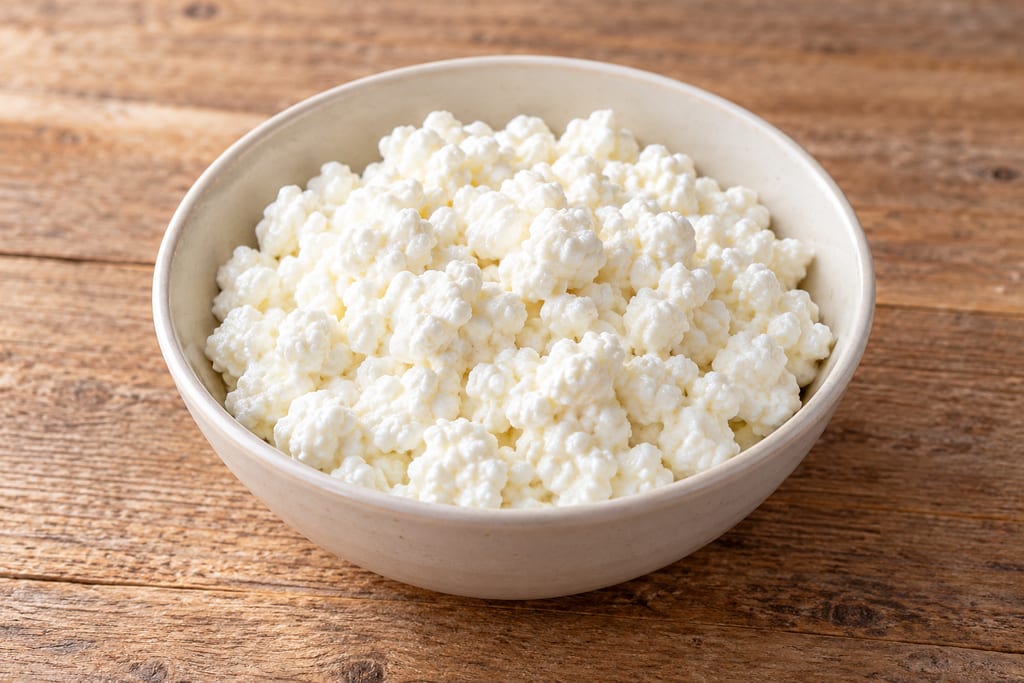
Skim milk is cultured slowly, cut into curds, warmed and drained to make fresh cottage cheese. Cold-water washing softens its flavour before cream and salt are added.
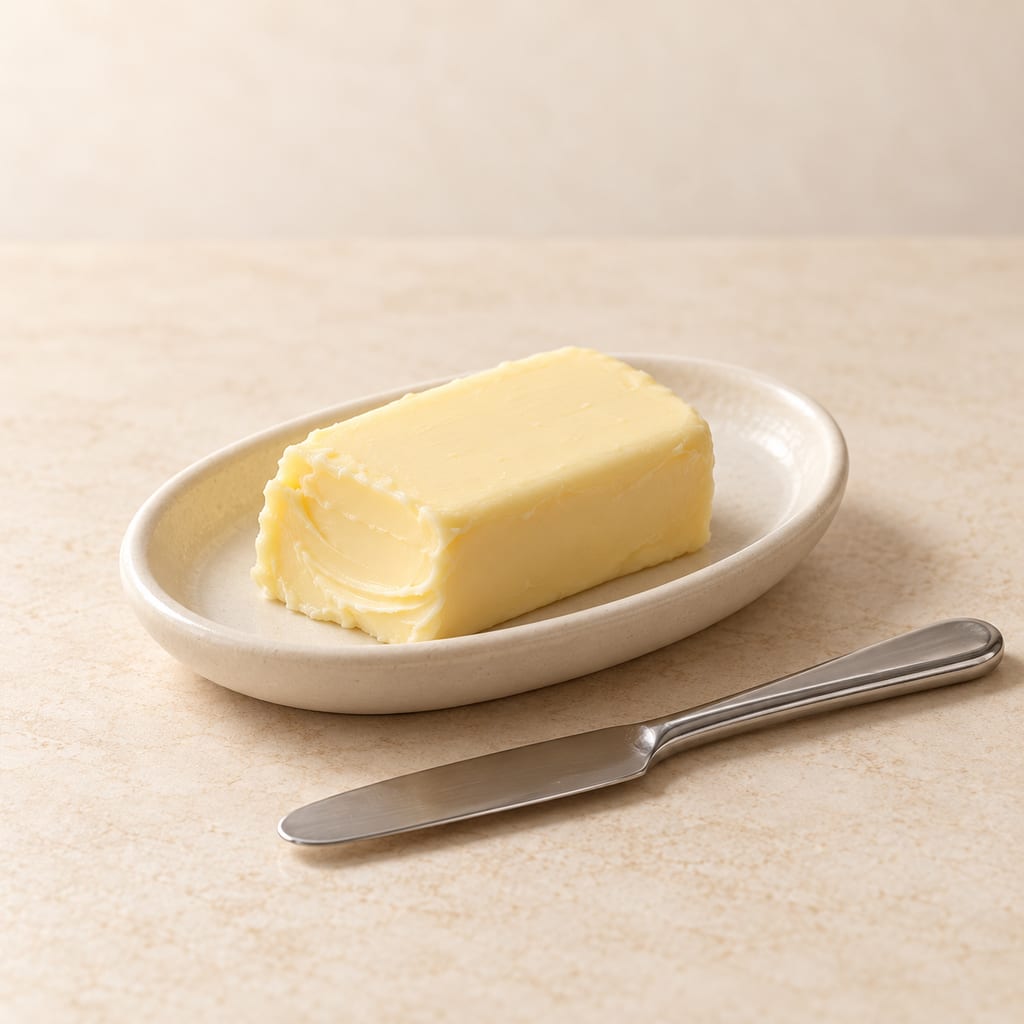
Cultured butter is churned from cream soured with lactic cultures. Its lightly tart flavour comes from the cultured cream, which separates into butter grains and buttermilk.
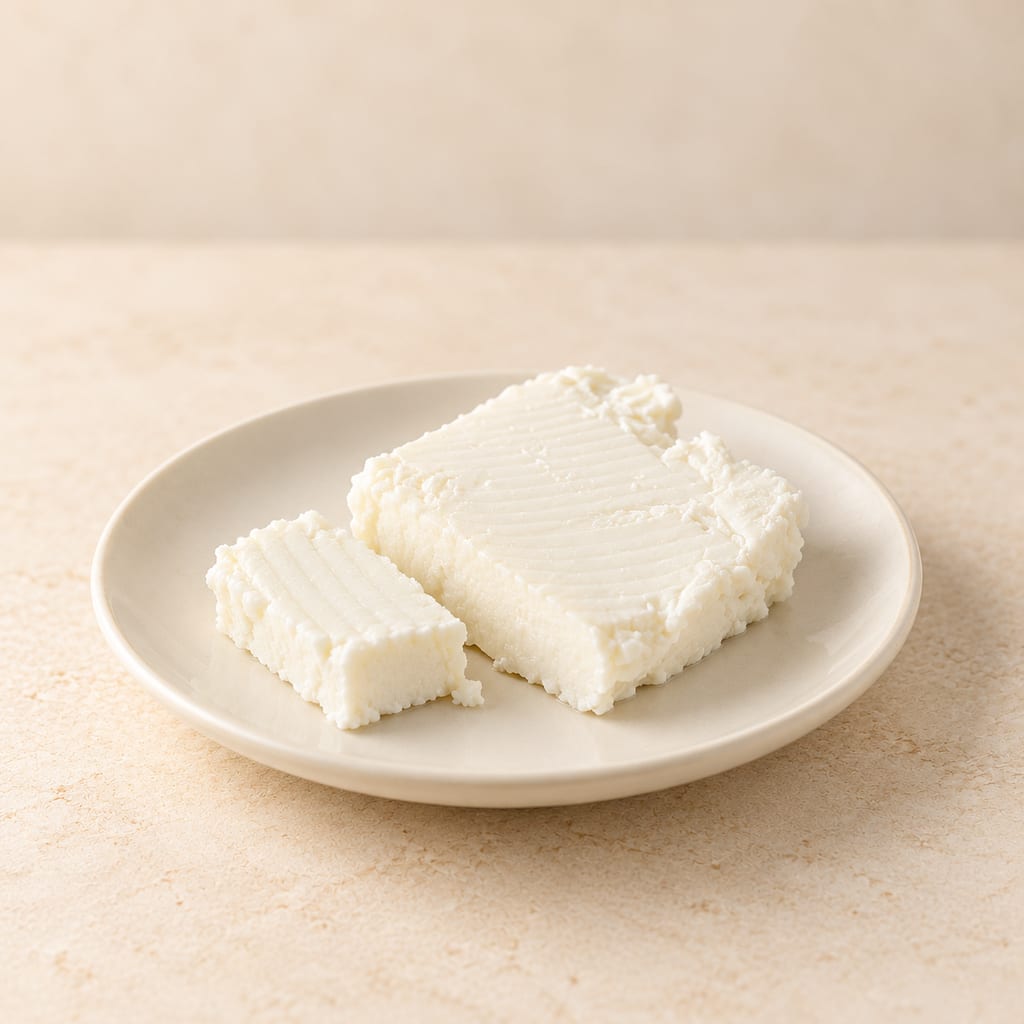
Domiati is a soft Egyptian white cheese made by salting milk before renneting. It is eaten fresh or ripened in brine, with cow and buffalo milk used in varying proportions.
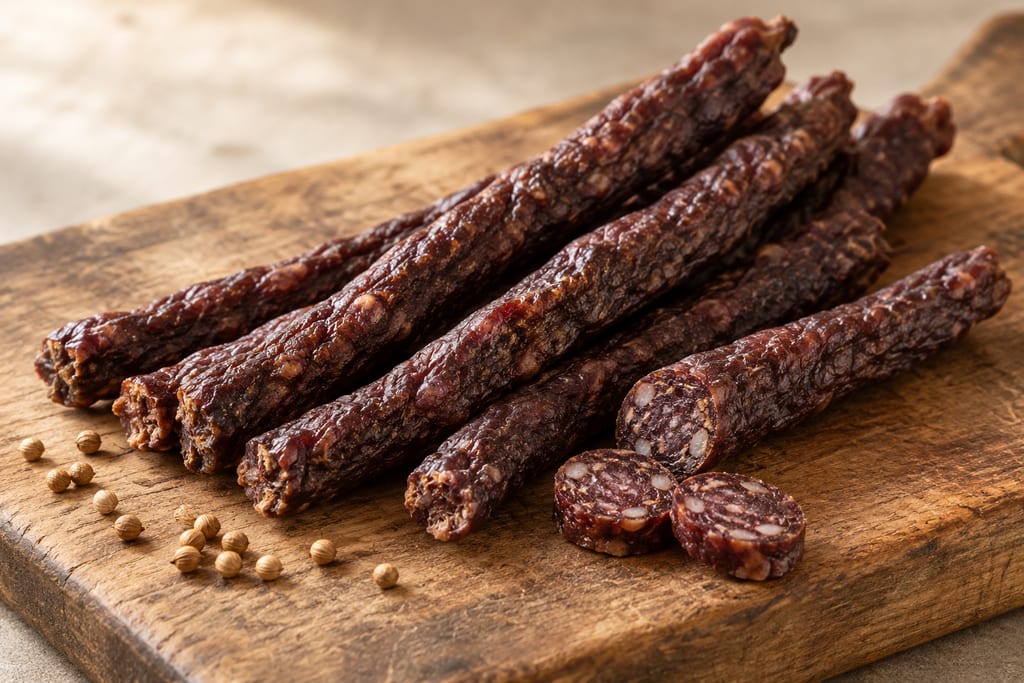
South Africa's dried sausage: seasoned minced meat in narrow casings, dried until it can be eaten without cooking, which makes it a far more demanding product than fresh boerewors.
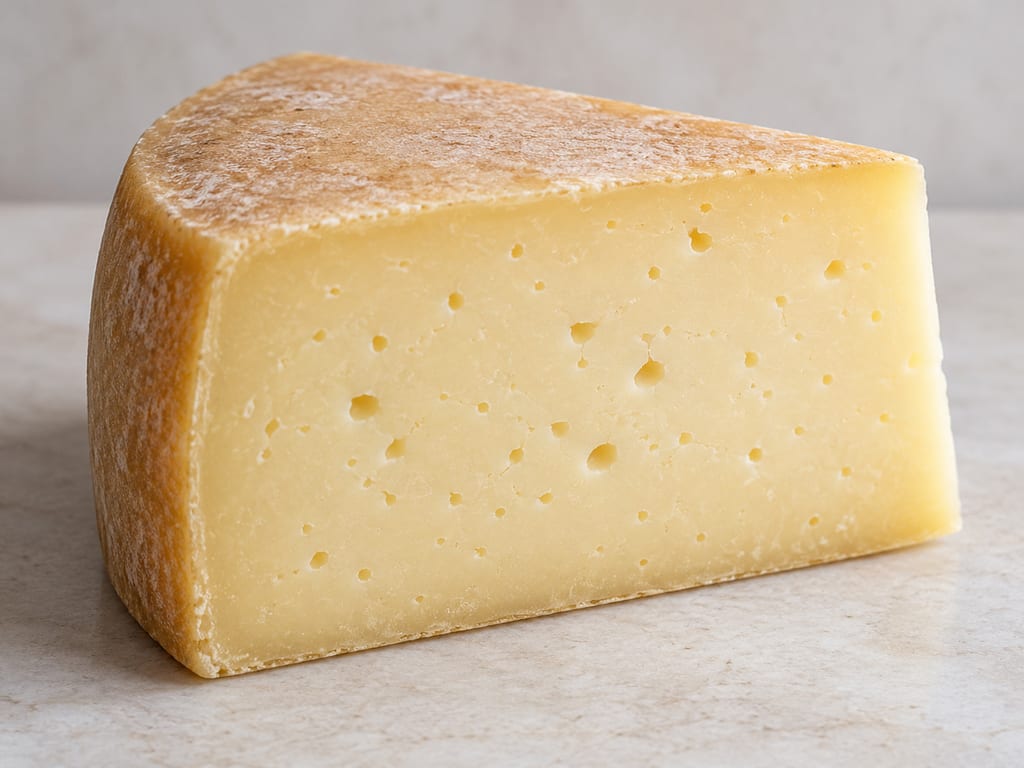
This Cypriot graviera is a hard sheep-milk cheese with a dry rind and round eyes. Its curd is heated, pressed and dry-salted before a long cool ripening.
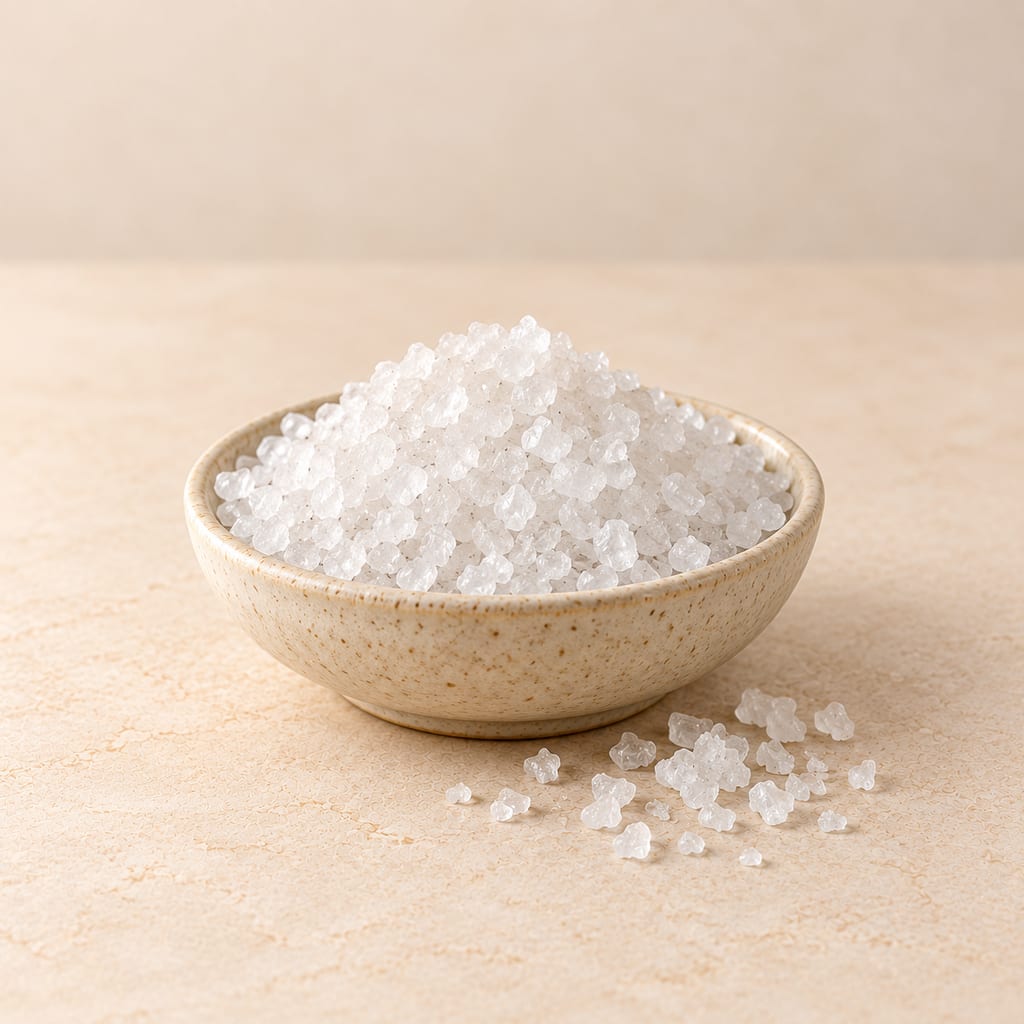
Coarse salt is food-grade salt in large grains, from sea, rock deposits or brine, used for curing, brining, pickling and packing fish.
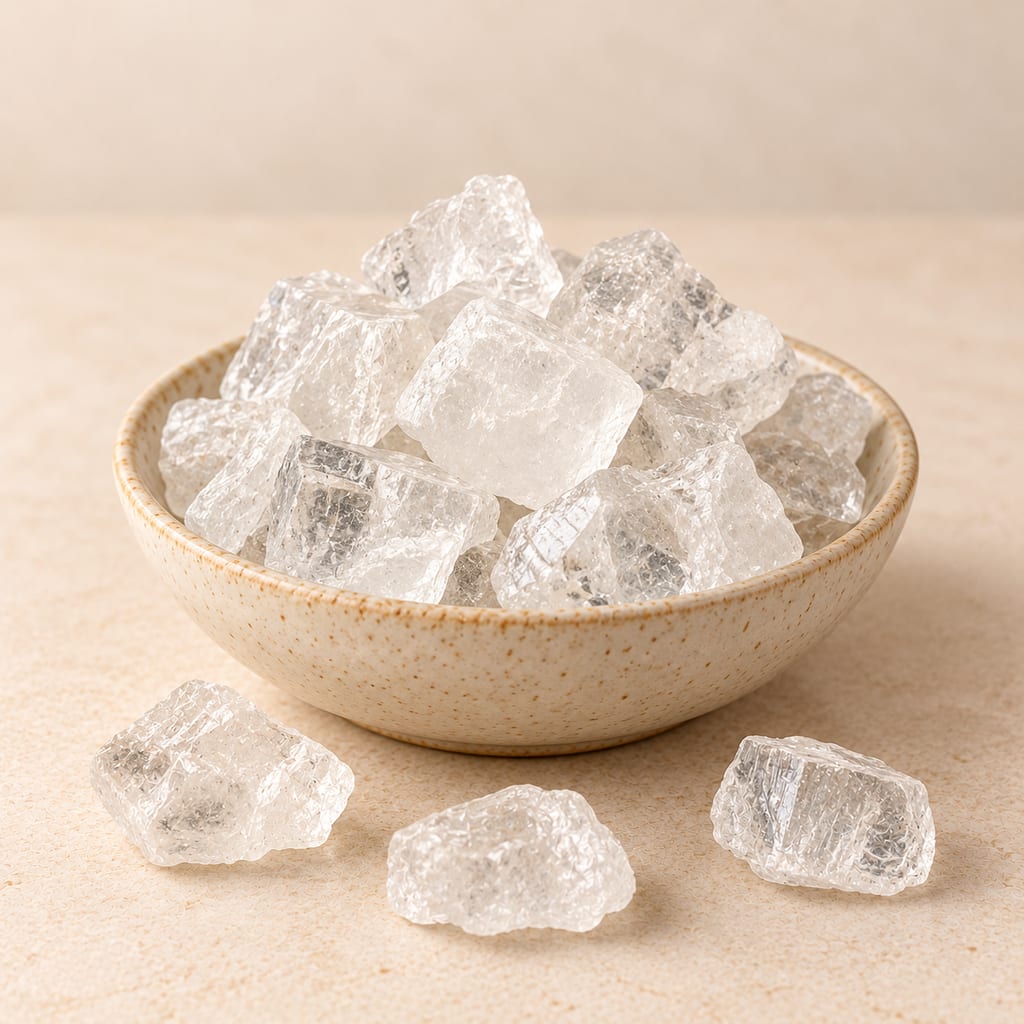
Rock salt is sodium chloride mined from ancient salt beds, sold from coarse grey chunks to pink Himalayan crystals and the fired black salt, kala namak, used in Indian cooking.
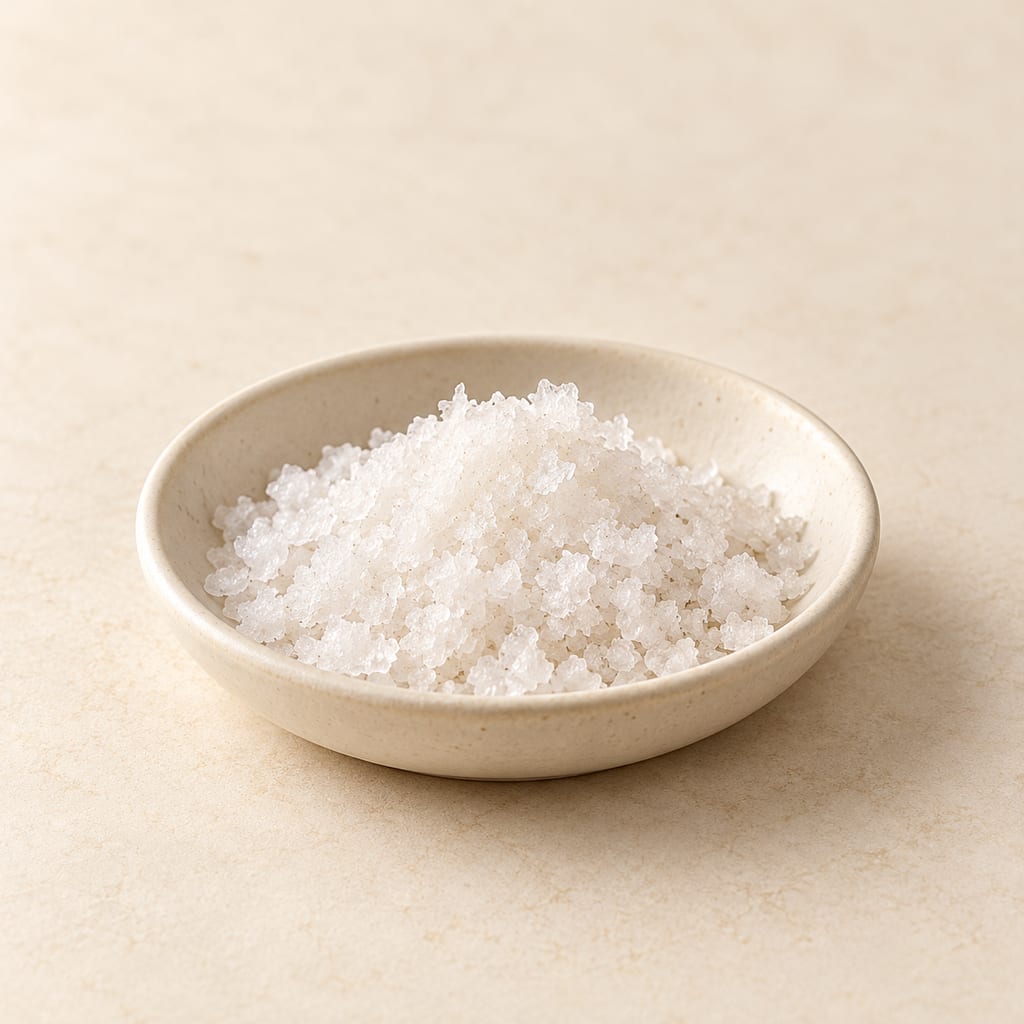
Salt recovered from seawater comes as fine grains, coarse crystals and delicate flakes. Its production, crystal form and measured use connect coastal saltworking with cooking and preservation.
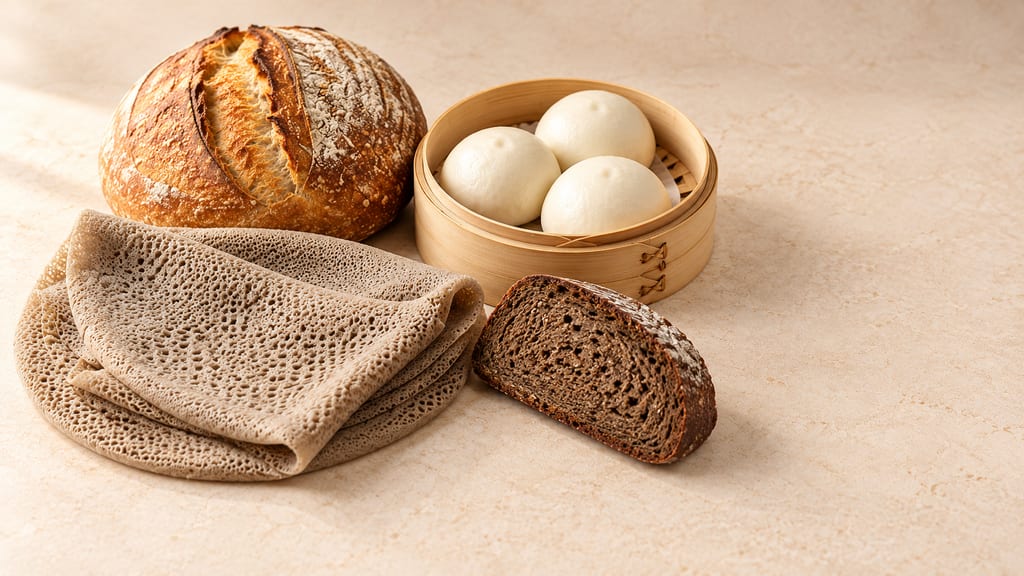
From the baguette and the steamed bun to injera, titiyas, Finnish rye and cassava bread: how grain, microbes and heat answer the question of what bread is for.
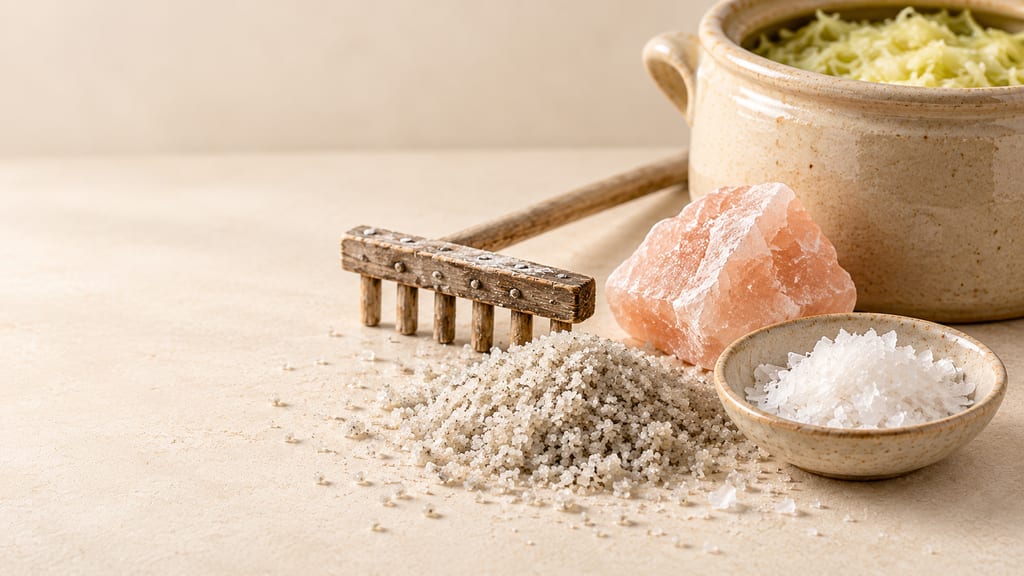
Salt seasons a meal, shapes fermentation and preserves food. Its history follows the people who mine, harvest, trade and transform it, and the choices hidden inside an ordinary packet.
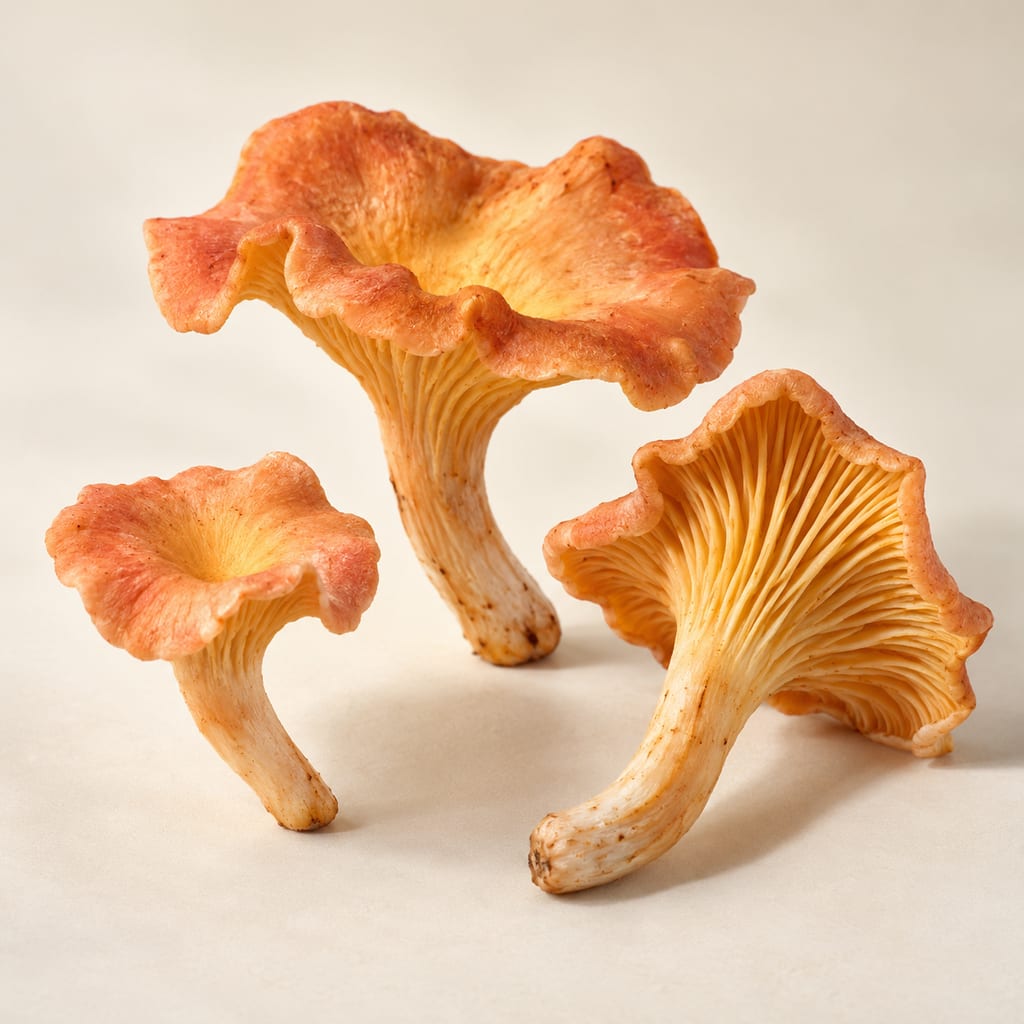
Cantharellus phloginus is a pink-capped chanterelle of southern and central China, named in 2016. China's 2026 catalogue lists it as edible, and it is sold in Yunnan markets. Its name is disputed, and colour alone does not identify it.
No community contributions have been published for this entry yet.
Sign in to contribute. Published comments and photos are free to read.
Codex Alimentarius Commission / FAO and WHOFood grade identity · Production sources
Standard for Food-Grade Salt, CXS 150-1985Codex describes food-grade salt as a crystalline product consisting predominantly of sodium chloride.
The standard describes salt from sea, underground rock-salt deposits and natural brine.
Codex sets a minimum sodium-chloride content of 97 percent on a dry-matter basis, exclusive of additives.
Cited in: A mineral with several routes to the table; Choosing salt for a particular job
U.S. Geological Survey, National Minerals Information CenterChemical identity · Food versus industrial/road uses
Salt Statistics and InformationUSGS calls salt sodium chloride.
USGS identifies food as a flavour-enhancement use and separately mentions rock salt for walkways and salt as industrial feedstock.
Cited in: A mineral with several routes to the table; Choosing salt for a particular job
University of Minnesota Twin Cities, Common Minerals educational resourceMineral identity and origins
HaliteHalite is sodium chloride.
Halite forms from evaporation of seawater or brine lakes, including ancient lakes or restricted seas.
Small salt fragments dissolve readily in water.
Cited in: A mineral with several routes to the table
Proceedings of the National Academy of Sciences; PubMed/National Library of MedicineSite specific early salt production history
Archaeological and chemical evidence for early salt production in ChinaAuthors report evidence from Zhongba in central China that salt was the primary product in the first millennium BCE.
The claim is specific to the studied site and is not presented as a global invention date.
Cited in: Salt made by heat, sun and work
UNESCO World Heritage CentreFrench salt production history
From the Great Saltworks of Salins-les-Bains to the Royal Saltworks of Arc-et-Senans, the Production of Open-pan SaltSalins-les-Bains saltworks active for at least 1,200 years and closed in 1962.
From 1780 to 1895 brine travelled 21 km in wooden pipes to Arc-et-Senans.
Arc-et-Senans construction began in 1775; nearby forest supplied fuel.
Cited in: Salt made by heat, sun and work
Service des archives économiques et financières, French Ministry of EconomyFrench salt taxation and monopoly history
La gabelle et les taxes sur le sel: une longue histoireInstitutional archival account describes the salt monopoly, tax differences, smuggling and resistance.
It gives gabelle abolition in 1790, restoration in 1806 and final abolition in 1945.
Cited in: Salt made by heat, sun and work
U.S. National Park ServiceAtlantic salted cod trade, markets and food history
The Atlantic Empire of Peter FaneuilSalt imports were essential to the cod economy of New England, Nova Scotia and Newfoundland.
NPS describes fish grades directed to southern European markets or Caribbean plantation markets.
NPS documents fish provisioning enslaved workers on Caribbean sugar plantations and sugar/molasses/rum returns in the Atlantic trade.
In its account, Catholic European consumers ate fish on Fridays and other fast days.
Cited in: The Atlantic cod trade: salt in a food economy
National Museum of Bermuda; Jane Downing, RegistrarAtlantic salt cod foodways and labour history
Codfish, Bermuda and the Atlantic WorldThe museum connects Bermuda codfish cakes with wider Atlantic cod traditions.
It describes Turk's Island salt harvesting, enslaved labour, and salt cod in Caribbean plantation diets.
It lists contemporary Atlantic-region dishes including Jamaican ackee and saltfish and Bermudian codfish cakes.
Cited in: The Atlantic cod trade: salt in a food economy
Smithsonian National Museum of American History, Cooking Up HistoryModern cooking use of preserved salt cod
Codfish: Cod and New England Coastal CuisineThe museum recipe describes refrigerated cold-water soaking with repeated water changes to rehydrate salt cod and remove some saltiness, followed by simmering with aromatics.
These details are one recipe's method, not a universal method for all salt-cod dishes.
Cited in: The Atlantic cod trade: salt in a food economy
U.S. Food and Drug AdministrationWater activity and moisture mechanism
Water Activity (aw) in FoodsFDA defines water activity as the equilibrium water-vapour-pressure ratio relative to pure water.
FDA states salt and sugar solutions have lower vapour pressure than pure water and explains available moisture's relation to microbial growth.
FDA relates water activity to microbial growth and the preservation conditions of food.
Cited in: What salt changes in wet food
Yoshinori Kaneko and colleagues, Journal of Cookery Science of Japan 32(4), 1999Primary cut cucumber salt uptake and moisture experiment
Effect of Composition of the Soaking Solution and Its Osmotic Pressure on Permeation of NaCl and Sugar and on the Moisture Content of Cucumber FleshRound cucumber slices were soaked at 4°C in nine salt/sorbitol solutions.
NaCl uptake increased as solution NaCl concentration rose; cucumber-flesh moisture declined as permeated solutes increased.
The relation depended on solution composition and is not a timetable for whole citrus or fish.
Cited in: What salt changes in wet food
University of California, Santa Cruz, via Chemistry LibreTextsDirect chemistry teaching source for sodium chloride dissociation
Ions in Solution: General Chemistry worksheetWhen NaCl dissolves in water it separates into dissolved sodium and chloride ions; the worksheet writes the aqueous dissociation equation explicitly.
Cited in: What salt changes in wet food
S. Bellagha and colleagues, Journal of Food Engineering 78(3), 2007Primary experimental dry salting versus brining comparison
Studies on salting and drying of sardine (Sardinella aurita): Experimental kinetics and modelingThe original publisher article’s experimental results compare dry-salted sardines with sardines in 21% brine at 20°C.
The experimental results and conclusion report faster salt uptake and a higher salt content after the same tested salting period with dry salting.
These results describe the tested sardines and conditions, not a universal rule for other foods.
Cited in: What salt changes in wet food
Tao Xiong and colleagues, LWT - Food Science and Technology 69, 2016Primary vegetable fermentation sugar, acid and salt experiment
Effects of salt concentration on Chinese sauerkraut fermentationStudy measured lactic acid bacteria, sugars and organic acids in cabbage and brine under three salt treatments.
Sucrose and glucose were consumed, lactic acid accumulated, and salt concentration affected the early microbial course.
The primary abstract supports this particular Chinese sauerkraut formulation and does not set a universal salt ratio.
Cited in: What salt changes in wet food; Pickles are not all the same kind of preservation
Oregon State University Extension Service, Pacific Northwest Extension Publication 355Institutional dry salted cabbage method
Pickling VegetablesExtension method mixes salt into shredded cabbage until its juices are drawn out and salt dissolves.
The resulting liquid is used to cover cabbage during fermentation; method-specific recipe guidance is not a universal ratio.
Cited in: What salt changes in wet food; Pickles are not all the same kind of preservation
Peter Kuruvita, Murdoch Books, 2009Primary printed recipe illustrating salt placement in a vinegar pickle
Serendip: My Sri Lankan Journey, publisher sample, lime pickle p. 11The printed lime pickle uses 250 g rock salt and 20 whole limes, cut into joined quarters, with whole peppercorns stuffed into the cuts.
Vinegar and sugar form a separate simmering liquid; after jarring, the book says liquid will cover the limes in time during a rest of at least two weeks.
These are one recipe's instructions and do not validate a general salt ratio or shelf life.
Cited in: Pickles are not all the same kind of preservation
National Center for Home Food Preservation, University of Georgia; adapted from USDA Complete Guide to Home Canning AIB 539, revised 2015Pickle salt selection and substitution limits
Salts Used in PicklingGuide recommends canning or pickling salt for its recipes.
Guide says iodized and non-iodized table salt can be used in its tested fermented and non-fermented pickles; anti-caking agents may cloud brine.
Flake salt varies in density and is not recommended for use.
Reduced-sodium salt is permitted only in specified quick-pickle recipes and is not recommended for fermented pickle recipes.
Cited in: Pickles are not all the same kind of preservation; Choosing salt for a particular job; Measuring, storing and eating
World Health OrganizationDietary context and iodization
Sodium reductionPage dated 11 May 2026 states adult recommendation below 2,000 mg sodium/day, equivalent to below 5 g salt/day.
WHO says consumed salt should be iodized.
The recommendation is a population guideline across dietary sources, not a recipe substitution instruction.
Cited in: Choosing salt for a particular job; Measuring, storing and eating
Utah State University Extension, Preserve the HarvestCulinary salt storage
Cooking Food StorageMoisture can cause stored salt to cake.
Salt can absorb odours from its storage area, so the extension recommends keeping it away from moisture and strong smells.
Cited in: Measuring, storing and eating