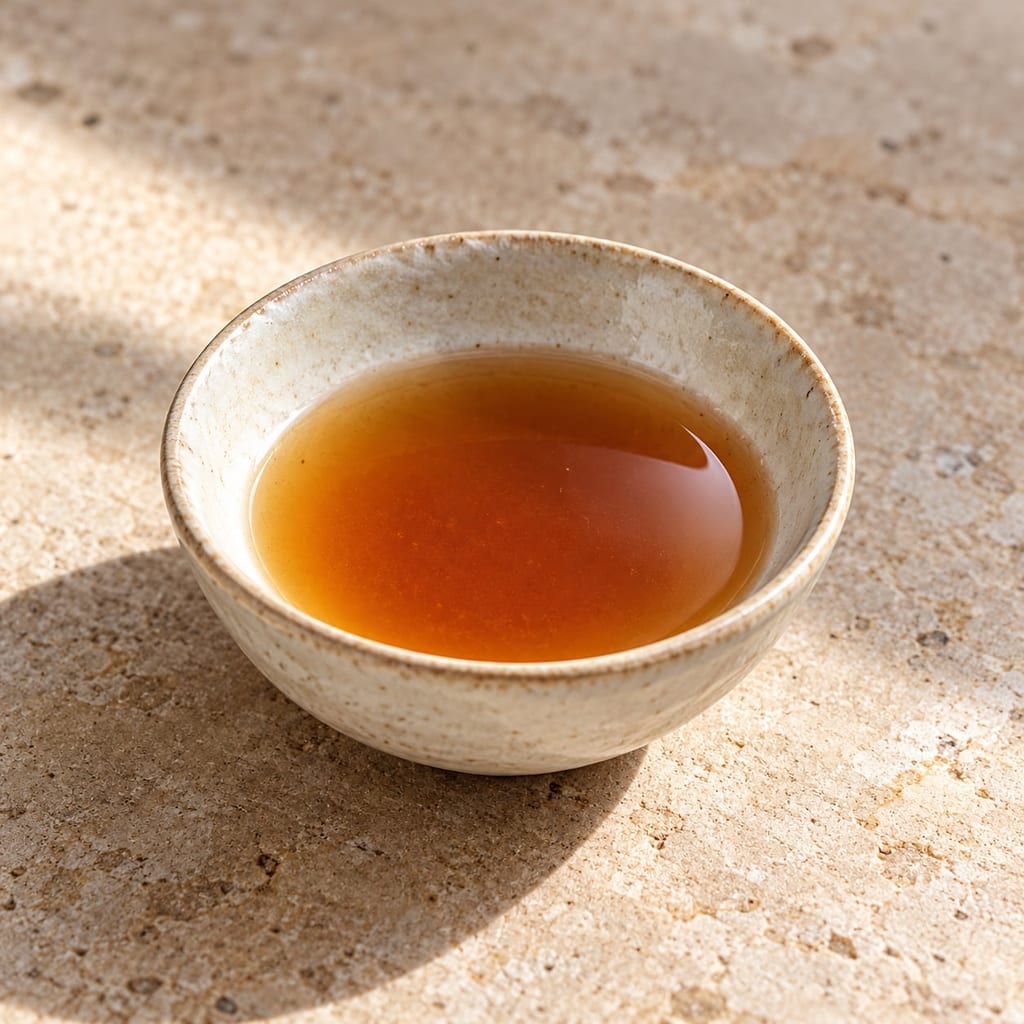
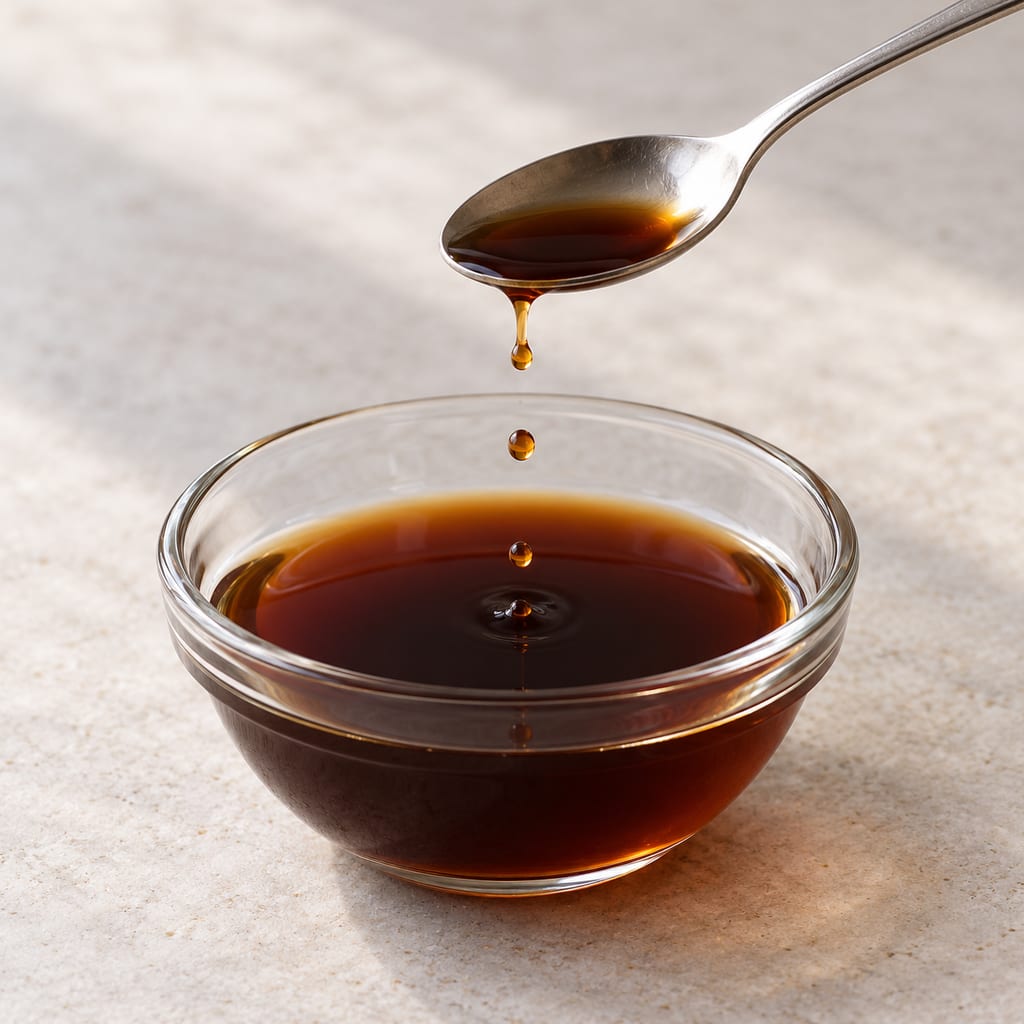
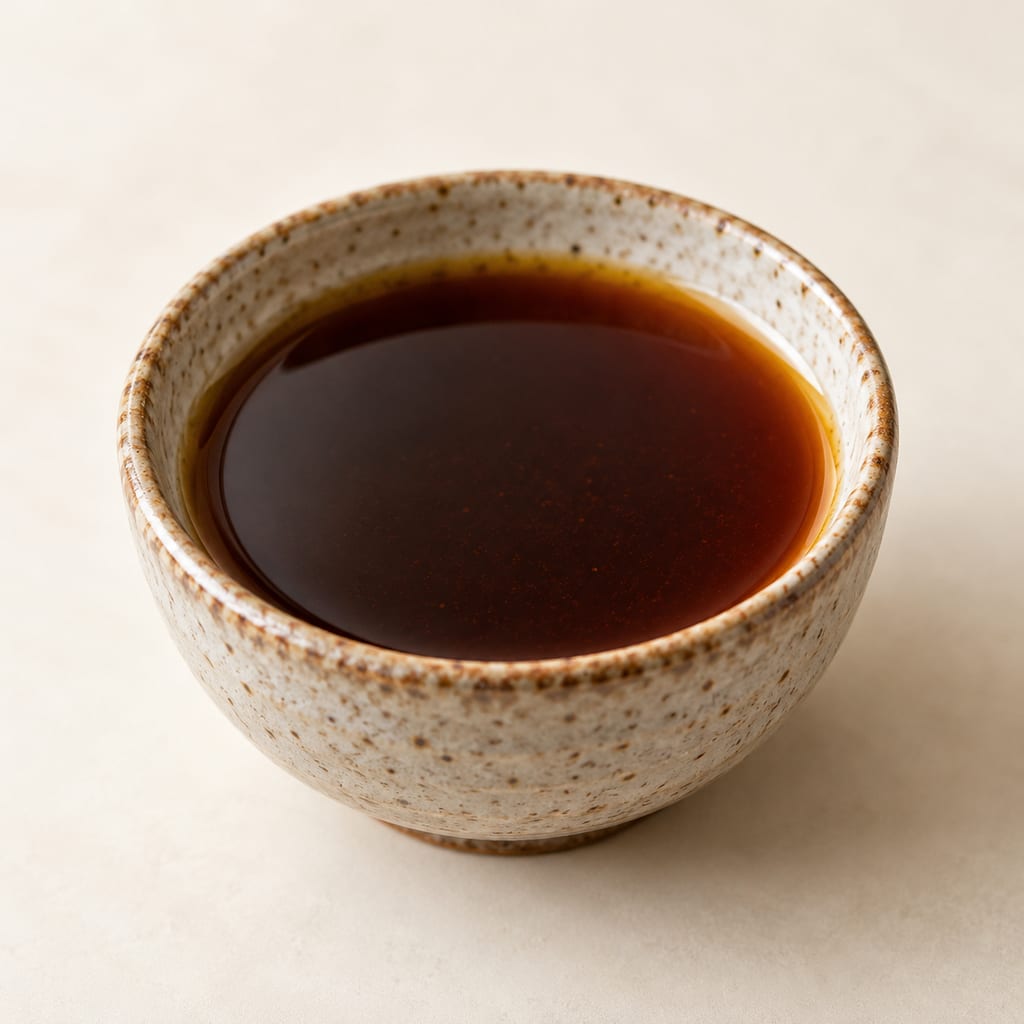
Chef Alex Perry makes this modern shrimp garum from Gulf white shrimp heads and shells, koji, water and salt. He holds the mash at 60°C for two months, then strains the liquid for use as a seasoning.
A chef’s shrimp garum on the Mississippi Gulf Coast
This is a modern, chef-documented shrimp seasoning made from the heads and shells left when Gulf white shrimp are peeled. Alex Perry’s formula adds koji, water and salt, then holds the mash at 60°C for two months before straining it. The name “garum” places the sauce in a broad culinary conversation about savory liquids made from animal material, but this particular recipe is not an ancient Roman formula or a documented continuation of one. It is a contemporary restaurant preparation; Perry’s first development date is not given.
The place matters as context, not as a claim of invention. Coastal Mississippi describes the Gulf and seafood industry as central to the region’s communities and food culture, and notes the area’s shrimping and processing history. The chef’s recipe belongs to that present-day coastal setting: it takes a familiar peeling by-product and makes it into a concentrated seasoning. The available account does not identify a traditional Mississippi shrimp garum, a local name for it, or a longer regional lineage, so none should be inferred from the setting.
A January 2021 article reproduces Perry’s Surf and Turf recipe and names him as the chef at Vestige in Ocean Springs. That is a dated attestation of this method, not a date of invention. The Coastal Mississippi article also presents the recipe among contemporary Gulf-coast chef recipes. These sources establish authorship, location and use more securely than they establish a production history. No household tradition, commercial production scale, or local supply chain for the condiment is described.
“Garum” is used here for an enzyme-led seasoning from shrimp heads and shells. It is useful as a family resemblance: the result is intended to be a savory liquid condiment, strained from an animal-protein mash. It does not mean that every sauce called garum shares a formula, fermentation ecology, age, or safety record. The word alone cannot establish that this shrimp sauce tastes like Roman fish sauce or like Southeast Asian fish sauces.
Historical fish garums and modern koji preparations are not interchangeable. Ancient Mediterranean fish sauces were made from fish and salt by methods involving endogenous enzymes and microbial activity; this record’s sources do not describe the Perry recipe as a historical reconstruction. Modern cooks also use “garum” for rapid, enzyme-assisted seasonings whose substrates and conditions differ. The general Modernist Food method is a separate technique; its standard ratios and timing cannot fill gaps in Perry’s recipe.
Research on sakura shrimp sauce offers a particularly clear comparison because it also uses shrimp and koji. Funatsu and colleagues studied minced sakura shrimp with shells, rice koji or shrimp koji, 15% salt, selected microorganisms in some batches, fermentation at 30°C for 24 weeks, then heating and filtration. That is a controlled microbial fermentation study, not Perry’s mash of heads and shells held at 60°C for two months. Its temperatures, organisms, salt level and results must stay attached to that study. It demonstrates that shrimp-and-koji seasonings can be made by a different route; it does not supply a missing specification for this one.
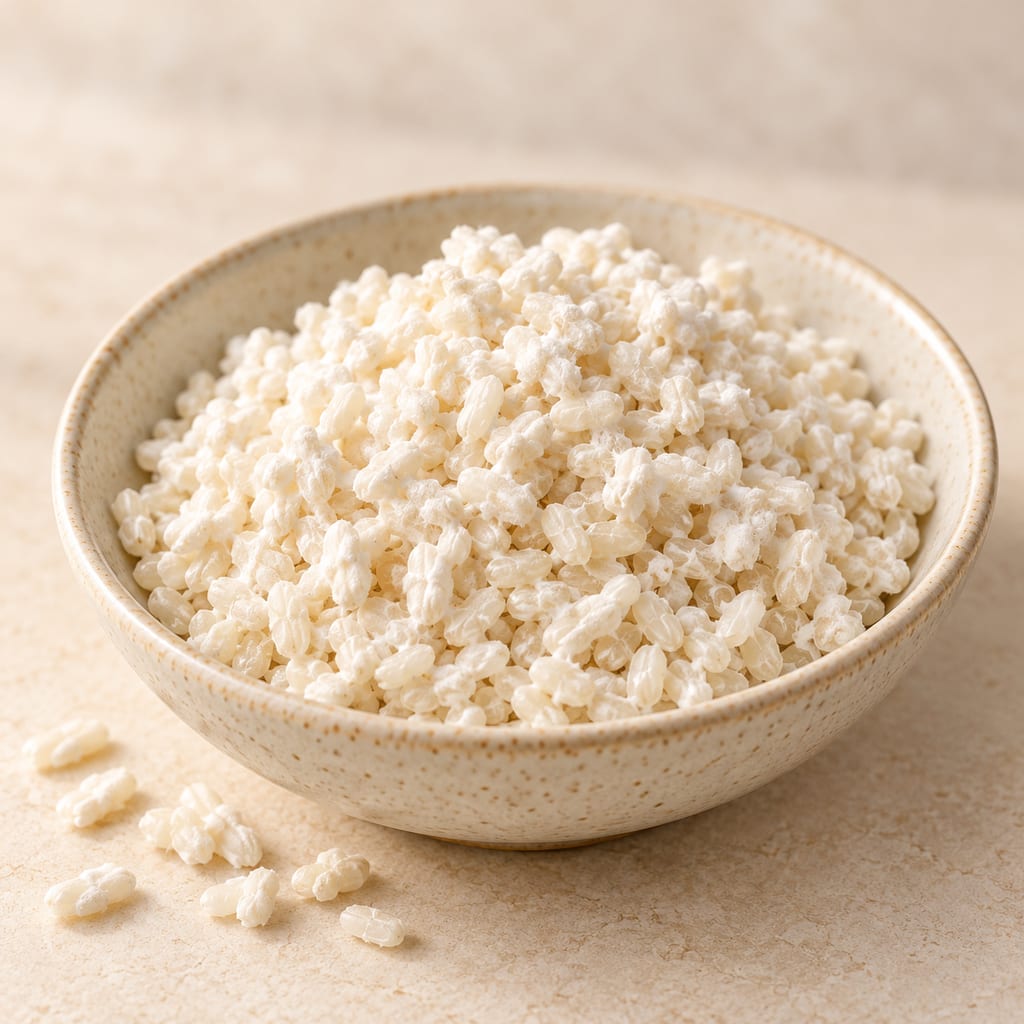
Koji is the enzyme-bearing ingredient in the chef’s formula, but the recipe does not identify its grain, mold species, preparation, or supplier. In koji-based seasoning methods generally, enzymes made during mold growth can hydrolyse proteins: proteases cut large protein chains into shorter peptides, while peptidases can release smaller peptides and free amino acids. Those smaller compounds can contribute savory taste and provide material for further reactions. This is a general explanation of enzyme-assisted amino-paste methods, not a laboratory analysis of Perry’s batch.
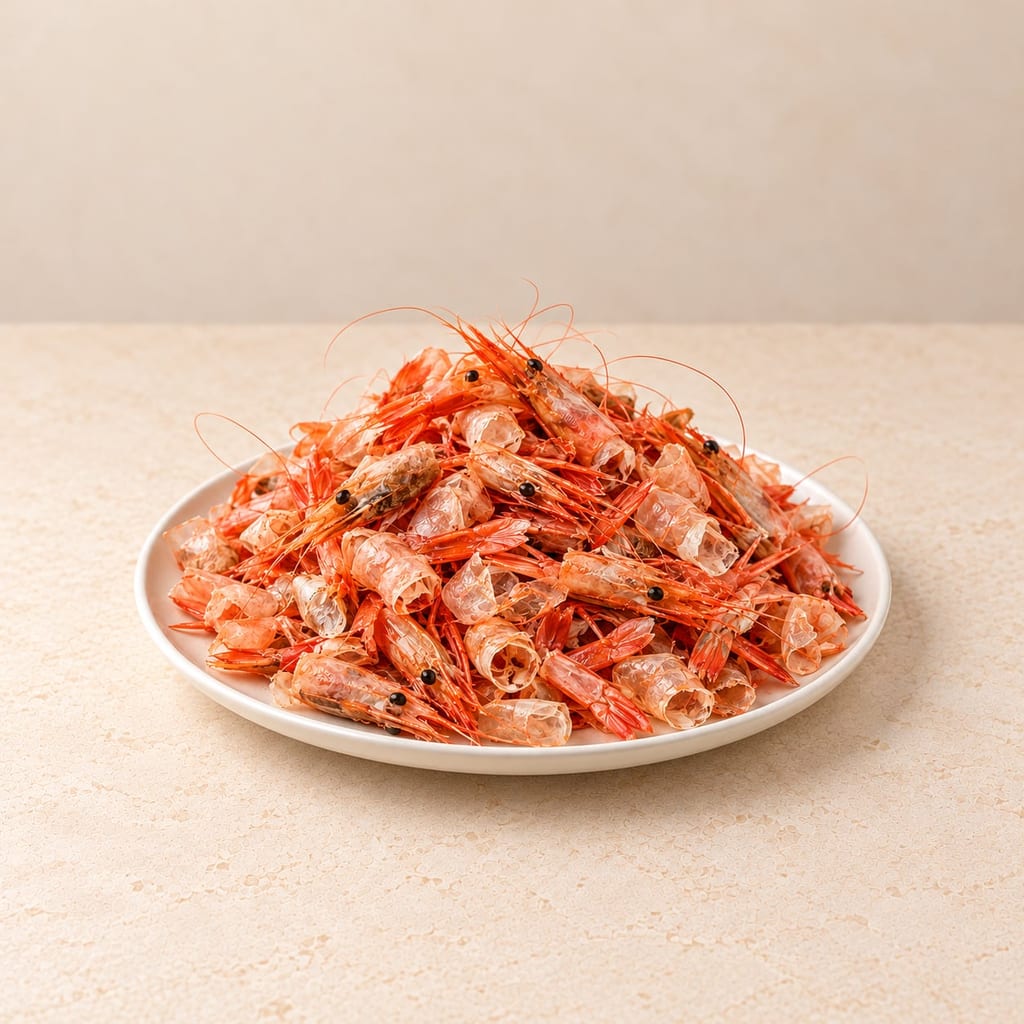
The shrimp heads and shells supply the animal material that the enzymes act on. Processing them to a chunky paste increases contact between the ingredients and breaks the material into a more uniform mash. The source does not give a particle size, a target texture, or separate weights for heads and shells. It also does not report measurements of amino acids, protein breakdown, pH, salt in the water phase, or yield. The intended transformation is clear from the garum method; its measured extent in this preparation is not.
Warmth changes the rate at which enzymes act, but it is not a simple on/off switch. Enzymes have different activity and stability across temperatures, and their performance depends on the actual koji and mash. The chef specifies 60°C and two calendar months; no temperature log, turning schedule, enzyme assay, or endpoint test accompanies the published recipe. The method is therefore best understood as a long warm enzyme-assisted digestion. Calling it “fermentation” in the recipe source does not by itself show which microorganisms remain active or what microbial changes occur.
The Japanese sakura-shrimp study makes the distinction visible. It followed a multi-month microbial fermentation at 30°C, measured changes during processing, then heated and filtered the product. Those documented microbial and chemical results belong to that formulation. They cannot be projected onto the Perry mash, whose specified temperature is much higher and whose process has not been similarly monitored or measured.
The recipe calls for one kilogram of shrimp heads and shells together. Perry obtains them while peeling Gulf white shrimp for the Surf and Turf dish. Saving both parts gives the seasoning its named crustacean base, while also making use of the material left from preparing the whole shrimp. The source does not specify whether the heads and shells are raw or cooked, how thoroughly they are rinsed, or how the amount is divided between them. Those omissions should remain visible rather than being filled with a different recipe’s practice.
The 225 grams of koji supplies the enzyme-rich component. Because the source only says “koji,” the grain and mold are unknown. It would be inaccurate to rewrite the ingredient as rice koji or name a particular Aspergillus species. Different koji substrates and cultures need not have identical enzyme profiles, so this recipe’s unspecified ingredient limits how precisely its mechanism can be described.
The chef adds 800 grams of water and 240 grams of salt. Water lets the crushed shrimp material, koji and salt mix into a mash that can be held together; salt seasons the mixture and affects its chemical and microbial environment. The recipe gives no measured salt concentration in the water phase and no validated preservation claim for this particular formula. Neither the quantity nor the word “salt” establishes a safe control on its own.
These amounts are the formula as published. The sources provide no tested scaling rule, substitute crustacean, alternate koji, or salt adjustment. Swapping shrimp for another seafood, using a different koji, or borrowing quantities from a quick-garum recipe would create a new preparation rather than a documented variation of Perry’s.
The sequence from peeling scraps to strained seasoning
First weigh the heads and shells saved from peeling the Gulf white shrimp. Perry’s published directions then process them until a chunky paste forms and transfer that paste to a large glass jar. The coarse paste keeps the ingredient identity recognizable while increasing the surfaces exposed to the koji, water and salt. No blade type, processing time, or fine-purée endpoint is prescribed.
Add the 225 grams of koji, 800 grams of water and 240 grams of salt, then mix thoroughly. The source specifies the weights but does not say whether the water is warm, whether the salt dissolves first, or whether a particular koji form is expected. It instructs the cook to press plastic wrap directly against the mash and seal the jar. This describes the chef’s covering and vessel, not a validated oxygen-control or preservation system.
The hold is two calendar months at 60°C. Retaining “two months” matters: the source does not define a fixed number of days, and there is no published schedule for stirring, opening, or sampling. It also gives no measured endpoint by which a reader could decide the mash is complete. The number is a record of Perry’s method, not a generally validated time-temperature safety process.
Finally, strain through a chinois into another vessel and refrigerate. Straining separates the liquid seasoning from the solids; it does not prove that pathogens or toxins have been controlled. The published recipe says the sauce may be refrigerated for up to a year, but that statement is not supported by process validation or measurements in the available sources. The structured method therefore records the chef’s instruction while keeping the absence of a validated shelf life explicit.
Perry uses the garum twice in one dish. Two teaspoons go into the beef-cheek filling for dumplings, where the sauce seasons the meat from within. At the end, he puts more into an atomizer and lightly mists the dumplings. One use distributes it through a rich filling; the other places a small amount on the surface so the eater encounters it with the browned wrapper and accompanying shrimp.
The wider plate is built around Gulf white shrimp and braised beef-cheek gyoza, with a beurre citron and a Jimmy Nardello pepper emulsion. The shrimp garum ties the seafood preparation to the beef filling without replacing either main ingredient. This is the clearest documented use of the sauce: a measured seasoning inside a dumpling and a fine finishing application over the assembled dish. The source does not provide a standalone tasting note or a general dosage for other foods.
The combination is one chef’s restaurant composition, not a traditional Mississippi pairing. It shows how a garum-like sauce can bridge ingredients from land and sea, and how using the peelings can connect the whole shrimp preparation to the finished plate. For other uses, the available sources do not document a standard list of pairings, so the Surf and Turf dish remains the reliable example rather than a claim that this particular garum is universally suited to any recipe.
This is a source-specific professional recipe, not a validated home-preservation process. The published instructions describe a sealed jar of shrimp material, koji, water and salt held warm for two months, but do not supply process validation, a measured pH or water activity, a water-phase salt measurement, or a validated endpoint. FDA seafood guidance treats hazards such as botulism and pathogen growth as process- and product-specific. It is context for understanding why these missing controls matter; it does not validate this recipe.
The separate Modernist Food discussion of animal-protein amino pastes likewise says its general enzyme-assisted method is not validated as a botulism control. That caveat applies to the method discussed there, not as a test of Perry’s jar, but it reinforces the need not to convert a culinary instruction into a safety guarantee. Refrigeration after straining is the chef’s direction; neither it nor the source’s one-year storage statement establishes a safe shelf life for this batch.
Shrimp is a crustacean and a priority food allergen. The finished seasoning is made directly from shrimp heads and shells, so its identity as shrimp-derived must be retained when it is used or served. The recipe’s original use places it in beef-cheek dumplings and on a plate with shrimp; a reader should not mistake “garum” for a non-seafood ingredient.
Finally, the method does not state that the shrimp are raw or cooked, and it offers no sensory test for completion. Smell, taste, appearance and a long hold cannot substitute for process measurements. The account preserves the chef’s published quantities and sequence as documentation while stating plainly what the sources do not establish.
Chef Alex Perry’s Surf and Turf recipe at Vestige pairs Gulf white shrimp with beef-cheek dumplings and uses a condiment made from the shrimp heads and shells. The chef’s formula combines those parts with koji, water and salt, then holds the mixture at 60°C for two months. A January 2021 reproduction attributes the dish to Perry in Ocean Springs, Mississippi; the date establishes an attestation, not the condiment’s invention. He uses two teaspoons of the garum in the dumpling filling and mists more over the plated dumplings. This is a contemporary restaurant use of the word garum for a crustacean and koji sauce. A Japanese study of minced shell-on sakura shrimp used a different microbial process; it does not describe Perry’s preparation.
Botulinum toxin in low-acid reduced-oxygen seafood
FDA guidance identifies seafood and reduced-oxygen preservation as relevant to C. botulinum. This chef recipe has no measured pH, water activity, water-phase salt or validated control.
Hazard source
Crustacean allergen
The sauce is made with shrimp heads and shells, and shrimp is a priority crustacean allergen.
Hazard source
Strain and refrigerate as the chef directs; do not treat his one-year refrigerator claim as a validated shelf life.
Control source
Identify the sauce as containing shrimp.
Control source
The source gives no process validation or measured endpoint for this low-acid seafood sauce. Its one-year refrigerator claim is not an independently supported storage limit. The sauce contains shrimp, a crustacean allergen.
Weigh 1 kg shrimp heads and shells saved while peeling Gulf white shrimp.
Process the heads and shells until they form a chunky paste. Transfer the paste to a large glass jar.
Add 225 g koji, 800 g water and 240 g salt. Mix thoroughly, press plastic wrap directly against the mash and seal the jar.
Hold at 60°C for two months, following the chef’s specified method. The source gives no stirring schedule or measured endpoint.
Strain the liquid through a chinois and refrigerate. The source gives no validated shelf life, pH, water activity or water-phase salt measurement.
Conditions
Temperature60°C
Temperature controlIncubated
Maturation
No humidity limit is supplied by source.
Places
Ocean Springs
Documented preparation · Locality evidence
The chef and restaurant are associated with Ocean Springs; this is a documented modern preparation, not an origin or traditional regional claim.
Koji is steamed grain — rice, barley, soybean or wheat — grown out with a food-grade Aspergillus mold until the kernels carry working enzymes. It is bought or cultivated, and it converts starch and protein for the foods that follow.
Afghan coriander chatni is a sharp, hot herb sauce with garlic and vinegar. A 2008 Afghanistan manual records green or red pepper and optional walnut; heat and household versions vary.
A modern cornmeal-and-wheat cornbread that King Arthur Baking describes as a compromise between Northern and Southern styles. The batter is baked in a pan or as muffins and served warm.
Anadama is a New England yeast loaf made with wheat flour, cornmeal and molasses. Scalded cornmeal enriches the dough, while molasses lends sweetness and a dark crust; it is especially good toasted or beside soup and baked beans.
Apple butter is a smooth, concentrated apple preserve cooked with cider, vinegar, two sugars and spices, then hot-filled and processed in a boiling-water canner using the published jar-size and elevation schedule.
Cooked-bean koji garum is a dark liquid seasoning made from soft-cooked beans, rice koji, salt and water. A long warm hold lets koji enzymes break down the mash.
Mushroom garum turns mushrooms, rice koji, salt and water into a dark savoury seasoning. A sustained warm hold lets koji enzymes break down the mixture before straining.
A late-antique Roman recipe in which very ripe pears are crushed with salt, matured for three months and drained, giving a pale liquid called liquamen.
Meat-trim koji garum is a savoury liquid seasoning made by holding meat scraps with rice koji, salt and water at steady warmth before straining the mash.
Mushroom garum is a savoury, smoked sauce made by crushing mushrooms with salt and rice koji and letting the mixture brew for months, a modern use of the garum method without fish.
Yellow-pea koji garum is a dark liquid seasoning made by holding cooked split peas with rice koji, salt and water while the koji enzymes break down the mash.
Soft, spreadable Calabrian pork sausage made with a great deal of red chilli and fatty pork, stuffed into natural casings, sometimes smoked and matured while staying soft.
A way to add independent temperature logging to an existing food dehydrator without changing its built-in controls or protections. It is a monitoring method, not a rewiring plan.
Pleurotus cystidiosus is the abalone mushroom, a cultivated oyster-type fungus with dark brown caps that grows more slowly and is more demanding than other Pleurotus species.
A dark, balanced vinegar from Emilia-Romagna made by combining cooked or concentrated grape must with wine vinegar, then acetifying and refining it in wood under a protected specification.
A small electric incubator holds jars at a selected temperature for yogurt and other documented warm food preparations. Controls, capacity and vessel arrangement vary by model.
Adygean salt is a seasoned table salt associated with Adygea and the wider North Caucasian culinary tradition. Salt is blended with garlic and a variable selection of herbs and spices; the exact mix depends on the named style and maker.
The African Caesar-group mushroom, Amanita masasiensis, is a wild ectomycorrhizal species of central and southern African woodlands, eaten locally. The genus contains deadly poisonous species, so identification needs care.
Community
No community contributions have been published for this entry yet.
Share what you made
Sign in to contribute. Published comments and photos are free to read.
Names shrimp-shell trim as a possible substrate for a distinct generic quick-garum method; its mushroom/legume default formula does not establish this chef recipe.
Cited in: What the name does—and does not—tell us; Enzymes, warmth and the limits of what is known
Explains enzyme-assisted warm amino paste as a general mechanism and notes that the animal-protein method is not validated for botulism control; not this chef recipe.
Cited in: Enzymes, warmth and the limits of what is known; Why these four ingredients are used; Reading the method with care
Chef Alex Perry’s Shrimp Garum uses 1 kg shrimp shells and heads, 225 g unspecified koji, 800 g water, 240 g salt, 60°C for two months.
The garum seasons beef-cheek dumpling filling and is misted onto dumplings in Surf and Turf.
Cited in: A chef’s shrimp garum on the Mississippi Gulf Coast; Why these four ingredients are used; The sequence from peeling scraps to strained seasoning; From seasoning a dumpling to misting the plate
Published 8 January 2021 and attributes recipe to Alex Perry of Vestige, Ocean Springs, Mississippi.
Reproduces the same shrimp head-and-shell formula and method.
Cited in: A chef’s shrimp garum on the Mississippi Gulf Coast; What the name does—and does not—tell us; Why these four ingredients are used; The sequence from peeling scraps to strained seasoning; From seasoning a dumpling to misting the plate