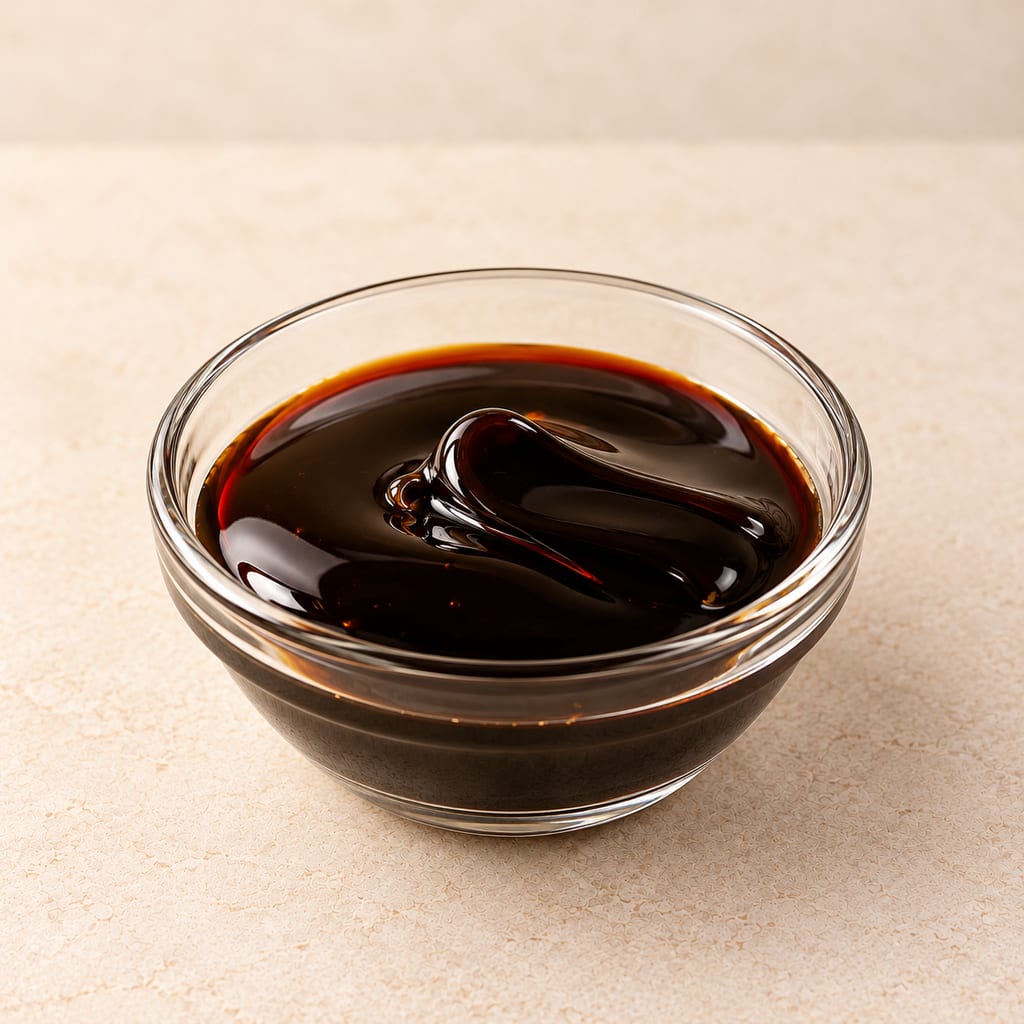
Molasses / dark treacle
Molasses is the syrup separated as sugar crystallises from cane or beet; its grades and food uses vary, from Anadama and steamed brown bread to fermentation.
 FermenteaWhere food goes to change
Traditional method
Anadama bread · New England Anadama bread
Anadama is a New England yeast loaf made with wheat flour, cornmeal and molasses. Scalded cornmeal enriches the dough, while molasses lends sweetness and a dark crust; it is especially good toasted or beside soup and baked beans.
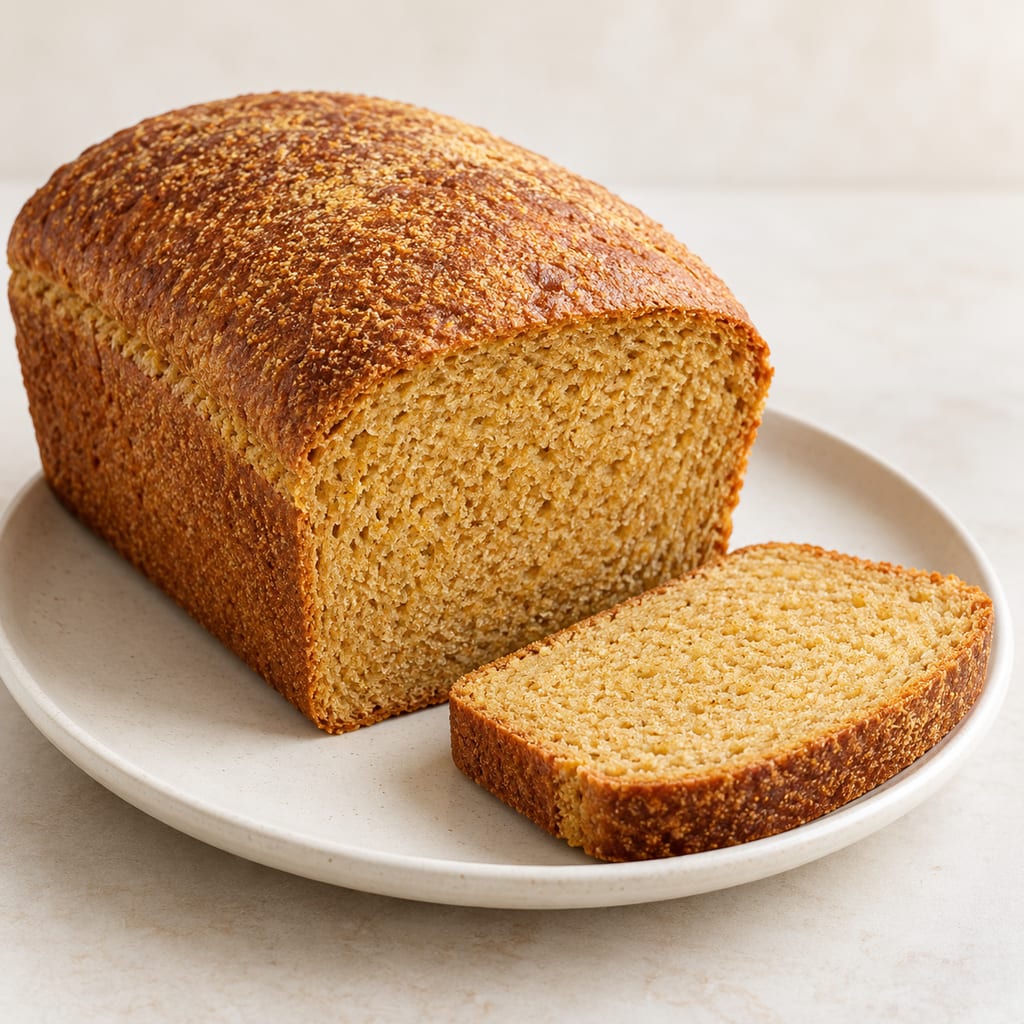
Anadama is a yeast-raised wheat loaf in which cornmeal and molasses change both the flavor and the eating texture. It is associated with New England and appears in several distinct home-baking formulas. King Arthur Baking's one-loaf version uses yellow cornmeal and a blend of all-purpose and whole-wheat flour; it is mixed as a kneaded dough, shaped in a pan and baked as a sandwich loaf. The inclusion of cornmeal gives the bread a grain character unlike a white pan loaf, while molasses sweetens and darkens it.
The loaf is not a single immutable formula. Published versions vary in the amount and grind of cornmeal, the type of molasses, the flour blend, whether milk or butter is included, and whether the dough is kneaded or handled more like a batter. The recipe below follows King Arthur's current one-loaf method so that its quantities and rise cues belong to one coherent batch. Other documented versions are described separately rather than blended into it.
The name Anadama first appears in print in 1915, according to Yankee Magazine, which also says the bread was probably already being baked in New England kitchens. The date is evidence for a written attestation of the name, not proof that the bread began in 1915. The article ties the food to a region where cornmeal and molasses were familiar pantry ingredients, and its recipe is explicitly a New England version.
The best-known explanation for the name tells of a Gloucester fisherman who returned home to find cornmeal porridge and molasses for supper, added flour and yeast, and muttered a complaint about Anna. Yankee presents this as local legend. It is memorable, but the story has no settled documentary proof in the material consulted. The page therefore treats it as folklore, not a biographical fact about a named couple or the invention of the loaf.
That distinction matters because historical recipes often travel through households without a reliable inventor or exact first date. Anadama's long association with the Massachusetts coast and New England is meaningful even when a single birthplace cannot be demonstrated. Contemporary regional recipes still keep its cornmeal-and-molasses identity visible, while adapting flour proportions and loaf technique to modern kitchens.
Wheat flour forms the elastic network that holds the gases made by yeast. The all-purpose flour supplies the main dough structure; a smaller portion of whole-wheat flour adds bran and germ along with a fuller grain flavor. King Arthur's formula keeps wheat flour as the majority because cornmeal itself does not create the gluten network that traps gas. A dough with too much dry flour can become stiff and rise poorly, while a very slack dough may lose the shape expected of a pan loaf.
Cornmeal is the defining grain addition. In this method it is combined with boiling water before the yeast goes in. The water hydrates the meal and softens its particles, so they are incorporated through the dough instead of remaining dry grit. Its proportion must be held in balance with the wheat flour: it changes the crumb and grain taste, but replacing the wheat flour with cornmeal would remove the structure this yeast-raised loaf depends on.
Molasses brings its own sweetness, dark color and strong flavor. It also supplies sugars to the dough, though yeast can ferment sugars derived from flour as well. It is not merely a topping or a colorant; it shapes the characteristic taste that makes Anadama useful with savory meals as well as with butter or jam. Dark molasses is preferred in the King Arthur formula, but other published recipes use blackstrap or lighter types. Those choices make different loaves and are not interchangeable guarantees of the same flavor.
Butter and dry milk make this particular formula richer than a basic lean loaf. Butter adds fat and a soft, tender quality; dry milk contributes dairy solids without adding extra liquid. Salt seasons the bread and moderates yeast activity. The recipe's water is a range rather than one universal number because flour and meal absorb differently as humidity and storage conditions change. Begin at 227 g, the base formula, and use the published upper amount only when dry conditions warrant it.
Instant yeast is the living leaven in this version. Given moisture and food, baker's yeast ferments available sugars and releases carbon dioxide. Kneading develops the wheat gluten so the dough can stretch around those gas bubbles; as the dough rises, the expanding network holds them and increases its volume. Yeast activity depends on dough conditions, so a rise time is a guide, not a timer that overrides what the dough looks like.
The cornmeal scald is cooled before yeast enters the bowl. This is both a texture decision and a practical temperature boundary: the hot water softens the grain, but the mixture must return to lukewarm so it does not harm the yeast. King Arthur then gives the combined flour and meal a short rest before kneading, allowing dry ingredients to take up liquid. That absorption rest helps the baker judge the dough after the grain has had time to hydrate.
Salt contributes flavor and tempers fermentation. Molasses changes the dough's sugar load and adds moisture, and the wheat flour provides the gluten-forming proteins that hold gas. Together these factors explain why the loaf needs a balanced dough rather than an arbitrary flour addition. The target is smooth and moderately firm, still a little tacky at the surface; dry fissures signal that the dough needs more water, not more kneading alone.
Whisking salt with the cornmeal first helps distribute the seasoning before the hot liquid binds the mixture. The butter melts in the boiling water, and the molasses disperses more easily while the mixture is warm. It then cools before flour and yeast are introduced. This sequence also keeps the method readable: first hydrate and soften the coarse grain, then make a yeast dough from the cooled base.
Mix in the dry milk, both flours and instant yeast until no dry patches remain. The 20-minute rest is not a fermentation stage to extend indefinitely; it gives the flour and cornmeal time to take up the liquid before kneading. Afterward, knead until the dough becomes smooth. King Arthur describes it as firmer than ordinary bread dough yet still somewhat sticky. If the surface is cracked and the mass feels dry, add water gradually, remaining within the source's 255 g top amount rather than compensating with a large scoop of flour.
The method is designed for a single pan loaf. After the first rise, gently deflate the dough and form a log to fit the pan. Pressing out large gas pockets at this stage is less important than shaping evenly: a consistent log fills the pan without leaving one end disproportionately thin. The seam belongs underneath so the loaf keeps a clean top as it rises and bakes.
The first rise takes about an hour in the King Arthur formula, until the dough is nearly doubled. Temperature in an ordinary kitchen changes that timing, so look for expansion and a puffy feel rather than assuming that exactly one hour is correct in every room. After shaping, the second rise is longer in this method: the center should stand at least an inch above the rim of the 8½-by-4½-inch pan. This visible crest gives the dough room to expand further in the oven.
Preheating toward the end of the second proof avoids holding a fully risen loaf while an oven warms. Baking at 350°F (177°C) for 35 to 40 minutes allows the loaf to set and brown. Molasses darkens the dough, so a browned surface alone is not a precise doneness cue. The source's internal target of 190°F (88°C) gives a more specific check for the center. A loose foil tent during the final 15 minutes can reduce further crust darkening if the baker prefers a lighter finish.
Let the loaf rest in its pan for about 10 minutes, then transfer it to a rack. Cooling allows the crumb to settle before slicing; cutting immediately can compress a warm loaf. The result should be a sliceable, tender bread with a brown crust and a close, cornmeal-flecked crumb. The recipe's success comes from balancing meal hydration, gluten development and proofing, not from maximizing rise at every stage.
Cornell Cooperative Extension's version demonstrates how much the flour and cornmeal proportions can change while preserving the bread's named character. It cooks a smaller amount of cornmeal into a thickened paste, uses molasses, butter, active dry yeast and all-purpose flour, and can be made with whole-wheat flour and blackstrap molasses. That is a separate formula with its own amounts and method, not a direct swap for the King Arthur batch.
A 1958 recipe reproduced by Historic Oregon Newspapers uses a much stickier batter and a single pan rise; it includes an egg and does not use the same conventional kneading and shaping path. This dated version documents that Anadama has circulated in more than one household form. Its existence does not make the batter method a universal older original, and its ingredient ratios should not be combined with the kneaded loaf above.
Modern bakers also adapt the flavor profile to natural leavening. King Arthur's professional Night Moves formula uses sourdough starter, a 40 percent whole-wheat flour share, toasted grits, chopped hominy and a staged bulk ferment with folds. It is a contemporary artisan interpretation, not the same bread method as the instant-yeast pan loaf. Rye appears as an optional flour variation in King Arthur's home recipe. Each of these choices changes hydration, fermentation time, crumb and flavor, so it is clearer to treat them as named variations than to add them all to one master formula.
Anadama is practical as well as distinctive: its pan shape gives even slices for sandwiches, while the molasses note works with savory meals. Yankee describes the aroma and flavor as sweet and nutty and serves the bread warm or at room temperature. King Arthur suggests it with soup, stew and baked beans, or toasted with butter and honey. These uses make sense of its slightly sweet crumb without treating it as a dessert loaf.
Toasting deepens the brown edges and makes the loaf a natural partner for butter, preserves or a savory spread. Fresh slices can accompany soup or beans; a sandwich filling can be sweet, salty or smoky, since the molasses supplies a mild background rather than a glaze. Because published formulas differ in sweetness and whole-grain content, pairings should be adjusted to the actual loaf rather than assuming every Anadama is equally sweet or dark.
These serving traditions also help distinguish the bread from plain corn bread. Anadama is a risen wheat loaf with cornmeal in the dough, not a skillet cornbread or a chemically leavened quick bread. It slices and toasts like bread while carrying a cornmeal-and-molasses flavor profile associated with New England.
If the dough feels dry and cracks during kneading, King Arthur's baker notes that the bread may rise poorly and bake up crumbly or heavy. Add water in small increments, giving the dough time to absorb it; the source's base-to-maximum range is a useful boundary. Avoid correcting every sticky feel with flour. The stated dough is supposed to retain some tackiness, and flour added by handfuls can make the crumb denser than intended.
If the loaf rises slowly, check the dough's condition and the room rather than forcing a clock. Yeast activity varies with warmth and freshness, and a dough enriched with molasses and milk differs from a lean white dough. A too-short rise can leave a compact loaf; a very extended rise can weaken the dough so it no longer holds its shape. The recipe's near-doubling and pan-crest cues provide practical endpoints without inventing a precise proofing temperature.
Crust color can be deeper than a white loaf because molasses contributes color and the recipe contains milk solids. If the top is darkening before the center is baked, use the source's foil tent late in the bake. The specified 190°F (88°C) center temperature, rather than appearance or a hollow-sounding crust alone, is the formula's more precise finish cue. These are quality cues for this recipe, not a way to assess food safety outside the complete baking method.
Do not taste the mixed dough before baking. The Centers for Disease Control and Prevention notes that uncooked flour may carry E. coli or Salmonella and advises baking according to the recipe, then washing hands, bowls, utensils and work surfaces that touched raw flour or dough. A yeast rise changes dough volume but does not make raw flour safe to eat; the loaf must be baked.
The dough contains wheat and milk ingredients. People with allergies to either should avoid it or choose a separately formulated alternative; substituting another flour or milk changes structure and is not a tested version of this formula. The sources consulted do not establish a shelf-life claim for this exact loaf, so this page does not assign one.
Yankee Magazine describes Anadama as a New England bread distinguished by cornmeal and molasses and reports that the name appeared in print in 1915. That printed attestation is not an origin date. The Gloucester fisherman and Anna story is a popular local legend, not a proved account.
Yield 1 8½-by-4½-inch loaf · Scaling: source batch only
Uncooked flour may carry E. coli or Salmonella. The dough is not ready to eat until baked.
Hazard sourceDo not taste or eat raw dough. Bake the loaf according to the recipe, then wash hands, bowls, utensils and counters that contacted raw flour or dough.
Control sourceContains wheat and milk ingredients.
Do not taste the uncooked dough; wash hands, bowls, utensils and counters after handling raw flour.
The recipe is associated with New England, especially the northern Massachusetts coast in the regional tradition; this row does not assign a unique birthplace.
Molasses is the syrup separated as sugar crystallises from cane or beet; its grades and food uses vary, from Anadama and steamed brown bread to fermentation.
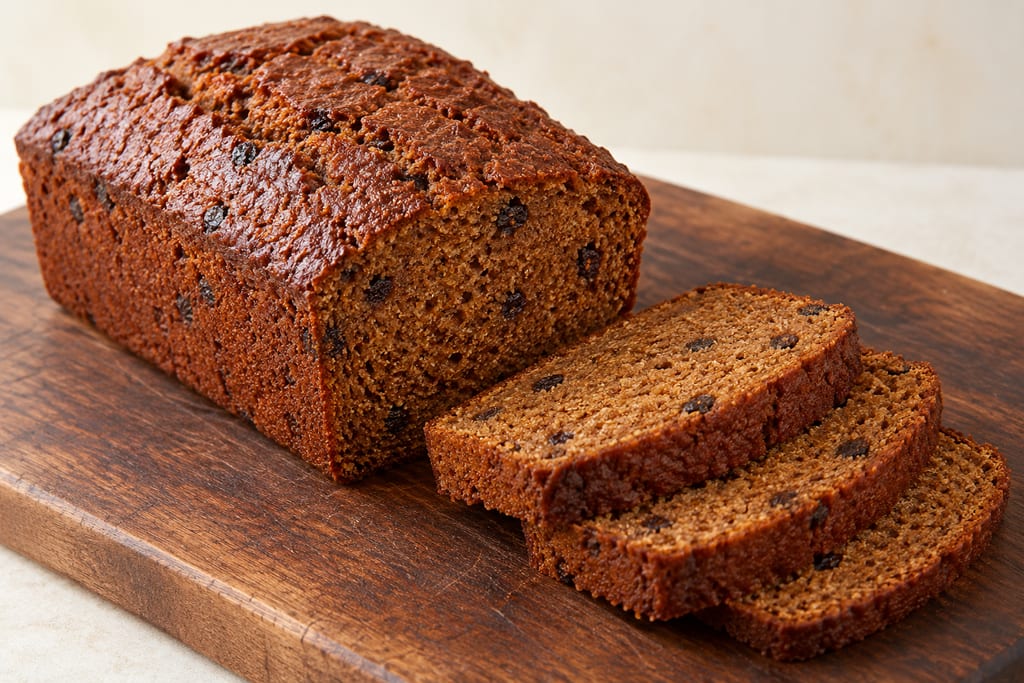
A molasses-sweetened rye, wheat and cornmeal batter that can be steamed on the stovetop or baked in a covered pan.
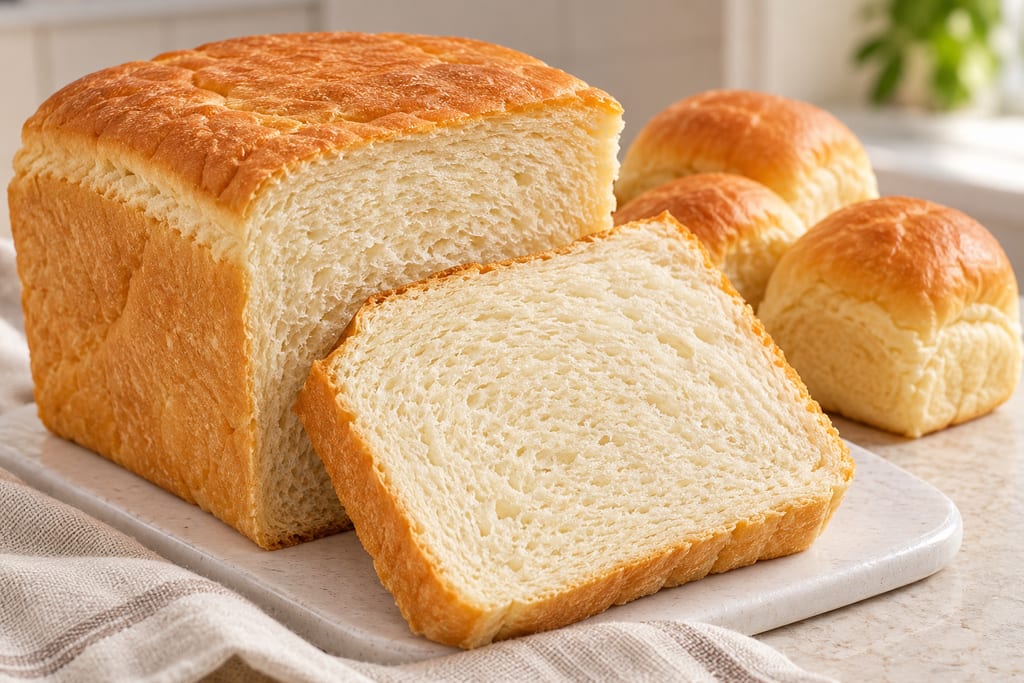
This softer home-style Agege bread uses a scalded flour paste, an enriched yeast dough and a 9×5-inch loaf pan, with rolls from the extra dough.

A yeast-raised wheat ring shaped from a firm dough, briefly boiled and baked. This source-batch formula gives a gently malted crust and a chewy crumb.
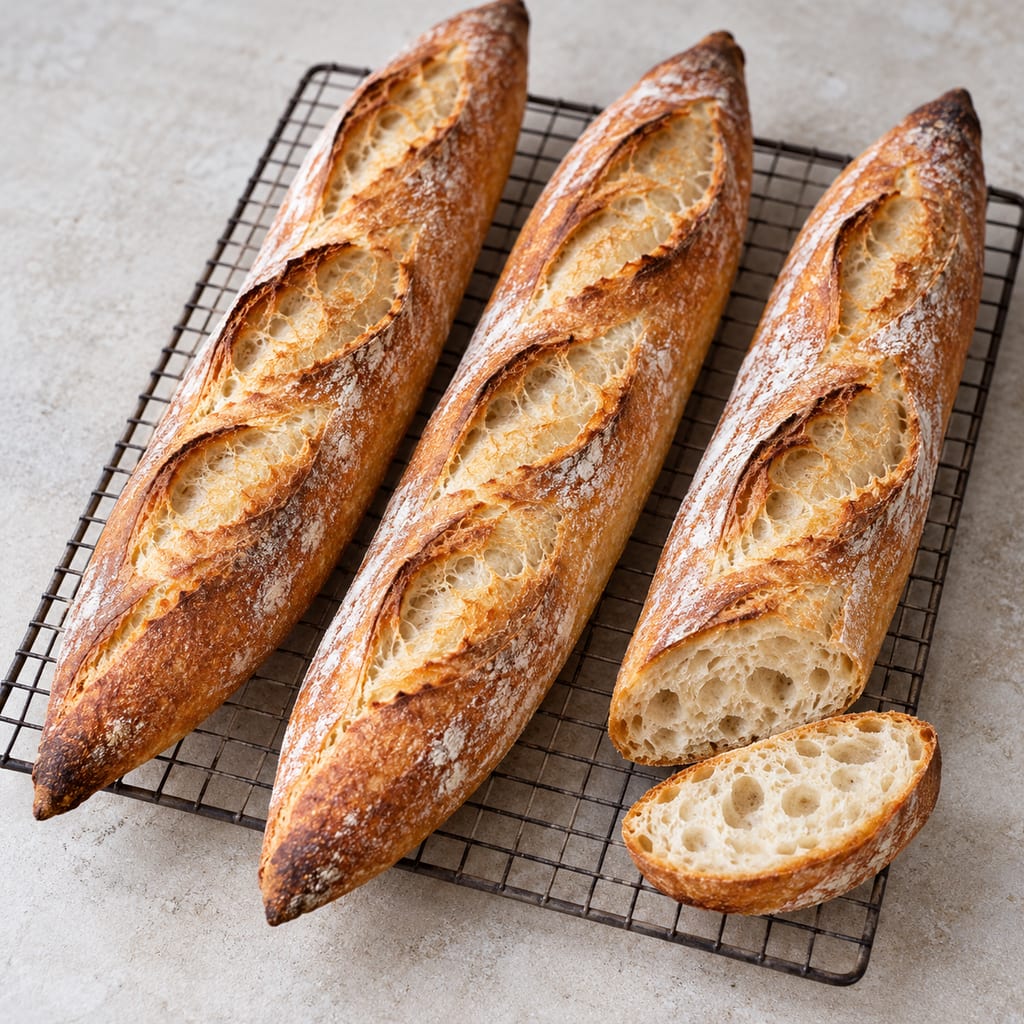
Three long, crusty wheat loaves made with an overnight yeast poolish, shaped by hand and baked with steam for a crisp crust.
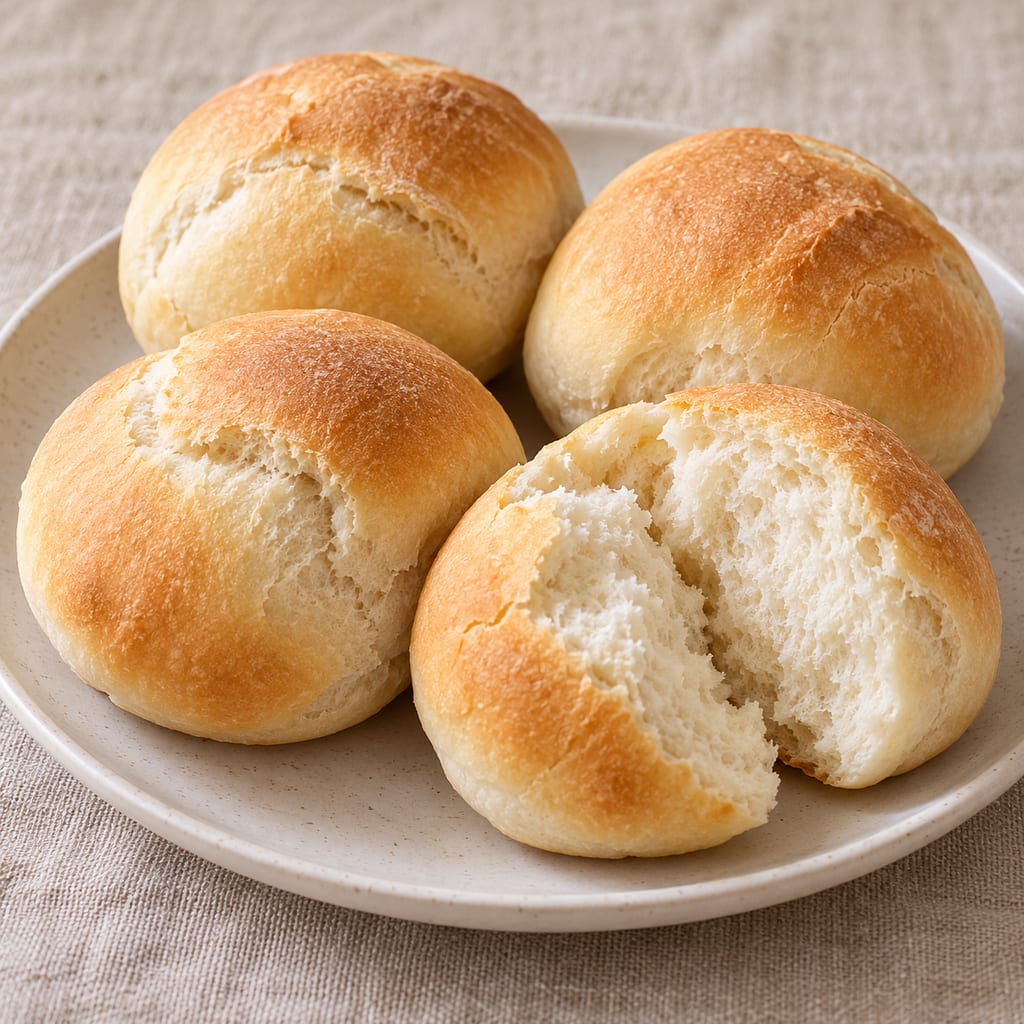
A lightly salted, yeast-raised Barbadian roll, baked in a dozen-roll home batch and often split for cutters.
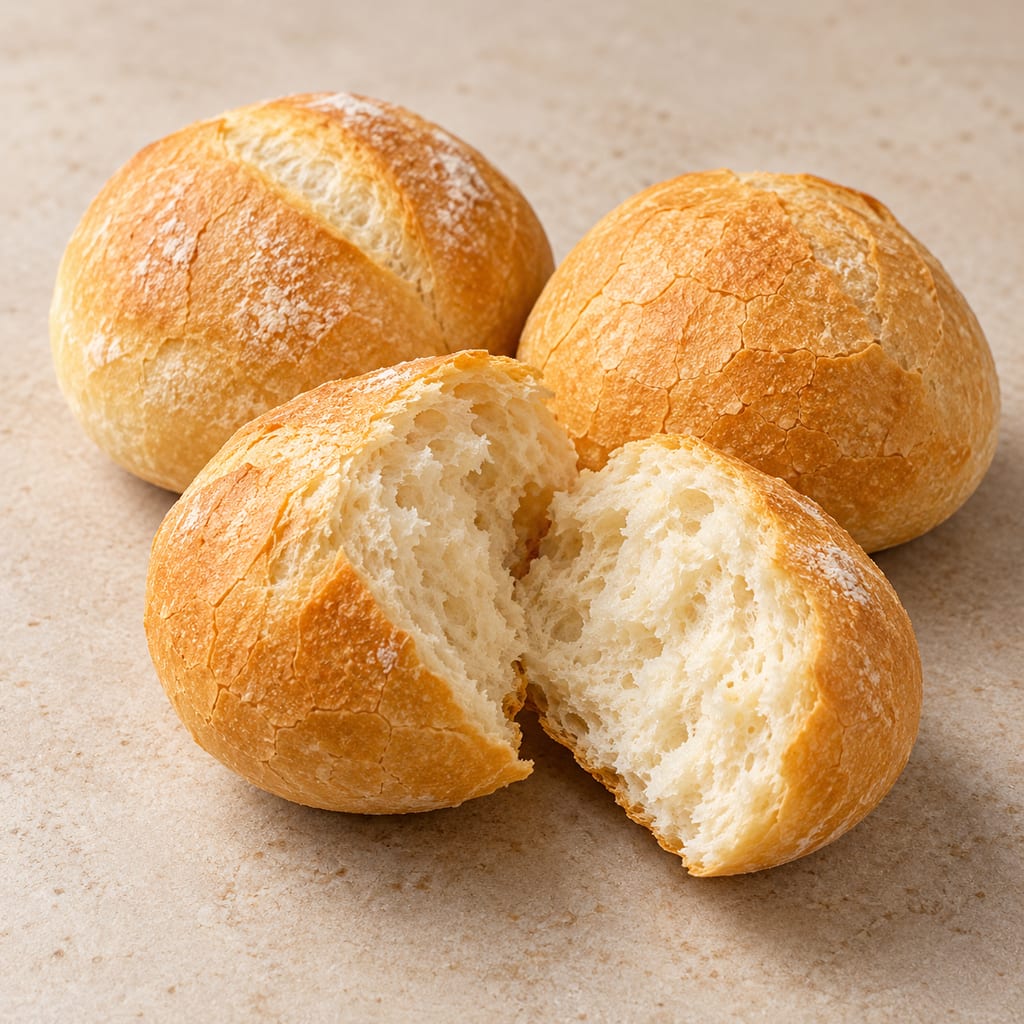
A crisp Belgian roll made from a supplier’s Croc-flour dough, mixed by hand or machine, proofed in rounds and baked with steam.
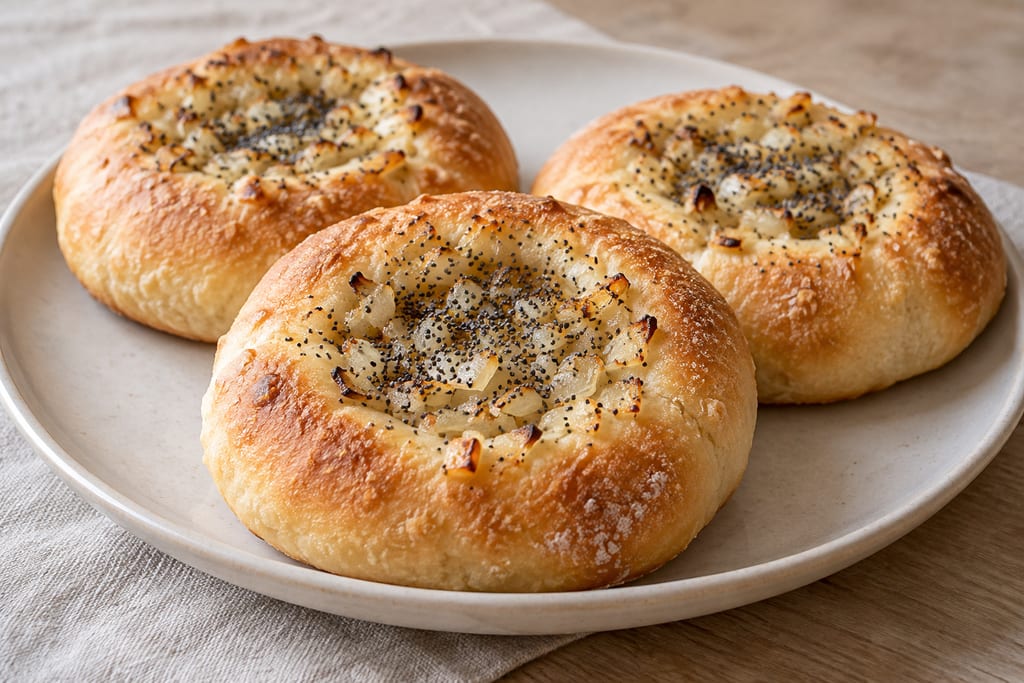
Bialys are soft, yeasted wheat rolls baked without boiling, each shaped with an onion-filled central depression instead of a hole.
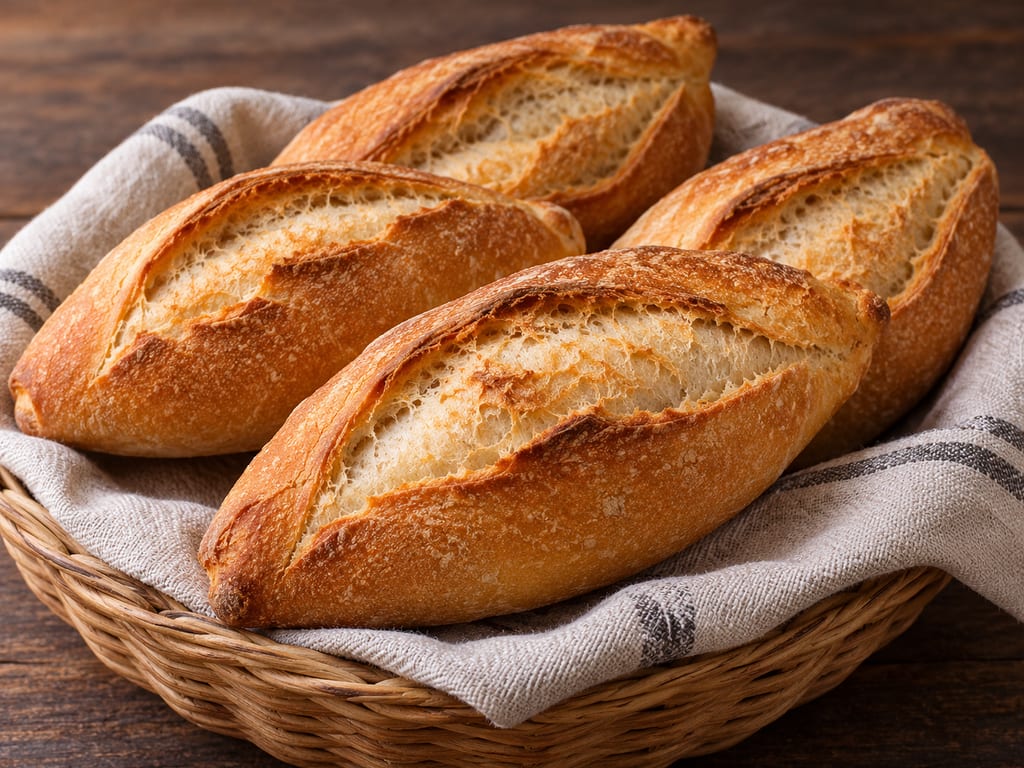
A measured, commercial-yeast home method for Guadalajara-style birote salado, with a six-hour preferment, shaped rolls and a two-temperature steam bake. This formula contains no egg.
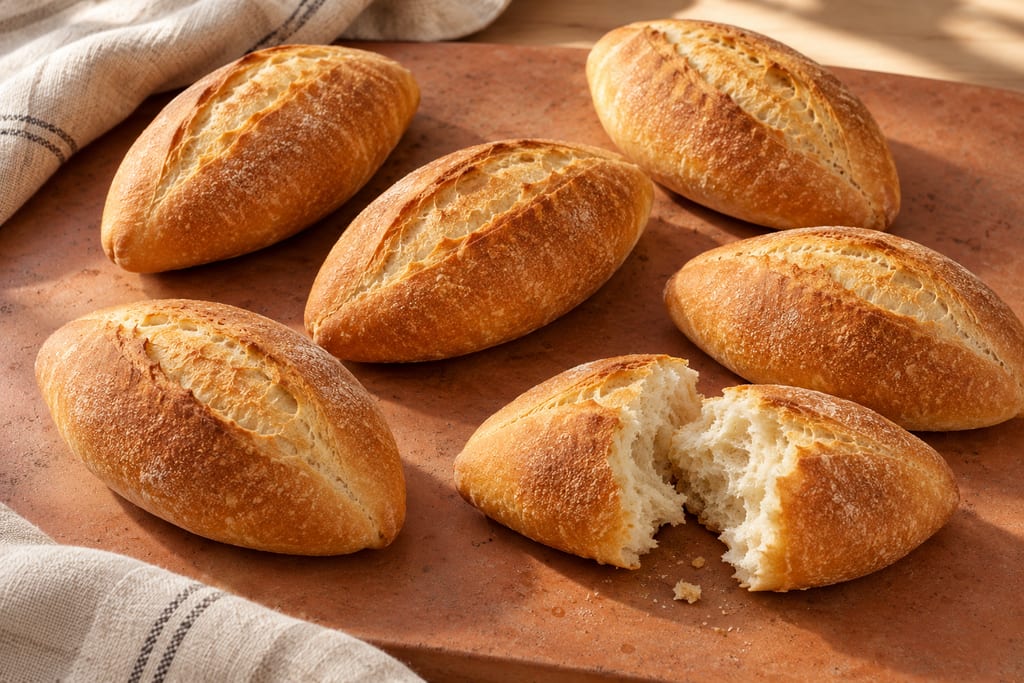
Small, lightly enriched rolls with tapered ends and a scored top; this six-roll formula bakes on a hot stone with steam for a thin, crisp crust.

Soft, spreadable Calabrian pork sausage made with a great deal of red chilli and fatty pork, stuffed into natural casings, sometimes smoked and matured while staying soft.

A way to add independent temperature logging to an existing food dehydrator without changing its built-in controls or protections. It is a monitoring method, not a rewiring plan.

Pleurotus cystidiosus is the abalone mushroom, a cultivated oyster-type fungus with dark brown caps that grows more slowly and is more demanding than other Pleurotus species.

A dark, balanced vinegar from Emilia-Romagna made by combining cooked or concentrated grape must with wine vinegar, then acetifying and refining it in wood under a protected specification.

A living dairy inoculum that starts controlled cream fermentation, developing acidity and aroma before sour cream or cultured butter is finished.

A small electric incubator holds jars at a selected temperature for yogurt and other documented warm food preparations. Controls, capacity and vessel arrangement vary by model.

Adygean salt is a seasoned table salt associated with Adygea and the wider North Caucasian culinary tradition. Salt is blended with garlic and a variable selection of herbs and spices; the exact mix depends on the named style and maker.

The African Caesar-group mushroom, Amanita masasiensis, is a wild ectomycorrhizal species of central and southern African woodlands, eaten locally. The genus contains deadly poisonous species, so identification needs care.
No community contributions have been published for this entry yet.
Sign in to contribute. Published comments and photos are free to read.
King Arthur BakingMethod · Ingredients · Timing · Baking
New England Anadama Bread RecipeOne-loaf formula with yellow cornmeal, salt, butter, dark molasses, boiling water, dry milk, all-purpose flour, whole-wheat flour and instant yeast.
The recipe gives a humidity- and season-dependent water range, a 20-minute absorption rest, kneading, two rises, an 8½-by-4½-inch pan, 350°F baking and a 190°F internal doneness cue.
Cited in: A loaf built from cornmeal and molasses; What each ingredient contributes; From scalded meal to kneaded dough; Proofing and baking by cues; A family of documented formulas; At the New England table; Interpreting the dough and the baked loaf; Handling and food safety
Yankee MagazineHistory · Geography · Cultural use · Variation
Anadama BreadThe name first appeared in print in 1915 according to the article, which says the bread was probably made in New England earlier; this is an attestation, not an origin date.
The familiar Gloucester fisherman and Anna story is presented as local legend rather than proved history.
Cornmeal and molasses distinguish the loaf in the article; it is served warm or at room temperature and the dough is baked in two loaf pans.
Cited in: A loaf built from cornmeal and molasses; A New England bread, with an uncertain origin story; At the New England table
King Arthur BakingScience · Technique · Ingredients
Yeast BakingWheat flour supplies the gluten-forming structure that traps gas produced by yeast.
Yeast fermentation makes carbon dioxide that expands dough; salt tempers yeast activity and water amount changes dough texture and rise.
Cited in: What each ingredient contributes; Yeast, dough structure and the two rises; Interpreting the dough and the baked loaf
King Arthur BakingScience · Technique
How to Bake BreadDuring proofing, yeast consumes sugars and produces carbon dioxide; the dough's extensible gluten network holds the gas as it expands.
Proofing progress can be judged by physical cues such as dough expansion rather than a fixed clock alone.
Cited in: Yeast, dough structure and the two rises; Proofing and baking by cues
King Arthur BakingTechnique · Serving · Troubleshooting
New England Anadama Bread: Rediscovering (and recovering) a baking classicA King Arthur baker describes heating cornmeal with boiling water, molasses, butter and salt, cooling the mixture before adding yeast and flour, then kneading and proofing.
The source identifies dry, cracked dough as a warning for a heavy crumb and demonstrates correcting it with a small addition of water.
The source serves Anadama warm with butter and honey, alongside stew or soup, or as toast with baked beans.
Cited in: Yeast, dough structure and the two rises; From scalded meal to kneaded dough; At the New England table; Interpreting the dough and the baked loaf
Cornell Cooperative Extension, Warren CountyVariation · Method · Ingredients
Anadama BreadA public-extension formula uses cornmeal, butter, molasses, active dry yeast, wheat flour and salt; it allows whole-wheat flour and blackstrap molasses.
Its recipe cooks cornmeal into a thickened mixture before adding yeast, kneads, proofs, shapes and bakes a single loaf.
Cited in: A loaf built from cornmeal and molasses; What each ingredient contributes; A family of documented formulas
King Arthur BakingVariation · Process
Night Moves' AnadamaA modern artisan version uses sourdough starter, whole-wheat and all-purpose flours, molasses, toasted grits and chopped hominy.
It separates an overnight levain, grain soaker, bulk fermentation with folds and a final proof; these are that formula's specific choices, not requirements for the commercial-yeast loaf.
Cited in: A family of documented formulas
Centers for Disease Control and PreventionSafety
Raw Flour and DoughUncooked flour may carry E. coli or Salmonella; unbaked dough should not be tasted or eaten.
CDC advises washing hands, bowls, utensils and counters after handling raw flour or dough and following baking directions.
Cited in: Handling and food safety
Historic Oregon Newspapers, University of Oregon (The Oregon Statesman, August 8, 1958)Historical variation · Method
Anadama BreadA 1958 published formula uses a sticky batter with cornmeal, molasses, yeast and wheat flour, rising in a loaf pan without conventional kneading.
This is a dated recipe variant and does not establish the origin or a universal method.
Cited in: A New England bread, with an uncertain origin story; A family of documented formulas