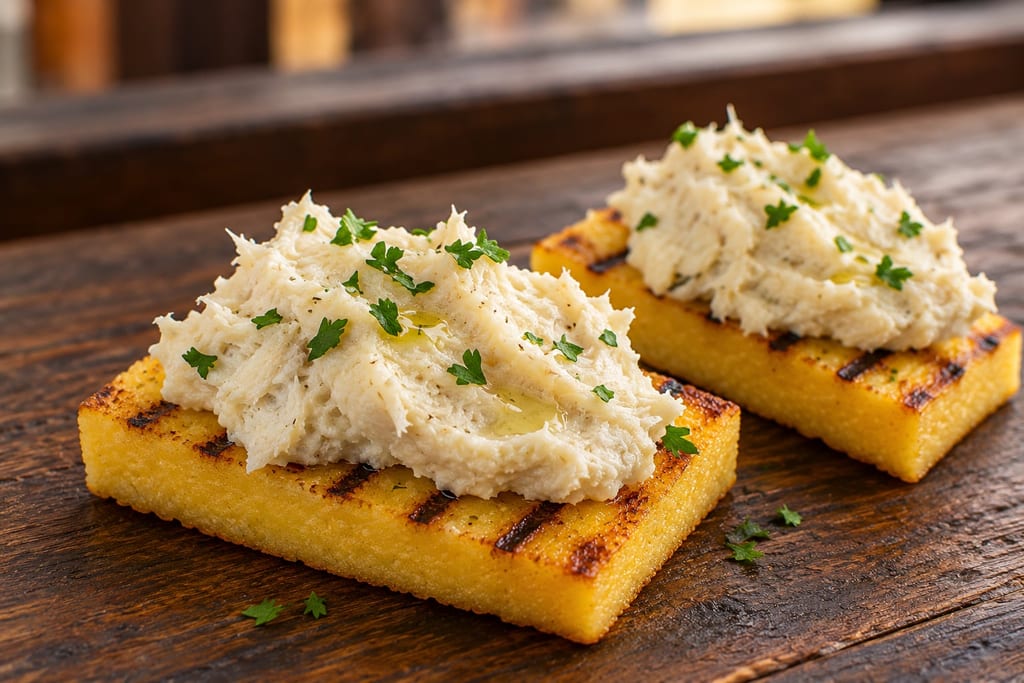
Baccalà mantecato
A Venetian cicchetto of cooked unsalted stockfish beaten with oil until it turns into a pale, aerated cream, spooned onto grilled polenta in the city's wine bars.
 FermenteaWhere food goes to change
Substrates
Yellow cornmeal is ground dried maize. Its particle size and milling treatment shape its texture and keeping quality; in the cited sourdough English muffin method, it is an exterior coating rather than part of the dough.
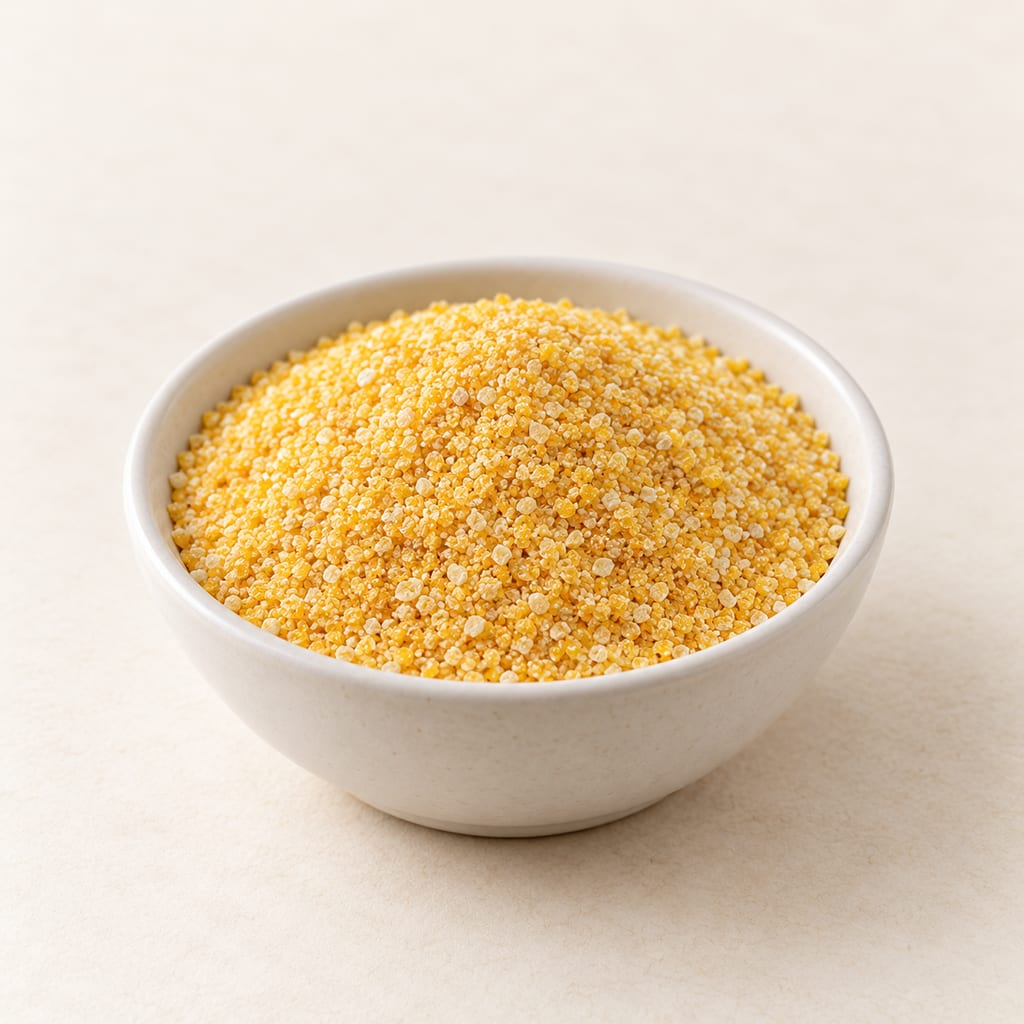
Yellow cornmeal is ground maize: the dried kernels of *Zea mays* L., a member of the grass family, milled into particles rather than separated into a purified starch. “Yellow” identifies the meal’s visible color, not a botanical species or a single recipe. Maize has many colors and forms; commercial meal also varies in how much of the kernel remains and how finely it is ground. A bag marked yellow cornmeal therefore names a family of products. The dryness is important: unlike a fresh ear eaten as a vegetable, these mature kernels have been made into a shelf-stable grain food. Their particles can swell into porridge, build a rough crumb or remain visible on a bread's surface. To understand how a bag behaves, look beyond the color to the grind and the miller’s treatment of the kernel.
The grain’s history begins in the Americas. Archaeological evidence from the Central Balsas River Valley in Mexico places maize at Xihuatoxtla rock shelter by roughly 8,700 calibrated years before present. Researchers identified maize starch grains and phytoliths on tools and in sediment. This is evidence for early maize cultivation and use in that region; it does not record a single moment of domestication or identify the precise appearance of every early plant. Later ancient-genome research on Peruvian maize supports a history of movement through the Americas, but the simple claim that the crop spread in one uninterrupted route oversimplifies the evidence.
After European contact with the Americas, maize crossed the Atlantic and became part of regional foodways in Europe. An academic review of traditional European preparations describes maize arriving in the late fifteenth century and becoming important in some Mediterranean and mountain communities during the following centuries. Its adaptability mattered where wheat did not grow reliably or was costly. In Italy, maize meal became associated with polenta, a cooked porridge; elsewhere, cooks made griddle breads and other preparations. These traditions should not be collapsed into a single “European cornmeal” story: the grain, grind, cooking liquid, and local conditions differed.
Bessie R. Murphy’s 1920 American cookbook *Corn Meal for Breakfast, Dinner, Supper* arranges cornmeal across a whole day of eating. It moves from breakfast mush and fried mush to spoon bread, griddle cakes, muffins, breads and tamale pie. The titles alone show how a dry, inexpensive meal could enter a pot, a baking pan or a hot griddle. Mush begins as a spoonable food and can become a sliceable ingredient once cool; other recipes mix meal with eggs, milk or wheat flour before cooking. The book presents cornmeal as a working pantry grain with several textures, rather than a single loaf or a single cultural identity.
Maize kernels contain an outer bran layer, a starchy endosperm, and a germ rich in oil. Milling may retain or remove these parts. The U.S. Department of Agriculture’s procurement specification distinguishes whole-grain meal, stone-ground whole-grain meal, bolted meal with some bran and germ removed, and degerminated meal with most of the germ and bran removed. That vocabulary is useful when reading a label, although the document is a government purchasing specification rather than a universal retail-label code. “Stone-ground” describes a milling method; shoppers should still check whether a product is explicitly identified as whole grain.
The oil-rich germ is also a flavor-bearing part of the grain. A whole-kernel meal retains more of it, while degermination takes most of it away along with much of the bran. That changes more than the label: a whole-grain meal can taste fuller and feel less uniform, whereas a refined meal gives a paler, more predictable texture. The retained oil makes whole-grain meal more vulnerable to stale or rancid notes over time. These are consequences of what the mill kept in the bag, before a cook decides how to store or heat it.
Particle size is another important difference. A technical FAO maize-processing chapter distinguishes coarse meal, fine meal, and flour by particle size in its industrial classification. Those measurements help explain why two products both called cornmeal may cook differently, but they should not be treated as a universal consumer standard. Coarser particles remain perceptible in a finished bake and take longer to soften; finer particles hydrate more quickly and make a smoother mixture. Product names are not entirely consistent across countries and manufacturers. In particular, British “cornflour” usually means isolated maize starch, while North American “corn flour” can refer to finely ground maize. Read the ingredient and product description rather than assuming that all names travel unchanged.
Ordinary cornmeal is not the same as corn starch. Starch is separated from the kernel and used principally to thicken; meal contains ground grain components in proportions shaped by the milling process. Nor is ordinary cornmeal interchangeable with masa harina. In nixtamalization, dried maize kernels are cooked and steeped in an alkaline solution, commonly water with food-grade calcium hydroxide, then drained, rinsed, and ground. The process alters the kernel, helps loosen its outer covering, changes starch and protein behavior, and increases calcium and niacin availability. Masa is the resulting moist dough; masa harina is a dried flour made from nixtamalized maize. This treatment gives masa its characteristic handling and flavor. A plain yellow meal has not undergone that alkaline cooking step simply because both products are made from maize.
Yellow meal’s hue comes from pigments in the maize kernel. Studies of maize foods report carotenoids including lutein and zeaxanthin, with amounts varying across cultivars and processed products. Color alone does not establish a nutritional advantage for a particular bag: variety, milling, storage, and preparation all matter. White maize meal is also common, and blue or other colored maize appears in some food traditions. The USDA purchasing standard recognizes several color classes, reinforcing that yellow is one product form among many.
In cooking, cornmeal contributes its own cereal flavor and a grainy or tender texture according to grind. In porridge, the particles absorb water and swell; stirring and time help the mixture become cohesive. In baked goods, meal can make the crumb more open or sandy than wheat flour, and it brings no gluten-forming network. A recipe’s liquid ratio and particle size therefore matter. The old Murphy cookbook, for example, differentiates meal used in mush and griddle cakes from meal incorporated into spoon bread and yeast-raised bread. Those are clues about culinary range, not a rule that all meals need the same hydration.
King Arthur’s sourdough English muffin recipe uses yellow cornmeal as an optional exterior coating, with semolina as the alternative. All-purpose wheat flour builds the dough. The baker turns that dough onto a lightly floured work surface for shaping; only later do the rounds rest on cornmeal- or semolina-sprinkled baking sheets and receive another dusting before proofing. The grain helps the risen pieces lift from the sheet and leaves a faintly gritty edge after they cook on the griddle. The coating is an unmeasured finishing material, chosen by feel and coverage rather than mixed into the dough by weight.
Elizabeth E. Lea’s 1859 *Domestic Cookery* shows how cornmeal can become several different cakes. For corn batter cakes, she mixes sifted meal with milk and eggs to make a thin batter, then adds a spoonful of wheat flour because the cakes otherwise break. Another version uses more meal, eggs and a little butter or lard, with milk or partly water, and can be cooked thin or thick. Her mush cakes begin one stage later: meal has already been boiled into a thick porridge and cooled, then wheat flour and fat are added before it is shaped and cooked. Fried mush goes another way again, slicing the cooled porridge and frying it. These are changes in when the grain takes up water and when it meets heat. The small wheat addition in one batter also makes the missing gluten network of plain maize meal tangible, rather than an abstract difference between cereals.
Polenta carries maize meal into a slower, spoonable preparation. In Italian regional practice, cooks stir the meal into salted water and keep it moving as the particles swell; some versions take an hour or longer. A coarser grind leaves a more palpable grain, while finer meal becomes smoother. A finished pot may receive cheese or butter or sit beneath fish, mushrooms, sausage or meat. The older name belonged to grain porridges before maize reached Europe, but the yellow maize version became a familiar regional food. In a shop, 'polenta' may name the dish or a meal sold for making it; the cook still needs to read the grind and preparation on the packet.
In Guipúzcoa in the Basque Country, talo shows another way ground maize entered a local kitchen: maize could stand in for wheat or barley under difficult growing conditions, and toasted maize flour became a flatbread cooked on a hot iron. Its grain and technique differ from the yellow meal used to dust an English muffin. Across these dishes, milling changes what the cook can do with the crop: a fine flour can form a pliant flatbread, a coarser meal can swell into porridge, and a dry scatter of grains can keep proofing rounds from adhering to their sheet. The traditions have different histories even where the same plant underlies them.
Corn is not one of the nine major food allergens designated under U.S. federal labeling rules, but that list does not mean that no individual can react to corn. People managing a corn allergy should follow clinician advice and read the full label for ingredients and facility statements. Maize itself does not contain wheat, rye, or barley gluten, but shared milling and packing equipment can introduce cross-contact. People with celiac disease or a strict gluten-free requirement should choose a product whose labeling and production controls meet their local guidance; “corn” in the product name is not by itself a cross-contact guarantee.
Dry meal should remain dry. Close the package after each use and keep it away from humidity, heat, and strong odors. Whole-grain and stone-ground products retain more oil-bearing germ than degerminated meal, which can shorten quality life. Check the producer’s date and storage instructions, and use smell and appearance as practical checks rather than relying on a generic number of months. The USDA specification’s procurement freshness and freezer-storage clauses serve a defined institutional standard; they are not a substitute for the manufacturer’s directions on a consumer package.
When choosing meal for English muffins, decide first whether the goal is a coating or a dough ingredient. For the King Arthur method, use a small amount of yellow meal as the exterior dusting, or follow its listed semolina option. Select a grind that feels pleasant on the finished surface and avoid substituting masa harina, corn starch, or a polenta preparation without a recipe designed for that product. A bag’s color is only the first clue; the words “whole grain,” “degerminated,” and “fine” or “coarse” reveal more about its texture, keeping quality, and likely behavior.
Polenta is a cooked regional preparation; this does not establish every polenta product as yellow cornmeal.
One period cookbook documents several preparations; it is not a comprehensive national account.
A Venetian cicchetto of cooked unsalted stockfish beaten with oil until it turns into a pale, aerated cream, spooned onto grilled polenta in the city's wine bars.
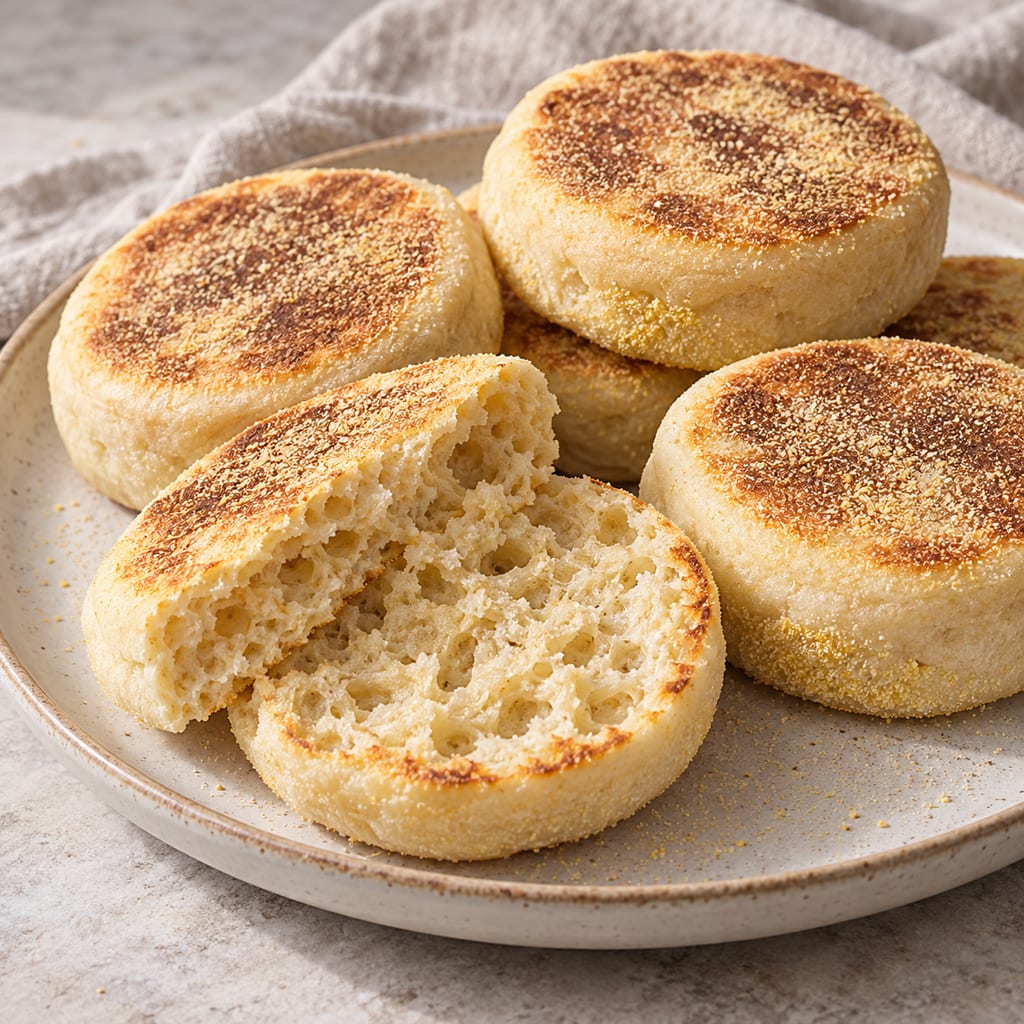
A soft English muffin dough combines sourdough starter with baker’s yeast, then rises, is cut into rounds and cooks on a griddle. The starter adds tang; the added yeast helps it rise.
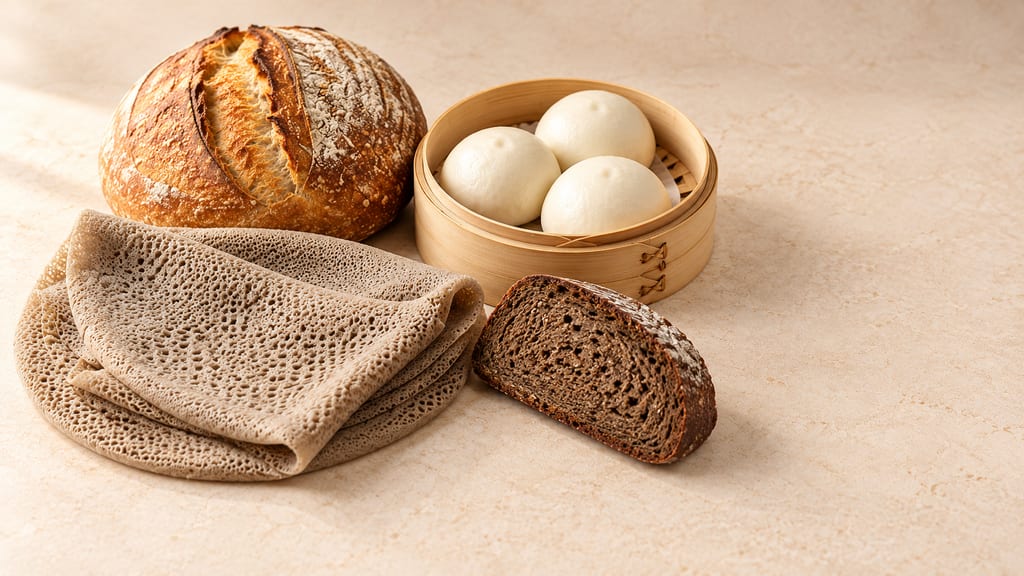
From the baguette and the steamed bun to injera, titiyas, Finnish rye and cassava bread: how grain, microbes and heat answer the question of what bread is for.
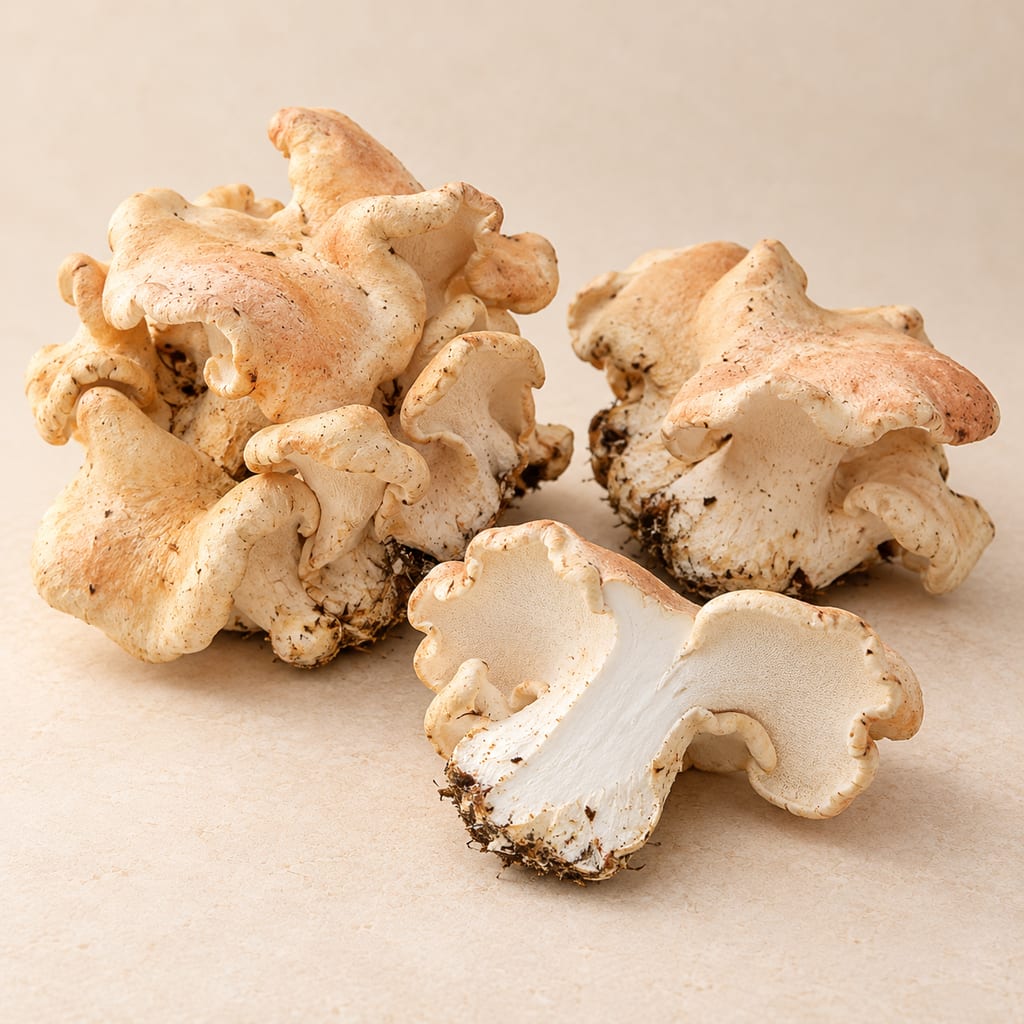
Albatrellus confluens is a ground-growing polypore with fused buff-orange caps. Sources document Chinese market use and regional edibility, but others reject it as too bitter; taxonomy also varies between Albatrellus and Albatrellopsis.

Cicerbita alpina is an alpine perennial whose tender shoots and leaves have been eaten raw or cooked. Sámi milk preparations and modern Carnian dishes are distinct uses, with serious identification and preservation limits.
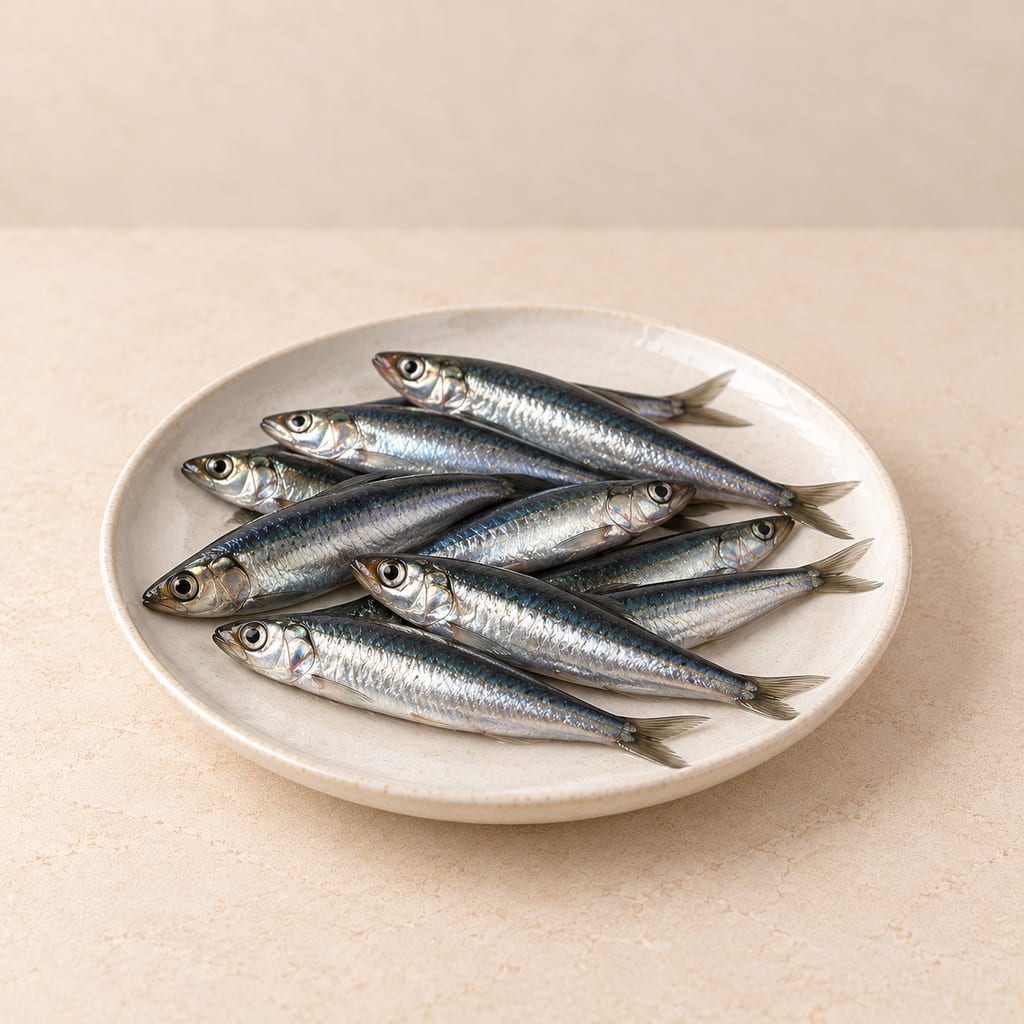
Anchovies are small schooling sea fish of the family Engraulidae, eaten fresh or dried and above all salted: as fillets in oil, whole salted fish or fish sauce.
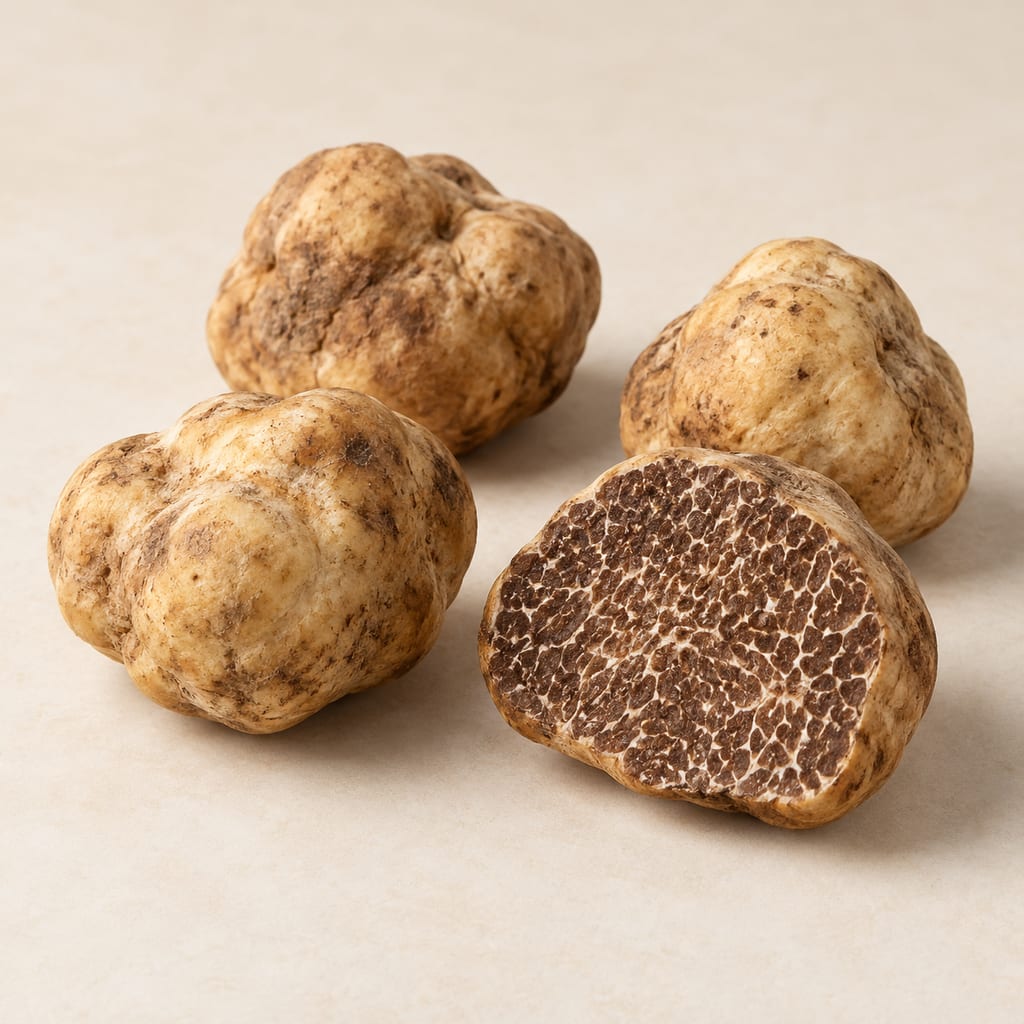
Tuber borchii, the bianchetto truffle, is a pale, pungent truffle that grows with trees and is now cultivated in Italy. It is used as a seasoning and is distinct from the costly white truffle, Tuber magnatum.
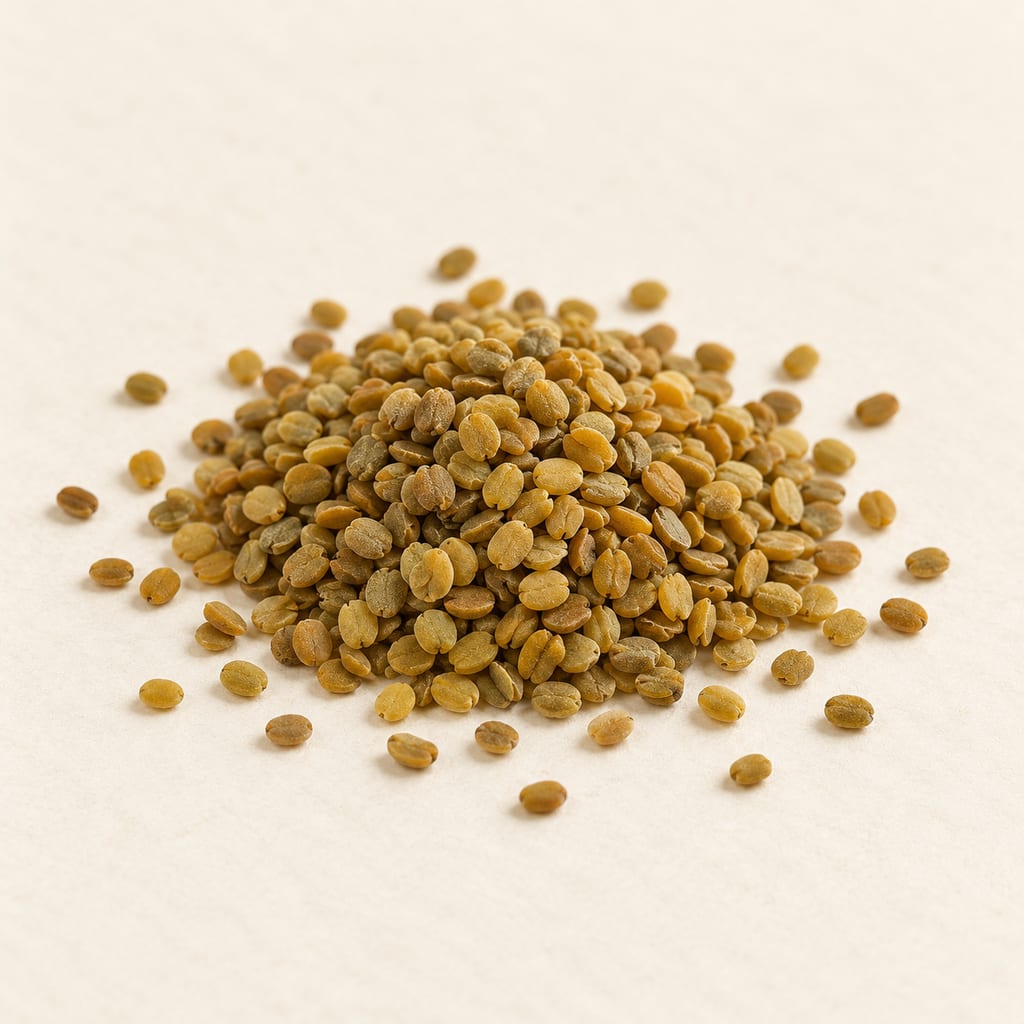
Blue fenugreek (Trigonella caerulea) is an aromatic annual used as an herb in Alpine cheese and bread and as a seed spice in Georgian cooking; its identity differs from common fenugreek.
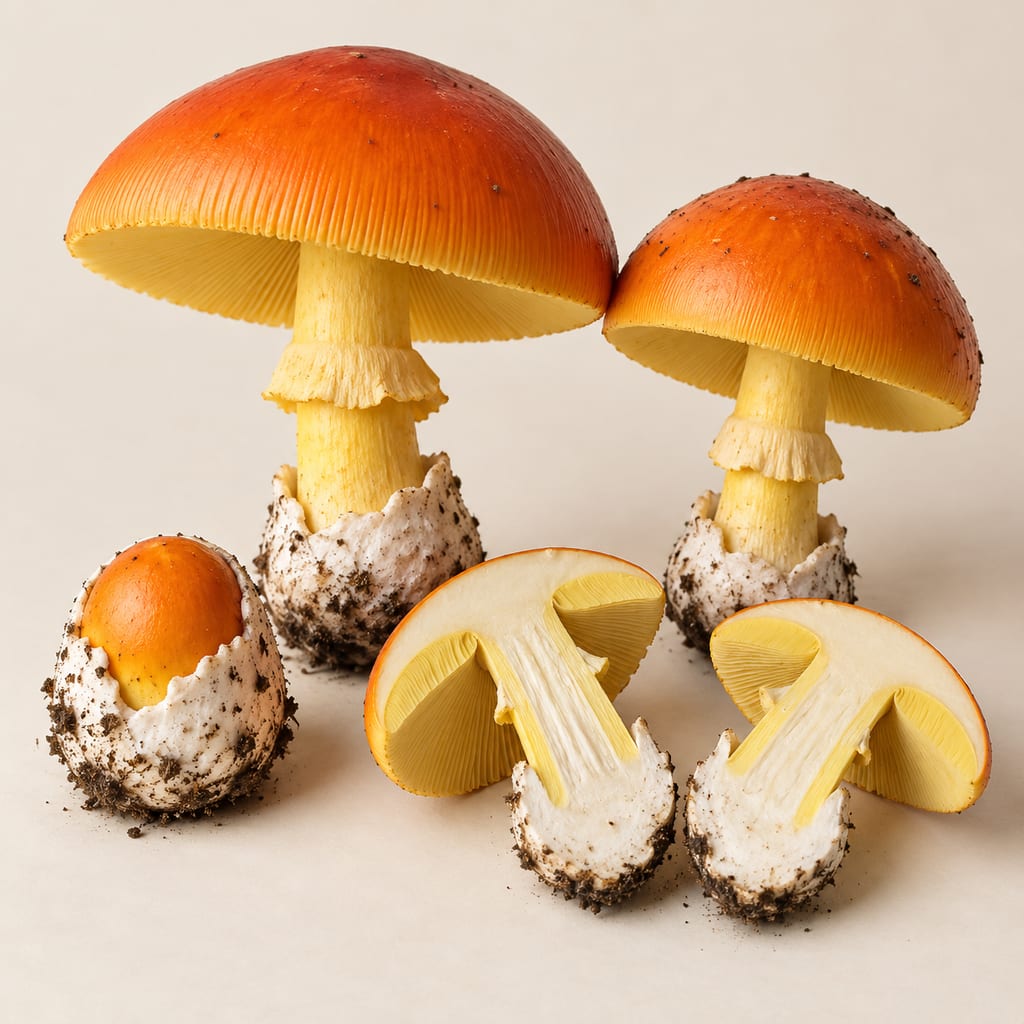
Caesar’s mushroom, Amanita caesarea, is a prized wild, tree-associated fungus of Mediterranean Europe, gathered seasonally for regional dishes. Its celebrated name and food traditions sit beside serious identification risks.
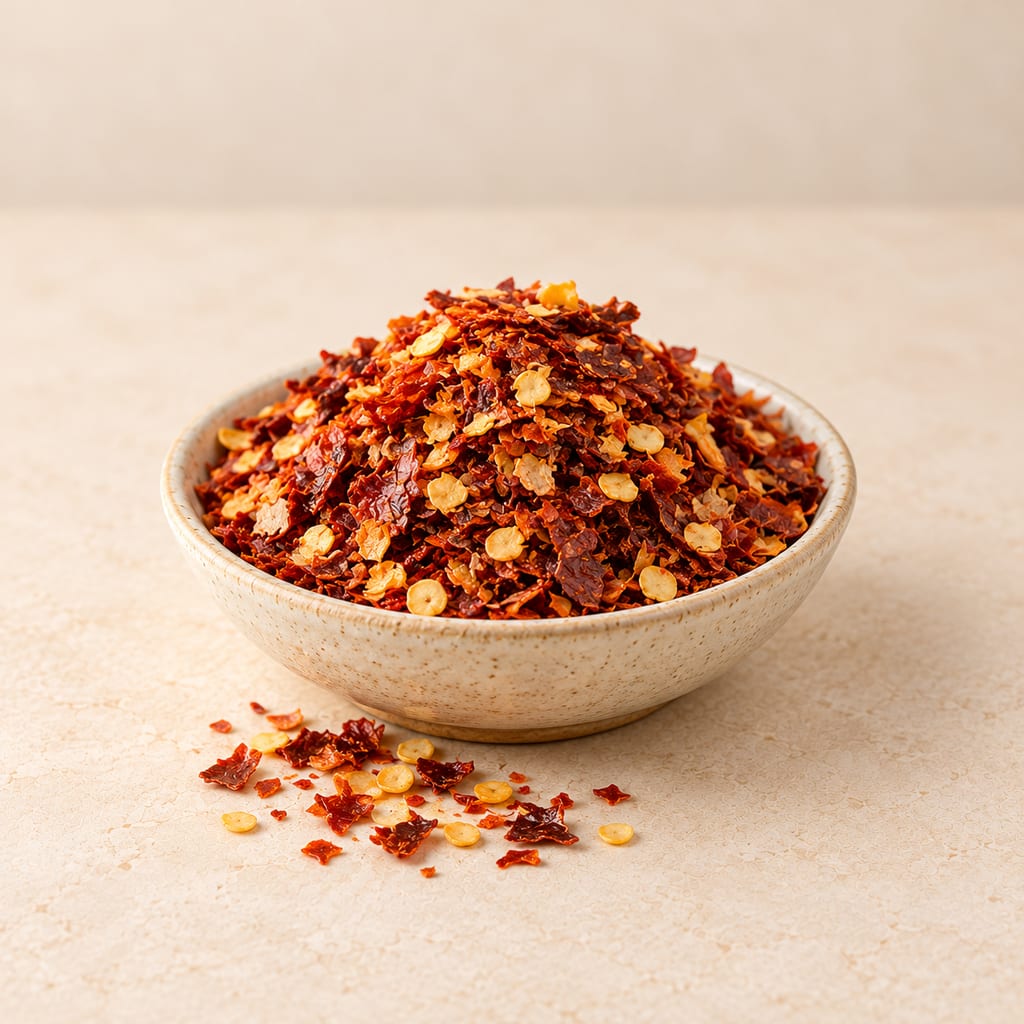
Calabrian pepper flakes are dried red Capsicum annuum from Calabria, crushed into coarse pieces; Peperoncino di Calabria is a protected geographical indication.
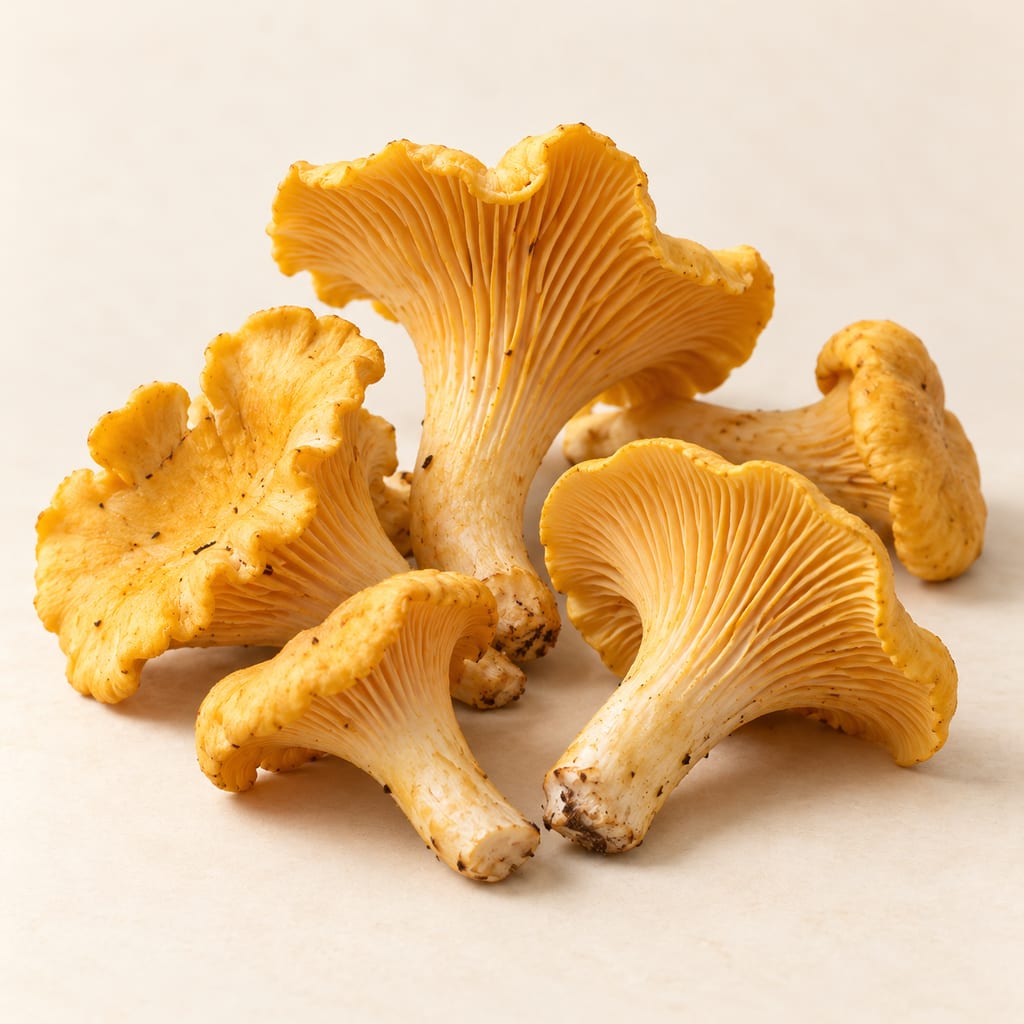
Chanterelles are wild, tree-associated edible mushrooms, particularly the European golden chanterelle Cantharellus cibarius, prized for their firm flesh, fruity aroma and use fresh, frozen, dried or pickled.
No community contributions have been published for this entry yet.
Sign in to contribute. Published comments and photos are free to read.
Royal Botanic Gardens, KewIdentity
Zea mays L.Accepted species and family
Cited in: A grain reduced to a meal
PNASHistory
Starch grain and phytolith evidence for early ninth millennium B.P. maize from the Central Balsas River Valley, MexicoXihuatoxtla evidence; ca. 8,700 calibrated years BP
Cited in: A grain reduced to a meal
eLifeHistory
Domestication and lowland adaptation of coastal preceramic maize from Paredones, PeruAncient genome evidence from Peru
Cited in: A grain reduced to a meal
Frontiers in NutritionHistory
Traditional Foods From Maize (Zea mays L.) in EuropeEuropean history and polenta/talo
Cited in: A grain reduced to a meal; Color, flavor, and function
Rand McNally; digitized by Library of CongressHistory
Corn Meal for Breakfast, Dinner, SupperPeriod cookbook dishes and advice
Cited in: A grain reduced to a meal; Color, flavor, and function
USDA Agricultural Marketing ServiceIdentity
Commercial Item Description A-A-20066C: Corn MealMeal categories, color/grind classes and procurement storage
Cited in: What the mill leaves in the bag; Color, flavor, and function; Safety, storage, and choosing a bag
FAO/AGST Post-Harvest CompendiumProcessing
Maize: Post-Harvest OperationsMilling and industrial particle size distinctions
Cited in: What the mill leaves in the bag
CIMMYTIdentity
What is nixtamalization?Nixtamalization, masa terminology and effects
Cited in: What the mill leaves in the bag
Journal of Food ScienceComposition
Processed and prepared corn products as sources of lutein and zeaxanthin: compositional variation in the food chainCarotenoid variation in products
Cited in: Color, flavor, and function
King Arthur Baking; PJ HamelCulinary use
Sourdough English MuffinsCoating stage, ingredients and griddle method
Cited in: Color, flavor, and function; Safety, storage, and choosing a bag
U.S. Food and Drug AdministrationAllergen
What Is a Major Food Allergen?U.S. statutory major-allergen list
Cited in: Safety, storage, and choosing a bag
Celiac CanadaSafety
Corn StatementNaturally gluten-free maize and cross-contact caveat
Cited in: Safety, storage, and choosing a bag
Cushings and Bailey, 1859 tenth edition; Project Gutenberg transcriptionNineteenth century cornmeal cookery
Domestic Cookery, Useful Receipts, and Hints to Young HousekeepersCorn batter cakes use milk and eggs with enough sifted meal for a thin batter and a spoonful of wheat flour to keep cakes from breaking; cold mush cakes add wheat flour.
Cited in: Color, flavor, and function