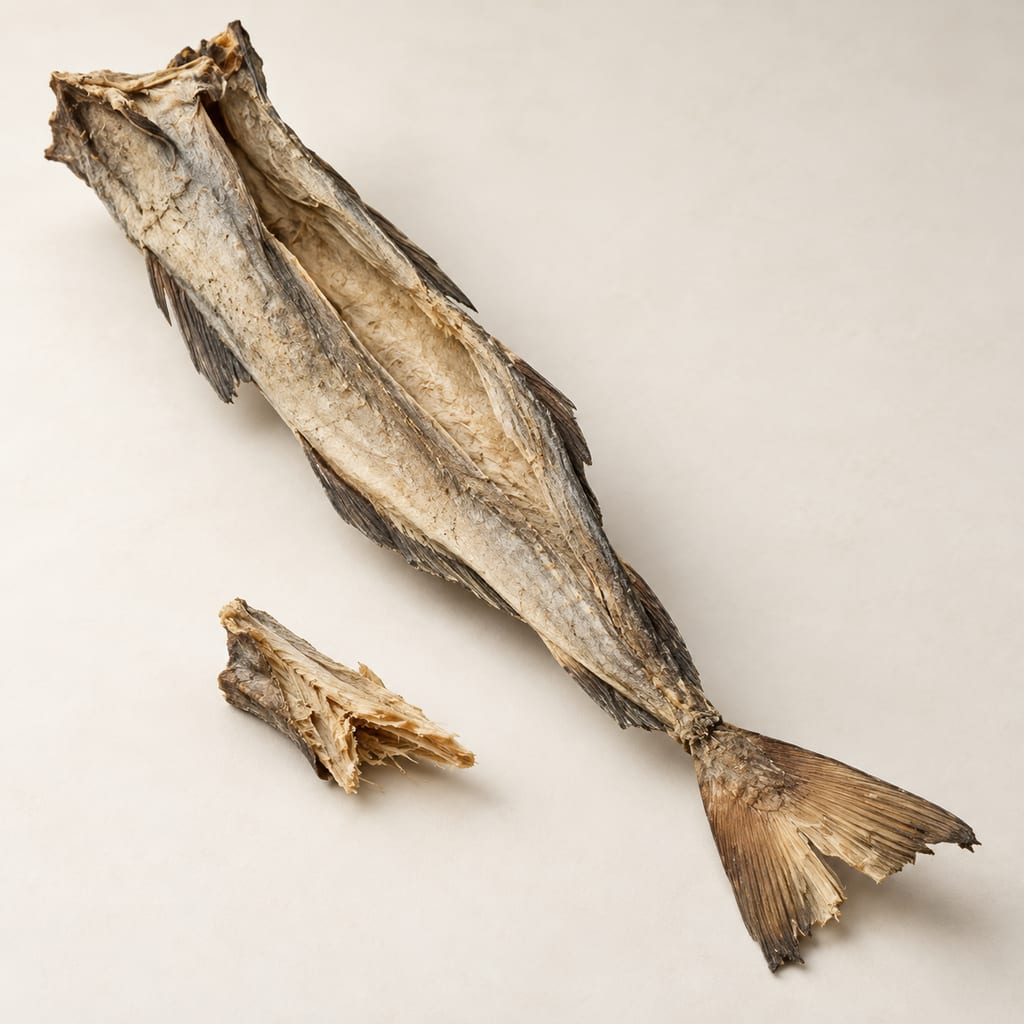
Stockfish
Cod hung on open racks in cold northern air until most of its water has gone, leaving a hard, light, unsalted fish that keeps and travels and must be soaked for days before cooking.
 FermenteaWhere food goes to change
Traditional method
Baccalà mantecato alla veneziana · Bacalà mantecato · Stoccafisso mantecato · Venetian whipped stockfish
A Venetian cicchetto of cooked unsalted stockfish beaten with oil until it turns into a pale, aerated cream, spooned onto grilled polenta in the city's wine bars.
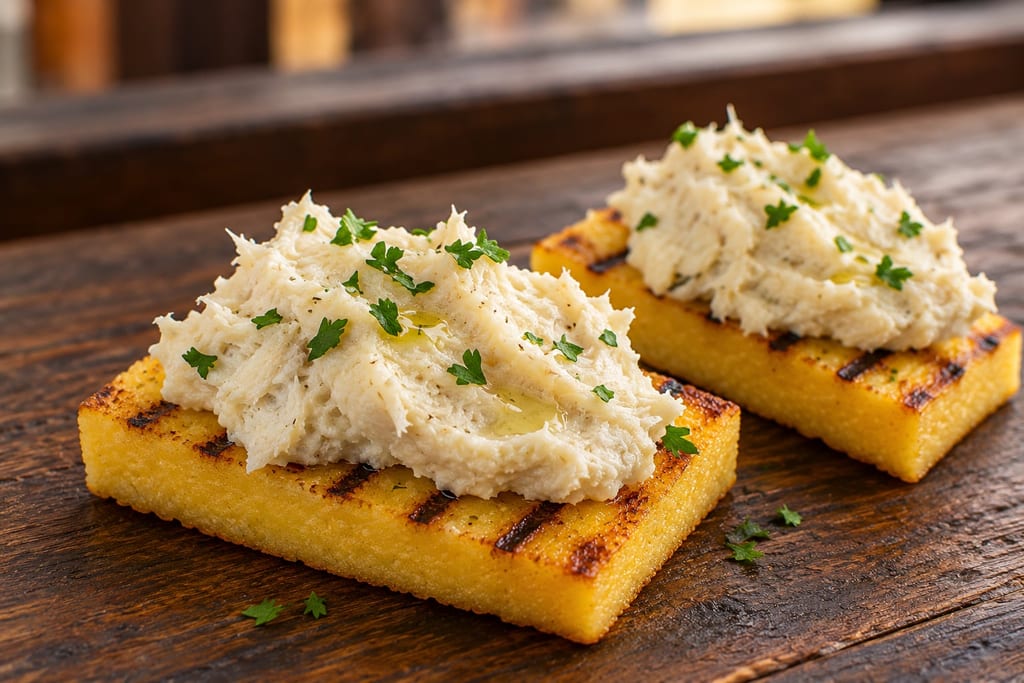
At first glance, baccalà mantecato looks like a simple white fish pâté. Its composition is much more interesting.
The defining technique is not blending cooked fish until it becomes smooth. It is the deliberate incorporation of oil into cooked stockfish through sustained beating, producing a rich, aerated mixture that retains the characteristic flavour of the preserved fish.
In Venice, it is one of the classic foods served in small portions with bread or polenta. A spoonful on a piece of grilled polenta is a familiar form of cicchetto, the small snack associated with Venetian wine bars, or bacari.
A successful mantecato tastes of stockfish and good oil. Its texture is creamy, but it should not resemble a featureless commercial mayonnaise. Small pieces of fish may remain visible.
Despite its name, the traditional Venetian preparation uses unsalted stockfish, not necessarily the salted cod called baccalà in most of Italy.
This linguistic distinction is essential when purchasing the fish.
The verb mantecare refers to working ingredients together until they acquire a creamy, integrated consistency. It is also encountered in Italian risotto and pasta cookery.
In Venetian food terminology, bacalà commonly refers to dried stockfish. Elsewhere in Italy, baccalà usually signifies salted cod, while stoccafisso identifies unsalted dried fish.
The two products are not interchangeable without adjusting preparation.
Venetian and Italian — Baccalà mantecato
Italian — Stoccafisso mantecato — descriptive alternative
Venetian dialect — Bacalà
English — Venetian whipped stockfish
Norwegian raw material — Tørrfisk
Scientific name — Usually Gadus morhua
Venice was an international commercial centre long before the development of the modern dish.
Dried fish fitted naturally into a trading economy dependent upon ships, imported commodities and foods that could survive extended transportation.
The connection with Norwegian stockfish is particularly associated with the Venetian merchant Pietro Querini, who survived a North Atlantic shipwreck and spent time among the inhabitants of Røst in 1432.
Querini's voyage and encounter are historically documented. They establish an important cultural connection between the Venetian world and Norway.
They do not establish the invention date of baccalà mantecato.
The precise point at which Venetians first began beating cooked stockfish with oil into the preparation now recognized as mantecato remains uncertain. Historical narratives sometimes move directly from Querini in 1432 to the modern dish, implying an unbroken and completely documented recipe.
That is stronger than the evidence permits.
The growth of stockfish consumption, the development of regional methods and the later codification of an iconic Venetian preparation should be understood as related but distinct events.
The Dogale Confraternita del Baccalà Mantecato was founded in 2001 to promote and safeguard the dish. Its documented recipe provides a useful modern reference for what the organization considers traditional.
The existence of that standardized recipe does not mean that every Venetian family or restaurant always used identical proportions.
The fish must first be cooked until its muscle fibres can be broken apart easily.
As the warm fish is beaten, mechanical force separates and fragments the cooked muscle.
The result initially resembles coarse flakes. Continued beating disperses those flakes into a finer mixture.
Oil is then introduced gradually.
This creates a complex food structure containing dispersed oil, water, protein fragments and gelatinous material derived partly from the fish's connective tissue.
The mixture is often described as an emulsion. That is useful culinary shorthand, although the complete structure is more complicated than a simple oil-in-water emulsion because it also contains solid fish particles and protein networks.
Fish proteins and gelatin-derived components help the mixture hold together, while mechanical beating distributes the oil.
Retaining clean skin can contribute collagen-rich material to the mixture. Collagen partially gelatinizes during cooking and can improve body and cohesion.
Warm cooking liquid supplies water, allowing the cook to adjust the balance between oil and aqueous material.
The process is not equivalent to making a raw-egg mayonnaise. No egg is necessary.
The controlled addition of oil matters because the mixture can become greasy or lose its cohesive texture if oil is incorporated faster than the fish mixture can accommodate it.
Overprocessing is another problem.
High-speed blending can produce a uniform paste, but it may also destroy the desirable structure of the fish, introduce excessive heat and change the texture.
A wooden spoon or stand-mixer paddle offers better control.
The Dogale Confraternita publishes a recipe using:
- 300 g already soaked and deboned stockfish, retaining flesh and skin. - 300 ml oil, consisting of three-quarters sunflower oil and one-quarter mild extra-virgin olive oil. - Bay leaves, lemon, salt and pepper.
Its method specifies approximately 20 minutes of cooking with half a lemon and two bay leaves, followed by vigorous beating and gradual incorporation of the oil.
The published oil quantity is unusually useful because it illustrates just how oil-rich this preparation can be.
The ratio is not a universal requirement for every mantecato. The organization itself acknowledges that oil absorption depends on the fish.
The recipe below uses less oil and is therefore a lighter editorial adaptation.
Serves 6 as a starter · Approximately 45–60 minutes after soaking · Not kitchen-tested
1. Cook the fish. Place the prepared stockfish and bay leaf in the water. Bring to a gentle simmer and cook until the flesh and skin are tender.
Start checking after 20 minutes.
The fish must be cooked before whipping. Remove remaining bones meticulously.
2. Reserve liquid. Before draining, measure out 150 ml of the cooking water. Discard the bay leaf.
3. Break up the fish. Transfer the still-warm fish to a bowl. Use a wooden spoon or a stand mixer with a paddle attachment on low speed.
Begin beating until the muscle fibres separate into small pieces.
4. Incorporate the oil. Pour in the mild olive oil gradually while beating continuously.
Alternate with small additions of warm cooking liquid.
The supplied formulation suggests using approximately 80–120 ml of the reserved liquid, depending on the consistency of the mixture.
5. Assess the texture. The finished mantecato should be creamy enough to spread while retaining a little texture.
If oil begins to collect separately on the surface, stop adding it. Beat in a small quantity of warm cooking liquid and assess whether the mixture comes together again.
6. Finish the seasoning. Add lemon juice, salt and pepper. Taste after the fish has been fully cooked.
7. Prepare the polenta. Slice the already cooked polenta and grill until the surfaces are warm and lightly browned.
8. Serve. Spoon the mantecato over the polenta and finish with chopped parsley.
The 600 g quantity refers to cooked polenta. It is not the weight of dry maize meal.
The most obvious quality is texture.
A well-made mantecato is creamy and sufficiently cohesive to sit on a piece of polenta without running off.
It should have a slightly uneven, naturally fibrous character.
There may be visible flakes, but not hard or stringy pieces that interfere with eating.
The colour is generally pale, ranging from white to ivory depending on the fish and oil.
The flavour should be savoury, rich and recognizable as preserved cod.
Too much assertive extra-virgin olive oil can dominate the fish or introduce bitterness. This helps explain the traditional preference for a mixture including neutral sunflower oil.
The lighter version supplied here uses mild olive oil only. That gives a different flavour and lower overall fat content compared with the confraternity's recipe.
The difference is intentional rather than a correction to the traditional formulation.
Several related Mediterranean preparations share the practice of transforming rehydrated preserved fish into a cream or paste.
In northeastern Italy, Adriatic communities developed different ways of beating stockfish with olive oil, garlic or other ingredients.
Croatian Istria has bakalar na bijelo, often made with abundant olive oil and sometimes potato. The potato changes the structure: starch contributes bulk and body, producing something closer to a fish-and-potato spread.
Italian brandacujun, associated with Liguria, is another related preparation that combines stockfish, potatoes, oil and aromatics.
French brandade de morue belongs to a comparable family of preserved-fish creams, but its traditional regional ingredients and techniques are not identical.
These dishes are culinary relatives rather than interchangeable names for one historically uniform recipe.
Even within Venice, modern restaurant preparations can include milk, garlic or other flavourings.
Some are smoother; others retain more distinct fish fibres.
The Dogale Confraternita's published method does not rely on added cream.
Adding dairy can produce an enjoyable dish, but it changes the formulation and should be identified as a variation.
Polenta is the classic accompaniment.
It can be served soft, or cooked in advance, allowed to firm, sliced and grilled.
Grilled polenta creates a particularly useful contrast: a lightly crisp surface beneath a soft, oily fish cream.
The confraternity recommends maize types including Marano and Venetian bianco perla.
White polenta is especially associated with Venetian cooking, although yellow polenta is also used.
Mantecato can be served as a small starter, part of a selection of cicchetti, or a more substantial course.
Bread crostini provide an alternative to polenta.
A garnish of parsley introduces colour and a fresh herbal note. Some contemporary versions add capers, olives or pickled vegetables.
Such garnishes should not overwhelm the stockfish.
The mixture remains coarse and stringy. The fish may not have been cooked until sufficiently tender, or it may need additional beating. Check the underlying fish rather than immediately adding more oil.
Oil collects on the surface. The mixture has not successfully incorporated all the added fat. Pause, adjust with a little warm cooking liquid and continue beating cautiously.
The result resembles puréed fish rather than mantecato. Excessive high-speed blending may have destroyed the desirable structure. A paddle or wooden spoon usually offers better control.
The mixture is watery. Too much cooking liquid may have been added. Additional beating may help, but cannot always reverse a severely diluted formulation.
The spread tastes bitter. Strong olive oil can be responsible. The traditional mixed-oil approach is worth considering.
The product tastes excessively salty. Confirm whether the raw material was unsalted stockfish or salt cod. Salt cod requires desalting in addition to rehydration.
Cook the fish thoroughly before beating it.
The general fish cooking guidance is 63°C at the thickest point, or an appropriately opaque and easily flaking texture.
Because mantecato is commonly served cool or at room temperature, temperature control after cooking is particularly important.
Prepare it with clean utensils and refrigerate promptly if it will not be eaten immediately.
Published storage recommendations vary. The Consorzio DOC delle Venezie recommends consumption immediately or keeping its preparation refrigerated in an airtight container for no more than one day. Another modern recipe published by the Prosecco DOC consortium gives up to three days of refrigeration for its different dairy-containing formulation.
These are recipe-specific recommendations, not proof that all versions share the same validated shelf life. For the untested editorial formulation, prepare it for prompt consumption rather than assigning an unsupported storage period.
Do not leave the mixture standing at room temperature for extended periods.
Venice was an international commercial centre long before this dish existed, and dried fish fitted a trading economy built on ships, imported commodities and foods that could survive a long voyage. The Querini episode of 1432 is the vivid point of contact, and it is genuinely documented, but the growth of stockfish eating, the development of regional methods and the much later codification of an iconic Venetian preparation are related events rather than one continuous recipe. The naming makes the history harder to read than it should be: in Venetian usage bacalà generally means the dried, unsalted fish, while in most of Italy baccalà means salt-cured cod and stoccafisso the air-dried kind, so the dish's own name points at the wrong product for most Italian readers and at the wrong one again for anyone shopping abroad. What the modern record does give is standardisation. The Dogale Confraternita del Baccalà Mantecato, founded in 2001 to promote and safeguard the dish, publishes a recipe that shows how oil-rich the preparation can be, 300 ml of oil to 300 g of soaked fish, three-quarters of it neutral sunflower oil. That is a useful reference precisely because it is explicit, and the organisation itself notes that how much oil a fish absorbs varies, so it is a standard rather than a rule. It also does not mean every Venetian family or restaurant ever used those proportions, and modern restaurant versions include milk, garlic and other flavourings or vary in how smooth they are. The dish sits in a wider Mediterranean family of beaten preserved-fish creams, alongside Istrian bakalar na bijelo, Ligurian brandacujun and French brandade de morue; those are culinary relatives, not alternative names for one uniform recipe.
Scaling: source batch only
Mantecato is normally served cool or at room temperature, so unlike a hot dish it spends its serving life in the range where temperature control matters most, and it is handled extensively by hand and utensil while being beaten.
Hazard sourceSoaking reverses the drying that made the fish stable; from the moment it is wet it is perishable raw seafood and stays that way for the week or more the soak takes.
Hazard sourceBeating breaks the flesh into small pieces, so a bone that survives deboning becomes very hard to see or feel in a smooth cream.
Hazard sourceOne published Venetian recipe advises eating it at once or keeping it refrigerated for no more than a day, while another, dairy-containing recipe allows up to three days. These are recipe-specific figures and neither has been established for the untested formulation on this page.
Hazard sourceKeep the fish and its soaking water refrigerated throughout rehydration, changing the water daily
Control sourceCook the fish thoroughly before any beating begins, and taste for seasoning only afterwards
Control sourcePrepare with clean utensils and refrigerate promptly if it will not be eaten straight away
Control sourceGo through the beaten fish for bones a second time, after cooking and before the oil goes in
Control sourceDo not leave the finished cream standing at room temperature for long periods: it is cooked seafood, and oil does not make it keep.
The one-day and three-day refrigeration figures in the published sources belong to those recipes, not to this untested adaptation, which should be made for prompt eating.
Buying salted cod instead of unsalted stockfish is the usual cause of an inedibly salty mantecato, and salt cod needs desalting as well as soaking.
The 300 ml oil ratio in the confraternity's recipe and the 160 ml here are two different formulations; interpolating between them produces a mixture neither source stands behind.
Beating cannot rescue a severely diluted mixture, and no amount of further work makes undercooked fish safe.
This formulation has not been kitchen-tested.
A locality-level association: the dish is named for the city, served there as a cicchetto in the bacari, and documented by a Venetian confraternity. The association is to the dish, not to this page's lighter oil formulation.
A region-level association for the polenta culture the dish belongs to and for the range of household and restaurant versions, some of which add milk or garlic. No single regional formulation is implied.
Where the Venetian merchant Pietro Querini and other shipwreck survivors were sheltered in 1432. This attests a documented contact between Venice and the Norwegian stockfish fisheries; it is not an attestation of this dish, and the sources do not run a continuous recipe history from 1432 to the modern cream.
Cod hung on open racks in cold northern air until most of its water has gone, leaving a hard, light, unsalted fish that keeps and travels and must be soaked for days before cooking.

Yellow cornmeal is ground dried maize. Its particle size and milling treatment shape its texture and keeping quality; in the cited sourdough English muffin method, it is an exterior coating rather than part of the dough.
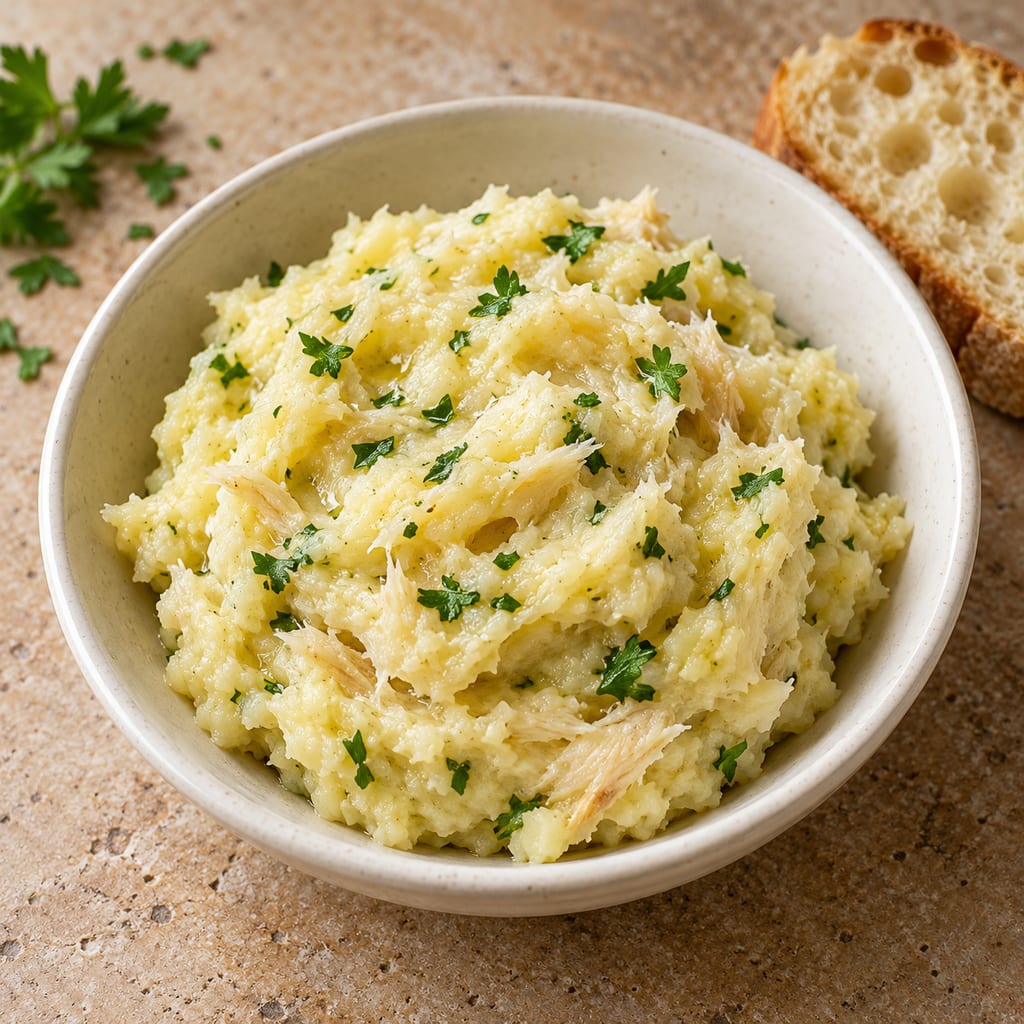
An Istrian festive spread of cooked stockfish beaten with olive oil and garlic until pale and cohesive, here bulked out with hand-mashed floury potato.
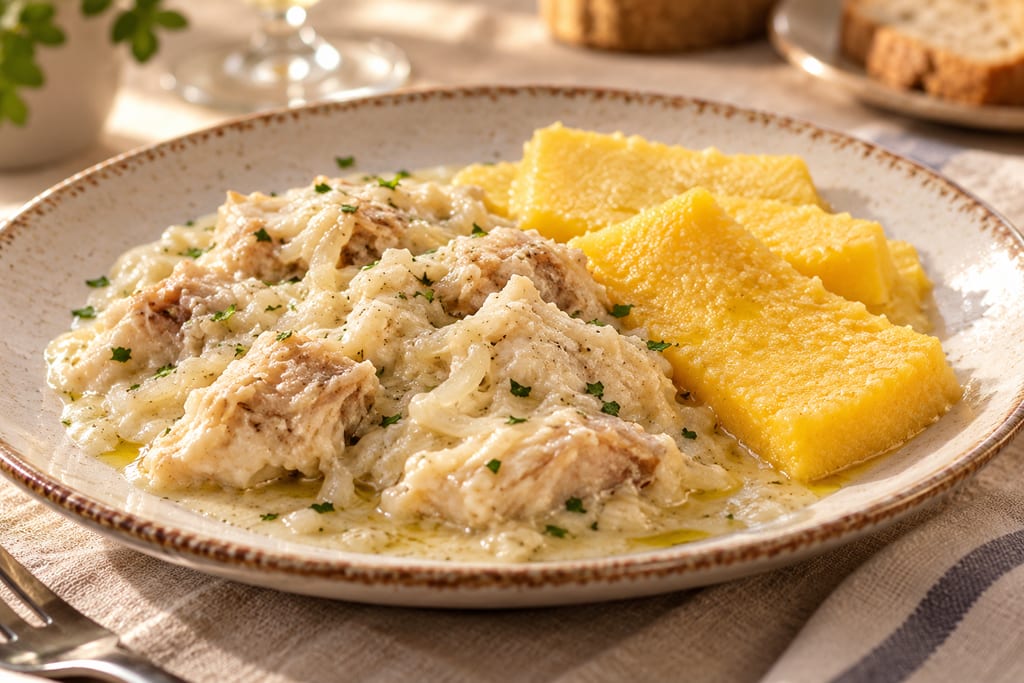
Stockfish from Vicenza, left barely bubbling for hours with onion, preserved anchovy, olive oil, milk and a little cheese until it is tender under a dense pale sauce, and eaten with polenta.
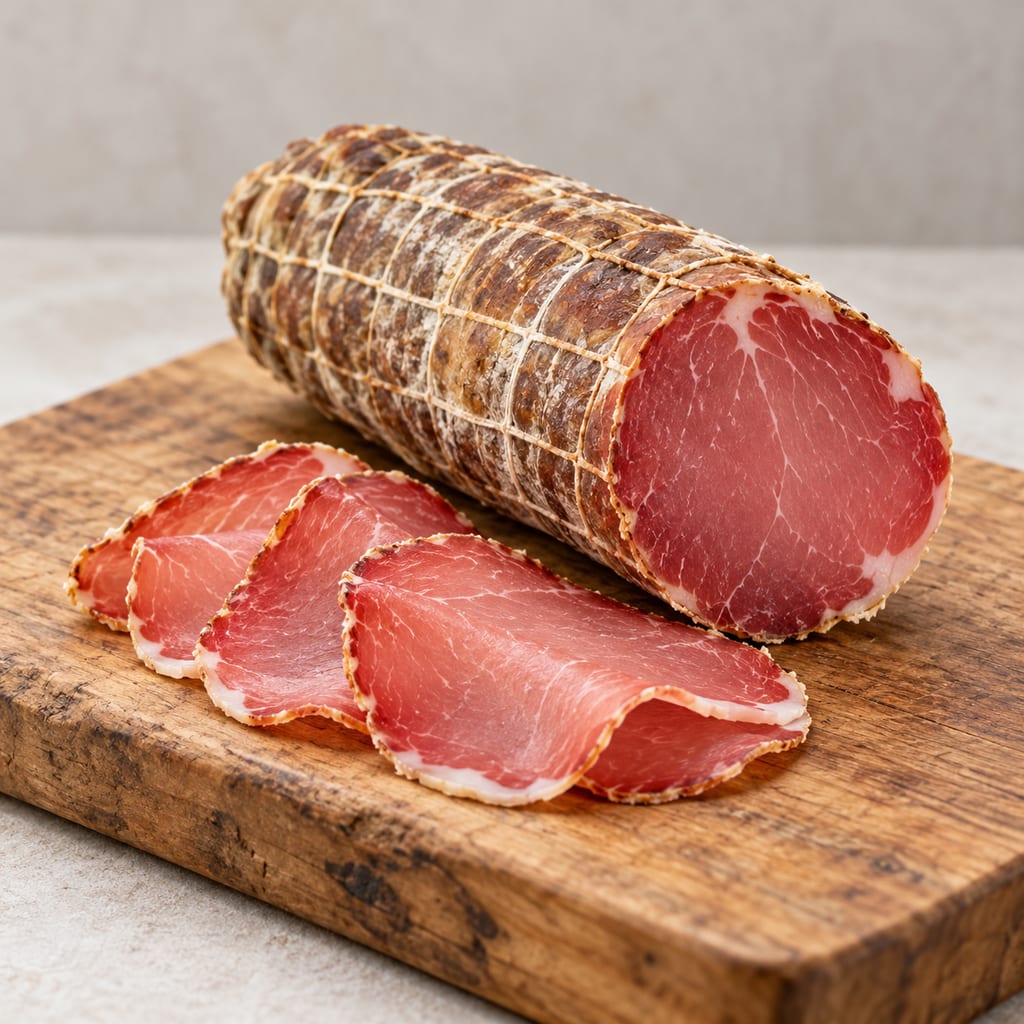
Documentary account of Italian regional cured-loin traditions, including Tuscan and Marche variations; no home-cure instructions are provided because the published professional methods lack validated safety controls.
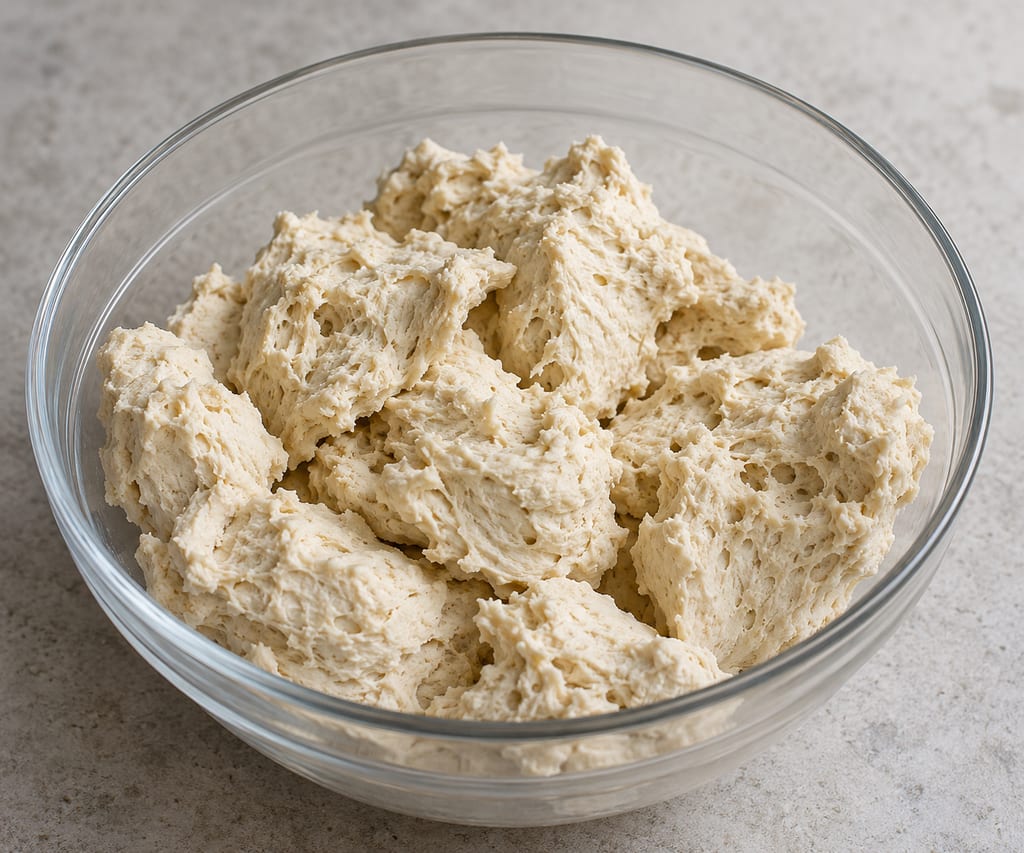
Biga is an Italian bread preferment of flour, water and a little yeast, usually a stiff unsalted mass of about 45 per cent water, fermented ahead and then mixed into the final dough.
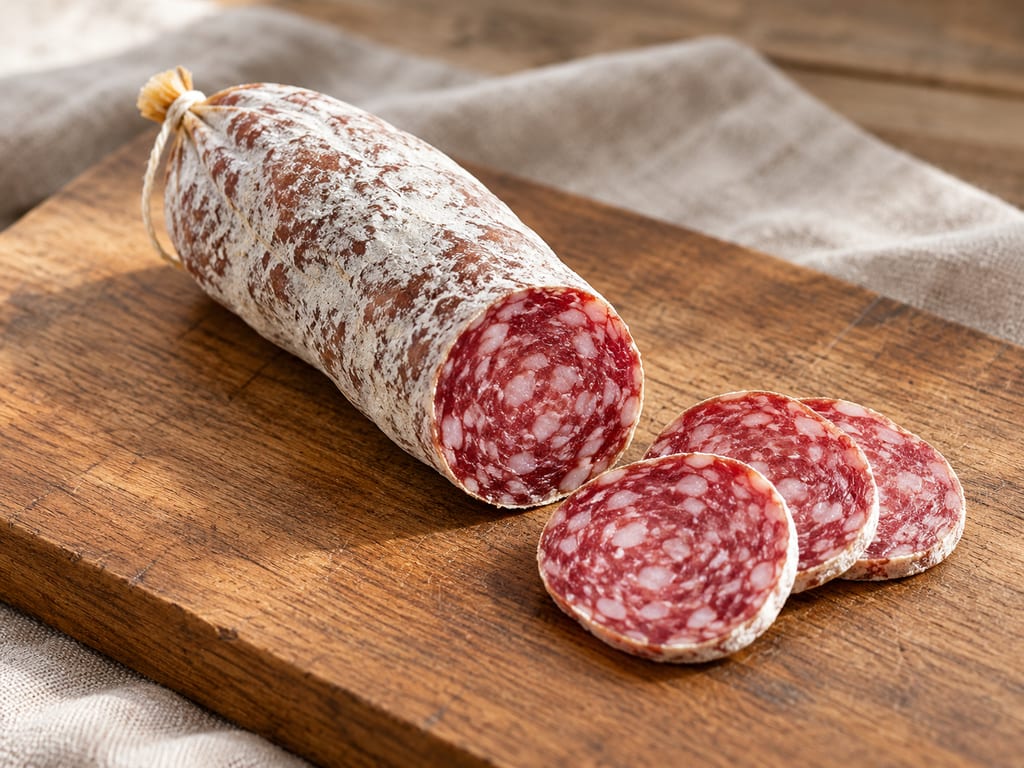
Small Italian hunter-style salami of lean pork, firm fat, salt, pepper and garlic, mildly acidified and dry-matured; protected as Salamini Italiani alla Cacciatora DOP.
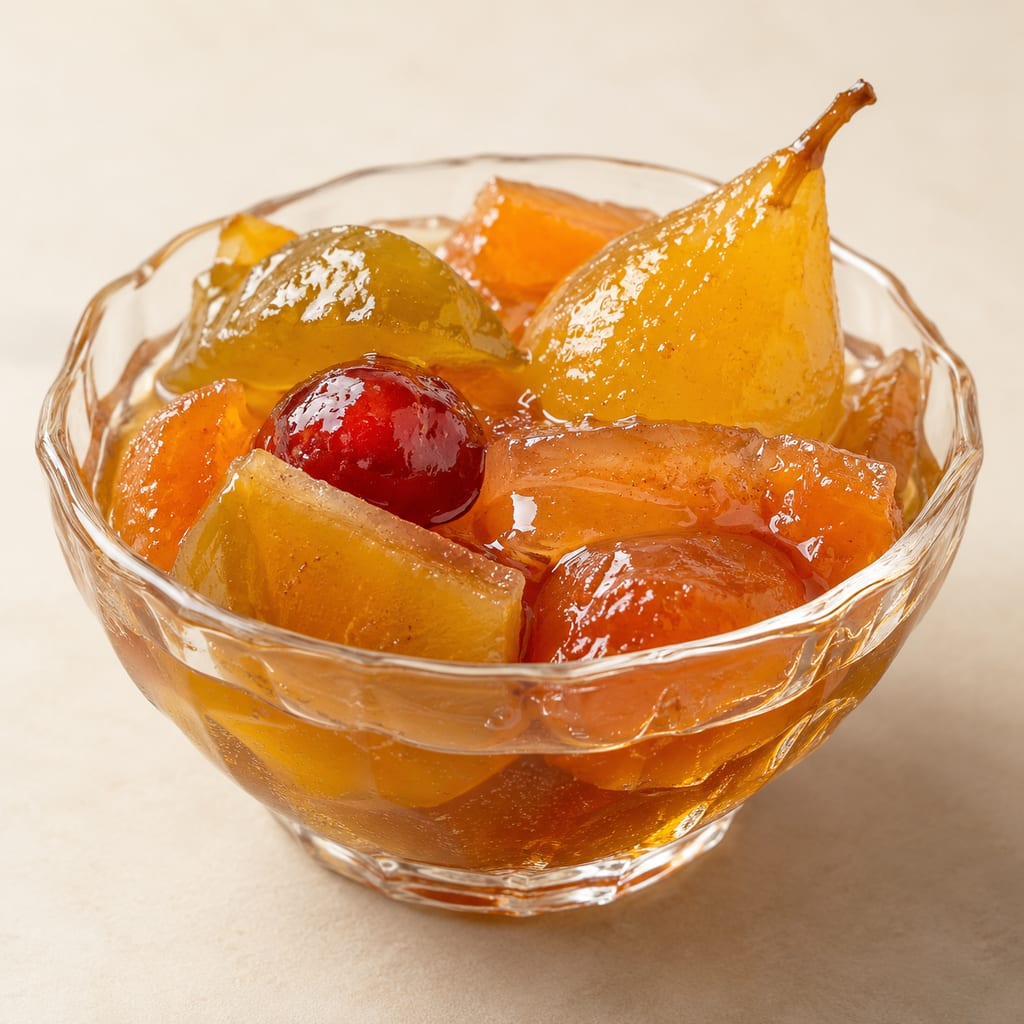
Mostarda is a northern Italian condiment of candied fruit in a mustard-flavoured syrup, served with boiled meats and cheeses.

A fruit-free Italian festive enriched bread, baked in a tall star-shaped mould and finished with powdered sugar. This home batch follows one published baker’s-yeast method; it does not represent every pandoro formula.
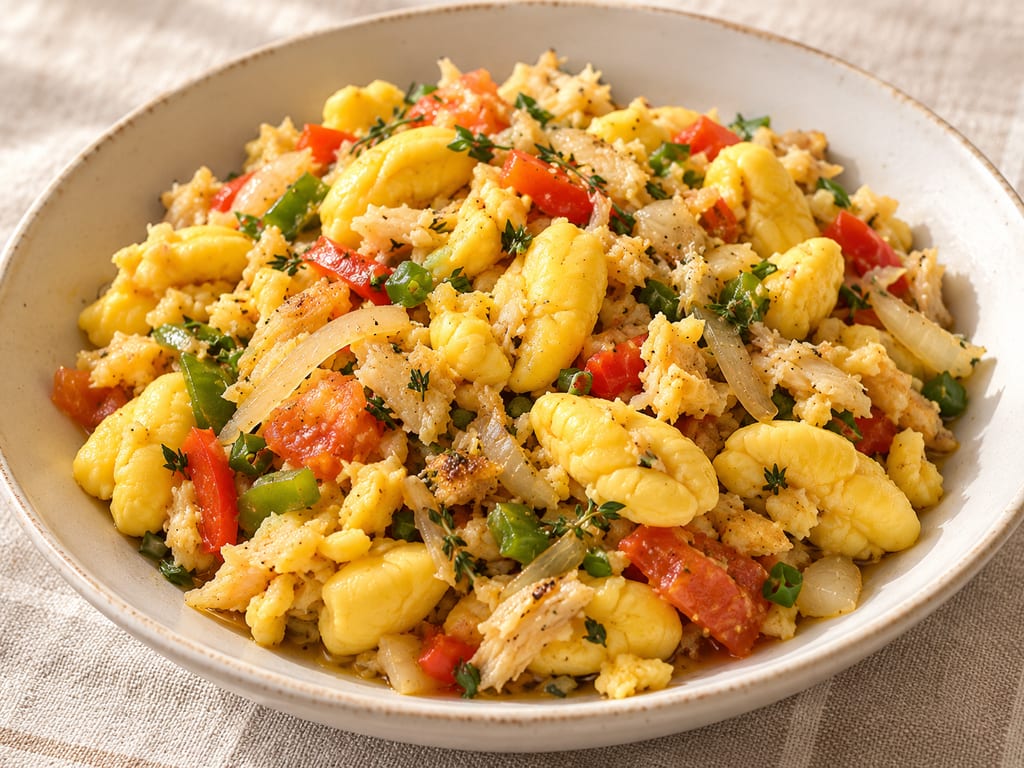
Jamaica's best-known dish: salt-cured cod desalted and flaked, then folded through ackee arils with onion, tomato, sweet pepper, thyme and Scotch bonnet.
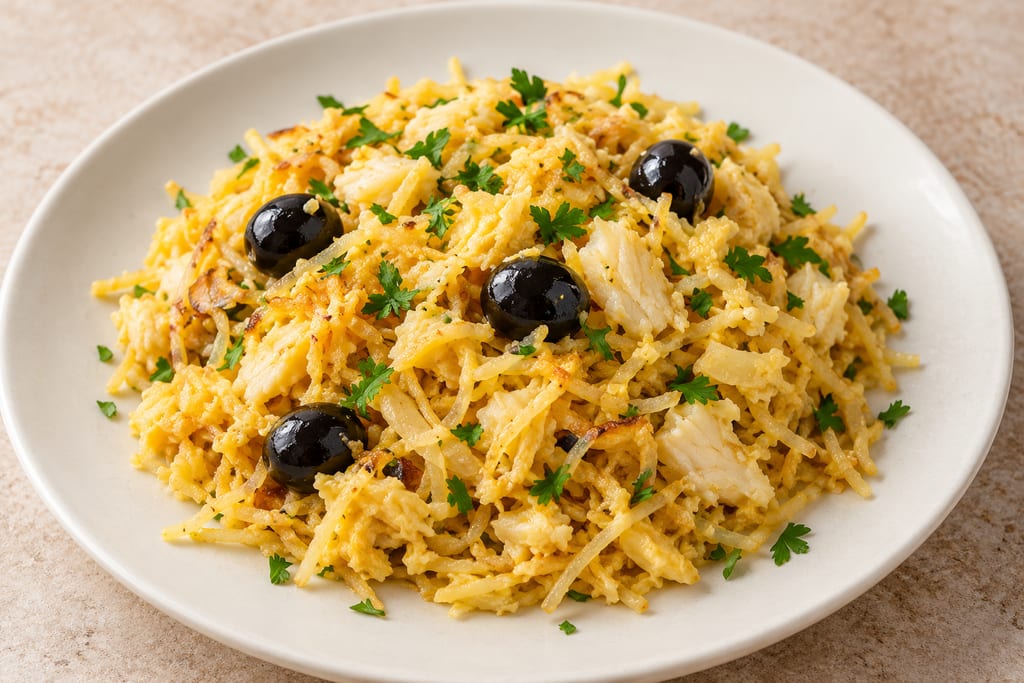
Lisbon's salt cod dish: shredded desalted cod and fine fried potato matchsticks folded through softened onion and bound with beaten egg, finished with parsley and black olives.
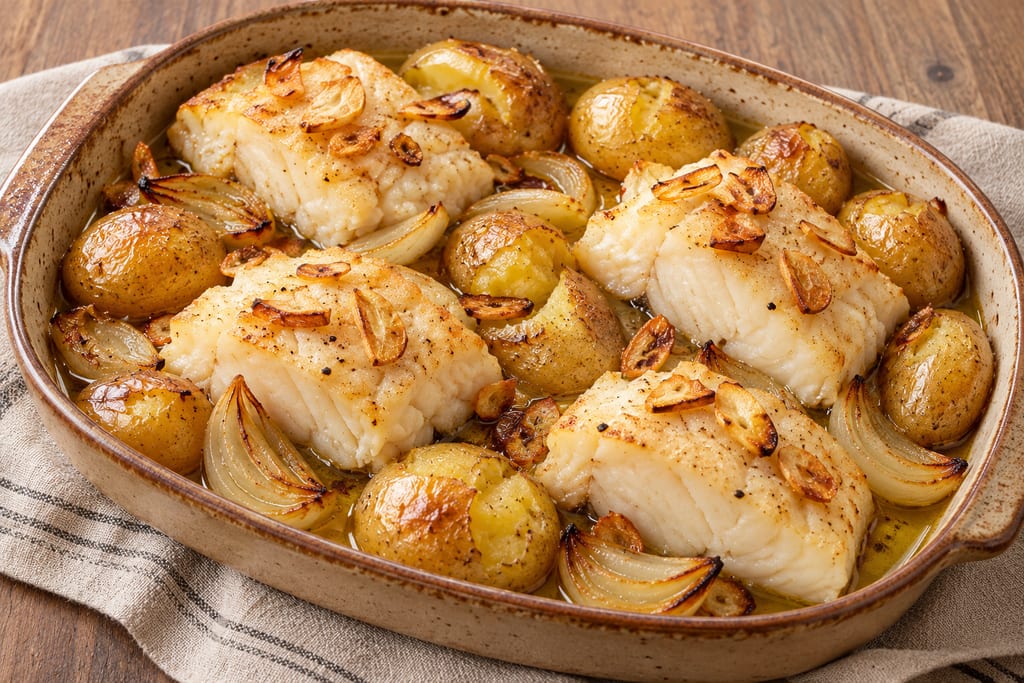
Thick pieces of desalted salt cod roasted in olive oil with garlic and onion, served with small potatoes cooked and then crushed until their skins split.
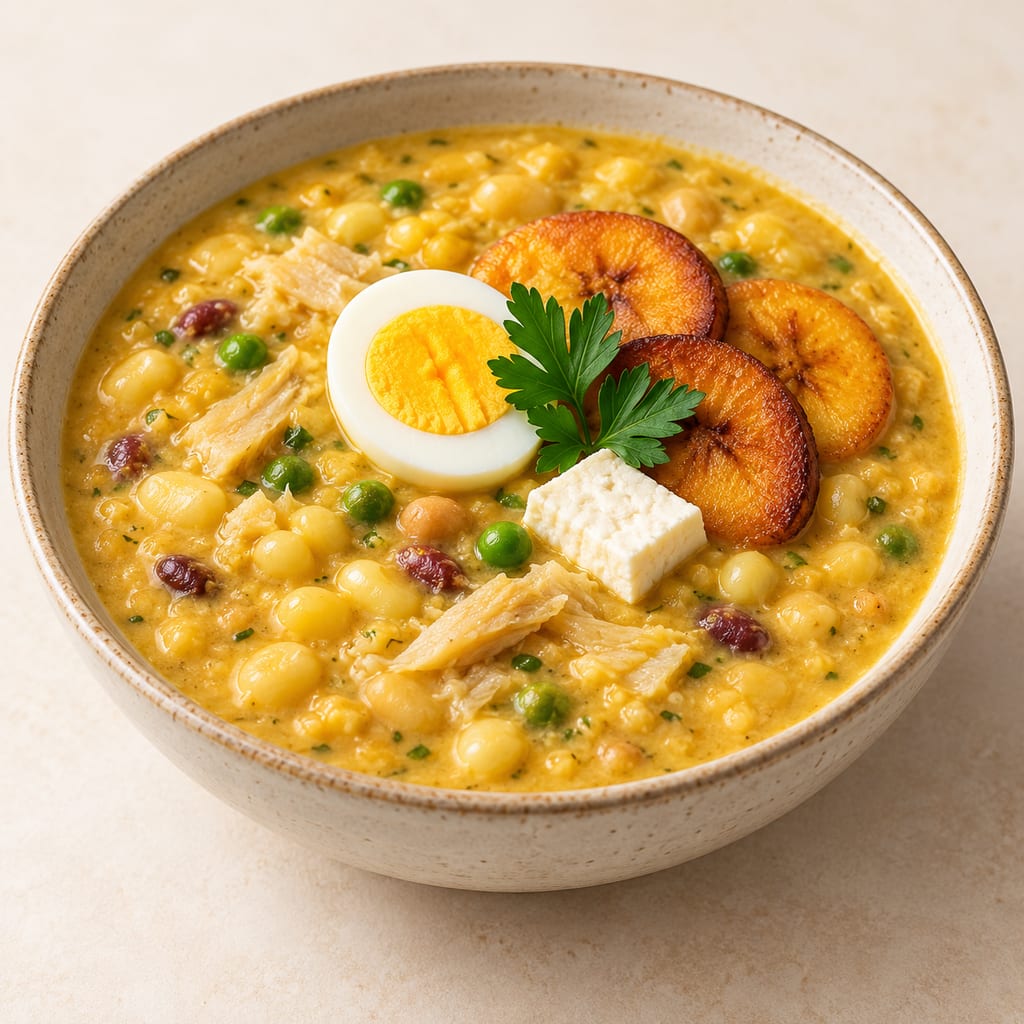
Ecuadorian Holy Week soup of tender grains and pulses, squash, milk and salted fish, thickened with peanut paste and served with contrasting garnishes.
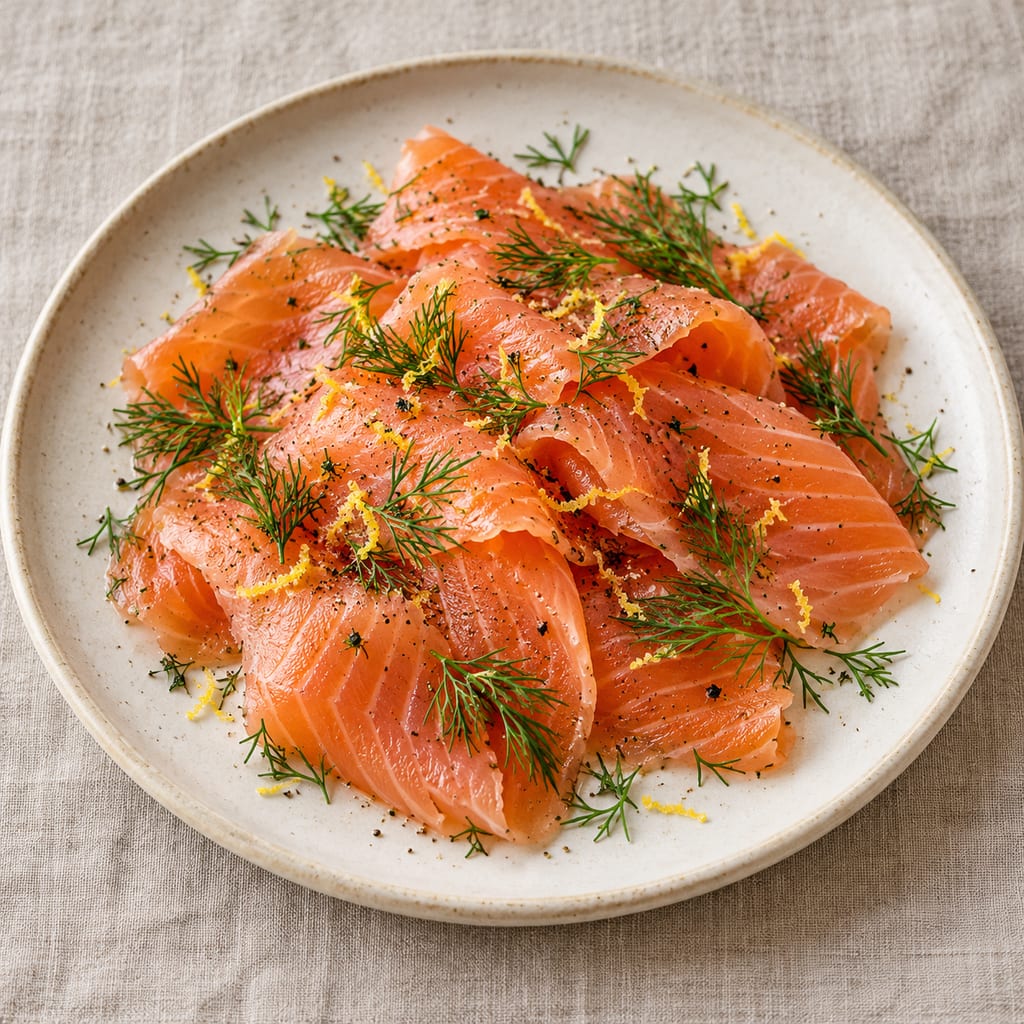
Salmon is cured with salt, sugar, pepper, dill and lemon zest under refrigeration.
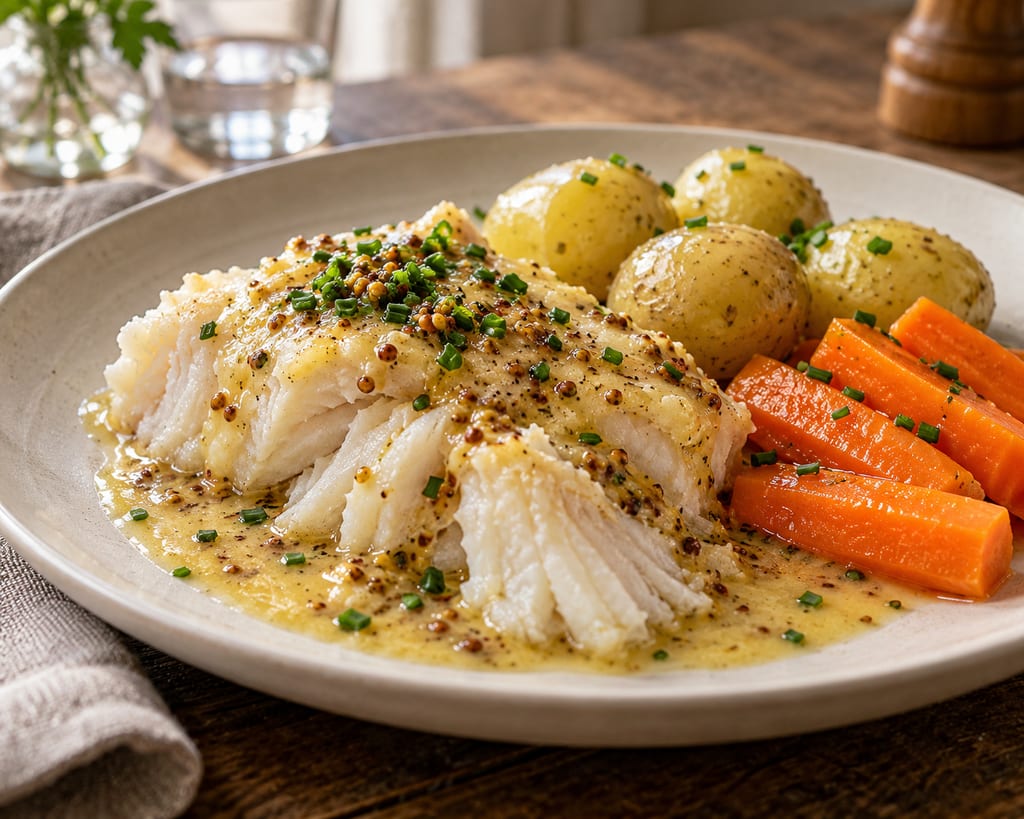
Rehydrated air-dried Norwegian cod simmered until it flakes, served with boiled potatoes and carrots under a wholegrain-mustard butter whisked from the fish's own poaching liquid.
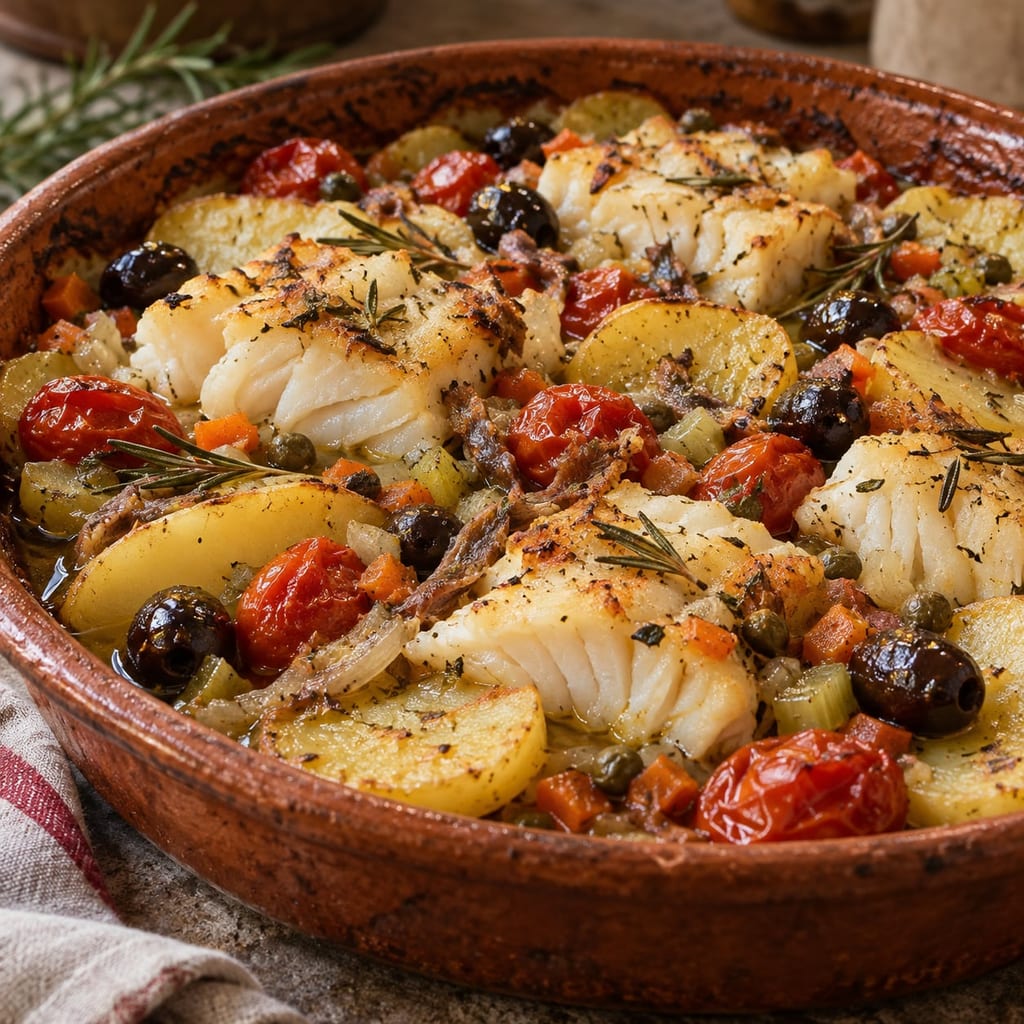
Ancona's baked stockfish: thick pieces layered with potatoes, tomatoes, olives, capers and anchovy under olive oil and white wine, cooked slowly in a covered dish.
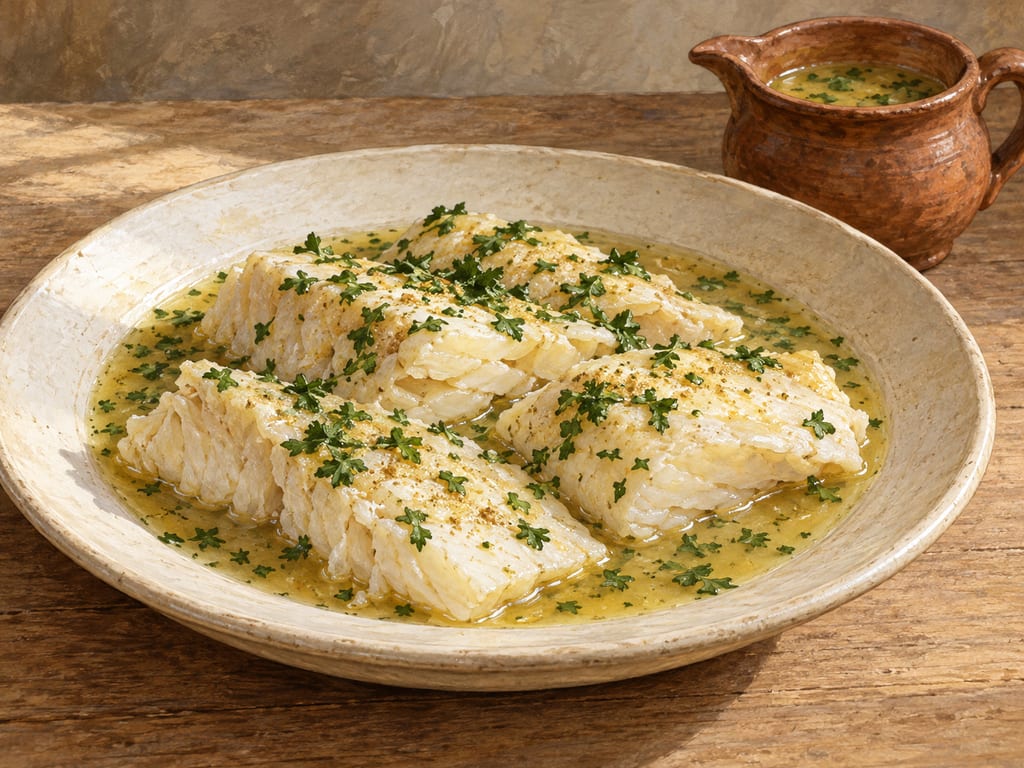
A fifteenth-century English way to serve cooked stockfish: strained fish broth boiled with chopped parsley, powdered ginger and a little verjuice, then poured hot over the fish.
No community contributions have been published for this entry yet.
Sign in to contribute. Published comments and photos are free to read.
Dogale Confraternita del Baccalà MantecatoMethod
Dogale Confraternita del Baccalà Mantecato — Original recipeThe confraternity's published formulation: 300 g already soaked and deboned stockfish retaining flesh and skin, and 300 ml of oil made up of three-quarters sunflower oil and one-quarter mild extra-virgin olive oil, with bay leaves, lemon, salt and pepper.
Its method: approximately 20 minutes of cooking with half a lemon and two bay leaves, then vigorous beating with the oil incorporated gradually.
The organisation itself states that oil absorption depends on the fish, so its published ratio is not a universal requirement.
Maize types recommended for the accompanying polenta include Marano and Venetian bianco perla.
Cited in: The white cream of Venice; The science of mantecatura; The documented traditional formulation; Recipe: Venetian-inspired mantecato; Method; What makes good mantecato?; Polenta and Venetian serving culture; Troubleshooting
Dogale Confraternita del Baccalà MantecatoHistory
Dogale Confraternita — History of the association and the Norwegian connectionThe Dogale Confraternita del Baccalà Mantecato was founded in 2001 to promote and safeguard the dish, and documents the association's own history and the Norwegian connection behind the raw material.
Cited in: Names and language; Historical background
Taylor & FrancisHistory
The shipwreck of Pietro Querini at Lofoten, scholarly article, 2025A 2025 scholarly treatment of the shipwreck of the Venetian merchant Pietro Querini at Lofoten and his time among the inhabitants of Røst in 1432, which establishes the encounter as a documented cultural connection between Venice and northern Norway without dating any Venetian recipe.
Cited in: Historical background
Consorzio Tutela Prosecco DOCMethod · Safety
Consorzio Tutela Prosecco DOC — Baccalà mantecato with polentaA modern published mantecato with polenta whose formulation contains dairy, and which gives up to three days of refrigeration for that different preparation.
Cited in: Regional and household variations; Polenta and Venetian serving culture; Safety and storage
Consorzio DOC delle VenezieMethod · Safety
Consorzio DOC delle Venezie — Venetian mantecatoA Venetian mantecato recipe which recommends eating it immediately, or keeping the preparation refrigerated in an airtight container for no more than one day.
Cited in: Safety and storage
La Cucina ItalianaMethod
La Cucina Italiana — Baccalà mantecato and polentaA published mantecato and polenta preparation, used for the serving convention and for the range of modern restaurant versions, some of which include milk, garlic or other flavourings and differ in how smooth they are.
Cited in: The white cream of Venice; Method; Regional and household variations
Norwegian Seafood CouncilMethod · Safety
Norwegian Seafood Council — Stockfish rehydrationRehydration of dry unsalted stockfish: 7 to 8 days in cold water with daily changes, up to 10 days for particularly dry fish, with the fish and water kept below 4°C and the skin and bones removed after hydration.
Salted cod is a different product that requires desalting in addition to rehydration.
Cited in: Names and language; Troubleshooting