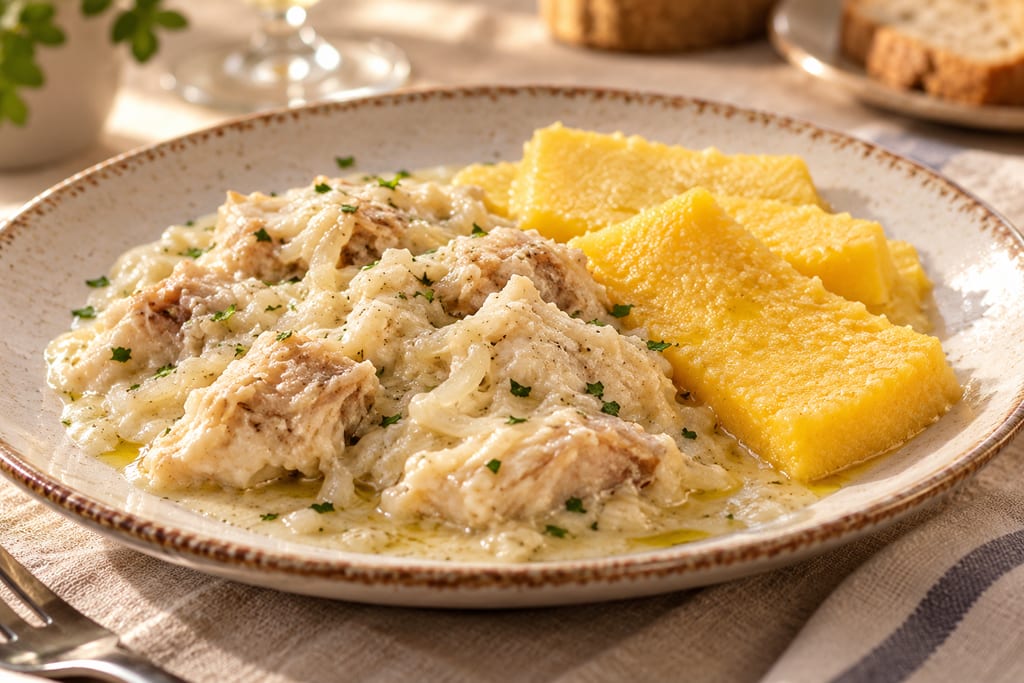
Bacalà alla vicentina
Stockfish from Vicenza, left barely bubbling for hours with onion, preserved anchovy, olive oil, milk and a little cheese until it is tender under a dense pale sauce, and eaten with polenta.
 FermenteaWhere food goes to change
Traditional method
Tørrfisk · Tørrfisk · Torrfisk · Tørfisk · Hardfiskur · Stoccafisso · Skreid · Okporoko
Cod hung on open racks in cold northern air until most of its water has gone, leaving a hard, light, unsalted fish that keeps and travels and must be soaked for days before cooking.
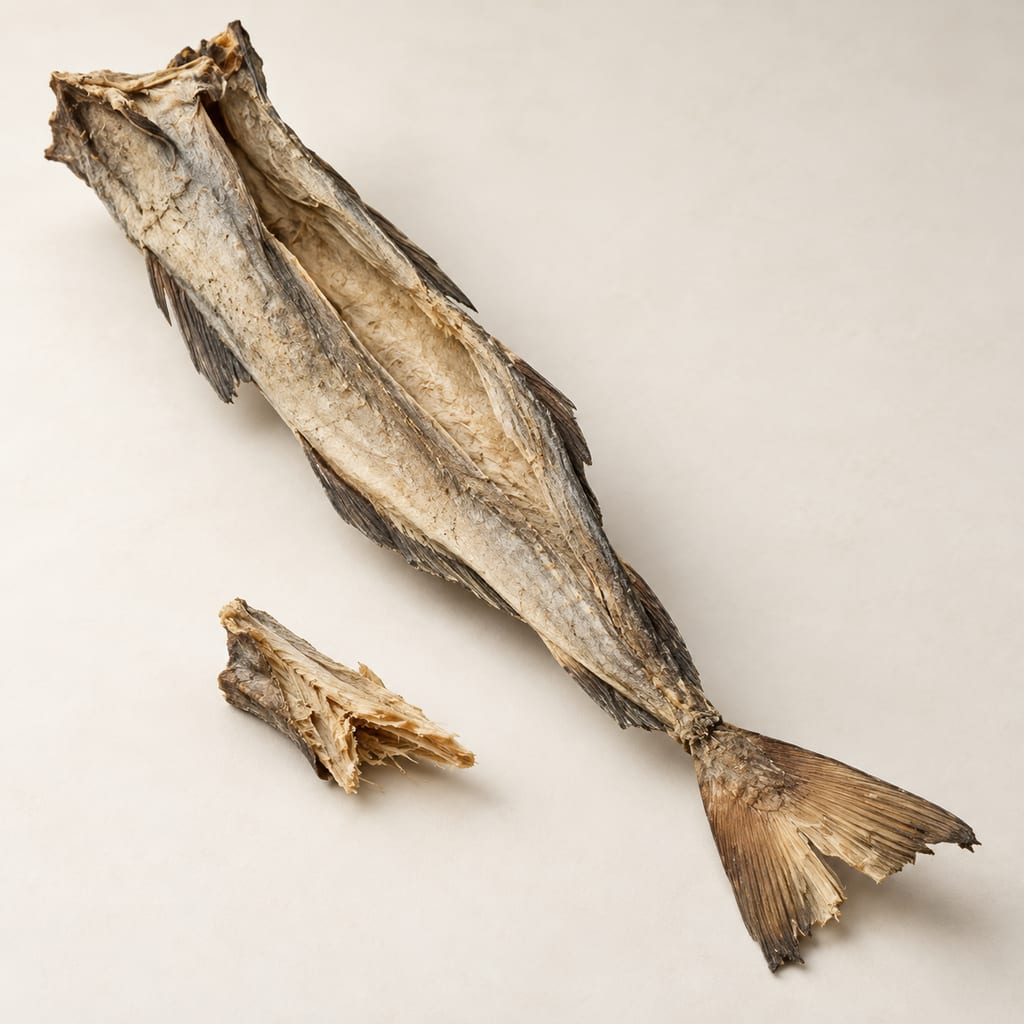
Stockfish is fish preserved by drying without the addition of salt.
The best-known Norwegian variety is made from Atlantic cod, Gadus morhua, although several related fish can be processed in comparable ways.
Fresh fish is cleaned and hung in conditions that allow moisture to escape while limiting deterioration.
Over time, the fish loses a substantial proportion of its original water.
The resulting product becomes hard, lightweight and concentrated.
It can be stored, transported and subsequently rehydrated for cooking.
Stockfish is one of the most significant historical food products associated with northern Norway, and unlike several of the reconstructed dishes in this collection, it has a particularly substantial body of evidence connecting Viking Age fish exploitation with long-distance trade.
Nevertheless, its history requires care.
Present-day Norwegian stockfish production uses inherited techniques combined with modern hygiene, inspection and commercial controls.
It would be misleading to assume that all modern specifications, classifications and processing times were already standardised in the ninth century.
The principal modern commercial species is Atlantic cod, Gadus morhua.
Other species used in Norwegian stockfish production include saithe, Pollachius virens; tusk, Brosme brosme; and haddock, Melanogrammus aeglefinus.
Not every dried fish product is stockfish, and not every stockfish product uses the same species.
Norwegian — Tørrfisk — Dried fish
Old Norse — Skreid — Dried fish, particularly fish prepared for transport or use
Icelandic — Hardfiskur — Hard dried fish
Swedish — Torrfisk — Dried fish
Danish — Tørfisk — Dried fish
Italian — Stoccafisso — Stockfish
English — Stockfish — Unsalted air-dried fish
This is the most important distinction for cooks.
Stockfish is preserved primarily through drying.
Salt cod is preserved through salting and usually additional drying.
The products differ in their composition, flavour, texture and preparation requirements.
Dried salted cod contains deliberately added salt that must often be removed through soaking.
Traditional stockfish does not undergo that salting stage.
A related source of confusion is the Italian term baccalà.
In many Italian contexts, the term refers to salted cod.
However, regional terminology differs. The Venetian dish baccalà alla vicentina traditionally uses stockfish despite its name.
Lutefisk represents another separate preparation.
It involves dried fish treated with an alkaline solution before further preparation.
The process changes the fish's texture and chemistry.
The stockfish recipe here uses neither salt curing nor lye treatment.
Northern Norway has environmental conditions well suited to traditional air-drying during the fishing season.
Temperature, wind, humidity and the movement of cold air all influence the process.
Cold weather can slow microbial deterioration while allowing moisture to leave the fish.
Wind helps replace moist air near the surface with drier surrounding air.
The fish must not remain excessively wet, particularly during its vulnerable early drying stages.
At the same time, conditions that freeze fish solid for prolonged periods can complicate drying and quality.
The process therefore depends on a balance of weather conditions, rather than cold alone.
Lofoten became especially associated with stockfish production because of both its fisheries and suitable seasonal drying conditions.
The geographical combination is important: a coastal population needs fish to catch, places to prepare it and conditions in which the product can dry.
The resulting food could supply people well beyond the original fishing settlement.
Hedeby, also called Haithabu, was a major trading settlement near the base of the Jutland Peninsula.
Its location connected maritime and overland commercial routes.
Fish bones excavated there provide direct evidence of fish consumption and movement through the settlement.
A particularly important study published in 2017 used ancient DNA to investigate the biological origins of cod remains.
Researchers analysed material from sites in Germany, Norway and the United Kingdom, including specimens from Viking Age and subsequent medieval deposits.
Five Viking Age cod specimens from Hedeby, dated within approximately 800–1066 CE, were especially significant.
Their genetic characteristics linked them to the Northeast Arctic Atlantic cod population associated with northern Norway and the Lofoten fishery.
This matters because it supports the movement of cod over a substantial distance during the Viking Age.
The result is more precise than simply identifying a cod vertebra.
Cod populations have genetic differences that can help researchers investigate their origins.
By comparing ancient genetic data with relevant modern populations, the researchers could assess whether fish were likely to have been caught locally or had travelled from another region.
The findings strongly support the existence of long-distance fish movement.
The study does not demonstrate that every individual cod imported to Hedeby was dried using exactly the modern Lofoten technique.
It also does not establish the total volume of Viking Age stockfish exports.
Five Viking Age cod from one trading centre cannot be used to calculate the size of the entire industry.
The importance of the study lies in documenting the movement of northern fish resources over long distances.
Preservation was a plausible and economically important means of making such transport possible, but the precise treatment of each specimen requires separate evidence.
Stockfish occupies an important place in the economic history of medieval Norway.
Fish could be caught during a period of seasonal abundance, dried and transported later.
This separated the moment of production from the moment of consumption.
A household or merchant no longer needed the fish to remain fresh during a lengthy journey.
Such an advantage became especially important for long-distance maritime trade.
Later medieval records provide stronger documentary evidence for the expanding commercial importance of dried cod.
The Viking Age genetic evidence suggests that some of the foundations of that exchange were already present earlier.
Northern Norwegian fish resources could reach trading centres far from their original fishing grounds.
However, the later large-scale export economy should not simply be projected backwards unchanged.
The organisation of labour, ownership, taxation and merchant networks evolved over time.
The Norwegian Seafood Council describes the principal stages of present-day stockfish production.
These are modern commercial production parameters and should not be represented as an excavated ninth-century manufacturing specification.
The process starts with suitable fish from the relevant fisheries.
Raw-material quality is crucial.
A fish already undergoing substantial deterioration cannot be rescued by drying it.
Contemporary processors use handling procedures intended to keep the catch in suitable condition before preparation.
The precise onboard requirements vary with commercial operations and are not specified in the historical dossier.
The fish is opened and its internal organs removed.
This eliminates highly perishable material and prepares the body for drying.
Inadequate preparation can increase the risk of contamination and quality defects.
Modern Norwegian stockfish can be produced as whole, gutted fish or in a split form called rotskjær.
In the split form, the fish is cut along the backbone while remaining connected at the tail.
This changes the surface area exposed to air and can influence drying.
The Seafood Council also describes fish tied together in pairs for hanging.
The prepared fish is suspended on outdoor wooden structures traditionally called hjell.
The racks expose the fish to moving air.
Spacing and positioning matter because crowded surfaces can obstruct airflow.
The fish must be protected from conditions likely to compromise the product.
The Seafood Council describes outdoor drying lasting up to three months.
This is a modern description of the production system, not a universal rule for all fish sizes and every season.
Drying depends on the weather and the condition of the fish.
After outdoor drying, the product can undergo further maturation indoors.
The Seafood Council specifies another 4–12 months in a dry, ventilated storage environment.
The process allows moisture and flavour characteristics to develop further.
Commercial stockfish is inspected and sorted by quality and size.
The Seafood Council describes more than 20 possible quality categories.
This reflects an established commercial grading system.
It should not be interpreted as evidence that Viking merchants used those same categories.
The first essential transformation is moisture loss.
Fresh fish contains substantial water distributed through muscle tissues.
Drying allows water to move from inside the fish towards its surface, where it evaporates.
The rate depends on temperature, relative humidity, airflow and the size and structure of the fish.
As water is removed, the remaining proteins and other constituents become more concentrated.
The flesh becomes harder.
The physical structure also changes, affecting how the finished fish behaves when soaked and cooked.
Microorganisms need accessible water.
Removing sufficient moisture can reduce water activity to levels at which many spoilage organisms cannot multiply.
This is the central preservation principle of stockfish.
It does not mean that the dried fish is sterile.
Microbial spores and other organisms may remain present.
If moisture returns during unsuitable storage, conditions can again become favourable for deterioration.
The product's safety therefore depends on the entire process, including raw-fish quality, preparation, drying and subsequent storage.
Stockfish is primarily a dried fish product, not a deliberately fermented fish product.
Changes during drying and maturation may involve endogenous enzymes and complex flavour development.
However, this should not be confused with intentionally culturing fish using a defined microbial fermentation.
The traditional preservation mechanism is dominated by dehydration.
Calling all aged or flavour-developed foods fermented would obscure the important differences between stockfish, salted fermented fish and other preserved seafood.
Fish muscle contains proteins organised into structured fibres.
As moisture leaves, those structures become more compact.
The flesh loses the softness associated with fresh fish.
This is why fully dried stockfish may require prolonged soaking before ordinary cooking.
Mechanical treatment can also change its texture.
Some modern stockfish products are passed through rollers.
The Seafood Council distinguishes these from whole fish and gives separate soaking guidance.
Because their structures differ, it would be wrong to apply one soaking duration to all stockfish.
Rehydration is a critical stage because water is being returned to a dried food.
The fish gradually absorbs moisture and softens.
At the same time, its increasing water content changes the conditions available for microbial growth.
Rehydration must therefore be conducted under refrigeration.
The Norwegian Seafood Council specifies clean cold water at 2–4°C, with water changed at least once daily.
The recommended soaking periods vary by the type of fish.
These figures should not be averaged into a single standard soaking time.
The fish must remain refrigerated throughout.
Readiness is assessed partly through the softened texture.
The Seafood Council notes that stockfish more than doubles in weight during soaking.
These figures apply to its described modern products. They are not Viking Age measurements.
Stockfish processed through rollers — 2–4 days
Whole stockfish — 7 days
General initial preparation — Cutting into portions after 2–3 days, depending on thickness and texture
The supplied research offers a straightforward modern dish designed to explore dried fish without attempting to manufacture it at home.
1. Obtain safe stockfish.
Buy commercially produced stockfish from a reputable supplier.
For convenience, choose fish that has already been professionally rehydrated and is ready to cook.
If purchasing dried fish, follow the supplier's product-specific instructions.
2. Rehydrate if necessary.
Use clean water and maintain the specified 2–4°C during soaking where following the Seafood Council guidance.
Change the water at least daily.
Use the correct soaking duration for the product.
3. Prepare the flesh.
Remove skin and bones as directed by the supplier.
Check carefully for remaining bones.
4. Cook.
Cover the prepared fish with fresh water.
Simmer until thoroughly cooked and tender, following the supplier's directions.
The source does not establish one universal cooking duration for all stockfish.
5. Prepare the onions.
Melt the 40 g butter and soften the sliced onions gently.
Avoid scorching.
6. Serve.
Drain the fish, inspect for remaining bones and serve with the buttery onions.
Bread or cooked turnips make suitable modern accompaniments.
This dish is an original modern reconstruction, not a documented Viking recipe.
Norwegian tørrfisk is associated particularly with cold-air drying and the commercial production of cod and related fish.
The wooden racks are an important visual feature of the coastal landscape.
Their arrangement and use belong to a specialised industry with accumulated local expertise.
Icelandic hardfiskur is a dried fish product often eaten as a snack, sometimes with butter.
Its processing and customary use are not identical to every form of Norwegian stockfish.
The terms should therefore be connected historically and technologically without treating them as perfect synonyms.
Stockfish became important in several regional Italian cuisines.
It can be rehydrated and cooked with vegetables, olive oil and other ingredients.
The Venetian tradition illustrates how a dried fish originating far to the north became integrated into southern European cooking.
Its culinary meaning changed as it entered new regional food cultures.
Dried imported fish is important in Nigerian cooking, where stockfish is often known as okporoko.
It contributes flavour and texture to soups and stews.
This modern trade belongs to a much later economic and culinary history than the Viking Age, but it demonstrates the continuing global reach of dried fish.
The Nigerian, Italian and Scandinavian uses are distinct culinary traditions, not variants of a single Viking recipe.
Commercially prepared stockfish should have the expected dry, firm structure and characteristic aroma of the product.
Its quality is assessed through professional sorting and inspection.
Moisture developing during storage can indicate unsuitable conditions.
Do not attempt to salvage visibly deteriorating fish by drying it again.
Reject the product and seek advice from the supplier.
Not all microbial hazards are visible, and appearance alone cannot certify safety.
The product may require a different soaking procedure.
Follow the supplier's guidance rather than leaving it at room temperature.
It may have been excessively agitated or cooked longer than necessary after becoming tender.
Gentle handling improves texture.
Traditional stockfish production relies on specialised knowledge of raw materials, climatic conditions and drying behaviour.
A garden shed or domestic outdoor rack does not automatically reproduce the environment of northern Norway.
Unsuitable humidity, temperature and airflow can allow deterioration before sufficient water is removed.
Fish also raises particular food-safety considerations, including parasitic and bacterial hazards.
The source material does not provide a validated domestic process for safely manufacturing shelf-stable stockfish.
Consequently, this page gives a detailed explanation of commercial production but does not recommend an improvised home fish-drying procedure.
For cooking, commercially produced stockfish is the appropriate starting point.
Dry stockfish and rehydrated stockfish are very different products.
After soaking, the flesh once again contains substantial water.
It must be treated as perishable fish.
Keep refrigerated throughout the soaking process and follow the supplier's instructions for subsequent cooking and storage.
The Seafood Council states that stockfish can be kept frozen for up to 18 months, in the context of its handling guidance.
This should not be converted into a blanket statement that all rehydrated homemade fish preparations have the same freezer life.
Once cooked, refrigerate promptly and follow current leftover-food guidance.
The UK Food Standards Agency gives a centre temperature of 70°C for two minutes, or an equivalent time-temperature combination, as a conservative cooking reference.
Stockfish is also a fish allergen.
Stockfish illustrates a central relationship between food technology and commerce.
Preserving fish allowed resources harvested in one environment to feed consumers in another.
The physical transformation reduced dependence on immediate consumption and created a transportable product.
Ancient DNA evidence establishes that cod associated with the far northern fisheries reached Hedeby during the Viking Age.
Later historical evidence documents the considerable expansion and importance of northern dried-fish trade.
Modern Norwegian stockfish remains an example of how a preservation technology can develop into a specialised regional industry while retaining recognisable features of its earlier form.
The preservation itself is not mysterious.
It depends on the interaction of raw material, water, air and temperature.
Its historical significance lies in what those simple physical principles made possible: the long-distance movement of food across northern Europe and, eventually, far beyond it.
Stockfish has an unusually strong evidential spine for a food of this age, and it is genetic rather than textual. Cod populations differ genetically, so ancient data can be compared with relevant modern populations to ask whether a fish was caught locally or travelled, and for five Viking Age specimens from Hedeby the answer pointed north, to the Northeast Arctic population of the Lofoten fishery. That is far more precise than identifying a vertebra as cod, and it matters because it shows the thing preservation makes possible: separating the moment of production from the moment of consumption, so that a catch taken during a season of abundance could be dried and carried, and neither household nor merchant needed the fish to stay fresh on a long journey. The limits are equally clear. The study does not show that each of those fish was dried by the technique now used in Lofoten, nor can five specimens from one settlement measure an industry. Later medieval records give stronger documentary evidence for the expanding commercial importance of dried cod, and the Viking Age genetic evidence suggests some foundations of that exchange were already present; but the later export economy, with its organisation of labour, ownership, taxation and merchant networks, developed over time and cannot be projected backwards unchanged. The same caution applies to the present day, since modern specifications, more than 20 quality grades among them, belong to a modern industry rather than to the ninth century.
Scaling: source batch only
Traditional production relies on specialised knowledge of raw materials, climate and drying behaviour. A garden shed or domestic rack does not reproduce northern Norway, and unsuitable humidity, temperature and airflow can allow deterioration before enough water has been removed. Fish also raises particular food-safety considerations, including parasitic and bacterial hazards, and the source material provides no validated domestic process.
Hazard sourceSoaking is the critical stage because water is being returned to a dried food: as the water content rises, the conditions available for microbial growth return with it, so the whole soak must be refrigerated and the water changed.
Hazard sourceRemoving moisture reduces water activity to levels at which many spoilage organisms cannot multiply, but microbial spores and other organisms may remain, and moisture returning during unsuitable storage can make conditions favourable for deterioration again.
Hazard sourceMoisture developing in storage indicates unsuitable conditions, and visibly deteriorating fish must be rejected rather than re-dried; not all microbial hazards are visible, and appearance alone cannot certify safety.
Hazard sourceStockfish passed through rollers and whole stockfish have different structures and carry separate guidance, so a single duration will leave one product hard and over-soak another.
Hazard sourceStockfish is a fish allergen in both its dried and rehydrated forms.
Hazard sourceStart from commercially produced stockfish from a reputable supplier rather than drying fish at home
Control sourceSoak under refrigeration with the water changed and the duration matched to the product
Control sourceCook the rehydrated fish thoroughly, following the supplier's directions and an appropriate centre check
Control sourceTreat soaked fish as perishable and follow the supplier's storage instructions, refrigerating cooked fish promptly
Control sourceNo validated domestic process for safely making shelf-stable stockfish exists in these sources: a garden shed or outdoor rack does not reproduce the climate and expertise of northern Norway, and fish carries parasitic and bacterial hazards of its own.
Soaking times are product-specific, 2-4 days for fish passed through rollers and 7 days for whole stockfish, and must not be averaged into one standard time.
Rehydration must stay refrigerated at 2-4°C with the water changed at least once daily, because returning water to a dried food returns the conditions microorganisms need.
Dried stockfish is not sterile: spores and other organisms may remain, and moisture returning during poor storage can restart deterioration.
Do not re-dry visibly deteriorating or unexpectedly damp fish to salvage it, and do not rely on appearance, since not all microbial hazards are visible.
Stockfish is not salt cod. It carries no added salt, so instructions for soaking and desalting salted cod do not apply, and lutefisk is a separate alkaline-treated preparation again.
Five Viking Age cod from one trading centre cannot measure the size of an industry, and the genetic result does not show that those fish were dried by the modern Lofoten technique.
The present-day grading system of more than 20 quality categories is modern commercial practice and is not evidence that Viking merchants used such categories.
The 18-month frozen figure belongs to the Council's guidance for its described products and is not a freezer life for homemade fish preparations.
Stockfish is a fish allergen.
A region-level association rather than a locality. Lofoten became particularly associated with stockfish because its fisheries and its seasonal drying conditions coincide: a coastal population needs fish to catch, places to prepare it and weather in which the product can dry. The racks are a specialised industry with accumulated local expertise, and present-day production combines inherited technique with modern hygiene, inspection and commercial controls.
A major trading settlement connecting maritime and overland routes, and the find spot of the five Viking Age cod whose genetic characteristics link them to the Northeast Arctic population of northern Norway. The attestation is of long-distance fish movement; the drying treatment of each specimen would need separate evidence.
Stockfish from Vicenza, left barely bubbling for hours with onion, preserved anchovy, olive oil, milk and a little cheese until it is tender under a dense pale sauce, and eaten with polenta.
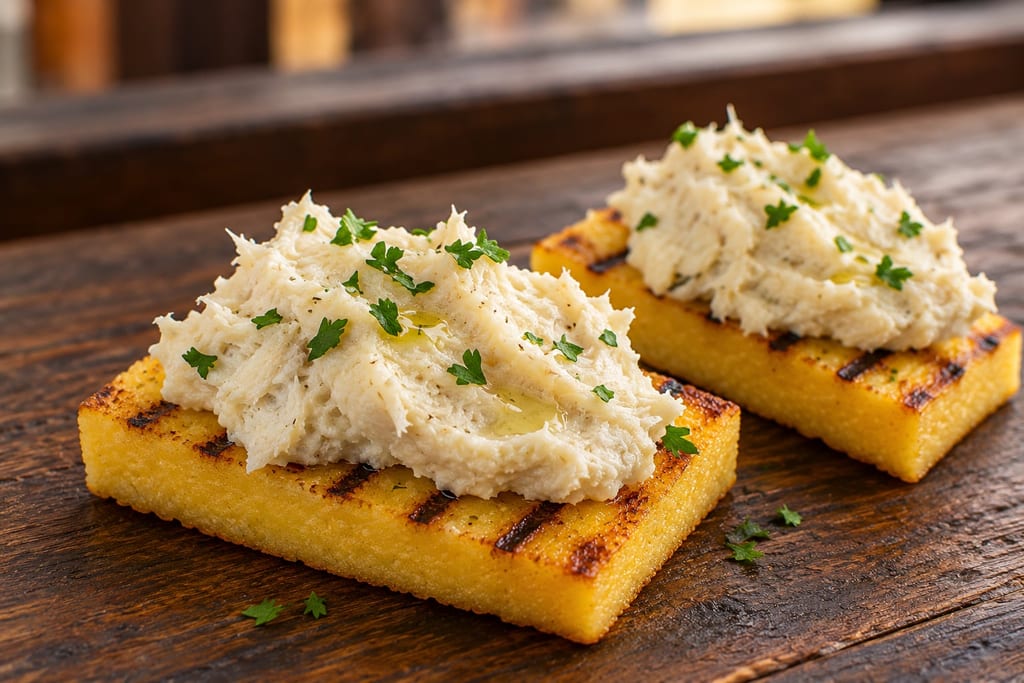
A Venetian cicchetto of cooked unsalted stockfish beaten with oil until it turns into a pale, aerated cream, spooned onto grilled polenta in the city's wine bars.
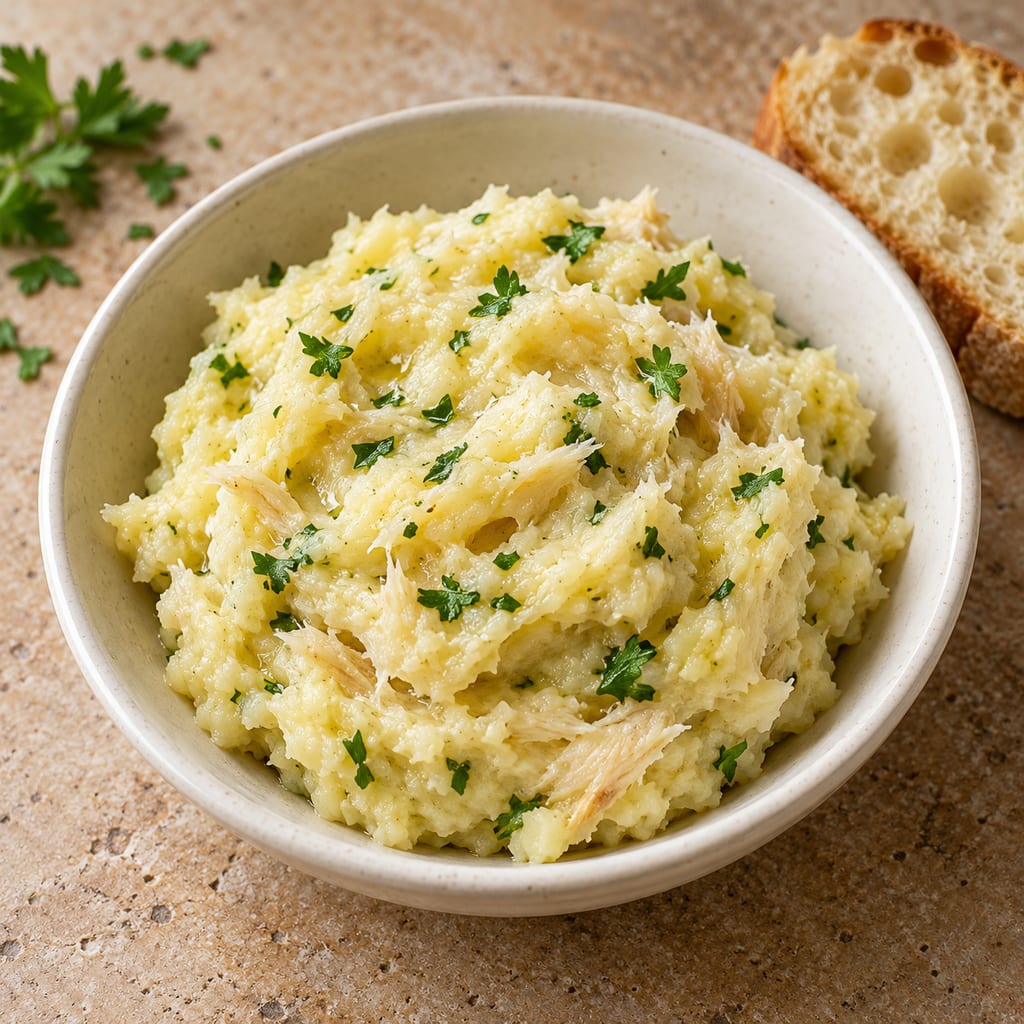
An Istrian festive spread of cooked stockfish beaten with olive oil and garlic until pale and cohesive, here bulked out with hand-mashed floury potato.
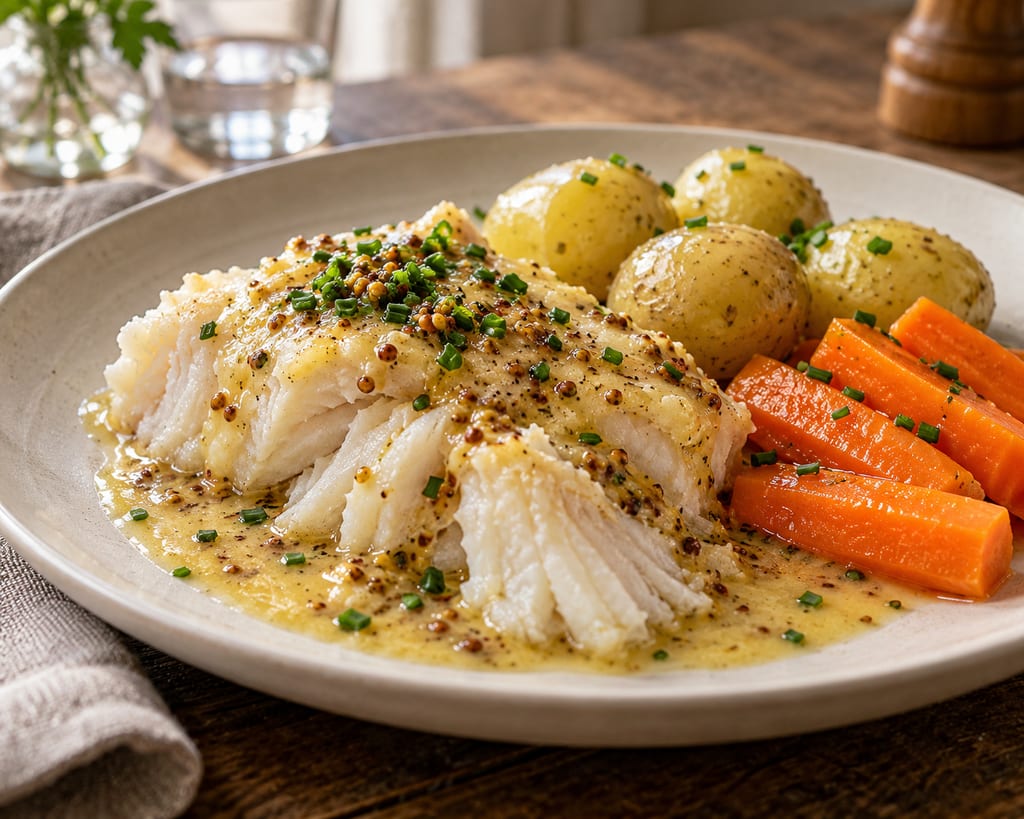
Rehydrated air-dried Norwegian cod simmered until it flakes, served with boiled potatoes and carrots under a wholegrain-mustard butter whisked from the fish's own poaching liquid.
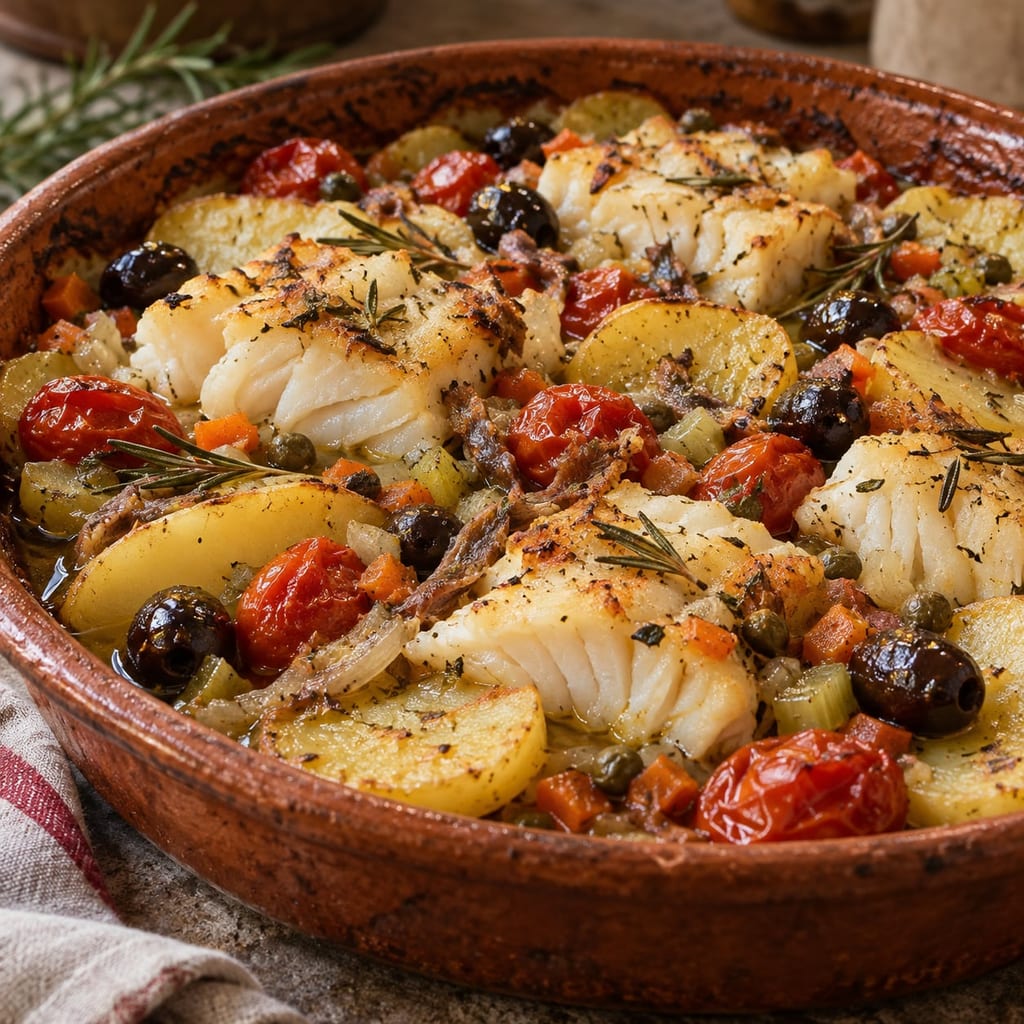
Ancona's baked stockfish: thick pieces layered with potatoes, tomatoes, olives, capers and anchovy under olive oil and white wine, cooked slowly in a covered dish.
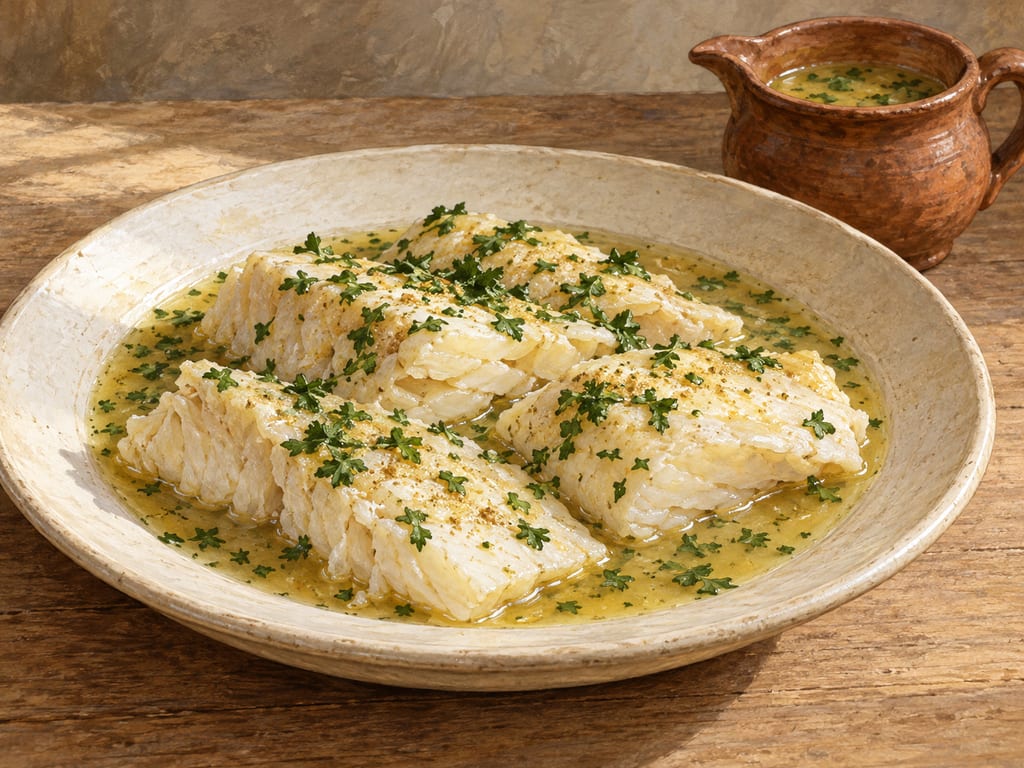
A fifteenth-century English way to serve cooked stockfish: strained fish broth boiled with chopped parsley, powdered ginger and a little verjuice, then poured hot over the fish.
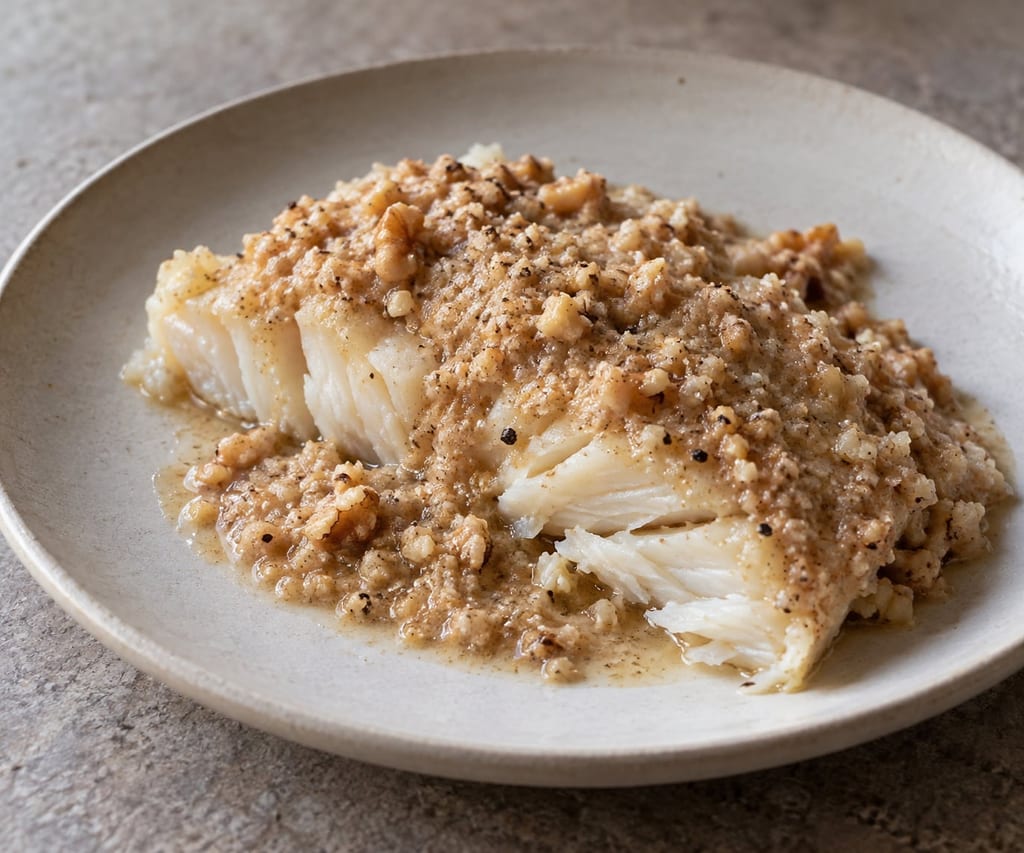
The second stockfish sauce from a fifteenth-century English manuscript: walnuts, garlic, bread, pepper and salt ground in a mortar and loosened with the fish's own broth.
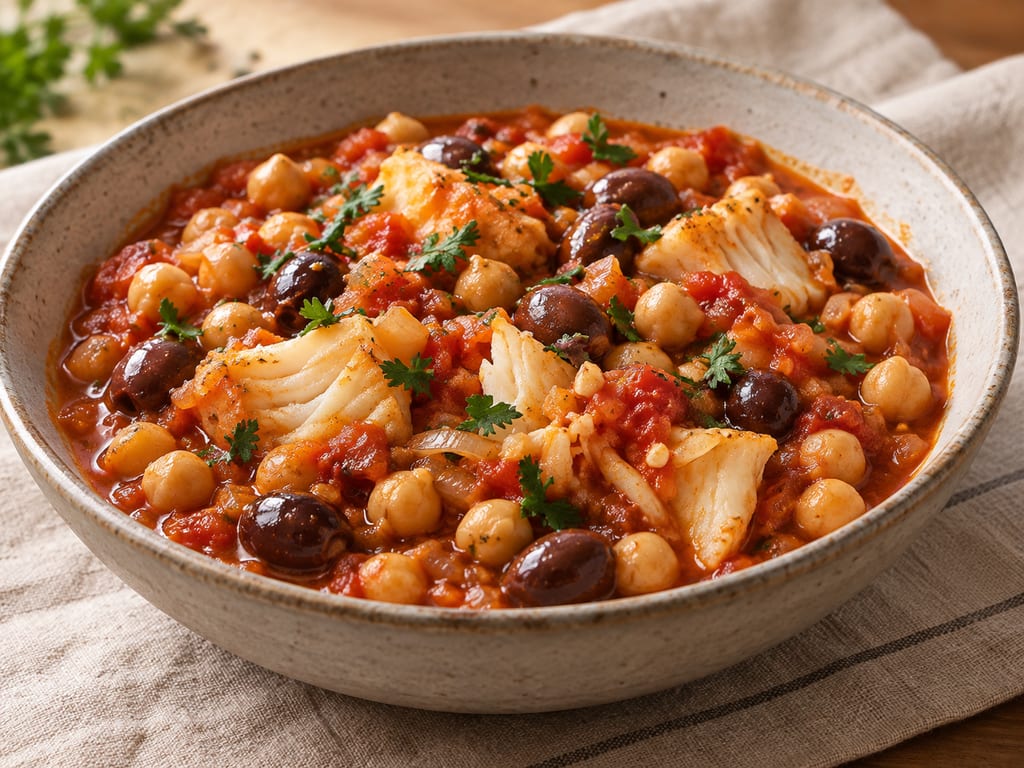
A contemporary Mediterranean-style stew in which poached stockfish flakes are folded into a paprika-spiced tomato sauce with cooked chickpeas and olives.
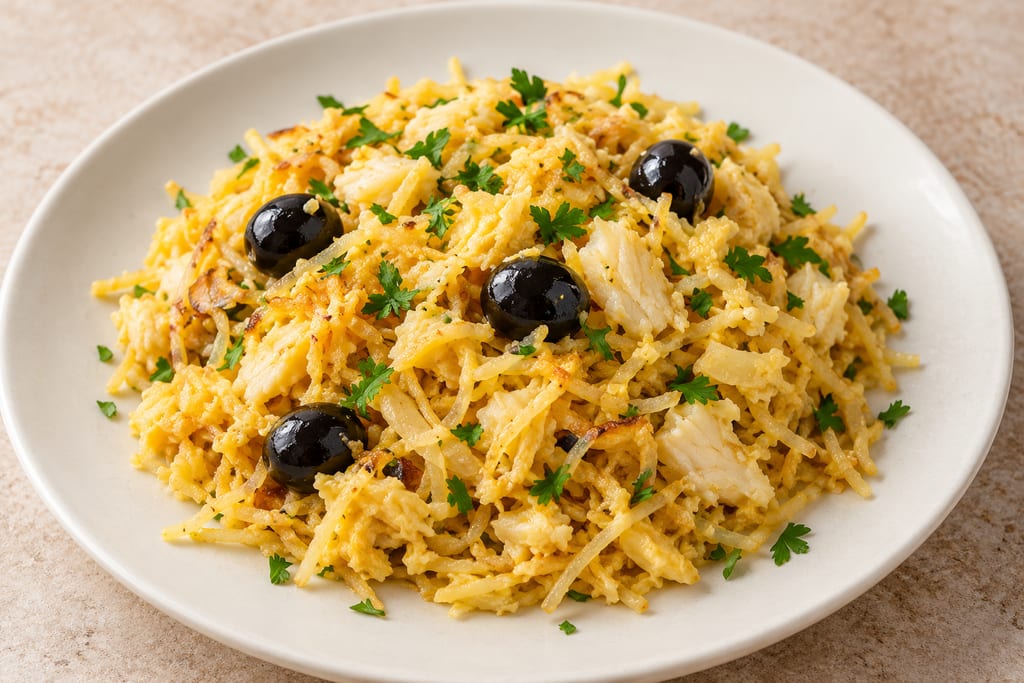
Lisbon's salt cod dish: shredded desalted cod and fine fried potato matchsticks folded through softened onion and bound with beaten egg, finished with parsley and black olives.
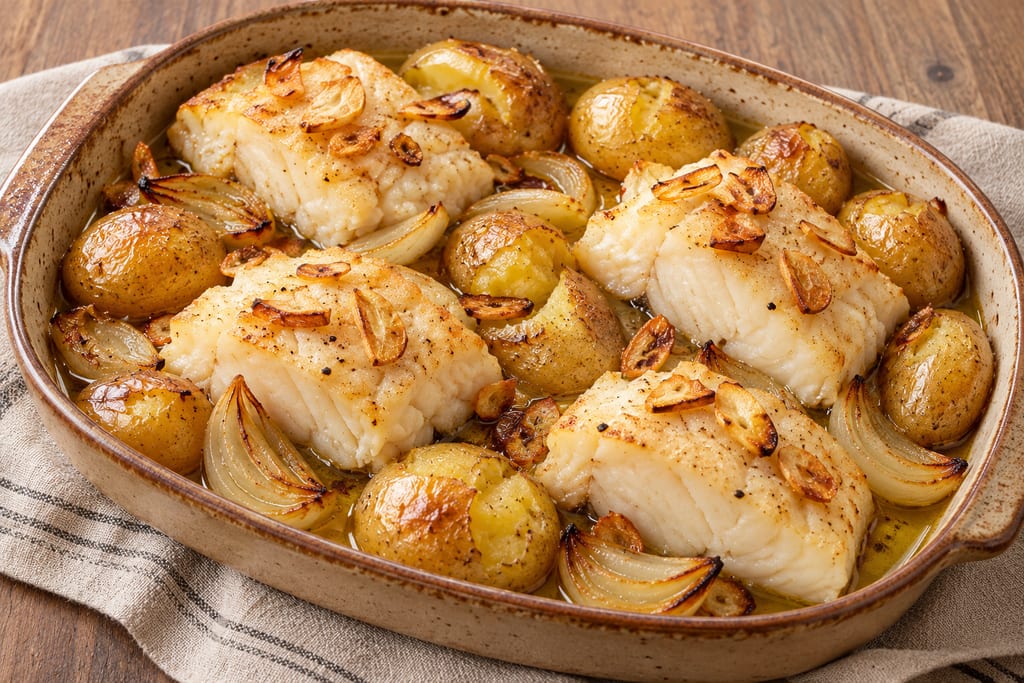
Thick pieces of desalted salt cod roasted in olive oil with garlic and onion, served with small potatoes cooked and then crushed until their skins split.
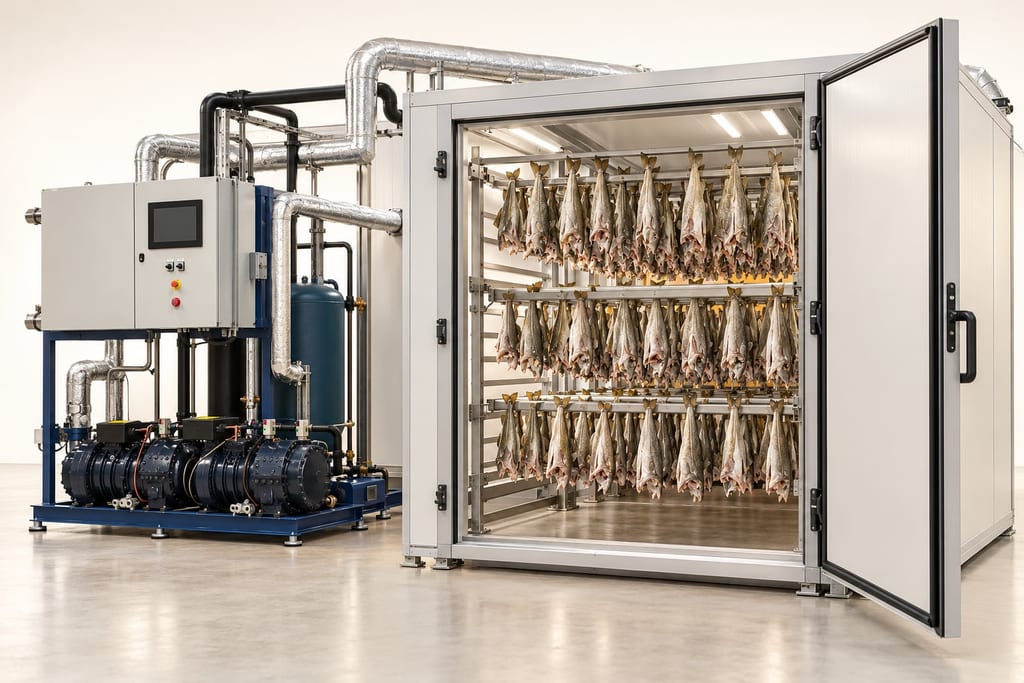
A modern industrial system for controlled indoor drying of stockfish. Documented Norwegian examples combine a drying chamber or duct with heat-pump dehumidification and process monitoring; the evidence does not describe a household cabinet.
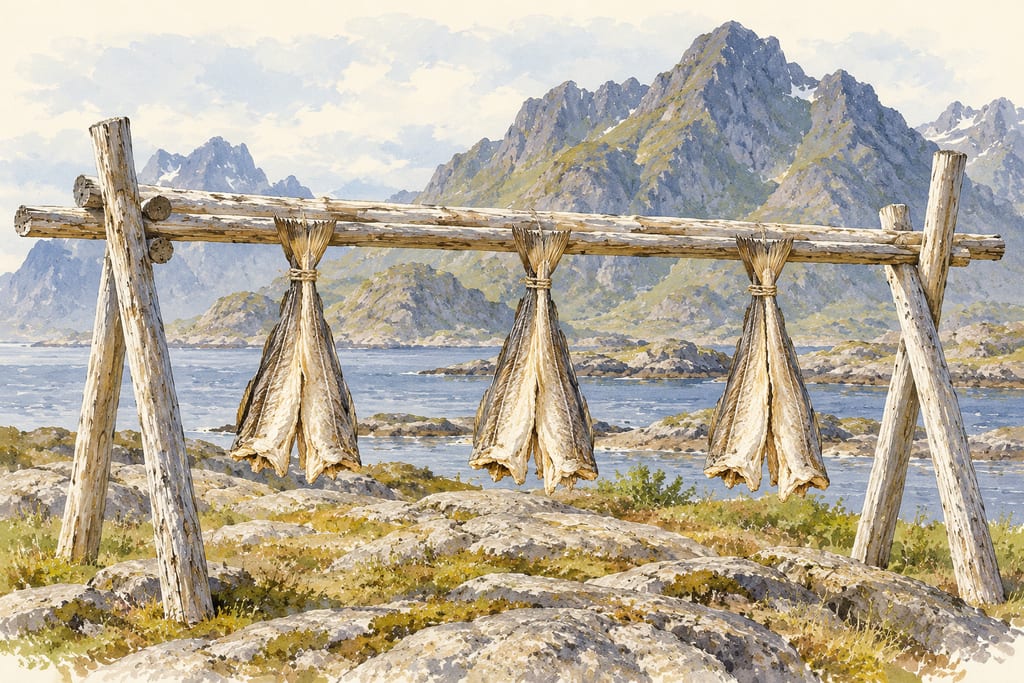
A Lofoten hjell is a large outdoor wooden rack for drying stockfish in the region’s moving coastal air. Flat racks and piles are recorded in the product specification; the archive also describes horizontal and tall triangular arrangements.
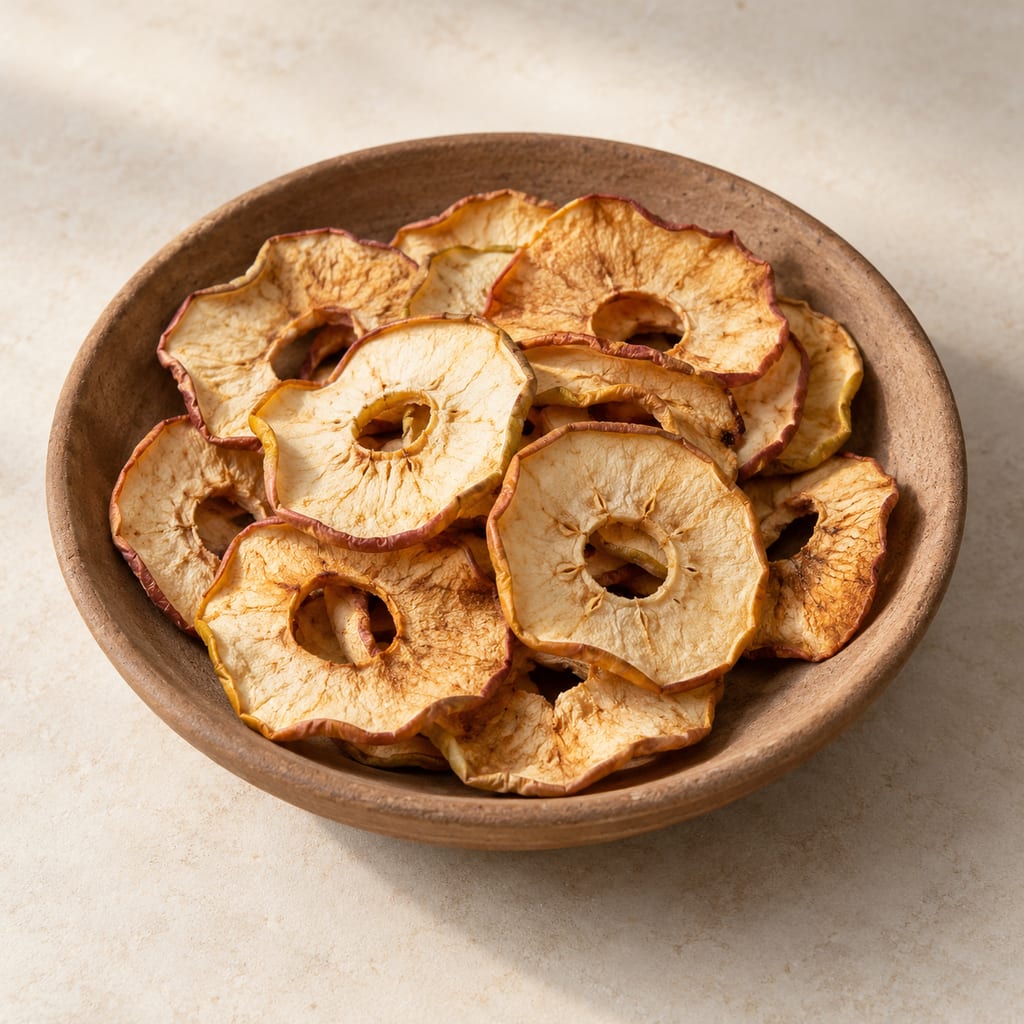
Apple slices dried until most of their water has gone, shrinking and concentrating into leathery or crisp rings, with the modern controls that a plausible old technique turns out to need.
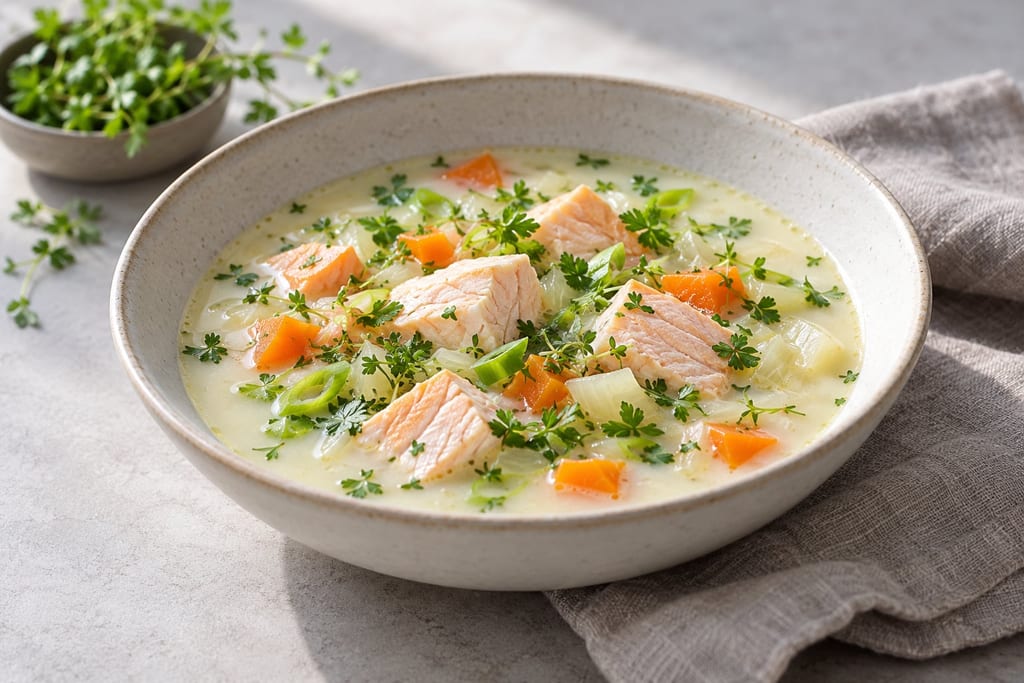
Trout or salmon poached at the end of a simmered broth of onion and root vegetables, a present-day reconstruction of coastal cooking built on excavated fish bones and a boiling pot.
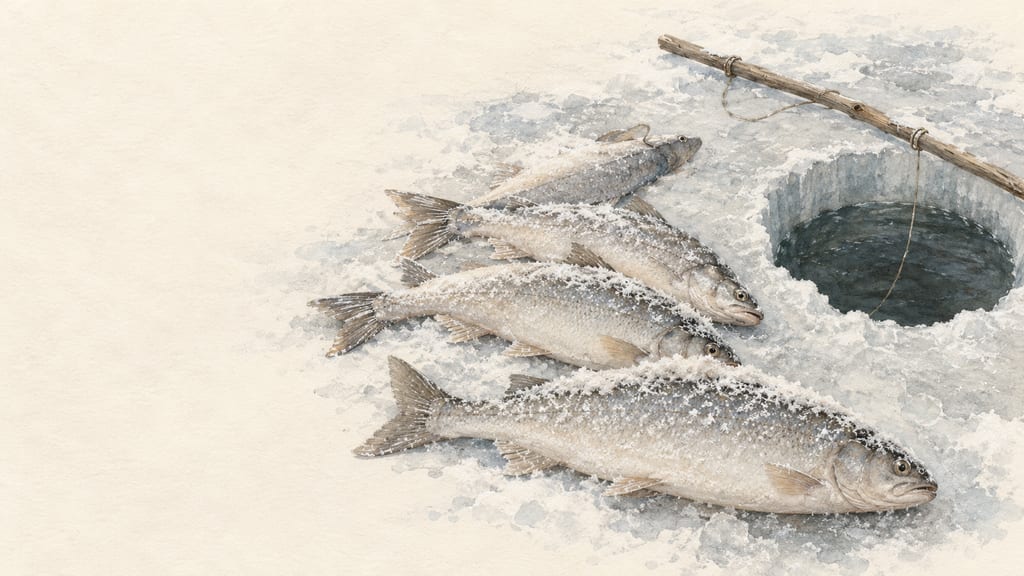
Freezing food is old. Freezing it fast enough to protect its texture, and selling it that way, is the 1920s idea that built an industry. The science explains why speed matters and where it stops.
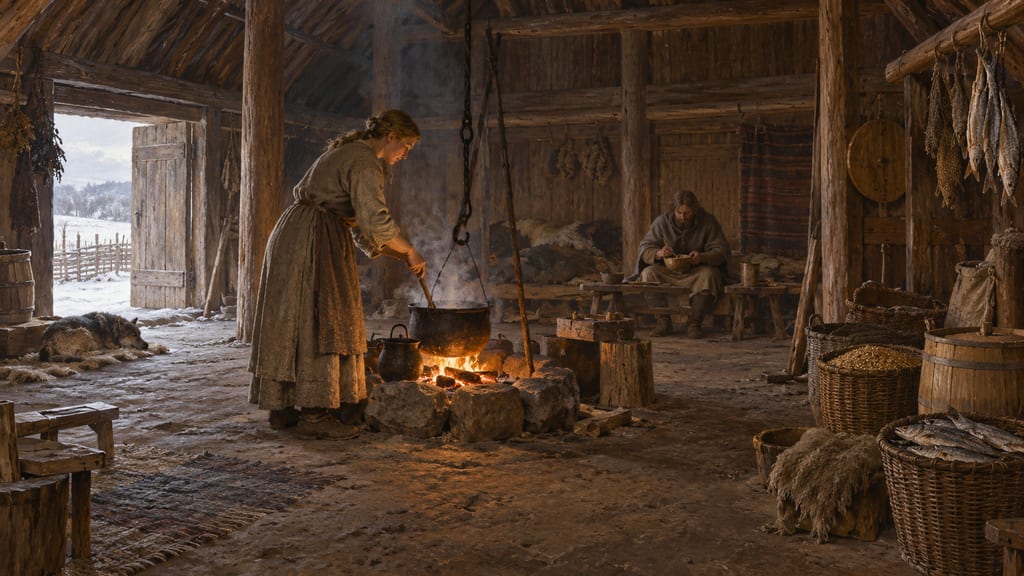
How ordinary Viking-Age households grew, dried, smoked, salted and cooked their food through the northern year, and how to cook their dishes today with supermarket ingredients.
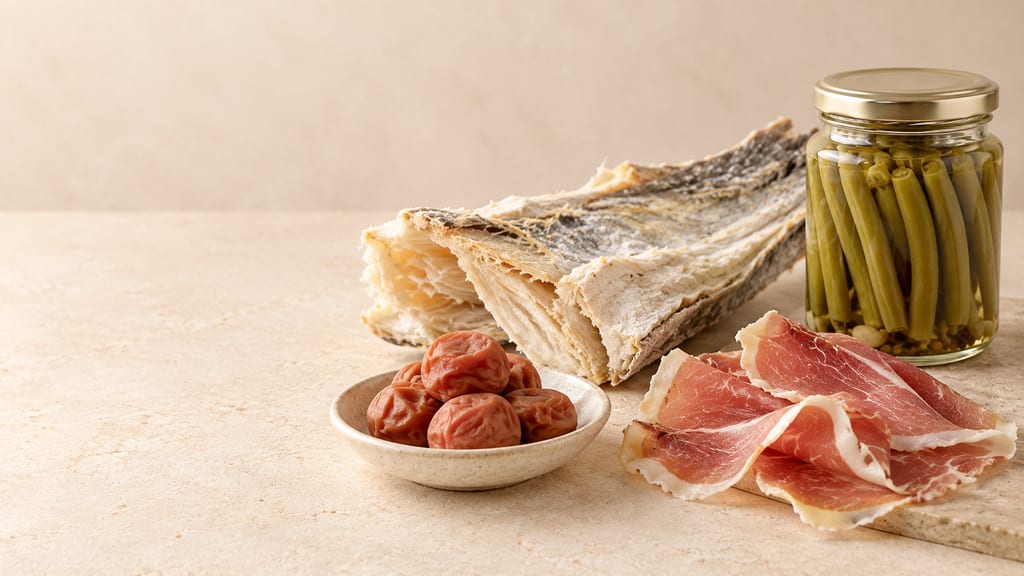
Every preserved food is a stack of barriers against microbes, enzymes, air and time. This is how they work, what a recipe's numbers measure, and how cooks worldwide build them.
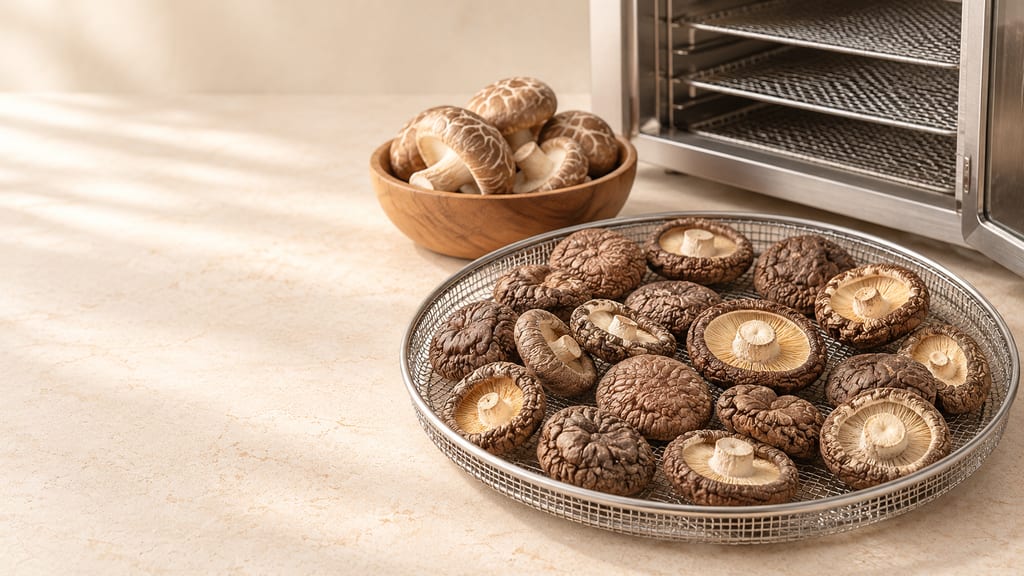
A heat-pump dryer wrings the water out of the air it recirculates and reuses the heat. Drying shiitake took 0.85 kWh per kilogram against 6.67 for hot air, at a price in shrinkage. Here is how it works and how far the results carry.
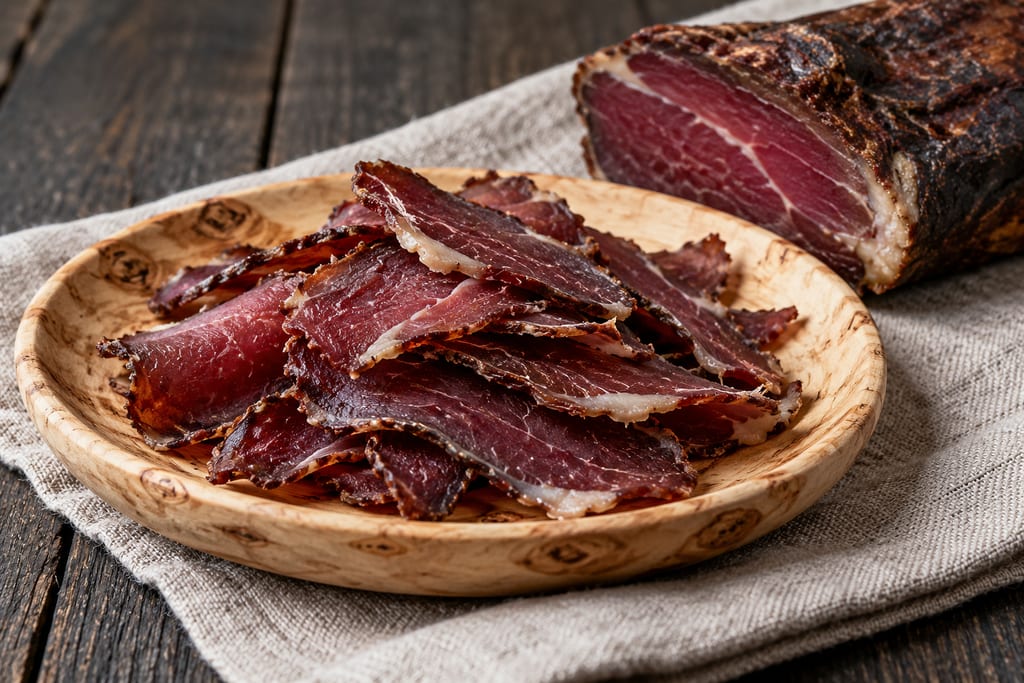
Salted reindeer meat hung in the smoke of a lávvu fire over willow, birch or juniper, then cooled and in some Sámi communities dried outdoors into travelling provisions.
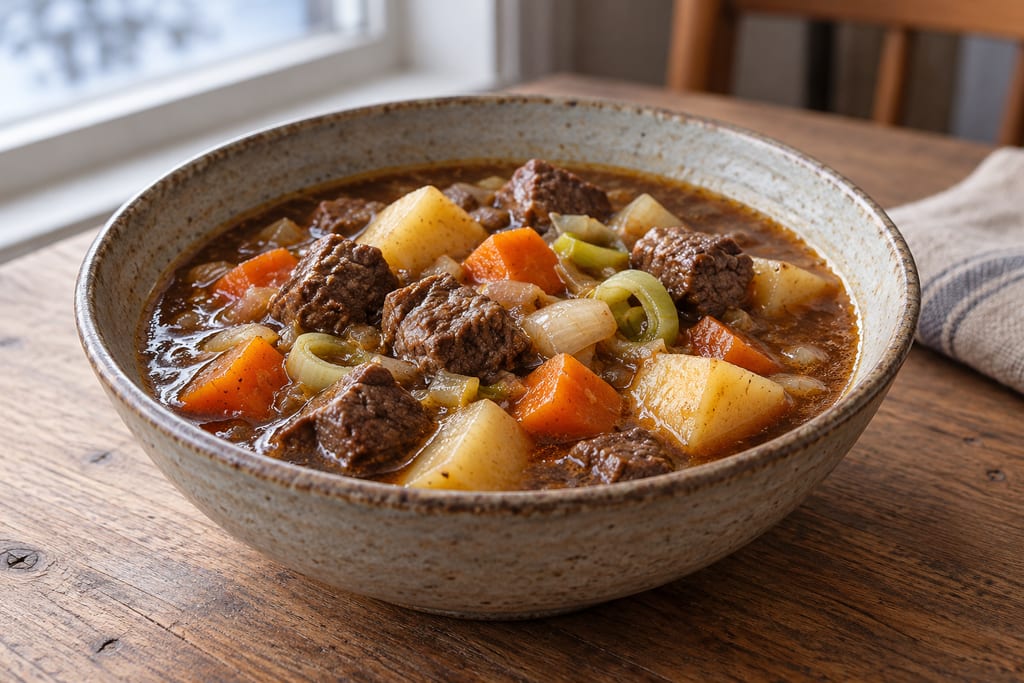
Ann-Kristine Bongo's four-serving bidus from Sami Siida in Alta is a contemporary, festive reindeer stew simmered with onion, carrots and potatoes.
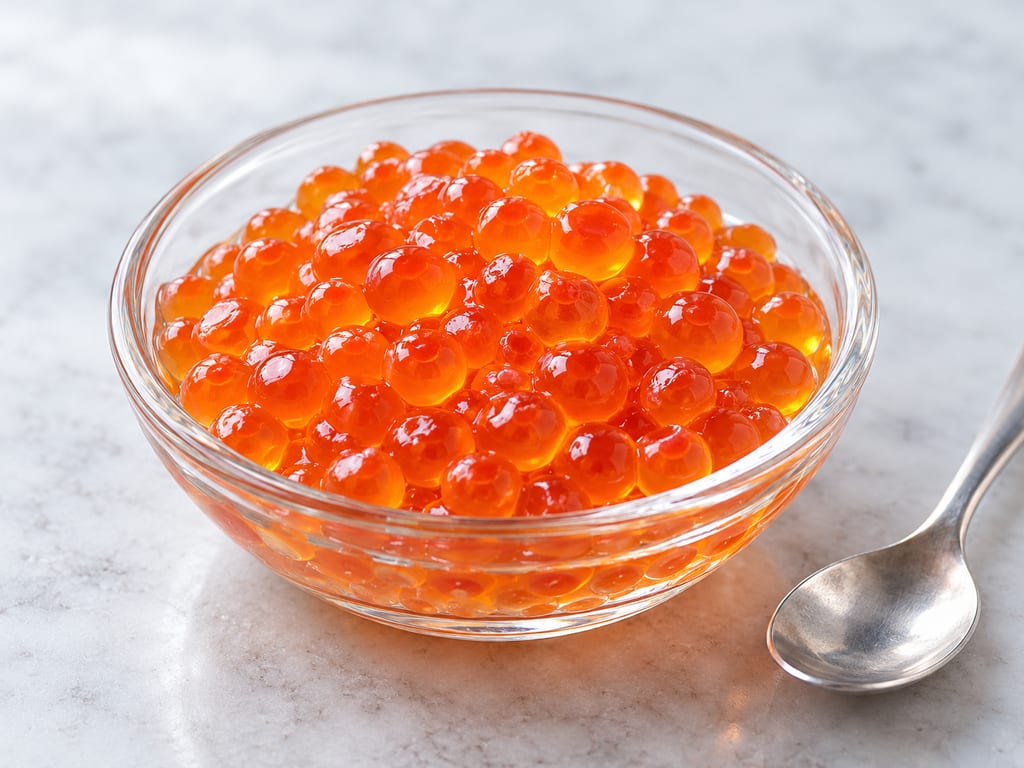
Salmon roe is separated from skeins and treated in two salt-water stages using a University of Alaska Extension formula.

Kodiak salmon, halibut and cod cut as seg'aq and hung on an initaq rack to become tamuuq, with kac'amaasaq and kupcuunaq named as different results.
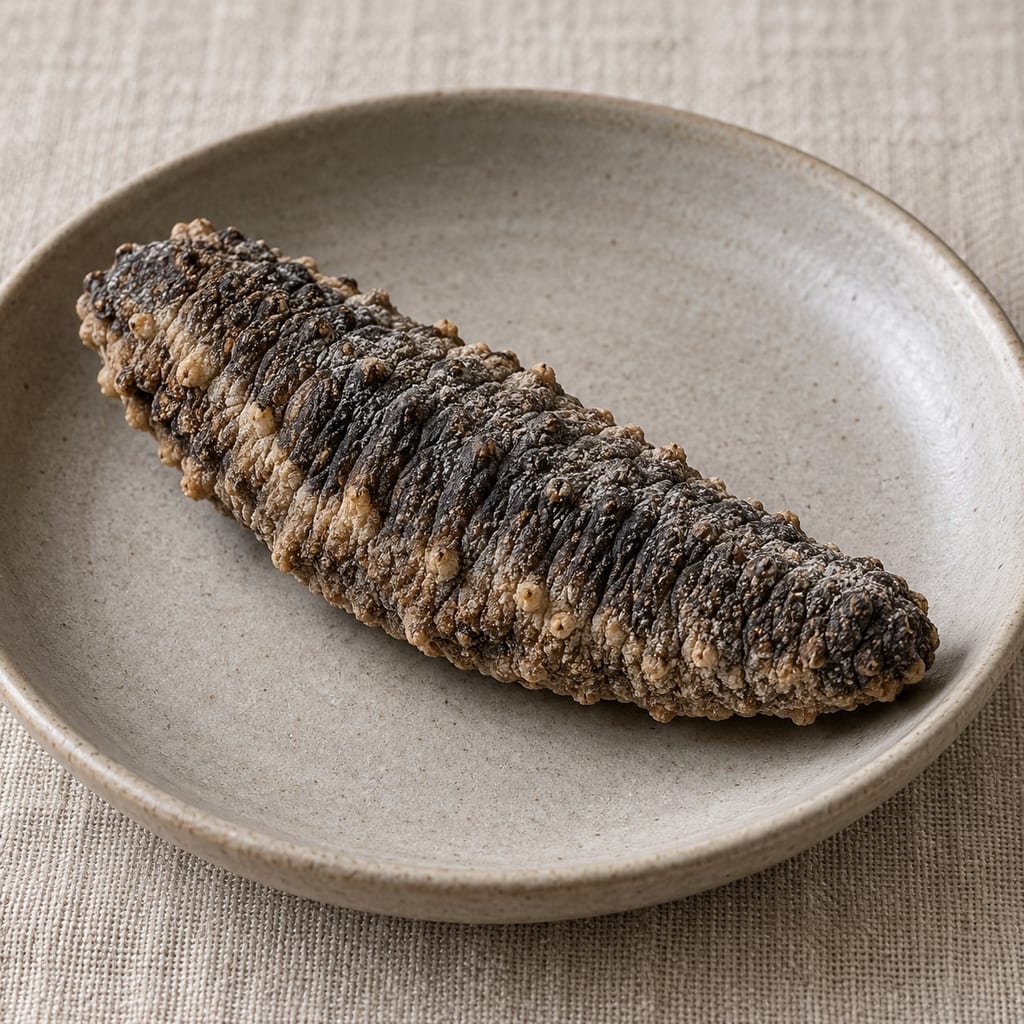
Sea cucumber cleaned, boiled and dried, sometimes with smoke, into a long-keeping trade product; Makassan processing in Arnhem Land is documented from at least the eighteenth century.
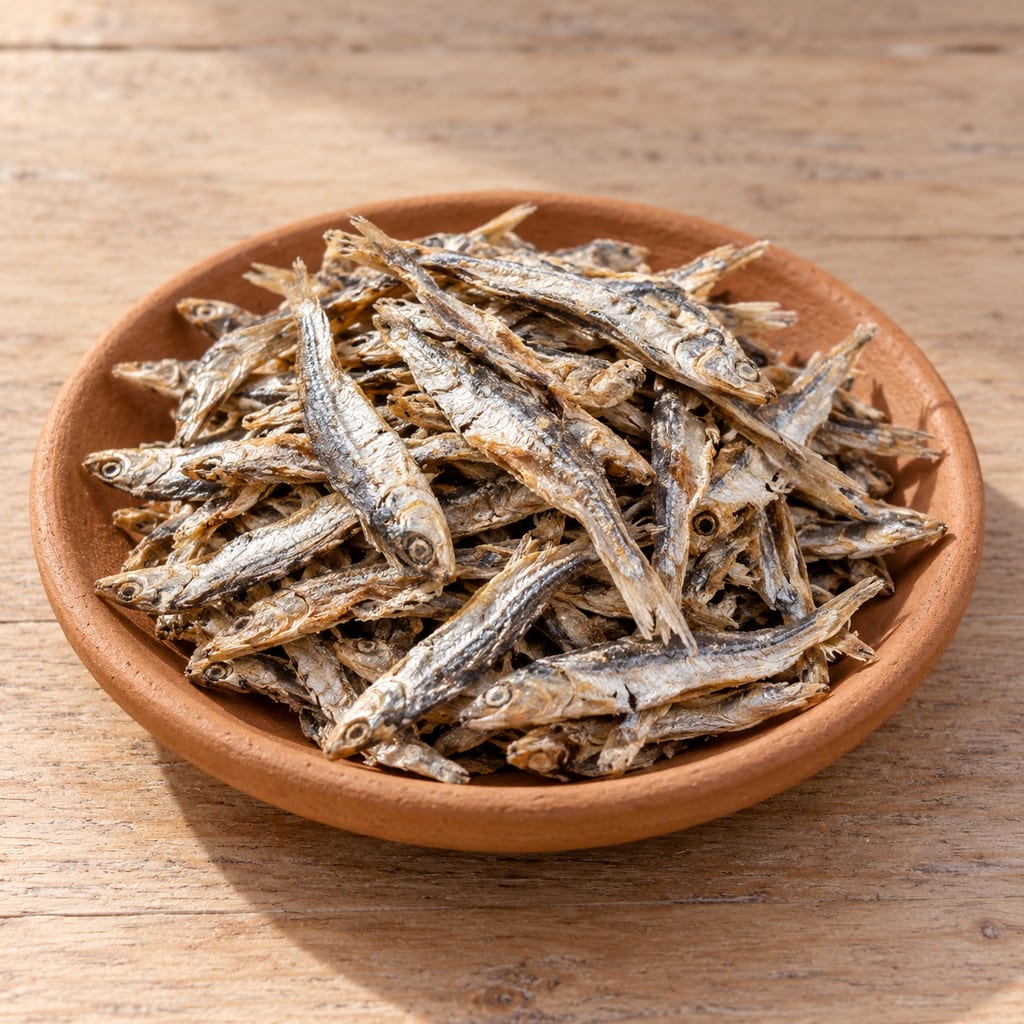
Anchoveta salted, drained of sanguaza and sun-dried on sand or stones at Caleta de Carquín, a technique declared part of Peru's cultural heritage in 2016.
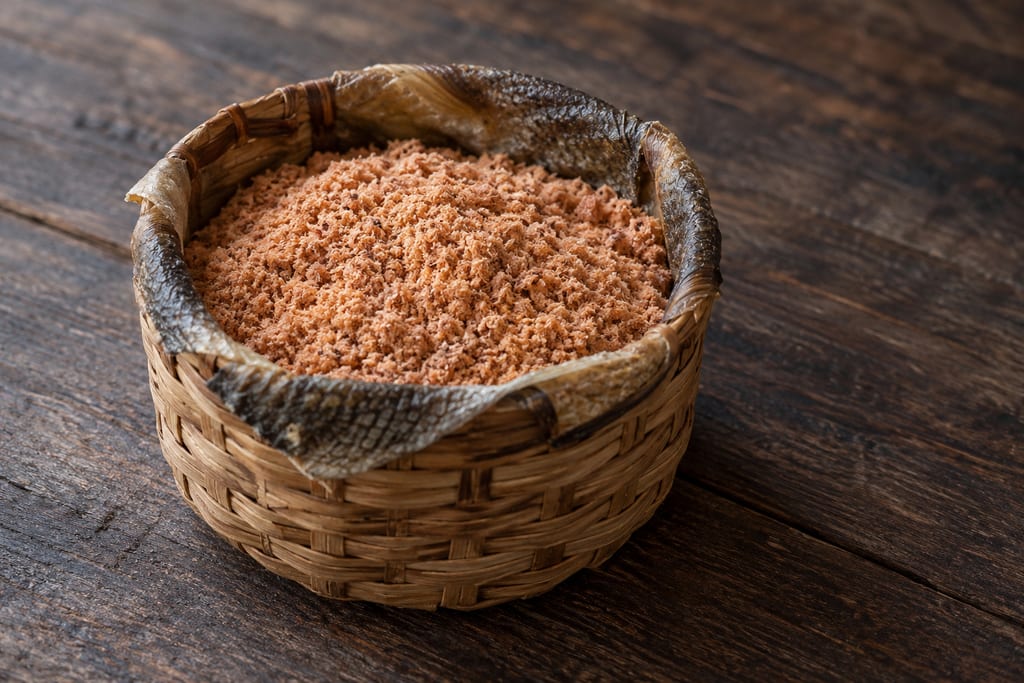
Dried salmon broken down, pounded to a meal and pressed into grass baskets lined with fish skin: the compact trade food of Celilo Falls and The Dalles.
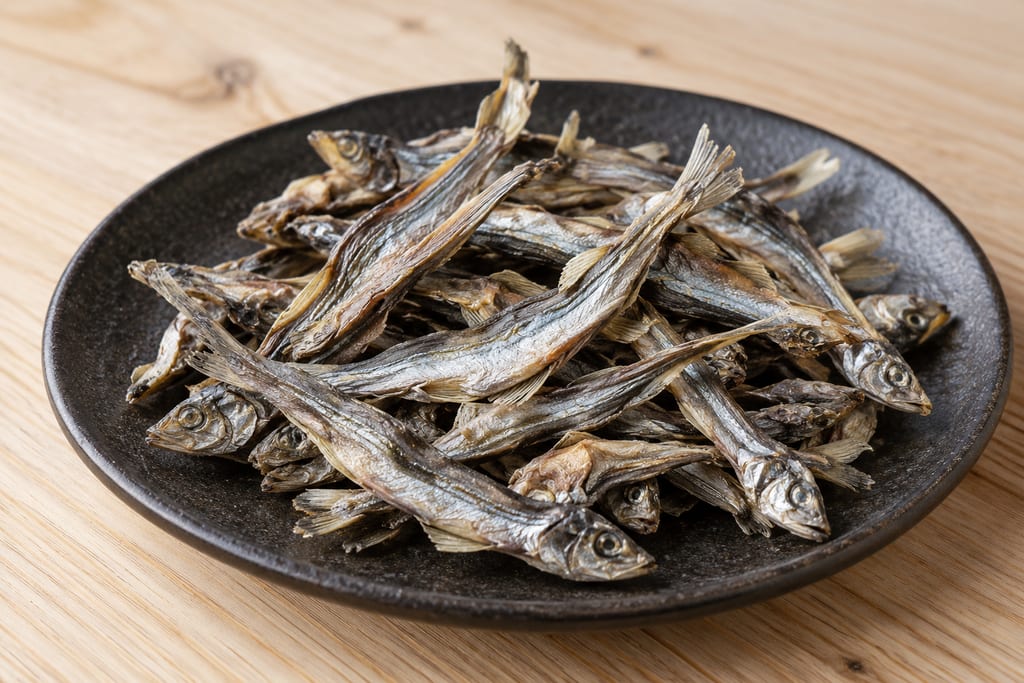
Greenlandic capelin dried whole on rocks, among crowberry vegetation or on buildings, and the microbial research that has made this small fish unusually well studied.
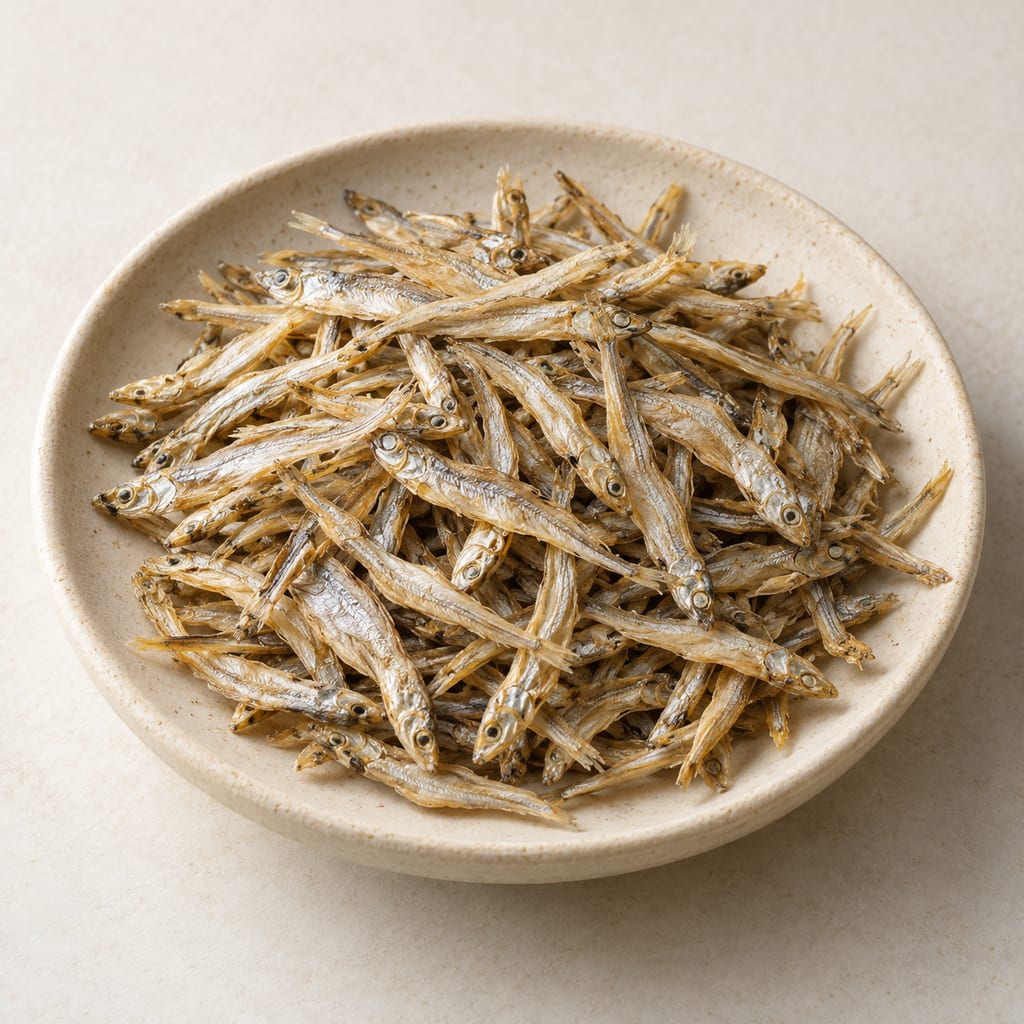
Small central-Mexican lake silversides, Chirostoma spp., dried whole and sometimes salted, then fried, roasted or simmered into Lenten tortitas and snacks.
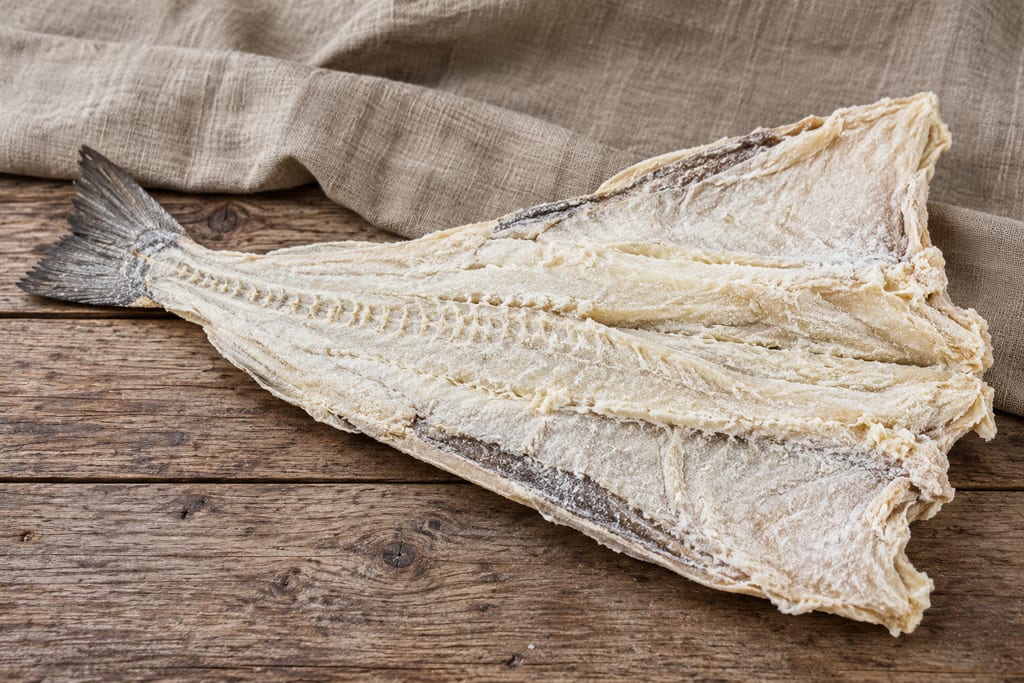
Cod split, salted and dried on flakes until hard, a long-keeping fish that must be desalted and rehydrated before use; the salting and the extensive drying together make it portable where light salting or partial drying does not.

Protected Italian vinegar made only from cooked grape must, fermented and aged in a battery of wooden barrels for at least 12 years: sweet, sharp and syrupy.

Airag is Mongolia’s fermented mare’s-milk drink, traditionally churned with saved starter in a reusable cowhide khokhuur.

Appam, or hoppers, are South Indian and Sri Lankan rice pancakes made from a fermented coconut-and-rice batter and cooked in a curved pan to a crisp lacy rim and a soft, spongy centre.

Auricularia tremellosa is a wood ear fungus of the genus that supplies most dried wood ear sold in China; its own food record is thin, and the culinary practice described here comes from the closely related wood ear species.

Ayran is Turkey’s cold, savoury yogurt drink: plain yogurt is loosened with water and lightly salted, then whisked smooth or aerated into a soft cap of foam.
A thin stone griddle used over an open hearth. Norwegian archaeology documents the established tradition from the early Middle Ages; a Viking-period origin is only a cautious suggestion linked to Shetland.

Crushed or milled barley cooked in water until the starch softens and the mixture thickens, the plainest way a northern household turned stored grain into a meal, here with apple and hazelnut.

Black carrot is the anthocyanin-pigmented Eastern carrot (Daucus carota var. atrorubens), the purple root that preceded orange types and still colours kanji and şalgam.
No community contributions have been published for this entry yet.
Sign in to contribute. Published comments and photos are free to read.
PubMed CentralScience · History
Star and colleagues, 2017 — Ancient DNA reveals the Arctic origin of Viking Age cod from Haithabu, GermanyA 2017 ancient-DNA study of cod remains from sites in Germany, Norway and the United Kingdom, including Viking Age and later medieval deposits.
Five Viking Age cod specimens from Hedeby, dated within approximately 800-1066 CE, had genetic characteristics linking them to the Northeast Arctic Atlantic cod population associated with northern Norway and the Lofoten fishery, which supports the movement of cod over a substantial distance in the Viking Age.
The study does not demonstrate that every cod reaching Hedeby was dried by the modern Lofoten technique, and five specimens from one trading centre cannot establish the volume of Viking Age exports.
Cited in: Viking Age evidence: the cod from Hedeby; What the DNA does not prove; A developing North Atlantic trade; What stockfish tells us about the Viking economy
Proceedings of the National Academy of SciencesScience
PNAS — Original research articleThe publication and methods behind the ancient-DNA result: cod populations carry genetic differences that let researchers compare ancient data with relevant modern populations and assess whether fish were caught locally or had travelled.
Cited in: What the DNA does not prove
Norwegian Seafood CouncilMethod · Regulation · Safety
Norwegian Seafood Council — Stockfish: A unique flavour created by naturePresent-day production stages: catching with handling intended to keep the fish in suitable condition, gutting, preparation as whole gutted fish or in the split form called rotskjær cut along the backbone but joined at the tail, fish tied together in pairs, and hanging on outdoor wooden racks called hjell with spacing that does not obstruct airflow.
Outdoor drying lasting up to three months, followed by indoor maturation of another 4-12 months in a dry, ventilated storage environment, then inspection and sorting into more than 20 possible quality categories.
The principal commercial species is Atlantic cod, Gadus morhua, with saithe, Pollachius virens, tusk, Brosme brosme, and haddock, Melanogrammus aeglefinus, also used; some products are passed through rollers and carry separate soaking guidance from whole fish.
Rehydration in clean cold water at 2-4°C with the water changed at least once daily: 2-4 days for stockfish processed through rollers, 7 days for whole stockfish, and cutting into portions after 2-3 days depending on thickness and texture. The fish more than doubles in weight during soaking.
Stockfish can be kept frozen for up to 18 months in the context of the Council's handling guidance.
Cited in: What is stockfish?; Names and identification; Stockfish is not salt cod; The environmental advantage of northern Norway; How stockfish is produced today; Catching the fish; Gutting; Preparing the drying form; Hanging on racks; Outdoor drying; Indoor maturation; Inspection and grading; What happens during drying?; Water activity and microbial growth; Is stockfish fermented?; Why the fish becomes hard; Rehydrating stockfish safely; Cooking commercially prepared stockfish; Method; Northern Norway; Iceland; Italy; Nigeria; Properly dried stockfish; Unexpected dampness; Visible mould or abnormal deterioration; Fish stays hard after soaking; Fish breaks apart during cooking; Why home air-drying fish is risky; Storage after rehydration
National Museum of DenmarkHistory
National Museum of Denmark — Meat and fishViking Age fishing and preserved fish, including the suitability of dried fish for transport where fresh fish required rapid preparation or consumption, and Hedeby as a major trading settlement near the base of the Jutland Peninsula connecting maritime and overland routes.
Cited in: Viking Age evidence: the cod from Hedeby; A developing North Atlantic trade; What stockfish tells us about the Viking economy
Food Standards AgencySafety
Food Standards Agency — Cooking your foodA conservative cooking reference of 70°C at the centre for two minutes, or an equivalent time-temperature combination, and current guidance on refrigerating cooked leftovers promptly.
Cited in: Method; Why home air-drying fish is risky; Storage after rehydration