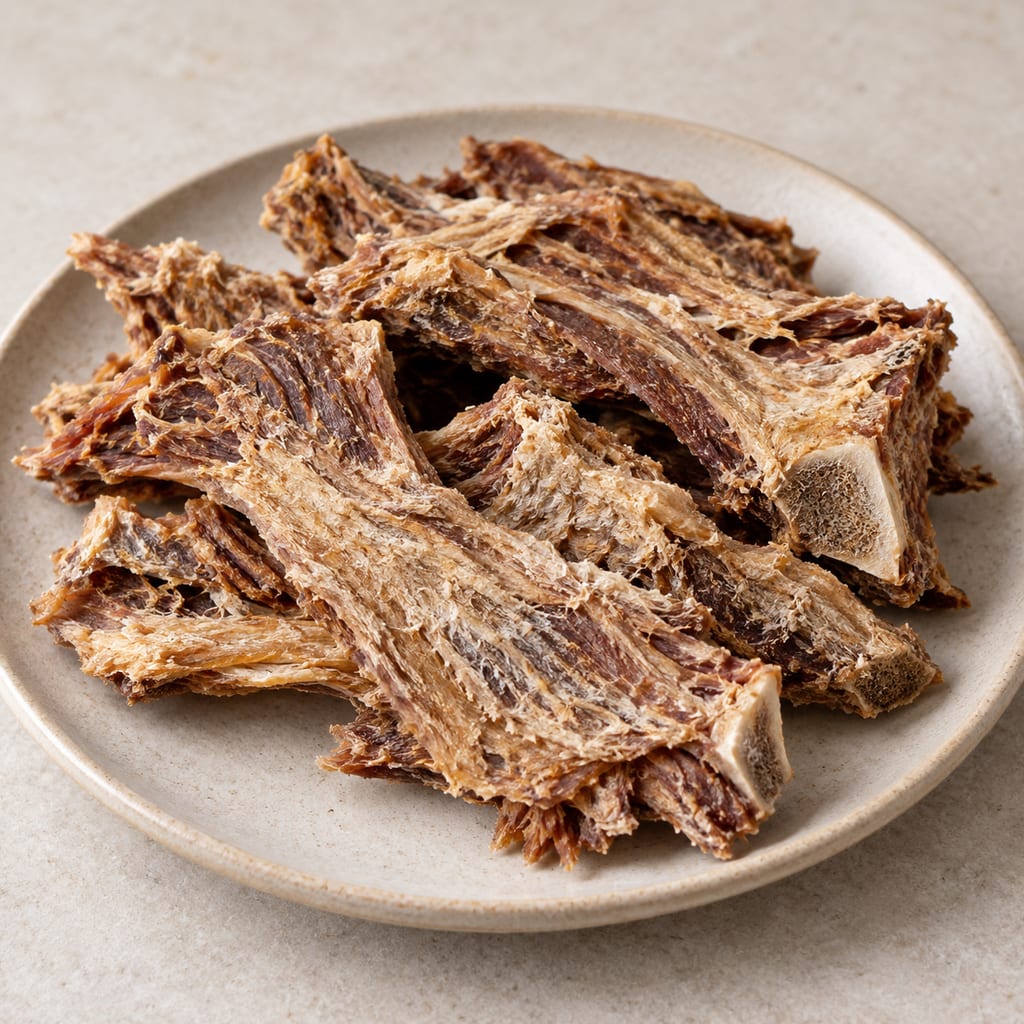
Alpaca charqui
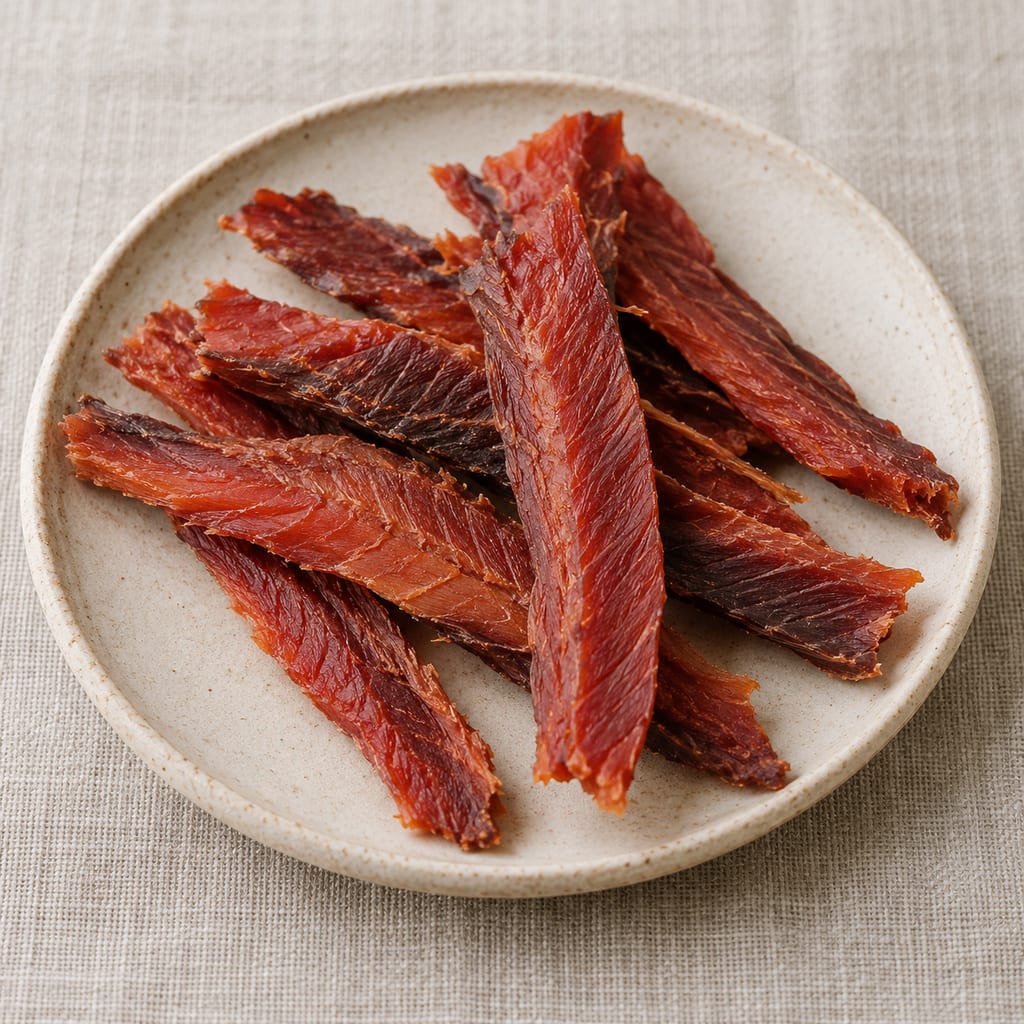
Alpaca charqui is Andean dried meat, made from camelid meat exposed to hot sun by day and frost by night at high altitude, the ancestor of the modern word jerky.
 FermenteaWhere food goes to change
Traditional method
Anchoveta seca de Carquín · Charqui de anchoveta · Anchoveta seca · Salt-dried anchoveta
Anchoveta salted, drained of sanguaza and sun-dried on sand or stones at Caleta de Carquín, a technique declared part of Peru's cultural heritage in 2016.
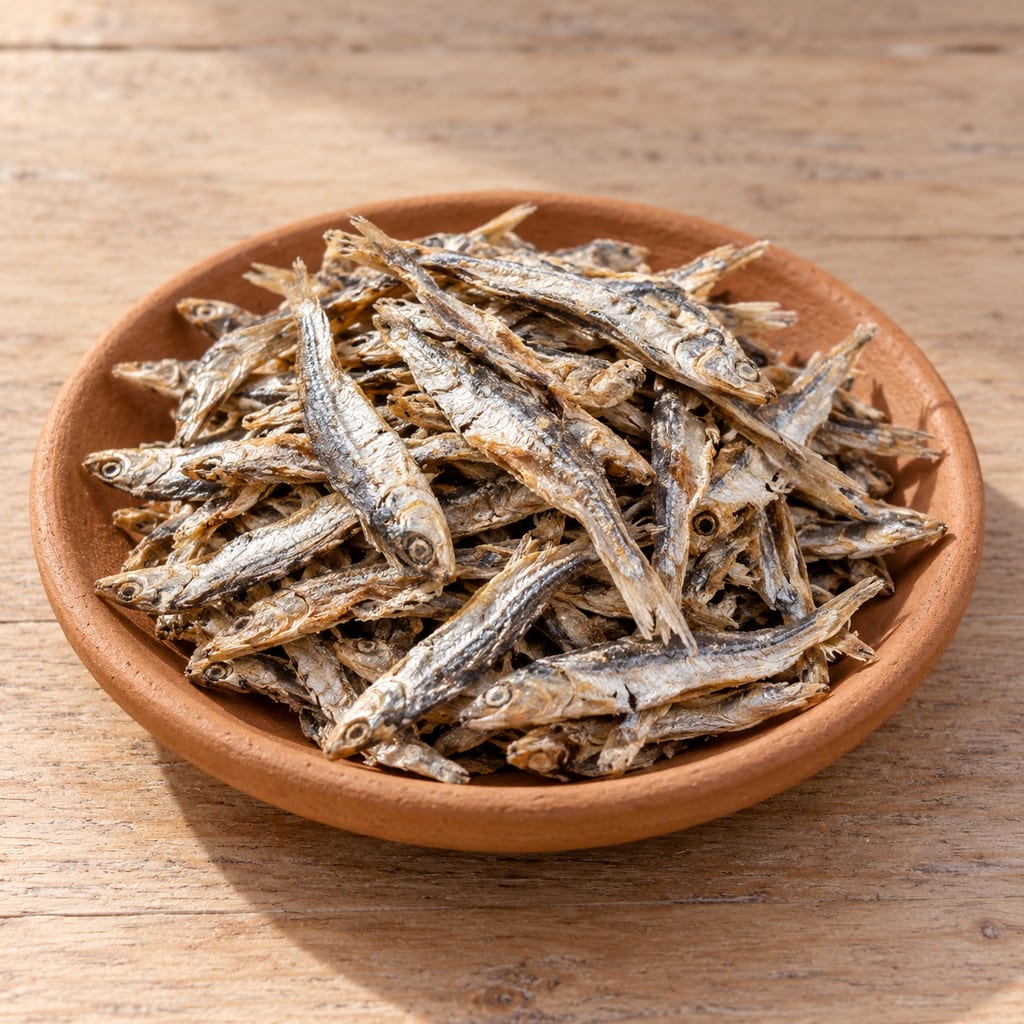
On the central Peruvian coast, the anchoveta is a small fish with an unusually large economic and cultural importance.
The species, Engraulis ringens, lives in the cold, productive waters associated with the Humboldt Current.
Although much of Peru's enormous anchoveta catch has historically entered industrial fishmeal and fish-oil production, coastal communities also use the fish directly as food.
At Caleta de Carquín, in the province of Huaura, salted and sun-dried anchoveta forms the basis of a distinctive regional dish called charquicán.
The preservation method was officially recognized as part of Peru's national cultural heritage in 2016.
That recognition does not mean the technique was invented in 2016. It marks a formal decision to recognize and protect a continuing cultural practice.
Anchoveta peruana — Spanish — Peruvian anchoveta, Engraulis ringens
Anchoveta seca — Spanish — Dried anchoveta
Anchoveta salada seca — Spanish — Salted and dried anchoveta
Charqui — Andean Spanish usage — Dried or preserved food, often meat but with broader regional uses
Charquicán de anchoveta — Caleta de Carquín — Dish prepared with dried anchoveta, potatoes and seasoning
Caleta de Carquín — Local place name — Fishing community in the Huaura province of Peru
The fish is a marine anchovy, not a freshwater charal and not a young sardine.
Its small body enables drying methods that differ greatly from those used for very large fish such as pirarucu.
The Peruvian anchoveta forms large schools in cold, nutrient-rich marine waters.
Coastal upwelling supplies nutrients that support plankton, creating an ecosystem capable of supporting enormous numbers of small fish.
Anchoveta feed within this productive marine food web and, in turn, provide food for seabirds, marine mammals, larger fish and humans.
The fish are typically relatively small, with a slender body and oily flesh.
The 2016 Peruvian heritage resolution describes adult anchoveta commonly around 15–20 centimetres long, with an approximate weight of 30 grams per fish.
These are descriptive biological figures from the heritage document, not a strict specification for fish suitable for curing.
Schooling behaviour allows fishermen to catch quantities of anchoveta in a relatively short period.
That abundance creates the same basic preservation problem seen in many fisheries: a large catch must be eaten, sold, chilled or preserved before it spoils.
Fishing and the consumption of marine resources have very deep archaeological histories along the Peruvian coast.
Ancient settlements including those associated with the Caral-Supe civilization demonstrate the importance of marine foods in coastal and inland exchange.
However, evidence that people consumed fish in an ancient settlement does not automatically prove that they used every step of the precise Carquín technique documented today.
The modern practice is firmly attested in community descriptions and official cultural documentation.
The 2016 government resolution records the techniques transmitted among fishing families and recognizes their importance to local food production and identity.
On 21 September 2016, Peru issued Resolution 126-2016-VMPCIC-MC, declaring the ancestral anchoveta-drying technique of the central coast part of the nation's cultural heritage.
The resolution was published on 23 September 2016.
The declaration was formally presented to the Carquín community in December of that year.
These dates can be stated precisely.
The date of the method's original invention cannot.
Official descriptions emphasize family transmission of the technique.
Children learned through observing and participating in household processing.
Women played a particularly important role in preparing, drying and using the fish.
This is significant because the process extends beyond the work of catching anchoveta.
The fish must be handled, salted, spread, watched, cleaned and eventually cooked.
The practical knowledge belongs to the wider fishing household.
The 2016 resolution provides a detailed account of the Carquín technique.
It describes a process involving whole anchoveta, salt, draining, exposure to sun and final cleaning.
The procedure is historically and culturally significant, but it is not a modern validated food-manufacturing protocol.
Anchoveta are caught by local fishermen and brought to homes for preparation.
The short interval between catching and processing is important because small fish deteriorate quickly.
Their oily composition can also make them susceptible to rancidity if handled poorly.
The resolution documents variation in gutting.
Some families remove the viscera before salting; others preserve the fish whole.
This difference is important.
Removing the internal organs changes the opportunities for intestinal contents to contaminate the flesh.
It can also influence how quickly the interior of the fish dries.
The existence of both practices in the historical record does not establish that both would satisfy modern food safety requirements under arbitrary conditions.
Fish are placed in containers with salt and mixed so that the crystals adhere to their surfaces.
Salt begins dissolving in the fish's surface moisture.
Water moves out of the tissues and salt begins entering them.
After salting, the fish are allowed to release liquid, locally described in the documents as sanguaza.
Removing this liquid helps separate the product from some of the moisture extracted during curing.
That does not mean the entire fish has already reached its finished preserving condition.
The documented heritage practice spreads fish directly on sand or over fine netting placed on sand.
Some families use fishing nets to help protect the fish.
The resolution specifically notes that wood or plastic surfaces can become excessively hot under strong sunshine.
This is a description of a historical environmental practice, not a recommendation that modern producers should place edible fish directly on uncontrolled sand.
The 2016 account records approximately 5–7 days of drying, depending on solar conditions.
Fish are exposed to the coastal weather as moisture gradually leaves them.
The period is not a guaranteed endpoint.
Humidity, wind, fish size, internal organs and the available drying surface all affect what happens.
After drying, the fish are brought back to households.
Processors remove the head, dried skin and backbone.
The remaining flesh is separated into strips or pieces.
These become the edible ingredient used in dishes such as charquicán.
Remaining portions have historically been used for other purposes, including animal feed or fertilizer.
This illustrates a broader household economy in which different parts of the catch may have different destinations.
A municipal publication from 7 July 2022 describes the local practice differently in several details.
It records:
- A batch of 96 anchoveta, described as eight dozen. - 750 grams of iodized salt. - A 10-minute resting period after salting. - Drying on cleaned stones for 2–3 days.
These quantities and durations belong to that specific account.
They are not numbers that should be combined mechanically with the 2016 description.
The two sources differ over drying surface, duration and treatment of the fish.
The 2016 heritage text records 5–7 days on sand or fine netting.
The 2022 municipal text records 2–3 days on cleaned stones.
A further 2025 regional report describes the shorter drying method.
It is tempting to treat the documents as conflicting versions of one standardized industrial process and select whichever seems most convenient.
That would be an error.
Local practices can vary among families, seasons and specific applications.
A shorter period may reflect different preparation, fish condition, weather or drying surface.
The sources do not give sufficient laboratory data to establish the safety equivalence of the two accounts.
Therefore, they should be presented as separately documented practices.
Neither should be promoted as a tested home-recipe specification.
Anchoveta preservation combines salt addition with loss of moisture.
Salt creates a concentrated brine against the fish's surface.
It draws out water and begins moving into the flesh.
Because anchoveta are relatively small, salt has a shorter distance to travel than it would in a thick piece of pirarucu.
Nevertheless, the rate and uniformity of curing depend on how the fish is handled and whether the internal organs remain.
Sun and moving air can remove moisture from the surface.
Internal water moves outward as the surface becomes drier.
The quality of the process depends on continuing this until the intended preservation state is achieved.
Anchoveta contain marine lipids, including polyunsaturated fatty acids.
These have nutritional value but are vulnerable to oxidation.
Heat, light and prolonged exposure to air can contribute to stale or rancid flavours.
Salt does not automatically prevent oxidation.
Fish surfaces, intestinal contents, seawater and drying environments can all contribute microorganisms.
Some are harmless under appropriate conditions, while others may cause spoilage or illness.
The traditional account does not provide a comprehensive microbiological characterization of the finished product.
Its existence as cultural heritage does not mean every possible replication is safe.
The best-known culinary use of Carquín anchoveta is charquicán de anchoveta.
This is a savoury dish incorporating prepared dried anchoveta with potatoes, onions, garlic, chilli peppers and herbs.
It is distinct from every other Andean dish called charquicán.
The name appears in different regions and may refer to preparations with meat or different ingredients. Those should not be merged into one universal recipe.
Carquín's identity is specifically connected to anchoveta seca.
A municipal preparation identifies:
- Prepared dried anchoveta - Onion - Garlic - Ají amarillo - Ají colorado - Ají mirasol - Boiled potatoes - Coriander leaves - Vinegar or lemon juice - Rice for serving
The municipal description does not provide a complete ingredient weight for every item.
It is therefore inappropriate to invent precise quantities and present them as its official recipe.
First, the purchased or otherwise safely prepared dried anchoveta is cleaned and softened as required.
The fish may be rinsed with hot water to remove excess salt and surface residues.
Onion, garlic and chilli components are cooked into an aromatic base.
The prepared fish is added, followed by the cooked potatoes and fresh herbs.
The dish is served with rice.
Different households adjust the balance between fish, potatoes and chilli.
The dried anchoveta gives the dish a concentrated savoury character that fresh anchovy would not reproduce exactly.
Charquicán has particular importance during Semana Santa, or Holy Week.
Carquín hosts gastronomic festivals celebrating the dish and the local dried-fish tradition.
The festivals include food preparation, community gatherings and cultural events.
Reports document a fourth festival in 2019, a seventh in 2024 and an eighth in 2025.
These are specific events, not evidence that the festival has existed continuously since an ancient period.
The dish remains meaningful because it joins a preserved local ingredient with communal cooking and public identity.
Small fish can appear dry outside while retaining moisture internally.
Whole-fish preparations may create additional concerns when viscera remain.
Direct contact with uncontrolled sand, soil or rock surfaces can introduce contamination.
Insects and birds may reach fish left exposed.
Repeated rainfall can prevent drying or rehydrate partially dried fish.
Oily fish can turn rancid.
Spoilage indicators include mould, slime, strong unpleasant odours and suspicious deterioration.
However, dangerous microorganisms or toxins cannot always be detected by appearance.
A fish should not be consumed merely because it has passed the number of days mentioned in a historical document.
The two recorded Carquín methods do not provide a validated microbiological endpoint.
Neither gives a final water-activity measurement, complete salt analysis, pathogen testing or a controlled temperature history for every possible batch.
The FDA's general 0.85 water-activity threshold is relevant to shelf-stable dried seafood but is not a substitute for complete process validation.
Modern production intended for consumption or sale should address hygienic surfaces, potable water, raw fish handling, protection against contamination and documented storage requirements.
The traditional use of sand or rocks is historically important and worth preserving in research. It should not be interpreted as a recommendation to use contaminated surfaces in contemporary food manufacturing.
This food demonstrates that the value of a fish species cannot be measured solely by its contribution to industrial production.
Anchoveta can be a major commercial resource, a foundation of marine ecosystems and a small-scale household ingredient.
The Carquín technique also offers unusually detailed evidence of knowledge transmitted through families, especially through women's food processing.
Its official recognition in 2016 gives researchers a specific, dated source describing the method.
The later municipal account adds something equally valuable: evidence that a living tradition may have multiple documented forms.
The responsible way to preserve this knowledge is not to smooth away the differences. It is to record them accurately.
Fishing and the consumption of marine resources have very deep archaeological histories along the Peruvian coast, and ancient settlements including those associated with the Caral-Supe civilization demonstrate the importance of marine foods in coastal and inland exchange. Evidence that people consumed fish in an ancient settlement does not, however, prove that they used every step of the precise Carquín technique documented today.
The modern practice is firmly attested in community descriptions and official cultural documentation. On 21 September 2016 Peru issued Resolution 126-2016-VMPCIC-MC, declaring the ancestral anchoveta-drying technique of the central coast part of the nation's cultural heritage; the resolution was published on 23 September 2016 and the declaration was formally presented to the Carquín community in December of that year. Those dates can be stated precisely. The date of the method's original invention cannot.
Scaling: source batch only
Neither recorded Carquín method gives a final water-activity measurement, complete salt analysis, pathogen testing or a controlled temperature history for every possible batch.
Hazard sourceThe traditional use of sand or stones is historically important, but it is not a recommendation to place edible fish on uncontrolled surfaces in contemporary production.
Hazard sourceAnchoveta oil can oxidise during drying and storage, producing rancid flavours.
Hazard sourceWater activity for shelf-stable dried seafood
Control sourceHygienic surfaces, potable water, raw fish handling, protection against contamination and documented storage requirements for modern production
Control sourceThe 2016 heritage figures (5 to 7 days on sand or fine netting) and the 2022 municipal figures (2 to 3 days on cleaned stones, 750 g of salt for 96 fish) belong to separate accounts and must not be combined into one procedure.
The documented practice of drying on sand or stones is a record of a historical environmental practice, not a recommendation for contemporary food manufacturing.
The FDA water-activity threshold is relevant to shelf-stable dried seafood but is not a substitute for complete process validation.
The fishing settlement whose technique the heritage declaration names; coordinates are not given by the sources.
The resolution covers the ancestral anchoveta-drying technique of the central coast, wider than the one settlement.
Alpaca charqui is Andean dried meat, made from camelid meat exposed to hot sun by day and frost by night at high altitude, the ancestor of the modern word jerky.
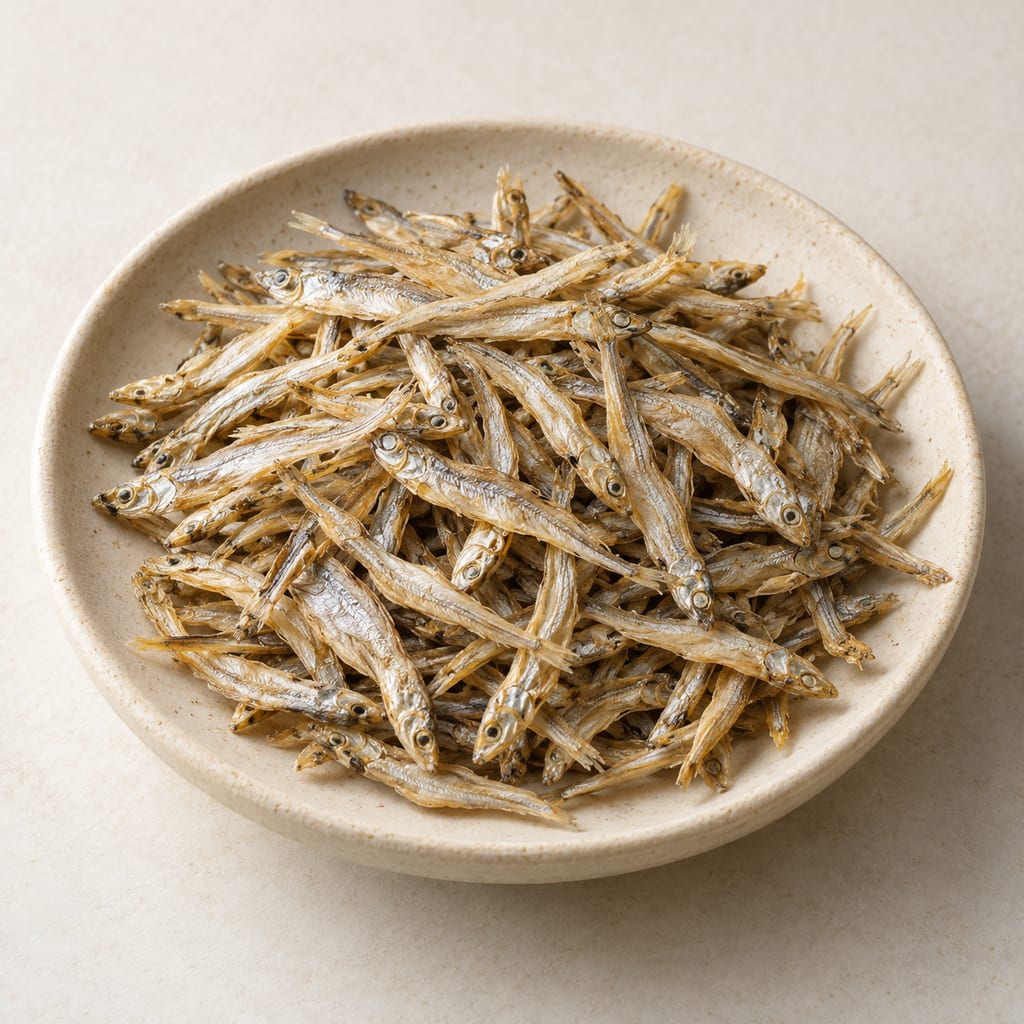
Small central-Mexican lake silversides, Chirostoma spp., dried whole and sometimes salted, then fried, roasted or simmered into Lenten tortitas and snacks.
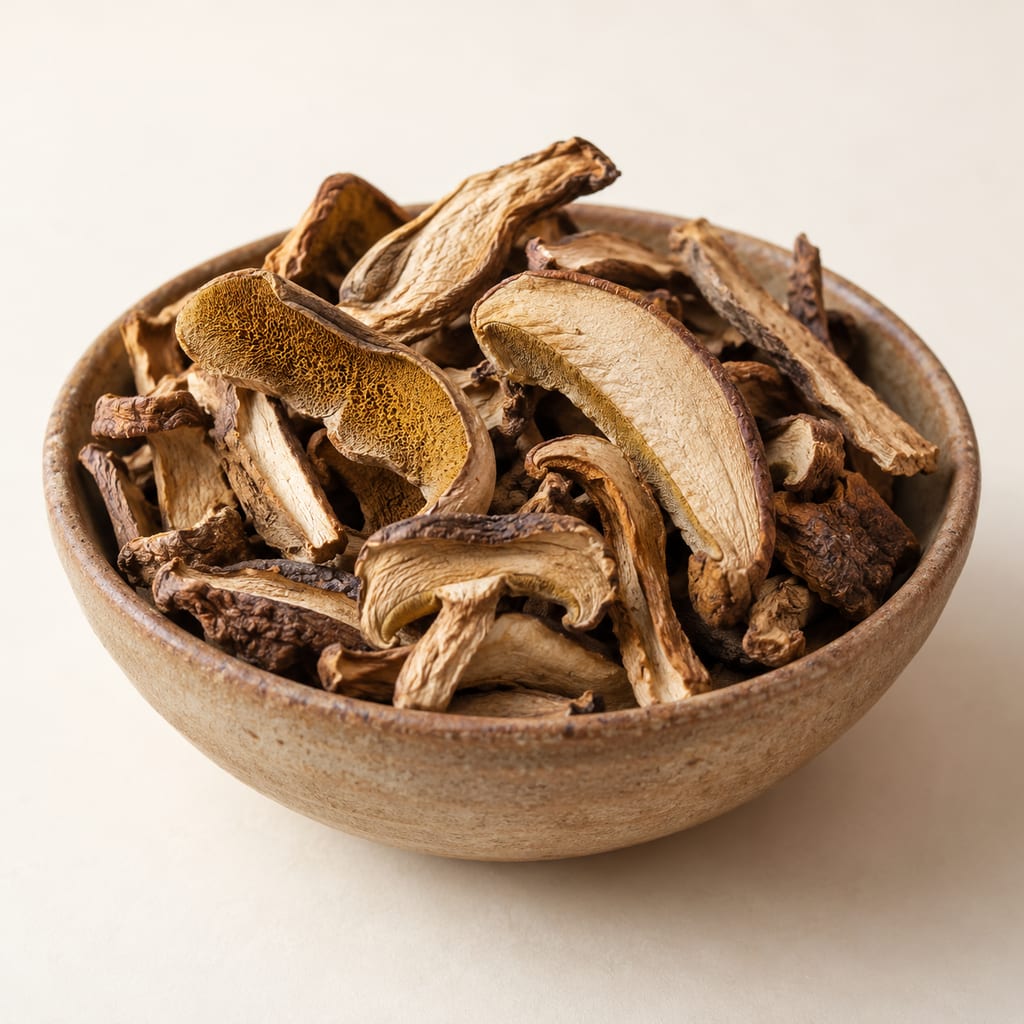
Protected solar-dried mushrooms are slices of wild Suillus luteus dried under a shade cover, a fitotoldo, rather than in open sun, as tested in an experimental study from Apurímac, Peru.
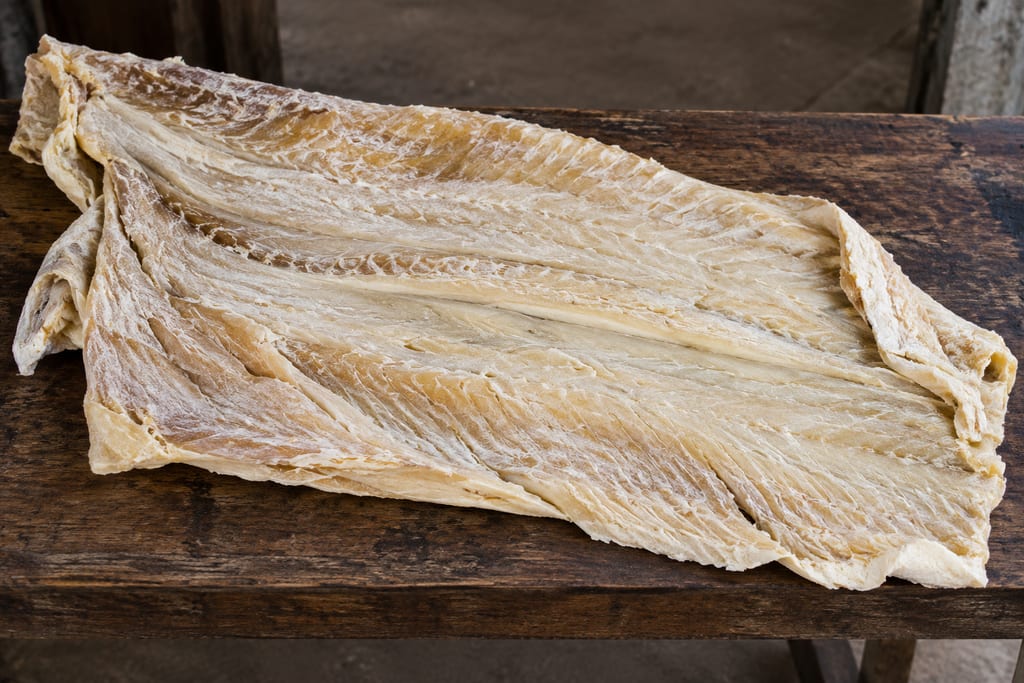
Arapaima gigas split into broad mantas, salted, matured for days and dried into the sheets that travel Amazonian river markets as bacalhau da Amazônia.
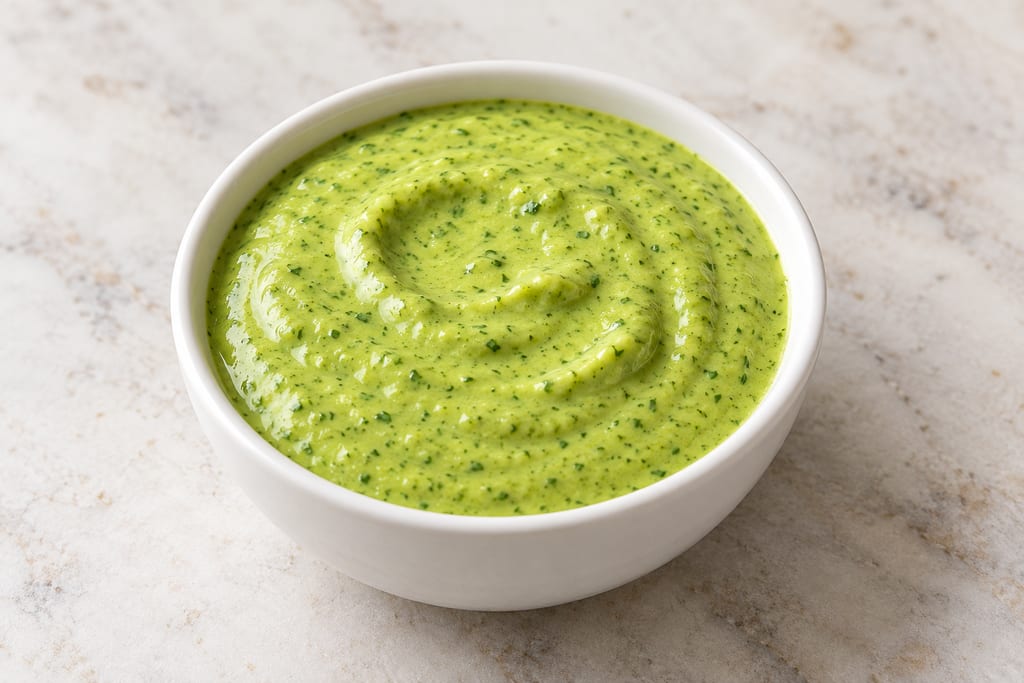
Ají verde is a Peruvian green sauce of coriander, chilli, onion and garlic in a mayonnaise or cheese base. It is best known through Peruvian restaurant cooking abroad.
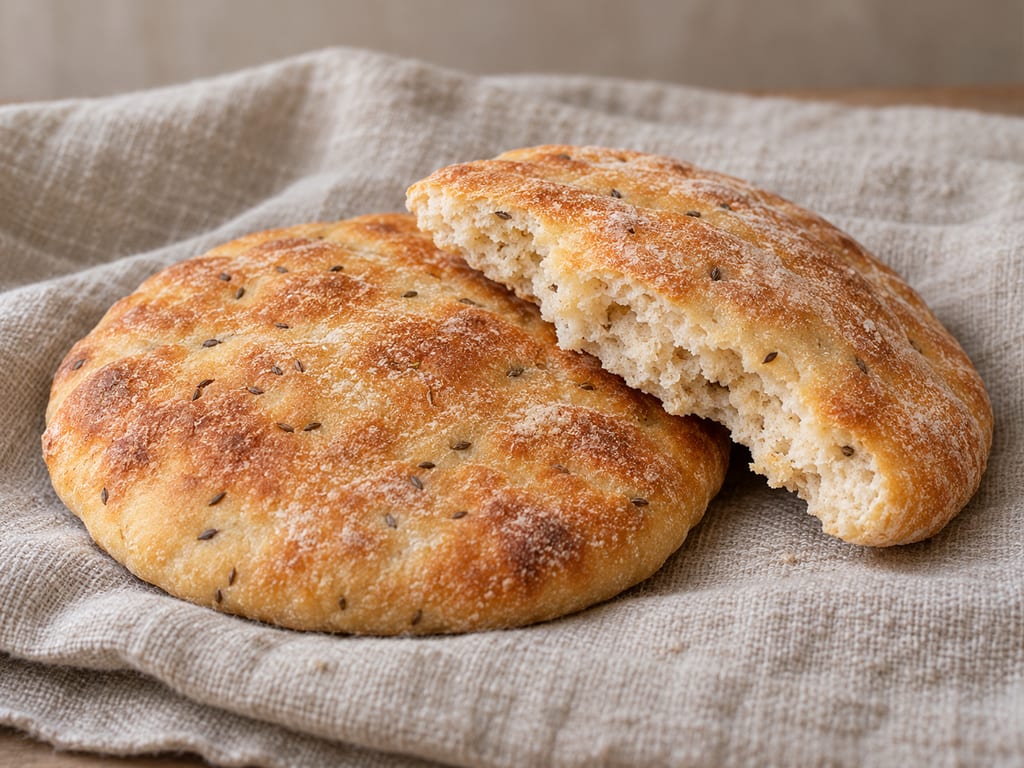
A measured, yeast-raised Ayacucho chapla home method shared by Thermomix Peru presenter Roxanna Salaverry. It makes thin, anise-scented rounds baked at 240°C; the historic qunchu-leavened form is documented separately.
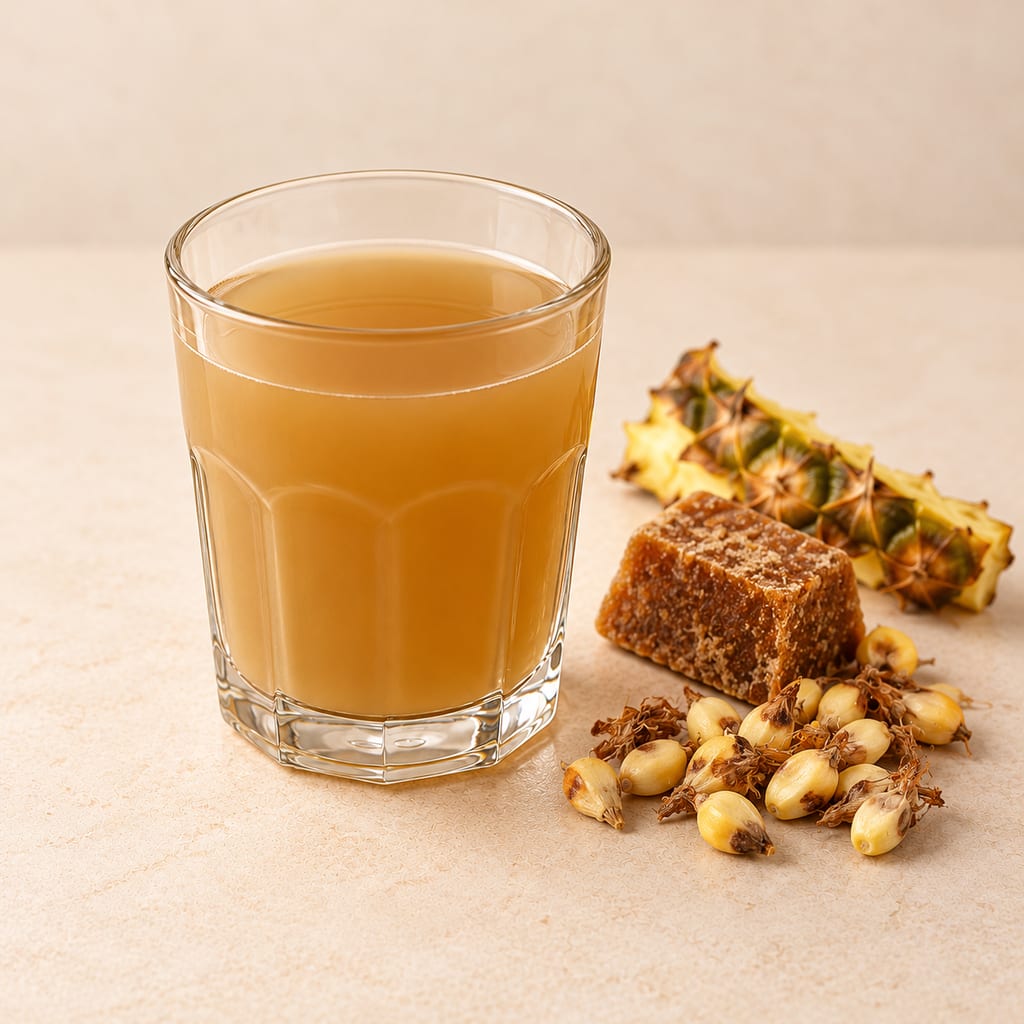
A contemporary Ecuadorian recipe simmers jora flour with spices, then adds panela and pineapple peel before a short spontaneous ferment. Its particular aromatics and measurements belong to this published adaptation.
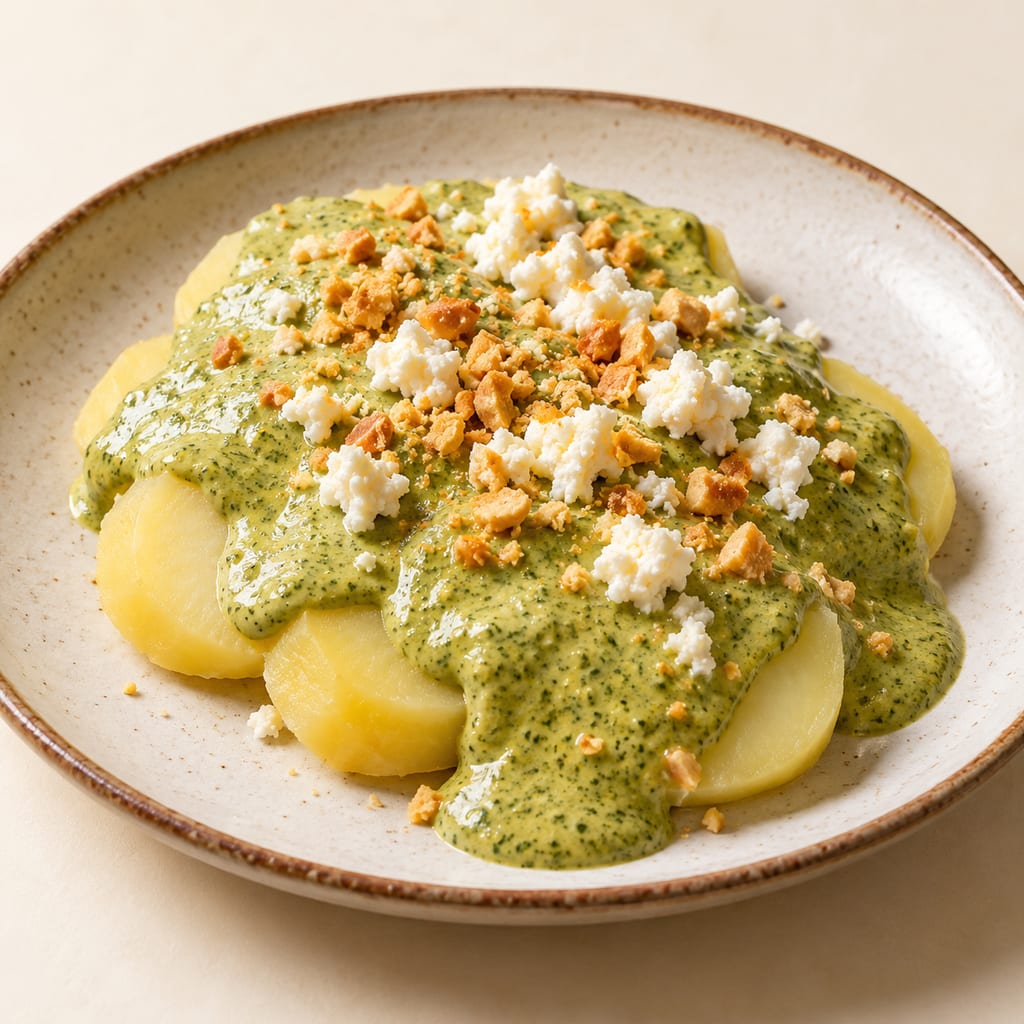
Ocopa is a sauce from Arequipa, Peru, of huacatay, dried mirasol chillies, nuts, fresh cheese and soda crackers. It is usually spooned over boiled potatoes.
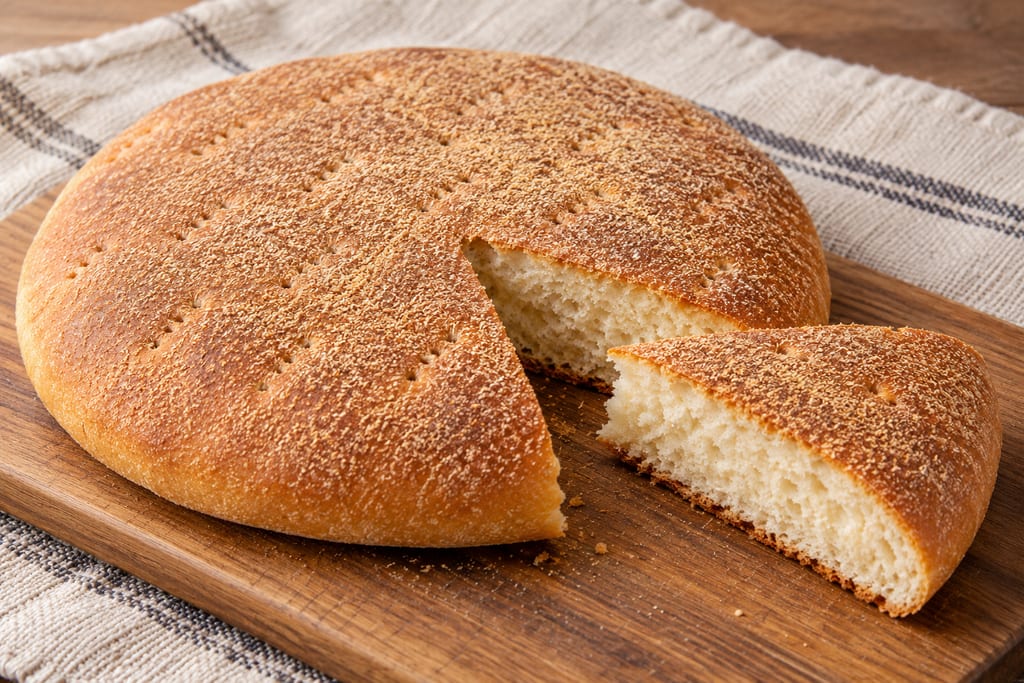
Pan chuta is a broad, lightly sweet wheat loaf associated with Oropesa in Cusco; this home-scale version uses chamomile, brown sugar and butter.
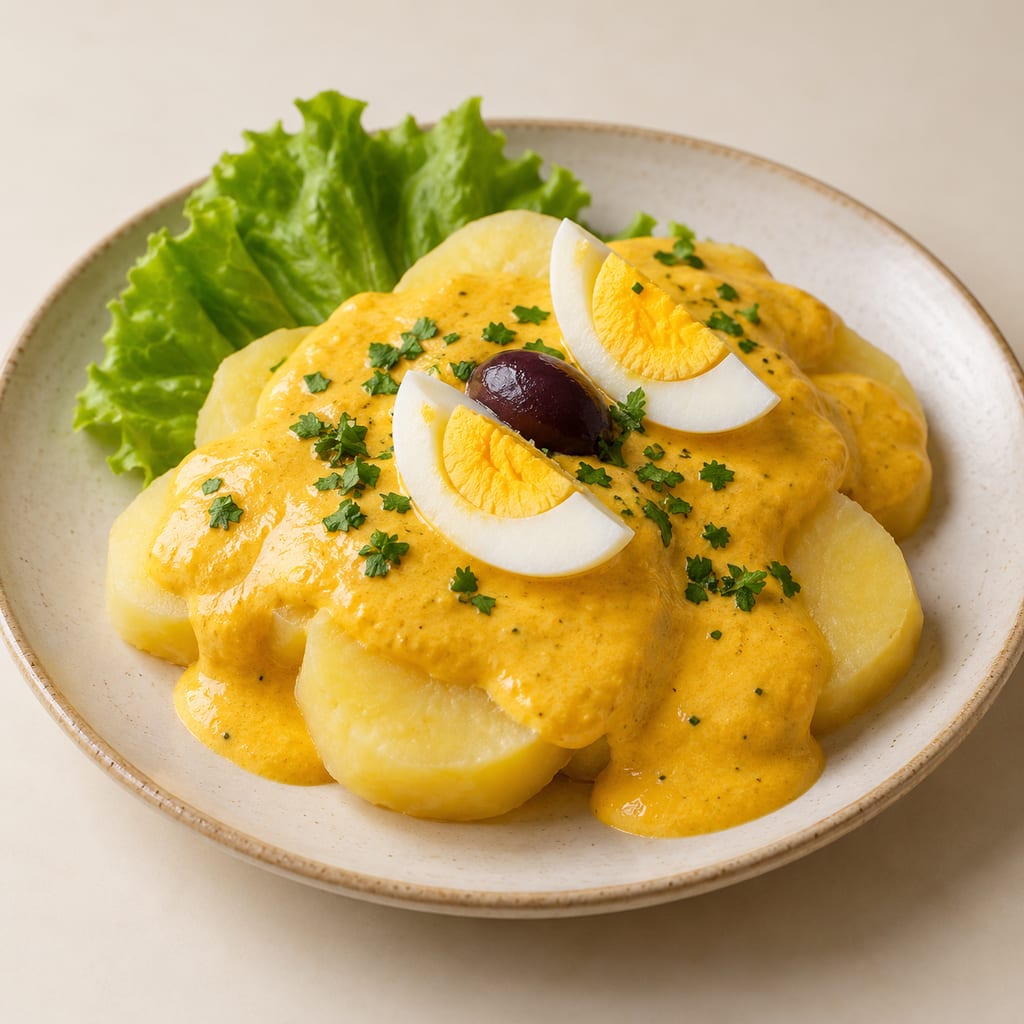
A creamy Peruvian sauce of ají amarillo, fresh cheese and milk, served with potatoes. This source-based version sautés aromatics before blending the sauce.
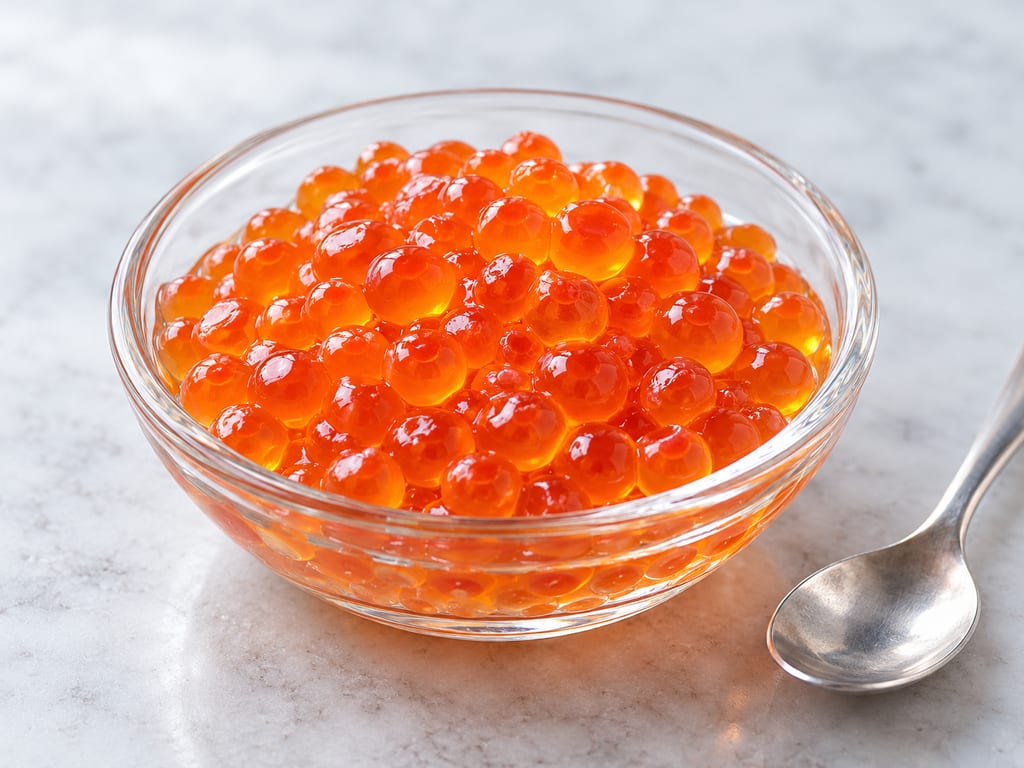
Salmon roe is separated from skeins and treated in two salt-water stages using a University of Alaska Extension formula.

Kodiak salmon, halibut and cod cut as seg'aq and hung on an initaq rack to become tamuuq, with kac'amaasaq and kupcuunaq named as different results.
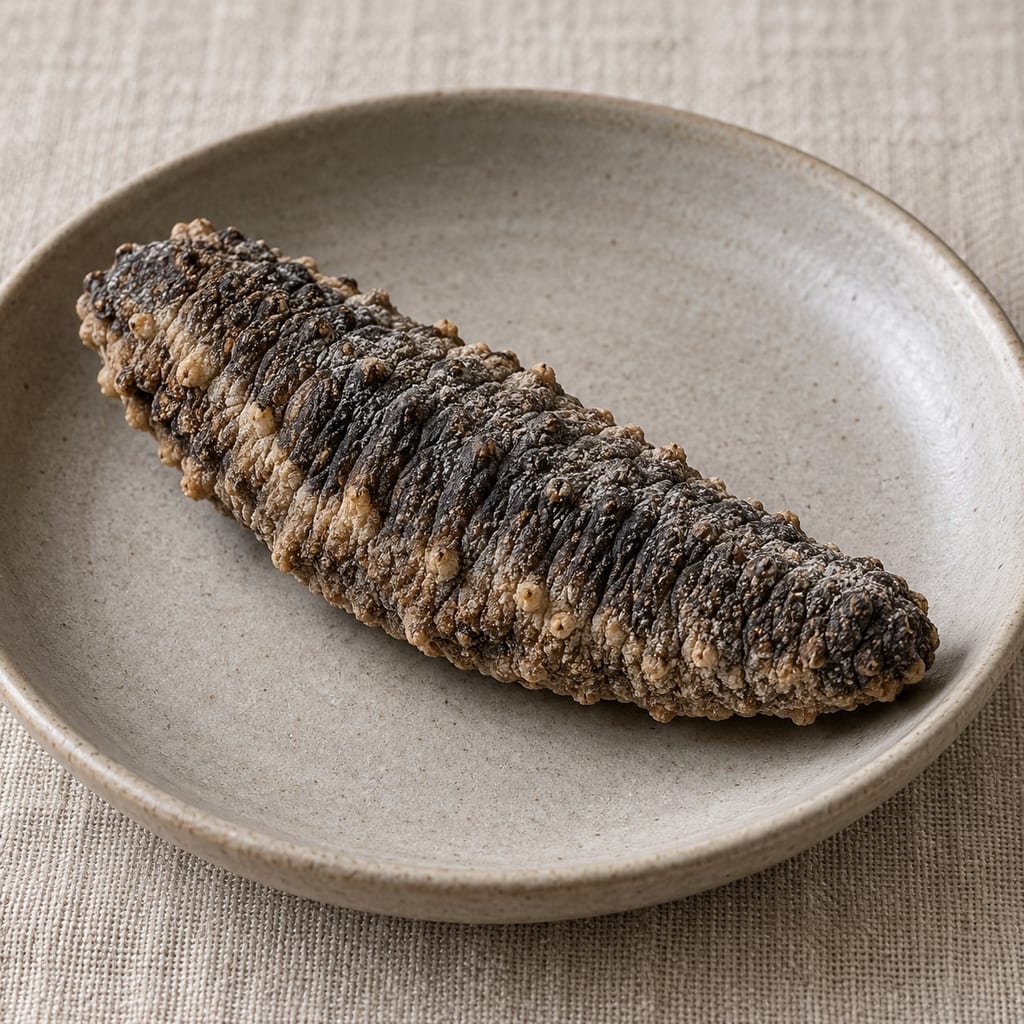
Sea cucumber cleaned, boiled and dried, sometimes with smoke, into a long-keeping trade product; Makassan processing in Arnhem Land is documented from at least the eighteenth century.
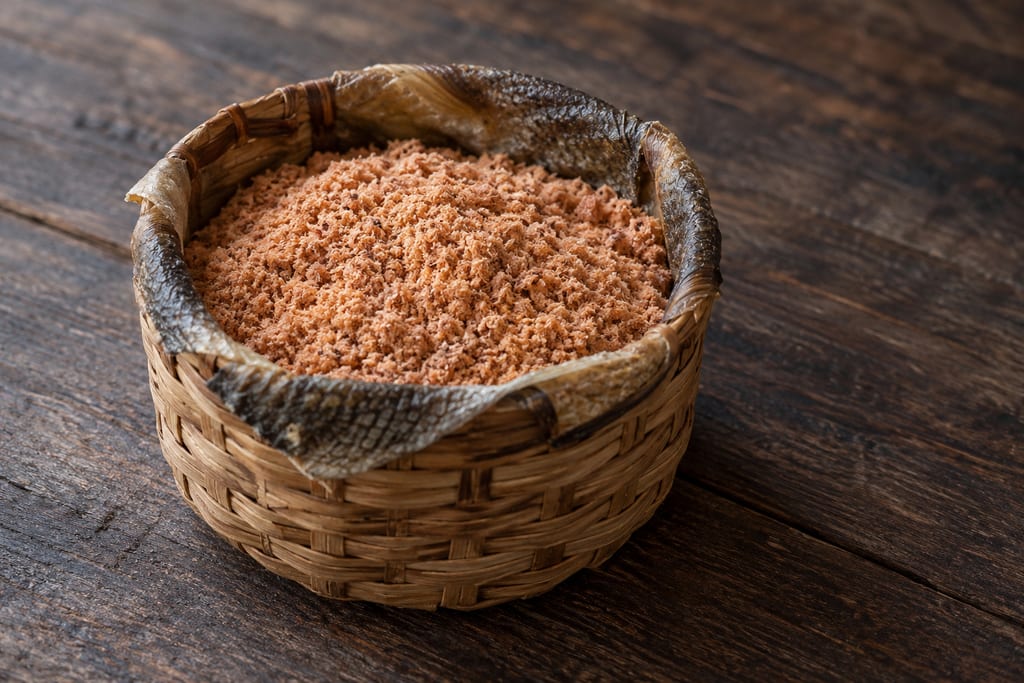
Dried salmon broken down, pounded to a meal and pressed into grass baskets lined with fish skin: the compact trade food of Celilo Falls and The Dalles.
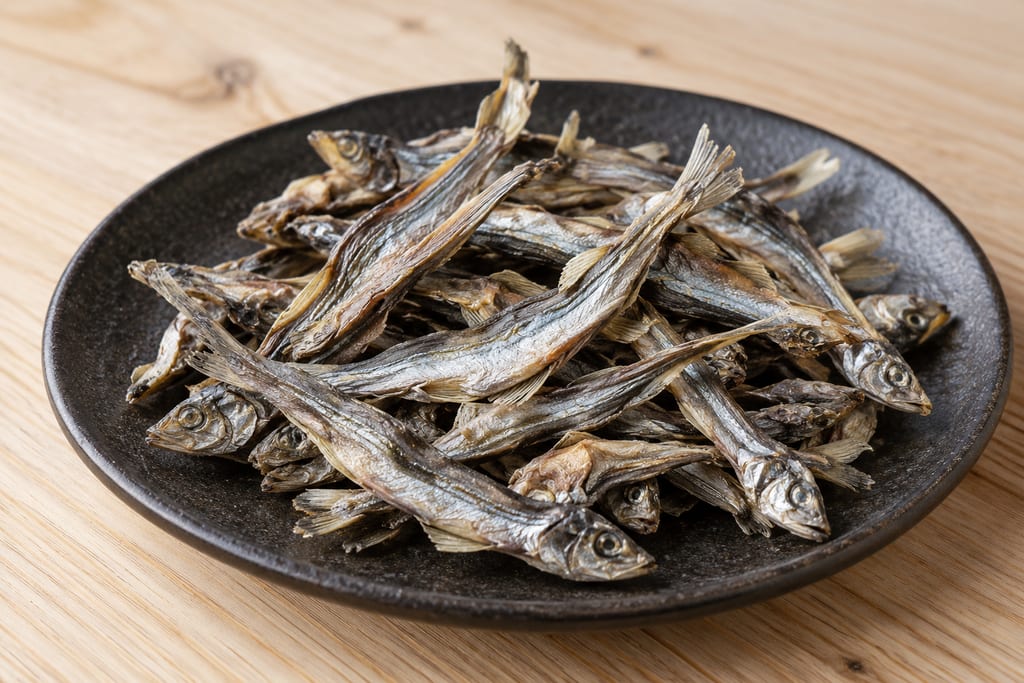
Greenlandic capelin dried whole on rocks, among crowberry vegetation or on buildings, and the microbial research that has made this small fish unusually well studied.
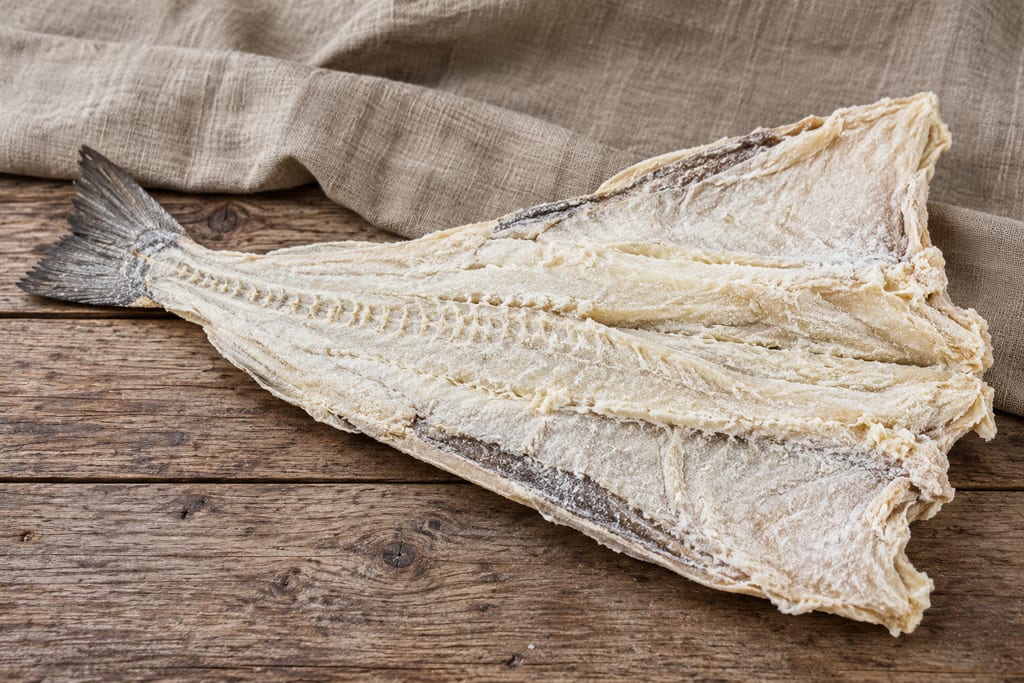
Cod split, salted and dried on flakes until hard, a long-keeping fish that must be desalted and rehydrated before use; the salting and the extensive drying together make it portable where light salting or partial drying does not.
Salmon opened, scored and hung on roofed racks in the dry canyon winds of the Fraser River: slhíts'es in Stó:lō documentation, sts'wan in St'át'imc records.

Koobi is Ghanaian salted and dried tilapia. Sources differ on the brief ripening stage and drying period, and do not establish a single validated household process. This entry records documented variants and their limits.
No community contributions have been published for this entry yet.
Sign in to contribute. Published comments and photos are free to read.
El PeruanoMethod · History
El Peruano — Resolution 126-2016-VMPCIC-MC, September 2016Resolution 126-2016-VMPCIC-MC, issued 21 September 2016 and published 23 September 2016, declaring the ancestral anchoveta-drying technique of the central coast part of the nation's cultural heritage
The heritage method: fish sorted and prepared, salted in containers, drained of the liquid locally called sanguaza, spread on sand or over fine netting placed on sand, and sun-dried for approximately 5 to 7 days
A note that wood or plastic surfaces can become excessively hot under strong sunshine
Techniques transmitted among fishing families
Cited in: A small fish at the centre of a coastal tradition; The anchoveta and the Humboldt Current; The history of anchoveta drying at Carquín; The importance of women's knowledge; The heritage method documented in 2016; 1. The catch reaches the household; 2. Fish are sorted and prepared; 3. Applying salt; 4. Draining; 5. Laying out the fish; 6. Sun drying; 7. Cleaning the dried fish; Why the difference matters; The preservation science; Salt action; Evaporation; Oil oxidation; Microbiology; What can go wrong?; Safety and modern adaptations; Why Carquín's anchoveta belongs in a world atlas
Ministry of Culture of PeruHistory · Heritage
Ministry of Culture of Peru — Carquín heritage declaration, December 2016The declaration formally presented to the Carquín community in December 2016
Cited in: A small fish at the centre of a coastal tradition; The history of anchoveta drying at Carquín; The importance of women's knowledge; Why Carquín's anchoveta belongs in a world atlas
Municipality of Caleta de CarquínMethod · Use
Municipality of Caleta de Carquín — Charquicán de Anchoveta, 2022A municipal account of 7 July 2022 recording a batch of 96 anchoveta described as eight dozen, 750 grams of iodized salt, a 10-minute resting period after salting, and drying on cleaned stones for 2 to 3 days
A municipal charquicán preparation using prepared dried anchoveta, onion, garlic, ají amarillo, ají colorado, ají mirasol, boiled potatoes, coriander leaves, vinegar or lemon juice, and rice for serving
Cited in: A second documented method: the 2022 municipal account; Why the difference matters; Charquicán: a dish built around dried fish; Ingredients; Preparation
Peru Ministry of Foreign Trade and TourismUse · Inventory
Peru Ministry of Foreign Trade and Tourism — Charquicán inventory recordThe charquicán inventory record for the region
Cited in: Charquicán: a dish built around dried fish; Charquicán and Holy Week
Agencia AndinaUse · Context
Agencia Andina — Carquín gastronomic festival, April 2025The eighth gastronomic and cultural festival at Caleta de Carquín, April 2025, and a regional report describing the shorter drying method
Cited in: A second documented method: the 2022 municipal account; Charquicán and Holy Week
Instituto Tecnológico de la ProducciónContext · Modern adaptation
Instituto Tecnológico de la Producción — Innovation in anchoveta productsInnovation in anchoveta products and iron-bearing foods
Cited in: The anchoveta and the Humboldt Current; Oil oxidation
US Food and Drug AdministrationSafety
US FDA — Fish and Fishery Products Hazards and Controls GuidanceA general water-activity threshold of 0.85 for shelf-stable dried seafood
Cited in: The preservation science; Salt action; Microbiology; What can go wrong?; Safety and modern adaptations