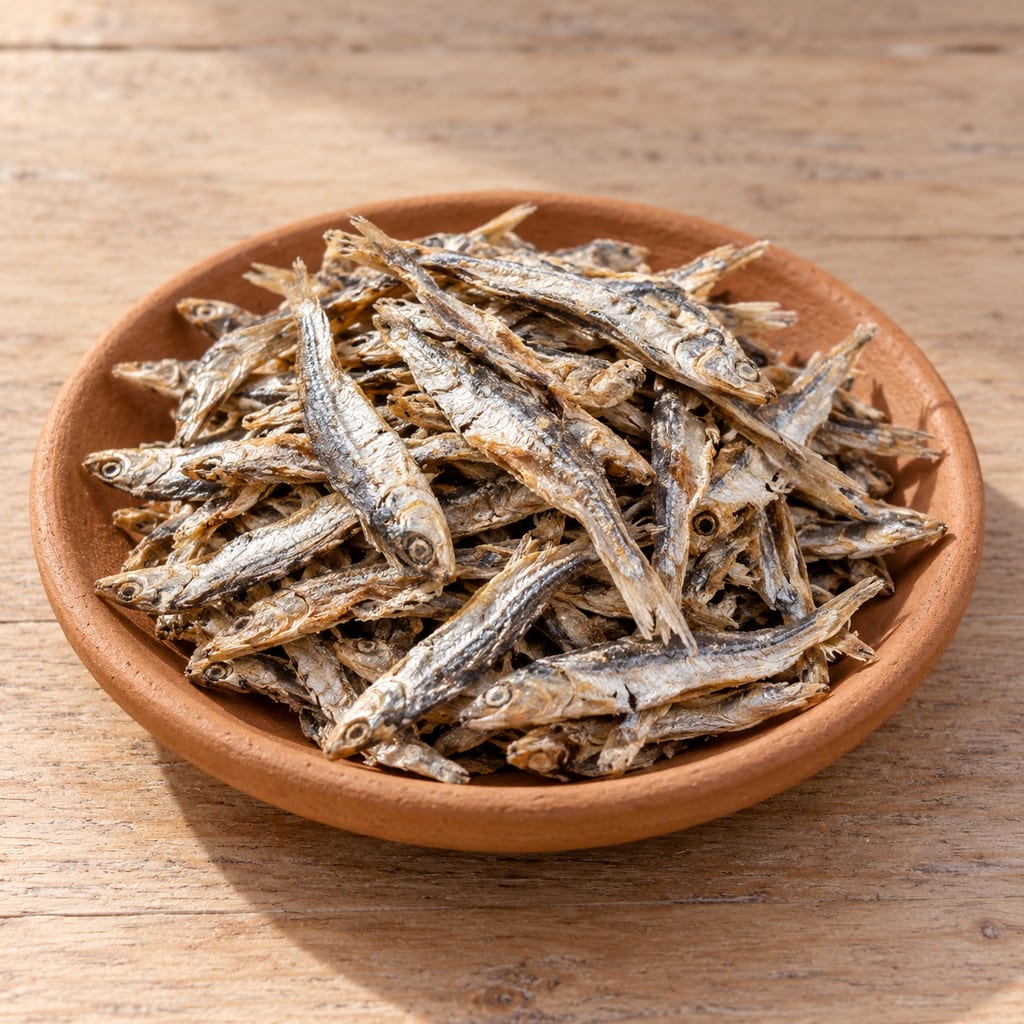
Carquín dried anchoveta
Anchoveta salted, drained of sanguaza and sun-dried on sand or stones at Caleta de Carquín, a technique declared part of Peru's cultural heritage in 2016.
 FermenteaWhere food goes to change
Fitotoldo-dried mushrooms · Shade-covered solar drying of Suillus luteus
Protected solar-dried mushrooms are slices of wild Suillus luteus dried under a shade cover, a fitotoldo, rather than in open sun, as tested in an experimental study from Apurímac, Peru.
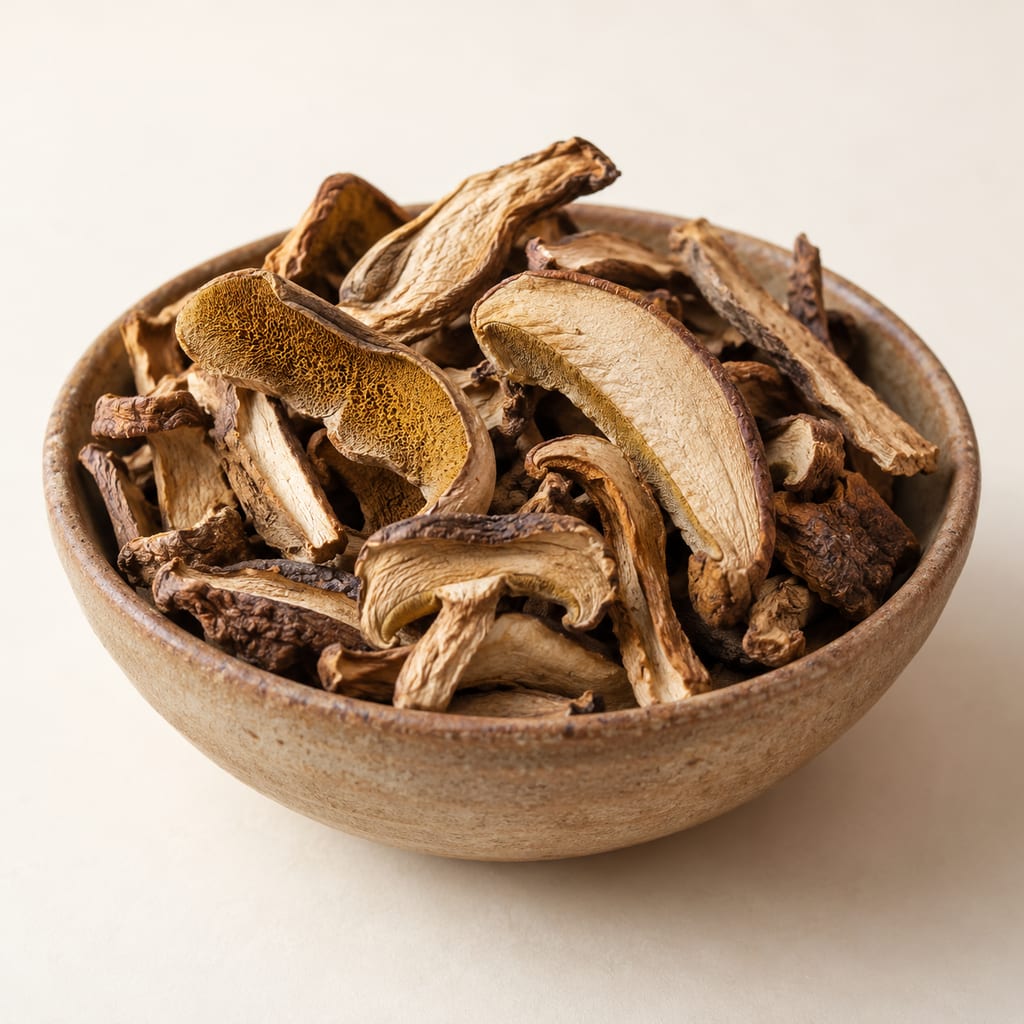
Sun drying in the open exposes a food to sunlight, moving air, dust and rain. A protected solar structure keeps the food under a cover while still letting the sun warm it. The Peruvian study compares that arrangement with direct sun. Its protected condition is a fitotoldo, a shade cover, which the authors describe as indirect solar drying. The source gives no detail on how the cover was built or how the air moved beneath it, so the page does not describe either.
The study worked with wild Suillus luteus collected in pine forests in the Apurímac region of Peru. It cut the caps into slices about 3 centimetres thick and tested pretreatments before drying. The slices were soaked in 5 per cent lemon juice or 6 per cent vinegar at a 1:5 weight-to-volume ratio, and some slices were dried without any pretreatment.
The study is a comparison of processing conditions. Its authors were not describing a household tradition in the place where they collected the mushrooms, and this page treats it as a research record.
Rehydration was highest in the slices dried directly in the sun and in the fitotoldo without pretreatment, and in the vinegar-treated slices. Lightness fell in every dried sample compared with fresh mushrooms, so colour changed under both conditions. In sensory scoring, the vinegar-treated samples were rated higher for texture, colour and overall acceptability. No instrumental texture measurement is reported.
Total polyphenols and antioxidant capacity fell after drying. The vinegar-pretreated samples had the highest values among the dried samples, at 8.38 mg GAE per gram for polyphenols and 54.13 micromoles TE per gram for DPPH activity. Untreated samples also show the dried composition: protein 23.67 g per 100 g, crude fibre 11.10 g per 100 g and ash 5.59 g per 100 g.
The authors concluded that the fitotoldo method, with or without vinegar pretreatment, was the most efficient approach for this species. The study does not give the times and temperatures that would let a cook reproduce the result exactly, so the conclusion cannot be turned into a schedule here.
The study reports no drying time, no air or product temperature and no final moisture or water-activity endpoint. A dry-looking slice is therefore not evidence of a stable product. Storage after drying is not covered in the record.
The pretreatments are part of the process, not optional decoration. Acid changes the surface and the sensory result, and the study shows that treated and untreated slices differ, so a cook who wants to repeat the study has to keep the same choice.
Wild Suillus luteus is identified before processing. The record gives no edibility verdict, and nothing in the drying data changes that.
The record is a recent experimental study. It is not a documented household tradition for Suillus luteus in Apurímac.
Scaling: source batch only
The study works with wild Suillus luteus. Identification has to come before processing, and the record gives no edibility verdict.
Hazard sourceThe study reports no final moisture or water-activity endpoint, so the dried product's stability is not established.
Hazard sourceAn experiment on colour, rehydration and sensory scores does not establish shelf life or safety.
Appearance and texture after drying are not safety checks.
The experimental study collected Suillus luteus from pine forests in the Apurímac region. It is a research study, not a record of household practice.
Anchoveta salted, drained of sanguaza and sun-dried on sand or stones at Caleta de Carquín, a technique declared part of Peru's cultural heritage in 2016.
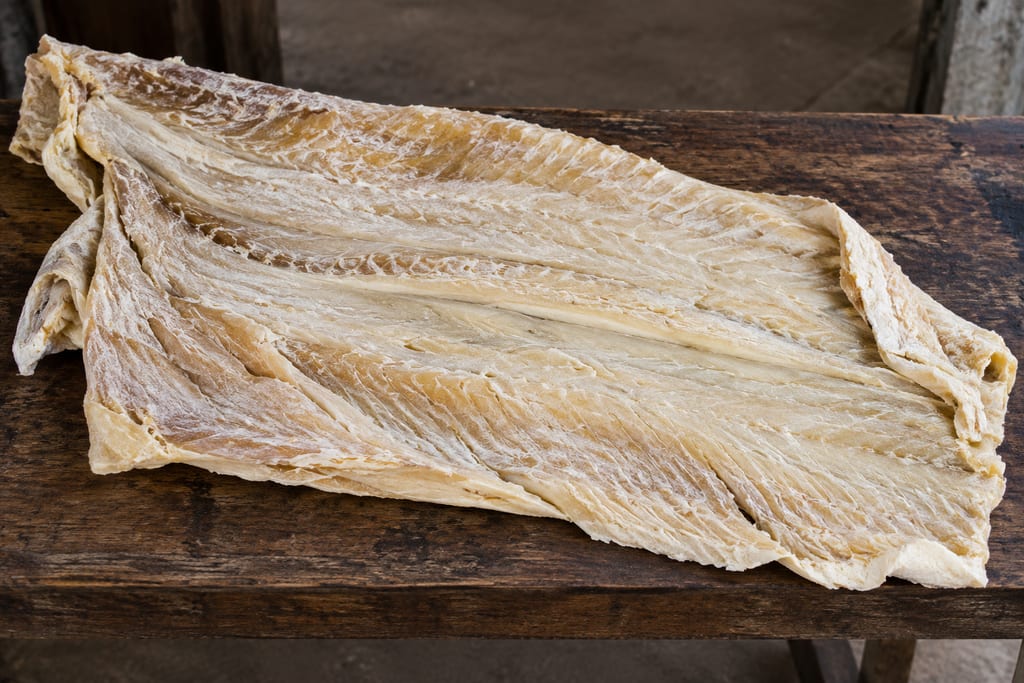
Arapaima gigas split into broad mantas, salted, matured for days and dried into the sheets that travel Amazonian river markets as bacalhau da Amazônia.
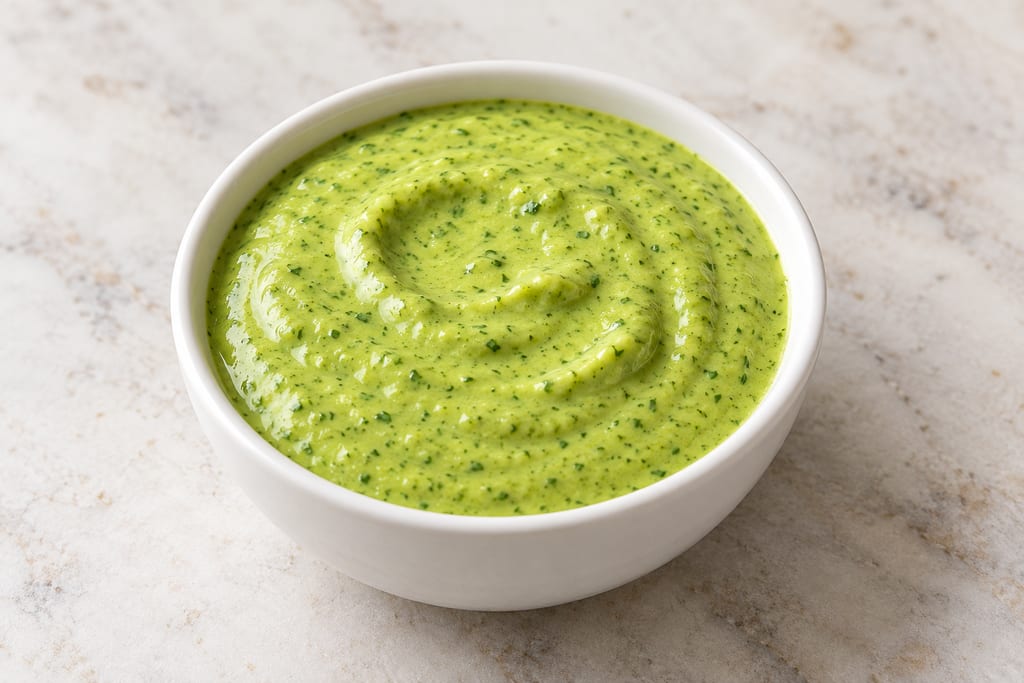
Ají verde is a Peruvian green sauce of coriander, chilli, onion and garlic in a mayonnaise or cheese base. It is best known through Peruvian restaurant cooking abroad.
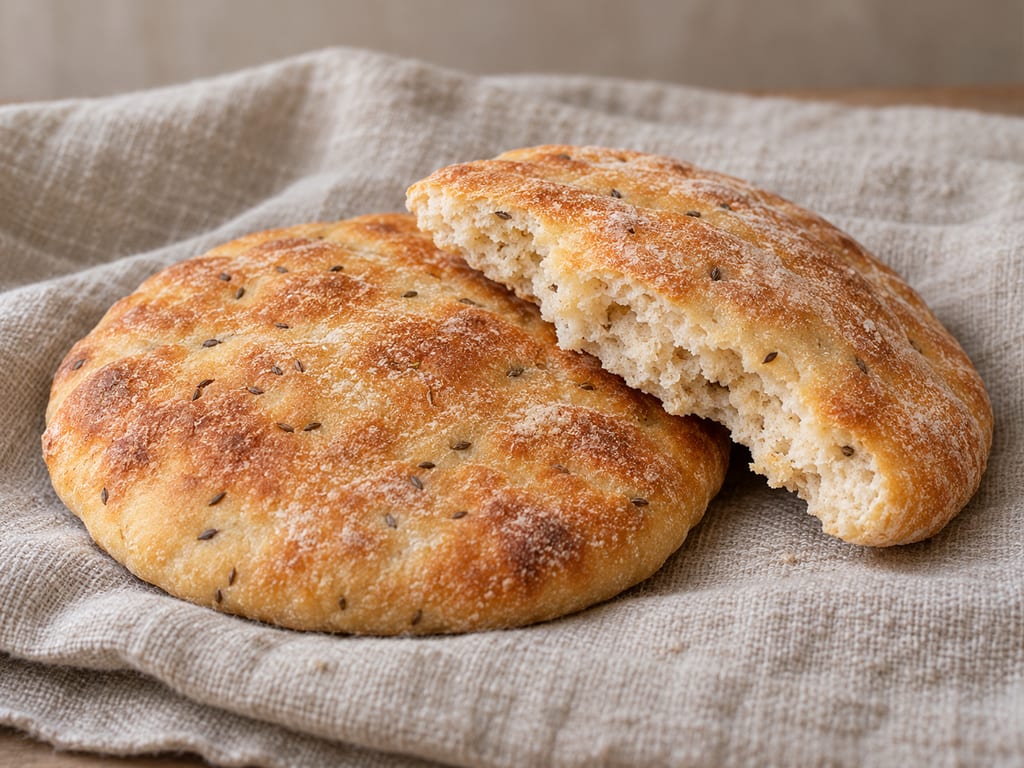
A measured, yeast-raised Ayacucho chapla home method shared by Thermomix Peru presenter Roxanna Salaverry. It makes thin, anise-scented rounds baked at 240°C; the historic qunchu-leavened form is documented separately.
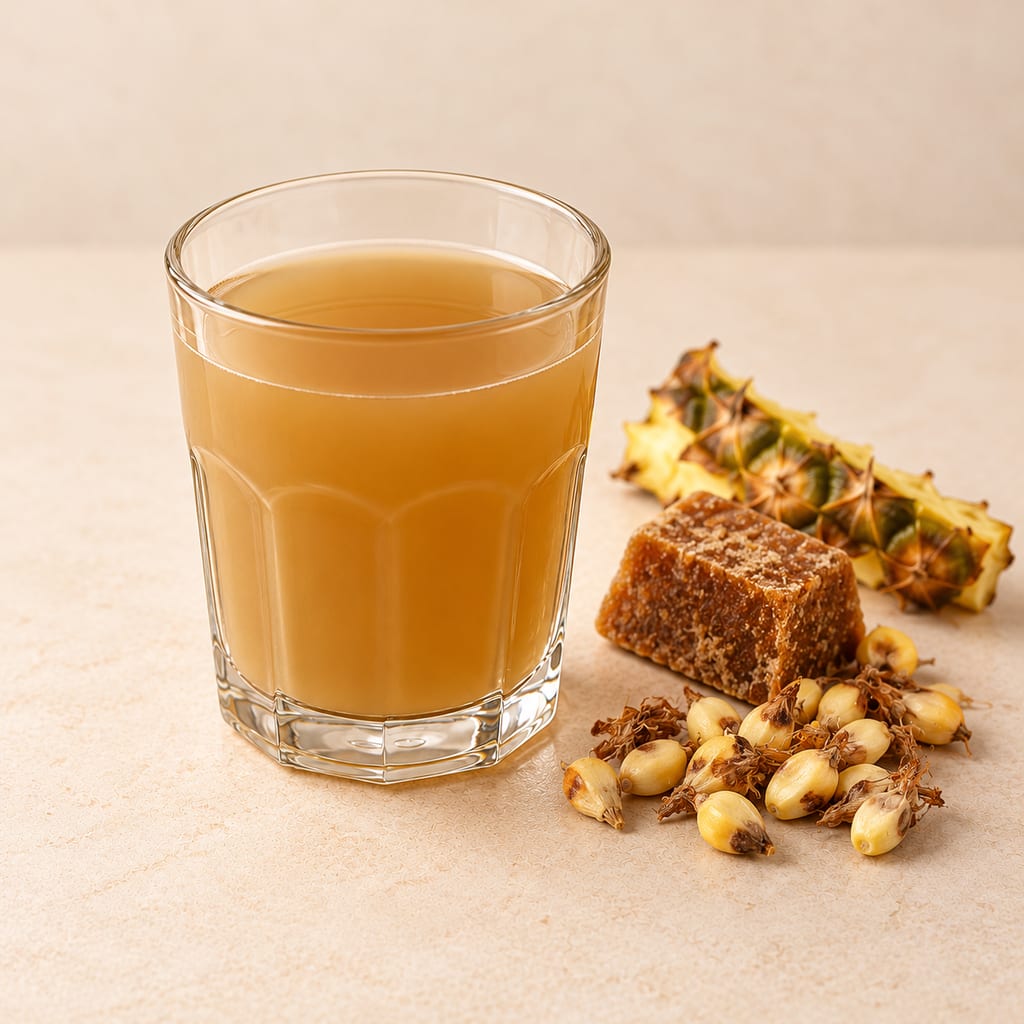
A contemporary Ecuadorian recipe simmers jora flour with spices, then adds panela and pineapple peel before a short spontaneous ferment. Its particular aromatics and measurements belong to this published adaptation.
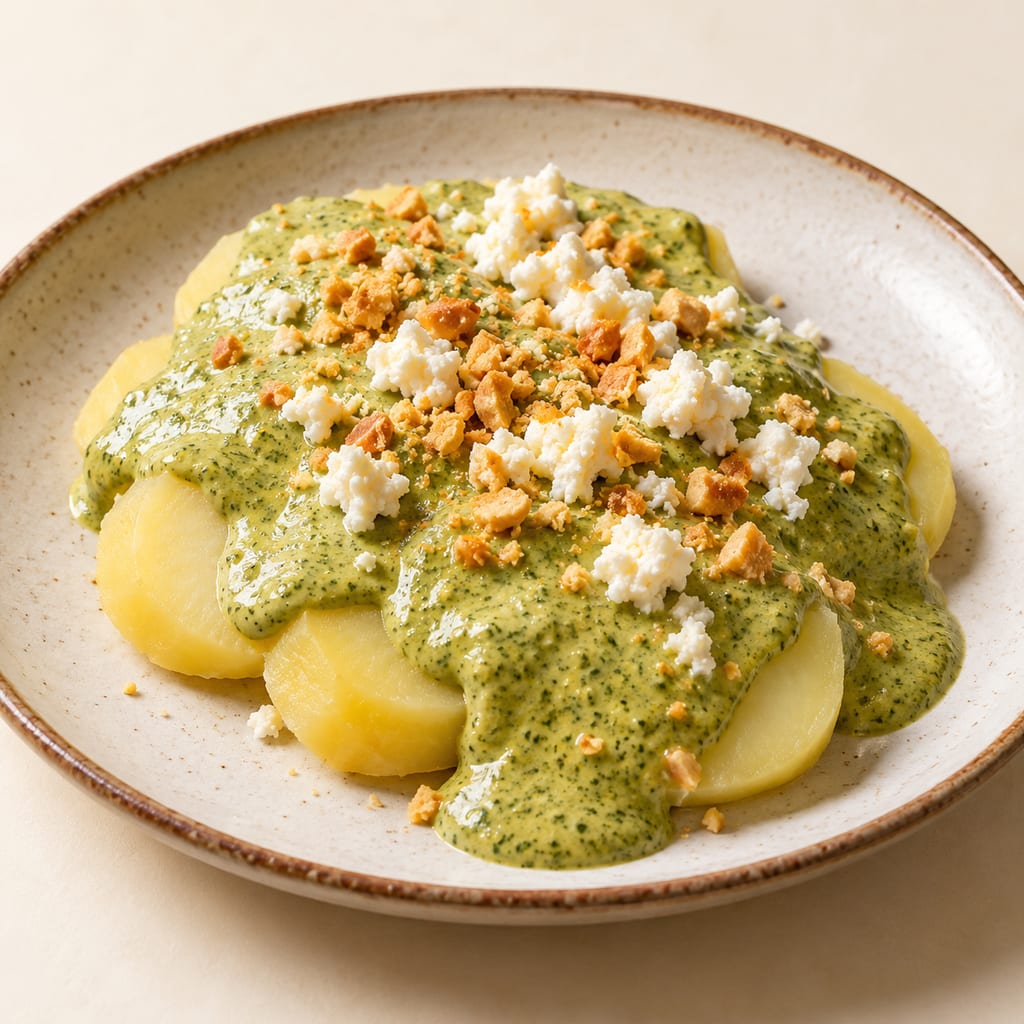
Ocopa is a sauce from Arequipa, Peru, of huacatay, dried mirasol chillies, nuts, fresh cheese and soda crackers. It is usually spooned over boiled potatoes.
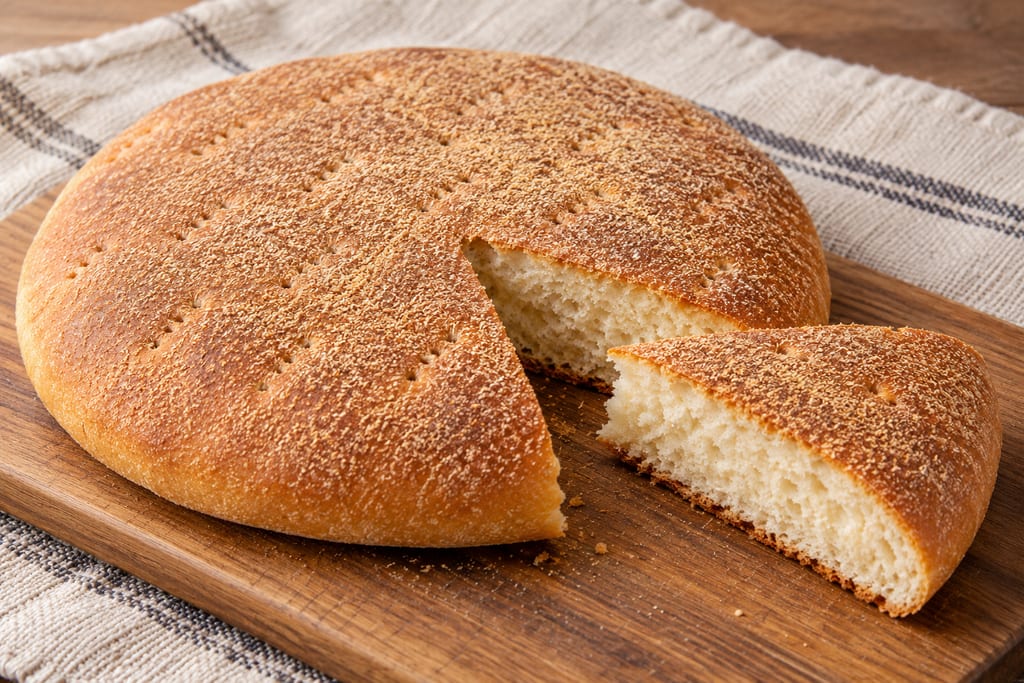
Pan chuta is a broad, lightly sweet wheat loaf associated with Oropesa in Cusco; this home-scale version uses chamomile, brown sugar and butter.
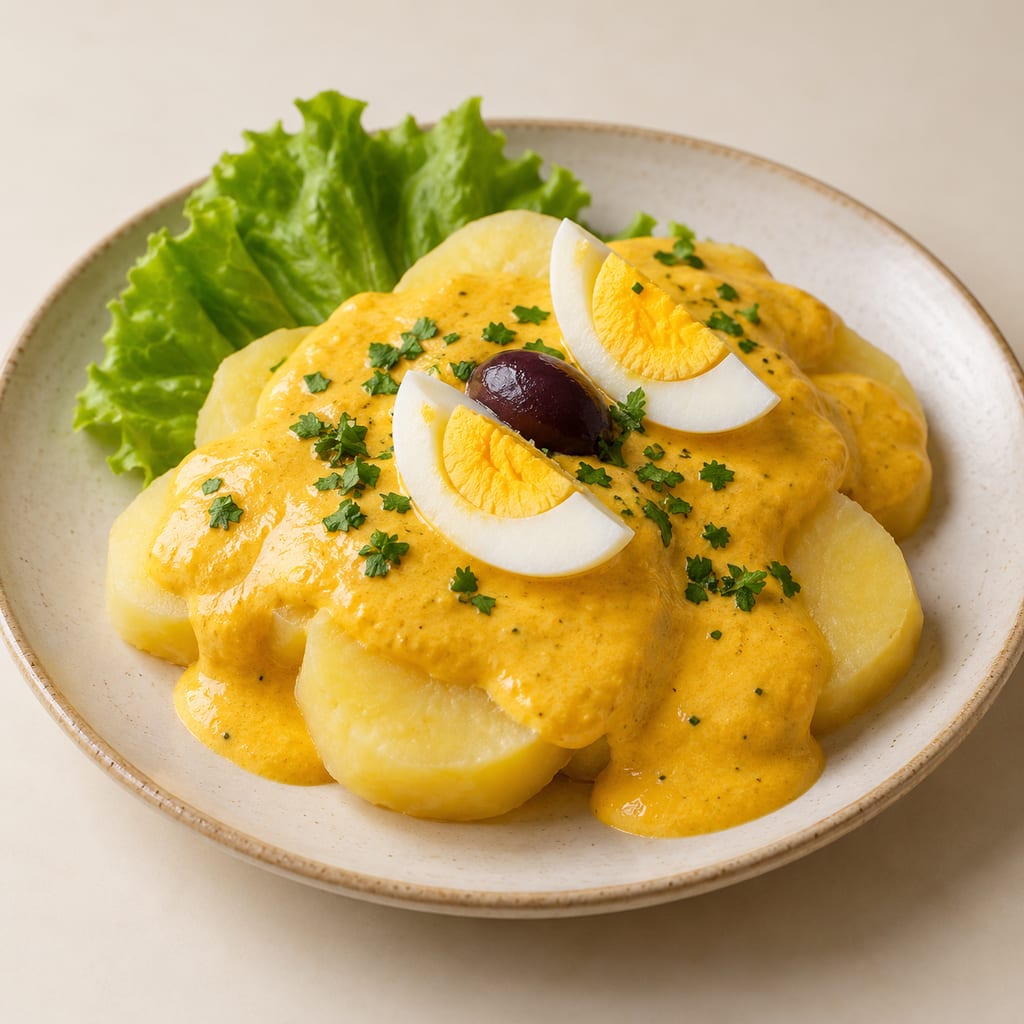
A creamy Peruvian sauce of ají amarillo, fresh cheese and milk, served with potatoes. This source-based version sautés aromatics before blending the sauce.

Chipotle is a ripe jalapeño pepper smoke-dried in a wood-fired cocedor. Camargo, Chihuahua, documents a large-scale version of the process; its source accounts do not establish a complete home batch or validated safety endpoint.
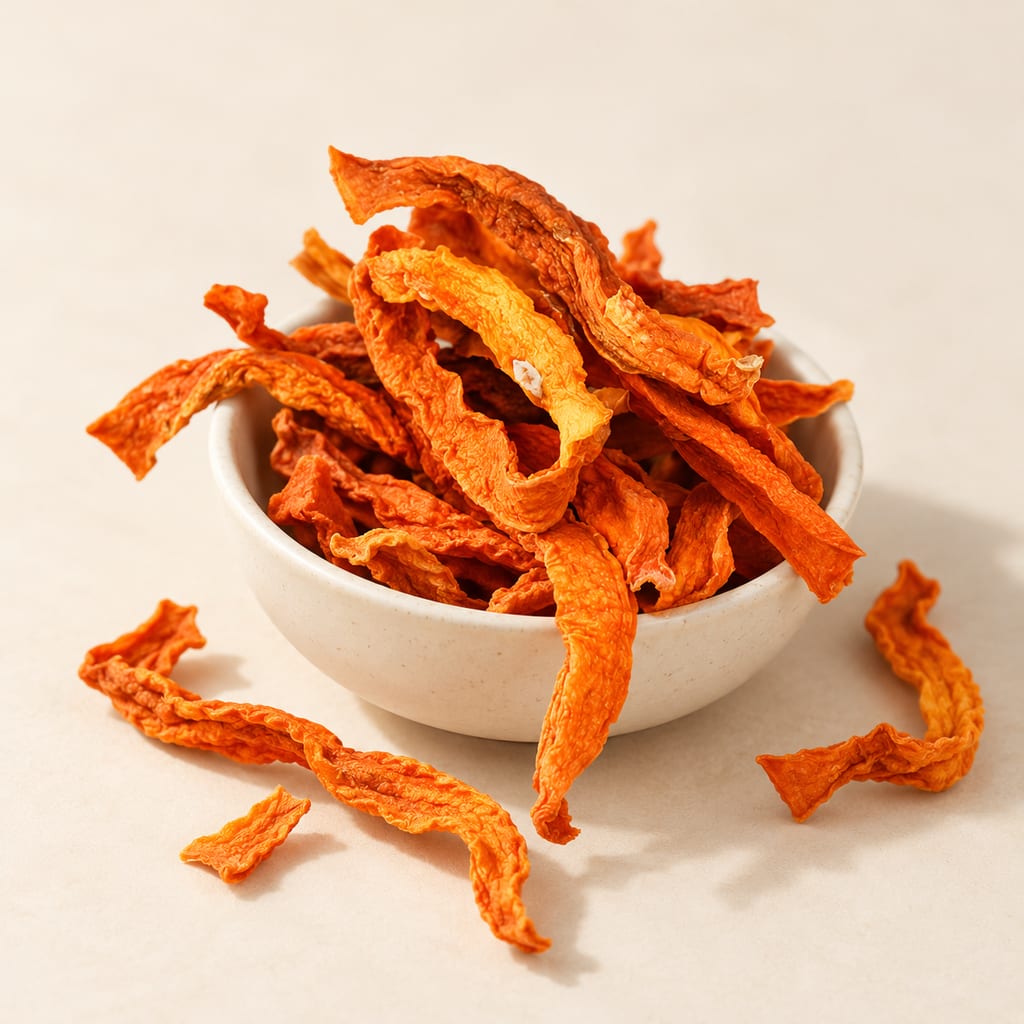
Steam-blanched pumpkin dried until brittle, kept as pieces or ground into powder, with pumpkin-specific packaging and quality guidance.
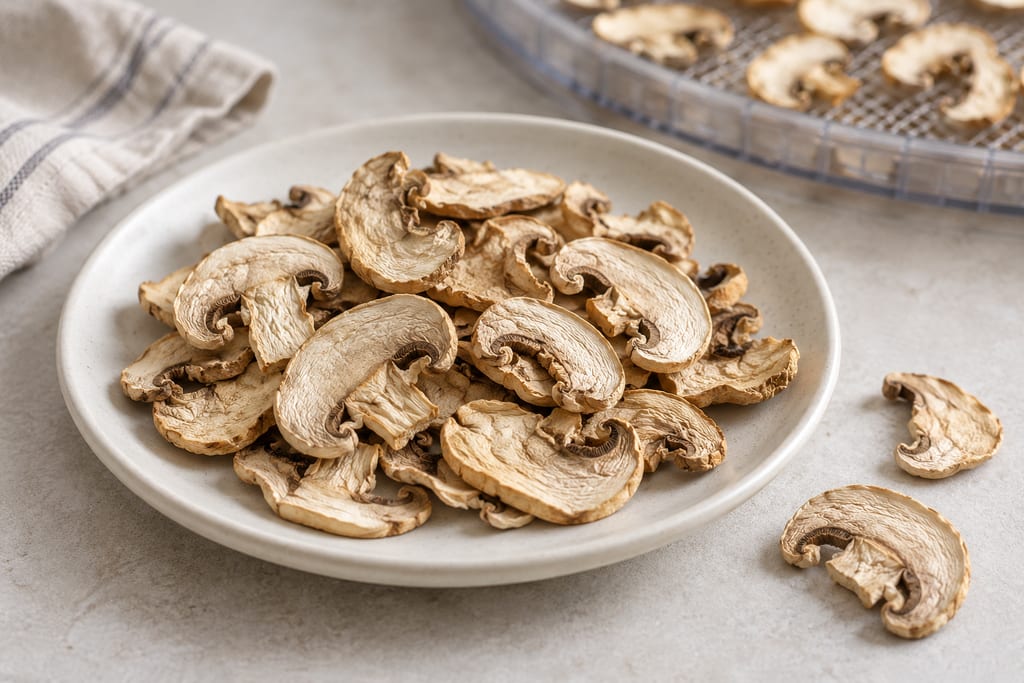
Hot-air dehydrated mushrooms are sliced mushrooms dried in a dehydrator or dryer with heated, moving air; a 2011 study dried button mushroom slices at 60 °C and compared them with microwave-vacuum and freeze-drying.
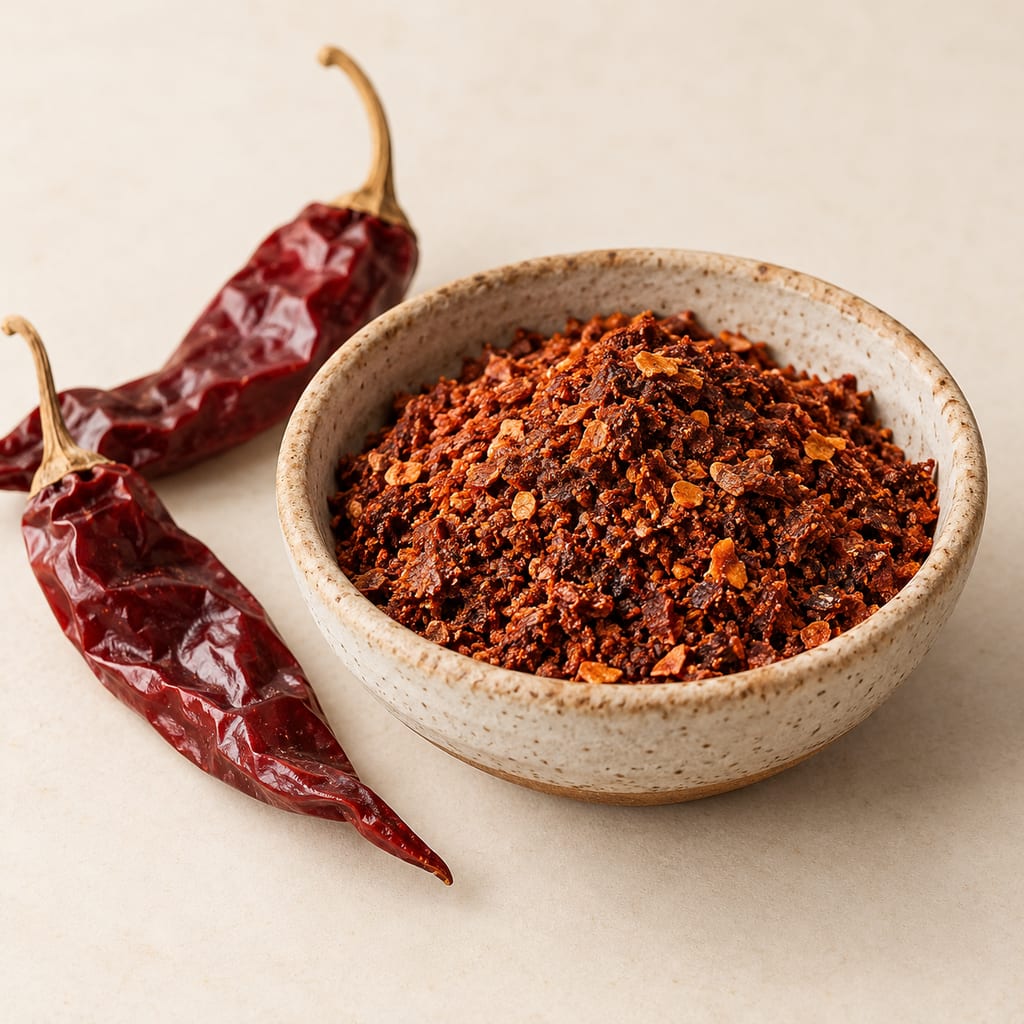
Merkén is the Mapuche seasoning of dried, smoked and ground ají cacho de cabra chile, sometimes with toasted coriander seed and salt, made in the Maule and La Araucanía regions of Chile.
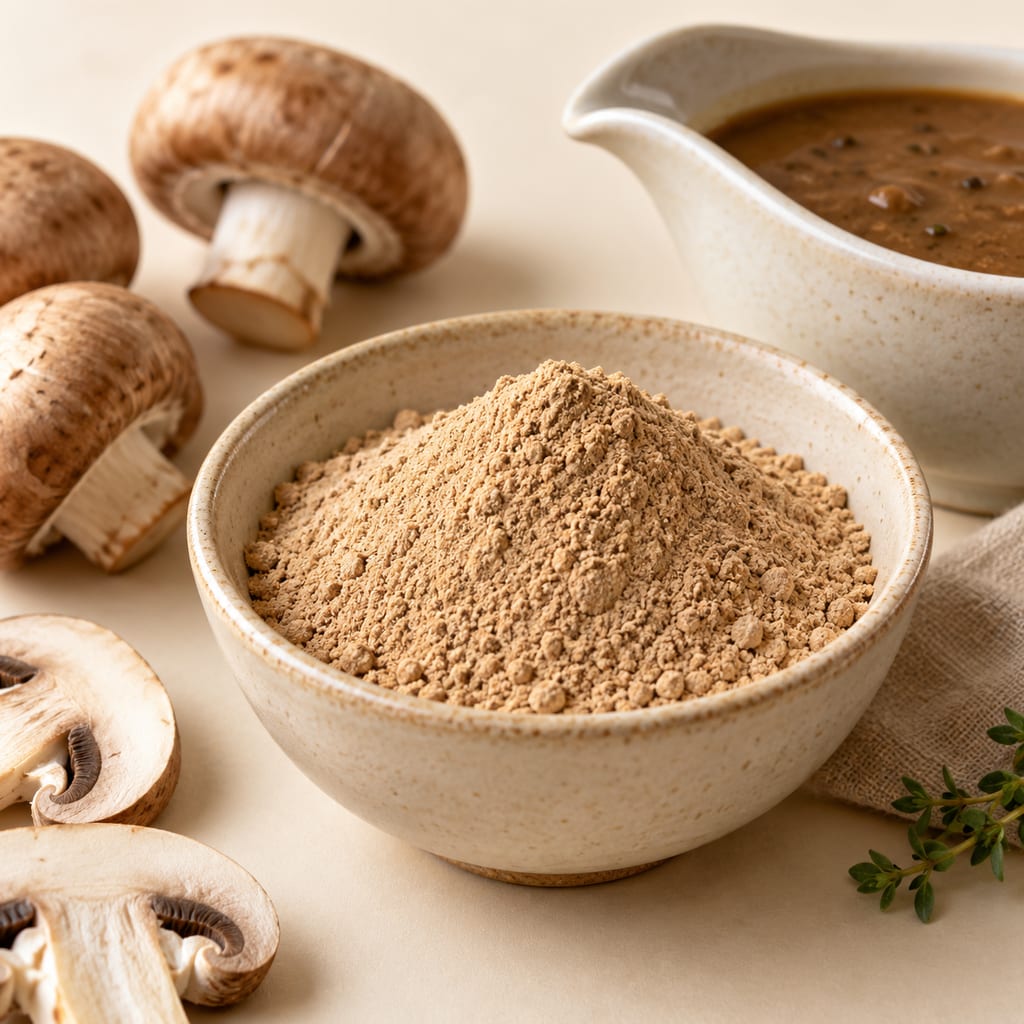
Mushroom powder is dried mushroom tissue ground to a fine powder and added to gravies and sauces. Victorian cooks made it from fresh cultivated mushrooms when fresh ones were not to hand.
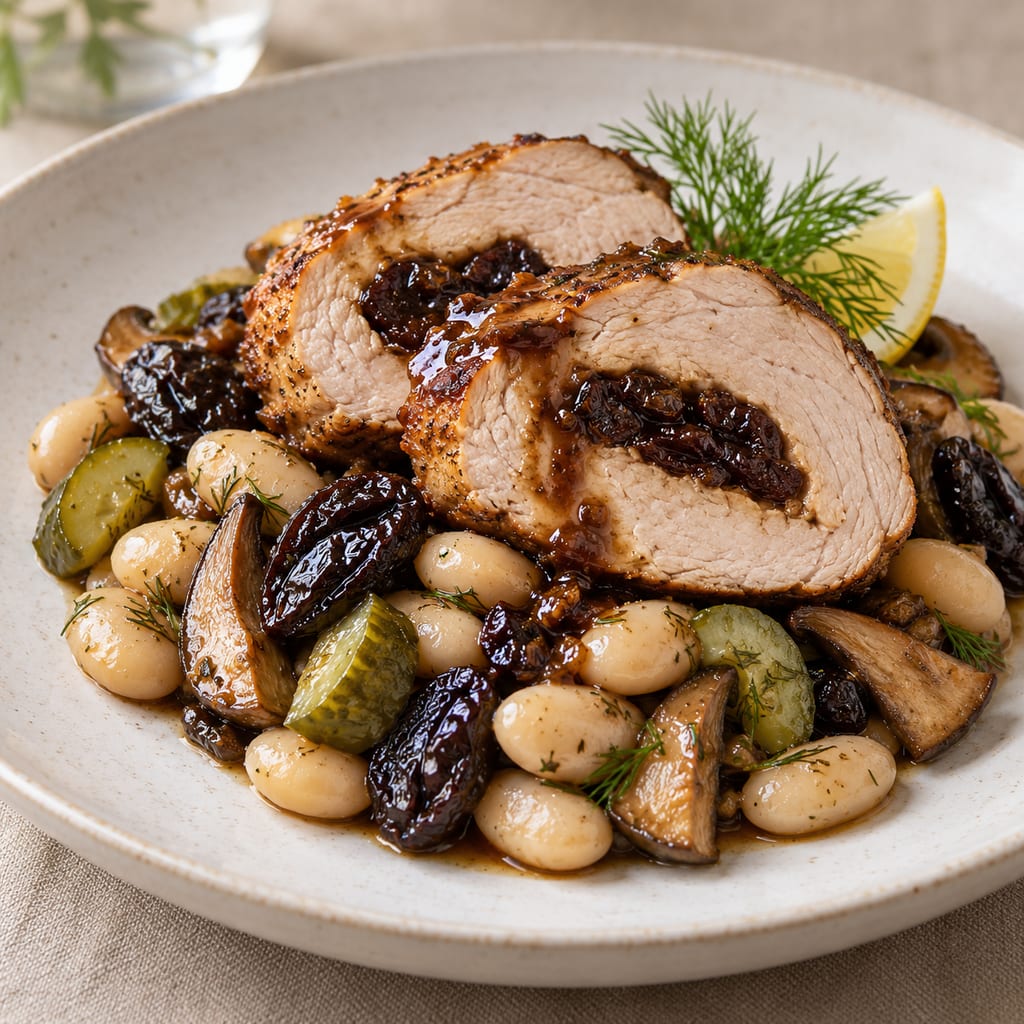
This Polish competition recipe stuffs pork loin with suska and serves it with a bean salad containing more smoked-and-dried plums.
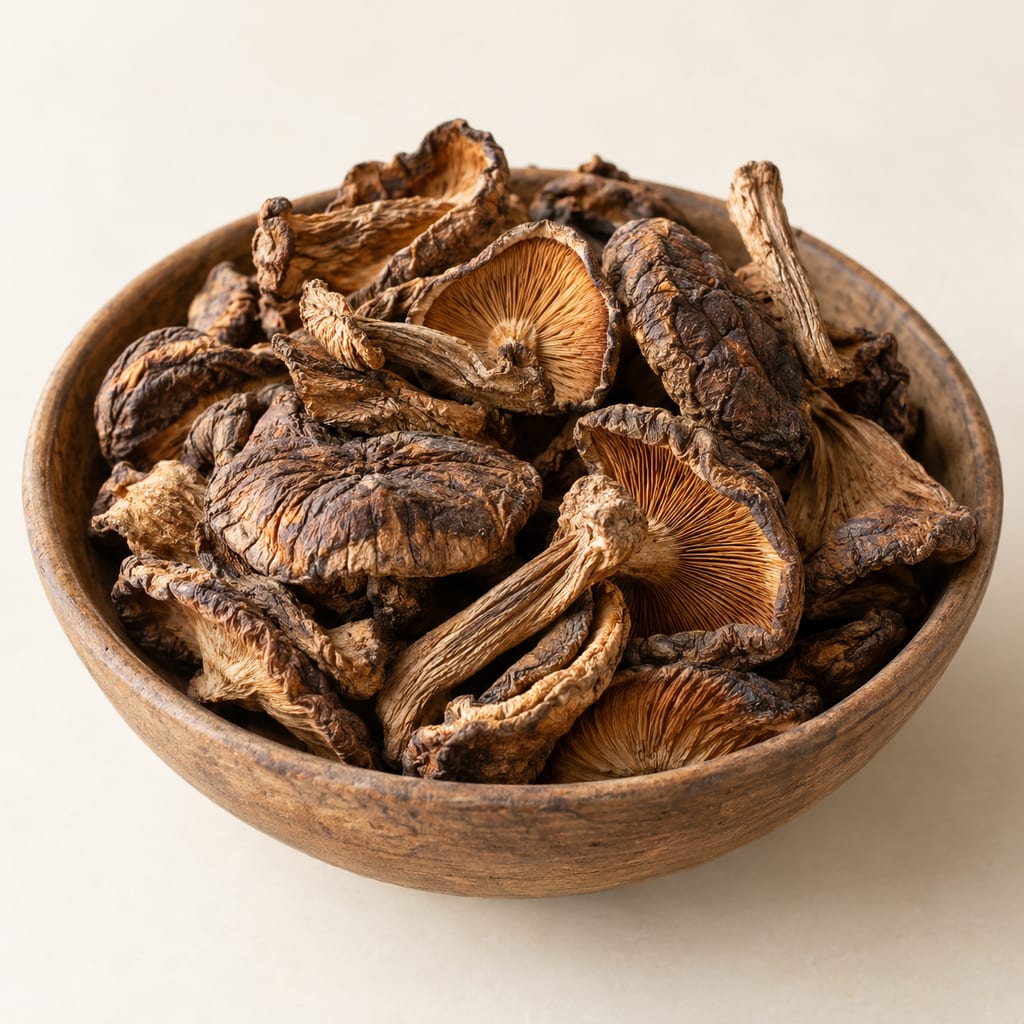
Hearth-dried mushrooms are dried on shelves above a cooking fire, so heat and smoke reach them. Tanzanian records describe the method; a Vietnamese study tested smoke-dried shiitake for fuel-dependent contaminants.
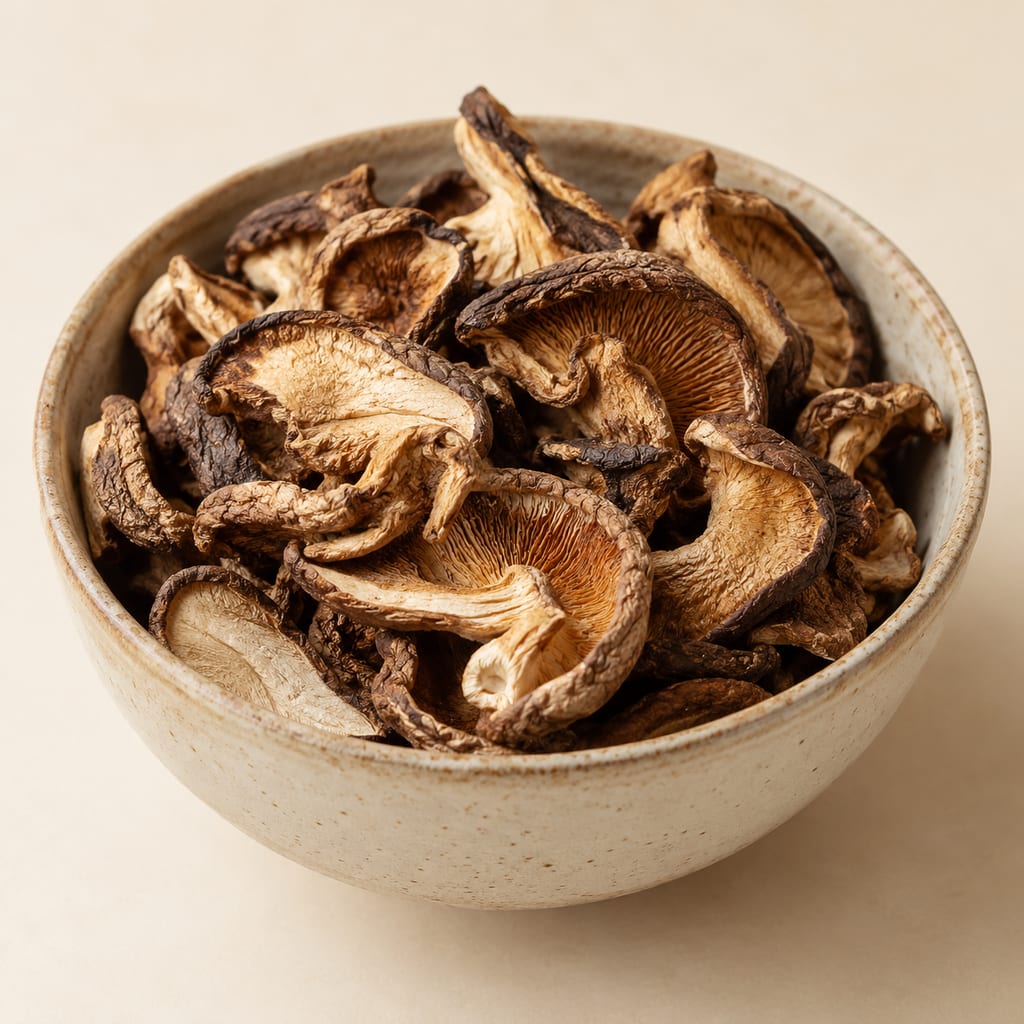
Sun-dried mushrooms are mushrooms spread in open sunlight and left to lose their water to solar heat and moving air, a method recorded in Nigeria, Tanzania, Mexico and among Algerian desert truffle gatherers.
No community contributions have been published for this entry yet.
Sign in to contribute. Published comments and photos are free to read.
Espinoza-Ticona et al. (2023)Method · Experiment
Solar drying of Suillus luteus from Apurímac, Peru (experimental study, Chilean Journal of Agricultural and Animal Sciences)Caps cut into 3 cm slices, immersed 1:5 (w/v) in 5% lemon juice or 6% vinegar; untreated samples also dried
Direct solar drying compared with indirect drying in a fitotoldo shade cover
Rehydration highest in direct-sun and fitotoldo untreated samples and in vinegar-treated samples
Colour luminosity fell in all dried samples; vinegar-treated samples scored higher for sensory texture and colour
Polyphenols and DPPH activity fell after drying; vinegar pretreatment highest
Temperatures, drying times and final endpoints not stated; authors judged the fitotoldo method most efficient