What it is
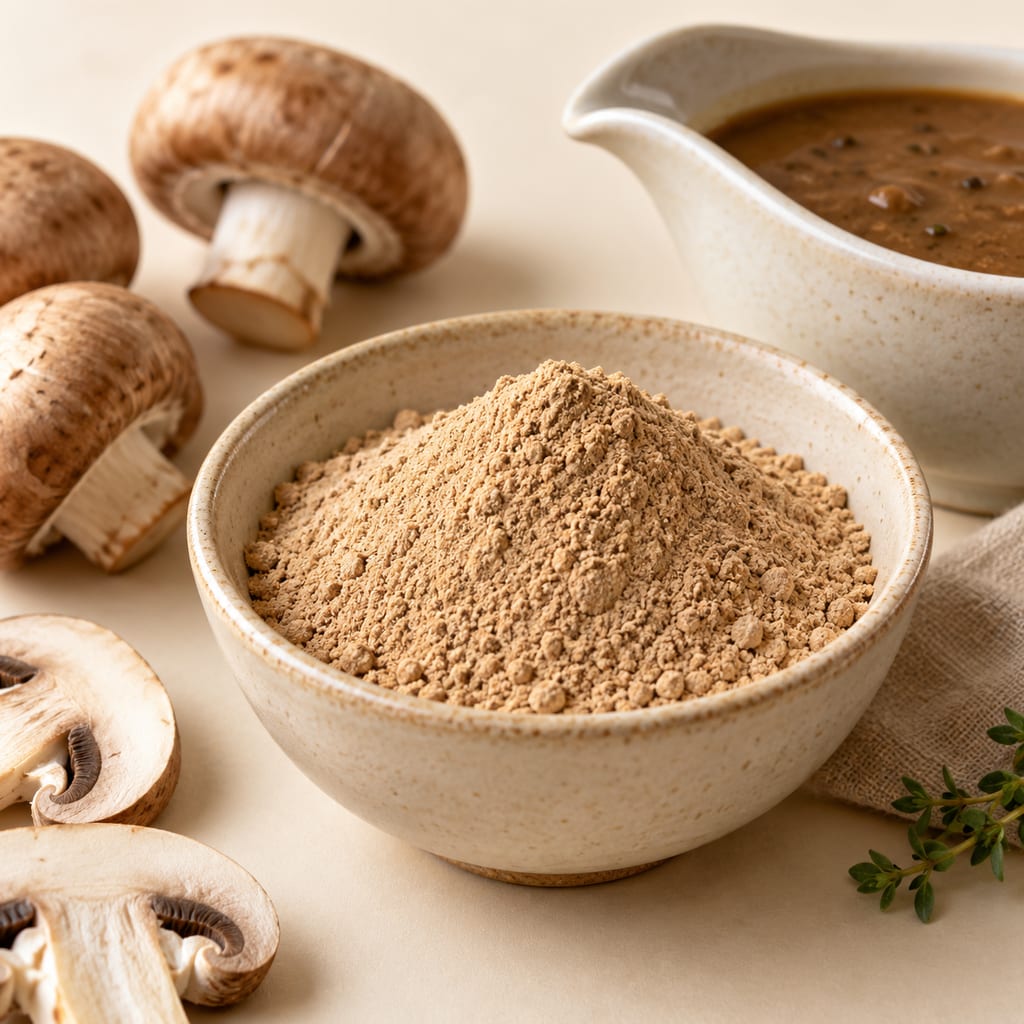
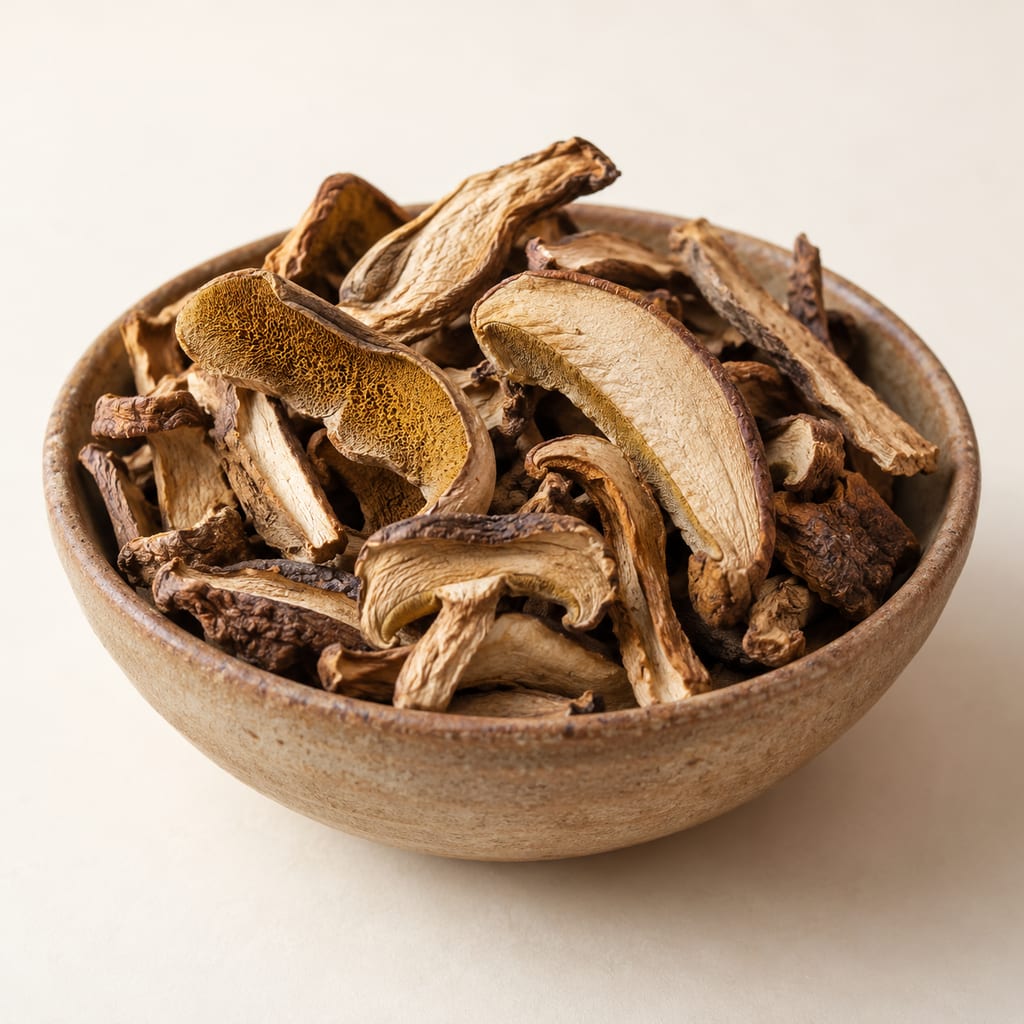
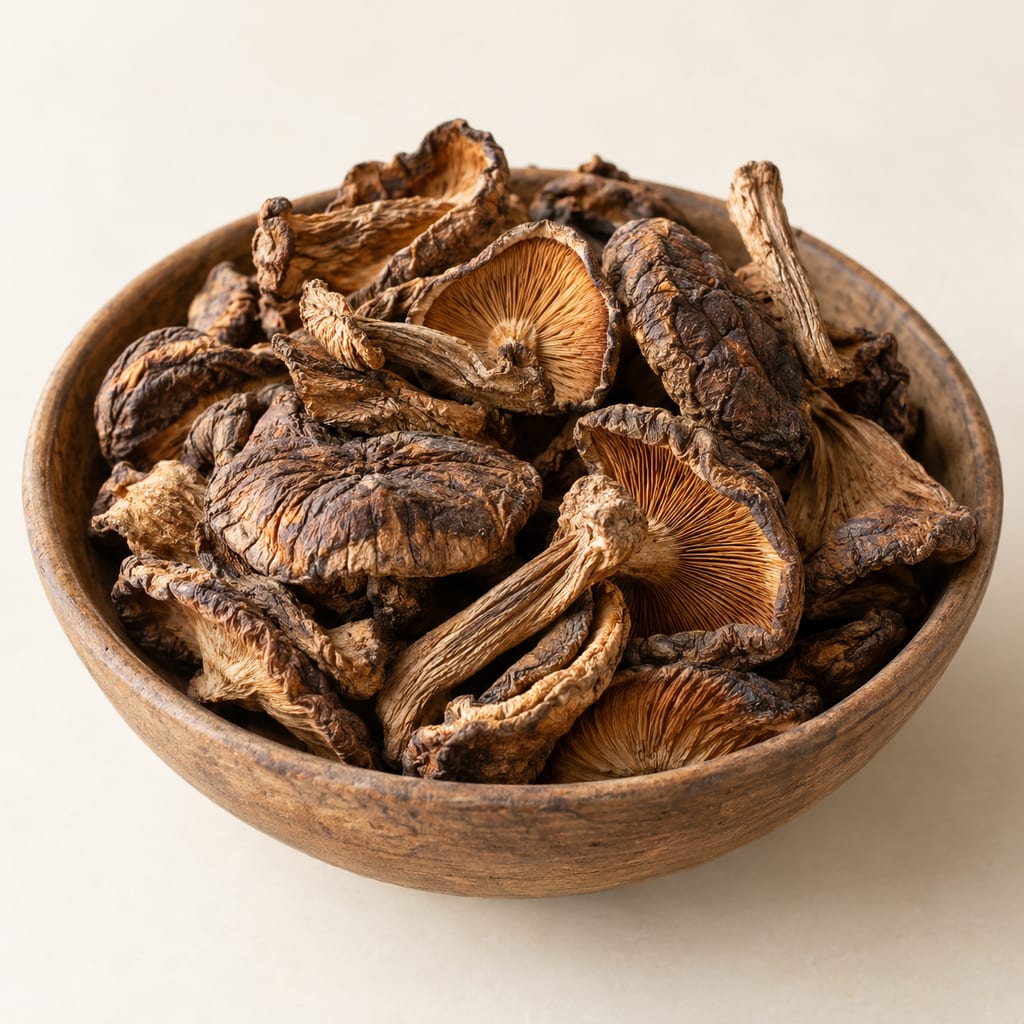
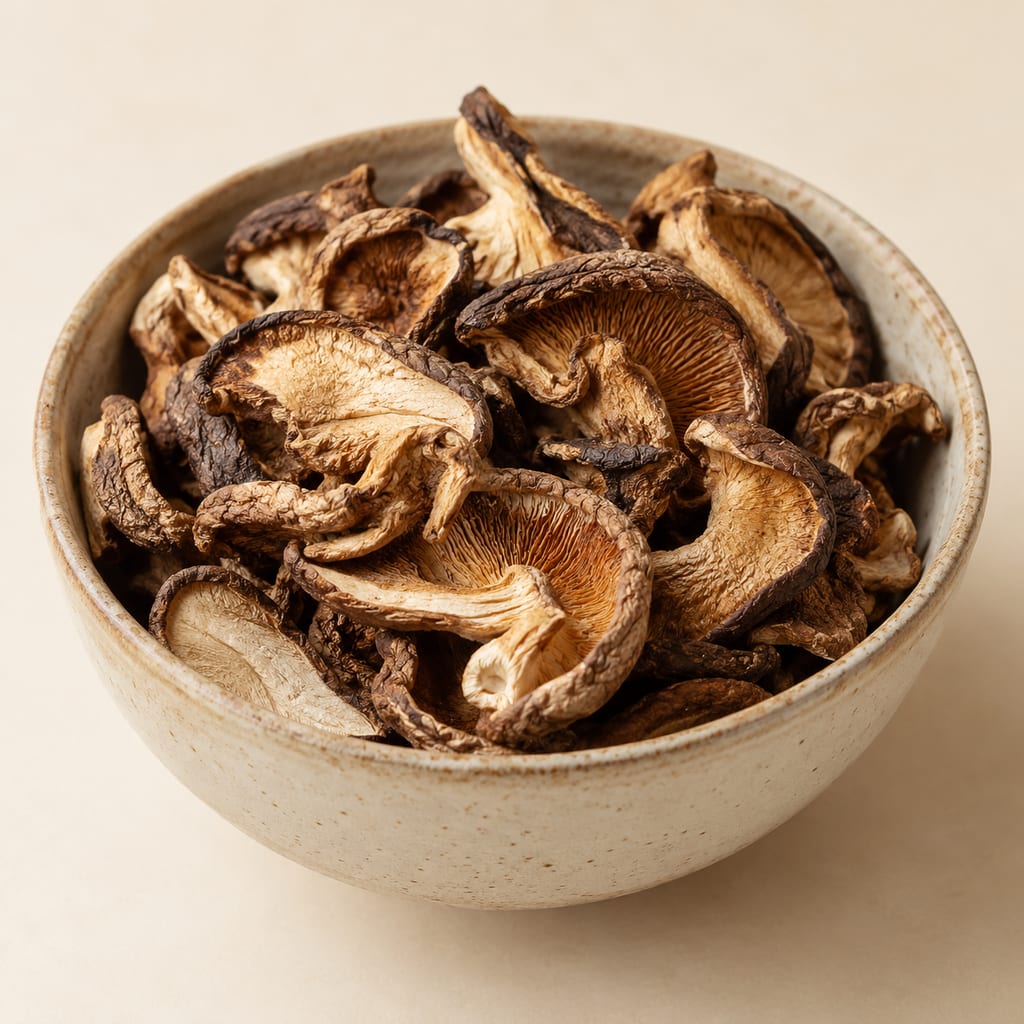
Mushroom powder is dried mushroom tissue ground into a fine dust. It is used as a seasoning, and above all as a way of giving body and a mushroom taste to sauces and gravies. The powder is not a fresh mushroom in another form. Once it is ground it keeps only as well as it stays dry, and it takes its character from the mushrooms, the drying and the milling together.
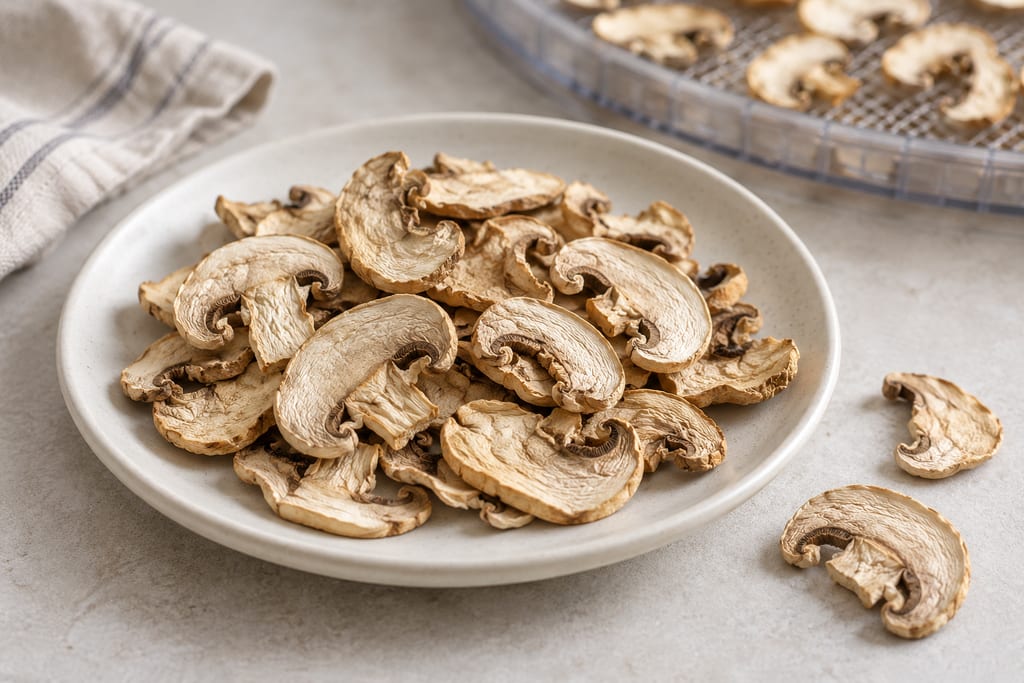
The Victorian recipe makes its powder from fresh cultivated mushrooms, the large flat-capped kind sold as garden mushrooms. Beeton's method dries them without any liquid first. The mushrooms are shaken over a clear fire in a dry stewpan until the liquor they release has dried away, then dried further in a slow oven. The result is a dry, brittle material that can be pounded fine.
Sources for this section
How the Victorian method works
The recipe has three stages, and each does a different job. The first is the dry shaking. Cooking the mushrooms in their own liquor without added water drives off moisture and concentrates the flavour, and the onion, clove, mace and white pepper are cooked with them so their aromas are taken up into the mushroom tissue. Beeton warns that the mushrooms must not burn, because scorched material would spoil the powder's flavour.
The second stage is drying in a slow oven on tins. Drying lowers the water content until the mushroom tissue is brittle and can be pounded. The source gives no oven temperature or drying time, so these cannot be stated here. The third stage is storage: the powder goes into small dry bottles, which are corked, sealed and kept in a dry place.
The recipe's own note explains why dryness matters. If the bottles, or the powder, are not perfectly dry, the powder will keep only a very short time. Beeton does not give a shelf life for a dry, sealed bottle. Nothing in this material establishes one, and the storage advice here is only a reminder to keep the powder dry.
Sources for this section
Use in the kitchen
The powder is a finishing flavouring rather than a cooking ingredient in its own right. Beeton says to add it to the gravy just before serving and to give it one boil up. The powder was made to stand in for fresh mushrooms in sauces when those could not be had, which explains its seasonal timing in early autumn.
The product now sold in Brazil has a different job. The INPA account describes mushroom material from the Sanoma harvest sold as powder for cooks. It does not describe how the powder is used, so the Victorian method and the modern product should be read as two separate uses of the same food form: one a home store for winter sauces, the other a packaged food sold to outside buyers.
Sources for this section
Limits of the record
The Beeton method is a historical household record. It gives quantities in measures such as a half peck and ounces, with no yield and no drying temperature. It does not name the mushroom species beyond the cultivated mushroom, and it does not say how long the powder keeps in a sealed bottle. Those gaps are kept as gaps here.
The Sanoma account is a community and production record. It confirms that the mushrooms are dehydrated and that the fibrous parts are sold as powder. It does not name the species, does not give a drying method, and does not give storage instructions. Milling does not preserve food by itself: the powder's safe keeping depends on how it was dried, how dry it was when packed, and how it has been stored, and none of those is established for either method in this material.
Identification of wild mushrooms is outside this record. The Victorian method is for cultivated mushrooms, and Beeton's note on distinguishing edible mushrooms from toadstools applies only to the fresh harvest. This page does not give a verdict on any wild species.
Sources for this section
History
The earliest dated record of a mushroom powder recipe in this material is Isabella Beeton's The Book of Household Management, first published in 1861. Beeton gives it as a flavouring for gravies, to be made in September or early October, the season for fresh mushrooms, so that a cook could keep a mushroom flavouring when fresh ones were not obtainable. The method and its keeping advice describe the household practice of the period; they are not a tested modern process.
A century and a half later the same kind of product is sold as a commercial ingredient. The Sanoma people of Awaris, in Roraima, Brazil, gather mushrooms in manioc and capoeira fields. Their harvest is dehydrated, and the fibrous parts are crushed and sold as powder in 30 g and 350 g packets. The INPA account describes this as a community product, and it gives no drying method, temperature or storage rule.
Places
England
Historical attestation · Country evidenceBeeton's 1861 book is British; it documents a household recipe, not a locality.
Awaris, Roraima
Manufacture · Region evidenceThe INPA page places the Sanoma harvest at Awaris in Rorama, processed in Boa Vista. The powder is one packaged form of the harvest.