
Suska sechlońska
Małopolska plums smoked and part-dried over a wood fire in a regional kiln for several days, giving a dark, concentrated fruit with a protected name.
 FermenteaWhere food goes to change
Modern adaptation
Schab z suską na sałatce
This Polish competition recipe stuffs pork loin with suska and serves it with a bean salad containing more smoked-and-dried plums.
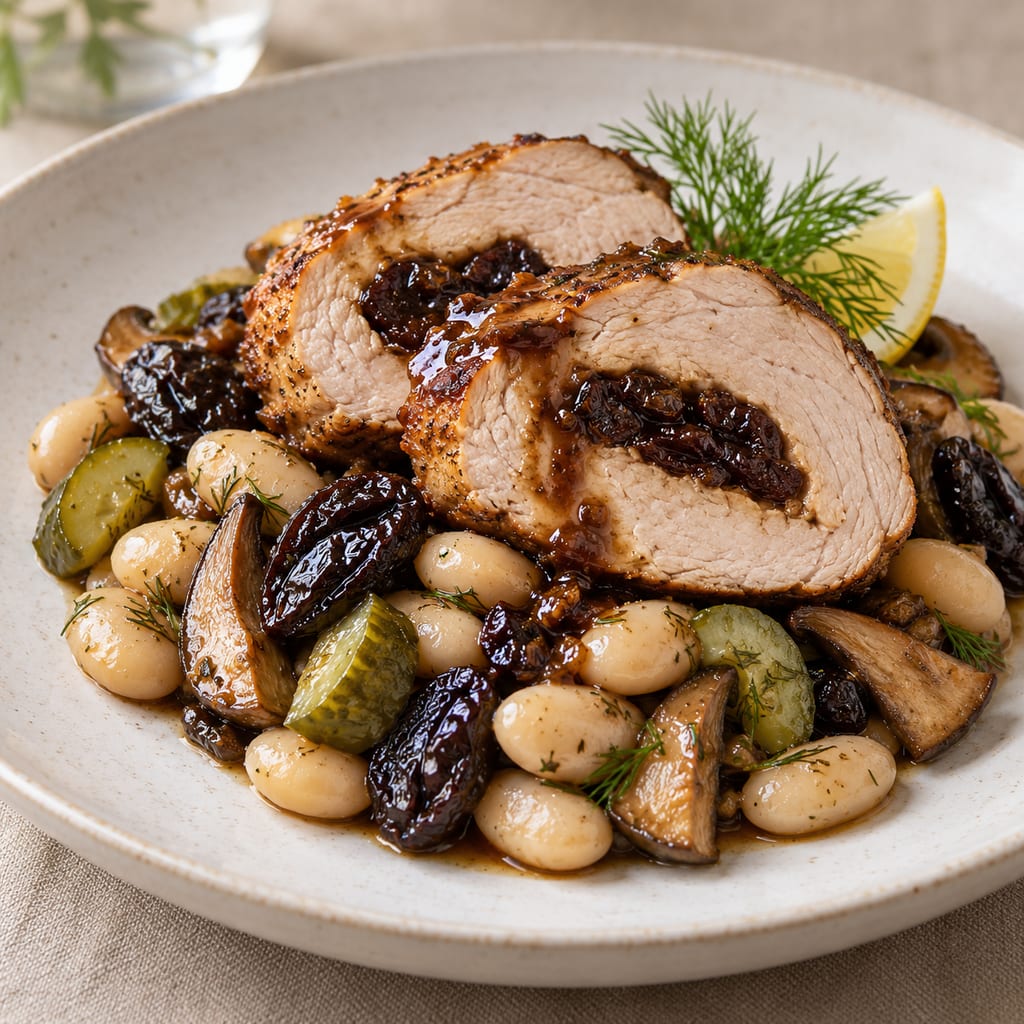
Pork loin with suska and bean salad is a Polish composed dish combining roast pork stuffed with smoked dried plums and a substantial salad of beans, mushrooms, fermented cucumbers and more smoked plums.
Its most distinctive ingredient is Suska sechlońska, a protected regional Polish product made by drying and smoking plums.
The fruit has a dark, wrinkled skin, soft flesh and a characteristic smoke aroma. Its sweetness provides a contrast to the savoury pork, earthy mushrooms and acidic cucumbers.
The dish combines several different preservation traditions: smoking and drying fruit, drying mushrooms, preserving cucumbers by lactic acid fermentation, and storing dried pulses for later cooking.
These preserved ingredients are then assembled into a fresh cooked meal. The complete dish is not itself fermented.
This provides a much stronger recipe foundation than the failed source record, although the modern competition dish should not be misrepresented as an ancient traditional recipe.
Schab — Pork loin
Schab nadziewany suską — Pork loin stuffed with smoked plum
Suska sechlońska — Protected dried and smoked plum
Fasola wrzawska — Wrzawy regional bean
Borowiki — Porcini mushrooms
Ogórki kiszone — Lacto-fermented cucumbers
Olej rydzowy — Camelina seed oil
The pork comes from domestic pig, Sus scrofa domesticus.
Suska is produced from cultivated European plums, Prunus domestica.
The beans belong to Phaseolus vulgaris. Porcini are generally classified as Boletus edulis and closely related species.
Camelina oil is produced from Camelina sativa.
Suska sechlońska originates in southern Poland, particularly the Małopolska region.
The product's name reflects both its processing and geography.
Suska is a regional term referring to dried and smoked plums. sechlońska relates to Sechna, a village associated with the drying tradition.
Traditional plum-smoking structures remain part of the region's landscape.
The European Commission identifies local drying kilns as important material evidence of this food-processing history.
Some historical accounts and local traditions suggest that drying plums has been practiced in the region for centuries, although the precise beginning is not securely documented.
One story attributes the introduction of plum smoking to a priest who encouraged inhabitants to preserve fruit rather than distil it into spirits.
This is a local legend, not a verified account of the invention of the technique.
The product received European protected geographical indication recognition in 2010.
That registration protects a defined regional product and its manufacturing characteristics.
It does not prove that the precise pork-and-bean recipe originated centuries ago.
The traditional product is made from suitable European plum varieties.
Selected fruit must be sound, without rot or unacceptable damage.
The plums are arranged on grates within specially constructed smoking and drying chambers.
Warm smoke rises from a hearth beneath them.
The published geographical-indication material describes drying and smoking at 45–60°C for approximately 4–6 days.
The plums are turned during processing.
They gradually lose moisture while absorbing characteristic smoke-derived aromas.
The protected product specification gives a finished moisture content of 24–42% at sale.
This substantial range helps explain why the fruit is often soft and flexible rather than completely hard.
The specified figures describe commercial Suska production. They are not directions for making an unvalidated homemade smoked-fruit preserve.
Fresh plums contain water, sugars, organic acids and aromatic compounds.
Drying removes water and concentrates the remaining constituents.
The fruit becomes sweeter in perceived intensity because a smaller mass contains much of the original sugar.
Smoke introduces a second set of flavour compounds.
Phenolic substances contribute characteristic smoky aromas.
Heat also changes the fruit's structure and can promote browning.
The soft, concentrated fruit is especially useful with pork because sweetness and acidity contrast with fat and savoury meat flavour.
Rehydrating the plums changes their texture.
Some water returns to the dried tissues, making them easier to cut and incorporate into sauces or fillings.
The original recipe soaks part of the Suska in a mixture of water and rum.
The exact soaking duration and water quantity are not provided.
The quantities below come from the Polish Ministry of Agriculture's published recipe, not a newly invented formulation.
Boneless pork loin — 500 g
Suska sechlońska — 100 g
Drahim honey — 15 g
Camelina oil — 50 g
Garlic — 1 clove
Salt — To taste
Black pepper — To taste
Fasola wrzawska beans — 100 g
Suska sechlońska — 100 g
Dried porcini mushrooms — 50 g
Fermented cucumbers — 100 g
Drahim honey — 15 g
Camelina oil — 30 g
Rum — 100 ml
Lemon juice — To taste
Salt and pepper — To taste
Lemon, fermented cucumber and fresh dill. Quantities are not specified.
The source rates the recipe as medium difficulty and displays a total preparation time of 180 minutes.
The pork loin supplies the principal meat component. It is relatively lean, so controlling the roast is important.
The smoked plums provide sweetness, acidity and smoke flavour both inside the meat and in the accompanying salad.
Honey contributes sweetness and influences surface browning.
Camelina oil carries flavour and contributes fat to the pork coating and salad dressing.
Garlic provides a pungent aromatic note.
Wrzawy beans contribute starch, protein and substance to the salad. They also provide a relatively mild base against which the smoked plums stand out.
Dried porcini contribute concentrated savoury and earthy flavours.
Fermented cucumbers add acidity and a contrasting texture. Their sourness is the result of lactic acid fermentation, unlike ordinary vinegar-preserved gherkins.
Rum contributes flavour to the soaked plums. Because it is used in the salad preparation, the dish should not be assumed alcohol-free.
Lemon juice adjusts acidity at the final seasoning stage.
Prepare a roasting dish, oven, sharp knife suitable for making a lengthwise pocket in the pork, saucepan for the beans, saucepan for the mushrooms, mixing bowls, strainer and food thermometer.
A blender or food processor is useful for the plum sauce.
For presentation, a ring mould can shape the bean salad, although the original recipe simply instructs cooks to form a mound.
Rinse the dried beans.
Cover with previously boiled, cooled water and soak for at least 6 hours.
This is the minimum soaking period stated in the recipe.
The recorded method does not provide an exact water quantity.
Hydration allows the dried bean tissues to absorb water before cooking.
Drain the soaking liquid and cook the beans thoroughly.
The original recipe does not supply a boiling time.
Cooking requirements depend on the bean type, size and condition.
Follow reliable instructions for the particular dried beans being used. Do not serve beans that remain hard or undercooked.
Cool the cooked beans safely before assembling the salad.
Rinse the dried porcini.
Soak them until sufficiently rehydrated for cooking.
Cook thoroughly, then allow them to cool.
Cut into half-round slices or other suitably sized pieces.
The recorded method does not specify the mushroom soaking time or exact cooking duration.
Soak the second 100 g portion of Suska in water mixed with the 100 ml rum.
The recorded method does not specify how much water is added or how long the fruit remains immersed.
Once softened, remove any stones and cut the plums into halves.
Commercial pitted Suska may also be available, although the published recipe includes the stone-removal stage.
Remove unwanted membranes and surface material from the boneless loin.
Pat the meat dry using disposable kitchen paper.
Make a lengthwise pocket through the centre, taking care not to cut through the outer surface.
This cavity will hold the smoked plum stuffing.
Place the first 100 g portion of Suska into the pocket.
Distribute the fruit along the length of the meat.
The recorded method does not call for grinding the plums into a paste.
Keeping the fruit identifiable creates a clear centre when the roast is sliced.
Combine the garlic, salt, pepper, honey and camelina oil as appropriate to coat the pork.
Rub the mixture over the surface.
The honey contributes to browning as the roast heats.
Place the pork in a roasting dish.
Begin cooking at 200°C.
Once the surface has browned, reduce the oven temperature to 180°C.
The published recipe gives approximately 45 minutes of roasting.
The recorded method does not specify how long the initial 200°C stage lasts.
During cooking, add a little water when necessary and include remaining plums in the roasting dish as directed.
Do not treat 45 minutes as a substitute for confirming that the centre is safely cooked.
Measure the internal temperature using a suitable food thermometer.
For this domestic recipe, a conservative fully cooked endpoint is 70°C for two minutes, or an equivalent validated combination.
After cooking, allow the roast to rest and cool sufficiently for neat slicing.
Cut across the meat so that each portion reveals the smoked-plum filling.
Collect the cooking juices and the plums from the roasting dish.
Blend them together.
Adjust with salt, pepper and lemon juice.
If necessary, the original recipe permits thickening with a small quantity of potato starch.
The exact starch quantity is not specified.
Combine the cooked beans, porcini, chopped smoked plums and sliced fermented cucumbers.
Add the 15 g honey, lemon juice, salt and pepper.
Pour over the 30 g camelina oil.
Mix carefully to distribute the dressing without crushing the beans.
Form a mound of bean salad.
Place a slice of stuffed pork over it.
Spoon over the plum sauce.
Finish with lemon, fermented cucumber and fresh dill.
Serve under suitable temperature control.
This recipe has several sources of acidity.
Fermented cucumber contains acids produced during fermentation.
Lemon juice supplies citric acid.
Plums contribute their own natural organic acids.
These acidic ingredients counterbalance the sweetness of honey and dried fruit.
The combination prevents the dish from becoming simply sweet.
Porcini adds a savoury flavour dimension through naturally occurring amino acids and other taste compounds.
Smoked plums connect the meat and salad aromatically, because the same ingredient appears in both components.
The bean salad also provides textural contrast.
Soft beans, chewy fruit, cooked mushrooms and pieces of fermented cucumber do not have identical textures, making the accompaniment more interesting than a uniform purée.
Several ingredients have their own protected or traditional identities.
Suska sechlońska is a protected geographical indication associated with Małopolska.
Fasola wrzawska is a protected Polish bean associated with the Wrzawy region.
Drahim honey carries a protected geographical indication linked to northwestern Poland.
Olej rydzowy tradycyjny is a traditional camelina seed oil.
The recipe combines products originating from different Polish regions.
It is therefore more accurately described as a modern celebration of Polish regional ingredients than as the daily food of one historical village.
The pork can be served warm with the bean salad.
It may also be chilled after proper cooking and refrigerated handling, then sliced for cold service.
Some Polish recipes use ordinary prunes rather than Suska.
That produces a similar sweet stuffing but loses the distinctive smoke character of the protected fruit.
Other preparations use smoked plums in sauces rather than inside the pork.
A related regional pairing combines beans and smoked plums in a stew called fizio?.
These are associated culinary ideas, not identical versions of this particular competition recipe.
The pork becomes dry. Loin is lean and can lose considerable moisture if overcooked. Use a thermometer instead of relying solely on the oven time.
The stuffing falls out. The pocket may have been cut too widely or the meat sliced before it had rested sufficiently.
The plums taste excessively smoky. The intensity varies by producer and fruit batch. A different brand may produce a noticeably different result.
The beans remain hard. They may need more thorough soaking and cooking. Do not serve undercooked dried beans.
The mushrooms are gritty. Dried wild mushrooms may retain soil or other material. Clean and rinse carefully.
The salad becomes too sweet. Honey and plums both contribute sweetness. Lemon and fermented cucumber are important balancing ingredients.
The sauce is too thin. Continue reducing carefully or use the source's optional potato-starch thickening method.
Raw pork should be handled separately from ready-to-eat salad ingredients.
Do not wash raw pork under running water, even though the historical competition recipe describes rinsing it. Modern food-safety practice discourages washing raw meat because splashes can spread contamination.
Cook the loin thoroughly and verify the internal temperature.
Dried beans must be properly cooked, particularly because some beans contain lectins that require adequate heat treatment.
Use commercially produced, correctly identified porcini rather than uncertain foraged mushrooms.
The 100 ml rum in the salad is not necessarily boiled away. This preparation may contain alcohol and is unsuitable for anyone avoiding it.
The recipe contains pork and may contain allergens associated with other ingredients or substitutions.
Cool and refrigerate prepared components promptly. Do not leave a cooked bean-and-mushroom salad at ambient temperature for extended periods.
The protected smoked plum is a documented regional product.
The particular plated dish is a modern culinary competition creation.
The published recipe does not specify an exact serving yield, bean cooking time, mushroom cooking time or final sauce consistency.
Those details should not be presented as fixed historical or source-derived measurements.
The finished recipe is significant because it brings together several Polish preservation technologies in one dish: dried legumes, smoked fruit, dried mushrooms and lactic-fermented cucumbers.
A Ministry student competition cookbook documents this pork meal using suska as an ingredient. It is a contemporary recipe association, not a claim that the meal defines the protected plum product.
Scaling: source batch only
The source method uses pork but supplies no internal endpoint, and its estimated oven time alone cannot establish doneness.
Hazard sourceFollow Polish consumer guidance for separating raw pork from ready-to-eat foods and thorough cooking; no source-specific internal endpoint is supplied here.
Control sourceThe source gives no yield, some amounts are unstated and no internal endpoint or finished-dish storage period is reported.
A source-specific documented preparation, not a claim of origin.
Małopolska plums smoked and part-dried over a wood fire in a regional kiln for several days, giving a dark, concentrated fruit with a protected name.
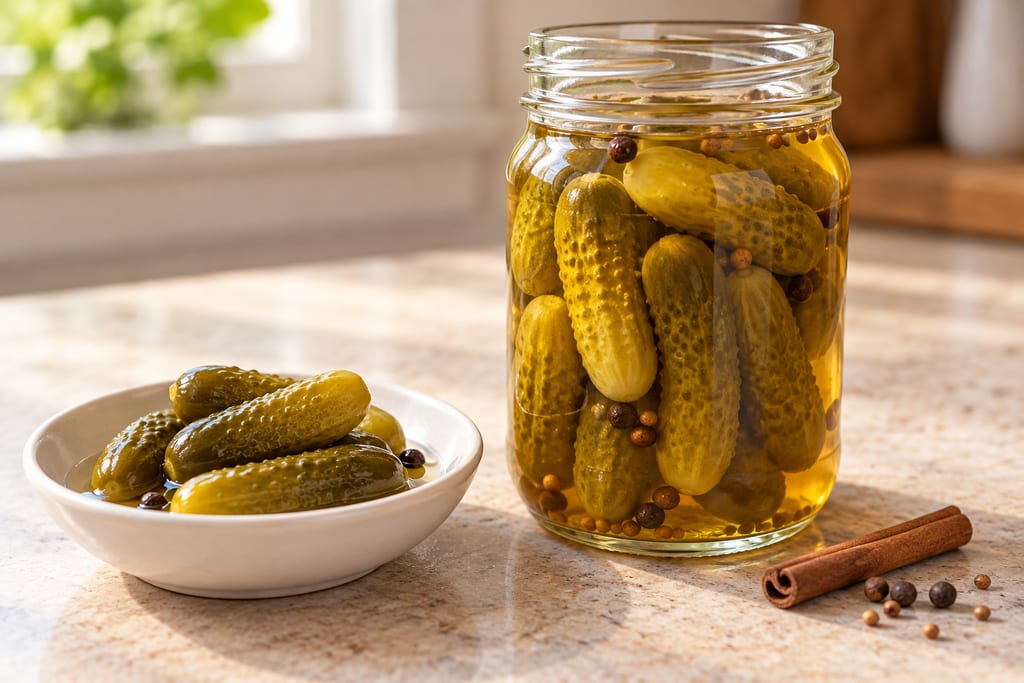
Sweet gherkin pickles are small whole cucumbers preserved in a spiced, sweet vinegar syrup. This four-day U.S. canning method uses repeated hot-water soaks, staged syrup additions, and a boiling-water process.
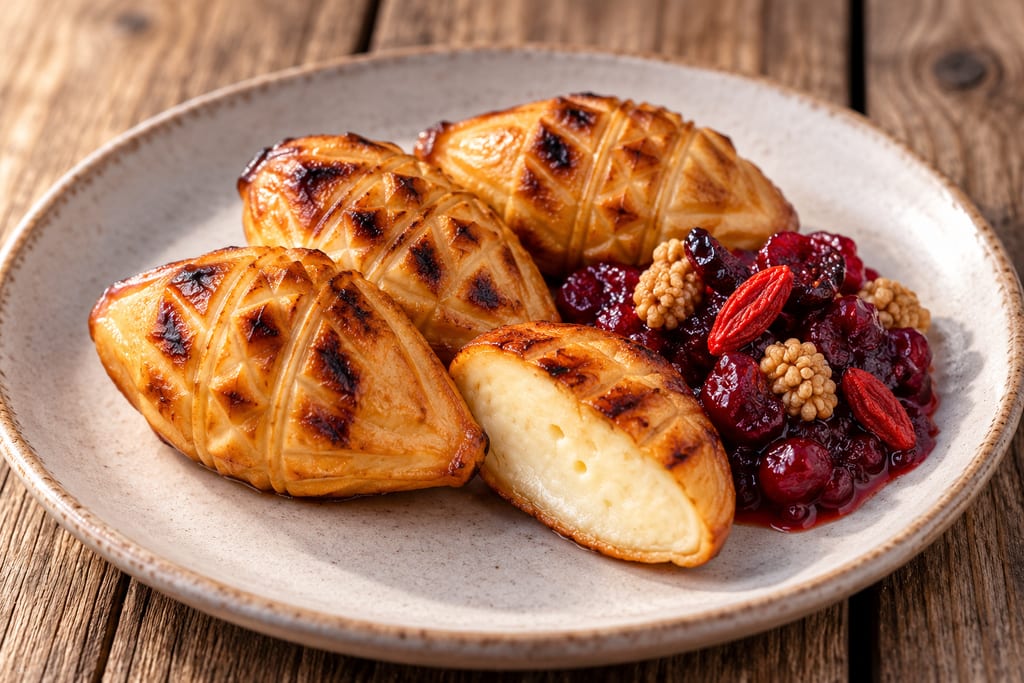
Small Oscypek are grilled until the exterior is crisp and the cheese softens, then served with cranberry, goji berries and mulberries.
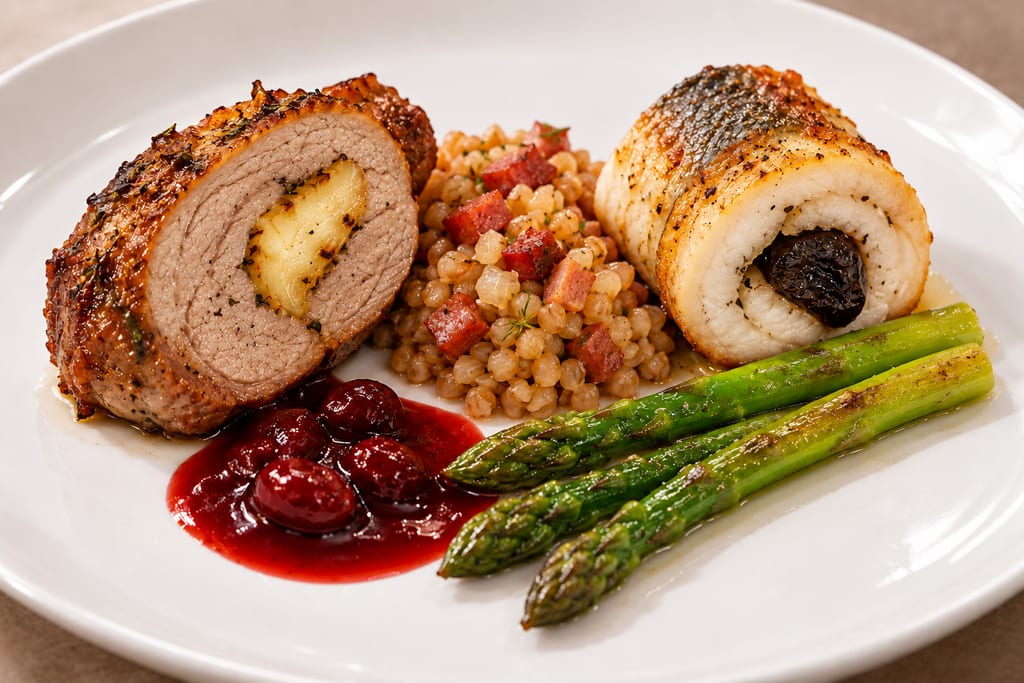
A student cookbook pairs lamb stuffed with Oscypek and zander with suska, then serves wheat groats with a small amount of kiełbasa lisiecka.

Chipotle is a ripe jalapeño pepper smoke-dried in a wood-fired cocedor. Camargo, Chihuahua, documents a large-scale version of the process; its source accounts do not establish a complete home batch or validated safety endpoint.
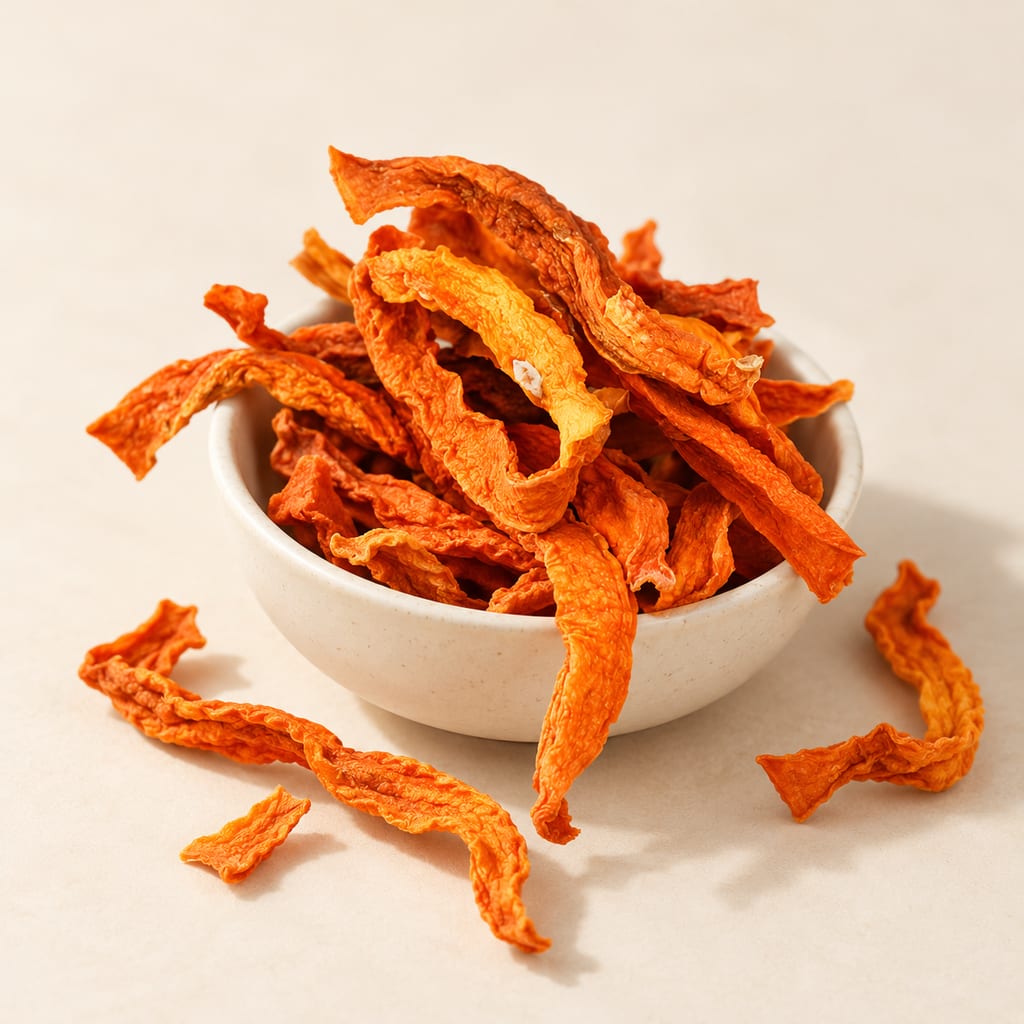
Steam-blanched pumpkin dried until brittle, kept as pieces or ground into powder, with pumpkin-specific packaging and quality guidance.
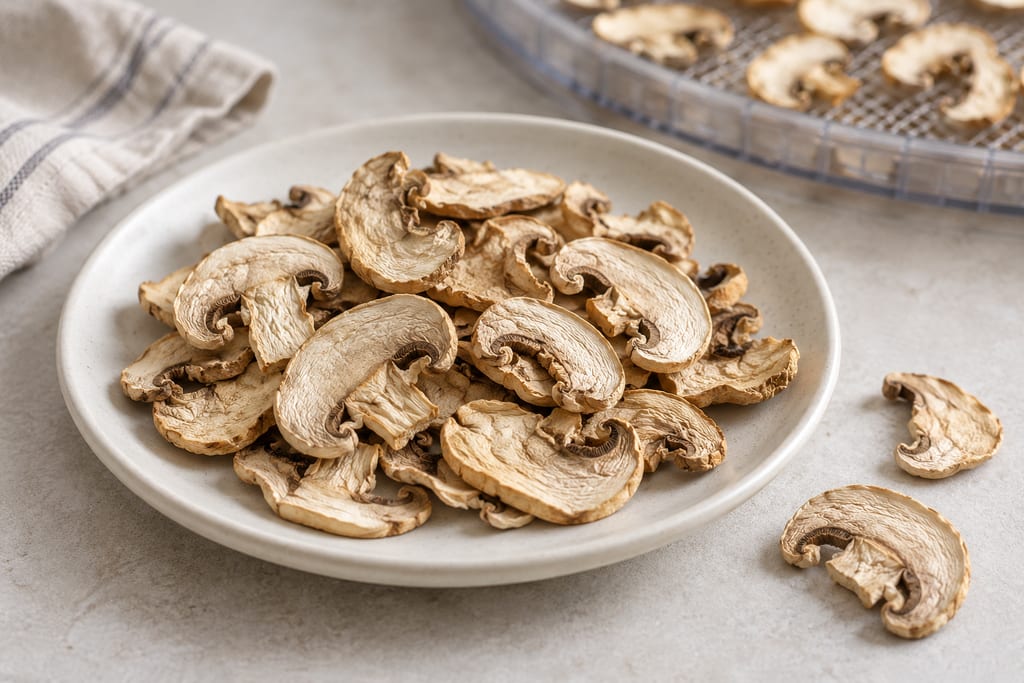
Hot-air dehydrated mushrooms are sliced mushrooms dried in a dehydrator or dryer with heated, moving air; a 2011 study dried button mushroom slices at 60 °C and compared them with microwave-vacuum and freeze-drying.

Merkén is the Mapuche seasoning of dried, smoked and ground ají cacho de cabra chile, sometimes with toasted coriander seed and salt, made in the Maule and La Araucanía regions of Chile.
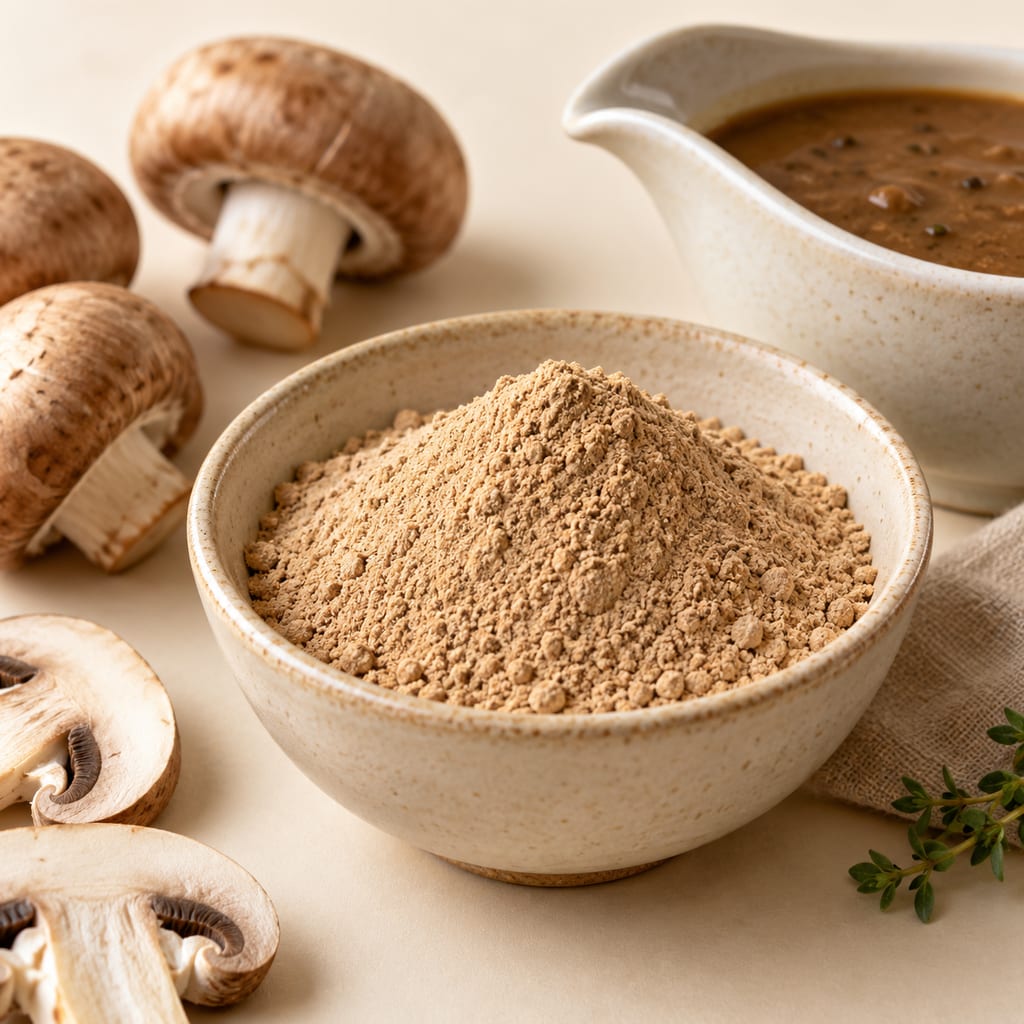
Mushroom powder is dried mushroom tissue ground to a fine powder and added to gravies and sauces. Victorian cooks made it from fresh cultivated mushrooms when fresh ones were not to hand.
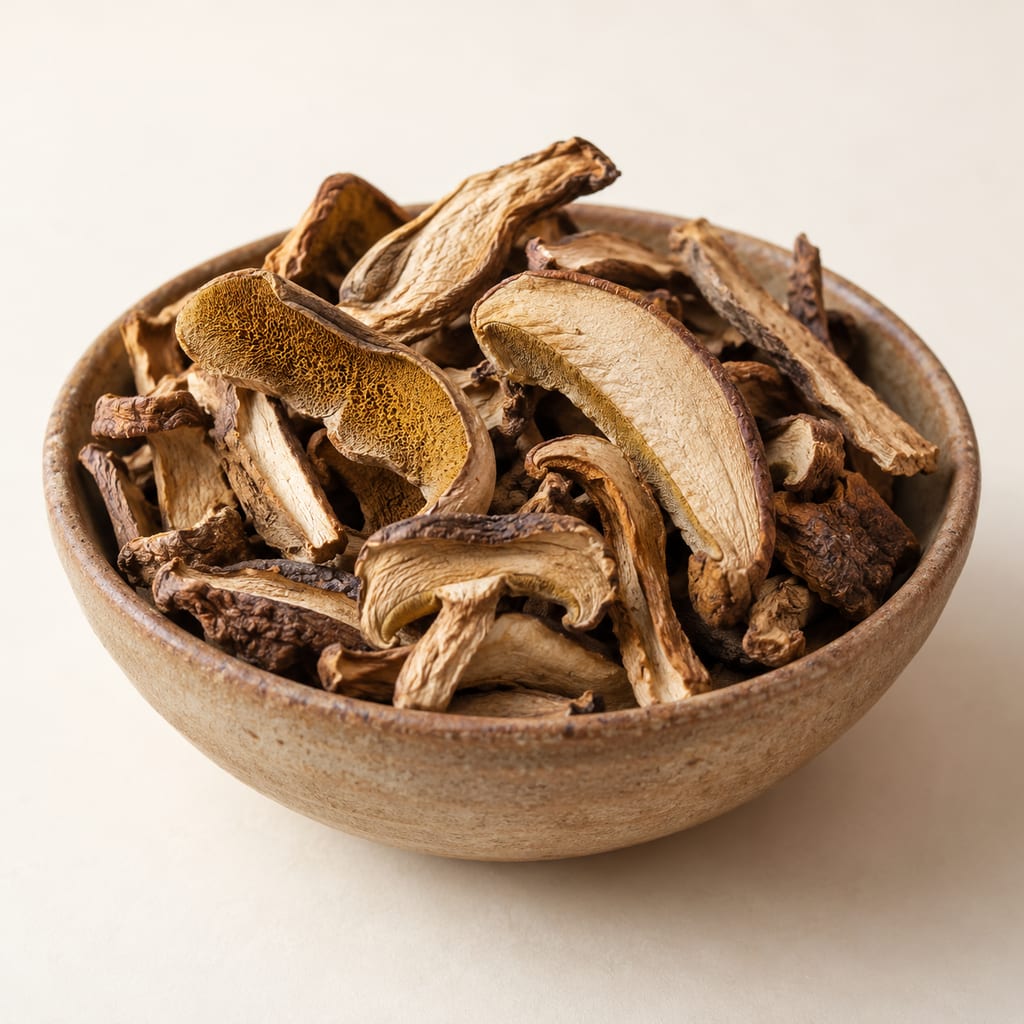
Protected solar-dried mushrooms are slices of wild Suillus luteus dried under a shade cover, a fitotoldo, rather than in open sun, as tested in an experimental study from Apurímac, Peru.
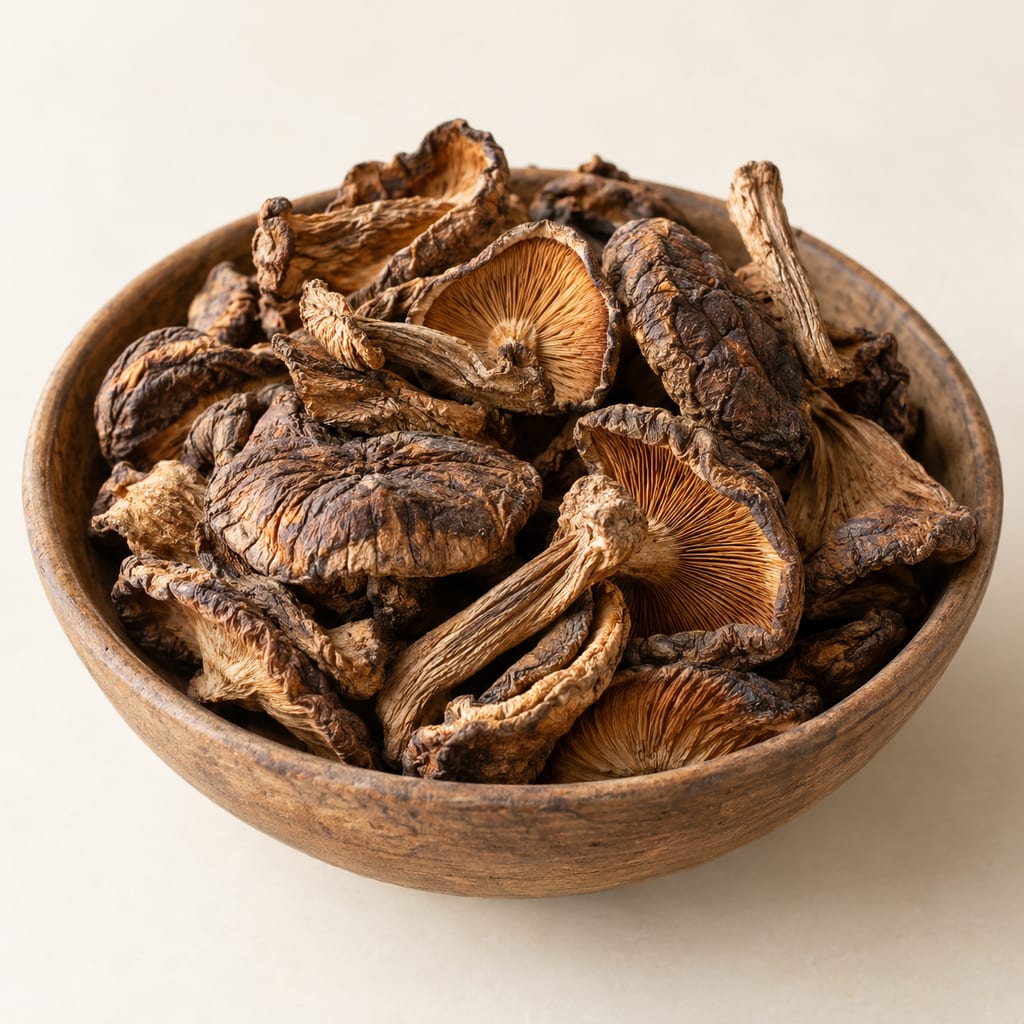
Hearth-dried mushrooms are dried on shelves above a cooking fire, so heat and smoke reach them. Tanzanian records describe the method; a Vietnamese study tested smoke-dried shiitake for fuel-dependent contaminants.
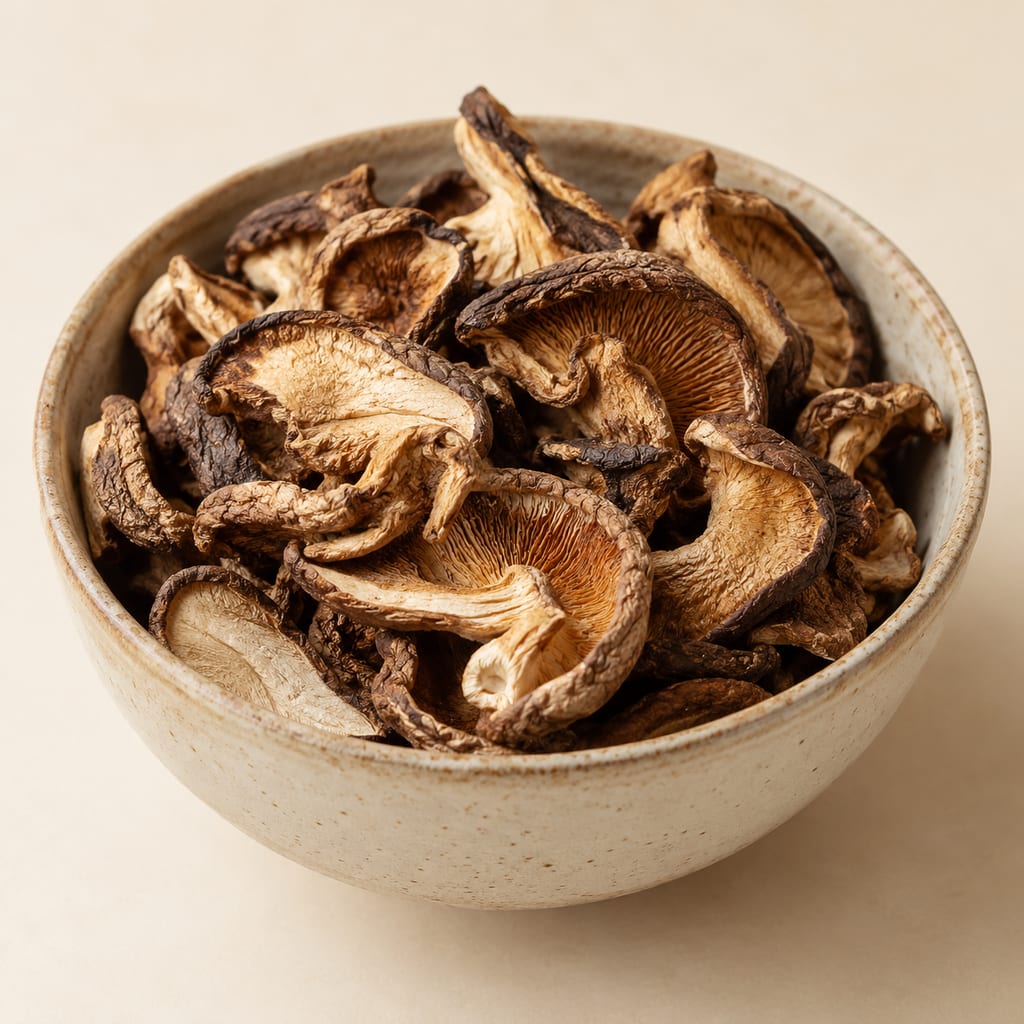
Sun-dried mushrooms are mushrooms spread in open sunlight and left to lose their water to solar heat and moving air, a method recorded in Nigeria, Tanzania, Mexico and among Algerian desert truffle gatherers.
No community contributions have been published for this entry yet.
Sign in to contribute. Published comments and photos are free to read.
Polish Ministry of Agriculture and Rural Development, Department of Agricultural Markets; EU Rural Development Programme-supported student cookbookInspiration
Smaki regionów: 50 przepisów konkursowych z zastosowaniem polskich produktów regionalnychAt physical p.37 / printed p.36 the source lists: 500 g boneless pork loin, 100 g suska for stuffing, 15 g honey, 50 g camelina oil, 1 garlic clove, unquantified salt and pepper; salad with 100 g beans, 100 g suska, 50 g dried porcini, 100 g pickles, 15 g honey, 30 g camelina oil, 100 mL rum, lemon juice/salt/pepper to taste; lemon, pickle and dill for garnish.
Method: prepare and stuff pork; source says begin at 200°C and after browning continue at 180°C for about 45 min, baste with water and add remaining plums; cool/slice and blend pan sauce with plums. Soak beans at least 6 h and cook; soak/cook mushrooms separately. Soak/pit/slice remaining suska in water with rum; mix salad and plate. Source duration label is medium/180 min. Yield and pork internal endpoint are not provided.
Selected physical p.37 / printed p.36 also contains Oscypek salad: 150 g cheese and a red-wine/thyme marinade; label says 70 minutes while method says at least one week marinating. Not adopted as an executable recipe.
Cited in: What is pork loin with suska?; Names and ingredients; The history of Suska sechlońska; How Suska sechlońska is produced; Ingredients; Stuffed pork loin; Bean salad; Garnish; Why each ingredient matters; Equipment; Stage 1 — Soak the beans; Stage 2 — Cook the beans; Stage 3 — Prepare the mushrooms; Stage 4 — Prepare the salad plums; Stage 5 — Prepare the pork; Stage 6 — Stuff the loin; Stage 7 — Season and coat; Stage 8 — Roast; Stage 9 — Check, rest and slice; Stage 10 — Make the plum sauce; Stage 11 — Assemble the bean salad; Stage 12 — Plate; The regional ingredients; Serving variations; Historical limits
Powiatowa Stacja Sanitarno-Epidemiologiczna w TrzebnicySafety guidance
Profilaktyka zatruć pokarmowychPolish state sanitary inspectorate consumer advice covers refrigeration, separation of raw and ready-to-eat foods, thorough cooking of meat including pork, and leftovers; it is general advice, not validation of the cookbook recipes.
Cited in: Names and ingredients; Ingredients; Why each ingredient matters; Equipment; Stage 1 — Soak the beans; Stage 2 — Cook the beans; Stage 3 — Prepare the mushrooms; Stage 4 — Prepare the salad plums; Stage 5 — Prepare the pork; Stage 6 — Stuff the loin; Stage 7 — Season and coat; Stage 8 — Roast; Stage 9 — Check, rest and slice; Stage 10 — Make the plum sauce; Stage 11 — Assemble the bean salad; Stage 12 — Plate; The regional ingredients; Serving variations
European CommissionReference
European Commission — Suska sechlońska PGIprotected production method and geographical history. Agriculture and rural development
Cited in: Names and ingredients; The history of Suska sechlońska; Ingredients; Why each ingredient matters; Equipment; Stage 1 — Soak the beans; Stage 2 — Cook the beans; Stage 3 — Prepare the mushrooms; Stage 4 — Prepare the salad plums; Stage 5 — Prepare the pork; Stage 6 — Stuff the loin; Stage 7 — Season and coat; Stage 8 — Roast; Stage 9 — Check, rest and slice; Stage 10 — Make the plum sauce; Stage 11 — Assemble the bean salad; Stage 12 — Plate; The regional ingredients; Serving variations; Historical limits
EUR-LexReference
EUR-Lex — Suska sechlońska product specificationproduct definition and moisture characteristics. EUR-Lex
Cited in: Names and ingredients; The history of Suska sechlońska; The chemistry of smoked plums; Ingredients; Why each ingredient matters; Equipment; Stage 1 — Soak the beans; Stage 2 — Cook the beans; Stage 3 — Prepare the mushrooms; Stage 4 — Prepare the salad plums; Stage 5 — Prepare the pork; Stage 6 — Stuff the loin; Stage 7 — Season and coat; Stage 8 — Roast; Stage 9 — Check, rest and slice; Stage 10 — Make the plum sauce; Stage 11 — Assemble the bean salad; Stage 12 — Plate; How the flavours work together; The regional ingredients; Serving variations; Troubleshooting; Safety; Historical limits
Polish Ministry of AgricultureReference
Polish Ministry of Agriculture — Suska sechlońskatraditional product registration. Portal Gov.pl
Cited in: Names and ingredients; The history of Suska sechlońska; Historical limits
Visit MałopolskaReference
Visit Małopolska — Suska sechlońskacustomary culinary uses. VisitMalopolska
Cited in: Names and ingredients; The history of Suska sechlońska; The chemistry of smoked plums; Ingredients; Why each ingredient matters; Equipment; Stage 1 — Soak the beans; Stage 2 — Cook the beans; Stage 3 — Prepare the mushrooms; Stage 4 — Prepare the salad plums; Stage 5 — Prepare the pork; Stage 6 — Stuff the loin; Stage 7 — Season and coat; Stage 8 — Roast; Stage 9 — Check, rest and slice; Stage 10 — Make the plum sauce; Stage 11 — Assemble the bean salad; Stage 12 — Plate; How the flavours work together; The regional ingredients; Serving variations; Troubleshooting; Safety; Historical limits