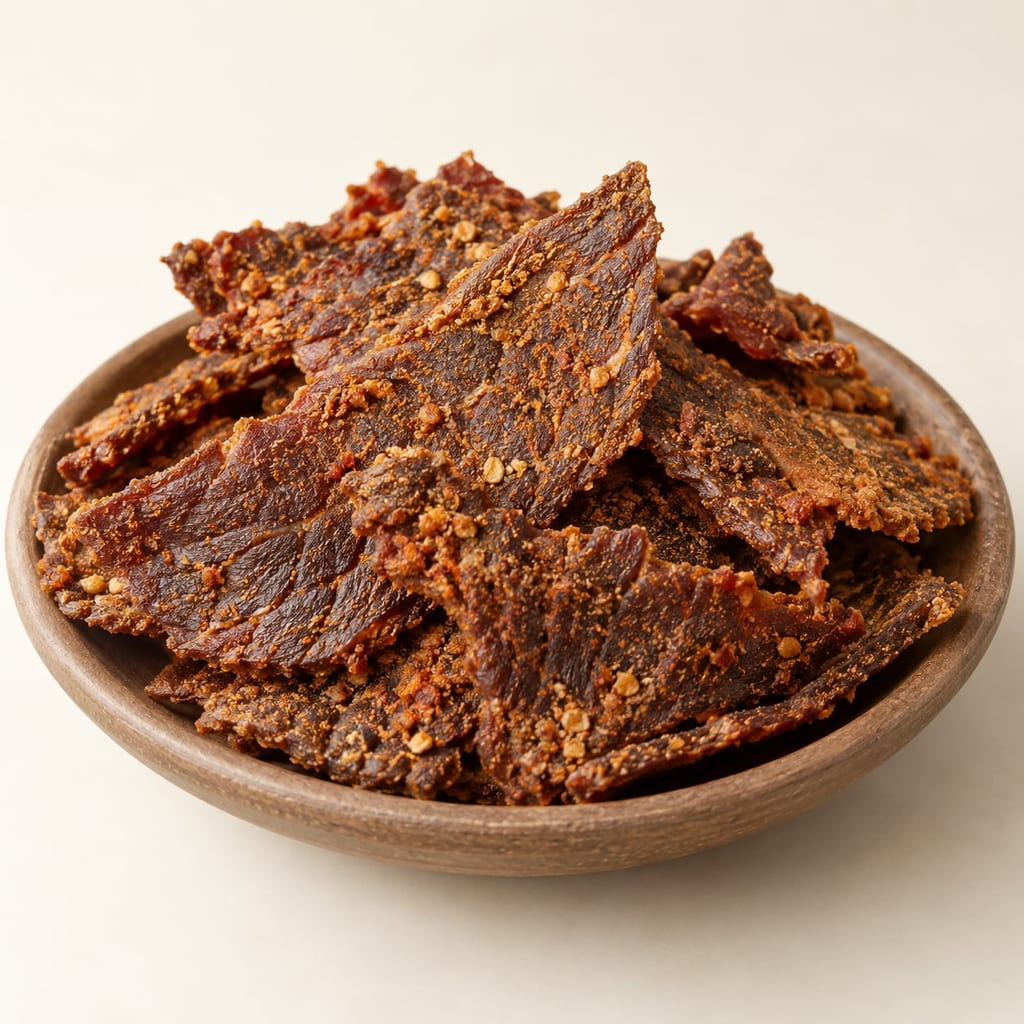
Kilishi
Kilishi is a Hausa-land dried meat from northern Nigeria and southern Niger: thin slices of beef or other meat, dried, coated in a spiced groundnut paste and dried again.
 FermenteaWhere food goes to change
Direct sun-dried mushrooms · Open sun drying of mushrooms
Sun-dried mushrooms are mushrooms spread in open sunlight and left to lose their water to solar heat and moving air, a method recorded in Nigeria, Tanzania, Mexico and among Algerian desert truffle gatherers.
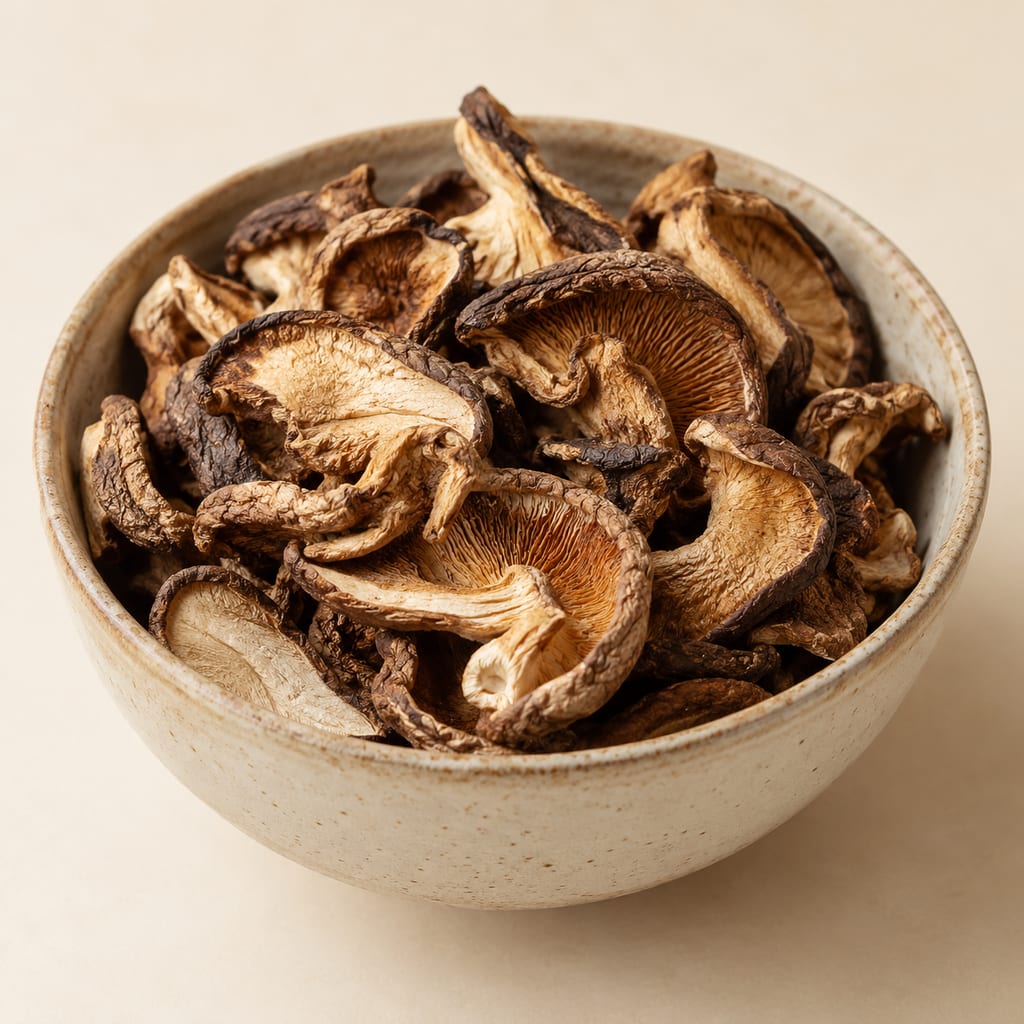
Sun drying needs no equipment beyond an exposed surface, which is why households use it. Mushrooms are laid out in open light and left while solar heat and the air moving over them take the water out. The method appears in the field records of several countries, which describe it as a traditional practice rather than a laboratory process. Its defining feature is that the weather, not the cook, sets the rate of drying.
In Nigeria, a questionnaire study records direct sun drying, and in some accounts washing comes before it. The washing is a preparation step, and the source does not present it as a preservation method in its own right.
In Tanzania, a rural market and interview study records open sun drying alongside drying on shelves above wood-fired cooking sites and brine treatments. The Tanzanian record shows that sun drying sits within a wider set of practices rather than standing alone.
In the Algerian Sahara, researchers recorded sun drying of desert truffles together with temporary practices such as keeping fresh truffles in shade or under cover. The study keeps seasonal preservation and short-term holding apart, and this page does the same.
In Amealco, Mexico, Otomí fieldwork records sun exposure for some fungi and hanging for others. The sun is therefore one of several choices made by species, and it is not a universal method for the area.
The sources connect exposure with the final product. A Dolpa, Nepal account of morels records that informants linked direct sun with poorer colour and flavour, and it describes hanging in ventilated houses as the preferred route. The comparison suggests that sun exposure is not neutral: the same dehydration can give a different colour and taste depending on how strong the light is and how the air moves.
No traditional account gives a moisture level, water-activity figure or drying time. Thickness, weather, exposure and hygiene are the variables the sources name, and none of them is measured. A mushroom that feels dry has not been shown to be stable for storage. Drying is also one step among several in some cultures: a Selous–Niassa corridor record documents boiling before sun drying as a separate sequence, and the two should not be treated as interchangeable.
The safety record for sun-dried mushrooms includes a clinical report in which a poisoning case involved sun-dried material. The report concerns a toxic species. It is the reason this page treats identification as a prior step, whatever the drying method.
The sources cited here are field and ethnomycological records, not drying validation studies. Sun drying of mushrooms has not been tested in this record against a stated endpoint. Where a cook needs a moisture target or a storage limit, that limit has to come from a source that measures it.
The sources record sun drying as a current or recent traditional practice in several countries. None dates its first use.
Scaling: source batch only
The traditional accounts describe drying but record no moisture or water-activity endpoint, so a dry-feeling mushroom cannot be shown to be stable.
Hazard sourceOpen exposure exposes the product to dust, insects and rain. The sources name hygiene as a variable without measuring it.
Hazard sourceA clinical report of Russula subnigricans poisoning includes consumption of sun-dried material. Drying does not make an unidentified species safe.
Hazard sourceSun drying is a traditional practice, not a validated safe process. Appearance, smell and texture do not establish safety.
Identify each mushroom species before drying. Do not treat sun drying as a way of removing toxins.
A questionnaire study records direct sun drying, with washing before drying in some accounts. No locality is given.
Open sun drying is one of several drying records in a rural market and interview study. No locality is given here.
Desert truffles are sun dried in the Algerian Sahara study. The study separates seasonal preservation from temporary fresh-storage practices.
Otomi fieldwork in Amealco records sun exposure for some fungi and hanging for others. The record does not say that every mushroom in the area is sun dried.
Kilishi is a Hausa-land dried meat from northern Nigeria and southern Niger: thin slices of beef or other meat, dried, coated in a spiced groundnut paste and dried again.
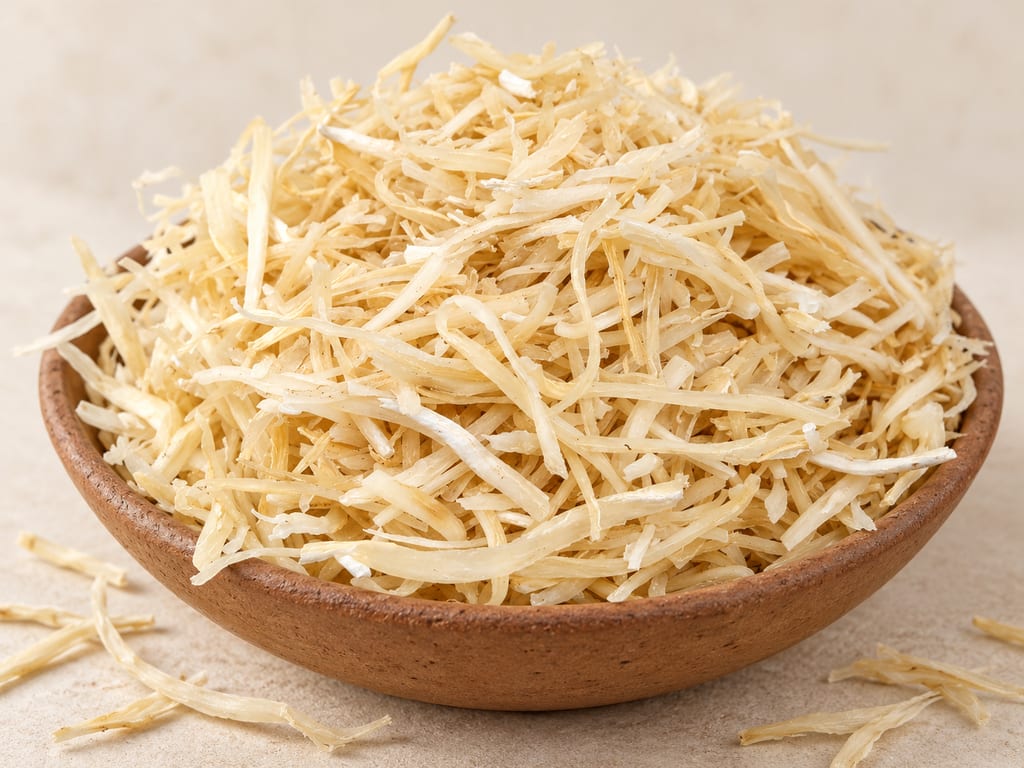
Abacha is a fermented cassava-strip preparation from southeastern Nigeria, sold wet or dried and later rehydrated for meals such as African salad.
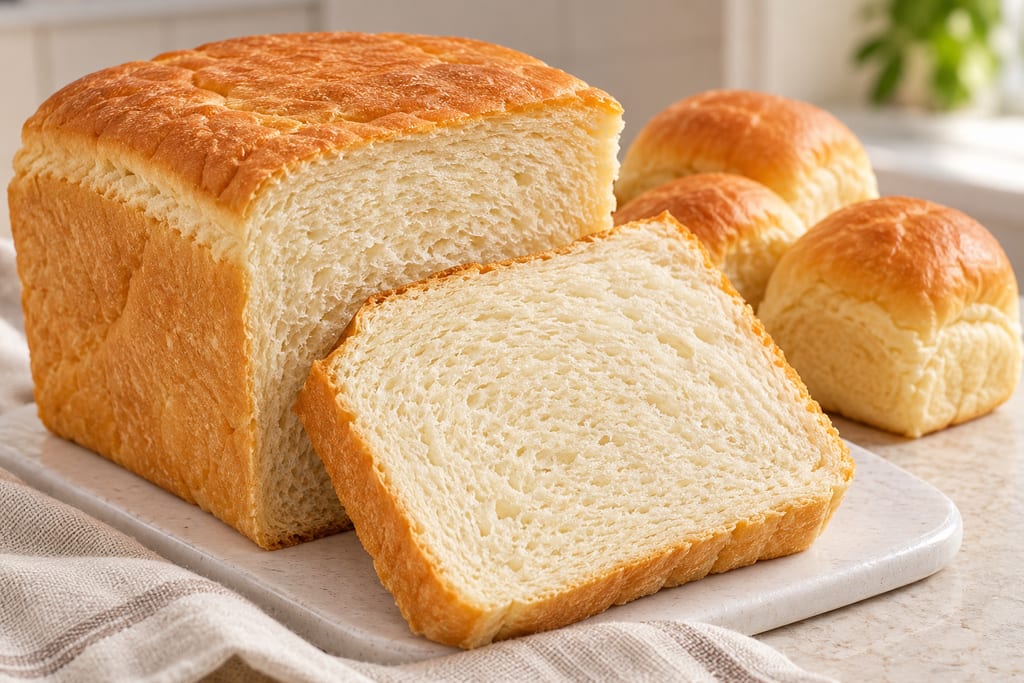
This softer home-style Agege bread uses a scalded flour paste, an enriched yeast dough and a 9×5-inch loaf pan, with rolls from the extra dough.
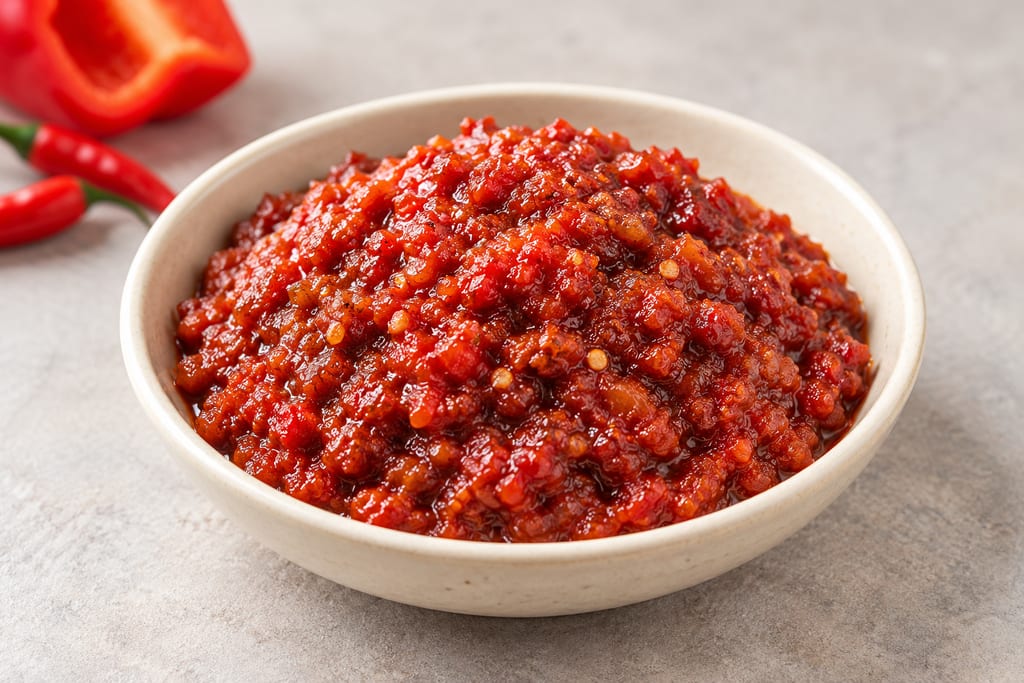
Ata dindin is the Yoruba fried pepper sauce: chillies, red bell pepper and onion blended and cooked down in oil until the oil separates. The same name is also given to a finished stew built on it.

Eba is a West African dish of cooked gari, stirred into hot water until it forms a thick paste. It is a cooking stage with no new fermentation, served with soup.
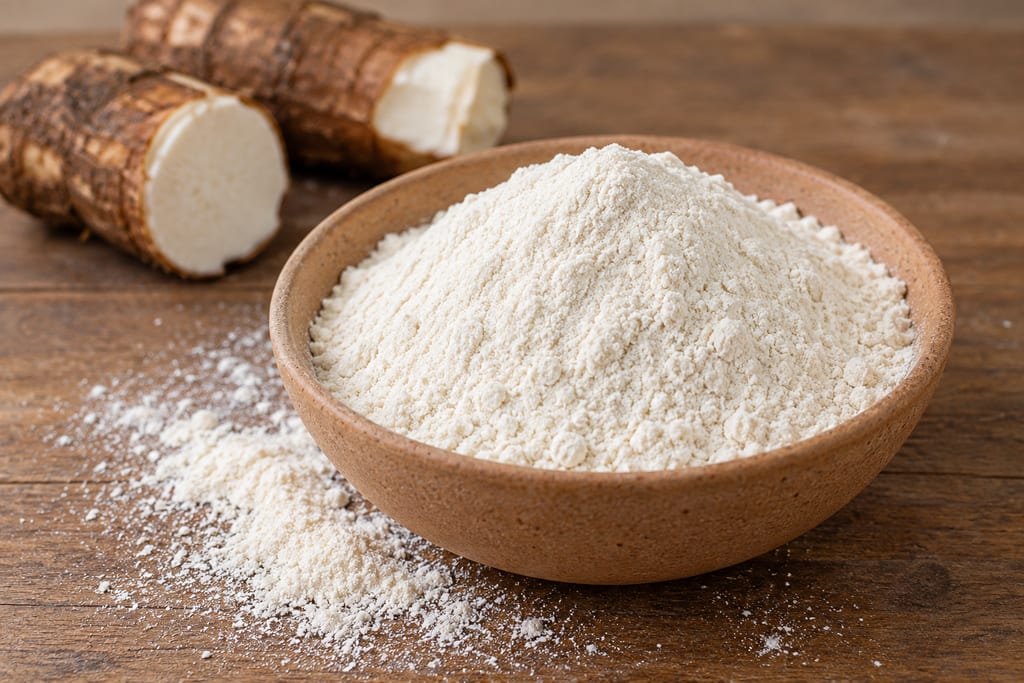
Lafun is a Nigerian fermented cassava flour described in historical accounts. This record documents reported processing stages, not a validated household method or a batch-specific cyanogen and moisture safety endpoint.
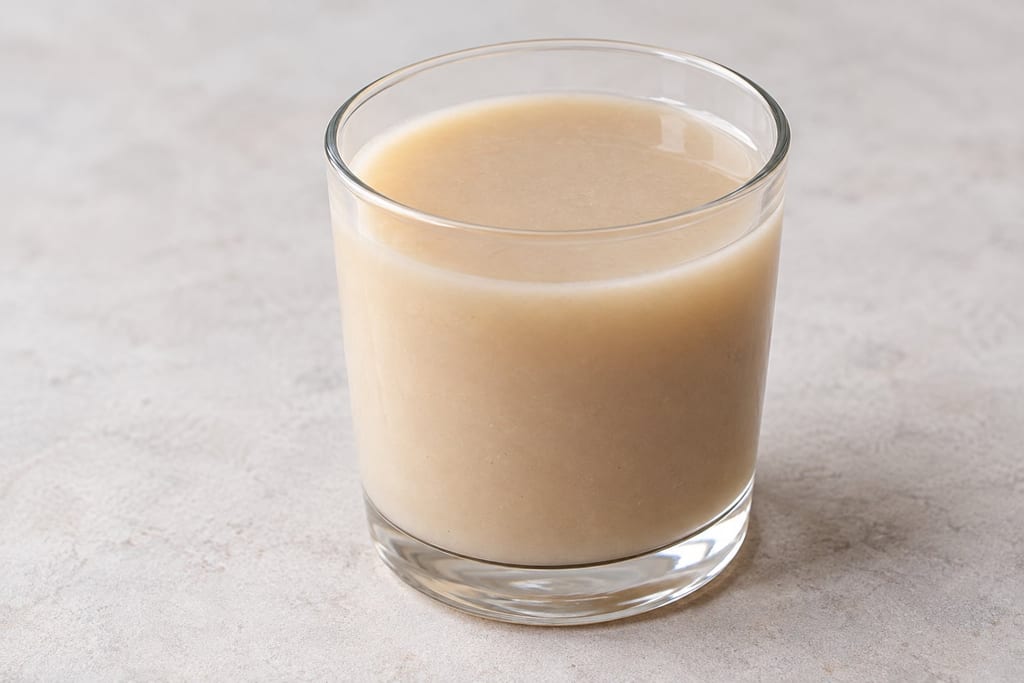
A thick, spiced northern Nigerian drink of pearl millet in which only part of the fermented slurry is cooked, so raw starch and gelatinised starch are recombined.
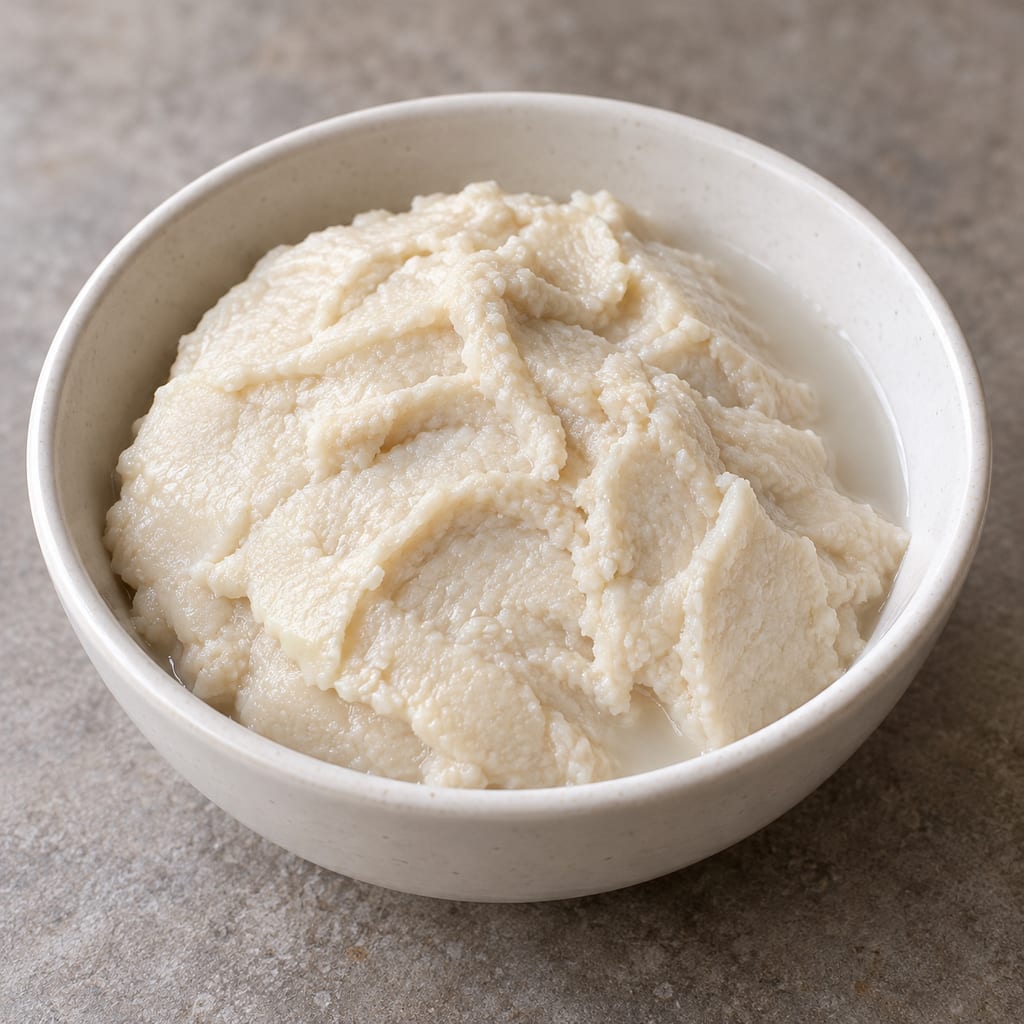
Ogi or akamu is a wet fermented cereal preparation documented in Nigeria and Benin. Grain or maize starch is steeped, milled or sieved, then fermented by process-specific routes; evidence supports no universal method or safety limit.

Chipotle is a ripe jalapeño pepper smoke-dried in a wood-fired cocedor. Camargo, Chihuahua, documents a large-scale version of the process; its source accounts do not establish a complete home batch or validated safety endpoint.
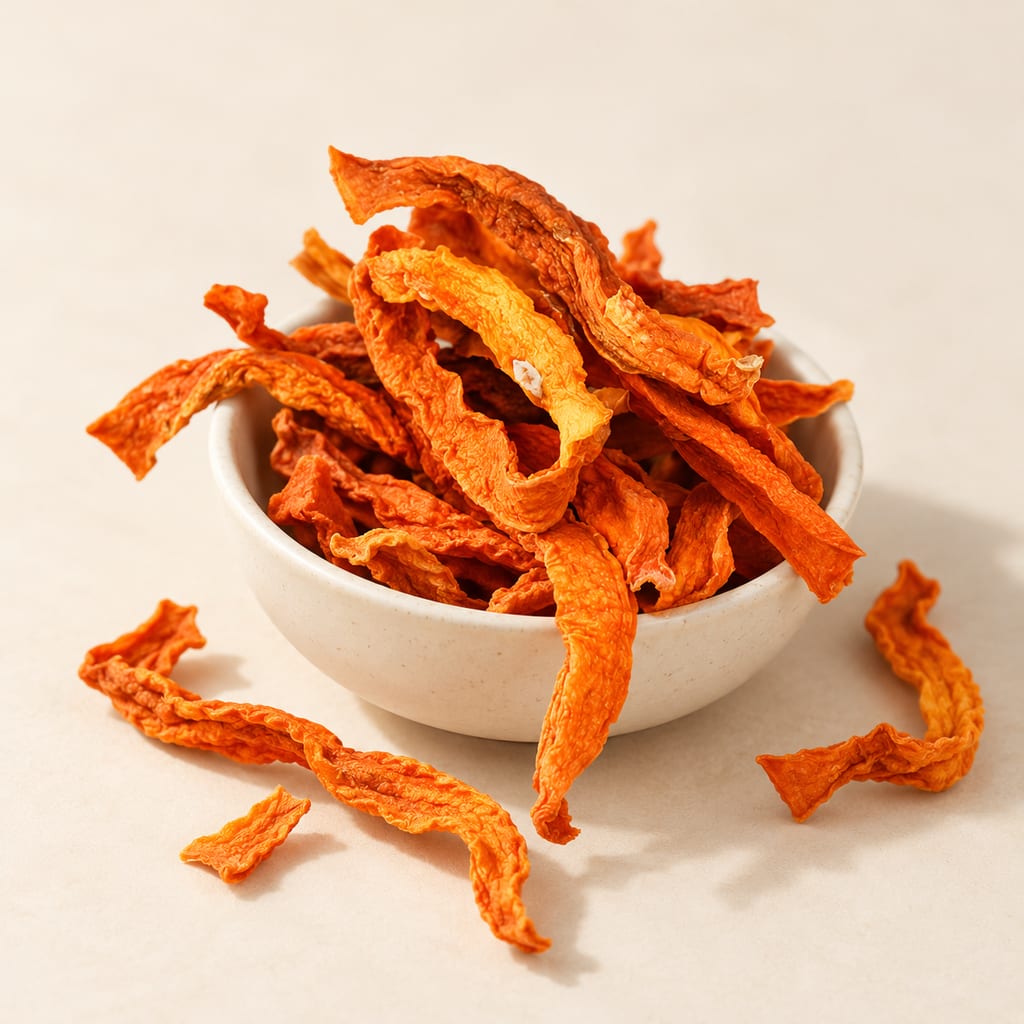
Steam-blanched pumpkin dried until brittle, kept as pieces or ground into powder, with pumpkin-specific packaging and quality guidance.
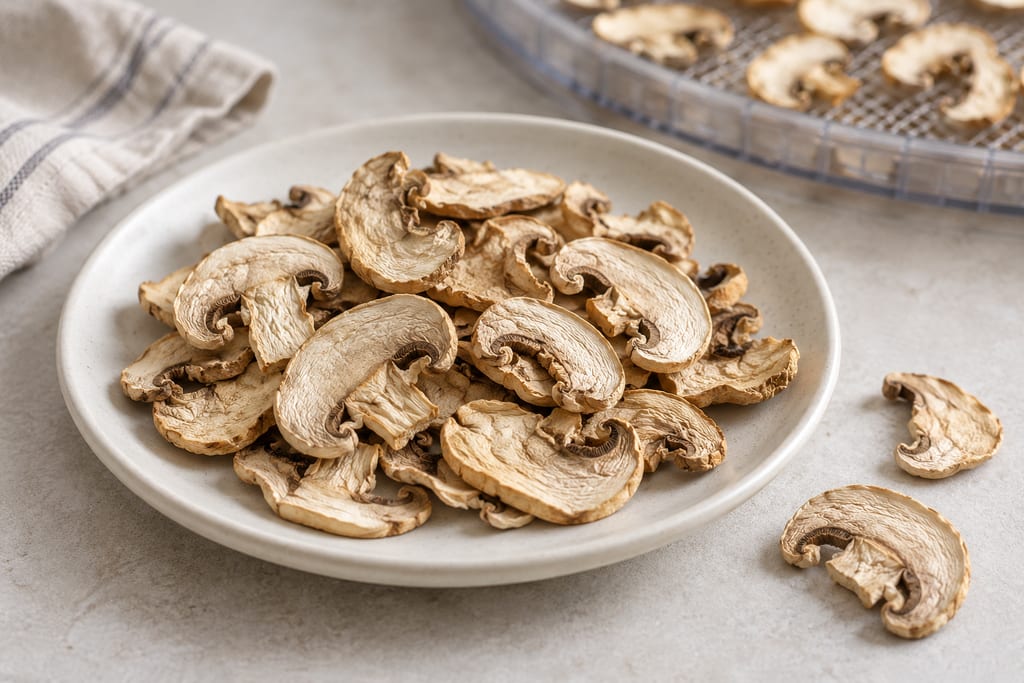
Hot-air dehydrated mushrooms are sliced mushrooms dried in a dehydrator or dryer with heated, moving air; a 2011 study dried button mushroom slices at 60 °C and compared them with microwave-vacuum and freeze-drying.

Merkén is the Mapuche seasoning of dried, smoked and ground ají cacho de cabra chile, sometimes with toasted coriander seed and salt, made in the Maule and La Araucanía regions of Chile.
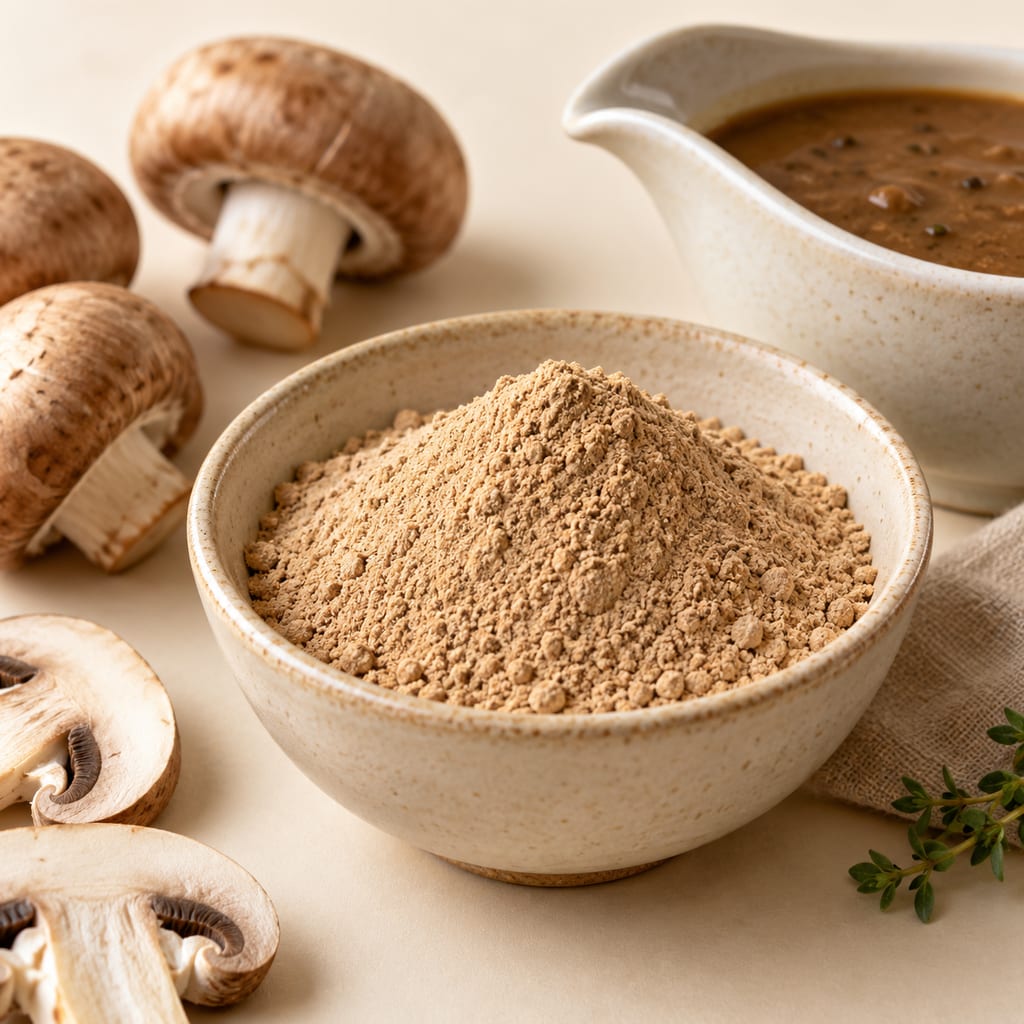
Mushroom powder is dried mushroom tissue ground to a fine powder and added to gravies and sauces. Victorian cooks made it from fresh cultivated mushrooms when fresh ones were not to hand.
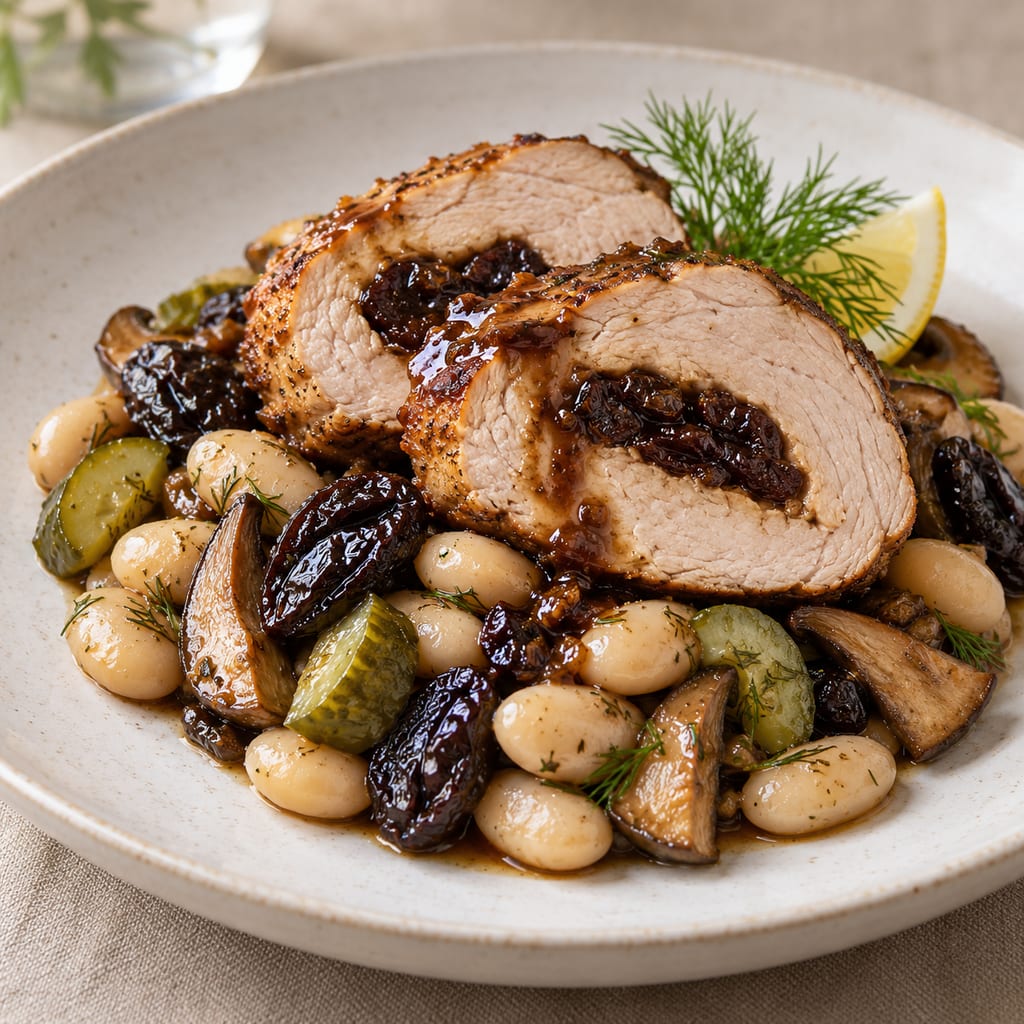
This Polish competition recipe stuffs pork loin with suska and serves it with a bean salad containing more smoked-and-dried plums.
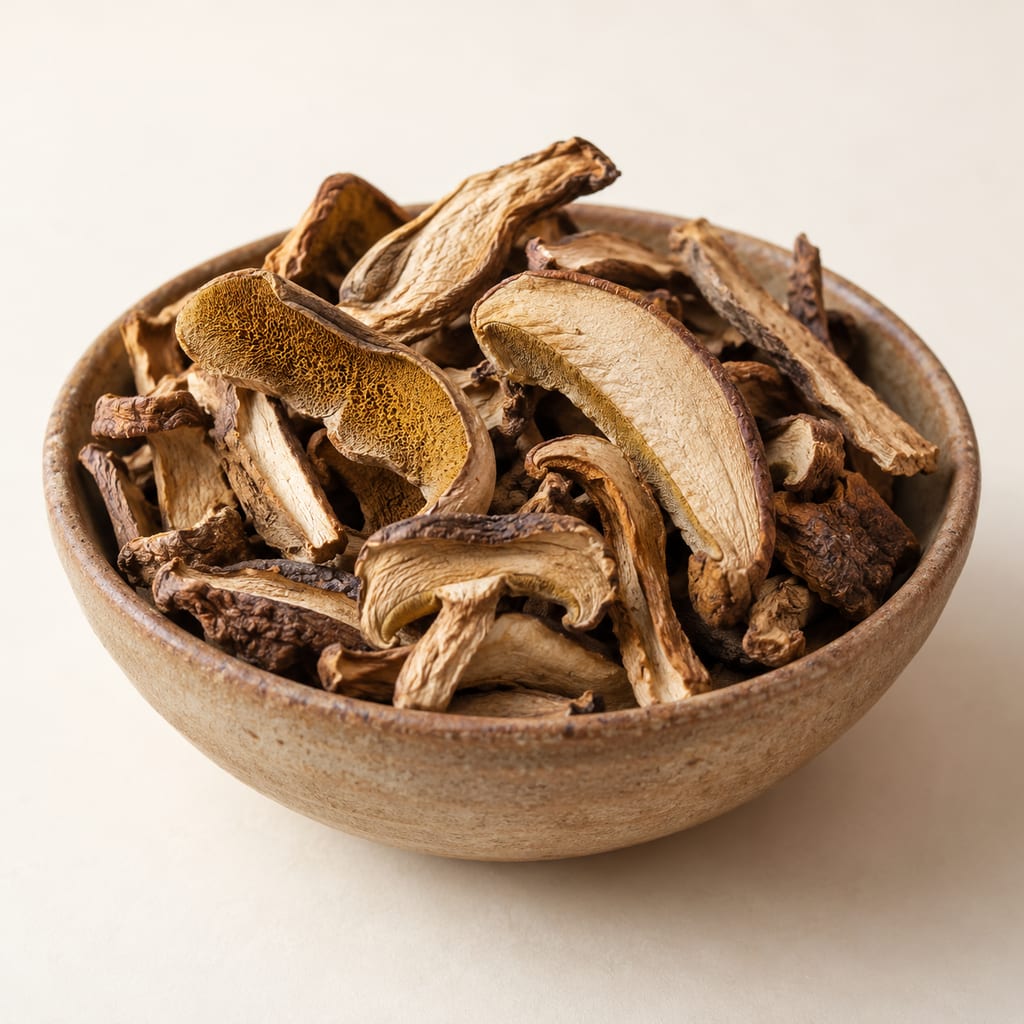
Protected solar-dried mushrooms are slices of wild Suillus luteus dried under a shade cover, a fitotoldo, rather than in open sun, as tested in an experimental study from Apurímac, Peru.
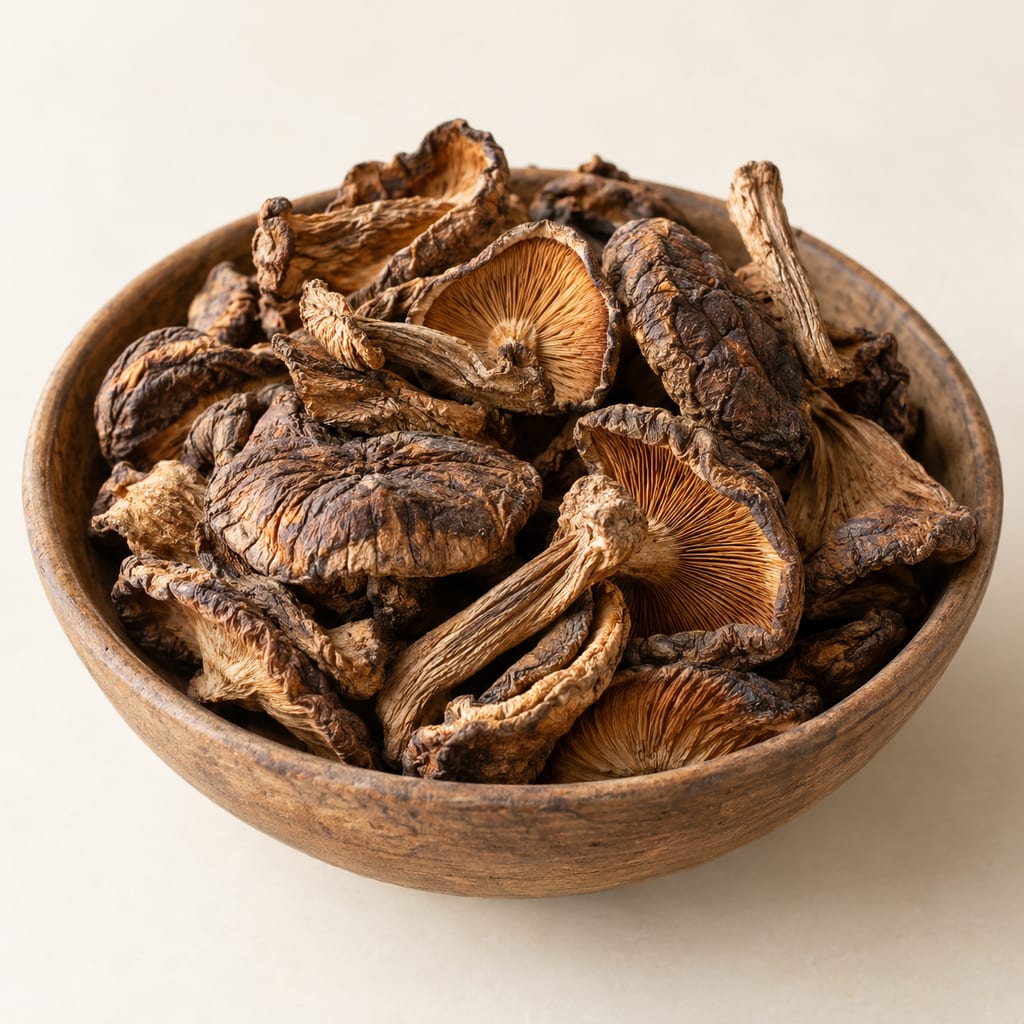
Hearth-dried mushrooms are dried on shelves above a cooking fire, so heat and smoke reach them. Tanzanian records describe the method; a Vietnamese study tested smoke-dried shiitake for fuel-dependent contaminants.
No community contributions have been published for this entry yet.
Sign in to contribute. Published comments and photos are free to read.
Ndifon, Emeka and InyangMethod · History
Ethnomycological practices in Nigeria (questionnaire study, 2023)Direct sun drying recorded; washing followed by sun drying
Tibuhwa (2013), Journal of Ethnobiology and EthnomedicineMethod · History
Wild mushroom use in rural TanzaniaOpen sun drying, drying on shelves above wood-fired cooking sites, and brine treatments recorded
Bradai et al.Method · History
Algerian desert-truffle ethnomycology (2015)Desert truffles sun dried; seasonal preservation distinguished from temporary fresh-truffle holding
Otomí fieldwork, Ethnobiology and EthnomedicineHistory
Amealco, Mexico ethnomycological study (2018)Species-specific drying preparation: hanging or sun exposure for some fungi; freezing also reported
Pu et al.Safety
Russula subnigricans poisoning (clinical report, 2023)Clinical report includes consumption of sun-dried material