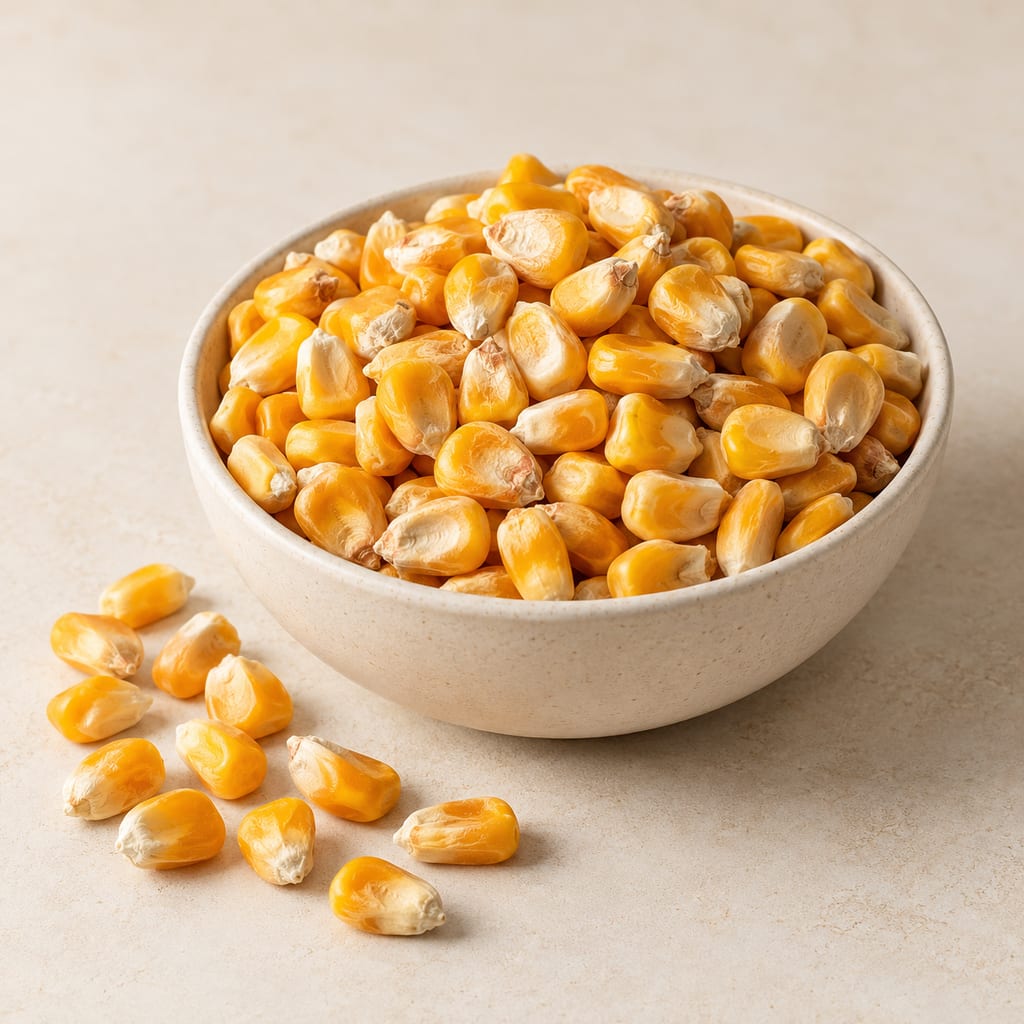
Maize
Maize is the foundational grain of Andean fermentation. Its role in brewing chicha de jora depends on germination into jora, a malted form generating enzymes and sugars necessary for alcoholic fermentation.
 FermenteaWhere food goes to change
Traditional method
Ogi · Akamu
Ogi or akamu is a wet fermented cereal preparation documented in Nigeria and Benin. Grain or maize starch is steeped, milled or sieved, then fermented by process-specific routes; evidence supports no universal method or safety limit.
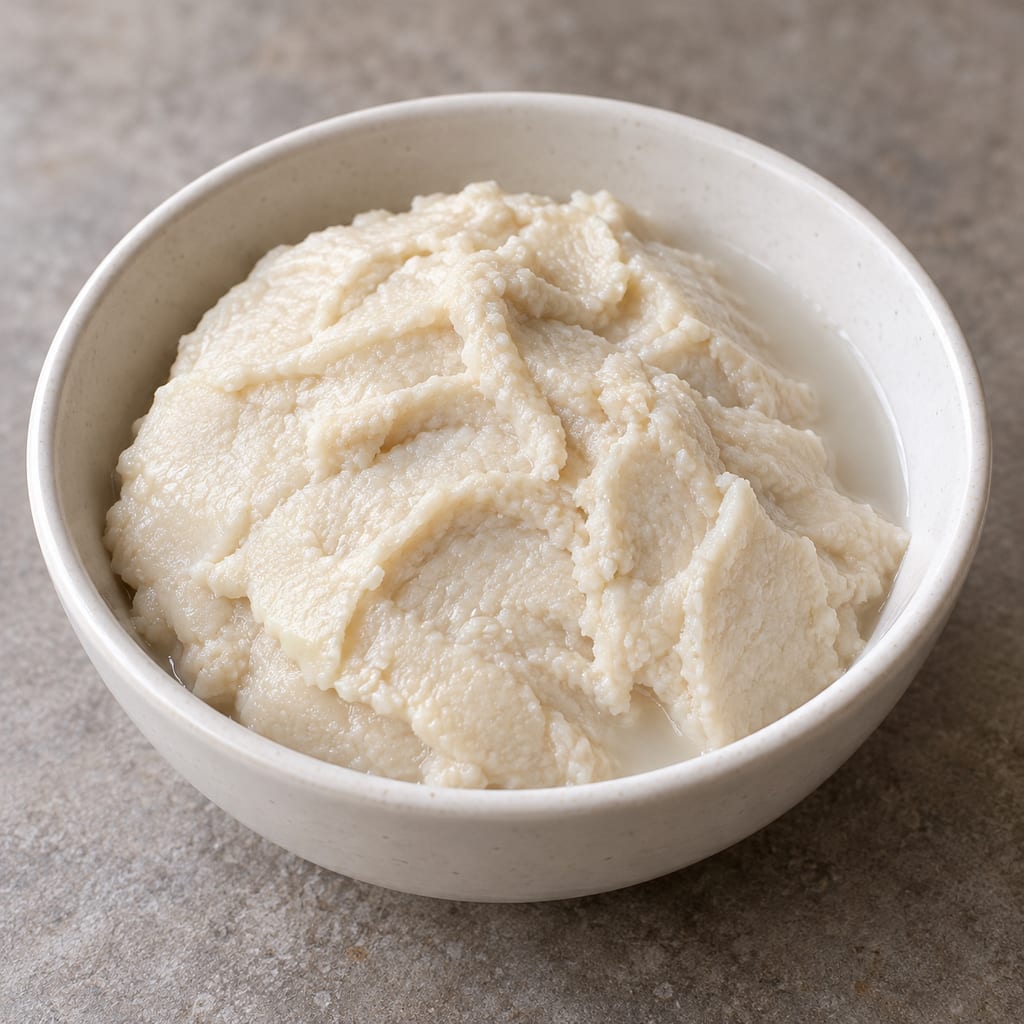
Ogi and akamu are names used for fermented cereal preparations in West Africa. This record covers the wet fermented base: it is not the cooked pap or porridge served from it. Agidi/eko is also a cooked product made from fermented cereal slurry, and remains a separate preparation.
The supplied atlas names Nigeria and Benin and lists maize, sorghum and millet among the grains used for Ogi-like preparations. The most detailed batch evidence here concerns maize in Nigeria; the grain options should not be read as interchangeable in every method. FAO notes that the names akamu, eko and agidi vary with locality, grain and food form, so they are not one exact recipe or one finished product.
One study from Akure, Nigeria, describes a route that ferments whole white maize for three days before wet grinding. It then washes and grinds the grain, sieves the paste through muslin, settles the fine fraction and washes and decants it several times. Its 2 kg batch is retained as a study example; the paper does not state a water ratio or establish a household endpoint.
FAO describes another Nigerian Ogi sequence: steep grain, wet-mill and sieve it, then ferment the collected filtrate for 24–72 hours. A Nigerian Akamu account similarly describes grain steeping followed by milling and overnight settling. These accounts differ in where fermentation happens relative to milling. Do not combine their durations into one timetable.
Beninese maize-starch Ogi used to make akpan has its own documented processor variants. A 2023 study compares Fon and Goun methods in southern Benin and reports differences in steeping and microbial/quality results; a 2024 study further finds that processing technology affects community composition. The evidence supports regional variation, not a single Beninese recipe.
Ogi is cooked into pap or porridge. FAO also documents related cooked gels including Agidi/eko. In Benin, the maize-starch Ogi studied by Sanya and colleagues is used to prepare akpan, described there as a yoghurt-like food. Those cooked or finished foods are not additional stages in this base preparation.
The source evidence places Ogi/Akamu in Nigeria and a distinct maize-starch Ogi tradition in Benin. It does not support assigning one birthplace, one standard grain or a single processing chain to every product bearing these names.
Studies describe mixed microbial communities in Ogi, and Beninese work finds that technology changes community composition. Organisms reported from a particular sample or experiment are not a guaranteed culture for every batch. This record therefore describes spontaneous mixed fermentation and does not prescribe a starter.
A separate 2001 study did use starter cultures. It inoculated maize flour slurry and grain-based preparations with selected Saccharomyces cerevisiae and Lactobacillus brevis strains and reported different results across those test substrates, including for lysine and methionine levels and for acceptability. Those strains and results belong to that experiment. They do not show that households use pure cultures or that one laboratory protocol represents every ogi tradition.
The sources reviewed do not establish a universal safe fermentation time, temperature, pH target, water ratio, cooling method or storage period. Wet grinding, sieving and settling also create handling steps where hygiene matters. Use potable water and clean food-contact equipment, but do not treat those measures, sourness or appearance as proof of safety. A Nigerian microbiology study reported contamination in tested Ogi products; it did not validate a household kill step for the fermented slurry.
Cooking pap or Agidi/eko is a separate step and does not make the fermentation evidence interchangeable. No universal safety process is inferred from one study's cooked samples.
FAO and food-science studies document Ogi/Akamu as a West African fermented cereal preparation, including Nigerian maize routes and Beninese maize-starch preparations. The sources reviewed do not establish a first attestation or single place of origin.
Scaling: source batch only
Studies report mixed microbial communities in Ogi/Akamu samples, with organisms differing by maize processing method and sample. A sour taste or a reported fermentation duration does not show that a batch is safe.
Hazard sourceOgi is a wet slurry handled through steeping, grinding, sieving and settling. A Nigerian study of Ogi processing reported microbial contaminants in tested samples; it did not establish a validated household control or safe storage time.
Hazard sourceThe sources describe traditional and study-specific durations but do not validate a universal safe fermentation endpoint, pH limit, cooling method or shelf life for home-prepared Ogi.
Hazard sourceUse potable water and clean food-contact vessels, mill, sieve and storage containers. These basic hygiene measures are not a validated kill step and do not establish safe fermentation or storage limits.
Control sourceNo universal household time, temperature, pH or storage control was established by the sources reviewed. Do not infer safety from sourness, smell, bubbling, a clear supernatant or a single measurement.
Control sourceCooking Ogi into pap/porridge or Agidi/eko is a separate preparation stage. One study's cooked-sample results do not validate this slurry or a general safety process.
Control sourceThis preparation remains a wet, spontaneously fermented slurry. The cited studies do not validate a home-scale safety endpoint, cooling procedure or shelf life.
Pap/porridge and Agidi/eko are cooked products made from cereal slurry; their cooking steps are not part of this preparation.
Sources document Ogi/Akamu preparation and use in Nigeria, including a study in Akure, Ondo State. This does not establish one national method or origin.
Studies document maize-starch Ogi processing variants in southern Benin. This does not imply that the Nigerian and Beninese processes are identical.
Maize is the foundational grain of Andean fermentation. Its role in brewing chicha de jora depends on germination into jora, a malted form generating enzymes and sugars necessary for alcoholic fermentation.

A fast blade in a jug that grinds toasted sesame to tahini, blends cooked or soaked material with water into milky extracts and chops material for pressing. It does not strain.
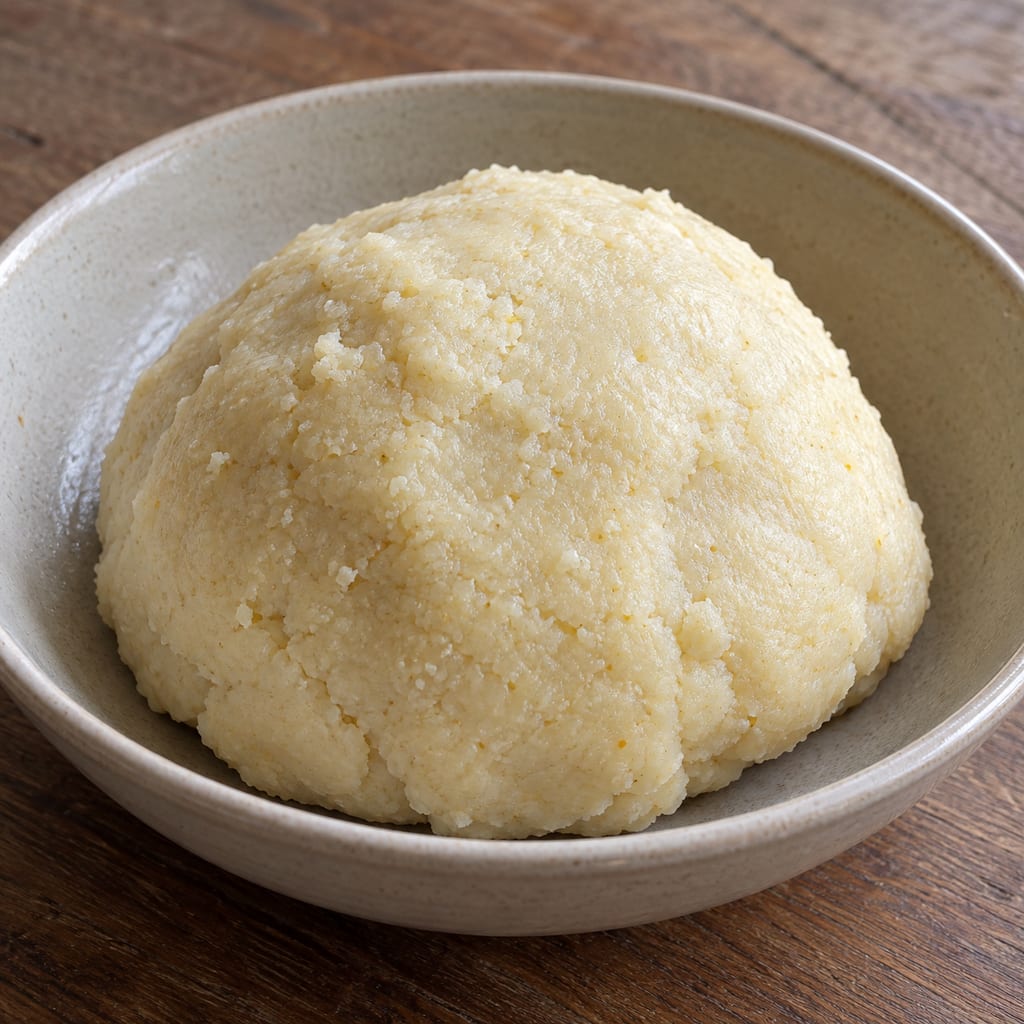
Mawè is a spontaneously fermented maize or other cereal dough from Benin and neighbouring West Africa, soured by lactic bacteria and yeasts and used as the base for cooked pastes, porridges, breads and drinks.

From sour breads and milk to savoury seeds, cassava staples and living beers, African fermentation follows the crop, the community and the work of transformation.
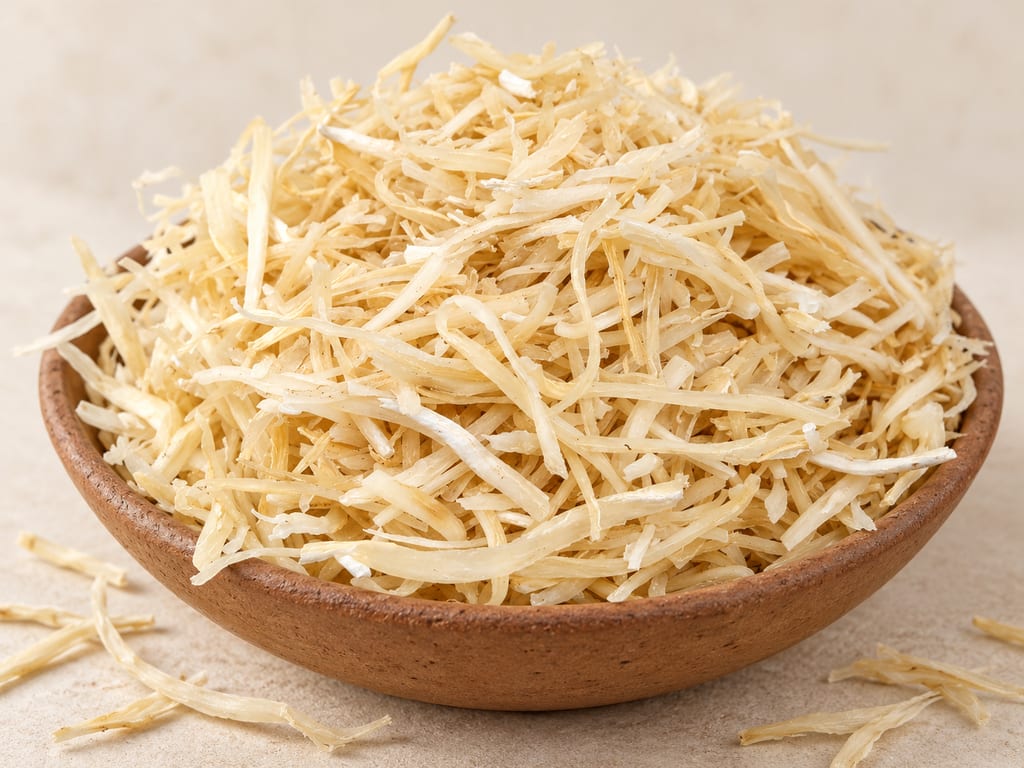
Abacha is a fermented cassava-strip preparation from southeastern Nigeria, sold wet or dried and later rehydrated for meals such as African salad.
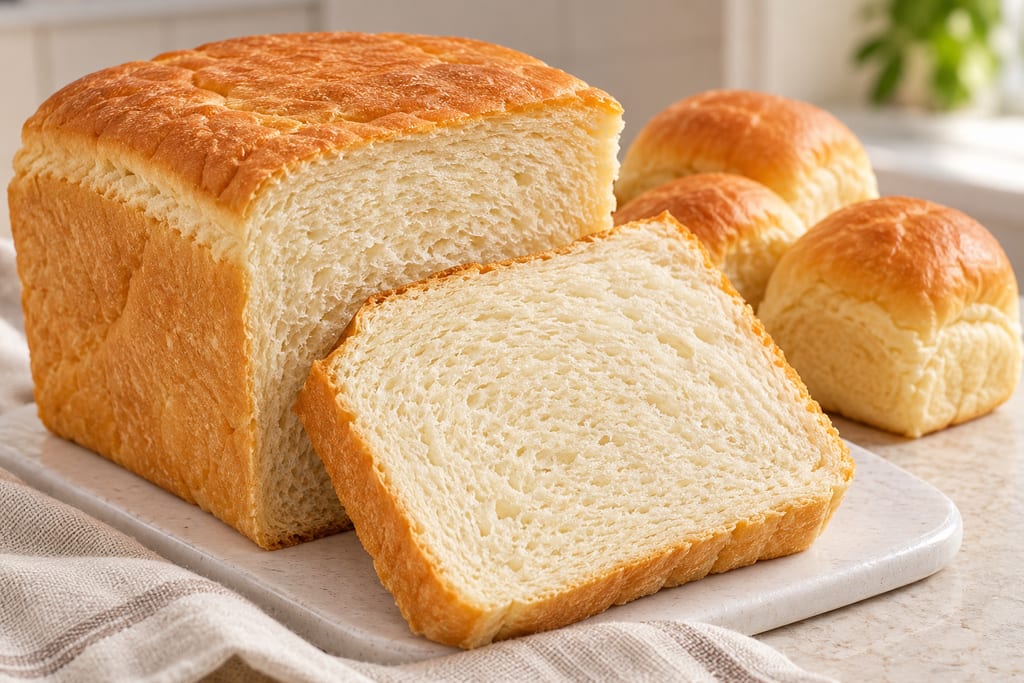
This softer home-style Agege bread uses a scalded flour paste, an enriched yeast dough and a 9×5-inch loaf pan, with rolls from the extra dough.

Eba is a West African dish of cooked gari, stirred into hot water until it forms a thick paste. It is a cooking stage with no new fermentation, served with soup.
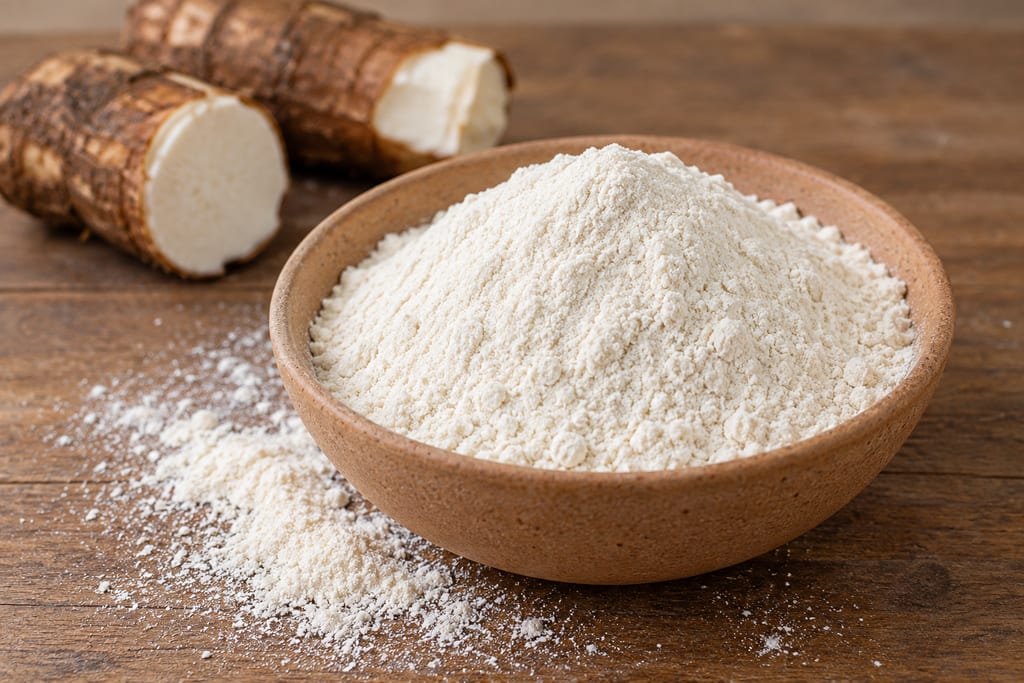
Lafun is a Nigerian fermented cassava flour described in historical accounts. This record documents reported processing stages, not a validated household method or a batch-specific cyanogen and moisture safety endpoint.
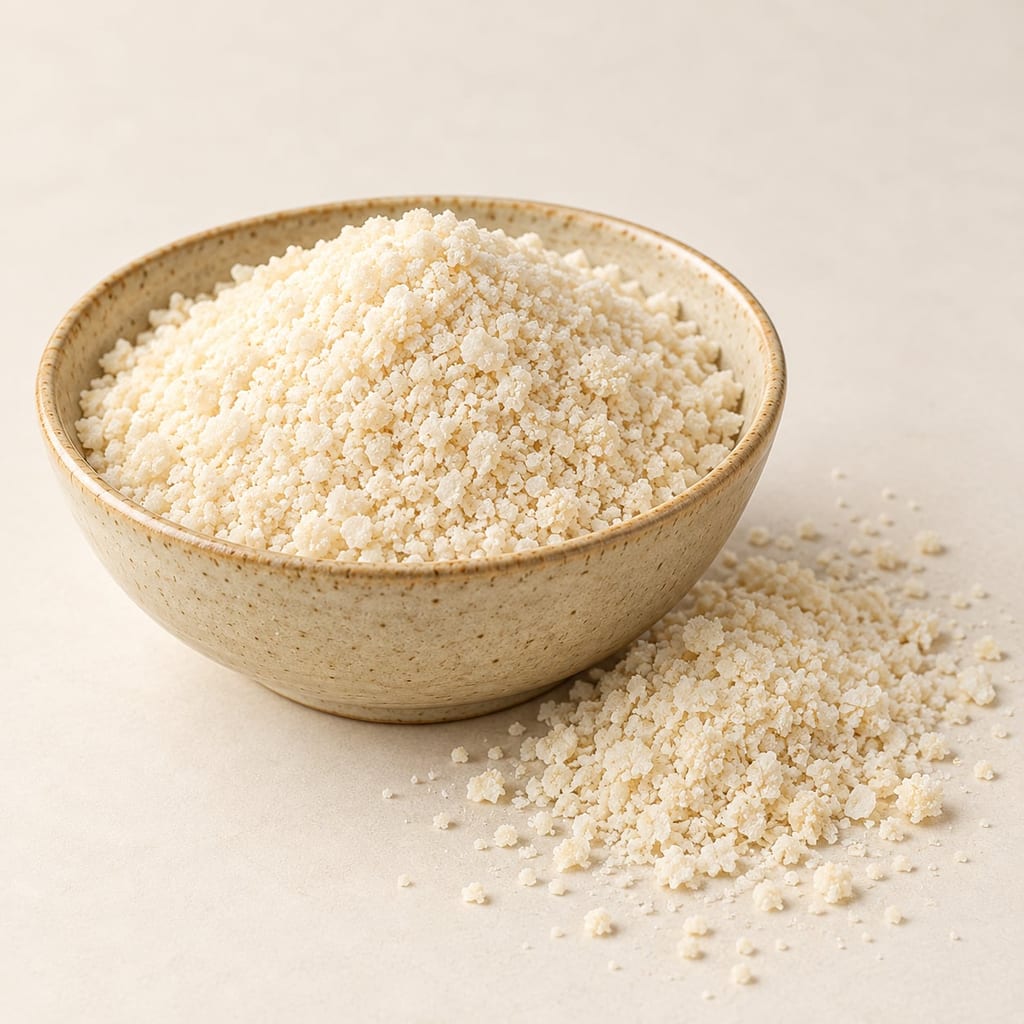
White gari is grated cassava fermented for three days, then pressed, sieved and toasted dry into a coarse West African meal eaten soaked or as a stiff porridge.
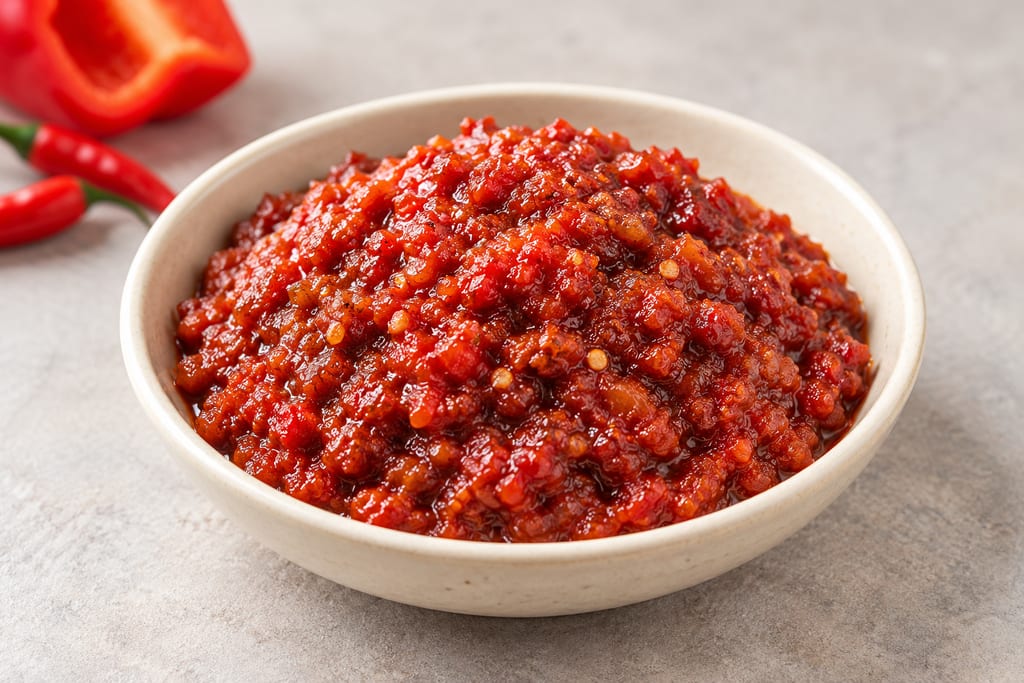
Ata dindin is the Yoruba fried pepper sauce: chillies, red bell pepper and onion blended and cooked down in oil until the oil separates. The same name is also given to a finished stew built on it.
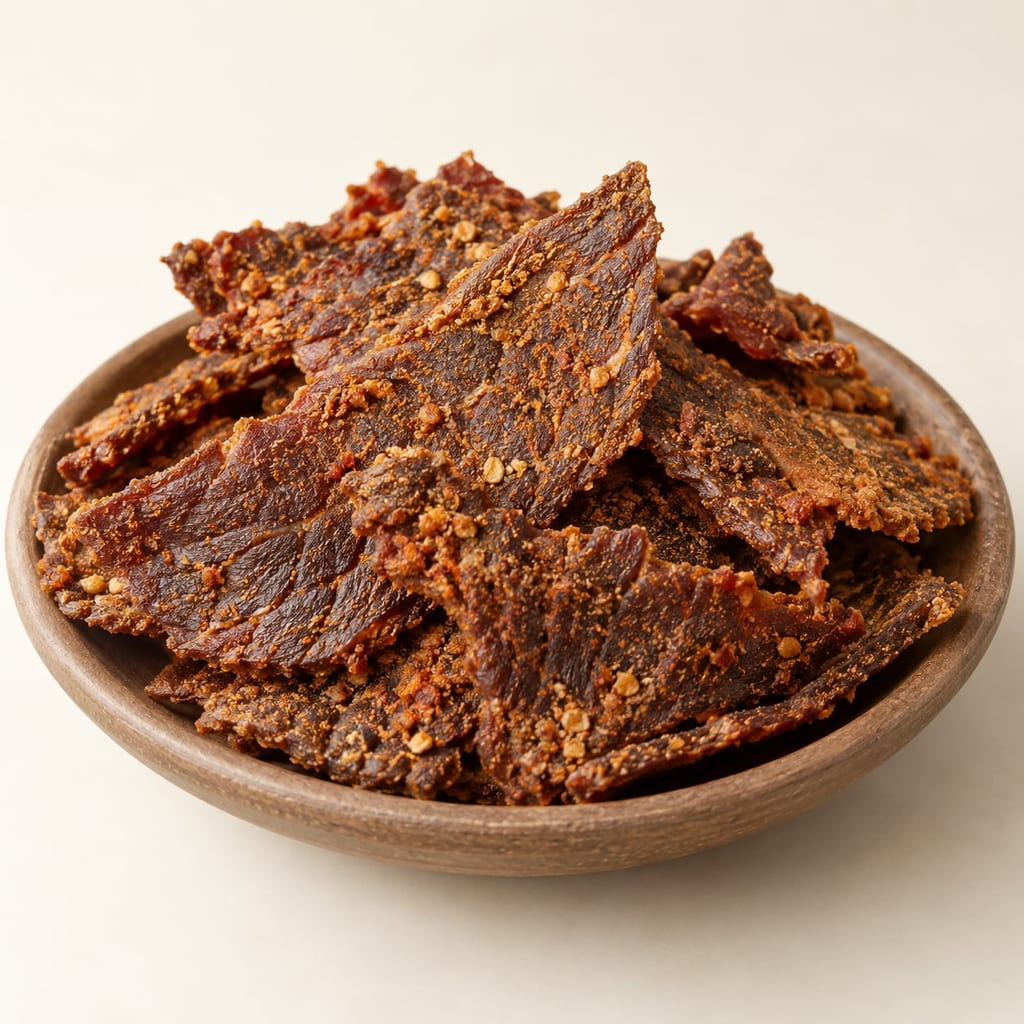
Kilishi is a Hausa-land dried meat from northern Nigeria and southern Niger: thin slices of beef or other meat, dried, coated in a spiced groundnut paste and dried again.

A thick, spiced northern Nigerian drink of pearl millet in which only part of the fermented slurry is cooked, so raw starch and gelatinised starch are recombined.
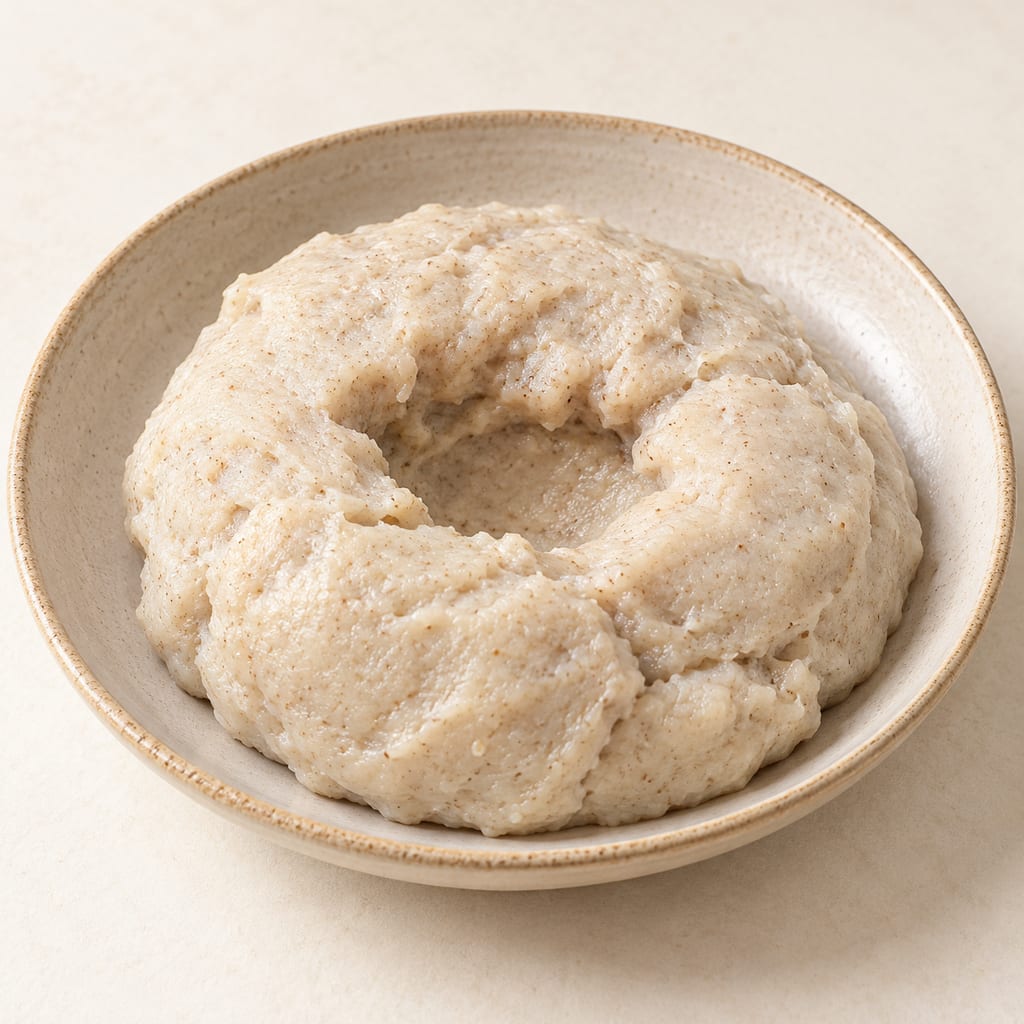
Aceda is Sudan’s firm cereal porridge, commonly made from sorghum and shaped into a smooth mound. Some versions use fermented dough; fermentation is not universal.
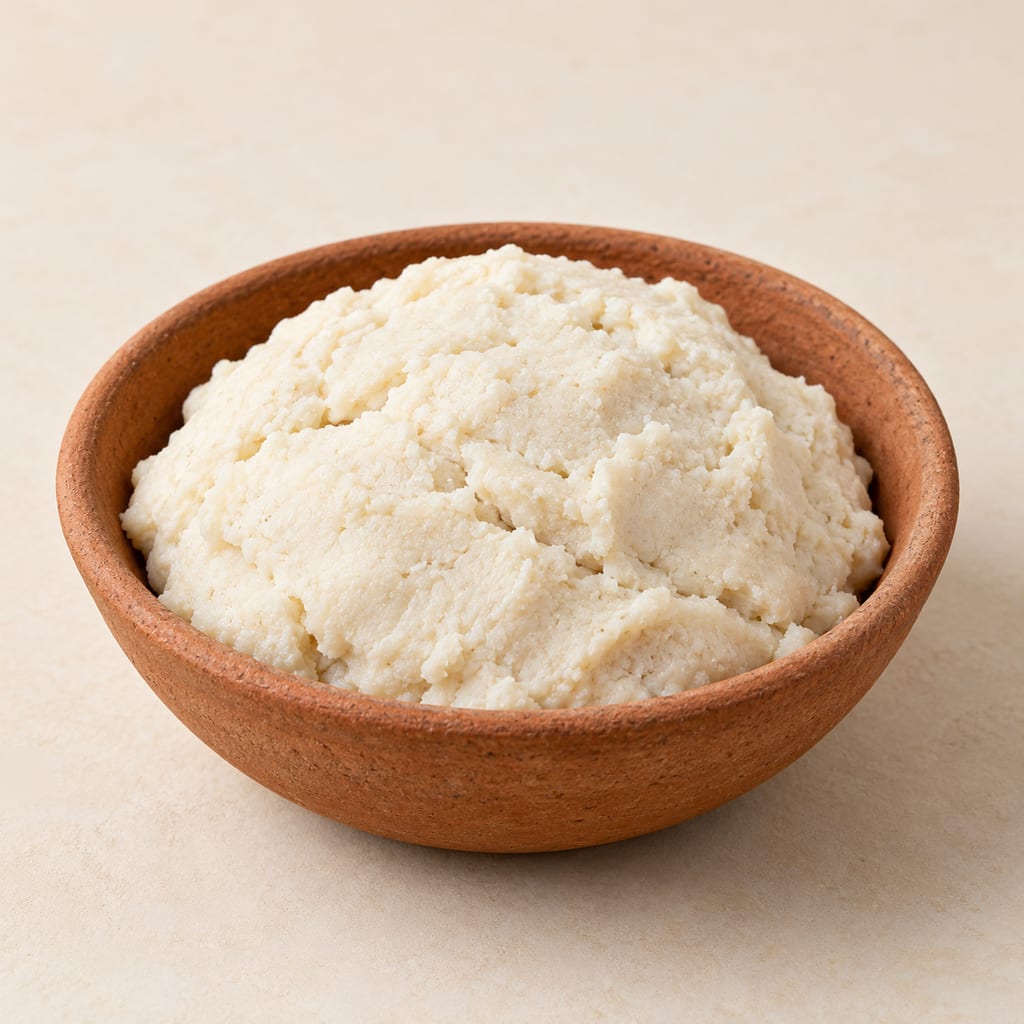
Ghanaian sour cassava dough fermented with traditional inoculum and drained during fermentation. It is used as a base for cooked foods such as banku and akple; process variants and safety outcomes differ.

Appam, or hoppers, are South Indian and Sri Lankan rice pancakes made from a fermented coconut-and-rice batter and cooked in a curved pan to a crisp lacy rim and a soft, spongy centre.
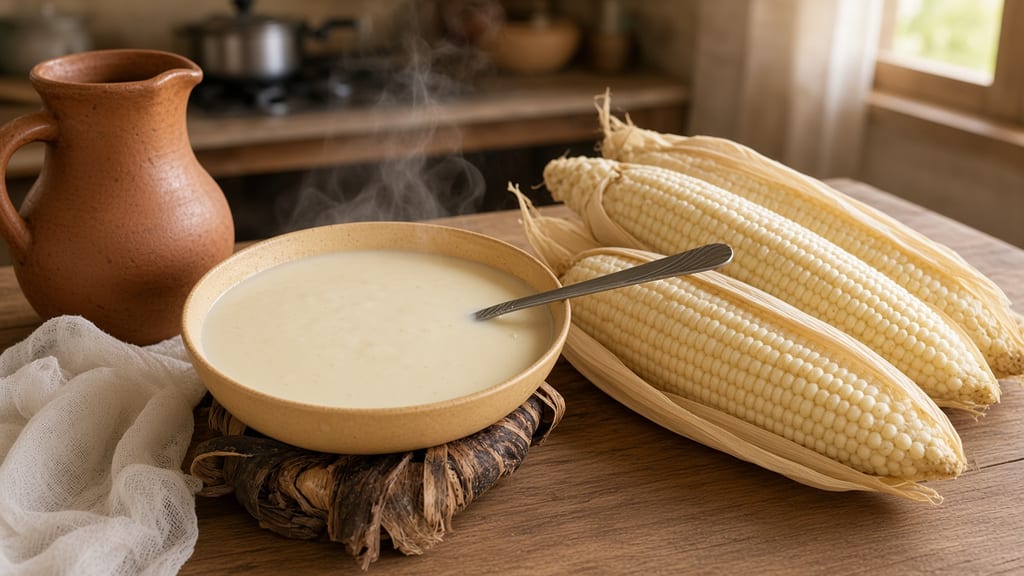
A hot, sour maize drink from Tabasco made from maize that is not lime-cooked. The ground grain sours for half a day, then makers strain it and boil it until thick.
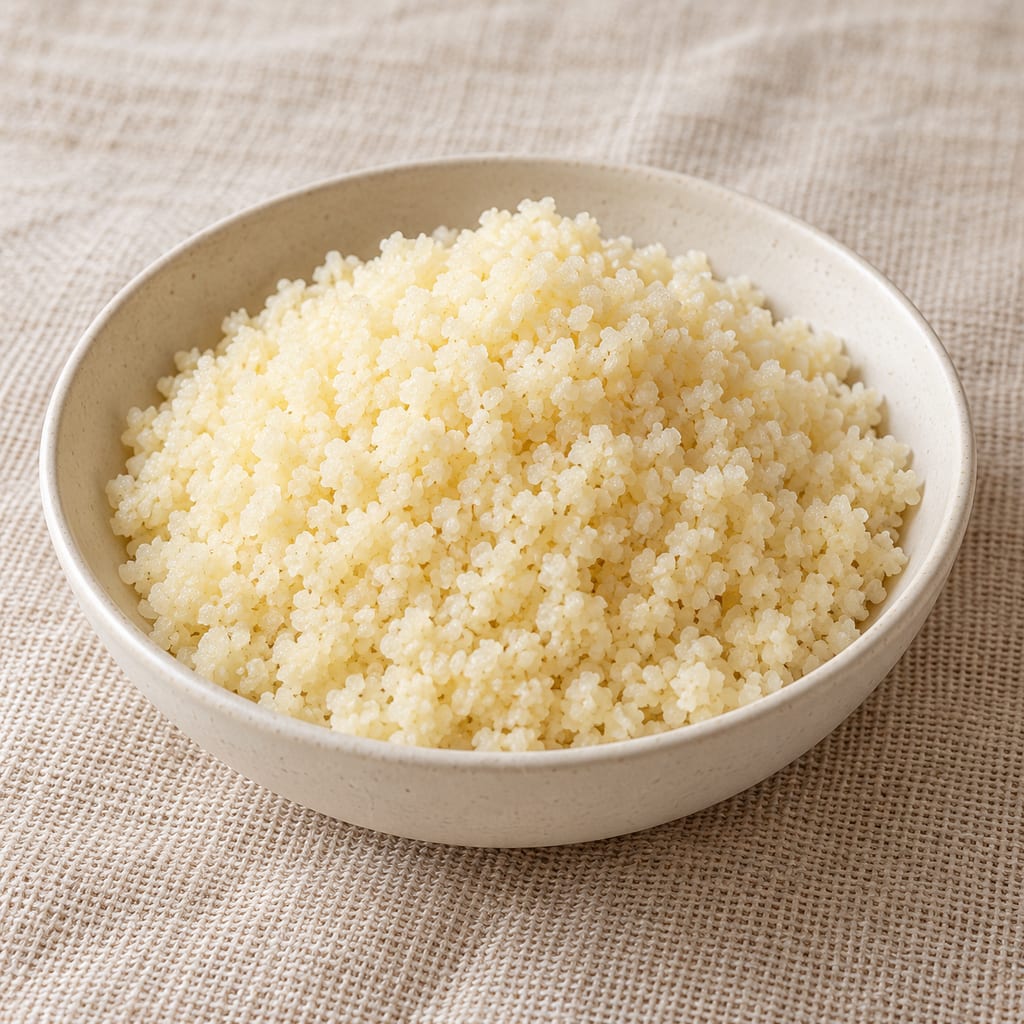
Ivorian cassava semolina: grated cassava is fermented overnight with a traditional inoculum, pressed, sieved into granules, dried and steamed. Documented in a 2006 field study; no sole original process is established.
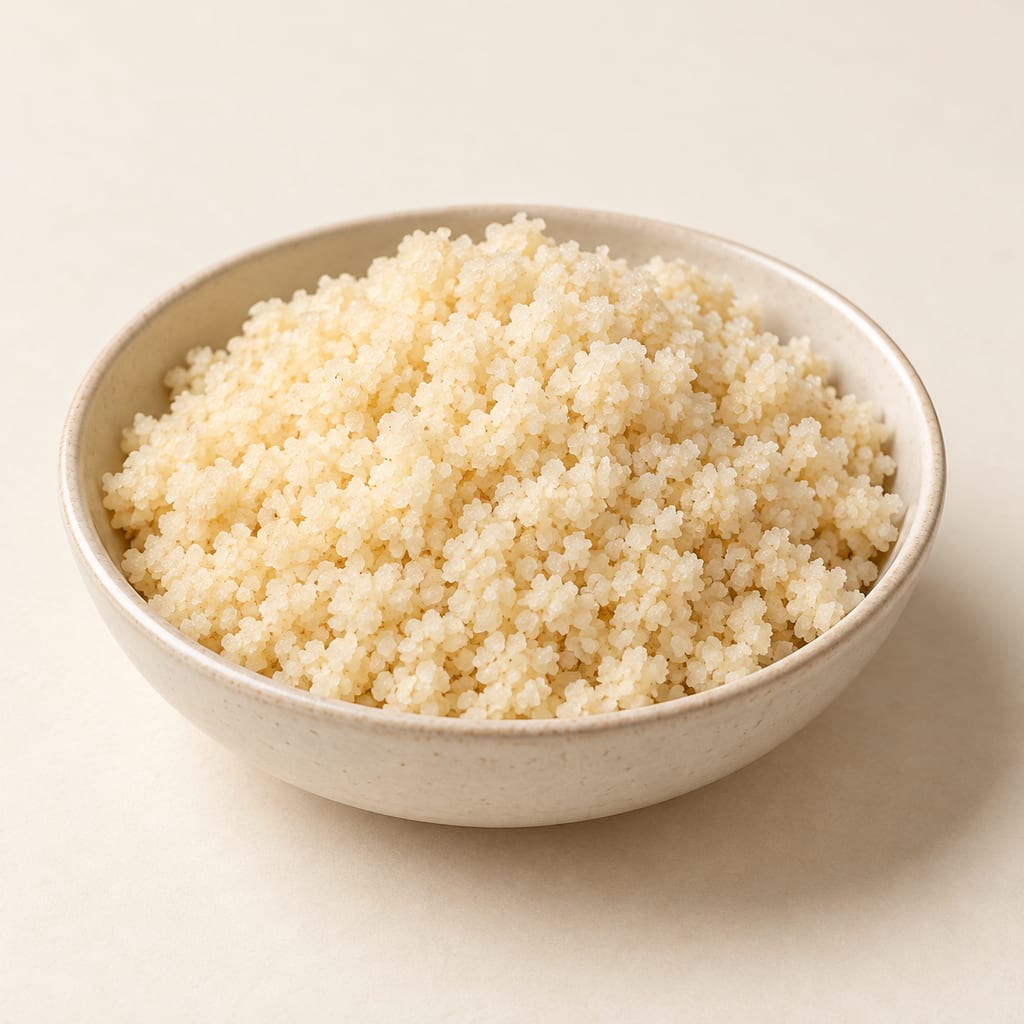
Attiéké is an Ivorian staple of grated cassava fermented with a traditional inoculum, then pressed, sieved, granulated, dried and steamed into fine couscous-like grains.

Crushed or milled barley cooked in water until the starch softens and the mixture thickens, the plainest way a northern household turned stored grain into a meal, here with apple and hazelnut.

A fermented pearl-millet gruel documented in Ouagadougou, Burkina Faso. Whole grain is soaked, wet-milled and sieved; the settled paste ferments again before it is cooked with its liquid.
No community contributions have been published for this entry yet.
Sign in to contribute. Published comments and photos are free to read.
Food and Agriculture Organization of the United NationsProcess · Geography · History
Maize in human nutrition — Processing of whole maize: lime-cookingDescribes Ogi as a fermented maize product with variants using sorghum or millet; documents grain steeping, wet milling, sieving and fermentation of the filtrate for 24–72 hours before cooking into porridge or related products.
Names such as akamu, eko and agidi vary with locality, grain and food form.
Cited in: A wet cereal preparation, not its cooked porridge; Documented methods differ in sequence; Use and related preparations; Fermentation evidence and limits
Akharaiyi and Omoya, Trends in Applied Sciences Research 3(4), 2008Process · Geography · Safety
Effect of Processing Methods on the Microbiological Quality of Liquid Pap Ogi Prepared from MaizeReports a Nigerian Akure study batch using 2 kg white maize, washed and steeped covered for three days, then rewashed, wet-ground, sieved through muslin and settled about one hour; the paper reports repeated washing/decanting and microbial testing. This is one study batch, not a validated safety process.
Cited in: Documented methods differ in sequence; Fermentation evidence and limits
Obinna-Echem, American Journal of Food Science and Technology 5(3), 2017Process · Geography
Effect of Processing method on Pasting, Morphological and Sensory Properties of Akamu—a Nigerian Fermented Maize ProductDescribes Nigerian Akamu from maize and sometimes sorghum or millet; the account steeps grain for two to three days, then washes, wet-mills and sieves it, followed by overnight settling/fermentation. It also describes cooking as a separate porridge step.
Cited in: Documented methods differ in sequence
Sanya et al., Food Research International, 2023Process · Geography · Science
Technological variations, microbial diversity and quality characteristics of maize ogi used for akpan production in BeninDocuments Beninese maize-starch Ogi used for akpan and compares Fon and Goun processor methods in southern Benin; processing differed in steeping procedures. The study reports process-specific microbial and quality variation, not one universal method or safety limit.
Cited in: Documented methods differ in sequence; Use and related preparations; Fermentation evidence and limits
Food Research International, 2024Science · Process
The impact of processing technology on microbial community composition and functional properties of Beninese maize ogiA primary study of Beninese maize Ogi reports that processing technology changes microbial community composition and functional properties; it supports treating process variants distinctly.
Cited in: Documented methods differ in sequence
International Journal of Food Microbiology / PubMedScience · Process
The effects of processing methods on the levels of lysine, methionine and the general acceptability of ogi processed using starter culturesA 2001 study inoculated maize flour slurry and grain-based preparations with selected Saccharomyces cerevisiae and Lactobacillus brevis strains and reported different results across the test substrates.
Cited in: Fermentation evidence and limits