African fermented foods, drinks and preservation
From sour breads and milk to savoury seeds, cassava staples and living beers, African fermentation follows the crop, the community and the work of transformation.
 FermenteaWhere food goes to change
Attieke · Attiéké cassava semolina
Ivorian cassava semolina: grated cassava is fermented overnight with a traditional inoculum, pressed, sieved into granules, dried and steamed. Documented in a 2006 field study; no sole original process is established.
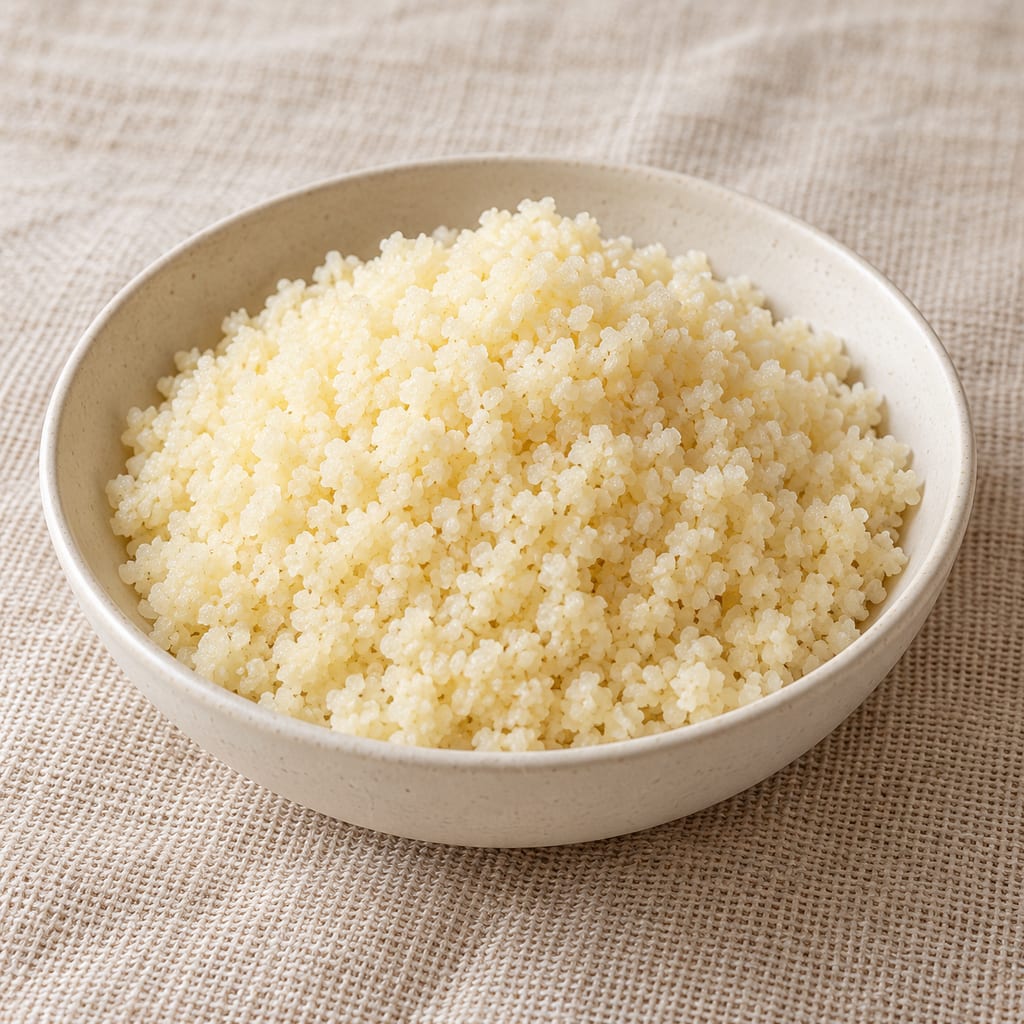
Attiéké is a fermented cassava semolina from Côte d'Ivoire. Grated cassava is fermented with a traditional inoculum and then pressed, sieved into granules, dried and steamed. The steamed granules are eaten ready to serve.
The product is distinct from the wet cassava pastes and the roasted or fermented flours made elsewhere in West and Central Africa. No sole or original process is claimed here.
Across the sampled batches lactic acid bacteria dominated the cassava pulp and drove most of the acidification. The study recorded a mean pH of 4.4 at 15 hours, and at pressing, drying and the finished product, across its sample set. These are study observations, not proposed home targets.
The starter was a spontaneous traditional inoculum rather than a defined strain. Community composition shifted over fermentation in one representative production, and the paper cautions against generalising its percentages to every producer.
UNESCO inscribed the skills of attiéké production in December 2024. The announcement concerns the production skills, and the detailed nomination record was not inspected for this page. Serving pairings, named variants and seasonal occasions are not established by the inspected sources.
A separate Fermentea attiéké record comes from a 2014 inoculum-zone study and gives its own ratios and temperatures. The two records describe different sampled processes; they are compared, not treated as one method.
The nomination and consent documents, local-language names, older history and community-specific accounts remain to be checked. No household batch, drying endpoint or storage limit is given in the sources.
Coulin and colleagues sampled 15 production sites in 2006 and described attiéké as a dried, steamed, ready-to-eat cassava granule. UNESCO recognised attiéké production skills in 2024; that recognition is not evidence of the food's origin.
Scaling: not established
Fresh cassava contains cyanogenic compounds; processing must reduce them. The study's pH and acid values are not validated household targets.
Hazard sourceDo not treat the study's stages or pH values as a household procedure or a safety limit.
The 2006 study sampled 15 production sites in southern Côte d'Ivoire and the Abidjan region. The sample is not an origin claim.
The 2024 UNESCO recognition concerns production skills; it is not evidence of the food's origin.
From sour breads and milk to savoury seeds, cassava staples and living beers, African fermentation follows the crop, the community and the work of transformation.
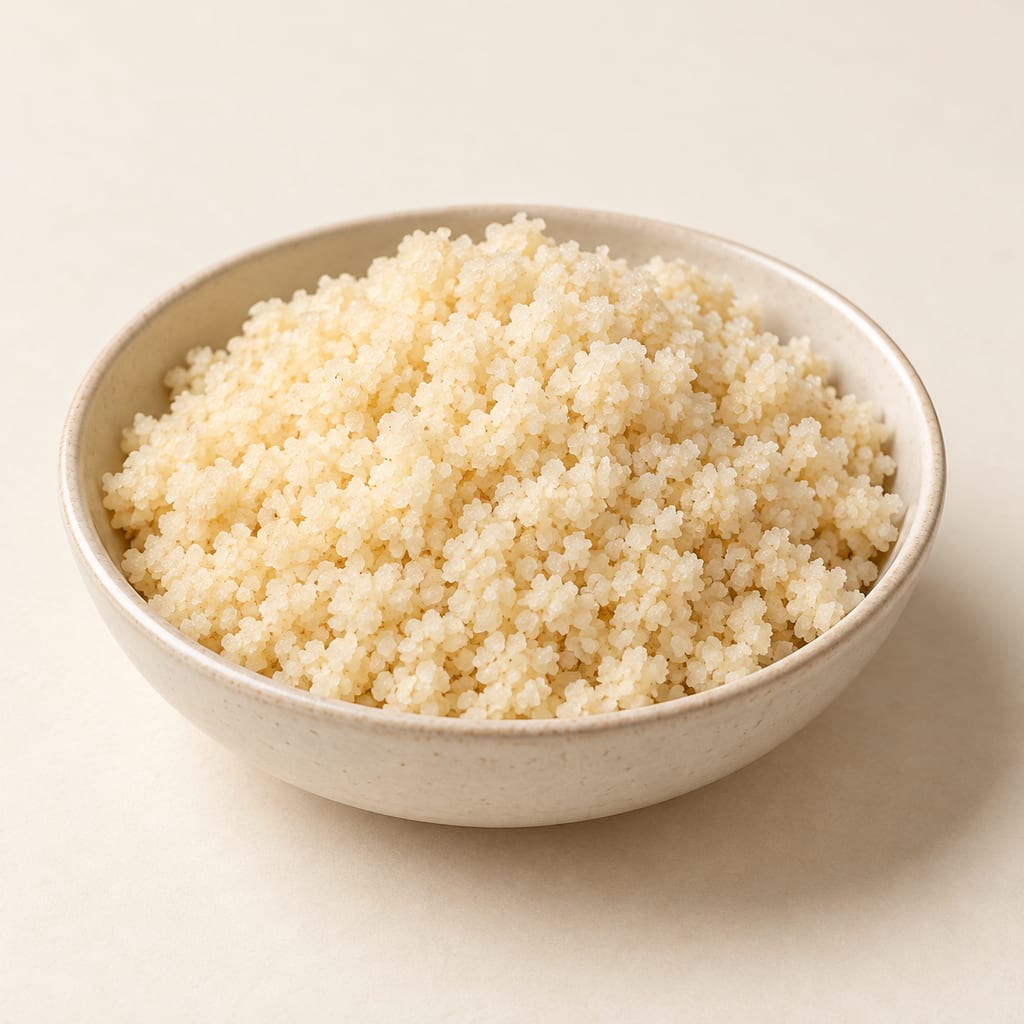
Attiéké is an Ivorian staple of grated cassava fermented with a traditional inoculum, then pressed, sieved, granulated, dried and steamed into fine couscous-like grains.
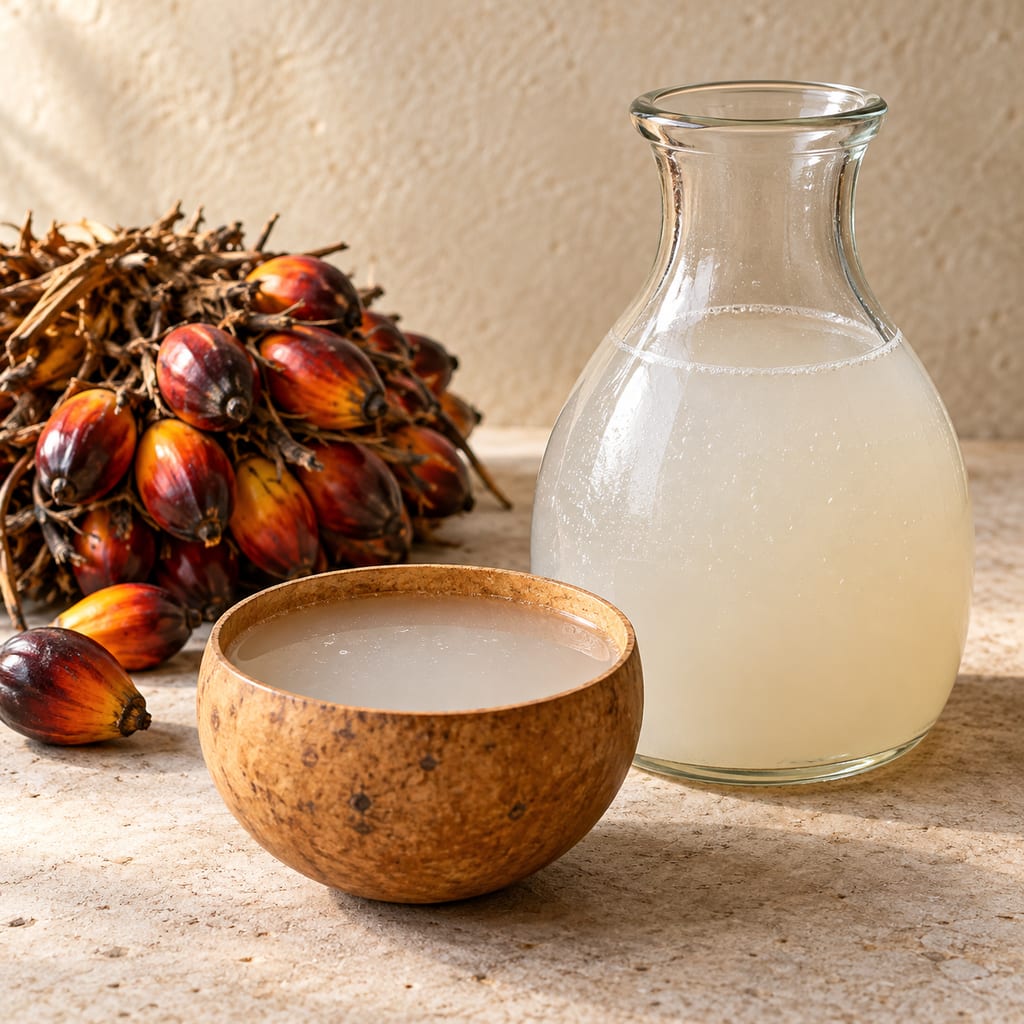
Palm wine is fermented sap from several palm species. West and Central African traditions differ in palm, tapping, vessel and serving stage; this page records shared principles without claiming one universal home-scale process.
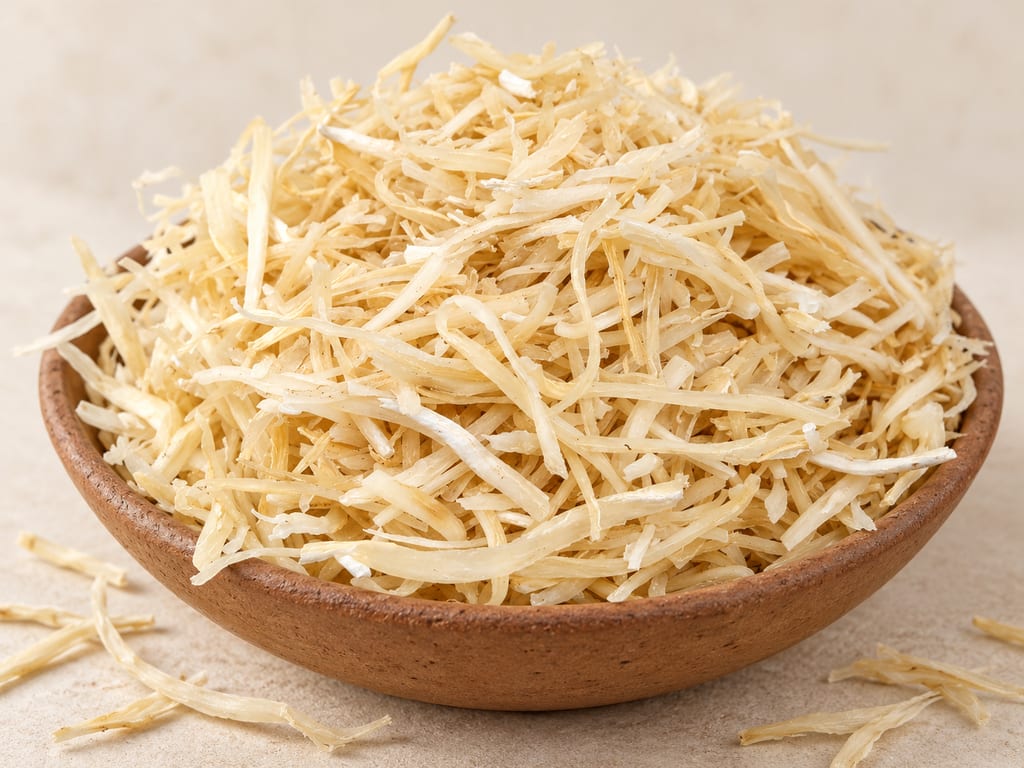
Abacha is a fermented cassava-strip preparation from southeastern Nigeria, sold wet or dried and later rehydrated for meals such as African salad.
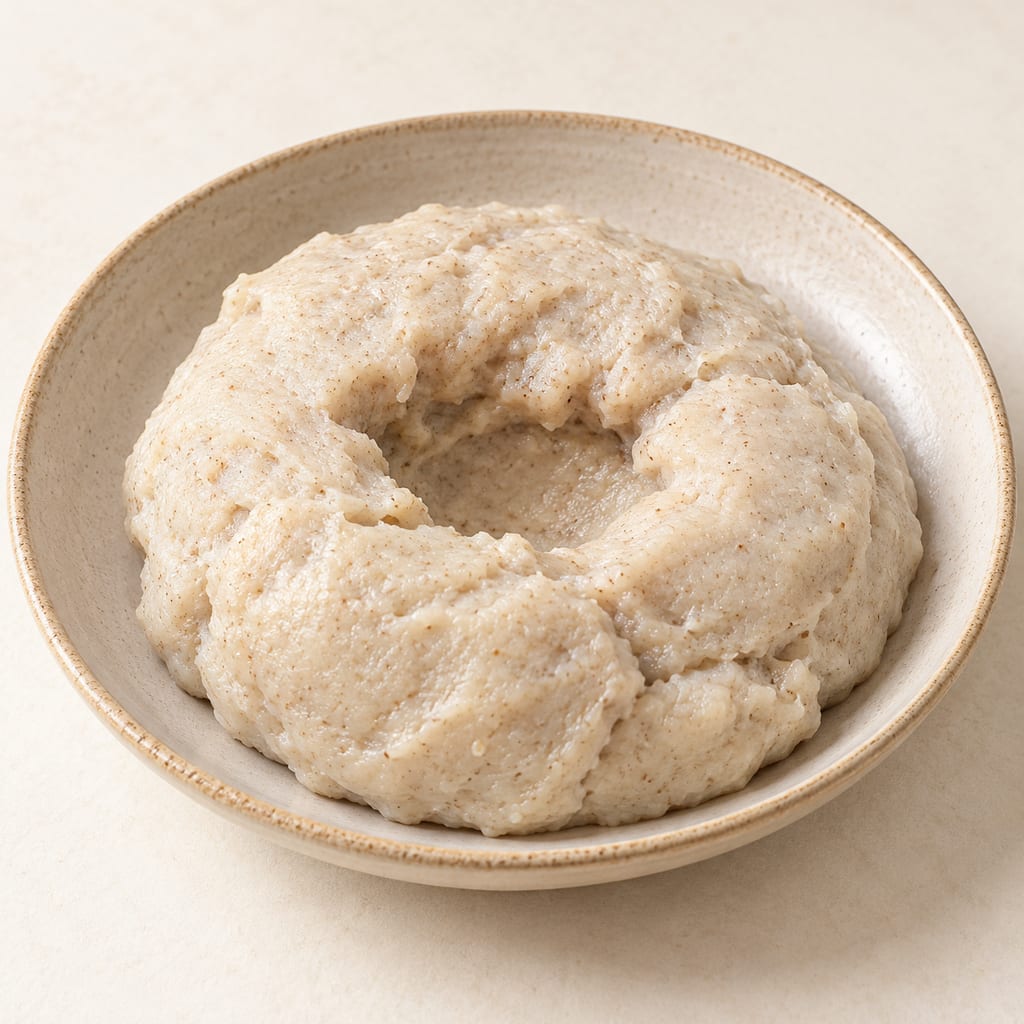
Aceda is Sudan’s firm cereal porridge, commonly made from sorghum and shaped into a smooth mound. Some versions use fermented dough; fermentation is not universal.
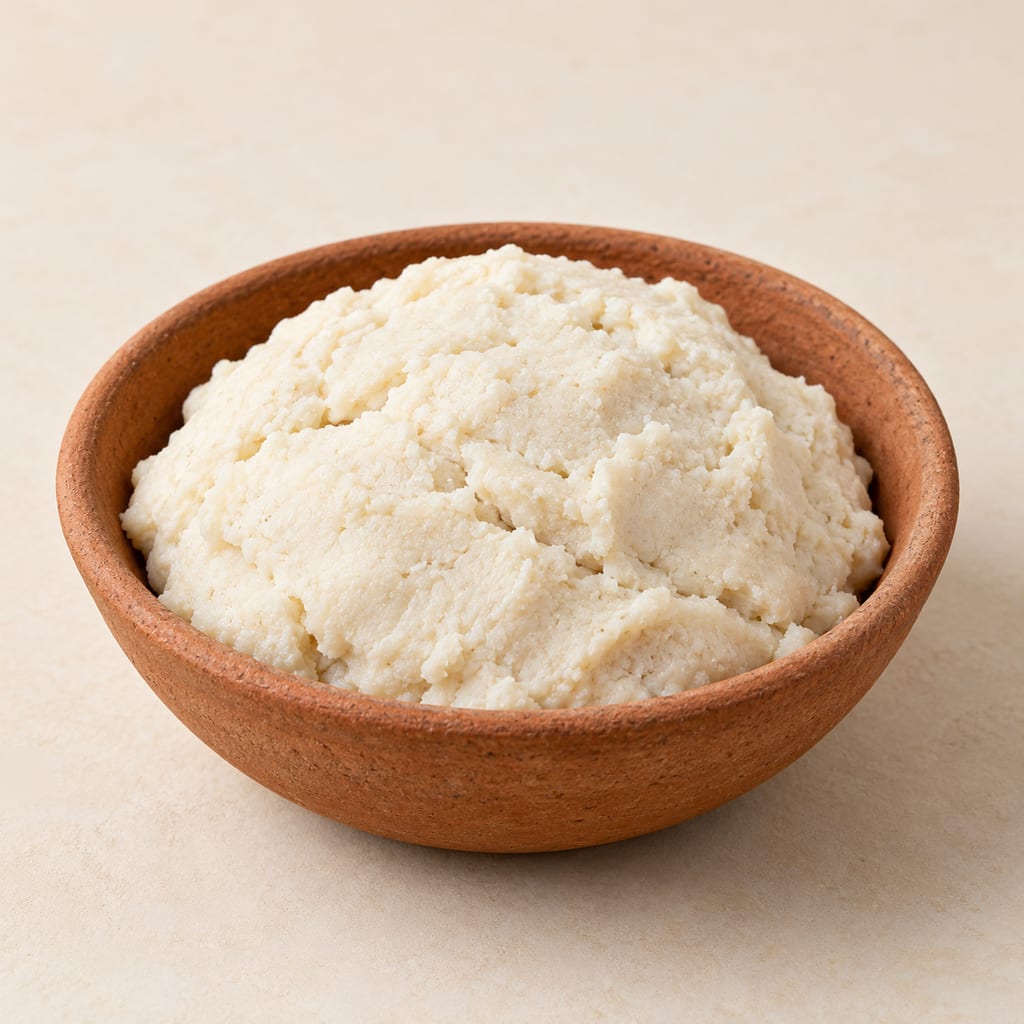
Ghanaian sour cassava dough fermented with traditional inoculum and drained during fermentation. It is used as a base for cooked foods such as banku and akple; process variants and safety outcomes differ.

Appam, or hoppers, are South Indian and Sri Lankan rice pancakes made from a fermented coconut-and-rice batter and cooked in a curved pan to a crisp lacy rim and a soft, spongy centre.
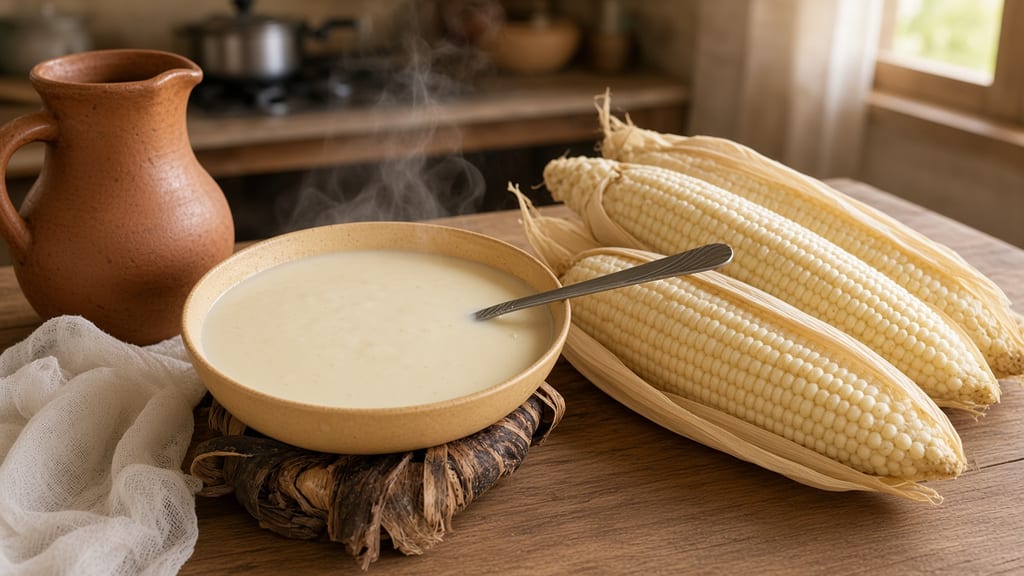
A hot, sour maize drink from Tabasco made from maize that is not lime-cooked. The ground grain sours for half a day, then makers strain it and boil it until thick.

Crushed or milled barley cooked in water until the starch softens and the mixture thickens, the plainest way a northern household turned stored grain into a meal, here with apple and hazelnut.
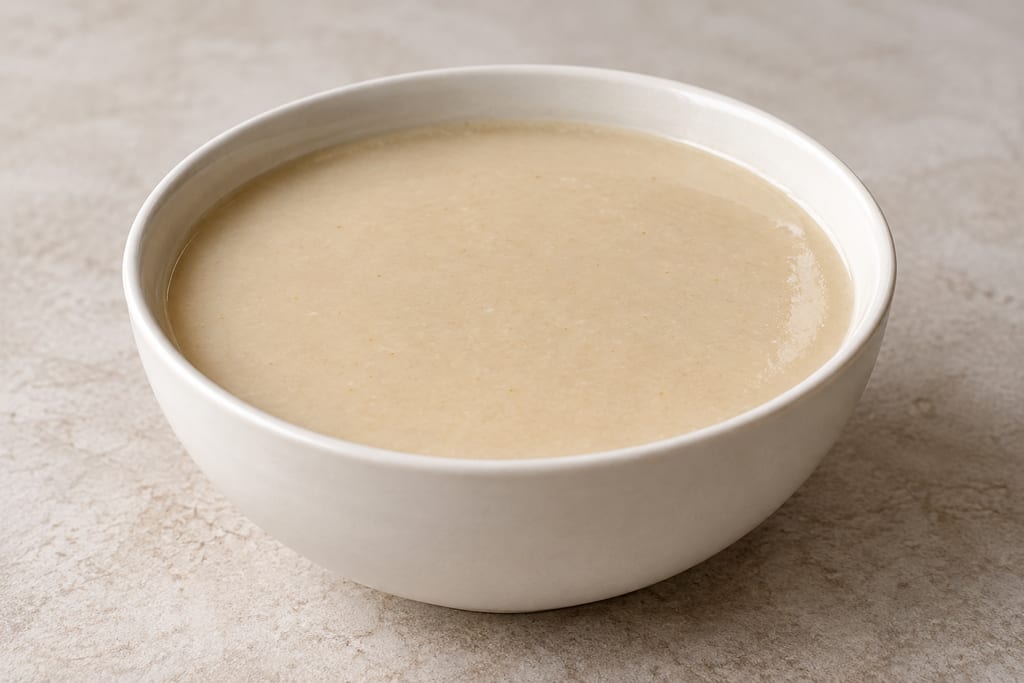
A fermented pearl-millet gruel documented in Ouagadougou, Burkina Faso. Whole grain is soaked, wet-milled and sieved; the settled paste ferments again before it is cooked with its liquid.
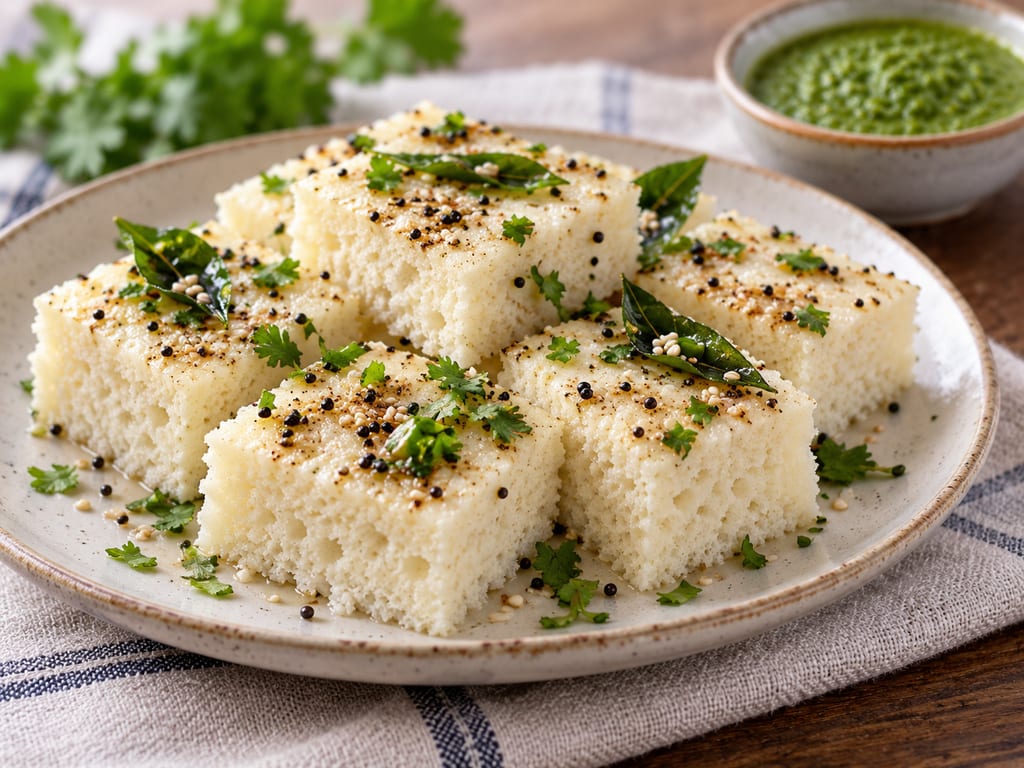
Dhokla is a Gujarati savoury steamed cake made from a fermented rice-and-pulse batter, whose lactic bacteria and yeasts give acidity, aroma and a porous crumb before steaming.
No community contributions have been published for this entry yet.
Sign in to contribute. Published comments and photos are free to read.
International Journal of Food Microbiology 106(2), 131–136; Elsevier; DOI 10.1016/j.ijfoodmicro.2005.06.012Method
Characterisation of the microflora of attiéké, a fermented cassava product, during traditional small-scale preparationCited in: Fermented cassava semolina; What the sampled process shows; Heritage and use; Relation to plant-0017; Gaps
UNESCO Intangible Cultural HeritageMethod
Skills related to Attiéké production in Côte d’IvoireCited in: Fermented cassava semolina; What the sampled process shows; Heritage and use; Relation to plant-0017; Gaps