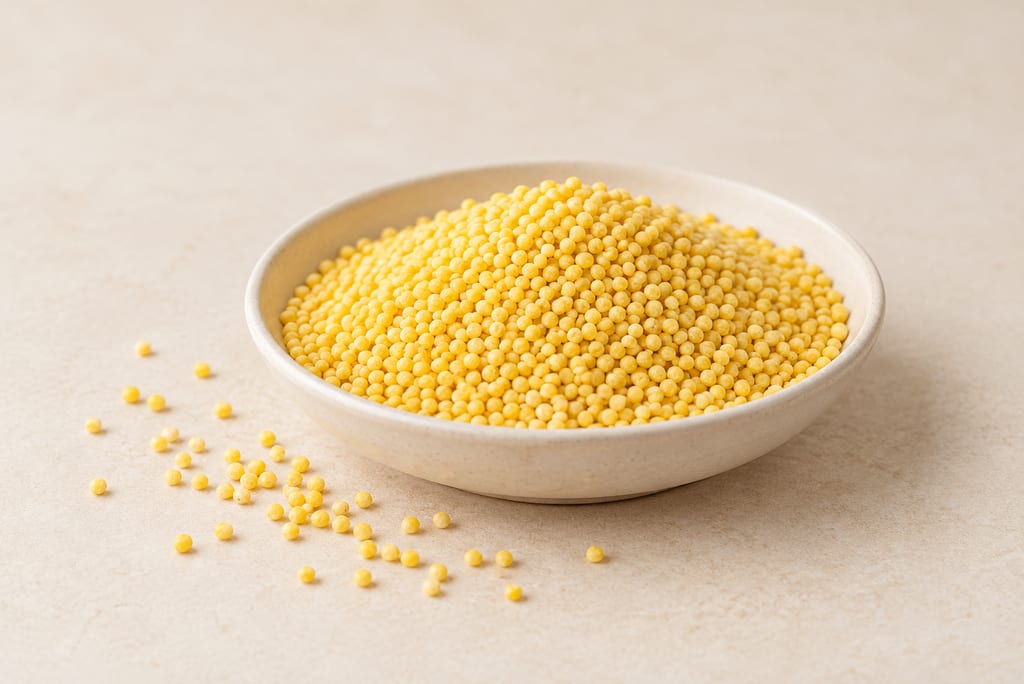
Millet
Millet names several small-seeded cereals. In African fermented foods, pearl millet and finger millet become sour gruels, doughs and drinks through distinct combinations of soaking, milling, cooking, malting and fermentation.
 FermenteaWhere food goes to change
Traditional method
Ben saalga · Bensaalga
A fermented pearl-millet gruel documented in Ouagadougou, Burkina Faso. Whole grain is soaked, wet-milled and sieved; the settled paste ferments again before it is cooked with its liquid.
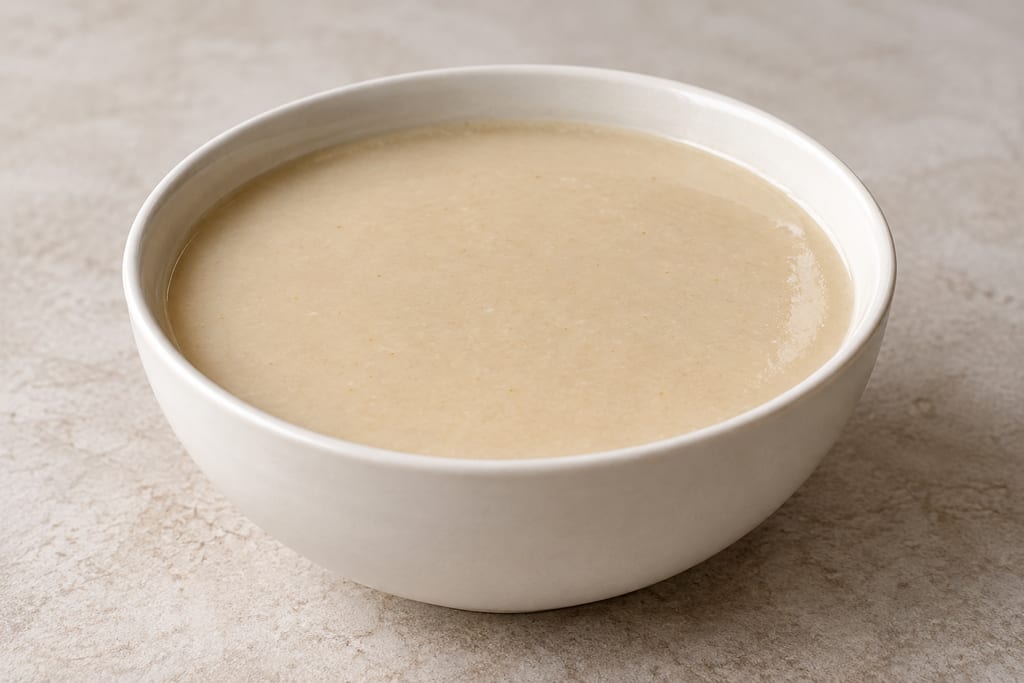
Ben-saalga is a fine, fluid gruel made from pearl millet, Pennisetum glaucum. Researchers describe it as a traditional Burkinabè food widely consumed in Ouagadougou and document it as a complementary food used for young children. The name is sometimes written without a hyphen; it should not be confused with ben-kida, a related but distinct millet gruel with grains or lumps.
The process studied by Tou and colleagues uses two spontaneous fermentation stages: first the grain soaks, then the sieved slurry settles and ferments. The paste is cooked with liquid from the process. This record follows field observations from Ouagadougou, not a standardized formula for every producer or a single origin story.
A 24-unit survey in Ouagadougou measured ingredients and intermediate products rather than prescribing one household ratio. The mean starting amount was 6.6 kg pearl millet, while individual production units varied widely. The average fresh water input was about 80 L across washing, soaking, milling, sieving and cooking; some of the liquid recovered during sieving was reused later. These are observed production averages, not a safely validated scale-down.
The same field work reports mean soaking of 16 hours and mean settling of 11 hours, with wide ranges between producers. Production used natural ambient conditions, and the authors documented changing fermentation products and pH. No numeric temperature or acidity threshold is established here as a safe endpoint.
After sorting and any initial washing, producers soaked whole pearl millet. The soaked grains were washed and drained in the field process, then wet-milled, often at a small community mill. Ginger, mint, pepper or black pepper could be added in differing combinations; amounts were not recorded as a standard formula. Wet flour was kneaded with water and sieved to remove coarse draff.
The thin filtrate was left to settle. Its lactic fermentation accompanied the separation of a liquid supernatant from a denser fermented millet paste. The study recorded the supernatant’s reuse in the final cook. Producers heated that liquid toward boiling, stirred in the paste and continued cooking to obtain the gruel. Mean stage durations in the steps summarize observations, while the full field range is kept in the timing notes; the sources do not support a single repeatable batch scale.
A preliminary survey had identified 93 ben-saalga production units in Ouagadougou by 1999. Subsequent process research sampled 24 units there, and a household study later documented consumption patterns. These dated records show the food in an established city practice but do not date its first preparation or locate its origin more precisely.
Ben-saalga and ben-kida are distinct products even though both use pearl millet and share some processing stages. Research describes ben-saalga as the fine gruel and ben-kida as a grainier or lump-containing gruel. The recipe does not add barley malt, beans or other enrichment studied as experimental modifications.
The process is spontaneous and the source studies report variation between producers. A 2006 microbiology paper describes inconsistent quality, poor hygiene and short shelf life; a separate market study found that 28.57% of the Bensaalga-type samples in its dataset failed the study’s microbiological criteria. That sample result is not a claim about every producer or a forecast for this recipe.
Fermentation measurements are evidence of what researchers observed, not proof that a new batch is safe. Sourness, bubbles, pH or elapsed time alone cannot establish safety. Use safe water and clean equipment, avoid contact between raw and cooked material, cook thoroughly, and follow general safe holding guidance. No ben-saalga-specific validated fermentation endpoint or storage period was found.
Although household research records use as complementary food for young children, nutritional analyses found low energy density and low lipid, protein and mineral levels compared with recommendations. Do not present this gruel as nutritionally complete infant food or use it as a substitute for professional feeding advice.
The stage averages make clear how much the observed process depends on water. Across production units, reported means were 12.5 L for washing, 8.9 L for soaking, 5.7 L for grinding, 39.3 L for sieving and 13.4 L added during cooking. The table separately records 23.9 L of recovered supernatant reused in cooking; that liquid is part of the process, not extra fresh-water input. These means are not a single producer’s exact formula, and they should not be reduced proportionally without testing.
The operations call for vessels for soaking, kneading and settling, access to a wet mill, a sieve, and a heat-safe pot with room to stir the final gruel. The process paper reports community milling but does not specify vessel materials or capacities. The measured units processed several kilograms of grain and produced widely varying large amounts of gruel, so a household-size translation is not established by the study.
In pilot observations, soaking produced more ethanol than lactic acid. During settling, lactic acid production became more prominent, alongside some ethanol and acetate. Lactic acid production varied substantially between trials. This changing chemistry helps explain why ben-saalga can taste sour and why a fixed time alone cannot describe every batch.
Mean pH readings in the workshop measurements fell from 6.6 at the start to 4.4 at the end of soaking, then from 5.5 to 3.7 over settling. These values are measurements from that process, not targets that a home fermenter can treat as proof of safety. The research calls for controlled conditions to obtain more consistent gruel.
Sieving removes coarse grain fractions, including hull-rich draff. The research observed changes in sugars and a decrease in phytate through processing; in the sampled data, the largest phytate reduction occurred during settling. It also found protein content fell from the washed grain to the fermented paste, which the authors attributed to protein-rich fractions discarded at sieving. These laboratory results describe material changes; they do not mean every serving has the same composition.
A separate 2008 household and production-unit study found that fermentation and processing can reduce some factors that limit nutrient availability, while also causing substantial lipid, protein, iron and zinc losses. Its measured gruels remained low in energy density and nutrient content relative to complementary-food recommendations. The exact composition depends on the product and was not supplied as a fixed value for this recipe.
A 2019 study analyzed marketed porridges collected in Ouagadougou during October 2018. It found that 28.57% of the sampled Bensaalga-type porridges were classed as microbiologically unsatisfactory by the study’s criteria. The paper also reports coliforms and other organisms across its sample set; it detected no Salmonella in those samples. Neither the result nor the absence of Salmonella in that sample certifies another producer, season or batch.
The warning is about process variability and handling, not a claim that every traditional ferment is unsafe. The sources give no validated ben-saalga-specific critical limits or shelf life. Use WHO general guidance for safe water, clean equipment, thorough cooking and safe holding temperatures, while keeping those controls distinct from the historical fermentation description.
A preliminary survey identified 93 ben-saalga production units in Ouagadougou in 1999, and later field and laboratory studies described the process there. These records document an established practice; they do not establish its origin or first use.
Scaling: source batch only
The process depends on spontaneous flora and has variable pH and microbial activity; research describes hygiene and quality concerns, and a Ouagadougou market study found some sampled Bensaalga-type porridges microbiologically unsatisfactory under its criteria.
Hazard sourceA household survey and analyses found the porridges low in energy density and several nutrients compared with complementary-food recommendations; the recipe must not imply nutritional completeness for young children.
Hazard sourceUse safe water, wholesome grain and clean, sanitized food-contact surfaces and equipment.
Control sourceCook the final gruel thoroughly and keep it at safe serving or storage temperatures; WHO general guidance gives hot holding above 60°C, prompt refrigeration below 5°C and no more than 2 hours at room temperature. These are general food-handling controls, not a validated ben-saalga fermentation schedule.
Control sourceDo not treat sourness, pH, bubbles or elapsed time as proof that a spontaneous batch is safe.
The measured stage durations and heating times describe observed production units, not validated critical limits.
Research describes ben-saalga as a food given to young children, but also reports low energy density and nutrient levels below recommendations for complementary foods; do not present this gruel as nutritionally complete infant food.
The sources do not establish a ben-saalga-specific storage period.
Process and market-safety observations come from Ouagadougou; they do not establish one origin or a uniform national recipe.
Millet names several small-seeded cereals. In African fermented foods, pearl millet and finger millet become sour gruels, doughs and drinks through distinct combinations of soaking, milling, cooking, malting and fermentation.
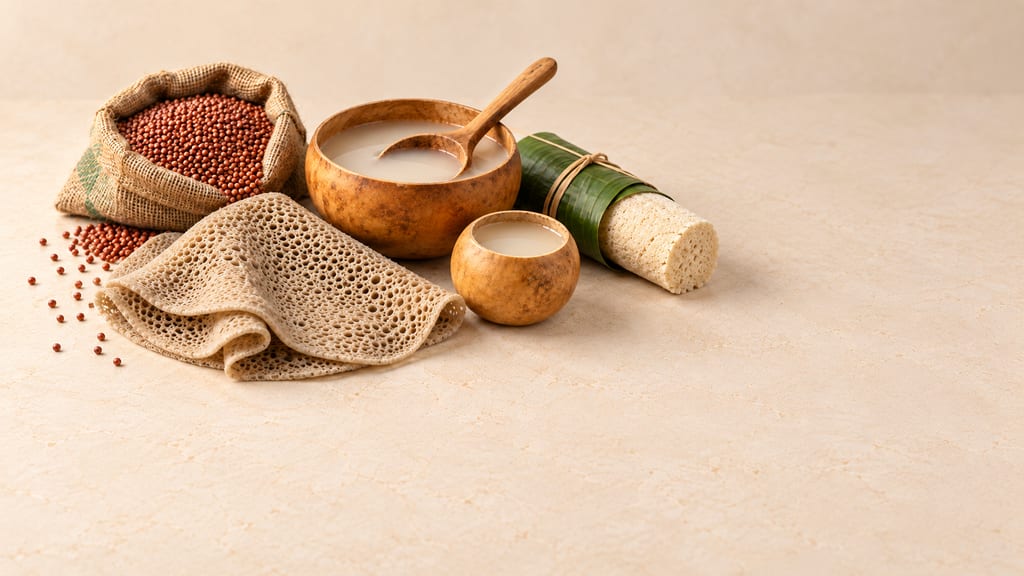
From sour breads and milk to savoury seeds, cassava staples and living beers, African fermentation follows the crop, the community and the work of transformation.
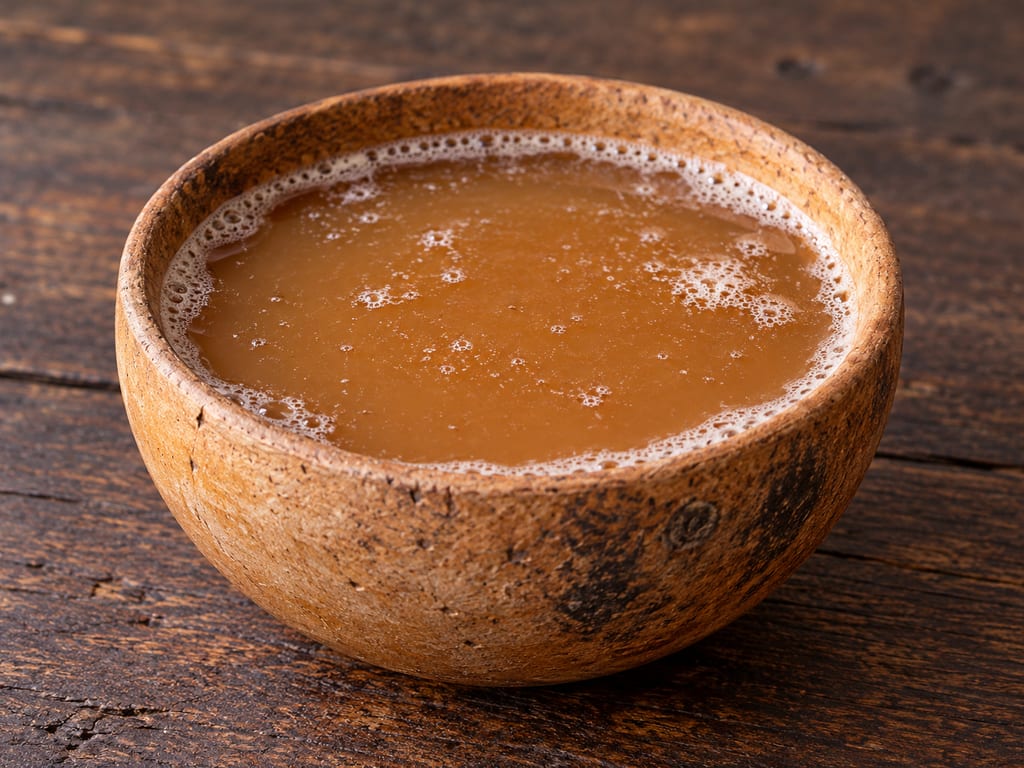
A Burkina Faso sorghum beer brewed from malted grain, soured by a spontaneous lactic stage and then fermented with a traditional yeast leaven.
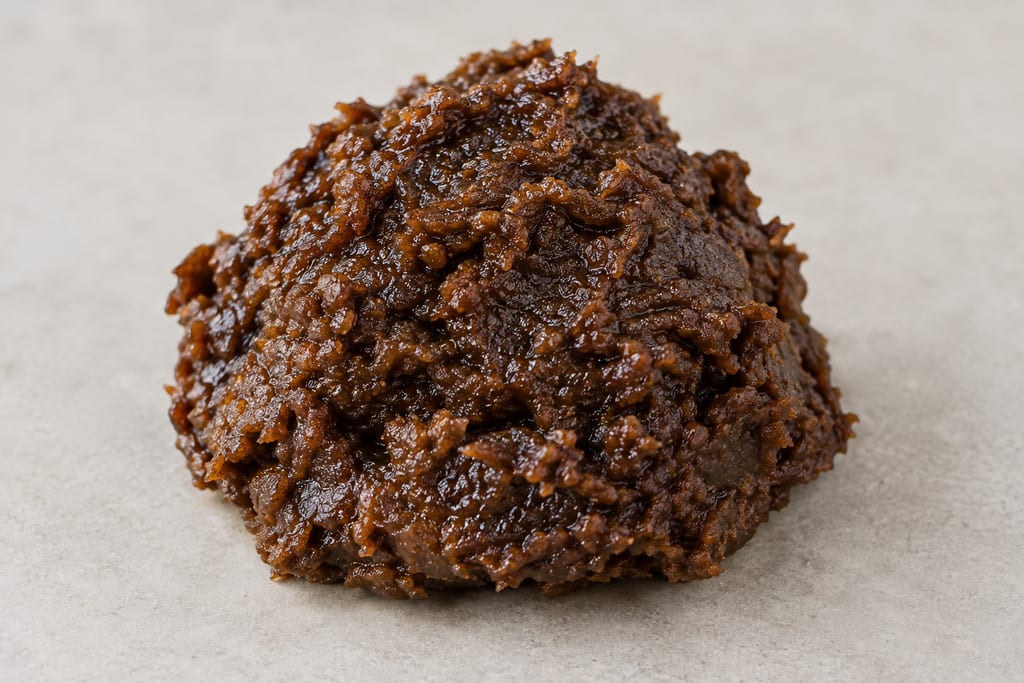
Maari is a Burkinabè baobab-seed condiment documented in producer studies. This is a non-instructional account, not a home recipe: sources vary, omit key process details and establish no validated safety control.
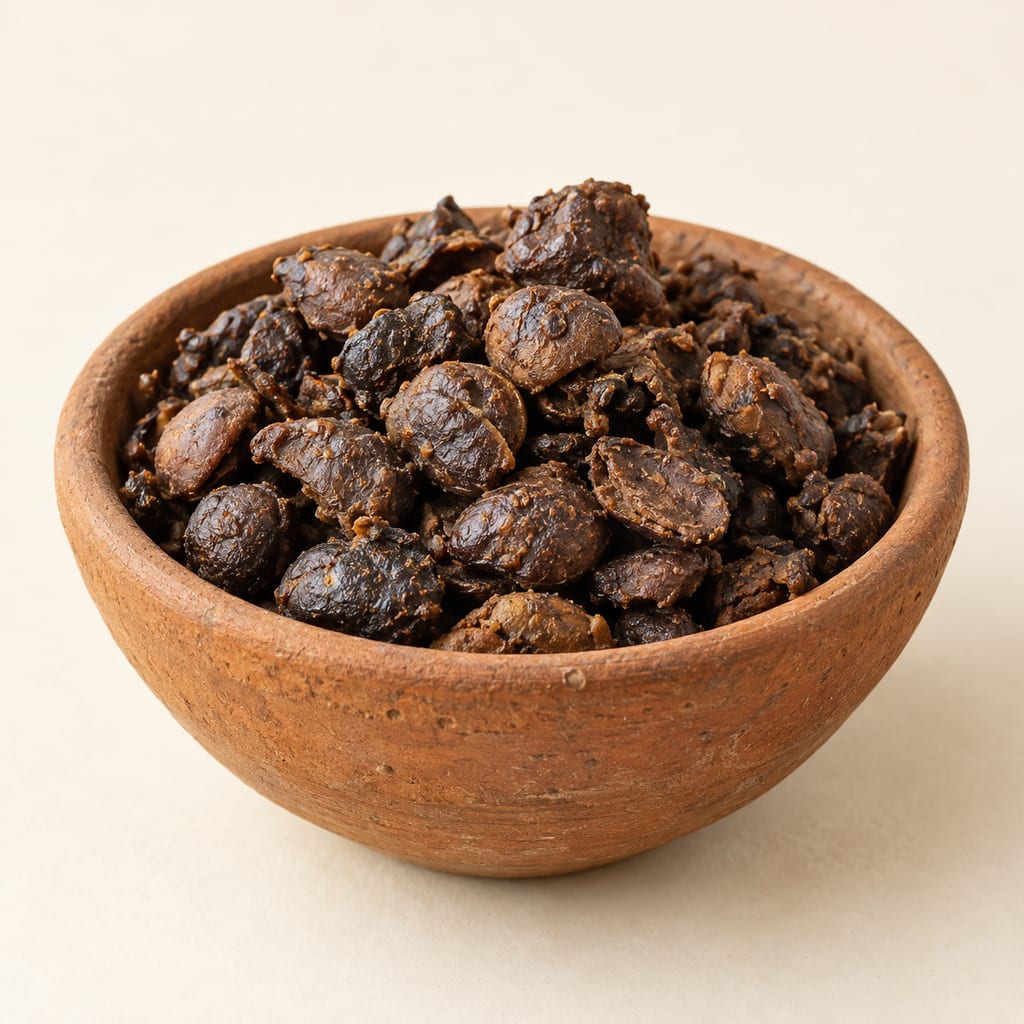
A Burkina Faso alkaline fermentation of African locust bean seeds (Parkia biglobosa), used to season sauces and cooked grain dishes. Local process details vary, and the sources do not give a measured household batch.
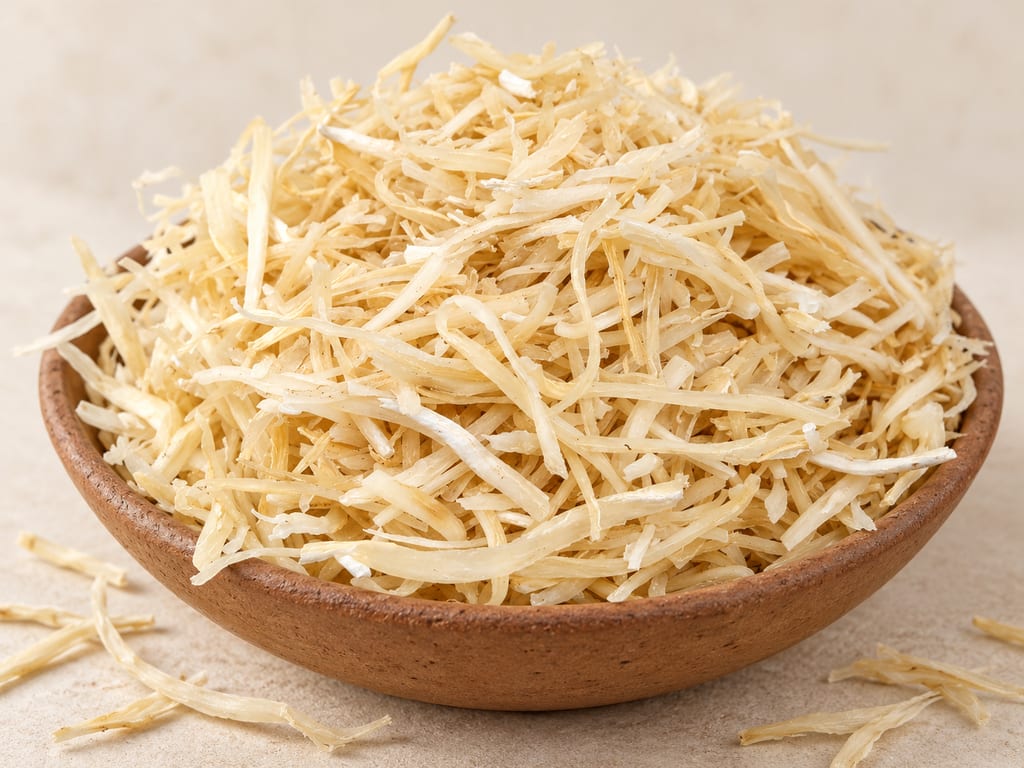
Abacha is a fermented cassava-strip preparation from southeastern Nigeria, sold wet or dried and later rehydrated for meals such as African salad.
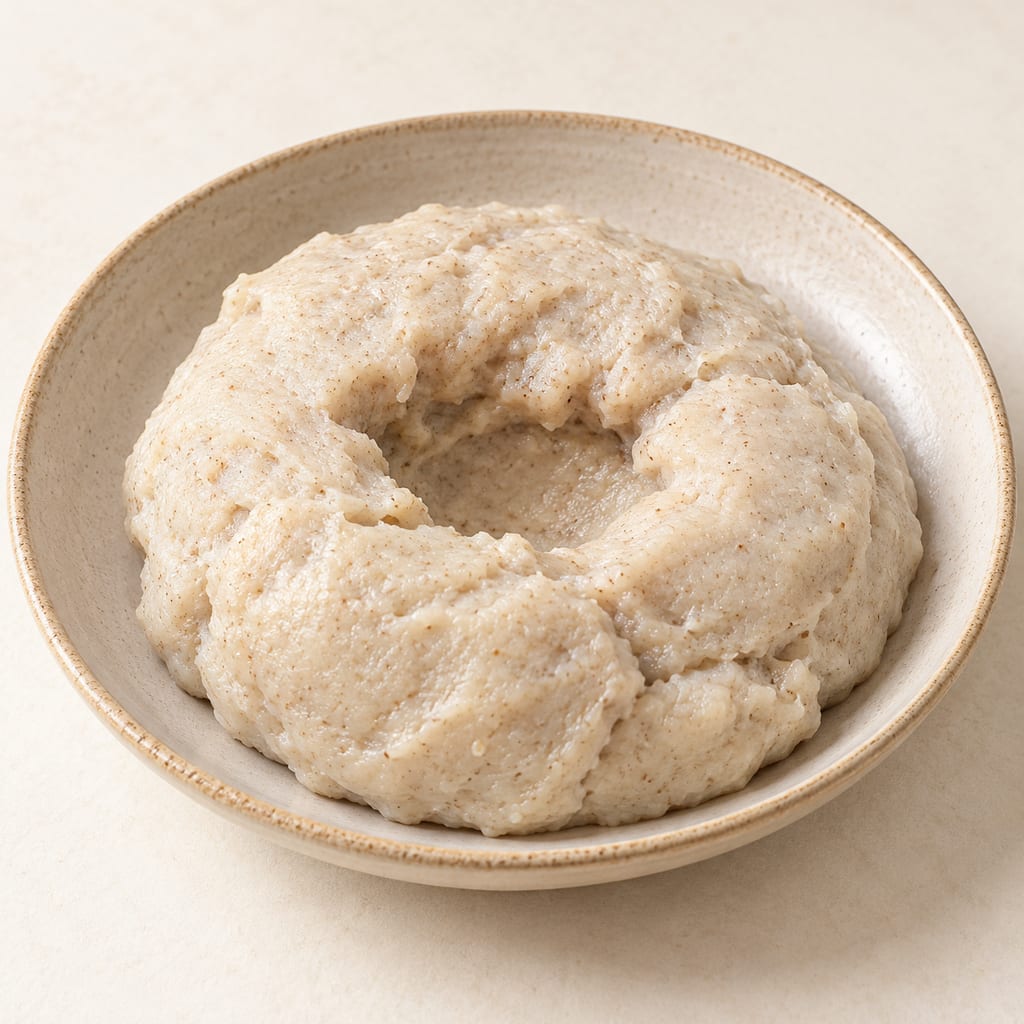
Aceda is Sudan’s firm cereal porridge, commonly made from sorghum and shaped into a smooth mound. Some versions use fermented dough; fermentation is not universal.

Ghanaian sour cassava dough fermented with traditional inoculum and drained during fermentation. It is used as a base for cooked foods such as banku and akple; process variants and safety outcomes differ.

Appam, or hoppers, are South Indian and Sri Lankan rice pancakes made from a fermented coconut-and-rice batter and cooked in a curved pan to a crisp lacy rim and a soft, spongy centre.
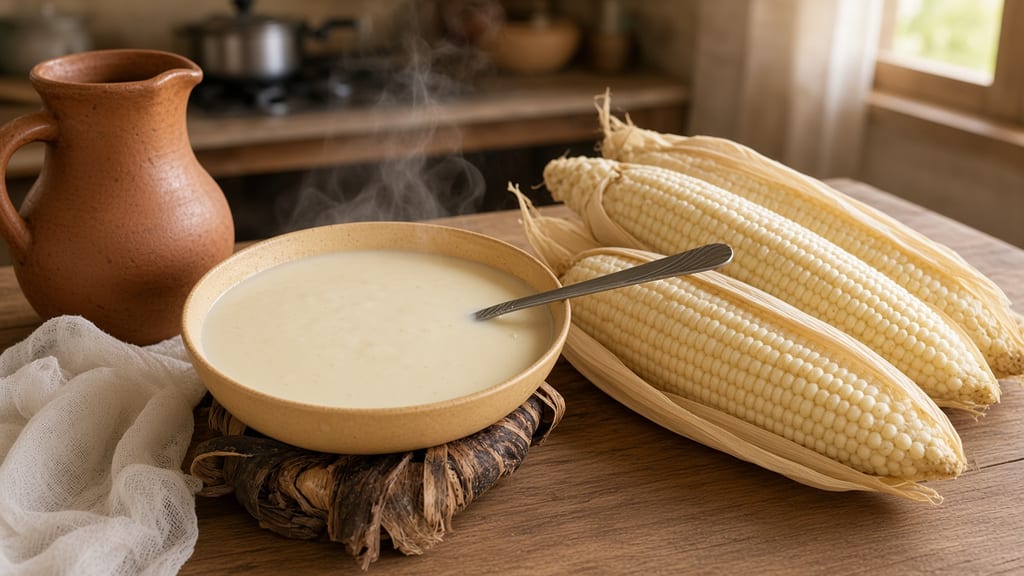
A hot, sour maize drink from Tabasco made from maize that is not lime-cooked. The ground grain sours for half a day, then makers strain it and boil it until thick.
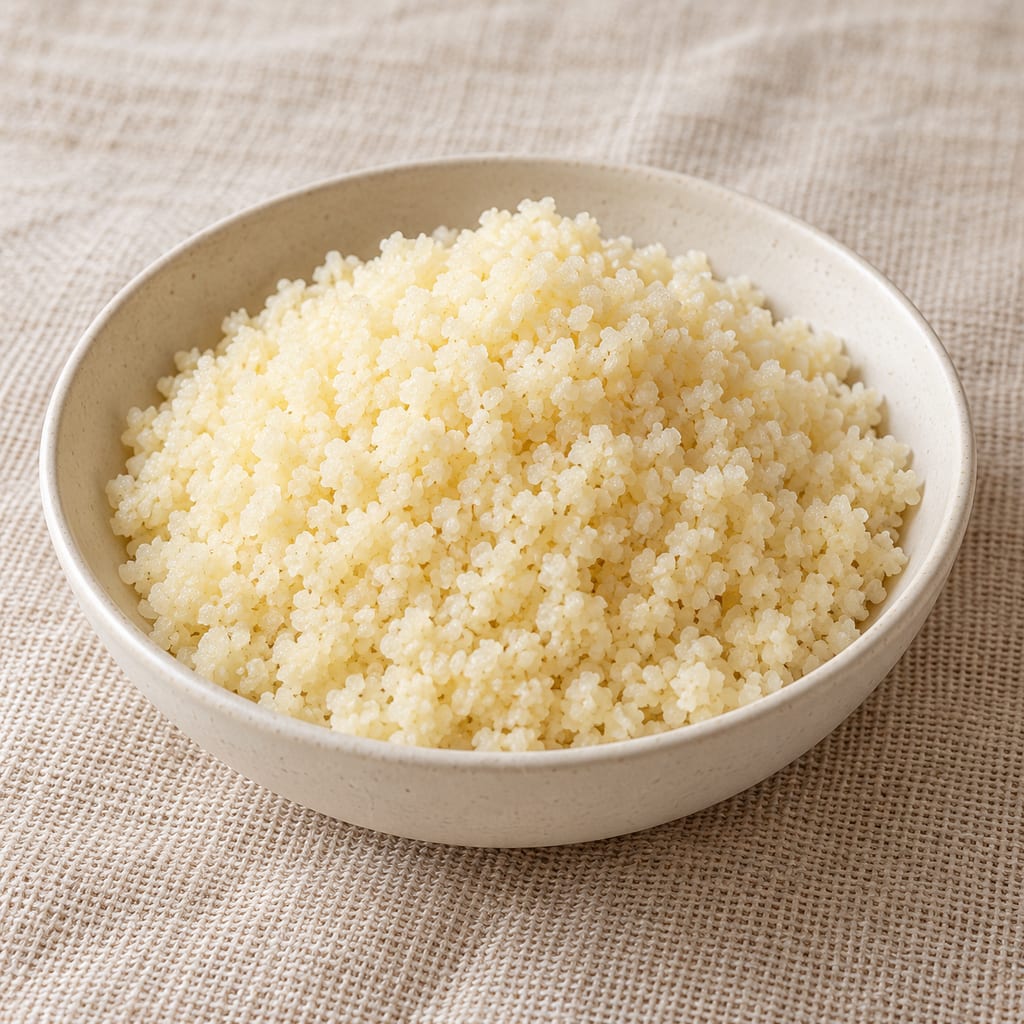
Ivorian cassava semolina: grated cassava is fermented overnight with a traditional inoculum, pressed, sieved into granules, dried and steamed. Documented in a 2006 field study; no sole original process is established.
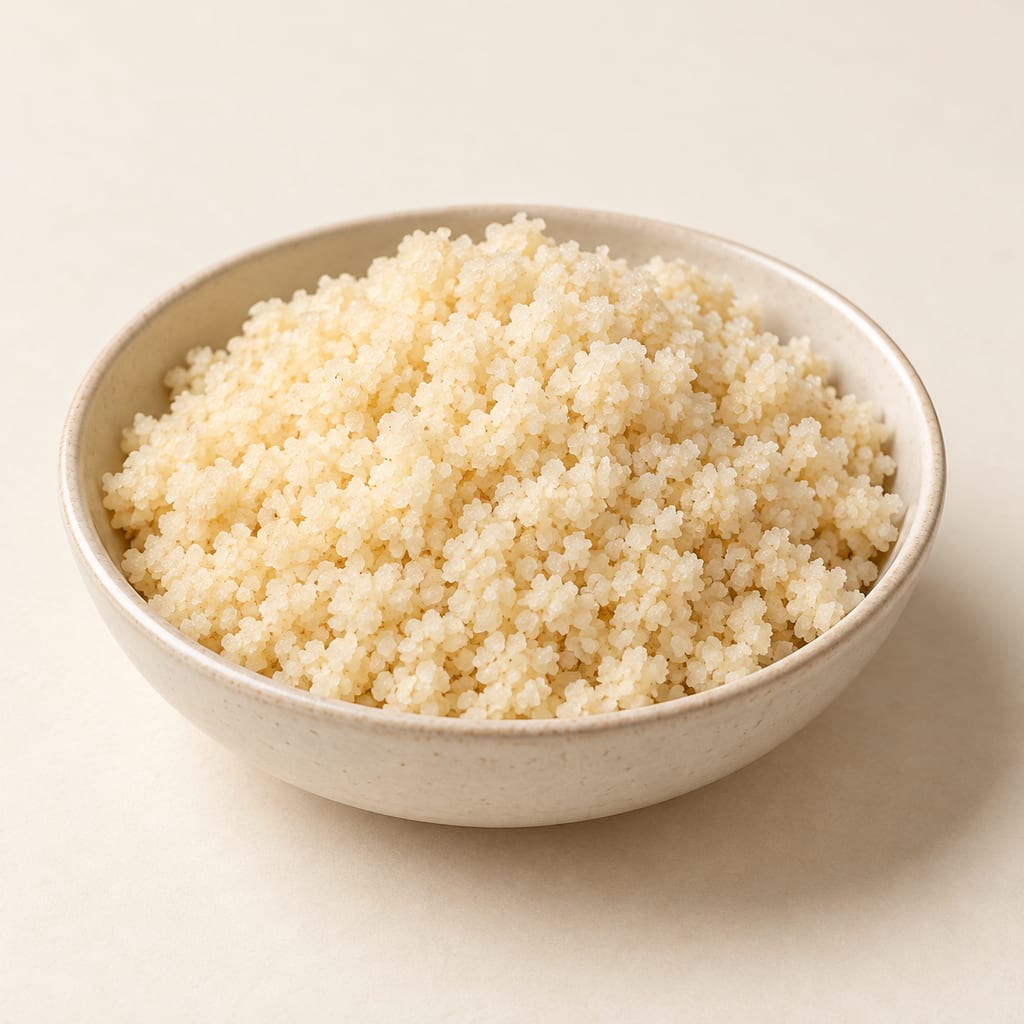
Attiéké is an Ivorian staple of grated cassava fermented with a traditional inoculum, then pressed, sieved, granulated, dried and steamed into fine couscous-like grains.

Crushed or milled barley cooked in water until the starch softens and the mixture thickens, the plainest way a northern household turned stored grain into a meal, here with apple and hazelnut.

Soft, spreadable Calabrian pork sausage made with a great deal of red chilli and fatty pork, stuffed into natural casings, sometimes smoked and matured while staying soft.

A way to add independent temperature logging to an existing food dehydrator without changing its built-in controls or protections. It is a monitoring method, not a rewiring plan.

Pleurotus cystidiosus is the abalone mushroom, a cultivated oyster-type fungus with dark brown caps that grows more slowly and is more demanding than other Pleurotus species.

A dark, balanced vinegar from Emilia-Romagna made by combining cooked or concentrated grape must with wine vinegar, then acetifying and refining it in wood under a protected specification.

A living dairy inoculum that starts controlled cream fermentation, developing acidity and aroma before sour cream or cultured butter is finished.

A small electric incubator holds jars at a selected temperature for yogurt and other documented warm food preparations. Controls, capacity and vessel arrangement vary by model.

Adygean salt is a seasoned table salt associated with Adygea and the wider North Caucasian culinary tradition. Salt is blended with garlic and a variable selection of herbs and spices; the exact mix depends on the named style and maker.

The African Caesar-group mushroom, Amanita masasiensis, is a wild ectomycorrhizal species of central and southern African woodlands, eaten locally. The genus contains deadly poisonous species, so identification needs care.
No community contributions have been published for this entry yet.
Sign in to contribute. Published comments and photos are free to read.
2nd International Workshop, Food-based approaches for healthy nutrition; IRD repositoryMethod · Ingredients · Geography · Fermentation
Study of the processing of pearl millet (Pennisetum glaucum) into ben-saalga, a fermented gruel from Burkina FasoA field survey of 24 production units in Ouagadougou reports mean 6.6 kg pearl millet and stage-wise water quantities, about 80 L total.
The process includes grain washing where used, soaking, wet milling, kneading and sieving, settling/fermentation, and final cooking.
Soaking averages 16 h (range 6–31 h) and settling averages 11 h (range 2–20 h); aromatic ingredients vary.
The measured pH and metabolite changes varied; the reported values are observations, not recipe safety limits.
Cited in: What the field batch records; The two fermentations and final cook; Place, evidence and limits; Water, equipment and production scale; What the two fermentations show
International Journal of Food MicrobiologyMethod · Fermentation · Geography · Microbiology
Study through surveys and fermentation kinetics of the traditional processing of pearl millet (Pennisetum glaucum) into ben-saalga, a fermented gruel from Burkina FasoThe article studies 24 traditional production units and pilot fermentation kinetics.
It describes soaking as the first fermentation, followed by wet grinding/sieving and settling as the second fermentation; the former is mainly alcoholic and the latter lactic.
Production occurred in Ouagadougou, with community milling and substantial scale variability.
The authors report spontaneous microbial variability and call for process control; observations do not validate a home safety schedule.
Cited in: A fermented millet gruel from Ouagadougou; What the field batch records; The two fermentations and final cook; Place, evidence and limits; Water, equipment and production scale; What processing removes and changes
International Journal of Food Sciences and Nutrition; PubMed recordHistory · Nutrition · Geography
Consumption pattern, biochemical composition and nutritional value of fermented pearl millet gruels in Burkina FasoA survey of 318 households in Ouagadougou found ben-kida and ben-saalga often used as complementary food for young children.
Analyses found both beneficial processing changes and losses in fat, protein, iron and zinc.
The gruels had very low energy density and nutrient contents below complementary-food recommendations; this is not a claim that the food is unsafe by itself.
Cited in: A fermented millet gruel from Ouagadougou; Place, evidence and limits; Safety and feeding context; What processing removes and changes
International Journal of Food MicrobiologyMicrobiology · Safety · Fermentation
Isolation of bacteriocinogenic Lactobacillus plantarum strains from ben saalga, a traditional fermented gruel from Burkina FasoThe study characterizes lactic acid bacteria isolated from fermenting ben-saalga at a small production facility in Ouagadougou.
The authors describe spontaneous inoculation, inconsistent quality and poor hygiene as context for research.
Antagonism against selected indicator strains in laboratory assays is not proof that a household fermentation is safe.
Cited in: Safety and feeding context; Market sampling is not a batch test
American Journal of Food and NutritionSafety · Geography · Microbiology
Physicochemical and Microbiological Qualities of Traditional Cereal-Based Porridges Sold in Ouagadougou (Burkina Faso)The study sampled marketed porridge in Ouagadougou in 2018 and reports microbial-quality classifications across named porridge types.
Bensaalga-type samples had a 28.57% microbiological dissatisfaction rate under the study's criteria; this is a result from that sample, not every batch.
The study measured coliforms, staphylococci, yeasts/molds and Salmonella; it does not certify a home process.
Cited in: Safety and feeding context; Market sampling is not a batch test
World Health OrganizationSafety
Five keys to safer foodGeneral food-handling guidance: keep clean, separate raw and cooked, cook thoroughly, use safe water/raw materials, and control holding temperatures.
The guidance gives general temperature and room-temperature holding controls; they are not ben-saalga-specific fermentation validation.
Cited in: Safety and feeding context; Market sampling is not a batch test