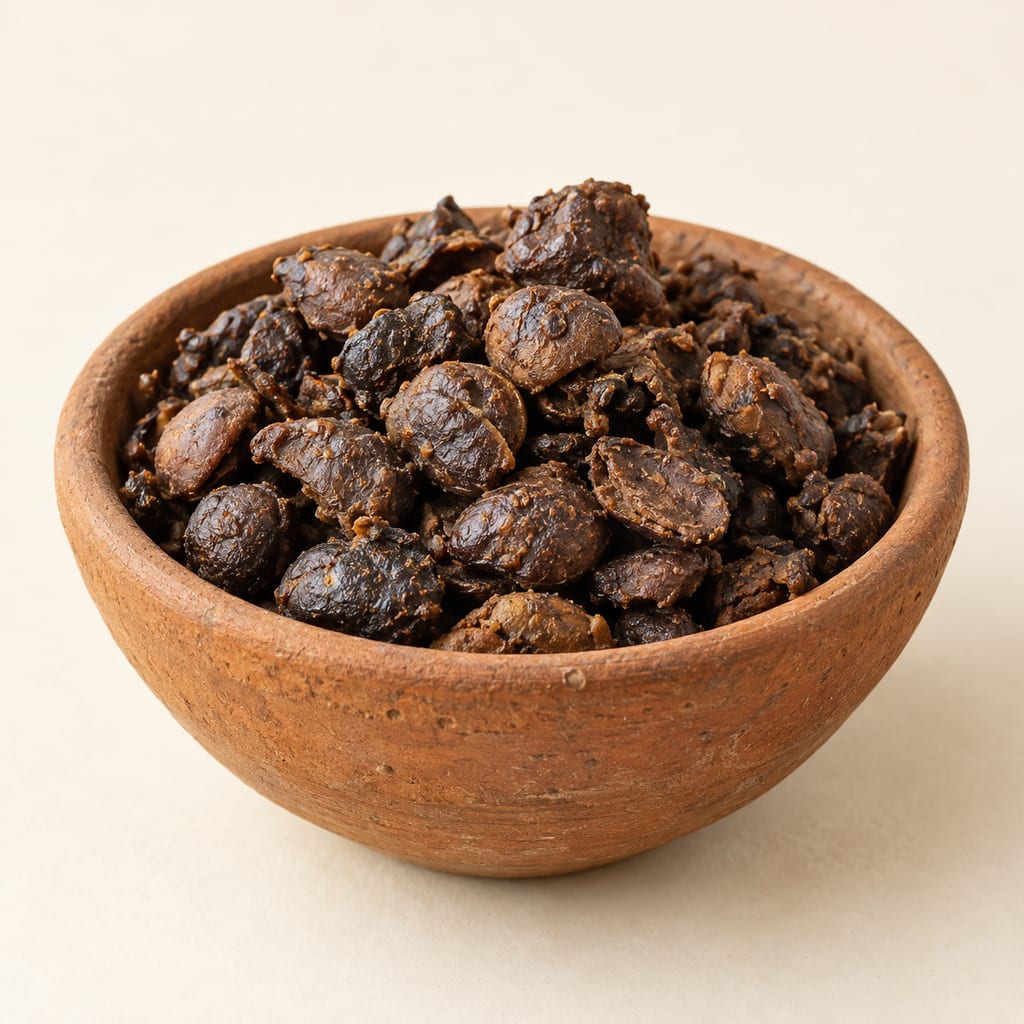
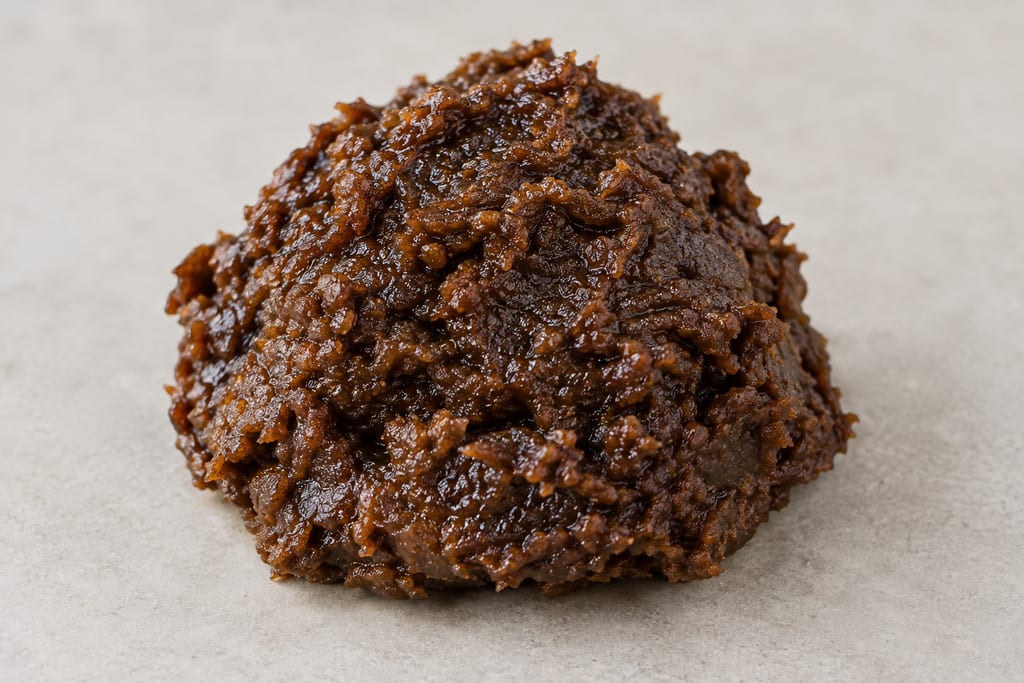
A Burkina Faso alkaline fermentation of African locust bean seeds (Parkia biglobosa), used to season sauces and cooked grain dishes. Local process details vary, and the sources do not give a measured household batch.
Soumbala is an alkaline-fermented condiment made from seeds of the African locust bean tree, Parkia biglobosa. In Burkina Faso it is used in sauces and cooked grain dishes. The fruit pulp is a separate sweet food; this preparation begins with the seeds and does not describe the pulp or seed oil.
Similar Parkia seed ferments have regionally distinct names and methods. Sources associate soumbala with Burkina Faso and Mali, soumbara with Côte d’Ivoire, nététou with Senegal, and iru or dawadawa with different parts of Nigeria and Ghana. These names do not establish a single standardized recipe. This record focuses on one Burkina Faso process and does not take the broader dawadawa candidate as a synonym to merge.
A survey of production practices describes a sequence used across several Burkina Faso communities. Producers first sort and wash the Parkia seeds, then boil them for about 24–40 hours. Some add ash or alkaline potash while softening the seeds. They pound the cooked seeds in a mortar to separate the seed coats from the cotyledons; a portion use ash or sand during pounding. The separated cotyledons are washed, drained and sorted.
The survey records two further parboiling passes reported at 1–3 hours, followed by draining and cooling in a basket. Cotyledons are fermented in several kinds of container, including panniers, calabashes, canaries, plastic bags and tanks. Some producers sprinkle millet flour (reported by 12.5% of the surveyed producers) or salt powder (10%) over the cotyledons, and a smaller share cover them with leaves. These additions are optional and their amounts are not reported. The mixture ferments spontaneously for two to three days. One Burkina Faso process review reports 25–30°C for the 48–72-hour fermentation period; these are reported conditions, not a validated control range.
The survey describes an initial period of sun-drying of almost eight hours before the material is shaped. It is dried further afterward. Soumbala may be sold as balls, powder, paste or other forms. The publication does not give a final drying target, storage condition or time limit. Its reported forms reflect producer practice, not a single standardized finish.
The observed equipment included aluminum cooking pots and, for some producers, earthenware canaries; mortars and pestles for dehulling; baskets for draining and cooling; and several kinds of fermentation container. A separate equipment record links a leaf-lined basket to a Sokoto daddawa method. That equipment description is not silently substituted for the Burkina Faso soumbala account.
The survey reports that some producers process 10, 20 or 30 kg of seed per month. Those are monthly production volumes, not recipe batch weights. No source inspected here gives a seed-to-water ratio, ash dose, yield, pot capacity, fermentation fill depth or a repeatable scale conversion. Therefore the ingredient amounts remain unspecified.
Research identifies Bacillus species, especially members of the B. subtilis group, among the organisms involved in alkaline Parkia-seed fermentation. Soumbala is valued for its strong characteristic aroma and used as a flavouring in sauces. A Burkina Faso study describes its use with rice, couscous and cereal-based dishes. These sources support the preparation and use without suggesting that one taste or smell identifies a safe fermentation.
Traditional processing varies among producers and communities. The survey reports several methods of dehulling, fermentation vessel choices, covers and finishing shapes. Differences should be retained rather than reduced to an assumed universal recipe.
Researchers in Burkina Faso have grown identified bacterial strains on locust-bean cotyledons and compared single-strain and mixed-culture batches with spontaneous fermentation. The tested strains differed from one another, and the authors call for more work on how a carrier-based starter performs in real production and how it keeps in storage. An earlier controlled study tested selected Bacillus subtilis and B. pumilus isolates and found that aroma and sensory results depended on the strain.
These are laboratory and pilot findings. They do not describe a starter that households can obtain, and they do not show that any tested strain is interchangeable with the inoculum a producer already uses. The traditional process on this page remains spontaneous.
Research on fermented locust-bean seed reports different names in Nigeria, Ghana, Benin and Senegal. A study in Benin treats afitin, iru and sonru as distinct condiments and reports differences in the processes it followed. A study of iru in western Nigeria followed bacterial sequence matches through one fermentation system, which describes that system and not the wider family. A shared seed or a related name does not show that two foods use the same inoculum or process.
A report from northern Ghana describes dawadawa production by a named woman in Wulensi and the local concern for livelihoods that depend on locust-bean trees. It gives community context for the condiment, not a technical account of its fermentation.
A production survey followed six ethnic communities in Burkina Faso, including Mossi, Fulani, Bobo, Dagara, Samo and Bissa producers. A separate product-quality study collected soumbala from six production groups in Burkina Faso. These are documented settings and demonstrate variation within the country; they do not establish where the practice began.
Scientific and technical sources document soumbala as a locally produced traditional condiment in Burkina Faso in the twenty-first century. The inspected sources do not provide a dated origin or a single historical starting point.
Soumbala is a spontaneous alkaline ferment, but the available evidence does not show that fermentation alone reliably controls hazards. A study of Bacillus isolates from Soumbala and Bikalga detected enterotoxin production among B. cereus isolates from fermented seeds. This was an investigation of selected isolates, not an estimate that every batch contains toxins. The finding is still a specific reason to avoid treating spontaneous fermentation as a safety guarantee.
A Burkina Faso product survey found diverse microbial groups and differences associated with processing diagrams. Its authors discuss sanitation, open handling, dust, moisture and insects as concerns in artisanal production. Another analysis of Soumbala composition reports that biogenic amines formed during production were not removed by subsequent processing. The inspected studies do not provide a validated household kill step, fermentation endpoint, drying endpoint, shelf-life limit or critical control for these hazards.
This page preserves the traditional process as a research record. The available sources do not support a tested household safety protocol. Reported durations and temperatures should not be turned into universal limits, and smell or appearance cannot replace a validated control.
Find an attributed individual household batch with actual seed and water weights, a clearly defined optional ash treatment, yield and the exact parboiling durations.
Clarify whether surveyed 1–3-hour parboiling applies to each pass or the combined stage, and document site-specific variation in the fermentation vessel and covering material.
Find validated food-safety controls for toxigenic Bacillus cereus and biogenic amines in soumbala, together with final drying and storage limits.
Verify source-backed rights and exact subject identity for five photographs of finished Burkina Faso soumbala before commissioning editorial art.
Soumbala is described as a locally produced Burkina Faso condiment made from Parkia biglobosa seeds. The sources document current practice and do not establish an origin date.
WaterUsed to cook and wash seeds; replenish during cooking as producers do, but the source gives no measured volume.
Amount not reported.
Ash or alkaline potash (optional)Some producers add ash or alkaline potash during softening and dehulling. Ash type, lye concentration and dose vary or are not recorded.
Amount not stated
Optional in surveyed practice; no dose reported.
Millet flour (optional)Optional; some surveyed producers sprinkle it over the cotyledons before fermentation.
Amount not stated
Used by 12.5% of surveyed producers; no dose reported.
Salt(optional)Optional salt powder; some surveyed producers sprinkle it over the cotyledons before fermentation.
Amount not stated
Used by 10% of surveyed producers; no dose reported.
Method
Risks and precautions · Standard risk
Toxigenic Bacillus cereus in soumbala
Researchers detected enterotoxin production among B. cereus isolates from fermented Parkia seeds, including isolates tested during fermentation. This evidence concerns tested isolates and does not mean every batch contains toxin.
Hazard source
Variable microbial contamination in artisanal production
A survey of Burkina Faso soumbala samples found several microbial groups and differences associated with processing diagrams and production hygiene.
Hazard source
Published process descriptions do not establish a validated household control for toxigenic B. cereus, a safe fermentation endpoint, or a final drying and storage limit.
Do not assume that alkaline fermentation, a reported temperature or time, smell, taste or appearance proves a batch safe.
Ash and potash additions are optional and variable in the surveyed practice; no alkaline strength or dose is supplied. Do not substitute an unmeasured ash-lye concentration.
Sort and clean the Parkia biglobosa seeds.
Boil the seeds for about 24–40 hours in a large pot. One Burkina Faso survey reports that some producers add ash or alkaline potash during cooking; it does not provide an amount or strength.
Pound the softened seeds in a mortar to loosen and remove the seed coats. Some producers add ash or sand during this step. Separate the cotyledons from the coats, then wash, drain and sort them.
Parboil the cotyledons again. The survey reports two parboils of 1–3 hours but does not make clear whether that range applies to each pass or to the combined stage.
Drain and cool the cooked cotyledons in a basket. Spread or pack them in a producer's fermentation container; reported choices include panniers, calabashes, canaries, plastic bags or tanks. Some surveyed producers sprinkle millet flour or salt over the cotyledons and some cover them with leaves.
Allow spontaneous fermentation for 48–72 hours. The survey describes ambient fermentation; a Burkina Faso process review reports 25–30°C. The precise temperature and duration vary by producer and are not a validated safety target.
Sun-dry the fermented cotyledons. One survey reports an initial drying period of about eight hours before shaping; products are then further dried. Make balls or other forms only as documented for the local preparation. No final drying endpoint or storage condition is established here.
Use as a seasoning for sauces and cooked dishes served with rice, couscous or other cereal staples.
Conditions
Fermentation2–3 days
Temperature25–30°C
Temperature controlAmbient, monitored
Places
Burkina Faso
Documented preparation · Country evidence
Studies follow production in multiple Burkina Faso communities and groups; they do not establish an origin point.
Every preserved food is a stack of barriers against microbes, enzymes, air and time. This is how they work, what a recipe's numbers measure, and how cooks worldwide build them.
Maari is a Burkinabè baobab-seed condiment documented in producer studies. This is a non-instructional account, not a home recipe: sources vary, omit key process details and establish no validated safety control.
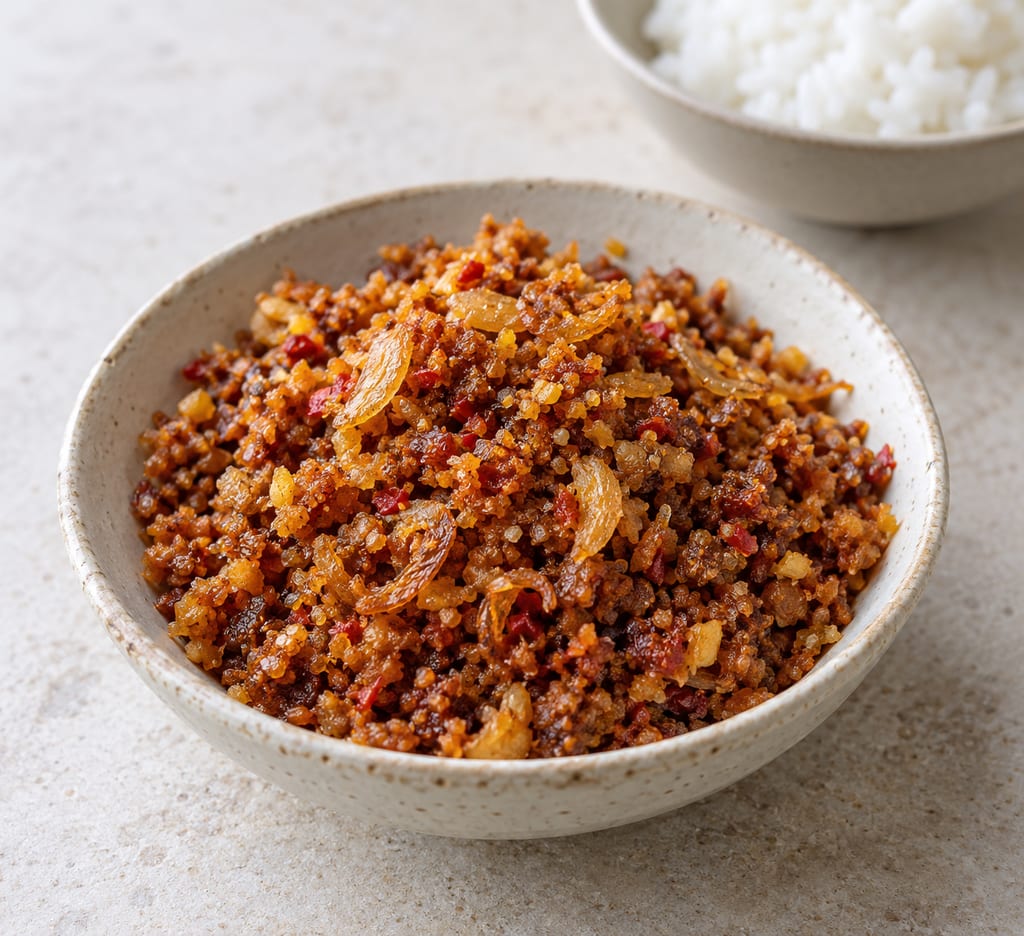
A Myanmar relish of dried shrimp, fried eschalot and garlic, chilli, turmeric, tamarind and ngapi. Naomi Duguid’s published recipe makes about 1 cup; it contains crustacean shellfish.
Chogochujang is a Korean sweet-sour sauce made by seasoning gochujang with vinegar and sugar. This development batch adds water and toasted sesame seeds, with optional garlic for the portion being served.
Dinanche, or donne' dinanche, is a Chamorro hot pepper paste of crushed chillies that Guam cooks use on its own or stir into fina'denne'. Its versions range from pepper alone to ones with eggplant, miso or coconut milk.
A fresh, uncooked yuzu and green chilli paste inspired by Kyushu’s yuzu kosho, made here as an untested small-batch seasoning rather than a preservation formula.
Jeow bong is a Lao paste of dried chilli, shallot, garlic and galangal cooked with buffalo or cow skin, a Luang Prabang specialty eaten with sticky rice and grilled meat.
A modern tomato condiment sharpened with the spicy, savoury tang associated with kimchi; this measured version whisk-mixes prepared ketchup and commercial kimchi seasoning.
Documentary account of Louisiana pepper sauces, using TABASCO's published barrel-aged commercial process as one specific example; the source does not provide a validated home recipe.
Soft, spreadable Calabrian pork sausage made with a great deal of red chilli and fatty pork, stuffed into natural casings, sometimes smoked and matured while staying soft.
A way to add independent temperature logging to an existing food dehydrator without changing its built-in controls or protections. It is a monitoring method, not a rewiring plan.
Pleurotus cystidiosus is the abalone mushroom, a cultivated oyster-type fungus with dark brown caps that grows more slowly and is more demanding than other Pleurotus species.
A dark, balanced vinegar from Emilia-Romagna made by combining cooked or concentrated grape must with wine vinegar, then acetifying and refining it in wood under a protected specification.
A small electric incubator holds jars at a selected temperature for yogurt and other documented warm food preparations. Controls, capacity and vessel arrangement vary by model.
Adygean salt is a seasoned table salt associated with Adygea and the wider North Caucasian culinary tradition. Salt is blended with garlic and a variable selection of herbs and spices; the exact mix depends on the named style and maker.
The African Caesar-group mushroom, Amanita masasiensis, is a wild ectomycorrhizal species of central and southern African woodlands, eaten locally. The genus contains deadly poisonous species, so identification needs care.
Community
No community contributions have been published for this entry yet.
Share what you made
Sign in to contribute. Published comments and photos are free to read.
Burkina Faso producer survey; long boiling, dehulling, washing, repeated parboiling, cooling in baskets, varied fermentation vessels and covers, spontaneous fermentation, drying and shaping; producer equipment and practices; cited traditional durations; variable hygiene and microbial quality.
Cited in: Identity and scope; Burkina Faso producer process; Equipment and quantities; Fermentation evidence and food use; Geography and history; Food-safety evidence; Research gaps
Accessed 2026-10-29
Journal of Food SecurityGeography · Food safety · Process
Study sampled 120 products from six Burkina Faso production groups; microbial populations varied with process diagrams; describes use in sauces, rice, couscous and cereal-based dishes.
Cited in: Fermentation evidence and food use; Geography and history; Food-safety evidence; Research gaps
Accessed 2026-10-29
International Journal of Food Microbiology / PubMedFood safety · Microbiology
Among isolates from Soumbala and Bikalga, enterotoxin production was detected for B. cereus isolates in fermented seeds; the tested isolates were a selected research set, not a batch prevalence estimate.
Cited in: Food-safety evidence; Research gaps
Accessed 2026-10-29
Journal of Applied Microbiology / PubMedMicrobiology
Soumbala is made from Parkia biglobosa seeds through cooking, fermentation and drying; study reports biogenic amine release and compositional changes, not suppressed by subsequent processing.
Cited in: Identity and scope; Food-safety evidence; Research gaps
Accessed 2026-10-29
Plant Resources of Tropical Africa / Pl@ntUseIngredient · Process · Geography
African locust bean seeds are cooked, cleaned, cooked again, fermented under alkaline conditions and dried; cites uses and broad West African distribution.
Cited in: Burkina Faso producer process
Accessed 2026-10-29
International Journal of Food MicrobiologyGeography · Process · Use
Describes regional names for fermented Parkia seed products and one general West African process: long boiling, pounding to remove seed coat, cotyledons covered with leaves and sackcloth and fermented at ambient temperature for 3–4 days. Regional names and processing differ.