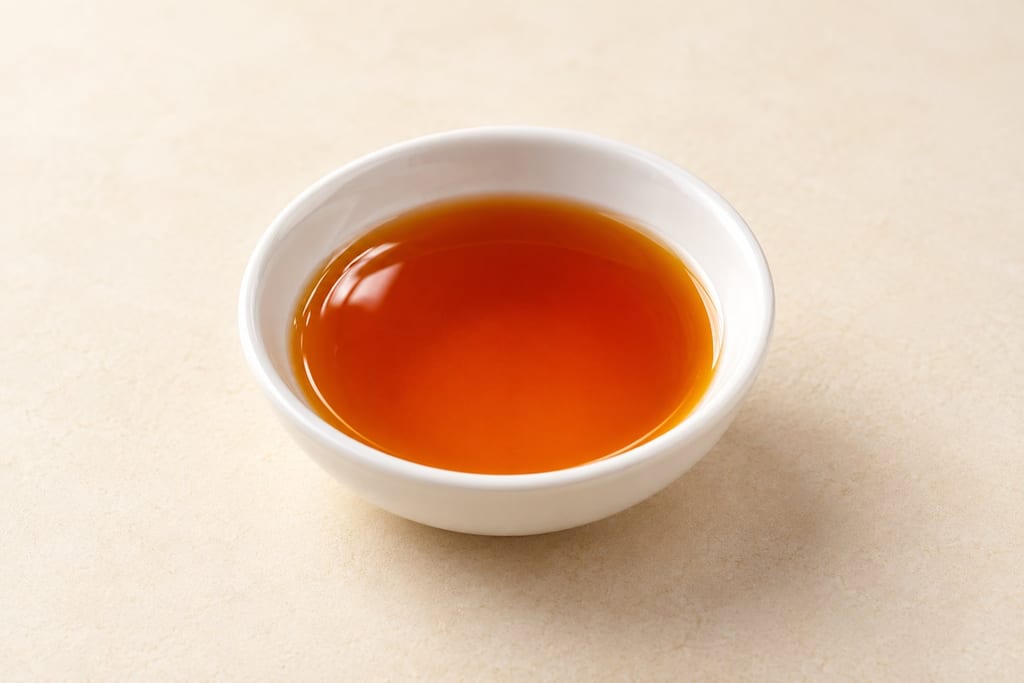
Fish sauce
Fish sauce is a clear, salty seasoning made by maturing fish with salt and drawing off the liquid. The broad family includes distinct regional sauces rather than one interchangeable method.
 FermenteaWhere food goes to change
ແຈ່ວບອງ (jeow bong) · jaew bong · bong sauce
Jeow bong is a Lao paste of dried chilli, shallot, garlic and galangal cooked with buffalo or cow skin, a Luang Prabang specialty eaten with sticky rice and grilled meat.
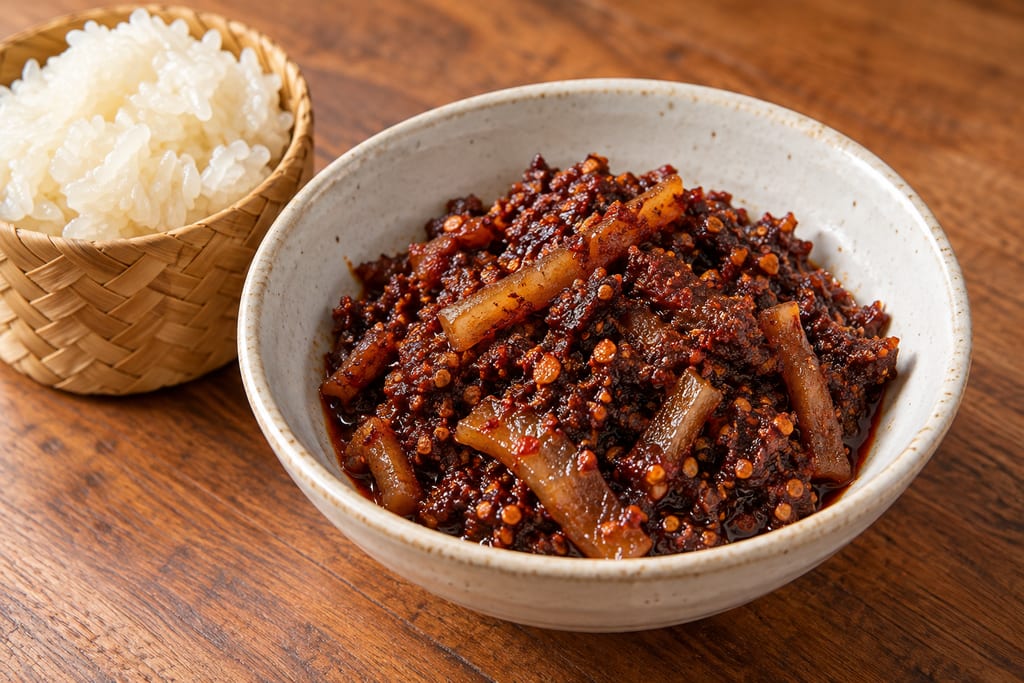
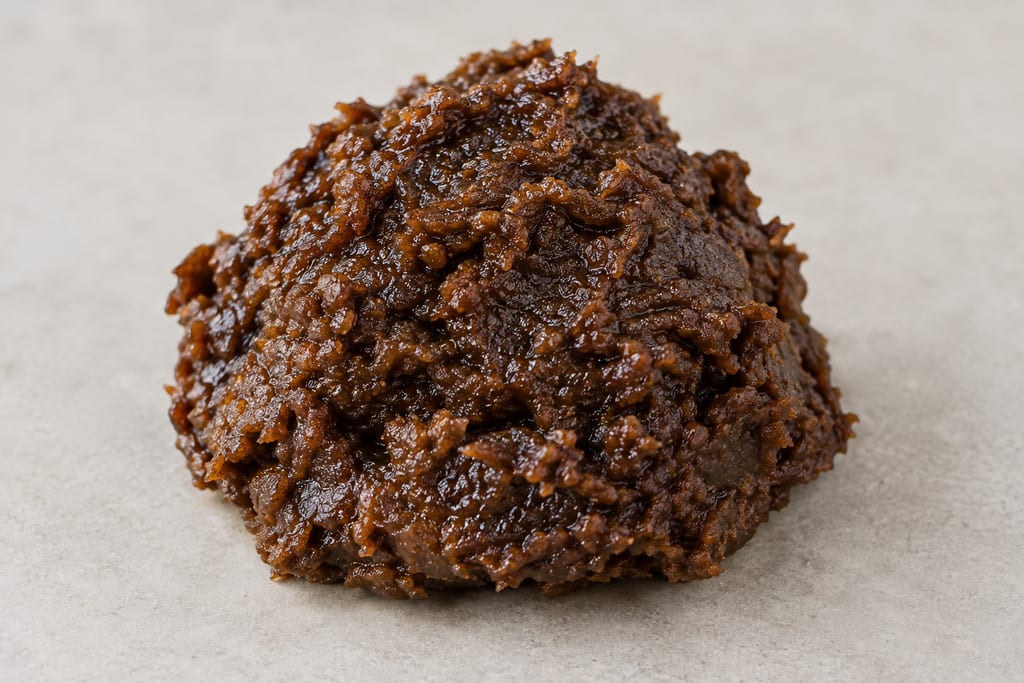
Jeow bong (Lao: ແຈ່ວບອງ) is a Lao paste of dried chilli, shallot, garlic and galangal, cooked or pounded together with strips of dried buffalo or cow skin. It is associated with Luang Prabang in northern Laos, and a Lao-American recipe author calls it an iconic Lao condiment there. She says the Luang Prabang style is usually sweeter, milder and made without chilli seeds, while the version on this page is the less sweet, very spicy family style.
The skin is a distinctive part of it. Singed, simmered or roasted until tender and then sliced thin, it adds a soft, chewy texture to the paste and carries the chilli oil and seasoning. It is served with sticky rice and with grilled dried beef or Lao jerky.
Saeng Douangdara's recipe makes enough for eight to ten servings. The cow skin is singed over a flame and simmered with a stalk of lemongrass for an hour until very tender, then trimmed and cut in thin strips. Dried bird's eye chillies are ground and combined with shallots, garlic, galangal, makrut lime leaves and salt, then fried in a cup of oil for 12 to 15 minutes until dark red. The mixture is strained and cooled, pressed to remove oil, pounded or pulsed, and seasoned with sugar, fish sauce, tamarind and MSG before the skin is stirred in.
Cooking the chillies in oil softens them and moves colour and flavour into the fat, which is why the oil is drained, kept as a chilli oil and returned in small amounts. The tamarind and fish sauce add sourness and savour against the sugar. Nothing in the method ferments.
A transcription on Northern Illinois University's Southeast Asia site records an older style. Ten dried red chillies are grilled slowly until brittle, five small shallots and five small heads of garlic are charcoal-seared, and two slices of galangal are added; all are pounded, then seasoned with salt and fish sauce, loosened with a little water and mixed with half a strip of grilled water-buffalo skin that has been scraped, sliced and soaked in salt water. It is garnished with coriander and served with grilled dried beef.
Pha Khao Lao, a Lao kitchen site, lists dried chillies, galangal, ginger, garlic, onion, salt, stock powder, sugar, buffalo skin and vegetable oil without quantities. The chillies are seeded and soaked for an hour, the skin roasted, sliced and soaked, and the paste eaten with cooked sticky rice or sold as a packaged product. These are different versions with different skins and methods, not interchangeable formulas.
Bong means pickled. The editors of the NIU transcription note that the sauce is not technically a pickle but keeps a long time, which explains the name. That keeping claim has no duration or conditions, Pha Khao Lao's three to five months in a jar or box is loosely worded, and the family recipe's months in an airtight container is a cook's statement. None is a tested shelf life, so store the paste cold.
No source dates jeow bong. The NIU recipe comes from a Lao recipe collection published in 1981 from recipe notebooks, but that is a book date, not the date of the recipe.
No source dates jeow bong. A collection of Lao recipes was published in 1981 from recipe notebooks; that is a publication date and does not show when this recipe began.
Yield 9 servings · Scaling: source batch only
Recipes claim the paste keeps for months, but no source gives a tested shelf life, pH or water activity. Animal skin and oil add to the question.
Hazard sourceDrain the oil well, store airtight and cold; the keeping claims are not tested limits.
Control sourceClaims that the paste keeps for a very long time or for three to five months are cook's statements without a tested method. Smell or taste does not show safety. The recipe contains fish sauce, an allergen.
A Lao-American recipe author calls jeow bong an iconic condiment of Luang Prabang; no date or exact origin is established.
Fish sauce is a clear, salty seasoning made by maturing fish with salt and drawing off the liquid. The broad family includes distinct regional sauces rather than one interchangeable method.
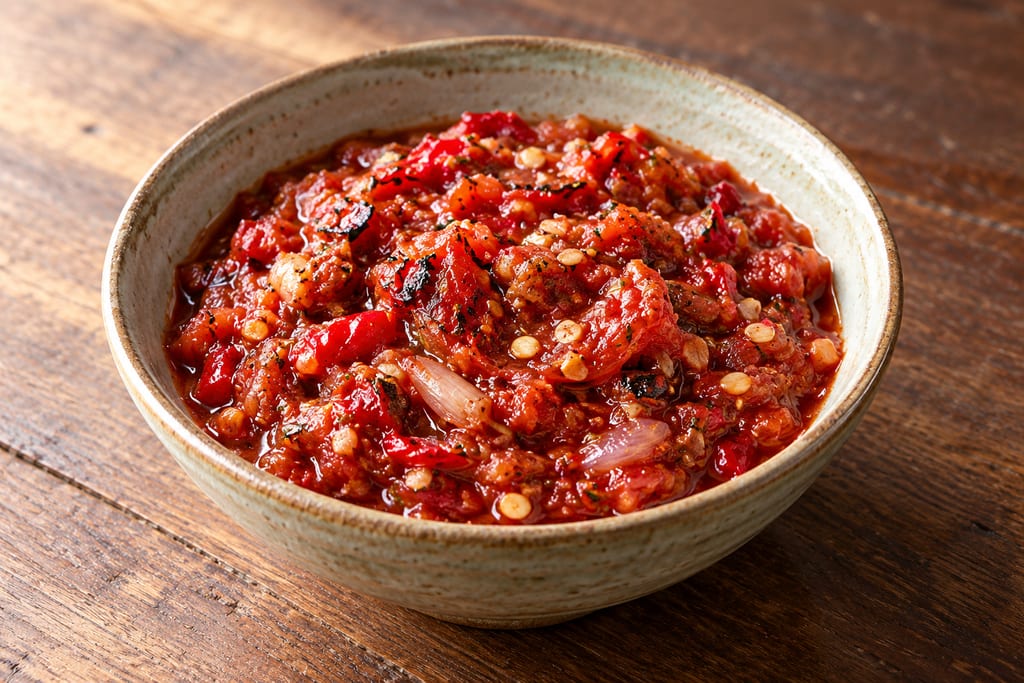
A Lao tomato-and-chile dip made by roasting tomatoes, chiles, garlic and shallots over gentle coals, then pounding and seasoning them. This four-person serving batch has no measured ingredient quantities or validated storage period.
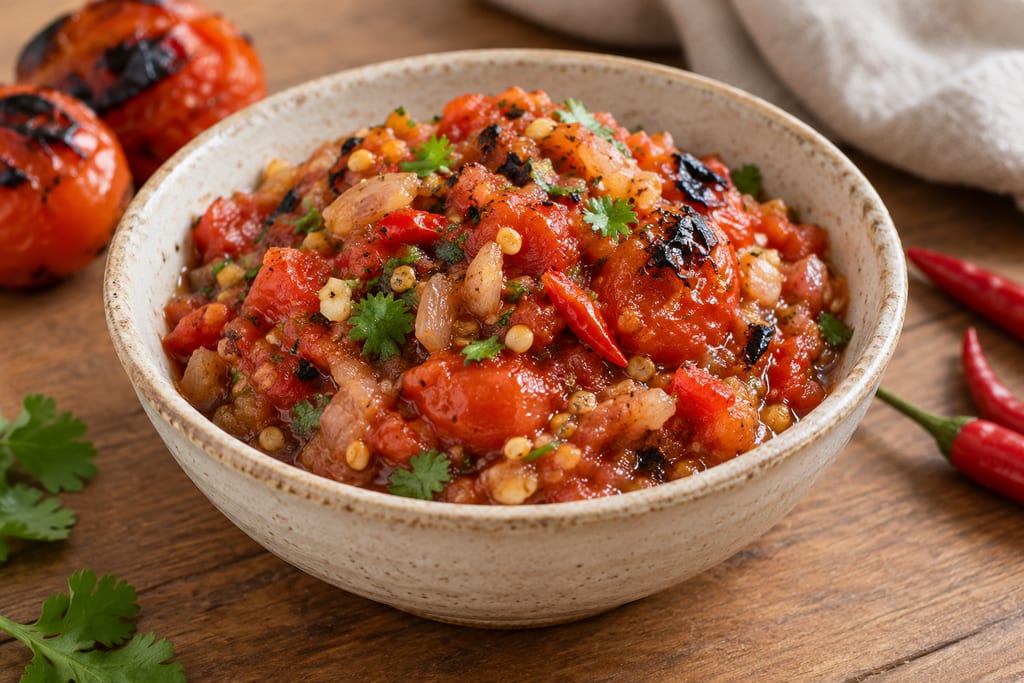
Roasted tomatoes, shallots, garlic and chillies are pounded into a coarse Lao-style dip, then seasoned with fish sauce, optional lime and coriander.

Padaek is a Lao salt-fermented freshwater fish paste used as a seasoning and preserved food. This record covers documented uses and safety gaps; it does not offer an unvalidated home method.
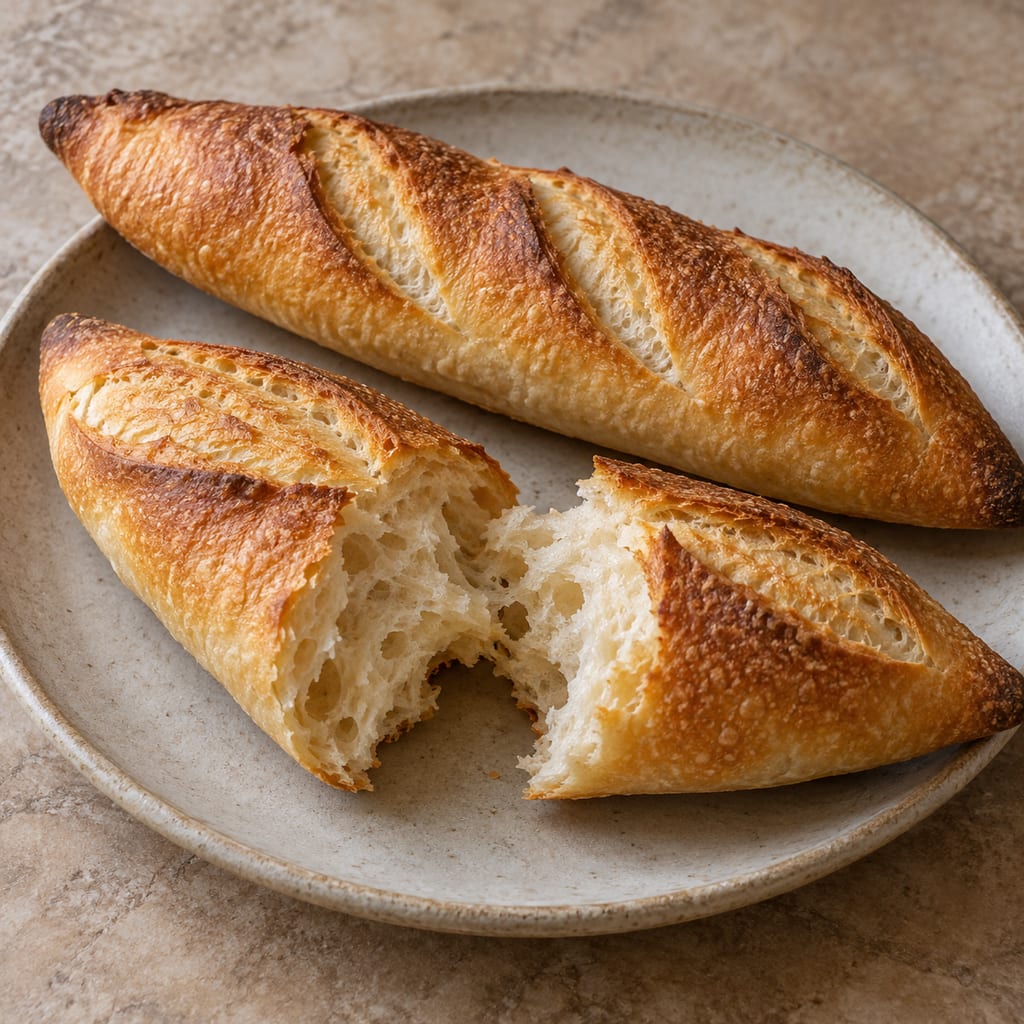
This four-baguette sticky-rice dough is the bread component of Saeng Douangdara’s khao jee pâté recipe. She presents the sticky-rice addition as her own variation; it is not a universal or traditional Lao baguette formula.
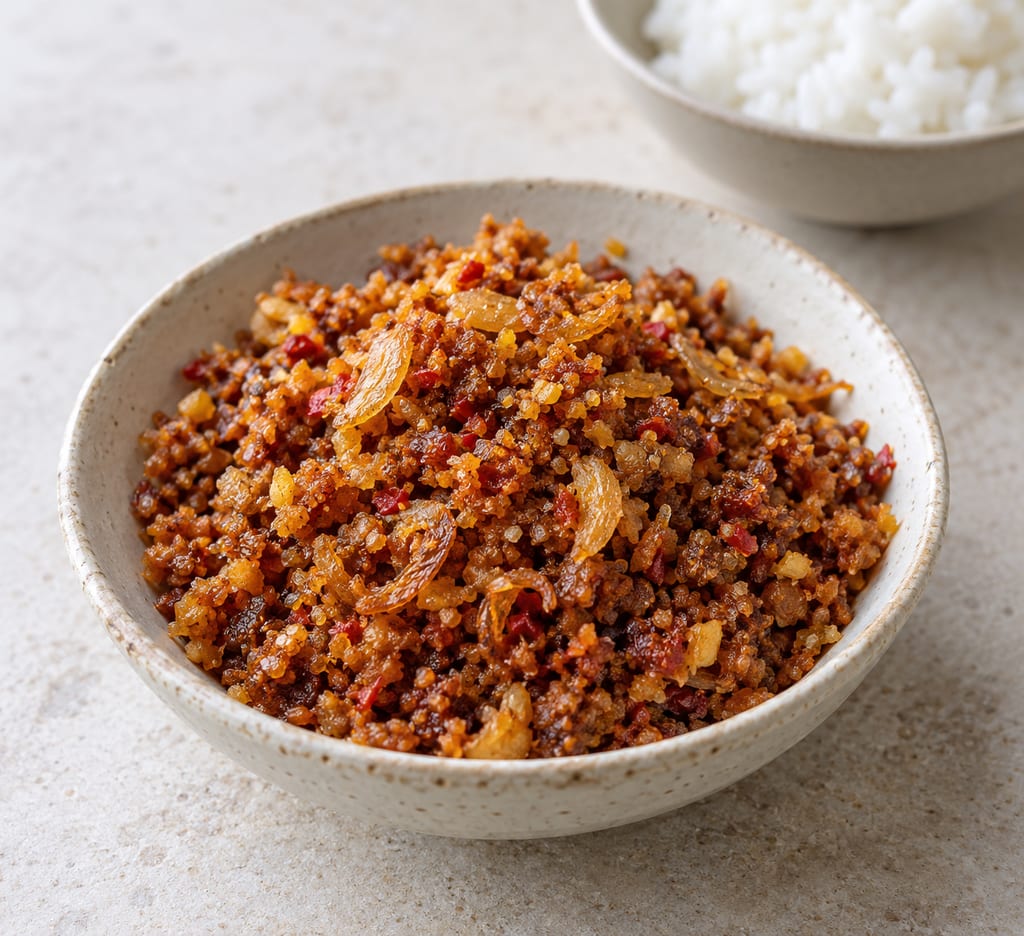
A Myanmar relish of dried shrimp, fried eschalot and garlic, chilli, turmeric, tamarind and ngapi. Naomi Duguid’s published recipe makes about 1 cup; it contains crustacean shellfish.
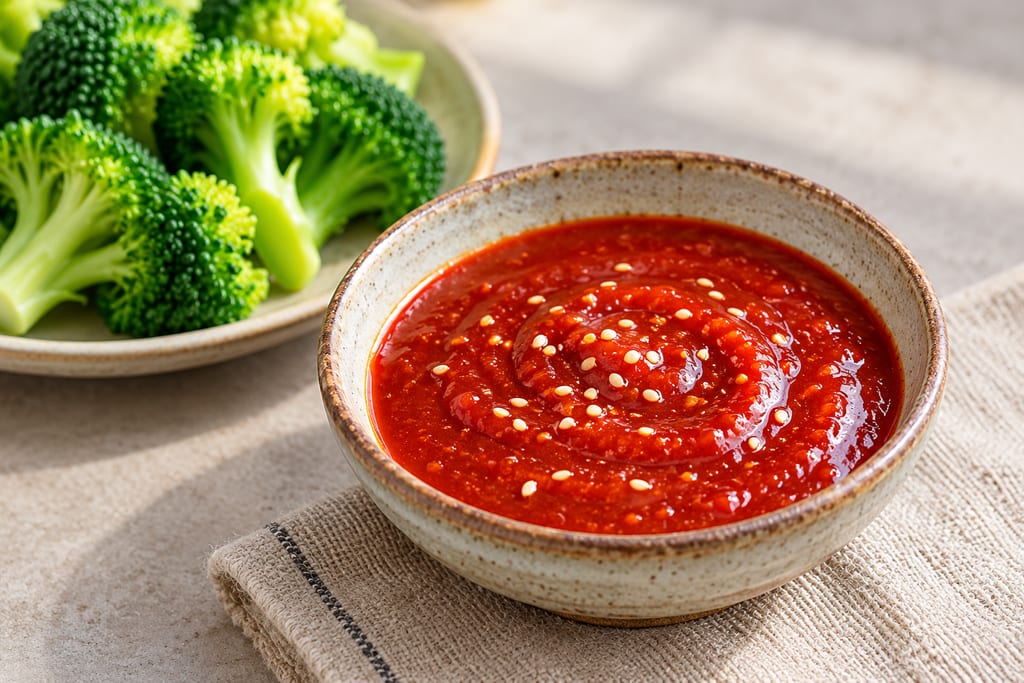
Chogochujang is a Korean sweet-sour sauce made by seasoning gochujang with vinegar and sugar. This development batch adds water and toasted sesame seeds, with optional garlic for the portion being served.
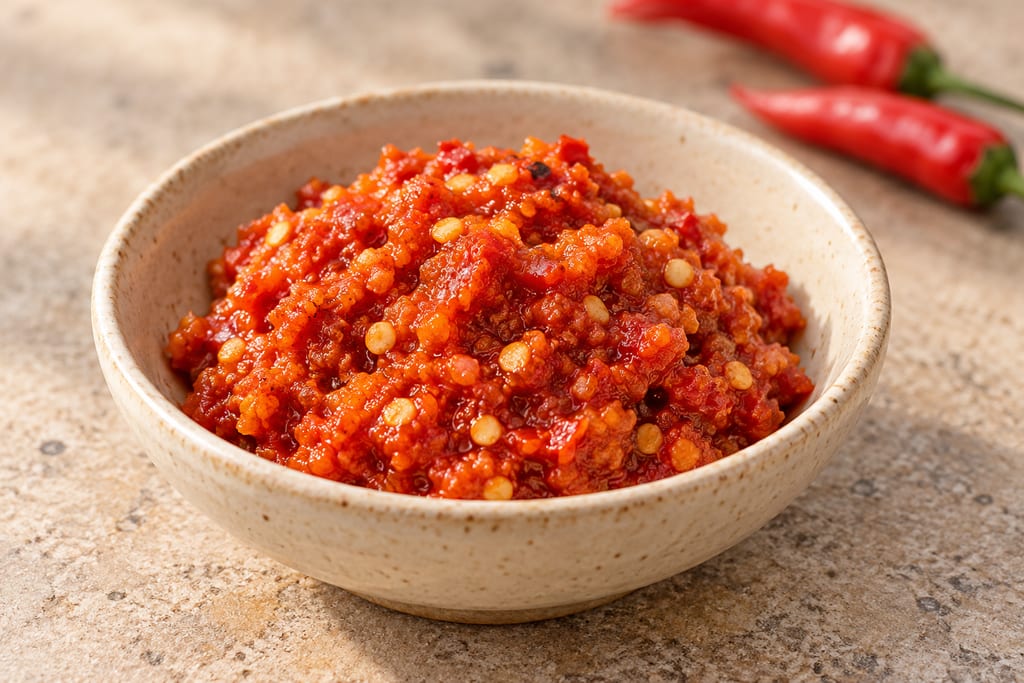
Dinanche, or donne' dinanche, is a Chamorro hot pepper paste of crushed chillies that Guam cooks use on its own or stir into fina'denne'. Its versions range from pepper alone to ones with eggplant, miso or coconut milk.
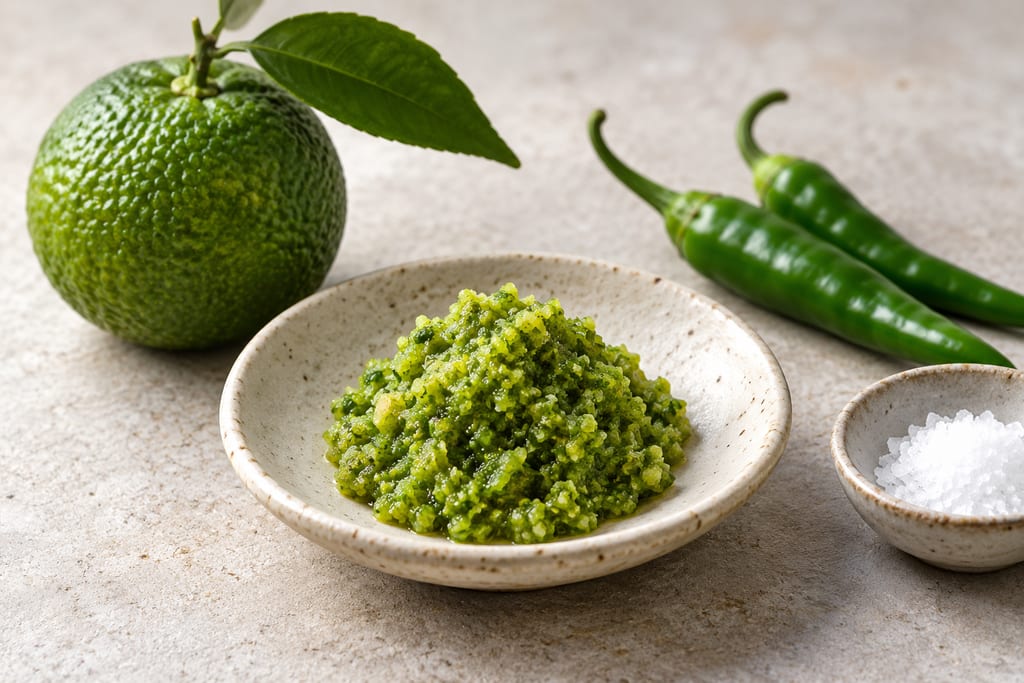
A fresh, uncooked yuzu and green chilli paste inspired by Kyushu’s yuzu kosho, made here as an untested small-batch seasoning rather than a preservation formula.
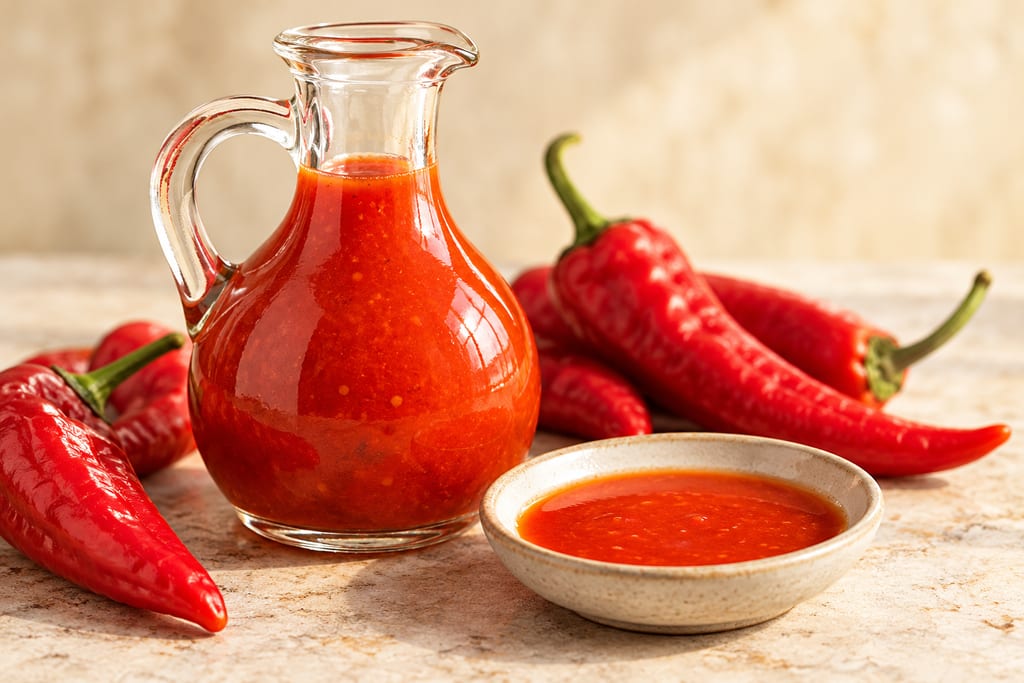
Fresh hot peppers ferment beneath a measured salt brine, then become a bright, tangy sauce blended from the peppers and their liquor.
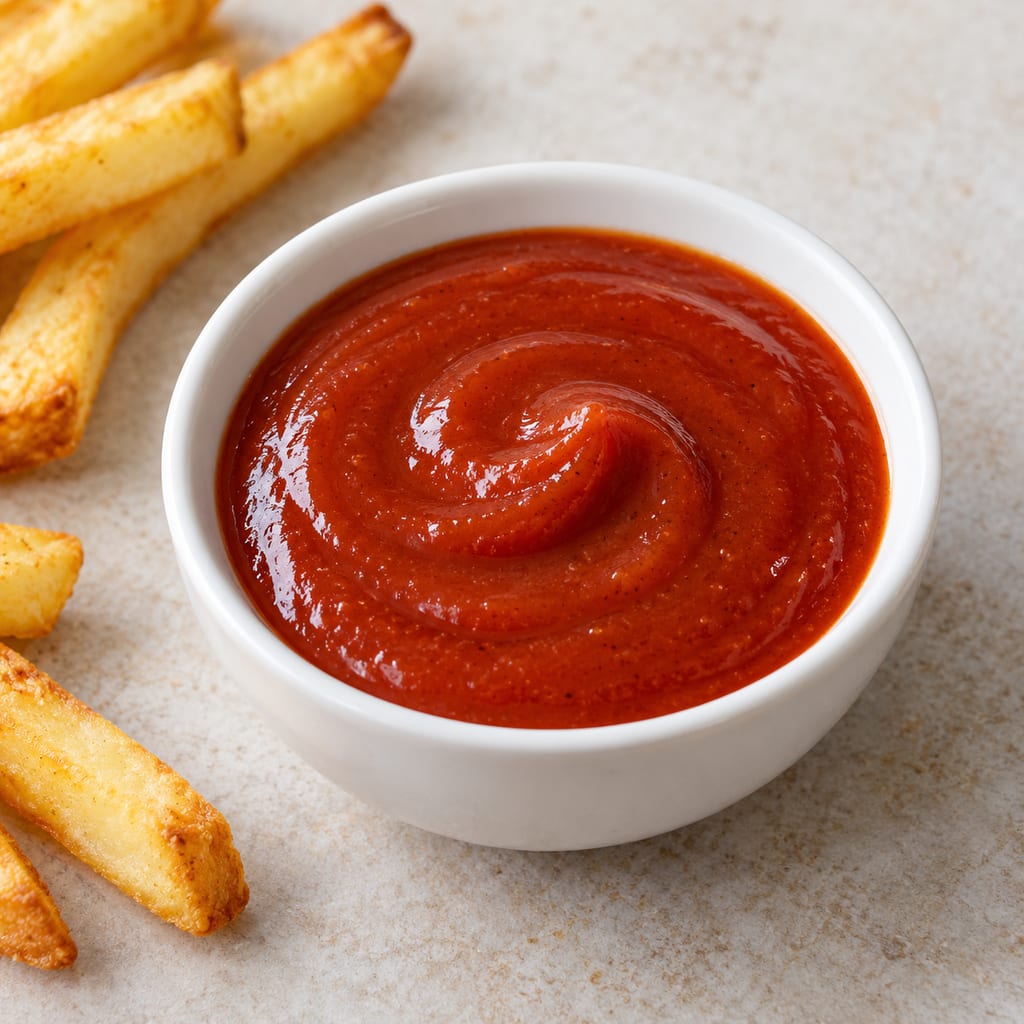
A modern tomato condiment sharpened with the spicy, savoury tang associated with kimchi; this measured version whisk-mixes prepared ketchup and commercial kimchi seasoning.
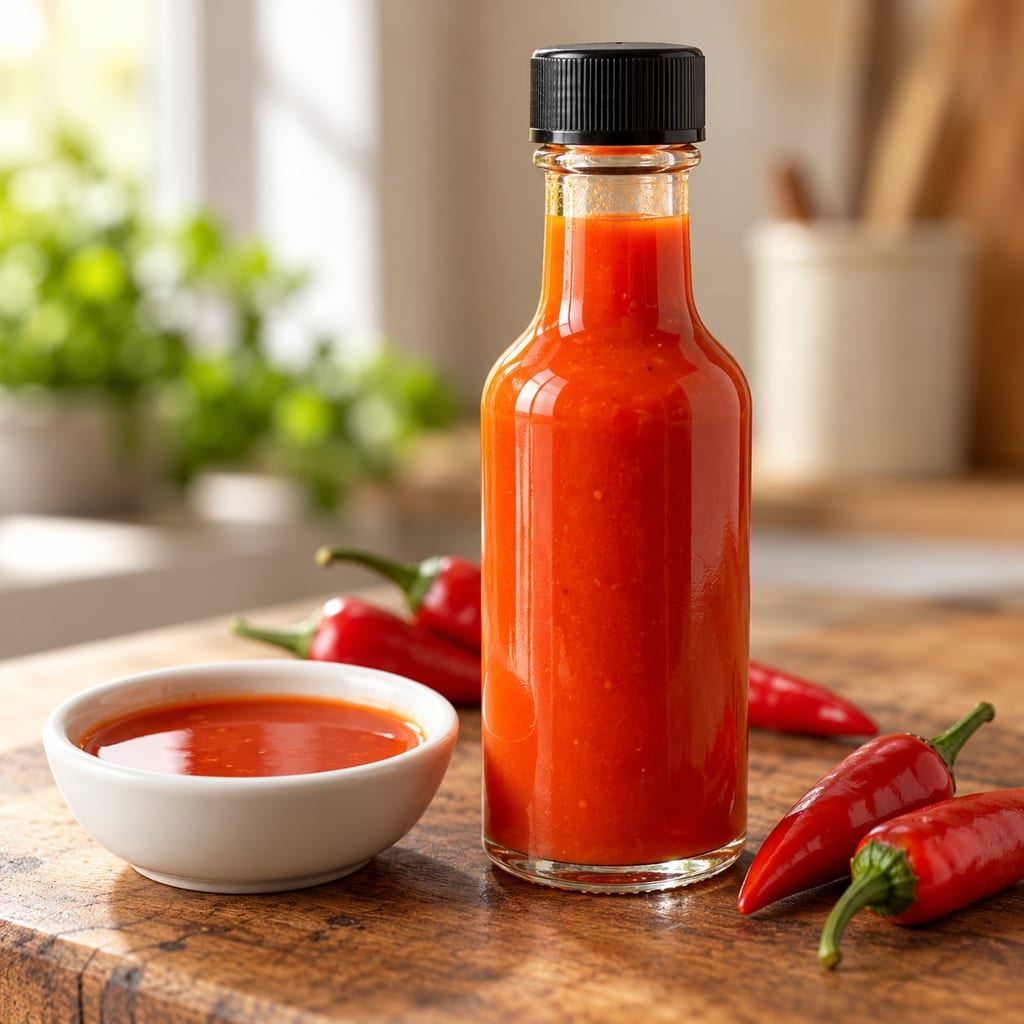
Documentary account of Louisiana pepper sauces, using TABASCO's published barrel-aged commercial process as one specific example; the source does not provide a validated home recipe.
Maari is a Burkinabè baobab-seed condiment documented in producer studies. This is a non-instructional account, not a home recipe: sources vary, omit key process details and establish no validated safety control.
No community contributions have been published for this entry yet.
Sign in to contribute. Published comments and photos are free to read.
Saeng DouangdaraMethod · Variations · Uses
Mae's Jeow Bong | Lao Spicy Dipping SauceMeasured family recipe with cow skin: ingredients, quantities, method with timings, serving 8 to 10.
Jeow bong is an iconic Lao condiment from Luang Prabang, where the version is usually sweeter, milder and made without pepper seeds; this is the less sweet, very spicy family style.
Served with sticky rice and Lao jerky; the drained chilli oil can be drizzled on noodle soups. Keeps for months airtight (cook's statement).
Cited in: A chilli paste with skin; The measured family recipe
Northern Illinois University SEA SiteVariations · History
Jaew Bong / Bong SauceTranscribed Lao recipe: 10 dried red chillies grilled until brittle, 5 small shallots and 5 small heads of garlic charcoal-seared, 2 slices of galangal, salt, fish sauce, half a strip of grilled water-buffalo skin soaked in salt water; pounded, mixed with a little water; served with grilled dried beef.
Bong means pickled; the editors say the sauce is not technically a pickle but keeps a long time.
Cited in: Other versions; Name, keeping and what is not known
Pha Khao Lao, Lao KitchenVariations · Uses
Jeow BongIngredients without quantities: dry chillies, galangal, ginger, garlic, onion, salt, stock powder, sugar, buffalo skin, vegetable oil; chillies seeded and soaked 1 hour; buffalo skin roasted, sliced and soaked.
Served with cooked sticky rice and can be made as a packaged product; keeps 3 to 5 months in a jar or box (ambiguous wording).
Cited in: Other versions; Name, keeping and what is not known
Prospect Books / Equinox PublishingHistory
Traditional Recipes of LaosEdition account of a 1981 collection of Lao recipes drawn from recipe notebooks.
Cited in: Name, keeping and what is not known