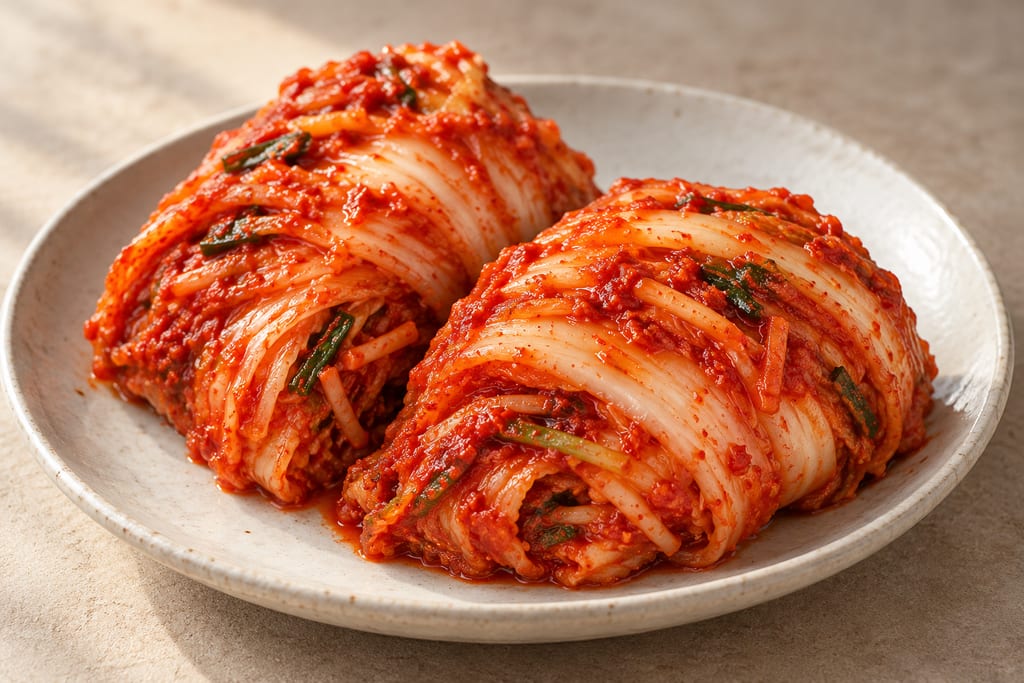
Baechu kimchi
Napa cabbage salted, seasoned with a paste of gochugaru, garlic, ginger and salted seafood, and left to sour through lactic fermentation; Korea's everyday winter preserve.
 FermenteaWhere food goes to change
nước mắm · nuoc mam · nam pla · nam phrik nam pla · patis
Fish sauce is a clear, salty seasoning made by maturing fish with salt and drawing off the liquid. The broad family includes distinct regional sauces rather than one interchangeable method.
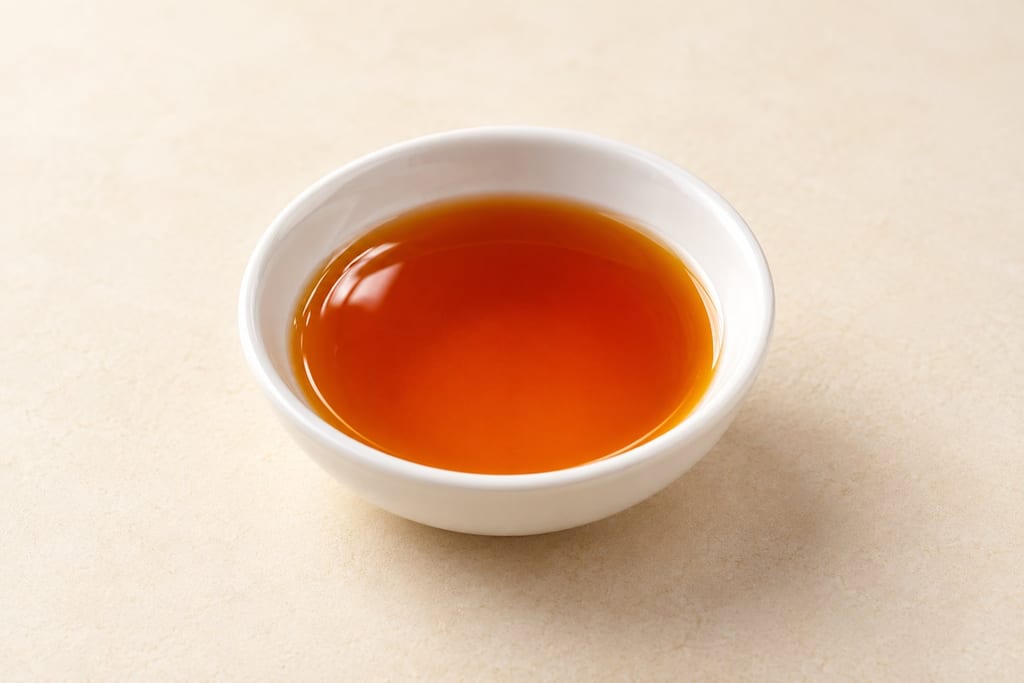
Fish sauce is a salty, translucent liquid made by maturing fish with salt and separating the liquid that develops. Its colour ranges from pale gold to amber and brown, depending on the fish, extraction, maturation and any later blending. Codex defines the product by its fish-and-salt fermentation and liquid form; it excludes sauces made by acid hydrolysis. That distinction matters because a chemically hydrolysed seasoning is not made by the same biological and enzymatic route.
The familiar Vietnamese name nước mắm and Thai nam pla belong to a broad family of liquid fish seasonings. Other food cultures have their own names and processes, including Filipino patis and the many fish sauces of Cambodia and Laos. The shared idea—fish transformed with salt into an intensely savoury liquid—does not make every regional method one recipe. Species, salt proportions, vessels, extraction and use vary, and some nearby foods are pastes or sour fish preparations rather than clear fish sauce.
In Phú Quốc, Vietnam, anchovy and salt are matured in large wooden barrels at dedicated barrel houses. Local accounts describe the finished liquid as clear golden brown to amber, salty, gently fragrant and rich in savoury taste. The first extract and later brine extracts are graded and blended differently. A bottle's colour or protein grade therefore reflects a production history, not simply a single national standard.
Fish sauce belongs to coastal economies where people needed to preserve and use abundant catches. In Vietnam, nước mắm is deeply embedded in daily cooking and eating: it seasons soups and braises, sharpens dipping sauces and appears at the table. The cultural account describes the practice as distributed across several Vietnamese regions and lists fish types beyond anchovy. This is not a single village's invention story.
Phú Quốc has a particularly well documented barrel-house craft. A VNA report says the island's fish-sauce making was recognised as national intangible cultural heritage in 2021, and describes the local tradition as more than two centuries old. It records a three-to-one fish-to-salt recipe and ten to fifteen months of barrel maturation. The Phú Quốc product's geographical indication was registered in Vietnam in 2001; the European Union later granted origin protection, reported in the same account in 2013. Those designations concern a defined place and product, not every sauce sold as fish sauce.
The landscape is part of the method. Phú Quốc producers use dedicated houses containing large barrels, and historical descriptions connect the craft to local fishing, salt supply, transport and family expertise. The tourism account describes different operating styles—stirring, pressing, or combining both—and notes that production moved from boats to maturation barrels. A particular household's or factory's practice may differ, so the process below follows one documented description and keeps its uncertainties visible.
Fish sauce travels well beyond the coast where it is made. In a household pantry it is a compact seasoning that links a meal to fisheries, salt-making and the work of maturation. The bottle may be poured sparingly into a simmering pot, stirred into a dipping mixture or passed at table. These uses make the sauce both a cooked ingredient and a direct condiment. Regional differences remain legible in the way people select grades and balance salt, acidity, sweetness and fresh aromatics around it.
Patis is the Philippine fish sauce. A Philippine consular food guide places it in two roles: a seasoning cooked into soups and into seafood, meat and vegetable stews, and a dipping condiment, which may be combined with spices and vinegar. In the second role it is closer to a table sauce than to an ingredient, and the mixture is a separate preparation from the patis itself.
The same guide describes patis as fermented anchovy, salt and water, and mentions caramel colouring. That is a consumer overview. It does not show that every patis uses anchovy or caramel, and it gives no process, salt basis, maturation time or storage schedule, so the Phú Quốc method below should not be read as a description of how patis is made.
How patis relates to the liquid drawn off during the making of bagoong, the Philippine fermented fish or shrimp paste, is a separate question that this account does not settle. Standards and commercial production literature for Philippine fish sauce were not inspected, so no legal definition or label claim is made here.
Fish muscle is rich in water and protein. After fish and salt are combined, enzymes already present in the fish break some muscle proteins into smaller peptides and amino acids. Studies of fish-sauce proteolysis discuss digestive proteinases such as trypsin and chymotrypsin, along with cathepsins from fish tissues. The released amino acids add soluble nitrogen and savoury taste; glutamate is one compound associated with umami. Salt changes which organisms can grow and how active enzymes remain, so the result is not simply fish left to decay.
Microorganisms also contribute to aroma and flavour in many fish sauces, but their community depends on the product and process. The high salt environment favours salt-tolerant organisms and suppresses many others, while fish enzymes can do much of the protein breakdown. The process is often called fermentation in ordinary language and in standards, yet important transformations are enzymatic autolysis as well as microbial metabolism. These pathways are related but not interchangeable explanations.
Traditional maturation takes months. Codex describes covered-container fermentation generally lasting at least six months, while the Phú Quốc account gives twelve months and a VNA report ten to fifteen months. Those figures describe distinct sources and products. They do not prescribe one universal endpoint. The liquid's development depends on material, vessel, handling and local method; a number of months alone cannot establish either a desired grade or a safe product.
Fish supplies water, proteins, fats, minerals and the enzymes that help liquefy the salted material. Phú Quốc accounts name anchovies as the main fish and stress freshness and uniformity. Their account says small fish are especially perishable; mishandled raw material can decompose before the controlled maturation stage begins. Codex likewise requires sound, wholesome fish in a condition fit to be sold fresh for human consumption. This is a specific raw-material requirement, not a cue to salvage fish that smells spoiled.
Salt seasons the product and changes the watery environment around the fish. It extracts moisture, helps create brine and selects for salt-tolerant microbial communities. The salt is not an optional seasoning added at the end: it is a major part of the process environment. Codex specifies food-grade salt and, for any brine, potable water. The Phú Quốc sources report a fish-to-salt ratio but do not say whether their 'parts' are measured by weight or volume, so a cook cannot safely convert the report into a household formula.
Some regional and commercial versions use extra ingredients, but those additions change the process and should not be folded into this two-ingredient account. The Codex definition permits other ingredients only where they assist fermentation and sets product criteria for the finished sauce. The Phú Quốc tourism page also distinguishes later sweeteners and flavour enhancers in lower-protein commercial grades from the base sauce. They belong to particular products and grades, not to an assumed traditional universal recipe.
The recorded Phú Quốc sequence begins before the mixture enters its main barrel. Fish are cleaned, drained and measured in baskets, then mixed with salt. The account describes a layer of salt above the fish during a short transport stage, with brine collected separately. This early salting is a practical operation in that local process; it is not a stand-alone preservation assurance.
At the barrel house, producers transfer the fish into large fermentation barrels. A first brine drain follows after three or four days, then makers level the fish and add another thin layer of salt. After another three or four days, wooden pins press the fish and the liquid is returned over the surface. These steps make sense in the context of the described barrel method: salt is distributed, fish are held under the liquid, and the extracted brine continues to contact the mass.
During the long maturation, salt and fish enzymes help the flesh soften and release liquid. The tourism source says makers monitor the process and respond to defects such as souring or darkening, but it does not give objective measurements, a temperature schedule, or a scientifically validated correction plan. The variation between reports—twelve months in one account, ten to fifteen in another—underscores that this is a producer craft with local practice, not a kitchen timetable.
At the end of maturation, Phú Quốc producers draw off the first liquid and may circulate it through the barrel repeatedly. The cited account describes the sauce becoming clearer and golden to reddish amber, with little sediment, before it is bottled as a high-grade extract. These are source-reported sensory and appearance descriptions, not a home safety test. Codex separately specifies physical and chemical criteria and laboratory analysis for a product sold as fish sauce.
After the first extract, the remaining fish can be exposed to brine to recover more soluble material. The Phú Quốc account describes this further extraction as taking two to three months; later liquids have lower protein content and may be blended with some first extract to make other grades. Codex also recognises succeeding brine extractions, while requiring the final product to meet the standard. This is why 'fish sauce' can describe products with different strengths, colours and costs.
Fish choice creates another meaningful axis. Vietnamese accounts name anchovy, sardine, snapper, herring, amberstripe scad and yellow jack, among others. They describe distinct colours and qualities. Thai nam pla may use marine, brackish or freshwater fish and has its own tank and extraction history; Korean myeolchi-aekjeot and Japanese fish sauces have different local culinary roles. These preparations should remain distinct records when their source material, method or cultural use differs. A sour rice-and-fish ferment, salted whole fish and a fish paste are not the same product as a clear fish sauce.
A 2019 study in the Nha Trang University fisheries journal looked at Phú Quốc fish sauce carrying the geographical indication. It surveyed 30 enterprises and, separately, analysed 30 fish-sauce samples. These are two sample sets, and the paper does not pair each enterprise with a bottle.
The authors describe anchovies landed from the Cà Mau–Kiên Giang and Gulf of Thailand fishing grounds, with some fish brought in from elsewhere. Maturation took about a year, mostly in wooden vats, with a small number of cement tanks. These are observations of the system they studied and not a specification for every Vietnamese fish sauce.
Some of the sampled sauces exceeded the histamine criterion the authors cite. A dated sample cannot say anything about a bottle bought today. FDA guidance explains that heating cannot reliably remove histamine once it has formed, and its surveillance criteria for fermented condiments have a separate scope. Neither document validates a household fermentation. Current geographical-indication rules, grades and first-draw terminology need an authoritative legal text that this page does not cite, and the survey does not establish nationwide practice, present-day prevalence or an earliest origin.
A small amount of fish sauce can season a much larger dish. In Vietnam, nước mắm is used in cooking and served as a dip; it gives soups, braises, dressings and dipping sauces a salty, savoury depth. The strongest or highest-protein grade is not automatically the best choice for every use. A cook can choose a lighter, more affordable grade for dishes that will be simmered or mixed, and reserve a more aromatic sauce for a finishing dip, according to the local practice and product label.
Fish sauce is already salty, so a cook should taste a dish before adding more salt. Diluting or mixing it into lime, sugar, garlic, chilli or water makes a separate table sauce; those ingredients are not part of the fermented fish sauce itself. Likewise, cooking a purchased sauce into another dish is culinary use, not a continuation of barrel fermentation.
Safety and quality are separate questions. Codex sets chemical and hygiene requirements for commercial fish sauce, including minimum salt content and a histamine limit; the code of practice addresses controlled handling and analysis. A clear colour, pleasant smell, salty taste or lack of bubbles cannot show that a batch meets those requirements. The reported Phú Quốc steps document a real regional tradition, but they do not provide validated conditions for a household fish ferment, a shelf life, or an analytical endpoint. Treat this as a record of a controlled craft method, and use commercially compliant fish sauce when cooking.
When choosing a bottle, labels can indicate the fish named, production place, ingredients and protein or nitrogen grade. A higher nitrogen figure reflects more nitrogen-containing material in the liquid, but it does not by itself tell a reader how a particular sauce will taste in a dish. The Phú Quốc geographical indication, for example, describes a product tied to a defined origin and production rules. A generic label or a familiar colour cannot prove that a bottle follows that method. For kitchen use, the product's own instructions and local labelling are the useful guides.
Fish-and-salt sauces are made in many coastal food cultures, but they do not share one origin or a single formula. This page's detailed process follows a Phú Quốc Vietnamese account: anchovies are salted, matured in large barrels, and extracted as a clear amber seasoning. The craft was recognised as Vietnamese national intangible cultural heritage in 2021; the Phú Quốc geographical indication dates to 2001, with European Union origin certification reported in 2013. Fish sauce is used during cooking and at the table, including as a dipping seasoning.
Scaling: source batch only
Histamine can form when susceptible fish are mishandled before salting; it is not removed by washing, freezing or cooking.
Hazard sourceThe Codex standard sets compositional and histamine requirements, while its processing code requires controlled hygiene and monitoring. The regional description alone is not a validated control plan.
Hazard sourceUse sound fish fit for fresh sale, food-grade salt, potable water for any brine, hygienic handling and a validated process with appropriate laboratory checks.
Control sourceThis documented commercial-scale method is not a validated household preservation recipe. Do not infer safety from salt ratio, clarity, aroma, taste or bubbles; use a validated process and appropriate analytical controls.
A documented Vietnamese regional method; no claim that Phú Quốc is the origin of all fish sauces.
Patis, the Philippine fish sauce, is documented as a cooking seasoning and dipping condiment; the source does not describe its production.
Napa cabbage salted, seasoned with a paste of gochugaru, garlic, ginger and salted seafood, and left to sour through lactic fermentation; Korea's everyday winter preserve.
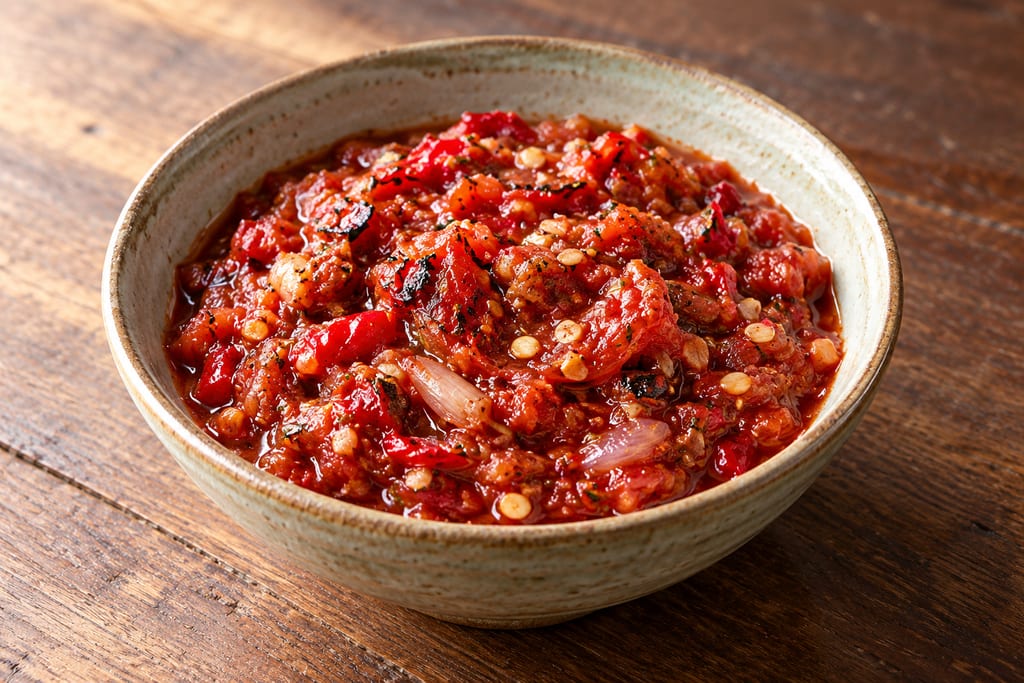
A Lao tomato-and-chile dip made by roasting tomatoes, chiles, garlic and shallots over gentle coals, then pounding and seasoning them. This four-person serving batch has no measured ingredient quantities or validated storage period.
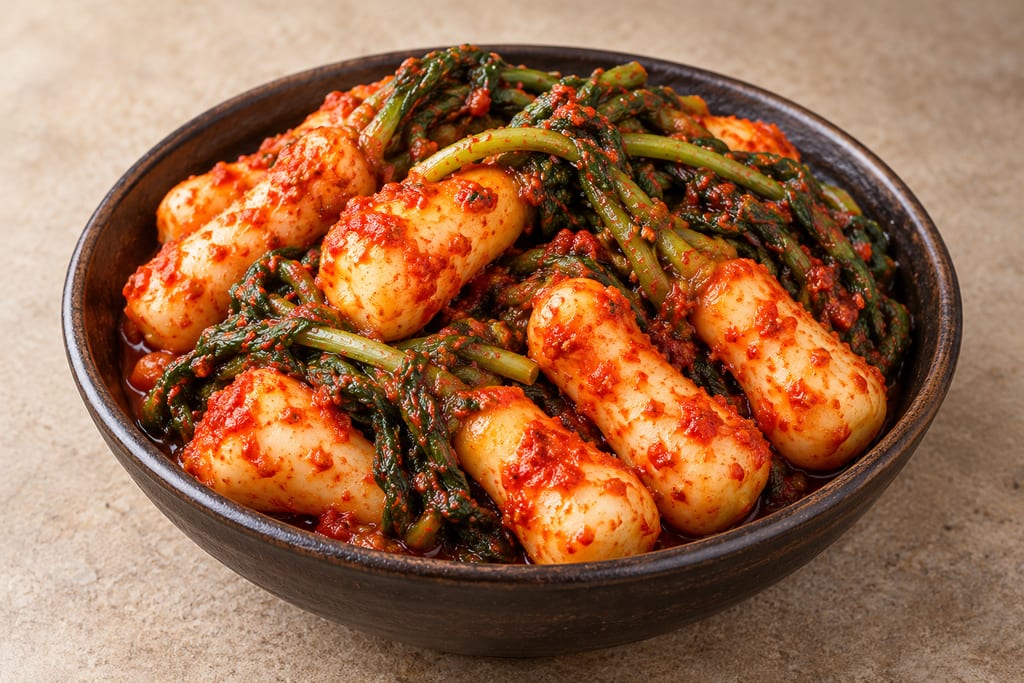
Small ponytail radishes keep their greens attached and ferment in a flour-and-chile seasoning paste.
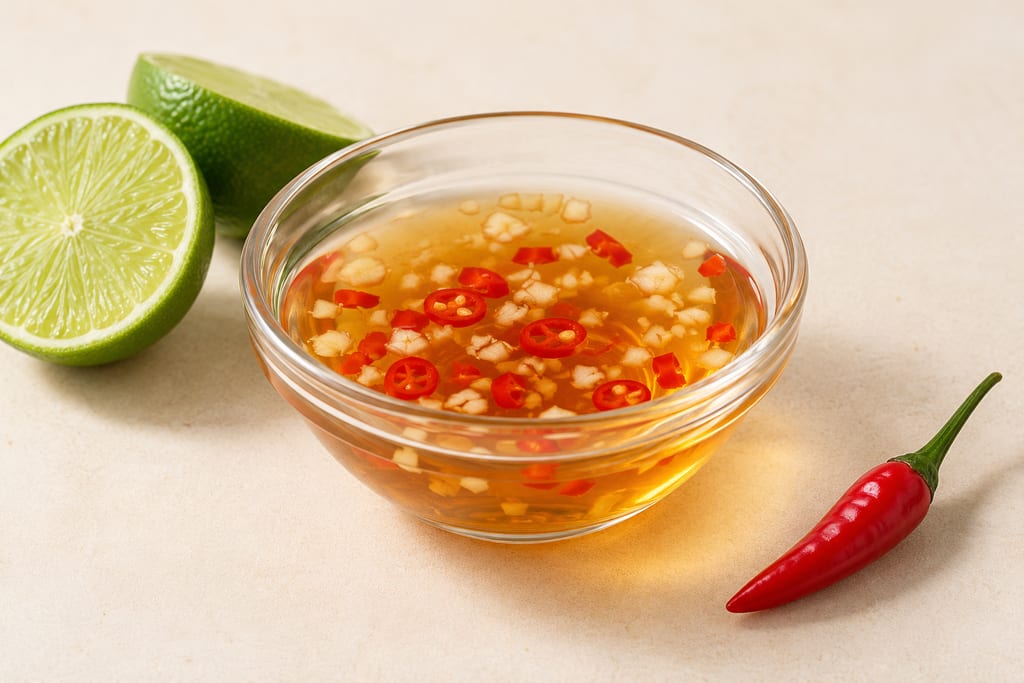
Nuoc cham is a Vietnamese fish-sauce dipping sauce. This untested development ratio starts with water, lime and sugar, then adds fish sauce, garlic and chilli.
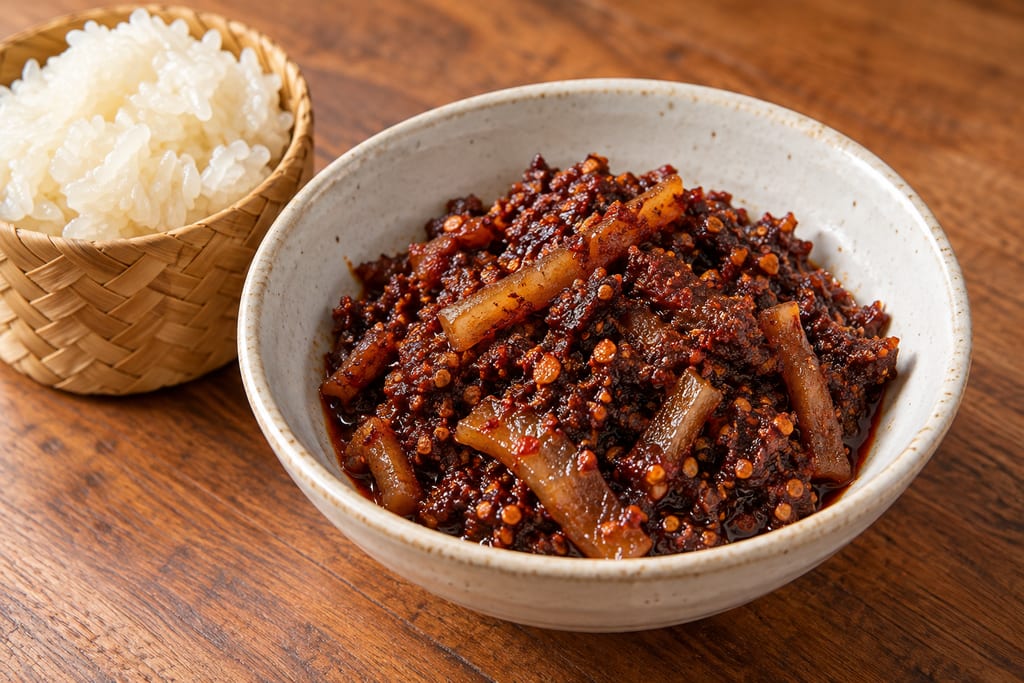
Jeow bong is a Lao paste of dried chilli, shallot, garlic and galangal cooked with buffalo or cow skin, a Luang Prabang specialty eaten with sticky rice and grilled meat.
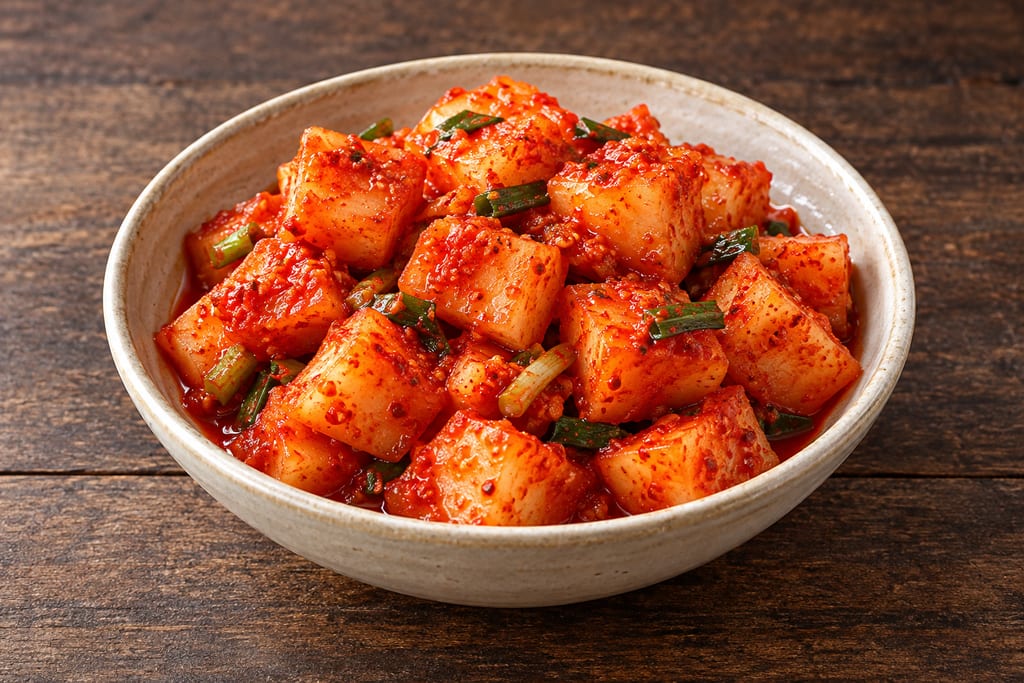
A radish kimchi cut into cubes and seasoned with gochugaru, fish sauce, garlic and ginger, eaten fresh or fermented a few days at room temperature.
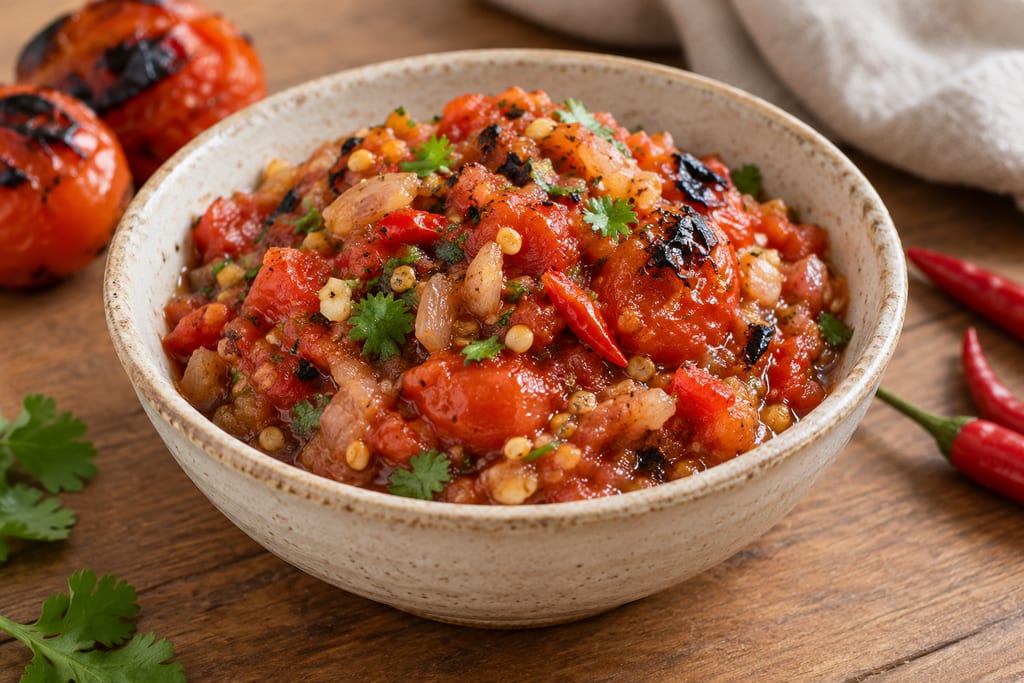
Roasted tomatoes, shallots, garlic and chillies are pounded into a coarse Lao-style dip, then seasoned with fish sauce, optional lime and coriander.
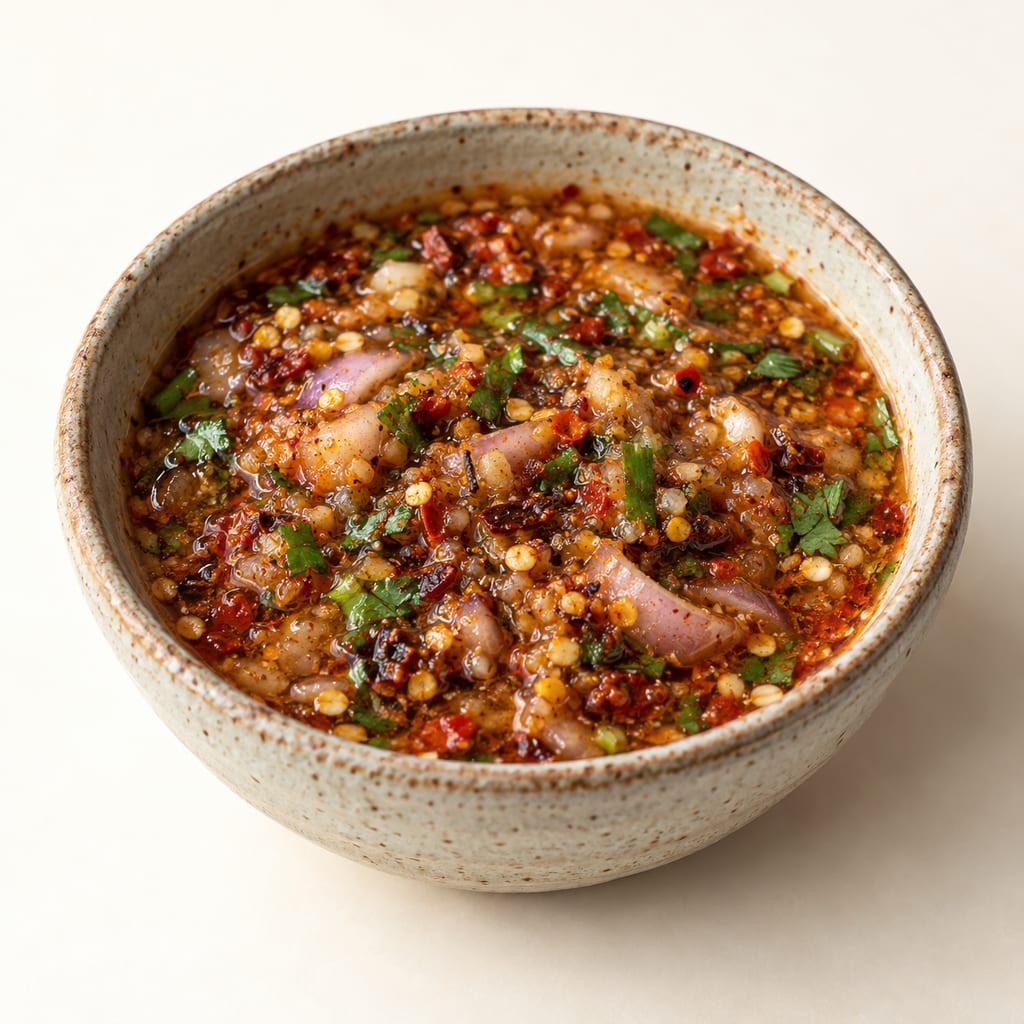
Roasted chillies, shallot and garlic are pounded and loosened with fermented and plain fish sauce, boiled water and lime into a sharp Isan dip for grilled meat and fish.
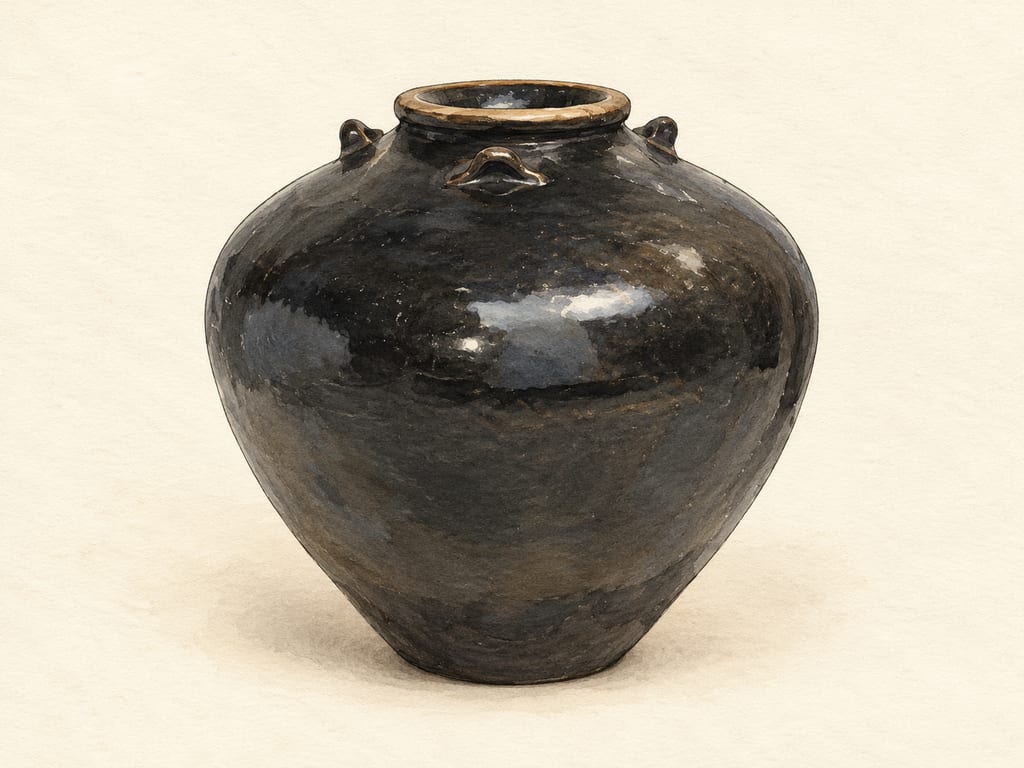
A durable Southeast Asian storage and trade jar, with particular Martaban examples documented in Philippine fish fermentation; the name covers varied objects, not one standard form.

A large upright stave-built vat used in documented Vietnamese fish-sauce production, with a weighted or covered top and a low outlet for drawing liquid; Phu Quoc examples belong to a living regional craft.
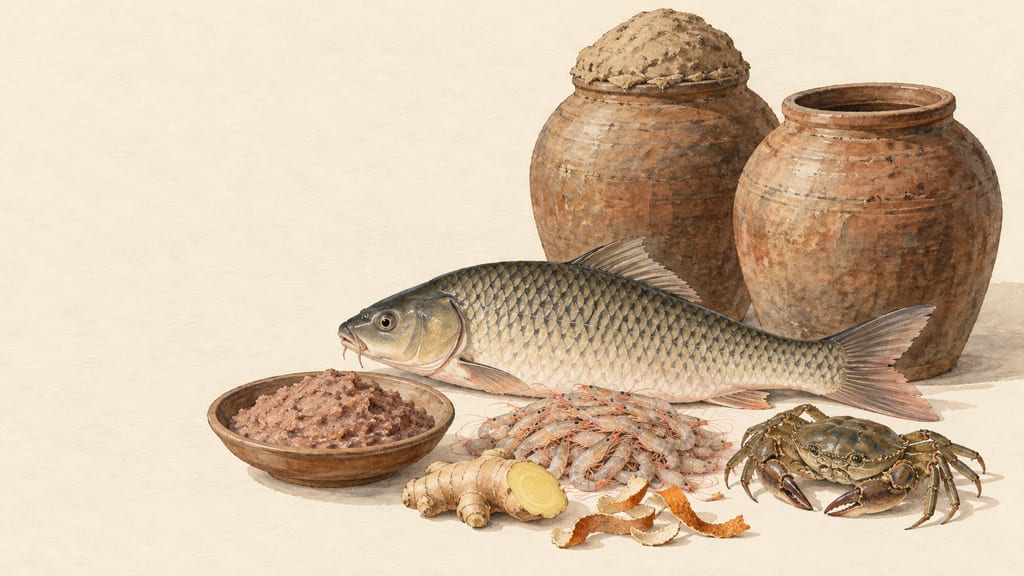
Long before soy sauce, Chinese cooks made jiang from venison, carp and shrimp. A farm manual of about 544 CE records how, from a fish-gut sauce with an imperial legend to fish pickled in rice.
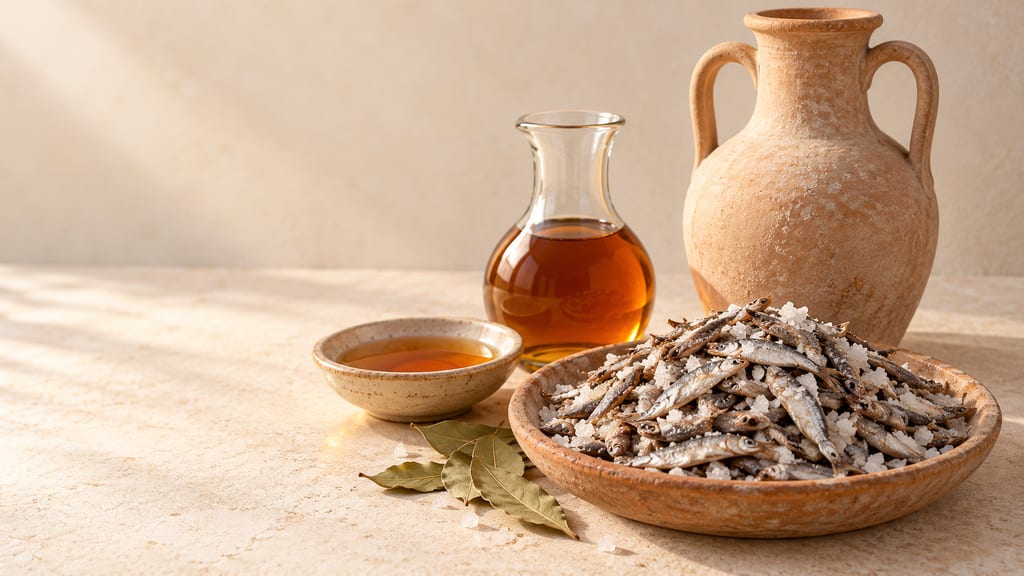
Garum, nước mắm, nam pla and patis share ways of turning fish into a savoury liquid, yet each belongs to its own food culture. This account follows ancient sauces, Asian and Japanese fish sauces, colatura and koji garums.
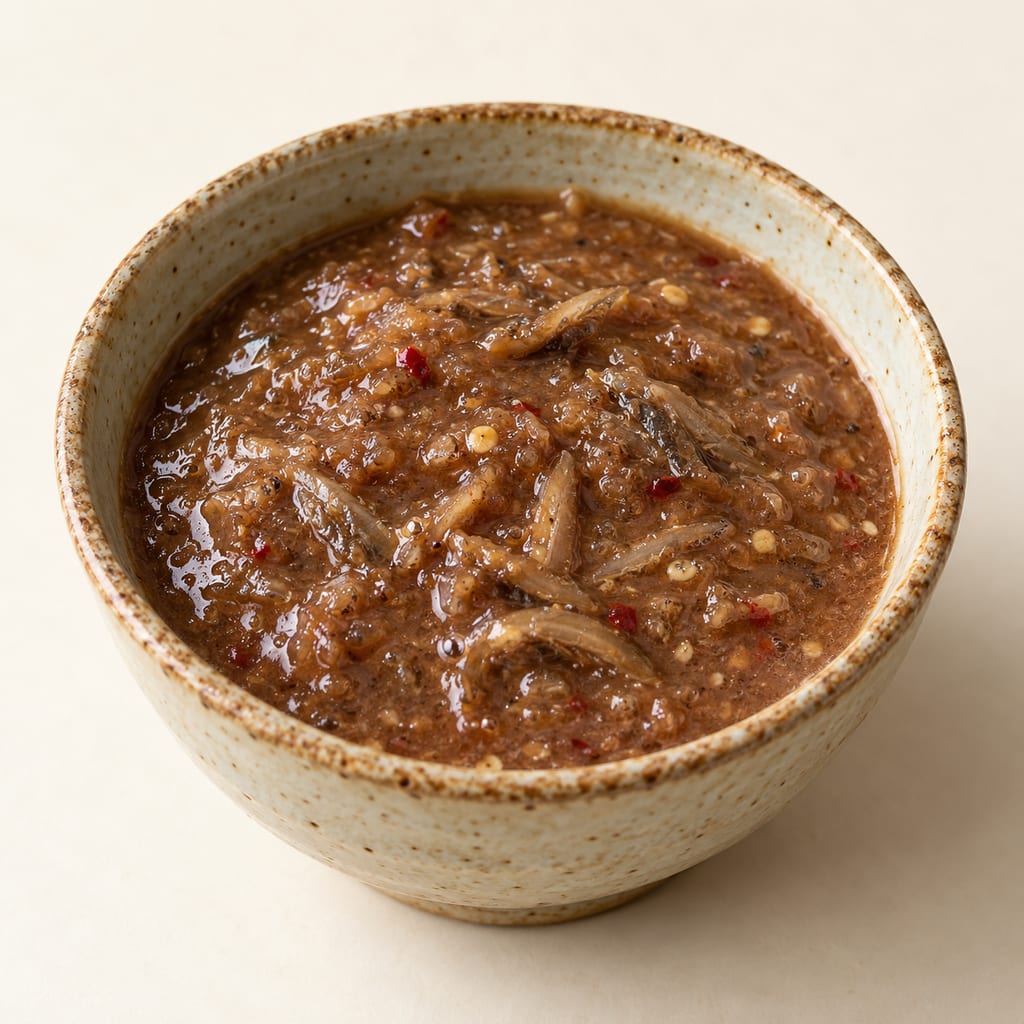
A documentary account of mắm nêm, a pungent Vietnamese fermented fish condiment and dip base. The cited cookbook describes a method, but omits essential process details; this page does not provide a home fermentation recipe.
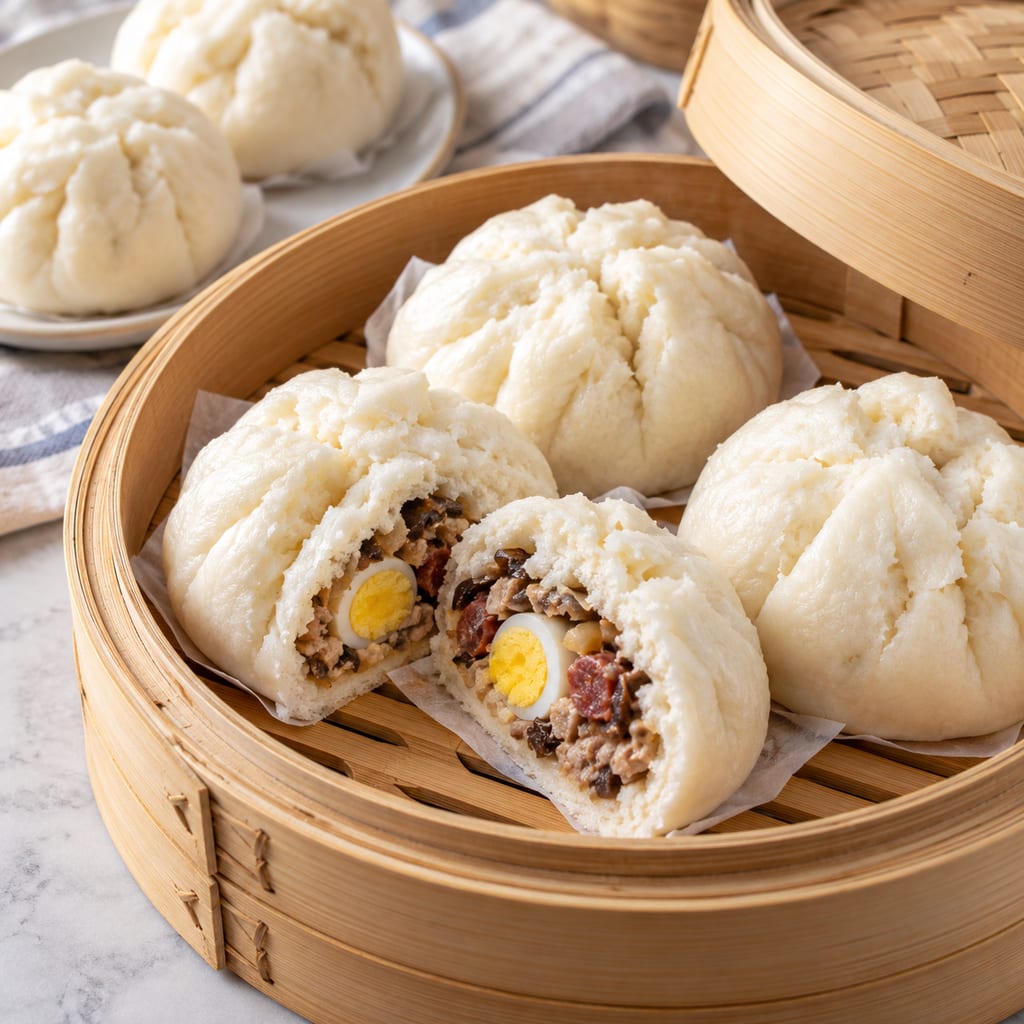
Vietnamese steamed wheat buns wrapped around seasoned pork, mushrooms, Chinese sausage and hard-boiled quail eggs. This from-scratch version uses yeast and self-rising flour.
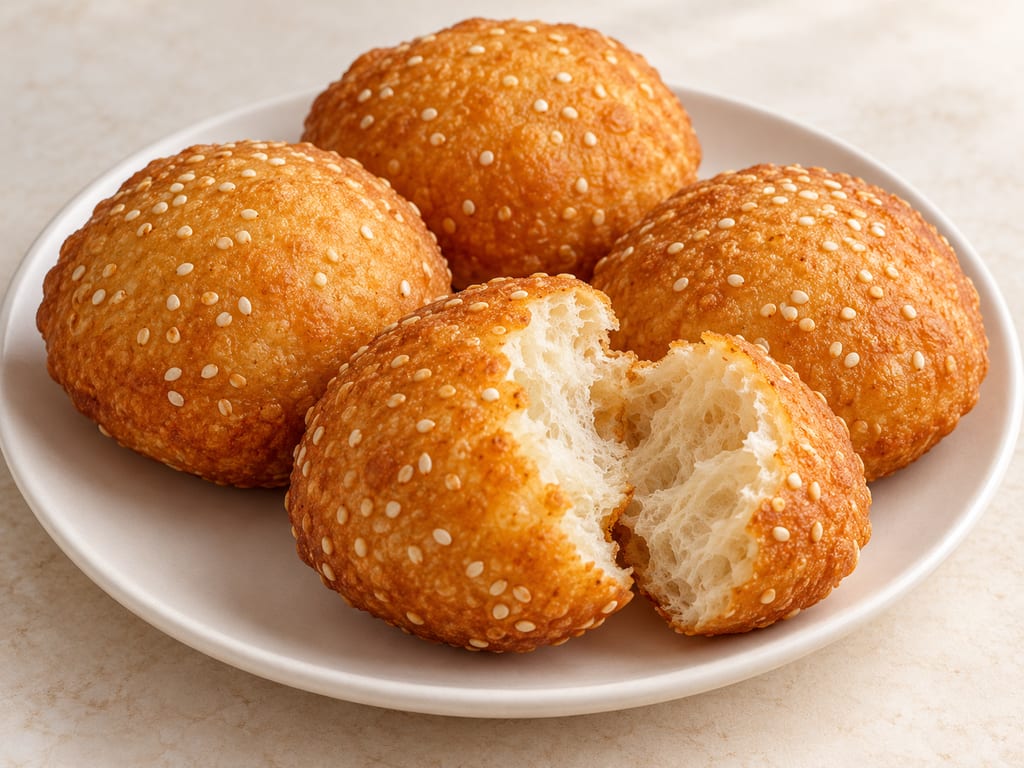
Bánh tiêu is a lightly sweet Vietnamese fried bread coated with sesame. A yeast-raised dough with baking powder is rolled into small rounds and fried until puffed and golden.
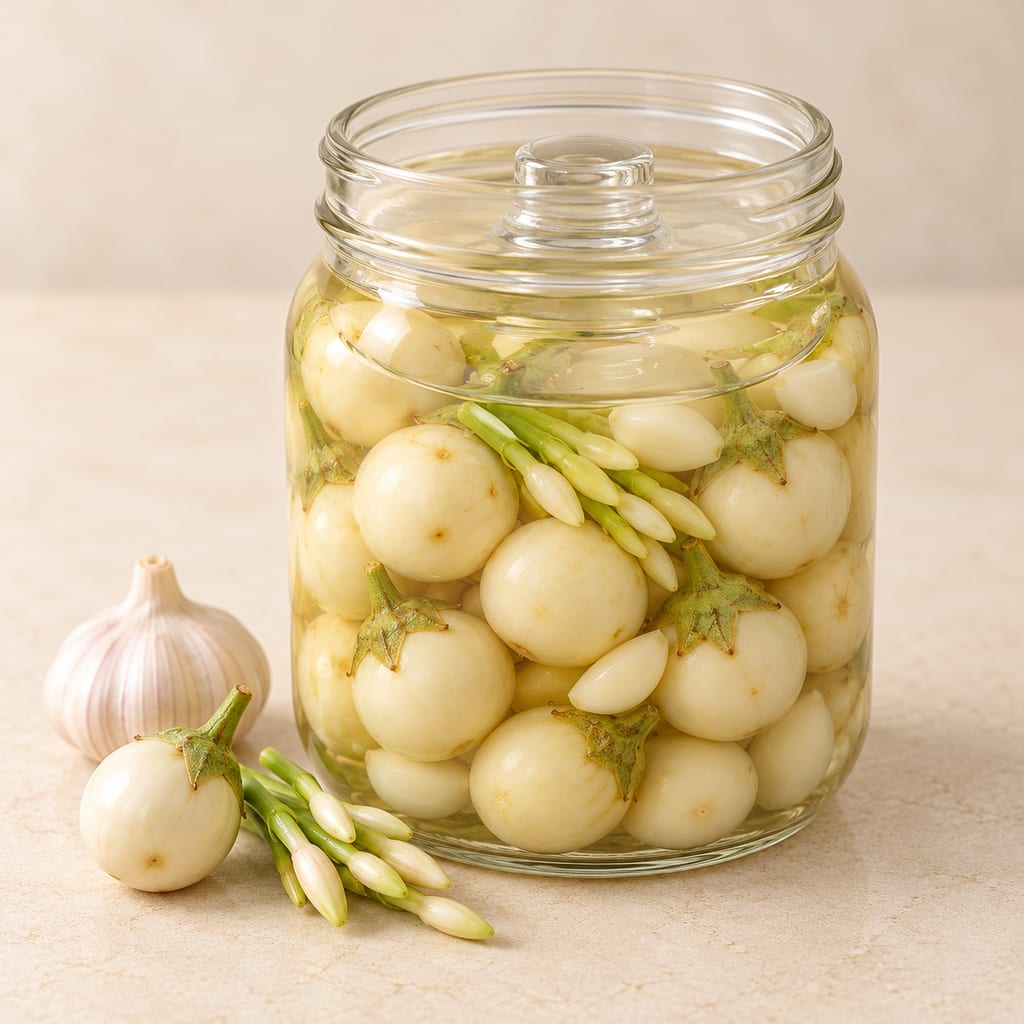
Vietnamese salted and fermented small eggplant, dried on the day of purchase, then held submerged in warm salty water with garlic and galingale flower for a week or longer.
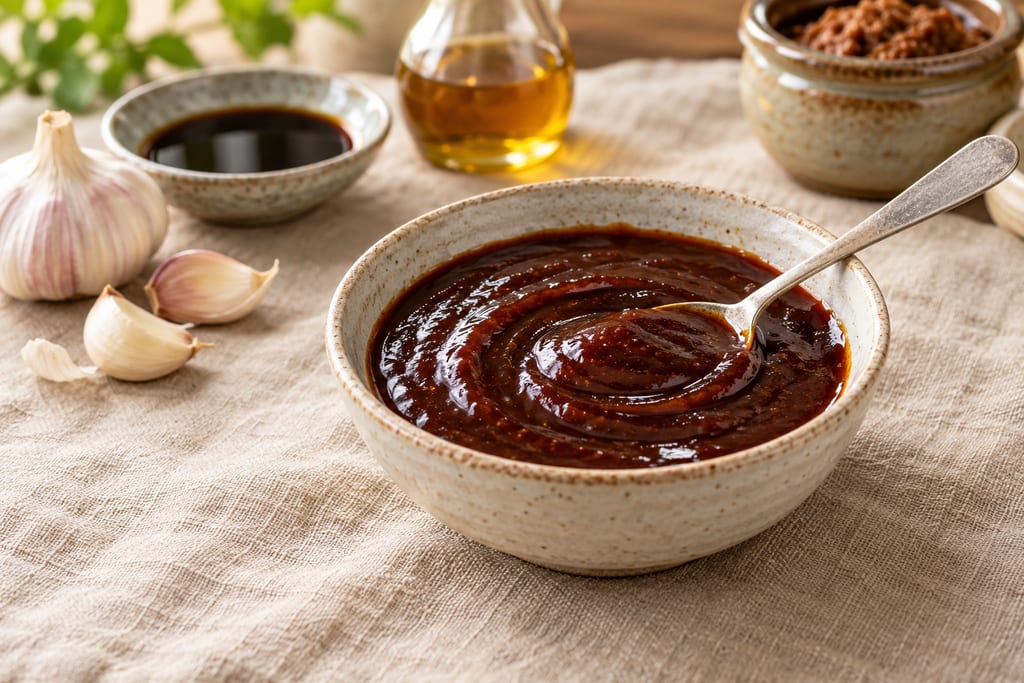
A thick, dark, sweet-salty Chinese condiment built on fermented soybean paste. This page gives one quick home version and records how commercial formulas differ.
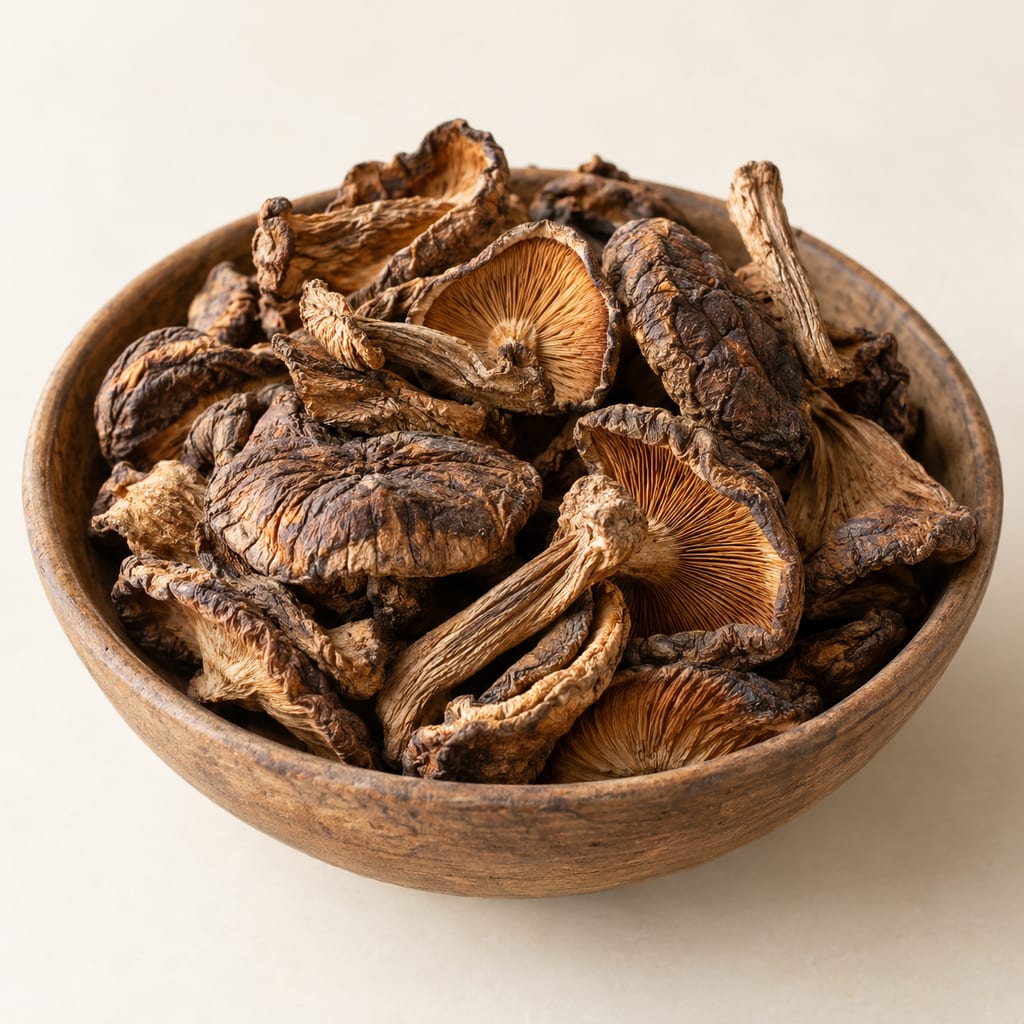
Hearth-dried mushrooms are dried on shelves above a cooking fire, so heat and smoke reach them. Tanzanian records describe the method; a Vietnamese study tested smoke-dried shiitake for fuel-dependent contaminants.

Tương Bần is a thick, sweet and salty northern Vietnamese soybean sauce made from soybean and sticky rice at Bần Yên Nhân in Hưng Yên, matured in ceramic jars for months.
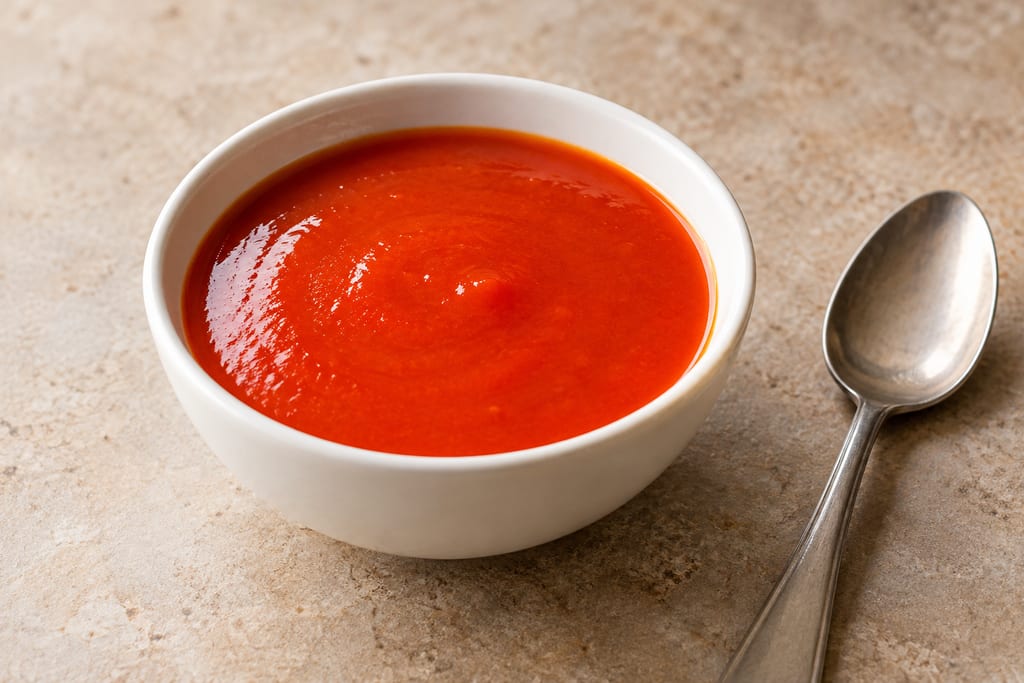
This cooked Vietnamese chilli sauce uses fresh chillies, garlic and tomato for a pourable, sweet-spicy condiment; heat varies with the chillies and how many seeds are removed.
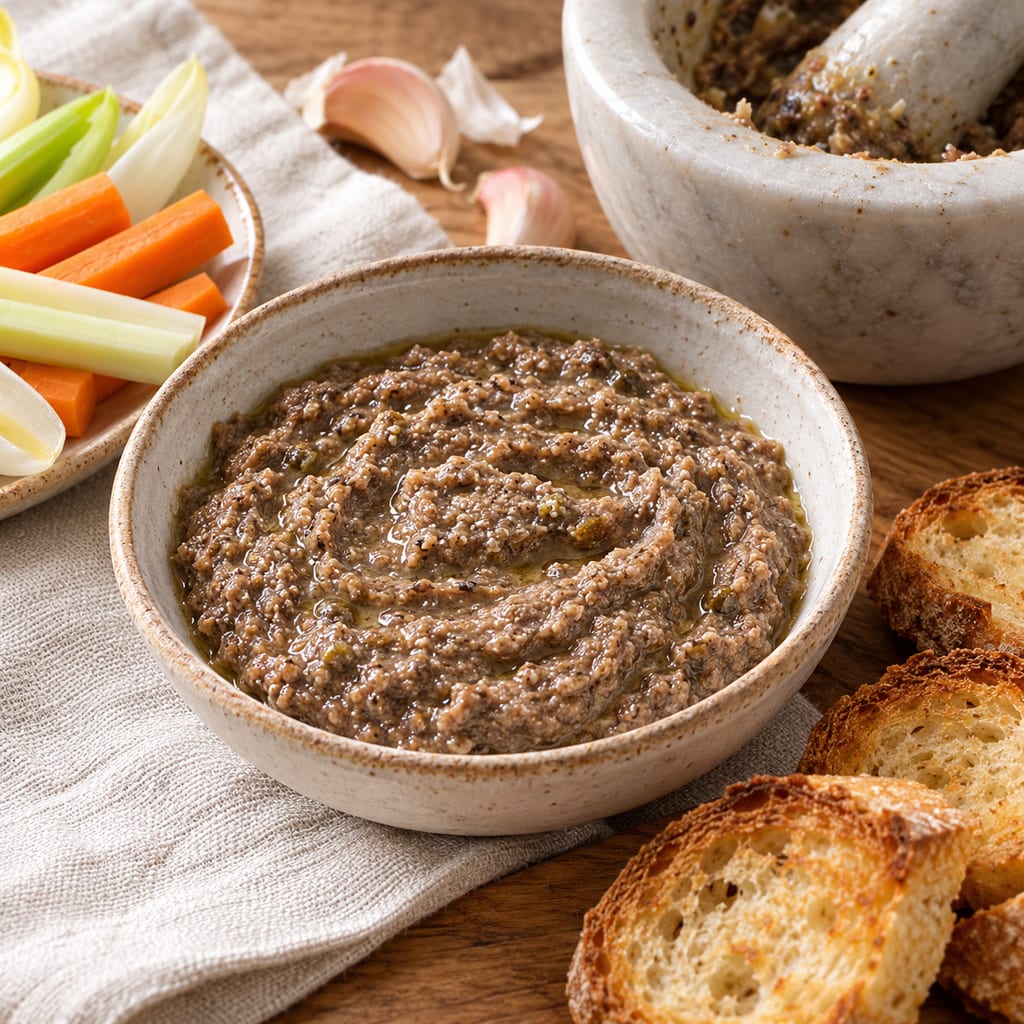
A Provencal dip of anchovies, garlic, capers and olive oil, pounded or blended to a creamy paste and served with raw vegetables, bread and eggs.
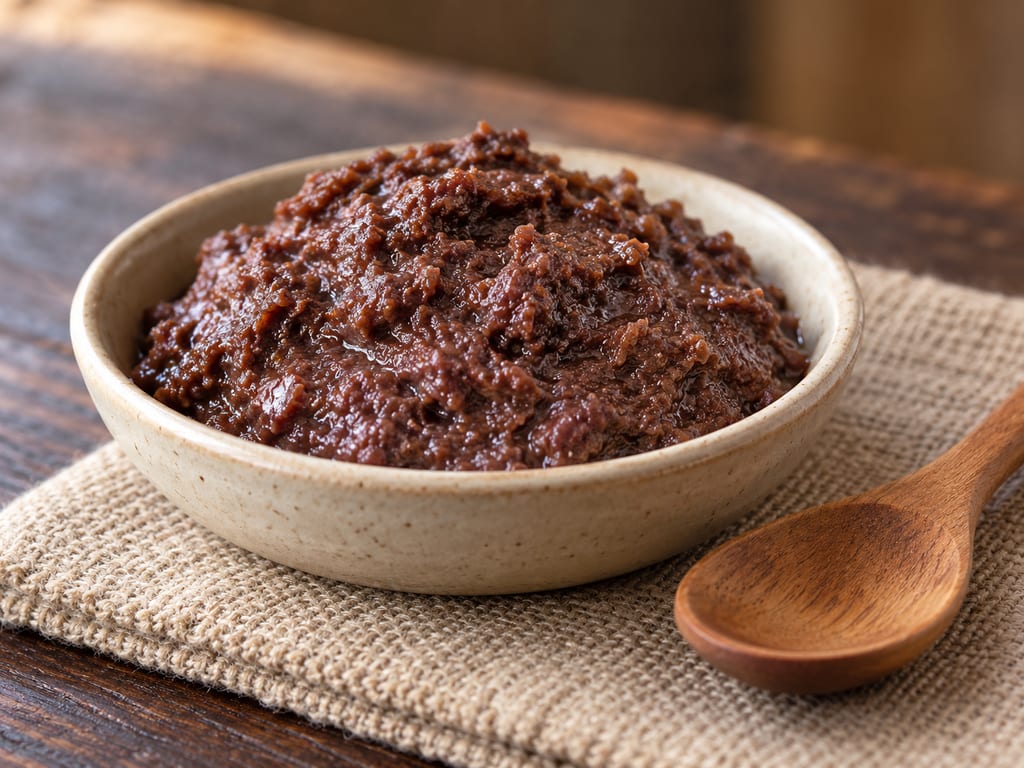
Bagoong isda is a Philippine fish paste: whole small fish salted and left to ferment for a month or more in earthen jars. It is the fish counterpart of bagoong alamang.
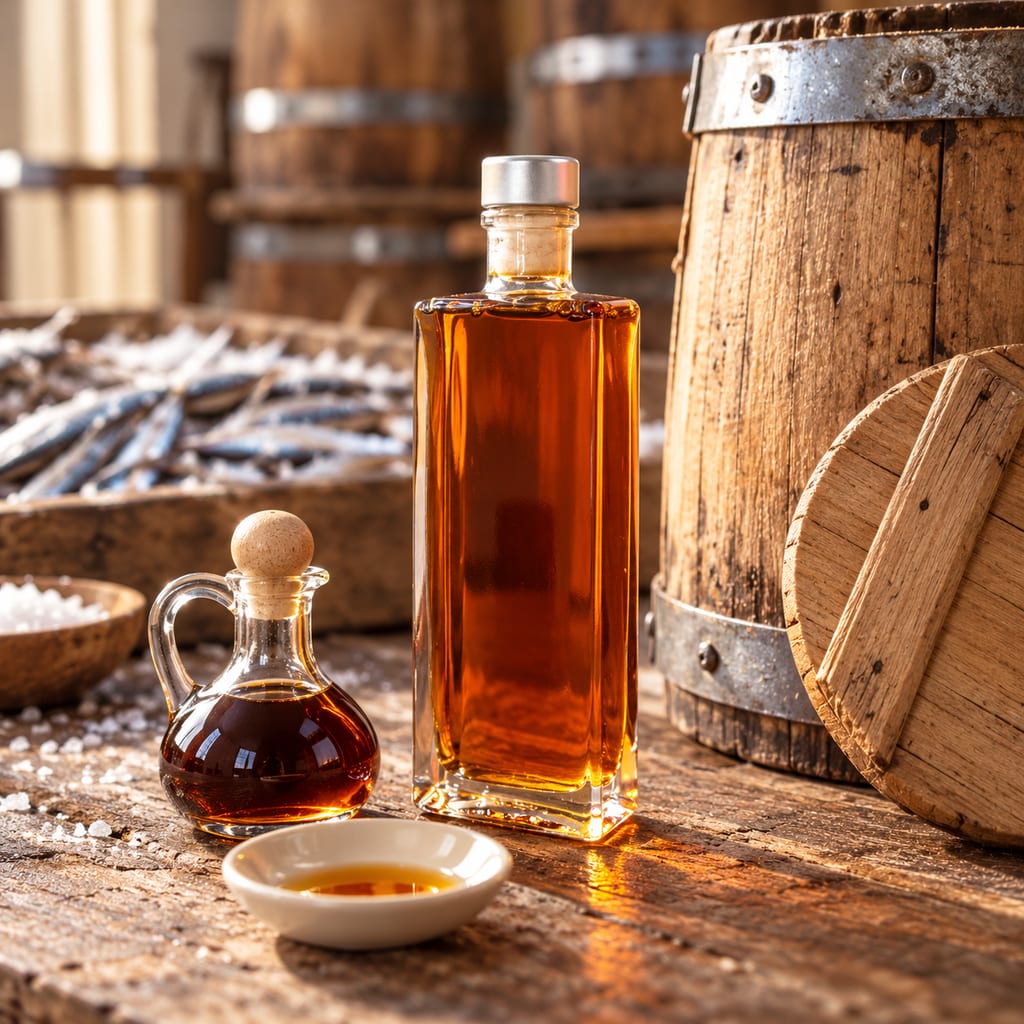
Colatura di alici is the amber liquid drained from salted anchovies matured in wooden containers in Cetara, on the Amalfi coast of Campania, and sold under a protected designation of origin.
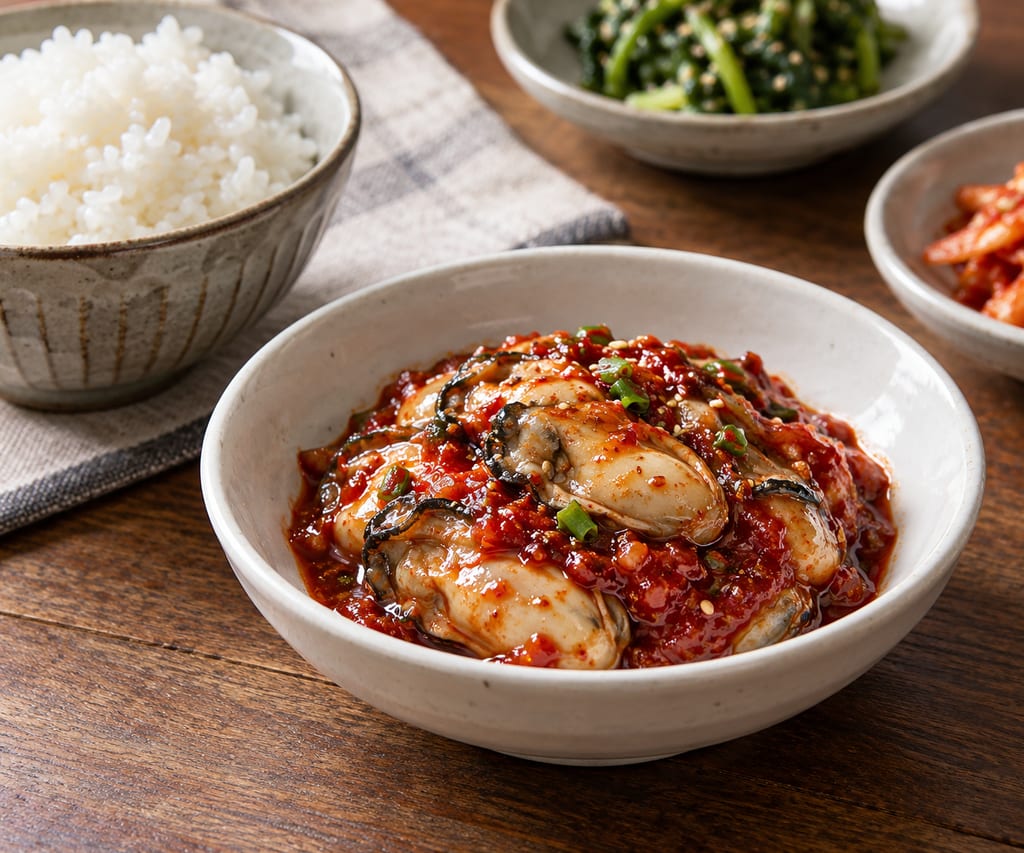
A Korean salted-oyster jeotgal seasoned with chili, associated especially with Seosan and Ganwoldo. This page records its food culture, not a household preparation method.
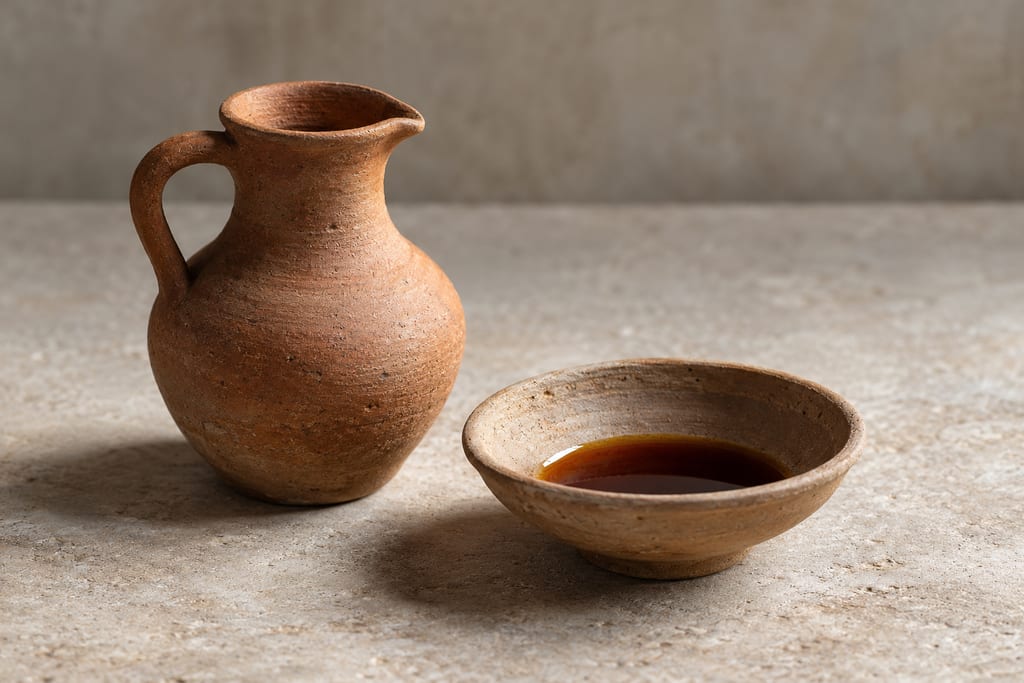
Garum, Greek garos and Latin liquamen, was the fish sauce of the ancient Mediterranean: fish and viscera salted and left in the sun, then drained off as a savoury liquid.
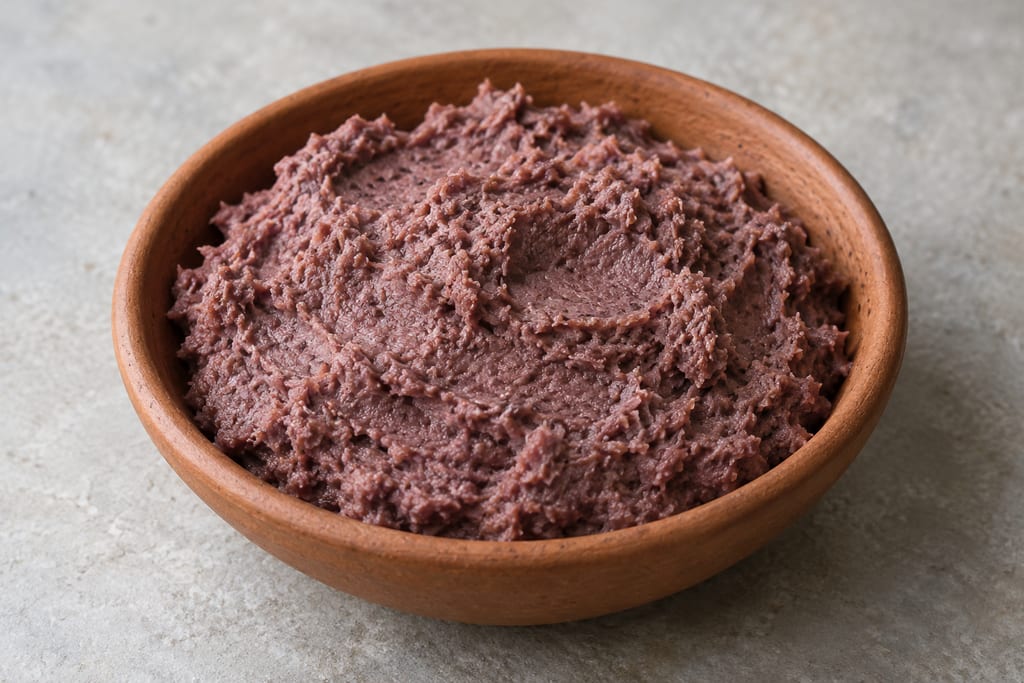
Guinamos is a shrimp paste made on Guimaras in the Philippines: small shrimp salted by hand, sun-dried and trodden by foot until it turns smooth.
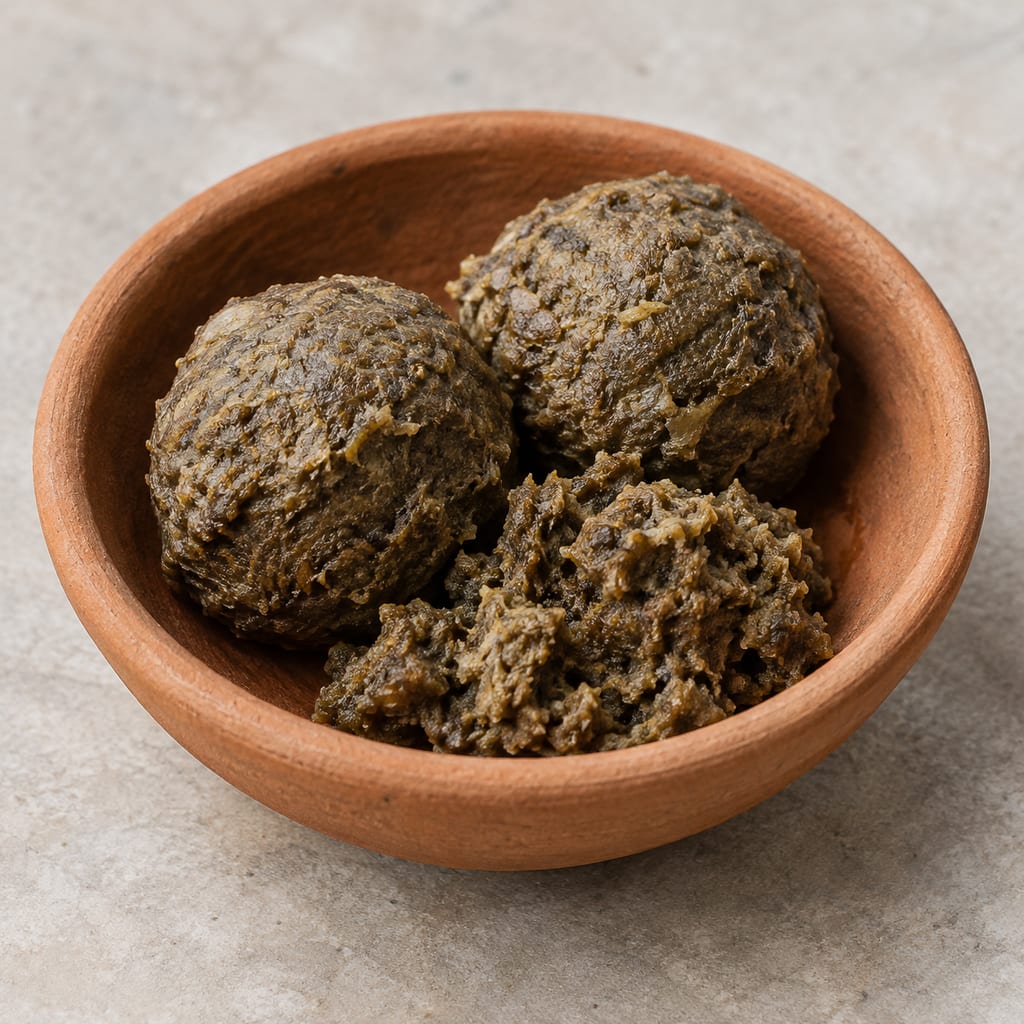
Manipuri fermented fish-and-aroid paste, formed into balls or kept in an earthen pot, used to season Manipuri dishes. Its method is documented in outline only.
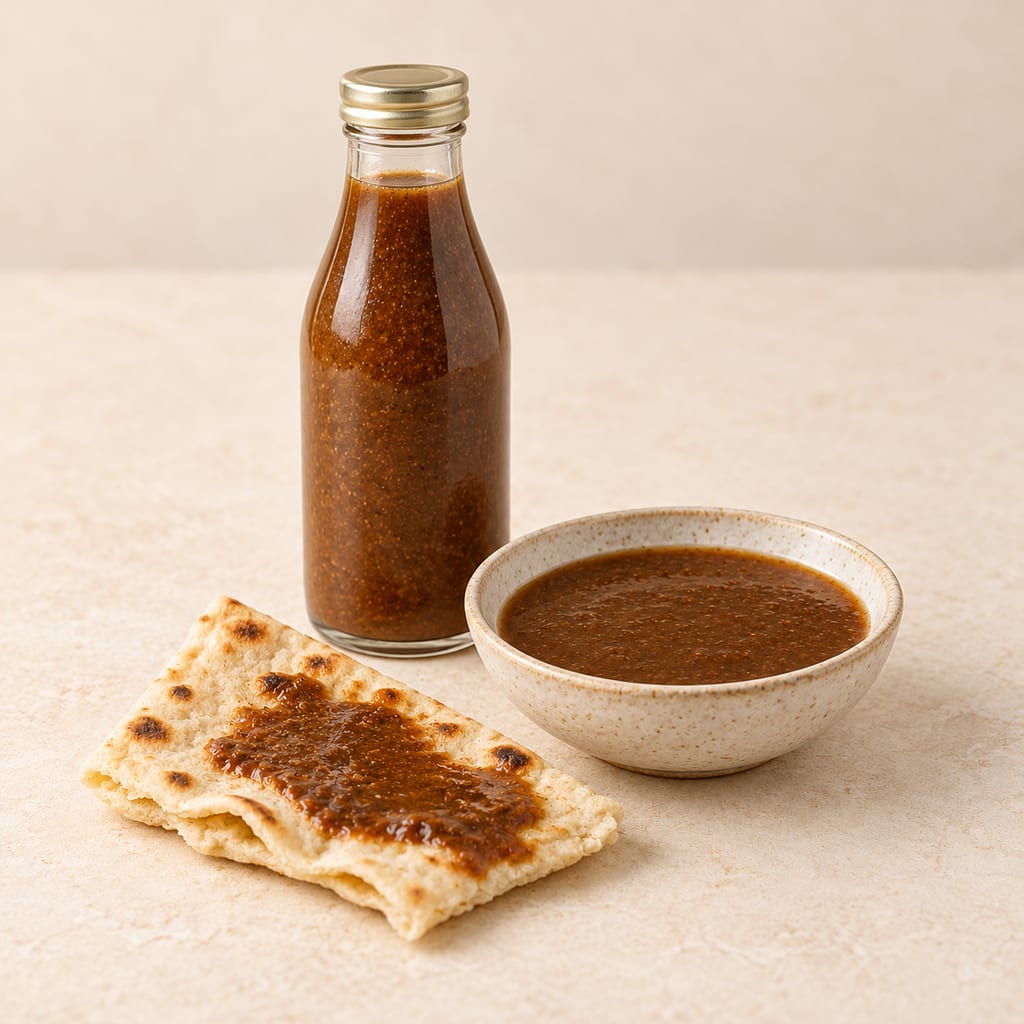
Mahyawa, also written mahyaveh, is a traditional fish sauce from southern Iran, made by salting small sardines or anchovies in water, maturing them in jars and seasoning the filtered liquid with mustard and spices.
No community contributions have been published for this entry yet.
Sign in to contribute. Published comments and photos are free to read.
Codex Alimentarius Commission, FAO/WHOProcess · Safety
Standard for Fish Sauce (CXS 302-2011)Codex defines fish sauce as translucent liquid with salty taste and fish flavour from fermented fish and salt.
Fish sauce ferments in covered containers or tanks, generally for at least six months; later brine extractions may follow.
Sound wholesome fish fit for sale fresh, food-grade salt and potable water for brine; typical pH 5.0–6.5, salt at least 200 g/L, histamine not more than 40 mg/100g in a sample unit.
The standard describes commercial product criteria and does not validate a home-scale procedure.
Cited in: A seasoning drawn from fish; Salt, enzymes and slow protein change; What the two ingredients contribute; From salting to first extraction; Using fish sauce and reading it responsibly
FAO/WHO Codex Alimentarius CommissionSafety · Process
Code of Practice for Fish and Fishery Products, Section 19: Processing of Fish SauceFish-sauce production hygiene, process control, analysis and histamine monitoring are part of the processing guidance.
The operational guidance is for controlled production; this page does not convert it into a household schedule.
Phu Quoc TourismProcess · History · Geography
Fish sauce craft village in Phu QuocPhu Quoc traditional methods include stirring, pressing or a combination; production uses anchovies and salt, with a dedicated barrel house.
A source-described process reports 2.5–3 parts fish to one part salt, staged brine drainage and pressing, 12 months in barrels, then first and further brine extractions.
The account describes grades, amber-clear sauce and uses; its process is a regional account, not universal recipe or safety validation.
Cited in: A seasoning drawn from fish; A coastal craft with its own geography; What the two ingredients contribute; From salting to first extraction; Later extracts, grades and real differences
Saigon Giai Phong English Edition (VNA)History · Geography
Phu Quoc fish sauce making becomes national intangible cultural heritagePhu Quoc fish-sauce craft was recognised as national intangible cultural heritage in 2021.
The article reports anchovy and salt, large wooden barrels, a 3:1 ratio and 10–15 months, GI recognition in 2001 and EU origin certification in 2013.
Cited in: A coastal craft with its own geography
ICH Courier / ICHCAPHistory · Uses · Variations
Nước Mắm (Nuoc Mam): A Savory Depth of Flavor in Vietnamese Culinary LifeVietnamese fish sauce uses multiple fish species and varies regionally; amberstripe scad and anchovy are named examples.
Nước mắm is used as a table dip and seasoning in dishes; the article situates it in Vietnam's coastal food culture.
Cited in: Later extracts, grades and real differences; Using fish sauce and reading it responsibly
Foods (MDPI)Science
Enzymes in Fish and Seafood ProcessingFish sauce protein hydrolysis involves endogenous fish enzymes including trypsin, chymotrypsin and cathepsins; traditional autolysis takes months to years in the studies discussed.
This review covers mechanisms and experimental literature, not a specific Phu Quoc production schedule.
Cited in: Salt, enzymes and slow protein change
U.S. Food and Drug AdministrationSafety
FDA Issues Final Compliance Policy Guide for Scombrotoxin (Histamine)-forming Fish and Fishery ProductsHistamine may form in susceptible fish after death when handling and chilling are inadequate; once formed, washing, freezing or heating do not remove it.
The FDA recommends appropriate chilling and time-temperature controls for susceptible raw fish; this is not a fish-sauce recipe validation.
Philippine Consulate General in Vancouver / Department of Foreign AffairsUses · Variations
Filipino Sauces, Dips and MixesPatis is Philippine fish sauce, used in soups and in seafood, meat and vegetable stews, and as a dipping condiment that may be combined with spices and vinegar.
The guide describes patis as fermented anchovy, salt and water, with caramel colouring named in its description; it is a consumer overview, not a technical definition.
Cited in: Patis in the Philippines
Nha Trang University, Journal of Fisheries Science and TechnologyProcess · Safety · Geography
Hiện trạng sản xuất và chất lượng của nước mắm mang chỉ dẫn địa lý Phú QuốcA 2019 survey of 30 Phú Quốc enterprises and analysis of 30 fish-sauce samples.
Anchovy supplies from the Cà Mau–Kiên Giang and Gulf of Thailand grounds; maturation about a year, mainly in wooden vats with a small number of cement tanks.
Some sampled sauces exceeded the histamine criterion the authors cite.
Cited in: A 2019 survey of Phú Quốc producers
U.S. Food and Drug AdministrationSafety
Sec. 540.525 Scombrotoxin (Histamine)-forming Fish and Fishery Products — Decomposition and Histamine (CPG 7108.24)Heating cannot reliably remove histamine once it has formed.
Surveillance criteria for fermented condiments have a separate scope.
Cited in: A 2019 survey of Phú Quốc producers